Marsh harrier shot, rescued, rehabbed & released in Yorkshire

There was some brilliant video footage posted on Twitter yesterday showing a rehabilitated Marsh harrier being released back in to the wild by the indefatigable Jean Thorpe (@jeanthorpeRR).

[Photo by Lower Derwent Valley National Nature Reserve]

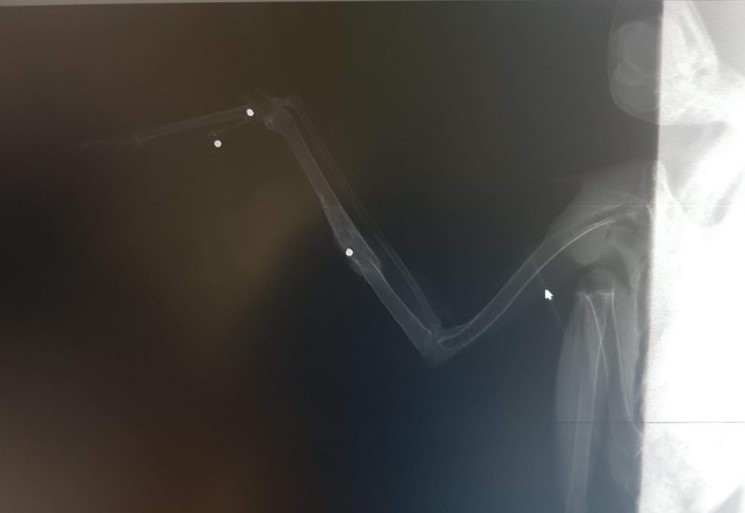
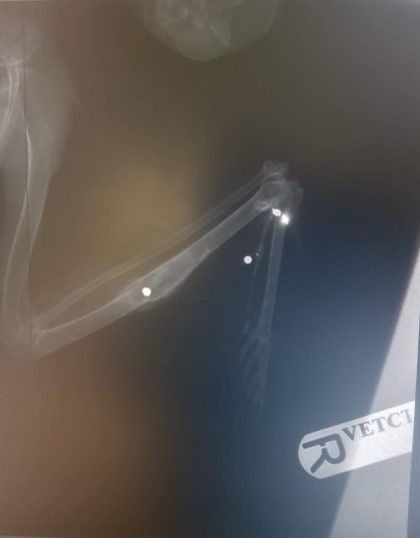
From the information provided, it was reported that the Marsh harrier had suffered a broken wing caused by a shotgun pellet and was found injured next to a game-shooting estate near Scarborough.

The x-ray details suggest this was on 18th August 2019.

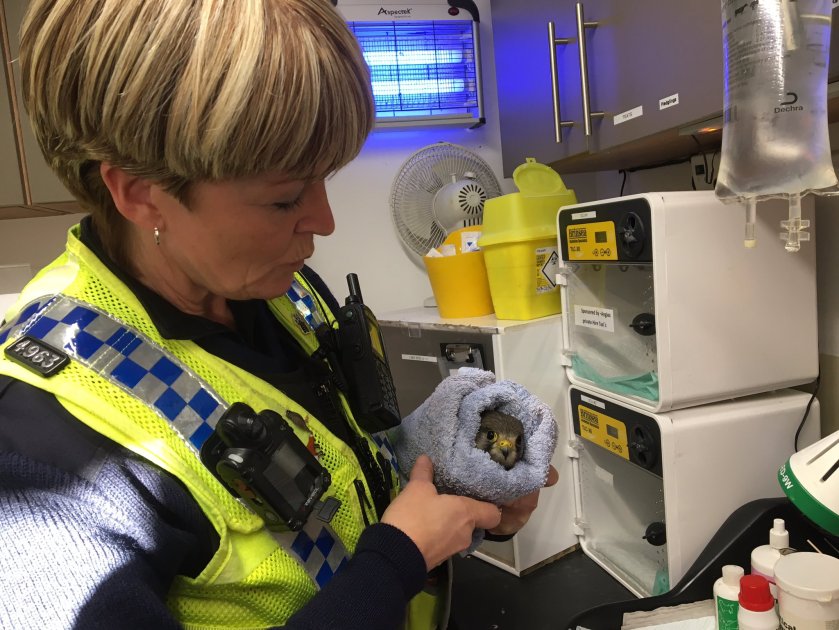
Expert veterinary care and rehabilitation by Mark Naguib of Battle Flatts Veterinary Clinic and Jean and this harrier was able to be released.

We haven’t seen any previous reports about the illegal shooting of this Marsh harrier, nor any police appeals for information.

[Jean releasing the harrier, photos by Lower Derwent Valley National Nature Reserve]

UPDATE 9 October 2019: North Yorkshire Police appeal for info after Marsh Harrier found shot near Scarborough (here)

Buzzard shot & injured: Humberside Police appeal for info

Humberside Police press release (12 September 2019)

WILDLIFE CRIME: BUZZARD SHOT AND INJURED – APPEAL FOR INFORMATION

East Riding of Yorkshire

We are appealing for information in relation to the shooting of a female buzzard.

On the 16 August the bird was found injured on the B1246 between Kilnwick Percy Hill top and Warter village near Pocklington in the East Riding of Yorkshire.

The bird was still alive and when x-rayed was found to have two shotgun pellets within its body. The injuries were fresh indicating that the bird had been recently shot.

Fortunately the injuries were such that the bird has been nursed back to good health and has now been released. The exact location of where the shooting of this bird took place is not confirmed. What is known is that the bird had been shot on or close to the date it was found (16 August).

Buzzards and other birds of prey are protected from persecution by Section One of the Wildlife & Countryside Act 1981 which makes it an offence to intentionally kill, injure such a bird. The penalty for these offences are a term of six months imprisonment and or an unlimited fine.

Chief Inspector Paul Butler the wildlife & rural crime lead for Humberside Police said, “This type of criminal behaviour towards our birds of prey sadly continues. This is now the sixth confirmed persecution incident involving seven birds of prey in the last two years across our force area.

The persecution of birds of prey is a national wildlife crime priority and Humberside Police takes this issue very seriously.

We have now adopted Operation Owl which is a national initiative to raise awareness of the problem and to tackle and prevent this type of criminality.

A large number of our wildlife crime officers have also received specific training in identifying and dealing with these offences.

I would encourage anyone with information about anyone involved in this type of offence in our area to come forward with this information which will be treated in confidence

If you have any information which could assist the investigation of the above incident please contact PC 1708 Ward on 101 quoting investigation number 16/100243/19.

ENDS

RSPB’s 2018 Birdcrime report documents relentless raptor persecution on grouse moors

The RSPB has published its latest annual report Birdcrime, documenting known cases of illegal raptor persecution in the UK in 2018. [Follow this link to find the report and additional information]

As ever, it’s grim reading and also as ever, the figures represent an unknown percentage of the actual number of birds that have been illegally killed. We know there are many, many more as these figures don’t include all the satellite-tagged raptors that have been killed and their corpses and tags destroyed to remove any trace evidence.

On the back of the report, the RSPB is calling for three things, quoted as follows:

  • The licensing of driven grouse moors.
    The RSPB believes that the right to shoot should be dependent on legal, sustainable management. Grouse shooting licenses could then be removed if illegal activity is identified, which would act as a deterrent. Law-abiding estates should have nothing to fear from this.
  • A review of grouse shooting.
    An industry that relies on criminal, unsustainable and environmentally damaging practices should not be allowed to continue operating as it currently is. In Scotland, the government has launched a review of grouse moor management and the RSPB would like to see a similar review in the rest of the UK.
  • Transparency, not secrecy: the public have a right to know.
    It is a concern that, particularly in Scotland, some raptor persecution incidents are not made public for many months, or even years, despite the release of such information posing no threat to the integrity of an investigation. The public has a right to know if criminal activity is taking place on their doorstep, especially when, as with poisoning incidents, this poses a risk to public health.

To be perfectly honest, the call for the licensing of driven grouse moors is too little, too late. For many of us the tipping point has now been reached following the recent reports of some truly sadistic and brazen persecution crimes, for example this hen harrier that was caught in an illegally-set spring trap next to his nest on a grouse moor at Leadhills. His leg was almost severed and despite the best efforts of a world-class veterinary specialist, this poor bird didn’t make it.

A licensing system isn’t going to stop the disgusting filthy criminals responsible for this – it’ll be impossible to enforce, just as wildlife protection laws are notoriously difficult to enforce right now. An outright ban on driven grouse shooting will remove the incentive for these crimes, and that’s what we’re calling for. 80,000 people agree (they’ve signed since the petition was launched two weeks ago) but we need 100,000 signatures before Parliament is suspended, as looks likely to happen in a couple of weeks. Please help reach the target and sign the petition here.

The RSPB’s call for a review of grouse shooting is also too little, too late. What do we need another review for? We’ve got decades worth of scientific evidence and hundreds of raptor corpses to know just how damaging driven grouse moor management is, for wildlife, for the environment and for people. Calling for a Werritty-style review will just add further delay to actually dealing with the issue, as we’re currently seeing in Scotland. Just ban it and be done with it (sign the petition if you agree!).

Calling for transparency, not secrecy, over the publication of raptor crimes is something we do support and we’ve been calling for it for years, particularly in Scotland. It’s very noticeable that yet again, in the 2018 poisoning data, the only police force to withhold the name of the poison that’s been used to illegally kill raptors is Police Scotland. All the other forces involved with poisoning investigations have named the poison used.

Having said that, this year (2019) Police Scotland has been a bit more forthcoming about publicising illegal poisoning crimes (e.g. see here and here) although there is still a reluctance to name the poison. But to be fair, Police Scotland has been doing a better job than other public authorities about alerting the public to the dangers (e.g. see here).

Speaking of Scotland, the Birdcrime report shows that 12 confirmed cases were recorded, more than double that recorded in 2017 (take note, Scottish Land & Estates, before you start falsely claiming otherwise). These cases included a peregrine poisoned in the Pentland Hills, near Edinburgh; a buzzard found to have been shot twice, in South Lanarkshire; a buzzard caught in an illegal trap, in Inverness-shire; and a hen harrier caught in a spring trap in Perthshire. All of these incidents occurred on, or close to, land being managed intensively for driven grouse shooting.

And guess what? Not a single one of them has led to a prosecution. Nor has SNH issued a single General Licence restriction order in response to these clear crimes. Even more evidence, as if it were needed, that the Scottish Government, just like the Westminster Government, has no control whatsoever over the rampant raptor-killing savages on many driven grouse moors.

Had enough? SIGN THE PETITION PLEASE.


Sparrowhawk shot on Isle of Man: Local bird charity & police appeal for info

Joint press release from Manx Wild Bird Aid, police & local Government (20 Aug 2019)

Manx Wild Bird Aid, Police Wildlife Crime Officers and the Isle of Man Government are seeking information in relation to a juvenile female sparrowhawk that was found injured at Ballure, Ramsey on the 13th August 2019.
The sparrowhawk was discovered with a single gunshot wound and was recovered alive by a member of the public who passed it over to the charity Manx Wild Bird Aid, who care for sick and injured wild birds.
Unfortunately the bird died of its injuries soon after.
Manx Wild Bird Aid informed the Police Wildlife Crime Officers and Department of Environment, Food and Agriculture (DEFA) Biodiversity Officers. Analysis of the bird’s injuries by a vet showed that the bird had an entry and exit wound consistent with being shot. The bird also sustained broken bones when it fell to the ground and would not have been able to move far from the location where it was found.
Geoffrey Boot MHK, Minister for Environment, Food and Agriculture, said: “I would urge anyone with any information about this incident to get in touch with the Biodiversity Officers at DEFA. It is illegal to kill or injure sparrowhawks on the Isle of Man. Protecting our wildlife is immensely important and our department and local charities work hard to ensure these animals are protected“.
A spokesperson for Manx Wild Bird Aid, said: “Not only has this wild bird been shot illegally, it is particularly upsetting that it has been injured in such a way to cause a lengthy period of unnecessary suffering prior to dying“.
Wild birds are legally protected under the Wildlife Act 1990 and it is an offence to kill or injure wild birds with the exception of game species. Penalties of up to £10,000 can be imposed.
Anyone with information relating to this case is being asked to contact Louise Samson, Biodiversity Officer DEFA 685835 or Crime Stoppers 0800 555 111.
ENDS

Scottish Gamekeepers Association fails to influence the criminals within its membership

Gamekeeper Alan Wilson, 61, sentenced yesterday for his appalling crimes against protected raptors and mammals on the Longformacus Estate in the Borders (here) was a member of the Scottish Gamekeepers Association (SGA).

As an SGA member, Wilson cannot possibly claim that he wasn’t aware of the laws protecting birds of prey and mammals such as badgers and otters, nor that the deadly poison he had in his possession, Carbofuran, has been banned for approx 14 years, because although the SGA can be viewed as a bunch of raptor-hating Victorian throwbacks who lobby to have birds of prey added to the lists of ‘vermin’ that can be killed with impunity (e.g. see here), it has always made it clear that the illegal killing of these species is unacceptable. It wants to kill raptors, yes, to stop them interfering with game bird stocks, but acknowledges that so far, this is still unlawful unless the Scottish Government decides to issue licences to kill birds of prey.

Wilson carried what looks to be his SGA member’s log book in the same bag as he kept one of his bottles of Carbofuran.

Here’s his bag, with the bottle of Carbofuran in the front pouch [SSPCA photo]

Here’s the small bottle of Carbofuran (remember only a few granules are enough to kill a human) [SSPCA photo]

Here’s his SGA member’s log book, contained in the side pouch [photo SSPCA]

The irony of this is not lost on us.

The SGA issued a statement yesterday, after months of refusing to say anything, confirming that Wilson was indeed a member and his membership has now been terminated. Expelling criminals from within its ranks is a relatively recent endeavour by the SGA (in the last five or so years) and undoubtedly is a result of public and political pressure. The organisation has to at least make an effort to appear civilised and expelling criminal members is one way of doing this.

It begs the question, though, how many more criminals are hiding in plain sight within the SGA’s membership? It’s worth bearing in mind that, despite the industry’s claims, gamekeeping is not a profession in the sense that potential candidates don’t have to pass a formal qualification process to enter the ‘profession’ (although increasingly they do need to be certified in certain areas of their work) and absolutely anybody can become a member of the SGA unless, it seems, you have a recent conviction for wildlife crime. There’s no independent register of gamekeepers and nor is there a professional body to whom members of the public can complain about a gamekeeper’s behaviour or conduct, which when you think about it is pretty odd, given the job mostly involves killing things. Those responsible for caring for animals have to be highly qualified and are answerable to their professional bodies (e.g. vets) and yet those who kill animals for a living can do so without any professional oversight.

It’s pretty clear from the criminal activities of SGA member Alan Wilson that the SGA had absolutely no influence or control over his behaviour whatsoever. Did the SGA know about Wilson’s crimes? It seems unlikely, given the risk he posed to the SGA’s reputation.

So how many more Alan Wilsons are out there, fully-signed-up members of the SGA but with a huge appetite for killing protected wildlife with impunity?

How can the SGA possibly claim that gamekeepers are law-abiding members of society (e.g. see here) when the SGA hasn’t actually got a clue what its members are up to?

We won’t know, of course, until the next time. And there will be a next time, and another one, and another one, and another one….

Meanwhile, the SGA will be kept busy on a damage limitation exercise for the next few months trying to counter the media coverage of Wilson’s atrocities:


Police warning as red kite confirmed poisoned in Nidderdale AONB

Last October (2018) a dead red kite had been found near Wath, in the Nidderdale Area of Outstanding Natural Beauty (AONB), a notorious raptor persecution black spot.

An x-ray confirmed the kite had been shot and North Yorkshire Police launched an investigation. We blogged about the case here.

It seems that wasn’t the end of the story. Although the x-ray revealed two pieces of shot, these were not considered to have caused the kite’s death so it was sent off for post-mortem and toxicology examination.

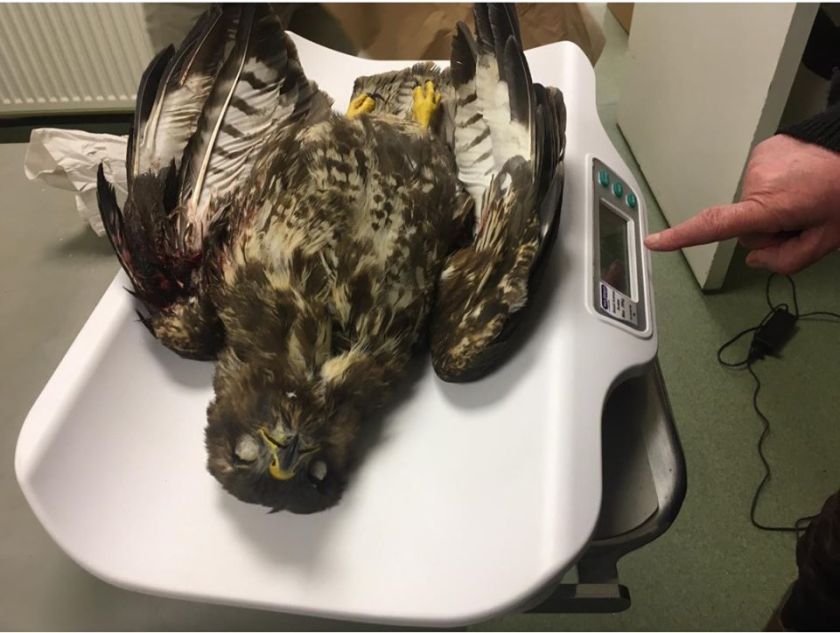
The results are now back (10 months on!!) and nobody will be surprised to learn that, like so many other red kites in Nidderdale, this one had not only been shot on two separate occasions, but it had also been poisoned with a concoction of banned pesticides.

North Yorkshire Police has now issued a warning and an appeal for information as follows:

POLICE PESTICIDE WARNING AFTER DEATH OF RED KITE (8 August 2019)

Police have issued a warning about illegal pesticides, after a post-mortem concluded a red kite died as a result of pesticide abuse.

At the end of October 2018 a red kite was found dead in Nidderdale. The finder in this case was the landowner, who was concerned that criminal activity may have taken place on his land.

North Yorkshire Police arranged for the bird to be x-rayed, and this showed there were two pieces of shot in the bird. However, it was not possible to say whether these had caused fatal injuries. Police released details of the incident, and appealed for information from the public.

Officers have now completed their enquiries. The dead bird was subjected to a post mortem, which concluded that the injury caused by one piece of shot was old and had healed. The damage caused by the second piece was recent but was not a fatal injury.

The bird was then submitted to the Wildlife Incident Investigation Scheme, which is administered by Natural England. It was subjected to toxicological tests which found several poisons in the bird. The largest quantity of poison was a substance called bendiocarb, a pesticide which is licenced [sic] for use in the UK. Smaller amounts of two other pesticides, isofenphos and carbofuran, which are both illegal in the UK, were also present. The report concluded that the kite had died as a result of the abuse of several pesticides.

At this time, officers have not received any information to help them identify any suspects. Although the investigation has now concluded, anyone with any information about this incident is asked to contact North Yorkshire Police, quoting reference 12180199938.

A spokesperson for North Yorkshire Police said: “The test results suggest that someone not only has access to two illegal poisons, but is also placing them, along with a legal pesticide, into the environment so that a wild bird has been able to consume them. In addition to being poisoned, the bird had also been shot at least twice during its life.”

Red kites have been successfully re-introduced to Yorkshire, having been extinct as a breeding bird in England, and they are now a familiar sight to people in Nidderdale. All birds are protected by law and it is a crime to intentionally kill, injure, or take any wild bird. If anybody has information about persecution of birds of prey, whether by poisoning or shooting, please call North Yorkshire Police on 101.

Anyone misusing pesticides may also be committing a variety of offences. If you come across an object which you believe may be contaminated with a pesticide or other poisons, please do not handle it. Report the situation immediately to the police giving accurate details of location and why you suspect involvement of a poison.

ENDS

There’s an RSPB blog about this case here.

Interesting to note the suggestion that Bendiocarb is a pesticide that is licensed for use in the UK. Not in Scotland it isn’t – it’s one of eight pesticides that are considered so highly toxic that it’s an offence to even have them in your possession, let alone use them (the others are Aldicarb, Alphachloralose, Aluminium phosphide, Carbofuran, Mevinphos, Sodium cyanide and Strychnine).

When an opportunity arose to have these substances banned in England, the then Wildlife Minister Richard Benyon (owner of grouse moor & pheasant shoot) refused to support such a move (see here).

So, here’s yet another red kite victim to add to all the other red kite victims that have been found either poisoned or shot on or close to grouse moors in the Nidderdale AONB, along with all those missing satellite-tagged hen harriers and two shot hen harriers.

RPUK map showing the boundary of the Nidderdale AONB (yellow line), illegally killed red kites (red dots), missing satellite-tagged hen harriers (orange stars), shot hen harrier Bowland Betty (red star), shot hen harrier River (red triangle).


How has the game-shooting industry reacted to conviction of Scottish gamekeeper Alan Wilson?

We’ve been watching with interest how the game-shooting industry has reacted to the news that Scottish gamekeeper Alan Wilson has pleaded guilty to nine wildlife crimes on the Longformacus Estate in south Scotland.

We are especially interested to find out whether (a) Wilson is/was a member of the Scottish Gamekeepers Association when he committed his crimes against protected wildlife and if so, whether he’s been booted out, and (b) whether the Longformacus Estate is/was a member of Scottish Land & Estates when these wildlife crimes took place, and if so, whether the estate has since been booted out.

It turns out that both the SGA and SLE are being a bit coy about this information.

First up, here’s the full statement from the SGA in response to Wilson’s guilty plea for multiple criminal offences:

It’s not very impressive, even though it took the SGA 24 hours to come up with it!

No mention, then, of the exceptionally high number of wildlife crimes.

No mention, then, of the number of protected species that had been shot illegally, including birds of prey, badgers and an otter.

No mention, then, of the 23 illegally set snares.

No mention, then, of the two containers of a highly toxic and banned poison (Carbofuan) that had been found.

And no mention, then, that it was a Scottish gamekeeper who was responsible for this disgraceful litany of wildlife crimes.

Moving on, here’s what Scottish Land & Estates posted:

It’s a bit of an odd choice of photograph to illustrate the piece – that’s Lord David Johnstone, Chairman of SLE; it’s not criminal gamekeeper Alan Wilson. You might have thought SLE would choose an image of one of the protected species that had been illegally shot, or a poison skull & crossbones, or perhaps even an image of the location, a bit like this one:

[Photo by Richard Webb]

Ah, but hang on a minute, using a photo like this one to illustrate SLE’s statement wouldn’t have worked because look, what’s that behind the wood? Is it the tell-tale strip muirburn indicative of a grouse moor?

Ah, that’s a bit awkward seeing as SLE’s statement doesn’t mention grouse moor management, only low ground pheasant shooting – perhaps a deliberate omission? Surely not.

To be fair, the hill in the background is part of a neighbouring estate (Kettleshiel Farm), although if you look at a satellite image of the area it’s pretty clear that there’s also strip muirburn on Longformacus Estate, right up to the edge of Henlaw Wood where all those shot protected species were uncovered: [UPDATE 9pm: According to a comment from Professor Ian Poxton, all the land shown in the above and below photos, including the grouse moor hill, belonged to Longformacus Estate at least up to a couple of years ago – see comments section for more details]:

So it looks very much like there is a combination of both low ground pheasant shooting and grouse moor management on Longformacus Estate – how odd that SLE would appear to want to only mention the pheasant shooting and not the grouse moor management.

Actually, it’s not odd at all – they tried the same trick when golden eagle Fred ‘disappeared’ in suspicious circumstances next to a grouse moor in the Pentland Hills just outside Edinburgh, playing down the prevalence of grouse moor management in the area.

Hmm, can’t begin to imagine why SLE might want grouse moor management out of the spotlight.

Anyway, back to SLE’s statement – at least it includes the fact that a gamekeeper has been convicted of wildlife crime – that’s a definite improvement on the SGA’s pathetic statement, but rather tellingly, SLE’s statement doesn’t mention whether Longformacus Estate is a member of SLE but does seem to want to demonstrate support for the estate. How interesting.

As we’ve said previously, as we understand it there is an ongoing police investigation in to whether gamekeeper Alan Wilson’s employer may face a potential charge of alleged vicarious liability, but we don’t know any more detail. We don’t even know if that would be the landowner or whether there’s a ‘middle-man’ involved such as a sporting agent.

We’ll have to wait and see, although it’s interesting to note that back in August 2018, Police Scotland issued a statement that said two men had been charged in relation to this case (see here).

Convicted Scottish gamekeeper Alan Wilson & his litany of wildlife crimes

Further to the news yesterday that Scottish gamekeeper Alan Wilson, 60, had pleaded guilty to nine of the 12 charges of wildlife crime against him (see here), here is some further detail.

From The Times (by Robert Fairburn):

Gamekeeper killed protected birds, badger and otter

A gamekeeper shot dead badgers and buzzards and set dozens of illegal snares in Scottish woodland in what one wildlife expert described as the greatest cull of protected species he had ever seen.

Alan Wilson, 60, has pleaded guilty to priming 23 illegal snares in a small wood on the Berwickshire estate where he worked. A court was told that the League Against Cruel Sports had been tipped off by a member of the public out hiking that snares were being operated at Henlaw Wood on the Longformacus Estate.

[RPUK map of the location of Longformacus Estate]

In March 2016 a research officer found snares and a “stink pit” containing a pile of dead animals designed to attract other animals. A year later he returned and found the carcass of a badger and dead birds.

The site was visited by police officers and Scottish SPCA officers when the full catalogue of shot protected species emerged.

David Anderson, conservation manager for the Forestry Commission Scotland, attended Henlaw Wood, which is 550 metres in length, and wrote in his report: “In 40 years working in wildlife management I have never seen so many protected species dead in such a small area.”

Jedburgh sheriff court was told that Wilson was the sole gamekeeper for the Longformacus estate. He had worked as a gamekeeper in France for ten years before returning to Scotland and lived on the estate with his partner.

Wilson pleaded guilty to shooting and killing two goshawks at Henlaw Wood between March 2006 and May 2017, three buzzards, three badgers and an otter. He also pleaded guilty to charges of using illegal snares and possession of two bottles of carbofuran.

Wilson was fined £400 last year and banned from keeping birds of prey for ten years after admitting failing to protect an eagle owl in his care from suffering. He had pleaded guilty to keeping the pet bird in filthy conditions in a pigsty at his home in Longformacus [see here for RPUK blog on that case].

Wilson admitted nine offences and will be sentenced next month [19th August we believe] after background reports are prepared. Sheriff Peter Paterson told him: “These charges are serious and numerous and before I decide on an appropriate sentence I will need a report to see what sentencing options are open to me. Society, whatever you may think, takes a dim view on this.”

There has been growing debate about Scotland’s grouse moors. Chris Packham, the naturalist and broadcaster, has urged ministers to introduce a strict licensing system on moors, with powers to ban shooting estates where protected species are vanishing. A Scottish government review of grouse moor practices is expected to be published within weeks.

ENDS

It’ll be all eyes on Jedburgh Sheriff Court on 19th August when this criminal gamekeeper is sentenced. We believe the custody threshold has been easily met and given the range of offences against these protected species, in addition to being found in possession of the highly toxic (and thus banned) pesticide Carbofuran, only a custodial sentence will suffice.

There have been questions asked about Wilson’s employer and whether a charge of alleged vicarious liability is being pursued. We believe there is currently a live investigation on this and as such we won’t be blogging about it, or accepting comments specifically about it, until proceedings have concluded.

The conviction of gamekeeper Alan Wilson can now be discussed, however. We look forward to finding out whether he is/was a member of the Scottish Gamekeepers Association and if so, how they explain his appetite for illegally killing protected raptors and mammals, why he was setting illegal snares and why he had two bottles of Carbofuran in his possession.

Presumably the SGA knew nothing of Wilson’s crimes, which begs the question, how can the SGA make so many claims about the number of supposedly law-abiding gamekeepers when they haven’t got a clue what those gamekeepers are up to, nor do they have sufficient influence to prevent them committing wildlife crimes?

Over to you, SGA Chairman Alex Hogg…..

Previous blogs about this case: herehere here  here herehere, here, here, here here.

UPDATE: 24 July 2019: How has the game-shooting industry reacted to conviction of Scottish gamekeeper Alan Wilson? (see here).


Scottish gamekeeper pleads guilty to nine charges of wildlife crime

BREAKING NEWS…..

We understand from a journalist that Scottish gamekeeper Alan Wilson, 60, has this morning pleaded guilty to 9 of the 12 wildlife crime charges against him. Not guilty pleas were accepted on the other three.

Sentencing has apparently been deferred until 19th August for background reports.

Wilson had been accused of shooting two goshawks, four buzzards, a peregrine falcon, three badgers and an otter at Henlaw Wood, Longformacus, between March 2016 and May 2017.

He also faced charges of using a snare likely to cause partial suspension of animal or drowning, failing to produce snaring records within 21 days when requested to do so by police and no certificate for an air weapon.

We also understand he faced a charge of alleged possession of the banned poison Carbofuran.

Up until this morning Mr Wilson had pleaded not guilty.

More details to follow……

Previous blogs about this case: herehere here  here herehere, here, here and here.

UPDATE 23 July 2019: Convicted Scottish gamekeeper Alan Wilson and his litany of wildlife crimes (here)

UPDATE 24 July 2019: How has the game-shooting industry reacted to conviction of Scottish gamekeeper Alan Wilson? (here).

Shot hen harrier’s corpse found on Swinton Estate, a grouse moor in North Yorkshire

In January this year, the RSPB reported that a satellite-tagged hen harrier called ‘River’ had disappeared in suspicious circumstances in November 2018 on an unnamed grouse moor in the Nidderdale Area of Outstanding Natural Beauty (AONB) (see here).

This was an area where the day before River ‘disappeared’, the RSPB had filmed an unidentified gunman with two dogs at a known hen harrier roost (see here).

Nothing more was heard from River’s tag until the end of March 2019. What happened next is recounted in an RSPB blog published this afternoon:

SHOT HEN HARRIER FOUND ON NORTH YORKSHIRE GROUSE MOOR

By Mark Thomas, Head of Investigations, RSPB

Another satellite-tagged hen harrier, found dead on a grouse moor in North Yorkshire, has been confirmed as shot.

You may remember River, the young female hen harrier who suddenly disappeared in November 2018 in suspicious circumstances. We wrote about it here. Now, further information has emerged – and it’s not good news.

River was satellite tagged in Lancashire in 2018 as part of the RSPB EU Hen Harrier LIFE project. In November 2018 she sent out her last transmission from a roost location on a driven grouse moor in North Yorkshire, within the Nidderdale Area of Outstanding Natural Beauty. My staff and North Yorkshire Police searched the area but found no trace of the bird or the tag.

Then surprisingly at the end of March 2019, River’s tag gave off another signal confirming that she was dead and giving a precise location. These satellite tags are solar powered, and it’s possible that the bird’s body was disturbed, allowing the tag to ‘wake up’ and get back in touch with us. The longer, brighter days might have had their effect too.

This latest ‘ping’ gave us an exact location of River’s body, and again my staff and the police officers set out to recover her. They found her dead on Ilton Moor on the Swinton Estate on 5 April 2019. She was just 3.7km away from where her last transmission in November had come from, both on the same estate.

[Hen harrier River’s corpse being retrieved from a grouse moor on Swinton Estate. Photo by RSPB]

River’s decomposed body was recovered and taken to be X-rayed by the Police. Yesterday I received confirmation from North Yorkshire Police that her body contained two pieces of shot, one of which had later been retrieved and confirmed as such by the Police.

We don’t know precisely when or where River was shot, or who did it, but clearly she has been the subject of illegal persecution.

All birds of prey are protected by the Wildlife and Countryside Act 1981. To kill or injure one is a criminal offence and could result in an unlimited fine or up to six months in jail. However, hen harriers like River continue to suffer at the hands of people clearly breaking these laws, and clearly undeterred by the consequences.

River is the latest hen harrier to be shot, adding to the evidence that these birds are being routinely illegally killed, often on land being used for driven grouse shooting.

The RSPB is calling for the licensing of driven grouse moors. With just a handful of breeding hen harrier pairs left in England, this is a species with everything to lose if the status quo continues.

If you have any information which might help identify who shot River, or if you know anything about birds of prey being killed in your area, you can contact my team in confidence on our hotline: 0300 999 0101.

ENDS

This news has a certain amount of inevitability about it. A hen harrier has been shot and her corpse has been found on a grouse moor in North Yorkshire.

According to Mark’s blog, River’s corpse was retrieved from the Swinton Estate. Mark quite rightly states that it’s not possible to identify when, exactly, she was shot, or where or by whom. However, River’s demise mirrors that of so many other young satellite-tracked hen harriers – in fact 72% of them according to this recent scientific research.

The Swinton Estate may be a familiar name to some blog readers – it’s where the shot corpse of hen harrier Bowland Betty was discovered in 2012 (see here). Again, it was not possible to identify who had shot her, or where (she may have been shot elsewhere and managed to fly some distance before collapsing and dying on Swinton) and so nobody was charged or prosecuted for killing her.

The Swinton Estate may be a familiar name to other blog readers because we’ve previously reported on an estate gamekeeper who was convicted in 2014 for illegally setting a pole trap, twice, in 2013 (see here). He told the court the pole trap was nothing to do with targeting protected raptor species, but had been set with the intention of catching squirrels. No matter, he was still convicted because, quite rightly, barbaric pole traps have been illegal for decades.

The Swinton Estate name has cropped up in recent weeks as it’s rumoured to be hosting at least two hen harrier breeding attempts, and we believe one of those nests has since been ‘brood meddled’ by Natural England with either the hen harrier eggs or chicks removed and taken in to captivity (see here).

Please note: the location of this brood meddled nest is as yet unconfirmed because Natural England is refusing to publish further details, laughably ‘in the interest of the welfare of the harriers’.

We expect to learn these details later in the year so we’ll certainly be returning to this story. If the brood meddling has taken place on Swinton, we’ll be wanting to know whether Natural England knew about the discovery of River’s shot corpse before the decision to brood meddle was taken.

There’s something else that stood out in Mark’s blog. This statement:

River’s decomposed body was recovered and taken to be X-rayed by the Police. Yesterday I received confirmation from North Yorkshire Police that her body contained two pieces of shot, one of which had later been retrieved and confirmed as such by the Police‘.

Question 1:

Why did it take North Yorkshire Police over three months to notify the RSPB of the x-ray results?

Question 2:

Under what circumstances did North Yorkshire Police ‘later retrieve’ one of the two pieces of shot found in River’s body? WTF?!

There’s something very, very odd going on here.

UPDATE 12 July 2019: How to discuss an illegally shot hen harrier, without mentioning that it’s been illegally shot (here)