Natural England’s response to sentencing of criminal gamekeeper Paul Allen

Following the sentencing last week of criminal gamekeeper Paul Allen in Dorset (here), I’ve been reviewing the responses from various organisations including the RSPB (here), the game-shooting industry (here) and Dorset Police (here).

Today I’m reviewing Natural England’s response.

Natural England (NE) published the following blog (reproduced below) on the day Allen was sentenced (16th Feb 2023):

By Stephanie Bird-Halton, National Delivery Director.

Today, Paul Allen, a gamekeeper working on the Shaftesbury Estate in Dorset, was sentenced for offences of possession of dead buzzards, keeping of banned pesticides and failing to comply with conditions of shotgun and firearms certificates.

Natural England is determined to tackle the scourge of raptor persecution. One of our roles involves investigating incidents where wildlife has been poisoned and we assisted Dorset Police in in this prosecution, gathering evidence and providing specialist technical advice. We are extremely pleased that he has been held to account for his appalling offences against wildlife.

This case, and the death in Dorset of one of the stunning White-tailed Eagles reintroduced to the Isle of Wight, are clear examples of a wider problem: the widespread misuse and abuse of poisons in the countryside which is killing birds of prey, and poses ongoing risks to the public.

During the coronavirus lockdown period, there was a spike in the number of poisoning cases reported with 230 accepted into the Wildlife Incident Investigation Scheme (WIIS) in 2020/21 as compared with 124 in 2019/20 and the problem has not gone away. In 2021/22, Natural England accepted 133 incidents of animal deaths suspected to be poisonings into WIIS. Cases remain unevenly spread throughout England with the highest number of incidents consistently being found in North Yorkshire (28 in 2019/20 and 54 in 2020/21).

When we investigate an incident and confirm it is a poisoning, we assess the evidence gathered, post-mortem results and tissue analysis to find out if the poisoning was as a result of a misuse or abuse of pesticides. Misuse is not following the legal requirements of use, whereas abuse is deliberate use in an illegal manner to poison animals. Where the evidence is unclear, cases are classified as “unspecified”. Not all cases accepted into investigation reach the assessment process, particularly where it becomes clear that pesticides have not been involved in the death of the animal.

In 2020/21, 37 cases of animal poisoning were assessed as being the result of abuse. There were six cases of misuse and 140 unspecified. 21 of the abuse cases related to the poisoning of raptors and these cases were passed on to the Police for further investigation.

The RSPB’s Bird crime 2021 report, published last November tells the same story of raptor persecution, with 80 confirmed incidents of bird of prey persecution in England, mainly through shooting, trapping or poisoning.

Based on data from WIIS, from 2016 onward, Natural England has observed a particular increase in frequency of Second-Generation Anticoagulant Rodenticides (SGARS) being linked to the cause of death in animals or being found in relatively high concentrations in those animals.

Rodent control is essential to public health and users of rodenticides, including SGARS, span many industries including pest controllers, farmers and food producers. Other users of rodenticides include the game shooting industry. The use of anticoagulant rodenticides by professional users must follow the requirements of the industry led rodenticide stewardship regime Campaign for Responsible Rodenticide Use UK set up in 2016, as well as complying with the product label requirements.

It is imperative that anyone dealing with a rodent problem keeps within the law, follows the best practice guidelines, only using rodenticides after alternatives have been explored and doing so in a graduated, careful and responsible way, ensuring that rodent carcasses are disposed of promptly. However, cases of raptors dying with high levels of rodenticides in their system suggest there is a problem with the use of rodenticides – whether this be from deliberate abuse or misuse.

NE will continue to play its part, investigating poisoning incidents and working with the police and other partners to prosecute offences. Anyone can help – reports from the public can play an essential part in identifying cases of raptor persecution. However, without all landowners, land managers and gamekeepers complying with the law and reporting illegal activity, the impact on our wildlife will continue.

ENDS

It’s a bit all over the place to be honest, mostly focusing on the mis-use of rodenticides, which, whilst important in the wider scheme of things, had nothing whatsoever to do with gamekeeper Paul Allen’s conviction.

It’s interesting though that they mention the poisoned white-tailed eagle that was found dead on the same estate ten months after Allen’s crimes were discovered (and for which nobody has been held responsible because Dorset Police botched the investigation). Natural England had a role to play in the follow-up to that botched investigation, along with the Health & Safety Executive, and I’ll return to this once NE has responded to some pending Freedom of Information requests.

The last sentence in NE’s statement is just laughable:

However, without all landowners, land managers and gamekeepers complying with the law and reporting illegal activity, the impact on our wildlife will continue‘.

You don’t say!

But at least NE has explicitly laid the blame of raptor persecution at the door of the game-shooting industry. That is helpful from a campaigning perspective.

In addition to this blog, NE’s Chief Executive Marian Spain tweeted about the case:

She came in for some criticism from others on Twitter for failing to mention the other partners involved with this successful prosecution, notably the RSPB, just as Dorset Police had failed to acknowledge their involvement. Although in Marian’s case I doubt this was a deliberate, petty and vindictive move, unlike Dorset Police’s probable motivation.

But what struck me most about her tweet was her claim that one of the ways NE works to tackle raptor persecution is by ‘working with shooting bodies to change attitudes‘ and by ‘prosecuting offenders‘.

How’s that going then, Marian? How many attitudes has NE changed? Given that 2020 saw the highest level of reported raptor persecution crimes in 30 years (here) and the most recent report from 2021 had the second highest number on record (here), I’d argue that attitudes haven’t changed one bit.

She might point to DEFRA’s ludicrous hen harrier brood meddling sham as ‘evidence of changed attitudes’ (because a handful of grouse moor owners are now ‘allowing’ hen harriers to breed) but I’d point out that since hen harrier brood meddling began in 2018, at least 77 hen harriers are known to have been illegally killed or have gone ‘missing’, mostly on or close to grouse moors (here). That’s not a change in attitude. That’s evidence of on-going law breaking by an industry that NE has jumped into bed with, switched on the electric blanket and pulled up the duvet.

And as for ‘prosecuting offenders‘, I think Guy Shorrock’s tweet says it all (Guy, a now-retired RSPB Investigator, worked for 30 years in this field so I think he’s well placed to ask the question):

Dorset Police response to sentencing of criminal gamekeeper Paul Allen

Well it’s taken them long enough, but finally Dorset Police has managed to issue a statement about the conviction and sentencing of criminal gamekeeper Paul Allen, who pleaded guilty to multiple wildlife, poisons and firearms offences whilst working on the Shaftesbury Estate in March 2021.

You’ll recall I was surprised when Dorset Police failed to mention anything about Allen’s forthcoming court appearance and subsequent conviction back in January, despite the force publishing statements about a wide variety of other criminal cases at various stages of progression through the criminal justice system (see here), but at last, they’ve got around to saying something. Although what they’ve chosen to exclude from this press statement is far more revealing than what they’ve chosen to include.

The following statement was published on the Dorset Police website last Thursday:

A man has been sentenced at court for wildlife and firearms offences in East Dorset following a multi-agency investigation led by rural crime officers.

Paul Scott Allen, aged 54, was sentenced at Weymouth Magistrates’ Court on Thursday 16 February 2023 after admitting a total of seven offences at a previous hearing.

The defendant pleaded guilty to two counts of possessing a live or dead wild bird under schedule 1 of the Wildlife and Countryside Act 1981 and two charges of failing to comply with the conditions of a firearms certificate.

Allen also admitted the following offences:

Using a biocidal product in contravention of the Health and Safety at Work Act 1974.

Possessing an unlawful substance under the Plant Protection Products Regulations 2012

Possessing a regulated substance without a licence under the Poisons Act 1972.

Allen was sentenced to 15 weeks in prison, suspended for 12 months. He was also ordered to pay fines and compensation totalling more than £2,900. 

The investigation was launched by Dorset Police’s Rural Crime Team following reports of suspected bird poisonings on a rural estate in East Dorset.

Following work with partner agencies including Natural England and the National Wildlife Crime Unit, a warrant was executed on Thursday 18 March 2021. During searches a number of dead birds of prey were located.

Officers also searched the address of Allen, a gamekeeper at the estate, and found a shotgun and ammunition, which were not covered by the defendant’s firearms certificate. Further enquiries uncovered a number of prohibited toxins at the premises.

Allen was interviewed by officers and – following detailed enquiries and liaison with experts from the Crown Prosecution Service – was charged with the various offences.

Chief Inspector David Parr, of Dorset Police, said: “We take all reports of wildlife crime and rural criminality very seriously. This case has seen us work with partners including Natural England and the National Wildlife Crime Unit to compile evidence before liaising with the Crown Prosecution Service Specialist Wildlife Prosecutor who agreed to the charges against the defendant.

“Wildlife crime remains a key objective of the recently expanded Dorset Police Rural Crime Team and we will continue to work with our partners to investigate criminal offences and deal with offenders robustly.”

Stephanie Bird-Halton, National Delivery Director for Natural England, said following the hearing: “Natural England is determined to tackle the scourge of persecution of our birds of prey. We assisted Dorset Police in this prosecution, gathering evidence and providing specialist technical advice. We are pleased Allen has been held to account for his offences against our wildlife. 

“Without landowners and land managers complying with the law and reporting illegal activity, the impact on our wildlife will continue.

“If members of the public spot birds of prey they suspect may have been poisoned, we would ask them to contact the police, but not to touch the bird.”

Angharad Thomas, the CPS Wessex Wildlife Lead, said: “We work closely with the police on all wildlife related cases to make sure there is sufficient evidence to meet our legal test for prosecution.

“In this case, the review of extensive and complex evidence made it clear that Allen’s offending posed a significant threat to human and animal life, as well as having a negative impact on the countryside.

“Anyone acting otherwise than in accordance with firearms licences or in contravention of laws intended to protect our wildlife and countryside will be prosecuted.”

ENDS

To a casual observer, this press statement is straightforward, detailed and complimentary about a number of partners involved in the investigation that led to a successful conviction. Hooray! Tea and medals all round! But for those of us who’ve taken more than a passing interest in this case, what this statement actually is is petty and vindictive.

Why do I think that? Well, look closely and you’ll see that one of the significant partners in this multi-agency investigation, the RSPB, has been erased completely from the narrative by Dorset Police.

The statement mentions other partners including the NWCU, Natural England and the CPS, but there’s no mention whatsoever of the RSPB or the specialist role it brought to the case, from initial liaison with the (now former) Dorset Police wildlife crime officer, Claire Dinsdale, to helping plan and then conduct the search under warrant of Allen’s premises, to providing expert guidance on what was found, organising the forensics testing on the exhibits, then having considerable input into the file preparation for submitting to the CPS and then considerable liaison with the CPS itself.

As you can see, the RSPB wasn’t just along for the ride, it made an important and weighty contribution to the case, so why has Dorset Police gone out of its way to exclude it? My guess would be that it’s because the RSPB has been extremely supportive of Claire Dinsdale as she continues to battle senior officers over the botched investigation into the poisoned white-tailed eagle (an on-going saga).

I was also amused to read in the press statement the quote from Chief Inspector David Parr of Dorset Police, who said: “We take all reports of wildlife crime and rural criminality very seriously….. Wildlife crime remains a key objective of the recently expanded Dorset Police Rural Crime Team and we will continue to work with our partners to investigate criminal offences and deal with offenders robustly.”

Yeah, right, as long as it doesn’t involve conducting a police search on a shooting estate to look for evidence about who might have poisoned a white-tailed eagle, especially if a gamekeeper on that estate just happens to already be under investigation for multiple wildlife, poisons and firearms offences, and especially if a local Conservative MP has been kicking off about ‘wasting police resources on investigating wildlife crime’. Yeah, apart from that, Dorset Police will ‘continue to work with our partners [apart from the RSPB] to investigate criminal offences and deal with offenders robustly‘.

Game-shooting industry’s response to sentencing of Dorset gamekeeper Paul Allen

Further to last week’s blog about criminal gamekeeper Paul Allen’s sentencing for committing multiple wildlife, poisons and firearms offences on the Shaftesbury Estate in Dorset (here), here is a round-up of responses from the organisations within the game-shooting industry who also serve on the Raptor Persecution Priority Delivery Group (RPPDG), whose main objective is to raise awareness amongst the organisations’ members about illegal raptor persecution and prevent these crimes from happening:

National Gamekeepers Association: The previous statement published by the National Gamekeepers Organisation (NGO), after Allen had pleaded guilty at a hearing in January, was so cryptic that the casual visitor to the NGO website wouldn’t have known it related to Allen and his crimes (see here).

So it’s pleasing to see that this time the NGO has published a statement acknowledging that criminal gamekeeper Paul Allen is an NGO member and that he has now been expelled. The following statement has prominent billing on the NGO’s website:

Expulsion from membership is good, and I applaud the NGO for publicising this action, although in reality it has no bearing whatsoever on Allen’s ability to continue working as a gamekeeper. Although often described by the shooting industry as a ‘profession’, gamekeeping isn’t regulated in the same way as I what I understand to be an actual ‘profession’.

For example, in many other (actual) professions, you’d be disbarred/struck off from practicing if convicted of an offence, especially an offence commissioned whilst undertaking your ‘professional’ duties. Not so for gamekeeping – you can be chucked out of one of the membership clubs but you can still ‘practice’/be employed as a gamekeeper even with a criminal conviction. We’ve seen this happen on many occasions, where a convicted gamekeeper has simply moved to another estate and carried on as though nothing has happened.

I note that the NGO’s statement on Allen has not been publicised on the NGO’s Twitter or Facebook accounts, only on its website.

British Association for Shooting & Conservation: BASC didn’t bother to publish any statement after Allen’s criminal conviction back in January, but it has done now he’s been sentenced, which is progress. The following statement has prominent billing on the BASC website:

As with the NGO’s statement, it’s good to see that BASC also hasn’t tried to be cryptic as its statement is clearly linked to Paul Allen’s crimes, conviction and sentencing.

Predictably, there’s a considerable amount of damage limitation included in the statement, talking about the so-called ‘minority who engage in this criminal behaviour‘ and maintaining that the shooting industry ‘works hard to support sustainable shooting‘ (er, the importation & release of 60+ million non-native gamebirds every year cannot possibly be described as ‘sustainable’!) but at least it’s published something in recognition of Allen’s crimes. Although, as with the NGO, I note that BASC’s statement on Allen has not been publicised on the BASC Twitter or Facebook accounts, only on its website.

COUNTRYSIDE ALLIANCE: Remains silent on Allen’s crimes, conviction and sentencing. No surprise.

COUNTRY LAND & BUSINESS ASSOCIATION (CLA): Remains silent on Allen’s crimes, conviction and sentencing.

I’ll blog shortly about responses to Allen’s sentencing from Dorset Police and Natural England.

RSPB’s response to sentencing of criminal Dorset gamekeeper, Paul Allen

Further to yesterday’s news that criminal gamekeeper Paul Allen had escaped a custodial sentence despite committing multiple wildlife, poisons and firearms offences whilst employed on the Shaftesbury Estate in Dorset (here), the RSPB has issued the following press release:

Gamekeeper fined as dead birds of prey and poisons found on Dorset estate

Gamekeeper Paul Allen (54, of Baileys Hill, Wimborne St Giles) appeared at Weymouth Magistrates’ Court today (16 February 2023) following a guilty plea last month relating to multiple raptor persecution offences.

He was sentenced to 15 weeks in prison, suspended for 12 months for the possession of the buzzards, a £674 fine for failing to comply with firearm regulations, £1,348 for the chemical storage and usage offences, and told to pay £884 compensation [Ed: to Wild Justice’s Raptor Forensics Fund] to cover the cost of the x-rays and post-mortems for the bird carcasses.

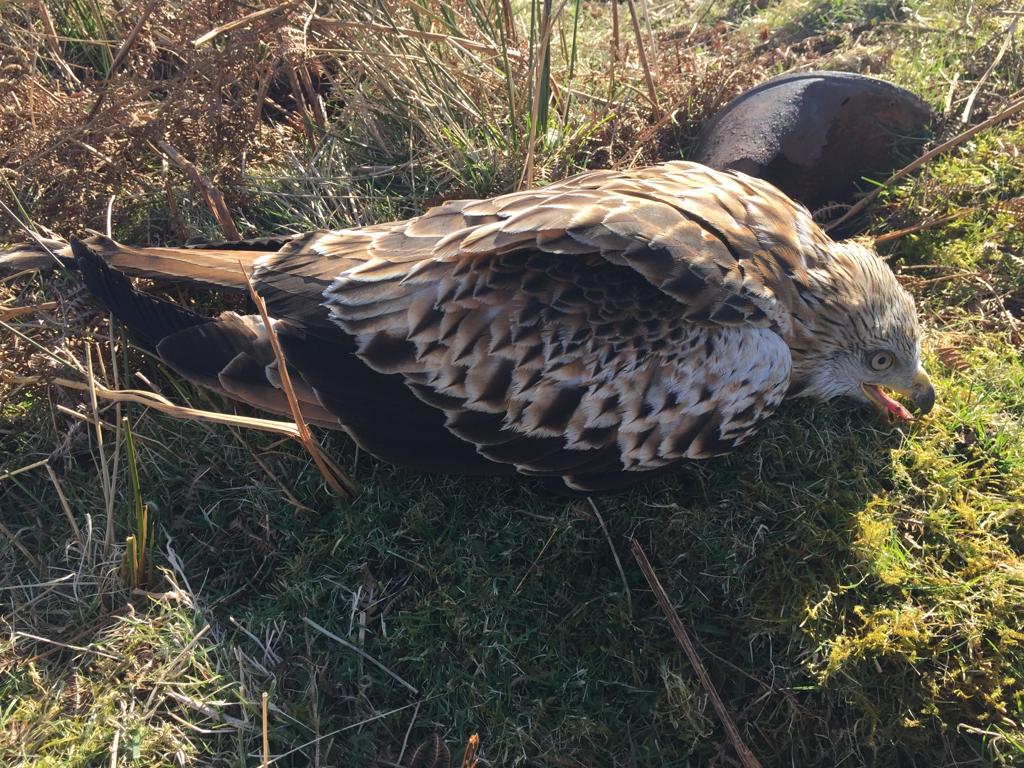
The bodies of six shot Buzzards and the remains of three more were discovered in Allen’s yard on the estate in 2021, after a poisoned Red Kite was reported to Dorset Police by a member of the public. The kite contained high levels of brodifacoum, the deadliest rat poison on the market, which also shockingly killed a White-tailed Eagle in the vicinity 10 months later.

The poisoned red kite that triggered a multi-agency search on the Shaftesbury Estate in March 2021, which uncovered gamekeeper Paul Allen’s widespread criminal activities. Photo: RSPB

The search of Allen’s land also uncovered stashes of deadly poisons, including the pesticide bendiocarb – which has been abused for deliberately killing of birds of prey for years – two bottles of the banned substance strychnine, two tins of the banned poison Cymag and the toxic rodenticide brodifacoum. There was also a loaded gun left propped behind a door in Allen’s home.

Allen pleaded guilty to the possession of the dead Buzzards and the poisons.

All birds of prey are protected under the Wildlife and Countryside Act 1981 and killing them is against the law, punishable by an unlimited fine and/or jail. In November, the RSPB published the Birdcrime report 2021, which revealed 108 confirmed incidents of raptor persecution in the UK. 71% of these occurred in relation to land managed for gamebird shooting.

A satelite-tagged White-tailed Eagle, poisoned with seven times the lethal dose of brodifacoum, was found dead 10 months later on the same estate, although it is unknown exactly where it picked up the poison. However, in a disappointing turn of events, the investigation was unexpectedly and prematurely shut down by Dorset Police before a full follow-up search could take place, despite police knowledge that the same substance had been found on the same estate during the investigation at court today.

Mark Thomas, UK Head of Investigations at the RSPB, said: “It is clear that the use of the lethal rat poison brodifacoum needs much tighter regulation and controls over use, as it is clearly being both misused and abused to kill birds of prey. At the very least this product should be restricted to indoor use only, as it was before the Government relaxed its use in 2016. We also suggest that only accredited pest controllers should be able to use it in specific circumstances. If not, then the unnecessary increase in bird of prey deaths, including White-tailed Eagles and Red Kites, will continue.”

ENDS

In addition to this press release, RSPB investigations officer Tom Grose has written an excellent blog about the investigation on Shaftesbury Estate into Allen’s criminal activities, and has also provided some information about the poisoned white-tailed eagle that was found on the same estate 10 months later, the investigation that was prematurely cancelled by Dorset Police, despite them knowing all about Allen’s crimes on the same estate. To read Tom’s blog click here.

The RSPB’s investigation team has also produced a short video about both cases, which can be watched via their Twitter account here:

Criminal Dorset gamekeeper Paul Allen receives suspended custodial sentence, despite multiple wildlife, poisons & firearms offences

BREAKING NEWS…..

Further to this morning’s blog (here), criminal gamekeeper Paul Allen, 54, of Baileys Hill, in Brockington, near Wimborne, has been given a suspended custodial sentence and a small fine after he pleaded guilty to multiple wildlife, poisons and firearms offences whilst working on the Shaftesbury Estate in Dorset in March 2021.

For possessing the dead birds (nine buzzards, six confirmed to have been shot), Allen received a total of 15 weeks in prison, suspended for 12 months.

He also received fines totalling £2,022 and compensation to the value of £844.70.

He avoided an immediate custodial sentence on the basis of ‘strong personal mitigation’, which basically means he was saved from jail because of the impact it would have on the care of his two teenagers.

More to follow….

UPDATE 10pm: There’s a really good article on the Dorset Live website about what happened in court this afternoon – well worth a read (here)

UPDATE 17th February 2023: RSPB’s response to sentencing of criminal Dorset gamekeeper, Paul Allen (here)

UPDATE 20th February 2023: Game-shooting industry’s response to sentencing of Dorset gamekeeper Paul Allen (here)

UPDATE 20th February 2023: Dorset Police response to sentencing of criminal gamekeeper Paul Allen (here)

UPDATE 24th February 2023: Natural England’s response to sentencing of criminal gamekeeper Paul Allen (here)

Convicted Dorset gamekeeper Paul Allen due to be sentenced today

Paul Allen, 54, the gamekeeper convicted last month of multiple wildlife, poisons and firearms offences committed on the Shaftesbury Estate, Dorset in March 2021 (here) is due to be sentenced at Weymouth Magistrates Court this afternoon.

You may recall, following the discovery of a poisoned red kite on the estate in November 2020, a multi-agency raid led by Dorset Police’s (now former) wildlife crime officer Claire Dinsdale took place in March 2021 (see here) where the corpses of six dead buzzards were found by a pen behind his house (tests later showed they had all been shot, including one that was was estimated to have been shot in the last 24hrs). Officers also found the remains (bones) of at least three more buzzards on a bonfire.

A loaded shotgun was found propped up behind a kitchen door (!) and 55 rounds of ammunition were found in a shed. Both the gun and the ammunition should have been inside a locked, specifically-designed gun cabinet, by law. The ammunition was not covered by Allen’s firearms certificate.

Officers also found a number of dangerous, and banned, chemicals, including two bottles of Strychnine, two containers of Cymag and a packet of Ficam W (Bendiocarb) in various locations, including in a vehicle used by Allen.

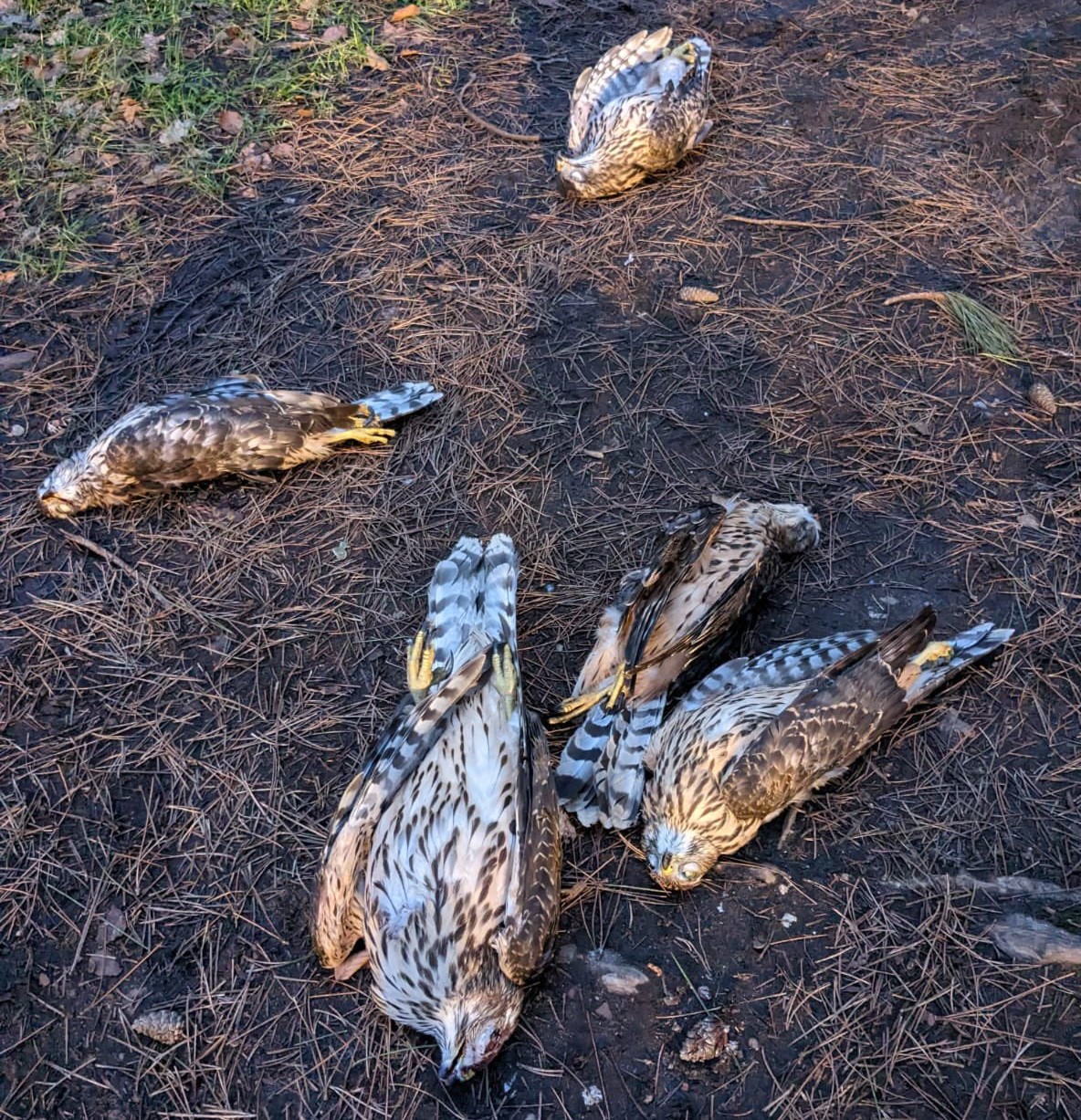
Four of the nine dead buzzards found. Photo: RSPB

At a hearing on 4th January 2023, Allen pleaded guilty to seven charges including two counts of possessing a live or dead bird, or parts thereof, one charge of failing to comply with the conditions of a shotgun certificate, one charge of failing to comply with the conditions of a firearms certificate, one count of possessing a regulated substance without a license, one count of failing to comply with  regulations in accordance with the Plant Protection Products (Sustainable Use) Regulations 2012 and one charge of contravening a health and safety regulations.

A number of other charges were dropped minutes before the start of the hearing after some discussion between the defence and the CPS. I’ve annotated this court listing to demonstrate the changes. The court listing was provided by a court clerk at last month’s hearing (thanks to the blog reader who sent it to me).

The court deferred sentencing until today to allow reports to be complied on Allen, to help inform sentencing. In my view these crimes pass the custody threshold but the court will need to consider any mitigating factors. For example, it has been reported elsewhere that Allen is recently widowed and has two teenage children. If he is the sole carer for these children then that will likely impact on the type of sentence he receives, although I would argue that having unsecure, highly dangerous poisons and an unsecure loaded shotgun propped up behind his kitchen door is questionable behaviour for an apparently responsible parent.

Sentencing takes place this afternoon and a large amount of media coverage is anticipated. I’ll report back later.

UPDATE 16.30hrs: Criminal Dorset gamekeeper Paul Allen receives suspended custodial sentence despite committing multiple wildlife, poisons and firearms offences (here)

Red kite found poisoned on Swinton Estate – North Yorkshire Police refuses to investigate

Last November I was reading an online article on the Teeside Live website about the Nidderdale Area of Outstanding Natural Beauty (AONB) in North Yorkshire being dubbed ‘the bird poisoning capital of the UK‘ (here).

The article was illustrated with various photographs, including this image of a poisoned red kite that was reportedly found dead at Roundhill Reservoir, near Masham in 2021:

The given location caught my eye as I understand the Roundhill Reservoir is surrounded by the Swinton Estate, a notorious grouse-shooting estate that has been at the centre of police investigations into confirmed and alleged raptor persecution for years.

For example, this is the estate where hen harrier ‘Bowland Betty’ was found dead in 2012, later confirmed to have been shot (here & here) although it has never been established whether she was shot on or off the estate. It’s also where a Swinton Estate gamekeeper was convicted for twice setting an illegal pole trap in 2013 (here) and where another hen harrier, ‘River’, was found shot dead in 2019 (here). Around the same time as River’s demise, an unidentified gunman had been filmed with two dogs walking through a hen harrier roost on the estate (here). There have also been reports from local raptor workers of the ‘mysterious disappearances’ of many raptors on this estate for over a decade.

The owner of Swinton Estate is Mark Cunliffe-Lister, Earl of Swinton, who in 2020 became the new Chairman of the grouse moor owners’ lobby group, the Moorland Association (here). This is a high profile position and in recent years Mr Cunliffe-Lister’s estate has become somewhat of a poster child for DEFRA’s ludicrous hen harrier brood meddling trial, where the estate has championed the removal of some hen harrier chicks in return for permitting others to remain and to be diversionary fed by estate staff, although this hasn’t been without controversy either after it emerged that Natural England had appeared to ‘bend the rules’ in favour of estate activities (e.g. see here). Controversially, in 2021 a Guardian journalist described Swinton Estate as the ‘hen harrier’s friend’ (here), supported by a statement from Stephen Murphy (Natural England) about the estate’s head gamekeeper, “What he’s done for harriers, word’s can’t describe“. Murphy also claimed that hen harrier Bowland Betty had definitely been shot elsewhere and merely flew on to the estate to die – an unevidenced claim that was later amended in the article. Last year the estate won what was described as ‘a prestigious conservation award’ for its involvement in the hen harrier brood meddling trial (here).

So, back to that article I was reading in November 2022. I didn’t recall hearing about a poisoned red kite being found on the Swinton Estate in 2021 and I’m pretty sure I would have remembered, given the location, so I did some digging to make sure the poisoning had been confirmed and the location verified, just in case the journalist had cocked up (she’d already mistakenly described Nidderdale as a ‘village’ instead of a region so I couldn’t rely on her account of the poisoned red kite to be accurate).

The Nidderdale Area of Outstanding Natural Beauty (AONB), North Yorkshire
Roundhill Reservoir in the Nidderdale AONB

I found details about this crime on the HSE’s Wildlife Incident Investigation Scheme spreadsheet, which confirmed the kite had been found poisoned on a Right of Way footpath in November 2021. The poisons found in the kite’s stomach included Bendiocarb, Carbofuran, Chloralose and Isofenphos – this highly toxic combination has become known as the ‘Nidderdale Cocktail’ as it’s so frequently used to kill birds of prey in this region, especially red kites (e.g. see here, here, here).

The red star denotes the approximate location of the poisoned red kite found in November 2021, close to Roundhill Reservoir and surrounded by the grouse moors of Swinton Estate

However, I couldn’t find any media coverage of this crime, nor any police appeals for information, nor any warnings to the public about the continued use of poisons so dangerous that some of them have been banned for years. Given that a year had already passed since the poisoned kite was discovered, I found this puzzling. So I contacted North Yorkshire Police’s rural crime team and asked them about the status of the investigation:

Here’s the astonishing response I received:

This North Yorkshire Police Inspector admitted that this poisoned red kite “unfortunately slipped through the net” but then went on to justify the police’s decision not to investigate by accusing the RSPB of failing to notify the police about this incident when the poisoned kite was first picked up. He claimed the police only found out about it five months later, in April 2022, whilst chasing the lab for the results of another investigation.

His allegations about the RSPB aside (and which I’ll come to, below), I was still stunned that he thought that launching an investigation, and issuing a public appeal for information, let alone issue a warning to the public about the use of poisons in the countryside, wasn’t worthwhile due to the ‘passage of time’ (five months), especially given the location where the poisoned kite had been found.

A couple of years ago a previous North Yorkshire Police Inspector had issued a public appeal/warning, ten months after the discovery of another poisoned red kite in Nidderdale (see here), so it seemed to me that there was no reason not to issue one after a five month delay.

I wrote back to North Yorkshire Police asking for an explanation:

Apparently, it wasn’t up for debate. Here’s the response I received:

Meanwhile, I contacted the RSPB and put to them the allegations this Inspector had made, that the RSPB hadn’t notified the police about the discovery of this red kite. It turns out those allegations were utterly unfounded/untrue. The RSPB DID contact North Yorkshire Police, on the day the poisoned kite was discovered, and took instruction from the police about submitting the corpse for toxicology analysis. Furthermore, they had the email correspondence to prove it:

So what are we to make of North Yorkshire Police’s refusal to investigate a confirmed poisoning incident (a so-called national wildlife crime priority), on an estate with a long history of alleged wildlife crime, that has enjoyed recent adulation from Natural England staff and the media, that has played a significant role in the hen harrier brood meddling trial, and whose owner is a high profile representative of the grouse-shooting industry?

Does Mr Cunliffe-Lister even know about this poisoned kite being found on his estate? Given the Moorland Association’s claimed ‘zero tolerance’ of raptor persecution, and Mr Cunliffe-Lister’s widely-reported apparent welcoming of birds of prey on his estate, I’d have expected him to speak out and condemn this disgraceful poisoning incident, as any decent landowner would. It’d be interesting to know whether North Yorkshire Police have informed him, or not.

Whatever, North Yorkshire Police’s refusal to investigate this crime is wholly unacceptable. In the first instance, I’ll be writing a letter of complaint to the North Yorkshire Police, Fire and Crime Commissioner, Zoe Metcalfe.

In her Police and Crime Plan 2022-2025 (here), she details an objective of ‘an improved [police] response to crime in rural areas, especially wildlife crime...’ as this had been identified as a major concern for North Yorkshire residents in the recent PCC consultation.

UPDATE 23.30hrs: Natural England’s senior management team has a lovely day out…on Swinton Estate!! (see here).

Shot red kite found injured in Greenwich Park, London

A shot red kite has been found injured after ‘falling from the sky’ at the Royal Observatory in Greenwich Park, south east London.

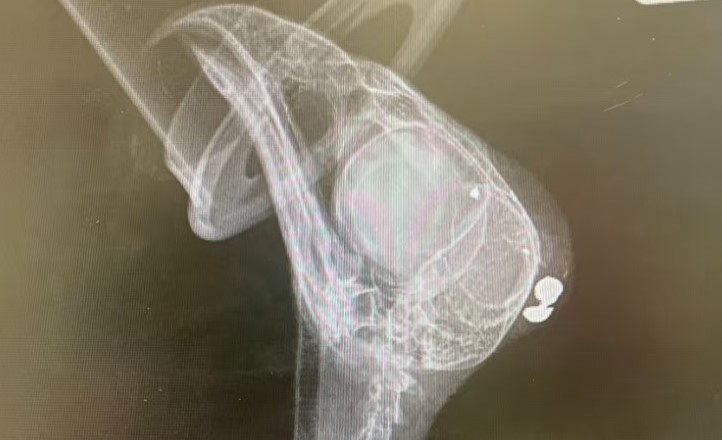
It is currently being treated at the South Essex Wildlife Hospital where x-rays revealed multiple shotgun pellets lodged in its body. It’s not clear where or when this kite was shot.

Staff at the wildlife hospital posted the following details and photos on social media yesterday evening:

UPDATE 13th February 2023, 10am: The person who found this injured kite has provided some more background to the circumstances:

Buzzard shot in Kent – Police appeal for information

Press statement from Kent Police (6 February 2023):

BUZZARD KILLED IN A VILLAGE NEAR MAIDSTONE

Kent Police’s Rural Task Force is investigating the shooting of a bird of prey in Otham, Maidstone.

At around 3.30pm on Friday 3 February 2023, a member of the public reported a buzzard had fallen into a garden in Otham Street after being shot.

It was taken to a veterinary surgery for treatment but had to be euthanised due to the extent of its injuries.

Buzzards are protected under the Wildlife and Countryside Act and officers are urging witnesses or anyone with information to contact them.

Police Sergeant Darren Walshaw said:

We are investigating this incident with colleagues from the RSPCA and suspect the bird was shot. We understand there were several people in the area at the time including walkers, residents in their gardens, and two people who were on the roof of a nearby property. We are urging anyone that can assist our enquiries to contact us“.

Witnesses should call 01622 604100, quoting Rural Task Force reference 16-23. You can also call Crimestoppers anonymously on 0800 555111 or complete the online form on the website.

ENDS

Shot buzzard in Essex succumbs to its injuries

The buzzard that was found shot in Colchester, Essex, earlier this month has unfortunately not survived its injuries.

It was found on 11th January 2023 near to Hardy’s Green and Heckford Bridge and was picked up by a member of the public.

The buzzard had suffered a broken wing and internal injuries and was being cared for by professionals at Colchester Owl Rescue. It succumbed to its injuries over the weekend.

Thanks to Essex Police’s Rural, Wildlife & Heritage Crime team for the update.

Essex Police’s investigation into the shooting of this buzzard is ongoing. If anyone has any information please contact Essex Police on Tel: 101, quoting incident reference # 42/13298/23.

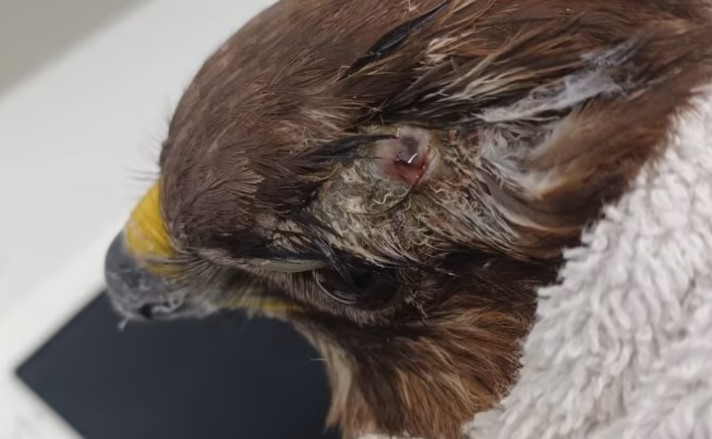
The shot buzzard. Photo: Essex Police Wildlife Team & Colchester Owl Rescue
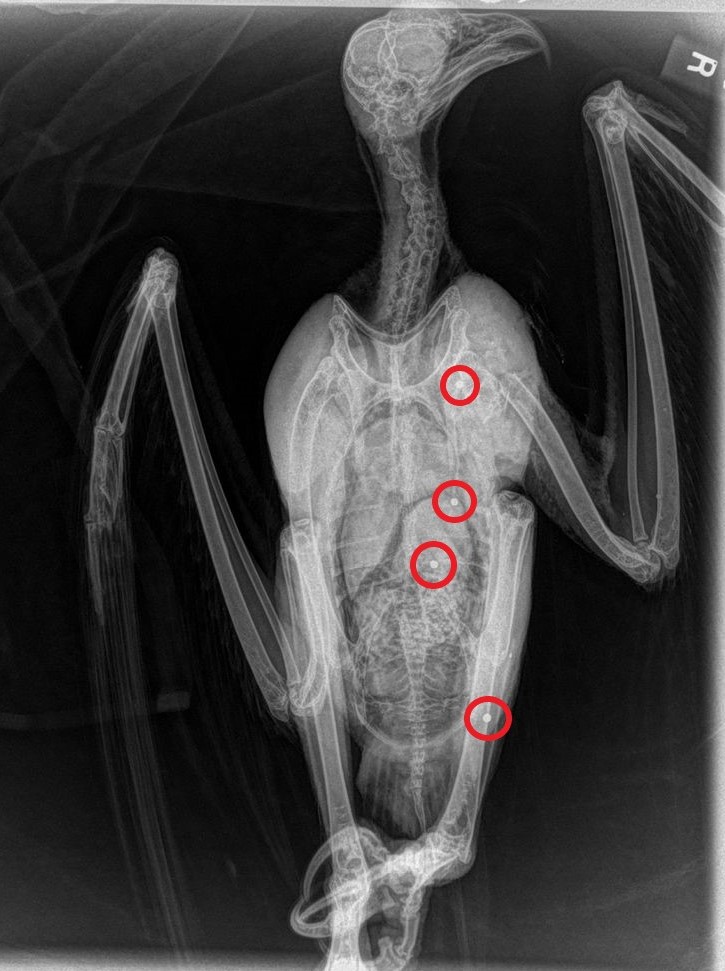
X-ray showing at least 3 shotgun pellets (highlighted by RPUK). Photo: Essex Police Wildlife Team & Colchester Owl Rescue