Moy gamekeeper convicted: cue damage limitation exercise by grouse shooting industry

Further to today’s news that gamekeeper Rory Parker (24) has pleaded guilty to shooting a sparrowhawk on Moy Estate in September 2021 (see here), it’s worth examining the narrative that’s being pumped out by the grouse-shooting industry representatives in a desperate attempt to distance the industry from yet another raptor persecution crime.

This conviction couldn’t have come at a worse time for the industry, as the Wildlife Management & Muirburn (Scotland) Bill begins its passage through the Scottish Parliament. Obviously, the industry won’t like the media attention of yet another raptor persecution crime being committed on a grouse-shooting estate so they’ll want to manipulate the media narrative to influence/minimise the scope of the forthcoming grouse shoot licensing scheme.

And so it begins.

It actually began this morning prior to the court hearing. I received a message from an individual within the industry (I won’t name him, he’s generally one of the good guys and I value his willingness to converse). He told me that, ‘in the spirit of accuracy and transparency’, that the shooting of this raptor hadn’t taken place on a grouse moor (as I’d previously reported) but that it was in fact in an area managed for pheasant and partridge. I told him that wasn’t my understanding but that I’d be happy to clarify this detail once the evidence had been heard in court. He told me this particular issue would be clarified during today’s hearing.

As it turns out, it wasn’t really clarified in court. But the RSPB has since published its video footage of the shooting (see link at foot of the RSPB press release, here) and it looks very much like a grouse moor to me.

Here’s a screengrab I took from the RSPB video, where incidentally I’ve highlighted the position of the gamekeeper, close to a large plastic decoy eagle owl that had been placed on a fencepost, presumably to try and draw in raptors to shoot at close quarters – we’ve seen gamekeepers using this technique many times before (e.g. see here, here, here, here, here, here).

The location of the shooting was given in court as a hill called Tom na Slaite. Here it is on an OS map – complete with a track leading up to some grouse butts:

Now, it’s quite possible that pheasants and partridge have been released on this part of the grouse-shooting estate – it’s becoming a common theme to release these birds for shooting on grouse moors (e.g. see here), either to supplement the grouse shooting days or, in some circumstances, to replace the grouse-shoot days when grouse stocks are too low to attract paying guests. It’s one of the significant faults in the proposed grouse shoot licensing Bill, in my opinion, but that’s a bigger discussion for another day.

The bottom line is that this gamekeeper, Rory Parker, shot this sparrowhawk on an upland grouse moor, not on a lowland game shoot as the industry would have us believe.

The narrative continues with a quote for the media from Moy Estate’s unnamed shooting tenant (I’ll return to the identity of the tenant/sporting agent in a future blog). His statement, quoted in the Scottish Daily Mirror, includes this line:

As the sporting tenant on this area of land, which is used for pheasant and partridge shoots, we were shocked when made aware of the incident….blah blah”.

It appears to be casual, but that phrase “….which is used for pheasant and partridge shoots…” is carefully and deliberately placed, in my opinion.

As is the phrase quoted in the same article given by Dee Ward from landowners’ lobby group Scottish Land & Estates (SLE), whose statement includes the line:

In this case, the illegal persecution of a sparrowhawk near pheasant and partridge release pens is particularly disappointing….”

It’s slick PR, designed to be consumed by an unassuming, uninformed audience who wouldn’t otherwise link the crime to grouse moor management.

It’s nothing new. We saw it in 2021 when a poisoned golden eagle was found dead, next to a poisoned bait, on a grouse moor on Invercauld Estate in the Cairngorms National Park. Estate Manager Angus McNicol was quoted in the press, claiming:

The area where the bird was found is on a let farm in an area which is managed for sheep farming and is on the edge of an area of native woodland regeneration. It is not managed for driven grouse shooting” (see here).

This claim was swiftly rebutted by Ian Thomson, Head of RSPB Investigations in Scotland (who was directly involved in the investigation) who said:

For the avoidance of doubt, the eagle was found poisoned next to a mountain hare bait, in an area of strip muirburn within 200m of a line of grouse butts and a landrover track” (see here).

The most blatant example of damage limitation by the grouse shooting industry I’ve seen was when SLE issued a statement in response to the appalling crimes committed by gamekeeper Alan Wilson on the Longformacus Estate a few years ago.

In that statement, SLE described the Longformacus Estate as being ‘managed for low ground pheasant shooting‘ (see here). It may well have been, but strangely, they forgot to mention that the crime scene (Henlaw Wood) also just happened to be at the foot of a driven grouse moor! This omission was probably just an innocent, forgetful moment, and nothing whatsoever to do with the fact that the Werritty Review on grouse moor management was imminent.

I’ll write more about today’s conviction of the Moy Estate gamekeeper in another blog, shortly.

UPDATE 1st April 2023: The sentencing of raptor-killing Moy Estate gamekeeper Rory Parker (here)

UPDATE 4th April 2023: Game-shooting industry’s response to the conviction of Moy Estate gamekeeper Rory Parker (here)

Gamekeeper convicted of raptor persecution on Moy – a notorious Scottish grouse-shooting estate

Not for the first time, a gamekeeper has been convicted for raptor persecution crime on Moy Estate, a notorious grouse- shooting estate in Scotland.

The RSPB has issued the following press statement:

GAMEKEEPER PLEADS GUILTY TO SHOOTING SPARROWHAWK ON SCOTTISH GROUSE MOOR

  • Gamekeeper caught by footage taken by RSPB Scotland Investigations team
  • Fined £1500
  • The conservation charity is calling for urgent implementation of the Wildlife Management and Muirburn Bill which will bring in grouse moor licensing, aimed at stopping crimes against birds of prey

At Inverness Sheriff’s Court today (31 March 2023), Rory Parker (24), pleaded guilty to shooting a Sparrowhawk whilst employed as a gamekeeper on the Moy Estate, Inverness.

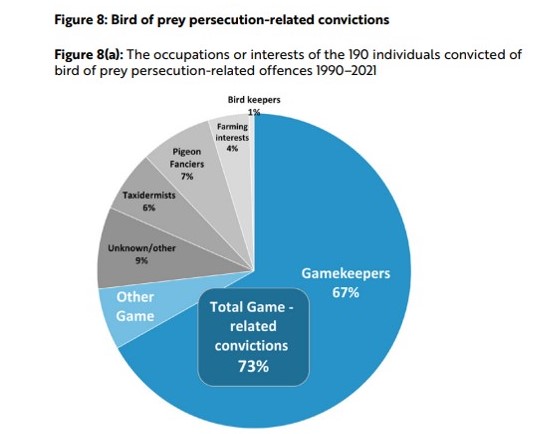
He is the 56th gamekeeper to be convicted of raptor persecution offences in Scotland since 1990.

The conviction was secured after the incident was directly filmed by RSPB Scotland Investigations staff on 16 September 2021. Footage shows the bird circling overhead, before a gun is raised by the defendant and then the bird is shot out of the sky, before finally being collected by the gamekeeper. A plastic ‘decoy’ owl can be seen close to the gamekeepers position and is most likely being used as a lure to attract live birds of prey to be shot.

RPUK map of Moy Estate, boundaries provided by Andy Wightman’s Who Owns Scotland website

A search led by Police Scotland of the suspects address and land on the Moy Estate took place on 19 September 2021 when he was arrested and interviewed.

All birds of prey are protected under the Wildlife and Countryside Act 1981 and killing them is against the law, punishable by an unlimited fine and/or jail.

Ian Thomson, Head of Investigations for RSPB Scotland, said: “This conviction was the end result of exemplary partnership working between Police Scotland, RSPB Scotland, the Wildlife DNA Forensics team at Science and Advice for Scottish Agriculture and the Wildlife & Environmental Crime Unit of COPFS.

It is clear, however, with the shooting of a red kite on another Highland grouse moor earlier this week [Ed: see here], and ongoing investigations into incidents on other estates, that current sanctions appear to be no deterrent to criminal activity by employees of the grouse shooting industry, with their onslaught against protected birds of prey continuing unabated”.

Ian added: “We hope that the Scottish Parliament expedites the passage of laws in the Wildlife Management and Muirburn Bill introducing proper regulation of that industry, where the right to shoot grouse is dependent on operating within the law”.

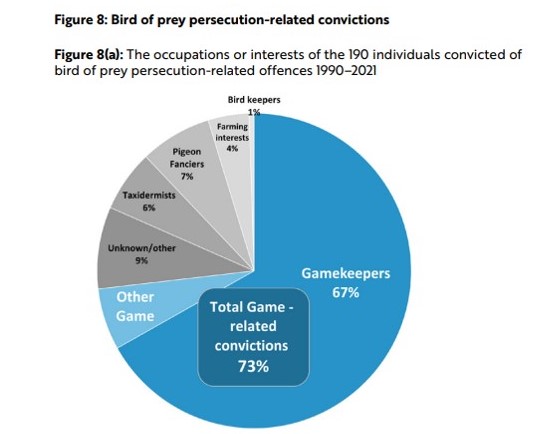
Nationally, the RSPB’s recently published Birdcrime report for 2021 found that over two-thirds of confirmed raptor persecution incidents were in relation to land managed for gamebird shooting.

ENDS

There’s a lot to say about this conviction, and this estate, and it will probably take several blogs to get through it all.

For those who don’t know, Moy Estate is already serving a three-year general licence restriction (June 2022-2025) after Police Scotland provided the licensing authority (NatureScot) with evidence of wildlife crime against birds of prey on the estate, notably the discovery of a poisoned red kite in 2020 and ‘incidents in relation to trapping offences’. I wrote a blog about it at the time (see here) which also includes details of the long and sorry history of raptor persecution uncovered on this estate over the last decade.

And they’re still at it.

More on today’s conviction shortly.

UPDATE 31st March 2023: Moy gamekeeper convicted – cue damage limitation exercise by grouse shooting industry (here)

UPDATE 1st April 2023: The sentencing of raptor-killing Moy Estate gamekeeper Rory Parker (here)

UPDATE 4th April 2023: Game-shooting industry’s response to the conviction of Moy Estate gamekeeper Rory Parker (here)

Red kite found shot on a Durham grouse moor is ‘fighting for its life’

The RSPB has just issued the following press release:

RED KITE FOUND SHOT ON GROUSE MOOR IS ‘FIGHTING FOR ITS LIFE’

  • The protected bird of prey was found grounded on a grouse moor in County Durham, in March 2023
  • An X-ray revealed multiple pieces of shot within the bird’s body
  • Durham Police and the RSPB are appealing for information

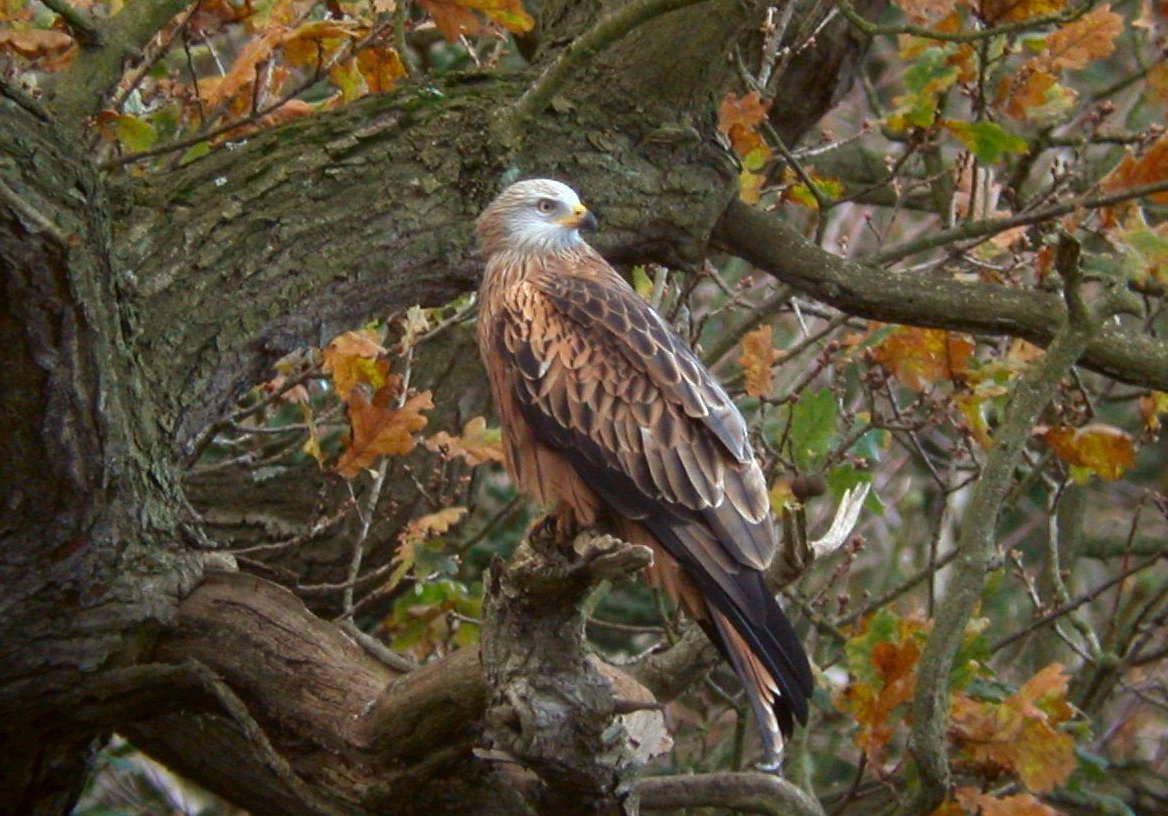
A Red Kite – a species protected by UK law – was found in Edmundbyers, County Durham in a stricken condition, peppered with shot and is currently fighting for its life in a bird hospital.

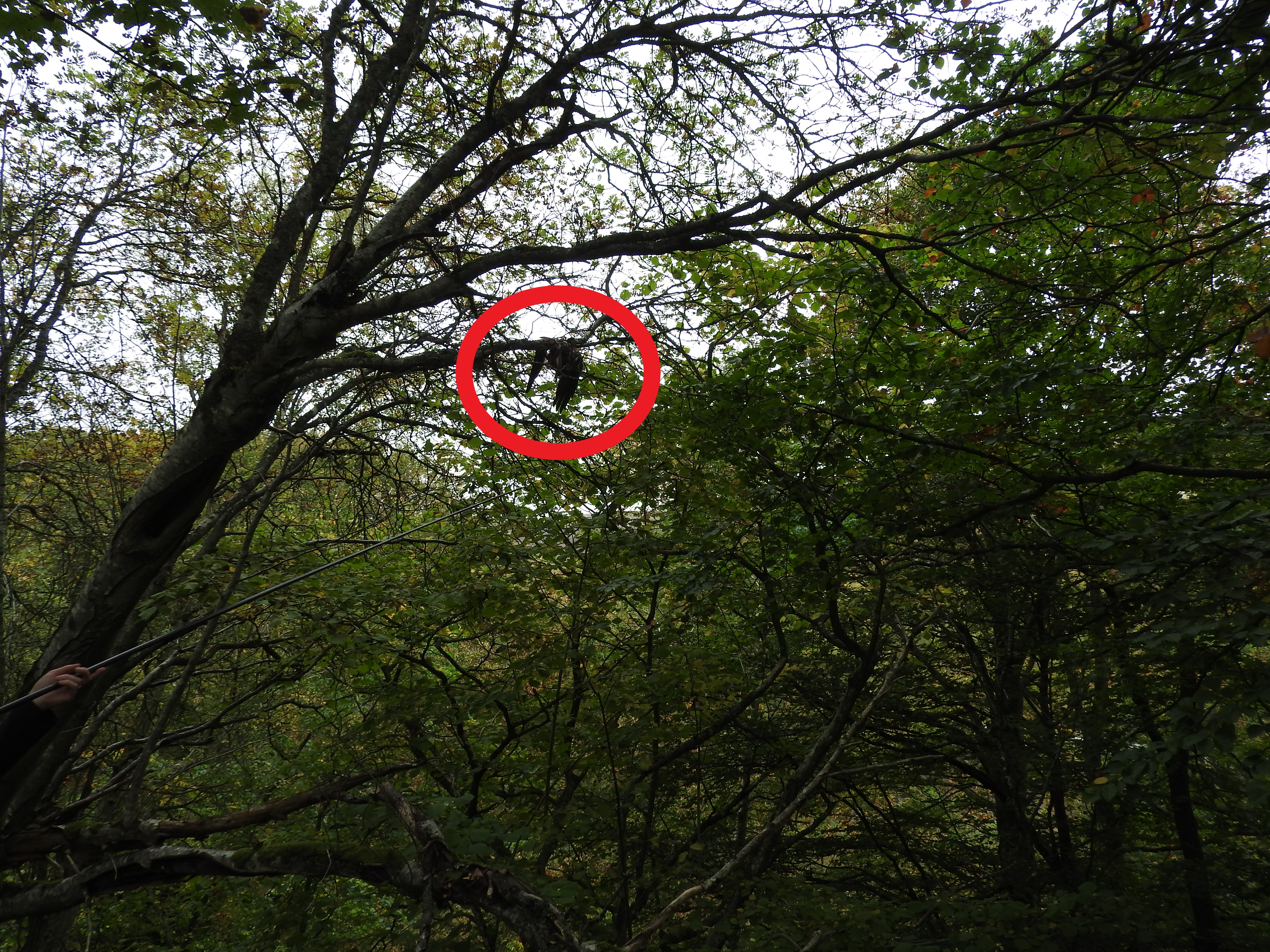
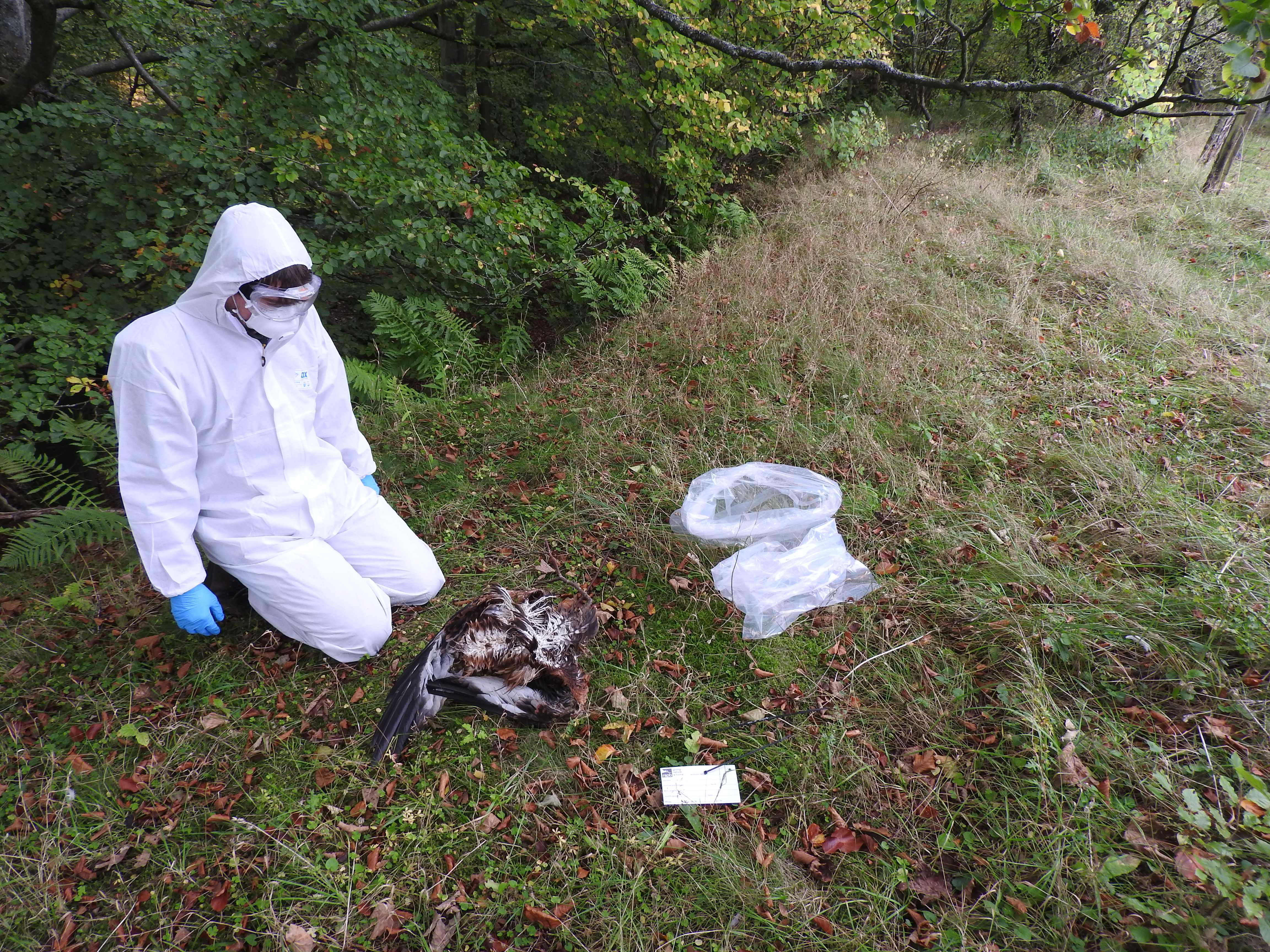
A member of the public noticed the bird at the side of a public footpath along Burnhope Burn on 17 March 2023 and reported it to the RSPB. Arriving on the scene, RSPB Investigations Officers found the Red Kite hiding in bracken, alive but unable to fly.

It was taken to a wildlife rehabilitator and looked over by a vet. An X-ray revealed the bird’s entire body was peppered with shot including pieces that had broken its wing.

All birds of prey are legally protected, making it a criminal offence to intentionally kill or injure one, punishable by an unlimited fine or jail.

Red Kites were historically persecuted in the UK but are making a comeback thanks to official reintroduction programmes in recent decades supported by Government. However these birds take a long time to spread out, and illegal killing is preventing the species expanding and gaining a foothold in areas where they were formerly found before they were driven to extinction in England around the late nineteenth century.

This incident comes in the same week when news of another Red Kite was found shot in Grantown-on-Spey, [Ed: see here] in the Scottish Highlands, also in March 2023. Sadly, it had to be euthanised due to the extent of its injuries.

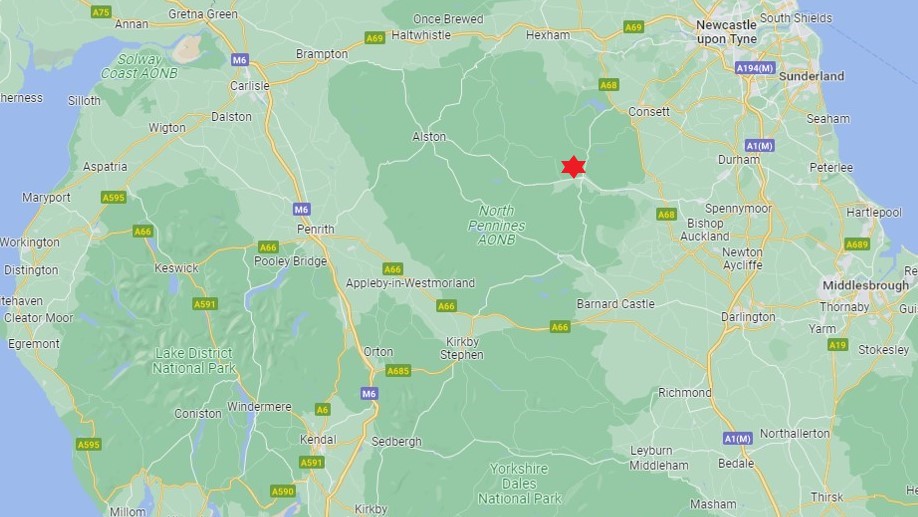
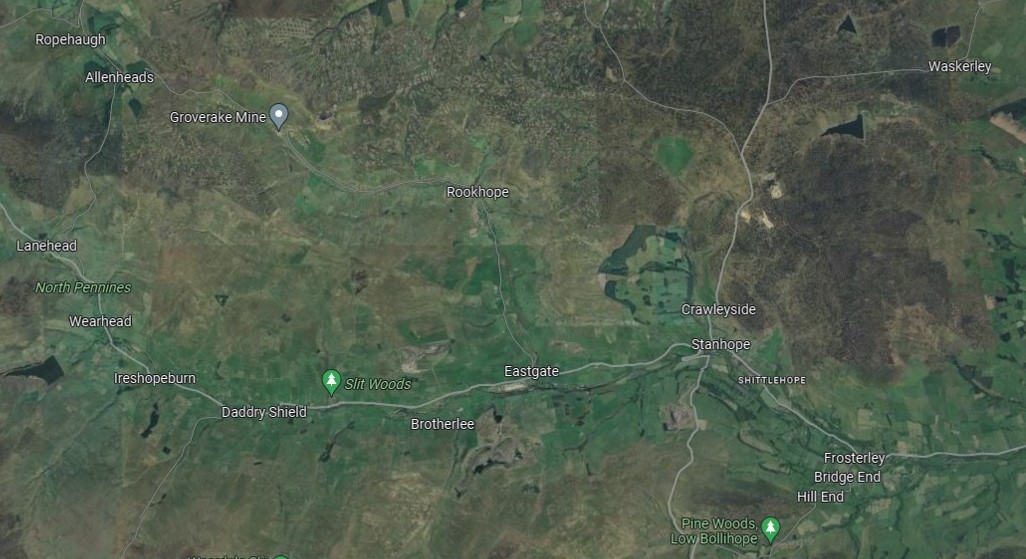
This area of County Durham inside the North Pennines AONB has a history of raptor persecution. In 2021, another red kite was found dead near Edmundbyers, Co Durham having been illegally poisoned. Police-led searches in the area followed last year, however no one was prosecuted.

And in 2020, two Red Kites fitted with satellite tags unexpectedly and inexplicably vanished in the same area: one tag sent its last fix from the Derwent Gorge, the other from a grouse moor near Derwent Reservoir. Neither the birds or their tags were found, and it is believed they were illegally killed.

The link between driven grouse shooting and the illegal killing of birds of prey has been well documented. The RSPB’s latest Birdcrime report showed that 71% of all confirmed incidents of raptor persecution were in connection to gamebird shooting.

Jack Ashton-Booth, RSPB Investigations Officer, said:

The kite is currently receiving the best care, and we understand it has been hopping up onto a perch and feeding itself. However it’s still not out of the woods. We are incredibly grateful to the diligent member of the community who noticed and reported the bird, and urge anyone else who finds a dead or injured bird of prey in suspicious circumstances to do the same. It could save a bird’s life and help us identify a raptor killer at large. We are also hugely grateful to Jean Thorpe, who is caring for the bird, as she has done so many others.

It’s unlikely this Red Kite will have flown far from where it was shot. If you have any information about who might have done this, or know of anyone shooting birds of prey in this area, please get in touch.”

Friends of Red Kites (FoRK), a voluntary monitoring and community engagement organisation based in the North East, commented:

We are sickened to hear that yet another Red Kite has been found on the moorlands of the North Pennines suffering from illegal persecution. Since the re-introduction of Red Kites to the North East of England in 2004, a number of birds have been found dead on or adjacent to these moorlands which are managed for grouse shooting. After nearly 20 years the population of breeding kites has barely advanced above 20 pairs. By comparison, populations of kites in other areas where they have been released, like the Chilterns, are booming. It is a sad indictment on parts of society that the people of the North East are denied seeing these beautiful birds gracing our skies more widely.” 

If you have any information, contact Durham Constabulary’s Wildlife Crime Officer, PC Dave Williamson, by emailing david.williamson@durham.police.uk or calling in to Barnard Castle Police Station.

Alternatively, to share sensitive information in confidence, call the RSPB’s Raptor Crime Hotline on 0300 999 0101.

ENDS

UPDATE 12th April 2023: Shot red kite found on a Durham grouse moor is successfully re-habilitated and released back to wild (here)

Game-shooting industry’s response to news that red kite was shot on grouse moor (Lochindorb Estate)

Further to yesterday’s news that a member of the public witnessed the shooting of a red kite on Lochindorb Estate on Monday morning (see here), I’ve been looking to see how the game-shooting industry has responded to Police Scotland’s appeal for information.

You’ll recall that this is the game-shooting industry whose organisations routinely state they have a ‘zero tolerance’ policy towards raptor persecution, in which case you’d think they’d be quick to condemn this latest crime and call on their members to assist the police in any way they can.

So far, I haven’t found any statements of condemnation on the websites of the Scottish Gamekeepers Association, BASC, or the Countryside Alliance.

I did find a statement on the website of Scottish Land & Estates (SLE), the grouse moor owners’ lobby group, as follows:

It’s good to see a prompt response from SLE (their statement was published yesterday) and it’s also good to see SLE urging its members and readers to assist with the police investigation.

Although I couldn’t help but notice that Lochindorb Estate isn’t named, and nor is the fact that Police Scotland is particularly interested in receiving information relating to quad bikes and off-road vehicles seen in the area at the time of the shooting.

If anyone does have information, please contact Police Scotland on 101, quoting incident number 1760 of Monday, 27 March, or make a call anonymously to the charity Crimestoppers on 0800 555 111.

Red kite shot on Lochindorb Estate: Police Scotland issue appeal for information

A member of the public witnessed the shooting of a red kite on the Lochindorb Estate yesterday morning. It was recovered by the Scottish SPCA but unfortunately its injuries were so severe it had to be euthanised.

Police Scotland has issued the following appeal for information:

APPEAL FOLLOWING BIRD OF PREY SHOT NEAR GRANTOWN-ON-SPEY

Officers are appealing for information after a protected bird of prey was shot near Grantown-on-Spey.

We received a report of a red kite being shot around 11.15am on Monday, 27 March, on the Lochindorb Estate, Grantown-on-Spey.

It was recovered with the assistance of the Scottish Society for the Prevention of Cruelty to Animals (SSPCA) but had to be euthanized as its injuries were not recoverable.

Community Police Inspector Craig Johnstone said: “The red kite is a protected species and under the Wildlife and Countryside Act 1981 it is illegal to kill them.

I am asking anyone in the local community who may be able to help with our enquiries to come forward. If you were walking in the area on Monday then please let us know if you saw anything.

In particular, if you saw quad bikes in the area or off road vehicles, then get in touch as even the smallest bit of information could assist with our investigation.”

Anyone with information is asked to contact Police Scotland on 101, quoting incident number 1760 of Monday, 27 March, or make a call anonymously to the charity Crimestoppers on 0800 555 111.

ENDS

I applaud this very fast public appeal for information by Police Scotland. It’s in stark contrast to their 19-month silence about a poisoned red kite that was found in the same region in 2021 (see here) and for which they received much deserved criticism.

All credit to them for responding so quickly this time and for naming the estate on which the shooting was witnessed. Bravo.

UPDATE 29th March 2023: Game-shooting industry’s response to news that red kite was shot on grouse moor (Lochindorb Estate) here

UPDATE 1st April 2023: Arrest made in relation to red kite shooting on Lochindorb Estate grouse moor (here)

Suffolk Police arrest a man in connection with five shot goshawks found in Kings Forest in January

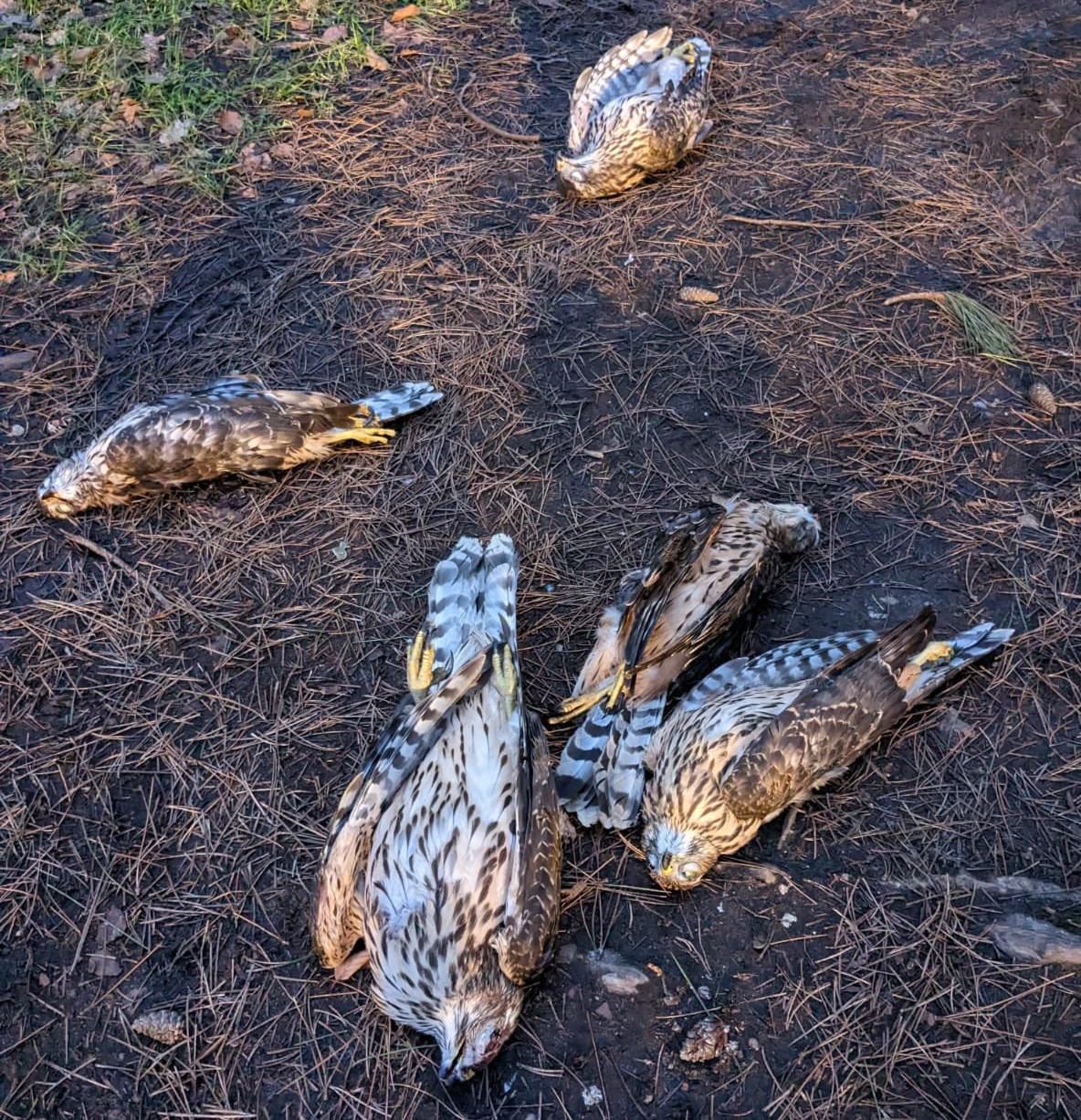
Suffolk Police have arrested a man in connection with their ongoing investigation into the illegal shooting of five juvenile goshawks that were found dumped in a car park next to Kings Forest near Thetford in January.

The 70-year-old man from the Brandon area was arrested yesterday on suspicion of killing/taking a schedule 1 wild bird, possession of a schedule one wild bird and breach of firearms licence conditions.

He was taken to Bury St Edmunds Police Investigation Centre for questioning and subsequently released under investigation, pending further enquiries.

Let’s hope the police investigation leads to someone being charged and convicted. There’s currently a £16K+ reward available to anyone who provides information leading to a successful prosecution. The reward fund comprises £5K from the RSPB (here), £5K from Wild Justice (here), and £6K+ from a crowd funder set up by Rare Bird Alert (here).

Here’s a press statement from Suffolk Police, published yesterday afternoon:

Man released in connection with bird shooting – Wordwell

A man arrested in connection with the shooting of five birds in Wordwell near to Bury St Edmunds has been released under investigation.

The male in his 70s and from the Brandon area was arrested yesterday (Monday 27 March) on suspicion of killing/taking a schedule 1 wild bird, possession of a schedule one wild bird and breach of firearms licence conditions.

The five birds of prey were found on Monday 16 January, having been left in a parking area just off from the B1106 in Kings Forest, near Wordwell. X-rays were undertaken which showed all five birds had suffered injuries from multiple pieces of shot.

Officers from Suffolk’s Rural and Wildlife Policing Team were assisted by Norfolk police colleagues, as well as officers from the RSPB Investigations team and the National Wildlife Crime Unit.  

The man was taken to Bury St Edmunds Police Investigation Centre for questioning and subsequently released under investigation, pending further enquiries.

All birds of prey are protected by law, and to kill or injure one could result in jail and/or an unlimited fine.

ENDS

UPDATE 7th June 2023: Man charged in relation to 5 shot goshawks found dumped in a forest carpark in January (here)

Fascinating new details emerge about investigation into raptor persecution on Shaftesbury Estate in Dorset

Earlier this year, criminal gamekeeper Paul Allen was sentenced for multiple wildlife, poisons and firearms offences committed on the Shaftesbury Estate in Dorset in 2021 (see here).

He first came to the attention of the police after a member of the public discovered a dead red kite on the estate in November 2020. Tests revealed it contained the poison Bendiocarb and this triggered a multi-agency raid in March 2021 led by Dorset Police’s (now former) wildlife crime officer Claire Dinsdale.

The poisoned red kite found on the Shaftesbury Estate by Dorset resident Johanna Dollerson

Officers found the corpses of six dead buzzards by a pen behind the gamekeeper’s house (tests later showed they had all been shot, including one that was was estimated to have been shot in the last 24hrs). Officers also found the remains (bones) of at least three more buzzards on a bonfire.

A loaded shotgun was found propped up behind a kitchen door (!) and 55 rounds of ammunition were found in a shed. Both the gun and the ammunition should have been inside a locked, specifically-designed gun cabinet, by law. The gun and the ammunition were not covered by Allen’s firearms certificate.

Officers also found a number of dangerous, and banned, chemicals, including two bottles of Strychnine, two containers of Cymag and a packet of Ficam W (Bendiocarb) in various locations, including in a vehicle used by Allen.

Some of you may also recall that Allen was initially charged with killing the red kite, but court records showed that this charge, along with two others, was subsequently dropped minutes before the hearing (see here), probably as some kind of bargaining agreement between the lawyers.

Allen was sentenced in February 2023 and escaped a custodial sentence due to his personal circumstances (see here).

If you recall, the Shaftesbury Estate was also where a young satellite-tagged poisoned white-tailed eagle was found dead, a year later, in January 2022. Tests revealed the eagle’s liver contained seven times the lethal dose of the rodenticide Brodifacoum but Dorset Police refused to conduct a search of the estate, despite already running an investigation into gamekeeper Paul Allen’s crimes on the same estate(!), and they still haven’t provided a credible explanation for that appalling decision (see here).

Now new details have emerged about what was found during the investigation into gamekeeper Allen, thanks to Guy Shorrock, a member of the PAW Forensics Working Group and a former Senior Investigator at RSPB. Guy has written a guest blog for Wild Justice to demonstrate how the Raptor Forensics Fund, initiated by Wild Justice in 2020, has been used to help bring a number of criminal gamekeepers to court.

In that guest blog, Guy discusses the forensic testing undertaken on a ‘cut open’ dead rat that had been found next to the red kite’s corpse. Tests revealed it, too, contained the poison Bendiocarb – in other words, it had been placed as a poisoned bait. Forensic testing also confirmed that the kite had consumed part of a brown rat. You don’t have to be Poirot to piece it all together but even though Allen’s vehicle contained multiple pots of Bendiocarb, this still isn’t sufficient evidence to demonstrate without reasonable doubt that he was responsible for placing the poisoned bait that killed that red kite. This is a very good example of just how high the criminal burden of proof is and why so many prosecutions against gamekeepers have failed.

What has also been revealed is that in addition to being poisoned by Bendiocarb, that red kite also contained NINE times the lethal level of the rodenticide Brodifacoum in its system!! Sound familiar? The dead white-tailed eagle, found on the same estate a year later, contained seven times the lethal dose. To me, this makes Dorset Police’s decision not to search the Shaftesbury Estate even more non-sensical than previously thought.

Wild Justice has asked its legal team to examine Dorset Police’s botched handling of the poisoned white-tailed eagle case and expects to have more news on that in due course.

Meanwhile, I’d really encourage you to read Guy’s guest blog on Wild Justice’s website (here), published this morning, for a fascinating insight into the pain-staking forensic work that goes in to prosecuting those who continue to kill raptors.

The Raptor Forensics Fund, initiated by Wild Justice and supported by donations from the Northern England Raptor Forum, Tayside & Fife Raptor Study Group, Devon Birds, and a number of generous individuals who wish to remain anonymous, is now running low (because it’s been used so often!). Wild Justice intends to top up the fund shortly. If you’d like to donate to Wild Justice’s work, please click here. Thank you.

Millden Estate says it will appeal General Licence restriction imposed after evidence of raptor persecution

Earlier this week, NatureScot announced it had imposed a three-year General Licence restriction on Millden Estate in the Angus Glens, after three shot buzzards were found in bags outside gamekeepers’ cottages on the estate in 2019 (see here and here).

In an article subsequently published by The Courier this week (here), an unnamed spokesperson for Millden Estate said they would appeal the decision.

Quotes from Millden Estate cited in The Courier article include:

The estate does not condone or tolerate any illegal activity relating to the welfare of animals or wildlife“,

and

We are extremely disappointed by this decision and intend to appeal

and

The estate does not condone or tolerate any illegal activity relating to the welfare of animals or wildlife and it has robust and comprehensive systems in place to ensure compliance with the law.

We were shocked at the time to learn of all allegations of wildlife crime against an employee of the estate. He was subject to an extensive investigation by the police and the crown and dealt with.

The employee involved was suspended by the estate with immediate effect and resigned a few days later when the police investigation was still at an early stage.

At no stage was the estate itself the focus of the investigation. We consider that the estate is being unfairly penalised for events not within its control and for which it bore no responsibility.”

The last three sentences from the estate are mostly what I would describe as being a red herring because they relate to the conviction of Millden Estate gamekeeper Rhys Davies for badger-baiting and other sadistic animal welfare offences, which took place at locations away from Millden Estate (although he kept his mutilated and scarred fighting dogs kennelled at Millden; injuries that the Crown Office described as ‘obvious injuries’ but which apparently went unnoticed by Davies’ gamekeeper colleagues and bosses for months).

Two of gamekeeper Rhys Davies’ obviously mutilated dogs, tethered to what appears to be a work vehicle. Photo: SSPCA

Oh, and the estate WAS the focus of the investigation into gamekeeper Rhys Davies as the search warrant included a provision to search various sites on Millden Estate looking for evidence of badger sett disturbance (I’m not aware that any was found there). And Davies’ tied cottage and associated outbuildings on the estate were also searched, under warrant, where a number of serious firearms offences were uncovered, specifically, an unsecured Benelli shotgun was found propped up against a wall near the front door; two unsecured rifles were also found: a Tikka .243 rifle on the sofa and a CZ rifle in the hall cupboard next to the open gun cabinet;  and an assortment of unsecured ammunition was found including 23 bullets in a pot on the floor, five in a carrier bag behind the front door and one on top of a bed, according to a statement by the Crown Office.

So why do I think the latest remarks from Millden Estate to the journalist from The Courier are a red herring? Well, simply because the General Licence restriction hasn’t been imposed on Millden Estate for Davies’ depraved offences – it has absolutely nothing to do with him or his crimes. The General Licence restriction has been imposed after the discovery of three shot buzzards shoved inside bags outside two gamekeepers’ houses (found during the SSPCA/Police raid at Millden when they were investigating Davies) as well as ‘incidents relating to trapping offences’, for which Davies, nor anybody else, has been prosecuted.

Tellingly, the Millden Estate spokesperson fails to mention any of this detail, but instead focuses on how Davies has been ‘dealt with’ [convicted] and is no longer employed at Millden. Irrelevant, mate.

Of course, Millden Estate is entitled to appeal NatureScot’s decision to impose a General Licence restriction, as laid out in the framework for restrictions on NatureScot’s website (here). Although to be honest it’s all a bit absurd as the estate has already had one opportunity to appeal, when NatureScot first notified Millden of its intention to restrict the General Licence. Now it gets another bite of the cherry.

But so be it. Other estates with a restriction have also previously appealed, and all have failed. For example, Raeshaw Estate lost a judicial review in 2017 here; Leadhills Estate lost an appeal in 2019 here (and this is really worth reading- it’s hilariously inept); and Leadhills Estate lost another appeal in 2021 after a second GL restriction was imposed here; Lochan Estate in Strathbraan lost its appeal in 2022 here; Invercauld Estate lost its appeal in 2022 here; and Moy Estate also lost its appeal in 2022 here).

Millden Estate must lodge its appeal in writing within 14 days of receiving its General Licence restriction notice from NatureScot. That will trigger a suspension of the restriction notice (ridiculous, I know!) until such time as NatureScot has undertaken the appeal process, which it tries to complete within four weeks.

Millden is yet another grouse-shooting estate to be sanctioned after police find evidence of raptor persecution

Further to this morning’s news that Millden Estate in the Angus Glens has been slapped with a three-year General Licence restriction after evidence was found of raptor persecution crimes (see here), it’s worth examining the background to this case.

Millden is one of a number of grouse-shooting estates situated in the Angus Glens that has featured many, many times on this blog (see here for all Millden posts).

Location of Millden Estate in the Angus Glens. Estate boundaries sourced from Andy Wightman’s Who Owns Scotland website

Millden Estate first came to my attention in July 2009 when a young satellite-tagged golden eagle called Alma was found dead on the moor – she’d ingested the deadly poison Carbofuran (here). It wasn’t clear where she’d been poisoned and the estate denied responsibility.

Then in 2012 there was the case of another satellite-tagged golden eagle, believed to have been caught in a spring trap on Millden Estate before moving, mysteriously, several km north during the night-time only to be found dead in a layby with two broken legs a few days later (here and here). The estate denied responsibility and the Scottish Gamekeepers Association conducted an ‘analysis’ (cough) and deduced it was all just a terrible accident (here).

There have been other incidents – former Tayside Police Wildlife Crime Officer Alan Stewart describes ‘a horrendous catalogue of criminality’ recorded on Millden Estate during his time (see here). However, despite this history, nobody has ever been prosecuted for raptor persecution crimes on Millden Estate.

Today’s announcement from NatureScot that a General Licence restriction has been imposed on Millden Estate is the first sanction I’m aware of at this location. It has been imposed after three shot buzzards were found in bags outside two gamekeeper’s cottages during an SSPCA-led investigation into badger-baiting and other animal-fighting offences in 2019.

That investigation led to the successful conviction in May 2022 of depraved Millden Estate gamekeeper Rhys Davies for his involvement in some sickening animal cruelty crimes (see here). Despite his conviction, Millden Estate denied all knowledge of this employee’s criminal activities (here).

There hasn’t been a prosecution for the shooting (or possession) of those three shot buzzards, nor for the six other shot raptors found in a bag just a short distance from the Millden Estate boundary (here), and nor will there be, according to a statement provided to me by the Crown Office (here).

With this long history of un-attributable wildlife crime on and close to Millden Estate, the imposition of a General Licence restriction is welcome news, although in real terms it’s nothing more than a minor inconvenience to the estate. It doesn’t stop their legal killing of so-called pest species (e.g. crows) because all they have to do is apply for an Individual licence, which NatureScot will have to grant (although it can revoke an Individual licence if more evidence of crime emerges – as happened on Raeshaw Estate in 2017 – see here), and nor does it stop the legal killing of red grouse, pheasants or red-legged partridge by paying guests.

This photograph appeared on social media in 2017 titled ‘Team Millden’ and shows a bunch of blokes dressed in Millden tweed grinning inside the estate’s larder after a day’s grouse shooting.

I’ve written about the monumental ineffectiveness of General Licence restrictions many times (e.g. see hereherehereherehere) and my view hasn’t changed. The only weight that a General Licence restriction carries is a reputational hit for the estate on which it is imposed, which was the Environment Minister’s aim when GL restrictions were first mooted (here).

This is useful from a campaigner’s perspective because it allows us to demonstrate that raptor persecution continues on Scottish grouse moors, despite the absurd denials of senior industry representatives (e.g. see here).

But it doesn’t stop the estate’s business activities. You might think that others in the industry, or even elected politicians, would shun a restricted estate but that simply doesn’t happen (e.g. see here and here).

And nor is it an effective deterrent – Leadhills Estate, a grouse moor in South Lanarkshire, was slapped with a second General Licence restriction after ‘clear evidence’ of wildlife crime was uncovered whilst the estate was still serving its first restriction notice (see here)!

Given the current number of grouse-shooting estates serving General Licence restrictions after ‘clear evidence’ of wildlife crime was provided by Police Scotland: Leadhills Estate (here), Lochan Estate (here), Leadhills Estate [again] (here), Invercauld Estate (here), Moy Estate (here) and now Millden Estate (here), it’s clear that the Scottish Government’s proposed grouse-shoot licensing scheme can’t come soon enough.

There are strong rumours that the Wildlife Management (Grouse) Bill will be presented to the Scottish Parliament before Easter and many of us are eagerly awaiting its publication to see the details of what is proposed and, importantly, how it will be enforced.

One thing’s for sure, it will need to be a lot more robust than the General Licence restriction and any sanctions, which should hopefully include terminating an estate’s ability to continue gamebird shooting during a determined-sanction period, will need to be deployed a lot quicker than the time it takes for a General Licence restriction to be imposed (it’s taken four years for the GL restriction to be placed on Millden Estate).

UPDATE 10th March 2023: Millden Estate says it will appeal General Licence restriction imposed after evidence of raptor persecution (here)

General Licence restriction imposed on Millden, a grouse-shooting estate in the Angus Glens, after evidence of raptor persecution

Press release from NatureScot (8th March 2023):

GENERAL LICENCE RESTRICTED ON ANGUS ESTATE

NATURESCOT HAS RESTRICTED THE USE OF GENERAL LICENCES ON MILLDEN ESTATE, IN THE ANGUS GLENS, FOR THREE YEARS

The decision was made on the basis of evidence provided by Police Scotland of wildlife crime against birds.

This evidence included three shot buzzards found on the estate in 2019, and incidents relating to trapping offences.

Donald Fraser, NatureScot’s Head of Wildlife Management, said: “The discovery of three shot buzzards on Millden estate, two of which were found within a bag at an estate house, as well as trapping offences and ongoing concerns relating to general licence compliance, have resulted in the suspension of the use of general licences on this property for three years until March 2026.

NatureScot is committed to using all the tools we have available to tackle wildlife crime. This measure will help to protect wild birds in the area, while still allowing necessary land management activities to take place.

We believe this is a proportionate response to protect wild birds in the area and prevent further wildlife crime. We will continue to work closely with Police Scotland and consider information they provide on cases which may warrant restricting general licences.

The estate may still apply for individual licences; however, these will be subject to enhanced record-keeping and reporting requirements and will be closely monitored to ensure adherence with licence conditions.”

General licences allow landowners or land managers to carry out control of common species of wild birds, such as crows and magpies, to protect crops or livestock, without the need to apply for an individual licence.

In addition to this restriction, there are currently four other restrictions in place in Scotland: on Moy Estate in Highland, Invercauld Estate in the Cairngorms National Park, Lochan Estate in Perthshire and Leadhills Estate in South Lanarkshire.

ENDS

I’ll be writing more about this later today….

UPDATE 16.20hrs: Millden is yet another grouse-shooting estate to be sanctioned after police find evidence of raptor persecution (here).

UPDATE 10th March 2023: Millden Estate says it will appeal General Licence restriction imposed after evidence of raptor persecution (here)