Scottish Government ‘actively considering’ additional enforcement action on wildlife crime

On Tuesday (17 December 2019) the Scottish Rural Affairs & Environment Minister, Mairi Gougeon, gave evidence to the cross-party Environment, Climate Change & Land Reform (ECCLR) committee which is currently considering Stage 1 of the Animals and Wildlife (Penalties, Protections and Powers) (Scotland) Bill.

The transcript can be read here (wildlife crime discussed from page 20 onwards): ECCLR report_17December2019

The archived video can be watched here

We’ve already blogged about one aspect of that evidence, where rather than committing to a mandatory custodial sentence for possession of banned deadly poisons, just as there is for those caught in possession of illegal firearms, yet another poisons amnesty was being considered instead (see here).

The rest of the session covered a lot of ground with some well-informed questions posed by some members of the ECCLR committee, especially Mark Ruskell MSP and Claudia Beamish MSP. In addition to an increase in penalties for wildlife crimes, which is part of the core text of the proposed Bill, other topics discussed included the Werritty review (due before the end of the year), the Government’s annual wildlife crime report (apparently due to be published ‘by the end of the year’ and we expect it will show an increase in confirmed raptor persecution crimes), vicarious liability, increasing SSPCA powers to tackle wildlife crime, the ineffectiveness of General Licence restrictions because estates can simply apply for Individual licences instead, covert video surveillance, the failure of the Police Special Constables pilot scheme in the Cairngorms National Park and a question about why the General Licence restriction at Leadhills Estate, imposed after Police Scotland provided ‘clear evidence of wildlife crime’, has been reinstated during the appeals process. Government officials committed to submitting a written response to Claudia Beamish’s question on this legally complicated issue.

The discussion on increasing powers for the SSPCA during Stage 2 of the Bill was quite telling. The Minister said the SSPCA had approached the Government in recent weeks to request additional powers to help tackle wildlife crime but she seemed to go to great lengths to argue that although she is committed to considering options she didn’t forsee anything happening in this particular Bill because the Government ‘needs the chance to fully discuss the issue’ and to ‘assess the ramifications of increasing those powers’.

Yeah, she’s right, so far the Government has only taken six years and five different Environment Ministers to fully discuss the issue and consider the ramifications – see here for a jaw-dropping timeline. And after all that it then concluded that accepting the offer of free resources from an expert and experienced reporting agency like the SSPCA wasn’t the right option for tackling serious organised crime and, inexplicably, chose instead to launch a £28k pilot scheme for five part-time voluntary Police Special Constables to potter around in the Cairngorms National Park and ‘meet stakeholders’; a scheme which, unsurprisingly, has been a complete flop. Even though Mairi Gougeon wasn’t in post as one of those five Environment Ministers during that six-year stalling exercise, her advisors should know all about those shenanigans. Honestly, the extent of the feet dragging is astonishing.

Mark Ruskell MSP again raised the issue of the ineffectiveness of General Licence restrictions and other sanctions, and asked the Minister if other sanctions were available? She responded by saying that she thought it was ‘important that other deterrents are available‘ and “We are actively considering the need for an additional level of enforcement, which would not require referral to the procurator fiscal or involvement of the Scottish courts but would still provide a penalty that would act as a deterrent. We will be happy to consider the evidence and consider whether measures are as effective as they can be“.

When Mark asked her whether she would be interested in discussing with the Westminster Government the withdrawal of a firearms certificate as a potential sanction, she responded,

Absolutely. I know that there were two recommendations around that in the Poustie review, so we will happily engage in discussions with the UK Government. I believe that the matter falls under the justice portfolio, so I would also be happy to raise it with justice colleagues and see how we can get some movement on the recommendations with the UK Government“.

Good, but if this was in the Poustie review on wildlife crime penalties published in 2015, why haven’t those discussions already taken place? That’s not Mairi Gougeon’s fault – she wasn’t in post then – but come on Scottish Government, five years on and discussions haven’t even started? This is like pulling teeth.

It’s not clear what other potential sanctions the Scottish Government is ‘actively considering’ to tackle wildlife crime but the long-awaited Werritty review should have some suggestions.

Gamekeepers caught with banned poisons should receive mandatory jail sentence

Yesterday the Scottish Rural Affairs & Environment Minister, Mairi Gougeon, gave evidence to the cross-party Environment, Climate Change & Land Reform (ECCLR) committee which is currently considering Stage 1 of the Animals and Wildlife (Penalties, Protections and Powers) (Scotland) Bill.

We’ll come back to the wider evidence session in another blog because there were some interesting and important discussions but one point raised deserves an immediate reaction:

Possession of banned poisons.

Here’s the mini transcript:

ECCLR Committee Member Rachael Hamilton MSP: I will go back to the categorisation of wildlife offences and the different tiers of the penalty system. We heard evidence that perhaps possession of illegal pesticides should be categorised as a tier 1 offence, because they are currently illegal anyway. Do you have any comments on that point and do you have any plans to have an amnesty on illegal pesticides prior to the bill being passed? People should not possess illegal pesticides anyway, so using them in connection with animal crimes should attract the highest and severest category of penalty.

Environment Minister Mairi Gougeon: That has been the feeling behind that issue. As you said, possession of such pesticides is already illegal and there are offences in place to deal with that individual issue separately. Using such pesticides as part of another offence would attract the higher penalty. As they are already illegal and there are offences attached to them, using them in relation to any other offences could well attract severe penalties.

In relation to your amnesty point, I would be happy to consider looking at the matter.

Scottish Government Wildlife Management Team leader Leia Fitzgerald: Just to clarify, there was a previous amnesty, which was quite successful and resulted in a lot of pesticides being handed in. We could speak to stakeholders about whether that is something that could be done again. We would hope that we got all of what we needed after the last amnesty, but we can look at the matter.

Environment Minister Mairi Gougeon: I will happily get back to the committee and let you know how we get on with that.

ENDS

Is the Scottish Government seriously considering yet another amnesty for banned poisons, which would be the third amnesty in the 15 years since it became an offence to even possess these deadly toxins, let alone use them? (The Possession of Pesticides (Scotland) Order 2005).

The first amnesty took place in 2011 (see here), six years after the ban was first introduced. The second amnesty came four years later in 2015 (see here).

Since then poisoning crimes have certainly dropped in Scotland, probably thanks to the increase in satellite-tagged raptors, whose tags lead researchers to the poisoned corpses that would otherwise remain undetected, and also due to the introduction of vicarious liability legislation in 2012 which made it possible for landowners to be prosecuted for raptor persecution crimes committed by their gamekeeper employees. However, these poisoning crimes haven’t been totally eradicated and we’re still reading reports about illegally-poisoned birds (and some dogs) that have died after ingesting banned poisons in Scotland including some that were killed this year, and some even inside the Cairngorms National Park (e.g. see here, here, here, here, here, here, here, here, here, here, here, here).

[An illegally-poisoned buzzard found on the boundary of a sporting estate in Perthshire. Contributed photo]

How many more chances is the Scottish Government planning on giving to these criminals? How many more get-out-of-jail-free cards will be dished out?

Why can’t the Scottish Government, 15 years on, implement a zero tolerance policy on this vile and primitive crime that not only risks the lives of wildlife and domestic animals but puts humans at risk as well? In the most recent criminal case, a Scottish gamekeeper was found with two cartons containing the banned poison Carbofuran. He was carrying one of these containers in his bum bag – presumably he wasn’t just taking the container out for company every day – and yet 180 schoolchildren were put at risk when they attended the grouse shooting estate on an officially-sanctioned school trip. Can you believe that? The gamekeeper was convicted for possession (along with a litany of other wildlife offences) and received a community payback order. No fine, no jail sentence, no deterrent whatsoever. Compare and contrast to how illegal poisoners are dealt with in Spain (see here, here and here).

The criminals who persist with such reckless activity in Scotland deserve a mandatory custodial sentence – there can be no more excuses, no more discussion and certainly no more amnesties.

Enough.

Scottish Parliament evidence session on proposed wildlife crime penalties increase

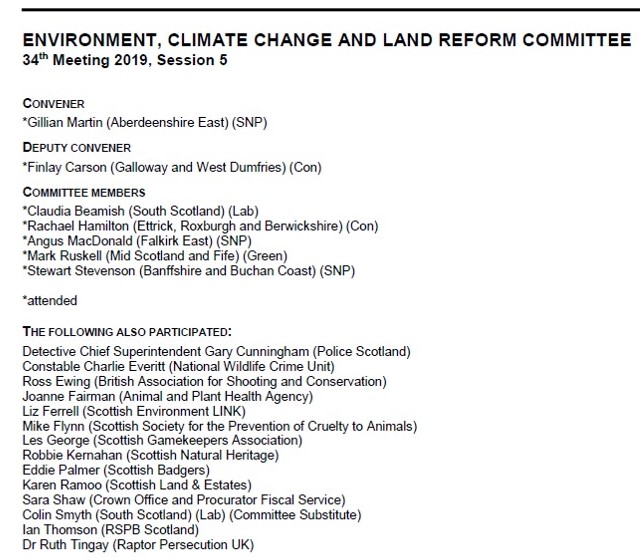
Raptor Persecution UK was one of a number of organisations giving evidence to the Scottish Parliament’s Environment, Climate Change & Land Reform (ECCLR) Committee last week on the proposed increase in penalties for wildlife crime.

The Animals and Wildlife (Penalties, Protections & Powers) (Scotland) Bill was introduced by Environment Cabinet Secretary Roseanna Cunningham on 30th September 2019 (see here for associated docs) and will, amongst other things, increase the maximum available penalties for the most serious animal welfare and wildlife offences.

See here for an earlier blog on this subject.

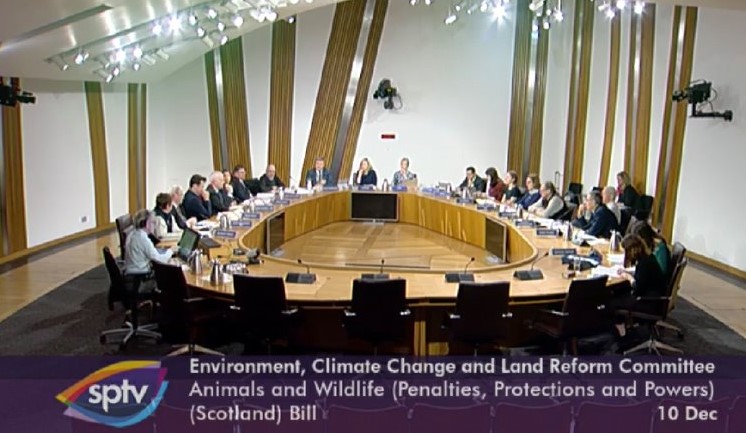
The Bill is currently at Stage 1 and the ECCLR Committee has been taking evidence from a wide range of authorities and organisations. Last Tuesday saw representatives from the grouse shooting industry, conservation organisations, Police Scotland, SNH and the Crown Office sharing their opinions in an informal round-table discussion:

The transcript can be read here: ECCLR report_10Dec2019

The archived video can be watched here

We’ll come back to some of the detail of this discussion in further blogs, particularly about some of the claims made by BASC in relation to the supposed effectiveness of general licence restrictions, where the evidence simply doesn’t support some of the assertions made.

We’ll also be considering the claim from the Scottish Gamekeepers Association that “A five-year jail term will mean that more people will go to jail than has been previously the case“. Really? Why’s that, then? Are more gamekeepers at it than are currently being caught? Surely not. And how will an increased penalty mean more offenders are jailed? You’ve got to catch them first and then have sufficient evidence to get them in to court.

This Bill is very welcome as it stands, but perhaps more importantly it also has the potential to include some pretty useful amendments as it progresses through Parliament. Of particular interest to us is that increased powers for the SSPCA is back on the table. Given the complete failure of the Scottish Government’s alternative course of action (Police Special Constables in the Cairngorms National Park – a scheme that failed to report a single wildlife crime), it seems the timing is just right.

Environment Minister Mairi Gougeon will be giving evidence to the ECCLR Committee tomorrow and will no doubt face questions about some of the proposals already heard.

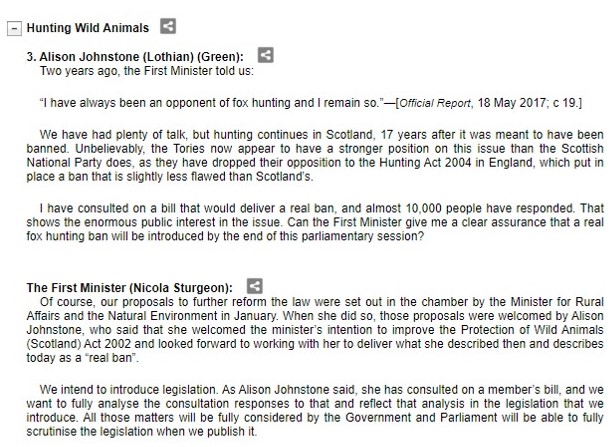
First Minister ‘hopes to publish Werritty Review before the end of the year’

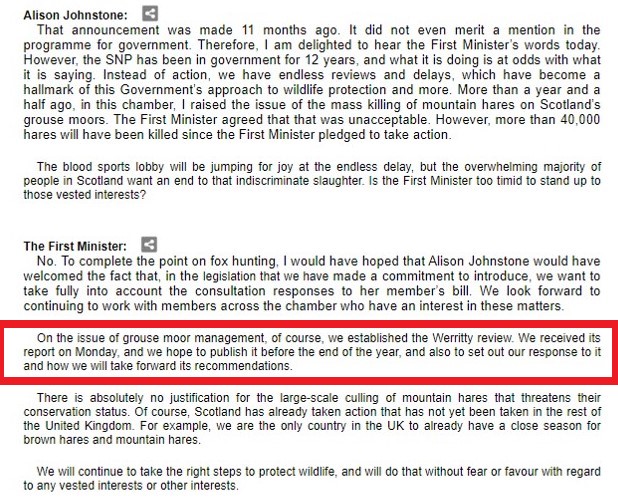
At today’s First Minister’s Question Time in the Scottish Parliament Nicola Sturgeon confirmed that the Government had received Professor Werritty’s grouse moor management review on Monday (18th Nov) and said “we hope to publish it before the end of the year, and also to set out our response to it and how we will take forward its recommendations“.

You can watch the video here (starts 23.59 min, ends 27.35 min).

The topic came up in response to a question posed by Alison Johnstone MSP who had already made the very valid point that ‘endless reviews and delays had become a hallmark of the Scottish Government’s attitude towards wildlife protection’ and she asked whether Nicola Sturgeon was “too timid to stand up to vested interests“.

Here’s the transcript:

The Scottish Parliament breaks for recess on 22 December 2019 to 6 January 2020 inclusive. It’s not clear from Ms Sturgeon’s comment whether the Government hopes to publish the report (and the Govt’s response) before the end of the Parliamentary term by 5pm on 21 December or whether some poor civil servant will be tasked with the job between Xmas and New Year but hopefully in five and a half weeks at the very most we’ll finally have an opportunity to read Professor Werritty’s long-awaited report.

Satellite tagging golden eagles in Scotland: fact vs fiction

In September 2019 the Scottish Gamekeepers Association (SGA) lodged a petition at the Scottish Parliament calling for the ‘independent monitoring of satellite tags fitted to raptors’.

You can read the petition here: SGA petition PE01750 Independent monitoring raptor satellite tags

It’s the latest in a long line of efforts to undermine and discredit the use of satellite tags, simply because the unintended consequences of tagging raptors like golden eagles, hen harriers, white-tailed eagles and red kites has exposed the previously hidden extent of illegal raptor persecution on many grouse moors and has led the Scottish Government to scrutinise grouse moor management practices by commissioning a review.

[The satellite tag fitted to this golden eagle led researchers to a grouse moor in the Angus Glens where the bird was found to have been illegally poisoned. Photo by RSPB Scotland]

Raptor persecution crimes attract huge media attention because it’s hard to believe that people are still poisoning golden eagles in Scotland in the 21st century. As a result of this ongoing publicity, the game-shooting industry has spent considerable time and effort trying to undermine the satellite-tagging of raptors, either by launching disgusting personal & abusive attacks targeted against named individuals involved in the projects, or by blaming disappearances on imaginary windfarms, faulty sat tags fitted to turtles in India & ‘bird activists‘ trying to smear gamekeepers, or by claiming that those involved have perverted the course of justice by fabricating evidence, or by claiming that raptor satellite-tagging should be banned because it’s ‘cruel’ and the tag data serve no purpose other than to try and entrap gamekeepers. There have also been two laughable attempts to discredit the authoritative golden eagle satellite tag review (here and here), thankfully dismissed by the Scottish Government. The industry knows how incriminating these sat tag data are and so is trying to do everything in its power to corrode public and political confidence in (a) the tag data and (b) the justification for fitting sat tags to raptors, hence this latest petition from the SGA.

[Young satellite-tagged golden eagles on a nest ledge in Scotland. Photo by Dan Kitwood]

The SGA’s petition is badly written, incoherent and completely misinformed. We actually dealt with a lot of the issues it raises in previous blogs (here, here and here) but as the SGA has chosen to ignore the evidence we welcome the opportunity to present the facts to the Scottish Parliament, should they decide to examine the petition further.

The petition was heard by the Petitions Committee on 10th October and it was agreed to pass it on to the Environment, Climate Change and Land Reform (ECCLR) Committee for consideration. You can read the transcript of the Petitions Committee’s deliberations here: Petitions_committee_10_Oct_SGA_sat_tags

If the ECCLR Committee does decide to progress the petition, we look forward to providing the evidence that dismantles the SGA’s fictional claims. As a bare minimum, evidence will be provided on the following:

Golden eagles in Scotland have been satellite-tagged as part of a long-term collaborative research effort involving multiple organisations (at least seven) who share data to further conservation aims. Some of this research has already been published, some is currently under-going peer-review and some of it is on-going. We’ve blogged about this research before (see here) and we’ll be blogging further about some of the specific projects in the near future. If you want to get an insight in to the science behind the golden eagle satellite tag review, this slide show by the report’s authors is well worth a look.

The scientists have created a formal research group (Golden Eagle Satellite Tag Group, GESTG) as a forum for data exchange, tagging coordination and general cooperation. The GESTG has agreed a central nexus on tag data coordination (there are now, literally, millions of tag records and it’s important they are held centrally to facilitate their use in future analyses).

Members of the GESTG have developed strong, positive relationships with many landowners who are working cooperatively on the ground to facilitate tagging efforts and protection of golden eagles.

Members of the GESTG have participated in the training of police officers across the UK to help them understand and interpret satellite tag data (e.g. this workshop organised by SNH and the National Wildlife Crime Unit was particularly beneficial to both the researchers and the police. A similar workshop was also run in England and again included input from the GESTG).

Members of the GESTG have developed an excellent relationship with the police National Wildlife Crime Unit (NWCU) leading to the routine sharing of satellite tag data and regular detailed discussions on interpretation. This has led to a much-improved understanding for both parties and has helped build trust and confidence in what we consider to be a genuine partnership. In addition, NWCU staff have been provided with daily access to the data from several tagged golden eagles to help them learn about golden eagle ecology and behaviour, both of which are important facets of interpreting eagle tag data.

Oh, and as for those claims that satellite tag data have been withheld from the police (why would anyone want to do that?!), here’s a clear statement in response from Police Supt Nick Lyall (Head of the Raptor Persecution Priority Delivery Group):

We’re not the only ones to consider the SGA’s petition wholly inaccurate and misinformed. Last month Ian Thomson (Head of Investigations at RSPB Scotland) wrote a damning blog to challenge some of the SGA’s myths (see here).

The bottom line is, contrary to the SGA’s lies, there is already plenty of cooperative partnership working between eagle satellite taggers and landowners and the police. We collaborate and share our data in order to improve conservation benefits for this iconic species across Scotland. What we don’t do is share data with those who would use the information to disturb and/or kill eagles.

We expect to be blogging further on this subject as the petition reaches the ECCLR Committee.

UPDATE 1st July 2022: Scottish Parliament sees sense & closes SGA’s petition seeking ‘Independent monitoring of satellite tags fitted to raptors’ (here)

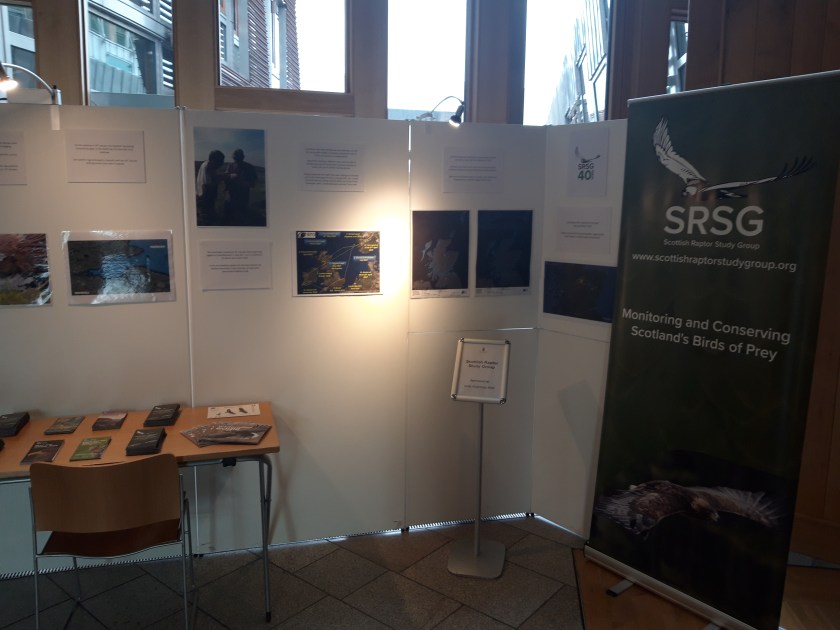
Scottish Raptor Study Group holds three day exhibition at Scottish Parliament this week

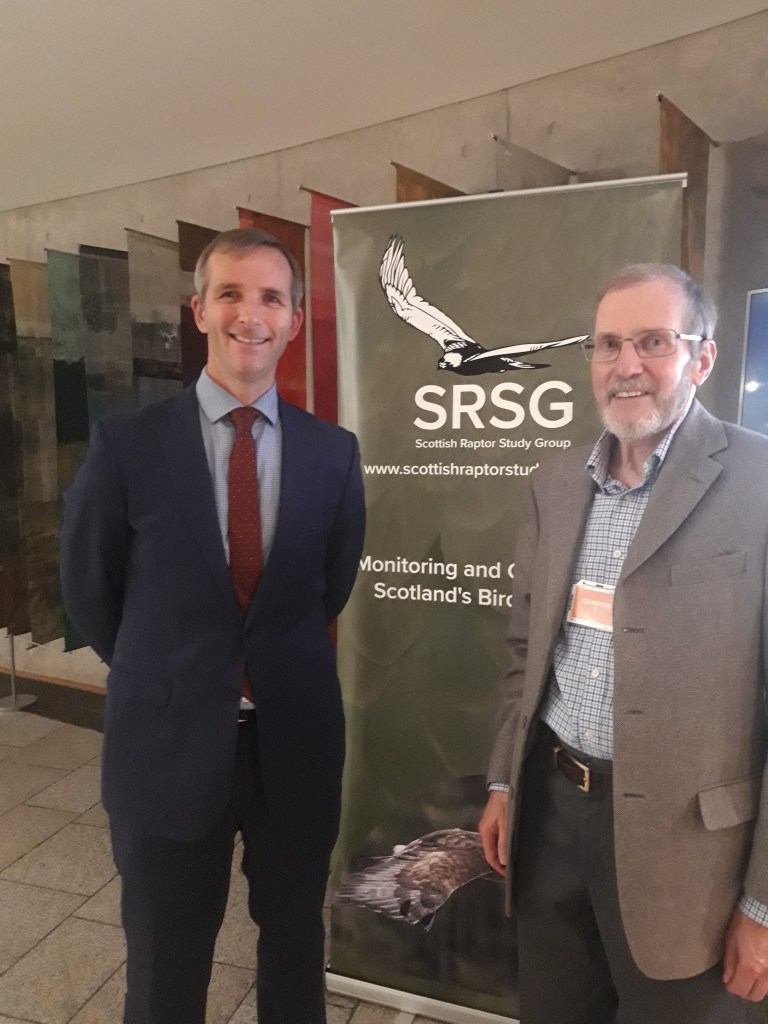
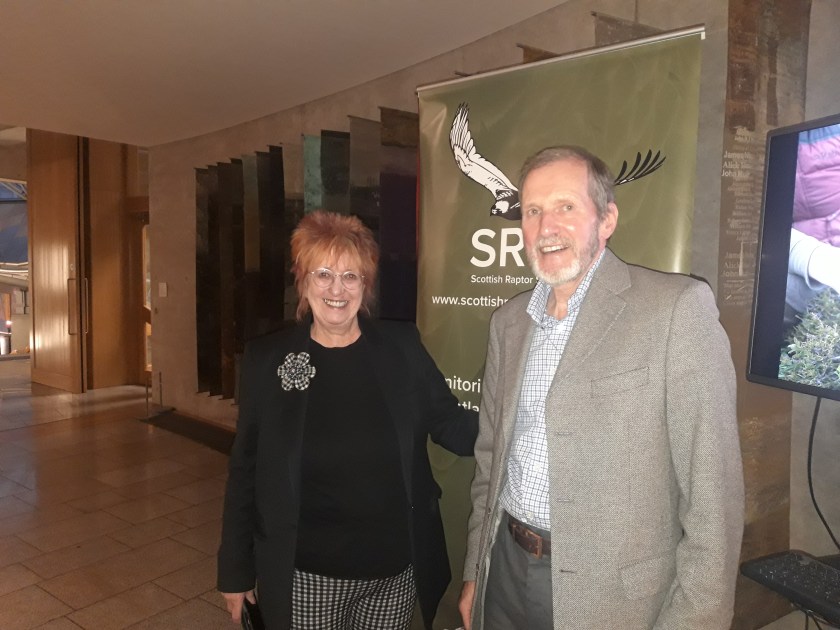
The Scottish Raptor Study Group (SRSG) is holding a three-day exhibition in the Scottish Parliament this week to showcase the group’s immense contribution to the Scottish Raptor Monitoring Scheme as well as to highlight the ongoing issue of illegal raptor persecution on and around some driven grouse moors.

This is a follow-on event from the SRSG’s Parliamentary reception held in May (see here).

[All photos by SRSG]

Sponsored by Andy Wightman MSP (Golden Eagle Species Champion), the event provides an opportunity for SRSG members to engage with MSPs and discuss the ecological and economic importance of birds of prey as well as explaining the science behind satellite-tagging and the incredible behavioural insights resulting from this conservation research.

There has been a stream of cross-party visitors so far including Environment Minister and Hen Harrier Species Champion Mairi Gougeon, John Mason MSP (Kestrel Species Champion), Bill Kidd (Red Kite Species Champion), Graeme Dey MSP, Christine Graham MSP, Liam McArthur MSP, Andy Wightman MSP, Mark Ruskell MSP (White-tailed Eagle Species Champion), Alison Johnstone MSP, Bob Davis MSP (Peregrine Species Champion).

The exhibition concludes on Thursday afternoon so if you’re in Holyrood don’t miss the opportunity to come and speak to these experts.

Pre-Werritty propaganda from grouse shooting industry

As we all continue to wait for the publication of Professor Werritty’s report on driven grouse shooting, the usual suspects have been busy putting together a damage limitation programme to save their sorry necks.

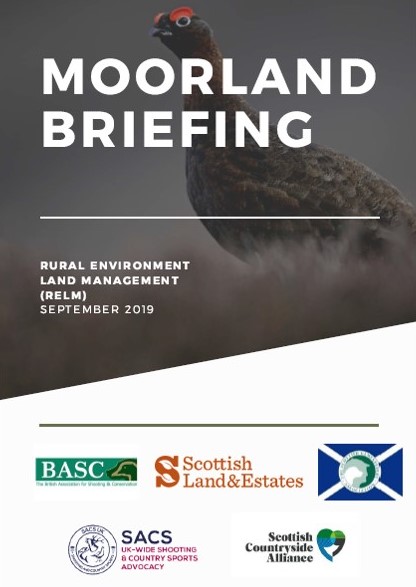
An ‘informal alliance’ has been created under the banner of RELM (Rural Environment Land Management) ‘to help co-ordinate and streamline responses and communications ahead of the publication of the final report‘ and its first offering is this briefing document for MSPs which was distributed by Scottish Land & Estates a couple of weeks ago:

Here’s the intro blurb:

Grouse moor management has been the subject of much attention during the summer period across a range of issues such as the environment and species conservation, satellite tagging and wildlife crime, mountain hares and the start of the season on August 12.

With the Scottish Government’s review into grouse moor management due to be published shortly, rural organisations wished to provide the following update to parliamentarians. We would be pleased to provide additional detail where required.

Ah, how thoughtful. Amusingly, several MSPs have sent us a copy of this briefing document with comments along the lines of ‘You might want to say a few things about this’.

We’re grateful to those MSPs because yes, we do want to say a few things about the document’s contents and we wouldn’t otherwise have had an opportunity had they not shared the briefing with us.

We’re not posting the full briefing document here, yet. Instead we intend to blog about different aspects of it in turn.

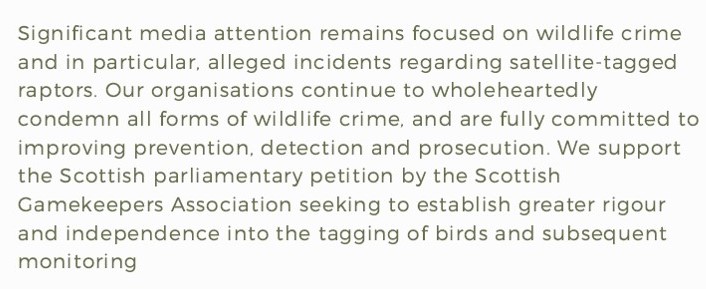
Today we’re looking at the page entitled ‘Wildlife Crime’ and its five paragraphs of propaganda:

Propaganda paragraph 1:

Yes, significant media attention does remain focused on wildlife crime, and particularly illegal raptor persecution because everyone else finds it abhorrent and can’t understand why it still goes on and why the grouse shooting industry continues to shield the criminals involved. It’d be interesting to know what, exactly, these five organisations have done to crack down on raptor persecution as part of their claimed ‘full commitment to improving prevention, detection and prosecution’.

Propaganda paragraph 2:

No surprises here. This is a blatant attempt, yet again, to discredit the RSPB’s annual Birdcrime Report which was published a couple of weeks ago and showed that confirmed raptor persecution crimes in Scotland in 2018 had doubled from those recorded in 2017. These cases included a peregrine poisoned in the Pentland Hills, near Edinburgh; a buzzard found to have been shot twice, in South Lanarkshire; a buzzard caught in an illegal trap, in Inverness-shire; and a hen harrier caught in a spring trap in Perthshire. All of these incidents occurred on, or close to, land being managed intensively for driven grouse shooting.

With this level of relentless criminality, it’s no wonder the grouse shooting industry apologists want to infer that the RSPB’s data are ‘unofficial’. Fine. We’ll come back to this later this autumn when the Government publishes its annual wildlife crime report, which we know will include all of the confirmed incidents already reported by the RSPB.

Propaganda paragraph 3:

This is perhaps the most cynical of attempts to downplay the disgusting reality of the criminality still being committed on some driven grouse moors. And the first sentence of paragraph 3 is actually a lie. Not being pursued by Police Scotland? Er, ALL the cases of alleged raptor persecution that have been reported from grouse moors over the last few months are still considered to be live criminal investigations by the Police, according to the investigations officer we spoke to yesterday.

So, the satellite-tagged hen harrier that was found dead on a grouse moor in Strathbraan with an illegal spring trap clamped to its leg – it’s still the subject of a criminal investigation by the police.

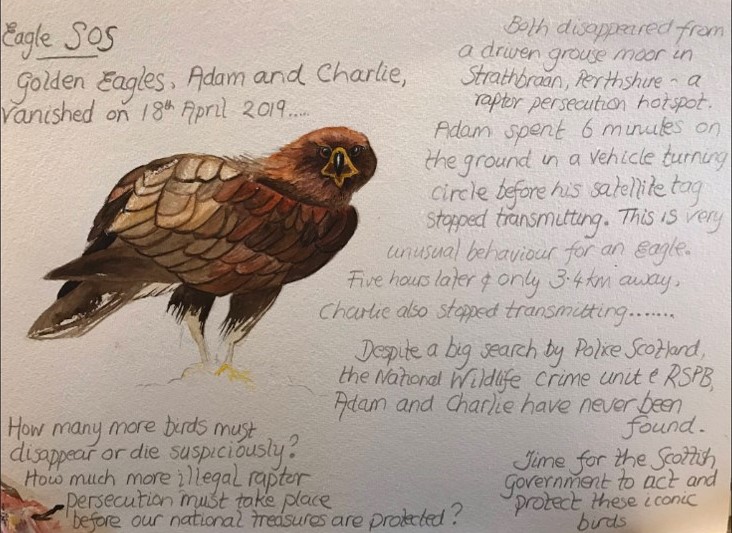
The two satellite-tagged golden eagles (Adam and Charlie) that ‘disappeared’ in suspicious circumstances on another grouse moor in Strathbraan, on the same morning as each other – they’re still the subject of a criminal investigation by the police (as are several other alleged offences uncovered during the police search).

The hen harrier that was found caught by its leg in a spring trap that had been set illegally next to its nest on a grouse moor in South Lanarkshire – it’s still the subject of a criminal investigation by the police.

The buzzard that was caught inside a legal cage trap on the same South Lanarkshire grouse moor but was then allegedly beaten to death by someone arriving on a quad bike after dark and using a key to open the padlocked door of the cage – it’s still the subject of a criminal investigation by the police.

The young golden eagle that was photographed flying around in the Cairngorms National Park with an illegal trap clamped to its leg – it’s still the subject of a criminal investigation by the police.

And as for the claim that estates have issued ‘unprecedented and emphatic rebuttals’ – er, there’s nothing unprecedented about that! Estates have always denied any involvement in any of the wildlife crimes that have been uncovered on their land – it’s what they do!

Propaganda paragraph 4:

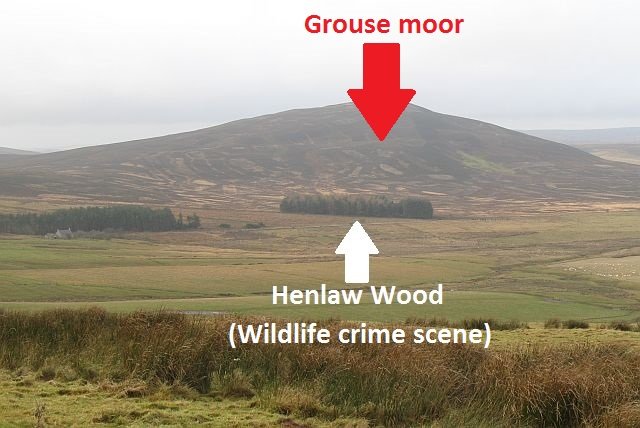
Ah yes, convicted gamekeeper Alan Wilson, dubbed by the press as ‘Scotland’s worst wildlife killer‘. Yet again, the link between Wilson’s filthy criminal activity uncovered at Henlaw Wood and driven grouse shooting is kept well hidden. Yes, the Longformacus Estate was managed for low ground pheasant shooting but it was also managed for driven grouse shooting – a fact that Scottish Land & Estates doesn’t like to mention!

And speaking of Scottish Land & Estates and it’s so-called ‘full commitment’ to tackling wildlife crime, it still hasn’t said whether the Longformacus Estate was a member at the time these crimes were committed and if so, whether that membership has now been terminated? We asked SLE this question on 22 August 2019. Still waiting for an answer….

Propaganda paragraph 5:

Of course they continue to call for tougher penalties – how can they not? But they know as well as we do that the severity of the penalty is utterly irrelevant if the perpetrators of these crimes can’t even be identified, let alone prosecuted.

And as long as evidence continues to be destroyed and employers continue to shield their criminal employees by instructing them to give ‘no comment’ interviews to the police, nothing will change.

Fortunately, there are more and more savvy MSPs in the Scottish Parliament who have seen through the greenwash and know exactly what’s going on. If you think your MSP isn’t one of those, it’d be worth dropping them an email with a link to this blog.

Golden eagle with trap dangling from its leg: statement from Environment Cabinet Secretary

In August Police Scotland published a photograph of a young golden eagle that had been seen flying in the Cairngorms National Park with an illegally-set trap clamped to one of its legs.

This photograph, along with the Police’s appeal for information, went viral and was reported on news channels around the world (e.g. here), highlighting Scotland’s shameful record of illegal raptor persecution.

There’s been no further update on the fate of this eagle. Undoubtedly it’ll be dead and if it had been found by anyone associated with the criminal element of the game-shooting industry the corpse and trap will be long gone….nothing to see, deny, deny, deny, it was all a set up, fake news, it never happened, etc etc.

Meanwhile, those who aren’t fooled by the propaganda and know exactly what goes on on game shooting estates have been asking pertinent questions.

Step up Colin Beattie MSP (SNP: Midlothian North & Musselburgh) who lodged the following written question on 2 September 2019:

Question S5W-25069 – 

To ask the Scottish Government, in light of reports of a golden eagle found with an illegal trap on its legs, what action it is taking to protect wild birds as a matter of urgency ahead of the publication of the findings of the Grouse Moor Management Group (the Werritty report).

A brilliant question. Forget ‘waiting for Werritty‘ which has been the Scottish Government’s default response to every single raptor persecution crime since May 2017, Colin wants to know what action is being taken NOW.

The Government’s response came from Environment Cabinet Secretary Roseanna Cunningham on 12 Sept, as follows:

The Scottish Government is strongly committed to safeguarding the welfare of all animals, including wild birds such as raptors.

The illegal persecution of our birds of prey is an extremely serious issue and, as we announced in our Programme for Government for 2019-2020, we will bring forward a Bill increasing the maximum penalties for certain wildlife offences, including those associated with illegal killing or injuring of wild birds. This will deliver a commitment to implement the recommendation to increase wildlife crime penalties in the review undertaken by Professor Poustie.

We also committed in the Programme for Government that we will respond to the independent review on grouse moor management. The review is examining how we can ensure that grouse moor management is sustainable and complies with the law and it would not be appropriate to make decisions in advance of its report. We will carefully consider the recommendations in the report and other relevant evidence when deciding our response.

The measures on wildlife crime penalties build upon a range of other work we have undertaken to tackle this issue, including: supporting the use of satellite tags to monitor birds of prey; introducing new offences for harassing birds of prey or damaging their nesting places; setting up a poisons disposal scheme to remove poisons used to kill wild birds; strengthening Police Scotland wildlife crime resources, including in the Cairngorms; and introducing vicarious liability so that landowners can be held responsible for crimes against wild birds committed by their employees.

Roseanna’s response carefully avoids answering Colin’s question directly. Colin asked what Scot Gov was doing ‘as a matter of urgency ahead of the publication of the Werritty report’. Roseanna’s response confirms, in effect, that Scot Gov is doing absolutely nothing at all in advance of the Werritty report.

Splendid.

And guess what? We’re still waiting for Werritty, despite being told by Scot Gov at the end of July that the report was due ‘in the next few weeks’. What an embarrassing fiasco it has become.

Whoever wrote Roseanna’s response was surely having a laugh, judging by the last paragraph. Yes, Scot Gov has introduced new offences for harassing birds of prey or damaging their nesting places but as far as we’re aware, there have been no prosecutions for these offences even though there have been a number of reports of raptor nests being deliberately burned out on grouse moors.

And yes, Scot Gov set up a poisons disposal scheme (two, in fact) to remove poisons used to kill wild birds and yet still we’re seeing raptors being illegally poisoned and still gamekeepers are being found guilty of possessing these illegal poisons.

And yes, Scot Gov did support a pilot scheme for a number of police special constables (essentially volunteers working in their own time) in the Cairngorms National Park but there has been no (public) assessment of the scheme’s impact and raptor persecution crimes were still reported in the National Park during the scheme’s duration.

And yes, Scot Gov did introduce vicarious liability so that landowners could be held responsible for crimes against wild birds committed by their employees but so far this has only resulted in two successful convictions in 7.5 years and only last month yet another landowner avoided any charges of alleged vicarious liability and the Crown Office chose not to explain this decision to the public.


Scottish Government statement on recent raptor persecution crimes

The Scottish Government has finally made a statement about the recent raptor persecution crimes.

The statement is about as impressive as the one from Leadhills Estate, just shorter but no less pathetic.

It appears to be a forced statement, made after a direct request from a journalist (Sean Bell from CommonSpace) rather than a proactive statement posted on the Government’s website to clarify its position.

Ready for this?

From an unnamed Government spokesperson:

The continued targeting of birds of prey is an extremely serious issue and we strongly condemn all those involved in it. We would urge anyone with information to contact the police. 

We are determined to protect birds of prey and have established an independent group to look at how we can ensure grouse moor management is sustainable and complies with the law. 

The review is due to report later this summer and we will consider fully any recommendations or proposed actions put forward by the group“.

The full article at CommonSpace can be read here.

It’s no wonder it took so long for the Government to say anything. It’s pretty clear from this that it has nothing new to say at all – just the same old rhetoric and platitudes and vague statements that don’t actually amount to anything. At all.

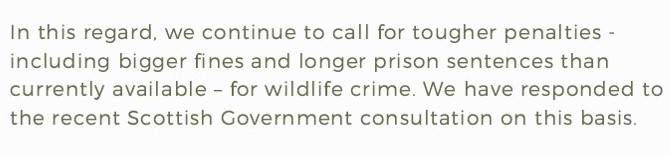
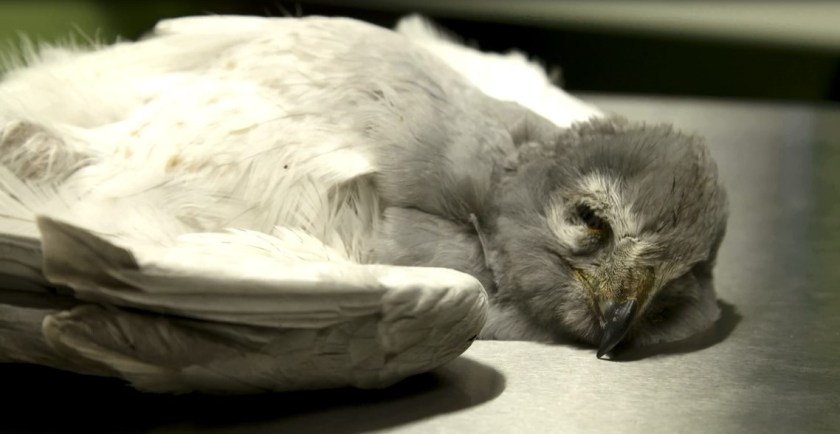
Here’s a stark reminder of the effectiveness the Scottish Government’s so-called ‘determination to protect birds of prey’. The spring-trapped hen harrier. He didn’t make it, despite the very best efforts of specialist vet Romain Pizzi and his team at the Scottish SPCA. [Photo by Ruth Tingay]

How many more victims will there be while we wait for the Scottish Government to actually do something?

Emails (polite ones, please) to the First Minister, Nicola Sturgeon at: firstminister@gov.scot 

Questionable commitment as Scottish Ministers ignore barbaric raptor persecution crime

Look at this.

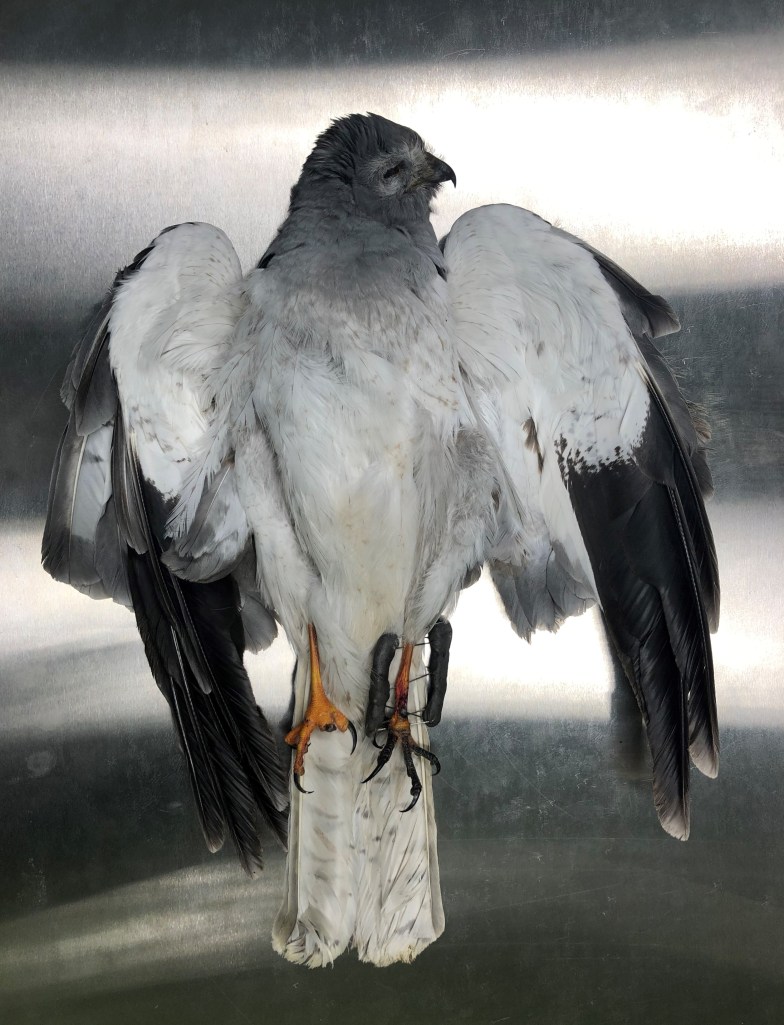
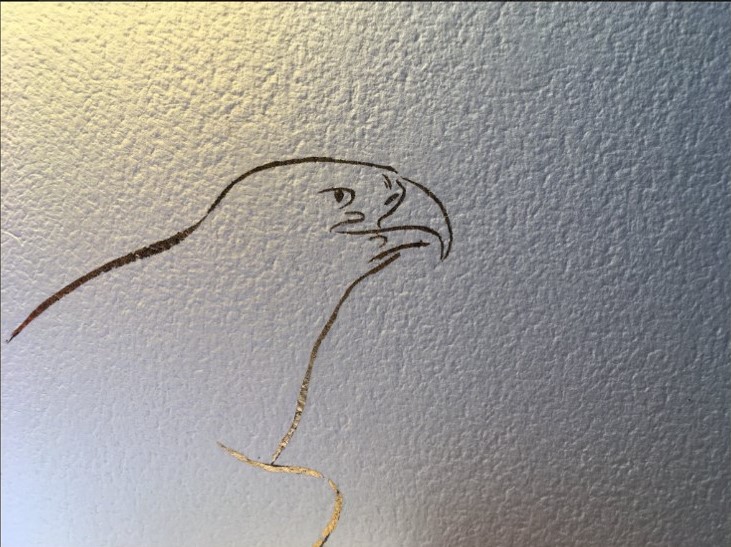
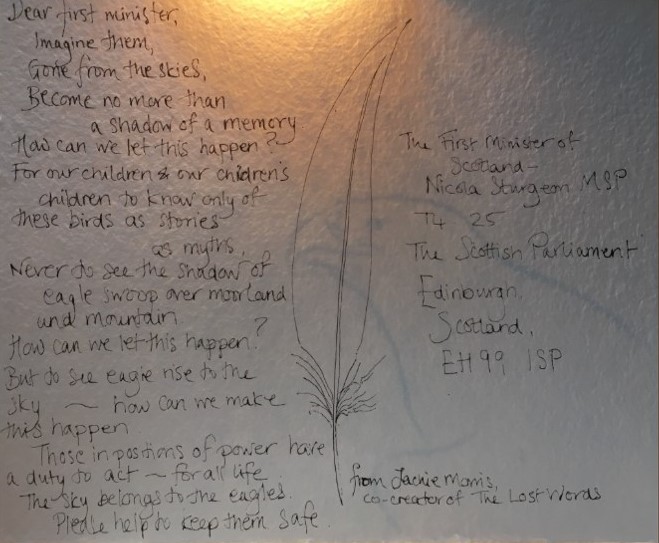
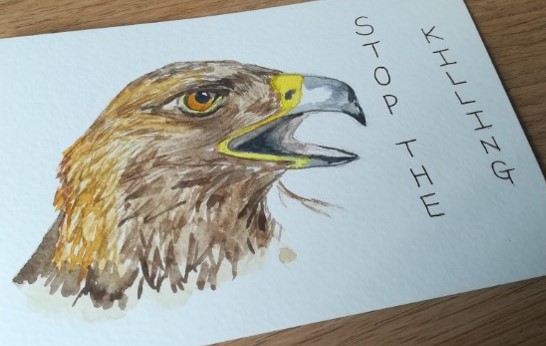
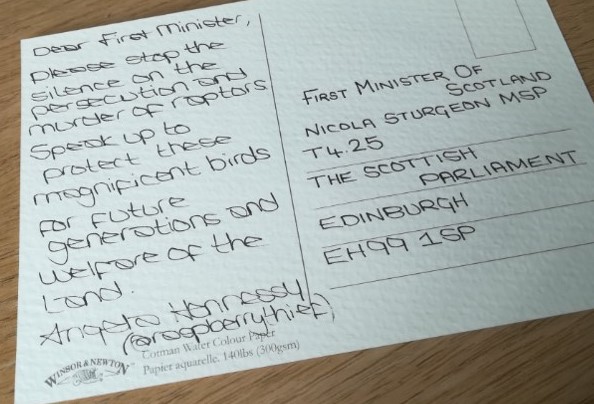
It’s a personalised card, crafted in gold, pleading with First Minister Nicola Sturgeon to take action following the recent news that yet another two satellite-tagged golden eagles had vanished in suspicious circumstances on a Scottish grouse moor, shortly after a satellite-tagged hen harrier had been found dead on another nearby grouse moor with an illegal leg clamped to its leg.

This exquisite artwork was sent to Ms Sturgeon by Jackie Morris, co-creater of The Lost Words.

It’s one of many that have been sent, inspired by a drawing by children’s author Gill Lewis, including drawings by seven and nine-year old boys, all sufficiently motivated by the loss of these eagles to want to ask for their protection (e.g. see here).

And there have been even more:

And it’s not just drawings. We know that many of you have been emailing the First Minister (firstminister@gov.scot) asking for action, following the example of Andy Wightman MSP, the golden eagle species champion who wrote to Ms Sturgeon the day the news broke that ‘his’ golden eagle, Adam, was one of those that had vanished.

The response from the First Minister, the Environment Cabinet Secretary Roseanna Cunningham and Rural Affairs Minister Mairi Gougeon? Complete and utter silence.

That was two weeks ago.

Then yesterday came the news of the sadistic trapping of another hen harrier on another Scottish grouse moor, with a graphic video showing the extent of this bird’s injuries and suffering. It was sickening viewing, made all the worse by knowing that the traps had been deliberately set to target this bird at its nest. This was no accident. It was a brazen, brutal and ruthless attack and because there were no witnesses, the perpetrator hasn’t been identified and is likely to escape justice, just like so many others on so many other occasions.

The public outpouring of shock and disgust on social media, even from many within the shooting community, was instantaneous. These were the responses of decent human beings, with a visceral reaction to the distress of that traumatised hen harrier.

The response from the First Minister, Environment Cabinet Secretary and Rural Affairs Minister?

Total silence.

It is utterly baffling why these three intelligent, thoughtful, decent and normally dynamic people have refused to comment on such barbarity. It’s not because they’re on holiday (they’re all still tweeting about other stuff) and it can’t possibly be because they don’t know what’s been going on.

No, this is clearly a political decision – but why? Who’s advising them?

Is it something to do with the Werritty review? Who knows, and to be quite frank, who cares? We don’t need to wait for the findings of yet another review (already overdue) to know that change must come and it must be led by these senior politicians. But even if they are waiting for Werritty to report, that still shouldn’t prevent them from condemning these ongoing crimes and committing to addressing the issue, once and for all. This silence is what we’ve come to expect from Westminster politicians, not those in Holyrood.

What can they possibly gain by remaining silent? If anything, their refusal to comment must actually be pretty damaging – it looks like they just don’t care and to be honest, I’m tired of making excuses for them.

Our lives begin to end the day we become silent about things that matter” – Dr Martin Luther King.