New study shows significant unlawful behaviour by shotgun users in Scotland, illegally using toxic lead ammunition over wetlands 18 years after its use was banned

In news that will come as no surprise whatsoever, a new study has revealed that toxic lead ammunition is still being used widely to shoot birds in coastal intertidal and riparian habitats across Scotland, even though its use was banned in these habitats 18 years ago.

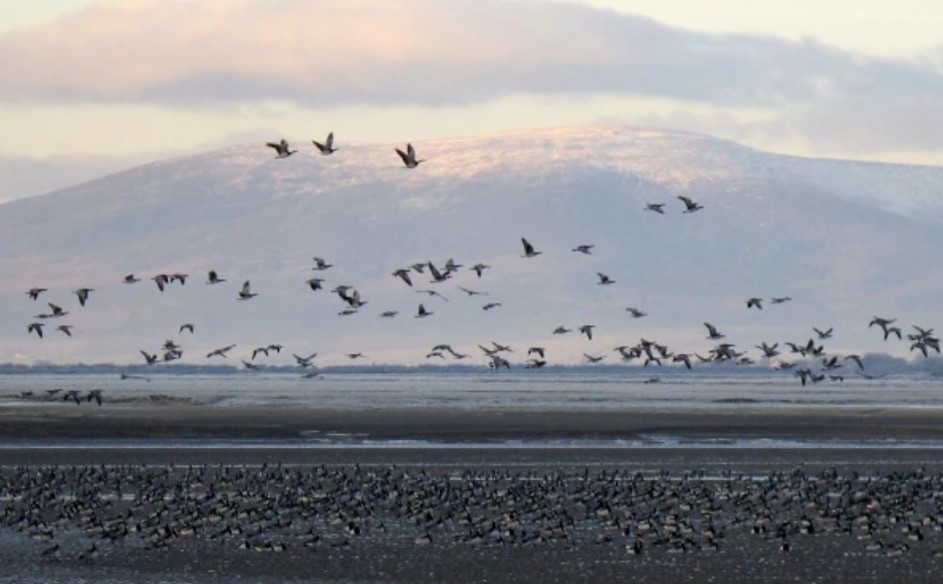
Photo: Brian Morrell, WWT

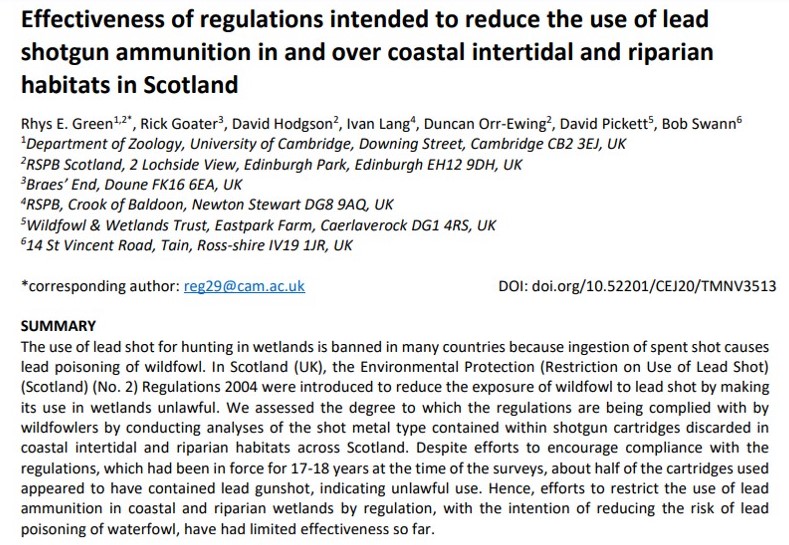
The new study, which has just been published in the journal Conservation Evidence, analysed discarded shotgun cartridges at various wetland locations and found that approximately half appeared to contain lead shot, which hasn’t been permitted for use over Scottish wetlands since 2005.

The ban on using lead shotgun ammunition over wetlands was introduced to try and reduce the amount of lead poisoning in wetland birds and the subsequent poisoning of predators that might scavenge the shot birds, particularly certain raptor species (e.g. see here and here).

Here’s the summary of the study (full paper available at the foot of this blog):

Similar legislation (with slight variations) was introduced in England in 1999 after a voluntary ban on the use of lead shotgun ammunition over wetlands failed.

However, a number of studies since that new legislation was introduced (see here) have shown high levels of non-compliance with the law, for example 68% non-compliance in 2001-2002; 70% non-compliance with the law in 2008-2009 & 2009-2010; and 77-82% non-compliance with the law in 2013-2014.

Another study published in 2021 concluded that since the regulations were introduced in England in 1999, an estimated 13 million ducks have been shot illegally using lead shotgun ammunition, with an annual average of approximately 586,000 ducks, representing approximately 70% of the total ducks shot (see here).

Tellingly, this 2015 paper that included the findings of a questionnaire survey of shooters’ behaviour and attitudes revealed that one of the main reasons for non-compliance with the law was the shooters believed they “were not going to get caught” i.e. shooters knew that using lead ammunition would not involve penalties as the law is not enforced. This is a really common feature of wildlife crime in general, but particularly raptor persecution crimes, which I’ve written about before (e.g. here). It doesn’t matter how stiff the penalty is, if the offender thinks there’s little to no chance of being caught then it’s worth the risk of committing the crime.

The 13 million illegally shot ducks also provide an excellent example of why it’s idiotic to calculate the extent of a crime based on the number of convictions (as Professor Simon Denny tried to do in his recent ‘truly objective‘ claim that raptor persecution isn’t a widespread issue on grouse moors – see here). If we classify every one of those shot ducks as a separate crime, there has only ever been one successful prosecution out of a potential 13 million crimes (and that prosecution only happened because the offender shot a swan in front of witnesses, mistaking it for a goose whilst on a pheasant shoot in North Yorkshire). One conviction from 13 million crimes demonstrates quite clearly that a lack of prosecutions / convictions does not equate to a lack of crime!

It’s an important lesson for the Scottish Parliament as it considers the Wildlife Management and Muirburn (Scotland) Bill – if there is insufficient monitoring and enforcement accompanying the new legislation on grouse moor management practices, the offenders will continue to commit their crimes (i.e. killing birds of prey and lighting fires on deep peat) because they’ll know the chances of being caught are pretty slim.

The Westminster Government is currently considering a range of options for phasing out the use of lead ammunition (see here), after ignoring the overwhelming scientific evidence for years and instead choosing to support the shooting industry’s (then) refusal to get rid of toxic lead ammunition (e.g. see here and here).

Three years ago some (but not all) in the game-shooting industry realised the game was up and proclaimed a five-year voluntary phase-out of toxic lead ammunition (largely, I believe, because they didn’t want to have a ban enforced upon them). However, three years into that five-year phase out, things aren’t going too well (see here) and many UK supermarkets are still selling poisonous game meat to unsuspecting customers for both human consumption (here) and for pet food (here).

The HSE is due to report its recommendations about the use of toxic lead ammunition to Government by 6th November 2023. DEFRA Minister Richard Benyon told Green peer Natalie Bennett recently that the DEFRA Secretary of State ‘will be required to make a decision within three months of receipt of the opinions, with the consent of Welsh & Scottish Ministers‘ (see here).

Anything less than an immediate ban on the use of toxic lead ammunition for killing any species in any habitat (not just some species in some wetland habitats), will be challenged.

Here’s the full paper on the significant non-compliance of the law by shooters in Scotland, who are still using toxic lead shotgun ammunition to kill birds over wetlands, 18 years after it was banned. Well worth a read:

UPDATE 13th September 2023: Is DEFRA can-kicking the decision to phase out use of toxic lead ammunition by gamebird shooters? (here)

Grouse shooting industry’s claim of having ‘zero tolerance’ of raptor persecution is just not credible

I wrote an opinion piece for The National which was published yesterday (here) about the grouse shooting industry’s supposedly sincere claim of having ‘zero tolerance’ for the illegal killing of birds of prey.

It’s reproduced below:

It is widely acknowledged that the illegal killing of birds of prey has long been synonymous with driven grouse shooting in Scotland, even though raptors have had supposed legal protection for almost 70 years. Birds of prey such as buzzards, red kites, hen harriers and golden eagles are perceived to be a threat to red grouse and thus are ruthlessly shot, poisoned or trapped to protect the estates’ lucrative sporting interests.

Prosecutions are rare given the remoteness of the vast, privately-owned shooting estates where these crimes are committed; there are few witnesses and gamekeepers go to great lengths to hide the evidence, as demonstrated when a ‘missing’ golden eagle’s satellite tag was found wrapped in lead sheeting and dumped in a river, presumably in an attempt to block the transmitter.

The Scottish Government has tried various sanctions to address these crimes over the years, including the introduction in 2014 of General Licence restrictions, which are based on a civil burden of proof if there is insufficient evidence for a criminal prosecution. These restrictions don’t stop the sanctioned estates from shooting grouse but do partially limit their moorland management activities and were specifically designed to act as a ‘reputational driver’. Unfortunately they have been proven to be wholly ineffective.

In 2017 a scientific report into the fate of satellite-tracked golden eagles in Scotland highlighted the extent of the ongoing killing on some grouse moors (almost one third of 141 tracked eagles disappeared in suspicious circumstances, none of which resulted in a prosecution). In response, the Government commissioned a review (the Werritty Review) of the sustainability of grouse moor management, which led to the Government finally committing to introducing a full licensing scheme for grouse shooting in 2020. The threat of having an estate licence completely revoked if raptor persecution is detected may now act as a suitable deterrent, as long as the law is adequately enforced.

This long-awaited legislation is currently on passage through Parliament as the Wildlife Management and Muirburn (Scotland) Bill. Unsurprisingly, the grouse shooting lobby is working hard to influence proceedings and minimise the Bill’s impact, questioning its legality and proportionality, even making threats to take the Government to the European Court of Human Rights. Instead of welcoming legislation that should protect the innocent and rid the industry of those who continue to bring it into disrepute, industry representatives maintain that a voluntary approach is sufficient and deny that persecution is even an issue, despite the suspicious disappearance of at least 35 more satellite-tagged hen harriers and golden eagles since the 2017 report was published.

Grouse-shooting representatives maintain they have a ‘zero tolerance’ stance against illegal raptor persecution and argue that they can’t do anything more. But talk is cheap and this industry should be judged by its actions, not by superficial pronouncements from its leaders.

I would argue that there is much more the industry could, and should, be doing if it wants to be seen as a credible force for change.

For example, let’s look at the Moy Estate in Inverness-shire. Two estate gamekeepers have been convicted for raptor persecution offences here (one in 2011 and one in March this year) and the estate has been at the centre of multiple police investigations many times in between. Indeed, it is currently serving a three-year General Licence restriction imposed by NatureScot in 2022 on the basis of police evidence of wildlife crime against birds of prey, including the discovery of a poisoned red kite and various trapping offences.

Moy Estate is believed to be a member of the Scottish landowners’ lobby group, Scottish Land & Estates (SLE). Has SLE expelled the estate from its membership? If it hasn’t, why not? If it has, why hasn’t it done so publically?  

Why are SLE, the Scottish Gamekeepers Association and others from the shooting industry, still attending the Moy Country Fair held annually on the Moy Estate? Why hasn’t this estate been boycotted and blacklisted by industry representatives? Surely that would send a strong message of ‘zero tolerance’ for raptor persecution?

Screen grab from SLE website, August 2023

It’s not just Moy Estate, either. There are a number of other grouse-shooting estates, some very high profile and often described as ‘prestigious’ in the shooting press, that are also either currently, or have previously, served three-year General Licence restrictions.

How many of those estates and/or their sporting agents have been blacklisted by industry organisations? None of them, as far as I can see.

Zero tolerance should mean exactly that. Anything less simply isn’t credible.

Dr Ruth Tingay writes the Raptor Persecution UK blog and is a founder member of REVIVE, the coalition for grouse moor reform.

ENDS

Snares banned in Wales after historic parliamentary vote – Scotland next?

Press release from League Against Cruel Sports (27th June 2023):

CELEBRATIONS OUTSIDE THE SENEDD AS WALES BANS BRUTAL WILDLIFE TRAPS

Members of the Senedd joined animal welfare campaigners from the League Against Cruel Sports this evening to celebrate a historic vote to ban snares in Wales.

It followed the unanimous passing of the Agriculture (Wales) Bill in the Senedd earlier today which contained measures to outlaw these cruel and indiscriminate wildlife traps.

Will Morton, head of public affairs at the League Against Cruel Sports, said:

The Welsh Government deserves huge credit for banning snares, inherently inhumane traps, which are completely incompatible with high animal welfare standards.

Wales is leading the way in protecting wildlife from cruelty and we’re calling on the UK and Scottish Governments to follow their lead and ban these brutal devices.”

The attendees included 13 members of the Senedd as well as animal welfare campaigners from across Wales.

Up to 51,000 snares lie hidden in the countryside at any one time according to UK government figures. Defra figures

They are used predominantly by shooting industry gamekeepers on pheasant and partridge shoots to trap wildlife.

The same Defra research show almost three quarters of the animals caught are not the intended target species. So, this will include hares, badgers and people’s pets.

This snared badger found in Wales suffered for several days and had to be euthanised due to the extent of her injuries. Photo: RSPCA

Polling carried out by YouGov in Wales in January 2021 showed 78 per cent of the Welsh public wanted snares to be made illegal.

The ban will come into force two months after receiving royal assent so snares should become illegal in Wales later this year.

Will Morton added: “Today we are celebrating the move to end the cruelty inflicted on animals by the use of barbaric snares, something that will have the support of the vast majority of the Welsh people.

It’s a fantastic move for animal welfare and we look forward to snares being banned in the rest of the UK soon.”

ENDS

As many of you will know, the Scottish Government is currently considering a ban on snares as part of its Wildlife Management and Muirburn (Scotland) Bill.

In December 2022 the Scottish Animal Welfare Commission recommended that ‘the sale of snares and their use by both public and industry are banned in Scotland, on animal welfare grounds‘ (see here). As part of that report, evidence provided by the Scottish SPCA demonstrated that 75% of tagged snares were set illegally but even legally-set snares caused catastrophic injuries to both target and non-target species (see here).

In April 2023, Scottish charity OneKind published a new report also exposing the cruelty of snares and called for a complete ban (see here).

Some evidence on snaring has been heard by the Scottish Parliament’s Rural Affairs & Islands Committee as part of their Stage 1 scrutiny of the Wildlife Management & Muirburn (Scotland) Bill but the Government’s provisions won’t be heard until the Bill reaches Stage 2 in the autumn.

During the evidence session, discussion centred on a new type of snare, cynically called a ‘Humane Cable Restraint’. However, as OneKind’s Policy Officer, Kirsty Jenkins points out (here), “There is no design alteration or method of use that can make snares humane – the fundamentals of the method cause suffering“.

Chairman of the Scottish Gamekeepers Association (SGA), Alex Hogg, gave evidence at Stage 1 of the Bill and claimed that the new snare design is “almost like a dog collar” (see here), implying that its use doesn’t cause the snared animal any suffering.

Interestingly, he used a similar analogy in another Parliamentary committee evidence session back in 2010 when the Wildlife & Natural Environment (Scotland) Bill was under consideration, including an option to ban snaring. Here’s what he had to say about snaring then:

Those snares are set at certain times of the year to try to protect ground-nesting birds and lambs from foxes. Nine times out of 10, the animal will go into the snare in the hours of darkness. When it enters the snare, its instinct is to lie like a dog or hide, especially in the hours of darkness. When we check our snares first thing in the morning, which we normally do—we have a snaring round; we check the snares at daylight and onwards through to breakfast time—we will dispatch the animals that have been held in them. The snare must close to a certain tightness to be able to hold the animal. The old-fashioned snares locked, so the tighter they got, the more the animal was strangled. However, the snares that we now have are non-locking; they can slip back again. They will hold the animal in the same way as a choke lead on a dog that is pulling too hard” (see here).

Presumably these non-locking snares that Alex implied were virtually harmless are the same snares that the SGA are now calling to be phased out on welfare grounds?!

During the most recent evidence sessions scrutinising the Wildlife Management & Muirburn (Scotland) Bill, Alex Hogg also refers to the new, so-called Humane Cable Restraint (i.e. the ones that the Scottish Animal Welfare Commission recommends are banned) as follows:

The other important thing that I forgot to say was that scientists are using them. They are using them to catch foxes, tag them with radio collars then let them go. That proves to me that the fox has never been damaged” (see here).

I’ve heard this justification for snare use several times, and I’m aware that the GWCT has been using snares to trap foxes so that radio collars can be fitted before the fox is then released, but so far I’ve been unable to find any peer-reviewed scientific paper referring to the snaring method used. I’d be utterly amazed if the approved scientific method used by the GWCT involved leaving the snared fox for up to 24 hours before attending to it, as a gamekeeper is permitted. Any ethical committee overseeing this research method would undoubtedly raise an objection, so Alex’s comparison is somewhat disingenuous, in my opinion.

Dead golden eagle found on Scottish grouse moor

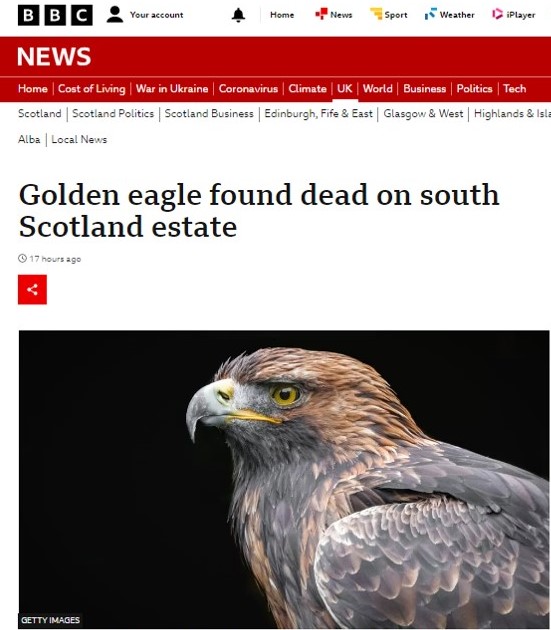
Yesterday, the BBC News website ran a story about the discovery of a dead golden eagle on the Queensberry Estate, an estate within the Buccleuch portfolio in Dumfriesshire.

The eagle had reportedly been discovered on Saturday and is believed to have been one of the young eagles from the South Scotland Golden Eagle Project, where eagles are being translocated from other Scottish regions in an effort to boost the declining population in the south.

Tests are currently underway to establish the cause of death.

It looks to me like this BBC News article was prompted by a press release from Buccleuch and is probably an attempt by the estate to undertake a damage limitation exercise and ‘get its story out first’ before the cause of death has been determined, just in case it turns out to be yet another persecution incident reported in this area. If it turns out that the eagle has died of natural causes then the estate has had a bit of free, positive publicity. It’s win/win for them.

However, if this eagle does turn out to have been killed illegally, the BBC News report will have already alerted the person(s) who killed the eagle that the corpse has been recovered and the authorities are investigating, which provides the culprit(s) every opportunity to hide/destroy any evidence linking them to the crime. Not the brightest move.

The premature release of this news also smacks of hypocrisy. Last year, the Scottish Gamekeepers Association (SGA) went into hysterical meltdown after Police Scotland issued an appeal for information about the discovery of a dead golden eagle on a grouse moor in Strathbraan, because the appeal was issued prior to a post mortem being undertaken (i.e. the cause of death was unknown) and the SGA claimed the appeal was ‘insensitive’ and had caused ’emotional distress’ (see here and here).

Will we see the SGA complaining about a premature press release from Buccleuch? No, thought not.

UPDATE 29th April 2023: ‘No definitive case of death’ for golden eagle found dead on Scottish grouse moor (here)

Edward Mountain MSP disregards sanctions imposed on Moy Estate for wildlife crime

Here’s another senior MSP who decided to disregard the three-year sanction imposed in June this year on Moy Estate after Police Scotland provided evidence to demonstrate wildlife crime had taken place on the estate, notably the discovery of a poisoned red kite and incidents related to alleged trapping offences, although the estate has long been recognised as a raptor persecution hotspot (e.g. see here, scroll down to below the press release).

Sir Edward Mountain, 4th Baronet, the Scottish Conservative’s Deputy Chief Whip, attended Moy Game Fair earlier this month to present prizes on behalf of BASC:

So that’s now two senior MSPs (former Cabinet Secretary Fergus Ewing MSP was the other one), the Scottish Gamekeepers Association, Scottish Land & Estates, and BASC who all seem to have a very strange approach to the notion of ‘zero tolerance’ of raptor persecution.

Some of you might remember Ed Mountain claiming, in 2017, that he’d be “the fiercest critic” of anyone killing raptors. It was a claim he made in a guest article he wrote for the Scottish Gamekeepers Association’s quarterly rag. Here’s a reminder of what he wrote:

I believe that challenging the ‘spectre’ [of land management reform] is vital, if the very countryside we all value and love is to be maintained. The way to do this is by standing tall and laying out a stall, for all to see the benefits positive management has to offer. The problem is that every time it looks like the right story is being delivered another case of wildlife crime comes to light. If there is any chance of moving forward we must stop these idiots, who believe illegally killing raptors is acceptable.

I therefore would urge all organisations that represent country folk to stand up and let people know all the good work that is being done for conservation. At the same time, they also need to vilify those that break the law.

Over the next 4.5 years I look forward to working with the SGA and I will do all I can to defend the values you and your members believe in. However, I must also say that I will be the fiercest critic of those that jeopardise these values by breaking the law‘.

I asked at the time whether he’d put these strong words into action, but just a few months later he seemed reticent (see here).

This year he had the perfect opportunity to stand by his stated commitment against raptor persecution and boycott the Moy Estate. His actions, and those of his shooting industry mates, speak volumes.

Grouse shooting season ‘irresponsible’ amid bird flu epidemic

Widespread concerns about gamebird-shooting during the current avian flu epidemic are repeated today in an article in the Press & Journal.

I argue that it’s irresponsible and selfish for grouse-shoots to take place when the full impact of this highly pathogenic virus on our wild bird populations is currently unknown, although we do know that it has killed tens, if not hundreds, of thousands of birds already, impacting on globally significant UK populations of some wild bird species.

In response, the Scottish Government is quoted: ‘…there have been no recorded cases of avian influenza in any grouse species, and there are no restrictions in place on grouse shooting’.

Hmm. And how much monitoring and surveillance has the Scottish Government undertaken to assess the extent of bird flu in red grouse? Given the authorities’ complete disinterest in the monitoring and surveillance of highly contagious Cryptosporidiosis, known to be present in high-density grouse populations on intensively-managed Scottish grouse moors and known to be affecting other species through cross-contamination, I’d say this Government response is poor. Especially when we know that many grouse moors are now infested with non-native pheasants and red-legged partridges which have been released for shooting (e.g. see here).

But don’t worry. Kenneth Stephen of the Scottish Gamekeepers Association told the P&J that the industry would “fully comply” with any restrictions imposed, “and it would be illegal not to”.

That’s reassuring, because gamekeepers are renowned for complying with the law, aren’t they?

Fergus Ewing MSP & his shooting industry pals disregard sanctions imposed on Moy Estate for wildlife crime

Look at the state of this.

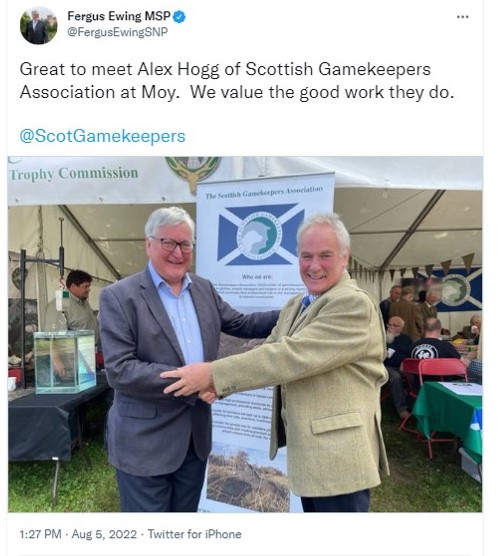
A tweet by Fergus Ewing MSP, former Cabinet Secretary for Rural Economy, posted yesterday at the Scottish Gamekeeper Association’s stand at the Moy Game Fair. I wonder who he’s referring to when he says ‘We’? Is he speaking on behalf of the Scottish Government?

The Moy Game Fair is hosted by the Moy Estate. That’ll be the disgraced Moy Estate that had a three-year General Licence restriction imposed on it in June this year (see here) after Police Scotland provided evidence to demonstrate wildlife crime had taken place on the estate, notably the discovery of a poisoned red kite and incidents related to alleged trapping offences, although the estate has long been recognised as a raptor persecution hotspot (e.g. see here, scroll down to below the press release).

An estate gamekeeper has recently been charged with the alleged shooting of a sparrowhawk and is due in court in September.

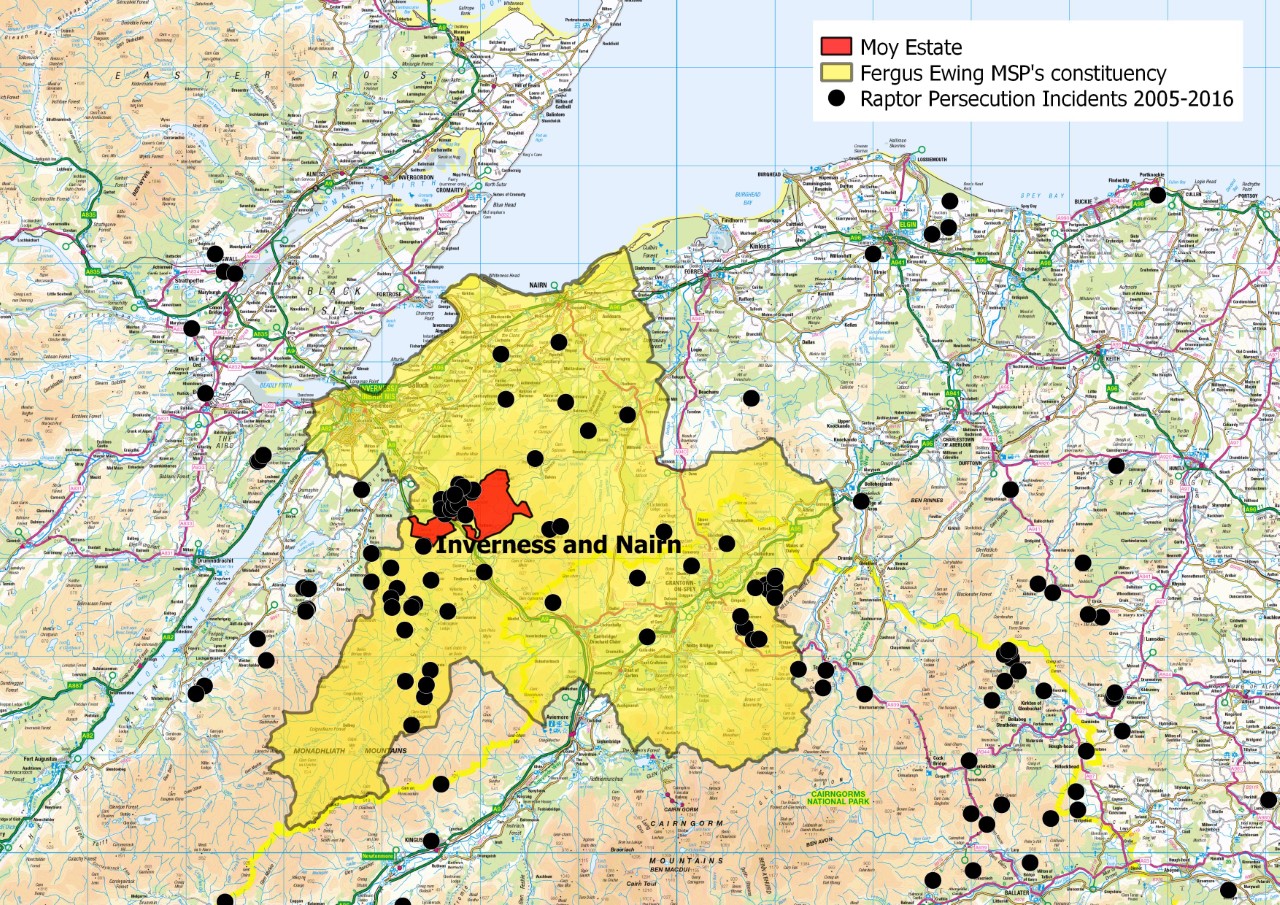
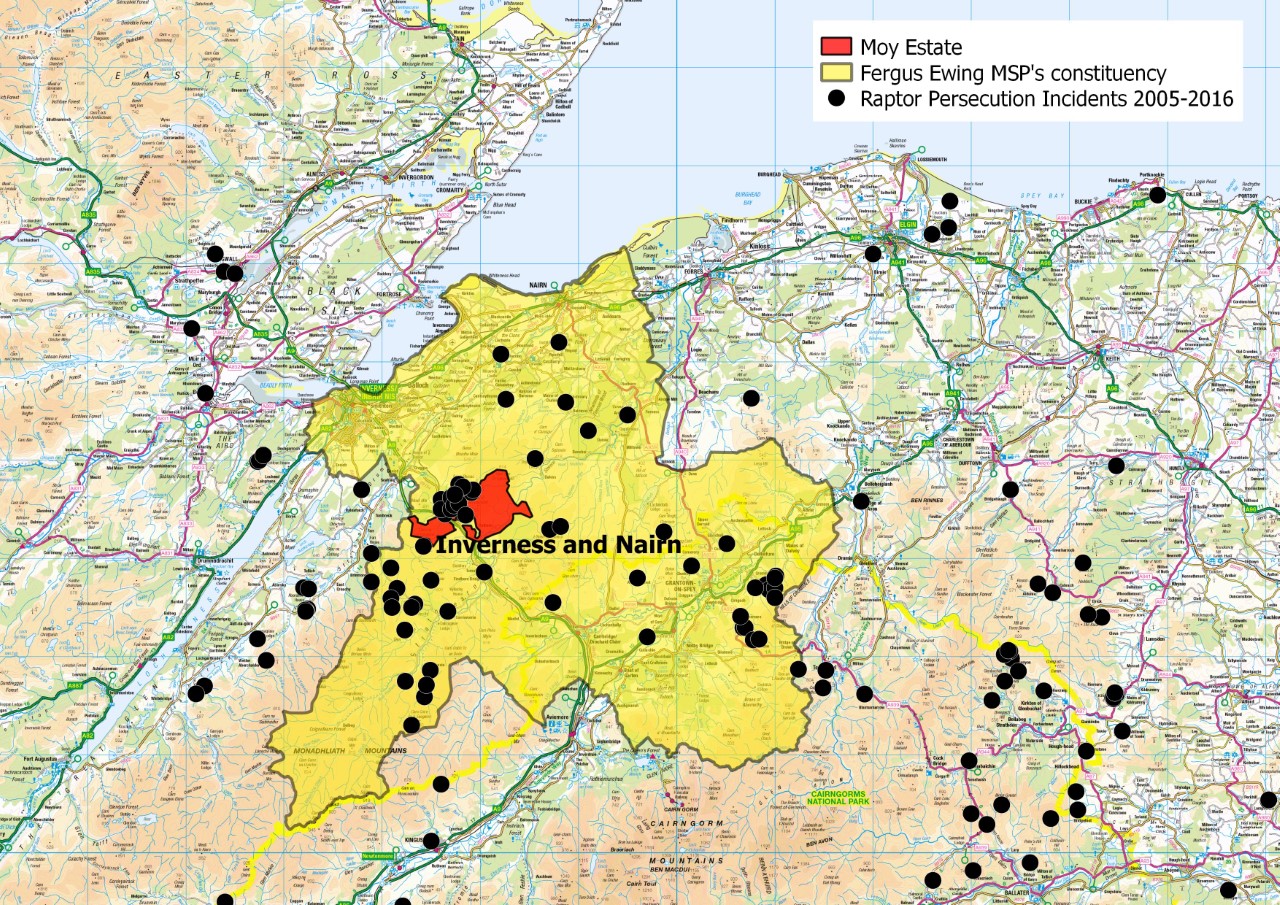
Here is a map we created way back in 2016 to highlight the extent of raptor persecution crimes in Fergus Ewing’s constituency and this shows the concentration of incidents on and close to Moy Estate. There have been further incidents since this map was created, hence the General Licence restriction imposed this year:

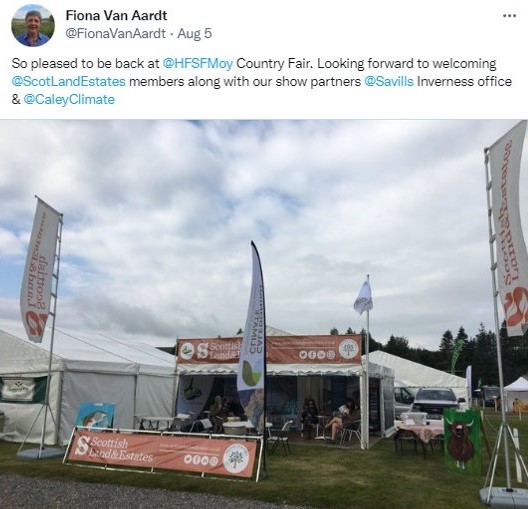
Also ignoring the sanction for wildlife crime on Moy Estate is Scottish Land & Estates (SLE), the lobby group for game-shooting estates across Scotland, as demonstrated by this tweet yesterday from SLE’s North of Scotland Regional Coordinator, Fiona Van Aardt:

So here’s a senior politician from the SNP Government, the Scottish Gamekeepers Association and Scottish Land & Estates, all effectively sticking up two fingers to the Government’s policy of sanctioning estates for raptor persecution.

When the policy of imposing General Licence restrictions as a tool for tackling rampant bird of prey persecution was first introduced in 2014, the then Environment Minister Paul Wheelhouse described the restrictions as being a ‘reputational driver‘. In other words, a sanctioned estate would not enjoy the benefits of being part of the shooting industry because the industry, with its claimed ‘zero tolerance’ approach to raptor persecution, would not wish to be associated with wildlife crime and this (hoped for) ostracization would stimulate a clamp-down on raptor-killing estates.

So much for that idea. It appears that the shooting industry, along with its political supporters, couldn’t give a monkeys. There’s been previous evidence of this on other so-called sanctioned estates (e.g. see here for examples).

Technically speaking, Mr Ewing and his shooting industry pals could argue that Moy Estate is not currently serving a General Licence restriction. How come? Well, because under the rules, if an estate appeals the GL restriction decision, the restriction is temporarily lifted whilst NatureScot considers the estate’s appeal. This is completely bonkers, of course, because a sanctioned estate has already had a chance to appeal the decision, when NatureScot first issues the notification for a restriction. But they’re then given another opportunity to appeal once the restriction has been imposed, and during that appeal process (typically four weeks) NatureScot removes the restriction so the estate can carry on as if the restriction never existed. I’m pretty sure that that’s what’s going on at Moy because the GL restriction decision notice for Moy Estate has been removed from the section of NatureScot’s website where currently-restricted estates are listed (here).

Although if Mr Ewing, the SGA and SLE were to rely upon this technicality, I don’t think that many people would view it as the shooting industry working in the spirit of wishing to stamp out raptor persecution, do you?

Scottish Gamekeepers Association plan awards ceremony at disgraced Moy Estate

Remember all those recent headlines from the game shooting industry, declaring a ‘zero tolerance’ stance against raptor persecution?

Well quelle surprise, it seems their interpretation of ‘zero tolerance’ isn’t quite the same as everyone else’s.

Last month Moy Estate, a shooting estate in the Monadhliaths was given a three-year General Licence restriction, imposed by NatureScot on the basis of evidence provided by Police Scotland of wildlife crime against birds, specifically the discovery of a poisoned red kite in 2020 (here).

It was just the latest in a long line of raptor persecution incidents reported on or next to Moy Estate for over a decade, and another court case is due to be heard this autumn.

For an example of the history, here is a map we created way back in 2016 to highlight the extent of raptor persecution crimes in former Cabinet Secretary Fergus Ewing’s constituency (given his strong support of the Scottish Gamekeepers Association) and this shows the concentration of incidents on and close to Moy Estate:

The General Licence restriction is a bit like putting a school into ‘special measures’ – a status applied by regulators to indicate the school has fallen short of acceptable standards, although the main serious difference here of course is that a General Licence restriction is imposed on the basis of wildlife crimes being committed on the estate, rather than merely a shortfall in standards.

The main idea behind the introduction of General Licence restrictions back in 2014 was that they would act as a “reputational driver” for those sanctioned estates, according to the then Environment Minister Paul Wheelhouse (see here).

However, there has been no evidence that the game-shooting industry takes any notice whatsoever of such sanctions. For example, the Game & Wildlife Conservation Trust hosted a guided tour and BBQ on ‘the renowned Corsehope Shoot‘ in June 2017, at the same time that this estate was serving a three year General Licence restriction for wildlife crime; Edradynate Estate bragged about “a belter season“ at the same time it was serving a three-year General Licence restriction for wildlife crime; and this estate was also endorsed by the British Game Alliance, the game shooting industry’s own ‘assurance’ scheme, membership of which is supposed to indicate ‘rigorous and ethical standards’, whilst the estate was under a General Licence restriction for wildlife crime (see here).

So it comes as no surprise to see that the Scottish Gamekeepers Association (SGA) is not only intending to have a stand at the forthcoming Highland Field Sport Fair hosted by Moy Estate (now rebranded as the Moy Country Fair, presumably in an attempt to make it more palatable), but the SGA is also planning an awards ceremony at the event to announce the winner of the SGA Young Gamekeeper of the Year Award as well as presenting various Long Service Medals!

You couldn’t make this up!

The Moy game fair has previously attracted the likes of former Cabinet Minister Fergus Ewing who used his attendance to give a rallying speech to the game-shooting sector (here) and Scottish Land & Estates (SLE) also usually has a stand. I can’t remember if Moy Estate is a member of SLE, but it’ll be interesting to see if SLE puts in an appearance this year.

Raptor persecution “hasn’t been a problem for years”, claims Scottish Gamekeepers committee member

There was a jaw-droppingly half-baked article published in The Courier last week, featuring commentary from a Scottish gamekeeper.

Bob Connelly, who is reportedly a Committee member of the Scottish Gamekeepers Association (SGA), had been speaking at the Scottish Game Fair and the Couriers environment journalist Scott Milne took the comments at face value and wrote the following article, which has to be read to be believed.

People will not realise the importance of land management and the shooting industry until campaigners force the end of the sector.

That is the view of gamekeeper Bob Connelly, who works in an estate in north east Perthshire.

Bob was speaking at the Scottish Game Fair, which took place in Scone over the weekend.

The Scottish Government is preparing legislation that could see gamekeeper grouse shooting licenced.

This has come after a campaign by animal rights advocates [Ed: he’s referring to this blog!] releasing evidence which appears to show wildlife crimes such as raptor persecution and misuse of traps.

The theory goes that predators such as buzzards and hen harries are killed in order to protect grouse, which brings in a lot of money during shooting season.

ARE GAMEKEEPERS VICTIM OF A HATE CAMPAIGN?

Bob feels much of this evidence has been manufactured as part of a “malicious” campaign to turn public opinion against gamekeepers and the shooting industry.

He said: “They want to get rid of us.

“But people don’t understand what we do and why we do it.”

A case in point is the controversial practice of heather burning.

It has been criticised as unnecessary and potentially damaging to peatland, which can release large swathes of carbon.

But Bob has a different perspective.

“You have to accept that there are going to be fires in places like that if you let it overgrow.

“So if it’s inevitable, do you want to have a controlled fire or let a wild one get out of hand?

“That would be even more damaging.”

Bob also feels it’s important gamekeepers are allowed to control predator populations in order to protect smaller species.

He said: “What we do is we build it from the ground up. We make sure the right environment is in place for insects and other small species and then bigger ones can naturally thrive on top of that.

“There’s more and more red-listed birds. If you want to protect them, it’s important to control predators such as foxes and buzzards.

“There’s a lot of people who have been manipulated to feel a certain way on social media, but don’t fully understand what we do.

“They’ll will miss us when we’re gone.”

WILL LEGISLATION CHANGE THINGS?

Bob thinks the upcoming gamekeeper shooting legislation is not needed.

“There is already rules surrounding things like traps. I can’t see how it can be legislated anymore.

“Yes, there were problems in the past with raptor persecution and things like that.

“But if you discount one or two recent examples, it hasn’t been a problem for years.”

GAMEKEEPERS AND LAND MANAGERS ARE WORRIED

Tim Baynes is director of moorland with Scottish Land and Estates.

Also speaking at the Scottish Game Fair, he said many gamekeepers and land managers he knows are worried for their jobs.

“A lot of these people have a very specific skillset that has come down from generations.”

Tim wouldn’t go as far as Bob and say anti-shooting campaigners have adopted “malicious” practices, but he does feel they “have an agenda”.

“They want to remove shooting.

“But they are not involved in it or in managing land so they are coming at it from a different perspective.”

Tim hopes the shooting industry can work with politicians to have legislation that works for everyone.

However, he is concerned that last-minute changes might be brought in that would work against their favour.

“At the end of the day, we have to work with the government that has got the votes.

“There are people within the government who are pragmatic about the industry.

“But it can be difficult for them to publicly say so.”

ENDS

The level of idiocy in this article is quite staggering, even for an SGA committee member. I guess it’s what we’ve come to expect from the SGA though, who have been in denial about the extent of these crimes for at least the 12 years I’ve been writing this blog and probably for years prior to that, as their standard response to the most glaring of truths.

And it is that level of idiotic denial, combined with ongoing raptor persecution and the SGA’s inability to influence those within the shooting industry who continue to commit these disgusting wildlife crimes (e.g. see here, here, here, here, here), that has brought about the Government’s decision to introduce a grouse shooting licensing scheme.

That decision wasn’t based on so-called ” manufactured evidence“. It was based on the number of raptor corpses found dead and mutilated on game-shooting estates over many, many years, including poisoned eagles found on grouse shooting estates even inside our National Parks for God’s sake, combined with the massive weight of incontrovertible scientific evidence that all points to an outright refusal to abide by the law by many members of the game-shooting industry.

It’s not the fault of this blog, nor the fault of the many other campaigners who have been fighting against this abuse of our raptors for decades. The blame lies entirely, and obviously, with the criminals.

Scottish Parliament sees sense & closes SGA’s petition seeking ‘independent monitoring of satellite tags fitted to raptors’

Hallelujah! After almost three years of wasting valuable parliamentary time, the Scottish Parliament has finally closed the petition lodged by the Scottish Gamekeepers Association (SGA) calling for the ‘independent monitoring of satellite tags fitted to raptors’.

I’ve blogged about this petition several times before (here, here), as has Ian Thomson, Head of Investigations at RSPB Scotland – well worth a read here.

The petition has been closed because the cross-party committee scrutinising it recognised that adequate and proportionate monitoring is already in place. Contrary to the SGA’s ignorant and misinformed propaganda, there is already plenty of cooperative partnership-working between satellite taggers, the tagging licensing authorities, landowners and the police. We collaborate and share our data in order to improve conservation benefits for these iconic species across Scotland. What we don’t do is share data with those who would use the information to disturb and/or kill eagles or other tagged raptors.

Had the SGA not walked off from the PAW Scotland Raptor Group in 2017 when the damning results of the Gov-commissioned Satellite Tag Review Report was published, they’d have known that this petition was an utterly pointless waste of everyone’s precious time.

The SGA lodged this petition in September 2019 and it was seen by many as just the latest in a long line of efforts to undermine and discredit the use of raptor satellite tags, simply because the tagging of raptors like golden eagles, hen harriers, white-tailed eagles and red kites has exposed the previously hidden extent of illegal raptor persecution on many grouse moors and has finally led the Scottish Government to committing to the introduction of a licensing scheme for grouse shooting in Scotland.

[The satellite tag fitted to this golden eagle led researchers to a grouse moor in the Angus Glens where the bird was found to have been illegally poisoned. Photo by RSPB Scotland]

Raptor persecution crimes attract huge media attention because it’s hard to believe that people are still killing golden eagles and other raptors in Scotland in the 21st century.

As a result of this ongoing publicity, the game-shooting industry has spent considerable time and effort trying to undermine the satellite-tagging of raptors, either by launching disgusting personal & abusive attacks against named individuals involved in the tagging projects, or by blaming tagged raptor disappearances on imaginary windfarms, or by blaming tagged raptor disappearances on faulty sat tags fitted to turtles in India, or by blaming tagged raptor disappearances on bird activist‘ trying to ‘smear gamekeepers’, or by claiming that those involved with raptor tagging projects have perverted the course of justice by fabricating evidence, or by claiming that raptor satellite-tagging should be banned because it’s ‘cruel’ and the tag data serve no purpose other than to try and entrap gamekeepers.

There have also been two laughable attempts to discredit the authoritative golden eagle satellite tag review (here and here), thankfully dismissed by the Scottish Government. The industry knows how incriminating these satellite tag data are and so has been trying to do everything in its power to corrode public and political confidence in (a) the tag data and (b) the justification for fitting sat tags to raptors, hence this latest petition from the SGA. Unfortunately for the SGA, its petition wasn’t enough to derail the Government’s response to the Werritty Review in 2020, as many of us suspected was the intention.

[A young golden eagle fitted with a satellite tag in Scotland prior to fledging. Photo by Dan Kirkwood]

Those of us involved in raptor satellite tagging in Scotland submitted evidence to the various committees that have scrutinised this petition (e.g. Scotland’s Golden Eagle Satellite Tagging Group, who described the SGA’s petition as ‘fact-free nonsense’ (here); RSPB Scotland (here), and me (here), although strangely, in the three years the petition has been active, none of us have been asked about our evidence or invited to attend any of the hearings.

The latest committee to review this petition was the Net Zero, Energy & Transport Committee, who considered the petition at its meeting on Tuesday (28 June 2022).

The Committee had received a submission from NatureScot identifying that new data-sharing protocols [between taggers and NatureScot] are now in place that perhaps were not in place when the petition was originally submitted. [Ed: This is not the case at all; data-sharing has been open with NatureScot for years, just not formalised in writing because none of us deemed it necessary, so all NatureScot has done is confirm what was already happening!].

NatureScot also told the Committee it believes that the data provides important oversight and that tagging is being done ‘competently, professionally and in an open way’.

The Committee had also received correspondence from Police Scotland who said it was also happy with the protocols in place.

On this basis, the petition was closed. It was also noted that in future, stakeholders will be invited to attend the committee to provide expert input. That is welcomed.

I did note, though, that hilariously, the SGA had submitted a last-minute note to the Committee on the evening before the meeting, crying about how its attempt to get involved with the satellite tagging of a golden eagle last year had apparently been ‘blocked’. Funny, I didn’t think the SGA supported satellite tagging?!

Is there no end to their hypocrisy?

It’s a beautiful irony actually, as it illustrates perfectly just how regulated the field of satellite-tagging is in the UK, contra to the SGA’s absurd claims in this petition. All satellite-tagging project proposals have to provide rigorous scientific justification for fitting these tags, which is then scrutinised by a special panel of experts at the British Trust for Ornithology (BTO, the licensing body). If the proposal doesn’t meet these rigorous standards, the licence will be refused.

You can read the Committee’s decision to close the petition here:

You can read the SGA’s story of apparently being ‘blocked’ from fitting a satellite tag to a golden eagle last year:

And if you want a really good laugh, I’d encourage you to read the Golden Eagle Satellite Tagging Group’s expert evisceration of the SGA’s petition here.