The Scottish Gamekeepers Association (SGA) has a track record of submitting pointless petitions to the Scottish Parliament that needlessly tie up valuable parliamentary time (e.g. see here).
[‘Pointless’ as in had the SGA done its research it would already know that what it was proposing was already established policy].
Another pointless SGA petition crashed and burned yesterday, this time after almost two years of consideration.
This one (Petition number PE1966) was lodged on 7 September 2022 and called for, ‘The Scottish Government to formally recognise local knowledge and ensure it is given full consideration alongside scientific knowledge throughout consultation, decision-making processes and in policy development, specifically within the conservation arena‘.
It was lodged at a time when the SGA felt more aggrieved than usual, on the back of the Scottish Government announcing that it intended to bring in grouse moor licensing to deal with the decades-long criminality associated with the illegal killing of raptors on Scottish grouse moors. I’m guessing that the petition was timed in a desperate attempt to influence the passage of the Wildlife Management & Muirburn Bill. If that was indeed the intention, the SGA failed miserably.
The text of petition PE1966 was what I’d call a word salad – lots of scientific-sounding sentences that looked like they’d been cut and pasted from various academic sources but when strung together were neither coherent or convincing. You can judge it for yourself here:
Obviously PE1966 was received with great enthusiasm by the Petitions Committee, whose current membership includes the SNP’s Fergus Ewing MSP, who also just happens to be an SGA-member, has previously described himself as “a friend in Government” [to the SGA] and has controversially donated to the SGA’s fundraising auction.
In addition to Fergus Ewing, the Committee is chaired by Conservative Jackson Carlaw MSP, whose questionable behaviour, along with that of Fergus Ewing, has been the subject of an earlier blog (see here).
The Committee took the opportunity (as is its role) to ask questions of NatureScot and the Scottish Government about the SGA’s complaints, including a missive from Fergus Ewing about why the SGA wasn’t represented on the NatureScot Board (yes, seriously!).
The responses from both the Scottish Government and NatureScot easily rebutted the challenges and effectively handed the SGA it’s arse on a plate – you can read the various correspondence letters here. (Click on ‘Citizen Participation and Public Petitions Committee Consideration‘ and then click on ‘Written Submissions‘).
This resulted in Petition 1966 going absolutely nowhere and it was formally closed during yesterday’s session, but not before Ewing & Carlaw had a chance to regurgitate some slurs on the SGA’s behalf.
I find it somewhat ironic that the SGA is complaining about its views not being taken seriously by politicians when a number of its members have, for several years, openly engaged in the most vile and misogynistic online abuse of some of Scotland’s politicians, especially towards former Minister Lorna Slater and former First Minister Nicola Sturgeon.
Here’s one of many recent examples, this one published in March this year:
This deeply offensive tweet was viewed 422 times on Twitter and received one repost and 5 likes. Not a single person challenged him about it.
Posted on Twitter under the name of Bob Connelly with a username of @curlybob69, this person describes himself as a Perthshire gamekeeper and he’s wearing an SGA pin badge in his header photo:
An identical profile is used for a Facebook account under the same name:
This looks like the same gamekeeper called Bob Connelly who featured in an article published by The Courier a couple of years ago, which laughingly asked, ‘Are gamekeepers victim of a hate campaign‘??!! (see here).
I wonder if it’s the same Bob Connelly who is listed at Companies House as a Director of the Scottish Gamekeepers Association’s Charitable Trust?
Is posting repugnant, misogynistic online abuse towards a female politician fitting behaviour of a charity Trustee? That would be a question for the SGA.
Is posting repugnant, misogynistic online abuse towards a female politician fitting behaviour of a Director of an organisation that’s demanding parliamentary time, attention and recognition? That would also be a question for the SGA but also for the politicians.
Is posting repugnant, misogynistic online abuse towards a female politician fitting behaviour of a shotgun certificate/firearms licence holder? That would be a question for the Chief Constable of Police Scotland.
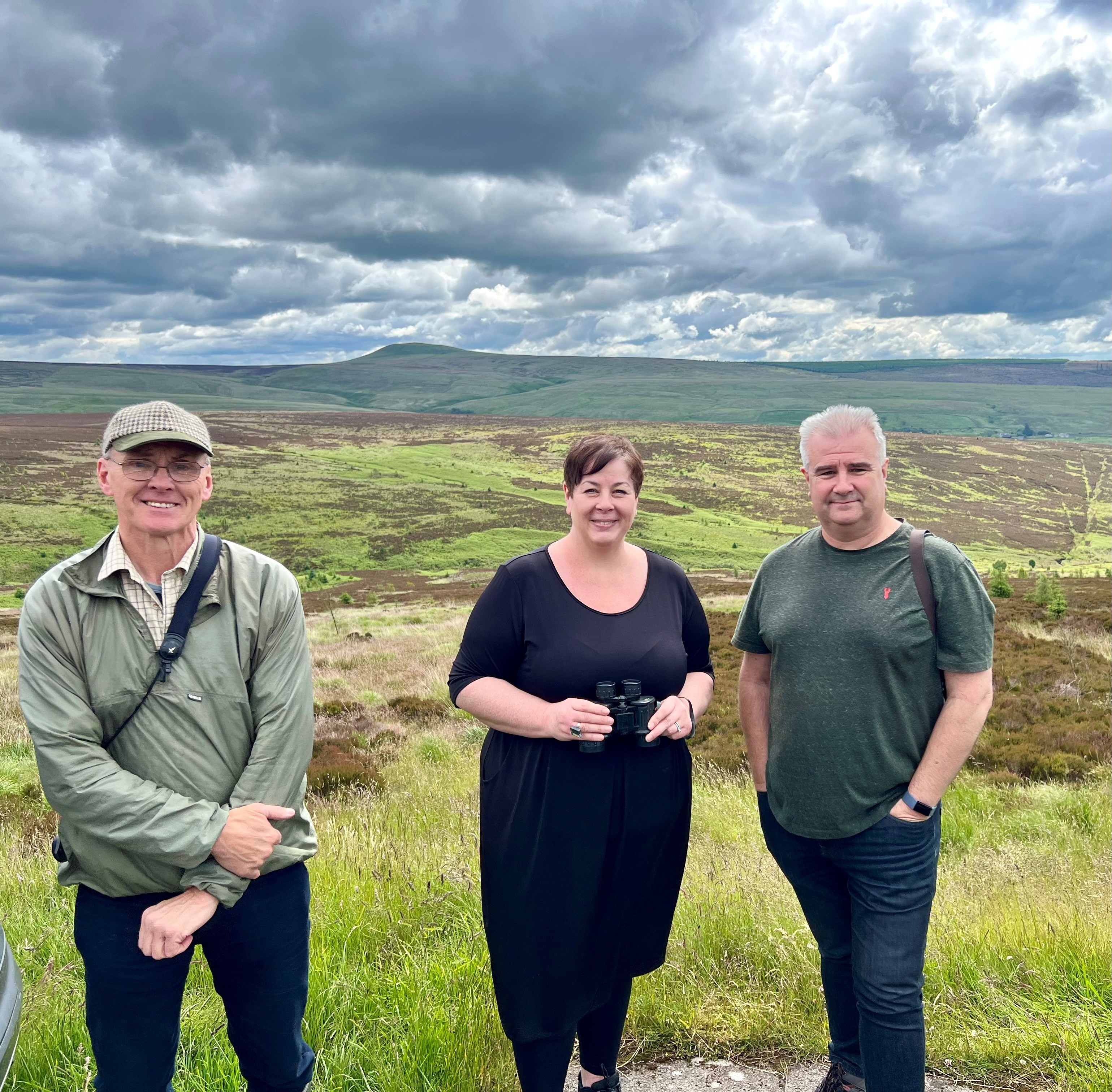
Elena is the Scottish Parliament’s Hen Harrier Species Champion, an initiative set up by Scottish Environment LINK to encourage MSPs to champion threatened and iconic species and habitats.
She was lucky enough to see a food pass between the breeding adults during her visit.
Strangely, the chairman of the Scottish Gamekeepers Association, Alex Hogg, recently told a parliamentary committee that the Tarras Valley Nature Reserve was a “species desert” and “there is nothing there at all” [now that it’s no longer being managed as a driven grouse moor].
I’ll return to Hogg’s parliamentary evidence session in a separate blog because it was quite something and it even prompted the RSPB to write to the committee to correct his false claims.
Cast your mind back to November 2023 when Police Scotland issued an appeal for information about the suspicious disappearance of a satellite-tagged golden eagle in the Scottish Borders in October 2023, which Police said at the time they believed “has come to harm” (see here).
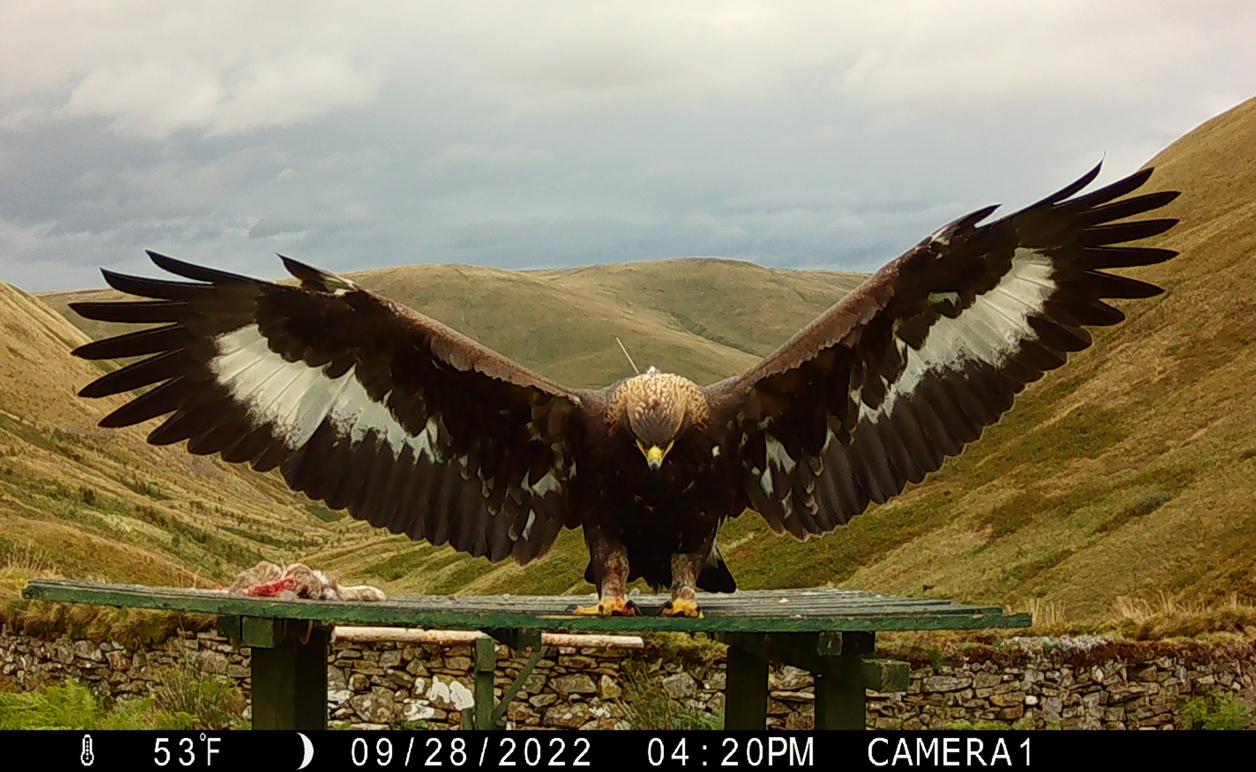
We later learned that this young golden eagle, called ‘Merrick’, was part of the South Scotland Golden Eagle Project, a lottery-funded conservation initiative which is translocating young golden eagles from various sites across Scotland to boost the tiny remnants of the golden eagle breeding population in south Scotland (see here).
Camera trap photo of golden eagle Merrick, from South Scotland Golden Eagle Project
Recent research has demonstrated the need for these translocations as golden eagles from further north in Scotland rarely visit south Scotland of their own accord (see here) so without translocations the golden eagle population in south Scotland was at serious risk of extirpation, especially with the ongoing persecution of these local eagles (e.g. see here), despite the desperate denial of the Scottish Gamekeepers Association (see here).
Today there has been a further update about the police investigation into the disappearance of golden eagle Merrick, with a press release issued by the South Scotland Golden Eagle Project. It is revealed that Police Scotland believe Merrick was “shot and killed” whilst sleeping in a tree before “someone then removed her body and destroyed her satellite tag“.
I’m going to reproduce the press release below, but then I’m going to discuss what wasn’t said in the press release because I always find the omissions more interesting.
Bear in mind when you read this press release that it was constructed by all the project partners involved in the South Scotland Golden Eagle Project, including those from the grouse-shooting lobby, who, unsurprisingly, appear to have used it as a vehicle to pump out some gratuitous pro-grouse shooting material.
I’m told by other project partners that this press release has been argued over for months, presumably because some partners wanted to do a damage-limitation job on it. Kudos to the Project team though for at least getting something out and providing a good deal of transparency about the circumstances of this eagle’s disappearance.
Here’s the press release – all photos supplied by South Scotland Golden Eagle Project. My comments will follow underneath:
PERSECUTION SUSPECTED IN DISAPPEARANCE OF GOLDEN EAGLE MERRICK
Following an investigation by Police Scotland, representatives for a groundbreaking conservation initiative, which attributes its success to overwhelming support from the public, raptor workers and land managers, have today (Wednesday 1 May 2024) confirmed that they are confident Merrick the golden eagle’s disappearance is due to persecution.
Merrick (F43), a female golden eagle that the project team translocated to southern Scotland in 2022, was reported missing in autumn 2023. With permission from Police Scotland, further information about the circumstances of Merrick’s disappearance and the evidence left behind can now be revealed.
Sharing further details, Project Manager, Dr Cat Barlow said: “We can confirm that Police Scotland has found clear evidence that a wildlife crime has been committed. They are confident Merrick’s disappearance was due to persecution.
“The South of Scotland Golden Eagle Project is incredibly angry, upset and disappointed that her disappearance appears to have been at the hands of an individual or individuals who consider themselves above the law.
“The Project’s translocated eagles have captured the hearts and minds of all our supporters, from conservationists, and raptor workers to landowners and the wider community, including children, visitors and business operators, who all share in our utter shock and disappointment.
“However, this incident, and the staunch support we have had, makes us utterly determined to fight the persecution of golden eagles and continue our successful translocation work to reinstate a resilient population of golden eagles across southern Scotland.”
Chair of the South of Scotland Golden Eagle Project, Dumfriesshire farmer Michael Clarke added: “Whoever committed this deplorable wildlife crime should hang their heads in shame. Golden eagles are back to stay in the South of Scotland, and we very much hope they continue to spread from here to all parts of the UK.
“We thank everyone for their support at this tough time. We are grateful to Police Scotland for their support and using all the resources at their disposal to establish the full circumstances. We remain more determined than ever to establish a sustainable population of golden eagles in the South of Scotland.”
Merrick (F43) originated from Rottal Estate near Kirriemuir in the Angus Glens, a traditional sporting estate, which is accredited by Wildlife Estates Scotland (WES) for its commitment to protecting and restoring wildlife and biodiversity. Speaking about her disappearance, estate owner and Chair of Scottish Land & Estates (SLE) Dee Ward said: “We utterly condemn raptor persecution in the strongest possible terms and it is right and proper that anyone who commits such an act is prosecuted and convicted.
“Merrick is an eagle our own family estate donated to the project and we’re incredibly proud of the part we and many other estates, land managers and gamekeepers have played in the success of the South of Scotland Golden Eagle Project. Indeed, the project has otherwise been an incredible success built on respect and co-operation between keepers, farmers, foresters and raptor conservationists.
“This incident makes us all the more passionate about continuing that support and we will do all we can to prevent, detect and condemn anyone who thinks this kind of abhorrent behaviour is acceptable.”
Merrick was the fifth eagle collected in the summer of 2022, the last to leave the aviaries, and the heaviest eagle translocated that summer, at 5.2 kg. She was named after the highest peak in the Southern Uplands, by the South of Scotland Golden Eagle Project’s host charity, the Southern Uplands Partnership (SUP).
The project team has followed Merrick’s journey since her release using round-the-clock surveillance techniques, alongside reports of sightings from the Moorland Association and shooting estates across the country. She was thriving before her disappearance and exploring widely across the south of Scotland and Northern England. She was even photographed on a trip to Weardale and filmed in Nidderdale Area of Outstanding Natural Beauty.
Each of the project’s eagles are fitted with a state-of-the-art satellite tag which transmits regular, reliable and accurate information about the birds’ wellbeing and movements. Until her disappearance, Merrick’s tag had been transmitting normally. During the eight days before her disappearance, she was exploring the Moorfoot Hills. Then on 12 October, her tag suddenly stopped transmitting, indicating “no malfunction”, which strongly suggested human interference.
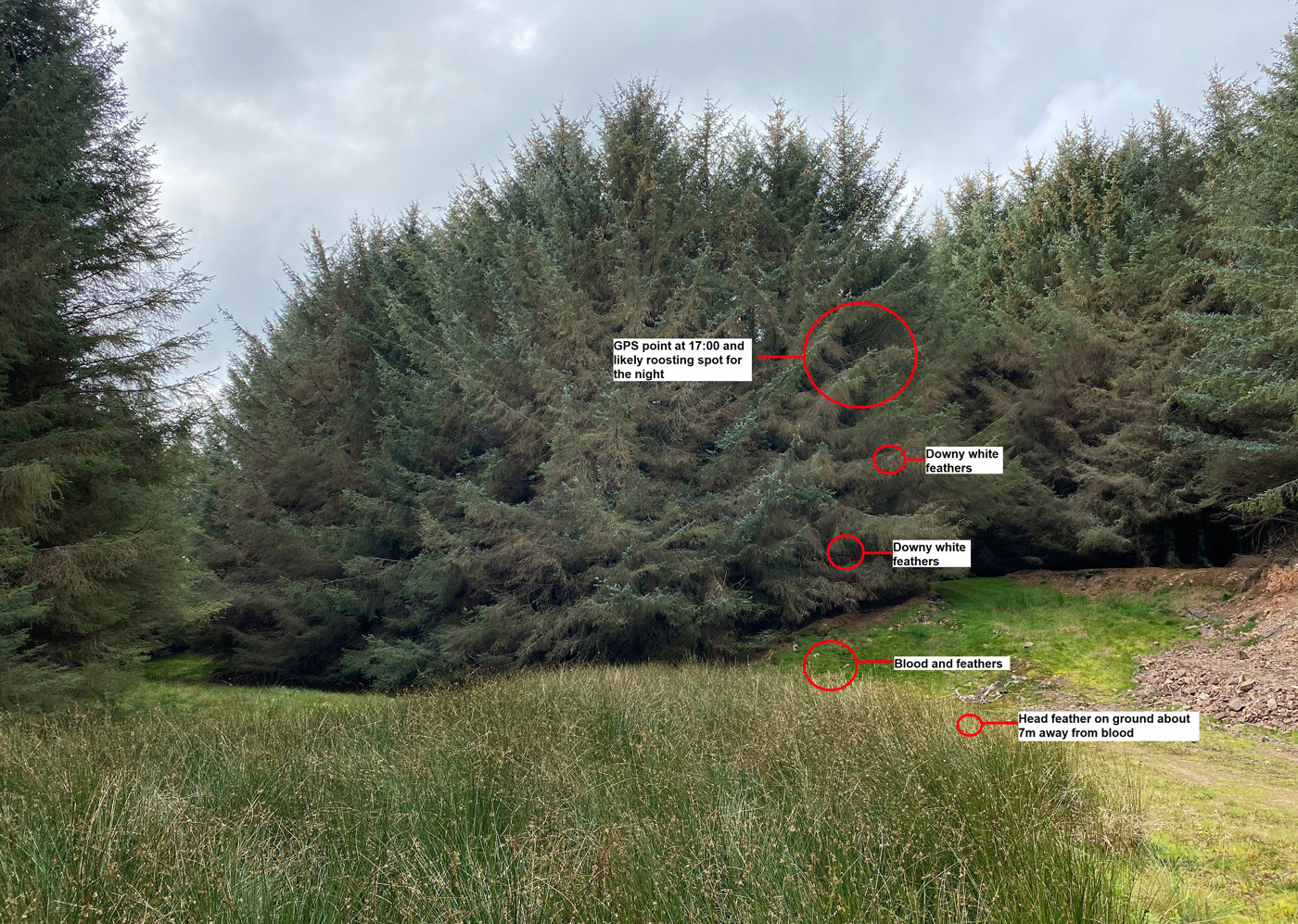
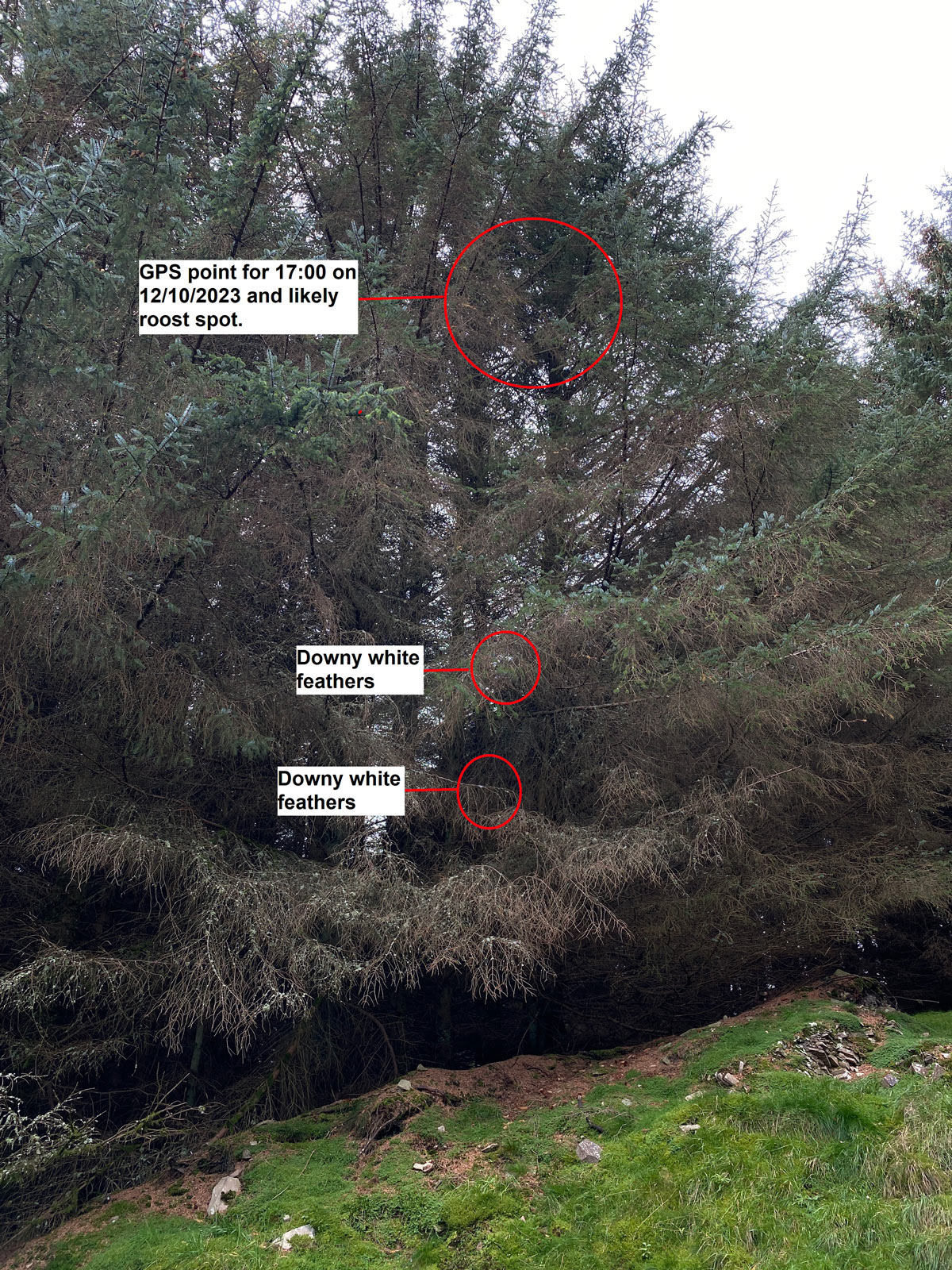
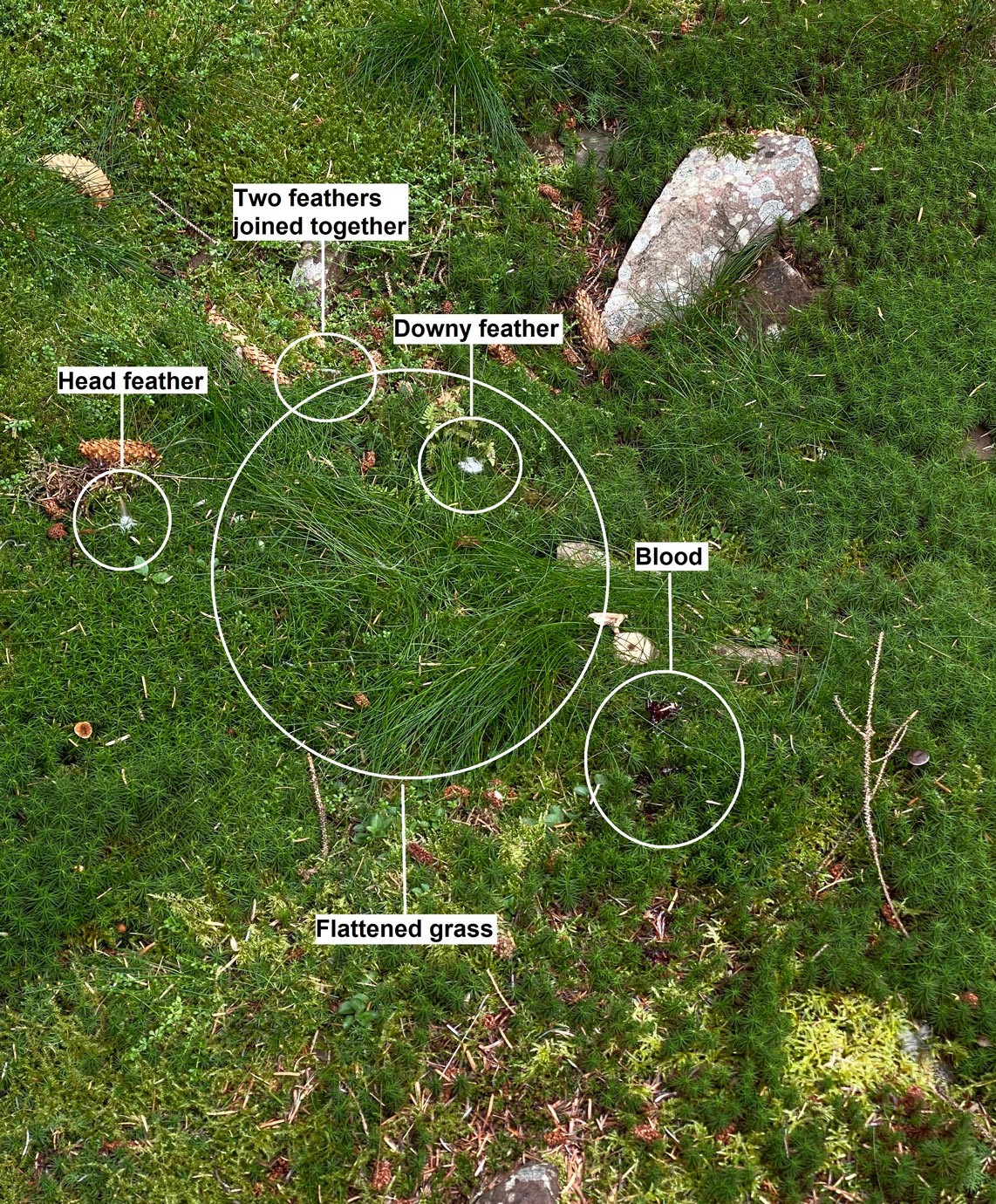
On a visit to check on a juvenile eagle in the area, Eagle Officer, John Wright, inspected the relatively bare branches of a Sitka Spruce, Merrick’s last known roosting spot. He very quickly noticed a small golden lanceolate shaped head feather, two small wing coverts and some white under-down laying on the moss directly below the tree. Recalling his visit to the site, John said: “I saw a film of blood stretched across the grass stems. It subsequently turned out that a considerable amount of blood was present in and below the moss layer. As I stood back from the feather and blood location, I could see small downy feathers scattered in the dense spruce foliage below the roosting branches.
“Merrick had been roosting (sleeping perched) in a tree when her tag stopped transmitting. Golden eagles, as apex predator, have very few natural predators and so fears that Merrick had been fatally injured whilst roosting were quickly dismissed. Police Scotland have told us that they are confident humans were involved in the demise of this eagle.”
The Project team contacted Police Scotland, who promptly reached the site before weather destroyed any evidence to investigate the incident. This allowed them to confidently eliminate most other potential causes of death or disappearance. The nature and pattern of feathers and blood, and all other evidence, indicated to the Police that Merrick was shot and killed.
Dr Cat Barlow said: “Looking at the evidence, Police Scotland believe she was shot then fell to the ground, where she bled considerably through a single wound. Police Scotland believe that someone then removed her body and destroyed her satellite tag.”
In November, Police Scotland issued a statement stating that they believed she had “come to harm” and were treating her disappearance as “suspicious.”
Detective Sergeant David Lynn, Police Scotland Wildlife Crime Coordinator, said: “Since the report was made, officers have been working with a range of partner agencies to establish more details and gather further information to establish the circumstances.
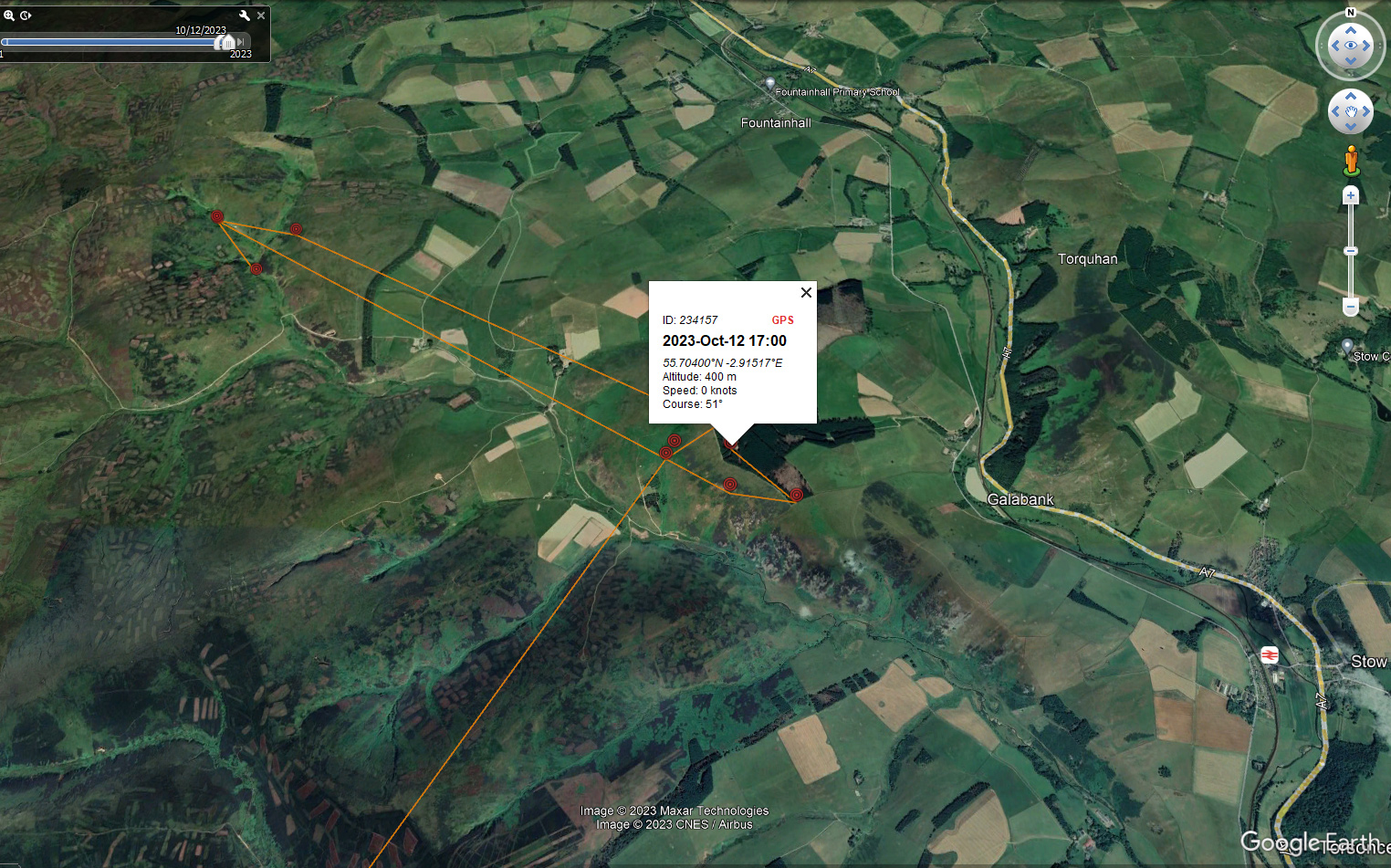
“The bird was last seen in the area to the west of Fountainhall, between Heriot and Stow on Thursday, 12 October. A full search of this area was carried out and officers believe the bird has come to harm and are treating its disappearance as suspicious.
“We are determined to protect these magnificent birds. We work closely with a number of partners to tackle wildlife crime, which can be challenging and complex to investigate. I urge anyone with any information to contact us through 101 quoting reference number 1193 of 18 October. Alternatively, please contact Crimestoppers though 0800 555 111, where anonymity can be maintained.”
The South of Scotland Golden Eagle Project partners the Southern Uplands Partnership, RSPB Scotland, Scottish Land & Estates, Scottish Forestry, GWCT and NatureScot all share in the bitter disappointment of today’s news.
Since the first chicks were released in 2018, the project has had significant success, quadrupling the local population of golden eagles to the highest number seen in the area for centuries. Survival rates of the translocated birds are 90%, which is incredibly high.
The translocated golden eagles regularly and safely visit upland areas, which are managed for shooting and are a natural habitat for the golden eagle. The project has had excellent support from shooting estates in the area, who have worked with the team in many ways to ensure golden eagles thrive in southern skies – from the provision of chicks to supporting the development of artificial eyries in a safe place on their land.
That last image is what I want to focus on. It shows the location of Merrick’s last known roost spot and where her blood and feathers were found.
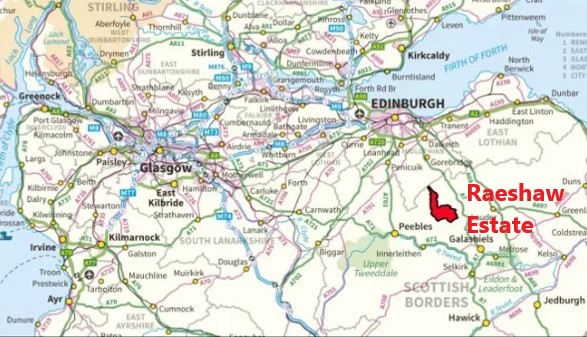
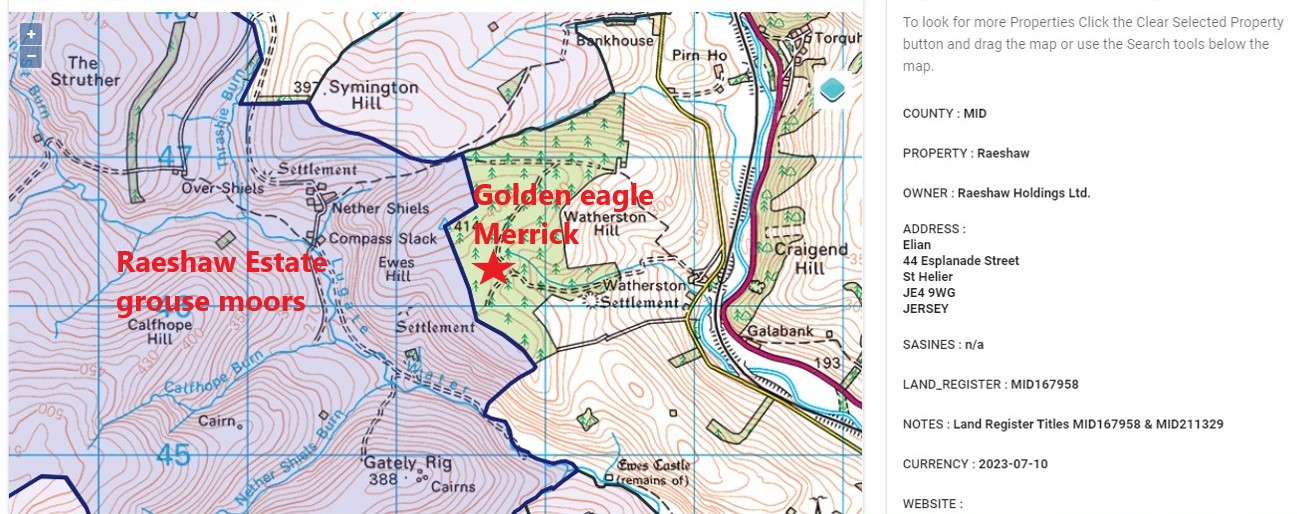
According to Andy Wightman’s fantastic Who Owns Scotland website (if you don’t already subscribe I recommend you do), this location is several metres from the boundary of Raeshaw Estate in the Moorfoot Hills.
RPUK map showing the boundary of Raeshaw Estate, derived from data on the Who OwnsScotland website
Screen grab from Who Owns Scotland website, annotated by RPUK, showing the proximity of Merrick’s last known location and the Raeshaw Estate (shaded in blue)
It struck me as odd that in the press release, although there are frequent references to how great ‘traditional sporting estates’ are for golden eagle conservation (and in the case of Rottal Estate where Merrick hatched, justifiably so), nobody seemed to want to mention the proximity of Merrick’s last known location and the discovery of her feathers and blood to the ‘traditional sporting estate’ known as Raeshaw. Why is that?
It would seem quite a significant piece of information to me, given that government-funded scientific research has identified a link between the proximity of some driven grouse moors and golden eagle persecution in Scotland. Not all driven grouse moors, but some.
Regular blog readers will recognise the name of Raeshaw Estate. I’ve blogged about it many times before as this was one of the first estates to be hit with a General Licence restriction back in 2015 based on ‘evidence provided by Police Scotland of wildlife crime against birds‘ although there was insufficient evidence to link the crimes to a named individual (see here), hence the GL restriction as opposed to a prosecution.
Raeshaw took NatureScot to court to challenge the decision under judicial review but lost the case after the court considered NatureScot’s decision to be lawful (here).
During the time Raeshaw was serving a General Licence restriction, employees applied for an individual licence to permit the continued (lawful) killing of so-called ‘pest’ birds on the estate (e.g. 1,000 birds reported killed under one of these licences, see here), but then even the individual licence was later revoked after NatureScot found ‘multiple instances of breaches of conditions of an individual licence that had been granted to cover essential management activities‘ (see here).
NatureScot also said, ‘These breaches may also constitute offences under the Wildlife and Countryside Act, so SNH has reported the details to Police Scotland‘. I’m not aware of any subsequent prosecution in relation to those alleged offences.
It’s worth pointing out here that as far as I’m aware, nobody from the Raeshaw Estate has ever been prosecuted for any of the alleged wildlife crimes reported from this area.
It’s also worth pointing out that, just because Merrick’s last known location and the discovery of her blood and feathers was just several metres from Raeshaw Estate’s boundary, that doesn’t mean we can automatically assume that anyone associated with Raeshaw Estate was involved. There’s no direct evidence to demonstrate a link. Indeed, I heard on the grapevine that Police Scotland was refused permission to obtain a search warrant because the Crown Office didn’t consider there was sufficient evidence to justify it.
According to Andy Wightman’s research, Raeshaw Estate is owned by an overseas entity called Raeshaw Holdings Ltd, which according to Companies House is registered in the tax haven of Jersey (here). Last year it was reported that the beneficial owner of Raeshaw was billionaire Tory donor Louis Moore Bacon.
The sporting elements of the estate are managed by one of ‘grouse moor guru’ Mark Osborne’s companies, a sporting agency called ‘JM Osborne Rural and Sporting‘. Members of the grouse shooting industry, who you’ll recall routinely profess to have a zero tolerance policy towards raptor persecution, even in the press release above, clearly do not consider there to be any link with the apparent shooting and killing of Merrick and anyone employed on Raeshaw Estate. If they did, various gamekeeping organisations such as the Scottish Gamekeepers Association, National Gamekeepers Organisation, Southern Uplands Moorland Group and the Angus Glens Moorland Group wouldn’t this week be promoting on social media the latest gamekeeper vacancy on what is described as the ‘prestigious’ and ‘cracking’ Raeshaw Estate:
Screen grab from the Scottish Gamekeepers Association’s Facebook page, 30 April 2024
Screen grab from the National Gamekeepers Organisation’s Facebook page, 29 April 2024
Screen grab from the Facebook pages of gamekeeping organisations the Angus Glens Moorland Group & Southern Uplands Moorland Group, 29 April 2024
And grouse moor lobby group Scottish Land & Estates certainly wouldn’t be providing regular, full page advertising space in its quarterly LandBusiness magazine to any of Mr Osborne’s companies (JM Osborne Rural & Sporting and his gun-making company William Powell) if it considered there was any link:
Screen grab from SLE’s LandBusiness Magazine, Autumn 2022
Screen grab from SLE’s LandBusiness Magazine, Spring 2024
And pro-game shooting charity Game and Wildlife Conservation Trust (GWCT) certainly wouldn’t be accepting generous raffle prizes worth a value of tens of thousands of pounds from any company even suspected of having a link to raptor persecution – see here and:
Screen grab from GWCT website
And surely neither would the British Association for Shooting & Conservation (BASC) be accepting generous raffle prizes worth £13,000:
Screen grab from BASC website
To summarise then:
Golden eagle Merrick, like so many satellite-tagged golden eagles before her, ‘disappeared’ in suspicious circumstances in October 2023.
Some of her feathers were found next to pools of her blood at her last known roost site.
Police Scotland believe she was ‘shot and killed’.
Although this incident took place in close proximity to the boundary of Raeshaw Estate, there is no suggestion whatsoever that anyone there was involved.
Police Scotland found no evidence to allow them to arrest and charge anyone in connection with Merrick’s disappearance or death.
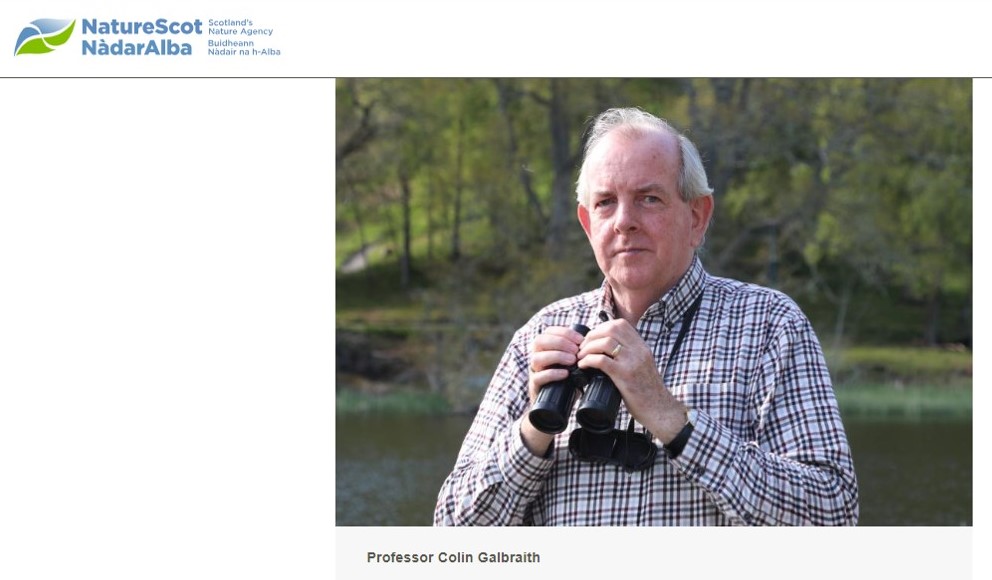
Many of you will know that Professor Colin Galbraith was appointed Chair of NatureScot’s Board last year (see here); a four year appointment until June 2027.
Screen grab from NatureScot website
Professor Galbraith was invited to speak at the Scottish Gamekeepers Association’s (SGA) recent AGM (1 March 2024) and I was curious about what he said to them. This is pertinent to another issue that I’ll come on to in another blog.
I submitted an FoI to NatureScot asking for, amongst other things, a copy of Professor Galbraith’s presentation to the SGA.
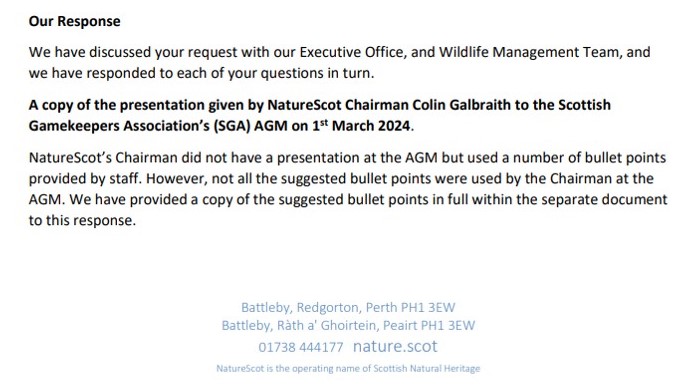
Here’s part of the response I received from NatureScot:
Here is a copy of the bullet points provided to Professor Galbraith by NatureScot staff for his speech at the SGA’s AGM:
This is a guest blog from Duncan Orr-Ewing, Convenor of the Scottish Environment LINK Deer Group.
LINK Deer Group comprises of RSPB Scotland, National Trust for Scotland, John Muir Trust, Scottish Wildlife Trust, Woodland Trust Scotland, Trees for Life, Ramblers Scotland, and Nature Foundation.
Duncan’s blog encourages readers to participate in the Scottish Government’s current consultation on Managing Deer for Climate and Nature (details at the foot of this blog). The consultation closes this Friday (29th March 2024).
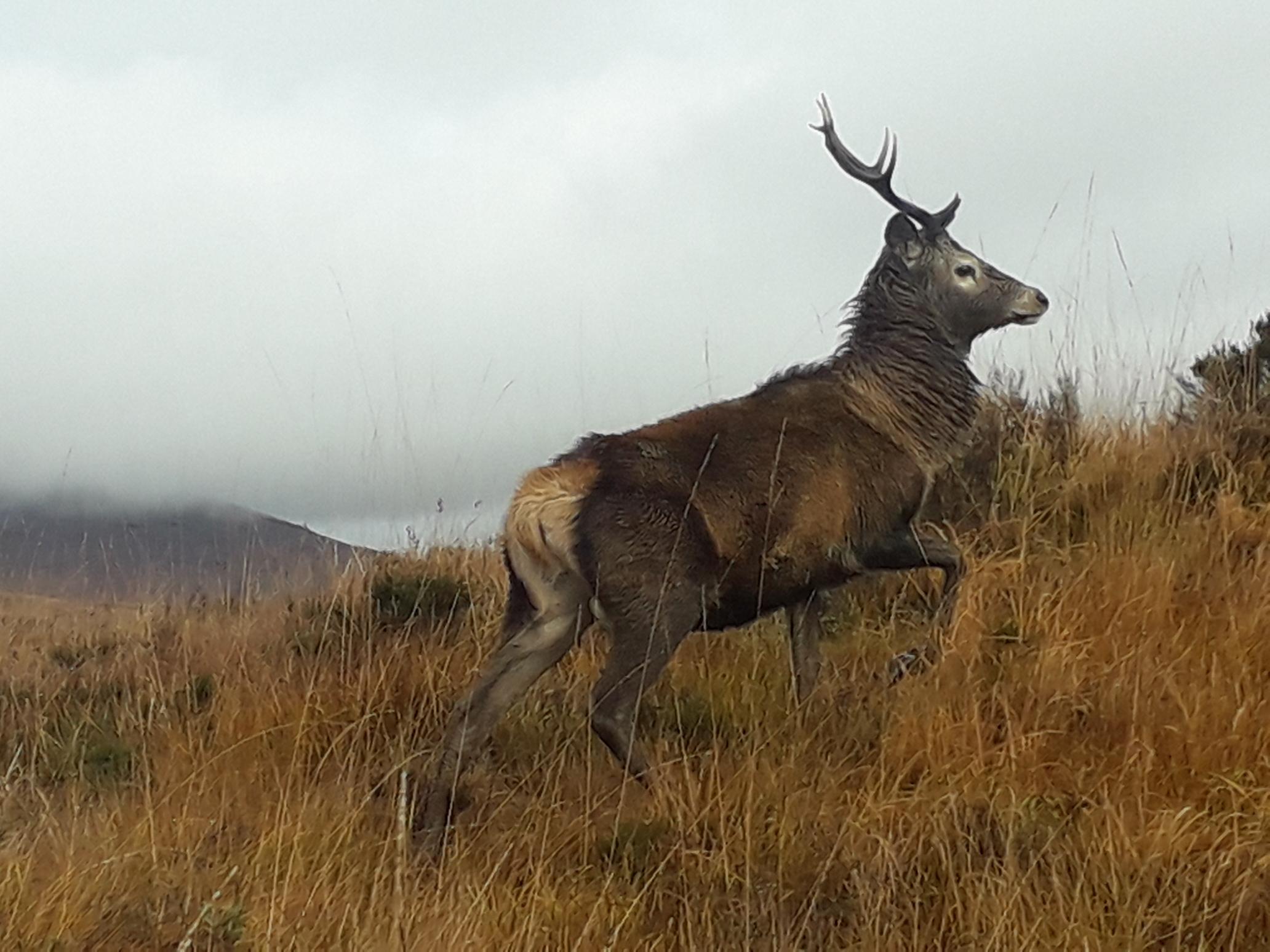
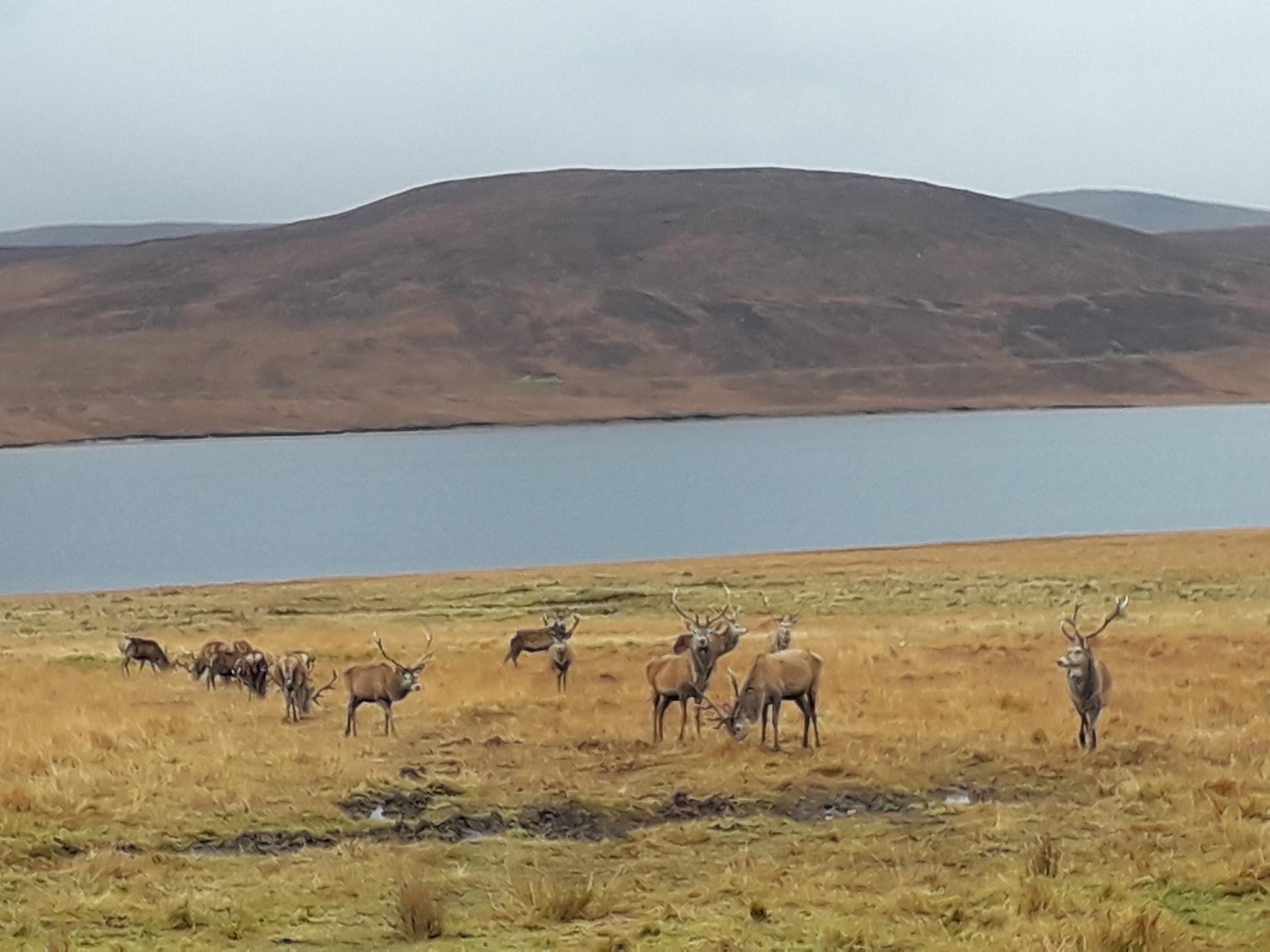
Photo by Duncan Orr-Ewing
A POSITIVE FUTURE FOR SUSTAINABLE DEER MANAGEMENT IN SCOTLAND
Alongside the progress of the Wildlife Management and Muirburn Bill, which was approved by the Scottish Parliament last week, reforms to deer management in Scotland are also being considered by Scottish Government.
Measures to update the Deer (Scotland) Act 1996, and to bring it into line with modern day expectations around the need to restore nature and to combat climate change are making steady progress, and are now out to public consultation. New deer legislation will be included in a Natural Environment Bill expected to be laid before the Scottish Parliament in late 2024.
In the absence of natural predators, such as lynx or wolf – both exterminated in Scotland several centuries ago – deer populations are managed by humans to prevent damage to a wide variety of public interests. Damage can be caused by high deer populations to the natural heritage; to agriculture; to forestry; and also to human health and safety (road traffic accidents and Lyme disease).
Deer management is carried out to high humane standards by expert stalkers following Deer Management Best Practice, and of course most of the end product – venison- then goes into the human food-chain, and is widely regarded as a healthy alternative to farmed meats.
Photo by Duncan Orr-Ewing
Most of Scotland’s uplands are managed either as grouse moor or as deer forest, and therefore along with grouse moor management, the land management practices which occur in deer forests are hugely important for protecting and enhancing our native wildlife and their habitats in the uplands.
The latest population estimate for the combined four species of deer (two native and two non-native) that occur here is over 1 million animals. This represents a doubling of the deer population in the last twenty years. For further background and deer timelines see here.
As with grouse moor management and the independent Grouse Moor Management Review Group (“Werritty Review”), the Scottish Government commissioned an independent review of deer management in 2017 and which reported in 2020, here. It came up with 100 recommendations for improvements to current systems and processes, and to foster better sustainable deer management practices in Scotland. These recommendations were largely accepted by Scottish Government – see here.
These recommendations of the independent Deer Working Group now form the backbone of the deer legislative proposals for the Natural Environment Bill.
However, in addition the Scottish Government is proposing a few further, and we think largely beneficial measures. These include provision for what are being called Deer Management Nature Restoration Order powers to NatureScot, the competent deer authority, to take compulsory action to reduce deer numbers to enhance habitats and species in targeted areas. This is intended to help deliver the outcomes of the Scottish Biodiversity Strategy.
We encourage individuals to respond to the current public consultation on new deer legislation in Scotland which closes on Friday 29th March. This a relatively straightforward exercise and can be done quite quickly – here.
See also the LINK Deer Group response for further advice and suggestions on how you might respond – here.
Duncan Orr-Ewing
Convener, LINK Deer Group
ENDS
Editor writes: Some of you may have seen the Scottish Gamekeepers Association’s hysteria in response to the Government consultation, refusing to engage with it and claiming that their members may suffer a ‘mental health toll’ if they have to cull heavily pregnant hinds due to the proposed changes in the deer hunting season- see here.
As usual, the SGA hasn’t provided proper context. There are proposed changes to female deer seasons to essentially make them all the same for all species. It is still entirely discretionary when deer are shot within the proposed new seasons.
If folk are worried they can take their cull earlier in season. It’s the same with the now abolished season for male deer. It does not mean stalkers have to cull male deer all year round and some people may stick to the old male deer season.
The bottom line for conservation though is more deer need to be culled, especially hinds, to reduce burgeoning deer populations. It is the female deer that are critical in that respect.
If you’re able to complete the consultation by Friday (no specific deadline has been given on Friday) that would be great, thanks.The link is here.
The passing of the Wildlife Management & Muirburn (Scotland) Bill yesterday, voted for by almost everyone (except the Scottish Tories and the SNP’s Fergus Ewing MSP) has been the hot topic of conversation today.
For many, the Bill has been the focus of daily life for exactly one year, when it was first introduced on 21 March 2023. And of course, the issue of raptor persecution on grouse moors, which is what triggered this Bill in the first place, has been the focus of daily life for many of us for longer than we care to remember, well before the introduction of the Bill.
With such a long history of campaigning, the responses to the passing of the Bill yesterday were entirely predictable. Conservationists are very happy with it, recognising it as an important stride forward but fully cognisant that our work here is not yet done. You can read responses from REVIVE, the coalition for grouse moor reform here, from OneKind here, and from RSPB Scotland here.
The grouse shooting industry is furious with it, mainly, from what I can tell, because it feels humiliated. It’s an industry founded on privilege and self-entitlement and has done pretty much what it wants for about 150 years, unhindered by the societal rules by which the rest of us must abide. To have the Scottish Parliament vote to introduce legislation that will finally hold the industry to account is hugely embarrassing. Imagine having to listen to a Government Minister say this about you in the Parliament’s debating chamber:
“There were those who disagreed with the principles of the bill, but if the grouse-shooting community had shut down raptor persecution— stopped the killing of our most iconic birds of prey—we would not have had to legislate in this way. Sadly, that community did not shut it down, so it is now up to us to make sure that it does so. It is for that reason that the bill is before us today”. – Scottish Agriculture Minister Jim Fairlie, 21 March 2024.
I guess that’s why there wasn’t a single representative from the industry sitting in the public gallery at Holyrood yesterday.
Not that I have any sympathy. The grouse shooting industry has been given chance after chance after chance to rid itself of the criminals within. It has failed to do so, instead going on the offensive, repeatedly denying that raptor persecution even exists and conducting a disgusting campaign of hate, smear and abuse targeted against those who were prepared to call them out.
I don’t believe that every grouse shooting estate is ‘at it’, but I do believe that there are more ‘at it’ than are not. And even the ones that are not, they do know who is responsible – the entire industry knows – but the industry has refused to blacklist. Now they’re all going to suffer the consequences.
You can read the responses to the passing of the Bill from the Scottish Gamekeepers Association here, from Scottish Land & Estates here and from BASC here.
BASC’s response is particularly interesting as it claims the new legislation “is unworkable for gamekeepers and land managers” and “will beruinous to the rural economy“. Does that mean that BASC thinks that sustainable grouse moor management isn’t viable? That grouse moor management relies upon the illegal persecution of birds of prey, the use of inhumane snares to trap foxes and other wildlife and the routine setting alight of deep peat moorland? That would be an extraordinary admission!
So what happens next?
Now the details of the Bill have been finalised and passed, NatureScot can get on with finalising the details of the codes of practice for grouse shoot licensing and muirburn licensing that will be used to support the implementation of the new legislation. I’ll post details when they become available.
The timing of the ban on snares and wildlife trap licensing is yet to be determined.
It is fully expected that grouse shoot licensing will be in place for the start of the 2024 grouse shooting season on 12th August. The muirburn licence is more complicated and it is anticipated that won’t be in play until September 2025.
Here is a copy of the Wildlife Management & Muirburn (Scotland) Bill as passed:
This post isn’t about raptor persecution per se, but it is about the mindset of the gamekeeping community, which is directly relevant to raptor persecution given that the majority of those convicted for killing birds of prey are from the gamekeeping industry.
For a very long time the Scottish Gamekeepers Association referred to its members as the ‘true custodians of the countryside‘ and even the ‘doctors and nurses of the countryside‘ (here). In recent years the terminology has been upgraded and now regularly references the SGA’s role in reaching ‘net zero’ and ‘biodiversity targets’. Unfortunately, the mindset of many in this industry hasn’t been upgraded to match the rhetoric, as will be so clearly demonstrated in the rest of this blog.
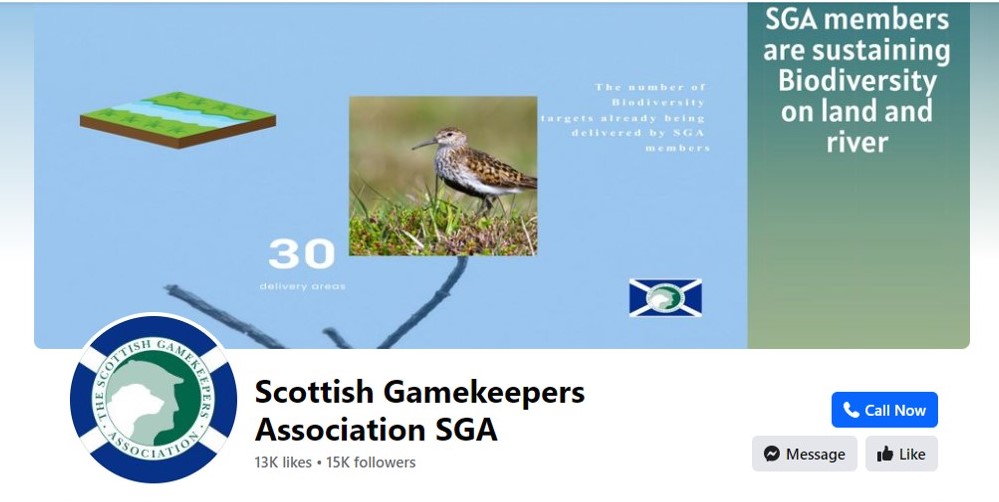
Like many organisations, the SGA engages with its members, followers and supporters on social media. Here is the SGA’s header on Facebook, claiming that “SGA members are sustaining Biodiversity on land and river“:
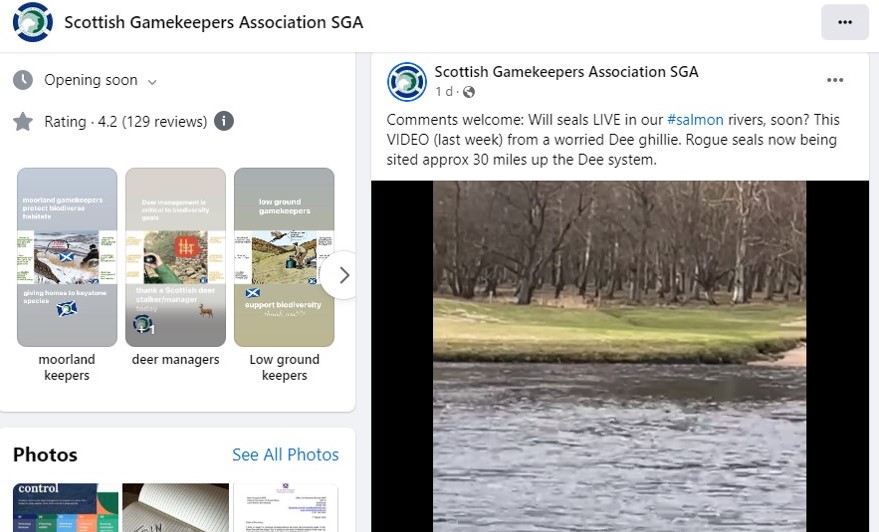
A couple of days ago the SGA posted a short video of a seal (I’m not sure whether its a Grey seal or a Common (Harbour) seal but no matter, both are protected species) in the River Dee and encouraged comments from its followers:
Just to be clear, it is an offence to kill either Grey or Common Seals without a licence. Under the Animals and Wildlife (Penalties, Protections and Powers) (Scotland) Act 2020, which amended the Marine Scotland Act (2010), the penalty for illegal seal shooting was increased to 12 months’ imprisonment/£40,000 fine or, on indictment, unlimited fine/5 years’ imprisonment. This legislation also removed the provision for licences to be issued to kill seals to protect fisheries.
With this information in mind, have a look at the following comments on the SGA’s post where contributors are openly calling for the illegal shooting of this seal:
With the notable exception of a couple of sensible voices, it’s a real eye opener to the appalling prevailing attitude towards (a) predators and (b) compliance with the law. Actually the intolerance towards predators is no surprise at all, but the stupidity of posting calls on a public forum to illegally shoot this seal is astonishing. I wonder how many of those inciting a wildlife crime are firearms/shotgun certificate holders?
They’d do well to heed the advice of the SGA’s legal advisor, David McKie, whose latest column in the SGA’s rag includes the recommendation to “Remember at all times be discreet in all your dealings, both private and public, particularly on social media!“.
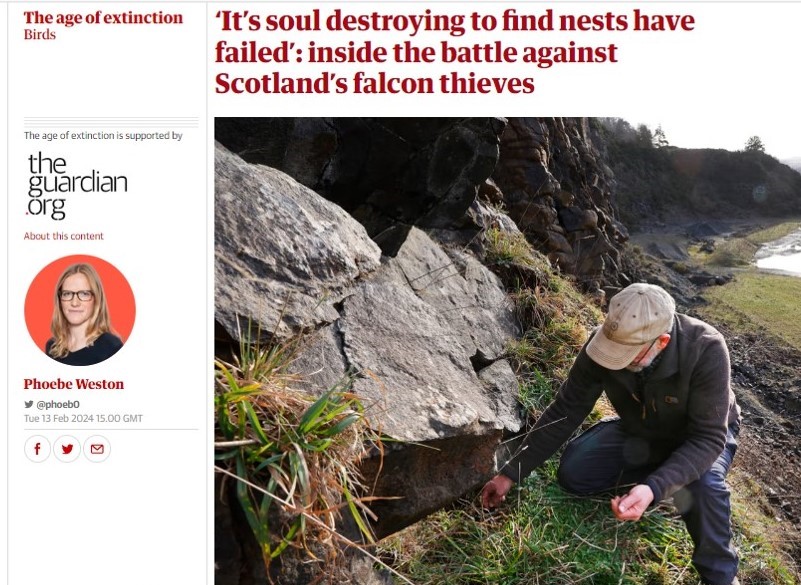
There’s been a good deal of media interest and coverage about the recent prosecution, conviction and sentencing of part-time gamekeeper Timothy Hall and his son, Lewis Hall, for their role in the illegal laundering of wild Scottish peregrines which they sold for high prices to buyers in the Middle East (see here and here).
Most media outlets have simply summarised the press releases about Operation Tantallon issued by Police Scotland and the Crown Office, but the Guardian newspaper has published from a different angle, focusing on the work of Scottish Raptor Study Group (SRSG) member George Smith, whose 40 years of dedicated and detailed monitoring of peregrines in south Scotland helped bring the successful prosecution against Timothy and Lewis Hall.
Written by journalist Phoebe Weston, who is developing a reputation for in-depth coverage of raptor persecution crimes – e.g. her earlier three-part podcast on the illegal persecution of hen harriers on grouse moors (‘Killing the Skydancer‘) was excellent, her latest piece on the Hall peregrine case is well worth a read – see here.
It’s good to see George’s significant, long-term fieldwork receiving national attention – like so many other SRSG members, George undertakes this skilled (and licenced) work on an entirely voluntary basis but his hard-won data provide the Scottish Government and its agencies with vital detail about the distribution and abundance of raptors (in George’s case, peregrines) and help to inform long-term conservation policies.
I’m particularly pleased to see George’s work highlighted because he is one of a number of SRSG members who are repeatedly targeted online by a malicious group of individuals, some of them prominent members of the Scottish Gamekeepers Association, who deliberately and falsely accuse George and his colleagues of unlawful and negligent practices, all in a desperate bid to discredit the good name of the SRSG.
They base these vicious (and libellous) accusations on what they claim to be their concern for the raptor species being monitored/tagged.
I haven’t seen any of them comment on the successful prosecution of part-time gamekeeper Timothy Hall and his son, Lewis Hall, for their crimes against the same peregrines that George has dedicated 40 years of his life to protect.
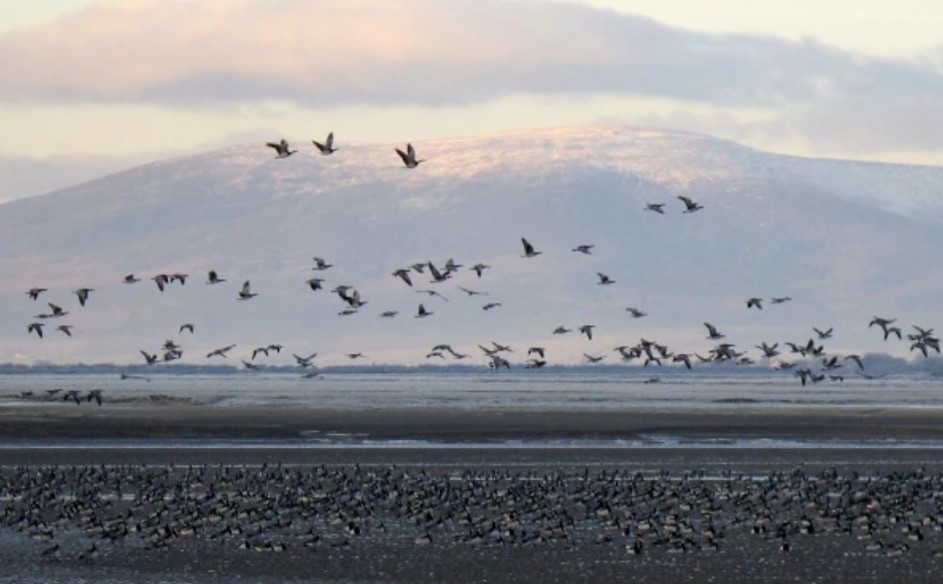
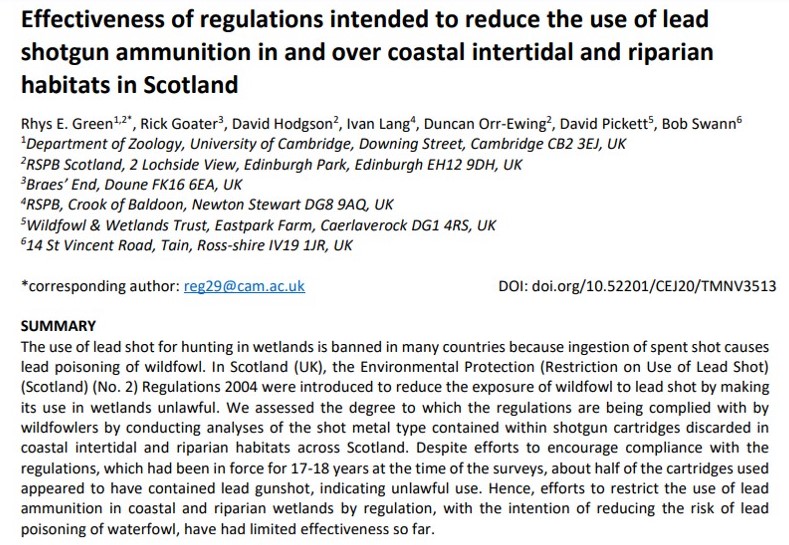
In news that will come as no surprise whatsoever, a new study has revealed that toxic lead ammunition is still being used widely to shoot birds in coastal intertidal and riparian habitats across Scotland, even though its use was banned in these habitats 18 years ago.
Photo: Brian Morrell, WWT
The new study, which has just been published in the journal ConservationEvidence, analysed discarded shotgun cartridges at various wetland locations and found that approximately half appeared to contain lead shot, which hasn’t been permitted for use over Scottish wetlands since 2005.
The ban on using lead shotgun ammunition over wetlands was introduced to try and reduce the amount of lead poisoning in wetland birds and the subsequent poisoning of predators that might scavenge the shot birds, particularly certain raptor species (e.g. see here and here).
Here’s the summary of the study (full paper available at the foot of this blog):
Similar legislation (with slight variations) was introduced in England in 1999 after a voluntary ban on the use of lead shotgun ammunition over wetlands failed.
However, a number of studies since that new legislation was introduced (see here) have shown high levels of non-compliance with the law, for example 68% non-compliance in 2001-2002; 70% non-compliance with the law in 2008-2009 & 2009-2010; and 77-82% non-compliance with the law in 2013-2014.
Another study published in 2021 concluded that since the regulations were introduced in England in 1999, an estimated 13 million ducks have been shot illegally using lead shotgun ammunition, with an annual average of approximately 586,000 ducks, representing approximately 70% of the total ducks shot (see here).
Tellingly, this 2015 paper that included the findings of a questionnaire survey of shooters’ behaviour and attitudes revealed that one of the main reasons for non-compliance with the law was the shooters believed they “were not going to get caught” i.e. shooters knew that using lead ammunition would not involve penalties as the law is not enforced. This is a really common feature of wildlife crime in general, but particularly raptor persecution crimes, which I’ve written about before (e.g. here). It doesn’t matter how stiff the penalty is, if the offender thinks there’s little to no chance of being caught then it’s worth the risk of committing the crime.
The 13 million illegally shot ducks also provide an excellent example of why it’s idiotic to calculate the extent of a crime based on the number of convictions (as Professor Simon Denny tried to do in his recent ‘truly objective‘ claim that raptor persecution isn’t a widespread issue on grouse moors – see here). If we classify every one of those shot ducks as a separate crime, there has only ever been one successful prosecution out of a potential 13 million crimes (and that prosecution only happened because the offender shot a swan in front of witnesses, mistaking it for a goose whilst on a pheasant shoot in North Yorkshire). One conviction from 13 million crimes demonstrates quite clearly that a lack of prosecutions / convictions does not equate to a lack of crime!
It’s an important lesson for the Scottish Parliament as it considers the Wildlife Management and Muirburn (Scotland) Bill – if there is insufficient monitoring and enforcement accompanying the new legislation on grouse moor management practices, the offenders will continue to commit their crimes (i.e. killing birds of prey and lighting fires on deep peat) because they’ll know the chances of being caught are pretty slim.
The Westminster Government is currently considering a range of options for phasing out the use of lead ammunition (see here), after ignoring the overwhelming scientific evidence for years and instead choosing to support the shooting industry’s (then) refusal to get rid of toxic lead ammunition (e.g. see here and here).
Three years ago some (but not all) in the game-shooting industry realised the game was up and proclaimed a five-year voluntary phase-out of toxic lead ammunition (largely, I believe, because they didn’t want to have a ban enforced upon them). However, three years into that five-year phase out, things aren’t going too well (see here) and many UK supermarkets are still selling poisonous game meat to unsuspecting customers for both human consumption (here) and for pet food (here).
The HSE is due to report its recommendations about the use of toxic lead ammunition to Government by 6th November 2023. DEFRA Minister Richard Benyon told Green peer Natalie Bennett recently that the DEFRA Secretary of State ‘will be required to make a decision within three months of receipt of the opinions, with the consent of Welsh & Scottish Ministers‘ (see here).
Anything less than an immediate ban on the use of toxic lead ammunition for killing any species in any habitat (not just some species in some wetland habitats), will be challenged.
Here’s the full paper on the significant non-compliance of the law by shooters in Scotland, who are still using toxic lead shotgun ammunition to kill birds over wetlands, 18 years after it was banned. Well worth a read:
I wrote an opinion piece for The National which was published yesterday (here) about the grouse shooting industry’s supposedly sincere claim of having ‘zero tolerance’ for the illegal killing of birds of prey.
It’s reproduced below:
It is widely acknowledged that the illegal killing of birds of prey has long been synonymous with driven grouse shooting in Scotland, even though raptors have had supposed legal protection for almost 70 years. Birds of prey such as buzzards, red kites, hen harriers and golden eagles are perceived to be a threat to red grouse and thus are ruthlessly shot, poisoned or trapped to protect the estates’ lucrative sporting interests.
Prosecutions are rare given the remoteness of the vast, privately-owned shooting estates where these crimes are committed; there are few witnesses and gamekeepers go to great lengths to hide the evidence, as demonstrated when a ‘missing’ golden eagle’s satellite tag was found wrapped in lead sheeting and dumped in a river, presumably in an attempt to block the transmitter.
The Scottish Government has tried various sanctions to address these crimes over the years, including the introduction in 2014 of General Licence restrictions, which are based on a civil burden of proof if there is insufficient evidence for a criminal prosecution. These restrictions don’t stop the sanctioned estates from shooting grouse but do partially limit their moorland management activities and were specifically designed to act as a ‘reputational driver’. Unfortunately they have been proven to be wholly ineffective.
In 2017 a scientific report into the fate of satellite-tracked golden eagles in Scotland highlighted the extent of the ongoing killing on some grouse moors (almost one third of 141 tracked eagles disappeared in suspicious circumstances, none of which resulted in a prosecution). In response, the Government commissioned a review (the Werritty Review) of the sustainability of grouse moor management, which led to the Government finally committing to introducing a full licensing scheme for grouse shooting in 2020. The threat of having an estate licence completely revoked if raptor persecution is detected may now act as a suitable deterrent, as long as the law is adequately enforced.
This long-awaited legislation is currently on passage through Parliament as the Wildlife Management and Muirburn (Scotland) Bill. Unsurprisingly, the grouse shooting lobby is working hard to influence proceedings and minimise the Bill’s impact, questioning its legality and proportionality, even making threats to take the Government to the European Court of Human Rights. Instead of welcoming legislation that should protect the innocent and rid the industry of those who continue to bring it into disrepute, industry representatives maintain that a voluntary approach is sufficient and deny that persecution is even an issue, despite the suspicious disappearance of at least 35 more satellite-tagged hen harriers and golden eagles since the 2017 report was published.
Grouse-shooting representatives maintain they have a ‘zero tolerance’ stance against illegal raptor persecution and argue that they can’t do anything more. But talk is cheap and this industry should be judged by its actions, not by superficial pronouncements from its leaders.
I would argue that there is much more the industry could, and should, be doing if it wants to be seen as a credible force for change.
For example, let’s look at the Moy Estate in Inverness-shire. Two estate gamekeepers have been convicted for raptor persecution offences here (one in 2011 and one in March this year) and the estate has been at the centre of multiple police investigations many times in between. Indeed, it is currently serving a three-year General Licence restriction imposed by NatureScot in 2022 on the basis of police evidence of wildlife crime against birds of prey, including the discovery of a poisoned red kite and various trapping offences.
Moy Estate is believed to be a member of the Scottish landowners’ lobby group, Scottish Land & Estates (SLE). Has SLE expelled the estate from its membership? If it hasn’t, why not? If it has, why hasn’t it done so publically?
Why are SLE, the Scottish Gamekeepers Association and others from the shooting industry, still attending the Moy Country Fair held annually on the Moy Estate? Why hasn’t this estate been boycotted and blacklisted by industry representatives? Surely that would send a strong message of ‘zero tolerance’ for raptor persecution?
Screen grab from SLE website, August 2023
It’s not just Moy Estate, either. There are a number of other grouse-shooting estates, some very high profile and often described as ‘prestigious’ in the shooting press, that are also either currently, or have previously, served three-year General Licence restrictions.
How many of those estates and/or their sporting agents have been blacklisted by industry organisations? None of them, as far as I can see.
Zero tolerance should mean exactly that. Anything less simply isn’t credible.
Dr Ruth Tingay writes the Raptor Persecution UK blog and is a founder member of REVIVE, the coalition for grouse moor reform.















 Raptor Persecution UK