Case against alleged wild-bird egg trader continues

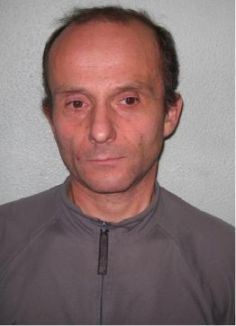
The lengthy legal proceedings against Inverness man Keith Liddell (see here for background), who is accused on various counts including trading in wild-bird eggs, has continued at Inverness Sheriff Court today.

Liddell, who has denied all the charges against him, will now stand trial on 22 October 2012, with an intermediate diet on 25 September 2012.

According to an earlier STV report, the list of raptor species whose eggs he is alleged to have handled includes merlin, lesser kestrel, snowy owl, griffon vulture, Egyptian vulture, red kite, tawny owl, rough-legged buzzard, black kite and booted eagle. The report states that Liddell was alleged to have been found with 136 wild birds’ eggs at his Inverness home on Holm Dell Drive on June 24 2009 (see here).

Yet another golden eagle mysteriously ‘disappears’

Last month we blogged about the ‘disappearance’ of a satellite-tagged golden eagle (see here). Now 22 days later we’re blogging about another one. Isn’t it strange how many UK satellite-tagged raptors go ‘missing’; not just golden eagles, but white-tailed eagles, hen harriers and red kites too. Wonder how these figures compare with tagged raptors in other parts of the world?

The last signal from the latest young golden eagle (#32857) to go ‘missing’ was received on May 11, just to the north-east of the Cairngorms National Park (see here).

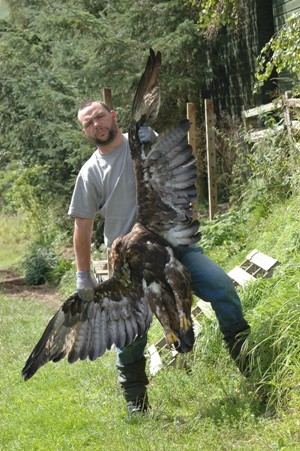
Was it just a satellite tag failure and the eagle is still alive and well? Possibly.  Did it die of natural causes? Possibly. Was it poisoned? Possibly. Was it shot? Possibly. Was it caught inside a crow cage trap and bludgeoned to death? Possibly. Will we ever find out? Possibly. If it is found to have been killed illegally, will the perpetrator be brought to justice? Probably not (see here for the ever-growing list of dead and/or missing eagles in recent years for which nobody has ever been prosecuted).

Somebody asked a question the other day and we’ve still not been able to provide an answer:

What does it take to secure a conviction for killing an eagle in the UK?”.

We’ve heard all the excuses in the book, some valid, some not:

(i) The discovery of a poisoned eagle on a sporting estate isn’t enough to secure a conviction because either it could have been poisoned elsewhere and then flown to die at that location, or, it could have been ‘planted’ on the estate by the anti-game-shooting lobby (according to claims made by various gamekeepers over the years although without any actual evidence).

(ii) The discovery of a poisoned eagle lying next to a poisoned bait on a sporting estate isn’t enough to secure a conviction because it’s virtually impossible to identify which individual gamekeeper laid the bait, especially when they all deny it.

(iii) The discovery of a poisoned eagle and a stash of the same poison found on premises on the same sporting estate, and an admission from an individual gamekeeper that he had sole access to the poison isn’t enough to secure a conviction because….well, we don’t know the answer to that one, you’d have to ask COPFS.

(iv) The discovery of a poisoned eagle and a stash of the same poison found in vehicles and traces of it on knives and gamebags on the same estate isn’t enough to secure a conviction because….we don’t know the answer to that one either – ask COPFS.

(v) What if somebody was filmed laying out a poisoned bait and was then later filmed returning to remove the eagle poisoned by that bait? The film evidence would probably be ruled inadmissable because the cameraman was operating ‘covertly’ (i.e. without the landowner’s permission!).

(vi) What if a gamekeeper was found with a dead eagle in the back of his vehicle, and the eagle had injuries consistent with being caught in an illegal spring trap (e.g. broken legs) and having had its head caved in with a blunt object (e.g. smashed skull)? This wouldn’t be enough to secure a conviction because the keeper would probably claim he had just found the dead bird and was taking it home to report it to the authorities. At best he’d be charged with ‘possession’.

The shocking truth is, there has never been a successful prosecution for the illegal killing of an eagle in the UK, in spite of the sometimes overwhelmingly compelling evidence in some cases. So, just what does it take for someone to be convicted of killing an eagle in the UK?

Red kites found poisoned in Chilterns

The RSPB and Hertfordshire Police are appealing for information following the discovery of two poisoned red kites in the Chilterns.

The first bird was discovered by a member of the public in January 2012, close to a public footpath near the village of Hexton. The second bird was also found by a member of the public, hanging in a bush in March 2012 less than one mile away on the Pegsdon Hill Nature Reserve run by Bedfordshire Wildlife Trust.

Tests have apparently revealed both birds had been poisoned with a highly toxic banned pesticide, although the name of the poison has not been given. On May 2nd, a multi-agency search of the area recovered a number of samples that have been sent for analysis.

The RSPB is offering a £1,000 reward for information leading to a conviction.

It’s interesting to note that neither of these poisoned kites were mentioned in the national press at the time they were discovered, nor is there an explanation for why it took four months from the first discovery for a search to be conducted. There is no mention of this investigation on the Hertfordshire Police website – the only publicity appears to be on the RSPB website. Whilst the investigation and (rather late) publicity is to be welcomed, the chances of anybody being charged for these offences now seem pretty slim.

RSPB news release here

Another poisoned raptor, another well-kept secret?

Last week we blogged about Des Thompson’s presentation at the Scottish Wildlife Crime Conference (see here). Here’s a reminder of what he had to say about Northern Constabulary and the problem of red kite persecution in northern Scotland:

So 40% of the dead, just over 100 red kites were poisoned in north of Scotland, without poisoning we should have had 300 plus birds, poisoning of red kites in the north of Scotland is attracting a lot of criticism nationally, and we now know the location of the hotspots problem areas where red kites have been found, poisoned, and we’re working closely with the police to tackle this. And I want to put on record here how grateful we are to Northern Constabulary, er, senior staff at Northern Constabulary for meeting with us to discuss the scientific issues and for taking forward the very ambitious programme of work to tackle this problem“.

So what is this “very ambitious programme of work” and why is it that Northern Constabulary appear to need persuasion to carry out what is its statutory duty to investigate wildlife crime?

If you look at the Force’s website you’ll see that they have 13 police Wildlife Crime Officers (see here) who are overseen by a Force Wildlife Crime Coordinator, Chief Inspector Matthew Reiss. The website also includes a ‘statement of intent’ in relation to tackling wildlife crime and the Force says it is committed to tackling wildlife crime (see here). Further, Chief Inspector Reiss is on record (according to Highland News) as saying Northern Constabulary treats wildlife crime “extremely seriously” (reported here after the convictions of Skibo Estate and Moy Estate employees for wildlife crime offences).

All sounds very convincing and reassuring, doesn’t it? Why is it then that Northern Constabulary has remained tight-lipped about the discovery, 15 months ago, of a poisoned red kite allegedly found on moorland at the boundary of Skibo Estate? We have been told that the satellite-tagged kite was allegedly found in February 2011. SASA documents show that only one red kite from the Highland region was tested in February 2011  and  it had been poisoned by Alphachloralose and was the subject of on ongoing police investigation (SASA ref #11020, see here).

Was there any publicity about this bird? We think we might have remembered if there had been, but we checked back to Northern Constabulary’s archived news items on their website for the month of February 2011 in case we’d missed it – but no, plenty on there about theft of handbags and damage to tractors but not a whisper about the discovery of a poisoned red kite.

Was there a police raid on the surrounding properties where this bird was allegedly found poisoned? If it was found at this location, and given that this is one of the supposed ‘hotspot’ areas for raptor poisoning (three golden eagles and a sparrowhawk found poisoned in 2010 – no convictions; a staked-out poison-laced grouse bait found in 2010 – no convictions) wouldn’t a police raid be the obvious first step in an investigation?

So is that it? No further action? If we hadn’t received a tip-off would it ever have come to light? Where was the RSPB in all of this? Did they know that one of their satellite-tagged kites had allegedly been found poisoned? If they did, why wasn’t the incident publicised? Where was SNH and PAW Scotland in all of this? Did they know that one of the satellite-tagged kites that they’d helped fund had allegedly been found poisoned? Where was their publicity? Where was the NWCU in all of this? Were they notified? Was this alleged incident the trigger for setting up the meeting with senior staff at Northern Constabulary to discuss the red kite persecution ‘science’?

This is the second time in the last few weeks that Northern Constabulary has been at the centre of allegations of secrecy and cover-up when it comes to wildlife crime (see here for earlier report on the suspected shooting and decapitation of a white-tailed eagle on Skye that went unpublicised). How many more incidents are there left to be uncovered? To be fair, Northern Constabulary does sometimes get it right, with current ongoing court cases including the alleged hare snaring at Lochindorb (here) and alleged egg theft (here), but ‘sometimes’ just isn’t good enough. Nobody’s suggesting these investigations are easy – we’ve all seen how difficult it can be to get COPFS to agree to a prosecution – but Northern Constabulary (and others) don’t help themselves when they choose not to publicise, or sometimes even investigate these alleged crimes.

How about everyone stops all the politically-motivated soundbites about commitment and very ambitious work programmes and just focuses on getting the basics right?

“Red kite tried to snatch my dog”, says fashion model

Berkshire fashion model (’32 and married’, says the Daily Mail and Daily Telegraph) claims a red kite ‘stalked’ her and her handbag-sized dog…it’s really not worth giving this column space. If you want to read more see:

Daily Telegraph here

Daily Mail here

Maidenhead Advertiser here

Red kite found poisoned in North Yorkshire

An article published in the York Press today reports that a poisoned red kite has been found near Pickering in North Yorkshire.

It was reportedly found in woodland at Cawthorn Roman Camp, and was rescued by a dog walker. The bird is now being cared for at Ryedale Wildlife Rehabilitation.

PC Stewart Ashton of North Yorkshire Police said: “Despite it being illegal to harm birds of prey, we have intelligence that people are still actively killing them in areas of Ryedale“.

According to the article, North Yorks Police are appealing for help in catching the person(s) responsible for this latest poisoning incident, although it is not known when the bird was found, what it was poisoned with, and no details are provided about who should be contacted. There isn’t a press statement on the North Yorks Police website either.

According to RSPB statistics, North Yorkshire was identified as having the highest level of reported raptor persecution incidents in the UK in 2010 (see here).

York Press news article here

2011 poisoning stats ‘out’ in every sense of the word

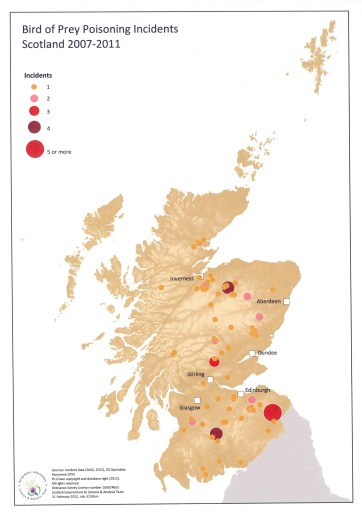
The Scottish Government has today published the 2011 poisoning map (otherwise known as Scotland’s map of shame).

The newspapers are heralding the figures as a success story, as the numbers show an apparent drop in poisoning incidents (“only [only??!] 16 raptors were killed as a result of being illegally poisoned in Scotland – 12 fewer than in 2010 and the lowest death toll since the first maps were published six years ago“, says The Scotsman). The victims included seven buzzards, four red kites, two peregrines, two sparrowhawks and a golden eagle.

On a superficial level this does look like convincing progress, but let’s scratch the surface and see what’s underneath…

The official Scottish government poisoning map only shows the places where poisoned birds were discovered. Given the remote areas involved and the fact that most of these poisoned birds were found by chance (by passing hillwalkers etc.), the official figures can in no way represent the actual number of raptors that were poisoned (but undetected) during 2011.

The figures behind the map also do not show the areas where poisoned baits (but no dead birds) were discovered during 2011. Nor do they show the other incidents of raptor persecution that were discovered during 2011, including shooting, trapping and nest destruction incidents. According to an article in today’s Guardian, it is claimed that last year’s illegal shooting, trapping and nest destruction incidents “have remained constant with previous years“. We’ll have to wait a good few months for the RSPB Birdcrime Report to see the actual figures. (Incidentally, how come the 2011 poisoning figures, as compiled by SASA, have not yet been released to the public? They’re obviously available as they were used to construct the poisoning map. So far they’ve only published data up to September 2011. Isn’t it in the public interest to release them? Why all the secrecy?).

It seems plausible that some shooting estates are doing their best to distance themselves from any sign of illegal raptor persecution, especially in light of the new law on vicarious liability. A likely example of this behaviour was an incident in the Borders in September 2011. A dog walker discovered a bag full of dead raptors by the side of the busy A68  road (see here for earlier blog on this). The police were alerted and the birds were sent to SASA for toxicology tests. The results showed that the two sparrowhawks and two buzzards had been poisoned with the banned pesticide Carbofuran. Because the dead birds had been dumped away from any shooting estate or farm, without being seen, it was virtually impossible for the police to prosecute anyone (SASA reports that the police have now closed the case due to a lack of positive leads – see here). What is the probablity that other estates up and down the country are poisoning raptors on their land and then removing the evidence as far from their location as possible?  It was pure chance that this bag of poisoned raptors was discovered. How many more are left rotting and undiscovered across the country?

But let’s suppose, just for a minute, that the latest map IS an accurate representation of all raptor poisoning incidents that took place in 2011. Should we then accept that shooting estates are cleaning up their act and they’ve all suddenly decided, after over 100 years of persecution, that raptors are actually ok and shouldn’t be killed? The only way to measure that will be to look at LONG-TERM TRENDS of poisoning incidents as well as LONG-TERM TRENDS of raptor populations. We’ve blogged about this before (see here) but it’s worth repeating some of it to show the bigger picture. The graph (adapted from the RSPB’s excellent report: The Illegal Killing of Birds of Prey in Scotland in 2010, see here) shows the long-term trend of poisoning incidents in Scotland from 1989-2010. Look carefully at the graph and you’ll see peaks and troughs in the numbers recorded. Yes, there certainly have been previous drops in the number of poisoning incidents, but then look what happened in the following years – another increase, and then another drop, then another increase etc. Before the game-shooting lobby starts its self-congratulatory back-slapping, we need to see a continuous decline in the number of recorded incidents, AND we need to see raptor populations recovering in those areas where persecution has been endemic. This will take time, but could arguably be judged in about five years’ time.

Of course we all hope that the 2011 figures are the start of a new era in raptor conservation in Scotland. As Environment Minister Stewart Stevenson has said in today’s media: “I hope this proves to be the beginning of a continuing reduction in such cases, leading to the end of this outdated, dangerous and cruel practice“. It is notable that his statement contains more than a hint of caution. That man’s no fool.

See an excellent article about the latest figures in today’s Guardian here

Article in The Scotsman here

Egg-thief Gonshaw gets unprecedented ASBO banning him from Scotland

Following earlier posts about four-times jailed egg thief Matthew Gonshaw (see here and here), his ASBO hearing was finally heard at Stratford Magistrates’ Court, London, on Friday (24 February).
In perhaps one of the most creative choices of punishment, in addition to his earlier six-month prison sentence, Gonshaw was given an ASBO (anti-social behaviour order) that bans him from coming to Scotland during the bird nesting season (1 Feb – 31 Aug) for the next ten years. Ten years is the maximum ASBO term, and if he breaks the conditions, he could receive a £20,000 fine and a five-year jail term. Gonshaw is further prevented from visiting all RSPB and Wildlife Trust land for the next ten years – presumably this means in England and Wales.

Strangely though, Ian Thomson of RSPB Scotland is quoted in The Herald as saying, “Gonshaw is, in fact, due to appear at Inverness Sheriff Court on March 8 facing charges relating to the theft of wild birds’ eggs in Scotland only last year“. It’s not clear how he can appear at Inverness in March if he’s now banned from travelling to Scotland until 1 Sept at the earliest. Ah well, not our problem.

Well done to everyone involved and especially the smart person who thought about trying for an ASBO and the magistrate who agreed to its use.

Article in The Herald here

Egg-collector Matthew Gonshaw’s ASBO hearing delayed

Four-times jailed egg thief Matthew Gonshaw was due to find out last Friday (17 February) whether he was to be the subject of an Anti-Social Behaviour Order (ASBO) following his latest conviction for egg-collecting (see here for background). If granted, the ASBO could see him facing a £20,000 fine and five years in prison for further offences.

The case was adjourned and is now due to be heard this Friday (24 February).

Eight month prison sentence for illegal sale of stuffed birds of prey

A Bedfordshire man has been sentenced to eight months in prison for the illegal sale of stuffed birds of prey.

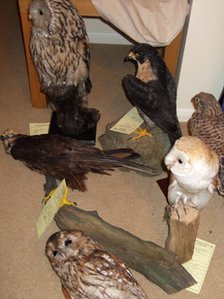
Greg Turner, 32, of St Peter’s Court, Ashwood Close, Potton, described as ‘an unemployed stuffed bird enthusiast’, was reported to have illegally sold over 100 birds on Ebay, netting £22,000. The species included red kite, marsh harrier, goshawk, peregrine, kestrel, barn owl, tawny owl and hawk owl. When officers from the National Wildlife Crime Unit raided his home, they found stuffed birds, two dead birds in his freezer waiting to be stuffed, and forged paperwork.

Kudos to the National Wildlife Crime Unit for their investigation and special mention to Judge Stuart Bridge, who said the following at Luton Crown Court:

In my judgement this was your livelihood, illegally trading in stuffed specimens. It was pre-planned, blatant and calculated and put live birds at risk. You took a risk hoping you would not be noticed. I am told that you have ceased trading and are in work but the seriousness of the offence can only be adequately reflected by immediate custody“.

An excellent result – finally, here’s a judge willing to use the full force of his sentencing powers. Well done to all involved.

BBC news article here

Hertfordshire Advertiser article here