1,000 birds killed despite General Licence Restriction at Raeshaw Estate / Corsehope Farm

Regular blog readers will know that in November 2015, SNH issued two General Licence restriction orders on the Raeshaw Estate and neighbouring Corsehope Farm in the Scottish Borders (see here). This was in response to alleged raptor persecution crimes (see here), although there was insufficient evidence to proceed with a prosecution and the estates have denied any responsibility.

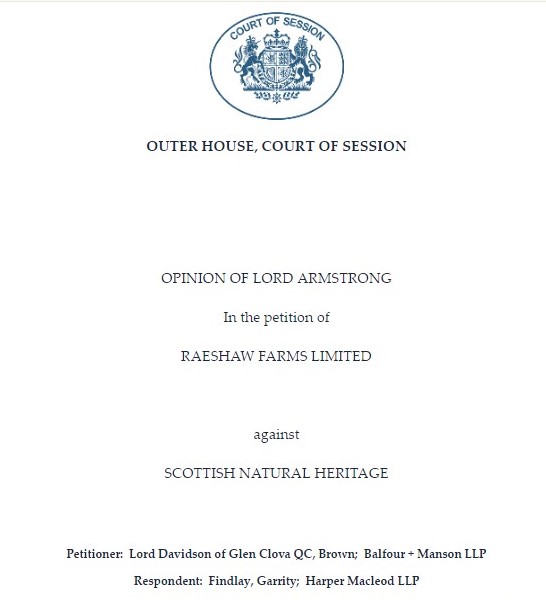
The General Licence restriction orders were supposed to last for three years, starting 13 November 2015 and ending 12 November 2018. However, since being implemented, these restriction orders have been on and off as Raeshaw Estate mounted a legal challenge against their use. This legal challenge resulted in a judicial review, which was heard in January 2017, and we await the court’s findings.

Meanwhile, unbelievably, SNH issued two so-called ‘individual licences’ (see here) – one to Raeshaw Estate and one to Corsehope Farm, allowing the gamekeepers to continue the activities they would have undertaken had the General Licence restriction orders not been imposed (i.e. killing so-called ‘pest’ bird species). In our view (here) this was a ludicrous move because it totally undermined the supposed ‘sanction’ of the General Licence restriction. RSPB Scotland shared our view (see here).

SNH responded by saying the individual licences represented “robust regulation” (see here) and argued that the use of the individual licences would be “closely monitored” and that the gamekeepers would be “under tighter supervision” than they would have been if using a General Licence (see here).

As a reminder, here are copies of the two individual licences:

Raeshaw Estate individual licence here (valid 10 June 2016 – 31 December 2016)

Corsehope Farm individual licence here (valid 1 July 2016 – 31 December 2016)

As a condition of each individual licence, the estates had to submit to SNH, within one month of the licence expiry date, a log of all activities undertaken under each licence.

Last month we submitted an FoI to SNH asking for copies of these logs, as well as asking for details of the number of visits SNH staff  had made to the two estates to check for licence compliance (you know, that ‘close monitoring’ and ‘tight supervision’ SNH had been promising). What we discovered validates all our earlier concerns about this so-called ‘sanction’.

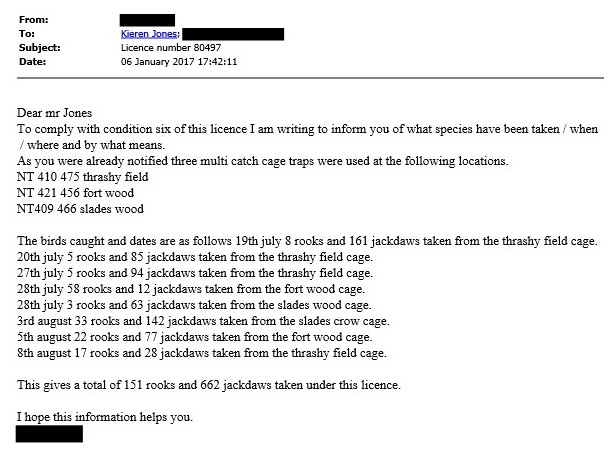
Here are the two logs submitted to SNH by the gamekeepers, detailing what species they’d killed, where, and when. The first log is for three crow cage traps placed on Raeshaw Estate and the second log relates to a single crow cage trap situated on Corsehope Farm (believed to be operated by Raeshaw Estate gamekeepers):

In total 294 rooks and 706 jackdaws were killed between 19 July and 25 August 2016. This amounts to 1,000 birds.

SNH staff undertook one compliance check visit for each estate. Both visits took place on 25 August 2016. The visit to Raeshaw Estate took 2.5 hours and the visit to Corsehope Farm lasted for one hour.

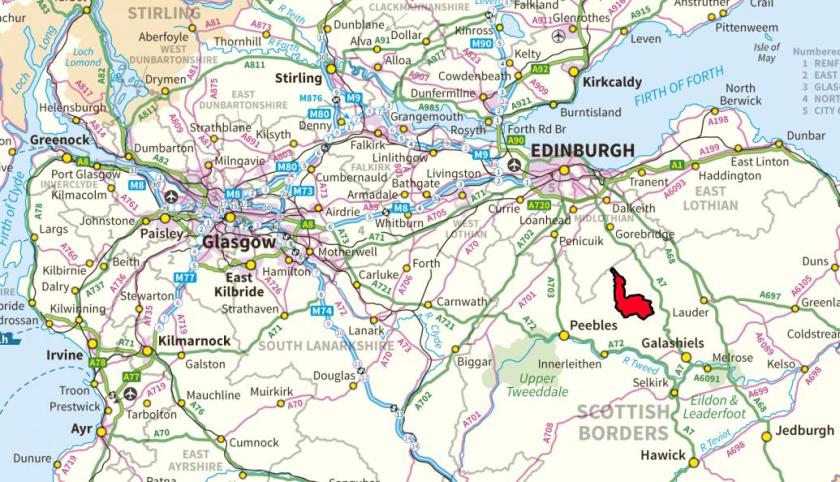
We’ve mapped the position of the four crow cage traps (note that the grouse moor at Raeshaw Estate lies directly to the west of these traps (the dark brown area).

These findings raise a number of questions and further concerns:

  1. The licence returns only refer to two species of birds that were caught and killed using four crow cage traps. Are we to believe that no other form of avian ‘pest control’ took place on either land holding between 10 June and 31 December 2016 (the duration of the individual licences)?
  2. For what ‘purpose’ were 294 rooks and 706 jackdaws killed? According to the individual licences (see above), the purpose was to “Prevent serious damage to livestock, foodstuff for livestock, crops, vegetables, fruit, growing timber, fisheries or inland water” and in the case of the Corsehope Farm individual licence, also to “prevent the spread of disease“. Can SNH explain the specific purpose of allowing these birds to be lawfully killed (i.e. if it was to protect livestock, what was the livestock and what threats do rooks and jackdaws pose? If it was to protect crops, what sort of crop and what threats do rooks and jackdaws pose? etc etc).
  3. What steps did SNH take to ensure that these 1,000 birds were not killed in order for the estates to produce artificially high densities of gamebirds for shooting? (This would be illegal).
  4. Why were 294 rooks allowed to be killed when this species has suffered a 37% decline in Scotland between 1995-2014, which would trigger a formal Amber listing if the listing criteria were applied at a Scottish level instead of a UK level (as pointed out to SNH by RSPB Scotland here)?
  5. Does SNH believe that one visit (per estate) for the duration of these six-month long individual licences equates to “close monitoring“, “tighter supervision” and “robust regulation“. If so, how?
  6. What did SNH staff do on their 2.5 hour visit to Raeshaw Estate? Did they just visit the three known crow cage traps or did they search the rest of this 9,000 acre estate to search for unlicensed (and thus illegal) traps?
  7. What did SNH staff do on their one hour visit to Corsehope Farm? Did they just visit the one known crow cage trap or did they search the rest of this farm for unlicensed (and thus illegal) traps?
  8. Are we still expected to believe that a General Licence restriction order is an effective sanction for alleged raptor persecution crimes, and if so, how?

We’ll be asking these questions to the SNH licensing team. If you want to join in, here’s their email address: licensing@snh.gov.uk

General Licence restriction on Raeshaw Estate: judicial review this week

The long-awaited judicial review of SNH’s decision to impose a General Licence restriction order on Raeshaw Estate finally gets properly underway this week.

SNH imposed the General Licence restriction on Raeshaw Estate (a grouse moor estate near Heriot in the Scottish Borders) in November 2015. The restriction was implemented due to alleged raptor persecution incidents reportedly taking place on the estate (according to evidence provided by Police Scotland), even though nobody has been charged with any criminal offence and the estate has denied any responsibility.

In April 2016 Raeshaw Estate petitioned for a judicial review of SNH’s action. Since then there have been a number of preliminary hearings but now the case has reached the final stage – a two day substantive hearing will take place tomorrow and Friday (Thurs 12 & Fri 13 Jan 2017) at the Court of Session.

We have no idea when the legal ruling will be made public; it could be a matter of days or it could be months.

This judicial review is an important test case with potentially far-reaching consequences. If the court decides that SNH acted fairly, then presumably SNH will get on with issuing other General Licence restrictions to other estates where Police Scotland has evidence of raptor persecution incidents having taken place since 1 January 2014. There are several of which we’re aware. Although it could be argued that if SNH continues to subsequently issue ‘individual’ licences to those penalised estates, the purpose and effectiveness of the original General Licence restriction order is lost (e.g. see here, here).

If the court decides that SNH acted unfairly in imposing a General Licence restriction, then either the process for implementing a General Licence restriction will have to be revised or the scheme scrapped altogether. If it’s scrapped, that’ll leave the Scottish Government in an interesting position. The Government often points to the use of General Licence restrictions as an indication of its commitment to addressing raptor persecution. If the ability to impose a General Licence restriction is removed by the outcome of the judicial review, what other sanction could the Government introduce? Shoot licencing is looming large on the horizon….

SNH’s General Licence restriction on Raeshaw Estate is “farcical”, says RSPB

It’s good to see environmental journalist Rob Edwards following up on SNH’s pointless General Licence restriction imposed on a grouse moor estate in the Scottish Borders for alleged raptor persecution crimes.

Read his article in today’s Sunday Herald here

img_6873-copy

We’ve blogged extensively (see here) about the General Licence restriction on Raeshaw Estate, near Heriot, which is currently subject to a judicial review (see here). We’ve argued that SNH’s subsequent issue of ‘individual’ licences, which permit the estate to continue the activities supposedly blocked by the General Licence restriction, is utterly ridiculous (see here). In Rob’s article, RSPB Scotland agrees with our view and calls the whole affair “farcical”.

SNH has responded by claiming this is “robust regulation”. Mark Avery has an amusing interpretation of ‘robust’ on his blog this morning (see here).

SNH has also told Rob that its staff has so far carried out two unannounced visits to check that Raeshaw has not breached its specific individual licences. We’re very interested in this. When did those visits take place, how long was each visit, and what actually happened during the visits? Are we expected to believe that SNH staff searched the whole 9,000 acre estate (and the neighbouring Corsehope Farm), twice, to look for unlicensed traps? Or did they just call in for a quick coffee and a chat? We’ll be asking SNH about the ‘robustness’ of these checks.

Rob’s article includes a quote from Raeshaw Estate (owned by an offshore company registered in Jersey and managed under the direction of Mark Osborne) which includes the line:

“Responsible game management practices are at the heart of what Raeshaw and its staff do”.

Here’s a reminder of some of the raptor persecution crimes that been uncovered in this part of the Scottish Borders over the last 15 years, none of which have ever been attributed to anyone.

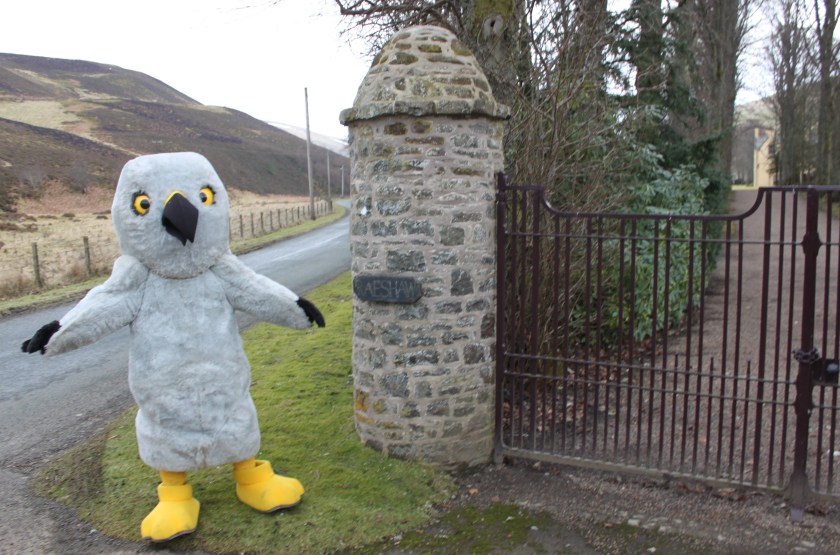
Photo of Raeshaw Estate (RPUK)

Another hearing set for Raeshaw Estate’s judicial review (General Licence restriction)

Regular blog readers will know we’ve been writing about the General Licence (GL) restriction order placed on Raeshaw Estate (a grouse moor estate near Heriot in the Scottish Borders) for some time (see here for a summary). The restriction order was implemented due to alleged raptor persecution incidents reportedly taking place on the Estate (according to evidence provided by Police Scotland), even though nobody has been charged with any criminal offence and the Estate has denied any responsibility.

This restriction order, placed by SNH in November 2015, has been on and off for months, temporarily suspended and then reinstated as Raeshaw Estate mounted various legal challenges over the following months.

Currently, the GL restriction order is back in place, although SNH has issued a number of ‘individual’ licences permitting the Estate to continue with many activities that are supposed to have been restricted (see here).

Raeshaw Estate has launched a judicial review of the process that SNH used to issue a General Licence restriction order. We’re not that clear about the judicial review process in Scotland but here’s what we’ve managed to work out so far:

In April 2016, Raeshaw Estate petitioned for a judicial review.

In May or June 2016, the Court of Session granted permission for the judicial review to go ahead.

Another court date has now been set for a ‘procedural hearing’ on 3rd November 2016:

RaeshawJR3Nov2016

Our limited understanding is that this ‘procedural’ hearing is when the scope and duration of any later ‘substantive’ hearing will be decided.

This judicial review is an important test case with potentially far-reaching consequences. If the court decides that SNH acted fairly, then presumably SNH will get on with issuing other General Licence restrictions to other estates where Police Scotland has evidence of raptor persecution incidents having taken place since 1 January 2014 (there must be quite a backlog by now). Although it could be argued that if SNH continues to then issue ‘individual’ licences to those penalised estates, the purpose and effectiveness of the original General Licence restriction order is lost.

If the court decides that SNH acted unfairly in imposing a General Licence restriction order, then either the process for implementing a GL restriction order will have to be revised or the scheme scrapped altogether. If it’s scrapped, that’ll leave the Scottish Government in an interesting position. What next for addressing the never-ending cycle of raptor persecution?

More on the General Licence restriction fiasco at Raeshaw Estate

Regular blog readers will know we’ve been writing about the General Licence (GL) restriction order placed on Raeshaw Estate (Scottish Borders) for some time (see here for a summary). The restriction order was implemented due to alleged raptor persecution incidents reportedly taking place on the Estate (according to evidence provided by Police Scotland), even though nobody has been charged with any criminal offence and the Estate has denied any responsibility.

This restriction order, placed by SNH in November 2015, has been on and off for months, temporarily suspended and then reinstated as Raeshaw Estate mounted various legal challenges over the following months.

Currently, the GL restriction order is back in place, although the courts have now authorised a Judicial Review of the process used by SNH to implement this restriction. We don’t know when that Judicial Review will take place.

IMG_6934 - Copy

In the meantime, in June 2016 we learned (see here) that even though the GL restriction order was back in place, SNH had issued what it called an ‘individual licence’, permitting the Estate to carry out some activities (bird-killing) that the GL restriction was supposed to prevent! In our opinion, issuing an individual licence completely defeats the object of implementing a GL restriction order in the first place. But not according to SNH. They issued a statement and we were particularly interested in the following bit:

In response to an application from Raeshaw Farms Limited, we have granted them an individual licence to carry out some activities otherwise permitted under General Licence. This licence is subject to specific conditions and controls. This will allow the business to continue to operate but under tighter scrutiny rather than the relatively ‘light touch’ approach to Regulation that General Licences afford”.

We wanted to know more about this ‘individual licence’, e.g. its duration, what activities were permitted/not permitted, and particularly the details of the ‘specific conditions and controls’ of that licence. So we (and a couple of others, thank you) submitted some FoIs to SNH to try and find some answers.

What we’ve found is a woefully inadequate system that has not received the promised “tighter scrutiny” and is wide open to abuse.

Here is a copy of the ‘individual licence’: Raeshaw Individual Licence 1_June2016

As you’ll see, ‘individual licence’ is a bit of a misnomer as it names one licence holder but then a further five ‘agents’ who are permitted to use this ‘individual’ licence.

This licence is valid from 10 June 2016 to 31 December 2016. The specific conditions include set dates for when certain species can be killed and the area where this killing may take place. Of interest to us:

  1. Carrion crow, magpie and greater black-backed gull may only be taken or killed UNTIL 30 JUNE 2016.
  2. Rook, jackdaw and wood pigeon may only be taken or killed UNTIL 31 AUGUST 2016.

Why are these two conditions of interest to us? Well, because another condition of this licence (condition #5) is that ‘Prior to exercising this licence, SNH licensing must be provided with details of the number, type and locations of deployment (to 6-figure grid reference) of all traps proposed to be used under this licence‘.

We asked SNH how many traps the licence holder had proposed to use, and the date that SNH received this information.

SNH’s reply: ‘The licence holder informed us on 12 July that they intended to deploy 3 multi-catch traps (ladder traps) at specified locations from 15 July“.

So, the individual licence only permits the taking and killing of carrion crows until 30 June 2016, and yet the licence holder notified SNH in mid-July that three crow traps would be deployed from 15 July 2016. Eh? How will the licence holder prevent carrion crows from entering these, er, crow traps, and if the carrion crows do enter, how will SNH know whether those carrion crows have been released unharmed?

Ah, well that’ll be the “tighter scrutiny” employed by SNH, right? They’ll have been monitoring the use of these traps to check for compliance, right?

Well, not quite. We asked SNH how many visits SNH (or an agent thereof) had made to this Estate to check compliance with licence conditions, and the dates those visits took place.

SNH’s reply (on 11 August 2016): “We have not yet visited the estate. However, compliance checks are an important part of the licensing process and will be carried out“.

Yeah, right.

We’ve also discovered that SNH has issued a second ‘individual licence’ to Raeshaw Estate. This one can be downloaded here: Raeshaw Individual Licence 2_July2016

This second licence permits the licence holder (and three agents) to kill certain species on the neighbouring Corsehope Farm. The licence is valid from 1 July 2016 to 31 December 2016.

Under this licence, collared doves, feral pigeons, wood pigeons, jackdaws, magpies, rooks and carrion crows may be taken or killed on this land until 15 October 2016 ‘to prevent damage to crops’ (ahem).

Also under this licence, all the above species plus greater and lesser black-backed gulls and herring gulls may be taken or killed on this land until 31 December 2016 ‘to prevent the spread of disease’ (ahem).

So, although the first licence (covering parts of Raeshaw Estate) only permitted the killing of certain species until 30 June 2016 and some other species until 31 August 2016, this second licence permits the unlimited killing of these same species on neighbouring land until 31 December 2016.

Can somebody please remind us what was the purpose of issuing a General Licence restriction order in the first place? Wasn’t it supposed to be a sanction/punishment for reported raptor persecution incidents? What’s the point of having a licensing system and supposed sanctions, if those sanctions can be sidestepped by simply issuing another licence and then not bothering to monitor compliance with those licence conditions?

General Licence restriction not worth paper it’s written on

SNH logo 2Further to yesterday’s blog about the status of the General Licence restriction on Raeshaw Estate (see here), SNH has now provided an explanation.

You’d better make sure you’re sitting down:

Thank you for your email to Andrew Bachell. I am writing to give you an update.

SNH issued a restriction on the use of General Licences in two separate locations in November 2015. Following this, Raeshaw Farms Limited petitioned the Courts to seek a Judicial Review (JR) of our decision. The Court has yet to make a decision as to whether or not a JR will proceed but we expect a decision shortly.

As an interim measure during the petitions process the Judge suspended the restriction up until 10th June 2016. This date has now passed and the use of General Licences on this land is once more prohibited. Our website has been updated accordingly.

In response to an application from Raeshaw Farms Limited, we have granted them an individual licence to carry out some activities otherwise permitted under General Licence. This licence is subject to specific conditions and controls. This will allow the business to continue to operate but under tighter scrutiny rather than the relatively ‘light touch’ approach to Regulation that General Licences afford.

We will issue a press statement once the legal proceedings have concluded.

Yours sincerely,

Nick Halfhide, SNH Director of Operations

END

This is unbelievable, even by SNH standards.

SNH issued a General Licence restriction order on Raeshaw Estate as a sanction for recent alleged raptor persecution crimes, on the basis of evidence provided to SNH by Police Scotland (see here and here). Even though that evidence wasn’t enough for a criminal prosecution, SNH must have been satisfied that it was sufficient to warrant this penalty, otherwise they wouldn’t have issued the GL restriction order.

Raeshaw Estate has been the subject of several police raids in connection with alleged wildlife crime since 2004, although none have resulted in a prosecution (see here).

SNH’s procedures for issuing a GL restriction are now subject to a potential judicial review but the GL restriction is now back in place on Raeshaw Estate after a temporary suspension by the court.

So why the hell has SNH now issued an individual licence to permit the very activities their GL restriction is supposed to prevent?!

What is the point of having a GL restriction in place if SNH is then going to totally undermine it by issuing an individual licence?

SNH says the individual licence is “subject to specific conditions and controls”. And what might they be? Unless you’ve got an enforcement officer shadowing the individual licence holder (wholly impractical and unrealistic), SNH is placing a huge amount of trust in the individual licence user to comply with these ‘specific conditions and controls’. That’ll be the trust that SNH deemed absent from the estate when it issued the GL restriction order.

UNBELIEVABLE. Remember this the next time the Scottish Government says it’s getting tough on wildlife crime.

Has Raeshaw Estate lost Judicial Review re: General Licence restriction?

Regular blog readers will know we’ve been interested in the General Licence restrictions imposed by SNH on two grouse shooting estates for suspected raptor persecution crimes, see here and see overview of events to date here.

In April 2016, one of those estates, Raeshaw, near Heriot in the Scottish Borders, submitted an application for a judicial review of the process SNH used to implement the General Licence restriction.

While that application was underway, SNH put a temporary suspension on Raeshaw’s General Licence restriction (meaning the estate was now entitled to carry on trapping and killing wildlife under the terms of the General Licence), and in May 2016 SNH announced on its website that the temporary suspension would be in place ‘until further notice’:

Raeshaw SNH temp restriction again 20 May 2016

We just looked at SNH’s website again, and it now appears that the temporary suspension has been lifted and the General Licence restriction on Raeshaw Estate has now been reinstated:

SNHGL14June2016 - Copy

That’s interesting. Does that mean that Raeshaw Estate lost the judicial review against SNH’s procedures? Was there even a judicial review? Perhaps Raeshaw’s application for a judicial review was denied by the court?

It’s hard to know! We can’t find any statement about this, anywhere. No SNH press release, nothing. We tried to contact SNH’s media lead on wildlife crime but she’s away on leave until 5th July.

Marvellous.

It’s important to understand what happened in this case for several reasons. The public needs to know whether Raeshaw Estate is again banned, as it appears, from using certain types of traps, because then we’ll know whether those traps, if found, should be reported to the Police. You’d think SNH, as the agency that has implemented this General Licence restriction, would want to publicise this as much as possible to help with enforcement measures. It’ll be members of the public who play a crucial role in this because the Police can’t just turn up on Raeshaw ‘to have a look’ unless they have reason to suspect a crime has been committed e.g. if a passing hill walker has reported trap use on this estate.

It’s also important to understand what happened in this case because whatever did happen has huge implications for other future General Licence restrictions which SNH may choose to impose. If the judicial review failed because the court decided SNH’s procedures were fair, then this opens the floodgates and SNH can get on with imposing other General Licence restrictions that they may have been sitting on pending the result of the judicial review. If there wasn’t a judicial review because Raeshaw Estate’s application for one was rejected by the court, are there other legal options available to Raeshaw to contest the General Licence restriction? If there are other options, what are they and what impact will they have on SNH’s ability to impose further General Licence restrictions on other estates suspected of raptor persecution?

A bit of transparency from SNH wouldn’t go amiss here.

Emails to Andrew Bachell, SNH Director of Policy: Andrew.Bachell@snh.gov.uk

Judicial review underway re: general licence restriction on Raeshaw Estate

Last month we blogged about a pending judicial review of SNH’s decision to apply a three-year General Licence restriction order on Raeshaw Estate in the Scottish Borders for alleged raptor persecution crimes (see here).

We noted that SNH had temporarily suspended the GL restriction order until the judicial review hearing on 20th May.

Last week, the judicial review began at the Court of Session:

Raeshaw Farms Ltd Judicial Review called 20 May 2016b - Copy

It was a starred motion (indicating that the motion was opposed and would require a a court appearance) that was only scheduled for 30 minutes. We’re not entirely sure about the judicial review process but we would guess, for an opposed motion, that a more substantive hearing will be required at a later date.

Meanwhile, SNH has updated its website with the following notice:

Raeshaw SNH temp restriction again 20 May 2016

Whereas the temporary GL restriction on Raeshaw Estate was previously applied until 20th May, SNH has now applied a temporary restriction ‘until further notice’, which means that the Raeshaw Estate is free to carry out trapping activities under the General Licence.

In other words, the three-year GL restriction order that was applied to Raeshaw in November 2015 as a penalty for alleged raptor persecution offences is no longer in place. It’ll be interesting to see, if Raeshaw ‘loses’ the judicial review, whether all these lost months of trapping restrictions will be added to the GL restriction to ensure the estate serves a full three-year penalty.

General Licence Restriction suspended on Raeshaw Estate while judicial review underway

Regular blog readers will recall that in November 2015, SNH served two General Licence Restriction Orders on the Raeshaw Estate and Burnfoot Estate in response to alleged raptor persecution crimes (see here). This was the first time these GL restriction orders had been used since they became available on 1st January 2014.

The alleged offences on Raeshaw Estate, a grouse moor near Heriot, Scottish Borders, related to ‘the illegal placement of traps’. The alleged offences on Burnfoot Estate, a grouse moor in Stirlingshire, related to ‘the poisoning of birds of prey and illegal use of traps’. No criminal prosecutions were brought for any of these offences.

The GL restriction orders were due to run for three years, from 13th November 2015 to 12th November 2018, and would restrict the killing of certain ‘pest’ species (e.g. crows) that are usually permitted under the General Licence.

However, the restriction orders initially only lasted for six days because the estates appealed the decision (see here).

On 3rd February 2016, SNH reinstated the restriction orders after dismissing the estates’ appeals (see here).

On 7th February 2016, both estates denied any wrongdoing and indicated that they would try for a Judicial Review of SNH’s decision (see here).

It now appears that one of these estates (Raeshaw) has successfully applied for a Judicial Review, which is set to be heard on 20th May 2016. A Judicial Review is not about whether the principle of applying a General Licence restriction order is fair or unfair per se, but is more about the process underlying SNH’s decision. Did SNH act lawfully and follow the right procedures when it made the decision to apply GL restriction orders to these two estates? That’s what the court will have to decide. Obviously, the result of the Judicial Review, whichever way it goes, will have implications for the future use of the GL restriction order.

Meanwhile, in another twist, the GL restriction order on Raeshaw Estate has once again been suspended while the Judicial Review is underway. It’s not clear to us who instigated this suspension. The Estate may have applied for a temporary suspension to enable the killing of ‘pest’ species at this crucial time of year. Or, SNH may have decided to temporarily suspend the restriction order for fear that, if the Judicial Review goes against them, they may be subject to a lawsuit by the Estate for loss of earnings.

SNH temp suspension of GL - Copy

The Burnfoot Estate does not appear to be directly involved in the Judicial Review, which makes sense because the decision from the Raeshaw judgement will be equally applicable to Burnfoot so two Judicial Reviews on the same subject would be a waste of money. So consequently, the General Licence restriction order on the Burnfoot Estate is still in place – they are not permitted to kill ‘pest’ species as they would have done under the General Licence. We know from a recent FoI that SNH has not received any applications for an individual licence that would permit individual gamekeepers to carry out ‘pest’ control on this estate.

Let’s hope the Judicial Review for Raeshaw on 20th May results in a timely decision and that we don’t have to wait for months on end for a pronouncement. We’re pretty sure that there are other potential General Licence restriction orders for other estates sitting in SNH’s ‘pending folder’ (at least there should be) but, understandably, SNH may be reluctant to begin proceedings while this Judicial Review is still underway.

More raptor persecution uncovered in the Scottish Borders

We’re still working our way through RSPB Scotland’s recently published twenty-year review (see here) and what a fascinating read it’s proving to be. We’ve already blogged about two things that caught our eye (see here and here), and now here’s the third.

On page 14 of the report, the following has been written:

Lines 5, 6 and 7 of Table 4 describe the finding at one site, in an area intensively managed for driven grouse shooting, of a set crow trap, hidden within a small area of woodland, which was found to contain two feral pigeons indubitably being used as illegal lures to attract birds of prey. Under a tree, only a few metres away, were found the decomposed carcasses of four buzzards that had been shot, while a short distance from the crow trap a pigeon was found in a small circular cage, with four set spring traps set on the ground, hidden under moss, attached to the trap“.

Here’s a copy of Table 4, with lines 5, 6 and 7 highlighted:

Nr Heriot 2014

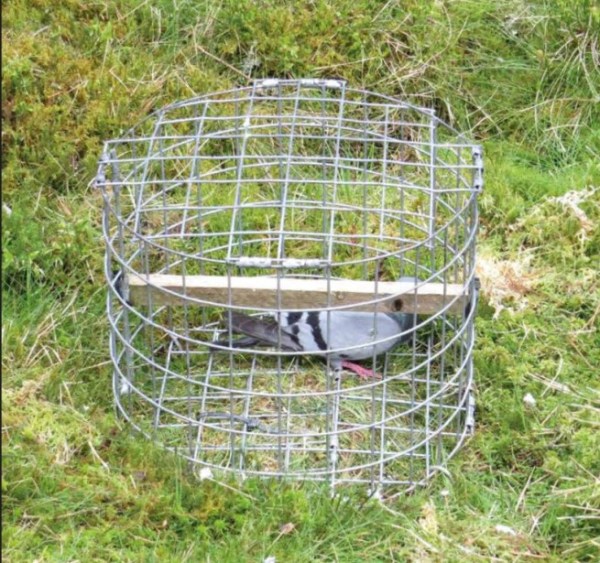
Also included in the report is a photograph of the pigeon inside a small cage with the four set spring traps hidden under moss:

Pigeon in trap Heriot 2014

So, according to the RSPB report, these offences were uncovered in May 2014 on a driven grouse moor in the Borders, with the location given as “nr Heriot“. Funny, we don’t remember seeing anything in the press about these crimes.

Hmm. Could these wildlife crimes be in any way related to SNH’s recent decision to serve a General Licence restriction order on parts of the Raeshaw Estate and Corsehope Estate (see here)? Both Raeshaw Estate and neighbouring Corsehope Estate can be described as being ‘nr Heriot’; indeed, the recorded property address for Raeshaw Estate is given as ‘Raeshaw House, Heriot, EH38 5YE’ (although the owner is only listed as Raeshaw Holdings Ltd., registered in the Channel Islands, natch), according to Andy Wightman’s excellent Who Owns Scotland website. And according to SNH, the General Licence restriction order on these two estates was served due to “issues about the illegal placement of traps” (see here). It’s possible that they’re connected, but it’s also possible that these crimes are unconnected with SNH’s General Licence restriction order on these two estates because Raeshaw isn’t the only grouse moor that could be described as being ‘nr Heriot’. Unfortunately, the (lack of) detail available in the public domain doesn’t allow us to be conclusive. Perhaps there’ll be some transparency once the legal arguments (see here) about the General Licence restrictions have concluded (which should happen fairly soon). Then again, perhaps there won’t.

If these crimes were not uncovered on either the Raeshaw or Corsehope Estates, we hope there’ll at least be a General Licence restriction order served on whichever grouse moor these traps were found because there’s been a clear breach of the General Licence rules – pigeons are not permitted as decoy birds in crow cage traps; set spring traps are not permitted out in the open; oh, and shooting buzzards is also illegal. There should also be a prosecution of course, but that’s highly improbable given the track record of non-prosecutions for raptor crimes uncovered in this part of the Borders.

There’s been a long history of raptor persecution “nr Heriot“, dating back to at least 2001. Here’s a list we’ve compiled of confirmed raptor persecution crimes, all listed within RSPB annual reports:

2001 May: poisoned buzzard (Carbofuran) “Heriot Dale”. No prosecution

2003 Feb: poisoned buzzard (Carbofuran) “Heriot”. No prosecution

2003 Mar: poisoned buzzard (Carbofuran) “Heriot”. No prosecution

2003 Apr: poisoned buzzard (Carbofuran) “Heriot”. No prosecution

2003 Nov: poisoned buzzard (Carbofuran) “Heriot”. No prosecution

2004 Feb: Carbofuran (possession for use) “Heriot”. No prosecution

2004 Feb: two poisoned buzzards (Carbofuran) “Heriot”. No prosecution

2004 Oct: poisoned buzzard (Carbofuran) “Heriot”. No prosecution

2005 Dec: poisoned buzzard & raven (Carbofuran) “Heriot”. No prosecution

2006 Sep: poisoned buzzard (Carbofuran) “Heriot”. No prosecution

2006 Oct: poisoned buzzard (Carbofuran) “Heriot”. No prosecution

2009 Mar: two poisoned buzzards (Carbofuran) “nr Heriot”. No prosecution

2009 Jun: poisoned red kite (Carbofuran) “nr Heriot”. No prosecution

2009 Jun: 4 x poisoned baits (2 x rabbits; 2 x pigeons) (Carbofuran) “nr Heriot”. No prosecution

2010 Nov: poisoned buzzard (Carbofuran) “nr Heriot”. No prosecution

2011 Jan: poisoned buzzard (Carbofuran) “nr Heriot” No prosecution

2013 Jun: shot + poisoned buzzard (Carbofuran) “nr Heriot”. No prosecution

2014 May: crow trap baited with two live pigeon decoys “nr Heriot”. Prosecution?

2014 May: four set spring traps beside live pigeon decoy “nr Heriot”. Prosecution?

2014 May: four shot buzzards “nr Heriot” Prosecution?

Not included in an RSPB annual report (because it happened this year): 2015 Jul: shot buzzard “found by side of road between Heriot and Innerleithen” according to media reports (see here). Prosecution?

Interestingly, also not included in the RSPB’s annual reports but reported by the Southern Reporter (here) and the Guardian (here), a police raid on Raeshaw Estate in 2004 uncovered nine dead birds of prey, including five barn owls, two buzzards, a kestrel and a tawny owl, described as being “poisoned or shot“. In addition, “a number of illegal poisons were discovered but no-one was ever prosecuted“. According to both these articles, during a further police raid on Raeshaw in 2009 ‘three injured hunting dogs were seized by the SSPCA on suspicion of involvement with badger baiting’. We don’t know whether that resulted in a prosecution.

Also not included in the above list is the sudden ‘disappearance’ of a young satellite-tagged hen harrier in October 2011. This bird had fledged from Langholm and it’s last known signal came from Raeshaw Estate. A search failed to find the body or the tag.

Fascinating stuff.