Killing with impunity: Birdcrime 2013 published

Birdcrime 2013The RSPB has published its latest annual report on crimes against birds in the UK in 2013.
Their press release here.

The killing goes on, with impunity.

76 individual birds & other animals were confirmed illegally poisoned in 2013. This is more than double the figure from 2012 (29 confirmed victims).

Poisoning victims in 2013 included 30 buzzards, 20 red kites, 1 golden eagle and 1 white-tailed eagle.

68 confirmed incidents involved the shooting or destruction of birds of prey. Victims included two hen harriers, two marsh harriers and 5 peregrines.

These are just the confirmed incidents. A total of 338 incidents were reported to the RSPB in 2013, with North Yorkshire once again being the worst location. There’s also a worrying number of incidents from Powys in South Wales, seemingly relating to poisoned baits.

Birdcrime 2013 is a thoroughly depressing read. The RSPB calls on the shooting industry, again, to clean up its act. Judging by the contents of this report, that’s a seemingly futile request.

Well done and thanks to the RSPB for not only compiling these thorough statistics but importantly, for sharing them in the public domain.

Download Birdcrime 2013: Birdcrime 2013

Hen harrier Bowland Betty, found shot dead on a grouse moor in North Yorkshire. (Photo by Natural England).

Bowland Betty

Interesting bedfellows

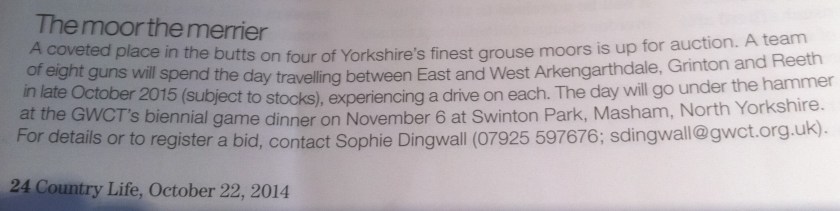
From Country Life Magazine, October 22nd 2014, page 24:

A coveted place in the butts on four of Yorkshire’s finest grouse moors is up for auction. A team of eight guns will spend the day travelling between East and West Arkengarthdale, Grinton and Reeth in late October 2015 (subject to stocks), experiencing a drive on each. The day will go under the hammer at the GWCT’s biennial game dinner on Nov 6 at Swinton Park, Masham, North Yorkshire“.

Fascinating stuff.

Swinton Park is linked with the Swinton Estate. Swinton Estate was where the shot corpse of hen harrier Bowland Betty was discovered in 2012 (see here), although that was likely just an unfortunate coincidence as there was no evidence to link her death to anybody, let alone anyone associated with the estate. According to the Countryside Alliance, she wasn’t shot at all (see here).

A different incident confirmed criminal activity by a Swinton Estate employee. Earlier this year, gamekeeper Ryan Waite was convicted of illegally setting a spring (pole) trap on Swinton Estate (see here).

What an interesting choice of venue for the GWCT to select for their prestigious event, eh?

Gamekeeper convicted for pole-trapping offences

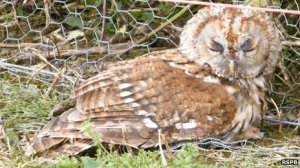
tawny owlMark Stevens, a self-employed gamekeeper who worked on Andrew Lloyd Webber’s Sydmonton Court Estate in Hampshire, has been convicted of setting two illegal traps and has been fined £700 with £650 court costs and a £50 victim surcharge.

Stevens, 42, admitted setting the two pole traps at a pheasant release pen in August last year but claimed he was targeting a grey squirrel that had been eating the pheasants’ food. The traps, which were not set on Lloyd Webber’s estate but on land at nearby Echinnswell, were discovered after a member of the public found a tawny owl hanging upside down with its leg caught in one of the traps. Its leg injuries were so severe it had to be euthanised by a vet.

According to Stevens’ solicitor, the setting of the traps was ‘accidental’.

Well done to the RSPB Investigations Team, Hampshire Constabulary and the Crown Prosecution Service for securing a conviction.

Pole-trapping has been illegal for over 100 years. Stevens is the latest of a number of gamekeepers recently convicted for this barbaric practice (e.g. see here and here). Unsurprisingly, all of them have claimed the traps were targeting squirrels and not birds of prey (as if that makes a difference).

RSPB Investigations video here (WARNING: GRAPHIC CONTENT)

RSPB Investigations blog here

News story in Daily Mail here

News story on BBC here


Goshawk found dead in suspicious circumstances on Chatsworth Estate

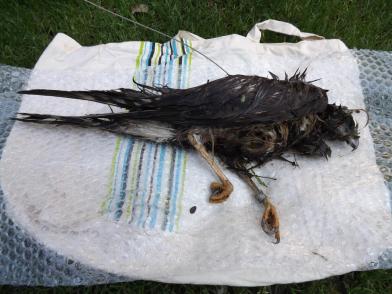
Goshawk Derbyshire spring trap April 2014The RSPB has posted a £1,000 reward for information that leads to a conviction following the discovery of a dead goshawk found in suspicious circumstances on Chatsworth Estate in Derbyshire.
The dead female bird was found on the estate by a member of the public on 2nd April. A post-mortem revealed the bird had two broken legs, and that both breaks were in the same place – injuries that are consistent with being caught in a spring trap.

The bird had been fitted with a leg ring, showing it had hatched in 2003 in the Peak District National Park, 15km to the north of Chatsworth.

Derbyshire Constabulary and the RSPB are appealing for information.

For full details, including quotes from the RSPB, Derbyshire Constabulary and a Chatsworth Estate representative, see the article on the Derbyshire Constabulary website here.

Case against Lloyd Webber’s gamekeeper moves to trial

The case against a gamekeeper employed on Andrew Lloyd Webber’s estate in Hampshire has moved to trial.

Mark Stevens, 42, is accused of a series of trapping offences alleged to have taken place on the Sydmonton Court Estate, Hampshire, in August and September last year. He has denied the charges.

His trial will take place in July 2014.

See here for previous blog.

Gamekeeper accused of pole-trapping on Lloyd Webber’s estate

It has been reported that a gamekeeper is appearing in court tomorrow to face various charges of alleged wildlife crime on Andrew Lloyd Webber’s country estate.

There is no suggestion Andrew Lloyd Webber was involved.

Mark Stevens, 42, is accused of five alleged offences. Three relate to allegations that a tawny owl was caught in a spring trap set on a pole on the Sydmonton Court Estate, Hampshire in August 2013. Two relate to allegations that spring traps were not properly set on the Sydmonton Court Estate in September 2013.

Tomorrow’s hearing will be the first in this case.

Further updates later…

Gamekeeper convicted for setting illegal pole trap

Ryan Waite setting the pole trap.JPG-400x0Press release from RSPB:

A gamekeeper has been convicted of using an illegal trap on a shooting estate on two occasions.

At Harrogate Magistrate’s Court today (13 February) Ryan Waite, employed as a gamekeeper on the Swinton Estate in North Yorkshire was sentenced on two charges of illegally setting a spring trap between May and June 2013.

Waite had pleaded guilty to the charges at an earlier hearing on December 10, 2013.

However, he had denied that the trap was intended for birds of prey, as alleged by the prosecution, claiming rather that it was for catching squirrels.

The court today ruled that his conduct had been reckless.

He was fined £250 with an additional £105 costs and victim surcharge. 

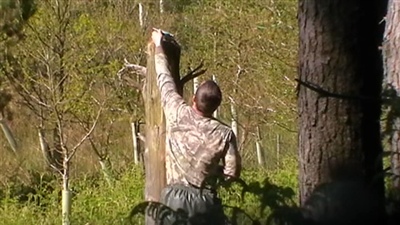
Following an initial report from the League Against Cruel Sports, on the 2nd June, RSPB Investigations visited Ox Close plantation on the Swinton Estate, North Yorkshire, and discovered a spring trap that had been placed on top of a two-metre high tree stump. These are commonly known as pole traps and have been banned since 1904.

Birds of prey are usually the target of such devices as they use the elevated position as a vantage point and the traps are strategically placed where they will hunt.

RSPB Investigations disabled the trap and then set up covert surveillance of the site to monitor who was responsible and two days later, on 4th June, Waite was filmed re-setting the trap on top of the stump.

As a result of this footage, North Yorkshire Police executed a search warrant, assisted by the RSPB. Although the spring trap had been removed from the pole trap site, it was later found and seized at Waite’s property.  Waite was also caught on camera removing the trap.

Howard Jones, RSPB Investigations Officer, said: “It is a disappointing reality that the use of pole traps still occurs in 2013 and that some gamekeepers are continuing to adopt these Victorian techniques. The device was deemed outdated and barbaric in 1904, yet a century on we are still finding these illegal traps being set in the countryside.  Sentencing needs to get tougher to ensure people are deterred from operating such devices in the future.

“We welcome today’s result as it shows that such barbaric practices will not be tolerated in today’s society.”   

There’s a good blog about this case written by the RSPB Investigations Team here.

There’s also an opportunity to view the covert footage showing Waite re-setting the pole trap here

Congratulations to the RSPB Investigations team for another job well done, and to the fieldworkers from the League Against Cruel Sports for identifying the illegal trap and alerting the authorities.

Bowland Betty (1)Swinton Estate has been described as “very well known and highly respected” by the author of The World’s Best Shoots (see here).

Swinton Estate is also ‘very well known’ for being the grouse moor location where hen harrier Bowland Betty’s shot corpse was found in 2012 (see here). Purely coincidental, obviously.

What interests us now is whether convicted gamekeeper Ryan Waite will keep his job, and whether he was/is a member of the National Gamekeepers Organisation. Let’s ask the NGO whether this criminal is from their ranks and if he is, whether they will continue to accept his membership. Emails to: info@nationalgamekeepers.org.uk

UPDATE 14/2: The NGO has issued a statement to say convicted gamekeeper Ryan Waite has never been one of their members (see here).

We’re still interested in whether this convicted gamekeeper will keep his job at the “highly respected” Swinton Estate. Emails to: swinton@stantonmortimer.co.uk

Gamekeeper convicted of setting an illegal pole trap

Here’s another example of how our fine ‘custodians of the countryside’ are the “most effective conservationists working in the British countryside today“.

On 9 December 2013 at Herefordshire Magistrates Court, 39-year old gamekeeper Wayne Priday was convicted of setting an illegal pole trap close to his pheasant release pen near Elton, close to Ludlow, in August this year.

He was fined £375 and ordered to pay £170 costs. Gosh, a £545 fine – that’ll learn ‘im.

Priday was caught thanks to covert video footage filmed by the RSPB Investigations Team. (Remember, this is in England where covert video evidence is readily accepted by the courts, unlike here in Scotland).

RSPB investigators visited Priday’s pheasant pen on 7th August 2013 and found a pole trap set in position on top of a post. The trap had been camouflaged with moss. Investigators disabled the trap and set a covert camera in place to identify the trap user.

The following day, along came Priday who was filmed examining the trap and clearly looking puzzled that it had been sprung without catching anything (see the covert video footage here – it’s hilarious). He unfastened the trap, put it in his vehicle and drove away.

Priday was later interviewed by West Mercia Police and he admitted setting the trap, although he claimed it was for squirrels.

Well done to the RSPB Investigations Team and also to West Mercia Police for a successful conviction.

We wonder whether Priday is a member of the National Gamekeepers Organisation? And if so, whether they will be expelling him from their club or whether they think Priday’s crime is not a ‘wildlife crime’ (e.g. as they did here). Shall we ask them? Emails to: info@nationalgamekeepers.org.uk

Pole traps have been illegal in the UK since 1904. Essentially they consist of a spring trap which is attached to a post, often by a chain. Posts are often used by birds of prey to perch on to give them a good vantage point. When the raptor lands on the set pole trap, one or both of its legs gets caught in the jaws of the trap. When the bird attempts to fly away it is prevented from doing so because the trap is attached to the post. This causes the bird to dangle upside down where it will inevitably die a prolonged and horrific death. It is probably one of the most barbaric traps around, hence it being banned for over 100 years.

Here is a photograph of a buzzard (still alive) caught in another pole trap. It did not survive its injuries.

Alleged raptor killer too ill for court

Thanks to the reader who sent us a copy of this article from the Lanark Gazette.

Barn Owl press cutting

Why we don’t trust the National Gamekeepers’ Organisation

A few days ago, Charles Nodder, Political Advisor to the National Gamekeepers’ Organisation (NGO), wrote on this blog:

You should regard us [the NGO] as a key part of the solution [to stamping out illegal raptor persecution], not part of the problem. An organisation to be supported, not attacked”.

The thing is, in order to support an organisation there first needs to be a level of trust. It’s very hard for us to trust the NGO, and here’s why…

Until recently, we were under the impression (mistakenly, as it turns out) that the NGO wouldn’t tolerate any illegal gamekeeping activity and if any of their members were convicted of such an offence, they would be expelled from the organisation. This is what the NGO wants us all to believe, as outlined in their own Disciplinary Code, as published on their website.

However, it would now appear that the NGO does, in our opinion, tolerate some illegal gamekeeping activity. This has only come to light because we discovered that the NGO member who has been applying for licences to kill buzzards (and now sparrowhawks too) was recently convicted for being in possession of several banned poisons, including Carbofuran, the most common poison used to illegally kill birds of prey. We have now discovered that the NGO member, who we have called Mr Buzzard Licence Applicant, was not booted out of the NGO following his conviction for a wildlife crime that is closely linked with the illegal poisoning of birds of prey. Not only was he not booted out, but the NGO then actively supported this member by helping him to apply for his buzzard and sparrowhawk-killing licences.

When challenged about this, Mr Nodder provided some fascinating responses on this blog (see here). Before we take a closer look at those responses, we would first like to acknowledge Mr Nodder’s willingness to engage in conversation on this blog. That’s to his credit; there are many others within the game-shooting industry who have repeatedly refused to engage with us, citing excuses such as, “We don’t communicate with anonymous individuals” but who then go on to complain that we publish articles without giving them the right to reply!! Quite an astonishing response given today’s world of multi-media and social networking communications. A missed opportunity for them, but not really that surprising when you consider that many of them are still hanging on to other 19th Century ideals.

Anyway, back to that NGO policy of supposedly not tolerating any illegal gamekeeping activity.

To begin with, Mr Nodder tried to claim that “The possession of a banned substance [and remember we’re talking here about banned poisons that are routinely used to illegally poison wildlife] is quite clearly a possession offence and not an offence against wildlife”. We were astounded by this comment. There are many, many examples of ‘possession’ offences that are inextricably linked to wildlife crime. Here are just a few examples:

  • Possession of a dead red kite (see James Rolfe case).
  • Possession of 10.5kg of the banned poison Carbofuran (see Dean Barr case).
  • Possession of the banned poison Carbofuran (see Cyril McLachlan case).
  • Possession of wild birds eggs (see Matthew Gonshaw cases).
  • Possession of an illegal pole trap (see Ivan Crane case).
  • Possession of a wild bird (see Craig Barrie case).
  • Possession of live & dead birds for trade/taxidermy (see Gary McPhail case).
  • Possession of the banned poison Alphachloralose (see David Whitefield case).
  • Possession of the banned poison Carbofuran (see Tom McKellar case).
  • Possession of wild birds (see Cogoo Sherman Bowen case).
  • Possession of the banned poisons Carbofuran, Strychnine and Alphachloralose (see Peter Bell case).
  • Possession of wild birds eggs (see Keith Liddell case).
  • Possession of the banned poison Sodium Cyanide (see William Scobie case).
  • Possession of dead wild birds (see Luke Byrne case).
  • Possession of the banned poisons Carbofuran and Alphachloralose (see Graham Kerr case).

In many of these example cases, poisoned and/or other illegally killed raptors were also discovered. Indeed, in many cases it is the discovery of these poisoned animals that then leads on to a police investigation and search that then leads to the discovery of a stash of banned poisons. Quite often, as we all know, the subsequent charges that are brought do not often include charges for actually poisoning the wildlife, but instead the charges relate to the ‘lesser’ (in legal terms) offence of ‘possession’, either due to plea bargaining or due to lack of evidence needed to secure a conviction for the actual poisoning of a wild animal. It stands to reason that the actual poisoning of wildlife is inextricably linked to the possession of banned poisons; in order to poison wildlife, the criminal obviously first has to be in possession of the poison to carry out the act of poisoning.

The National Wildlife Crime Unit defines the possession of a banned poison as a wildlife crime – the Unit often publicises convictions for the possession of banned poisons in its reports. The Scottish Government also defines convictions for possession of banned poisons as wildlife crime – indeed, this is one of the offences that can trigger a prosecution under the new vicarious liability legislation, brought in specifically to address the continuing illegal persecution of raptors. The Crown Office considers possession of banned poisons as a wildlife crime because its specialist wildlife prosecutors take on these cases. The Partnership for Action against Wildlife Crime (PAW, of which the NGO boasts membership) also considers possession of banned poisons a wildlife crime – they, too, publicise ‘possession’ convictions in their newsletters.

So why is it that the National Gamekeepers’ Organisation doesn’t accept possession of banned poisons as a wildlife crime? And if they don’t, why the hell are they allowed to participate in the Raptor Persecution Wildlife Crime Priority Group? Surely that group has been established to find ways of stamping out illegal raptor persecution, but how can it achieve that if one organisational member refuses to expel members who have been convicted of a serious wildlife crime? It makes a mockery of the whole group and does absolutely nothing to instill public confidence in the sincerity of the process.

Mr Nodder’s next explanation for why Mr Buzzard Licence Applicant wasn’t booted out of the NGO was to suggest that possession of a banned poison was not a ‘gamekeeping activity’. On the contrary, if Mr Nodder took the time to look at the conviction statistics (publicly available to those who want to look) he would notice that the significant majority of those convicted for possession of banned poisons are gamekeepers, and that trend has continued for many years. In the case of Mr Buzzard Licence Applicant, his stashes of banned poisons were found in his work vehicle and inside one of his pheasant pens. There’s simply no denying it, unless of course you happen to be the NGO, trying to justify why you haven’t stuck to your stated Disciplinary Code and expelled a member for his criminal conviction.

And what sort of message does this policy send to other NGO members? ‘Don’t worry if you get caught in possession of banned poisons, we won’t kick you out of the club’. It makes you wonder what the law-abiding members of the NGO feel about this policy. If you were a law-abiding member (and there must be some, surely), would you want to be a member of a group that welcomed those with a criminal conviction related to banned poisons? If the NGO doesn’t distinguish between criminal and law-abiding members, why should we?

The third argument Mr Nodder used to try and get us to drop what must be quite embarrassing questions was to pull out the old ‘It’s a spent conviction so we can’t discuss it’ routine. Nice try, but in this case, wholly inapplicable. The legislation that prevents publication of so-called ‘spent convictions’ is the Rehabilitation of Offenders Act 1974 (see here for a good explanation). Its basic premise is that after a period of x years of rehabilitation (depending on the type of crime committed – in this case, five years), the conviction can be ignored and need not be divulged (with one or two exceptions). If somebody does then publish information about the conviction, they may be subject to libel damages, but only if the primary motive of publishing the information was malicious. In this case, seeing as though we haven’t named Mr Buzzard Licence Applicant, even though we’ve had lots of opportunity to do so (and indeed our own received legal advice was that we could name him), it would be extremely difficult, if not impossible, to demonstrate that we are acting in malice (against him as an individual) by discussing his spent conviction because he hasn’t been identified as a named individual. Our primary motive for discussing this case has been to (a) examine the Natural England/DEFRA policy that allows convicted wildlife criminals to apply for licences to kill protected species (see earlier blogs on this), and (b) to examine the sincerity of the NGO’s claims that they won’t tolerate any illegal gamekeeping activity and will expel any member with such a conviction.

And while we’re on the subject of the Rehab of Offenders Act, we’ve made a very interesting observation. Certain professions are exempt from the Act, so that individuals are not allowed to withhold details of previous convictions in relation to job applications. These professions include teachers, social workers, doctors, dentists, vets, accountants etc. But interestingly, also included are “Employees of the RSPCA or SSPCA whose duties extend to the humane killing of animals”. Now then, it is beyond question that the duties of gamekeepers ‘extend to the humane killing of animals’. They probably kill (legitimately) more animals on a daily basis than all the RSPCA and SSPCA employees put together. So why are gamekeepers not included in this list of exemptions? Why should a gamekeeper be able to hide past wildlife crime convictions but an RSPCA/SSPCA employee cannot? That’s a question for the policy makers…

In summary then, in our opinion the NGO’s stated claim that they don’t tolerate any illegal gamekeeping activity is not convincing. They don’t view the possession of a banned poison as a wildlife crime and a conviction for possession of a banned poison is not enough to warrant expulsion from the NGO, even when that poison just happens to be the most commonly used substance to illegally kill birds of prey. It doesn’t matter to us how many wildlife crime groups the NGO has joined – in our view this is just a convenient shield for hiding true intentions – we don’t trust them and will continue to view them with suspicion until they start to back up their stated claims with convincing actions.