Criminal pole-trapper is gamekeeper on Mossdale Estate

pole trapThis won’t come as any surprise to anyone, but it has now been confirmed that the man given a police caution for setting illegal pole traps on a grouse moor on the Mossdale Estate in the Yorkshire Dales National Park is……wait for it….a gamekeeper from the Mossdale Estate.

How do we know? Because the Moorland Association has said so.

In a rather late public statement (probably issued after coming under considerable pressure to say something), the Moorland Association says the unnamed 23-year old is a ‘junior employee’ of the Mossdale Estate.

By the way, the name of this individual has not been publicised, and nor can it be (hence the pixelated photo from the RSPB in previous articles about this crime) because he is protected by the Rehabilitation of Offenders Act 1974 (see here for a good explanation). This Act’s basic premise is that after a period of x years post-conviction (depending on the type of crime committed – typically five years for someone convicted of a wildlife crime), the conviction can be ignored and need not be divulged (with one or two exceptions). If somebody does then publish information about the individual’s conviction, they may be subject to libel damages, but only if the primary motive for publishing the information was malicious. What’s amazing about this legislation in this particular case is that if an individual receives a police caution, that caution is considered immediately ‘spent’, which means that the individual cannot be publicly named in relation to his crime, even immediately after his admission of guilt! It gives a whole new meaning to the term police protection.

Anyway, back to that statement from the Moorland Association. Here it is:

Disgust at use of illegally set traps on posts

3rd June 2016

Chairman of the Moorland Association, Robert Benson, has today issued the following statement:

We agree with the RSPB and others expressing disgust about the use of illegally set traps on posts. This behaviour could result in indiscriminate capture of wildlife and prolonged suffering. It was rightly outlawed in 1904 and these is no place for it in 21st Century moorland management. There are perfectly good legal and targeted predator control measures available to protect ground nesting birds at this time of year, not least through the licensing system.

The owner of the estate where this gamekeeper worked is a member of the Moorland Association. He has made it clear that neither he nor his head gamekeeper knew anything of this illegal and totally unacceptable activity by a junior employee. The employee who set the traps has been suspended and, as a result of having accepted a police caution for his action, now carries a criminal record and has lost his right to own firearms.

END

The first paragraph is a commendable condemnation of illegal pole-trapping. The problem is, whether it was said with sincerity or not, many of us don’t believe it’s worth the paper it’s written on. It’s clear from this case alone that whatever the Moorland Association thinks, it has little influence over what actually happens on a grouse moor.

What would be more convincing is if the Moorland Association expelled any of its members on whose grouse moor this illegal practice had been detected. Now THAT would be a more credible display of zero tolerance for illegal raptor persecution, wouldn’t it?

But no. Instead we get a feeble explanation that the grouse moor owner and his head gamekeeper knew nothing about the illegal activity taking place on that moor. And that, it seems, is enough justification for the grouse moor owner to remain a member of the club. Does that indicate a Moorland Association policy of zero tolerance to you? It doesn’t to us.

And what action has the grouse moor owner taken against his criminal employee who has already admitted ‘illegal and totally unacceptable’ behaviour? He’s just suspended him. He hasn’t fired him, he’s JUST SUSPENDED HIM.

That tells you everything you need to know about the grouse-shooting industry.

Please sign the petition to ban driven grouse shooting HERE

We’re interested in finding out whether this criminal gamekeeper is / was a member of the National Gamekeepers’ Organisation. Let’s ask them. Emails to: info@nationalgamekeepers.org.uk

North Yorks Police try to justify police caution for criminal activity on grouse moor

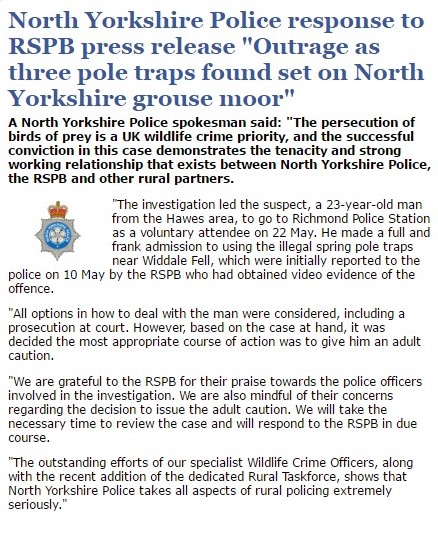
Following today’s earlier blog about the man who was given a police caution after he was filmed setting illegal pole traps on the Mossdale Estate grouse moor within the Yorkshire Dales National Park (see here), North Yorkshire Police has now issued an unbelievable press statement in an attempt to justify their decision to caution instead of prosecute:

NYorksPolice statement

Before we take this statement apart, we want to make it clear that our comments are NOT aimed at the three police wildlife crime officers who attended the crime scene. It is obvious from the RSPB Investigation Team’s blog (here) and from recent accounts of police attendance at other raptor persecution crime scenes in North Yorkshire (e.g. see here) that these on-the-ground police officers are doing their utmost to respond quickly, collect evidence, issue early appeals for information, and work inclusively with the RSPB Investigation Team. We sincerely applaud their efforts and they deserve all credit for their actions.

Our comments are aimed directly at senior officers within North Yorkshire Police, i.e. the one(s) who took the decision to issue a caution rather than consider a prosecution.

So, THAT police statement. What an unbelievably stupid, self-congratulatory piece of work. It really beggars belief that this police force, which, incidentally, has just taken on the role of National Wildlife Crime Lead, views this result as a ‘successful conviction’. What interests us the most about the statement is the following sentence:

Based on the case at hand, it was decided the most appropriate course of action was to give him an adult caution“.

When the police decide on a course of action, they are supposed to refer to official guidance to help their decision-making. The official guidance document relating to whether a caution is appropriate can be read here. This is a fascinating read.

It explains that a ‘simple caution’ (once known as a formal or police caution) is a formal warning that may be given by the police to persons aged 18 years or over who admit to committing an offence. A simple caution must NOT be given if the decision-maker (i.e. senior police officer) considers that it is in the public interest for the offender to be prosecuted. Er, there’s failure #1 for North Yorks Police.

A simple caution may only be given where specified criteria are met. These criteria are listed in what’s called a Gravity Factor Matrix (see here). This matrix sets out the aggravating and mitigating factors that the decision-maker must consider for various types of offence. If you look at page 39, you’ll find the guidance the police are supposed to follow for a wildlife crime offence. Here are the listed aggravating factors, which, in this particular case, should have been considered by North Yorkshire Police:

The offence relates to a wildlife crime priority. Does this  aggravating factor apply to this case? Er, YES! Raptor persecution is a national wildlife crime priority. Failure #2 for North Yorks Police.

The conservation impact of the offence. Does this aggravating factor apply to this case? Er, YES! Hen harrier persecution is responsible for the precarious conservation status of this species in England. Failure #3 for North Yorks Police.

The offence results in or is intended to result in financial gain. Does this aggravating factor apply to this case? Er, YES! Raptor persecution on grouse moors is undertaken to maximise the number of red grouse available for paying clients to kill and the number of red grouse killed impacts on the estimated value of the estate/shoot. Failure #4 for North Yorks Police.

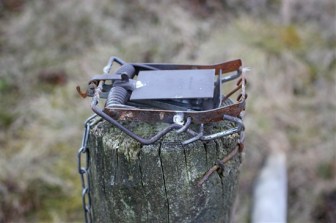
The offence involves cruelty. Does this aggravating factor apply to this case? Er, YES! A pole trap functions by crushing the leg(s) of any bird that lands on it and the bird can then dangle upside down from the post for many hours/days, unable to escape. Failure #5 for North Yorks Police.

The offence was planned or pre-meditated. Does this aggravating factor apply to this case? Er, YES! This offender re-set three traps knowing exactly what could result from his actions. Failure #6 for North Yorks Police.

The mitigating factors for the decision-maker to consider for this wildlife crime offence were:

The offence was committed by mistake or misunderstanding. Does this mitigating factor apply to this case? Er, NO!

The offence would result in little or no conservation impact. Does this mitigating factor apply to this case? Er, NO!

So, this offence starts off with a Gravity Score of 3. You then look at the aggravating and mitigating factors and then decide how to proceed. If you look at the guidelines (page 5), you’ll see that the appropriate police action for an offence with this gravity score is ‘Normally charge but a simple caution may be appropriate if first offence’.

We’d like to know why the senior police officer decided that this case was worthy of a simple caution instead of the ‘normally charge’ route, especially given that all five aggravating factors were met and the mitigating factors were inapplicable.

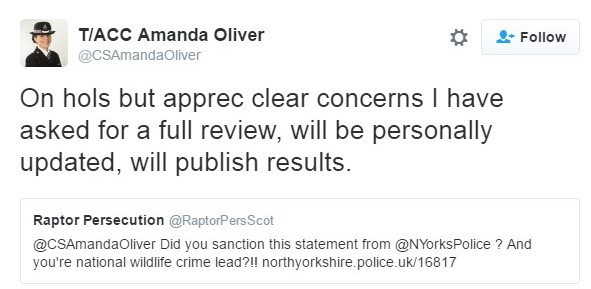
And we’re not alone in our concern. We sent a tweet to North York Police Acting Assistant Chief Constable Amanda Oliver (she with responsibility as the National Wildlife Crime Lead) asking her if she had sanctioned the above statement from North Yorkshire Police. To her credit, she responded as follows:

AmandaOliverResponse

We look forward to learning the details of her review in due course.

Attempted hen harrier persecution on grouse moor in Yorkshire Dales National Park

An unnamed man has received a police caution for setting three illegal pole traps in the middle of a grouse moor in the Yorkshire Dales National Park.

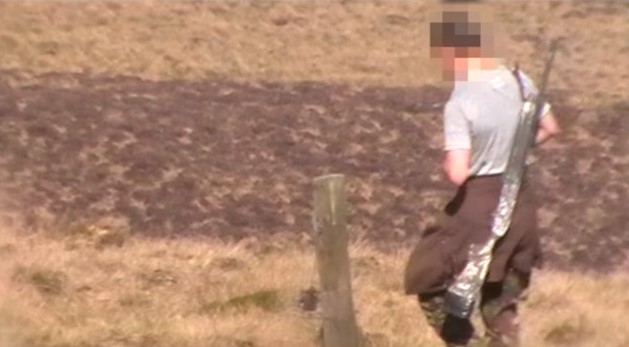
The three traps were discovered on Friday 6th May 2016 by a member of the public, who also saw a female hen harrier hunting in the vicinity. The RSPB Investigations Team moved swiftly and first made the traps safe and then installed covert cameras that night, to find out who was responsible for the traps. When they retrieved the cameras on Monday 9th May, their video footage revealed an armed man attending the traps and re-setting them (see photo below). North Yorkshire Police responded very quickly and attended the site the following day (Tuesday 10th May) to seize the traps.

Mossdale pole trap May 2016

The full details of these crimes can be read on the RSPB Investigations Team’s excellent blog here and there’s an accompanying video here.

The individual who was filmed setting the traps has received a police caution (which is presumably why he hasn’t been named). Quite why this case didn’t proceed to a prosecution is a matter of deep concern and the RSPB is writing to North Yorkshire Police to establish why the decision was made not to prosecute. We’ll come back to that in a later blog.

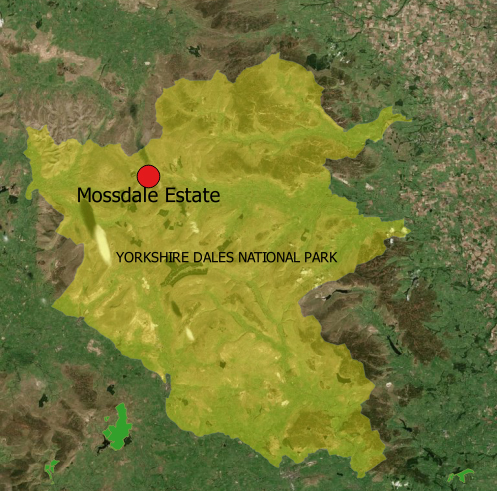
The location where these traps were set has been named by the RSPB as Widdale Fell on the Mossdale Estate.

Mossdale (1)

What the RSPB didn’t say was that this grouse-shooting estate is owned by the van Cutsem family. That name might be familiar to some of you. Indeed, if you google ‘van Cutsem hen harrier’ you’ll see a long list of entries relating to the alleged shooting of two hen harriers at the Queen’s Sandringham Estate in 2007. William van Cutsem was interviewed, along with his friend Prince Harry, as they were both out shooting on the estate that evening. They both denied all knowledge of the shot harriers and nobody was ever prosecuted (see here).

The van Cutsem family name is well known in grouse-shooting circles and has many royal connections. The late Hugh van Cutsem was a personal friend of Prince Charles and all four sons have featured regularly in the shooting press, mostly being recognised for their shooting prowess. The youngest van Cutsem son, William, is Prince George’s godfather, and Prince William is godfather to Grace, the daughter of the eldest van Cutsem son, Edward.

The van Cutsem’s Mossdale Estate sits within the Yorkshire Dales National Park (YDNP). This region is no stranger to hen harrier persecution. Hen harriers have not bred successfully in the YDNP since 2007. According to 2007-2014 hen harrier satellite data, published by Natural England in 2014, at least nine young sat tagged hen harriers have ‘disappeared’ within the Park boundary:

Female, tagged N England 26/6/07: last known location YDNP 5/10/07. Status: missing.

Female, tagged N England 16/7/09: last known location YDNP 27/9/09. Status: missing.

Male, tagged Bowland 29/6/09: last known location YDNP 17/8/09. Status: missing.

Female, tagged N England 29/6/10: last known location YDNP 25/11/10. Status: missing.

Female (Bowland Betty), tagged Bowland 22/6/11: last known location YDNP 5/7/12. Status: shot dead.

Female (Kristina), tagged N England 25/6/12: last known location YDNP 9/10/12. Status: missing.

Male (Thomas), tagged N England 4/9/12: last known location YDNP 4/9/12. Status: missing.

Male (Sid), tagged Langholm 21/9/14: last known location YDNP 21/9/14. Status: missing.

Female (Imogen), tagged N England 26/6/14: last known location YDNP 1/9/14. Status: missing.

The YDNP, as with other areas where land-use is dominated by driven grouse moors, is a magnet for young hen harriers, but few of them seem to survive. Why is that? What with gas guns, decoy hen harriers and illegal pole traps, all being reported from driven grouse moors in recent weeks, it’s not hard to take an educated guess. It seems there’s an ‘alternative’ Hen Harrier Action Plan at work.

We’ll be coming back to this latest crime in future blogs but for now, you might want to contact David Butterworth, Chief Executive of the Yorkshire Dales National Park Authority, and ask him why illegal pole traps are being set on grouse moors within the National Park, why hen harriers have failed to nest within the National Park since 2007, why so many young satellite-tagged hen harriers seem to ‘disappear’ within the National Park, and what action the Yorkshire Dales National Park Authority intends to take? Emails to: david.butterworth@yorkshiredales.org.uk

Petition to ban driven grouse shooting here
MEDIA COVERAGE

RSPB press release here

RSPB investigations blog here

Mark Avery’s blog here and here

ITV news here

The Moorland Association’s response to this news has been to publish a fluffy article entitled ‘Testimony to dedication of moorland men‘. No mention of raptor persecution at all. Looks like Director Amanda Anderson still suffering from wilful blindness.

Unbelievable statement from North Yorkshire Police here

Interview with senior RSPB Investigations team member Guy Shorrock on BBC Radio York (starts at 1:45:20, available for 30 days here)

BBC news here

Independent here

Daily Express here

The News Hub here

UPDATE: https://raptorpersecutionscotland.wordpress.com/2016/06/01/north-yorks-police-try-to-justify-police-caution-for-criminal-activity-on-grouse-moor/

Trial date set for Angus Glens gamekeeper for alleged pole-trapping offences

Last month we blogged about court proceedings in the case of an Angus Glens gamekeeper, Craig Graham, who is facing accusations of alleged pole-trapping offences on the Brewlands Estate (see here).

Graham, 51, is accused of setting and re-setting a pole trap, baited with a pheasant carcass, between 9-17th July 2015.

At a third hearing at Forfar Sheriff Court yesterday, Graham pleaded not guilty to the charges.

This has now triggered a trial, provisionally set for 9th September 2016, with an intermediate diet to be heard on 16 August 2016.

Angus Glens gamekeeper charged with pole-trapping offences

Scottish gamekeeper Craig Graham, 51, has been charged with repeatedly setting an illegal pole trap on an estate in the Angus Glens.

At a second court hearing yesterday (1st court hearing 31st March 2016), Forfar Sheriff Court heard that Head gamekeeper Mr Graham allegedly set and re-set a pole trap, baited with a pheasant carcass, on a tree stump, between 9th-17th July 2015. A further charge states that Mr Graham set the illegal trap with the intention of killing or taking a wild bird.

The offences are alleged to have occurred between Bridge of Brewlands and Kirkton of Glenisla. According to Andy Wightman’s Who Owns Scotland website, this area comprises part of the Brewlands and Kilry Estate.

The case was continued until 12th May 2016.

BBC news article here

Courier article here

Game farmer Michael Wood wins appeal against pole trap conviction

In February this year we blogged about the conviction of game farmer Michael Wood, who was found guilty of permitting the use of a pole trap at his game-rearing facility Westfield Farm in Cropton, North Yorkshire (see here).

Mr Wood’s conviction was based on the magistrate’s opinion that it was “inconceivable” that Wood had not known about the trap, as RSPB surveillance evidence outlined how he had driven past this exposed trap and also another (with the safety catch engaged) a short distance away. Wood had basically claimed it was getting too dark to be able to see the traps. His evidence was contradicted by his wife who outlined the things her husband was checking as he drove around the site.

However, Mr Wood appealed the verdict and the judicial bench at York Crown Court has now upheld his appeal because ‘the prosecution had failed to prove its case’ (see article in today’s Gazette & Herald here).

This is an interesting case. The most interesting feature (from our perspective) is that the RSPB’s surveillance evidence was deemed admissible. At the original trial the defence tried unsuccessfully to have this evidence excluded. At the appeal this was not even contested, neither this time were the actual light levels as shown by photographs taken by the RSPB. Unsurprisingly, Mr Wood’s wife did not give evidence at the appeal. So, it appears the admissibility of the RSPB evidence was NOT an issue at the Crown Court. Mr Wood’s appeal was successful because the prosecution were not able to convince the court that Wood had actually seen the trap, not that he’d been covertly observed driving close to the traps. That’s a very important distinction.

What’s also interesting about this case is that, following the day Wood was seen on site, the North Yorkshire Police, assisted by RSPB, seized a total of five illegal pole traps found set around the breeding facility. However, two employees only received a police caution in relation to these traps – they weren’t prosecuted for setting them. As they’d been cautioned, this infers that they’d admitted to setting them. Why weren’t they prosecuted for setting these illegal traps, if they’d admitted their guilt? In 2014 a gamekeeper on the Swinton Estate (also in North Yorkshire) was convicted of twice setting a pole trap (see here), so how did Mr Wood’s two employees escape prosecution when they’d set five pole traps between them?!

If you look at the position of the traps (see the photo and see the short video made by the RSPB Investigations team here), you can see how discreetly positioned they were. They must have been really easy to miss, eh?

pole-trap-1-of-5-westfield-game-farm-rspb

As we reported in February, Mr Wood has a current criminal conviction for wildlife offences. In 2011 he was successfully prosecuted for releasing thousands of pheasants (for shooting) on a site of special scientific interest when permission had only been granted to release 500 birds. It was argued the birds had caused ‘significant damage’ to the conservation area and Mr Wood and Yorks Sports Ltd (of which Mr Wood was a director) were each fined £20,000, plus £125,000 between them towards the prosecution costs, and they also had to pay a £145,000 defence bill (see here).

Criminal pheasant breeder gets the chop

Last week we asked why the editorial team at Modern Gamekeeping had published an article by a pheasant breeder with eight wildlife crime convictions to his name (see here).

Modern Poisoner header March 2015 - Copy

Yesterday they issued the following statement:

As soon as we learned of Mike Wood’s conviction, we made the decision to dispense with his services with immediate effect, though Mike Wood actually resigned from his regular column upon conviction. His last article was in the March 2015 edition. Blaze Publishing, publishers of Modern Gamekeeping, do not condone any unethical or illegal practices and do not wish to be associated with anyone involved in them“.

That’s impressive. A fast and unequivocal response – others in the gamekeeping industry could learn a lesson or two from it.

Although we’re not entirely convinced that “Mike Wood actually resigned from his regular column upon conviction“. That statement seems to be at odds with what Charles Nodder (National Gamekeepers’ Org) said….that Mike Wood was considering an appeal (of his latest conviction). It’s also odd that Mike Wood didn’t think his earlier seven convictions (from 2011) merited his resignation.

We wonder if he will/has also resigned from his position of Chair of the Game Farmers’ Association?

Talking of the National Gamekeepers’ Org – we blogged recently about contacting the PAW secretariat to ask them to justify the NGO’s continued presence as a member of the Partnership for Action Against Wildlife Crime (see here). The PAW secretariat has now responded and we’ll be blogging about that, probably tomorrow.

Modern criminal

Modern Poisoner Mike Wood article March 2015 - CopyA few days ago we blogged about an attack on the campaign group Birders Against Wildlife Crime that had appeared in this month’s edition of Modern Gamekeeping (see here).

We also said we’d be blogging about another article that had been published in this industry rag. It’s a full-page spread on page 18, written by Mike Wood. Here’s the bio that accompanies this piece:

Michael Wood is a partner at Westfield Farms in Pickering, North Yorkshire. Founded in 1953, the farm has 59 years of experience breeding game birds, including pheasant, mallard, red-leg partridge and grey partridge“.

What the bio doesn’t say is ‘Michael Wood is a criminal with eight wildlife crime convictions to his name’.

See here and here.

Interesting, eh? How many times are we told not to tar all gamekeepers with the same brush? But why should we distinguish between lawful and criminal gamekeepers when the game-shooting industry itself doesn’t seem to bother? We already know that the National Gamekeepers’ Organisation doesn’t mind that Wood has wildlife crime convictions – they’ll still accept fund-raising donations from him and Charles Nodder from the NGO will still work with the Game Farmers’ Association, even though convicted wildlife criminal Wood is the GFA’s current Chairman (see here).

So we know that Noddy and the NGO don’t shun convicted wildlife criminals. But what about BASC? Surely they’ve got standards? Hmm. Take a look at this header from the front of Modern Gamekeeping:

 Modern Poisoner header March 2015 - Copy

It’s hard to read from this image so here’s what it says:

Modern Gamekeeping is proud to be in partnership with The British Association for Shooting and Conservation”.

Does that mean that BASC (a member of the Partnership for Action against Wildlife Crime (PAW UK)) endorses the idea that a wildlife criminal with multiple convictions should be given column inches in an industry publication to discuss the ‘management’ of his game-rearing farm? Surely not.

All in it together…?

National Gamekeepers’ Org linked to another convicted wildlife criminal

Regular blog readers may recall us writing previously about the National Gamekeepers’ Organisation’s unwillingness to expel a member who had been convicted of poison offences (see here).

We found this interesting, especially as the NGO is an organisational member of the Partnership for Action Against Wildlife Crime (PAW UK) – supposedly committed to helping tackle wildlife crime. Refusing to expel a member with a criminal conviction for, er, wildlife crime, should surely have resulted in PAW UK booting them off the Partnership? Apparently not – the NGO is still there.

And now we have evidence of the NGO’s connection with another convicted wildlife criminal – Michael Wood. We blogged about Michael Wood yesterday – he’s the pheasant/partridge/duck breeder in North Yorkshire who was found guilty of permitting the use of a banned pole trap at his breeding facility – Westfield Farm. In fact, a total of FIVE pole traps had been found there, but two of Wood’s employees escaped a criminal trial because North Yorks Police decided their crimes only merited a police caution.

Thanks to some investigative work by one of our blog readers (Marco McGinty), it turns out that the NGO accepted a fundraising donation from Michael Wood for their 2014 auction. Now, Wood hadn’t been convicted of the pole-trapping offence at that time, but he had been convicted, along with his company Yorks Sports Ltd., of seven offences under the Wildlife & Countryside Act in 2011 – these offences related to the unlawful release of thousands of pheasants (for shooting) which caused ‘significant damage’ to a noted conservation area in the Farndale valley (see here). So why did the NGO accept a fundraising donation from him in 2014?

NGO auction catalogue 2014 Mike Wood donation - Copy

Not only that, but as we mentioned yesterday, the NGO’s PR and political advisor, Charles Nodder, is also the Game Farmers’ Association’s contact for media and political enquiries. The current Chair of the Game Farmers’ Association is…..Michael Wood.

And let’s not forget the NGO’s recent attack on another PAW UK partner organisation – the RSPB (see here).

Isn’t it time the PAW UK Steering Group is asked to justify the continued membership of the National Gamekeepers’ Organisation as a partner member of PAW UK? Let’s ask them. Emails will have to be sent to the PAW UK Secretariat and ask for your message to be forwarded to the Steering Group. Emails to: paw.secretariat@defra.gsi.gov.uk  We’ll be very interested to hear what the Steering Group has to say.

Game farm owner convicted of pole trap offence

A two-day trial concluded at Scarborough Magistrates yesterday with the conviction of game farm owner Michael Wood, who was found guilty of permitting a pole trap last June.

Wood owns Westfield Farm in Cropton, North Yorkshire – a pheasant and partridge and duck breeding facility that supplies young birds to the game-shooting industry.

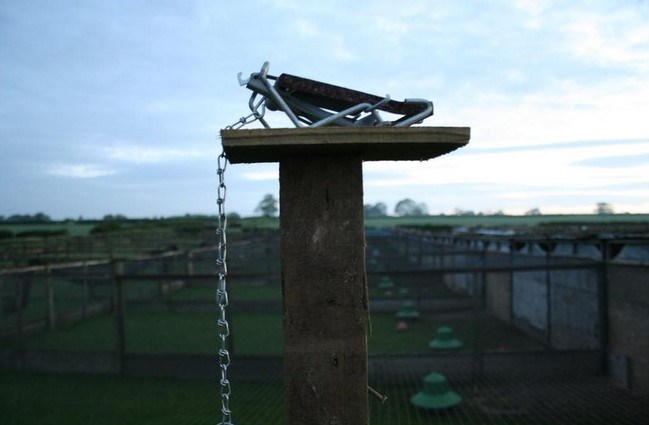
RSPB investigators found five pole traps placed around the rearing pens last summer. These traps are so barbaric they were outlawed over 100 years ago. They are basically a steel spring trap placed on top of a post (and usually nailed to the post with a short chain) so when a raptor lands on it, the trap crushes the bird’s legs and the bird is left dangling upside down for a prolonged and agonising death. Unbelievably, two farm workers were just given police cautions last year for setting these traps – why weren’t they prosecuted?

Wood was seen by the RSPB Investigations Team driving past one of the pole traps. His defence argued that he hadn’t seen it, but the magistrates didn’t believe him and said it was “inconceivable” that he wouldn’t have seen it.

Wood was fined £4,000, and ordered to pay £750 court costs as well as a £120 victim surcharge, amounting to a grand total of £4,870.

Great work by the RSPB Investigations Team (again).

Full details of this case can be read in the RSPB’s press release here

This isn’t Wood’s first conviction. In 2011, Wood and Yorks Sports Ltd (of which Wood was a Director) pleaded guilty to seven offences under the Wildlife & Countryside Act after defying official warnings and releasing thousands of pheasants (for shooting) on a Site of Special Scientific Interest (SSSI) when they’d only been given consent to release 500 birds. It was argued the birds had caused ‘significant damage’ to the conservation area. Wood and Yorks Sports Ltd were fined £20,000 each, plus a £15 victim surcharge, plus £125,000 between them towards the prosecutions costs. They also had to pay a £145,000 defence bill. (News article here).

Interestingly, it has been reported (by a media court reporter) that Wood is the Chairman of the Game Farmers’ Association [“Representing the UK’s game farmers and promoting high standards“] although we haven’t been able to find any supportive evidence of his Chairmanship. What we did find on the GFA’s website, though, is that their contact for ‘media and political enquiries’ is one Charles Nodder. Who he? Why, he’s the PR and political adviser of the National Gamekeepers’ Organisation. Let’s make a ‘media enquiry’ and ask him whether Wood is the Chair of the GFA, or if not whether he’s simply a member, and if so, whether he’ll be kicked out of the club, and if he isn’t kicked out of the club whether Nodder intends to continue working for an organisation whose membership includes someone convicted of wildlife crime. Emails to: cnodder@msn.com

UPDATE: Looks like someone called Mike Wood is indeed involved with the GFA – helping out on their stand at the CLA Game Fair in 2013. There’s also a charming pic of Nodder meeting Owen Paterson to discuss the GFA’s rearing guide. Read here.

Here’s one of the five pole traps found at Westfield Farm (photo RSPB).

Pole trap 1 of 5 westfield game farm RSPB

 Here’s a graphic example of what can happen when a buzzard lands on a pole trap (NB: this photo was not taken at Westfield Farm).

BZ pole trap c - Copy