Why we don’t trust the National Gamekeepers’ Organisation

A few days ago, Charles Nodder, Political Advisor to the National Gamekeepers’ Organisation (NGO), wrote on this blog:

You should regard us [the NGO] as a key part of the solution [to stamping out illegal raptor persecution], not part of the problem. An organisation to be supported, not attacked”.

The thing is, in order to support an organisation there first needs to be a level of trust. It’s very hard for us to trust the NGO, and here’s why…

Until recently, we were under the impression (mistakenly, as it turns out) that the NGO wouldn’t tolerate any illegal gamekeeping activity and if any of their members were convicted of such an offence, they would be expelled from the organisation. This is what the NGO wants us all to believe, as outlined in their own Disciplinary Code, as published on their website.

However, it would now appear that the NGO does, in our opinion, tolerate some illegal gamekeeping activity. This has only come to light because we discovered that the NGO member who has been applying for licences to kill buzzards (and now sparrowhawks too) was recently convicted for being in possession of several banned poisons, including Carbofuran, the most common poison used to illegally kill birds of prey. We have now discovered that the NGO member, who we have called Mr Buzzard Licence Applicant, was not booted out of the NGO following his conviction for a wildlife crime that is closely linked with the illegal poisoning of birds of prey. Not only was he not booted out, but the NGO then actively supported this member by helping him to apply for his buzzard and sparrowhawk-killing licences.

When challenged about this, Mr Nodder provided some fascinating responses on this blog (see here). Before we take a closer look at those responses, we would first like to acknowledge Mr Nodder’s willingness to engage in conversation on this blog. That’s to his credit; there are many others within the game-shooting industry who have repeatedly refused to engage with us, citing excuses such as, “We don’t communicate with anonymous individuals” but who then go on to complain that we publish articles without giving them the right to reply!! Quite an astonishing response given today’s world of multi-media and social networking communications. A missed opportunity for them, but not really that surprising when you consider that many of them are still hanging on to other 19th Century ideals.

Anyway, back to that NGO policy of supposedly not tolerating any illegal gamekeeping activity.

To begin with, Mr Nodder tried to claim that “The possession of a banned substance [and remember we’re talking here about banned poisons that are routinely used to illegally poison wildlife] is quite clearly a possession offence and not an offence against wildlife”. We were astounded by this comment. There are many, many examples of ‘possession’ offences that are inextricably linked to wildlife crime. Here are just a few examples:

  • Possession of a dead red kite (see James Rolfe case).
  • Possession of 10.5kg of the banned poison Carbofuran (see Dean Barr case).
  • Possession of the banned poison Carbofuran (see Cyril McLachlan case).
  • Possession of wild birds eggs (see Matthew Gonshaw cases).
  • Possession of an illegal pole trap (see Ivan Crane case).
  • Possession of a wild bird (see Craig Barrie case).
  • Possession of live & dead birds for trade/taxidermy (see Gary McPhail case).
  • Possession of the banned poison Alphachloralose (see David Whitefield case).
  • Possession of the banned poison Carbofuran (see Tom McKellar case).
  • Possession of wild birds (see Cogoo Sherman Bowen case).
  • Possession of the banned poisons Carbofuran, Strychnine and Alphachloralose (see Peter Bell case).
  • Possession of wild birds eggs (see Keith Liddell case).
  • Possession of the banned poison Sodium Cyanide (see William Scobie case).
  • Possession of dead wild birds (see Luke Byrne case).
  • Possession of the banned poisons Carbofuran and Alphachloralose (see Graham Kerr case).

In many of these example cases, poisoned and/or other illegally killed raptors were also discovered. Indeed, in many cases it is the discovery of these poisoned animals that then leads on to a police investigation and search that then leads to the discovery of a stash of banned poisons. Quite often, as we all know, the subsequent charges that are brought do not often include charges for actually poisoning the wildlife, but instead the charges relate to the ‘lesser’ (in legal terms) offence of ‘possession’, either due to plea bargaining or due to lack of evidence needed to secure a conviction for the actual poisoning of a wild animal. It stands to reason that the actual poisoning of wildlife is inextricably linked to the possession of banned poisons; in order to poison wildlife, the criminal obviously first has to be in possession of the poison to carry out the act of poisoning.

The National Wildlife Crime Unit defines the possession of a banned poison as a wildlife crime – the Unit often publicises convictions for the possession of banned poisons in its reports. The Scottish Government also defines convictions for possession of banned poisons as wildlife crime – indeed, this is one of the offences that can trigger a prosecution under the new vicarious liability legislation, brought in specifically to address the continuing illegal persecution of raptors. The Crown Office considers possession of banned poisons as a wildlife crime because its specialist wildlife prosecutors take on these cases. The Partnership for Action against Wildlife Crime (PAW, of which the NGO boasts membership) also considers possession of banned poisons a wildlife crime – they, too, publicise ‘possession’ convictions in their newsletters.

So why is it that the National Gamekeepers’ Organisation doesn’t accept possession of banned poisons as a wildlife crime? And if they don’t, why the hell are they allowed to participate in the Raptor Persecution Wildlife Crime Priority Group? Surely that group has been established to find ways of stamping out illegal raptor persecution, but how can it achieve that if one organisational member refuses to expel members who have been convicted of a serious wildlife crime? It makes a mockery of the whole group and does absolutely nothing to instill public confidence in the sincerity of the process.

Mr Nodder’s next explanation for why Mr Buzzard Licence Applicant wasn’t booted out of the NGO was to suggest that possession of a banned poison was not a ‘gamekeeping activity’. On the contrary, if Mr Nodder took the time to look at the conviction statistics (publicly available to those who want to look) he would notice that the significant majority of those convicted for possession of banned poisons are gamekeepers, and that trend has continued for many years. In the case of Mr Buzzard Licence Applicant, his stashes of banned poisons were found in his work vehicle and inside one of his pheasant pens. There’s simply no denying it, unless of course you happen to be the NGO, trying to justify why you haven’t stuck to your stated Disciplinary Code and expelled a member for his criminal conviction.

And what sort of message does this policy send to other NGO members? ‘Don’t worry if you get caught in possession of banned poisons, we won’t kick you out of the club’. It makes you wonder what the law-abiding members of the NGO feel about this policy. If you were a law-abiding member (and there must be some, surely), would you want to be a member of a group that welcomed those with a criminal conviction related to banned poisons? If the NGO doesn’t distinguish between criminal and law-abiding members, why should we?

The third argument Mr Nodder used to try and get us to drop what must be quite embarrassing questions was to pull out the old ‘It’s a spent conviction so we can’t discuss it’ routine. Nice try, but in this case, wholly inapplicable. The legislation that prevents publication of so-called ‘spent convictions’ is the Rehabilitation of Offenders Act 1974 (see here for a good explanation). Its basic premise is that after a period of x years of rehabilitation (depending on the type of crime committed – in this case, five years), the conviction can be ignored and need not be divulged (with one or two exceptions). If somebody does then publish information about the conviction, they may be subject to libel damages, but only if the primary motive of publishing the information was malicious. In this case, seeing as though we haven’t named Mr Buzzard Licence Applicant, even though we’ve had lots of opportunity to do so (and indeed our own received legal advice was that we could name him), it would be extremely difficult, if not impossible, to demonstrate that we are acting in malice (against him as an individual) by discussing his spent conviction because he hasn’t been identified as a named individual. Our primary motive for discussing this case has been to (a) examine the Natural England/DEFRA policy that allows convicted wildlife criminals to apply for licences to kill protected species (see earlier blogs on this), and (b) to examine the sincerity of the NGO’s claims that they won’t tolerate any illegal gamekeeping activity and will expel any member with such a conviction.

And while we’re on the subject of the Rehab of Offenders Act, we’ve made a very interesting observation. Certain professions are exempt from the Act, so that individuals are not allowed to withhold details of previous convictions in relation to job applications. These professions include teachers, social workers, doctors, dentists, vets, accountants etc. But interestingly, also included are “Employees of the RSPCA or SSPCA whose duties extend to the humane killing of animals”. Now then, it is beyond question that the duties of gamekeepers ‘extend to the humane killing of animals’. They probably kill (legitimately) more animals on a daily basis than all the RSPCA and SSPCA employees put together. So why are gamekeepers not included in this list of exemptions? Why should a gamekeeper be able to hide past wildlife crime convictions but an RSPCA/SSPCA employee cannot? That’s a question for the policy makers…

In summary then, in our opinion the NGO’s stated claim that they don’t tolerate any illegal gamekeeping activity is not convincing. They don’t view the possession of a banned poison as a wildlife crime and a conviction for possession of a banned poison is not enough to warrant expulsion from the NGO, even when that poison just happens to be the most commonly used substance to illegally kill birds of prey. It doesn’t matter to us how many wildlife crime groups the NGO has joined – in our view this is just a convenient shield for hiding true intentions – we don’t trust them and will continue to view them with suspicion until they start to back up their stated claims with convincing actions.

Buzzard licence applicant tries for four more licences

The #Buzzardgate saga continues. Mr Buzzard Licence Applicant (the one who successfully applied for licences to destroy buzzard nests and eggs to protect pheasants earlier this year – see here) has applied for four more licences, this time to kill (by trapping and shooting) 16 buzzards and three sparrowhawks.

The details of these latest applications (well, heavily-redacted versions) have only been revealed after the RSPB again applied under FoI for the information from Natural England. The RSPB’s Conservation Director, Martin Harper, has published these redacted applications and has written a good blog about them (see here). Well done to the RSPB, and particularly to Jeff Knott (who wrote the FoI requests) and to Martin for publishing the results.

This time, Natural England rejected all four applications.

There are a number of issues that are a cause for serious concern, not least the secrecy of the full application material – given the huge public interest in this issue, and the potential for setting precedents that would allow other licences to be issued, the details should be available for public interest and scrutiny, not redacted under heavy black ink. Martin writes eloquently about this in his blog.

But what interests us the most is the involvement, again, of the National Gamekeepers’ Organisation (NGO). The latest licence applications were again made by the NGO “on behalf of our member”. We have blogged extensively about Mr Buzzard Licence Applicant and our strong suspicions that he has a recent conviction for possession of banned poisons, including the gamekeepers’ so-called ‘poison of choice’ – Carbofuran (e.g. see here).

Why do we have these suspicions? Well, we know Mr Buzzard Licence Applicant’s real name, and we know that someone with the same name, working as a gamekeeper, in the same region, was convicted for possession of banned poisons. There is a very slim chance, of course, that it is purely a coincidence that Mr Buzzard Licence Applicant shares the same name, occupation and location as the convicted criminal, but there is also every chance that these two people are one and the same.

According to the NGO’s disciplinary policy (available on their website, see here), they ‘automatically condemn any illegal gamekeeping practice’ and ‘In circumstances where an NGO member is convicted in court of a wildlife crime, that person’s membership will automatically be suspended forthwith, pending the decision of the NGO National Committee. The National Committee will at its next meeting decide, in the light of the court’s findings,…..whether the suspended member shall be expelled or re-admitted”. We and many of you (thank you) emailed the NGO after the first buzzard licence had been issued, seeking clarification about whether Mr Buzzard Licence Applicant was a member of the NGO or whether he had ever been previously suspended. The NGO responded with complete silence.

A few days ago, the NGO’s Political and PR Advisor, Charles Nodder, wrote a comment on this blog concerning another convicted gamekeeper (Andrew Knights). Mr Nodder wrote to advise us that he could find no record of Andrew Knights ever being a member of the NGO (see here). We again asked Mr Nodder for clarification about whether Mr Buzzard Licence Applicant had a previous conviction for wildlife crime and if so, how that fitted in with the NGO’s claimed stance of zero tolerance of illegal acts?

Mr Nodder replied: “Sorry but I am not sure what you are getting at here. The NGO is for best practice and against law-breaking. Is that not clear? Please understand that not all people calling themselves ‘gamekeepers’ are members of the NGO.

This website is implacably against raptor persecution and so too is the NGO. We are members of the Partnership Against Wildlife Crime and active participants in the Raptor Persecution Wildlife Crime Priority Group. We supported and publicised the official maps produced earlier this year showing where birds of prey had been confirmed poisoned.

So far as I know, only two members of the NGO (out of 16,000) have ever been convicted of crimes against raptors have both been publicly condemned on conviction and chucked out. The organisation’s disciplinary policy and unequivocal statement opposing raptor persecution are on the NGO website.

The NGO, and the firm stance it is taking on this subject, can probably achieve more in cleaning up game management practice and encouraging people to follow legal routes than any amount of sniping from the sidelines. You should regard us as a key part of the solution, not part of the problem. An organisation to be supported, not attacked.

And on the buzzard licence applicant, we cannot comment on spent convictions any more than you but I can assure you that he has never been convicted of any crime against wildlife”.

It would seem Mr Nodder has chosen his words carefully, but not carefully enough. You see, possession of banned poisons IS considered a wildife crime and in England, this crime can be prosecuted under the Wildlife & Countryside Act 1981. Or perhaps the NGO don’t consider the illegal possession of banned poisons (usually used to illegally poison wildlife) a legitimate wildlife crime?

So, back to the same question. Is the National Gamekeepers’ Organisation harbouring a convicted criminal amongst its membership? And if so, why is the National Gamekeepers’ Organisation allowed to serve on various wildlife crime committees (e.g. PAW and the Raptor Persecution Wildlife Crime Priority Group)? The legitimate members of these committees should be asking the NGO for clarification and transparency on this issue.

What’s the point of sitting around a table to discuss ways to resolve raptor persecution crime if one of those groups is representing someone with a conviction for wildlife crime? Come on RSPB and the other members of the Raptor Persecution Wildlife Crime Priority Group, ask them the bloody question!

We can also ask them the question: Email to – cnodder@msn.com and info@nationalgamekeepers.org.uk

Dear Charles Nodder/NGO, does Mr Buzzard Licence Applicant, an NGO member whose application to kill buzzards and sparrowhawks you are supporting, have a previous conviction for possession of banned poisons? If so, how does this fit in with the NGO policy of zero tolerance of illegal gamekeeping activities? Thanks.

By the way, we’re still waiting for a response from the Information Commissioner about whether Natural England can refuse to release the name of Mr Buzzard Licence Applicant because they believe it’s in the public interest to keep it secret (see here). We’ll report on that when we’ve had a response.

Irish Game Council condemns latest red kite poisoning

NARGC,%20logoFollowing on from Thursday’s news that yet another red kite has been illegally poisoned in the Irish Republic (see here), the country’s largest game shooting organisation, the National Association of Regional Game Councils (NARGC) has once again issued a strong statement of condemnation.

NARGC Director Des Crofton’s statement can be read in full here.

This isn’t the first time that Des Crofton has spoken out against the illegal persecution of raptors. Back in January, the NARGC issued an unequivocal condemnation of the illegal shooting of a buzzard (see here).

We’re still waiting to see the same consistent level of leadership and zero tolerance of illegal persecution from Scottish and English game shooting groups.

For example, we note with interest the comments earlier this week from the National Gamekeepers’ Organisation in England regarding the potential criminal background of this year’s buzzard licence applicant. We strongly suspect that the applicant had a very recent conviction for possession of illegal pesticides, including the gamekeepers’ poison of choice, Carbofuran. NGO spokesman Charles Nodder commented on this blog (see here) to say that the NGO “strongly condemns illegal acts“. When asked to clarify whether the buzzard licence applicant had a conviction for possession of banned poisons, Mr Nodder went strangely quiet. Would you expect an organisation that claims to ‘strongly condemn illegal acts’  to support someone with a conviction for the illegal possession of banned poisons?

Poisoned red kite found dead in reservoir

RedKitePoisonedReservoir_largeThe following is a press release from the Golden Eagle Trust in the Irish Republic:
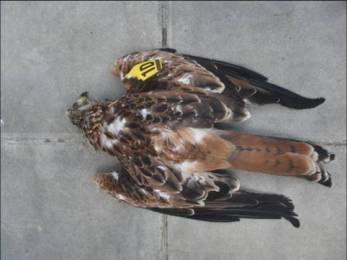
A red kite recently discovered in Vartry Reservoir, Roundwood, Co. Wicklow has been confirmed as poisoned. The bird, identified as Blue Red 42 – an Irish bred kite, was reported by a concerned dog walker to Birdwatch Ireland who informed the local National Parks and Wildlife Service staff. An investigation into the matter was immediately begun.

A National Parks and Wildlife Service Ranger responded to the incident and located the carcass which lay only a few hundred metres from residential houses and a local pre-school. The bird had a mouth and crop full of fresh food, indicating that cause of death was most likely poisoning.

The Vartry Reservoir is used for recreational walking and angling and provides drinking water to the southern suburbs of Dublin.

Minister Deenihan said “The Red Kite is a magnificent bird of prey and is protected by law. I know every effort is being made to find the culprit in this incident, and I would call on any person with any information about this matter to contact the National Parks and Wildlife Service of my Department or An Garda Siochána. The use of this type of poison is strictly limited to the eradication of mice and rats, and should at no time be used in the reckless way it was.”

Tests were immediately ordered under the bird of prey post-mortem protocol, a scheme operated by the National Parks & Wildlife Service, the Regional Veterinary Labs (Department of Agriculture, Food and Marine) and the State Laboratory (Department of Finance). Within 48 hours thanks to the experts within the Regional Veterinary Lab and the State Laboratory, both located at Celbridge, the bird was confirmed as having been poisoned by alphachloralose. The legal use of alphachloralose is restricted to the control of rats and mice. Furthermore the stomach contents of the red kite indicate that the poison was placed on meat bait, a practice now banned, largely for the protection of birds of prey. Searches of the area for further casualties or poisoned baits and door to door enquires were conducted by National Parks and Wildlife Service staff and local Gardaí.

The kite was a wild-bred Wicklow kite from 2012, only 14 months old whose parents were originally brought over from Wales in 2008. The landowner on whose land the kite was born is very disappointed to hear it has been found dead. Red Kites have only recently made their way as far north as Roundwood and it will be disappointing for many of the locals that had been enjoying their presence to hear of the poisoning.

Dr Marc Ruddock, Red Kite Project Manager, for the Golden Eagle Trust said, “This is the height of recklessness and it is imperative that communities and individuals take responsibility for getting the people who are still laying poison to stop immediately. The costs are high for Irish wildlife and the potential human consequences of this incident don’t bear thinking about!” Dr Ruddock, urged people to report any information to National Parks & Wildlife Service (NPWS) or An Garda Siochana and also report poisoning to their local Department of Agriculture office.

The National Parks and Wildlife Service in Wicklow welcomes any information on this case and the use of illegal poisons generally. You can contact the Wicklow Regional Office in Laragh on 0404-45800 or email wmnp@environ.ie The Department of Agriculture can also be contacted about poisons at the Dublin Office on 01 6072000 or email info@agriculture.gov.ie

The Irish Red Kite Reintroduction Project is part of an All-Ireland effort to restore red kites. These were formerly extinct in Ireland. The Golden Eagle Trust (www.goldeneagle.ie), NPWS and Welsh Kite Trust (www.welshkitetrust.org) have collected (from Wales) and released 120 red kites in Co. Wicklow between 2007 and 2011 and 39 red kites in Co. Dublin in 2011. The Royal Society for the Protection of Birds (RSPB) www.rspb.org.uk released 80 red kites in Co. Down between 2008 and 2010. There are now 25-30 pairs of red kites breeding in Co. Wicklow and 10-15 pairs breeding in Co. Down. The Irish Red Kite Project is a partnership with the Welsh Kite Trust and National Parks & Wildlife Service.

RPS footnote: Well done to the lab guys who were able to confirm poisoning within 48 hours of the carcass being submitted, enabling important follow-up searches to take place. This quick turn-around is in stark contrast to the situation in Northern Ireland where long delays for poisoning results are hampering investigations.

The untouchables

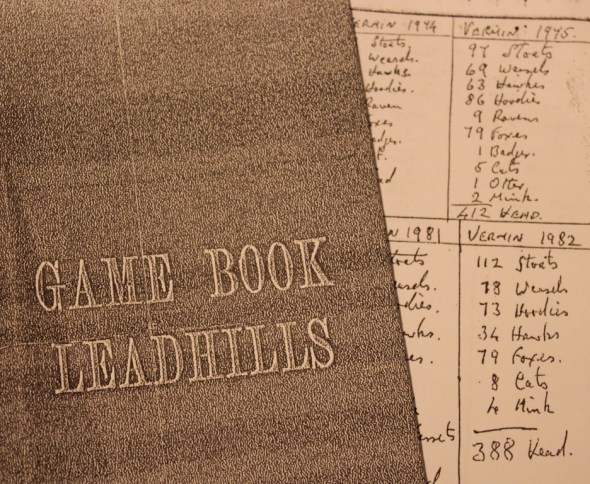
Last month we blogged about getting our hands on the Leadhills Estate Game Book and our interest in the lists of killed ‘vermin’ dating over several decades (see here). These ‘vermin’ lists include the usual species that are typically referred to as ‘vermin’ by the game-shooting industry: species such as foxes, stoats, weasels and crows. However, also included on these ‘vermin’ lists are supposedly protected species such as birds of prey, ravens, otters and badgers. We said we’d blog about the lists in more detail when we had more time.

Leadhills game book vermin lists

Since then an independent academic has contacted us to ask whether we’d consider allowing access to the documents so the data could be analysed, in combination with other data sources, to provide a ~50 year dossier of alleged illegal raptor persecution incidents recorded at Leadhills Estate, stretching from the 1970s right up to the present day. These results would be written up as a peer-reviewed paper in a scientific journal. We think that such a paper would hold much more gravitas than a simple analysis of a sub-set of those data written up for this blog so we have agreed to pass the information to the academic. We look forward to seeing the results in due course.

So as not to steal the academic’s thunder we won’t be writing in detail about the contents, but we did want to share one startling statistic.

We looked at the number of killed ‘hawks’ listed in the Leadhills Estate Game Book, just between the years 1980-1987. The vermin lists in the Game Book stretch well beyond these years but we selected this particular period because we wanted to compare the figures with the RSPB’s published figures for all of Scotland during this period (the RSPB data were published in McMillan’s 2011 paper – here).

Here’s what we found:

RSPB: Number of illegally killed raptors recorded for the whole of Scotland between 1980 and 1987 = 91 birds.

Leadhills Estate Game Book: Number of illegally killed raptors recorded on Leadhills Estate between 1980 and 1987 = 383 birds.

The difference between these two figures gives a very clear illustration of a situation that conservationists have been arguing for decades: that is, the ‘official’ recorded figures of illegally-killed raptors that are published each year by the RSPB are just the tip of a bloody great big massive iceberg. Just on this one estate (Leadhills), more than four times as many raptors were recorded illegally killed during this seven-year period than those officially reported throughout the whole of Scotland. That’s just one estate. Think what these figures would look like if we had access to the vermin lists of other estates across Scotland!

Now, there’ll be some in the game-shooting industry who will argue that raking over historical persecution records dating back 30 years is irrelevant. They’ll claim that although persecution was common practice several decades ago, things have now changed for the better and it’s only the odd ‘rogue’ estate that are still at it. This, of course, is absolute nonsense. Anybody who bothers to read through the pages of this blog will know that that is simply not a true statement. Sure, some estates have since got their acts together and are now supporting healthy raptor populations on their land (e.g. see Atholl Estate in McMillan’s 2011 paper above) but these estates seem to be exceptional: there are many, many other estates that are still, even to this day, systematically and illegally persecuting raptors and many of them seem to have a curious immunity to prosecution.

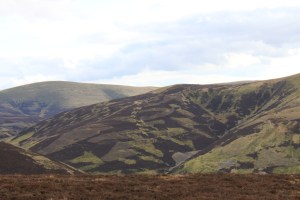
leadhills estateLeadhills Estate has been at the centre of allegations of wildlife crime for a very long time. The list of confirmed reported incidents dating from 2003 to 2011 makes for shocking reading (see here). Of these 41 confirmed incidents, only a couple have resulted in a prosecution and a conviction.
Earlier this year we reported the discovery of a substantial illegal stash of poisoned baits that was reportedly found on the estate (see here). Unsurprisingly, six months later we’re still waiting for Police Scotland to issue a statement.

What was particularly interesting about this incident was the reaction of the Scottish landowners’ organisation, Scottish Land and Estates. They refused to discuss the incident, citing an ‘on-going police investigation’ (how very convenient – this excuse relieves them of having to comment on any alleged persecution incident that never gets resolved – i.e. most of them). They also wrote to the Environment Minister and posted an article on their website complaining about the alleged incident being reported on this blog (see here). They gave an impression of being more outraged by the reporting of the incident than they were of the alleged discovery of a big stash of deadly poisoned baits on a Scottish sporting estate.

Now, compare that reaction to their response to the conviction of gamekeeper Peter Bell earlier this year. Bell was convicted of four offences including the poisoning of a buzzard on the Glasserton and Physgill Estates. Immediately following his conviction, Scottish Land and Estates issued a statement to say that Glasserton had been booted out of their organisation (see here). So why didn’t SLE issue a similarly strong statement when the poisoned baits had allegedly been found at Leadhills? They could argue that nothing is proven until a conviction has been secured, as in the Glasserton case. But if that is their argument, then why didn’t they distance themselves from Leadhills Estate when a Leadhills Estate gamekeeper (Lewis Whitham) was convicted of laying a poisoned bait in 2010 (see here)? Why is Leadhills Estate, with its long, long, long history of alleged wildlife crime, treated so differently to an estate like Glasserton, which in relative terms barely registers on the persecution radar? Back in June we asked SLE to provide some transparency about their relationship with Leadhills Estate (see here). They still haven’t.

There may be some who will argue that things are about to change at Leadhills Estate with the shooting lease now up for sale; the sales document itself makes for an interesting read – note the reason given for the current tenants’ departure and the fate of the gamekeepers currently employed on Leadhills Estate: Leadhills brochure 2013

Yes, there may well be a change in the tenancy but will that make any difference? There have been numerous shooting tenants at Leadhills Estate over the years and yet, if the available data are to be believed, the background level of alleged persecution has remained constant.

The raptor killers, whoever they are, appear to be untouchable.

Red kite poisoned N Yorkshire: police appeal 11 months later

North Yorkshire Police are appealing for information 11 months after a red kite was found poisoned in Tadcaster. The RSPB has also put up a £1,000 reward for information leading to an arrest and charge.

The dead bird (a three-year old believed to have been part of a breeding pair) was discovered by a member of the public at Toulston Polo Ground in October 2012. Toxicology results have revealed the bird had been poisoned with Carbofuran.

On the face of it, this looks like another farcical mishandling of a raptor persecution crime by the police, with an exceptionally long delay between the discovery of the victim and an appeal for information. However, rumours from colleagues in Yorkshire suggest that the initial testing (post-mortem) was not straightforward, leading to a prolonged delay. It is also rumoured that the bird was eventually submitted for toxicology analysis under a private submission co-funded by the Yorkshire Kite Group and the RSPB, leading to the detection of the banned poison Carbofuran.

The bird is believed to be the 20th poisoned red kite reported in North Yorkshire since 2000.

North Yorkshire police press release here

5th suspected red kite poisoning in Northern Ireland this year

Y1D2013Last week we blogged about the growing concern of suspected red kite poisonings in Northern Ireland, following the discovery of a fourth dead bird in County Down this year (see here). Incredibly, conservationists had not been able to confirm the poisonings as they were still waiting for toxicology results from the lab – from as far back as January!

This week brings news of a 5th dead kite, this time found in the Cairncastle area of County Antrim and also suspected to have been poisoned. It was found by walkers on Sunday 18th August.

This bird (Yellow 1D) was born in May this year and was the offspring of one of the poisoned adults found in County Down.

The RSPB and the Police Service of Northern Ireland (PSNI) are appealing for information. Adam McClure, the RSPB’s Red Kite Officer in Northern Ireland said: “While we can’t say for certain until we have the results of the post-mortem, we strongly suspect that this bird, and potentially some of the others, has fallen victim to poisoning. All birds of prey are protected under the law, but unfortunately this doesn’t mean they are safe from poison. In some cases they are deliberately targeted as some people incorrectly see them as a threat to livestock or game birds. They are also vulnerable to poisoned bait left out with the intention of controlling foxes and crows. However, this is an illegal practice as it is indiscriminate and can affect not only scavenging birds like red kites but also pets, livestock and humans“.

Anyone with information about these suspected poisonings is urged to call PSNI: 0845 600 8000 or contact Crimestoppers anonymously: 0800 555 111.

Dead buzzard in Scottish Borders shot AND poisoned

Back in mid-July we blogged about a dead buzzard that had been found near Heriot in the Scottish Borders – it had been shot, but the precise cause of death was not known (see here).

Fast forward to August and it has now been revealed the buzzard had also been poisoned and that this was the cause of death, according to the BBC (see here). The poison used has not been named.

Enormous credit, once again, to the local Police Wildlife Crime Officer Hannah Medley for pursuing this case and also for publicising the findings in the media. Credit also to the lab folk at SASA for managing to detect poison in what had previously been described as a badly decomposed carcass.

This confirmed poisoning now takes the number of known (reported) poisonings in Scotland this year above the published figure from last year, so hopefully we will no longer have to read the ridiculous claims from the usual suspects that ‘poisoning cases are significantly declining’. The facts show that they are doing nothing of the sort. How ironic in this, the so-called Year of Natural Scotland.

Unfortunately the public haven’t been allowed to see this year’s on-going tally as yet – we know of several poisoned birds that have not yet been reported in the media, even though the birds were poisoned much earlier in the year. We’ll have more to say about these cases later in September and we’ll be asking the usual questions of a particular Police Scotland division about why they’ve kept these poisonings a secret for so long.

Poisoned peregrine rescued in Northern Ireland

A farmer, an RSPB warden, a politician and a falconer/gamekeeper have joined forces in Northern Ireland this week to rescue a stricken peregrine falcon believed to have been poisoned.

The bird was found by a farmer in a field at Churchill, Derrygonnelly, County Fermanagh. The farmer contacted an RSPB warden who collected the bird and passed her over to Stormont politician Jim Wells, who also just happens to be a peregrine expert and Chairman of the Northern Ireland Raptor Study Group.

Jim immediately recognised the symptoms of Alphachloralose poisoning (it thins the blood and causes death by hypothermia) and so he whacked up the car heater as he drove the victim towards Lisburn. Once there, the peregrine was passed to registered falconer/gamekeeper Alan Coates.The bird was put in an incubator and given a saline solution and appears to be making good progress, although it is still early days. She remains under Alan’s care and is currently enjoying strips of pheasant breast!

Suspected red kite poisonings: 4 in Northern Ireland this year alone

_69410526_deadkiteConcern is growing over the number of suspected red kite poisonings in Northern Ireland, following the discovery of a 4th bird last week in Castlewellan, County Down.

The birds were part of a reintroduction project, initiated by the RSPB in 2008 after persecution in the 18th century had caused their extinction. This reintroduction project has so far resulted in a small breeding population and this year it is believed seven pairs managed to successfully raise young. Three of the four birds found dead this year were breeding adults.

What is especially surprising, and shocking, about these deaths is that the RSPB do not yet know whether poisoning has been confirmed. Why not? Because they’re still waiting to receive the toxicology results from the lab…..one of these dates back to early January!

These toxicology results are crucial for understanding what’s going on in Castlewellan – we have been informed that three of the birds were picked up within the same valley – an area of approximately 1km2 – if the birds were poisoned, which seems likely, the team needs to know whether this was as a result of secondary poisoning (e.g. by eating rodents that have been poisoned with rodenticides) or whether the birds were deliberately and directly targeted with illegal poisons (such as Carbofuran). Without this information it is very difficult for the team to address the problem with the appropriate action.

The problem in Northern Ireland is not just limited to County Down –  watch out for a press release next week concerning another red kite victim elsewhere in the country…

BBC news article here