Ross-shire Massacre: two months on

It’s been two months since the massacre of 22 birds of prey was first uncovered near Conon Bridge in Ross-shire.

We know that 12 of the victims were poisoned (nine red kites and three buzzards) but there has been a complete lack of information about the other seven red kites and three buzzards.

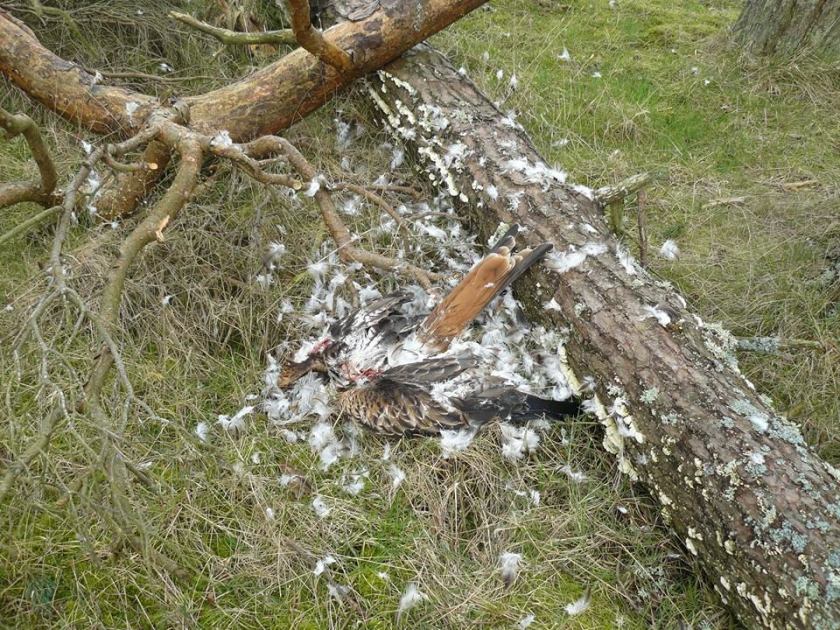
RK5

Although it is known that some sort of poison was involved,  there hasn’t been any information about the type(s) of poison used. The police and the Environment Minister have both said this information hasn’t been released for ‘operational reasons’. This lack of information has led to a great deal of speculation, even from inside the Parliamentary Chamber, where one MSP suggested the whole incident might have been ‘an awful accident’ – perhaps from, he suggested, unintentionally-contaminated meat at the Tollie Red Kite feeding station.

Whilst it is perhaps understandable that, in some circumstances and for a limited period, the specific type of poison is not revealed to the public, there is no reason whatsoever why the police can’t confirm whether the poison(s) used was a banned pesticide (as is common in most raptor poisoning incidents in Scotland), without having to actually name it specifically. By withholding this information, the police and the government are allowing this incident to be dismissed as a possible inadvertent/unintentional poisoning when actually it is anything but.

So, two months on and it’s all gone quiet. Six weeks ago the police were surprisingly willing to allow their official searches of various properties in the Conon Bridge area to be photographed and publicised in the media – we counted at least five different photographs depicting police officers or police vehicles at the scene of the crime – that level of media exposure of an investigation is relatively rare, but perhaps it was an attempt to demonstrate that the investigation was being taken seriously, in response to the huge outpouring of public anger and demands for action.

It’s probably obvious to most of us who follow these crimes that it is highly unlikely, two months on, that anyone will be prosecuted for this offence. Just like the majority of these crimes, the weeks will turn into months and then into years and we’ll hear nothing more about it. Just look at any of the high-profile incidents of the last few years – they all follow the same pattern – e.g. see here.

The Ross-shire Massacre was different in some respects, in that the corpses were discovered over a period of five weeks and each discovery led to a new press release, which led to a steady rise of public fury. That fury led to an unprecedented public demonstration in Inverness town centre, as well as an influx of public donations towards a reward fund for information leading to the successful prosecution of the poisoner(s).

That reward currently stands at £27,423. Of that total, £10,423 came from 217 members of the public. RSPB Scotland, who set up the donations website, told us that if the reward wasn’t claimed it would be put towards the work of their wildlife crime investigations team in Scotland. It seems to us that, two months on, the reward is unlikely to be claimed (because a prosecution is so unlikely) and so some of us that donated might want to ensure our money is put to good use now, instead of it languishing in an account for three years while the police claim they’re still working on a ‘live investigation’. Ten and a half grand is a lot of money and could be used to buy all sorts of equipment that might just lead to the prosecution of another raptor killer somewhere else in Scotland.

If this is your view (and it’s certainly ours) and you’d prefer your donation to be made immediately available to the RSPB’s Investigations Team, we’d recommend you contact the Director of RSPB Scotland, Stuart Housden, and tell him (don’t forget to mention how much you donated). His email address: stuart.housden@rspb.org.uk

Previous blogs on the Ross-shire Massacre here.

Liam McArthur’s parliamentary questions answered (raptor crime in Leadhills area)

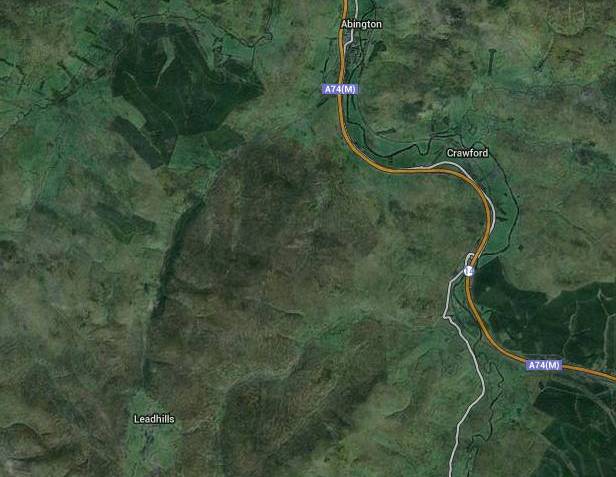
Liam McArthur MSPLast month, Liam McArthur MSP posed a series of parliamentary questions following our report on the poisoned peregrine found in the Leadhills area of South Lanarkshire (see here).

His four questions have now been answered; two by the Cabinet Secretary for Justice, Kenny MacAskill, and two by Environment Minister Paul Wheelhouse:

Question S4W-20745: Liam McArthur, Orkney Islands, Scottish Liberal Democrats, Date Lodged: 15/04/2014

To ask the Scottish Government what steps Police Scotland is taking to ensure that its staff are aware of their responsibilities regarding the protection of protected species.

Answered by Kenny MacAskill (15/05/2014):

The training of wildlife crime officers is a matter solely for the Chief Constable. It is not appropriate for Scottish Ministers to seek to intervene on operational policing matters.

I can advise however that since Police Scotland came into being on 1 April 2013, there have been significant changes to the structure and training for wildlife crime officers.

The strategic lead for wildlife crime which sits in the Specialist Crime Division is held by the Assistant Chief Constable. A Detective Chief Superintendent holds the portfolio lead and the post provides essential direction and governance around strategic issues relating to wildlife crime prevention and investigation.

A full time national Wildlife Crime Co-ordinator at Detective Sergeant level provides engagement with national issues relating to coordination, policy, performance and training, and supports the Detective Chief Superintendent.

In each of the 14 territorial divisions there are wildlife crime liaison officers who are supported by a Superintendent (or above). Wildlife crime officer posts can be either full or part-time and deal with crime prevention and investigation when required for operational policing issues.

It is important to highlight that the investigation of wildlife crime is not the exclusive preserve of dedicated staff, and a variety of investigative and intelligence resources and tactics are brought to bear on such matters, from local and national policing.

Our comment: This is basically a cut and paste response from the response he’s just given to Claire Baker MSP. We keep seeing this statement: “It is not appropriate for Scottish Ministers to seek to intervene on operational policing matters”, but hang on a minute, didn’t the Environment Minister ‘seek to intervene’ only ten months ago when he instructed the Lord Advocate to have a word with COPFS and Police Scotland ‘to ensure law enforcement utilises all investigative tools at their disposal in the fight against wildlife crime’? (see here). What’s that if it isn’t an intervention?

Question S4W-20746: Liam McArthur, Orkney Islands, Scottish Liberal Democrats, Date Lodged: 15/04/2014

To ask the Scottish Government whether it will hold an inquiry into reports that Police Scotland told a member of the public that the poisoning of a peregrine falcon in the Leadhills area was not a police matter.

Answered by Kenny MacAskill (15/05/2014):

Police Scotland is committed to investigating wildlife crime and have confirmed that on this occasion well established protocols and processes were adhered to in order to allow the bird to be recovered successfully. As a result of this, and the subsequent analysis carried out by Science and Advice for Scottish Agriculture identified that the bird had been poisoned, Police Scotland is now working in cooperation with both RSPB and National Wildlife Crime Unit to fully investigate this crime.

In any given case, police call handlers must consider the information they are given at the time of the call and not all reported incidents may be crimes. Police Scotland has also confirmed that no official complaint has been received from the reporter of the original incident.

Our comment: The police call handler told the member of the public (who was reporting this dead peregrine that had been found in suspicious circumstances in an area notorious for raptor crime) that it wasn’t a police matter. That is a fact. The police response was not in adherence with ‘well established protocols and processes’, as Mr MacAskill claims, unless those protocols and processes include ignoring a suspected wildlife crime. The only reason this poisoned peregrine was recovered successfully was because the member of the public bothered to call the RSPB, who then attended and collected the corpse. If the member of the public had not bothered to call the RSPB, this poisoned bird would not have been picked up nor recorded in the wildlife crime stats. That is also a fact. Police Scotland screwed up on this one, and rather than admit it and ensure they have procedures in place to stop it happening again, they are claiming success. That’s not very impressive. And they wonder why the public is losing (has already lost?) confidence in their ability to cope with wildlife crime?!

Question S4W-20747: Liam McArthur, Orkney Islands, Scottish Liberal Democrats, Date Lodged: 15/04/2014

To ask the Scottish Government what steps it is taking to combat illegal raptor persecution in the Leadhills area.

Answered by Paul Wheelhouse (12/05/2014):

The Leadhills area has been identified as a poisoning ‘hotspot’ in the maps that are published annually by the Scottish Partnership for Action Against Wildlife Crime. There have also been incidents in the area involving illegal shooting of raptors.

Operational policing and the targeting of enforcement activity in any specific area is a matter solely for Police Scotland.

The Scottish Government works closely with the police, conservation groups and landowners through the Partnership for Action Against Wildlife Crime (PAW) Scotland. The PAW Scotland Raptor Group has established a short-life working group tasked with developing a clear message that raptor persecution must stop now. The message will have the explicit backing of all PAW partners and be aimed in particular at those areas where raptor persecution is most persistent.

See also my response to S4W-20748 on 12 May 2014 which sets out the additional steps being taken by the Scottish Government and partners to combat illegal raptor persecution.

Our comments: Oh brilliant, here comes the PAW Raptor Scotland Group to save the day, once they’ve decided how to ‘develop a clear message that raptor persecution must stop now’. Is Wheelhouse really so stupid? The PAW Scotland Raptor Group has been established since 2009 (formerly called the Scottish Raptor Persecution Priority Delivery Group). They’ve had five (yes, five) years to develop a clear message that raptor persecution must stop! Why the hell do they have to form a ‘working group’ to come up with a few lines?? It’s simple, isn’t it? STOP ILLEGALLY PERSECUTING RAPTORS NOW. There, that’ll do it. Although perhaps when you realise which organisations are represented on this group (see here) it’ll become apparent why they’ve achieved so little in so long. We’ve been particularly scathing of this group before (see here) and we’ve seen no reason to change that view.

Question S4W-20748: Liam McArthur, Orkney Islands, Scottish Liberal Democrats, Date Lodged: 15/04/2014

To ask the Scottish Government whether there is sufficient evidence to assess the effectiveness of the new enforcement measures to tackle raptor persecution announced by the Minister for Environment and Climate Change on 1 July 2013.

Answered by Paul Wheelhouse (09/05/2014):

There is not yet sufficient evidence to assess the effectiveness of the new measures announced on 1 July 2013. A report on the review of penalties is due by the end of the year and the changes to the general licences will be fully implemented by Scottish Natural Heritage over the next few months. The use by the police of the full range of investigative techniques in raptor persecution cases is an operational matter, however it is unlikely that results would be seen less than 12 months after the announcement of new measures.

Our comment: It’s becoming more and more apparent that Wheelhouse won’t be pinned down to give a time scale for how long he’s prepared to wait to see whether these new measures have any effect. Is he thinking in terms of months or years? A lot will probably depend on the number of raptor crimes that are uncovered during the rest of this year, and particularly, the public’s response to those crimes. We must maintain this pressure on the government to act.

Well done again to MSPs Claire Baker and Liam McArthur for keeping these issues at the forefront of parliamentary business.

Peregrine shot in Devon as this year’s tally continues to rise

Perg shot seaton Devon May 2014A critically-injured peregrine was found at Seaton Beach in Devon on Bank Holiday Monday. The bird, soaked and unable to fly, was found by members of the public.

It was taken to a vets but had to be euthanized. Its injuries were consistent with a gunshot wound.

The police quickly issued an appeal for information (see here) and local birder Steve Waite has written about the incident on his blog (see here).

So here we are, another month, another reported raptor persecution crime to add to the year’s growing death toll:

Jan 2014: Shot buzzard, Norfolk.

Jan 2014: Dead bird (species unknown) & poisoned bait, South Lanarkshire.

Feb 2014: Shot buzzard, North Yorkshire.

Feb 2014: Shot buzzard, Norfolk.

Feb 2014: Shot sparrowhawk, Norfolk.

Feb 2014: Spring-trapped buzzard, West Yorkshire.

Feb 2014: Poisoned peregrine, South Lanarkshire.

Mar 2014: Shot peregrine, Dorset.

Mar-April 2014: Poisoned red kites (x 16) & buzzards (x 6), Ross-shire.

April 2014: Man arrested for alleged attempted raptor trapping, Aberdeenshire.

April 2014: Shot buzzard, North Yorkshire.

April 2014: Shot red kite, Northamptonshire.

April 2014: White-tailed eagle ‘disappears’ in suspicious circumstances, Aberdeenshire.

April 2014: Peregrine ‘illegally killed’, Stirlingshire.

May 2014: Shot peregrine, Devon.

Meanwhile, over in Northern Ireland a wildlife crime summit has learned that 90 raptors have been found poisoned there since 2006 – see here.

What we learned from today’s Parliamentary debate on raptor persecution

ScottishParliamentChamberEarlier today there was a debate in the Scottish Parliamentary Chamber about eradicating raptor persecution from Scotland. The debate stemmed from a motion lodged by Environment Minister Paul Wheelhouse (see here for details of that motion and several suggested amendments).

We very much welcome the Environment Minister’s action of bringing this topic to the attention of Parliament, although given the recent foul catalogue of current crimes against raptors, and the enormous public response to these on-going crimes, he had to be seen to be doing something.

The debate lasted for an hour and twenty minutes, beginning with an opening address from the Minister during which he expressed his “anger, revulsion and utter frustration” that these crimes continue in 21st Century Scotland. He ran through a list of previous measures brought in since 2007, some of which are still to be fully implemented. He said he understood the calls from some quarters for further measures to be introduced now, but insisted that more time was needed to allow these measures to take effect. Here’s one quote that we’ll be reminding him of in due course when we see the next inevitable incident, and the next, and the next:

If and when we judge it necessary, I am committed to taking further action. If that involves licensing certain types of businesses, then we will do so“.

He’s made this commitment before, on many occasions, and there are only so many times that he can make such a commitment before he will be forced to actually follow up his words with action.

During his opening speech he was questioned by Liam McArthur MSP about the alleged police response to the poisoned peregrine incident at Leadhills (see here for info on that incident). The Minister’s response:

We do believe proper procedures were followed“.

Really? How interesting. We look forward to reading the full written response that is now due about this incident following the emails that were sent to him by RPS blog readers in early April. [Incidentally, we haven’t yet received a response – if anyone else has, we’d be interested in reading it]. We’ll also be paying close attention to his written answers to the parliamentary questions that were raised about this issue by Claire Baker MSP and Liam McArthur MSP.

One significant point he made was that proceedings have commenced in the first vicarious liability case at Stranraer Sheriff Court. We believe this case relates to the Glasserton & Physgill Estates buzzard poisoning case in June last year, where gamekeeper and SGA member Peter Bell was convicted of several poisoning offences (see here). The news that this vicarious liability prosecution is going ahead is excellent news and we await the outcome with great interest.

There were a number of other MSPs who spoke during this debate, with many of them being strongly supportive of the consultation to increase the SSPCA’s investigatory powers, and a number of them expressing concerns about the ability of Police Scotland to prioritise wildlife crime.  Dennis Robertson MSP demonstrated a refreshingly sceptical view of the SGA and their claimed attempts to eradicate raptor persecution.

Talking of the SGA, their parliamentary cheerleader, Jamie McGrigor MSP, gave a rousing but wholly irrelevant speech about the SGA’s Year of the Wader project, and mentioned the SGA’s briefing document for today’s debate in which they apparently call for an investigation into the cause of wildlife crime, i.e. the old ‘too many’ raptors routine. Perhaps they mis-read the title of today’s debate as ‘Eradicating Raptors from Scotland’. At one point, Mr McGrigor announced:

Wildlife crime is being perpetrated by a very few individuals, rather than any sector of the Scottish countryside“.

Oh dear. He clearly needs to go back and look at the statistics of where the majority of raptor persecution incidents take place [on land managed for game-shooting] and the occupation/interests of the majority of those convicted for these crimes [gamekeepers].

Mr McGrigor also gave a surprising commentary on the possible cause of the Ross-shire Massacre, in which he suggested that the “hand-fed” (?!!) red kites at Tollie Red Kite feeding station may have been fed contaminated food. He did admit this was based purely on rumour but we were surprised that such speculation on a live police investigation would be allowed during a parliamentary debate.

The Environment Minister ended the debate by saying that he was looking into a poisons amnesty. In our view, a total waste of time and effort – it’s been done before with little, if any, effect. Besides, some of these poisons (e.g. Carbofuran) have been banned since 2001 – that’s 13 years ago – how many more chances are these criminals going to be given to comply with the law? The one saving grace of an amnesty is the potential for anyone found to be in possession of poisons AFTER the amnesty has passed would then face a more severe penalty. That’d be good, if only we could believe that a severe penalty would be handed down. The Minister did mention that there is currently an academic review being undertaken to review the penalties for wildlife crimes and the authors of that review are expected to report in December this year.

Video footage of the debate is available here for about a month [starts at 1:29; ends at 2:49].

The official transcript of the debate can be read here: Minutes of debate: eradicating raptor persecution 6 May 2014

Ross-shire Massacre: frustration grows at lack of information

RK4The investigation into the mass poisoning of 22 birds of prey near Conon Bridge, Ross-shire in March is apparently continuing, although the police have been reluctant to provide much information since the well-publicised raids they carried out at various properties almost a month ago. The only news to emerge has been the ever-increasing death toll, currently standing at 16 red kites and 6 buzzards.

They’ve said that 12 of the dead birds have been confirmed as poisoned, but that information was given weeks ago – they still haven’t confirmed whether the other 10 birds were poisoned.

And nor have they released information about the poison(s) used to kill these birds. The purpose of withholding this information is not known – the police will probably say it’s a tactical approach, but the poisoner will know what was used and the poison itself will have been hidden away weeks ago. Even if a stash is now found, the chances of linking it directly to the Conon Bridge poisonings are zero because of the level of evidence required to secure a conviction. For example, unless the poisoner was seen placing the poisoned baits, and the birds were seen eating those poisoned baits, a strong evidential link cannot be established. The only possible conviction would be for a ‘possession’ offence, unless the poisoner actually admits to placing the poisoned baits, and that is hardly likely.

What’s frustrating is that here, yet again, we have an incident where deadly toxic poison(s) has been set out in the countryside, putting at risk any animal and human that comes in to contact with it, and yet the police don’t think the general public should be told what the poison is.

This lack of public information has even been picked up by a global listserv used by the health community. The following appeared on the listserv the day after the BBC announced that the current death toll had reached 22 birds:

The issue of this many birds of prey or carrion being found dead indeed smacks of a toxin. However, multiple articles all say the birds were poisoned and they are investigating. Their investigation has included DNA testing of meat to determine what type of meat was used. These investigators say they need to get insecticide tests performed, yet not a single article mentioned if that has been done or what the outcome was, or if the test was pending.

While this number of birds being found dead is of concern, and the number of avian deaths seems to be climbing, the lack of testing, and/or the lack of accurate reporting remains of equal or greater concern“.

Meanwhile, dog walkers in the area are now avoiding their usual routes for fear of being exposed to poison, according to an STV report (see here).

Also in this article is another interview with farmer Ewan MacDonald, whose farm properties were searched by police last month. Mr MacDonald continues to call for a ‘working group’ comprising police and local farmers “to find out what has caused this devastation“.

Ironically, at the end of the article is an interview with Environment Minister Paul Wheelhouse on the launch of a revised guide to the use of forensics in tackling wildlife crime. This latest edition is a very welcome tool, especially if it helps investigators to preserve crucial forensic evidence from the crime scene. But the irony comes from the statement made by the reporter at the end of the video:

“The message they’re [wildlife groups] getting today is that Scotland is a world leader in using science to bring those responsible [for wildlife crime] to justice“.

Er, no, Scotland is most definitely not a world leader in bringing wildlife criminals to justice, as evidenced by an embarrassing 7.3 conviction rate for raptor crime (see here) and 32 dead or ‘missing’ eagles over an 8-year period with zero prosecutions (see here). Scotland could be a world leader, if policing and enforcement measures matched the skills and expertise of the forensic scientists, but we’re still a long way from being able to claim anything of the sort.

Previous blogs on the Ross-shire Massacre here

Download the new Wildlife Crime Forensics Guide: Wildlife Crime Forensic Guide v2 2014

32 eagles, 8 years, 0 prosecutions

In April 2012, we wrote an article called ’21 eagles, 6 years, 0 prosecutions’ (see here).

In September 2012, we updated it and called it ’26 eagles, 6 years, 0 prosecutions’ (see here).

In July 2013 we updated it again. This time, ’27 eagles, 7 years, 0 prosecutions’ (see here).

In December 2013 we had to do another update: ‘31 eagles, 7 years, 0 prosecutions’ (see here).

It’s now April 2014 and another ‘lost’ eagle means another update: ’32 eagles, 8 years, 0 prosecutions’.

28 of these 32 eagles have either been found dead or have ‘disappeared’ on Scottish grouse moors.

This article should provide some context the next time you hear someone (usually from the game-shooting industry or from the government) say that “We’re making real progress in the fight against raptor persecution”. So much ‘progress’ in fact that 24 of these eagles have been lost in the last 4 years. As this shameful list continues to grow, the Environment Minister is still insisting that more time is needed to see whether enforcement measures are working. How many more eagles need to be added to this catalogue of horror before he decides to act?

As before, a number of eagles included in this list (8 of them, to be precise) may not be dead. However, they are included here because their satellite tags unexpectedly stopped functioning (i.e. they’d been transmitting perfectly well up until the eagles’ last known location, often a known persecution hotspot). Two further satellite-tagged eagles (‘Angus’ and ‘Tom’) are not included in this list as although their transmitters stopped functioning, there had been recognisable problems with their tags prior to the final transmissions and so the benefit of the doubt has been applied.

Many of these listed eagles from recent years have only been discovered because the eagles were being satellite-tracked. Much kudos to the dedicated teams of fieldworkers who have put in hours and hours of skilled hard work to allow this to happen. Obviously there are many other eagles out there that have not been sat-tagged and on the balance of probability will have been killed at the hands of the game-shooting industry. 32 eagles in the last 8 years is the bare minimum. The number of prosecutions (zero) is indisputable.

MAY 2006: A dead adult golden eagle was found on the Dinnet & Kinord Estate, near Ballater, Aberdeenshire. Tests revealed it had been poisoned by the illegal pesticide Carbofuran. Grampian Police launched an investigation. Seven years and 11 months later, nobody has been prosecuted.

JUNE 2006: A dead golden eagle was found on Glen Feshie Estate in the Cairngorms. Tests revealed it had been poisoned by the illegal pesticide Carbofuran. Northern Constabulary launched an investigation. Seven years and 10 months later, nobody has been prosecuted.

AUGUST 2007: A dead adult female golden eagle was found on an estate near Peebles in the Borders. She was half of the last known breeding pair of golden eagles in the region. Tests revealed she had been poisoned by the illegal pesticide Carbofuran. Lothian & Borders Police launched an investigation. Six years and 8 months later, nobody has been prosecuted.

NOVEMBER 2007: Tayside Police received a detailed tip-off that a young male white-tailed eagle (known as ‘Bird N’) had allegedly been shot on a grouse moor estate in the Angus Glens. The timing and location included in the tip-off coincided with the timing and location of the last-known radio signal of this bird. Six years and 5 months later, the bird has not been seen again. With no carcass, an investigation isn’t possible.

MAY 2008: A one year old male white-tailed eagle hatched on Mull in 2007 and known as ‘White G’ was found dead on the Glenquoich Estate in the Angus Glens. Tests revealed he had been poisoned by an unusual concoction of pesticides that included Carbofuran, Bendiocarb and Isofenphos. A police search in the area also revealed a poisoned buzzard, a baited mountain hare and 32 pieces of poisoned venison baits placed on top of fence posts on the neighbouring Glenogil Estate. Laboratory tests revealed the baited mountain hare and the 32 poisoned venison baits contained the same unusual concoction of highly toxic chemicals that had killed the white-tailed eagle, ‘White G’. Five years and 11 months later, nobody has been prosecuted.

JUNE 2009: An adult golden eagle was found dead at Glen Orchy, Argyll, close to the West Highland Way. Tests revealed it had been poisoned by the illegal pesticide Carbofuran. Strathclyde Police launched a multi-agency investigation. Three years and 3 months later, estate employee Tom McKellar pled guilty to possession of Carbofuran stored in premises at Auch Estate, Bridge of Orchy and he was fined £1,200. Four years and 10 months on, nobody has been prosecuted for poisoning the golden eagle.

JULY 2009: A two year old female golden eagle known as ‘Alma’ was found dead on the Millden Estate in the Angus Glens. Tests revealed she had been poisoned by the illegal pesticide Carbofuran. Alma was a well-known eagle  – born on the Glen Feshie Estate in 2007, she was being satellite-tracked and her movements followed by the general public on the internet. Tayside Police launched an investigation. Four years and 9 months later, nobody has been prosecuted.

AUGUST 2009: A young white-tailed eagle was found dead on Glenogil Estate in the Angus Glens. Tests revealed it had been poisoned by the illegal pesticide Carbofuran. Tayside Police was criticized in the national press for not releasing a press statement about this incident until January 2010. Four years and 8 months later, nobody has been prosecuted.

MAY 2010: #1 of three dead golden eagles found on or close to Skibo Estate, Sutherland. Tests revealed they had been poisoned; two with Carbofuran and one with Aldicarb. Northern Constabulary launched a multi-agency investigation. One year later (May 2011), Sporting Manager Dean Barr pled guilty to possession of 10.5 kg of Carbofuran stored in premises at Skibo Estate. Three years and 11 months later, nobody has been prosecuted for poisoning this eagle.

MAY 2010: #2 of three dead golden eagles found on or close to Skibo Estate, Sutherland. Tests revealed they had been poisoned; two with Carbofuran and one with Aldicarb. Northern Constabulary launched a multi-agency investigation. One year later (May 2011), Sporting Manager Dean Barr pled guilty to possession of 10.5 kg of Carbofuran stored in premises at Skibo Estate. Three years and 11 months later, nobody has been prosecuted for poisoning this eagle.

MAY 2010: #3 of three dead golden eagles found on or close to Skibo Estate, Sutherland. Tests revealed they had been poisoned; two with Carbofuran and one with Aldicarb. Northern Constabulary launched a multi-agency investigation. One year later (May 2011), Sporting Manager Dean Barr pled guilty to possession of 10.5 kg of Carbofuran stored in premises at Skibo Estate. Three years and 11 months later, nobody has been prosecuted for poisoning this eagle.

JUNE 2010: #1: Leg rings with unique identification numbers that had previously been fitted to the legs of four young golden eagles in nests across Scotland were found in the possession of gamekeeper James Rolfe, during a multi-agency investigation into alleged raptor persecution at Moy Estate, near Inverness. It is not clear how he came to be in possession of the rings. The bodies of the eagles from which the rings had been removed were not found. No further action was taken in relation to the discovery.

JUNE 2010: #2: Leg rings with unique identification numbers that had previously been fitted to the legs of four young golden eagles in nests across Scotland were found in the possession of gamekeeper James Rolfe, during a multi-agency investigation into alleged raptor persecution at Moy Estate, near Inverness. It is not clear how he came to be in possession of the rings. The bodies of the eagles from which the rings had been removed were not found. No further action was taken in relation to the discovery.

JUNE 2010: #3: Leg rings with unique identification numbers that had previously been fitted to the legs of four young golden eagles in nests across Scotland were found in the possession of gamekeeper James Rolfe, during a multi-agency investigation into alleged raptor persecution at Moy Estate, near Inverness. It is not clear how he came to be in possession of the rings. The bodies of the eagles from which the rings had been removed were not found. No further action was taken in relation to the discovery.

JUNE 2010: #4: Leg rings with unique identification numbers that had previously been fitted to the legs of four young golden eagles in nests across Scotland were found in the possession of gamekeeper James Rolfe, during a multi-agency investigation into alleged raptor persecution at Moy Estate, near Inverness. It is not clear how he came to be in possession of the rings. The bodies of the eagles from which the rings had been removed were not found. No further action was taken in relation to the discovery.

JUNE 2010: A golden eagle was found dead on Farr & Kyllachy Estate, Inverness-shire. Tests revealed it had been poisoned by the illegal pesticide Carbofuran. Northern Constabulary apparently did not search the property until July 2011. Three years and 10 months later, nobody has been prosecuted.

JUNE 2010: A white-tailed eagle was found dead on Farr & Kyllachy Estate, Inverness-shire. Tests revealed it had been poisoned by the illegal pesticide Carbofuran. Northern Constabulary apparently did not search the property until July 2011. Three years and 10 months later, nobody has been prosecuted.

DECEMBER 2010: A decomposing carcass of a white-tailed eagle was found and photographed on Logie (Lochindorb) Estate, Morayshire. It was reported to Northern Constabulary. By the time the police arrived to collect it, the carcass had disappeared. The police said they couldn’t investigate further without the body.

FEBRUARY 2011: The signal from a young satellite-tracked golden eagle ( ‘Lee’, hatched in 2010) unexpectedly stopped transmitting after a final signal from the North Angus Glens. A technical malfunction or another mysterious ‘disappearance’?

MARCH 2011: The body of a young golden eagle was discovered on North Glenbuchat Estate, Aberdeenshire. Tests revealed it had been poisoned by the illegal pesticide Carbofuran. Grampian Police launched an investigation and raided the property in May 2011. A poisoned buzzard, a poisoned bait and a shot short-eared owl were found. Three years and 1 month later, nobody has been prosecuted.

APRIL 2011: The body of a white-tailed eagle was found at the base of cliffs on Skye. The person who discovered it (a professional medic) considered it to have been freshly shot with a rifle, decapitated with a sharp implement and thrown from the cliff top. He took photographs and alerted Northern Constabulary and RSPB. There was a delay of two weeks before the now probably decomposed carcass was collected. A post-mortem was inconclusive. This incident was not made public until one year later after a tip off to this blog. Three years later, nobody has been prosecuted.

SEPTEMBER 2011: The signal from a satellite-tracked young golden eagle (‘Strathy’, hatched in 2010) unexpectedly stopped transmitting after a final signal from an Aberdeenshire grouse moor. A technical malfunction or another mysterious ‘disappearance’?

MARCH 2012: The body of a young golden eagle being tracked by satellite was discovered in Lochaber. Tests revealed it had been poisoned with the banned pesticides Aldicarb and Bendiocarb. Information about this incident was not made public until three months later. Two years and 1 month later, nobody has been prosecuted.

MARCH 2012: The signal from a satellite-tracked young golden eagle (‘Angus 26′, hatched in 2011) unexpectedly stopped transmitting after a final signal from a grouse moor in the Angus Glens. This bird’s suspiciously damaged sat tag was found in the area. Two years and 1 month later, nobody has been prosecuted.

MAY 2012: The signal from a young satellite-tracked golden eagle (#32857) unexpectedly stopped transmitting when the bird was north-east of the Cairngorms National Park. A technical malfunction or another mysterious ‘disappearance’?

MAY 2012: The dead body of a young satellite-tracked golden eagle (hatched in 2011) was discovered near a lay-by in Aboyne, Aberdeenshire. The data from its satellite tag & the injuries the bird had when found (2 broken legs) suggested it had been caught in an illegal trap on a grouse moor in the Angus Glens and then removed, under cover of darkness, to be dumped in another area where it was left to die, probably a slow and agonising death. Information on this incident was not released until almost five months later, by the RSPB. It appears the police failed to properly investigate this incident as we understand that no search warrants were issued and no vehicles were searched. One year and 11 months later, nobody has been prosecuted.

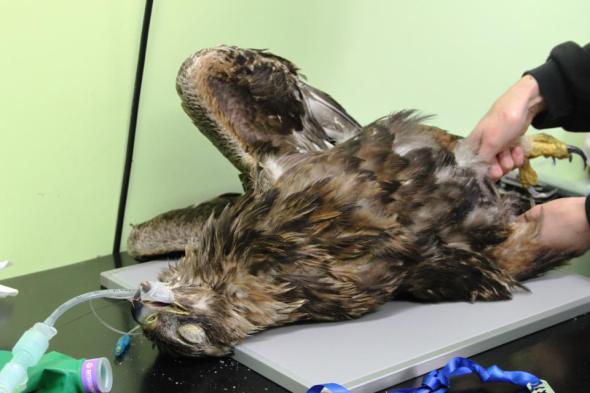
OCTOBER 2012: An adult golden eagle was found shot and critically injured on grouse moor at Buccleuch Estate, near Wanlockhead, South Lanarkshire. The bird was rescued by the SSPCA and underwent surgery but it eventually succumbed to its injuries in April 2013. One year and 6 months later, nobody has been prosecuted.

MAY 2013: The signal from a two-year-old satellite tracked golden eagle (‘Angus 33′, hatched in 2011) unexpectedly stopped transmitting after its last signal from North Glenbuchat Estate in Aberdeenshire. A technical malfunction or another mysterious ‘disappearance’?

JUNE 2013: A dead golden eagle was found under power lines on an RSPB reserve on Oronsay. This bird had been shot although it is not known whether this was the cause of death or an historical injury.

JULY 2013: The signal from a young satellite tracked golden eagle (‘Cullen’, hatched 2010) unexpectedly stopped transmitting after its last signal in Aberdeenshire. A technical malfunction or another mysterious ‘disappearance’?

DECEMBER 2013: A two year old satellite tracked golden eagle (‘Fearnan’) was found dead on a grouse moor in the Angus Glens. Tests revealed he had been poisoned with the banned pesticide Carbofuran. Four months later, we are not aware of any pending prosecutions.

APRIL 2014: The signal from a young satellite tracked white-tailed eagle (the first fledged sea eagle chick in East Scotland in ~200 years) unexpectedly stopped transmitting after its last signal from the North Glenbuchat Estate in Aberdeenshire. Police raided the property a couple of weeks later. We are not aware of any pending prosecutions.

THE UNTOUCHABLES: 32; JUSTICE: 0
Wanlock Head GE Oct 2012

Ross-shire Massacre: death toll rises to 22

The death toll in the mass poisoning at Conon Bridge, Ross-shire, has risen to 22, according to a Scottish journalist (more on that source in a later post this evening).

The current body count is 16 red kites and 6 buzzards.

So far, the police have only confirmed that 12 of the dead were poisoned. Tests apparently continue on the other ten.

The police have not yet revealed the identity of the poison(s) used, leading to some bizarre speculation such as a ‘mystery virus’, ‘contaminated meat’ and ‘accidental agricultural spillage’. We look forward to them putting an end to this speculation and revealing the name of the poison(s) that we believe will confirm that these deaths were a result of deliberate poisoning.

We also look forward to learning more about the status of the police investigation, five weeks after it began.

Previous blogs on the Ross-shire Massacre here.

RK7

Parliamentary questions asked about poisoned peregrine at Leadhills

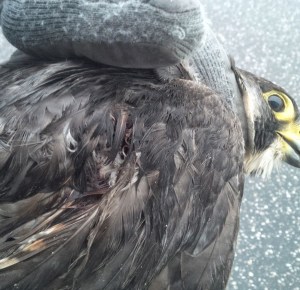
Peregrine poisoned Leadhills Feb 2014Three weeks ago we blogged about the discovery of a poisoned peregrine in the Leadhills area of South Lanarkshire, and the alleged response of Police Scotland & NWCU, who both seemed reluctant to handle the case (see here, here and here).

The authorities have refused to discuss the incident, claiming it would be inappropriate to comment on an on-going investigation. We argue that answering questions about how an initial telephone call was handled would have no impact whatsoever on any ‘investigation’ (and we don’t even believe there is an investigation, as the person who reported the dead bird has apparently been told by Police Scotland that a witness statement is not required!!!).

This stone-walling response is pretty common and we’re used to it by now. Many of us have written to the Environment Minister to demand an explanation about why the police and the NWCU allegedly ignored this reported crime but so far we’ve heard absolutely nothing in return. This silence doesn’t fill us with confidence that raptor persecution is being taken seriously.

One MSP isn’t satisfied with this official wall of silence.

Liam McArthur MSPLiam McArthur MSP, a Scottish Liberal Democrat representing the Orkney Islands (a very long way from Leadhills!!) has submitted a series of parliamentary questions about this Leadhills case, and more generally about the effectiveness of current enforcement measures to deal with raptor persecution. Good on him.

Question S4W-20745: Liam McArthur, Orkney Islands, Scottish Liberal Democrats, Date Lodged: 15/04/2014

To ask the Scottish Government what steps Police Scotland is taking to ensure that its staff are aware of their responsibilities regarding the protection of protected species. [Current Status: Expected answer date 15/5/2014].

Question S4W-20746: Liam McArthur, Orkney Islands, Scottish Liberal Democrats, Date Lodged: 15/04/2014

To ask the Scottish Government whether it will hold an inquiry into reports that Police Scotland told a member of the public that the poisoning of a peregrine falcon in the Leadhills area was not a police matter. [Current Status: Expected Answer date 15/05/2014].

Question S4W-20747: Liam McArthur, Orkney Islands, Scottish Liberal Democrats, Date Lodged: 15/04/2014

To ask the Scottish Government what steps it is taking to combat illegal raptor persecution in the Leadhills area. [Current Status: Expected Answer date 15/05/2014].

Question S4W-20748: Liam McArthur, Orkney Islands, Scottish Liberal Democrats, Date Lodged: 15/04/2014

To ask the Scottish Government whether there is sufficient evidence to assess the effectiveness of the new enforcement measures to tackle raptor persecution announced by the Minister for Environment and Climate Change on 1 July 2013. [Current Status: Expected Answer date 15/05/2014].

UPDATE: Answers to Liam McArthur’s questions have now been published – see here.

Behind the scenes with the poisons forensics team at SASA

There’s an interesting article published today by the BBC, looking at the behind-the-scenes work of the poisons forensics team in Scotland.

The government’s Science and Advice for Scottish Agriculture (SASA) team is the one that detects poisons in the carcasses of raptors (and other species) and identifies the type of poison which has killed the bird.

This is a highly-specialised field and the SASA team’s work is well-respected by both sides of the poisoning issue  – conservationists and the game-shooting industry alike. Their work forms the basis for the government’s annual ‘poisoning maps of shame’, which depict confirmed poisoning incidents (but still inexplicably exclude the locations of confirmed poisoned baits).

The BBC article can be read here.

The last sentence is interesting: “But visitors can, at least, be assured that the team of scientists here are doing all they can to help the police secure convictions in cases of raptor persecution“. Unfortunately, despite the expert toxicology results provided by SASA, very few convictions are secured against those who poison our birds. Even when SASA has managed to identify the poison, and the same poison is found in the possession of a suspect, the resulting prosecution is usually (with a handful of exceptions) for the lesser offence of ‘possession’ [of a banned poison], as opposed to the offence of actually poisoning a protected species.

The BBC article is illustrated with an image of a dead golden eagle on the post-mortem table. To date, there has not been a single conviction for the illegal poisoning (nor shooting or trapping) of an eagle in Scotland. Our current figures show 31 eagles, 7 years, 0 prosecutions (see here).

SASA ge

Ross-shire Massacre: local farmers ‘have nothing to hide’

A farmer whose properties have been raided by police as part of the investigation into the Ross-shire Massacre has given an exclusive interview to the BBC (see here).

Ewan Macdonald, on whose land several of the poisoned birds were found, is claiming that he and the local farming community have nothing to hide. The report states that the police have not found anything to link Mr Macdonald to the crimes.

RK5

Mr Macdonald runs his farms in partnership with his brother, Shaun. In 2007, Shaun Macdonald was runner-up in the NFU Scotland Farming & Conservation Award, for ‘superb conservation efforts’, sponsored by the RSPB (see here).

Mr Macdonald is calling for an action group comprising landowners, police and RSPB, ‘to investigate the killings’. He suggests that there could be an innocent explanation for the deaths, such as a virus, or somebody feeding meat to the birds of prey which they do not realise has been contaminated.

Hmm. Interestingly, a number of prominent people from within the game-shooting industry have been making almost identical claims on social media in recent days.

Although the police have not yet publicly named the poison involved, it’s not that difficult to make an educated guess as to its identity, given the speed with which these birds died. An article in the Guardian last week (here) reported that a combination of poisons had been used, and also referred to “baits”. That pretty much rules out a ‘virus’ and unintentional feeding of accidentally contaminated meat then, eh?

Meanwhile, in another region of La-La Land, there are more denials about the extent of raptor persecution in Scotland. A row has broken out following Duncan Orr-Ewing’s (RSPB Scotland) comments in Holyrood magazine about persecution levels being comparable to those of the Victorian era (see earlier blog on this here).

McAdam 1In a BBC News article (here), Doug McAdam, CEO of the landowners’ organisation Scottish Land & Estates seems to have taken on the role of the headmaster: “For Mr Orr Ewing to suggest that wildlife crime is returning to Victorian levels is both irresponsible and untrue. He ought to know better“.

Then in a quite astonishing piece of spin, he goes on to say: “Official statistics in recent years have seen, overall, a downward trend in raptor persecution – even at some points demonstrating record low levels of poisoning incidents“.

Conveniently, by using the words ‘official statistics’ and ‘overall’, he has neatly side-stepped the fact that poisoning incidents doubled in 2013, and had the ‘official statistics’ included the discovery of poisoned baits, then the 36 pre-prepared Carbofuran baits found hidden on Leadhills Estate last year would have pushed the ‘official’ figure somewhat higher.

There’s also some waffle from Adam Smith of the GWCT (Scotland), who claims that “for a variety of reasons hen harriers may not be distributed right across the habitats which are suitable for them [i.e. grouse moors], but their national recovery is clear“.

What Mr Smith conveniently ‘forgot’ to mention was that the government’s own commissioned report on hen harrier conservation (published in 2011) demonstrated unequivocally that illegal persecution was the main reason this species isn’t present on large swathes of suitable habitat (i.e. grouse moors), and oh, the results from the latest national survey (conducted in 2010) show a 20% population decline (in Scotland) from the previous survey in 2004 (see here).

And finally, there’s a quote from Des Thompson of SNH. Surely as a member of the Scottish Government’s statutory conservation agency he’d be wanting to make sure that everyone knows that the damning, copious evidence was indisputable, right? Ah…..(we can’t be bothered to type it out – read the BBC article  if you’re interested in his opinion).

For any of you who’ve had a gut-full of the on-going persecution of our raptors, the game-shooting industry’s on-going denial of any involvement, and the authorities’ on-going and almost complete failure to address the situation, you might be interested in this post on Mark Avery’s blog. Hope to see many of you on or around 12th August 2014.