Michael Johnston convicted for possession of banned poison

Michael James Johnston has been convicted at Dumfries Sheriff Court for possession of a banned poison.

Johnston, 45, of Pretoria Road, Eastriggs, Dumfriesshire, was disturbed at Dryfesdale Gate Farm in Lockerbie in April 2014. The Police were called and they found the banned poison Strychnine in his vehicle.

Strychnine is one of eight poisons banned under the Possession of Pesticides (Scotland) Order 2005. The other seven substances are Aldicarb, Alphachloralose, Aluminium phosphide,  Bendiocarb, Carbofuran, Mevinphos and Sodium cyanide. All eight poisons are known to have been used to poison wildlife. Anyone caught in possession of any of these can face fines of up to £5,000 and/or a six month custodial sentence.

At a hearing on 23rd March 2015 Johnston was fined £400.

Previous blogs on this case here and here.

Meet Henry the Hen Harrier

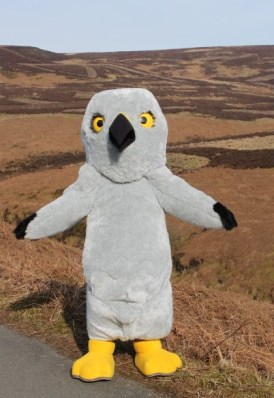
Henry Peak District grouse moor (2) - CopyMeet Henry. Henry is a 6ft-tall Hen Harrier who’s very, very lonely. He’s struggling to find a mate because most of his potential girlfriends have been bumped off on grouse moors. Henry is flying around the British Isles in search of a significant other and you can follow his progress as he posts daily photographs from his travels. He’s being accompanied by several burly minders to protect him from those who’d like to shoot, trap or poison him.

Here he is last Sunday visiting a grouse moor in the Derbyshire Peak District National Park.

Where will he be tomorrow?

You can follow his progress via his Twitter account: @HenryHenHarrier

Regular updates will also appear on this blog, on Mark Avery’s blog (here) and the Birders Against Wildlife Crime website (here).

#HaveYouSeenHenry?

Ross-shire Massacre: one year on

RK7It’s been one year since the corpses of 22 birds of prey (16 red kites and 6 buzzards) were found in a small area around Conon Bridge in the Highlands.

We know that 16 of these birds were illegally poisoned (12 red kites & 4 buzzards). Still no word on the other six victims.

Still no word on the type of poison used, although Police Scotland did eventually admit that it was an “illegally-held poisonous substance” (see here). Carbofuran is suspected by many of us (see here).

The details of this illegal mass poisoning have still been deliberately excluded from the quarterly SASA reports – the Government reports that are supposed to inform us about recent illegal poisoning crimes in Scotland.

Police Scotland still maintains that the birds “were most likely not targeted deliberately but instead were the victims of pest control measures” – even though they can’t possibly know this unless they have a suspect who has given a full confession.

We’re still waiting to hear whether MSP Dave Thompson’s request, back in November 2014, for a review of Police Scotland’s handling of this investigation will be undertaken (see here).

We’re still waiting for the thousands of pounds worth of funds, that many of us donated, to be released by Police Scotland so that RSPB Scotland can redistribute them to support the work of their investigations team (see here).

Twelve months on and still no arrests.

Twelve months on and still no charges.

Twelve months on and still no prosecution.

Twelve months on and still no conviction.

Twelve months on and still no justice.

Twelve months on and still no confidence in Police Scotland’s ability to solve this appalling crime.

Previous posts on the Ross-shire Massacre here.

Leadhills Estate confirmed as member of Scottish Land & Estates

The Leadhills (Hopetoun) Estate in south Lanarkshire has featured regularly on this blog (see here).

Since 2003, 46 confirmed incidents of wildlife crime have been discovered either on or near to the estate, but only resulting in two successful convictions (2004 – gamekeeper convicted of shooting a short-eared owl; 2009 – gamekeeper convicted of laying out a poisoned rabbit bait). Here’s the list:

2003 April: hen harrier shot [prosecution failed – inadmissible evidence]

2003 April: hen harrier eggs destroyed [prosecution failed – inadmissible evidence]

2004 May: buzzard shot [no prosecution]

2004 May: short-eared owl shot [gamekeeper convicted]

2004 June: buzzard poisoned (Carbofuran) [no prosecution]

2004 June: 4 x poisoned rabbit baits (Carbofuran) [no prosecution]

2004 June: crow poisoned (Carbofuran) [no prosecution]

2004 July: poisoned rabbit bait (Carbofuran) [no prosecution]

2004 July: poisoned rabbit bait (Carbofuran) [no prosecution]

2005 February: poisoned rabbit bait (Carbofuran) [no prosecution]

2005 April: poisoned buzzard (Carbofuran) [no prosecution]

2005 June: poisoned rabbit bait (Carbofuran) [no prosecution]

2005 June: poisoned rabbit bait (Carbofuran) [no prosecution]

2006 February: poisoned buzzard (Carbofuran) [no prosecution]

2006 March: poisoned buzzard (Carbofuran) [no prosecution]

2006 March: poisoned pigeon bait (Carbofuran) [no prosecution]

2006 April: dead buzzard (persecution method unknown) [no prosecution]

2006 May: poisoned rabbit bait (Carbofuran) [no prosecution]

2006 May: poisoned rabbit bait (Carbofuran) [no prosecution]

2006 May: poisoned egg baits (Carbofuran) [no prosecution]

2006 June: poisoned buzzard (Carbofuran) [no prosecution]

2006 June: poisoned raven (Carbofuran) [no prosecution]

2006 June: 6 x poisoned rabbit baits (Carbofuran) [no prosecution]

2006 June: poisoned egg bait (Carbofuran) [no prosecution]

2006 September: 5 x poisoned buzzards (Carbofuran) [no prosecution]

2006 September: poisoned rabbit bait (Carbofuran) [no prosecution]

2006 September: poisoned rabbit bait (Carbofuran) [no prosecution]

2007 March: poisoned buzzard (Carbofuran) [no prosecution]

2007 April: poisoned red kite (Carbofuran) [no prosecution]

2007 May: poisoned buzzard (Carbofuran) [no prosecution]

2008 October: poisoned buzzard (Carbofuran) [listed as ‘Nr Leadhills’] [no prosecution]

2008 October: poisoned rabbit bait (Carbofuran) [listed as ‘Nr Leadhills’] [no prosecution]

2008 November: 3 x poisoned ravens (Carbofuran) [listed as ‘Nr Leadhills’] [no prosecution]

2009 March: poisoned rabbit bait (Carbofuran) [no prosecution]

2009 March: poisoned raven (Carbofuran) [no prosecution]

2009 April: poisoned rabbit bait (Carbofuran) [gamekeeper convicted]

2009 April: poisoned magpie (Carbofuran) [no prosecution]

2009 April: poisoned raven (Carbofuran) [no prosecution]

2010 October: short-eared owl shot [no prosecution]

2011 March: illegally-set clam trap [no prosecution]

2011 December: buzzard shot [no prosecution]

2012 October: golden eagle shot (just over boundary with Buccleuch Estate) [no prosecution]

2013 May: shot otter found on estate [no prosecution]

2013 June: significant cache of pre-prepared poisoned baits found on estate [no prosecution]

2013 August: red kite found shot and critically-injured in Leadhills village [no prosecution]

2014 February: poisoned peregrine (Carbofuran) [‘Nr Leadhills’] [no prosecution]

For a long time, we’ve been trying to find out whether this estate is a member of the landowners’ organisation Scottish Land and Estates – an organisation that regularly claims to be fighting hard against raptor persecution. All our attempts to find out have been met with a wall of silence. We knew that Lord Hopetoun served on the SLE Board, so it was quite likely that his estate would be a member of SLE, but we weren’t able to find definitive evidence.

Well, we have now. Leadhills Estate has launched its own website (see here). It’s a spectacular example of how to conduct a public relations charm offensive – lots of info about how the estate is supporting the local community: providing a new home for the volunteer fire crew, lending a hand on Gala Day, engaging in a village clean-up for Christmas, and providing support for the Leadhills Miners Library. It brings a tear to the eye. There’s also plenty of encouragement for walkers to keep to the tracks so as not to disturb the wildlife – because Leadhills Estate really cares about wildlife.

Of most interest to us is a statement on the web site’s home page:

‘Leadhills Estate is a member of Scottish Land and Estates – an organisation which promotes the work of landowners and rural businesses undertake [sic] for the benefit of rural Scotland’.

Amazing. We’d love to hear how SLE justifies the membership of Leadhills Estate in their wildlife-crime-fighting organisation.

The Leadhills Estate website also includes a gallery showing images that visitors can expect to see when they visit this most welcoming of estates. Here’s another one for them – taken at one of many stink pits hidden away on Leadhills Estate (far from the tracks that visitors are encouraged to stick to). For those who don’t know, stink pits are used (legally) by gamekeepers in which to dump the rotting carcasses and entrails of dead wildlife. They set snares around the edge of the stink pit to catch (and then kill) any animals that may be attracted to the stench of death (typically foxes). This particular stink pit includes a few fox carcasses oh, and a cat. Nice, eh? Welcome to Leadhills Estate.


Leadhills dead cat stinkpit - Copy


Kitten dies from Carbofuran poisoning in Midlothian

Cat poisoned Midlothian Dec 2014 Bootes - CopyAn eight-month old kitten has died after ingesting the banned poison Carbofuran.

The cat, Bootes, was found alive but fitting by the owner of Edgelaw Farm Livery near Gorebridge, Midlothian. Bootes died shortly afterwards.

Toxicology results identified Carbofuran and the SSPCA is now warning the public that this highly toxic poison is in use in the area (even though it’s been banned for 14 years and even possessing it constitutes an offence).

Carbofuran is, of course, the gamekeepers’ ‘poison of choice’ – you only need a small amount, it’s fast acting and it’s deadly. It’s the most commonly-used poison in illegal raptor persecution cases in Scotland and has been for some years.

Nobody will be at all surprised to learn that pheasant shooting is popular in the area where Bootes was poisoned.

Full article on SSPCA website here

Convicted vicarious liability landowner loses nearly £66,000 in subsidies

In January we blogged about the subsidy penalty given to Ninian Johnston Stewart, the first landowner to be convicted under vicarious liability legislation in Scotland after his gamekeeper laid out poisoned bait that killed a buzzard in 2012. At the time of Johnston Stewart’s conviction we knew that he’d lost some of his agricultural subsidy but we didn’t know how much. The only information in the public domain was the following quote from his defence agent, David McKie, who was discussing Johnston Stewart’s (derisory) fine of £675:

He [Johnston Stewart] had already been penalised substantially via a high five-figure deduction to his Single Farm Payment“.

The size of his subsidy penalty has now been revealed in the latest edition of the RSPB’s Investigations newsletter, Legal Eagle:

In 2012, Johnston Stewart’s business received nearly £120,000 in Single Farm Payments. Under ‘cross-compliance’ there is a requirement to comply with a number of conditions in order to receive payments. The poisoned bait and buzzard were found on land used for agriculture by the business and consequently he lost nearly £66,000 of the 2012 payment“.

That’s a good result, although you have to question why his entire 2012 subsidy (nearly £120,000) wasn’t withdrawn.

In other subsidy penalty news, regular blog readers will be aware that we’ve been trying to find out (unsuccessfully so far) whether the Stody Estate (Norfolk) has also received a subsidy penalty, following the conviction of gamekeeper Allen Lambert for poisoning 11 raptors (10 buzzards and a sparrowhawk) in 2012 and a series of other related crimes (see here, here, here, herehere and here). According to our reckoning, Stody Estate has potentially breached two Statutory Management Requirements: SMR1 (intentional killing of wild birds) and SMR9 (use of pesticides).

Thanks to the determination of one of our blog readers, here’s the latest response from the Rural Payments Agency:

12 February 2015

Ref: XXXXXX

Dear XXXXX

Re: Freedom of Information – Information Request

Thank you for your request for information dated 15 January 2015 which has been dealt with under Freedom of Information Act 2000 (FoIA).

To answer your questions:

1. Has the illegal poisoning of birds of prey carried out by an employee of the Stody Estate been reported to the RPA as a possible breach of Cross Compliance SMR1?

We can confirm that members of the public approached RPA following the media reporting of the prosecution, with several suggesting that SMR1 had been breached.

2. If the answer to the above question is yes, how many individuals have reported the potential breach to the RPA?

RPA can confirm that we have received e-mails from 20 individuals mentioning a possible breach in RPA regulations by the Stody Estate.

3. Is the RPA currently investigating a reported breach in cross-compliance at the Stody Estate relating to SMR1?

We previously answered a similar question in our response to you, reference XXXXX, and advised we do not hold any information that answers this question. RPA is obliged by European legislation to follow up these reports. We can assure you that RPA will take action, including cross compliance reductions to CAP subsidy payments, if this is found to be appropriate.

If you are not happy with the way we have handled your request, you can ask for an internal review. These requests should be submitted within two months of the date of receipt of the response to your original letter and should be addressed to: Access to Information, Rural Payments Agency, North Gate House, 21-23 Valpy Street, Reading, RG1 1AF.

Yours sincerely

Rural Payments Agency

You’d think that it would be a lot easier for members of the public to find out how their taxes have been spent, or more importantly, whether they’ve been withdrawn from those involved with criminality, wouldn’t you?

Scottish Government launches poisons disposal scheme

PoisonThe Scottish Government has today launched it’s promised ‘pesticides disposal scheme’ – a free service allowing those who are still in possession of these banned substances an opportunity to get rid of them without fear of consequence.

This scheme was initiated by former Environment Minister Paul Wheelhouse whilst he was still in office.

We have mixed views about the scheme.

On the one hand, it’s a proactive approach to rid Scotland of highly toxic substances that are still being used, illegally, with devastating effect on some of our raptor species, notably golden eagles, red kites, peregrines and buzzards. Only yesterday we blogged about the latest victim  -a poisoned peregrine found on a grouse moor (see here).

On the other hand, many of these poisons have been banned for years, and even being in possession of them has been an offence since 2005 (Possession of Pesticides (Scotland) Order 2005), so why, ten years later, are the criminals who are still in possession of these poisons being given yet another opportunity to escape justice?

The bigger concern of these two views undoubtedly has to be that these poisons need to be removed, and that concern outweighs the lesser concern that the criminals won’t be punished, so from that perspective we welcome the new scheme.

However, what we want (expect) to see as a result of the scheme is that anybody caught with these poisons after the scheme has ended MUST be given a more serious sentence for their crime. We fully expect that even after this scheme has ended, there will still be substantial amounts of these poisons being held illegally. Why? Because the criminals who hold and use these poisons have been doing so for a long, long time, despite the legislation and despite previous amnesties, because they know there’s a good chance that they’ll get away with it. And for those who do get caught, the penalty is usually so ineffectual that the risk was worth taking anyway. Those people, when caught, must feel the full force of the law and not some pathetic fine or community service order – nothing less than a mandatory custodial sentence will do.

It’s not clear for how long the free disposal scheme will run, other than a quote from the current Environment Minister, Dr Aileen McLeod, that the scheme will be “short-lived”.

Those wishing to dispose of their banned poisons via this scheme can do so without fear of prosecution, and without their personal details being given to the authorities. The Government will be collecting data about the uptake of the scheme, but these data will be limited to the type and number of poisons handed in, the cost of the scheme, and only the first three letters of the postcode from where the poisons have been collected.

As this is a free and confidential service, there is absolutely NO EXCUSE WHATSOEVER for anyone to still be in possession of these poisons by the time the scheme ends. Mind you, it’s been that way for the past decade and yet….

Scottish Government press release here

Details about how to use the free disposal service here

Frequently Asked Questions about the scheme here

A list of the poisons that will be accepted by the scheme and a description of what they look like and some common generic names here

Poisoned peregrine found on Scottish grouse moor

A poisoned peregrine has been found on a grouse moor in Stirlingshire, resulting in a police raid last Friday (20th Feb).

Incredibly, Police Scotland issued a press statement immediately after the raid. The speed of this publicity and their willingness to inform the public about this crime is warmly welcomed.

Here’s what the press release said:

Today Police Scotland executed search warrants on a shooting estate in the Stirling area after a Peregrine Falcon was found to have been poisoned by the banned pesticide Carbofuran.

A Police Scotland spokesperson said:

“In July 2014, a member of the public contacted police to report a dead Red Kite on the same estate. Subsequent investigation revealed this bird was also poisoned with the same banned pesticide. There was no release of information to the general public at this time for operational reasons”.

“It is evident that an ongoing and intentional effort to poison wildlife is occurring at this location and we will be working closely with the relevant partners and using all investigative techniques at our disposal to identify the offender(s) and bring them to justice”.

“We would appeal to anyone who has knowledge of these incidents, or this type of criminality, to contact us and give any information that would assist us. We all have a duty to protect the environment and it is imperative these criminals are caught”.

“Information can be given by contacting 101 or by calling crimestoppers on 0800 555 111. Information will be treated in the strictest confidence if required”.

END

All quite interesting, especially as they have now revealed this poisoned peregrine was found on the same estate where a poisoned red kite was found dead last July. We blogged about that kite here and here, as we wondered why Police Scotland hadn’t publicised this crime and why SNH hadn’t yet enforced a General Licence restriction on this estate. With the discovery of this latest poisoning victim, we’ll be looking closely to see if, and how quickly, SNH now responds.

Peregrine photo: Martin Eager

Gamekeeper Neil Wainwright faces trial for alleged mis-use of trap

Shropshire gamekeeper Neil Gordon Wainwright is to face trial accused of alleged mis-use of a Larsen trap in July 2014.

At a plea hearing at Shrewsbury Magistrates last week, Wainwright denied possessing a Larsen trap at Birch Hill Wood in Gatten, Stiperstones on 22 and 28 July 2014. He also denied charges relating to using live quail in the trap to catch wild birds.

He did, however, plead guilty to three other charges relating to the storage of firearms, ammunition, and poison. He admitted failing to comply with his firearms licence by not keeping his ammunition in a secured cabinet at his home on 5th August 2014. He also admitted failing to keep the poison Phostoxin in a secure manner on 5th August 2014.

Wainwright, 54, of Norbury near Bishop’s Castle, will next appear before a District Judge at Telford Magistrates Court on 8th May 2015.

News item from Shropshire Star Jan 2015 here

News item from Shropshire Star Feb 2015 here

SNH slow to enforce general licence restriction for poisoned red kite

It’s been four months since SNH set in place its procedures for restricting the use of General Licences on land where evidence of raptor crime is apparent.

Rolled out on 6th October 2014 (see here), this new measure was to be back-dated to incidents that have occurred since 1st January 2014. And there are plenty of those, some of which have reached the public domain and some of which have been deliberately kept quiet.

One of those which has been kept quiet is the illegal poisoning of a red kite which was found dead in central Scotland last July (seven months ago). It had died after ingesting the banned poison Carbofuran.

A couple of weeks ago we blogged about this particular case (see here) and we encouraged blog readers to email Andrew Bachell, SNH’s Director of Operations, to ask whether a General Licence restriction had been enforced. Here’s his response:

Dear XXXXX

Thank you for your e-mail. No restrictions have yet been implemented on a General Licence, including for this case.

We all find crimes such as these abhorrent and we, along with Scottish Ministers are fully committed to tackling wildlife crime. The restrictions on the use of General Licences are one tool we can use to help. In order to do so, we have been meeting regularly with the Police to review and discuss all evidence of bird-crimes that occurred in 2014 in line with our decision-making framework (see http://www.snh.gov.uk/docs/A1417398.pdf).

This document highlights that the decision to restrict the use of a General Licence will be based on evidence provided by Police Scotland and will be made on a case-by-case basis. In making a decision each piece of evidence will be assessed against criteria including:

– The strength of evidence that those activities had been carried out by owners or managers of that land

– The number or frequency of such instances

– The actual or potential conservation impact of those activities;

– The age of the evidence.

– Any history of previous, similar instances.

Whilst no restriction has yet been published, as soon as we were informed by Police Scotland about this case it has been under consideration by SNH against these criteria and we have been in close contact with the Police as the investigations continue. We will publish any restrictions on the website as and when they are implemented. In the meantime, I trust you can understand we cannot discuss individual cases, and particularly ones which are subject to ongoing police investigations such as this one.  

Yours sincerely

Andrew Bachell

Director of Operations

Scottish Natural Heritage

It’s a predictable response in that it doesn’t tell us very much other than the case is under consideration. What it doesn’t explain is the delayed enforcement action. When you consider that the decision whether or not to restrict the General Licence is based on a civil burden of proof rather than a criminal burden of proof (i.e. a conviction), it’s not clear why SNH is waiting to hear about the on-going police investigation. When you look at the other criteria that SNH is using to assess these cases, we believe the criteria for enforcement action have been met: This poisoned red kite is not the first case of raptor persecution in this area (although no known prior convictions but that shouldn’t matter because criminal burden of proof isn’t required); the conservation impact of poisoning a red kite is obvious; and the poisoned carcass (i.e. the evidence) was fresh enough for SASA to determine that the bird had been poisoned by Carbofuran.

So why the delay?

Perhaps we’re being unfair and SNH has already issued a restriction notice and it has been challenged/appealed by the landowner (as is his/her right under the terms of SNH’s restriction framework). Indeed, we’d be extremely surprised if any landowner didn’t challenge/appeal a restriction of this type, given the problems of using a civil burden of proof for enforcement measures.

This case will be an interesting one to watch. Let’s hope that whatever the outcome, SNH will demonstrate some transparency and explain the reasons for either the failed or successful enforcement.

Red kite photo by David Tomlinson