National Gamekeepers Organisation’s pathetic response to Channel 4 programme on rampant raptor persecution

Two weeks ago the RSPB announced that it had seen a ‘surge’ in reported raptor persecution incidents since the Coronavirus lockdown (see here).

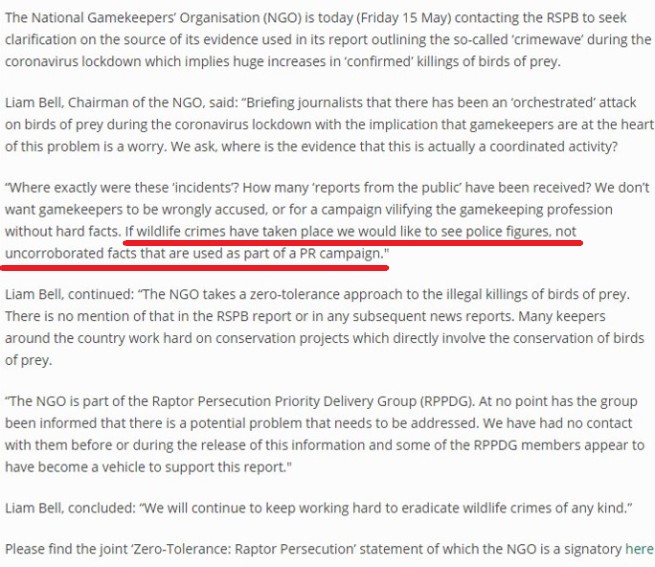
The response from the National Gamekeepers Organisation (NGO) was its usual attempt to undermine the credibility of the RSPB, bleat about being a signatory to an as yet undemonstrated stance of ‘zero tolerance‘ of raptor persecution, and to demand information from the police on recent raptor crimes (see here). Here is a copy of the NGO’s response, copied from it website (red bit highlighted by RPUK):

Fast forward two weeks and we had the excellent Channel 4 News special investigation featuring raptor persecution on North Yorkshire grouse moors (see here), which featured the utterly compelling dialogue between a senior police officer and the CH4 correspondent, as follows:

Alex Thomson (Channel 4 News correspondent): Lockdown has seen a sharp increase in reports of birds of prey found dead. We joined Inspector Matt Hagen of North Yorkshire Police as he followed up reports of a dead bird of prey seen in the Nidderdale area.

Inspector Matt Hagen: I’m absolutely shocked and disgusted at the level of raptor persecution that I am coming across.

Alex Thomson: Inspector Hagen told us that of 30 birds he’s collected in the past six months, only one has died of natural causes and his investigations lead clearly to a single group of suspects.

Matt Hagen: All the shooting investigations that we’ve got going on at the moment are involving gamekeepers on grouse moors.

Alex Thomson: All of them?

Matt Hagen: All of them.

Alex Thomson: Every single one?

Matt Hagen: That’s right.

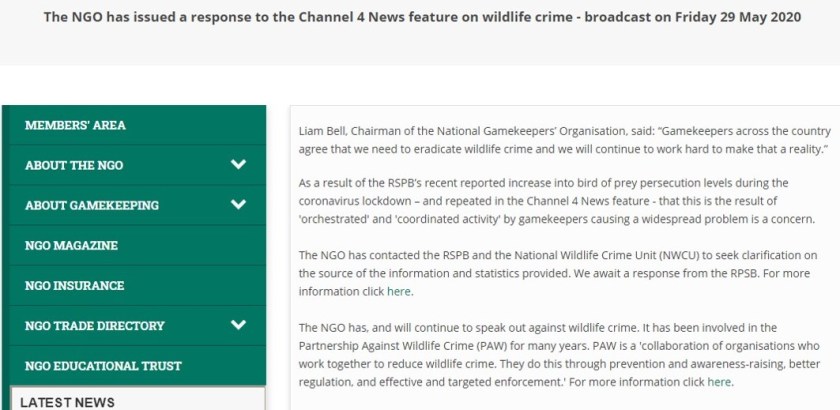
The National Gamekeepers Organisation has now published a response to the Channel 4 News programme. Bear in mind that the programme delivered exactly what the NGO had previously asked for (i.e. details from the police instead of the RSPB) that placed gamekeepers at the centre of every single current criminal investigation relating to the illegal killing of birds of prey in North Yorkshire. Here’s what the NGO now has to say:

The NGO says the news “is a concern“. The NGO says it is seeking “clarification on the source of the information and statistics provided“. Where’s the condemnation? Where’s the disgust? Where’s the reaction to those shot buzzards being pulled out of a hole on a grouse shooting estate? This response is pathetic.

The NGO says it is part of the Raptor Persecution Priority Delivery Group (RPPDG)  – which came as a bit of a surprise to us given that it resigned ‘permanently’ from the partnership after a massive tantrum in January last year (see here and here). Those decent organisations on the RPPDG who genuinely want to tackle illegal raptor persecution (e.g. RSPB, Northern England Raptor Forum, BAWC, North Pennines AONB, Sheffield Wildlife Trust) really need to start thinking about their positions on this forum. By remaining, they legitimise organisations such as the NGO (and others) who are able to use their membership as a badge of respectability and credibility.  They’re making the good guys look like mugs.

Channel 4 News highlights raptor persecution on North Yorkshire grouse moors

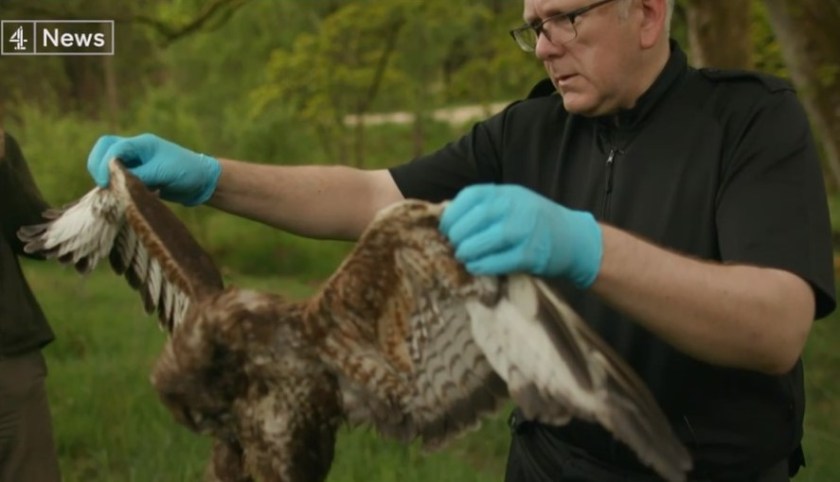
Following the news yesterday that a buzzard had been found confirmed poisoned in the Nidderdale AONB (see here), that the RSPB had seen a further increase in reports of raptor persecution since lockdown, including four new cases in the Peak District National Park (see here), and the discovery of five dead buzzards hidden in a hole on a grouse shooting estate in Bransdale in the North York Moors National Park, four of which have so far been confirmed as shot (see here), Channel 4 News featured a timely ‘special investigation’ piece last night, exploring the link between the illegal killing of birds of prey and grouse shooting estates across North Yorkshire.

The six minute film can be viewed here.

It includes interviews with North Yorkshire Police Inspector Matt Hagen (head of NYP Rural Crime Team) whose commentary was utterly damning (see below), Will Watson, a gamekeeper from an unnamed Nidderdale estate who said raptor persecution needs “nipping in the bud” as though this is a newly-emerging problem!, Duncan Thomas from BASC who reeled out the tired old patter that it was an “absolute minority of people” that “may commit offences“. He also claimed that BASC “have expelled members” following convictions for raptor persecution (really? When was that, then?) and that the industry is “very good at policing ourselves” (completely missing the point that if that was the case, there’d be no need for this programme to be aired), Guy Shorrock from the RSPB who pointed to the evidence that raptor persecution on grouse moors is organised crime on an industry-wide scale, and four Nidderdale residents (Keith Tordoff, Debra Jenkins, Charlotte & Chloe Amber) who were courageous enough to go on camera and speak out against illegal raptor persecution, even though at least one of them has previously received abuse and threatening letters for his efforts.

BASC was clearly worried about how this film would portray the game shooting industry because a few hours prior to the programme airing, this statement appeared on the BASC website, which says more about BASC staff’s concerns about criticism from their members than it does for its concerns about ongoing raptor killing.

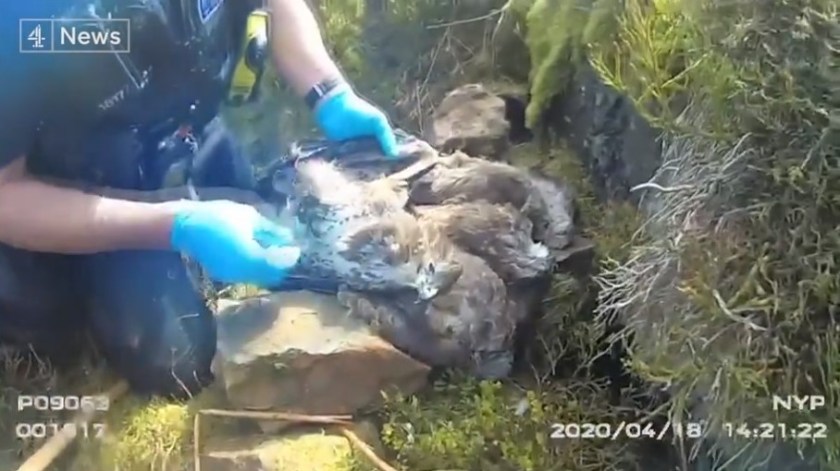
The programme starts explosively with what looks like Police body camera footage as officers retrieve the five dead buzzards concealed in a hole at Fox Hole Crags on the edge of Bransdale:

Take a look at the date stamp of this footage – 18 April 2020, in the middle of lockdown. Those buzzards looked ‘freshly dead’. The significance of this date will become apparent.

The most interesting part of the programme was the interview with Inspector Matt Hagen, who Channel 4 accompanied while he was investigating the discovery of yet another dead buzzard in Nidderdale.

Here’s the transcript:

Alex Thomson (Channel 4 News correspondent): Lockdown has seen a sharp increase in reports of birds of prey found dead. We joined Inspector Matt Hagen of North Yorkshire Police as he followed up reports of a dead bird of prey seen in the Nidderdale area.

Inspector Matt Hagen: I’m absolutely shocked and disgusted at the level of raptor persecution that I am coming across.

Alex Thomson: Inspector Hagen told us that of 30 birds he’s collected in the past six months, only one has died of natural causes and his investigations lead clearly to a single group of suspects.

Matt Hagen: All the shooting investigations that we’ve got going on at the moment are involving gamekeepers on grouse moors.

Alex Thomson: All of them?

Matt Hagen: All of them.

Alex Thomson: Every single one?

Matt Hagen: That’s right.

Matt Hagen’s responses couldn’t have been clearer. Unequivocal, unambiguous and even to the uninformed Channel 4 viewer who might never have heard about raptor persecution, utterly compelling. Even the spin doctors from the grouse shooting industry will struggle with such devastating commentary, particularly because it came from a senior police officer directly involved with the investigations.

Now, about the date on that Police body cam footage where the dead buzzards were being pulled out of a hole in Bransdale in the North York Moors National Park – 18 April 2020. Channel 4 News filmed this interview with Matt Hagen over one month later, which indicates that grouse moor gamekeepers are under investigation for the shooting of those birds.

We’ll be exploring this further….

Well done to Alex Thomson et al at Channel 4 News for getting this issue on prime time TV.

RSPB provides update on raptor persecution surge during Coronavirus lockdown

Two weeks ago the RSPB said there had been a ‘surge’ in raptor persecution crimes during the Coronavirus lockdown period resulting in a number of police searches on various grouse moors across the UK (see here).

The shooting industry’s leaders responded to this news with their usual mind-bending, truth-twisting denials and obfuscation (see here).

This morning, in response to some of the accusations and denials made by the shooting industry, the RSPB has published a short video update:

The ~2 min video features Mark Thomas, head of investigations and the transcript is as follows:

Hi, it’s Mark Thomas from RSPB Investigations.

Thank you for your concern, disappointment and overall overwhelming support since last week’s news release about the surge in raptor crime.

Of the 56 incidents, 81% of those confirmed so far have a connection with land use for shooting, both in the uplands and in the lowlands.

Interestingly, the shooting world seem fixated on trying to show these incidents didn’t actually happen, particularly the red kite in Leeds which was shot on the city outskirts close to other confirmed persecution incidents. The latest news on this one is that a shooting syndicate are helping police with their enquiries.

This doesn’t look, feel or sound like zero tolerance, more like the usual denial. In fact the only progressive voice has been that of Shooting Times, who called out the issue and then swiftly became targets from their own peers. What chance of self regulation?

So where are we a week on?

Well unsurprisingly the figures have gone up, more confirmed and potential offences have come to light from the police, including four from the Peak District National Park alone. One of those being a buzzard that was found mortally injured and had to be put to sleep, the x-ray showing it had been shot with a shotgun on not just one but two separate occasions. 

We’ve also received news from Norfolk Police of a shot buzzard in west Norfolk that also had to be put to sleep, and another dead buzzard in North Yorkshire which is currently being investigated.

We are aware of, and have been involved in, a number of other police investigations, some that we can’t talk about. Put simply, this is not going away.

We’ve been in close contact with the police and the National Wildlife Crime Unit, in fact supplying the NWCU with detailed line-by-line breakdown for each of the incidents we’ve detailed.

As always, we are science and evidence based. This isn’t an issue to be discussed behind closed doors, it’s of national public concern and a measure of that interest is why it’s being featured on Channel 4 News tonight and on BBC Countryfile on Sunday.

Please do tune in and let us know your views.

And finally, please do keep your eyes and ears open in the countryside. We need you to do that.

Thank you as ever.

ENDS

Buzzard illegally poisoned in North Yorkshire’s Nidderdale AONB

A couple of weeks ago North Yorkshire Police was warning Nidderdale residents about potential poisonous baits in the community after two dogs fell ill and one subsequently died – an investigation is ongoing but a veterinary expert suspected poisoning (see here).

Now North Yorkshire Police are having to warn the public again after toxicology analysis has confirmed that a buzzard found near Pateley Bridge in March had been illegally poisoned.

Here is the North Yorkshire Police press statement (27 May 2020):

Analysis shows buzzard killed by combination of four different pesticides

North Yorkshire Police is urging pet owners to be vigilant after analysis of a dead buzzard found near Pateley Bridge showed the presence of four pesticides in its system which are believed to be the cause of death.

In March 2020, a member of the public saw a buzzard fall out of a tree in Pateley Bridge, Nidderdale. It was taken straight to a local vet but sadly died soon after. The buzzard was sent to the Wildlife Incident Investigation Scheme (WIIS), administered by Natural England, for further analysis due to the circumstances surrounding its death.

[The illegally poisoned buzzard, barely still alive. Photo via North Yorkshire Police]

This analysis identified the presence of three pesticides in the buzzard’s gizzard and crop with a fourth pesticide detected in its kidney. The report received by the police from WIIS noted the bird’s good body condition and the fact there was a good quantity of mixed food in its crop – two factors which indicate it likely died as a result of exposure to the pesticides.

The pesticides identified in the buzzard’s system were; Bendiocarb, Carbofuran, Isofenphos, and Chloralose. Bendiocarb is licenced for use in England as an ingredient in a number of insect control products but should not be released into an environment where wildlife could come into contact with them. Carbofuran, Isofenphos and Chloralose are all banned substances which should not be used under any circumstances.

Unfortunately several birds of prey have been the victim of poisoning in Nidderdale over the past few years with similar mixtures of poisons found in the dead birds in the past.

North Yorkshire Police is investigating this incident and has so far not found any evidence to suggest how the pesticides reached the buzzard in this case or previous cases. Often, the poison may be laid on bait such as a rabbit carcass or other so police urge dog owners to be careful and not allow their dogs to eat any dead animals they might come across on a walk or during exercise.

Anyone with any information which could help the police track down those responsible for the illegal use of these is asked to contact North Yorkshire Police, quoting reference 12200084524.

Anyone misusing pesticides may be committing a variety of offences. If you come across an object which you believe may be contaminated with a pesticide or other poisons, please do not touch it. Instead take lots of photos of the scene and a detailed grid reference if possible. Report the situation immediately to the police giving all the information collected and why you suspect involvement of a poison.

The buzzard population has recovered in Yorkshire over the past few decades and they are now a common sight in Nidderdale.  All birds are protected by law and it is a crime to intentionally kill, injure, or take any wild bird.  Persecution of birds of prey is one of the five priority crimes for the National Wildlife Crime Unit.  If anybody has information about persecution of birds of prey please call North Yorkshire Police on 101.

Find out more about how to recognise the signs of bird of prey persecution here: www.northyorkshire.police.uk/opowl-getinvolved

ENDS

The combination of four poisons used in the latest crime is interesting – it’s a familiar lethal cocktail that has been used on various grouse moors across the UK in recent years. It’s almost as though a batch has been pre-prepared and then distributed. Wouldn’t it be interesting if the geography of these occurrences matched the movements of, say, certain gamekeepers moving between jobs? There’s an analysis for the National Wildlife Crime Unit to undertake….

The Nidderdale Area of Outstanding Natural Beauty (AONB) is a well-known raptor persecution hotspot and Nidderdale residents will be used to receiving these warnings about illegal poisonous baits; there have been several police warnings in recent years (e.g. see hereherehereherehereherehere) as poison has been used routinely to kill off red kites inside this AONB and the surrounding area (e.g. see here).

And it’s not just red kites that are targeted here. We’ve blogged about Nidderdale many, many times including the poisoning and shooting of red kiteshen harriersbuzzardsmarsh harriers on Nidderdale grouse moors (as reported by the AONB partnership in September 2019). As recently as January this year the police were appealing for information after a kestrel had been found shot and just three weeks ago they appealed for information after the shooting of a buzzard.

The shooting industry’s claimed stance of ‘zero tolerance’ on the illegal killing of birds of prey becomes more discredited every single day.

[Nidderdale AONB sign, photo by Ruth Tingay]

Police warn public as suspected poisoned bait found in Co Tyrone

From the Ulster Herald two days ago:

Suspected poison left on bait near Rousky (County Tyrone)

THE Police Service Northern Ireland (PSNI) in Omagh are appealing for information following a report of suspected poison being left on bait in the Crockanboy Road area of Rousky.

It is understood that they were notified of the discovery of suspected poisoned bait on Monday morning, May 11.

Following liaison with the Northern Ireland Raptor Study Group and our own Wildlife Officers, we believe there may be various species of protected wildlife in the area,” said Constable Collum.

It’s our responsibility to investigate cases of suspected wildlife crime and my appeal is two-fold.

We are keen to identify those responsible and are appealing to anyone with information, or who noticed any suspicious activity in the area, to contact us on 101 quoting reference 466 of 11/05/20.

Also, I would take this opportunity to stress, to those responsible, the broad ranging consequences of such actions.  Not only are you committing a crime and potentially killing precious species of wildlife. You are also presenting a risk to domestic pets and indeed children or anyone coming into contact with the poison or poisoned animal.”

Information can also be provided to the independent charity Crimestoppers on 0800 555 111, which is anonymous and gives people the power to speak up and stop crime.

ENDS

The illegal poisoning of birds of prey is still very much an issue in Northern Ireland, as described in a recent ten year review published by the Partnership for Action against Wildlife Crime Northern Ireland last winter (see here). Carbofuran, a highly toxic banned pesticide, remains the poison of choice.

North Yorkshire police warn public of potential poisonous baits at Pateley Bridge

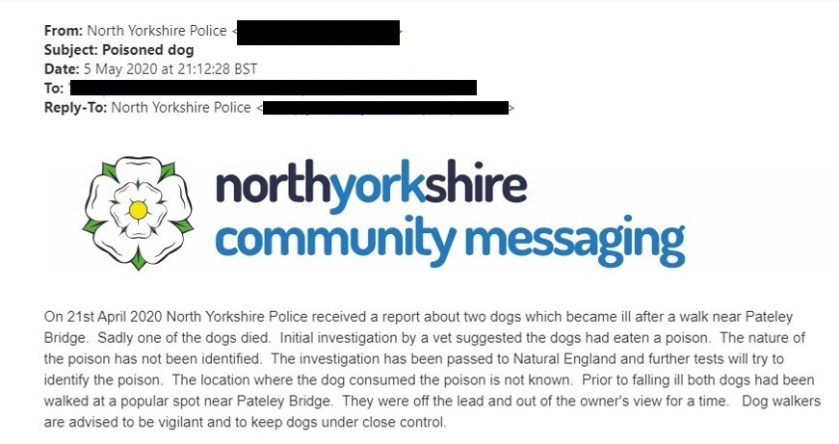
North Yorkshire Police are warning the public of potential poisonous baits at Pateley Bridge in Nidderdale following the suspected poisoning of two dogs in April. [August 2020: See update at foot of blog]

The following message was emailed to members of the local community last week:

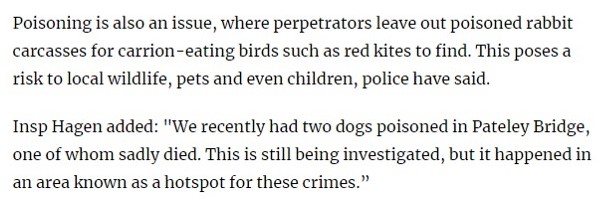
This suspected poisoning incident was referred to by the Police in a recent Yorkshire Post article about raptor persecution in the area:

Nidderdale residents will be used to receiving these warnings; there have been several in recent years (e.g. see here, here, here, here, here, here, here) as illegal poisonous baits have been used routinely to kill off red kites inside this AONB and the surrounding area (e.g. see here).

Dog walkers are urged to keep their pets under close control and report anything suspicious to the police. DO NOT HANDLE A SUSPECTED POISONOUS BAIT – some of the chemicals used as poison are so dangerously toxic they have been banned from use in the UK.

UPDATE 1 August 2020: Dog poisoning confirmed in Nidderdale raptor persecution hotspot (here)

Local politician seeks ‘full investigation’ in to mass poisoning of buzzards

Further to yesterday’s blog about the reported illegal poisoning of 23 buzzards in County Cork and the apparent subsequent silence of the investigating authorities (see here), today there’s some encouraging news.

Local politician Christopher O’Sullivan TD (Teachta Dala, the equivalent of an MP) in whose constituency the poisoned buzzards were found, has just tweeted the following:
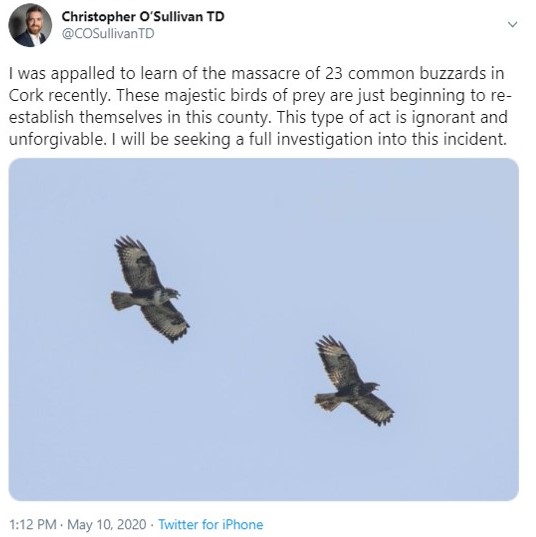
According to our sources, this is a very significant move. As discussed in yesterday’s blog, there have long been concerns about the lack of enforcement measures against raptor persecution in some parts of Ireland and particularly in the south where this latest crime was recorded.

Yesterday’s statement from BirdWatch Ireland highlighted these concerns and they’ve been re-emphasised in a statement from the Golden Eagle Trust (GET), the wildlife charity behind the reintroduction of golden eagles, white-tailed eagles and other important conservation projects across the Irish Republic. Here’s what GET had to say about this on Friday:

An attack on nature protection in Cork

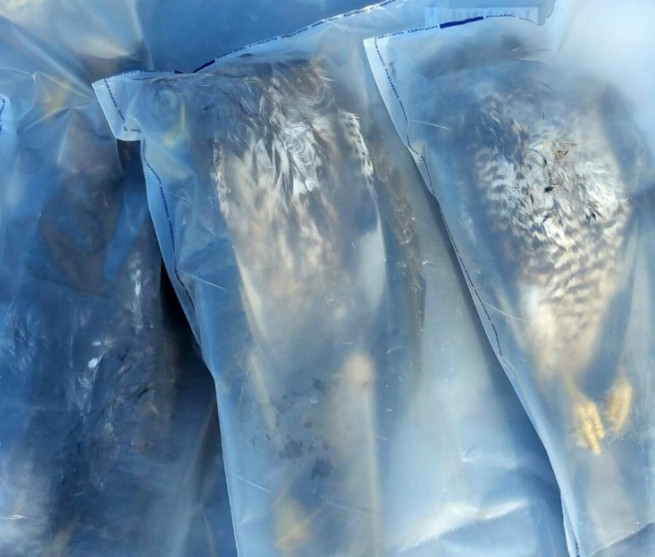
Carbofuran is a banned root crop pesticide that continues to be used to deliberately kill birds of prey across Ireland. Some months ago, a landowner discovered dead Buzzards on his property, near Timoleague, County Cork and contacted the National Parks and Wildlife Service (NPWS). 23 dead Common Buzzards were found during subsequent searches of the adjacent land. Toxicology tests, carried out by the State Laboratory, showed that the Buzzards had consumed Carbofuran, we believe. The landowner was completely unaware that a third party was leaving out poison nearby. This is the biggest illegal act against birds of prey in Ireland, over the last two decades.

The continued wilful persecution of birds of prey is decreasing the population of Peregrines, Hen Harriers, Buzzards and the reintroduced native populations of Eagles and Kites, in some parts of Ireland. It can be very difficult to find the evidence that could link an individual with an act of poisoning and thereby present sufficient evidence before a judge in order to secure a successful prosecution.

Therefore, the Golden Eagle Trust is calling on Government Departments to draft and enact a defined piece of legislation which makes it illegal for anybody to be in possession of Carbofuran and several other lethal substances, whose former agricultural uses have been banned and phased out. We are also calling on the Department of Culture, Heritage and the Gaeltacht to revisit their discussion on whether it would be helpful to establish a small (one or two person) Wildlife Crime Unit within NPWS, in order to provide specialized advice and expertise in responding to reported wildlife crime incidents and presenting a strong legal case to the State Solicitors and to be put before the Courts; whenever the evidence allows a case to be initiated.

It is difficult to assess the effectiveness and enforcement of National and European wildlife legislation in Ireland and the degree of deterrent it might offer, arising from successful Irish wildlife court cases; as court cases or successful wildlife crime prosecution figures are not readily available. However, a crude review of available internet media sources, might suggest that there has not been any successful wildlife crime court case, over the last 4 or 5 years, in Counties Cork or Kerry, for example. The general public have a very important role in reporting dead birds of prey to NPWS and they in turn, need appropriate laws, staff resources and appropriate management facilitation in implementing the law, where the evidence allows it, in some of these ongoing poisoning incidents.

Whilst there may be several legitimate administrative reasons for the lack of clarity surrounding Ireland’s biggest raptor persecution case, arising from the current Coronavirus crisis; there is also a competing responsibility to keep communities informed of nearby risks related to illegal poisoning activity. The wider context reveals an unfortunate pattern of Peregrines being killed at the same nests annually and Common Buzzards and Red Kites being poisoned, in localized areas, on a regular basis. It can be extremely difficult to identify the perpetrators of these crimes against nature and therefore the legislation needs to keep abreast of the collated RAPTOR Protocol dataset and counter, the primary threats that the accruing results suggest.

[The corpses of several buzzards found poisoned by Carbofuran in Co Cork in 2018. See here for details. Photo by NPWS]
In July 2010, the Grant Thornton, ‘Organisational Review of the National Parks and Wildlife Service (NPWS), suggested in Section 4.5.1 (Page 55) that:

Enforcement and prosecution activity is represented as being low with only some 30 cases per annum being prosecuted. Progress in this area seems to vary depending on Division.”

The Golden Eagle Trust wonder if the level of nature protection enforcement activity might have fallen even further since 2010? We are concerned that a lack of Ministerial, Departmental or Party-Political support, for some aspects of the Law, may have weakened NPWS managerial resolve, in some areas, over the last decade. In a small number of places, recreational family groups, dog walkers and landowners may need to be especially vigilant as regards the possibility that poisoned meat baits have been left out in the open. This incident revives the independent expert opinion and concern (as set out in the Grant Thornton Organisational Review) whether some NPWS managers need more support and resources in progressing illegal wildlife activity cases? The unpalatable alternative, is that the Department of Culture, Heritage and Gaeltacht transparently seek to repeal defined aspects of Irish or European Wildlife Legislation, which they may no longer endorse.

Regardless of the context; we are shocked by the number of dead Buzzards found in Cork and the 23 associated positive toxicology results – it is a wake-up call to us all.

ENDS

Full credit to Christopher O’Sullivan TD – let’s hope his calls for an investigation lead to significant change, with improvements in investigation and enforcement responses. Judging by the reaction to the news that 23 buzzards were poisoned, he’ll have a great deal of public support.

23 buzzards illegally poisoned with Carbofuran in single incident

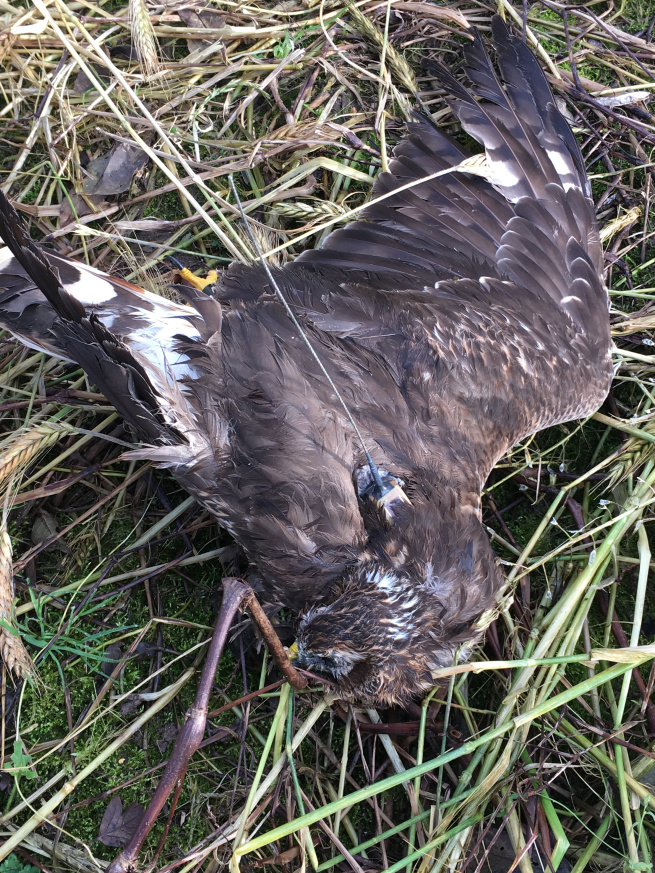
The Irish Raptor Study Group and BirdWatch Ireland have reported the illegal poisoning of 23 buzzards in a single incident in Co Cork.

The following statement has been published by BirdWatch Ireland:

Mass poisoning of buzzards in County Cork

We have recently learned of the illegal poisoning of 23 Buzzards in County Cork. This incident is the single largest poisoning of birds of prey in this country in decades and the largest since the legislation was amended to ban the use of poison meat baits in 2010. We understand that the 23 Buzzards were recovered at the scene last December and were sent for testing under the Raptor Protocol, which subsequently confirmed that all had died due to ingesting the highly toxic and banned substance, Carbofuran.

[Photo via Irish Raptor Study Group]

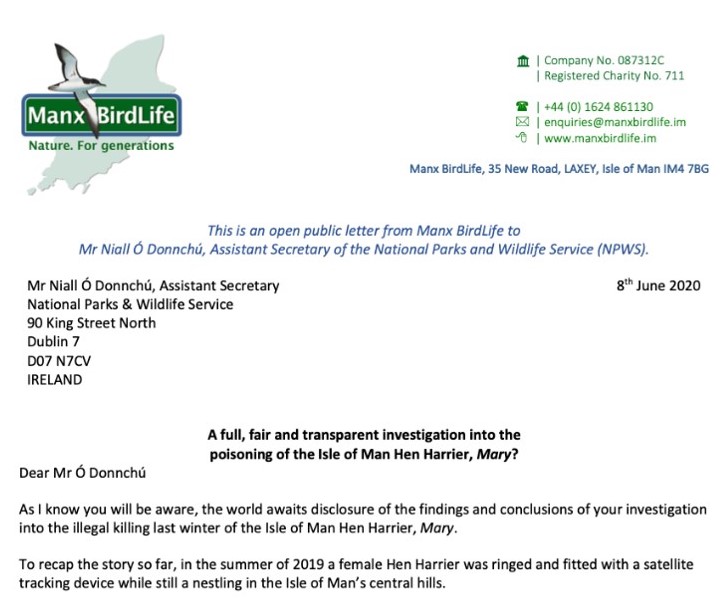
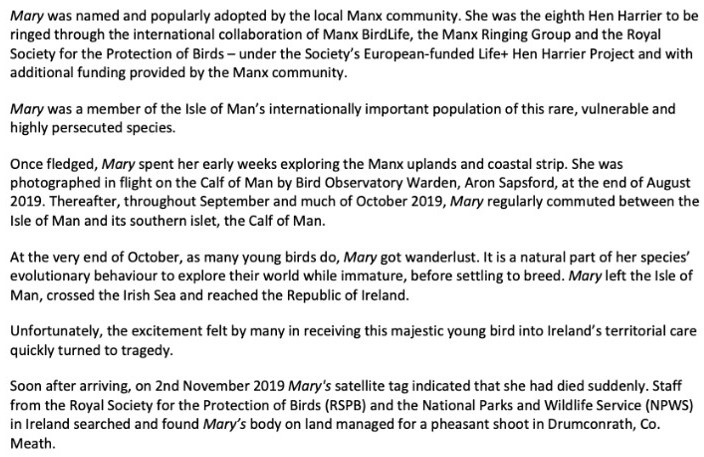
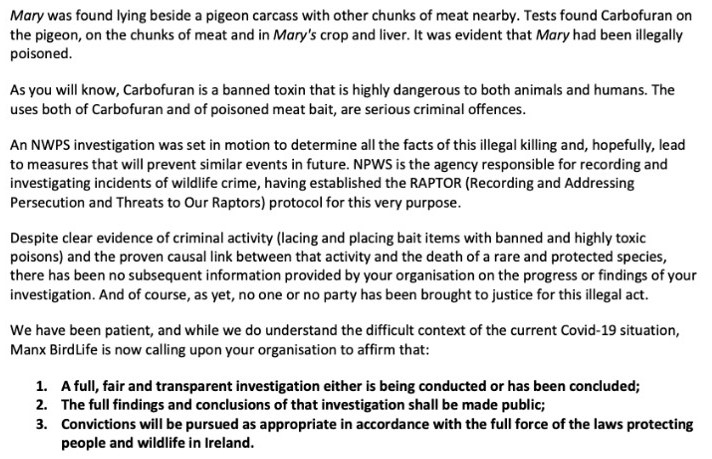
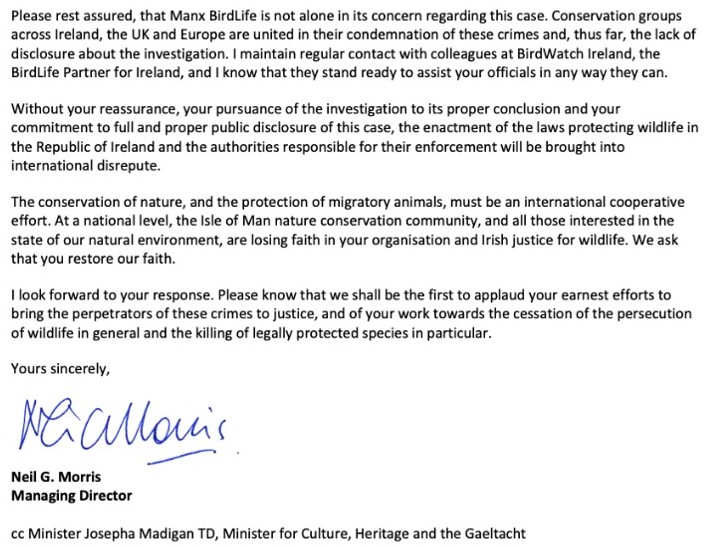
The targeted use of bait laced with poison to kill protected birds of prey remains widespread and one of the most common substances used is Carbofuran, despite being banned. This incident follows the death of Mary, the satellite-tagged Hen Harrier, late last year, also illegally poisoned, also by Carbofuran (for more details see here and here).

These incidents, along with the countless other similar horrific poisonings of birds of prey, demonstrate that current efforts are simply not sufficient in stopping the persecution of our birds of prey. History dictates that incidents such as this mass poisoning will continue to occur unless appropriate action is taken. While we do not know who is responsible for this incident, we do know that the motives of those that persecute birds of prey are inherently flawed and display an ignorance and lack of understanding of our environment. Buzzards and other birds of prey are indicators of a healthy countryside and perform a vital role in the ecosystem, we cannot and should not tolerate the damaging actions of a minority to eradicate them from our countryside.

We understand that NPWS held an investigation, but that similar to the poisoning of Mary, those responsible were not held accountable. Why is more action not being taken to tackle Carbofuran and other illegal poisons, which are horrendously toxic and pose a serious threat to humans as well as to wildlife? Does an unwitting person trying to assist a stricken bird have to die before the State finally takes action?

We will be liaising with NPWS, we offer our support to them and urge a unified approach to tackling wildlife crimes. Unless proper resources are allocated, to include an established wildlife crime unit and greater powers and resources to investigate and enforce the legislation, incidents such as this one will continue without consequence. We will bring you more on this incident once we have further details.

ENDS

UPDATE 10 May 2020: Local politician seeks ‘full investigation’ in to mass poisoning of buzzards (here)

Buzzard & kestrel suspected poisoned in Derbyshire

Derbyshire Constabulary has published the following message on social media this evening:

Derbyshire Rural Crime Team is investigating after two birds of prey were found dead in the Ault Hucknall area of Chesterfield.

A Kestrel and a Buzzard were found on Monday 23 March. Initial investigations lead us to believe they have been poisoned rather than shot.

The birds have been recovered and an investigation launched.

Anyone with information is asked to contact the Rural Crime Team by emailing DRCT@derbyshire.police.uk quoting reference 20000159754.

You can also pass information anonymously to Crimestoppers by calling 0800 555 111 or visiting https://crimestoppers-uk.org/

ENDS

Well done to the police for a very speedy notification. Obviously the investigation is still in the early stages although the proximity of a plucked wood pigeon in these photos is probably a big clue.

UPDATE 3rd August 2020: Buzzard and kestrel confirmed illegally poisoned in Derbyshire (here)

General Licence restriction on Leadhills Estate: some fascinating details

In November 2019, Scottish Natural Heritage (SNH) imposed a three-year General Licence restriction on Leadhills Estate in South Lanarkshire following ‘clear evidence from Police Scotland that wildlife crimes had been committed on this estate’ (see here, here, and here).

Those alleged offences included the ‘illegal killing of a short-eared owl, two buzzards and three hen harriers’ that were ‘shot or caught in traps’ on Leadhills Estate since 1 January 2014 (when SNH was first given powers to impose a General Licence restriction). SNH had also claimed that ‘wild birds’ nests had also been disturbed’, although there was no further detail on this. The estate consistently denied responsibility.

[The shot short-eared owl that was found shoved under some heather on the Leadhills Estate grouse moor. Photo by RSPB Scotland]

In December 2019 Leadhills Estate appealed against SNH’s decision to impose the General Licence restriction (see here) but on 31 January 2020 SNH announced that it had rejected the estate’s appeal and the General Licence restriction still stood (see here).

We were really interested in the details of Leadhills Estate’s appeal so a freedom of information request was submitted to SNH to ask for the documents.

The information released by SNH in response is fascinating. Some material hasn’t been released due to what appear to be legitimate police concerns about the flow of intelligence about wildlife crime in the Leadhills area but what has been released provides a real insight to what goes on behind the scenes.

First up is an eight page rebuttal from Leadhills Estate’s lawyers about why it thinks SNH was “manifestly unfair” to impose the General Licence restriction.

Download it here: Leadhills Estate appeal against GL restriction decision

Next comes SNH’s six-page rejection of the estate’s appeal and the reasons for that rejection.

Download it here: SNH rejects Leadhills Estate appeal against GLrestriction

Prepare for some jaw-dropping correspondence from Leadhills Estate’s lawyers, including a discussion about how the raptor workers who found the hen harrier trapped by it’s leg in an illegally-set spring trap next to its nest last year ‘didn’t take steps to assist in the discovery of the suspect, which could have included placing a camera on the nest’.

Are they for real??!! Can you imagine the uproar, had those raptor workers placed a camera pointing at the nest and identified a suspect who was subsequently charged? We’ve all seen how that scenario plays out, with video evidence dismissed as ‘inadmissible’ and the game-shooting lobby leering about the court victory. That Leadhills Estate is now arguing that the failure of the raptor workers to install covert cameras is reason for the estate to avoid a penalty is simply astonishing, although the next time covert video evidence is challenged in a Scottish court it’ll be useful to be able to refer to this estate’s view that such action would be deemed reasonable. Apart from anything else though, those raptor workers were too busy trying to rescue that severely distressed hen harrier from an illegally-set trap:

[The illegally trapped hen harrier. Photo by Scottish Raptor Study Group]

Other gems to be found within this correspondence include the news that a container of an illegal pesticide (Carbosulfan) was found on Leadhills Estate in May 2019 and contributed to SNH’s decision to impose the General Licence restriction (this information has not previously been made public – why not?) and that during a police search of the estate (sometime in 2019 but the actual date has been redacted) the police seized some traps. The details of why those traps were seized has also been redacted but SNH write, ‘Although this in itself does not establish criminality it certainly adds weight to our “loss of confidence” [in the estate]’.

The Estate claims that the alleged impartiality of the witnesses should have some bearing on proceedings but SNH bats this away with ease, saying that the evidence on which the restriction decision was made was provided by Police Scotland and that the partiality of witnesses has not been identified as a significant factor of concern for the police, and thus not for SNH either.

It’s also amusing to see the estate claim ‘full cooperation’ by the estate with police enquiries. SNH points out that this so-called ‘full cooperation’ was actually largely limited to “no comment” interviews!

We don’t get to say this very often but hats off to SNH for treating the estate’s appeal with the disdain which, in our opinion, it thoroughly deserves.

Meanwhile, following SNH’s decision in January to uphold the General Licence restriction on Leadhills Estate due to ‘clear evidence’ of wildlife crime, we’re still waiting for Scottish Land & Estates (SLE) to respond to our enquiries about whether Leadhills Estate is still a member and whether Lord Hopetoun of Leadhills Estate is still Chairman of SLE’s Scottish Moorland Group.