Scotland’s Programme for Government announced: grouse moor licensing, SSPCA powers & General Licence review

Scotland’s First Minister Nicola Sturgeon has today revealed the 2021 to 2022 Programme for Government, outlining the policies and actions that are expected to take place over the coming year as well as the expected legislative programme for the forthcoming parliamentary year.

This programme for Government is the first one since the historic power-sharing agreement between the SNP and the Scottish Greens and it’s apparent that there has been some influence from the Greens’ policy machine.

The 2021 to 2022 Programme for Government can be downloaded here:

Of obvious interest to this blog is when the Scottish Government is finally going to pull its finger out and deliver the grouse shooting licence it promised in response to the Werritty Review, back in November 2020. We’re fast approaching a year since that commitment was made, which came a full year after the Werritty Review’s recommendations were presented to the Government (Nov 2019), which came more than two years after the Werritty Review was commissioned (May 2017) on the back of a devastating report that showed the extent of ongoing golden eagle persecution and its link to the driven grouse shooting industry. That report had been commissioned by the Government in August 2016 on the back of an RSPB press release about eight young satellite-tagged golden eagles disappearing in highly suspicious circumstances on grouse moors in the Monadhliaths over a period of five years.

As you can see, and as many of you already know, the Government has been promising action on this for a very long time and now having committed to taking that action, it needs to bloody well get on with it.

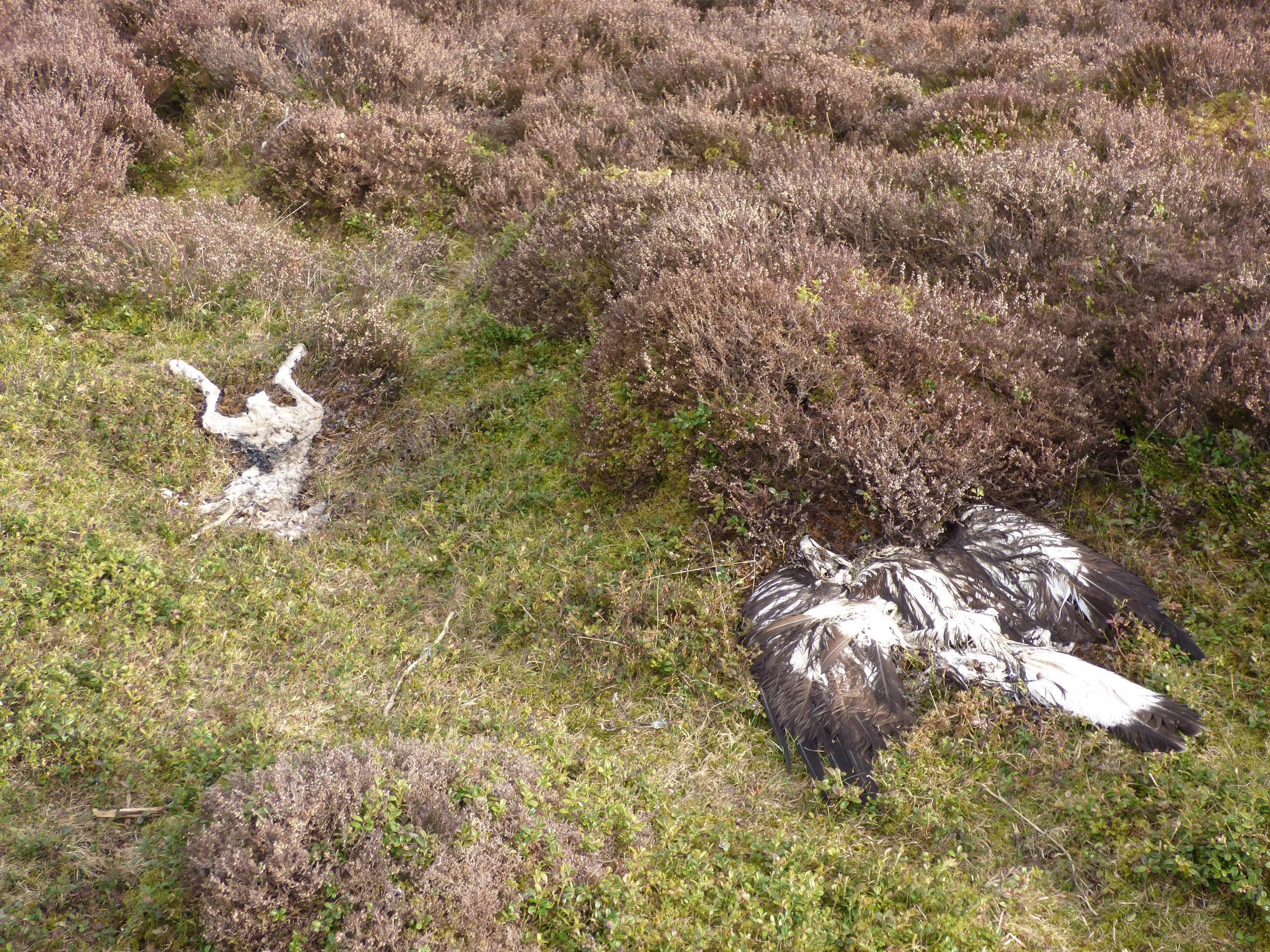
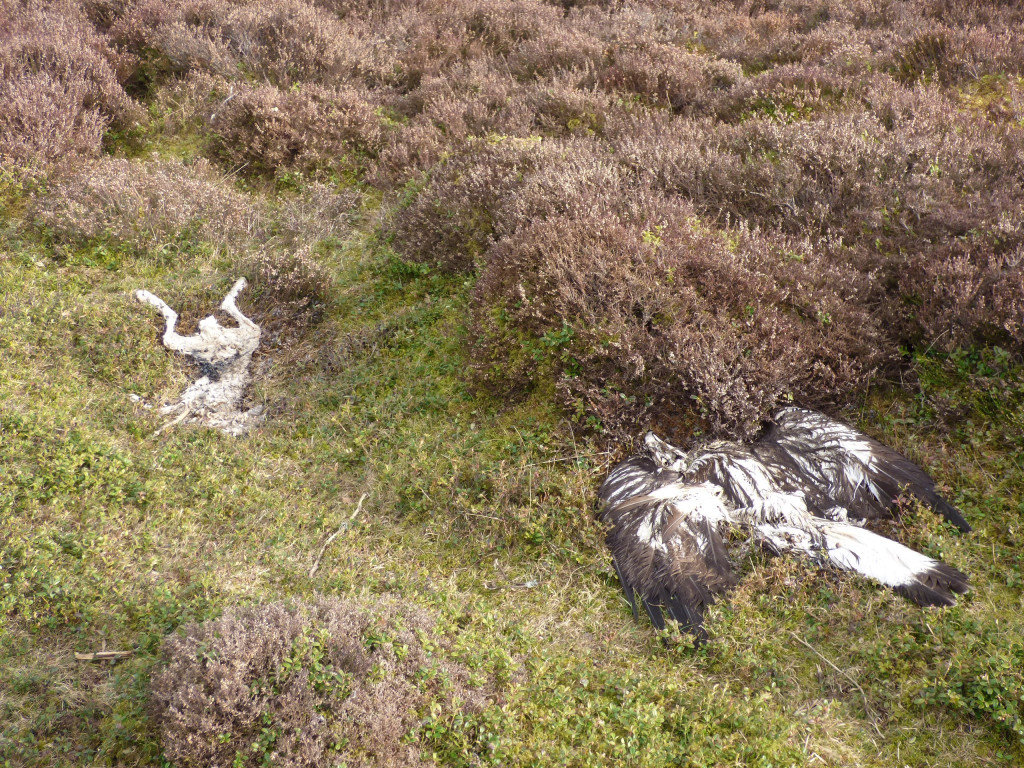
Since the Government’s announcement in Nov 2020 that it would, finally, introduce a grouse-shooting licence without delay, more birds of prey have turned up illegally killed, including this young golden eagle, found ‘deliberately poisoned’ (according to Police Scotland) on an Invercauld estate grouse moor in the Cairngorms National Park, in the heart of Royal Deeside.

We cannot afford to have any further procrastination, navel-gazing or can-kicking.

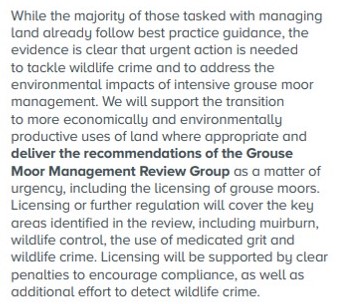
Here’s what the Programme for Government (p90) says about delivering the Werritty Review recommendations:
As the 2021 grouse-shooting season is already underway, I would want to see progress on this policy before the start of the 2022 season, in August next year. That means Scot Gov needs to get on with its stakeholder and public consultations as soon as possible.

Also featuring in the Programme for Government is a review of the use of General Licences, which are used to permit the widespread killing of millions of birds each year (typically various crow species, and others) without any real oversight or monitoring, ostensibly for quite sensible reasons such as the protection of crops, to protect public safety and to conserve some bird species. Campaign group Wild Justice has been busy challenging the lawfulness of these licences in England, Wales (and currently Northern Ireland), arguing that the current licences are not fit for purpose and that they allow too much ‘casual killing’. The group’s efforts have forced significant review and change by the statutory authorities. It is believed that this proposed review of the General Licence system in Scotland is designed to head off any potential legal challenge that Wild Justice may be considering. That’s smart.

Here’s what the Programme for Government (p90) says about its General Licence review:

Animal welfare issues feature quite strongly in the Programme for Government and many of my colleagues in other organisations will no doubt be pleased that these issues feature, but will probably be less pleased about the ongoing delay beyond this parliamentary year for tackling some of them.

Here’s what the Programme for Government (p89) says about animal welfare issues:

The issue of increased powers for the Scottish SPCA is of significant interest, not just for the benefit it’ll bring to animal welfare but specifically, for the boost these additional powers will provide to wildlife crime investigations in Scotland.

However, this is a subject that the Scottish Government has been procrastinating on for over ten years. Personally, I don’t believe that the new ‘independent taskforce’ (still to be appointed) will ‘report before the end of 2022’. Why don’t I believe it? Because the Scottish Government has failed, repeatedly, to stick to its promises on this subject:

For new blog readers, here’s the timeline of embarrassment:

February 2011: Increased powers for the SSPCA was first suggested by former MSP Peter Peacock as an amendment during the Wildlife & Natural Environment (Scotland) Bill debates. The then Environment Minister Roseanna Cunningham rejected it as an amendment but suggested a public consultation was in order.

September 2011: Seven months later Elaine Murray MSP (Scottish Labour) lodged a parliamentary motion that further powers for the SSPCA should be considered.

November 2011: Elaine Murray MSP (Scottish Labour) formalised the question in a P&Q session and the next Environment Minister, Stewart Stevenson MSP, then promised that the consultation would happen ‘in the first half of 2012’.

September 2012: Nine months later and nothing had happened so I asked Paul Wheelhouse MSP, as the new Environment Minister, when the consultation would take place. The response, in October 2012, was:

The consultation has been delayed by resource pressures but will be brought forward in the near future”.

July 2013: Ten months later and still no sign so I asked the Environment Minister (still Paul Wheelhouse) again. In August 2013, this was the response:

We regret that resource pressures did further delay the public consultation on the extension of SSPCA powers. However, I can confirm that the consultation document will be published later this year”.

September 2013: At a meeting of the PAW Executive Group, Minister Wheelhouse said this:

The consultation on new powers for the SSPCA will be published in October 2013“.

January 2014: In response to one of this blog’s readers who wrote to the Minister (still Paul Wheelhouse) to ask why the consultation had not yet been published:

We very much regret that resource pressures have caused further delays to the consultation to gain views on the extension of SSPCA powers. It will be published in the near future“.

31 March 2014: Public consultation launched.

1 September 2014: Consultation closed.

26 October 2014: I published my analysis of the consultation responses here.

22 January 2015: Analysis of consultation responses published by Scottish Government. 233 responses (although 7,256 responses if online petition included – see here).

I was told a decision would come from the new Environment Minister, Dr Aileen McLeod MSP, “in due course”.

1 September 2015: One year after the consultation closed and still nothing.

25 February 2016: In response to a question posed by the Rural Affairs, Climate Change & Environment Committee, Environment Minister Dr Aileen McLeod said: “I have some further matters to clarify with the SSPCA, however I do hope to be able to report on the Scottish Government’s position on this issue shortly“.

May 2016: Dr Aileen McLeod fails to get re-elected and loses her position as Environment Minister. Roseanna Cunningham is promoted to a newly-created position of Cabinet Secretary for the Environment.

12 May 2016: Mark Ruskell MSP (Scottish Greens) submits the following Parliamentary question:

Question S5W-00030 – To ask the Scottish Government when it will announce its decision regarding extending the powers of the Scottish SPCA to tackle wildlife crime.

26 May 2016: Cabinet Secretary Roseanna Cunningham responds with this:

A decision on whether to extend the investigatory powers of the Scottish SPCA will be announced in due course.

1 September 2016: Two years after the consultation closed and still nothing.

9 January 2017: Mark Ruskell MSP (Scottish Greens) submits the following Parliamentary question:

Question S5W-05982 – To ask the Scottish Government by what date it will publish its response to the consultation on the extension of wildlife crime investigative powers for inspectors in the Scottish SPCA.

17 January 2017: Cabinet Secretary Roseanna Cunningham responds:

A decision on whether to extend the investigatory powers of the Scottish Society for the Prevention of Cruelty to Animals will be announced in the first half of 2017.

31 May 2017: Cabinet Secretary Roseanna Cunningham rejects an extension of powers for the SSPCA ‘based on legal advice’ and instead announces, as an alternative, a pilot scheme of Special Constables for the Cairngorms National Park (here). It later emerged in 2018 that this pilot scheme was also an alternative to the Government’s 2016 manifesto pledge to establish a Wildlife Crime Investigation Unit as part of Police Scotland – a pledge on which it had now reneged (see here).

November 2019: The pilot scheme of Special Constables in the Cairngorms National Park was an absolute failure as a grand total of zero wildlife crimes were recorded by the Special Constables but plenty were reported by others (see here).

June 2020: Mark Ruskell (Scottish Greens) proposed further powers for the SSPCA at Stage 2 of the Animals and Wildlife Bill. The latest Environment Minister, Mairi Gougeon persuaded him to withdraw the proposed amendment on the basis that she’d consider establishing a taskforce to convene ‘this summer’ to consider increased powers (see here).

December 2020: Mark Ruskell (Scottish Greens) submits two Parliamentary questions asking about the status of the taskforce and who is serving on it (see here).

January 2021: New Environment Minister Ben Macpherson says the taskforce has not yet been appointed but that it is “expected to be established later this year“ (see here).

September 2021: In the 2021 to 2022 Programme for Government it was announced that the ‘independent taskforce [Ed: still to be appointed] will report before the end of 2022’ (see today’s blog, above).

Given the Government’s embarrassing track record on kicking this issue in to the long grass, I fully expect to be writing a blog in a year’s time about how zero progress has been made. I hope I’m proved wrong.
Reports of wildlife crime doubled during lockdown, says Police Scotland Chief

Press release from Police Scotland:

Operation Wingspan, a year-long campaign to tackle wildlife crime, working with partners, including the Partnership Against Wildlife Crime (PAW) Scotland, has seen considerable success and is now entering its final phase.

This involves officers working on the persecution of fresh water pearl mussels and tackling all aspects of poaching, including hare coursing. As with previous phases, it will involve a combination of enforcement action and education.

Overall, the campaign has involved officers engaging with a number of organisations, including the agricultural community, ranger services, land managers and game keepers with the aim of educating the wider public and encouraging them to report wildlife crime to the police.

Detective Sergeant Billy Telford, Police Scotland’s Wildlife Crime Co-ordinator, said: “We have many internationally renowned species that attract thousands of nature lovers and tourists every year to Scotland, but many crimes against wildlife are cruel and barbaric, often involving a painful death.

From hunting deer, hares or badgers with dogs, to using poisons or snares on protected birds, and protecting one of our lesser known species, the critically endangers freshwater pearl mussel, Operation Wingspan is raising awareness and hopefully encouraging people to come forward and report this kind of crime.”

[This young golden eagle was found ‘deliberately poisoned‘ with a banned toxin on an Invercauld Estate grouse moor in the Cairngorms National Park in March this year. Photo by RSPB Scotland]

Operation Wingspan began in October 2020 and Phase One saw officers tackling the trade in endangered species and included visits to over 300 business premises, such as antique dealers, retro shops and pet shops across Scotland to advise owners and provide information about potential contraventions under The Control of Trade in Endangered Species (COTES) 2018 regulations. It resulted in the seizure and recovery of alligator heads from across the country.

Phase Two tackled badger persecution, working with the charity Scottish Badgers, to highlight that badgers and their setts are protected, that it is an offence to harm or interfere with them and that badger baiting is illegal. Where ongoing risks were identified, action was taken to protect the sett and the badgers.

Phase Three saw officers taking part in a construction conference to outline the responsibilities of developers, highlighting that it is an offence to destroy or damage roosts, as well as engaging with bat groups and visiting vulnerable roosts, ultimately leading to people being charged for undertaking development that threatened the welfare of bats.

In Phase Four concentrated on raptor persecution. Officers have carried out a number of activities, including patrols of vulnerable nesting sites, warrants executed in relation to wildlife crime and a social media campaign with an educational video that was produced in collaboration with the RSPB.

Detective Chief Superintendent Laura McLuckie said: “Reports of wildlife crime doubled during lockdown and Police Scotland is dedicated to working closely with a wide range of partner organisations to reduce the harm to species targeted by criminals and the communities who rely on them for employment and tourism across Scotland.

Tackling wildlife crime is not just about enforcement, it is also about working with partners and raising public awareness to prevent it happening. Indeed, the public has an important role in helping up to investigate reports of wildlife crime and I would urge anyone with concerns or who suspect a wildlife crime has been committed to contact us on 101, and if it is an emergency to call 999.”

More information can be found on our website: https://www.scotland.police.uk/wildlifecrime

ENDS

Investigation opens into suspected buzzard poisoning

Various media fora in the Irish Republic have reported on the suspected poisoning of two buzzards in Kerry.

A member of the public found the birds in August in the Currow/Scartaglen area, south of Castleisland, Co. Kerry. One buzzard was dead and the other one was taken for treatment and possible rehabilitation.

The National Parks and Wildlife Service is investigating and toxicology results are awaited.

A Government report published in October 2020 demonstrated that illegal raptor persecution continues to be a problem in Ireland, especially for the common buzzard. In 2020, 23 buzzards were poisoned in one single incident by the banned pesticide Carbofuran (see here) and in the same area in 2018, three buzzards were poisoned with Carbofuran, two were then decapitated and one had its leg pulled off (here).

Trial date set for Suffolk gamekeeper accused of poisoning buzzard

A couple of days ago I blogged about a gamekeeper who was due in court this week to face allegations that he was responsible for the alleged poisoning of a buzzard in Suffolk (see here).

This prosecution resulted from a multi-agency investigation and raid conducted at premises in January this year involving Suffolk Police, National Wildlife Crime Unit, Natural England and the RSPB’s Investigations team (see here).

[Police seized guns and pesticides during the multi-agency raid in January 2021. Photo via Suffolk Police]

News from the court today (via the RSPB) is that this gamekeeper has pleaded guilty to some charges but not guilty to others, so this case will now proceed to trial.

The gamekeeper pleaded guilty to six charges relating to firearms and pesticide storage.

He pleaded not guilty to two further charges relating to the illegal buzzard poisoning.

The trial is due to begin on 8th November 2021.

Please note, as this is a live case no further detail will be provided here until the case has concluded or there is official commentary from the court. Comments on this particular blog also won’t be accepted until the case concludes so as not to prejudice proceedings. Thanks for your understanding.

UPDATE 9th November 2021: Gamekeeper convicted for pesticide and firearms offences but buzzard-poisoning charge is dropped (here)

Another gamekeeper in court for alleged poisoning of buzzard

Earlier this month I blogged about a gamekeeper in Nottinghamshire who is facing trial after he pleaded not guilty to the alleged killing of several buzzards (see here).

Now there’s another case to report. This time it’s a gamekeeper in Suffolk who is due in court on Thursday in relation to the alleged poisoning of a buzzard.

This latest prosecution relates to the joint raid undertaken by Suffolk Police, Natural England and the RSPB’s Investigations Team in January this year (see here).

[Police seized guns and pesticides during the multi-agency raid in January 2021. Photo via Suffolk Police]

Tomorrow’s court hearing will provide an opportunity for the defendant to enter a plea.

If he pleads not guilty, the case is expected to continue to go to trial at a later date.

If he pleads guilty, he may be sentenced tomorrow or the magistrate may ask for background reports before sentencing at a later date.

Please note, as this is a live case no further detail will be provided here until the case has concluded or there is official commentary from the court reporter. Comments on this particular blog also won’t be accepted until the case concludes so as not to prejudice proceedings. Thanks for your understanding.

UPDATE 26th August 2021: Trial date set for Suffolk gamekeeper accused of poisoning buzzard (here)

New study: raptor persecution in Wales 3 x more likely in areas managed for driven gamebird shooting

Press release from RSPB Wales (24th August 2021)

New research sheds light on crimes against birds of prey in Wales

The theft of eggs and chicks of birds of prey has almost ceased in Wales, but persecution rates are not declining – according to a new RSPB Cymru review, published today.

Crimes against raptors in Wales 1990-2019 – written by RSPB Cymru and published by the Welsh Ornithological Society – summarises the plight of raptors in Wales over the past three decades.

One of the key findings is that since the 1990s, egg and chick theft has almost ceased. Theft used to be a major problem in Wales, with eggs of raptors such as peregrines and red kites stolen by collectors. The chicks of goshawks and peregrines have also been targeted for the purposes of selling to falconers, including in the Middle East. But tougher penalties and a shift in public awareness and attitude has resulted in the detection of only a handful of cases in Wales over the past decade.

On the other side of the coin, the picture for raptor persecution (by shooting, trapping and poisoning) is less positive. While the number of confirmed incidents of raptor persecution fell in 2000 – 09 compared to the previous decade, there has been a marginal increase in the past decade. However, the real total could be much higher, as the number of confirmed persecution cases could only be the tip of the iceberg.

[This buzzard was found shot dead near Powys]

Most worryingly of all, the rate of poisoning cases has increased in the last 30 years, with 52 cases confirmed in the last decade. While laying poison baits in the open has been illegal since 1911, the review suggests that it remains a problem for wildlife in the Welsh countryside. Birds of prey, wild mammals and even household pets can fall victim to the abuse of pesticides.

Julian Hughes, RSPB Cymru Head of Species and lead author of the paper, said:

There has been good progress made over the past three decades to reduce the rate of crimes against our majestic birds of prey. The dramatic reduction in the theft of egg and chick shows that tougher action really does work. This has helped the welcome return of birds such as red kite that was once on the brink of extinction. However, the rise in persecution, and especially poisoning cases, is a big worry. There’s still work to be done to root out these deplorable acts of crime against wildlife.

The paper also shows that the probability of a persecution incident in 2010-19 was three times higher in areas where driven shooting of gamebirds is available for sale.

Julian Hughes continued:

The relationship between raptor persecution and driven shooting was stronger than we expected, and we think this deserves further investigation to understand.”

Anne Brenchley, Chair of the Welsh Ornithological Society, said:

Public awareness of raptor persecution has heightened in the last thirty years, often due to the concerted efforts of the RSPB. The Welsh Ornithological Society fully supports all attempts to reduce raptor persecution, particularly investigating the apparent link between persecution and gamebird management. We hope that the levels of detected illegal raptor persecution continues to decrease over the next thirty years.”

Rob Taylor, Welsh Government Wildlife and Rural Crime Coordinator, said:

Historically the human race has affected the population and even existence of many birds and habitats within Wales, for a variety of reasons. As a nation we have many iconic birds that proudly adorn our skies and we give credit to the work of the few who have gone that extra mile to maintain their essential conservation. The red kite and osprey are a prime example of a success story within Wales, although these can be still subject to unnecessary persecution even in 2021. We, the police and our key partner agencies, have a duty to prevent the further persecution of any bird within Wales and protect them and their habitats for future generations to come. My new role, sponsored by the Welsh Government, will ensure that we remain focused as a nation and the establishment of a Wales Bird Crime Enforcement Group will bring together the necessary expertise to achieve that. Our work today will maintain the natural beauty of our Welsh birds and visitors for generations to come.”

ENDS

The research paper has been published today in the journal of the Welsh Ornithological Society. Here’s the citation:

Hughes, J., Mason, H., Bruce, M. and Shorrock, G. (2021). Crimes against raptors in Wales 1990-2019. Birds in Wales 18 (1): 3-19.

The research paper can be downloaded here:

New golden eagle satellite tags being tested in Cairngorms National Park, an eagle-killing hotspot

Press release from Cairngorms National Park Authority (3rd August 2021). My commentary is below that.

High tech tags to give insight into lives of golden eagles in Cairngorms National Park

Three golden eagle chicks in the Cairngorms National Park have been successfully tagged using the latest innovative technology. Three estates in the Cairngorms National Park – including two in Strathspey – are part of this latest raptor tagging initiative, a partnership project that has been developed and funded by the Cairngorms National Park Authority and NatureScot.

The ‘Celltrack’ tags being used have come from the USA and are among the leading technology in raptor tagging. They will provide a better understanding of the species’ movements, habitat preferences and mortality.

The birds’ movements are tracked in real-time by CNPA staff and partners with transmissions coming in daily, providing a multitude of data that can help better understand the life of juvenile golden eagles, with an inbuilt alert system should mortality occur, whether through natural causes, persecution or other anthropogenic influences. The tags have the ability to detect unusual behaviour and send alerts with accurate locations.

‘Celltrack’ tags make use of an innovative dual communication system with data being sent over the mobile phone network as well as through a network of (ARGOS) satellites. By using this hybrid communication system, the large quantity of location fixes acquired each day can be transmitted over the mobile phone network, with the additional security of satellite communications when birds are out of signal.

Dr Ewan Weston, an independent research ecologist, has been in charge of tagging the golden eagle chicks under licence. He commented: “Having been involved in fitting tags to eagles for 14 years, the technological advances in the tags we use now bring data that was previously unimaginable. The data we receive, feeds into wider research on the species and covers aspects of golden eagle biology and environment, providing an insight into aspects of their lives in incredible detail. This work has included aspects of their dispersal behaviour, interaction with the landscape and developments such as wind farms.”

Dr Pete Mayhew, Director of Nature and Climate Change at the CNPA said: “The more we know about golden eagles in the Cairngorms National Park – from fledging through to acquiring their own territories – the better we can conserve and enhance their populations for the future. This is another excellent conservation partnership project involving government bodies and private estates who all wish to see a healthy future for our raptor species.”

The CNPA set out plans for a golden eagle tagging project in 2019, which included the use of British Trust for Ornithology-provided tags; however, delays in production, technical issues and the impact of the Covid-19 pandemic has seen the project switch to using ‘Celltrack’ tags. However, partners will continue to work closely with BTO over the coming months, including sharing data from the three recently tagged golden eagle chicks.

Seafield & Strathspey Estates are a partner in the project – their Chief Executive Will Anderson said: “We are very proud of our raptor populations here and as a result we are involved in several tagging projects. We are particularly pleased to be partnering with the Park Authority in this initiative as the type and volume of data collected is likely to be incredibly beneficial to be able to plan for the future with the birds needs in mind.”

The RSPB Scotland has also had one of their young golden eagles tagged as part of this project. Fraser Cormack, RSPB Scotland Abernethy Warden said “With raptors still being persecuted in Scotland the data that these tags provide could be crucial in helping to stop such crimes. Also with this potentially being a new territory it will be great to see the chicks movements after fledgling and where it disperses to in the future.”

Andy Turner, NatureScot Wildlife Crime officer, added: “NatureScot are providing strong support to the CNPA on this project. This innovative technological development will strengthen our understanding of golden eagle movements, aiding both research and hopefully acting as a deterrent to illegal persecution. The ability for instant alerts and complex motion data will provide welcome new insights into the movements of these special birds.  If this is successful, I hope we can deploy this technology more widely.”

Licenses to tag Golden Eagles are granted on behalf of NatureScot by the British Trust for Ornithology who look at various criteria, especially animal welfare. Tag data will be managed by a small, dedicated team at the CNPA and Dr Ewan Weston, NatureScot, and Police Scotland’s Wildlife Crime Unit.

ENDS

Hmmm. In principle, I am fully supportive of the continued satellite-tagging of golden eagles in Scotland because of the incredible insight they have provided in to the lives of this often elusive species.

Researchers have been able to provide tag data to influence conservation policy, based on new information about these birds that would previously have been almost impossible to find out (e.g. see here for a fantastic piece of modelling, based on satellite tag data, to predict how young dispersing golden eagles in Scotland will use specific landscape features, and here for the most recent scientific paper, again based on satellite tag data showing how young golden eagles in Scotland are actively avoiding wind turbines).

This sort of research is fundamental to our ability to conserve golden eagles and the quality of the research undertaken in Scotland is held in high regard by fellow scientists in Europe and North America.

I’m also very pleased to see the Cairngorms National Park Authority (CNPA) and NatureScot continue to recognise the importance and significance of golden eagle satellite-tagging, and be willing to put their money where their mouths are by funding this tagging sub-project, despite the best attempts of the grouse-shooting industry to derail this type of research. The shooters object because as well as ecological and biological insights, these tags are also providing illuminating information about the locations where golden eagles are still being illegally killed, almost 70 years after they became a protected species.

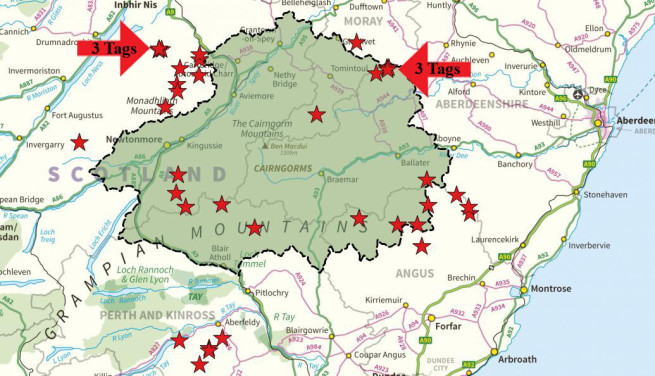
Significantly, the satellite tag data have allowed researchers to identify several geographical clusters where golden eagle persecution still takes place and more often than not, these are on or very close to moors being managed for driven grouse shooting. Unfortunately for the CNPA, some of those clusters are actually inside the Cairngorms National Park:

[This map shows the last known locations of satellite-tagged golden eagles that have either been found illegally killed or have disappeared in suspicious circumstances between 2004-2016. Data from the SNH report Analyses of the fates of satellite-tracked golden eagles in Scotland (2017) authored by Dr Alan Fielding & Dr Phil Whitfield]

It’s clear then, that the CNPA (and NatureScot) are in an embarrassing position and want/need to be seen to be doing something about the ongoing persecution. And ongoing it is, as we’ve seen with an illegally poisoned white-tailed eagle being found on a grouse moor inside the National Park last year (here) and yet another illegally poisoned golden eagle being discovered on another grouse moor inside the National Park earlier this year (see here). The subsequent bad press from these crimes is difficult for the CNPA to deal with (e.g. here).

And that leads me to be cynical about the timing of this latest press release. If you remember, back in 2019 the CNPA issued a similar press release (see here), stating that a new type of tag had been developed and would be fitted to golden eagles in the National Park over the forthcoming 18 months. The CNPA claimed this new tag would ‘provide an instant fix on any birds which die’.

The reality was somewhat different. The ‘new tag’ wasn’t developed to a sufficient standard that it could be trialled and thus was not fitted. That 2019 press release was considerably premature and I’m going to stick my neck out again and say this latest press release is similarly premature. Although this time a ‘new tag’ has actually been fitted and deployed on three young birds, it is far too soon to know whether the tag actually works as is being claimed, not least whether it will provide an ‘instant alert’ when an eagle dies. The ‘new tag’ being deployed this time is collecting the same type of data as the tags we currently deploy on golden eagles, and it has been used to track raptors in North America, but it is not the tag that we were told was being developed, with public funding, to specifically help detect illegal persecution of golden eagles in Scotland.

So why might the CNPA be keen to put out this press release prematurely? Well, if you’re a cynic like me, you might think that the CNPA has recently received a barrage of criticism for its inability to prevent the illegal killing of golden eagles (and other raptors) inside the National Park, sparked by the discovery of the poisoned golden eagle on Invercauld Estate earlier this spring, and so they’re keen to try and turn that around:

[The deliberately poisoned golden eagle, next to a poisoned mountain hare bait. Photo by RSPB Scotland]

The timing of the press release might also have a lot to do with the CNPA’s forthcoming five-year management plan, where it will have to report on its failures to meet the previous plan’s raptor conservation-based objectives. If the CNPA can chuck in a few ‘positives’ in to the new plan, such as the deployment of these new tags, it might act as a sweetener to those who will, quite rightly, be criticising the Park’s lack of progress on this issue.

Having said all that, I wouldn’t be alone in being delighted if this tag does function as is being claimed, and provides an ‘instant alert’ when an eagle dies, whether that be from natural causes or from illegal persecution. Any technological advance that would help the police to identify the criminals would be warmly welcomed by all (except for the criminals, obviously).

It’ll be interesting to see what happens with this new tag once the young eagles disperse during the autumn and travel into grouse moor areas where eagles are still not tolerated.

Incidentally, there will be short film about golden eagle persecution in Scotland being shown during this weekend’s live broadcast for Hen Harrier Day (Saturday 7th August 2021). If you want to hear more about this and what else is coming up, please sign up for Wild Justice’s event notification here.

Police lead multi-agency search after suspected peregrine poisoning in Shropshire

A multi-agency search took place in Shropshire yesterday as part of the ongoing investigation in to the suspected poisoning of a peregrine earlier this year.

You may recall the very prompt appeal for information made by West Mercia Police in May (see here) after the corpse of a female peregrine had been found, along with a suspected pigeon bait, at the notorious raptor persecution blackspot of Clee Hill.

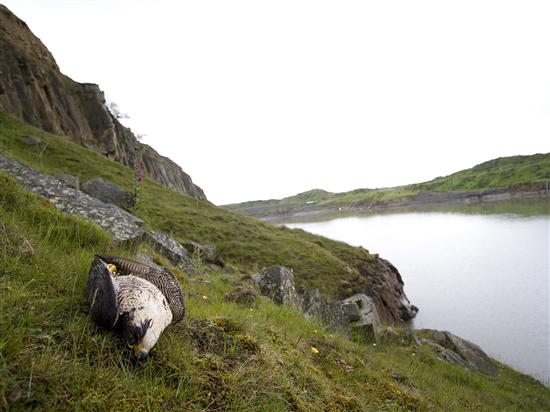
[This is a photograph of another peregrine found poisoned at this site in 2017 (see here). Photo by RSPB]

Toxicology results are apparently still pending on this latest case but given the long history of poisoned peregrines at this site, and the discovery of yet another baited pigeon, it’s more than likely that this latest peregrine victim had also been illegally poisoned.

No doubt this is what prompted the police-led search at a premises yesterday, assisted by experts from Natural England, the National Wildlife Crime Unit and the RSPB Investigations team. The investigation continues.

[Photo via West Mercia Police]

This is at least the 5th multi-agency search in England this year, all in response to raptor persecution crimes. On 15th March 2021 there was a raid in Lincolnshire (see here), on 18th March a raid in Dorset (here), on 26th March a raid in Devon (see here) and on 21st April a raid in Teesdale (here). And now this raid in Shropshire.

Worryingly, all of these cases have involved the confirmed / suspected use of banned poisons to kill birds of prey.

Well done to all the agencies involved in these follow-up investigations. It’s good to see genuine partnership-working in the fight to catch the raptor killers.

Red kite poisoned in North Wales – police appeal for information

North Wales Police Rural Crime Team has issued an appeal on Twitter for information after a toxicology report earlier this month confirmed that a red kite had tested positive for the poison Bendiocarb.

Unfortunately the details of this latest wildlife crime are vague. The kite was found ‘in the area’ of the Ceiriog Valley ‘earlier this year’ and the police believe the poisoning was ‘potentially deliberate’.

That’s it, I’m afraid. No specific location, no details of the circumstances and no date of discovery. [See update below]

There is a police reference number (21000458355) to quote if anyone has any information that could help the police investigation. Please call 101 if you can help.

UPDATE 8th July 2021: Thanks to PC Dewi Evans of the Rural Crime Team for pointing out the following posting on the Rural Crime Team’s Facebook page. For the benefit of those not on Facebook, here’s what it says:

The Rural Crime Team has launched an investigation into the poisoning of a red kite, found dead in the Ceiriog Valley. The bird of prey, protected under the Wildlife and Countryside Act 1981, was found deceased on February 27th earlier this year and attended to by RSPB Investigations Team. Toxicology tests carried out by the Welsh Government have since revealed the bird tested positive for Bendiocarb – a highly toxic insecticide. Officers believe the incident was potentially a deliberate act and are asking anyone with information to get in touch. It comes following several similar incidents reported in the area over the past three years, with a number of ravens and crows also found to have been poisoned using another substance .PC Dewi Evans, North Wales Police Rural Crime Team manager said: “We suspect the red kite died as a result of the unlawful use of poison and as a result, we have launched an investigation into the incident. “The deliberate poisoning of a bird brings a serious risk to humans and other animals and is hugely irresponsible. “We are currently looking into a potential motive for this incident and ask members of the public who have information to get in touch.” Anybody with information is asked to contact officers at the North Wales Police Rural Crime Team via the website or by calling 101, quoting reference number 21000458355. Alternatively, call Crimestoppers anonymously on 0800 555 111.

ENDS

UPDATE 8th October 2021: Shotguns & dead bird of prey seized during multi-agency raid in Wales (here)

Rare breeding success for sea eagles in Cairngorms National Park but outlook for chick is bleak

The Cairngorms National Park Authority has issued the following press release today (6th July 2021). My commentary on this news is below the press release:

Raptor breeding successes for East Cairngorms Moorland Partnership

The productivity of breeding raptors in the east of the Cairngorms National Park this season is encouraging and includes the hatching of a sea eagle chick on Balmoral, the first time that the species has successfully bred on the estate.

The breeding pair of sea eagles – also known as white-tailed eagles – have been observed on Balmoral for the last few years. Both adult birds carry satellite tags and close collaboration with the Royal Society for the Protection of Birds (RSPB) has allowed the Balmoral Ranger Service to follow their weekly movements during the breeding season. A healthy male chick has now hatched and been ringed. Three golden eagle chicks have also recently been ringed as part of long-term monitoring on Balmoral.

Balmoral Estate is a member of the East Cairngorms Moorland Partnership (ECMP) which has seen breeding success for golden eagles, hen harriers, red kite, osprey, peregrine and merlin, as well as short-eared owls, in 2021, across the various land holdings.

[The young white-tailed eagle chick on the nest at Balmoral. Photo by North East Scotland Raptor Study Group, a member of the Scottish Raptor Study Group]

Richard Gledson, Estate Manager at Balmoral Estate said: “All at Balmoral Estate are delighted that sea eagles have nested successfully for the first time. A previous nesting attempt in 2017 on the same site sadly failed and we have had our fingers crossed since then. The birds have been with us for a couple of years, and we have been working closely with the North East Scotland Raptor Study Group who ringed the chick last week and with the RSPB who have been sending data from their satellite tags.”

Glenavon Estate – which is home to three pairs of golden eagles, including one of the highest nesting sites in Scotland – has had a golden eagle chick satellite tagged for the first time in recent years. Satellite tags are used by biological researchers on a variety of species including eagles and harriers, and provide valuable insight into their movement and survival. Golden eagle chicks have also been tagged on the Glenlivet Estate and Mar Lodge Estate.

Furthermore, Mar Lodge has hosted six hen harrier nests in 2021. One pair failed early in the season, but the other five nests all have chicks. Two hen harrier chicks have been satellite-tagged in collaboration with the RSPB. Evidence from satellite tags fitted to some of the harriers which are now breeding shows that the birds range widely, foraging across ground on neighbouring ECMP estates.

Last year, Mar Estate witnessed the first successful breeding attempt of sea eagles in Deeside for 200 years, but the relatively inexperienced pair failed this season at the hatching stage, with poor weather likely a contributing factor, however hopes are high for success with continued breeding efforts next season and beyond.

Dr Ewan Weston of the North East Scotland Raptor Study Group, who has carried out much of the satellite tagging on ECMP estates, commented: “This year’s raptor tagging on ECMP estates builds on a positive collaboration with the estates over recent years. Despite a very wet, snowy May, the general picture in the area is that raptors, particularly golden eagles, red kites and hen harriers have done well.”

The East Cairngorms Moorland Partnership is a landscape-scale collaboration between five sporting estates and the Cairngorms National Park Authority. The partnership seeks to deliver private interests alongside public benefits, including improving the conservation status of raptors, demonstrating best practice muirburn management, expanding areas of woodland and scrub and peatland restoration. Partners have been collaborating with a wide range of ecologists in the National Park.

Xander McDade, Convenor at the Cairngorms National Park Authority, said: “We are delighted to hear that productivity of raptors in the east of the National Park looks good for 2021. However, we know that we can still do more for the birds and are committed to finding ways of improving the conservation status of moorland raptors, along with other red and amber moorland bird species. This includes working closely with the five estates that make up the ECMP on a range of conservation measures.”

ENDS

First of all, the breeding success of this pair of white-tailed eagles on Balmoral Estate is obviously very good news and long, long over due.

Norway donated 85 sea eagles for a reintroduction project in eastern Scotland between 2007-2012, although over a quarter of those didn’t survive (the main known causes of death included illegal poisoning, illegally shot, accidentally electrocuted and being hit by trains). The East Coast reintroduction was the third phase of a national reintroduction project that started back in 1975 on the west coast of Scotland, after the species was extirpated from Britain thanks to persecution in the late 1800s and early 1900s.

The first successful breeding attempt in east Scotland in 2013, the first for over a century, was an historic milestone in the project and was hoped to be the beginning of a new and vibrant population in the east, mirroring the successful population growth in the west.

So far though, progress has been incredibly slow and ongoing persecution has been at the centre of that (e.g. see here for the news that a sea eagle’s nest tree was deliberately felled on a grouse moor in the Angus Glens, also in 2013-nobody was prosecuted).

A number of young satellite-tagged sea eagles have ‘disappeared’ in suspicious circumstances on or next to grouse moors since then, and only last year a young sea eagle was found dead, illegally poisoned, on another grouse moor inside the Cairngorms National Park (see here). Nobody was prosecuted for that crime.

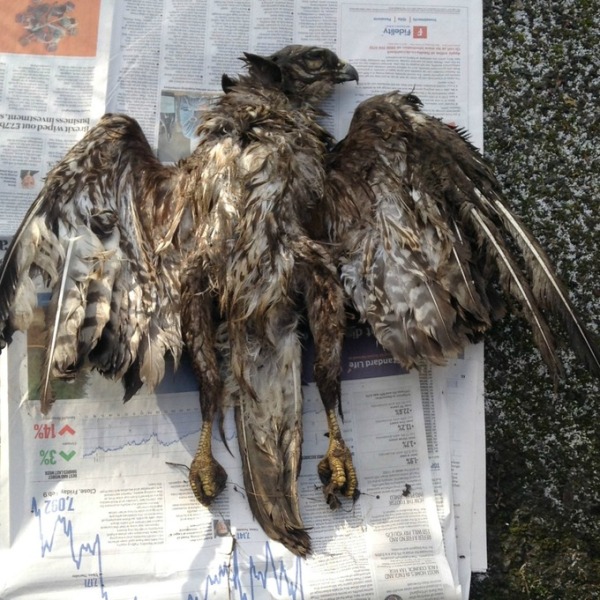
[A police officer examines the corpse of the illegally poisoned sea eagle found dead on a grouse moor in the Cairngorms National Park in 2020. Photo by Police Scotland].

So yes, it’s excellent news that Balmoral Estate has hosted a successful breeding attempt this year – well done to the team there – but it’s only half of the story. What happens when that young eagle fledges and disperses from Balmoral later this year?

Will it meet the same fate as this young golden eagle, which fledged from a nest site in the eastern Cairngorms last year and was found dead, ‘deliberately poisoned’ on a grouse moor on Invercauld Estate earlier this year?

[An illegally poisoned golden eagle, laying next to a poisoned mountain hare bait, found dead on a grouse moor in the Cairngorms National Park in 2021. Photo by RSPB Scotland]

I can see why the Cairngorms National Park Authority would want to issue this press release – not just to deservedly celebrate the successful breeding attempt on Balmoral Estate but probably more cynically, to try and undo some of the reputational damage that has been caused to the Park Authority and to its Eastern Cairngorms Moorland Partnership (ECMP) after the discovery of the poisoned golden eagle earlier this year on one of the ECMP’s partner estates (now no longer a partner) and the deserved criticism that the Park Authority has received for refusing to publish the correspondence it had had with the ECMP about the future of Invercauld Estate as a member of the ECMP following the discovery of the poisoned eagle (see here). This is the same tactic the Park Authority employed a few years ago when illegally-set traps were found on Invercauld Estate (here).

The ECMP can thank its lucky stars that one of its (now five) member estates is Mar Lodge, owned by the National Trust for Scotland, and with a glowing reputation for raptor conservation, especially for breeding hen harriers. Without Mar Lodge’s efforts, the ECMP’s raptor conservation efforts would be looking pretty feeble to date.

Although I noted the irony of the statement in the Park Authority’s press release that, ‘Evidence from satellite tags fitted to some of the harriers which are now breeding shows that the birds range widely, foraging across ground on neighbouring ECMP estates‘.

Er, yeah, but they forgot to mention how many of those hen harriers subsequently ‘disappear’ in suspicious circumstances on grouse moors in the ECMP and beyond (e.g. see here).

It doesn’t matter how far the Park Authority tries to spin the very welcome but too infrequent ‘good news’ stories like the breeding white-tailed eagles on Balmoral – the bottom line remains that large areas of the Cairngorms National Park are still raptor persecution hotspots and until that changes, the outlook for this young sea eagle is bleak.