Bird crime soared across the UK in 2020, and RSPB believes Scotland’s native birds of prey will continue to be persecuted, according to two new articles published yesterday in The Courier and The Press & Journal:
Birds of prey such as hawks, eagles, kites, buzzards, harriers, falcons and owls are protected by the Wildlife and Countryside Act 1981.
The RSPB’s annual report revealed that 2020 was the worst year on record for bird crime across the UK.
There were 137 known and confirmed incidents of birds of prey being killed, the highest number in 30 years.
This trend has continued in 2021, according to Ian Thomson, RSPB Scotland’s head of investigations.
He said: “Bird crime covers a whole manner of crimes against wild birds, but what is particularly of concern are those crimes that have an impact on the populations and ranges of a variety of species.”
According to Mr Thomson, bird crime, also known as raptor persecution, is particularly rife in the north-east, with the hen harrier population being a fraction of what it was 20 years ago.
He also explained that golden eagles are only occupying around a third of the breeding territories that they ought to; meanwhile, peregrines have largely disappeared from the uplands in the north-east.
Mr Thomson believes that these low population numbers are largely down to the persecution of birds of prey for the intense land management of grouse moors.
Birds of prey are at the top of the food chain and they hunt and eat grouse and pheasants.
In an attempt to maximise the number of game birds available for clients to shoot, grouse moor managers will eliminate any threats to their birds.
This can include burning patches of heather moorland and releasing clouds of smoke into the air, leaving medicated grit out in the open and hare baiting.
The National Golden Eagle Survey shows that across Scotland the population as a whole is doing well and that there are significant increases in the west where there are no grouse moors.
Mr Thomson said it is the east of Scotland where the populations are a fraction of what they should be.
Scientific reports show that the illegal persecution of golden eagles, hen harriers, red kites and peregrines are largely happening in areas managed for game bird shooting.
“Unfortunately, these findings are largely happening in the middle of nowhere,” Mr Thomson said, “out of sight, out of mind, where witnesses are very far and few between.
“But, occasionally, an incident occurs that is detected.
“In 2020, about a week into lockdown when the entire population of the country was told to stay indoors or to exercise within five miles of your house, we had a young white-tailed eagle poisoned on a grouse moor in Strathdon, in an area with an appalling history of crimes against birds of prey going back 10-plus years.”
Mr Thomson explained there have been cases of birds of satellite-tagged birds disappearing under “suspicious circumstances”.
In March a golden eagle was illegally poisoned on the Invercauld Estate, a grouse moor in the Cairngorms.
Last year a satellite transmitter that had been fitted on a golden eagle was found at the side of a river.
It was wrapped in lead sheeting and thrown into the river where it lay for four years until a walker found it on the bank.
Mr Thomson said: “This is the efforts that people are going to cover up these crimes, they don’t want to be caught.
“The problem is, as I say, these crimes are seldom witnessed; to actually get any idea of the scale of it we’re really depending on doing population studies.
“We’re never going to find all the victims because, needless to say, if someone shoots a golden eagle they’re not going to leave it around for the RSPB or the police or a hillwalker to find.
“These crimes are being covered up.”
The RSPB Scotland’s head of investigations explained that there are other factors that have impacted the populations of birds of prey.
He said that all birds face challenges “just surviving”, through natural mortality, starvation, and loss of habitat due to the intensification of land management or agriculture.
Because of this, populations are much lower than what would be ideal, and so deliberate and illegal killing is adding extra strain to the populations.
As well as being important for biodiversity, birds of prey are an attraction for tourists visiting Scotland.
People interested in photography travel from all over the world to capture Scottish wildlife, bringing millions to the economy.
Mr Thomson highlighted that, on the Isle of Mull, around £5 million a year goes into the island from people going to see white-tailed eagles.
The Scottish Government plans to introduce licensing to grouse moors, which Mr Thomson described as a “game-changer”.
He believes the loss of a license to shoot will introduce a significant deterrent to the estates that do persecute birds of prey.
“There are places you wouldn’t want to take your dog for a walk in case it gets caught in a trap or eats something poisonous,” he said. “It’s not just birds that are dying, it’s people’s pets.
“Perish the thought that some day some small child will come into contact with chemicals like this, it could have absolutely devastating effects.
“It’s not only illegal but it’s reckless and indiscriminate.”
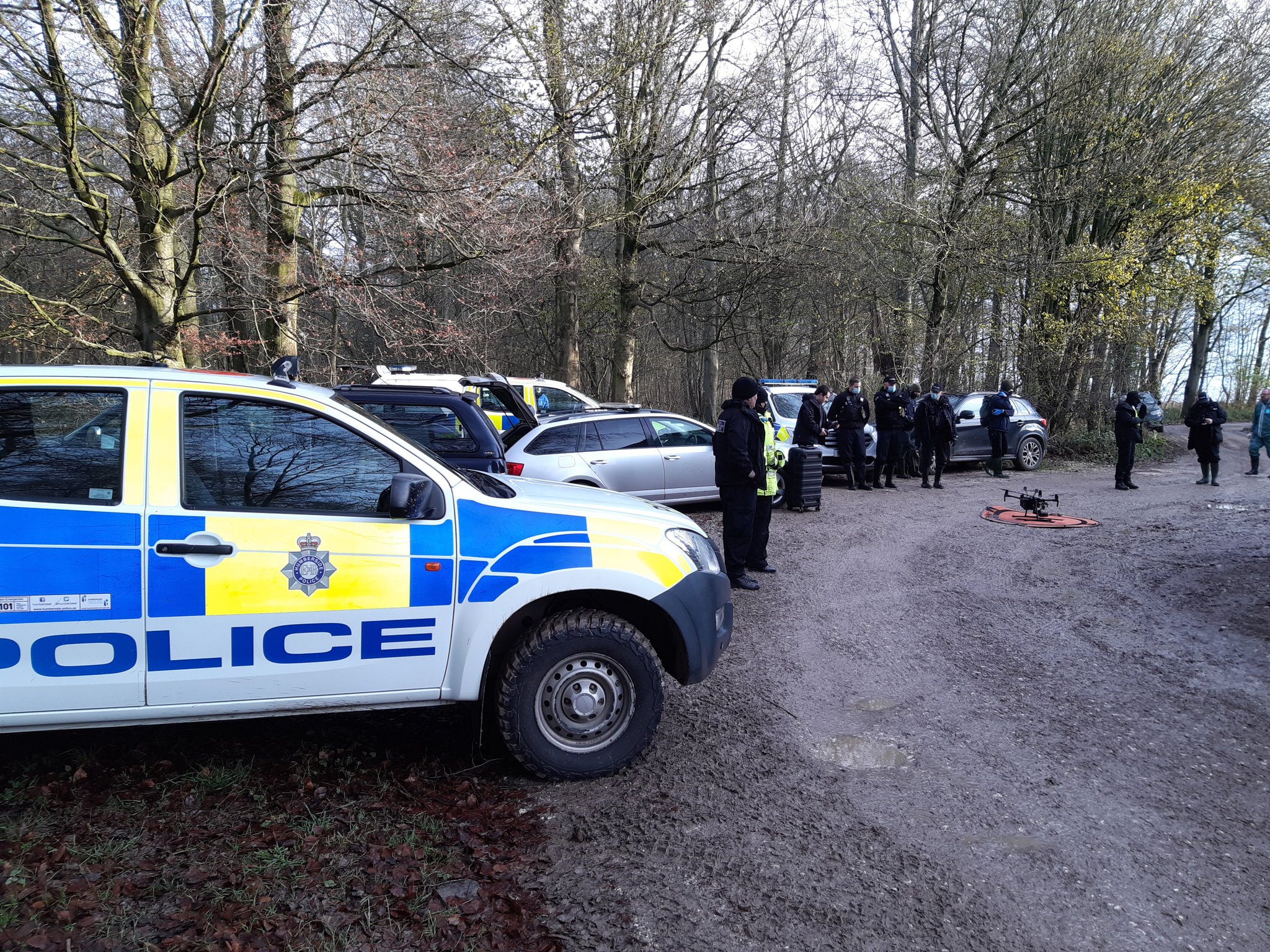
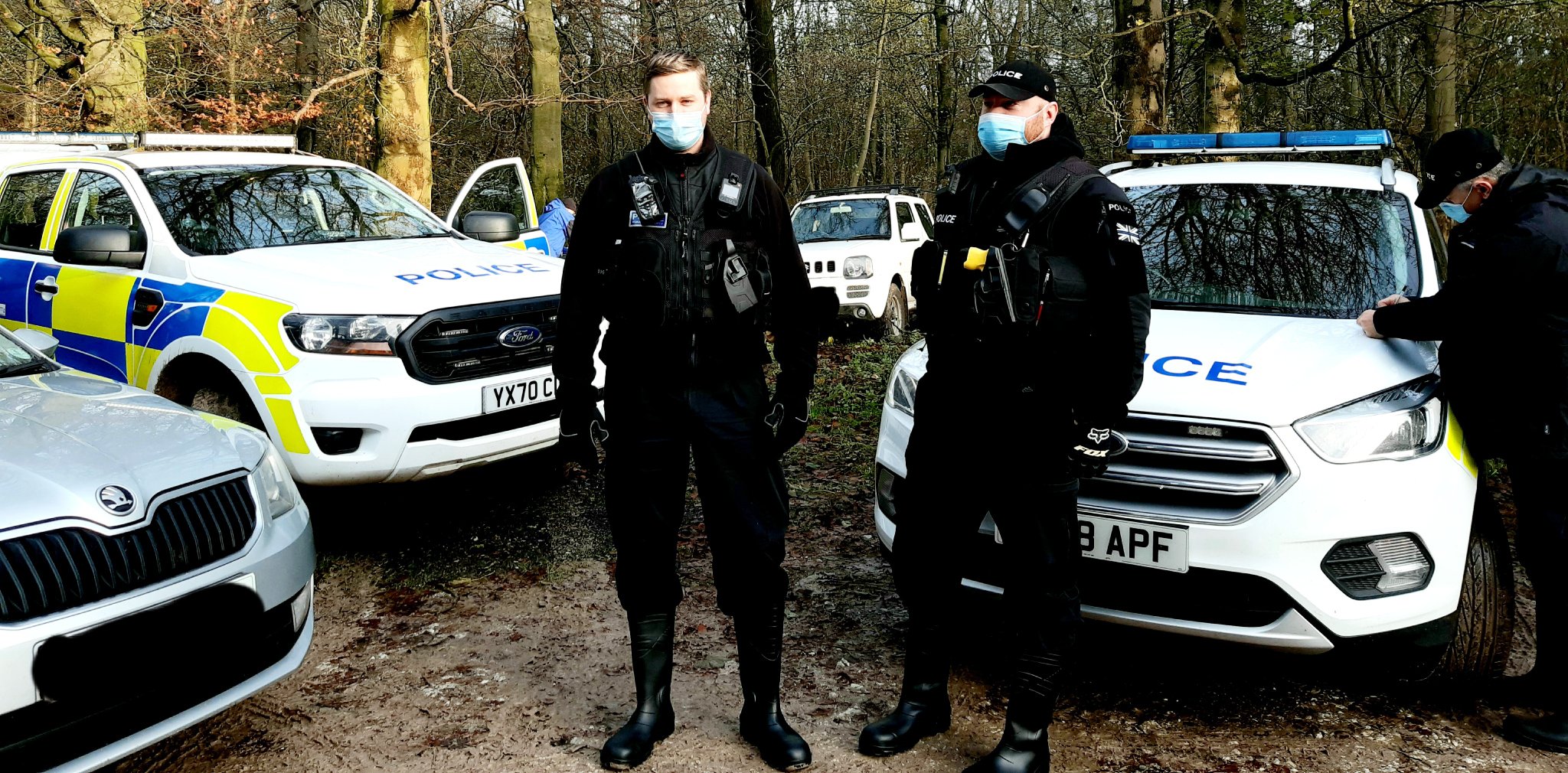
Humberside Police led a multi-agency raid on 10th December 2021, executing a warrant in relation to suspected raptor persecution crimes after a number of dead buzzards were found with unusually high levels of rat poison.
The police were joined by staff from Natural England, National Wildlife Crime Unit and RSPB Investigation’s team.
The investigation is ongoing.
Photos from Humberside Police Rural Crime Team:
This is one of many multi-agency searches in the UK this year, all in response to raptor persecution crimes. On 18th January 2021 there was a raid in Suffolk (here), on 15th March there was a raid in Lincolnshire (see here), on 18th March a raid in Dorset (here), on 26th March a raid in Devon (see here), on 21st April a raid in Teesdale (here), on 2nd August a raid in Shropshire (here), on 12th August a raid in Herefordshire (here), on 14th September a raid in Norfolk (here), and a raid in Wales in October (here).
That’s a lot of raids in a relatively short space of time, in comparison to recent years. It’s testament to the agencies involved that they are being so proactive and working well together in a genuine multi-agency partnership, which is brilliant to see. It’s also testament to the fact that raptor persecution continues in many locations across the UK, despite what the game-shooting organisations would have us believe.
Whether these investigations result in prosecutions is another matter entirely (although we’ve already seen two successful convictions in recent weeks – here and here), but personally I’m delighted that at least this early part of the criminal justice process appears to have been re-energised after a long period of stagnation. Well done to all those involved.
Regular blog readers will be well aware that the notorious Leadhills Estate, a grouse-shooting estate in South Lanarkshire that has been at the centre of police wildlife crime investigations at least 70 times since the early 2000s, is currently serving a three-year General Licence restriction based on what NatureScot described as ‘clear evidence’ of raptor persecution offences, including the illegal killing of a short-eared owl, two buzzards and three hen harriers that were ‘shot or caught in traps’ on Leadhills Estate since 1 January 2014 (see here) and the discovery of banned poisons on the estate in May 2019 (see here).
That original General Licence restriction was imposed on Leadhills Estate by NatureScot in November 2019 and is valid until November 2022.
A General Licence restriction can be imposed by NatureScot when there is sufficient evidence of wildlife crime on an estate but insufficient evidence for the police to charge a named individual. Leadhills Estate has denied all knowledge of any wildlife crime on its land.
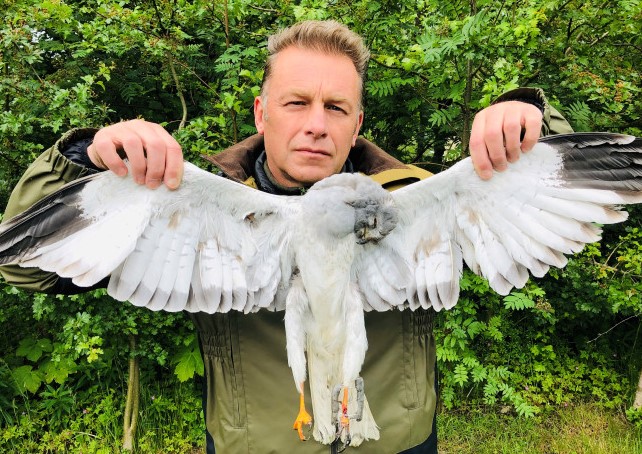
[Chris Packham holds a dead hen harrier. This bird was caught by the leg in an illegally-set trap on the Leadhills Estate grouse moor in May 2019. The trap had been set next to the harrier’s nest and was hidden by moss. The harrier’s leg was almost severed. Unfortunately, extensive surgery could not save this bird. Photo by Ruth Tingay]
Since that original General Licence restriction was imposed on Leadhills Estate in November 2019, further alleged offences have been reported and are the subject of ongoing police investigations (see here) including the alleged shooting of a(nother) short-eared owl by a masked gunman on a quad bike as witnessed by a local resident and his eight year old son in July 2020 (see here) and the discovery of yet another batch of banned poisons, also in July 2020 (here). A satellite-tagged hen harrier (Silver) also vanished in suspicious circumstances on the estate in May 2020 (here), and although NatureScot don’t consider missing satellite-tagged raptors as sufficient evidence for a General Licence restriction, the disappearance can be used as supportive evidence if further alleged offences are also being considered.
In light of these latest allegations, in late September 2021 NatureScot announced that a further three-year General Licence restriction (an extension to the first one) was being imposed on Leadhills Estate (here), although it turned out that it wasn’t a three-year extension, as NatureScot had claimed, but was rather an eight-month extension because this latest restriction was running concurrently with the first restriction (see here).
In early October 2021 Leadhills Estate was reported to be considering appealing against the extended restriction (here) and shortly afterwards NatureScot removed the official notification of the extension from its website, a sure sign that an appeal was underway.
Roll on two months and the official notification has been re-posted on NatureScot’s website (here), which I take to mean that Leadhills Estate has lost its appeal and the General Licence restriction has been re-instated until it expires on 8th July 2023. This means that the estate cannot undertake certain activities (e.g. the operation of crow cage traps to kill hundreds of corvids) unless estate gamekeepers apply to NatureScot for an individual licence and NatureScot approves the application(s).
I’ll be monitoring this and will be keen to see whether individual licences are granted to gamekeepers on an estate that has had, in effect, a double General Licence restriction imposed after evidence of multiple wildlife crimes has been provided to NatureScot by Police Scotland.
Earlier this autumn I submitted an FoI to NatureScot to find out on what basis Leadhills Estate was appealing the General Licence restriction. The last time the estate appealed (against the original General Licence restriction), the grounds for appeal were laughable (see here) and were not accepted by NatureScot.
This time, NatureScot refused to release the details of the estate’s appeal because at the time the appeal was considered to be ‘live’ and it was thought that publication might affect the estate’s right to a fair hearing. I don’t know how it would have affected the estate’s appeal, given the appeal is heard in-house at NatureScot and cannot be influenced by outside commentary, but that was NatureScot’s decision.
That’s fine. Now the appeal has been dismissed and the restriction is in place, I have submitted another FoI to NatureScot and I expect the estate’s grounds for appeal to be released in to the public domain.
A response is due from NatureScot by the end of this month. I’ll keep you posted.
UPDATE 23 February 2022: NatureScot refuses to publish details of Leadhills Estate’s general licence restriction appeal (here)
Today is the 26th November 2021. It’s been exactly one year since the then Environment Minister Mairi Gougeon announced the Scottish Government’s long-awaited response to the Werritty Review on grouse moor management and a decision to implement a licensing scheme for grouse shooting.
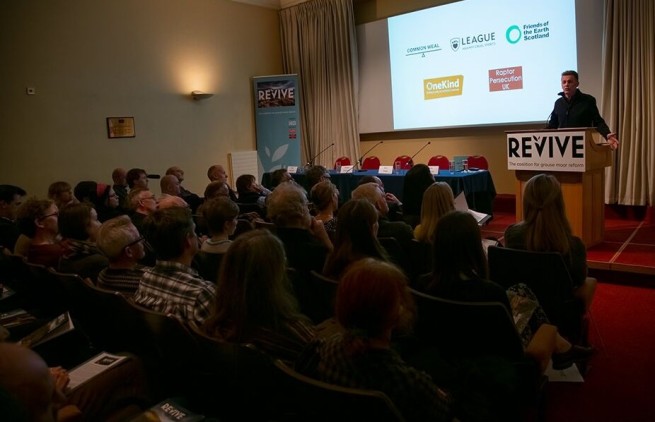
How we got to that position was the subject of a talk I presented at the REVIVE national conference a couple of weeks ago, hosted by Chris Packham at Perth Concert Hall.
[Chris Packham opening the REVIVE coalition for grouse moor reform conference. Photo by Ruth Tingay]
There had been an intention for a recording of the entire event to be made available but we learned subsequently that unfortunately the venue’s audio system had failed. REVIVE’s campaign manager, Max Wiszniewski has since published a conference overview (here) but I thought I’d take the opportunity to share the main points from my talk, to try and put Mairi Gougeon’s announcement in to some sort of context, and it seems fitting to do that today.
My opening slide was a screengrab of Minister Gougeon making that historic statement on 26th November 2020:
“The key recommendation put forward in the Werritty report – is that a ‘licensing scheme be introduced for the shooting of grouse’. This is a recommendation that I accept.
However, while I the understand why the review group also recommended that such a scheme should be introduced if, after five years, ‘there is no marked improvement in the ecological sustainability of grouse moor management’, I believe that the Government needs to act sooner than this and begin developing a licensing scheme now”.
There’s no question that this was a significant statement and although some campaigners were disappointingly dismissive (including several commentators on this blog), I think that when you understand the history of exactly what it took to get there, over many, many years of hard campaigning at substantial personal cost to many, you’ll hopefully appreciate why so many of us celebrated it as a huge victory. It’s not the end point, not by any means, but it is hugely symbolic of the direction of travel.
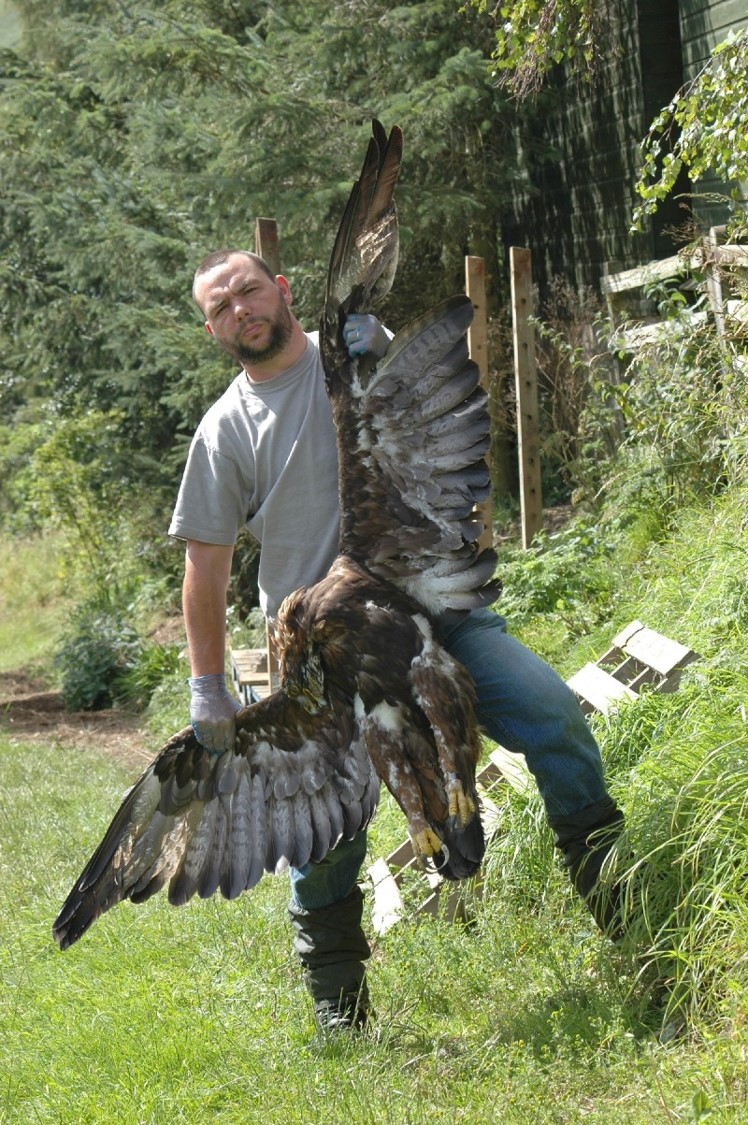
My next slide is a photo that I use in pretty much every talk I give on raptor persecution in the UK:
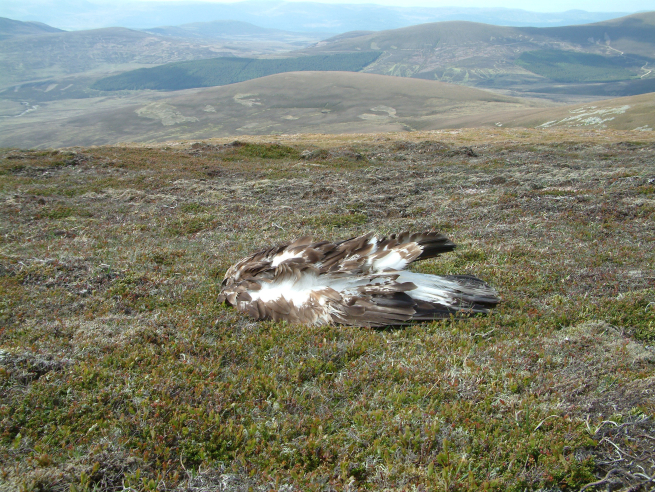
This is a photograph of a young golden eagle, found illegally poisoned on a grouse moor in the Cairngorms National Park in 2006. It was photographed by former RSPB Investigator Dave Dick (now retired) who had been sent out to retrieve it for post mortem. He had picked up many other illegally killed birds of prey on grouse moors over the years, but this image epitomises everything in its pitiful, poignant, senselessness.
I asked the audience to hold this image in their head as the talk progressed to cover some of the key moments in this long campaign against criminal activity and for effective law enforcement against those criminals.
I started with the basics – the 1954 Protection of Birds Act which brought legal protection for all raptor species in the UK, with the exception of the sparrowhawk which finally received full protection in 1961. So for most UK birds of prey, they’ve supposedly been protected for 67 years! This isn’t a new law that society needs time to adjust to and for which we should forgive any lack of adherence. This legislation was enacted a lifetime ago and was probably in place before every current working gamekeeper was even born. Ignorance of the law is no defence and that statement applies here, in spades.
In 1998, 44 years after raptors were declared ‘protected species’ in law, the then Secretary of State, Donald Dewar described the level of raptor persecution in Scotland as “a national disgrace“. He promised that following devolution the following year, the Scottish Government would take “all possible steps to eradicate it”.
RSPB Scotland started publishing annual reports in 1994, meticulously documenting raptor persecution. Their 20th report, published in 2004, documented that 779 birds of prey had been confirmed illegally killed between 1994 and 2004. This figure was considered the tip of the iceberg as wildlife crime, including raptor persecution, is widely recognised as being under-recorded for a number of reasons.
During the late 1990s-mid-2000s, and actually continuing to this day, researchers published a suite of scientific papers documenting the impact of illegal raptor persecution. This wasn’t just the odd ‘rogue incident’ here and there; raptor persecution was so extensive and systematic it was having population-level impacts on a number of species, notably the golden eagle, hen harrier, peregrine and red kite. The peer-reviewed evidence was conclusive – much of the killing was linked to game-shooting, and particularly to driven grouse moor management.
[An expanse of driven grouse moors inside the Cairngorms National Park. Photo by Ruth Tingay]
In 2000, the UK Raptor Working Group (established in 1995 and comprising a variety of statutory agencies, conservation NGOs and game-shooting bodies) published a report with a series of recommendations to address the recovery of bird of prey populations and their perceived impact on gamebirds, moorland management and pigeon racing.
In 2002, Scottish Natural Heritage (SNH) advised the Scottish Executive to accept most of the recommendations of the 2000 report and this led to many developments, with a particular focus on partnership working. Most of these so-called partnerships have since proven to be utterly ineffective (e.g. Partnership for Action Against Wildlife Crime Raptor Group, Heads Up for Hen Harriers) mostly due to them being heavily weighted towards game-shooting interests who seem intent on preventing progress by means of constant denial and obfuscation.
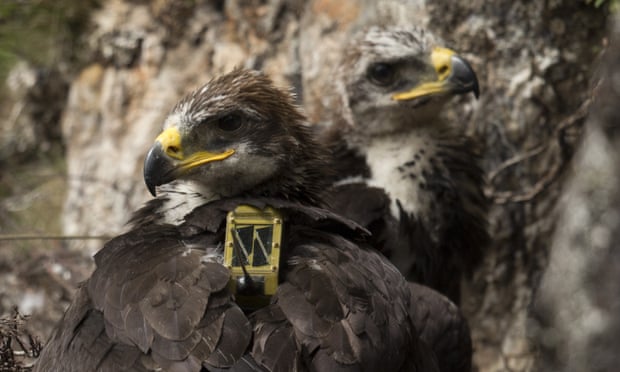
In 2004, raptor satellite-tagging began as a novel method of studying the biology and ecology of several species, notably the golden eagle. The significance of this will become apparent later.
[Two young golden eagles fitted with satellite tags prior to fledging. Photo by Dan Kitwood]
In 2005 the Possession of Pesticides (Scotland) Order was enacted, making it an offence for anyone to possess any of the eight highly toxic poisons used most frequently for killing birds of prey. This piece of legislation has proven useful in that it has allowed law enforcement agencies to prosecute for the lesser offence of ‘possession’ in cases where it has been virtually impossible to provide sufficient evidence to prosecute for actually poisoning a bird of prey.
In 2007 an adult golden eagle was found poisoned at her nest site in the Borders. She was part of the only breeding pair in the region. Nobody was prosecuted and the ensuing public outrage resulted in the then Environment Minister Mike Russell ordering a Thematic Review into the prevention, investigation and prosecution of wildlife crime, which led to a series of recommendations to improve enforcement activities.
[Police officer Mark Rafferty holding the poisoned corpse of the Borders golden eagle. Photo by Dave Dick]
In 2010, this blog was launched primarily to raise public awareness about the scale of illegal raptor persecution in Scotland. It was later widened to cover the whole of the UK. It’s had over 7.5 million views to date.
In 2011, the Scottish Government launched a poisons disposal scheme, offering a sort of ‘amnesty’ and the safe destruction of any banned poisons that might have been left over from when it was legal for people to have these toxins in their possession (i.e. pre-2005).
Also in 2011, Peter Peacock MSP put forward an amendment for the Wildlife & Natural Environment (Scotland) Bill to introduce additional powers for the Scottish SPCA to enable them to investigate a wider suite of wildlife crime, including raptor persecution. Then Environment Minister Roseanna Cunningham rejected the amendment but committed to launch a public consultation on this subject.
Later in 2011 the Wildlife & Natural Environment (Scotland) Act was enacted and in 2012 this led to the Scottish Government having to publish its first annual wildlife crime report. The legislation also brought in vicarious liability, providing an opportunity for prosecutions against landowners and sporting agents whose employees had committed certain offences linked to raptor persecution. After almost ten years there have only been two successful prosecutions. That’s not because there haven’t been more opportunities for prosecution – there have been plenty – it’s because for the most part the Crown Office has refused to take the cases. When pushed for an explanation we’ve simply been told ‘it’s not in the public interest to proceed’. One case was not progressed because the landowner / hierarchy of supervision could not be established because the identity of the person was hidden in an offshore trust.
In 2013 the then Environment Minister Paul Wheelhouse ordered a review of the penalties available for wildlife crime and appointed Professor Poustie to lead the review.
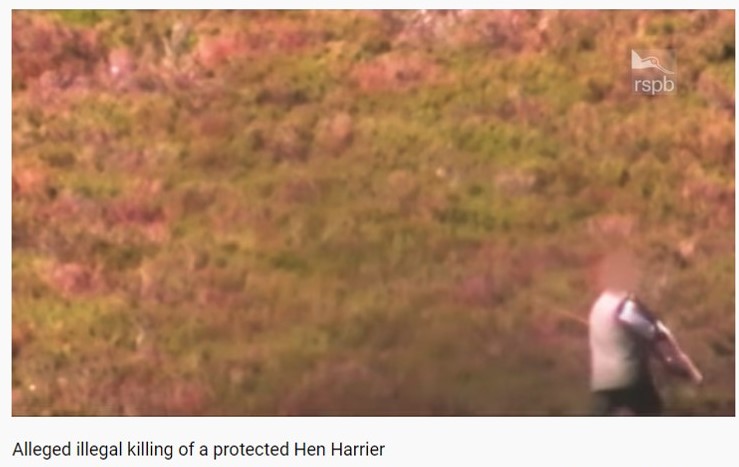
Also in 2013, after RSPB video evidence was published showing a gamekeeper allegedly shooting a hen harrier on its nest on a grouse moor in Morayshire, which led to a prosecution that was later dropped because the Crown Office ruled the evidence ‘inadmissible’, huge public uproar led to Environment Minister Paul Wheelhouse having discussions with the Lord Advocate about maximising opportunities for prosecution and the Lord Advocate subsequently instructed the Crown Office to utilise all investigative tools for enforcement against wildlife crime. This had zero impact – several other high profile cases involving RSPB video evidence have also since been dropped due to this apparent inadmissibility.
[A screen grab from an RSPB video showing the alleged shooting of a hen harrier on a grouse moor]
In 2014 Environment Minister Paul Wheelhouse introduced General Licence restrictions for shooting estates where police evidence confirmed that raptor persecution had taken place but where there was insufficient evidence to bring a prosecution against a named individual. This was supposed to be a ‘reputational driver’ to deter crimes but has proven to be utterly ineffective with just a handful of restrictions applied over the last seven years and most ‘sanctioned’ estates simply given an individual licence to allow them to continue the activities which were supposed to have been restricted under the General Licence. It’s just bonkers.
Also in 2014, Paul Wheelhouse ordered a review of gamebird management systems in other European countries to see whether these different management approaches could help address ongoing raptor persecution in Scotland.
Also in 2014, the Scottish Government finally launched a public consultation on increased powers for the SSPCA, three years after first agreeing to set this up.
In 2014, Mark Avery and Chris Packham launched the concept of Hen Harrier Day to draw attention to the plight of the hen harrier, timed to coincide with the start of the grouse shooting season on 12th August. Hen Harrier Day has now become an annual event and volunteers Andrea Hudspeth and Andrea Goddard have organised these high profile events in Scotland.
In 2015, with raptor poisoning crimes still occurring, not content that the poisoners had already been given an opportunity to hand in their illegal stashes back in 2011, the Scottish Government launched its second poisons amnesty scheme, ten years after it became an offence to possess these dangerous toxins. How many chances do these gamekeepers get?
Also in 2015, SNH launched its ridiculous Heads up for Hen Harriers project – joining forces with shooting estates to fix nest cameras at hen harrier nests to determine the cause of breeding failures on grouse moors (yes, really!). It was doomed to failure because obviously the gamekeepers on estates where the cameras had been installed would not destroy the harriers/nests (at least not while the birds were within camera range) and the study’s ‘findings’ would then be skewed towards natural predator events and poor weather conditions which the grouse shooting industry would then point to as being the main cause of hen harrier breeding failure on grouse moors. It was nothing more than a greenwashing project.
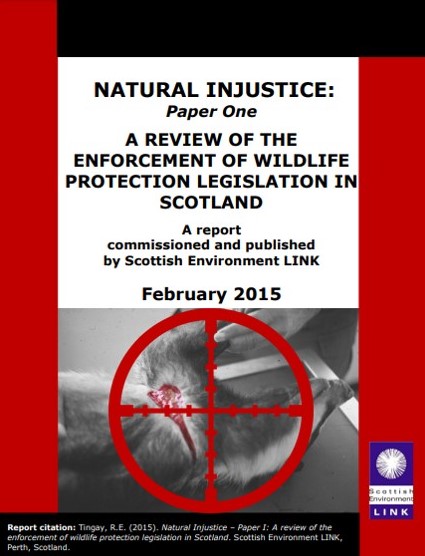
Also in 2015, Scottish Environment LINK published a damning report demonstrating that wildlife crime enforcement measures were still weak, inconsistent & ineffective, seven years after the HM Inspector of Constabulary published its Thematic Review into the prevention, investigation and prosecution of wildlife crime and its subsequent recommendations to improve enforcement measures. Even today, apart from the RSPB’s meticulous records, it’s virtually impossible to get accurate raptor persecution statistics due to incoherent recording across agencies and Police Scotland’s strange decisions to sometimes withhold information, long after investigations have closed.
Also in 2015, Professor Poustie’s review of wildlife crime penalties was published, making a series of recommendations to substantially increase penalties for certain types of wildlife crime, including raptor persecution.
A year later in 2016, then Environment Minister Dr Aileen McLeod accepted the Poustie Review recommendations to substantially increase penalties for wildlife crime. These were not finally enacted until four years later in the Animals and Wildlife (Penalties, Protections and Powers) (Scotland) Act 2020, increasing the maximum penalty for the most serious animal welfare and wildlife crimes to five years imprisonment and unlimited fines. We have yet to see these utilised by the courts.
Also in 2016 the Scottish Government made a manifesto pledge to establish a Wildlife Crime Investigation Unit as part of Police Scotland. This has not happened and appears to have been quietly dropped.
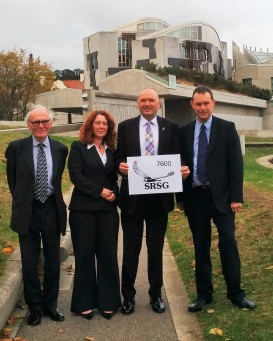
Also in 2016, the Scottish Raptor Study Group (SRSG) launched a petition to the Scottish Parliament calling for the introduction of a state-regulated licensing system for gamebird shooting. These volunteers who later spoke so passionately and convincingly in front of a televised Parliamentary committee in 2017 were subjected to a barrage of offensive online abuse from a number of gamekeepers and their hangers-on and this hate campaign continues to this day.
[SRSG members Patrick Stirling-Aird, Andrea Hudspeth, Logan Steele and Duncan Orr-Ewing outside the Scottish Parliament building. Photo by SRSG]
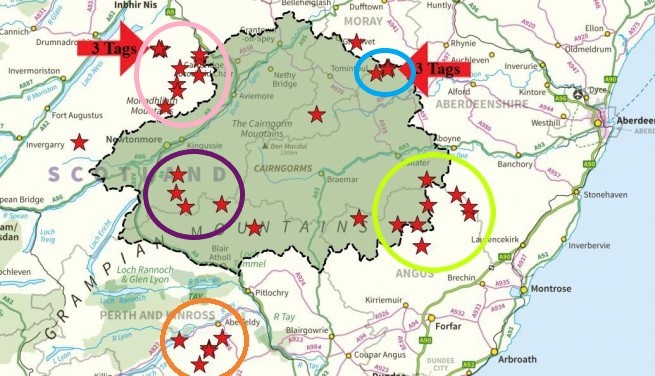
2016 also saw what in my opinion was the most significant and important event in the road leading to the introduction of grouse moor licensing. The RSPB published a press release about the suspicious disappearance of eight satellite-tagged golden eagles on grouse moors in the Monadhliaths between 2011-2016. Public outrage about this news, combined with the fact that nobody had ever being successfully prosecuted for killing a golden eagle, led to then Environment Cabinet Secretary Roseanna Cunningham calling for a review of golden eagle satellite tag data to establish whether there was a pattern to the disappearance of tagged eagles and whether there was a link with driven grouse shooting. Of course we all knew there was, but it was significant that the Cabinet Secretary had officially requested the analysis. Predictably, this Government-sponsored review coincided with a concerted smear campaign by the grouse shooting industry to undermine the functionality and reliability of satellite tags and the integrity of the highly qualified and licensed researchers who were fitting the tags to eagles. This continues to this day.
In 2017 the review of gamebird management in other European countries was published, showing that gamebird shooting in the UK was the most unregulated and unaccountable system of all those reviewed. This didn’t result in any direct action from the Scottish Government other than an instruction for the Werritty panel to consider the report’s findings as part of its Grouse Moor Management Review.
Also in 2017 Cabinet Secretary Roseanna Cunningham responded to the public consultation on increased SSPCA powers (3 yrs after the consultation closed!) & rejected it ‘based on legal advice’ which was never explained. As an alternative, she announced a Police Special Constables pilot scheme in the Cairngorms National Park to help detect raptor persecution crimes and bring the offenders before the courts.
The most significant event in 2017 was the publication of the Golden Eagle Satellite Tag Review. This comprehensive and forensic review was devastating, showing that almost one third of satellite-tagged golden eagles (131 of them) had been illegally killed or had ‘disappeared’ in suspicious circumstances between 2004-2016, and there were irrefutable geographic clusters centred on some driven grouse moors:
On the basis of this report, Cabinet Secretary Roseanna Cunningham ordered yet another independent review, this time to assess the environmental impact of grouse moor management and to provide recommendations and options for regulation, including the potential for a licensing scheme. Professor Werritty was appointed to lead the review.
In 2018 REVIVE was launched – a consortium of environmental, social justice and animal welfare groups seeking grouse moor reform in Scotland. The well-attended launch took place in Edinburgh and Chris Packham was the keynote speaker. Inevitably this led to yet another smear campaign by certain elements of the grouse shooting industry which continues to this day.
[Photo by REVIVE]
In 2019 the Police Special Constables pilot scheme in the Cairngorms National Park came to an end in complete failure. They didn’t report a single wildlife crime during this two-year scheme but illegal raptor persecution continued, as evidenced by the RSPB’S annual reports.
In December 2019 the Werritty Report was finally published two and a half years after it was commissioned. It highlighted many of the problems associated with driven grouse moor management but crucially it recommended a further five-year wait before the introduction of a licensing scheme to allow the grouse shooting industry yet more opportunity to oust the criminals within rather than have regulation foisted on it by legislation. This recommendation was clearly a result of having a number of representatives from the grouse shooting industry serving on the so-called independent panel. Meanwhile, the raptor killing continued.
In 2020 MSP Mark Ruskell (Scottish Greens) proposed increased powers for the SSPCA as an amendment in the Animals & Wildlife Bill. The then Environment Minister Mairi Gougeon rejected the amendment but promised to establish a task force later in summer to consider increased powers. Deja vu, anyone?
In November 2020 the Animals and Wildlife (Penalties, Protections and Powers) (Scotland) Act was enacted, increasing the maximum penalty for the most serious animal welfare and wildlife crimes to five years imprisonment and unlimited fines (after the recommendations of the Poustie review published in 2015). This raises the status of some offences to ‘serious’ and thus for the first time allows the Police to seek permission to utilise covert video surveillance in areas where raptor persecution is suspected. I know there is enthusiasm for this from a number of police officers and I look forward to seeing some results.
In December 2020, a year after receiving the Werrity Review, Environment Minister Mairi Gougeon announced the Scottish Government’s intention to introduce a licensing scheme for grouse moors without waiting for a further five years as the review had recommended.
[NB: I understand that Ian Thomson, Head of Investigations at RSPB Scotland will publish a blog later today (26th November 2021) detailing what has happened in the year following this announcement. I will publish the blog here when it’s available]. Update – Ian’s blog available here
In January 2021 the new Environment Minister Ben MacPherson responded to a Parliamentary Question from Mark Ruskell MSP and admits that the promised taskforce to consider increased powers for the SSPCA had not yet formed but was ‘expected later this year’. This is ten years on from when increased powers for the SSPCA was first mooted in the Scottish Parliament.
In September 2021 the Scottish Government published its five-year Programme for Government and it included commitments to deliver the recommendations of the Werritty review, and to establish a taskforce to review increased powers for the SSPCA, to report by the end of 2022. Yet another Environment Minister (the 9th one?) is in post – Mairi McAllan.
In October 2021 the ridiculous Heads Up for Hen Harriers ‘partnership’ project was closed, with SNH declaring it a ‘success’. It wasn’t, at all. I’ll be blogging about this separately in the next few days.
Meanwhile, in May 2021 a young golden eagle was found deliberately poisoned, lying dead next to a poisoned bait, on an Invercauld Estate grouse moor inside the Cairngorms National Park. Sixty-seven years after raptors gained legal protection and 23 years after Donald Dewar declared raptor persecution in Scotland ‘a national disgrace’, golden eagles and other raptors are still being illegally killed on some driven grouse moors.
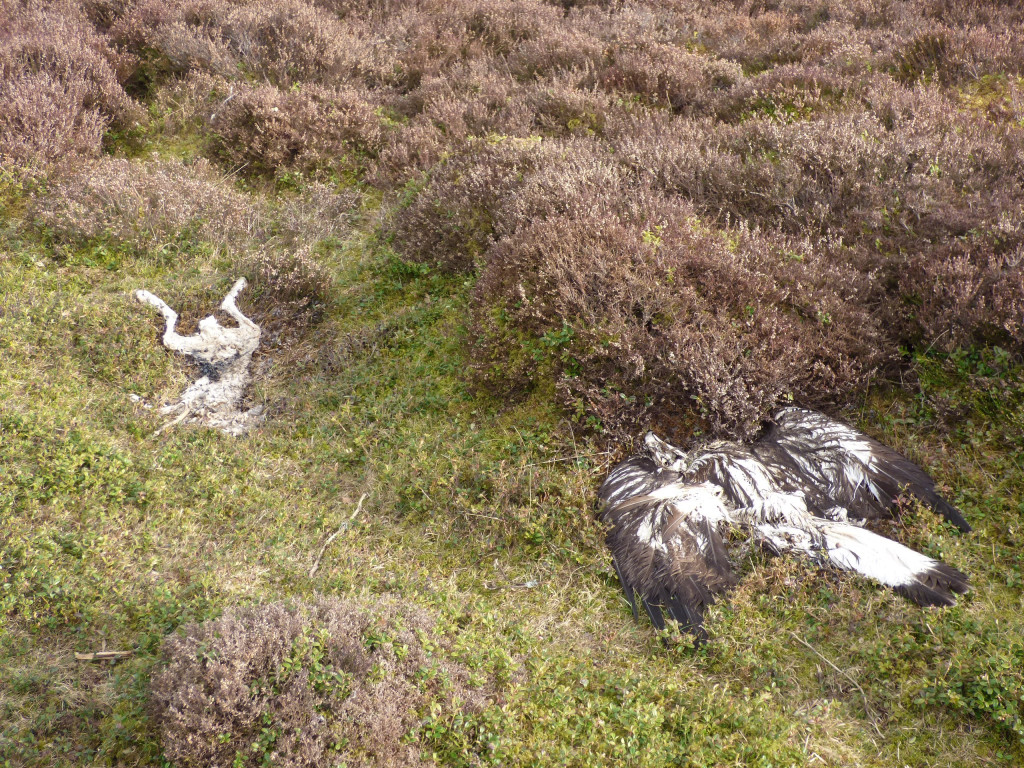
[The poisoned golden eagle, next to the poisoned hare bait, on a grouse moor on Invercauld Estate in the Cairngorms National Park in May 2021. Photo by RSPB Scotland]
So despite all this campaigning and political movement, nothing has changed on the ground. Golden eagles (and other raptor species) are still being killed on grouse moors, even inside the Cairngorms National Park, and still not one person has been successfully prosecuted.
It’s shameful that we, ordinary members of the public, have to campaign just to have the law upheld, but its even more shameful that despite decades of compelling evidence, the Scottish Government has still not taken effective action against the criminals within the driven grouse shooting industry.
Even so, we should absolutely celebrate how far we have come, and it’s been hard work and at great personal cost to many, but don’t underestimate just how much more work there is to come.
Press release Wildlife & Countryside Link (25th November 2021)
Rising reports of wildlife crimes during the pandemic spark fresh fears for beloved species
Reports of wildlife crimes against many species rose between 35-90% in 2020
At the same time convictions on key types of wildlife crime fell by 50%+
Nature experts are calling for improved recording and monitoring, better targeting of resources, and enhanced use of expert police and prosecutors to tackle wildlife crime
A new report published today (25 Nov) by nature experts has revealed a worrying increase in reporting of wildlife crimes against badgers, fish, birds of prey, and marine mammals during the pandemic. While a sharp decline in convictions for wildlife crimes including hunting, illegal wildlife trade, and fishing crime was also seen in 2020.
Reports of likely crimes against badgers rose by 36% in 2020, compared to 2019, with reports of potential fishing crimes up by more than a third (35%) and marine mammal incident reports (in Cornwall alone) rising 90%, according to data gathered by the NGOs. The number of confirmed raptor crimes in England & Wales in 2020 was almost double that in 2019, rising from 54 to 104 (the worst year for bird-crime ever as detailed by the RSPB in October).
At the same time fishing crime convictions fell by almost two-thirds from 2037 in 2019 to 679 in 2020, and illegal wildlife trade convictions halved to just 4 convictions. Hunting prosecutions also more than halved, from 49 in 2019 to 22 in 2020, with only 8 convictions. Hunting conviction rates have in fact steadily decreased for the last five years, falling from 54% of prosecutions being successful in 2016 to less than a third (32%) of prosecutions achieving conviction in 2020.
Martin Sims, Director of Investigations at the League Against Cruel Sports and Chair of Wildlife and Countryside Link’s Wildlife Crime group, said: ‘‘Wildlife crime is something that should concern everyone –it inflicts pain, harm and loss for much-loved wildlife and fuels wider criminality against people and property. Despite this the police still don’t gather centralised data on these serious crimes, leaving an incomplete picture from charities, which could be just a drop in the ocean of wildlife crimes. It is high time the Government steps in to treat wildlife crime with the seriousness it deserves. Making key crimes notifiable would enable police forces to better target resources, and track repeat offenders. While better police and prosecutor training and resources would help raise the pitiful 32% conviction rate for hunting prosecutions alone. The system must change to crack down on offences against nature once and for all.”
Dawn Varley, Acting CEO of the Badger Trust, said: “Badger crime has been a UK Wildlife Crime Priority for more than a decade, due to the scale of persecution – but sadly this persecution shows no sign of letting up. 2020 saw reports of badger crime rise, driven in large part by a shocking 220% increase in reports of developers interfering with badger setts. A small minority seem to see badger habitat protections as an inconvenience to be quietly bulldozed over, rather than a legal requirement to conserve an iconic British mammal. 2022 must see renewed work by police forces and the Crown Prosecution Service to bring offenders to justice. This must be supported by better monitoring, new training to enable officers and prosecutors to demonstrate criminal intent, and consistently tougher sentencing to deter these crimes.”
Mark Thomas, RSPB Head of Investigations UK, said: “In the wake of an emergency climate conference and with all life on earth facing an uncertain future, there has never been a more important time for urgent action to end the illegal killing of wildlife. Wildlife declines are already being felt, and species can ill afford to face the additional pressure of being brutally shot, trapped or poisoned; nor should the public have to put up with these crimes taking place in the wild places they go to for refuge.
“Bird of prey persecution reached unprecedented heights in 2020, particularly where land was managed for gamebird shooting. And it is certain that more crimes will have been committed and simply gone undetected and unreported. We urge the public to report dead or injured birds of prey in suspicious circumstances to the police and the RSPB, or pass on any information which may help lead to a conviction.”
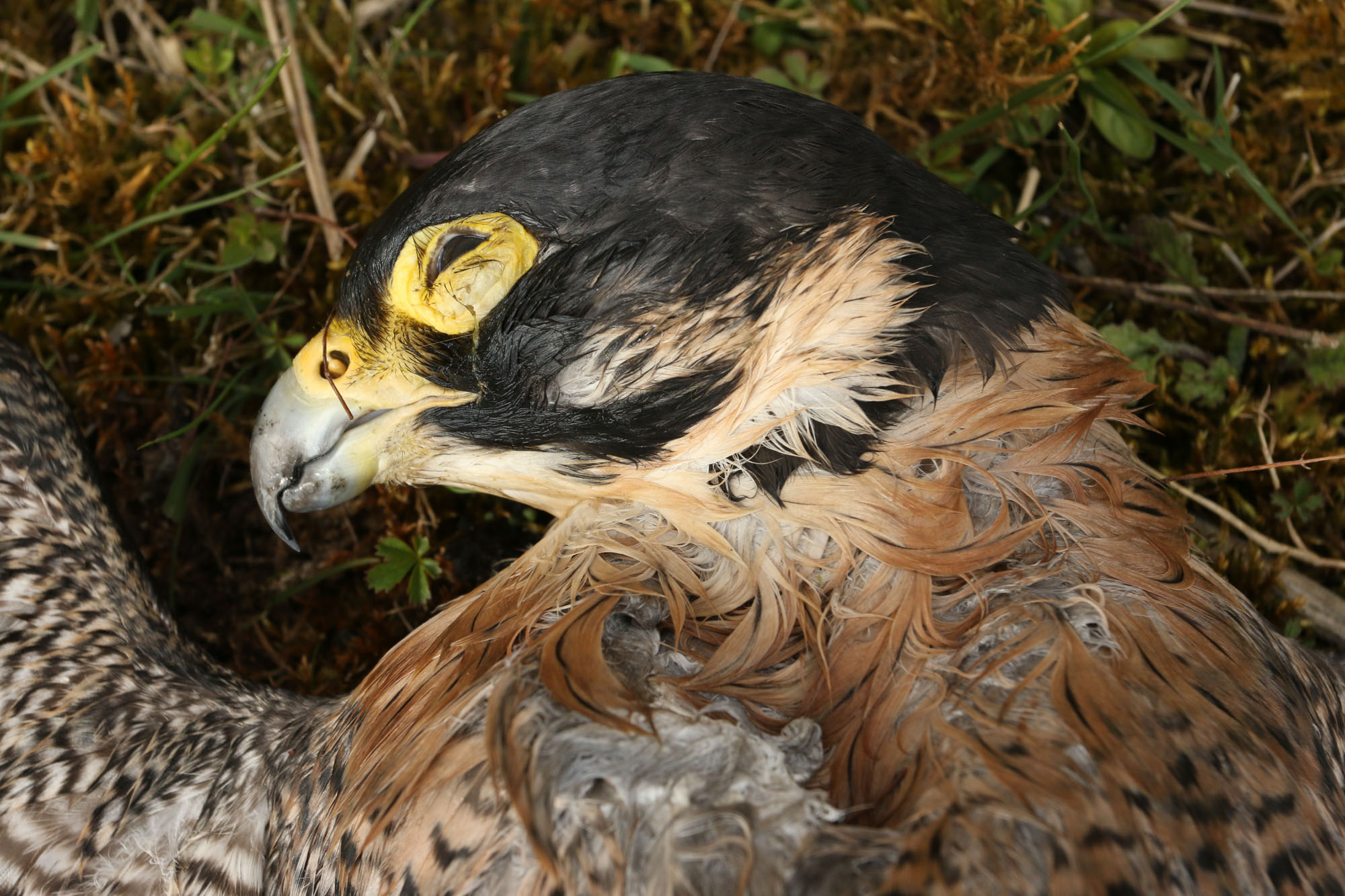
[One of two dead peregrines found illegally poisoned near Tadcaster, North Yorkshire in 2020. Photo RSPB]
The lockdowns and restrictions of 2020 appear to have contributed to rises in reporting of wildlife crimes and falls in convictions in several ways. Opportunistic offenders may have felt that with the police busy enforcing social restrictions that wildlife could be harmed with relative impunity. With increased use of the countryside in the pandemic more members of the public were also present to witness and report incidents of concern. COVID-19 pressures around social restrictions and staff absences appear also to have unfortunately reduced the capacity of police forces and the Crown Prosecution Service, and their ability to both bring hunting and fishing cases to trial and achieve convictions.
While today’s report reveals worrying figures, with impacts for treasured species like badgers, buzzards, kestrels, seals, dolphins and bluebells, it gives an incomplete picture. These organisations all collect data in different ways, with many only holding figures on reporting and convictions for incidents where members of the public have directly contacted them. There is a huge lack of information on wildlife crimes due to police not being required to officially record wildlife offences. Most wildlife crimes are recorded as ‘miscellaneous’ offences and are therefore invisible in police records, with no duty to be reported upon. The scale of wildlife crime is therefore likely to be far greater than the data collected by NGOs suggests.
The 16 wildlife organisations behind today’s report are warning that the way wildlife crimes are handled by both the police and Crown Prosecution Service must be reviewed and improved, if offences against treasured British wildlife are to be tackled. In particular, the new report highlights that the continued absence of dedicated recording for wildlife crimes means that resources cannot be effectively assessed and targeted. A lack of expertise and resource for police and prosecutors, and deficiency of sentencing guidelines, is also leading to failures in convicting criminals and inadequate penalties for crimes.
Nature experts and conservationists are calling for several key actions to better tackle wildlife crimes:
Make wildlife crimes recordable – A shortlist of wildlife offences (compiled by the National Wildlife Crime Unit) is being considered by the Home Office for notifiable status. This must be approved in 2022 to bridge the crippling wildlife crime data gap and help target resources effectively.
Ensure effective police & prosecutor action – Staff with expert training on wildlife crimes are critical to effectively building and prosecuting a case against these criminals. Also key is early coordination between the CPS and police on cases, and ensuring prosecutors have adequate preparation time for cases. Ensuring police and CPS training and process reflects this is vital.
Produce sentencing guidelines – Unlike most other crimes, the Sentencing Council provides no sentencing guidelines for wildlife crimes. This must be rectified to ensure sentencing consistently reflects the seriousness of these crimes and acts as a deterrent to criminal activity.
The new report has been written and published by Wildlife and Countryside Link, the biggest coalition of wildlife and environment charities in England, and Wales Environment Link, a network of environmental, countryside and heritage non-governmental organisations with an all-Wales remit. Both operate as part of a UK-wide coalition – Environment Links UK.
Organisations supporting today’s report include: Amphibian and Reptile Conservation, Badger Trust, Bat Conservation Trust, Buglife, Four Paws, Humane Society International UK, IFAW, Institute of Fisheries Management, League Against Cruel Sports, National Trust, Naturewatch Foundation, Plantlife, RSPB, Whale and Dolphin Conservation, Wild Justice and WWF UK.
UPDATE 12.45hrs: Coverage of this new report in The Guardianhere
UPDATE 13.00hrs: Coverage on Farming Today (starts at 06.20min) interviewing Mark Thomas, Head of RSPB Investigations here
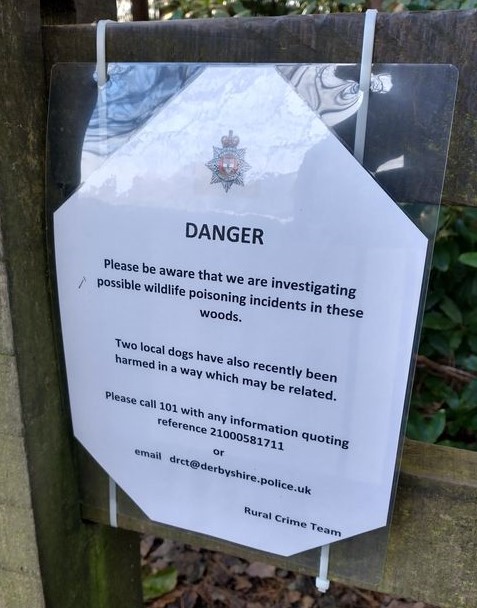
Derbyshire Constabulary are warning dog-walkers to be careful as they investigate suspected wildlife poisoning in a Derbyshire woodland.
Two dogs are reported to have become ill after visiting Swinepark Wood at Lea, near Matlock and the police say this may be related.
The police have posted warning signs at entry points to the woods:
There doesn’t appear to be any further information about the type of poison suspected to be in use or whether any wildlife has been affected but the fact that the police have been proactive in issuing these warnings about the risk to public and pet safety is a welcome move from a police force who have previously been criticised for their attitude towards raptor poisoning incidents (e.g. see here and here).
Well done, Derbyshire Constabulary’s Rural Crime Team.
Last week I blogged about how a Suffolk gamekeeper was due at Ipswich Magistrates Court to face a charge of poisoning a buzzard, having already pleaded guilty to several pesticide storage and firearms offences (see here).
This case stemmed from a multi-agency raid last January (here) after the discovery of an illegally poisoned buzzard in September 2020 which had been found close to pheasant-rearing pens near Lakenheath.
[The illegally-poisoned buzzard found close to the pheasant-rearing pens. Photos by RSPB]
The case was heard yesterday and it appears that the buzzard-poisoning charge was dropped, probably due to insufficient evidence, because despite the gamekeeper having this particular poison (Bendiocarb) in his possession, the prosecution would need to demonstrate that he was the person who laid the poisoned bait that subsequently killed this buzzard. The fact that the poisoned buzzard was found in close proximity to his workplace, and that he had the same poison in his possession, is simply not enough.
We can all draw our own conclusions of course, based on the balance of probability, but in English law the balance of probability is insufficient to convict for this particular offence. That’s not the fault of the police, the RSPB, the Crown Prosecution Service or the magistrate.
In this case, the gamekeeper, Shane Leech, 33, of Maids Cross Hill, Lakenheath, Suffolk, was convicted of six charges relating to pesticide and firearms offences and was given a Community Order of 80 hours unpaid work, ordered to pay £105 costs and a £95 Victim Surcharge.
I’ll leave it to you to decide whether the punishment fits the crime(s) and whether it offers any semblance of a deterrent to anyone who might be considering committing similar offences.
The RSPB has published two blogs about this case. The first one provides an overview of the case and offers praise to the work of Suffolk Police and the Crown Prosecution Service (see here).
The second blog is a more detailed discussion about the difficulties of bringing a successful prosecution for the illegal poisoning of birds of prey (see here). It also includes this shocking image of a pile of dead pheasants apparently being prepared for human consumption in the same room where the poison was being stored illegally!
A gamekeeper is due in court on Monday 8th November accused of poisoning a buzzard.
He has already pleaded guilty to a number of firearms offences and a number of pesticide storage offences.
At an earlier hearing in August, the gamekeeper pleaded not guilty to poisoning the buzzard so the case was sent for trial.
This case stems from a multi-agency raid, led by Suffolk Police, at a property last January (see here).
[Police officers seized a number of firearms during the raid. Photo via Suffolk Police]
Please note, as this is a live case no further detail will be provided here until the case has concluded or there is official commentary from the court. Comments on this particular blog also won’t be accepted until the case concludes so as not to prejudice proceedings. Thanks for your understanding.
UPDATE 9th November 2021: Gamekeeper convicted for pesticide and firearms offences but buzzard-poisoning charge is dropped (here)
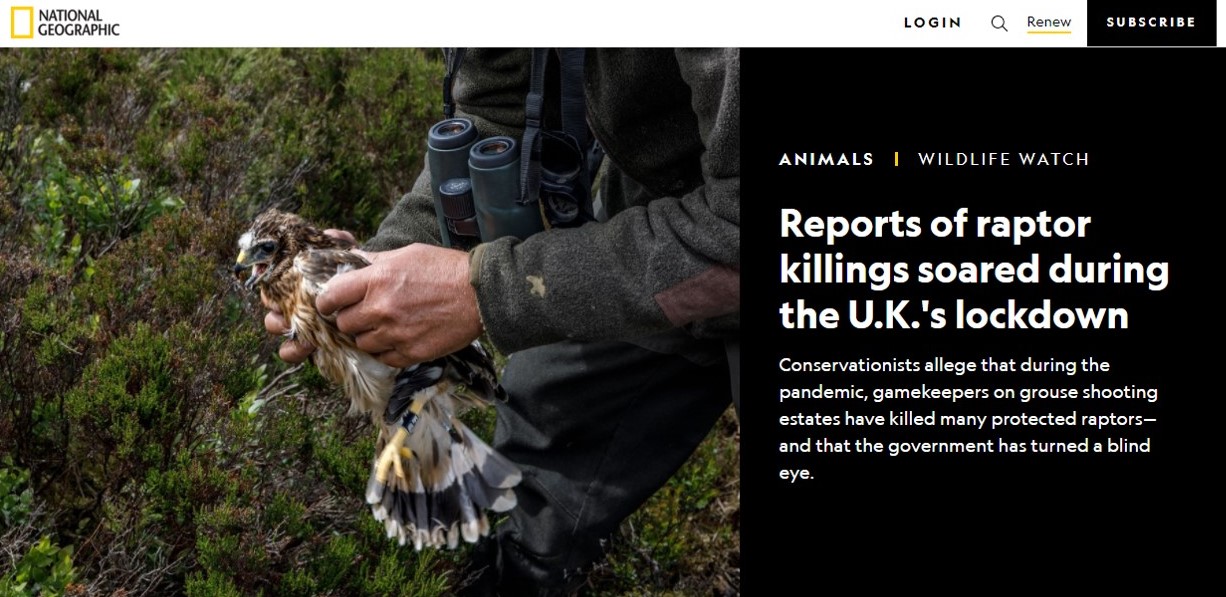
Timed to publish on the same day as the RSPB’s Birdcrime report, documenting how 2020 was the ‘worst year on record’ for crimes against birds of prey in the UK (see here), National Geographic has just published a lengthy article, written by journalist Rene Ebersole who visited the UK earlier this year specifically to research the subject of raptor persecution on grouse moors.
Rene visited quite a few field sites and interviewed a lot of people for this piece, including Mark Thomas (RSPB Investigations), Mark Avery (Wild Justice), Caroline Middleton Gordon (Moorland Association), Matt Hagen (North Yorkshire Police and RPPDG), Mark Cunliffe-Lister (Swinton Estate & Moorland Association), Steve Downing (Northern England Raptor Forum), the witness who saw ‘gamekeepers’ shooting buzzards on the Bransdale Estate last year, and some others.
I could spend a long time analysing the contributions from these people but unfortunately I don’t have the time today. I will try and come back to it at some point though, because some of it, especially Cunliffe-Lister’s comments, deserve ripping to shreds. If you’re going to read the article, and I’d urge you to because it’s very, very good, I’d recommend you don’t have a hot drink anywhere nearby when you read Cunliffe-Lister’s predictable denials and diversions. For example:
“Grouse shooting had some bad times when raptors were being controlled illegally historically, but now we’re all being responsible and working a way forward, so we can still keep somebody living in this house and working up here, rather than giving up“.
What a prat. It’s these constant denials from senior figures in the shooting industry, in the face of decades worth of overwhelming science and evidence, that provide the raptor killers with the confidence to continue their crimes on the shooting estates, safe in the knowledge they’re probably going to be protected.
North Yorkshire Police Inspector Matt Hagen deserves a medal simply for being prepared to stand up and say it how he sees it, at great risk to his personal and professional life knowing how the nasty brigade has turned on previous officers who’ve dared to form and express an opinion based on evidence and experience.
He talks about knowing the identity of the Nidderdale poisoner, of how the Bransdale gamekeepers all gave ‘no comment’ interviews when questioned about the five shot buzzards found buried on the estate, how ‘shocked and disgusted’ he is about the high level of raptor persecution in the UK, how it’s ‘more likely than not‘ that hen harrier River was shot on the Swinton Estate, despite the ridiculous and largely implausible explanations of estate owner Cunliffe-Lister, and how gamekeepers “all know what is going on, and they cover it up“.
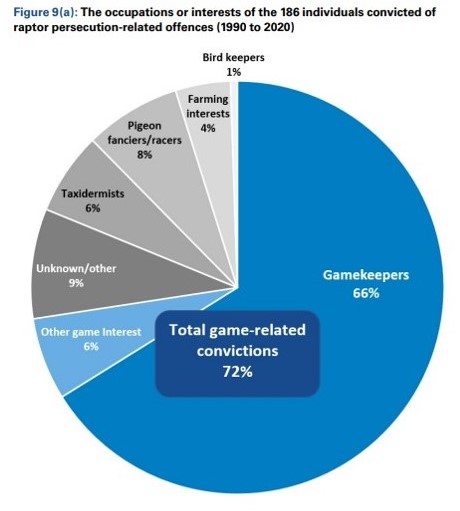
He’s not wrong. This pie chart from the latest RSPB Birdcrime report shows that almost three-quarters of those convicted of raptor persecution crimes in the last 30 years worked in, or had connections to, the game-shooting industry.
The National Geographic article is free and open access. You can read it HERE
Well done, journalist Rene Ebersole and her photographer Anastasia Taylor-Lind – it’s a very good piece and it’s excellent that these disgraceful crimes are being featured by a highly respected organisation such as National Geographic, being exposed to a much wider international audience.
UPDATE: A PDF of the article can now be downloaded here:
MORE than a dozen shotguns and a dead bird of prey have been seized following an investigation into the illegal killing of raptors in the Ceiriog Valley.
The operation that took place this week was carried out by North Wales Police’s Rural Crime Team, in partnership with the RSPB Investigations Team, the National Wildlife Crime Unit and the Welsh Government, targeting those suspected of unlawfully poisoning birds of prey.
It came following an investigation launched in July into the poisoning of a red kite, found dead in the Ceiriog Valley on February 27 [Ed: see here].
Toxicology tests carried out on the bird by the Welsh Government earlier this year revealed it tested positive for Bendiocarb – a highly toxic pesticide.
Officers believe the incident was a deliberate act.
[Photo from North Wales Police Rural Crime Team]
Following this week’s searches, which included the recovery of 15 shotguns, the dead bird of prey was sent off for toxicology tests, while dangerous chemicals also discovered at one property are being dealt with.
Sergeant Dewi Evans of the Rural Crime Team said:
“It’s time to stamp out persecution against our birds of prey. We are glad to have worked with Welsh Government, National Wildlife Crime Unit and RSPB Investigations on our operation targeting those suspected of criminally harming our wildlife. We look forward to working with our partners again in future.”
RSPB Investigations officer Niall Owen said: “This was a well organised multi-agency operation and a positive step in the right direction for investigating raptor persecution in Wales.
“We, as a team, are committed to working alongside the police to safeguard the future for birds of prey and uncover these barbaric crimes against our birds.
“Laying poison baits in the countryside to target birds of prey is not only illegal but represents a huge danger to any person or animal unlucky enough to come across it.
“We would like the thank North Wales Police for their commitments to follow up these incidents.”












 Raptor Persecution UK