Ruabon Moor, the so-called ‘grouse capital’ of North Wales, has featured on this blog a few times in recent years.
Three satellite-tagged hen harriers ‘mysteriously vanished’ there (Heulwen in 2018; Aalin in 2018; Bronwyn in 2019) and a poisoned raven was discovered there in 2018 (here).
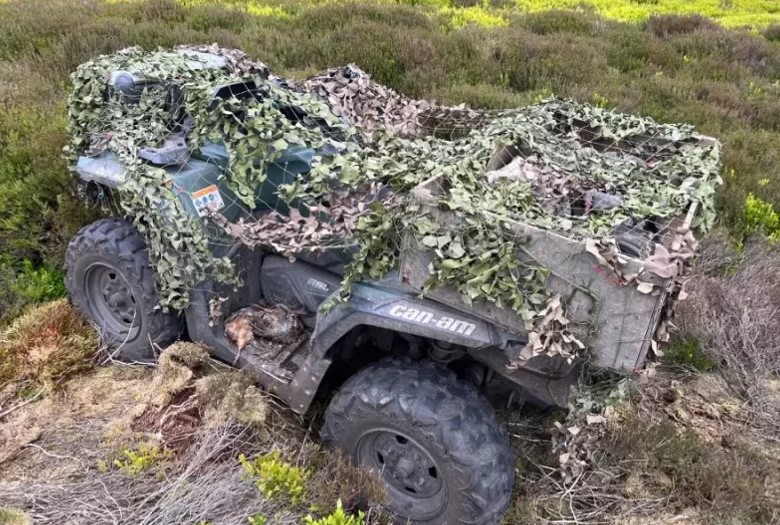
It seems that some other odd things have been happening on the moor, including the discovery of this quad bike, covered in camouflage netting ‘strewn with dead birds’ and an armed gamekeeper crouching in the heather nearby:
Photo: Wildlife Guardian
This, along with a dodgy-looking trap set near to a pigeon coop on the moor, have been discovered by a team called Wildlife Guardian and they’ve blogged about it all here.
Regular blog readers will know that I keep a running total of the number of hen harriers that ‘disappear’ in suspicious circumstances or have been found illegally killed, since 2018.
This morning the total was 95 (see here) but this number has just increased to 98 after it was pointed out to me that three more hen harriers that vanished in 2019 hadn’t been included on my list (many thanks to the person who alerted me to these omissions).
The three harriers (Ingmar, Artemis & DeeCee) were all tagged by the RSPB as part of the Hen Harrier LIFE Project.
I’ve now updated the list (below) and here is the blog I always write when more victims are added…
For anyone who still wants to pretend that the grouse shooting industry isn’t responsible for the systematic extermination of hen harriers on grouse moors across the UK, here’s the latest catalogue of crime that suggests otherwise.
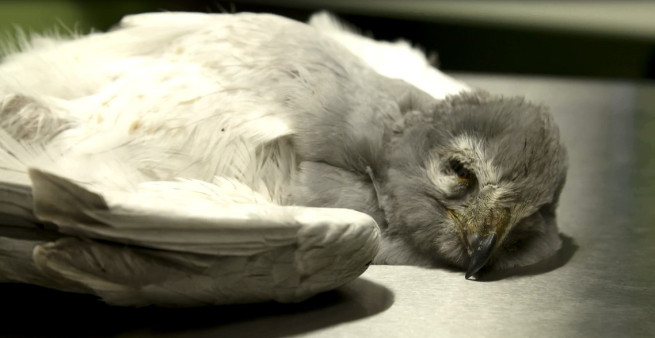
[This male hen harrier died in 2019 after his leg was almost severed in an illegally set trap that had been placed next to his nest on a Scottish grouse moor (see here). Photo by Ruth Tingay]
This is the blog I now publish after every reported killing or suspicious disappearance.
“They disappear in the same way political dissidents in authoritarian dictatorships have disappeared” (Stephen Barlow, 22 January 2021).
Today the list has been updated to include three more victims: a hen harrier named ‘DeeCee’ who disappeared in January 2019 in the notorious Glen Esk area of the Angus Glens; a hen harrier named ‘Artemis’ who disappeared near Long Formacus in south Scotland in November 2019; and a hen harrier named ‘Ingmar’ who vanished in December 2019 in the notorious Strathbraan grouse moor area of Perthshire.
I’ve been compiling this list only since 2018 because that is the year that the grouse shooting industry ‘leaders’ would have us believe that the criminal persecution of hen harriers had stopped and that these birds were being welcomed back on to the UK’s grouse moors (see here).
This assertion was made shortly before the publication of a devastating new scientific paper that demonstrated that 72% of satellite-tagged hen harriers were confirmed or considered likely to have been illegally killed, and this was ten times more likely to occur over areas of land managed for grouse shooting relative to other land uses (see here). Incidentally, a further scientific paper published in 2023 by scientists at the RSPB, utilising even more recent data, echoed these results – see here.
2018 was also the year that Natural England issued a licence to begin a hen harrier brood meddling trial on grouse moors in northern England. For new blog readers, hen harrier brood meddling is a conservation sham sanctioned by DEFRA as part of its ludicrous ‘Hen Harrier Action Plan‘ and carried out by Natural England (NE), in cahoots with the very industry responsible for the species’ catastrophic decline in England. For more background see here.
Brood meddling has been described as a sort of ‘gentleman’s agreement’ by commentator Stephen Welch:
“I don’t get it, I thought the idea of that scheme was some kind of trade off – a gentleman’s agreement that the birds would be left in peace if they were moved from grouse moors at a certain density. It seems that one party is not keeping their side of the bargain“.
With at least 98 hen harriers gone since 2018, there is no question that the grouse shooting industry is simply taking the piss. Meanwhile, Natural England pretends that ‘partnership working’ is the way to go and DEFRA Ministers remain silent.
‘Partnership working’ according to Natural England appears to include authorising the removal of hen harrier chicks from a grouse moor already under investigation by the police for suspected raptor persecution (here) and accepting a £75k ‘donation’ from representatives of the grouse shooting industry that prevents Natural England from criticising them or the sham brood meddling trial (see here). This is in addition to a £10k ‘donation’ that Natural England accepted, under the same terms, in 2021 (here).
Cartoon by Gerard Hobley
So here’s the latest gruesome list. Note that the majority of these birds (but not all) were fitted with satellite tags. How many more [untagged] harriers have been killed?
February 2018: Hen harrier Saorsa ‘disappeared’ in the Angus Glens in Scotland (here). The Scottish Gamekeepers Association later published wholly inaccurate information claiming the bird had been re-sighted. The RSPB dismissed this as “completely false” (here).
5 February 2018: Hen harrier Marc ‘disappeared’ on a grouse moor in Durham (here).
9 February 2018: Hen harrier Aalin ‘disappeared’ on a grouse moor in Wales (here).
March 2018: Hen harrier Blue ‘disappeared’ in the Lake District National Park (here).
March 2018: Hen harrier Finn ‘disappeared’ near Moffat in Scotland (here).
18 April 2018: Hen harrier Lia ‘disappeared’ in Wales and her corpse was retrieved in a field in May 2018. Cause of death was unconfirmed but police treating death as suspicious (here).
8 August 2018: Hen harrier Hilma ‘disappeared’ on a grouse moor in Northumberland (here).
16 August 2018: Hen harrier Athena ‘disappeared’ on a grouse moor in Scotland (here).
26 August 2018: Hen Harrier Octavia ‘disappeared’ on a grouse moor in the Peak District National Park (here).
29 August 2018: Hen harrier Margot ‘disappeared’ on a grouse moor in Scotland (here).
29 August 2018: Hen Harrier Heulwen ‘disappeared’ on a grouse moor in Wales (here).
3 September 2018: Hen harrier Stelmaria ‘disappeared’ on a grouse moor in Scotland (here).
24 September 2018: Hen harrier Heather ‘disappeared’ on a grouse moor in Scotland (here).
2 October 2018: Hen harrier Mabel ‘disappeared’ on a grouse moor on the edge of the Yorkshire Dales National Park (here).
3 October 2018: Hen Harrier Thor ‘disappeared’ next to a grouse moor in Bowland, Lanacashire (here).
23 October 2018: Hen harrier Tom ‘disappeared’ in South Wales (here).
26 October 2018: Hen harrier Arthur ‘disappeared’ on a grouse moor in the North York Moors National Park (here).
1 November 2018: Hen harrier Barney ‘disappeared’ on Bodmin Moor (here).
10 November 2018: Hen harrier Rannoch ‘disappeared’ on a grouse moor in Scotland (here). Her corpse was found nearby in May 2019 – she’d been killed in an illegally-set spring trap (here).
14 November 2018: Hen harrier River ‘disappeared’ on a grouse moor in the Nidderdale AONB (here). Her corpse was found nearby in April 2019 – she’d been illegally shot (here).
16 January 2019: Hen harrier Vulcan ‘disappeared’ in Wiltshire close to Natural England’s proposed reintroduction site (here).
28 January 2019: Hen harrier DeeCee ‘disappeared’ in Glen Esk, a grouse moor area of the Angus Glens (see here).
7 February 2019: Hen harrier Skylar ‘disappeared’ next to a grouse moor in South Lanarkshire (here).
22 April 2019: Hen harrier Marci ‘disappeared’ on a grouse moor in the Cairngorms National Park (here).
26 April 2019: Hen harrier Rain ‘disappeared’ on a grouse moor in Nairnshire (here).
11 May 2019: An untagged male hen harrier was caught in an illegally-set trap next to his nest on a grouse moor in South Lanarkshire. He didn’t survive (here).
7 June 2019: An untagged hen harrier was found dead on a grouse moor in Scotland. A post mortem stated the bird had died as a result of ‘penetrating trauma’ injuries and that this bird had previously been shot (here).
5 September 2019: Wildland Hen Harrier 1 ‘disappeared’ on a grouse moor nr Dalnaspidal on the edge of the Cairngorms National Park (here).
11 September 2019: Hen harrier Romario ‘disappeared’ on a grouse moor in the Cairngorms National Park (here).
14 September 2019: Hen harrier (Brood meddled in 2019, #183704) ‘disappeared’ in the North Pennines (here).
23 September 2019: Hen harrier (Brood meddled in 2019, #55149) ‘disappeared’ in North Pennines (here).
24 September 2019: Wildland Hen Harrier 2 ‘disappeared’ on a grouse moor at Invercauld in the Cairngorms National Park (here).
24 September 2019: Hen harrier Bronwyn ‘disappeared’ near a grouse moor in North Wales (here).
10 October 2019: Hen harrier Ada ‘disappeared’ on a grouse moor in the North Pennines AONB (here).
12 October 2019: Hen harrier Thistle ‘disappeared’ on a grouse moor in Sutherland (here).
18 October 2019: Member of the public reports the witnessed shooting of an untagged male hen harrier on White Syke Hill in North Yorkshire (here).
November 2019: Hen harrier Mary found illegally poisoned on a pheasant shoot in Ireland (here).
November 2019: Hen harrier Artemis ‘disappeared’ near Long Formacus in south Scotland (RSPB pers comm).
14 December 2019: Hen harrier Oscar ‘disappeared’ in Eskdalemuir, south Scotland (here).
December 2019: Hen harrier Ingmar ‘disappeared’ in the Strathbraan grouse moor area of Perthshire (RSPB pers comm).
January 2020: Members of the public report the witnessed shooting of a male hen harrier on Threshfield Moor in the Yorkshire Dales National Park (here).
23 March 2020: Hen harrier Rosie ‘disappeared’ at an undisclosed roost site in Northumberland (here).
1 April 2020: Hen harrier (Brood meddled in 2019, #183703) ‘disappeared’ in unnamed location, tag intermittent (here).
5 April 2020: Hen harrier Hoolie ‘disappeared’ on a grouse moor in the Cairngorms National Park (here)
8 April 2020: Hen harrier Marlin ‘disappeared’ on a grouse moor in the Cairngorms National Park (here).
19 May 2020: Hen harrier Fingal ‘disappeared’ on a grouse moor in the Lowther Hills, Scotland (here).
21 May 2020: Hen harrier (Brood meddled in 2019, #183701) ‘disappeared’ on a grouse moor in Cumbria shortly after returning from wintering in France (here).
27 May 2020: Hen harrier Silver ‘disappeared’ on a grouse moor on Leadhills Estate, Scotland (here).
2020: day/month unknown: Unnamed male hen harrier breeding on RSPB Geltsdale Reserve, Cumbria ‘disappeared’ while away hunting (here).
9 July 2020: Unnamed female hen harrier (#201118) ‘disappeared’ from an undisclosed site in Northumberland (here).
25 July 2020: Hen harrier Harriet ‘disappeared’ on a grouse moor in the Yorkshire Dales National Park (here).
14 August 2020: Hen harrier Solo ‘disappeared’ in confidential nest area in Lancashire (here).
7 September 2020: Hen harrier Dryad ‘disappeared’ on a grouse moor in the Yorkshire Dales National Park (here).
16 September 2020: Hen harrier Fortune ‘disappeared’ from an undisclosed roost site in Northumberland (here).
19 September 2020: Hen harrier Harold ‘disappeared’ on a grouse moor in the Yorkshire Dales National Park (here).
20 September 2020: Hen harrier (Brood meddled in 2020, #55152) ‘disappeared’ next to a grouse moor in North Yorkshire (here).
24 February 2021: Hen harrier Tarras ‘disappeared’ next to a grouse moor in Northumberland (here)
12th April 2021: Hen harrier Yarrow ‘disappeared’ near Stockton, County Durham (here).
18 May 2021: Adult male hen harrier ‘disappeared’ from its breeding attempt on RSPB Geltsdale Reserve, Cumbria whilst away hunting (here).
18 May 2021: Another adult male hen harrier ‘disappeared’ from its breeding attempt on RSPB Geltsdale Reserve, Cumbria whilst away hunting (here).
24 July 2021: Hen harrier Asta ‘disappeared’ at a ‘confidential site’ in the North Pennines (here). We learned 18 months later that her wings had been ripped off so her tag could be fitted to a crow in an attempt to cover up her death (here).
14th August 2021: Hen harrier Josephine ‘disappeared’ at a ‘confidential site’ in Northumberland (here).
17 September 2021: Hen harrier Reiver ‘disappeared’ in a grouse moor dominated region of Northumberland (here)
24 September 2021: Hen harrier (Brood meddled in 2021, R2-F-1-21) ‘disappeared’ in Northumberland (here).
15 November 2021: Hen harrier (brood meddled in 2020, #R2-F1-20) ‘disappeared’ at the edge of a grouse moor on Arkengarthdale Estate in the Yorkshire Dales National Park (here).
19 November 2021: Hen harrier Val ‘disappeared’ in the Lake District National Park in Cumbria (here).
19 November 2021: Hen harrier Percy ‘disappeared’ in Lothian, Scotland (here).
12 December 2021: Hen harrier Jasmine ‘disappeared’ on a grouse moor (High Rigg Moor on the Middlesmoor Estate) in the Nidderdale AONB in North Yorkshire (here).
9 January 2022: Hen harrier Ethel ‘disappeared’ in Northumberland (here).
26 January 2022: Hen harrier Amelia ‘disappeared’ in Bowland (here).
10 February 2022: An unnamed satellite-tagged hen harrier ‘disappeared’ in a grouse moor dominated area of the Peak District National Park (here). One year later it was revealed that the satellite tag/harness of this young male called ‘Anu’ had been deliberately cut off (see here).
12 April 2022: Hen harrier ‘Free’ (Tag ID 201121) ‘disappeared’ at a ‘confidential site’ in Cumbria (here). It later emerged he hadn’t disappeared, but his mutilated corpse was found on moorland in the Yorkshire Dales National Park. A post mortem revealed the cause of death was having his head twisted and pulled off. One leg had also been torn off whilst he was still alive (here).
April 2022: Hen harrier ‘Pegasus’ (tagged by the RSPB) ‘disappeared’ on a grouse moor at Birkdale in the Yorkshire Dales National Park (here).
May 2022: A male breeding hen harrier ‘disappeared’ from a National Trust-owned grouse moor in the Peak District National Park (here).
May 2022: Another breeding male hen harrier ‘disappeared’ from a National Trust-owned grouse moor in the Peak District National Park (here).
14 May 2022: Hen harrier ‘Harvey’ (Tag ID 213844) ‘disappeared’ from a ‘confidential site’ in the North Pennines (here).
20 June 2022: Hen harrier chick #1 stamped to death in nest on a grouse moor in the Yorkshire Dales National Park (here).
20 June 2022: Hen harrier chick #2 stamped to death in nest on a grouse moor in the Yorkshire Dales National Park (here).
20 June 2022: Hen harrier chick #3 stamped to death in nest on a grouse moor in the Yorkshire Dales National Park (here).
20 June 2022: Hen harrier chick #4 stamped to death in nest on a grouse moor in the Yorkshire Dales National Park (here).
17 August 2022: Hen harrier (brood meddled in 2022, #R1-M1-22) ‘disappeared’ on moorland in the Yorkshire Dales National Park (here).
September 2022: Hen harrier ‘Sullis’ (tagged by the RSPB) ‘disappeared’ on a grouse moor in Cumbria (here).
5 October 2022: Hen harrier (brood meddled in 2022, #R3-M2-22) ‘disappeared’ on moorland in the Yorkshire Dales National Park (here).
10 October 2022: Hen harrier ‘Sia’ ‘disappeared’ near Hamsterley Forest in the North Pennines (here).
October 2022: Hen harrier (brood meddled in 2021, #R1-F1-21) ‘disappeared’ in the North Sea off the North York Moors National Park (here).
December 2022: Hen harrier female (brood meddled in 2020, #R2-F2-20) ‘disappeared’ on moorland in Cumbria (here).
1 December 2022: Hen harrier male (brood meddled in 2021, #R1-M1-21) ‘disappeared’ on moorland in the Yorkshire Dales National Park (here).
14 December 2022: Hen harrier female (brood meddled in 2022, #R3-F1-22) ‘disappeared’ on moorland in the North Pennines AONB (here).
15 December 2022: Hen harrier female (brood meddled in 2022, #R2-F1-22) ‘disappeared’ on moorland in the Yorkshire Dales National Park (here).
March 2023: Unnamed male hen harrier (tagged by Natural England – details not yet released) ‘disappeared’ in North Yorkshire (here).
April 2023: Unnamed female hen harrier (tagged by Natural England – details not yet released) ‘disappeared’ in North Yorkshire (here).
April 2023: Hen harrier ‘Lagertha’ (tagged by RSPB) ‘disappeared’ in North Yorkshire (here).
April 2023: Hen harrier ‘Nicola’ (Tag ID 234078) ”disappeared’ in North Yorkshire (here).
April 2023: Untagged male hen harrier ‘disappeared’ from an active nest on RSPB Geltsdale Reserve in Cumbria (here).
April 2023: Another untagged male hen harrier ‘disappeared’ from an active nest on RSPB Geltsdale Reserve in Cumbria (here).
April 2023: Untagged male hen harrier ‘disappeared’ from an active nest in Durham (here).
4/5 May 2023: Satellite-tagged male hen harrier called ‘Rush’ ‘disappeared’ from a grouse moor in Bowland AONB in Lancashire (here).
17 May 2023: Satellite-tagged hen harrier called ‘Wayland’ ‘disappeared’ in the Clapham area of North Yorkshire, just north of the Bowland AONB (here).
To be continued…….
Not one of these 98 incidents has resulted in an arrest, let alone a prosecution. I had thought that when we reached 30 dead/missing hen harriers then the authorities might pretend to be interested and at least say a few words about this national scandal. We’ve now reached NINETY EIGHT hen harriers, and still Govt ministers remain silent. They appear not to give a monkey’s. And yes, there are other things going on in the world, as always. That is not reason enough to ignore this blatant, brazen and systematic destruction of a supposedly protected species, being undertaken to satisfy the greed and bloodlust of a minority of society.
When will the tally pass 100 hen harriers? Watch this space…
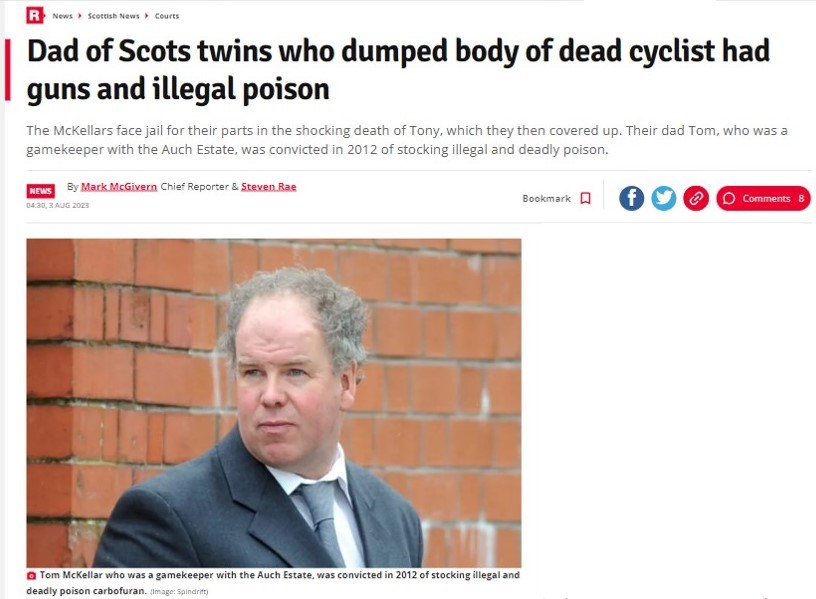
Further to the horrific story about how charity cyclist Tony Parsons had been killed and then subsequently buried in a stink pit by the McKellar twins on the infamous Auch Estate near Bridge of Orchy in the Scottish highlands (see here), more information has emerged in this grisly case.
The Daily Record has reported that the McKellar twins’ father was Tom McKellar, who was convicted in 2012 for the illegal possession of a banned pesticide (Carbofuran) and two hand guns at his home on the Auch Estate where he worked as a farm manager (also described in some publications as a gamekeeper)- see here and here for some background to that case.
The article in the Daily Record (here) also includes comments made by locals about the McKellar twins and it reports that the brothers ‘worked as stalkers on a hunting estate‘ and ‘had been exposed to the killing of animals for much of their lives‘.
The article continues:
‘The boys had grown up in a life where shooting animals, trapping them was a way of life, part of the running of a shooting estate that protected the game bird and deer stocks. They were both working on the land from a young age and soon working as deer stalkers. Their father was said to be highly regarded in the local community but the fact he had illegal guns and hugely toxic, illegal poison at his property didn’t exactly make him look like the best role model‘.
The article also states: ‘The men eventually buried Tony’s body in a “death hole” that was full of the rotting remains of foxes, grouse and other animals that had been killed on the estate‘.
I’m not sure that grouse shooting takes place on the Auch Estate – the habitat doesn’t look as though it would support commercial driven grouse shooting at any rate. The estate is best known for offering deer stalking and fishing, although the estate agent’s brochure from the 2020 sale does say that walked-up shooting is available and mentions rough shooting for woodcock:
Further information about the site where Tony’s remains were found was reported in an STV article (here) published last September when the case moved to trial at the High Court in Glasgow. The article reports that Tony’s body was ‘hidden under animal remains with bleach also poured on his remains‘. (Thanks to a blog reader for sending the STV link).
There has been a lot of online commentary about this gruesome case, which isn’t surprising given the shocking crimes committed by the McKellar twins. Some have questioned why I’m reporting the case on this blog. I don’t feel the need to justify what gets reported on here but in this case I thought it would have been obvious given the estate’s history as a raptor persecution crime scene, the relationship of the McKellar twins to Tom McKellar, and the use of a stink pit to bury a body.
I think it’s also interesting to highlight that a crime as serious as this one can remain hidden on large estates like Auch for years. We often refer to raptor persecution crimes on vast, privately-owned sporting estates as being the ‘tip of the iceberg’ because inevitably estate employees have every opportunity, and of course the motive, to hide the evidence of their criminal activity. The crimes that are uncovered are usually only discovered by chance.
The killing of Tony Parsons and his burial in a stink pit on the Auch Estate by two individuals who lived and worked there only came to light because someone had the courage and decency to report it to the police when Alexander McKellar confessed to her what he and his brother had done.
I see a lot of parallels.
The McKellar twins are due to be sentenced later this month.
UPDATE 25th August 2023: McKellar twins from Auch Estate sentenced for killing cyclist & burying his body in a stink pit (here)
UPDATE 13 AUGUST 2025: New BBC documentary provides shocking insight into appalling crimes on Auch Estate, Bridge of Orchy (here)
Last week, the Hunt Saboteurs Association (HSA) posted a video and accompanying commentary on its website about a police investigation into a gamekeeper alleged to have been caught on camera placing ‘poisoned-laced pheasant carcasses’ next to a pheasant release pen in Berrington, Shrewsbury in 2022 (see here).
The HSA reports that its fieldworkers collected some of the pheasant carcasses and sent them to the Wildlife Incident Investigation Scheme for toxicology analysis and the findings were reported to West Mercia Police for investigation.
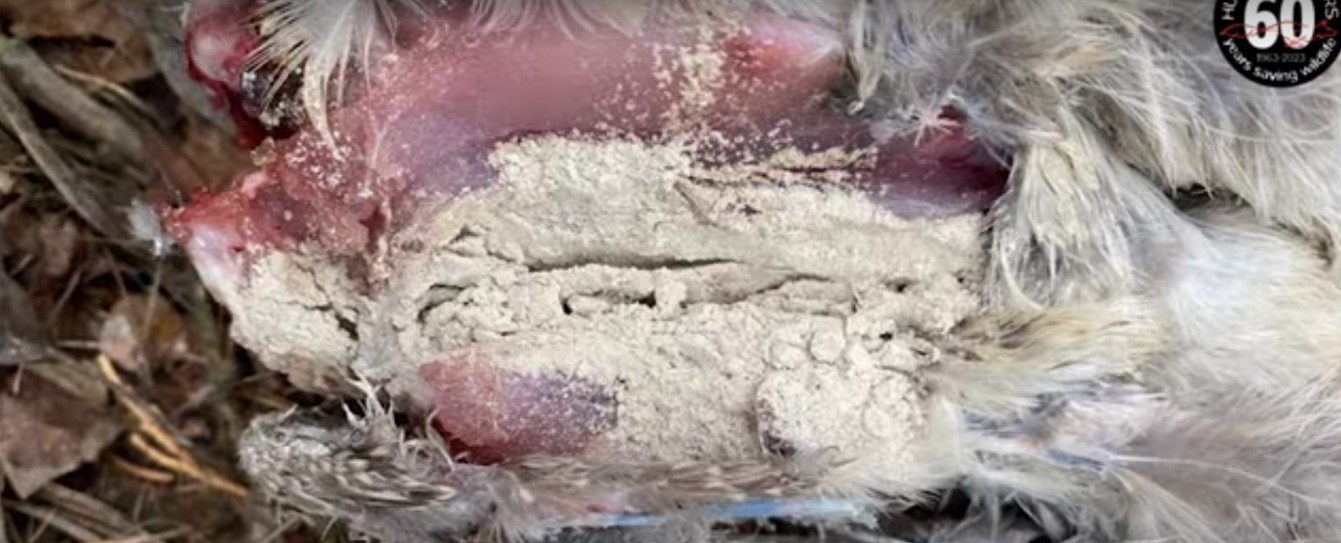
Screen grab from the HSA video showing one of the pheasant carcass baits slit open and containing an unidentified white powder substance.
The report on the HSA website states:
‘The gamekeeper’s house was raided by the authorities, and despite poisonous substances being found, there was insufficient evidence to prove these were the same substances found on the bird carcasses. Sadly this meant there was no chance of a conviction in this case. This does mean that we are now able to share this footage with you to highlight the grim reality of the shooting industry‘.
The HSA report doesn’t identify what substance was found on the pheasant carcasses during the toxicology analysis, nor does it identify the ‘poisonous substances‘ alleged to have been found by West Mercia Police at the gamekeeper’s house, so it’s difficult to draw conclusions about any alleged criminality.
However, I did find an entry on the Wildlife Incident Investigation Scheme (WIIS) database referring to an incident involving ‘pheasant baits’ in Shropshire in 2022. This is likely to be the same incident as the HSA is reporting but beware, there is a small element of uncertainty because the WIIS database isn’t always kept up to date and some incidents are known to be held back from publication whilst investigations are still live.
Let’s assume the WIIS database entry refers to the HSA case. Here is what the WIIS entry says:
Ref: 107/367: Shropshire, September 2022, categorised as ‘abuse’, 2 x pheasant baits & 8 pesticide samples. The narrative is given as follows:
‘2 pheasant baits found with white/grey powder inside them. Residues of permethrin were found on the pheasant baits. Analysis confirmed a mixture of pesticides which were found during a visit to a pesticide store. This incident has been assigned to permethrin abuse. There were also failings in the storage of a range of pesticides, some of which are no longer approved‘.
That last sentence is key. If banned substances were found during the police raid AND there were ‘failings in the storage‘ of them, this would normally be sufficient evidence for a prosecution for failing to comply with the regulations relating to the possession and storage of various banned chemicals, and associated health & safety regulations, as we’ve seen in other recent cases (e.g. here), even if there was insufficient evidence to charge for placing poisoned baits.
There was a pretty gruesome criminal case taking place at the High Court in Glasgow last week relating to the infamous Auch Estate at the Bridge of Orchy.
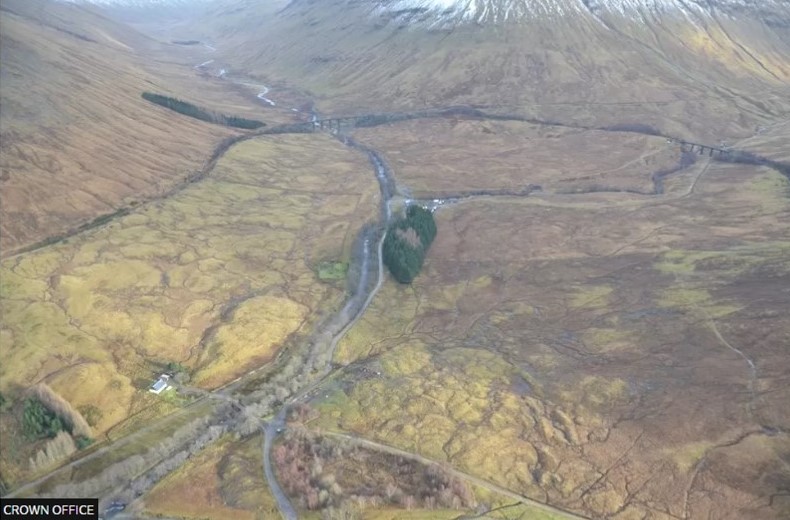
Long-term blog readers may well remember the Auch Estate – a deer-stalking and fishing sporting estate where a poisoned golden eagle was found in June 2009 along with a carbofuran-killed fox and a carbofuran-laced sheep carcass. The discovery led to a raid at the farm manager’s home where Carbofuran was discovered in a game bag and two illegal handguns were discovered in the loft.
Three years later after prolonged legal proceedings, farm manager Tom McKellar (then aged 50) was convicted for having possession of the banned pesticide Carbofuran, although he wasn’t charged with poisoning the golden eagle or placing the poisoned bait. He was given a pathetic £1,200 fine for possession of Carbofuran and a 300-hour community service order for possession of the two handguns, a crime which would normally have attracted a mandatory five year custodial sentence (see here and here for some background to that case).
Aerial view of Auch Estate. Photo: Crown Office
The case heard last week at Glasgow High Court centred on twin brothers Alexander and Robert McKellar (now aged 31). In September 2017 after drinking with a German hunting party at a local hotel, Alexander McKellar’s vehicle hit a charity cyclist, Tony Parsons, who was cycling on the A82, causing him serious injury. Instead of helping him, the two brothers drove back to Auch Estate (where they were reportedly self employed farm workers living with their parents – Alexander McKellar was also reported to be a deer stalker), dumped their phones and changed vehicle and went back to pick up Tony Parson’s body, bike and possessions, and drove back to the estate and initially hid Mr Parsons in a wood.
They later removed him from the wood and took him to another location on the estate, reported in court as a location used for “the purposes of disposing dead animals”, in other words, a stink pit. There they dug a grave and buried Mr Parsons and burned his possessions.
Mr Parson’s remains were not discovered until January 2021 after a girlfriend of one of the McKellar brothers told police she’d been shown the grave site in 2020. Prior to her report, in 2018 the police had been tipped off to “pay attention” to the McKellar twins and had visited the estate in January 2019 but were apparently ‘asked to leave’.
Details of the case can be read here, here and here.
The McKellar brothers were due to stand trial for the murder of Mr Parsons but the court has accepted a not guilty plea from Robert McKellar and a guilty plea from Alexander McKellar to a lesser charge of culpable homicide. Both have pleaded guilty to attempting to defeat the ends of justice. They will be sentenced on 25th August at Glasgow High Court.
Let’s hope there’s some justice for Tony Parsons and his family.
UPDATE 4th August 2023: More detail emerges about McKellar twins who buried cyclist’s body in stink pit on Auch Estate (here)
UPDATE 25th August 2023: McKellar twins from Auch Estate sentenced for killing cyclist & burying his body in a stink pit (here)
UPDATE 13 AUGUST 2025: New BBC documentary provides shocking insight into appalling crimes on Auch Estate, Bridge of Orchy (here)
Press release from Roy Dennis Wildlife Foundation (18th July 2023):
FIRST WHITE-TAILED EAGLE IN 240 YEARS FLEDGES IN ENGLAND
In a landmark moment for conservationists, the first white-tailed eagle for over 240 years has fledged from a nest in the wild in England. The chick is the first successful breeding attempt of the white-tailed eagles released by Forestry England and the Roy Dennis Wildlife Foundation’s project to return this lost species to England.
First WTE chick in England just prior to fledging. Photo: Roy Dennis Wildlife Foundation
White-tailed eagles are Britain’s largest birds of prey with a wingspan of up to 2.5 meters and were once widespread across England. Human persecution caused their extinction with the last pair breeding in southern England in 1780. In 2019, Forestry England and the Roy Dennis Wildlife Foundation began a reintroduction programme to restore these iconic birds to the English landscape.
Two of the birds released by the project in 2020 – female G405, originally translocated from the Outer Hebrides and male G471, from north-west Sutherland – reared the male chick earlier this summer. The location of the nest, on private land with no public access, is not being disclosed for the welfare of the birds and to prevent any disturbance to them or the landowner either this year or if the birds return to breed at the same location.
The chick was ringed and fitted with a satellite tag by licensed ornithologists from the Roy Dennis Wildlife Foundation enabling the project team to track this historic bird’s daily progress through its life.
The WTE chick being satellite-tagged. Photo by Forestry England
Roy Dennis MBE, Founder of the Roy Dennis Wildlife Foundation, said:
“This is a very special moment for everyone who has worked on, supported and followed this ground-breaking project. Restoring a breeding population in southern England, where the species was once widespread, has been our ultimate goal. Many thought it was impossible but we knew food for eagles – fresh and salt water fish, cuttlefish, rabbits, hares and wild birds – was plentiful. I visited the Isle of Wight as a young birdwatcher in the 1950s, saw the last breeding location at Culver Cliff and knew they should be restored. It is early days, but this is a very significant milestone and we are heartened by the enthusiastic support shown by so many people and that the sight of these huge eagles in the sky inspires hope for restoring nature. We still have a long way to go, but the feeling of seeing the first pair reach this stage is truly incredible.”
The birds are one of three territorial pairs that have now become established in southern England and the first to breed.
Steve Egerton-Read, White-Tailed Eagle Project Officer for Forestry England, said:
“We are thrilled that this moment has happened and at such an early stage in the project. At only three years old, it is remarkable that the pair have successfully bred, with most white-tailed eagles not attempting to do so until they are at least four or five. This pairs’ ability to breed and fledge their chick at this early age is extremely encouraging.”
“It is really hard to put into words just what an incredible moment this is for the return of these iconic birds to England. It is evidence of just how well the eagles are starting to fit back into this landscape and how, with a little help, nature can begin to return and thrive. Although it has not been possible to set up a public viewing site at this location, we are hopeful that one of the other pairs that has become established in southern England will choose to nest in a location that we can share with the public in future years.”
To date, 25 white-tailed eagles have been released by the reintroduction project with 16 still surviving. A further release of young white-tailed eagles is planned for later this summer from the project team’s base on the Isle of Wight.
The reintroduction of white-tailed eagles is conducted under licence from Natural England, the Government’s wildlife licensing authority. All of the young birds involved in the project are collected under a NatureScot licence from the wild in Scotland and brought to the Isle of Wight.
ENDS
Huge congratulations to everyone involved in this project – what fantastic news! Although it’s telling that the nest location is being kept secret, and quite rightly so in my view, for fear of disturbance.
It’s not been plain sailing for this project, with a number of the translocated eagles inevitably becoming the victims of illegal persecution, most notably the poisoned eagle found dead on a shooting estate in Dorset last year that resulted in one of the biggest police wildlife crime fiascos witnessed in recent years (e.g. see here and here).
The poisoned WTE found dead on a shooting estate in Dorset in January 2022. Photo: Dorset Police
And then there’s the poisoned white-tailed eagle found dead on a shooting estate in West Sussex in October 2021. Toxicology results confirmed it had been killed by ingesting the banned pesticide Bendiocarb (see here). Strangely, Sussex Police have remained coy about publicising this case and nobody seems willing to provide an update on the status of the investigation ever since May last year when the Chief Constable assured conservationists that the investigation was “very much ongoing” (see here).
I’d hope, as we approach the two-year anniversary of this illegal poisoning, that Sussex Police will manage to provide an update. A lot of people care passionately about these eagles and their reintroduction to southern England and rightly expect to see the police do everything in their power to bring the eagle-poisoner(s) to justice. Two years of stubborn silence isn’t a good look and if this young, historic fledgling suffers the same fate there’ll be uproar.
For those who don’t want to poison white-tailed eagles and would much rather enjoy the thrilling experience of seeing one in the wild, one of the best opportunities to see them in southern England is still from one of the regular ‘bird boats’ run by the charity ‘Birds of Poole Harbour‘ throughout the summer (the same charity that has worked with the Roy Dennis Wildlife Foundation to reintroduce ospreys to Poole Harbour). A number of eagles seem to spend a lot of time foraging and just hanging out in the harbour. You’ll need to book quickly though as these boat tours are incredibly popular (for obvious reasons!). Boat tour details here.
10 million blog views feels like a significant milestone.
Many thanks to all the friends, colleagues, collaborators, supporters, followers, commentators and funders, who make this worthwhile.
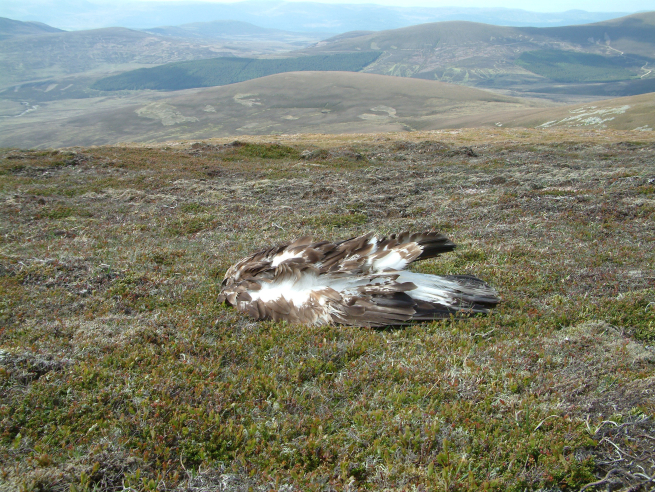
Here’s the photograph that I publish every time a new milestone is reached. This is a golden eagle that was found dead on a grouse moor in the Cairngorms National Park in 2006. It had been illegally poisoned. It epitomises everything in its pitiful, poignant, senselessness.
Photo: RSPB
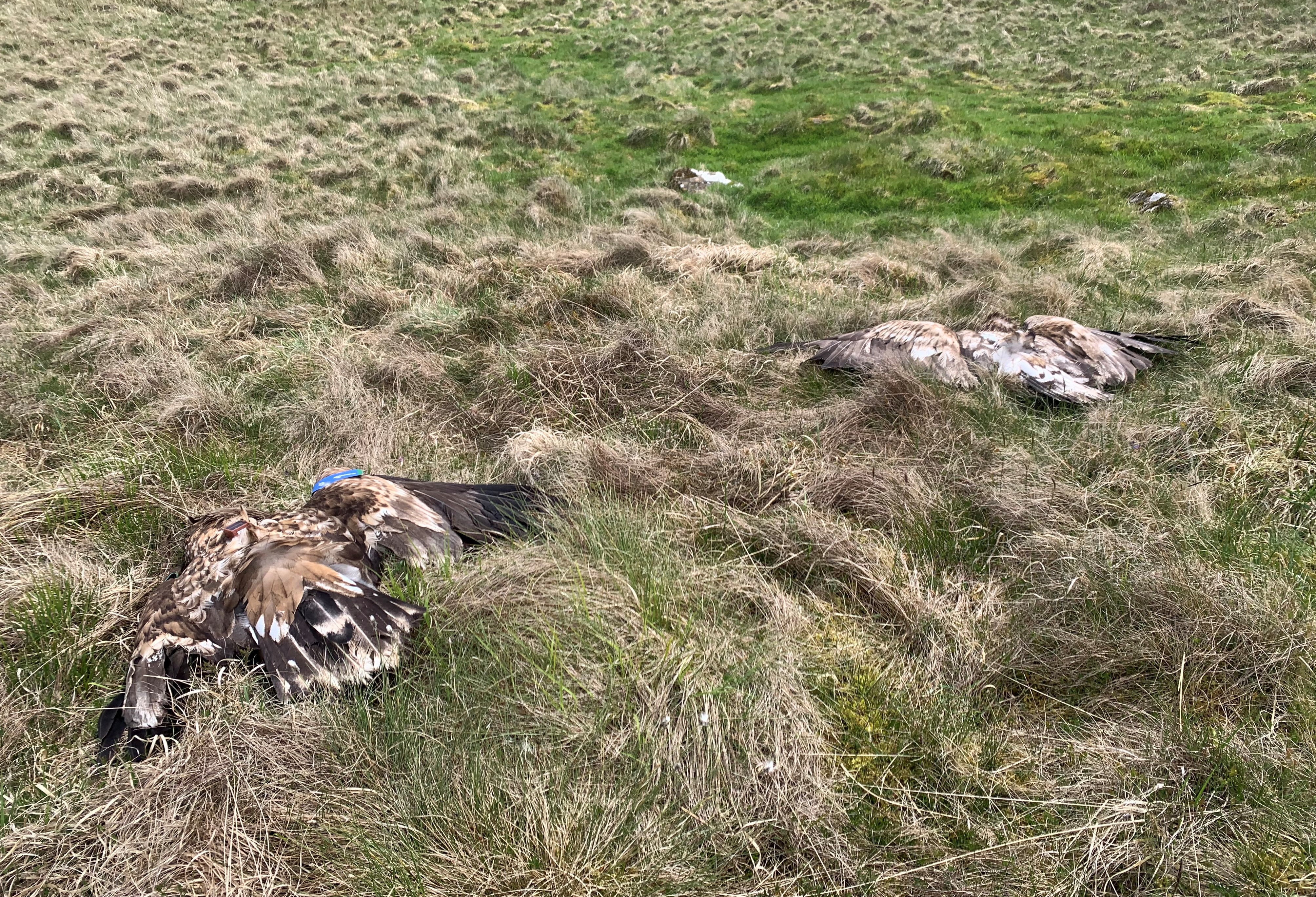
Unfortunately there is still a lot more work to do, as evidenced by the recent discovery of two young white-tailed eagles found poisoned on a grouse moor in Northern Ireland in May 2023:
Photo: RSPB
The illegal killing of birds of prey in the UK continues and so must this blog. It can often feel like no progress is being made, but it is, albeit more slowly than any of us would like.
I read a report over the weekend where representatives of the game-shooting industry said they felt ‘under siege’ from campaigners. That’s good, some of them have been allowed to get away with far too much for far too long, often assisted and shielded by the very authorities who should be holding them to account.
Change will only come when enough of us demand it.
Further to the news on Friday that the two white-tailed eagles found dead on Northern Ireland’s only driven grouse moor at Glenwherry in the Antrim Hills had been illegally poisoned (see here), the Northern Ireland Raptor Study Group (NIRSG) has launched a new petition calling for a ban on the possession of dangerous pesticides.
The two poisoned white-tailed eagles. Photo: Northern Ireland Raptor Study Group
Here is the petition text:
Pesticides which have been deemed toxic to non-target plants and animals have been banned for use across many countries, including Northern Ireland. However, although ‘banned for use’, these dangerous substances are still being used, unlawfully, to target protected birds of prey.
There have been 64 confirmed incidents of abuse of banned or highly toxic chemicals to target birds of prey in Northern Ireland since 2009. However, prosecutions are notoriously difficult to attain because unless an individual is actually seen to be laying out a poisoned bait, it is virtually impossible to determine who laid the bait that subsequently kills a protected species. To date, we are not aware of any successful prosecutions for poisoning protected wildlife in Northern Ireland.
Scotland faced a similar problem with illegal wildlife poisoning so in 2005 it introduced new legislation making it an offence to be ‘in possession’ of certain banned substances (Possession of Pesticides (Scotland) Order 2005). The substances listed were those known to be used to illegally target birds of prey. This legislation has led to the successful prosecution of many individuals who were found to be in possession of the named banned substances, for example where it was discovered in their vehicles, at their work premises and even in their homes. Not only has the poison been confiscated and destroyed, these prosecutions have doubtless saved the lives of countless species and raptors that otherwise would have been targeted.
The banned pesticides are not just a threat to wildlife and the wider environment; many of them can have fatal consequences for any human (adult or child) who happens to inadvertently come into contact with them, for example by touching a poisonous bait laid out in the countryside.
In light of the most recent illegal poisoning of two young white-tailed eagles in County Antrim in May 2023, we are seeking an urgent review of the use of banned pesticides to kill wildlife in Northern Ireland, leading to the creation of a new law which prohibits the ‘possession’ of named, highly toxic poisons.
If a pesticide has already been banned for use on the basis of its toxicity and threat to humans, wildlife and the wider environment, there can be no justification for keeping it.
Please help our campaign by signing this petition (you don’t have to be a resident of Northern Ireland to sign). Thank you.
The poisons we would like to see prohibited for possession are:
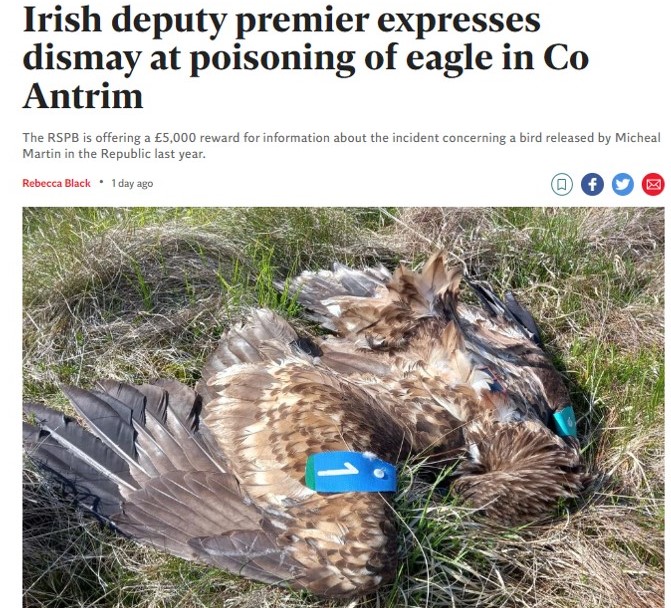
Indeed, condemnation has even come from Michael Martin, the Irish Deputy Premier (the second most senior officer in the Irish Government) who had released one of these eagles last year as part of the reintroduction project in the Irish Republic:
The RSPB is offering a £5,000 reward for information leading to a conviction (see here).
The Northern Ireland Raptor Study Group’s press release (here) describes the location where the two eagles were found poisoned as follows:
‘Glenwherry Hill Farm is owned by the Department of Agriculture, Environment and Rural Affairs (DAERA) and operated by College of Agriculture, Food and Rural Enterprise (CAFRE). This area has many young student farmers, conservationists and volunteers carrying out field work and studies on a daily basis. It also is the part of the Glenwherry Hill Regeneration Partnership (GHRP) and a site for driven grouse shooting and winter woodcock shooting and a site of the Curlews in Crisis restoration project‘.
I think it’s notable that the NIRSG resigned from the ‘partnership’ in 2020 over ‘incompatible management objectives’. The moorland management has recently shifted from walked-up grouse shooting to becoming managed for driven grouse shooting.
Dr Marc Ruddock of NIRSG is quoted:
“We know these parts of the Antrim Hills intimately having monitored birds of prey there for many years and seen various visiting golden eagles and white-tailed eagles there in the past. We are horrified and devastated at the death of these two young eagles. We sincerely hope that this is not a reflection of a renewed intolerance of birds of prey in county Antrim and within Northern Ireland. White-tailed eagles eat fish and seabirds but also other birds, rabbits and hares and more often scavenge dead animals in the countryside. They, along with other native birds of prey, are an essential component of a healthy ecosystem and for such indifference and intolerance to be displayed towardsnative eagles by somebody in this area is distressing“.
Dr Eimear Rooney of NIRSG said, “These majestic creatures are part of our ancient heritage and deserve to be revered, not poisoned and left to rot on a hillside. The suffering these birds must have felt in their final moments, and then dying side by side, it is just heart-breaking. Birds of prey are essential in balancing a healthy ecosystem and are already under pressure from loss of suitable nesting and foraging habitat. With the additional losses of birds through illegal poisoning, whether targeted at them or not, it is a massive blow to conservation efforts in Northern Ireland and on the island of Ireland.
“We have been contacted by many people outpouring their upset at the death of these eagles, and people are incensed that these pesticides, many of which are banned due to toxicity to human health, and which unbelievably remain in use illegally, causing the destruction of our native wildlife, and yet are not illegal to have in your possession”.
If you want to sign the NIRSG’s new petition calling for a ban on the possession of dangerous pesticides in Northern Ireland please click HERE.
UPDATE 3 March 2025: 50,000 people support the Northern Ireland Raptor Study Group’s petition to ban possession of dangerous, raptor-killing pesticides (here)
UPDATE 17 June 2025: 50,000-signature petition calling for ban on possession of poisons, handed in to Stormont, Northern Ireland (here)
In May this year, the Police Service of Northern Ireland (PSNI) appealed for information after the discovery of two dead white-tailed eagles found next to one another in suspicious circumstances on moorland in Ballymena, County Antrim (see here).
The corpses were sent for post mortem and toxicology results have now confirmed they were both poisoned by Bendiocarb.
The two poisoned white-tailed eagles. Photo: Northern Ireland Raptor Study Group
The PSNI has issued the following statement this afternoon:
POLICE INVESTIGATE POISONING OF TWO WHITE-TAILED EAGLES
Police are appealing for information from the public, after the confirmed poisoning of two white-tailed eagles.
Police investigating the circumstances following the discovery of two dead white-tailed eagles, in the Glenhead Road area of Ballymena on Monday, 15th May, can confirm the birds were subsequently poisoned.
Following a post-mortem examination, both birds tested positive for the insecticide bendiocarb.
How the birds came into contact with the insecticide remains part of an ongoing investigation, and the Police Service of Northern Ireland is committed to working with partners and members of the public to determine how the birds consumed the toxic insecticide.
Rural and Wildlife Crime Superintendent Johnston McDowell said: “Sadly, police can confirm the two majestic birds found on land in the Glenhead Road area were poisoned, following a post-mortem examination.
“The test results suggest that an individual not only has access to the insecticide bendiocarb but has placed this into the outside environment illegally, so that wild birds have been able to consume it.
“Bendiocarb is present in the trade product Ficam D, a powder which is only permitted for indoor use to control crawling insects such as wasps and ants, so using this active ingredient in fields would be a breach of Biocidal Products Regulation (BPR).
“The illegal killing of these beautiful birds in a popular rural area is disgraceful, and for any individual to think that they can ignore the law and lay poisonous bait which has led to the killing of these birds, is unacceptable and will not be tolerated.
“Officers with support from the National Wildlife Crime Unit, have been on the ground conducting house-to-house enquiries, engaging with local residents and landowners, in the areas of where the birds were gravitating towards, before they were found deceased.
“The Police Service of Northern Ireland will continue to work with our partners to tackle this criminal activity, investigate any reports made to us and prosecute offenders. In this case we have liaised with our partners in the Partnership for Action Against Wildlife Crime (PAWNI) Agri-Food and Biosciences, Royal Society for the Protection of Birds, NI Raptor Study Group, Health and Safety Executive for Northern Ireland, Northern Ireland Environment Agency and received additional support from the National Wildlife Crime Unit. Police have a strong multi-agency support group which we are very grateful for, but we need the help of the public too.
“There must be people in the community who are aware of individuals committing these offences, and who can come forward and assist police with any information they have.
“If you notice any suspicious activity in rural areas, notice a dead or injured bird of prey, please call police on 101, or alternatively you can make a report via Crimestoppers anonymously on 0800 555 111 or online at http://crimestoppers-uk.org. Alternatively, you can submit a report online using the non-emergency reporting form via http://www.psni.police.uk/makeareport/.
“We are also very grateful to our partners in the charity Royal Society for Protection of Birds (RSPB) who are offering a reward of £5000 for information leading to the prosecution of those involved in the poisoning of the two white-tailed eagles. The charity is completely independent from the police and can be contacted on their confidential Raptor Crime Hotline on 0300 999 0101 or online at crime@rspb.org.uk.”
ENDS
I’ll have more to say about this case, not least to discuss the location where the poisoned eagles were found – the only moor that’s managed for driven grouse shooting in Northern Ireland.
More soon…
UPDATES:
Press release from Northern Ireland Raptor Study Group (here)
Poisoned eagles found on grouse moor in Northern Ireland: New petition calls for ban on the possession of dangerous pesticides (here)
UPDATE 3 March 2025: 50,000 people support the Northern Ireland Raptor Study Group’s petition to ban possession of dangerous, raptor-killing pesticides (here)
UPDATE 17 June 2025: 50,000-signature petition calling for ban on possession of poisons, handed in to Stormont, Northern Ireland (here)
Yesterday, gamekeeper Francis Addison was convicted for multiple offences linked to the discovery of five shot goshawks that were found in a public carpark next to King’s Forest near Thetford in January this year (see here).
The five shot goshawks. Photo: Suffolk Police
Addison lives in the village of Weeting in Norfolk.
Weeting also just happens to be where another gamekeeper, Matthew Stroud, was convicted in October 2022 for multiple wildlife crimes on land he managed for pheasant shooting at Fengate Farm, including the killing of six buzzards and a goshawk and the laying of poisoned baits (see here and here).
Weeting is a small village. There are a few farms there, according to Google maps, some or all of which could be hosting pheasant shooting, but I was curious about whether Addison and Stroud were associated with the same pheasant shoot at Fengate Farm.
So I asked Suffolk Police this morning:
Interesting.
Fengate Farm is owned by Richard Norman Parrott, who also happens to be a director of Weeting Steam Engine Rally Ltd, according to Companies House (here).
The Weeting Steam Rally and Country Show is scheduled to take place at Fengate Farm on 14-16th July 2023 – see the rally website here – where overnight camping is offered (here) and the rally is described on the website as follows:
‘A fun family day out filled with nostalgia of steam. We have plenty for all the family to enjoy, from the large range of steam engines to the fairground, gundogs to chainsaw carving, there’s something for everyone, whatever your age – across our 170 acre site! Our large trade area has a vast array of stalls, we also have a craft tent and a food hall, along with many other things to see and do‘.
Now, I’m not suggesting for one minute that Mr Parrott had any involvement with, or knowledge of, the criminality associated with the Fengate Farm pheasant shoot. For all I know, he leases out the land used for the shoot and has nothing to do with it (it’s worth noting that criminal gamekeeper Stroud was described as ‘self-employed’ and criminal gamekeeper Addison has been described as being ‘part-time’ and ‘retired’ – there is no indication that either were employed by Mr Parrott).
But given the discovery of poisoned baits and poisoned birds of prey, shot birds of prey, unsecured poisons, the illegal use of animal traps, and the unlawful use and storage of shotguns associated with this pheasant shoot, I’d suggest that visitors to the steam rally and country show might want to consider the risks to their health and safety and that of their children and dogs.








 Raptor Persecution UK