CEH scientist claims gamekeepers “protect” hen harriers & mountain hares

BBC radio 4 logoThere was a fascinating discussion on the BBC’s Shared Planet programme this morning. It was all about conflict resolution, with a particular focus on the hen harrier ‘problem’.

We were told that to achieve conflict resolution, trust was needed on all sides. That’s a complete non-starter then, when those with a vested interest in killing harriers (and other protected raptor species such as golden eagles, white-tailed eagles, red kites, buzzards, goshawks, peregrines etc) consistently deny the extent of illegal killing and claim not to know who’s doing it. It’s quite hard to trust a liar.

Interviewees included Dr Juliette Young (CEH Edinburgh), who spoke about how the media often portrays ‘actors’ (stakeholders) in a negative light. She said:

Gamekeepers do sometimes feel like they’re the bad guys in all this when actually, it’s often thanks to their management of moorlands that we do have these absolutely fantastic species on moorlands, like hen harriers, like mountain hares; these species that are iconic, and that their [gamekeepers] management helps to protect“.

Wow, did she actually just say that? Perhaps she should read this, this, this, this, this, this, this, this, this, this, this, this as taster articles on how well gamekeepers are “protecting” hen harriers, and  this, this and this as taster articles on how well gamekeepers are “protecting” mountain hares.

Also interviewed was Simon Lester, Head Gamekeeper at Langholm. When asked how he would like to see the hen harrier ‘problem’ resolved, he said:

The real key to solving this problem is to endorse the quota brood management system. I wouldn’t like to see a countryside devoid of raptors but I think there has to be a level of when is enough enough?

So, with only four pairs of nesting hen harriers in England this year (when there should be 300+), and a 20% decline in the Scottish hen harrier population, with an almost complete absence of breeding harriers on Scottish grouse moors, Mr Lester thinks that ‘removing’ hen harriers (from grouse moors) is the solution. How about gamekeepers stop illegally killing them? Why not use diversionary feeding, which has proven successful at Langholm? Why is that not the solution?

Lester also went on to trot out his old blind prejudice about buzzards. He said, when asked about how to get a conflict resolution:

The first big thing is to put in mechanisms where you can use different management tools to get there. So diversionary feeding would be one, quota system for harriers, but possibly with buzzards a lethal option“.

Interesting that his Victorian attitude towards buzzards hasn’t changed over the years, despite the results of a recent three-year study, at Langholm, that suggested buzzards aren’t really that fussed about taking grouse (see here).

You can listen to the programme here.

Mountain hares massacred on Lammermuir grouse moors

Environmental journalist Rob Edwards has published a disturbing article today about the mass slaughter of between 1,500-1,700 mountain hares by landowners in the Lammermuir Hills (see here).

This industrial-scale killing of mountain hares is not restricted to grouse moors in the Lammermuirs. Last year we blogged about the scale of the killing on grouse moors in Aberdeenshire (see here) and also the Angus Glens (see here).

mh1

We encouraged blog readers to write to SNH to question them about their long-term failure to implement an effective monitoring scheme to help protect what is known to be a species under threat. They responded by saying they did not support “indiscriminate, large scale culls” of mountain hares but it was hard for them to regulate the practice because they hadn’t yet worked out how to count mountain hares and thus couldn’t say if these indiscriminate, large-scale culls were affecting the population as a whole (see here).

MSP Alison Johnstone (Lothian, Scottish Green Party) lodged a number of parliamentary questions asking the Government to state how it controls mountain hare culling and what conservation action was planned to protect the species. Environment Minister Paul Wheelhouse responded by saying that SNH is still issuing licences to allow the killing of mountain hares outside of the closed season, and that SNH was still trying to figure out how to count mountain hares so the effect of the culls could be measured (see here).

One year on and the unregulated massacre continues.

In Rob Edwards’ latest article, a Scottish Government official said: “We do have concerns about the intensification of management on some driven grouse moors, especially if it is associated with unlawful activity“.

The article also says that SNH has the issue under review and a report is expected in December. We’ll be watching with great interest.

SNH still licensing mountain hare culls

Last month a leading upland ecologist claimed that Scottish landowners were causing ‘massive declines’ of mountain hares on grouse moors around Deeside, Aberdeenshire and blamed SNH for failing in its statutory duty to protect this species (see here).

We followed up that article with some gruesome photographs showing piles of culled mountain hares left to rot on another grouse moor, this time in the Angus Glens (see here). Unregulated mountain hare culling, it seemed, was widespread.

We encouraged blog readers to contact SNH to ask them about what we thought was their long-term failure to implement an effective monitoring scheme to protect mountain hare populations. SNH responded with their usual let’s-buy-ourselves-some-time line that ‘further research was forthcoming’.

Around the same time, MSP Alison Johnstone lodged a series of parliamentary questions about mountain hare culling and how it affected mountain hare populations (see here).

Environment Minister Paul Wheelhouse has now responded to those questions (his answers presumably provided by SNH, the licensing authority). The bottom line is, SNH is still issuing licenses to allow the killing of mountain hares in the closed season, even though they admit that they are still unable to assess mountain hare abundance and therefore cannot possibly know what sort of impact, if any, these culls are having on the conservation status of the species. Quite remarkable. Where’s the precautionary principle?

Here are the parliamentary questions and answers:

Question S4W-18470: Alison Johnstone, Lothian, Scottish Green Party, Date Lodged: 19/11/2013

To ask the Scottish Government what information it holds (a) on the health of mountain hare populations and (b) that is relevant to assessing whether mountain hare are in a favourable conservation status.

Answered by Paul Wheelhouse (04/12/2013):

The National Gamebag Census data for mountain hare compiled by the Game and Wildlife Conservation Trust shows no significant trend in the data between 1961 and 2009, despite marked cyclical fluctuations which are known to exist in around half of mountain hare populations.

A questionnaire survey commissioned by Scottish Natural Heritage (SNH) in 2006-07 (SNH Commissioned Report 278) concluded that there was no evidence of an overall change in the distribution of mountain hares when compared to a similar study in mid 1990s. However, there may have been localised declines and possibly extinctions, undetectable at the 10km scale at which the data were collected and analysed.

The findings of this report provide SNH with an impression of the overall range of the species and some information on the numbers controlled, but SNH need more detailed information on hare abundance before it can be in a position to make a reliable assessment of the impact that culling is having on the population as a whole. To this end, SNH commissioned a study in 2008 into developing improved monitoring methods (Commissioned Report 444), but unfortunately, due to two severe winters hampering the fieldwork, the results did not provide SNH with the statistical relationship needed to progress this work. SNH therefore propose to develop a further programme of research, with the intention to commencing further fieldwork later in 2014. The exact detail of this work programme is still to be agreed.

Question S4W-18471: Alison Johnstone, Lothian, Scottish Green Party, Date Lodged: 19/11/2013

To ask the Scottish Government what conservation action is planned to protect mountain hare populations.

Answered by Paul Wheelhouse (04/12/2013):

In order to properly inform licence applications and to have a better understanding of the effects of culling on hare populations, a cost-effective and easily-applied method of reliably estimating hare numbers is required. This is the immediate priority and, once developed, will enable better monitoring schemes to be developed, and provision of information on population status will be improved also. Such data would then be used to inform future management decisions concerning the species, as necessary.

Question S4W-18472: Alison Johnstone, Lothian, Scottish Green Party, Date Lodged: 19/11/2013

To ask the Scottish Government what information it holds on the number of mountain hare that are culled annually and the impact of this on golden eagles (a) dispersing from, (b) likely to be recruited to or (c) nesting in natura sites for which golden eagles are a designated interest.

Answered by Paul Wheelhouse (03/12/2013):

The Scottish Natural Heritage (SNH) Commissioned Report 278 indicated that a total of 24,529 mountain hares were harvested in 2006-07 across 90 sporting estates (of these, 11,906 were reported to have been taken by 26 estates). This represents 7% of the 1995 published Scottish population estimate of 350,000 and is subject to a 50% margin of error.

SNH Commissioned Report 278 on the distribution of Mountain Hare in Scotland shows hares present in all or part of the Special Protection Areas (SPAs) designated for golden eagles.

The Report also indicates that the vast majority of hare control occurs in the central and eastern Highlands. In these areas, Report 278 suggests that there is a mixed picture of hare distributional change between 1995-96 and 2006-07 with no clear pattern of decline. The 2006-07 data are the most recent SNH holds.

(a) Golden eagles take several years to reach breeding age and juvenile birds disperse from their parent’s breeding territory and range over the Highlands and islands to varying degrees i.e. the young birds are not tied to the SPAs.

As breeding adult birds are territorial, these young birds mainly use areas of suitable habitat that does not form part of a territorial range. Some of the areas these birds will be using will be areas where hare control is being carried out. SNH Report 278 indicates that more hares are controlled from September to February, although levels of hares removed for tick control are fairly similar across the year.

(b) Young golden eagles often return and try to settle close to where they were born although some settle elsewhere. The SPAs therefore are reliant on the wider golden eagle population to support recruitment. Only a proportion of the young eagles survive to reach breeding age and it is unknown what, if any, effect the reductions in hare numbers will have on recruitment.

(c) Live prey is of key importance for chick development and successful breeding. As with (a) and (b) there is a potential impact through reducing available prey and/or requiring the birds to prey more on grouse.

Question S4W-18473: Alison Johnstone, Lothian, Scottish Green Party, Date Lodged: 19/11/2013

To ask the Scottish Government what information it holds on a link between the culling of mountain hare and the incidence of (a) louping ill or (b) other diseases transmitted by sheep ticks or other hare parasites to red grouse.

Answered by Paul Wheelhouse (03/12/2013):

The scientific evidence on this subject has been reviewed in a 2009 paper in the Journal of Applied Ecology “Culling wildlife hosts to control disease: mountain hares, red grouse and louping ill virus” by A Harrison et al.- see http://onlinelibrary.wiley.com/doi/10.1111/j.1365-2664.2010.01834.x/abstract.

The authors conclude that there is no compelling evidence base to suggest culling mountain hares might increase red grouse densities.

Question S4W-18474: Alison Johnstone, Lothian, Scottish Green Party, Date Lodged: 19/11/2013

To ask the Scottish Government how it controls the culling of mountain hare.

Answered by Paul Wheelhouse (04/12/2013):

Mountain hare are protected by a close season during which no culling can be carried out by any method except under licence granted by Scottish Natural Heritage (SNH). Mountain hare are also covered by Regulation 41 of The Conservation (Natural Habitats, &c.) Regulations 1994 which prohibits the use of certain methods of taking or killing wild animals, including the use of traps which are non-selective according to their principle or their condition of use. The use of such traps can be licensed by SNH. The use of such traps is not permissible under the terms of a general licence but can be licenced by SNH.

Question S4W-18475: Alison Johnstone, Lothian, Scottish Green Party, Date Lodged: 19/11/2013

To ask the Scottish Government how many applications it has (a) received and (b) granted for the culling of mountain hare since 2011, broken down by (i) year, (ii) purpose and (iii) area.

Answered by Paul Wheelhouse (03/12/2013):

Licences are required to control mountain hares at any time using certain otherwise prohibited means, or to kill them by any method during the “closed season”. Scottish Natural Heritage (SNH) is the licensing authority.

SNH received one application for the control of mountain hare by snaring in 2011. SNH granted that licence in 2012 and it has been amended twice. The licence was granted for the purpose of preventing serious damage to woodland.

SNH received five applications for the control of mountain hare in 2012. Two of these applications were refused. All of the remaining three were to shoot hares out-of-season and for preventing serious damage to woodland. One was in Highland, one in Moray and one in Aberdeenshire.

SNH received three applications for the control of mountain hare in 2013. Two of these were applications to renew licences issued in 2012 (one in Moray and one in Aberdeenshire). The remaining application was for another site in Moray, and again was for the purpose of preventing serious damage to woodland. Licences were granted for all three, and all three relating to shooting hares out-of-season.
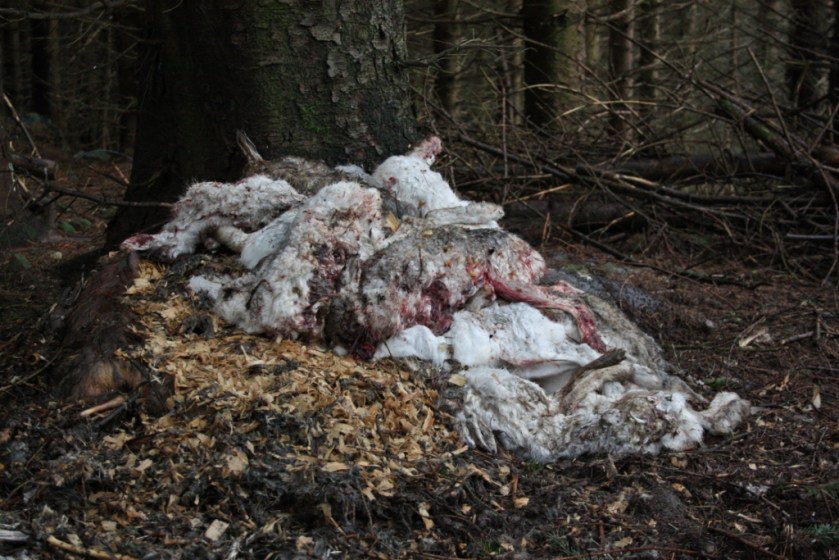

MH1

MSP wants answers about mountain hare culling

MH1Last week we blogged about the claims made by a leading upland ecologist that mountain hares were suffering “massive declines” in parts of Aberdeenshire due to uncontrolled culling on grouse moors (see here).

We followed it up with some grim photographs showing piles of dead mountain hares that had been left to rot on an Angus grouse moor (see here). We also encouraged readers to contact SNH to ask them about what we saw as their long-term failure to implement an effective monitoring scheme to protect this species. Many of you did contact SNH (thank you) and here is their generic reply:

Good afternoon

Thank you for your email which was sent to one of our members of staff. We have received a quite a few similar responses. We can’t answer them all individually but we would like to clarify a few points to explain what we have been doing and propose to do.

Firstly, a close season on hare control was introduced in 2011 to protect the species during the main part of the breeding season (March – July inclusive). Without conclusive evidence that hare populations are declining generally across Scotland as a result of over-exploitation, full all year round protection could not be justified at the time.

Because hare populations are naturally cyclical, monitoring overall trends over time is complex and problematic. SNH has been working closely with the leading UK experts on this species since 2005, to increase our understanding of their current status and to develop a reliable and cost-effective method of assessing their numbers.

We would like to reiterate the following points:

SNH does not support indiscriminate, large scale culls of mountain hares and, while moorland managers are advised to consult SNH if they propose such measures, the only cases that we are currently able to regulate directly, are in relation to licensable activities where the number of hares allowed to be taken is restricted.

We have heard of allegations that some estates systematically remove mountain hares as a prey base for golden eagles, but it is very difficult to prove this to be case, given the range of other legitimate reasons for controlling hare numbers (but not eradicating them.) SNH condemns any systematic attempt to reduce hare numbers for this reason and we would emphasise that, not only is it extremely bad practice, it demonstrates no understanding of the ecology of predators such as eagles, namely that if mountain hares become scarce or absent, the predator will switch increasingly to other more available prey such as red grouse.

We are currently working with both the James Hutton Institute and the Game & Wildlife Conservation Trust to develop a further programme of research, building on previous work, to address the fundamental question of how best to count hares, with the intention of commencing further fieldwork later in 2014.

These are complex issues which we will continue to tackle. We hope this information has been helpful.

Customer Relations Team, Scottish Natural Heritage

AlisonJohnstoneMSPSince then, Alison Johnstone MSP (Lothian, Scottish Green Party) has lodged the following parliamentary questions:

Question S4W-18470: To ask the Scottish Government what information it holds (a) on the health of mountain hare populations and (b) that is relevant to assessing whether mountain hare are in a favourable conservation status.

Question S4W-18471: To ask the Scottish Government what conservation action is planned to protect mountain hare populations.

Question S4W-18472: To ask the Scottish Government what information it holds on the number of mountain hare that are culled annually and the impact of this on golden eagles (a) dispersing from, (b) likely to be recruited to or (c) nesting in Natura sites for which golden eagles are a designated interest.

Question S4W-18473: To ask the Scottish Government what information it holds on a link between the culling of mountain hare and the incidence of (a) louping ill or (b) other diseases transmitted by sheep ticks or other hare parasites to red grouse.

Question S4W-18474: To ask the Scottish Government how it controls the culling of mountain hare.

Question S4W-18475: To ask the Scottish Government how many applications it has (a) received and (b) granted for the culling of mountain hare since 2011, broken down by (i) year, (ii) purpose and (iii) area.

Expected answer date is 4th December 2013.

This is the second time this year that parliamentary questions have been asked about mountain hares, although last time the focus was more on the use of snares to trap/kill the hares (see here).

There’ll be a great deal of interest in the answers to this latest batch.

The gruesome fate of mountain hares on Scottish grouse moors

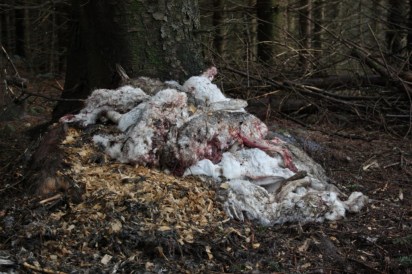
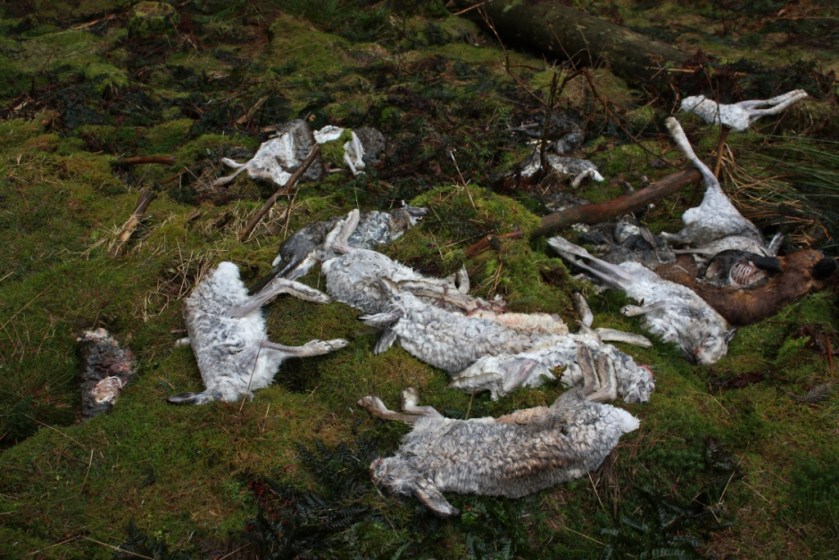
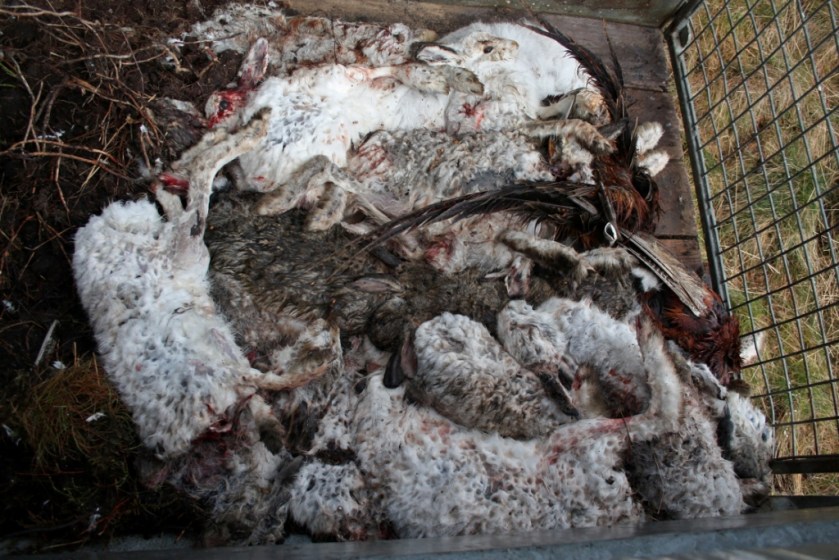
Following yesterday’s article on the reported ‘massive declines’ of mountain hares on Deeside grouse moors, and the game-shooting industry’s response that mountain hares are ‘thriving’ on Scottish grouse moors (see here), one of our contributors has sent in the following photos, taken on a well-known Angus grouse moor between 2011-2012.

The awful, bloody truth.

If you are disgusted by these images and are concerned about SNH’s long-term failure to implement an effective monitoring scheme to protect this species, you might want to email SNH’s mammal expert, Rob Raynor and ask him what measures he intends to introduce, and when. Email: Robert.Raynor@snh.gov.uk

MH1

MH2

MH3

MH4

“Massive declines” of mountain hares on Scottish grouse moors

Here we go again.

A leading ecologist has accused Scottish landowners of causing “massive declines” of mountain hares on grouse moors around Deeside, Aberdeenshire.

In an excellent article published in The Herald today (and on journalist Rob Edwards’ website, see here), Dr Adam Watson claims that what is going on is a ‘national scandal’ and accuses SNH of failing in their duty to protect this important keystone species.

To counter this argument, Tim Baynes of Scottish Land and Estates claims that even though thousands of hares are destroyed each year, this was ‘less than 10% of the population’.

That’s an interesting argument, especially given the uncertainty of the actual population size of this species. The most up-to-date UK population estimate appears to have been made in a 1995 publication (Harris et al 1995). The estimate given then was in the region of 350,000 individuals, with 99% of these living in Scotland. However, the authors recognised that this figure may be either overestimated or underestimated by a whopping 50%!

It would appear that Baynes is basing his (flawed) ‘no-impact’ argument on an SNH-commissioned study that showed at least 25,000 mountain hares were culled on Scottish estates during 2006/2007. That study demonstrated no impact on the hare’s distribution (at that time) but was not able to determine whether there was an impact on the hare’s abundance (which is the key point when estimating population size!) because no reliable measures of estimating abundance for this species were available.

What Baynes also failed to mention was that the 25,000 culled only related to information provided by 90 estates; a further 102 estates (68 driven grouse estates and 34 walked-up grouse estates) did not provide any information to the survey, so the actual figure culled was likely to be considerably higher.

It’s also ludicrous for Baynes to be referring to a (fairly dodgy) population estimate from 1995 – that was 18 years ago! The latest information, just published by the BTO, suggests a 43% decline in mountain hares between 1995-2012 (see here).

Talking of ludicrous, Alex Hogg of the Scottish Gamekeepers’ Association is also quoted in The Herald article, claiming that gamekeepers have ‘no alternative but to suppress the numbers of mountain hares on grouse moors because of the dangers of Louping Ill Virus, which can infect humans’. However, here is an article that suggests humans are “rarely” affected by the Louping Ill Virus! And here is an article about a scientific publication that suggests there is “no compelling evidence base” that culling mountain hares can stop the spread of Louping Ill Virus!

A tick-borne disease that seems to be of more concern to humans is Lyme Disease. And what spreads Lyme Disease? Pheasants, amongst other species (see here). Given Mr Hogg’s concern for human health, can we expect to see him advocating a moratorium on the release of 43 million pheasants, per year, into our countryside?

The crux of The Herald article is that SNH is failing in its statutory duty to protect the mountain hare. This is a European-protected species and thus SNH has a duty to ensure the species’ conservation status is maintained and that their populations are managed sustainably. Given previous concerns about the species’ conservation status, the Scottish Government recently introduced a closed season for mountain hares as part of the WANE Act (see here), although it’s hard to judge just how effective that will be given the lack of monitoring and enforcement.

To be fair to SNH, they have previously tried to establish an effective monitoring programme for the mountain hare. They commissioned several reports on the subject between 2005-2010 but these reports all recommended a clear need to develop ‘reliable, robust and easily implemented survey methods’. As far as we can tell, nearly four years later they still haven’t done so and according to Dr Watson’s findings of “massive declines” of mountain hares in Deeside, in addition to the BTO’s findings of a 43% decline between 1995-2012, it would appear that SNH need to prioritise their monitoring scheme with some urgency. Asking moorland managers to ‘talk to us if they are thinking of culling hares in large numbers’ (see SNH quote in The Herald) is not going to stand up as evidence when SNH are finally taken to court for breaching European conservation laws.

Who’s fooling who?

Spinoculars at the ready, folks….

According to a new website, ‘Cairngorms Nature is a new partnership where people and organisations come together, regardless of sector or background, with one thing in common – a desire to safeguard and enhance the outstanding nature in the Cairngorms National Park’ (see here). An admirable project with an ambitious five-year action plan (see here) to be overseen and delivered by a ‘strategy group’ (see here for members).

Look closely at the detail of this action plan and you’ll find some barely believable action points that include:

Page 60 – Action: Restore the full community of raptor species. Key Partners:

(a) SGA and SLE to trial innovative techniques to increase raptor populations;

(b) Police Service, SLE, SGA, BASC to raise awareness and understanding, provide advice and training on wildlife legislation;

(c) Police Service to monitor wildlife crime in the national park;

(d) CNPA, SNH, SLE, SGA, RSPB to support collaboration to reduce conflicts in species and wildlife management.

Page 62 – Key species for focused action: Golden eagle. Key Actions:

(a) RSPB, CNPA, HFW and SNH to continue and expand Raptor Track project to gather data, raise awareness and understanding, and provide advice and guidance for land managers;

(b) SLE, SGA and SNH to work with moorland managers to manage mountain hare populations for the benefit of golden eagles.

In other unbelievable news, the latest SNH magazine has been published (#17, see here) and includes two contributed articles: one written by an employee of Scottish Land and Estates (page 34) and one by an employee of the Scottish Gamekeepers’ Association (page 54). Both articles, as well as a gushing editorial from SNH Chief Executive Ian Jardine (page 3) would have us believe that these two organisations are dedicated to protecting Scotland’s wildlife.

This magazine also includes an article about Scotland’s so-called Big Five, including the golden eagle (page 13). This is a carefully worded piece that totally ignores the species’ unfavourable conservation status and the reasons for that. The best line has to be: “There are reckoned to be around 440 pairs in Scotland, located mainly in the Highlands and Islands but with a presence in the Borders and Southern Uplands too“. I suppose “a presence” is one way of describing the golden eagle’s precarious status in southern Scotland, where they are barely hanging on by the tip of their talons thanks to the effect of illegal persecution (e.g. see here).

And finally, if you haven’t read enough guff,  the SGA’s Bert Burnett treats us to his thoughts on climate change [since deleted from SGA website] – a worthy contender for a scholarship at the Sarah Palin Institute of Scientific Understanding.

Golden eagle protection discussed in parliament

Great to see more MSPs raising questions about golden eagles in the Scottish Parliament….

Joan McAlpine (South Scotland) (SNP): To ask the Scottish Government what steps it is taking to protect golden eagles. (S4O-02010).

The Minister for Environment and Climate Change (Paul Wheelhouse): All wild birds are protected in Scotland under the Wildlife and Countryside Act 1981. Golden eagles are listed in schedule 1 to the 1981 act, which provides further protection measures to prevent disturbance to nesting birds. Last month, we added golden eagles to schedules A1 and 1A to the 1981 act, to provide year-round protection for nest sites and protect birds from harassment.

Since 2008, we have broadened and developed the partnership for action against wildlife crime in Scotland—PAW Scotland; strengthened the legal framework by introducing vicarious liability; provided funding for the national wildlife crime unit; and supported initiatives to tag and satellite track golden eagles. Recent police reform has increased the number of specialist wildlife crime officers.

We have been active in the fight against raptor persecution, and poisoning has reduced significantly. However, we are in no way complacent and we are actively considering whether other methods of persecution are being deployed. Some of the new wildlife crime measures that we have put in place are yet to be tested, but we know that there is still a problem in some parts of Scotland, and I reiterate to people outside the Parliament that we stand ready to introduce further measures, should that be necessary.

May2012 GE tayside grampianJoan McAlpine: As the minister acknowledged, there have been a number of shocking incidents across Scotland during the past year. Earlier this month, a golden eagle was shot on the southern upland way. In light of that, will the minister reassure the Parliament that investigations into the illegal killing of eagles are carried out quickly and effectively? Is he willing to update the Parliament on the investigation into the killing of the golden eagle that was found on Deeside in May 2012?
Paul Wheelhouse: As I said, police reform has resulted in a revised structure for wildlife crime, which will improve co-ordination and support for wildlife crime officers. I have every confidence in Assistant Chief Constable Graham, who has been appointed to lead the work. We also have a specialist unit in the Crown Office, which ensures that there is greater understanding of the complexities of this area of the law, in and out of the courtroom. That is a major development, which should not be underestimated and which will increase the focus on wildlife crime.

I assure the member and the Parliament that such measures, along with robust working in the partnership for action against wildlife crime in Scotland, will ensure that investigations are carried out as quickly and effectively as possible. PAW Scotland is looking at making the evidential trail on issues such as raptor persecution more robust, if it is possible to do so, which involves working closely with the Scottish raptor persecution priority delivery group.

I am not in a position to update the Parliament on the 2012 Deeside eagle case. There is an on-going police investigation and it would be entirely inappropriate for me to comment at this point.

[Ed: this issue about when is a case still ‘live’ is of great interest to us. How do you define when a case is still live/on-going? We would expect the definition to mean that active leads are still being followed up and/or a court case is pending. However, we are suspicious that the regularly-heard phrase ‘it’s an on-going police investigation and therefore can’t be discussed’ is a convenient excuse for the police/government to avoid answering serious questions about the effectiveness of these investigations. Take the Deeside eagle case as an example. That golden eagle was found dead almost one year ago. Are we expected to believe that the police are still following up active leads? Come on, let’s be realistic here. How about some of the other 26 cases of either dead or ‘missing’ eagles in the past seven years (see here), for which no-one has been prosecuted? Are they still ‘on-going’ investigations as well? Are the police still investigating the death of Alma, the golden eagle found poisoned on Millden Estate in 2009? How about the poisoning of the last remaining breeding golden eagle in the Borders in 2007? We would like to see much more transparency about these cases – obviously not while they’re genuinely on-going – but when a case is clearly going nowhere shouldn’t there be a point when questions can be asked, and answered, no? We would be very interested to hear from anyone who can tell us the official definition of how an ‘active case’ is defined and at what point, if any, can the police/government be questioned about an incident?]

Graeme Pearson (South Scotland) (Lab): I am sure that members welcome the drop in reported poisonings of birds of prey, but I am concerned that there has been no decline in other forms of raptor persecution. The Wildlife and Natural Environment (Scotland) Act 2011 introduced vicarious liability, to combat raptor persecution. Will the minister indicate what the next steps will be? Now that Police Scotland has been established, what new approaches will be introduced?

Paul Wheelhouse: Graeme Pearson is right to say that vicarious liability is a significant development in the law on wildlife crime. The provisions came into force on 1 January 2012 and the legislation has not yet been tested in court, as he is aware. I believe, however, that the legislation has had the welcome effect of encouraging responsible land managers to examine the training of and procedures for their staff. I have no doubt that, if a land manager or owner is prosecuted under the provisions, it will have a salutary effect on others who have been content to turn a blind eye to unlawful practices that are carried out on their land.

More generally, the Government is doing everything that it can to encourage good practice. Recently, Scottish Land & Estates launched the wildlife estates Scotland initiative, which I hope will gather arms and legs and cover an ever-greater share of landowners. In theory, that will enable the promotion of the most proactive and progressive conservation measures by land managers. However, I reassure the member that, if the measures under vicarious liability prove to be ineffective, I will take further action.

Jamie McGrigor (Highlands and Islands) (Con): The RSPB states that one of the key problems for the survival of golden eagles is the lack of live prey that is available to the species. Does the minister agree that a healthy supply of food species in golden eagle areas, such as rabbits and mountain hares, is a factor in the maintenance of healthy numbers of golden eagles? Is he, through the appropriate agencies, doing something about the decline of those species in some areas?

Paul Wheelhouse: The member raises an important point about the need for golden eagles to have adequate food supplies. It is not as simple as saying that it is all about raptor persecution; we know that there are multiple influences on the sad decline in the populations of a number of our key, iconic species of birds. Clearly, mountain hares are a species that we want to protect. If there was any persecution of those animals by land managers, we would be concerned about it. If the member has constructive proposals that he would like me to consider, I would be happy to meet him to discuss the issues.

John Dodd sells Glenogil Estate

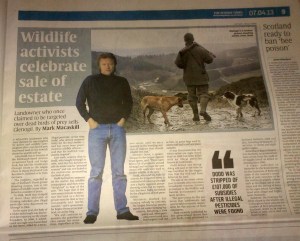
Sunday Times 7th April 2013 Glenogil saleJohn Dodd, the multi-millionaire owner of the controversial Glenogil Estate, has ‘quietly sold up’, according to an article in the Sunday Times.

The new owner is reported to be Baron Ferdinand von Baumbach, someone we know little about. Although we’re not sorry to see Dodd leave, it’s not so much who owns the estate that interests us, but rather whether (a) they intend to maintain it as a driven grouse moor and if so, (b) who will be advising on grouse moor ‘management’.

It’s been widely reported that Dodd took management advice from ‘grouse wizard’ Mark Osborne (e.g. see here) and indeed Glenogil is promoted on Osborne’s William Powell Sporting website as ‘one of the finest shooting estates in Scotland’ (see here), as well as on the William Powell Country website (here). It’s not just Osborne who rates this estate: last year The Field magazine included Glenogil in an article called ‘Britain’s 50 Great Shoots’ (see here) and in 2008 The Telegraph described it as a thriving grouse moor (see here).

However, for those of us with more of an interest in the area’s wildlife rather than with the artificially-high number of grouse that can be killed, you have to look elsewhere for information. A good place to start is the RSPB’s annual persecution reports. Below is a list of confirmed incidents recorded at Glenogil and ‘Nr Noranside’  from 2006-2010, sourced from these reports and also from Scottish Government data. Not one of these reported incidents has resulted in a criminal prosecution and Dodd has repeatedly and strenuously stated his staff are innocent. Dodd had his farming subsidy cut by £107,650 in 2008 when the Scottish Executive suspected that poisoned baits found on and near to the estate in 2006 were being used to target birds of prey (see here).

2006 March: poisoned rabbit bait (Carbofuran)

2006 April: poisoned buzzard (Alphachloralose)

2006 April: poisoned tawny owl (Alphachloralose)

2006 May: poisoned rabbit bait (Carbofuran)

2006 June: poisoned woodpigeon bait (Carbofuran)

2008 May: poisoned white-tailed eagle (Carbofuran, Isophenfos, Bendiocarb) [‘Nr Noranside’]

2008 May: poisoned buzzard (Bendiocarb) [‘Nr Noranside’]

2008 May: poisoned mountain hare bait (Carbofuran, Isophenfos, Bendiocarb) [‘Nr Noranside’]

2008 May: 32 x poisoned meat baits on fenceposts (Carbofuran, Isophenfos, Bendiocarb) [‘Nr Noranside’]

2008 Oct:  poisoned meat bait (Carbofuran) [‘Nr Noranside’]

2009 March: poisoned buzzard (Carbofuran)

2009 March: poisoned buzzard (Carbofuran)

2009 August: poisoned white-tailed eagle (Carbofuran)

2010 May: poisoned red kite (Carbofuran) [‘Nr Noranside’]

2010 September: poisoned buzzard (Chloralose)

2010 October: poisoned buzzard (Carbofuran)

2010 October: poisoned pigeon bait (Carbofuran)

2010 October: poisoned pigeon bait (Carbofuran)

John Dodd was the co-founder of Artemis Investment Management Ltd., a company that has sponsored the GWCT’s Scottish Game Fair (see here).

The Sunday Times article can be read in two parts:

Part 1 Glenogil sale Sunday Times 7 April 2013

Part 2 Glenogil sale Sunday Times 7 April 2013

New Scottish snaring laws may help catch the raptor killers

Yesterday (1 April 2013) saw the new Scottish snaring laws take effect, under The Snares (Identification Numbers and Tags) (Scotland) Order 2012.

plastic_snare_tags2 Perdix Wildlife SuppliesUnder this new legislation (see here for a copy), snare operators have to abide by the following rules:

  • They must have attended and passed an approved training course.
  • They must have been issued with a personal identification number by the police.
  • A tag (plastic or metal) with this personal identification number must be attached to every single snare they set, along with the letter ‘F’, ‘R’ or ‘BH’ to indicate the target species they intend to catch (Fox, Rabbit or Brown Hare). Interestingly, there is not a code for Mountain Hare – suggesting that it is still illegal to snare this species, despite the verdict in the recent Lochindorb hare-snare trial (see here). See image for an example of one of the new tags, created by Perdix Wildlife Supplies, showing the target species (BH) and the personal ID number.
  • They must keep a record of every snare set, including its location, date set, date disarmed, and every animal they have caught in that snare. These records must be maintained for two years and given over to a police officer if requested.

They must also abide by previous legislation and use only free-running snares with a stop on them (not self-locking snares which are banned), check every snare at least once every 24 hours, and on each inspection they must remove any trapped animal, whether alive or dead. Snares cannot be set where an animal is likely to become suspended (e.g. next to a fence) or close to water where a snared animal is likely to drown.

The game-shooting lobby are nervous about the new regulations. Although many of the industry’s organisations have welcomed the new restrictions, there is obvious concern that not everyone will comply and this could well lead to an outright ban on snaring when the effect of the new legislation is reviewed by the Scottish Parliament in December 2016.

They are right to be concerned. We already know that as of February this year, out of a shooting industry estimate of 5000 snare operators, only 1,376 have attended one of the approved snaring training courses (see here). That means 3,624 people have not been trained – if they’re still setting snares they will be doing so illegally.

Modern Gamekeeping, the monthly gamekeepers’ rag, has warned readers to ‘Beware spies in the hills’. They claim anti-fieldsport campaigners will be out “looking for trouble”. It’s not just the anti-fieldsports crowd who’ll be looking – it’ll be everyone who cares about the way our wildlife is ‘managed’ on sporting estates, whether they be anti-fieldsports or not. In the same article, the SGA’s Bert Burnett warns about the SSPCA, who he says are “very proactive in trying to find problems”. Surely he meant very proactive in trying to bring to justice wildlife criminals who cause unnecessary suffering to animals?

Of course, the new legislation will only be effective if it’s properly enforced. If you’re out and about and you find a snare that doesn’t meet the new requirements, you need to report it immediately. You can try the police, although whether you’ll get an appropriate response depends on who answers the phone. Some wildlife crime officers are very clued-up and will be aware of the legislation – others will not. A quote from the Modern Gamekeeping article gives a clear example of this problem:

One keeper told Modern Gamekeeping he had rung his local police every few weeks since November [to apply for his personal identification number], only to speak to receptionists who didn’t know what a snare was. He said: “Some of the policemen I have spoken to have told me that snaring is banned altogether and others have told me it is an issue for the council to deal with. When I rang the council, the woman was utterly horrified at the idea. It really has been a total hash””.

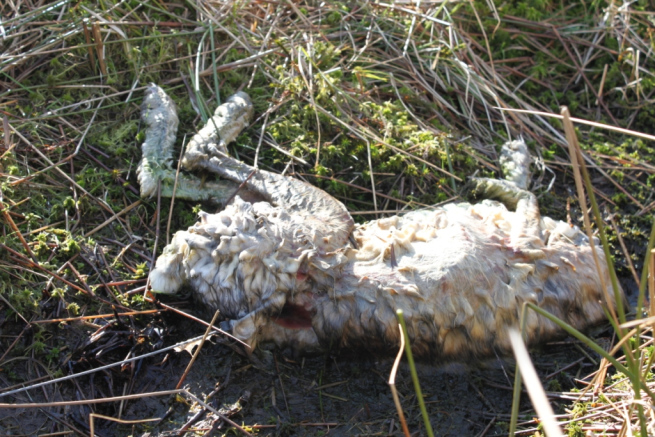
This photo (below) shows a decomposing mountain hare found in a snare on a notorious Scottish grouse moor. It was reported to the police – no action was taken.

slry30

If you don’t want to rely upon the police to follow up on your report, please call the SSPCA (03000-999-999), especially if you find a live animal caught in a snare, whether it be a target species or not. Another excellent place to report your findings is OneKind’s Snarewatch website (here), which not only has a reporting facility but also is an excellent source of background information about snaring in Scotland. For snaring information in England, this website is very useful.

These new snaring regulations are of interest to us, not only for their intrinsic value but particularly because we believe they could be used to close an often-used legal loophole that has prevented the prosecution of many suspected raptor killers employed on large game-shooting estates.

The loophole we’re referring to concerns the inability of investigators to identify a potential individual suspect, especially on large estates, where gangs of gamekeepers all close ranks and deny having responsibility for an individual ‘beat’, where, for example, a poisoned raptor may have turned up. This scenario has happened time and time again and has prevented many a prosecution from taking place, because charges can only be brought if the individual responsible has been identified. Here’s how it often goes:

(i) A poisoned raptor is found on an estate, maybe close to a poisoned bait, maybe not.

(ii) The investigators turn up on the estate and conduct a search.

(iii) Traces of poison are found on game bags, on knives, in vehicles etc.

(iv) The investigators ask which gamekeeper is responsible for the specific area where the bird was found (i.e. who runs this ‘beat’?).

(v) All the gamekeepers on the estate claim they don’t have individual beats. They all cover the same ground, use the same game bags, knives, vehicles etc, and nobody knows anything about any poison.

(vi) The investigators have to leave empty handed and nobody is brought to justice for poisoning the bird.

So how can the new snaring regulations be of help? We think that the issue of a personal identification number is key. Unlike the number issued for crow cage traps, which is given to the ‘estate’ rather than to an individual, this snare number is issued to the actual individual person who operates the snare. The number has to be attached to each and every snare that that person sets. So, if a poisoned raptor (or any other evidence of criminality) turns up on a specific beat, investigators can search for snares that have been set in the vicinity to identify the individual gamekeeper who runs that beat.

Perhaps the estate owners are wise to this already, and perhaps they’ll ask their gamekeepers to mix up their snares so that a single individual cannot be identified as being responsible for a particular area. But by doing so they’ll decrease the efficiency of their workforce (and efficiency is what they’re all about) because those keepers, being responsible for their own snares, will have to be zig-zagging across great swathes of moorland in order to check their snares, rather than focusing on a more compact area where they know every nook and cranny and use that knowledge to their advantage when targeting animals they want to kill.

We will be watching with interest to see how things develop.