
Unravelling the ‘relationship’ between Hopetoun and Leadhills Estates

Last week we blogged about the recent article in The Scotsman and on the Deadline News website, relating to criticism of the RSPB for deciding to hold their inaugural Scottish Birdfair at Hopetoun House (see here).

To begin with, readers should be clear that the location of the Scottish Bird Fair is Hopetoun House, in West Lothian, near Edinburgh. Hopetoun House is the historical family seat of the Hopetoun family (see here) and is home to the current Earl of Hopetoun (Andrew, who is also a Director of Scottish Land & Estates – see here). According to his SLE profile, Andrew is Chairman of Hopetoun Estates and Deputy Chairman of the Hopetoun House Preservation Trust, and, “These two organisations manage Hopetoun House and its related estates, mostly at Hopetoun near Edinburgh and around Leadhills in the Scottish Borders” [South Lanarkshire].

We are not aware of any alleged raptor persecution incidents taking place at Hopetoun House or its surrounding [West Lothian] landholdings and indeed, raptors such as buzzards and tawny owls are reportedly resident in the grounds of Hopetoun House and on the surrounding estate.

However, we believe that the criticism of the RSPB’s decision to hold their bird fair at Hopetoun House was not in relation to Hopetoun House per se, but rather it was probably in relation to the Hopetoun Estate’s alleged connection with Leadhills Estate in South Lanarkshire.
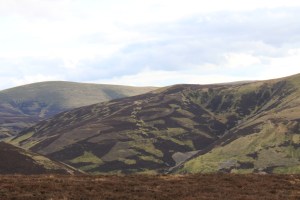
Leadhills Estate, as many readers will be aware, has been at the centre of dozens of allegations of raptor persecution (e.g. see here), and several gamekeepers there have been found guilty of wildlife crime offences (e.g. see here and here). Leadhills Estate is situated on land that is owned (but apparently not managed) by Hopetoun Estates and, if you believe the RSPB and the Earl of Hopetoun, that is the full extent of the relationship, as Leadhills Estate is reportedly let on a long sporting lease.

After the original article (criticising the RSPB) was published in The Scotsman, various statements were made by, and on behalf of, both the RSPB and the Earl of Hopetoun, to clarify the relationship between Hopetoun Estates and Leadhills Estate (see here and here). In essence, both were keen to highlight that Hopetoun Estates has nothing whatsoever to do with the management of Leadhills Estate and therefore there should not be an ‘issue’ about the RSPB holding its bird fair on land managed by Hopetoun Estates. The most significant comment, made by an un-named spokesperson for the Earl of Hopetoun, was:

More importantly, Hopetoun Estate has no role whatsoever in the management of Leadhills Estate. Leadhills Estate is run on a sporting lease completely separately and there is no connection between Hopetoun Estate and the sporting management of Leadhills Estate”.

This is a very interesting statement, mainly because it seeks to put distance between Hopetoun Estates and Leadhills Estate. However, if “Hopetoun Estate has no role whatsoever in the management of Leadhills Estate“, then how do Hopetoun Estates explain that they were one of the formal objectors to South Lanarkshire Council’s proposed ‘Core Paths Plan’ in January 2011, in which they objected to a proposed footpath network across a working grouse moor on Leadhills Estate? Here is a PDF of their objection statement: Hopetoun Estates objection statement

Looking at some of the comments made in the Hopetoun Estates’ objection statement, it would appear that this stated separation (between Hopetoun Estates and Leadhills Estate) may not be quite as clear cut as Hopetoun Estate and the RSPB would like us to believe. Of particular relevance are the comments made in section Q8, reproduced here:

Our [Hopetoun Estates] particular concerns include potential detriment to our farming and sporting interests due to dogs and the disruption they cause to birds, wildlife and sheep (especially at lambing and hatching). We are concerned about the implications of Health & Safety as landowner due to the actions we and/or our tenants carry out over the Estate including the use of vehicles and firearms. Walkers, cyclists and horse-riders will inevitably be in conflict with the use of quad bikes, 4x4s etc – the speed issue alone, coupled with the rugged terrain, blind summits, corners etc. offers significant cause for concern. Further to this, there may be times (shoot days, or when certain land management actions are being carried out) when we would require the closure of the Core Paths for H&S reasons. We are concerned about the cost implications to ourselves of undertaking such a closure and one would have to provide the manpower to police such closures during shoot days. Maintenance of the tracks are also a concern as horses and bikes can significantly break up the surface of the tracks which allows water to get into the body of the track and cause significant damage potentially making the track impassable for our Estate vehicles”.

Hmmm.

Now, Hopetoun Estates were one of several formal objectors to the Core Paths Plan (see here). Others of interest here include Leadhills Sporting Ltd (sporting agents with land management responsibilities at Leadhills Estate – see here); Allershaw Farming Ltd (which is listed elsewhere as a company involved with ‘Hunting, Trapping & Game Propagation and Related Service Activities’ and whose two listed directors just happen to have exactly the same names as the two directors listed at Leadhills Sporting Ltd – imagine the coincidence of that!); and Lord Linlithgow’s Accumulation Trust, whose address on the objection statement is given as ‘Hopetoun Estates Office, West Lothian’!!

What is striking about all four of these objections is the similarity of (most of) the paths they object to, and the reasons they provide for their objections.

Here are the four PDFs – compare and contrast and draw your own conclusions:

Hopetoun Estates objection statement

Leadhills Sporting Ltd objection statement

Allershaw Farming Ltd objection statement

Lord Linlithgows Accumulation Trust objection statement

Does anybody still think that “Hopetoun Estate has no role whatsoever in the management of Leadhills Estate” ?

Naturally, we’d be happy to publish any clarifications that Hopetoun Estates may care to provide.
RSPB criticised over link to Hopetoun Estate for Scottish Bird Fair

An article in today’s Scotsman has criticised the RSPB’s decision to hold the first-ever Scottish Bird Fair at Hopetoun House near Edinburgh in May.
The event, to celebrate Scottish birdlife and expected to attract 5,000 visitors, is to be held at the stately home of the Earl of Hopetoun, whose family also reportedly own Leadhills Estate (also known as Hopetoun Estate) in South Lanarkshire. Leadhills is a well-known grouse moor that has been at the centre of numerous police investigations over the years for allegations of raptor persecution. Many of these investigations did not result in a subsequent prosecution, but several did. The most recent one was the conviction of a 20-year old gamekeeper (in November 2010) who was found guilty of laying a rabbit bait laced with the banned pesticide Carbofuran.

The RSPB has defended its decision to link with Hopetoun:

We understand that there is a clear separation between land managed in hand by Hopetoun Estate in West Lothian, and the Leadhills Estate, which is let on a long lease to American tenants. It is the American sporting tenants on Leadhills Estate, through a UK sporting agent, who employ and manage the land and the employees at this site, and who are therefore ultimately responsible with ensuring that birds of prey are protected on this land. We accept that Hopetoun Estate do not condone any illegal practices on their land.”

Hang on a minute. Doesn’t ‘ultimate responsibility’ lie with the landowner? Isn’t that the message from the new law on vicarious liability? Apparently not!

The Scotsman reports that attempts to contact the Earl of Hopetoun were unsuccessful. However, an article on the Deadline News website has a statement that has reportedly come from the Earl’s spokesman:

The Earl of Hopetoun’s position on wildlife crime is unequivocal. He has constantly condemned any such activity. More importantly, Hopetoun Estate has no role whatsoever in the management of Leadhills Estate. Leadhills Estate is run on a sporting lease completely separately and there is no connection between Hopetoun Estate and the sporting management of Leadhills“.

Surely that lease would contain a clause that says if any unlawful activity is shown to have taken place then the lease becomes null and void and the tenants can be removed? Apparently not!

Full article in The Scotsman here

Article on Deadline News website here

RSPB’s Scottish Birdfair website here

Oh, the irony!

The first annual Scottish Bird Fair will be held in May 2012 at………Hopetoun House, which is managed by Hopetoun Estates!

The new Scottish Birdfair website is now up and running here.

Fund-raising sky dive by OneKind investigator – please support him!

We have received the following message from a member of the  investigations team at the Scottish charity OneKind. You may recall OneKind was instrumental in catching criminal gamekeeper Lewis Whitham placing a poisoned bait on Leadhills Estate last year. ‘Steve’ is undertaking a charity sky dive at the end of August to raise funds for field equipment and also to raise awareness about the on-going illegal raptor persecution in this country. Please support him!
Hi, Thank you for this valuable site. Nothing compares to it on the web and is a reminder, if ever some of us need it, to the true and serious problem that we have in Scotland as to the persecution of birds of prey. My investigations and research over recent years has lead me to areas of Scotland where I have not only come across poisoned and shot raptors, but I have even witnessed a gamekeeper setting out carbofurin onto a rabbit in an area where raptors fly.

At every opportunity we must remind the general public that reports of incidents involving raptor persecution are only the tip of the iceburg. Crimes against birds of prey are almost always carried out in isolated areas where the public rarely walk and it is often only chance that these poisoned or shot birds are discovered. For every raptor I hear killed then I times that by ten for those that the perpetrator of these serious crimes takes away, burns, buries or are lost amongst the heather or within the woodlands.

At the end of August I am doing a fund raising skydive to raise funds for the investigations department at the Edinburgh animal charity OneKind and also to highlight the serious problems that we have in Scotland of raptor persecution. Please could I use this opportunity to give you the link to my skydive fund raising page. Anything that people could donate would go directly to obtain equipment to help me keep one step ahead of those that I investigate. Many thanks“.

Please sponsor ‘Steve’ here and read about the equipment he hopes your sponsorship money will buy.

Review of ‘Fair Game?’ documentary – our “ugly secret”

The BBC 2 Scotland documentary, ‘Fair Game? Scotland’s Sporting Estates’ was aired last night and opened with the BBC reporter visiting the Leadhills Estate with an undercover investigator from OneKind. This investigator was the guy who watched gamekeeper Lewis Whitham staking out a rabbit laced with Carbofuran in April 2009, leading to a conviction in 2010 (see blog post 17 Nov 2010). The BBC reporter, David Miller, was shown what was alleged to be an illegal ‘snapper trap’, and in forestry a few feet away he was shown the rotting carcasses of foxes and other animals, piled up at a ‘stink pit’ – used as a lure to draw in predators who are then snared as they approach the area. Also in the forest, he was shown the decomposing bodies of two raptors that someone had apparently tried to conceal under pine needles. Miller was visibly disturbed by what he’d witnessed in one small corner of one sporting estate, calling it ‘our ugly secret’ – not quite the public ‘conservation’ image that the shooting industry likes its estates to portray. The OneKind investigator has written an excellent account of his time out on the hill with Miller: http://www.onekind.org/resources/blog_article/fair_game

The discovery of the dead raptors and the apparently illegal snapper trap led to a later police search, in which a third raptor corpse was discovered, in addition to more raptor skulls. The trap was removed, and Leadhills Sporting Ltd denied all responsibility for the dead birds. Fountains Forestry, the owners of the private forest on the shooting estate, also denied any knowledge of the bodies and said the snares found were illegal as they had not given permission for anyone to set snares on that ground. Later in the programme, we learned about the weight of evidence of alleged criminal activity on Leadhills Estate. Since 2003, the RSPB has recorded 46 incidents where the government, police and/or other agencies have confirmed that poisoned baits have been set or birds have been illegally killed, just on Leadhills Estate. We were told that the current management at Leadhills Estate took over in 2008 and they say they ‘deplore wildlife crime’. However, the RSPB has since recorded 10 incidents since 2008, although none since 2009 – following the conviction of gamekeeper Lewis Whitham.

There followed a series of interviews with various people, including Dave Dick, the former head of RSPB Scotland Investigations (and a regular contributor to this site – thank you Dave), who talked about the hundreds of raptor persecution incidents he had seen first-hand over the last 20-30 years. We also heard from Mark Oddy from Buccleuch Estates who spoke briefly about the old glory days of grouse-killing at Langholm, and then we went to the RSPB’s Abernethy Reserve where Duncan Orr-Ewing showed Miller that it is possible for grouse-shooting and raptors to co-exist. Orr-Ewing also discussed the RSPB’s persecution figures and how these clearly show the effect of persecution on some raptor species. Government scientists have predicted that there should be 500 pairs of hen harriers on the UK’s grouse moors – there are actually only five. You don’t need to be Carol Vorderman to work out the missing numbers.

Next up was gamekeeper Peter Fraser from Invercauld Estate, who is also the SGA’s new vice chairman (see blog post 26 Nov 2010). There followed a fascinating conversation between Miller and Fraser, when Miller pointed out that 3 poisoned buzzards [and a poisoned raven] had been discovered on Invercauld Estate in 2003 [our sources suggest it was 2005] for which no-one was ever prosecuted:

Fraser: “All keepers know and understand that if they do that [poison a raptor] and they’re caught, you automatically lose your job”. NOT TRUE, Mr Fraser, as anyone who has read the contents of this blog site can attest.

Miller: “There are scientists who argue clearly that birds of prey in Scotland are being killed, shot, poisoned on our hills. Does that happen on this estate or neighbouring estates?”

Fraser: “Well, as I’ve said on this estate, if anyone does that we’re finished, and I can honestly say no. Never”.

Miller: “So, how do you explain the dead birds which routinely turn up in the Scottish countryside?”

Fraser: “I wish I could answer you that. Erm, in every walk of life there are some that lets the profession down and unfortunately we’re no different to everybody else. And it has been known that these birds have been planted on various areas so it’s a ticklish subject to deal with and to be quite honest, but er, I would like to think that poisoning has been greatly reduced over the years”. NOT TRUE, Mr Fraser – read the government statistics!

Miller: “Just to be clear, when poisoned or shot birds of prey are found on a gamekeeper’s land, clearly the stakes are very very high. Are you suggesting that those birds may have been deliberately placed there by a third party?”

Fraser: “Well, I haven’t got that evidence on me but erm I’m quite sure that has happened, quite sure that has happened”.

So there you have it. Peter Fraser, vice chairman of the SGA, admits that he has no evidence to support the claim that poisoned raptors have been ‘planted’ on sporting estates. It’s a shame Miller didn’t mention the poisoned buzzard found here in 1992, nor the 1997 conviction of an Invercauld Estate gamekeeper for the illegal use of a spring trap (see blog post 4 March 2010). Also a great pity that Fraser wasn’t asked how many breeding pairs of golden eagles and hen harriers are present on Invercauld Estate.

We then heard from Mike Yardley, a journalist and shooter, who stood smugly bragging about the ’20 safaris’ and other trips he has taken in Africa, North America and throughout Europe to shoot animals – and we were even treated to viewing some of his home videos of these trips. He probably met every expectation that the general public has of a typical shooter. It was hilarious. Not all shooters are of his ilk, of course, but the programme failed to get this across.

We heard from Robbie Kernahan from SNH who admitted that the evidence of illegal raptor persecution ‘should not be ignored’. We also heard from the laird at Alvie Estate, Jamie Williamson, who didn’t really discuss the issue of raptor persecution at all, and then we heard from an apparently very cagey Simon Lester, head gamekeeper at Langholm Estate who was obviously trying to pick his words carefully and not put his foot in it. Unfortunately he didn’t have anything substantial to offer in the comments that he did make. There was also an interlude at Mar Lodge Estate, although this was mainly about deer management and not really raptor persecution.

Miller went on to provide some interesting details about the performance of the procurator fiscals at the Crown Office. The BBC had asked them about the number of gamekeepers they had taken to court. Amazingly, they said they had only started recording their performance on wildlife crime early last year! Why? Since then, they’ve had one successful prosecution – Lewis Whitham from Leadhills Estate. There is ‘a handful’ of cases in the system – presumably these include the current cases concerning Skibo Castle Estate, Moy Estate and Inverinate Estate. We await these results with great interest to assess whether the extent of the charges brought are an accurate reflection of the evidence uncovered.

The finale came with an interview with Doug McAdam, CEO of SRPBA. Another apparently cagey performance that included what some might perceive as a blatant lie. Miller asked McAdam whether he thought the game industry was being unfairly targeted:

McAdam: “I think that there is a feeling out there amongst landowners and estates that there are people who would seek at every opportunity to damage the reputation of landowners and estates. If we look at the statistics, 28 cases of confirmed bird of prey poisoning incidents in Scotland in 2010 – it’s small, it’s in the tens, and it is a decreasing number”.

Actually, Doug, if you care to look at the official poisoning statistics that your organisation helped to analyse, you’ll see that the number of poisoned raptors discovered in 2010 was GREATER than the number discovered in 2009. Do you think that if you say it enough times (i.e. that the poisoning figures are declining) that somehow we’ll all forget the official statistics and believe your version? I don’t think so.

Miller also asked him: “Your very well informed members must know where those [poisoning] cases are taking place, surely?”

McAdam: “Er, I don’t, I don’t think that’s necessarily the case, no”.

So, our ignorant landowners are now pushing for licences to kill protected raptors as a method of reducing illegal persecution incidents, but they ‘don’t neccessarily’ know where these incidents are taking place. Brilliant.

For those of us hoping for some words of wisdom from SGA chairman Alex Hogg, sorry, he wasn’t included. I wonder why?

The programme is available for one week on the BBC iPlayer: http://www.bbc.co.uk/iplayer/episode/b0116lfs/Fair_Game_Scotlands_Sporting_Estates/

Here is the SRPBA response to the programme: FairGameSRPBAresponse May 2011

gamekeeper convicted for poisoning offences on Leadhills Estate

A 20 yr old gamekeeper formerly employed on the Leadhills Estate in Lanarkshire was today convicted for laying poisoned baits, contrary to the Wildlife & Countryside Act. In April 2009, underkeeper Lewis H. Whitham was observed by a research officer from the charity OneKind (formerly called Advocates for Animals) staking out a dead rabbit, whose stomach had been split open and sprinkled with the deadly pesticide Carbofuran.

Whitham pleaded guilty at Lanark Sheriff Court and he was fined £800. This had been reduced from £1000 because of his guilty plea. The maximum penalty that can be imposed for this wildlife offence is a fine of up to £5000 and/or six months imprisonment. It is understood that Whitham is no longer employed at Leadhills and has since moved to North Yorkshire.

The Leadhills Estate has a shocking record of alleged wildlife crime incidents in recent years. See blog posts on 4 March, 6 March, 11 March and 14 March for a taster. In addition, OneKind claims that over a period of several months, numerous apparently illegal snares have been discovered on Leadhills, 3 badgers were caught in snares and 2 of these had to be put down due to their injuries, and also dead buzzards have been found in shallow graves.

If this most recent conviction isn’t justification for Roseanna Cunningham’s proposed vicarious liability ammendment to the WANE bill to be accepted, then I don’t know what is. Persistent wildlife crime exposed, yet again, on a so-called sporting estate. It’s disgusting.

Congratulations to OneKind for their dedicated research, and to the SSPCA who took the lead in securing this conviction.

For more details on the Leadhills conviction, see OneKind link here: http://www.onekind.org/onekind/blog_article/leadhills_conviction_strengthens_case_for_liability

Case details from PAW Scotland: http://www.scotland.gov.uk/Topics/Environment/Wildlife-Habitats/paw-scotland/Resources/Newsletters/Issue2/Inthecourts/LewisWhitham2010

SSPCA press release here: http://www.scottishspca.org/news/511_man-convicted-for-poisonings

Crown Office and National Wildlife Crime Unit press releases here: http://www.scotland.gov.uk/Topics/Environment/Wildlife-Habitats/paw-scotland/news/Gamekeeperfined171110

We wait with bated breath (not baited rabbit) for the SGA and SRPBA press releases.

Mark Osborne – another amazing coincidence

(John) Mark Osborne must be the victim of an amazing series of coincidences, according to shooting journalist James Marchington: http://jamesmarchington.blogspot.com/2009/07/poisoned-eagles-and-osborne-connection.html. What else could explain his connection to a number of shooting estates where wildlife crimes have allegedly been committed? Here’s the latest coincidence –

In 1991, Osborne apparently set up the West Wycombe Shooting Ground on the Dashwood Estate near High Wycombe, Bucks, along with Sir Edward John Francis Dashwood. The estate incorporated the Bradenham Hill Shooting Syndicate.

On 15 July 1998,  a 29 year old gamekeeper (Gamekeeper A) for the Bradenham Hill Shooting Syndicate, appeared before High Wycombe magistrates accused of an appalling litany of alleged wildlife crimes between 1996-1997. A journal found at his house documented the alleged massacre of 127 badgers, several cats and dogs, 3 owls, 2 sparrowhawks and a buzzard on the Dashwood Estate. An underkeeper on the estate told the court that Gamekeeper A had admitted killing badgers and feeding live fox cubs to his dogs. Gamekeeper A was cleared of the wildlife crime offences because of ‘insufficient evidence’ and was fined £150 with £50 costs, for keeping ammunition unsecured.

On 21 April 2005, Gamekeeper A was back in court, this time as head keeper on the Dashwood Estate. He and his co-accused, Gamekeeper B, both of West Wycombe, were charged with clubbing a buzzard to death on the Dashwood Estate on 23 February 2004. The buzzard had been caught inside a crow trap, and Gamekeeper B was videoed by RSPB undercover investigators as he clubbed the buzzard to death with a piece of wood while Gamekeeper A looked on. Both men were found guilty and fined £2,000 each, with an additional £500 costs. http://www.docstoc.com/docs/22523459/232-0574-04-05_legal-eagle-45

Eton-educated Sir Dashwood (45), chairman of the Countryside Alliance’s Campaign for Shooting, appears to have further links with Osborne. According to Companies House records, both became Directors of West Wycombe Corporate Entertainment Ltd in 1991. They were also both allegedly involved with the lease of the notorious Leadhills Estate (owned by Hopetoun Estate) in South Lanarkshire in 2003. However, in 2008, the shooting rights were put up for sale after a series of police raids in relation to alleged raptor persecution incidents. The Estate’s owner, the Marquess of Linlithgow, had apparently leased the estate to Dashwood & Osborne in 2003 on the condition that they complied with the Wildlife & Countryside Act 1981. Dashwood claimed the sale of the shooting rights was ‘entirely unconnected’ with the police raids.

http://www.guardian.co.uk/environment/2008/apr/18/wildlife.conservation

Film footage of Gamekeepers on Leadhills Estate ruled inadmissable

Female Hen harrier at nest

On 30 April 2003, an undercover RSPB investigation team were filming at a hen harrier nest on the Leadhills Estate, South Lanarkshire (also known as Hopetoun Estate and Abington Farms Ltd). This estate has a shocking record of alleged persecution against hen harriers and peregrines.

According to an article published by a former RSPB investigator (see link below), a gamekeeper was filmed walking up the valley towards the hen harrier nest, and ‘finding’ the nest by throwing a training bag for his labrador dog. The keeper was also allegedly filmed picking up the dog by its throat and kicking it to the ground. He was later charged with a cruelty offence after SSPCA officers and a vet had viewed the evidence.

Later the same night, the RSPB team reportedly filmed a group of men approaching the hen harrier nest in the dark using torches.  They are reported to have shot the incubating female and removed the eggs from her nest. One of the RSPB team followed the men back to the road and took their vehicle registration number. The vehicle was allegedly found to be used by the estate’s head gamekeeper. A shotgun cartridge found next to the nest was allegedly matched to the gun belonging to the head gamekeeper’s son. The son was later charged in relation to killing the harrier and destroying the nest.

After prolonged legal activity, the charges against both keepers were all dropped. It is thought this was in connection to the use of undercover footage by the RSPB. (See our post about a similar incident at Haystoun Estate in 2003).  http://www.the-soc.org.uk/docs/SBN80.pdf


Gamekeeper fined for shooting short-eared owl on Leadhills Estate, South Lanarkshire

A gamekeeper was convicted of shooting a short-eared owl on a Lanarkshire grouse moor in May 2004.

The 23 year old gamekeeper (name removed under the Rehabilitation of Offenders Act 1974) who works for a shoot on Abington Farms Estate (often known as the Leadhills Estate), appeared at Lanark Sheriff Court on 31 July 2005. Two local bird of prey workers told the court how they had seen a short-eared owl fly up from the heather as the keeper drove across the moor on a quad bike. They saw the keeper stop the bike, take out his shotgun and walk towards the spot where the owl had settled on the hillside. When it flew up, he fired three shots at it and it fell to the ground. He collected the spent shotgun cartridges, but failed to find the owl.

After a search of the heather, the two witnesses found the bird, still alive but badly injured. It died a few minutes afterwards. They had recognized the keeper, and used a mobile phone to call Police Wildlife Crime Officer Phil Briggs. Within minutes the Strathclyde Police helicopter was searching the moor, but no one could be found. The keeper was later detained at his home, where clothing was recovered matching the description provided by the witnesses.

The keeper was convicted of killing a short-eared owl under section 1(1)(a)of the Wildlife and Countryside Act, and fined £500. It was his first conviction.

He remained employed on the estate. The area has a long history of confirmed and alleged cases of bird of prey poisoning and persecution.

Short-eared owls nest on the ground and feed almost exclusively on small mammals such as voles. They pose no threat to game birds.

Poisoner at Leadhills Estate could not be identified

A gamekeeper on the Leadhills Estate in South Lanarkshire, was found not guilty of alleged raptor persecution crimes on the Leadhills grouse moor.

Leadhills Estate was raided in September 2006 after a tip-off about the continued use of illegal poisons to kill raptors. Rabbit baits and two dead buzzards were recovered from the estate, as well as knives and a gamebag that contained residues of the illegal poison, Carbofuran.

The case came to court in November 2008. Sheriff Stewart concluded, “No doubt illegal posioning was occuring on this estate in 2006 and that birds were poisoned”. However, from the evidence presented, she was unable to determine whether this particular gamekeeper was responsible, as his defence team claimed that the knives and gamebag were used communually, rather than exclusively by him. This defence is often used to successfully avoid individual prosecution.