Countryside Alliance disputes evidence that Bowland Betty was shot

Those luminaries of hen harrier conservation, The Countryside Alliance, are claiming that the scientific evidence used to show that Bowland Betty was shot was actually just ‘supposition’.

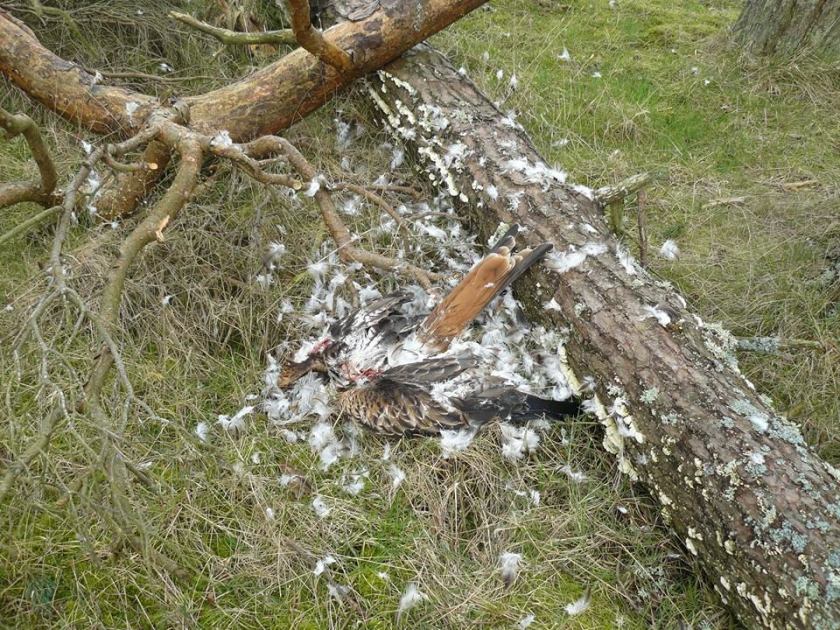
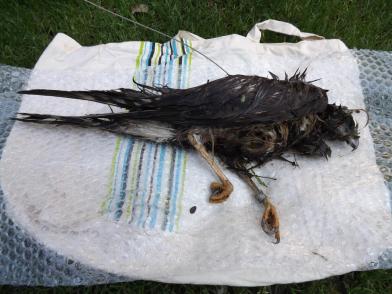
For those who don’t remember, Bowland Betty was a young satellite-tagged hen harrier who was found dead on a Yorkshire grouse moor in 2012 (see here). There followed a post-mortem carried out by the Zoological Society of London, which showed she had a fractured left leg which led to her death. There was then a pioneering forensic examination by scientists at the University College London Institute of Orthopaedics and Musculoskeletal Science, which found a tiny fragment of lead at the site of the fracture, confirming that she had been shot (see here, scroll down to news item 9th January 2013, and later published in the journal Veterinary Record in 2015: hopkins-et-al-2015_bowlandbetty_vetrecord ).

According to a press statement on the Countryside Alliance website (see here), “The Countryside Alliance team has accessed and reviewed autopsy reports and has serious concerns about this claim“.

Hmm, I wonder how many professional forensic scientists are employed on the CA’s team? Probably the same number as the number of professional veterinary pathologists employed by the SGA when they challenged the findings about what had happened to the Deeside eagle (see here).

Of course, it’s not the first time that the Countryside Alliance have been in denial about the extent of hen harrier persecution – see here, here, here and here for starters. Blimey, even Nick Griffin MEP has a greater grasp of the dire straits this species is in (see here) and that’s saying something!

It’s worth remembering that the Countryside Alliance was a participant in the charade that was the ‘Hen Harrier Dialogue’ – until the RSPB, Northern England Raptor Forum and the Hawk & Owl Trust finally had enough after six years of utter game-playing and walked out. Also interesting to note that the Countryside Alliance is still a participant in the PAW England and Wales Raptor Persecution Priority Delivery Group, along with the likes of the Moorland Association (see here for their view on hen harrier conservation) and the National Gamekeepers’ Organisation (we wrote recently about their contribution to tackling illegal raptor persecution here). Yet another charade, almost identical to the Scottish Raptor Priority Group, portrayed as ‘partnership working’ when it’s anything but.

The illegal killing of Bowland Betty provided tangible evidence of what we all knew was happening to the thousands of ‘missing’ hen harriers on UK grouse moors, just as the Countryside Alliance’s latest denial lays bare what we already knew was their real attitude to hen harrier conservation. Bowland Betty wasn’t the first silent witness and certainly isn’t the last…..watch this space…

Langholm hen harrier ‘Miranda’ is at Leadhills

Hen-Harrier-1 avico ltdAccording to the most recent update on the fortunes of the four sat-tagged hen harriers from Langholm, all of them are still alive.

One of them, ‘Miranda’, was at Leadhills on Wednesday 18th September (see here).

Spread the word – it might deter the harrier killers (whoever they are) if they know a lot of eyes are on them.

Further incitement to persecute the hen harrier in Ireland

Following on from the controversy in July when an Irish council leader in Limerick called for ‘open season’ on hen harriers (see here), another group in Ireland, this time in Galway, is now encouraging illegal activity against this protected species.

The following piece was published yesterday on the Barroughter & Clonmoylan Bogs Action Group’s Facebook page:

BAG HH FB

This particular group of Irish peat cutters is very familiar with controversy – see here.

It’s unclear why this group detests the hen harrier – it’s not as though there is the usual perceived conflict between the hen harrier and game-shooting interests – although perhaps their last sentence reveals the root cause of their issue, not dissimilar to Councillor Sheahan’s arguments back in July.

UPDATE 11pm: The peat cutters’ Facebook page (where the above article was posted) has been virtually under seige today by many many people posting comments in condemnation of hen harrier persecution. The volume and strength of feeling has resulted in the peat cutters removing their original post. Great to see so many people respond – there is hope!

Also today, The National Trust for Ireland issued a strong statement condemning the peat cutters’ position on hen harriers  (see here).

Not just any red grouse…part 4

MSOn 14th August we blogged about Marks and Spencer’s decision to sell red grouse in two of its flagship London stores (see here). We were particularly interested to learn that M&S was sourcing this product from Yorkshire, one of the UK’s worst raptor persecution hotspots, and we wanted to know whether M&S could assure its customers that red grouse were not being sourced from dodgy grouse moor estates involved in the illegal persecution of hen harriers and other protected raptor species. We emailed M&S’s Director of Food, Steve Rowe, and asked him to name the estates involved and to tell us what measures were taken to ensure these estates were not involved in illegal persecution.

On 20th August we blogged about two responses we’d received from M&S (see here). We were told, amongst other things, that:

We are working with only the most sustainable and well-managed estates, and do not work with any suppliers that interfere with Hen Harriers“.

We were also told that the names of the estates could not be divulged “as this is commercially sensitive information“.

We weren’t very impressed and we wrote back to M&S to advise that if they didn’t substantiate their claim of ‘working with only the most sustainable and well-managed estates’ and of ‘not working with any suppliers that interefere with hen harriers’ we would report them to Trading Standards for making what we believed to be misleading claims (see here).

Marks and Spencer has failed to reply and has therefore failed to substantiate its environmental claims about this product. We believe this is in contravention of The Sale of Goods Act 1979 and the Supply of Goods and Services Act 1982. This legislation states, amongst other things, that goods sold or supplied must be ‘as described’. An environmental claim made by the retailer to a consumer must be accurate. Public statements made by manufacturers, importers or producers about specific characteristics of the goods – for example, environmental claims in marketing and advertising – must be accurate and are part of the contract that the consumer has with the retailer.

According to information produced by Trading Standards, “In order for a consumer to make informed choices, the trader must provide clear, truthful and accurate information about the environmental claims they have made, which must be capable of being substantiated. The trader should not make vague or ambiguous claims, nor should they mislead consumers by implying that their environmental claims relate to the entire product when this is not the case“.

According to DEFRA’s guide for retailers on making environmental claims (see here), the retailer has to consider the ‘full environmental impact’ of the product (very relevant to red grouse, eh?) and they must also ‘make available transparent information about their environmental claim to those seeking reasonable justification of it’.

Given all the above information, and Marks and Spencer’s refusal to provide evidence to substantiate their environmental claims about their red grouse suppliers, we have now reported them to Trading Standards.

If you also want to report them to Trading Standards, you can do via an online form or by telephone, through the Citizens Advice Bureau (here). We understand that Trading Standards are particularly interested in assessing environmental claims so we’re hopeful that they will launch an investigation in this case.

Not just any red grouse…part 3

MSFor part 1 see here, and part 2 see here.

The pressure is building on Marks and Spencer…..have a read of this article in today’s Guardian (see here).

On Tuesday we told M&S they had seven days to name the estates that are supplying them with red grouse. We also asked them to explain what measures they have used to assess these estates to ensure they are not involved in the illegal persecution of birds of prey. M&S have previously stated they only source game from “well-managed estates”. We want to know what criteria were used to assess and define “well-managed”.

 If they don’t respond with the answers to these questions within 7 days (so by next Tues, 27th Aug) we will be alerting Trading Standards and asking them to investigate M&S for what we think could be misleading claims about their products.

Tick tock.

UPDATE 3rd September 2013: Not just any grouse….part 4 – see here

Not just any red grouse…part 2

Last week we blogged about the news that Marks & Spencer was planning on selling red grouse at two of its flagship stores in London (see here). Naturally, given our interest in the management of grouse moors and the widespread illegal persecution of raptors that is associated with a lot of them, we wanted to know if M&S could reassure their customers that they were sourcing their red grouse from  suppliers who didn’t illegally kill wildlife to increase their grouse stock. This seemed a perfectly reasonable question, especially as we learned that the grouse moors in question included some in Yorkshire, a county with one of the worst records for raptor persecution in the whole country.

We (and many of you, thank you!) emailed Executive Director of Food at M&S, Steve Rowe, to ask him some questions.

It turned out that Mr Rowe was away until 27th August, but a response was received from Mike Rogers from the Executive Office. Here’s what he said:

Thank you for emailing Steve Rowe to share your concerns about the introduction of grouse into some of our stores. As a member of his personal team, I’m replying on his behalf.

We have the highest standards of animal welfare and only source from suppliers we know and trust. Our game range is sourced from well-managed estates across the UK stretching from Nottinghamshire to the Scottish borders, with the majority of product coming from Yorkshire and Northumberland.

Game is one of the most animal welfare friendly meats you can eat as it is totally free range – the birds live totally in the wild and in their natural habitats. It is also a very sustainable option and good estate management and conservation intended for game shooting actually stops deforestation, and encourages the protection of the countryside.

There are no breeding pairs of hen harriers on the grouse moors we take from and there are severe penalties for anyone that interferes with Hen Harriers – this is actively enforced not just for Hen Harriers but all species of raptors.

I appreciate you taking the time to get in touch with us to raise your concerns about the sale of grouse in our stores. I hope my email has helped to reassure you of how seriously we take our commitments to the environment and ethical sourcing.

Kind regards

Mike Rogers

Executive Office

Your M&S Customer Service

Clearly Mr Rogers didn’t have a scoobies what he was talking about and was just regurgitating some inaccurate and frankly absurd propaganda probably fed to him by someone with a vested interest in selling red grouse.

We wrote back to Mr Rogers, pointed out the flaws in his statement and asked again if he would please name the actual grouse moors from where the M&S red grouse were being sourced. A very reasonable question, you’d think, given M&S’s stated policies on ethical food sourcing, including their ‘Named Farmer’ scheme, designed to provide traceability to secure consumer confidence.

m&s_0This is the message that came back, this time from Stephen Duxbury in the Executive Office:

Thank you for your email. I hope you don’t mind me responding on Mike’s behalf.

I’d like to reiterate that we are working with only the most sustainable and well-managed estates, and do not work with any suppliers that interfere with Hen Harriers. We take issues regarding animal welfare very seriously, as evidenced in our Plan A programme. You can read more about our Plan A at http://plana.marksandspencer.com/?intid=gft_plana.

I’m afraid I am unable to give you specific details of our suppliers, as this is commercially sensitive information.

We are unable to comment further on this matter at this time, but I hope you will not interpret this for a lack of interest from M&S. We are closely monitoring this matter and will continue to review the situation. This will enable us to guarantee our suppliers are meeting our exacting ethical standards.

Thank you again for your email.

Kind regards
Stephen Duxbury
Executive Office

So, M&S are apparently ‘not working with any suppliers that interefere with hen harriers’. How can they be so sure? Did they have a conversation with their suppliers? Did it go something like this? –

M&S: Are you involved in the illegal persecution of hen harriers on your grouse moor?

Red grouse supplier: No.

Genius. Of course nobody in their right mind is going to admit to any involvement in any criminal activity. Did M&S do anything else to ensure that their suppliers are not engaged in the criminal persecution of wildlife? We think their customers have a right to know. We would also like to know why M&S think revealing the name of the grouse moors is too ‘commercially sensitive’ and yet with other meat products they’re prepared to name the actual farmer!

There are plenty of other questions to ask them, too. Mark Avery has a cracking blog on the M&S scandal today, with further questions about legal predator control and lead poisoning (see here).

M&S have done their best to shut down this conversation (see the last paragraph in the above letter) but that just ain’t going to happen. Steve Rowe (or his colleagues) have one last chance to answer our questions (namely, from which grouse moors are they sourcing their red grouse and what assessment have they used to determine whether the illegal persecution of raptors is carried out on those moors?) before we take the next step.

What will be the next step? The Trading Standards Office. We think the TSO will be very interested in the claims M&S are making about this product, particularly under the terms of the Trade Descriptions Act. It wouldn’t be the first time that M&S have found themselves under investigation by the TSO – in 2005 they were fined £10,000 + costs for making misleading claims about some of their products (see here). And just today, Tesco has been fined a whopping £300,000 + costs for misleading its customers over strawberries (see here).

Please join us in emailing Steve Rowe today and give him (or his colleagues) 7 days to answer these questions fully or else they can do their explaining to Trading Standards. Email: steve.rowe@marks-and-spencer.com

Peregrine shot, barn owl chick stolen, hen harriers remembered

It’s been quite a day. The so-called ‘Glorious 12th’ has been taken back by the conservationists and re-named Hen Harrier Day, in an inspired move by Alan Tilmouth (read his blog entry here).

Although he only came up with the idea yesterday, Twitter has been alive today with hundreds of people using the #henharrier tag to celebrate these spectacular birds and to express their anger at the virtual extermination of the species on grouse moors across England. Unsurprisingly, the game-shooting organisations were conspicuously absent.

Mark Avery also came up with a plan to help hen harriers. He’s called it BanGS – see here.

Meanwhile, news came through that police in Bolton are appealing for information after an injured and distressed peregrine was found by the side of a road. It had been shot. Full details here.

Elsewhere, the Suffolk Wildlife Trust is appealing for information after a barn owl chick was stolen from the Carlton Marshes Nature Reserve last night. Information here.

In other news, we’ve been having a look at some VERY interesting literature – a copy of the Leadhills Estate gamebook (don’t ask how we got hold of it!!) – which very helpfully documents annual counts of killed ‘vermin’ over a considerable number of decades. ‘Vermin’ in Leadhills-speak includes hawks, badgers, otters, cats and ravens amongst others. It’s fascinating. We’ll be writing more on this in due course…

Leadhills game book vermin lists

Hen harriers in England are fucked

RSPB press release here

If you’re offended by the title of this post then you really shouldn’t be here. Try getting offended by the news that there wasn’t one single successful hen harrier nest in England this year. Now THAT’s worthy of your outrage.

Here is some more media coverage from this morning:

BBC News here and good interview with RSPB’s Jeff Knott on BBC here.

The Guardian here, where the Moorland Association blames ‘the long cold winter’ for breeding failure!

The RSPB’s Skydancer blog here, where a fieldworker tells the story of one of the failed nests.

And then there’s a classic statement from the National Gamekeepers’ Organisation here, who accuse the RSPB of timing their press release to coincide with the start of the grouse-shooting season. Er, did they miss all the propaganda put out by the game-shooting industry this week about how good grouse-shooting is for conservation?? See here. They also suggest that hen harriers are doing well in the grouse moor stronghold [stranglehold] of Scotland! 505 territorial pairs in a country that has the capacity to support 1467-1790 pairs isn’t a very good example to show how great grouse moors are for hen harriers, especially when HHs are absent from large swathes of grouse moor in the Eastern Highlands and Southern Uplands!

Grouse-shooting propaganda rises as the 12th approaches

You don’t need to look at your calendar to know that the 12th August is approaching; the rise in grouse-shooting propaganda tells you that the opening of the grouse-shooting season is almost here.

There have been several comical articles in recent days, including this one (titled ‘Grouse shooting praised for environmental work’), this one (titled ‘Benefits of managing Scotland’s natural assets’) and this one (titled ‘Grouse shooting season to be the most glorious for years’).

Each of these articles talks about how great grouse moors are for ‘rare wildlife’ and uses waders as the reference point. This isn’t rocket science – of course ground-nesting birds will benefit if their predators are systematically eradicated. Unsurprisingly, none of the articles mention the other ‘rare wildlife’ that certainly doesn’t thrive on intensively driven grouse moors – birds of prey.

There is though, one exception. A press release put out by the GWCT yesterday (see here) actually acknowledges that illegal persecution on grouse moors has had an impact on the hen harrier. They’re not kidding! Breeding hen harriers have been virtually driven to extinction in England. Last year there was one solitary breeding pair. This year….well, we don’t know yet. We haven’t heard of any breeding pairs in England although that’s not to say there haven’t been any – it’s possible that there may have been one or two and the nests have been kept top secret to protect them. No doubt we’ll hear more later in the year. But one thing’s for sure – there certainly haven’t been 300+ breeding pairs – this is the estimated population size that could be supported in England if the illegal persecution on grouse moors was stopped.

As for Scotland, well, hen harriers are doing better here than they are in England, but then that’s not difficult. A total of 505 territorial pairs were recorded during the last census (2010), more than a 20% decline from the previous survey done in 2004. Scientific studies suggest there is the potential for between 1467 – 1790 pairs if they were just left alone. They are absent from large swathes of, er, grouse moors, in eastern and southern Scotland.

It’s good to see GWCT publicly acknowledge the occurrence and extent of illegal persecution on grouse moors – it’s the first step in addressing the issue. Incredibly, a lot of their mates in the grouse-shooting world still refuse to admit it. As long as that denial continues, there is no hope for turning around the fortunes of this severely threatened bird.

Cllr John Sheahan in radio interview

Limerick Council leader John Sheahan was interviewed on the radio last Friday (2nd August) about his comments calling for ‘open season’ on the hen harrier (see here, here and here for background).

The interview took place on RTE Radio’s ‘Mooney Goes Wild’ programme. The first half of the programme is devoted to an interview with Dr Allan Mee of the Golden Eagle Trust, discussing the recent successful fledging of the Mountshannon white-tailed eagle chicks. Sheahan is interviewed in the second half of the programme, along with Allan Mee, who challenges Sheahan’s comments.

You can listen to the podcast here (in the section dated Friday 2nd August).