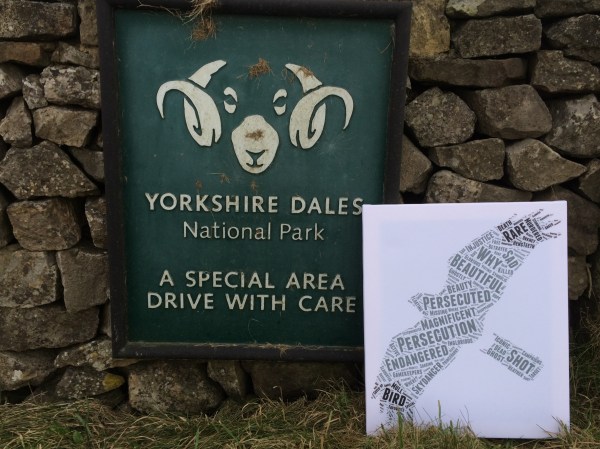
Natural England invites MoD and Yorkshire Water to get involved with hen harrier brood meddling plan

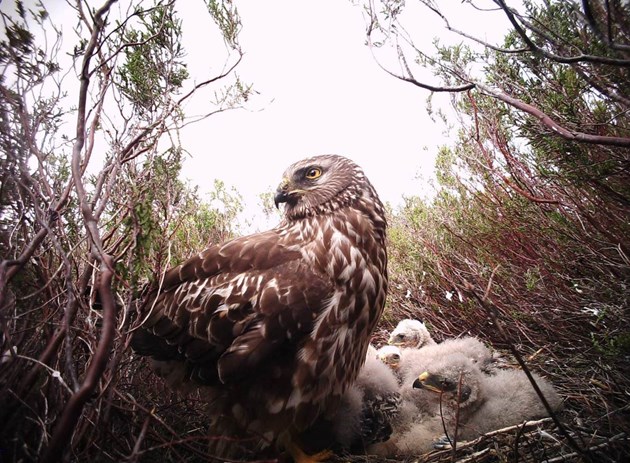
Brood meddling is one of the six action points in DEFRA’s Hen Harrier Action Plan, launched in January 2016.

Regular blog readers will know that we initially got some information out of Natural England about this controversial action point (see here, here, here, here), but for the last year all our requests have been refused for one reason or another, but mainly because NE considered the release of information would “prejudice” the internal licence application. This is, of course, complete nonsense.

In early October 2017 we submitted yet another FoI request, only to be told by Natural England that more time was needed to gather the requested information “because of the complexity/voluminous nature of the request“.

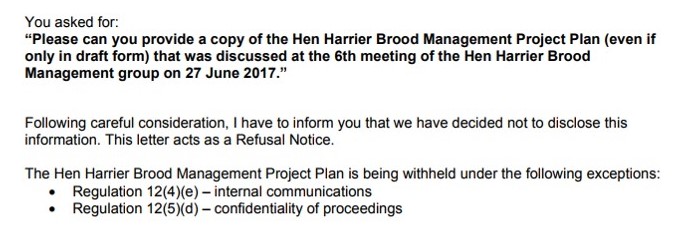
Natural England has now had the extra time it requested and the information it has released was neither “complex” nor “voluminous”. Once again, requested information has been withheld (for “confidentiality” purposes this time) but some info has been released.

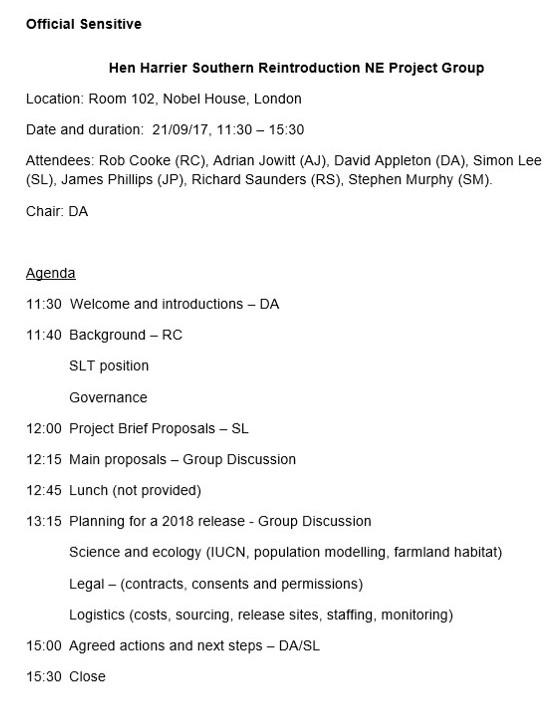
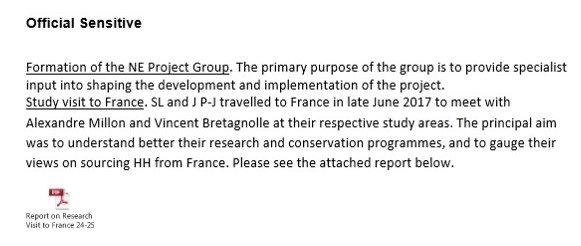
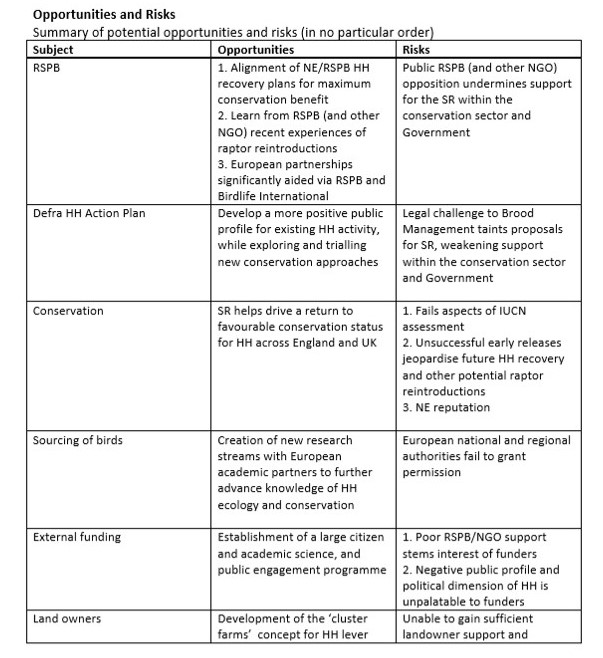
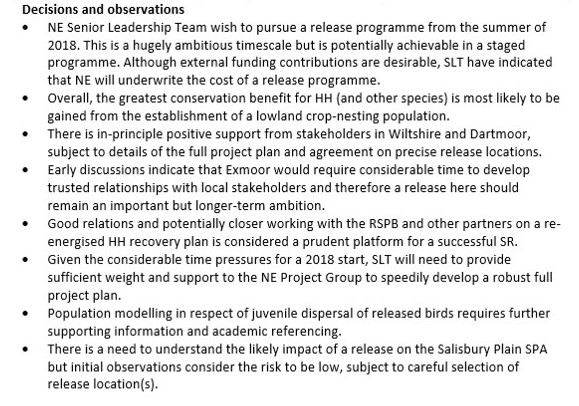
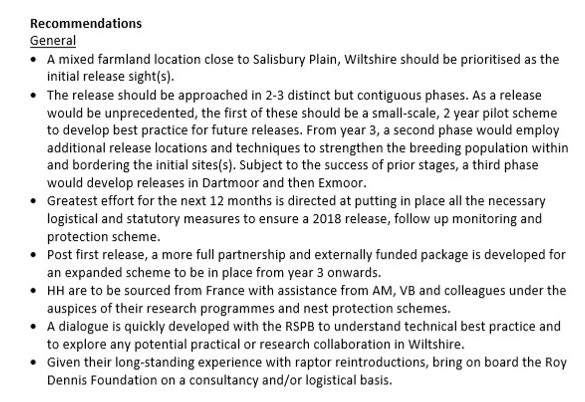
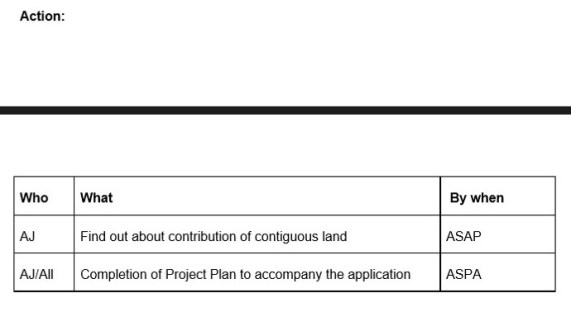
The Hen Harrier Brood Meddling Group held its sixth meeting in June 2017 and here are the notes from that gathering:

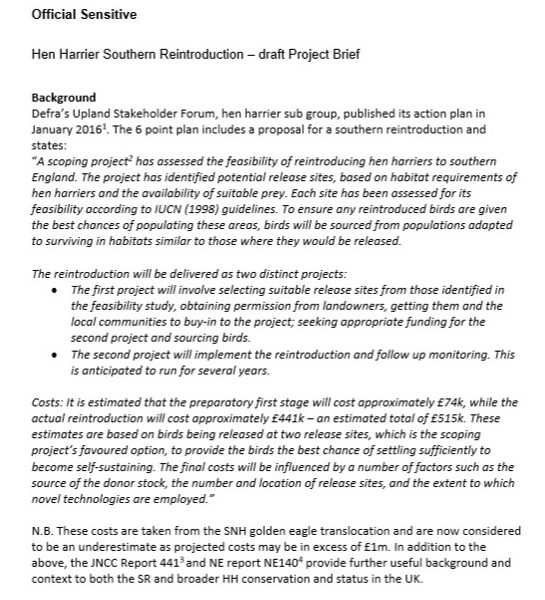
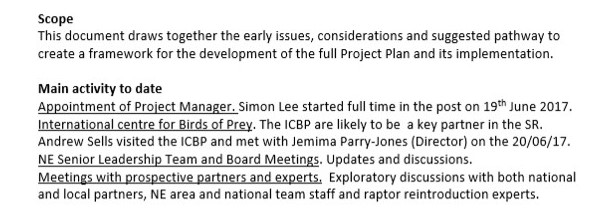
Unfortunately these notes provide little information, mainly because much of the discussion was centred on the Brood Meddling Draft Project Plan, which has not been made publicly available.

We have submitted another FoI to ask for a copy.

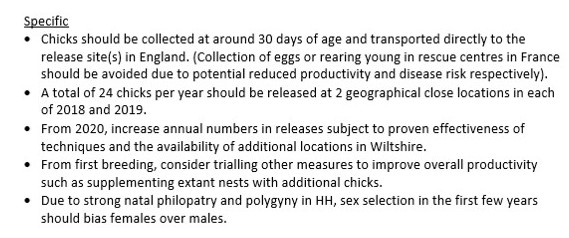
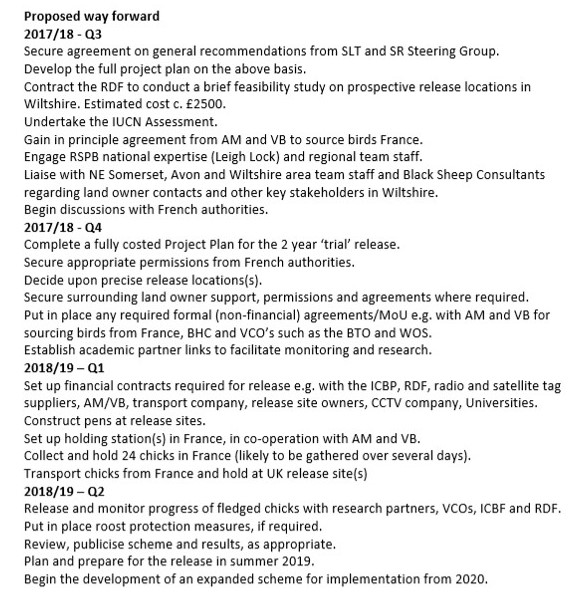
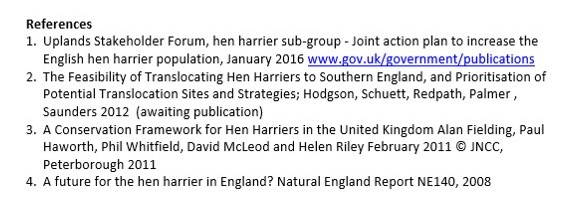
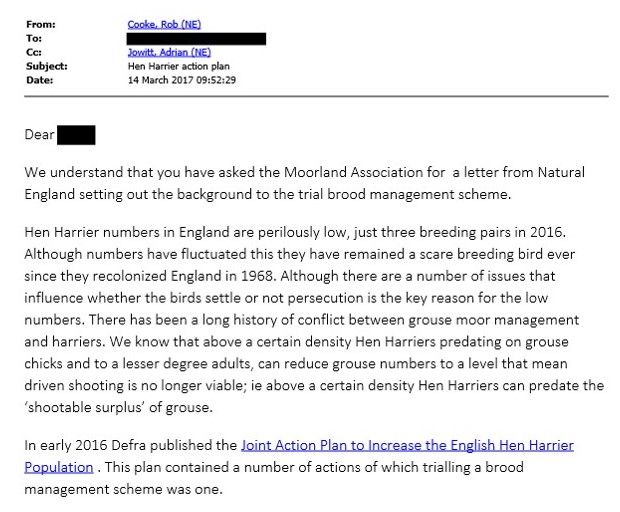
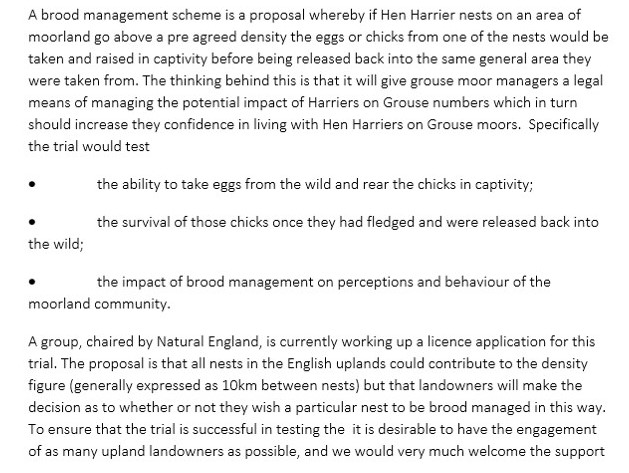
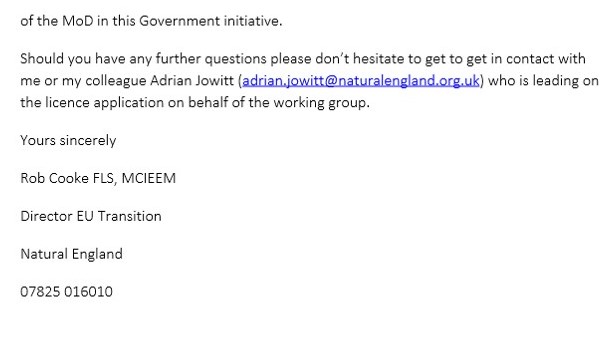
The only other bit of information that NE released as part of this “complex and voluminous” request was a couple of letters to the Ministry of Defence and to Yorkshire Water, inviting them to get on board with the hen harrier brood meddling plan. Here is a copy of the letter to the MoD (the letter to Yorkshire Water was virtually identical so we won’t reproduce it here):

We have no idea whether the MoD or Yorkshire Water has agreed to sign up to the hen harrier brood meddling plan (i.e. to permit the removal of hen harrier eggs/chicks from their land).

Despite a thoughtful (but some might argue naive) position (see here), Yorkshire Water does permit grouse shooting on its land.

So does the MoD – here are a couple of photos of grouse butts photographed on a military firing range in North Yorkshire [photos by Ruth Tingay].

We await the Brood Meddling Draft Project Plan with interest.

UPDATE 7 December 2017: Yorkshire Water agrees to hen harrier brood meddling on its landholdings (here)

Natural England’s progress report on the Hen Harrier Action Plan (summer 2017)

In September this year, Natural England told blog reader Mike Whitehouse that “work on the six actions set out in the [2016] Joint Hen Harrier Action Plan is progressing as expected. Ultimately we believe these actions will result in an increase in the numbers of hen harriers breeding in England“.

Earlier this month, in its response to Gavin Gamble’s e-petition calling for a ban on driven grouse shooting, DEFRA said this:

The [Hen Harrier] Action Plan was developed with senior representatives from organisations including Natural England, the Moorland Association, the National Gamekeepers’ Organisation, the Game & Wildlife Conservation Trust, National Parks England and formerly the RSPB. These organisations, led by Natural England, will monitor activities and report annually on progress to the Defra Uplands Stakeholder Forum and the UK Tasking and Co-ordinating group for Wildlife Crime’.

Naturally, we were curious about this ‘as expected progress’, nearly two years after the Hen Harrier Action Plan was launched, especially given the high number of dead or ‘missing’ satellite tagged hen harriers that have been reported since the Action Plan was launched.

[Photo of Hen Harrier Carroll, found dead in Northumberland in January 2017. A post mortem revealed she had died with a parasitic infection, but it also revealed two shotgun pellets lodged under healed wounds, one in the leg and one in the throat. Photo by Northumberland Police]

We were keen to see the annual report to which DEFRA referred in its response to Gavin Gamble – the one that had been submitted to the DEFRA Uplands Stakeholder Forum.

We’ve managed to get hold of a copy.

Here’s the report’s introductory blurb, highlighting the fact that no hen harriers bred on any English grouse moors in 2016, nor in 2017. Not a great start to a report about ‘progress’.

Now let’s examine the ‘progress’ that has been made on each of the six action points:

ACTION POINT 1 – MONITORING OF HEN HARRIER POPULATION IN ENGLAND

So, a number of hen harriers were satellite-tagged in 2016 and 2017. That is good, but this tagging effort started long before the launch of the Hen Harrier Action Plan and would have happened even if the Action Plan hadn’t been launched, so this can hardly be claimed as Action Plan ‘progress’. And most of these tagged birds (except two) have since been found shot dead or have ‘disappeared’ in suspicious circumstances.

Progress rating: 2/10 (and that’s being generous).

ACTION POINT 2 – DIVERSIONARY FEEDING

Progress rating: 0/10

ACTION POINT 3 – WORK WITH THE RAPTOR PERSECUTION PRIORITY DELIVERY GROUP (RPPDG) TO ANALYSE MONITORING INFORMATION AND BUILD INTELLIGENCE PICTURE

The RPPDG might well have been ‘focusing its efforts on the production of poison maps‘, but as we pointed out the other day, this so-called ‘delivery group’ hasn’t managed to deliver a single thing since the publication of its 2007-2011 poisoning map.

And what’s this about ‘hen harriers do not feed on carrion so the poisons map is not directly applicable to this species‘? Er, aren’t there records of hen harriers being killed by ingesting illegal poison? Yes, there most certainly are – see here. And what’s diversionary feeding if it isn’t the provision of dead food (i.e. carrion)? Of course hen harriers feed on carrion! And here’s a photograph of one doing exactly that, caught on a camera trap by SRSG member Stuart Williams in Orkney in 2015:

Progress rating: 0/10

ACTION POINT 4 – NEST & WINTER ROOST PROTECTION

Again, roost and nest watches started long before the launch of the Hen Harrier Action Plan and would have happened even if the Action Plan hadn’t been launched, so this can hardly be claimed as Action Plan ‘progress’. However, the development of a roost monitoring scheme with the Yorkshire Dales National Park Authority seems to be a new thing, which is good, although this progress report doesn’t actually tell us whether it’s up and running yet.

Progress rating: 1/10

ACTION POINT 5 – SOUTHERN REINTRODUCTION

We’re not going to comment too much about this Action Point because we’ve got a more detailed blog planned for the very near future, based on some more information that has been dragged out of Natural England via FoI requests.

Nevertheless, ‘progress’ on this highly controversial Action Point has certainly been made (here’s what we know so far), even though we totally oppose this action.

Progress rating: 7/10

ACTION POINT 6 – TRIAL BROOD MANAGEMENT SCHEME

Again, we’re not going to comment too much on this Action Point because we’ve got a more detailed blog planned for the New Year, when Natural England will have finalised the brood meddling licence and thus will have to release it to the public for scrutiny. At the moment we know very little because NE has refused to tell us anything for a whole year.

Nevertheless, progress on this highly controversial Action Point has certainly been made, even though we totally oppose this action.

Progress rating: 5/10

So there we have it. Almost two years on from the launch of the Hen Harrier Action Plan, ‘progress’ has been made by the organisations already carrying out these so-called Action Points (e.g. RSPB, Natural England, Northern England Raptor Study Group, Forestry Commission), regardless of the Hen Harrier Action Plan. But there is absolutely no sign of ‘progress’ from the grouse-shooting industry on anything other than the two Action Points that are designed either to remove hen harriers from grouse moors (brood meddling) or to detract attention from the illegal killing of hen harriers on grouse moors (southern reintroduction).

Oh, and satellite-tagged hen harriers keep ‘disappearing’ or being found shot dead.

Perhaps this is what Natural England meant when they told Mike Whitehouse in September that progress is “as expected“.

Watch this space for further updates on brood meddling and the southern reintroduction, coming soon.

GWCT & YFTB: it’s getting harder to differentiate between them

The Mail on Sunday ran a story yesterday suggesting that the RSPB was responsible for the catastrophic decline of the English hen harrier breeding population. It went like this:


You might think this article was the handiwork of the grouse shooting industry’s propaganda machine, You Forgot the Birds (YFTB). It’s got all the hallmarks – anti-RSPB rhetoric, dodgy use of science, published in the Mail etc. But there’s no quote from YFTB favourites, Ian ‘King of Bollocks‘ Botham or the equally scientifically-illiterate Ian Gregory.

Instead, there’s yet another idiotic quote from Andrew ‘More Crayons than Credibility‘ Gilruth of the Game & Wildlife Conservation Trust (GWCT), who suggests that the cause of the collapsing hen harrier population is the RSPB not killing enough predators. This disingenuous gibberish from Gilruth is akin to ivory poachers arguing that the loss of elephants in Kruger National Park is down to the failure of the National Park Authority to protect them – and nothing to do with illegal killing for profit.

So did this Mail on Sunday article originate from YFTB or from GWCT? It’s pretty hard to tell just from reading it, but what you might not know is that YFTB issued an embargoed press statement to journalists in late October 2017 (that wasn’t published) that went like this:

Gosh, spot the similarities?

Is the GWCT’s Andrew Gilruth now moonlighting for YFTB?

Grouse shooting industry response to police appeals re: missing hen harriers

Earlier this week North Yorkshire Police put out a public appeal for information regarding satellite-tagged hen harrier ‘John’, missing in suspicious circumstances and whose last known location was Threshfield Moor, a grouse moor in the Yorkshire Dales National Park.

We also saw a public appeal for information from Northumbria Police and the RSPB regarding satellite-tagged hen harrier ‘Manu’, also missing in suspicious circumstances and whose last known location was Blenkinsopp Common in the North Pennines.

We’ve just looked at the News sections of several organisations websites, all of whom are partners in the Raptor Persecution Priority Delivery Group (RPPDG: whose remit includes ‘providing publicity about raptor persecution to build trust and transparency’). Here’s what we found:

Moorland Association – NOTHING

National Gamekeepers Organisation – NOTHING

Countryside Alliance – NOTHING

British Association for Shooting & Conservation – NOTHING

No statements, no urging their members to come forward with any information they might have, no appeals to the public, not even a cut & paste job of the police appeals for information. Absolutely nothing.

It’s the same deafening silence we heard in August when North Yorkshire Police appealed for information about the attempted shooting of nesting marsh harriers and the theft of their eggs on a grouse moor in the Nidderdale AONB, and the same deafening silence that followed the news of a poisons cache buried on another North Yorkshire grouse moor (see here).

Their silence tells us all we need to know.

Satellite-tagged hen harrier ‘Manu’ disappears in North Pennines

RSPB press release:

ANOTHER RARE HEN HARRIER GOES MISSING

Police and the RSPB are appealing for information following the disappearance of a satellite-tagged hen harrier near Carlisle.

The harrier, named Manu, was one of a nest of two chicks monitored and protected by the Northumberland Hen Harrier Protection Partnership and tagged as part of the RSPB’s EU-funded Hen Harrier LIFE+ project in July this year.

Manu’s tag had been functioning perfectly until it suddenly stopped on the morning of 18 October 2017. Data from Manu’s tag indicated he had been in the same location near Denton Fell, on the Cumbria/Northumberland border, for around three weeks. The last signal was sent from Blenkinsopp Common at 0958hrs and he has not been seen or heard of since.

A search was conducted by RSPB Investigations staff but no tag or body was found. Northumbria Police were informed and have made enquiries but with no leads forthcoming.

Hen harriers are one of the UK’s rarest raptors with only three successful nests recorded in England in 2017.

Tim Jones, RSPB Assistant Investigations Officer said: “Hen harriers are facing an uncertain future: these spectacular birds should be flourishing in places like Cumbria and Northumberland but we are down to just a handful of pairs. So it’s alarming when yet another bird unaccountably vanishes like this.”

Andrew Miller, Head of Programmes and Conservation at Northumberland National Park, and Chair of the Northumberland Hen Harrier Protection Partnership, said: “With so few hen harriers breeding in England the loss of even a single bird is devastating. The Northumberland Hen Harrier Protection Partnership, along with many other organisations and individuals across the UK, is putting considerable effort into helping this struggling species recover.”

Don Churchill, Wildlife Co-ordinator & Planning Officer, Northumbria Police, said: “We are very concerned at the disappearance of one of these iconic birds of prey. Hen harriers are fully protected by law and raptor persecution is a national wildlife crime priority. We urge you to come forward if you have any information about the disappearance of this bird.”

If you have any information relating to this incident, call Northumbria Police on 101 or contact them via their website HERE. All calls are anonymous.

If you find a wild bird which you suspect has been illegally killed, contact RSPB investigations on 01767 680551 or fill in the online form.

ENDS

Here is a map we’ve created showing the position of Manu’s last known position (as identified from his satellite tag). This location is just outside two protected areas: Northumberland National Park and the North Pennines Area of Outstanding Natural Beauty (AONB).

This general area is a well known raptor persecution hotspot, which isn’t a surprise given how much of it is intensively managed for driven grouse shooting. Last December hen harrier Bonny ‘disappeared’ on a grouse moor just a few miles south of Blenkinsopp Common (Manu’s last known location), near to the RSPB’s Geltsdale Reserve from where Bonny had fledged.

Over the years, there have been five confirmed hen harrier shootings in this area (the killing of one of these was witnessed by RSPB investigators – see pages 38-40 in Mark Avery’s book Inglorious for a detailed description), there have been at least four attempted shootings of hen harriers, and another hen harrier was found poisoned. In addition, there have been poisoned ravens, poisoned buzzards and some shot peregrines.

Some of these crimes happened on the RSPB Geltsdale Reserve (safe to assume this wasn’t the handiwork of the RSPB wardens) and some of the crimes happened on nearby grouse moors.

We don’t know what’s happened to both Bonny or Manu, and if each case is taken in isolation it might be reasonable to conclude a failed satellite tag. These satellite tags are not perfect and do sometimes fail (e.g. see here), although overall they have a very high 94% reliability rate (see here). So it might just be possible that Bonny and Manu’s tags have suffered a technical malfunction, within that expected 6% failure rate, and that’s the story we’ll be hearing from the grouse-shooting industry over the coming days as they try to suppress any notion of criminal activity. However, what the criminal apologists will fail to mention is that when a tag suffers a ‘natural’ technical malfunction, there is typically a very clear indication several days prior to failure, from the tag’s engineering data, that a technical malfunction is imminent. What we’re seeing from the majority of these ‘missing’ sat tagged hen harriers (and golden eagles) is an abrupt, unexpected failure, often mid-way through a transmission cycle, which points to highly suspicious circumstances.

When you consider the disappearance of Bonny and Manu alongside all the other satellite-tagged hen harriers that have ‘disappeared’ without trace, many of them on or close to driven grouse moors, (at least 45 missing hen harriers since sat tagging began in 2007), and the fact that hen harriers haven’t bred on any English grouse moors for a number of years, then the picture becomes sinisterly clear. Add in the number of missing satellite-tagged golden eagles that have disappeared on or close to driven grouse moors in Scotland (41 of 131 tagged eagles) and the evidence of illegal persecution becomes compelling.

It’s no wonder the grouse-shooting industry objects so strongly to the satellite-tagging of raptors, and wants to control the public release of the data these tags are producing. The shooting industry can see what everybody else can see – they might be better at hiding the corpses these days but there’s absolutely nothing they can do to hide the results of the satellite tag data.

Well done to Northumbria Police and the RSPB for putting out a detailed press release, and especially for including the details of Manu’s last known location. We saw this happen two days ago when North Yorkshire Police revealed the last known location of hen harrier John, another satellite tagged harrier that has gone ‘missing’ on a grouse moor, this time in the Yorkshire Dales National Park.

If you haven’t already done so, please consider signing this NEW e-petition calling for a ban on driven grouse shooting. The Westminster Government continues to turn a blind eye to this carnage and continued public pressure is required to show them that we’re on to them and we’re not going away until they take appropriate action.

Threshfield Moor named as missing hen harrier John’s last known location

Further to blogs about ‘missing’ satellite-tagged hen harrier ‘John’, who disappeared on a grouse moor in the Yorkshire Dales National Park in early October (see here and here), North Yorkshire Police has just issued the following appeal for information:

North Yorkshire Police is appealing for information following the loss of a hen harrier on Threshfield Moor.

John, a sub-adult hen harrier, fledged in Northumberland in 2016. He was fitted with a satellite tag in July 2016 by a hen harrier expert from Natural England. This was John’s second outward migration – he wintered in the same approximate area of Yorkshire in 2016/17, returned to Scotland and the Borders in spring/summer 2017, then back to Yorkshire in September 2017. His tag stopped transmitting on 1 October 2017 in the Threshfield Moor area of North Yorkshire. A search of the area has been carried out but no trace of the bird or equipment has been found.

Natural England reported John’s disappearance to North Yorkshire Police and is working closely with wildlife crime officers, local landowners, and the Yorkshire Dales National Park Authority.

The loss of another juvenile hen harrier brings the total to six within fourteen months across northern England – and is a serious blow to the small English hen harrier population. Interference with hen harriers is a criminal offence.

[Photo by RPUK]

Sergeant Stuart Grainger, of North Yorkshire Police’s Rural Taskforce, said : “Those responsible for bird of prey persecution, either directly or indirectly, should be ashamed – these birds belong to everyone and are part of our natural heritage. It is a disgrace that these beautiful birds appear to be relentlessly destroyed. The fate of this particular hen harrier remains unsolved at this time, but we are appealing for any information to assist the investigation.”

Rob Cooke, a Director at Natural England, said: “The sudden disappearance of the hen harrier, John, is a matter of grave concern. We urge anyone with information to get in touch with North Yorkshire Police.”

David Butterworth, Chief Executive of the Yorkshire Dales National Park Authority, said: “It is highly likely that a crime has taken place on Threshfield Moor. The spotlight is once again on the Yorkshire Dales as a black hole for raptors. This does no one any good. With colleagues in the Ranger service, I am doing all I can to support North Yorkshire Police. Any leads which the police might have had in the six weeks since this hen harrier disappeared have come to nothing, but we should not give up – someone must know something. I urge that person to contact the police.”

Anyone with any information which could help police with their enquiries should contact North Yorkshire Police on 101 – or you can ring Crimestoppers anonymously on 0800 555 111 to discuss this incident or to discuss any other information regarding alleged persecution of birds of prey. Please quote reference number 12170208338 when passing information.

ENDS

Here’s a map we’ve created showing the location of Threshfield Moor, south west of Grassington within the Yorkshire Dales National Park:

Threshfield grouse moor is believed to be owned by Mark Hancock, who is married to Heather Hancock, former Chief Executive of the Yorkshire Dales National Park Authority and currently Chair of the Food Standards Agency (see Mark Avery’s blog here for some background). Mr Hancock has reportedly been undertaking “a huge amount of work” to improve this moor’s habitat and environment, especially for birds (see here).

Top marks to North Yorkshire Police for providing such a detailed appeal for information and full credit to Police Sgt Stuart Grainger and Chief Exec David Butterworth (Yorkshire Dales National Park Authority) for their strongly-worded statements.

Let’s see how many organisations from the grouse-shooting industry also issue strongly-worded statements in response to this Police appeal.

Hen Harrier John was one of the class of 2016. Here’s what’s happened to the rest of his cohort:

Hen harrier Elwood – ‘disappeared’ in the Monadhliaths just a few weeks after fledging, presumed dead (Aug ’16).

Hen harrier Brian – ‘disappeared’ in the Cairngorms National Park just a few weeks after fledging, presumed dead (Aug ’16).

Hen harrier Donald – missing in northern France, presumed dead (Autumn ’16).

Hen harrier Hermione – found dead on Mull, believed to have died from natural causes (Sep ’16).

Hen harrier Rowan – found dead in Yorkshire Dales National Park. He’d been shot (Oct ’16).

Hen harrier Tarras – ‘disappeared’ in the Peak District National Park, presumed dead (Oct ’16).

Hen harrier Beater – missing in Scottish Borders, presumed dead (Nov ’16).

Hen harrier Bonny – ‘disappeared’ in the North Pennines, presumed dead (Dec ’16)

Hen harrier Mick – ‘disappeared’ in the Yorkshire Dales National Park, presumed dead (Dec ’16).

Hen harrier Carroll – found dead in Northumberland, PM revealed a parasitic disease & two shotgun pellets (Jan ’17).

Hen harrier John – ‘disappeared’ in the Yorkshire Dales National Park, presumed dead (Oct ’17)

Eleven down, six to go (Aalin, DeeCee, Finn, Harriet, Wendy, Sorrel).

DEFRA’s response to Ban Driven Grouse Shooting petition

Late last week DEFRA provided its response to Gavin Gamble’s e-petition calling for a ban on driven grouse shooting, after the petition reached 10,000 signatures.

DEFRA’s response was entirely predictable and we have no intention of spending time on a detailed analysis of its complacency and denial; Mark Avery has already covered this well (see here, here, here).

Instead we wanted to pick up on just a couple of things that were mentioned, to set the groundwork for two forthcoming blogs.

First of all the Raptor Persecution Priority Delivery Group (RPPDG). This cumbersomely-named group is basically the English/Welsh version of the PAW Scotland Raptor Group – just another charade of partnership-working, dominated by pro-gameshooting organisations such as the Moorland Association, National Gamekeepers Organisation, Countryside Alliance, BASC but also involves others such as the RSPB, Natural England, DEFRA. The DEFRA response to Gavin’s e-petition gives a nod to the RPPDG and claims the group is “working on developing tools to help tackle raptor persecution crimes“.

Part of the RPPDG’s remit is to provide publicity about raptor persecution ‘in order to build trust and transparency’. However, as far as we’re aware, at least in recent years, this group hasn’t provided ANY publicity for ANY raptor persecution crime.

Back in 2013 the group did publish a raptor poisoning map covering the period 2007-2011 (see here). Since then, this ‘delivery group’ has delivered bugger all. Although according to DEFRA’s Hen Harrier Action Plan, “the RPPDG have been publishing information on raptor poisoning since Feb 2013 and this is updated annually“. That was a lie – the group hasn’t published any information since that 2007-2011 poisoning map.

We’ll be returning to the subject of the RPPDG in another blog very soon, as we’ve got hold of some minutes from various RPPDG meetings that demonstrate how little it has achieved since 2013. We’ll be publishing those minutes for your entertainment.

The second thing we want to pick up on from DEFRA’s response to the e-petition is this paragraph:

The [Hen Harrier] Action Plan was developed with senior representatives from organisations including Natural England, the Moorland Association, the National Gamekeepers’ Organisation, the Game & Wildlife Conservation Trust, National Parks England and formerly the RSPB. These organisations, led by Natural England, will monitor activities and report annually on progress to the Defra Uplands Stakeholder Forum and the UK Tasking and Co-ordinating group for Wildlife Crime‘.

Wouldn’t it be useful to see a copy of the latest annual report on the progress being made on the 2016 Hen Harrier Action Plan? Remember, Natural England recently told blog reader Mike Whitehouse that “work on the six actions set out in the Joint Hen harrier Action Plan is progressing as expected“. What does “progressing as expected” actually mean?

Well, fortunately, we’ve managed to get hold of a copy of the most recent progress report (summer 2017), as submitted to the DEFRA Uplands Stakeholder Group, and it demonstrates very little progress indeed. Perhaps that’s what Natural England “expected“.

We’ll be publishing that report shortly.

Hen harrier ‘missing’ on grouse moor in Yorkshire Dales National Park is ‘John’

Last month we blogged about yet another satellite-tagged hen harrier that had suspiciously ‘disappeared’ on a grouse moor in the Yorkshire Dales National Park (see here). We only knew about it because North Yorkshire Police mentioned it on Twitter and posted a few photographs from the search scene:

We made a general enquiry to Natural England and asked for further details (which hen harrier it was, where and when it was satellite-tagged, on which grouse moor it had ‘disappeared’ in the Yorkshire Dales National Park). Natural England refused to provide any detail, other than that ‘key stakeholders’ (i.e. the landowner!) had been notified. The landowner had probably been more than ‘notified’ – if Natural England was following the ridiculous ‘satellite tag protocol’, the landowner’s ‘permission’ would have been sought to conduct the police search! Honestly, you couldn’t make this stuff up.

Anyway, back to the hen harrier. We weren’t happy that Natural England was withholding information on what was probably a publicly-funded satellite tag so we submitted a formal FoI to request this information. We managed to find out some details:

Why Natural England didn’t release this information when we first asked for it is anybody’s guess – just following its normal practice of putting obstacles in the way, hoping that we’d shuffle off and forget about it, probably.

Anyway, we now know that this missing hen harrier is ‘John’, who was tagged on 8 July 2016 in Northumberland. We blogged about John in February 2017 (see here) – he was the mystery hen harrier about which little was known. We still don’t know very much about him because Natural England has chosen to remain silent on his movements over the last 14 months [but see UPDATE below], although from the updated spreadsheet that Natural England published in September, we know that his tag was transmitting in September 2017 in Northumberland. See: hen-harrier-tracking-data-2002-onwards

We also know that Natural England realised John’s tag was no longer transmitting on 5 October 2017 and that North Yorkshire Police conducted a search for him ten days later (15 Oct 2017) on a grouse moor in the Yorkshire Dales National Park. What we still don’t know is the name of this grouse moor and whether North Yorks Police found any evidence such as a tag or a corpse.

We’ll be submitting an FoI to North Yorkshire Police to ask about this – it’ll be very interesting to see the response. North Yorkshire Police appear to have upped their game recently in terms of investigating suspected raptor persecution crimes – a very welcome and much-needed change of pace in England’s leading raptor-killing county. Let’s see how open they’ll be about this latest investigation.

Meanwhile, it’s time to update the list of what hapened to the satellite-tagged hen harrier class of 2016, which includes harriers tagged by Natural England and the RSPB:

Hen harrier Elwood – ‘disappeared’ in the Monadhliaths just a few weeks after fledging, presumed dead (Aug ’16).

Hen harrier Brian – ‘disappeared’ in the Cairngorms National Park just a few weeks after fledging, presumed dead (Aug ’16).

Hen harrier Donald – missing in northern France, presumed dead (Autumn ’16).

Hen harrier Hermione – found dead on Mull, believed to have died from natural causes (Sep ’16).

Hen harrier Rowan – found dead in Yorkshire Dales National Park. He’d been shot (Oct ’16).

Hen harrier Tarras – ‘disappeared’ in the Peak District National Park, presumed dead (Oct ’16).

Hen harrier Beater – missing in Scottish Borders, presumed dead (Nov ’16).

Hen harrier Bonny – ‘disappeared’ in the North Pennines, presumed dead (Dec ’16)

Hen harrier Mick – ‘disappeared’ in the Yorkshire Dales National Park, presumed dead (Dec ’16).

Hen harrier Carroll – found dead in Northumberland, PM revealed a parasitic disease & two shotgun pellets (Jan ’17).

Hen harrier John – ‘disappeared’ in the Yorkshire Dales National Park, presumed dead (Oct ’17)

Eleven down, six to go (Aalin, DeeCee, Finn, Harriet, Wendy, Sorrel).

UPDATE 20 November 2017: Thanks to the blog reader who pointed out that John had been recorded at Langholm in the summer of 2017, as mentioned in the hen harrier update on the Langholm Demonstration Project website on 28 June 2017 – here.

UPDATE 22 November 2017: Threshfield Moor named as missing hen harrier John’s last known location (here)

Interesting bedfellows: 4

Every now and then we blog about who’s (figuratively) getting in to bed with whom within the grouse-shooting industry. Previous installments in this revealing series have included this, this and this.

Today’s fascinating bedfellows are the Game & Wildlife Conservation Trust (GWCT) and Mark Osborne, joint owner of William Powell and grouse moor management ‘guru’, who, according to our research, has links to at least 70 grouse and pheasant shooting estates across the UK, including some very familiar names to this blog such as Leadhills, Glenogil, Raeshaw, Glenlochy, Snilesworth, Abbeystead.

Last year in one of it’s never-ending fundraising drives, the GWCT held a raffle, with a pair of shotguns, a day’s driven grouse shooting and 500 cartridges on offer, all worth an estimated £25,000 and all donated to the GWCT raffle by William Powell. That was extraordinarily generous.

A few days ago a blog apeared on the GWCT website (here) describing the winner’s ‘fantastic day’ on a grouse moor in Derbyshire called Ashop Moor.

Here’s a map showing Ashop Moor, which is part of the Park Hall & Hope Woodlands Estate inside the Peak District National Park:

And here’s a photo of Ashop Moor (photo by RPUK):

It looks lovely, doesn’t it? Just the sort of landscape where you might expect to see a pair of breeding hen harriers. But there aren’t any breeding hen harriers there.

The name of the estate and the name of the moor may not be familiar with blog readers, but you’re more likely to know it for what was filmed there on 24th February 2016 at around 11am:

A few months after we published this video, the National Trust announced it had pulled the shooting lease on this estate four years prematurely and the shooting tenant, believed to be Mark Osborne, was given notice to leave by April 2018.

Very interesting bedfellows indeed.

Chair of Nidderdale AONB condemns illegal raptor persecution

Don’t ever underestimate the power of public pressure.

You know that big solid wall of silence we’re all so used to looking at every time a raptor crime is discovered and reported? It looks like it’s finally beginning to crumble.

The latest to speak out, spontaneously (i.e. without prompting), about the continued illegal killing of birds of prey is the Chair of the Nidderdale Area of Outstanding Natural Beauty’s Joint Advisory Committee, Councillor Nigel Simms:

He’s obviously taken a lead from the spontaneous statement made by the neighbouring Yorkshire Dales National Park Authority yesterday.

The publication of this statement from the Nidderdale AONB is really, really welcome. The Nidderdale AONB in North Yorkshire is notorious as a raptor persecution hotspot and has been for many years. We’ve lost count of the number of red kites that never make it out of this particular hell hole, although the RSPB has been keeping track – 22 poisoned or shot in the last ten years, and that’s only the ones that were found.

Nidderdale red kite persecution incidents 2007-2017, map by RSPB:

Illegally-killed red kite (photo Marc Ruddock):

We also know that hen harriers rarely get out of Nidderdale alive – unfortunately we can’t show you a detailed map because Natural England wants to keep the details a secret. Natural England is supposed to protect hen harriers but it’s clearly more interested in protecting the reputations of criminal landowners and gamekeepers. Anyway, here’s a photo of an illegally-killed satellite-tagged hen harrier – something you might see if you visit Nidderdale AONB, assuming you get to it before the gamekeeper who shot it:

It’s interesting to see that these crimes are “starting to have a damaging effect on tourism businesses“, according to Cllr Simms. Good, not for the businesses affected, obviously, but good that it will drive increased local pressure to bring these crimes to an end.

Cllr Simms’ comment that illegal raptor persecution “undermines the work of law-abiding landowners and gamekeepers who are actively working alongside us to improve prospects for all forms of wildlife in the AONB” is slightly odd. Which law-abiding landowners and gamekeepers are those? Presumably not anyone involved with any of the aforementioned red kite killings or hen harrier disappearances, nor, presumably, anybody involved with the attempted shooting of a nesting marsh harrier and the removal of its eggs, as filmed on a Nidderdale AONB grouse moor by the RSPB earlier this year?

There’s much work to do in this AONB but this very public condemnation of illegal raptor persecution from the Chair of the AONB Advisory Committee is encouraging. Well done, Cllr Nigel Simms.

Now, who’s next to speak out and bring that wall of silence crashing down?