2nd brood meddled hen harrier chick vanished from grouse moor in Yorkshire Dales National Park

Following earlier blogs about the two ‘missing’ brood meddled hen harriers (here), one of which vanished on a grouse moor in County Durham on 9th September 2019 (here), further detail has now emerged about the loss of the second harrier.

Here’s a press statement published this afternoon by North Yorkshire Police:

Appeal for information about a missing satellite-tagged hen harrier

Police are appealing for information about a missing satellite-tagged hen harrier.

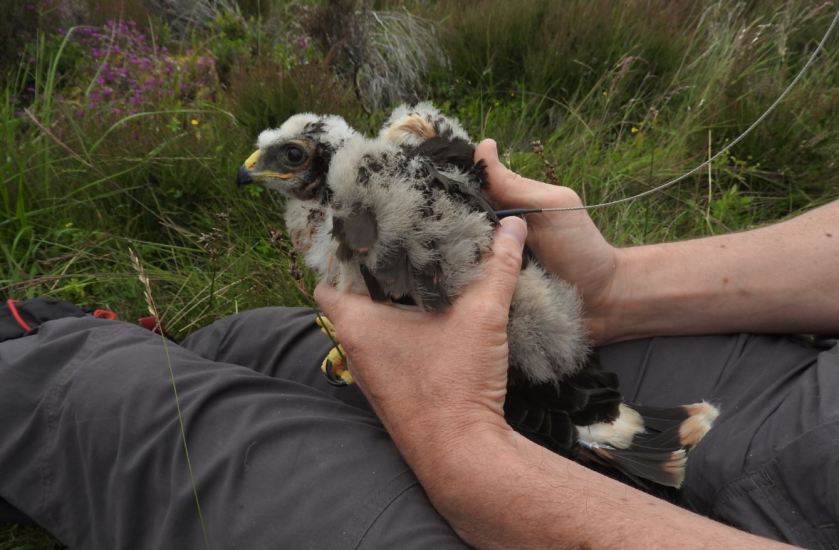
The young male bird was tagged at its release site in the Yorkshire Dales on 30 July 2019, as part of the hen harrier brood management scheme. The bird had not been named, but is known to the Natural England monitoring team as 183704.

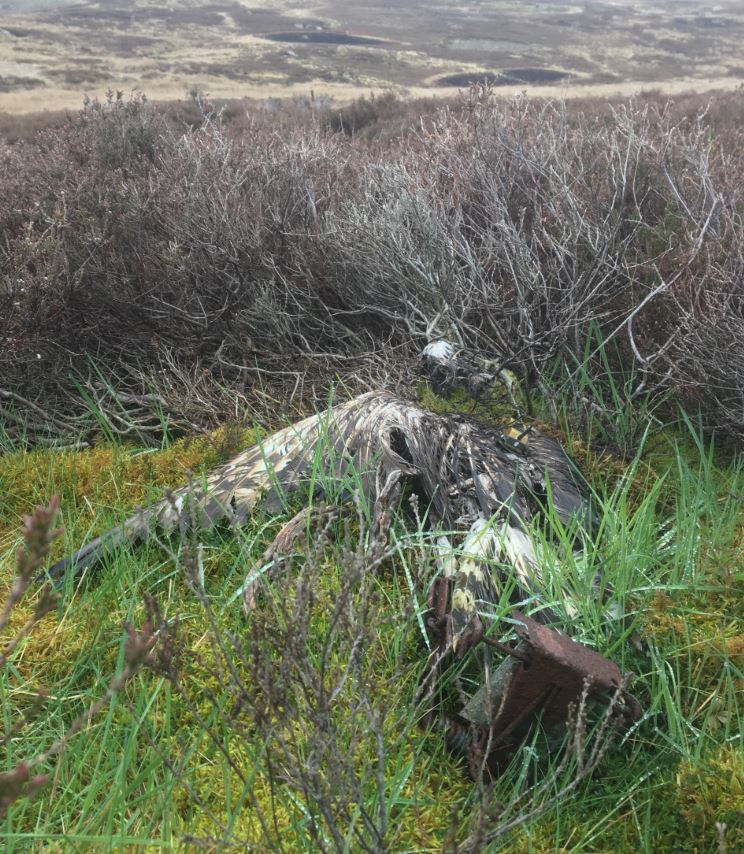
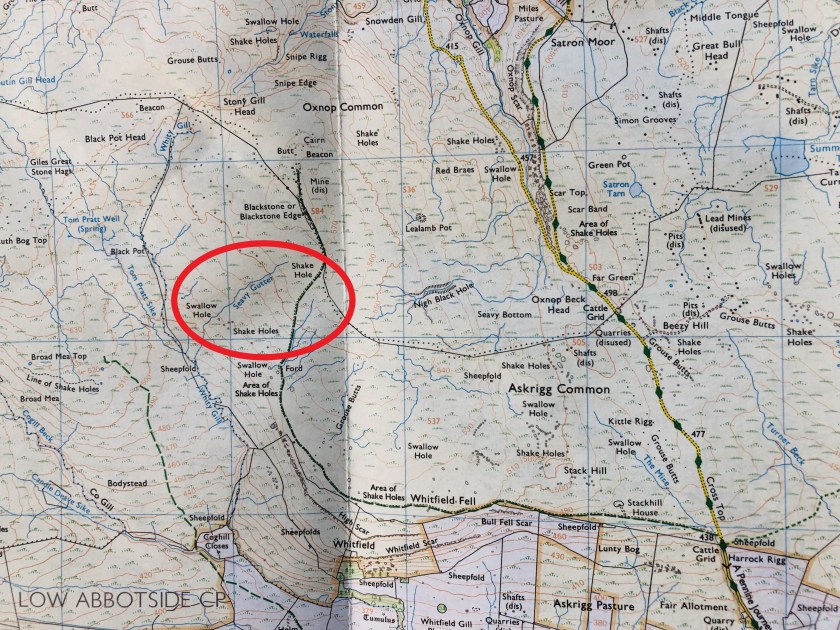
It is known from satellite tag data that the bird had recently spent a few days in the Forest of Bowland in Lancashire. On the morning of 19 September it had spent time near Thirlmere in the Lake District, before passing through the Mallerstang Common area in the afternoon. At 6.03pm that same evening the last transmission from the tag was received in the Seavy Gutter area of Askrigg Common, but the bird could have flown on for some distance since the last transmission.

Since then no further transmissions have been received from the tag. Natural England field staff have carried out checks with a hand-held scanner and monitored known roost sites, but the bird has not been found.

North Yorkshire Police have carried out two searches, the first being an initial search in the area of the last known transmission, and the second being a more extensive search covering several square kilometres, along with local enquiries. There have been no further sightings of the harrier or transmissions from the tag. Farmers, land owners and gamekeepers in the area have given both Natural England and North Yorkshire Police full cooperation with the search.

The bird is a juvenile male and will still be brown in colour. The bird was ringed and will bear the BTO ring number EA54306.

At this time North Yorkshire Police are keen to locate the bird safe and well, but if found deceased the bird can be subject to post mortem to establish if the cause of death was from natural causes or predation, or if criminal activity was involved.

If you find the bird or have any information please contact North Yorkshire Police on 101 and quote reference number 12190177425.

ENDS

At least this police press release doesn’t include a ridiculously glowing estate testimonial (unlike this one) but what’s all this about ‘Farmers, land owners and gamekeepers in the area have given both Natural England and North Yorkshire Police full cooperation with the search‘? So what? Why is that information included? When do you ever see this type of information in any other police appeal for information?

‘Police are investigating a burglary at 123 Letsbe Avenue and the homeowner has given full cooperation with the investigation’.

‘Police are investigating an assault on a dog walker in Dodge Country Park and the park rangers have given full cooperation with the investigation’.

The police (and Natural England and DEFRA for that matter) need to stop pandering to the game shooting industry, which is well known to harbour a criminal element, and just report on the facts of the case.

That gripe aside, this is a decent press statement from North Yorkshire Police and provides useful detail about the date of the tag’s last known transmission and the location. That another satellite-tagged hen harrier has vanished in suspicious circumstances on a grouse moor in the Yorkshire Dales National Park will come as no surprise to anybody. This National Park is a dark pit of persecution for most birds of prey that dare to fly there.

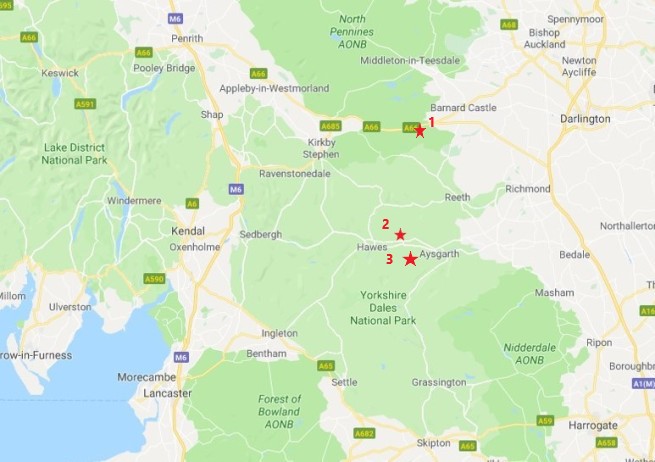
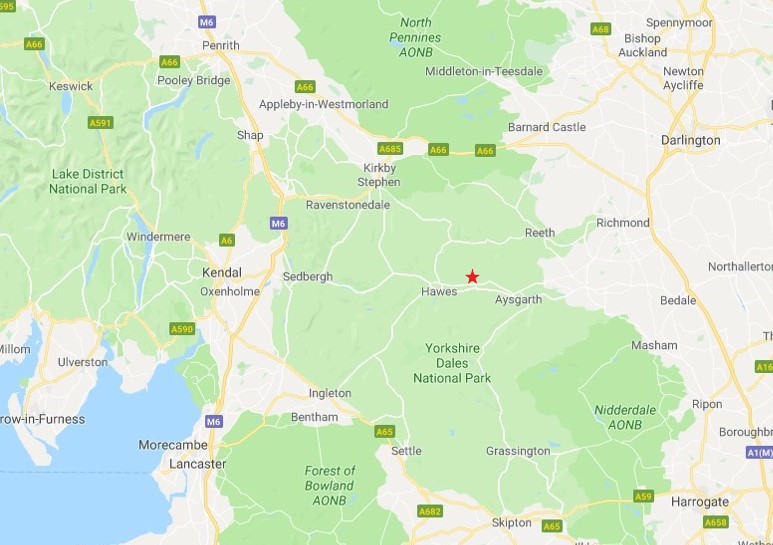
Askrigg Common is marked with a red star on this map:

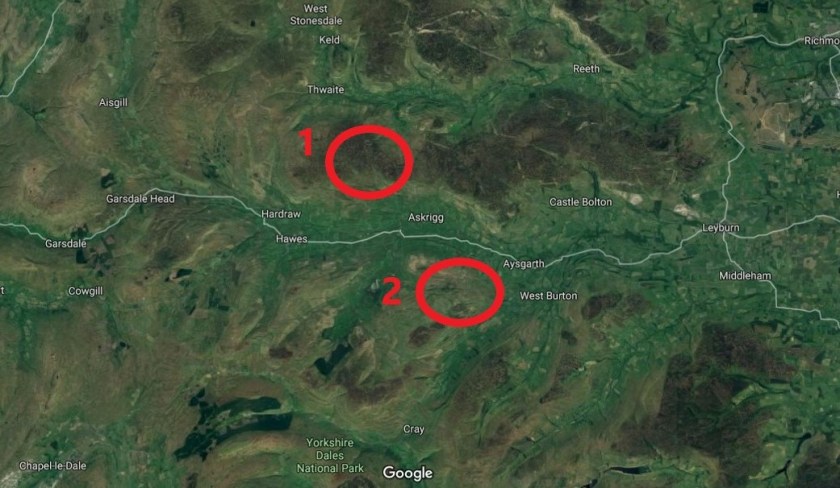
The Seavy Gutter area of Askrigg Common is circled:

At least part of Askrigg Common is used for driven grouse shooting and the shooting rights appear to be owned by the neighbouring Gunnerside Estate, who in 2015 applied for planning permission for a beaters lunch hut, claiming amongst other things that this building would be in the ‘public interest through the economic and social benefits associated with the shooting activities run by the Estate‘! See: Planning consent Gunnerside lunch hut 2016

As ever, with no hen harrier corpse and no tag, it is impossible for this bird’s disappearance to even be recorded formally as a crime, even though the Government’s very own commissioned research has shown that the 72% of young satellite tagged hen harriers that have vanished in suspicious circumstances are most likely to have been illegally killed on grouse moors.

This is the pitiful state of hen harrier conservation in the UK in 2019.

Brood meddled hen harrier chick vanished from grouse moor on Bowes Estate, County Durham

Durham Constabulary has issued a press statement about one of the two brood meddled hen harrier chicks that vanished off the face of the earth in September, which the Moorland Association was so keen to play down.

From it we learn that this young male hen harrier ‘disappeared’ on 9th September 2019 (what’s that, just over a month from being released from captivity?) and its last satellite tag signal came from a grouse moor on the Bowes Estate in County Durham.

[Bowes Moor, photo from Natural England]

It’s good that the police have managed to put together a press release about this missing hen harrier but the content is quite extraordinary. As you’d expect it includes statements from ‘partner’ organisations such as Natural England and the North Pennines AONB Partnership, but it also includes what almost amounts to a testimonial from the Bowes Estate, including the line:

The police have stressed that there is no suspicion of any wrongdoing by Bowes Estate or its staff…...”

Really? That would be an astonishing statement from the police. A police spokesman said that the possibility of a crime being committed had not been ruled out, so presumably everybody is still under suspicion, whether connected to the estate or not? And no, that doesn’t mean we’re accusing the estate staff of anything.

Here’s the press release in full:

Concerns over welfare of missing hen harrier

4 October 2019

Concerns have been raised about the welfare of a satellite tagged hen harrier which has dropped off the radar in County Durham.
The signal from a young male hen harrier was lost while it was flying over the Bowes area on September 9. It is one of two which have gone missing recently in northern England.
Hen harriers are one of the UK’s rarest birds of prey. Like all wild birds, they are protected by law under the Wildlife and Countryside Act 1981.
Inspector Ed Turner, from Durham Constabulary, said: “The fate of these birds is not yet clear. Until we can rule out the possibility that a crime has been committed, we will be taking this matter seriously and bringing our increased knowledge and awareness to bear on it wherever possible.
Natural England Director, Rob Cooke, said: “We are extremely concerned by the unexplained disappearance of this young hen harrier.
Restoring the hen harrier population to favourable conservation status across their entire range is one of Natural England’s key objectives, so any loss from such a small population is significant.”
A spokesman for Bowes Estate said: “We have been informed by Natural England that a satellite tagged hen harrier ceased transmitting on Monday, September 9 and the last known signal came from our moorland.
Staff have been collaborating with Natural England on the ground to ensure the increase in hen harrier population as part of the Defra Hen Harrier Action Plan.
We have a good relationship with Natural England fieldworkers and harriers, along with other birds of prey, are regular visitors hunting over the moor and frequently use roost sites on the estate.
We have been proactively scouring the large area on our land looking for any sign of the bird but have so far had no luck.
Satellite tags are not infallible and we very much hope that the harrier will start re-transmitting soon meaning the bird is safe and well.
We want to stress that the estate and its management oppose all forms of wildlife crimes and are fully supportive of all efforts to restore the UK’s hen harrier population.
The police have stressed that there is no suspicion of any wrongdoing by Bowes Estate or its staff and the estate is fully cooperating with the police. We join the police in appealing for information.”
The North Pennines AONB Partnership said it would be supporting the police in the search for evidence and would encourage the public to share information or any sightings.
Director Chris Woodley-Stewart said: “Juvenile mortality in raptors is common, but the trackers on birds that have been killed by predators or died from other natural causes/accidents usually continue to give out a signal, facilitating their recovery.
Though rushing to judgement isn’t wise, and for now we still hope they turn up safe and well, as the police have said, there is also a possibility that crimes have been committed in relation to the missing bird.
In mid-September we hosted a full day raptor crime training session with four police forces, aided by the RSPB, the North East Raptor Forum and a local estate that is also committed to ending raptor persecution.
Should the birds be re-found alive, this would be great news. If they have died a natural or accidental death, this is sad but not uncommon. But if a crime has been committed, police are now better informed than ever and are eager to stamp it out.
We urge people to keep a keen eye out for hen harriers in the North Pennines and report any sightings to the RSPB. If you have evidence of any illegal activity in this matter, we urge you to contact Durham Constabulary.”
Anyone with any information about the hen harrier’s disappearance should contact Durham Constabulary on 101, quoting incident number 87 of September 17.
Alternatively call Crimestoppers anonymously on 0800 555 111.
ENDS

Bowes Moor is managed for grouse shooting and Natural England has a restoration plan in place for the SSSI. It makes for a very interesting read (increased frequency of burning, burning in designated ‘no burn’ areas, active draining, vehicle damage on blanket bog…….):

Bowes Moor SSSI Restoration Plan 2018_2028

A ‘seriously injured’ Marsh harrier was found in the Bowes area in 2011 with gunshot injuries to both wings and a leg (see here) leading to an offer of a reward for information. We’re not aware of any subsequent prosecutions (thanks Guy Shorrock for the info).

We’re still waiting for further details of the second brood meddled hen harrier that vanished. We know it disappeared in September, in North Yorkshire, on a grouse moor, but no further information has been revealed yet.

When will Natural England pull the plug on hen harrier brood meddling?

Following on from the news earlier this week that two of this year’s five brood meddled hen harrier chicks have ‘disappeared’ in suspicious circumstances (both on grouse moors, we’ve been told unofficially), questions have been asked about when Natural England will pull the plug on this outrageous five year ‘trial’.

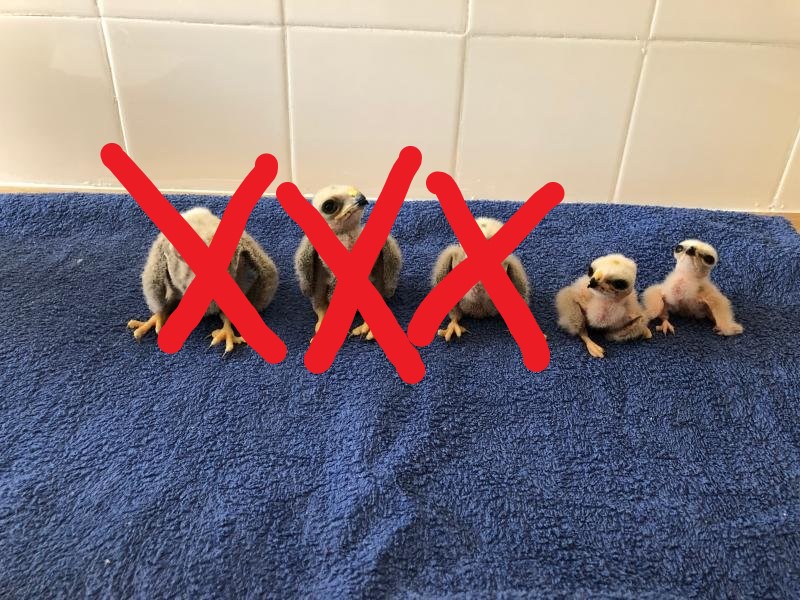
[The most pitiful photograph of the year: the five brood meddled hen harrier chicks, removed from their nest and parents to appease the grouse shooting industry. After being released again in August, two have since vanished in suspicious circumstances]

Although the corpses of the two ‘missing’ hen harriers haven’t been found (hardly a surprise, those people killing these birds have learned to cover their tracks and destroy the evidence thus preventing any prospect of being prosecuted), expert opinion from both within and outwith the shooting industry is pretty clear about what’s likely to have happened to them:

Natural England does have an exit strategy for the hen harrier brood meddling trial, as laid out in the Project Plan, although the terms of reference are a bit vague, perhaps deliberately so:

So there is scope in this exit strategy to stop the trial at any time rather than having to endure a full five years of this pantomime – that’s good – but look at the section highlighted in red above: it is not clear how many brood meddled hen harriers have to ‘disappear’ or be found and confirmed to have been illegally killed before a decision is made to pull the plug.

We’ve been seeking clarity on this but so far Natural England has dodged the question:

This question was also put directly to Natural England during a meeting with Wild Justice in August. The interim CEO and one of her Directors said they didn’t know off the top of their heads but would find out and get back to us. So far, nothing.

The licence to brood meddle hen harriers in England expires in January 2020 (it was only issued on a two-year basis, for legal reasons) so it’ll be interesting to see whether Natural England issues it again and if so, how it deals with the knowledge that two of the five (and possibly more by then) have most likely been killed on grouse moors.

We’re also still waiting to hear from the court to find out whether Mark Avery and the RSPB can appeal an earlier decision and have the brood meddling ‘trial’ declared unlawful.

Join Chris Packham this weekend to highlight lack of hen harriers in our skies

Press release:

Chris Packham to highlight lack of hen harriers in our skies with mass kite-flying event this Saturday at Box Hill, Surrey

Naturalist and television presenter Chris Packham is hoping for good kite flying weather this Saturday at Box Hill in the Surrey Hills. To highlight the plight of Hen Harriers he’s had 100 paper kites made, with their image, for kids and adults to fly at the National Trusts’ Box Hill property, Saturday afternoon at 2.30pm.

Chris Packham: “Saturday is about having an enjoyable day out for people and to raise awareness that our Hen Harriers are in deep trouble. If we are able to fly 100 kites it will represent many times more than the actual number of Hen Harriers that are flying in the skies of England. This a shameful situation.” 

There’s been more in the news this week about two young Hen Harriers disappearing in suspicious circumstances in North Yorkshire and Durham. These two were part of a ludicrous government ‘trial’ to see whether removing Hen Harrier chicks from a grouse moor (to prevent their parents catching Red Grouse to feed to them), rearing the young Harriers in captivity and then later returning them to another grouse moor, would help boost the dwindling Hen Harrier population. Based on all the scientific evidence and previous knowledge of what happens to young Hen Harriers in the UK, it’s probably a safe bet to predict these two Harriers have been illegally killed on grouse moors. The police are currently investigating.

Although a serious message, Saturday at Box Hill is very much a family day out where kids and adults can have fun flying the kites as well as learn more about these precious raptors.

ENDS

Moorland Association’s brood meddling press release amounts to abuse of process

Whichever way you look at it, the Moorland Association’s press release on hen harrier brood meddling amounts to an abuse of process.

First of all there’s the abuse of process in terms of the internal governance of the brood meddling project. We know, from the formal brood meddling project plan, that there’s a Project Board whose responsibilities include:

(a) ensuring that reporting from the project team is timely and acted upon;

(b) to oversee project external communications

We now know that the Moorland Association released its press release on Sunday without the knowledge and consent of project partner Natural England. How do we know this? Because Tony Juniper stated as much in a tweet yesterday:

Not only that, but we’ve also been informed via another source that the satellite tag data released by the Moorland Association was incorrect – apparently one of those harriers had not travelled to southern Ireland at all, but the Moorland Association had simply misunderstood / misinterpreted the data!

Now, the issue of whether the Moorland Association, or anyone else connected to an industry that’s been identified as being responsible for the mass illegal killing of hen harriers, should have access to hen harrier satellite tag data is a topic for another time (for the record – no, of course they bloody shouldn’t for what should be plainly obvious reasons) but the abuse of process from an internal (Project Board) perspective is quite clear. At least one of the Project Board team (Natural England) was excluded from the decision to publish, let alone what to publish.

Will the Moorland Association suffer any consequences/sanctions for this abuse of process, let alone leaving the Project Board’s credibility and integrity in pieces? Probably not.

A far more serious apparent abuse of process is the external one. That is, the suspicious disappearances of two satellite-tagged hen harriers are currently the subject of live police investigations and yet the Moorland Association chose to publish the information WITHOUT THE PRIOR KNOWLEDGE OR CONSENT OF THE POLICE. It was also published before the police had conducted any land searches at the locations of the tags’ last known fixes as part of the investigation. We know this from a conversation we had yesterday with Police Supt Nick Lyall.

That is absolutely outrageous and wholly unacceptable. It could also potentially be a criminal offence and have jeopardised the police investigation by alerting any suspect and providing them with an opportunity to remove evidence and clean up their tracks before the police arrive.

Amanda Anderson, Director of the Moorland Association, can’t claim ignorance on this issue. As a long-term member of the RPPDG, and a frequent critic of the RSPB’s role in police investigations, the Moorland Association knows the police-led investigative process very well.

For those who don’t know the process, here’s what happens when we suspect something has happened to one of our satellite-tagged golden eagles:

  1. First of all there’s a detailed discussion and analysis of the eagle’s recent movements and satellite tag data undertaken by a group of researchers who are recognised international experts in this field and have extensive experience of golden eagle ecology and satellite tag functioning.
  2. Immediate contact is made with the National Wildlife Crime Unit (NWCU) to provide them with an early warning heads up. Tag data are shared with the NWCU, in confidence, and the NWCU is fully appraised of the analysis to date.
  3. The NWCU carries out its own analysis of the tag data and puts together its own confidential intelligence package about the tag’s last known location.
  4. The NWCU and the tag owner decide an appropriate course of action, e.g. no action required because the circumstances aren’t suspicious; or wait for a bit longer (depending on the tag type and the data duty cycle etc) before deciding a further course of action; or agree that the researchers can go and retrieve the corpse and submit for a post mortem if the circumstances don’t indicate anything suspicious; or agree that the police will either go and retrieve the corpse (assuming there is one and the circumstances look suspicious) or agree the police will go and conduct a detailed search of the tag’s last known location if the circumstances suggest any hint of suspicious activity.
  5. Any subsequent media statements are made only after discussion and agreement between the police and the tag operator.

This is the protocol we follow for our satellite-tagged golden eagles and we’re also aware it’s the same protocol the RSPB follows for their satellite-tagged hen harriers. Contrary to the myths, lies and slurs constantly churned out by the Scottish Gamekeepers Association and Scottish Land and Estates et al, we have worked hard to build up a mutually trusting working relationship with the NWCU (helped enormously, it has to be said, by the new head of unit, Chief Inspector Lou Hubble) and this protocol is working exceptionally well. Indeed, we’ve been using it this very week.

[Chief Inspector Lou Hubble, head of the National Wildlife Crime Unit (NWCU) at a satellite tag workshop in North Yorkshire earlier this year. Photo by Ruth Tingay]

We’ll be commenting at length, in the near future, about the SGA’s recent petition to the Scottish Parliament calling for the police to be ‘allowed access’ to sat tag data – those morons at the SGA are obviously oblivious to the fact the police already have access and not only do they have access, several of them are now trained to comprehend and interpret the complex array of engineering and locational data of different tag types.

So, in light of this protocol that we all have to adhere to (and when I say ‘have to adhere to’ we do so voluntarily and willingly because it’s working well and why wouldn’t we want to help the police to investigate crimes against our raptors?!), we fully expect other satellite-tagging projects to also have to adhere.

Does it look like the Moorland Association has adhered?

No, it doesn’t because clearly they haven’t.

The question now is, what sanction, if any, will the Moorland Association face for such blatant abuse of process?

Two of the five brood meddled hen harrier chicks have ‘disappeared’

Well, well, well.

As predicted by absolutely everybody with half a brain, some of this year’s brood meddled hen harrier chicks have ‘disappeared’ and it’s not even the end of September. Quelle surprise!

However, if you’d just seen the Moorland Association’s headline and first few paragraphs of their press release you’d never know that two of the five have disappeared in suspicious circumstances. This latest media output is perhaps the most disingenuous we’ve ever seen from the Moorland Association, and that’s saying something from an organisation notorious for distorting the facts!

In fact you have to get down as far as paragraph six before you’re told that two have disappeared, although the text doesn’t actually tell you that they’ve disappeared. Here’s the full press release, just for the record:

It’s quite the masterclass in distraction techniques, isn’t it?!

Mark Avery has already pulled apart some of this press release (see here) including comments about the maps not matching the text.

What we’re interested in is this:

  1. When did these two birds disappear? No dates are provided in the press release.
  2. In which county or counties did these two birds disappear? There is no geographic location provided in the press release. [See update at foot of blog]
  3. On what type of habitat did the last known fix come from for each tag? Was it a grouse moor in one or both cases?
  4. Were the last two locations on land owned/managed by Moorland Association members?
  5. What sort of tags were the two birds carrying and what were the details of each tag’s transmission cycle? (i.e. how many data transfer cycles have now passed without data being transmitted)?
  6. Who is monitoring the tag data?
  7. Have the police been informed? If so, who informed them? Was it the Moorland Association or was it somebody else?
  8. Are these two disappearances the subject of a live police investigation? [See update at foot of blog]
  9. Have the police been given access to the tag data?
  10. Have any police searches been carried out? If yes, were these searches undertaken without giving the landowner prior notification?
  11. Why hasn’t Natural England made a statement?
  12. What is Natural England’s policy for declaring the brood meddling trial a failure? i.e. How many satellite tagged brood meddled chicks have to ‘disappear’ before Natural England makes that declaration? One? Two? Three? Four? Five? This question was actually put to Natural England during a recent meeting between Wild Justice & Natural England’s interim CEO and one of its Directors. Natural England said they didn’t know but would find out. So far they haven’t come back with an answer.
  13. When will DEFRA acknowledge that the grouse shooting industry is completely out of control and unable to self-regulate?
  14. And when will DEFRA do something about it?

For those who might have missed it, here’s what the Government-commissioned science says about satellite-tagged hen harriers in northern England – 72% of those tagged so far [by Natural England] have been done in on grouse moors (see here). We await the results of the RSPB’s five-year tagging data with interest.

And for those who might have missed it, here’s the Moorland Association practically begging its members not to kill any hen harriers this year (see here).

UPDATE midnight:

Police Supt Nick Lyall has tweeted the following this evening:

UPDATE 1 October 2019: Moorland Association’s brood meddling press release amounts to abuse of process (here)

UPDATE 3 October 2019: When will Natural England pull the plug on hen harrier brood meddling? (here)

UPDATE 4 October 2019: Brood meddled hen harrier chick vanished from grouse moor on Bowes Estate, County Durham (here)

UPDATE 8 October 2019: 2nd brood meddled hen harrier chick vanished from grouse moor in Yorkshire Dales National Park (here)

UPDATE 15 October 2019: 3rd brood meddled hen harrier ‘disappears’ in suspicious circumstances (here)

5 October: Celebrate Hen Harriers at Chris Packham’s kite flying event, Box Hill

Chris Packham has organised another pop-up conservation event, this time with the focus on Hen Harriers.

Saturday 5th October from 1pm at Box Hill, Surrey:

Pre-Werritty propaganda from grouse shooting industry

As we all continue to wait for the publication of Professor Werritty’s report on driven grouse shooting, the usual suspects have been busy putting together a damage limitation programme to save their sorry necks.

An ‘informal alliance’ has been created under the banner of RELM (Rural Environment Land Management) ‘to help co-ordinate and streamline responses and communications ahead of the publication of the final report‘ and its first offering is this briefing document for MSPs which was distributed by Scottish Land & Estates a couple of weeks ago:

Here’s the intro blurb:

Grouse moor management has been the subject of much attention during the summer period across a range of issues such as the environment and species conservation, satellite tagging and wildlife crime, mountain hares and the start of the season on August 12.

With the Scottish Government’s review into grouse moor management due to be published shortly, rural organisations wished to provide the following update to parliamentarians. We would be pleased to provide additional detail where required.

Ah, how thoughtful. Amusingly, several MSPs have sent us a copy of this briefing document with comments along the lines of ‘You might want to say a few things about this’.

We’re grateful to those MSPs because yes, we do want to say a few things about the document’s contents and we wouldn’t otherwise have had an opportunity had they not shared the briefing with us.

We’re not posting the full briefing document here, yet. Instead we intend to blog about different aspects of it in turn.

Today we’re looking at the page entitled ‘Wildlife Crime’ and its five paragraphs of propaganda:

Propaganda paragraph 1:

Yes, significant media attention does remain focused on wildlife crime, and particularly illegal raptor persecution because everyone else finds it abhorrent and can’t understand why it still goes on and why the grouse shooting industry continues to shield the criminals involved. It’d be interesting to know what, exactly, these five organisations have done to crack down on raptor persecution as part of their claimed ‘full commitment to improving prevention, detection and prosecution’.

Propaganda paragraph 2:

No surprises here. This is a blatant attempt, yet again, to discredit the RSPB’s annual Birdcrime Report which was published a couple of weeks ago and showed that confirmed raptor persecution crimes in Scotland in 2018 had doubled from those recorded in 2017. These cases included a peregrine poisoned in the Pentland Hills, near Edinburgh; a buzzard found to have been shot twice, in South Lanarkshire; a buzzard caught in an illegal trap, in Inverness-shire; and a hen harrier caught in a spring trap in Perthshire. All of these incidents occurred on, or close to, land being managed intensively for driven grouse shooting.

With this level of relentless criminality, it’s no wonder the grouse shooting industry apologists want to infer that the RSPB’s data are ‘unofficial’. Fine. We’ll come back to this later this autumn when the Government publishes its annual wildlife crime report, which we know will include all of the confirmed incidents already reported by the RSPB.

Propaganda paragraph 3:

This is perhaps the most cynical of attempts to downplay the disgusting reality of the criminality still being committed on some driven grouse moors. And the first sentence of paragraph 3 is actually a lie. Not being pursued by Police Scotland? Er, ALL the cases of alleged raptor persecution that have been reported from grouse moors over the last few months are still considered to be live criminal investigations by the Police, according to the investigations officer we spoke to yesterday.

So, the satellite-tagged hen harrier that was found dead on a grouse moor in Strathbraan with an illegal spring trap clamped to its leg – it’s still the subject of a criminal investigation by the police.

The two satellite-tagged golden eagles (Adam and Charlie) that ‘disappeared’ in suspicious circumstances on another grouse moor in Strathbraan, on the same morning as each other – they’re still the subject of a criminal investigation by the police (as are several other alleged offences uncovered during the police search).

The hen harrier that was found caught by its leg in a spring trap that had been set illegally next to its nest on a grouse moor in South Lanarkshire – it’s still the subject of a criminal investigation by the police.

The buzzard that was caught inside a legal cage trap on the same South Lanarkshire grouse moor but was then allegedly beaten to death by someone arriving on a quad bike after dark and using a key to open the padlocked door of the cage – it’s still the subject of a criminal investigation by the police.

The young golden eagle that was photographed flying around in the Cairngorms National Park with an illegal trap clamped to its leg – it’s still the subject of a criminal investigation by the police.

And as for the claim that estates have issued ‘unprecedented and emphatic rebuttals’ – er, there’s nothing unprecedented about that! Estates have always denied any involvement in any of the wildlife crimes that have been uncovered on their land – it’s what they do!

Propaganda paragraph 4:

Ah yes, convicted gamekeeper Alan Wilson, dubbed by the press as ‘Scotland’s worst wildlife killer‘. Yet again, the link between Wilson’s filthy criminal activity uncovered at Henlaw Wood and driven grouse shooting is kept well hidden. Yes, the Longformacus Estate was managed for low ground pheasant shooting but it was also managed for driven grouse shooting – a fact that Scottish Land & Estates doesn’t like to mention!

And speaking of Scottish Land & Estates and it’s so-called ‘full commitment’ to tackling wildlife crime, it still hasn’t said whether the Longformacus Estate was a member at the time these crimes were committed and if so, whether that membership has now been terminated? We asked SLE this question on 22 August 2019. Still waiting for an answer….

Propaganda paragraph 5:

Of course they continue to call for tougher penalties – how can they not? But they know as well as we do that the severity of the penalty is utterly irrelevant if the perpetrators of these crimes can’t even be identified, let alone prosecuted.

And as long as evidence continues to be destroyed and employers continue to shield their criminal employees by instructing them to give ‘no comment’ interviews to the police, nothing will change.

Fortunately, there are more and more savvy MSPs in the Scottish Parliament who have seen through the greenwash and know exactly what’s going on. If you think your MSP isn’t one of those, it’d be worth dropping them an email with a link to this blog.

Damning report highlights illegal killing of birds of prey on Nidderdale AONB grouse moors

The Nidderdale Area of Outstanding Natural Beauty (AONB) is an absolute hell hole for many birds of prey.

[Photo: Ruth Tingay]

This is no secret. The illegal killing of raptors on the grouse moors of this AONB has been documented and reported on for years, by the RSPB and by this blog. The area is notorious amongst raptor conservationists for the number of hen harriers that ‘disappear’ in suspicious circumstances (that’s a euphemism for ‘they have been killed’) and the number of red kite corpses that have been found either shot or poisoned, or sometimes both.

It’s a gaping black hole on the breeding distribution maps of many raptor species and despite this being a so-called protected area, in the words of Mark Avery it’s actually a massive wildlife crime scene.

Here’s a map we produced a while ago showing the boundary of the Nidderdale AONB (yellow line), illegally killed red kites (red dots), missing satellite-tagged hen harriers (orange stars), shot hen harrier Bowland Betty (red star), shot hen harrier River (red triangle, which we now know should be closer to the red star on the Swinton Estate).

Nidderdale AONB lies directly east of the Yorkshire Dales National Park, another raptor persecution hell hole. Last year, the Park Authority responded to public concerns about the killing of raptors on grouse moors by producing an evidence report on the scale of the problem. As we wrote at the time, ‘This report, which is very well written and referenced, is a significant move. There’s no attempt to deny or hide or obfuscate the facts, as we’ve seen so often before. It is a clear description of what’s been happening in this National Park and places grouse moor management at the centre of it all. It’s well worth a read‘.

Fast forward a year and now the Nidderdale AONB has done exactly the same:

You can download the report here: BoP-in-NiddAONB-Evidence-Report-FINAL-Sept-2019

It’s another well-written, fully-referenced report and there’s no hint of denial or obfuscation. It is particularly pleasing to see the use of RSPB persecution data, not just the inaccurate, out of date, watered-down RPPDG data that some pro-shooting organisations rely upon to minimise the perceived scale of the problem. Once again, the report’s conclusion is that grouse moor management is in the frame.

Well done to the author(s) of this report and well done to the Nidderdale AONB for having the balls to publish it.

Hen harrier brood meddling letter: you won’t see this on the Moorland Association’s website

News of this year’s Hen Harrier Brood Meddling trial continues to trickle through.

Yesterday, Mark Avery posted a fascinating email from one member of the Scientific Steering Group to all the others, outlining concerns about the safety of the brood meddled birds once they’ve been released back to the wild (er, yes, this has been the most glaring flaw in the brood meddling plan – has the scientific steering group only just recognised this?!).

Here’s another letter that’s been brought to our attention (thanks to the blog reader who sent it), this time written by senior figures at Natural England, Police and the Moorland Association and addressed to Moorland Association members (predominantly grouse moor owners) and some sporting agents:

Gosh, you won’t find a copy of this letter on the Moorland Association’s website – although it should be right up there, pinned to the front page, to be read first before all the usual propaganda about the so-called ‘triumph’ of this year’s breeding success (less than 5% of the country’s carrying capacity is nowhere near a triumph) and how grouse moor owners have apparently been ‘voicing their support’ for Hen Harrier Day! Really? Where was that, then?

‘Stop killing hen harriers’ is this letter’s message, writ large.

It’s interesting that we’re already a third of the way through September and as yet we’ve not heard of any of this year’s satellite-tagged cohort ‘disappearing’. Most unusual.