Two more satellite-tagged hen harriers ‘disappear’ on grouse moors in Cairngorms National Park

Press release from RSPB Scotland (25 June 2020)

Two rare hen harriers disappear in suspicious circumstances

RSPB Scotland is calling on the Scottish Government to move quickly to introduce the licensing of grouse shooting, following the disappearance of two more satellite-tagged hen harriers on moors in the Cairngorms National Park revealed on BBC Scotland’s Landward this evening. 

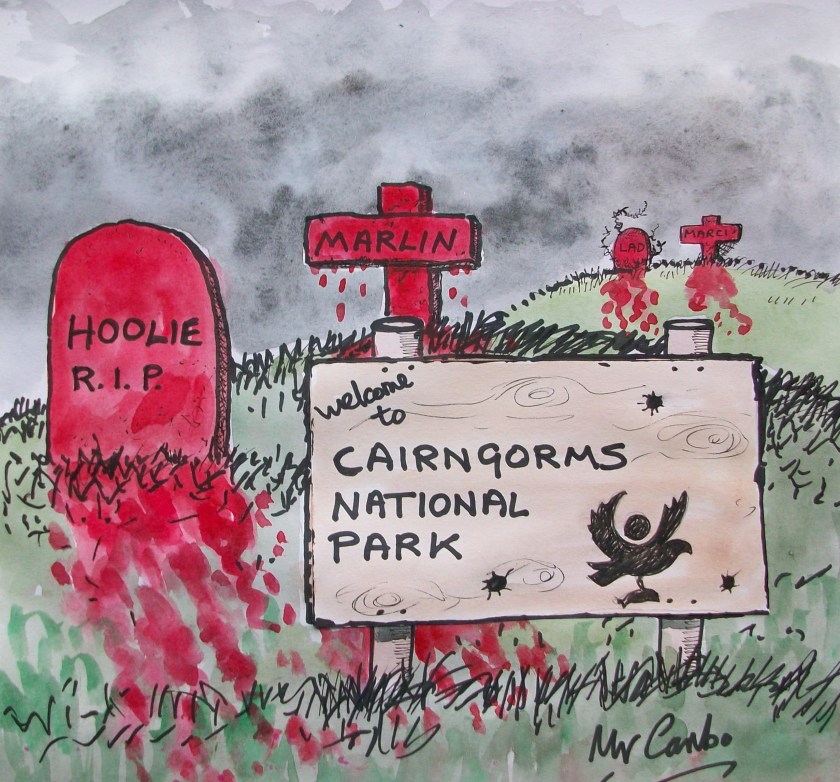
As detailed in the programme, Marlin, a young male, fledged from a nest at the National Trust for Scotland’s Mar Lodge Estate in Aberdeenshire in 2018, while Hoolie, another male, came from a nest in Easter Ross in the same year.  

Before they left their nests, both birds were fitted with a satellite tags as part of the EU Hen Harrier LIFE project which have allowed experts to track their movements ever since. Marlin flew south after fledging and spent the last two winters in North Yorkshire. Hoolie crossed the sea to Ireland, returning there for the last two winters, where his movements have been closely followed by Irish ornithologists. 

In March 2020 Hoolie returned to Scotland, most likely with a view to finding a mate and raising chicks of his own. However, a month later his tag suddenly stopped transmitting. His last transmitted location was on 5 April and showed he was over an area of moorland intensively managed for grouse shooting near Newtonmore, in the Cairngorms National Park. He disappeared close to where another tagged hen harrier Lad was found dead, with injuries consistent with being shot, in 2015. 

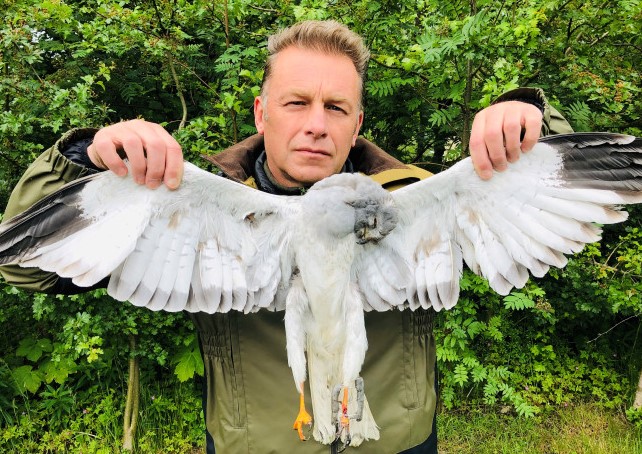
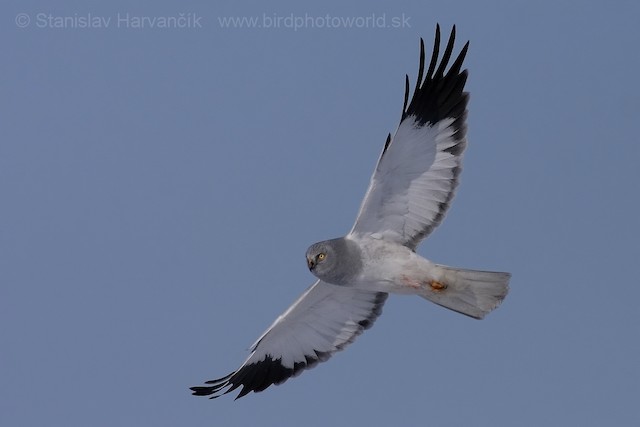
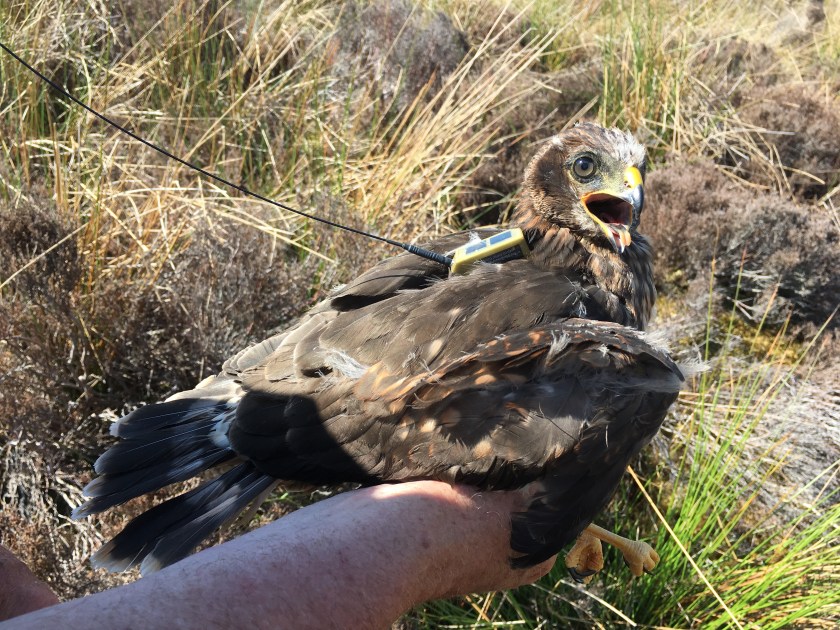
[Hen harrier Hoolie, photo by RSPB Scotland]

Just three days later, on 8 April, Marlin’s tag also stopped suddenly. He too had returned to Scotland, and his last transmitted position was over a driven grouse moor near Strathdon, West Aberdeenshire, in the Cairngorms National Park. Last April, another Mar Lodge hen harrier, Marci, also disappeared suspiciously, less than a kilometre away, on the same grouse moor.  

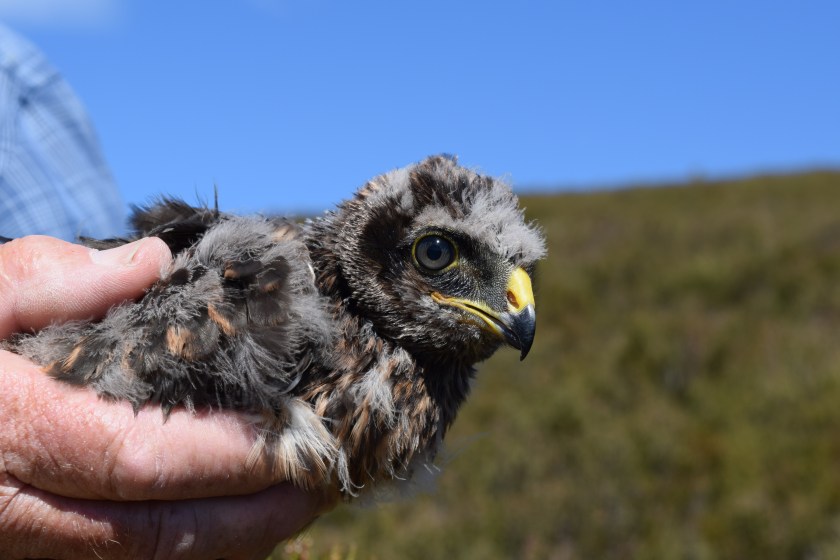
[Hen harrier Marlin, photo by Shaila Rao]

When a tagged hen harrier dies of natural causes the tag continues to transmit its location allowing for the body to be recovered. Police Scotland carried out searches for the birds but neither the tags or the bodies were found, and neither tag has transmitted further data.  

Ian Thomson, RSPB Scotland’s Head of Investigations, said:

 “Scotland had only just been put into lockdown in early April and yet protected birds of prey equipped with highly reliable technology have disappeared on land managed for driven grouse moors. The fact that these two birds have disappeared very close to where other similar incidents have occurred only heightens suspicions that these birds can be added to the very long list of protected birds of prey killed on grouse moors. 

The Scottish Government’s independent review of grouse moor management, published at the end of last year accepted the need for regulation of grouse shooting but proposed a five year probationary period to allow populations of hen harriers and other birds of prey on or near grouse shooting estates to recover to a ‘favourable’ conservation status. We believe that this approach is unworkable in practice and urge the introduction of a licensing scheme as soon as possible.” 

ENDS 

More on this news tomorrow.

Natural England silent on suspicious failures of hen harrier breeding attempts

Guy Shorrock from the RSPB Investigations Team published a fascinating blog last week about what he describes as the ‘suspicious failure of two hen harrier nesting attempts near the 2019 brood management site’ (see here).

Unfortunately the locations of these failed nesting attempts are not given, other than them being within 5km of the brood meddled hen harriers, which we believe were on the Swinton Estate in Nidderdale, North Yorkshire.

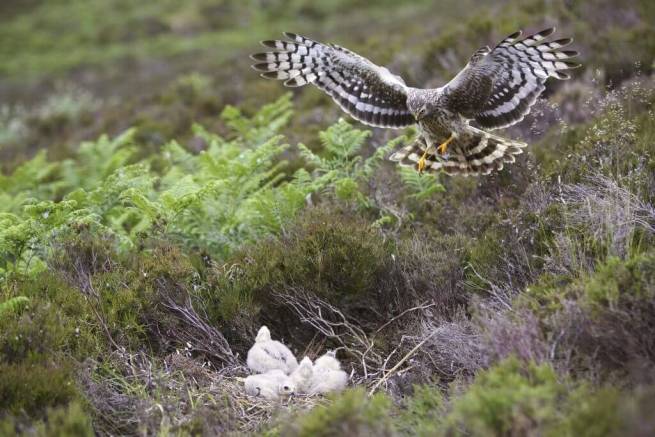
[An un-meddled hen harrier nest, photo by Mark Hamblin]

The circumstances of the two 2019 suspicious nesting failures are a mystery although Guy reports that the RSPB had been told that one of the breeding males had been shot by a gamekeeper from a neighbouring estate, but without evidence this alleged victim can’t be added to the list of 37 other hen harriers that have either been found illegally killed or have ‘disappeared’ in suspicious circumstances since 2018 (see here).

What’s interesting about Guy’s blog is that the news of these two nesting attempts which failed in suspicious circumstances wasn’t publicised by Natural England or DEFRA or any of the other supporters of the ludicrous hen harrier brood meddling scheme. Instead we got a public statement from DEFRA and Natural England (here) pretending that the grouse shooting industry had had an epiphany and was now championing the return of the species it had previously attacked to the verge of extinction as a breeding species in England.

Needless to say, several months later we learned that all five of the 2019 brood meddled hen harriers were ‘missing’ presumed dead, and only one of those was considered to have died of natural causes (see here). And we only found out about their fates because we’d chased Natural England for the info.

There’s more to come on what else Natural England has been hiding….

37 hen harriers ‘missing’ or confirmed killed since 2018

It’s getting to that time of year when the grouse shooting industry pumps out its patently misleading propaganda relating to hen harrier conservation in the UK. The aim is to hoodwink the public in to believing that the industry loves hen harriers and is doing all it can to protect and nurture the tiny remnant breeding population (but conveniently forgetting to mention that the breeding population is only in such dire straits because the grouse shooting industry has been ruthless in its maniacal intolerance of this supposedly protected species).

And the industry’s pursuit of the hen harrier is not ‘historical’ or indicative of past behaviour, as some would have us believe. It is on-going, it is current, and it is relentless.

To illustrate this fact, we intend to keep a running tally of all the hen harriers that we know (because most of these victims had been fitted with a satellite tag) to have either ‘disappeared’ in suspicious circumstances or have been confirmed as being illegally killed since 2018.

Why only since 2018 when we know that hen harriers have been a persecution target for years and years and years? Well, 2018 is the year that the grouse shooting industry ‘leaders’ would have us believe that the criminal persecution of hen harriers had stopped and that these birds were being welcomed back on to the UK’s grouse moors (see here).

Having just learned that all five of last year’s brood meddled hen harrier chicks are now ‘missing’ and presumed dead (one, #55147, probably dead from natural causes during a sea crossing so is not classed as ‘suspicious’ but the other four ‘missing’ in highly suspicious circumstances in the UK’s uplands – see here), it’s time to update the death list, which currently stands at 37. We have every expectation that this list will be updated again in the near future.

For now, here are the 37:

February 2018: Hen harrier Saorsa ‘disappeared’ in the Angus Glens in Scotland (here). The Scottish Gamekeepers Association later published wholly inaccurate information claiming the bird had been re-sighted. The RSPB dismissed this as “completely false” (here).

5 February 2018: Hen harrier Marc ‘disappeared’ on a grouse moor in Durham (here)

9 February 2018: Hen harrier Aalin ‘disappeared’ on a grouse moor in Wales (here)

March 2018: Hen harrier Blue ‘disappeared’ in the Lake District National Park (here)

March 2018: Hen harrier Finn ‘disappeared’ near Moffat in Scotland (here)

18 April 2018: Hen harrier Lia ‘disappeared’ in Wales and her corpse was retrieved in a field in May 2018. Cause of death was unconfirmed but police treating death as suspicious (here)

8 August 2018: Hen harrier Hilma ‘disappeared’ on a grouse moor in Northumberland (here).

16 August 2018: Hen harrier Athena ‘disappeared’ on a grouse moor in Scotland (here)

26 August 2018: Hen Harrier Octavia ‘disappeared’ on a grouse moor in the Peak District National Park (here)

29 August 2018: Hen harrier Margot ‘disappeared’ on a grouse moor in Scotland (here)

29 August 2018: Hen Harrier Heulwen ‘disappeared’ on a grouse moor in Wales (here)

3 September 2018: Hen harrier Stelmaria ‘disappeared’ on a grouse moor in Scotland (here)

24 September 2018: Hen harrier Heather ‘disappeared’ on a grouse moor in Scotland (here)

2 October 2018: Hen harrier Mabel ‘disappeared’ on a grouse moor on the edge of the Yorkshire Dales National Park (here)

3 October 2018: Hen Harrier Thor ‘disappeared’ next to a grouse moor in Bowland, Lanacashire (here)

26 October 2018: Hen harrier Arthur ‘disappeared’ on a grouse moor in the North York Moors National Park (here)

10 November 2018: Hen harrier Rannoch ‘disappeared’ on a grouse moor in Scotland (here). Her corpse was found nearby in May 2019 – she’d been killed in an illegally-set spring trap (here).

14 November 2018: Hen harrier River ‘disappeared’ on a grouse moor in the Nidderdale AONB (here). Her corpse was found nearby in April 2019 – she’d been illegally shot (here).

16 January 2019: Hen harrier Vulcan ‘disappeared’ in Wiltshire close to Natural England’s proposed reintroduction site (here)

7 February 2019: Hen harrier Skylar ‘disappeared’ next to a grouse moor in South Lanarkshire (here)

22 April 2019: Hen harrier Marci ‘disappeared’ on a grouse moor in the Cairngorms National Park (here)

11 May 2019: An untagged male hen harrier was caught in an illegally-set trap next to his nest on a grouse moor in South Lanarkshire. He didn’t survive (here)

7 June 2019: An untagged hen harrier was found dead on a grouse moor in Scotland. A post mortem stated the bird had died as a result of ‘penetrating trauma’ injuries and that this bird had previously been shot (here)

5 September 2019: Wildland Hen Harrier 1 ‘disappeared’ on a grouse moor nr Dalnaspidal on the edge of the Cairngorms National Park (here)

11 September 2019: Hen harrier Romario ‘disappeared’ on a grouse moor in the Cairngorms National Park (here)

14 September 2019: Hen harrier (Brood meddled in 2019, #183704) ‘disappeared’ in North Pennines (here)

23 September 2019: Hen harrier (Brood meddled in 2019, #55149) ‘disappeared’ in North Pennines (here)

24 September 2019: Wildland Hen Harrier 2 ‘disappeared’ on a grouse moor at Invercauld in the Cairngorms National Park (here)

10 October 2019: Hen harrier Ada ‘disappeared’ on a grouse moor in the North Pennines AONB (here)

12 October 2019: Hen harrier Thistle ‘disappeared’ on a grouse moor in Sutherland (here)

18 October 2019: Member of the public reports the witnessed shooting of an untagged male hen harrier on White Syke Hill in North Yorkshire (here)

November 2019: Hen harrier Mary found illegally poisoned on a pheasant shoot in Ireland (here)

January 2020: Members of the public report the witnessed shooting of a male hen harrier on Threshfield Moor in the Yorkshire Dales National Park (here)

1 April 2020: Hen harrier (Brood meddled in 2019, #183703) ‘disappeared’ in unnamed location, tag intermittent (here)

21 May 2020: Hen harrier (Brood meddled in 2019, #183701) ‘disappeared’ on a grouse moor in Cumbria shortly after returning from wintering in France (here)

To be continued……..

No prosecution for shooting of a hen harrier in Bowland

On 18 October 2019 a member of the public witnessed what he believed to be the shooting of an adult male hen harrier near White Syke Hill in the Forest of Bowland Area of Outstanding Natural Beauty (AONB).

North Yorkshire Police (whose force area covers that tiny part of Bowland) put out an appeal for information five months later (see here).

A few days later, North Yorkshire Police announced that an arrest had been made in this investigation and the suspect had been released pending the results of a forensic analysis (see here).

Unfortunately the police have now concluded there is insufficient evidence to proceed with a prosecution.

Inspector Matt Hagen of North Yorkshire Police’s Rural Task Force said: “This case is an all too familiar scenario where we have information from a credible source, but unfortunately the evidence is not strong enough to meet the threshold where we would ask the Crown Prosecution Service to make a charging decision, even after the arrest and interview of a suspect.

I would like to take this opportunity to encourage anyone with any information regarding any individuals who are involved in raptor persecution to come forward and report it to the police and assure them they will be taken seriously and the matter will be investigated.”

This is a disappointing result, of course, but as many blog readers will know, securing sufficient evidence in these cases is notoriously difficult. Full credit to North Yorkshire Police for giving it a go. This case didn’t fail for lack of effort and at least that suspect will now be on their radar.

As far as we’re aware, North Yorkshire Police are still investigating the alleged shooting of another hen harrier on another Yorkshire grouse moor (see earlier blog here) so fingers crossed for a prosecution on that one.

Now that the Bowland investigation has ended, part of the eyewitness report of the hen harrier being shot and removed from the moor has been published by the RSPB (see here) and it makes for a disturbing read.

Poisoned hen harrier ‘Mary’ – open letter calls for action

A young hen harrier named Mary that hatched on the Isle of Man in 2019 and had been satellite-tagged by the RSPB’s Hen Harrier LIFE Project was found poisoned on a pheasant shoot in Co Meath in Ireland in November 2019. Tests revealed she had consumed the banned poison Carbofuran which was found on a pigeon bait and on other meat baits next to her corpse.

We blogged about the illegal killing of this hen harrier earlier this year (see here) and it was quite evident from the press statements from both BirdWatch Ireland and the RSPB that there were concerns that the National Parks and Wildlife Service (NPWS) and the Gardai (Irish Police) could be doing more in terms of investigation, enforcement and liaison.

[Hen harrier Mary found illegally poisoned on a pheasant shoot, photo by BirdWatch Ireland]

Seven months on from her death, those early concerns appear to have been justified.

Have a look at this open letter, written by Manx BirdLife (Isle of Man) and addressed to the National Parks & Wildlife Service (Irish Republic) calling for transparency about any criminal investigation which may, or may not, have taken place in to the illegal killing of this hen harrier.

This is a really interesting, and welcome, move by Manx BirdLife. It’s an indication of the growing frustration around the ongoing illegal killing of hen harriers (and other raptors) and demonstrates an unwillingness just to sit back and watch it happen time and time again without anyone being held to account.

For all we know the NPWS may have conducted a thorough investigation and been thwarted by the usual problems of finding sufficient evidence for a prosecution, but that information should certainly be made public because otherwise it looks like they just don’t care and sends a message to other would-be criminals that this sort of offence will go unpunished.

It’ll be interesting to see what sort of response, if any, Manx BirdLife receives from the NPWS.

The five brood meddled hen harriers from 2019 are all ‘missing’

At the end of May we blogged about how Natural England had just issued another licence to permit hen harrier brood meddling on grouse moors again this year (see here).

For new blog readers, hen harrier brood meddling is a conservation sham sanctioned by DEFRA and carried out by Natural England, in cahoots with the very industry responsible for the species’ catastrophic decline in England. For more background see here.

[Photo of an UNMEDDLED hen harrier, by Laurie Campbell]

We had a number of concerns about this second licence being issued on 20 May 2020, not least the complete lack of transparency about the fate of the five hen harrier chicks that had been brood meddled in 2019. The last we’d heard three of the five had ‘disappeared’ on grouse moors in northern England in autumn 2019 (here) although then one came back online (here) and it then became apparent that some of the satellite tags used last year were different to the tags used previously and were not as reliable (see here).

On 28 May we asked Natural England for information about the status of these five birds (amongst other things). Natural England Director Rob Cooke has provided the following information to us this afternoon:

So there we have it. All five birds considered to be ‘missing’. One of the disappearances could be attributed to natural causes (#55147, assumed dead during a sea crossing from France to the UK) but the other four all look highly suspicious.

We do know that the GPS Lotek tags have proven to be unreliable on this species (see here) but the longer the tag silence continues, the worse it looks. (We’ve got more info on these tags and will blog separately about the decision to use this particular tag type for this ‘trial’).

[The five brood meddled hen harrier chicks in 2019, now all ‘missing’]

And questions on tag unreliability aside, the ‘missing’ status of these five is hardly a surprise – it’s a pattern that we’ve seen for years, that’s been confirmed by rigorous scientific analysis (of Natural England’s own bloody data, see here) and a pattern that continues even after the grouse shooting industry has the brass neck to pretend that it’s cleaned up its act – 33 ‘missing’ or confirmed killed HH in last two years alone, and that total does not include the brood meddled hen harriers – see here.

What’s more astonishing than anything is the fact that Natural England has issued another brood meddling licence this year, knowing full well the status of last year’s brood meddled birds, and wrote a blog celebrating the so-called ‘success’ of last year’s trial (see here)!

It simply beggars belief.

Last autumn when two of the brood meddled hen harriers were reported as ‘missing’ in suspicious circumstances, we asked Natural England what was its exit strategy and when would it pull the plug on this ludicrous five-year ‘trial’ (see here)?

Natural England said it would ‘take in to account the results to date’ when considering whether to issue another licence for this year (see here).

It looks like the results have been taken in to account and summarily dismissed.

Today Mark Avery wrote that he is still waiting to hear about another court date to have his appeal against brood meddling heard (along with the RSPB’s legal challenge). He provides a useful time line of what’s happened to date (see here).

Meanwhile, somewhere on a grouse moor in northern England, a brood of hen harriers will be being targeted (if they haven’t already been taken)……

[Illustration by Gerard Hobley]


‘The grouse moor industry accounted for the mainland extinction of hen harriers once before’

While the news sinks in that yet another two young hen harriers have ‘disappeared’ in suspicious circumstances on driven grouse moors (see here), making a total of at least 33 that have either vanished or been found illegally killed in the two years since the grouse shooting industry would have us believe it has cleaned up its act (see here), writer Jim Crumley reminds us that this industry has wiped out hen harriers before and it can / will do it again unless the authorities get a grip.

[Hen harrier photo by Laurie Campbell]

Published in The Scots Magazine, under the heading ‘Hypnotic Hen Harriers’, Crumley writes:

There are certain places in Scotland that have a track record for making birds of prey disappear, up to and including eagles – almost always in parts of the country obsessed with grouse shooting.

They protest every time some wildlife organisation or other goes public about the demise of one more harrier. They’ll tell you that when satellite tags suddenly stop working, it could be because the tag failed – they hardly ever do – and there’s no proof the bird has been illegally killed. That is often true as it’s rare that the corpse is ever found – they have become adept at disposing of dead harriers and eagles.

But in the case of the hen harrier, the weight of circumstantial evidence is huge and it’s also historic. Making hen harriers disappear is nothing new‘.

Read his article in full here

Two more hen harriers ‘disappear’ in suspicious circumstances on grouse moors in & next to Cairngorms National Park

News has emerged that another two satellite-tagged hen harriers have ‘disappeared’ in suspicious circumstances on two separate grouse moors, one in the Cairngorms National Park and one right next to it.

The source of this news is unusual, in that it isn’t in the form of a police appeal for information, it doesn’t come from the RSPB’s Hen Harrier LIFE Project and nor does it involve hen harriers tagged by Natural England south of the border.

This time the news is from an organisation called Wildland (see website here). This is a collection of estates in the Cairngorms and Sutherland, bought by the Polvsen family and being managed with an impressive vision for conservation. Wildland is also a pivotal partner in the wider conservation project called Cairngorms Connect (see website here) which ambitiously aims to restore ecological processes, habitats and species across an enormous area of the National Park.

Wildland has been involved with satellite-tracking golden eagles for a while now, and last year it also fitted tags to hen harriers that had hatched on its estates. In a beautifully-produced blog that was published on Friday, the fates of three of those hen harriers have now been publicised.

You can read the blog here

Anyone who knows anything about hen harriers in the UK uplands will not be surprised to learn that two of the three young hen harriers have since ‘disappeared’ and the last known transmission locations of the tags were both on driven grouse moors – one at Dalnaspidal on the SW edge of the National Park (last signal on 5 September 2019) and the other one at Invercauld, Royal Deeside, on the east side of the park (last signal on 24 September 2019). Regular blog readers may be familiar with these areas.

The third hen harrier didn’t disappear in suspicious circumstances over a grouse moor – this one was found dead in a field in Aberdeenshire although the cause of death has not been published.

[An overview of the movements of the three satellite-tracked hen harriers and their last known locations]

Interestingly, the Wildland blog also provides information about the functionality of the three tags with details given about the tags’ battery status (all working perfectly well) – this is a key indication that the ‘sudden stop no malfunction’ scenario of the two tags/hen harriers that vanished is indeed suspicious and not simply a predicted engineering malfunction, which researchers can identify by a steady decline in battery charge (e.g. see here).

The Wildland blog doesn’t provide any information about a police investigation in to the suspicious disappearances of the two young hen harriers, and nor have we seen any publicity about these disappearances even though the birds vanished nine months ago in September 2019. That’s disappointing, especially as the RSPB was publishing information about a suspected shot hen harrier and two others that had vanished on Scottish grouse moors in autumn 2019 (see here).

Nevertheless, now the news is out we can add these two Wildland hen harriers to the ever-expanding list of hen harriers (at least 33 now) believed to have been illegally killed since 2018, the year when grouse shooting industry reps would have us believe that hen harriers were welcomed back on the grouse moors:

February 2018: Hen harrier Saorsa ‘disappeared’ in the Angus Glens in Scotland (here). The Scottish Gamekeepers Association later published wholly inaccurate information claiming the bird had been re-sighted. The RSPB dismissed this as “completely false” (here).

5 February 2018: Hen harrier Marc ‘disappeared’ on a grouse moor in Durham (here)

9 February 2018: Hen harrier Aalin ‘disappeared’ on a grouse moor in Wales (here)

March 2018: Hen harrier Blue ‘disappeared’ in the Lake District National Park (here)

March 2018: Hen harrier Finn ‘disappeared’ near Moffat in Scotland (here)

18 April 2018: Hen harrier Lia ‘disappeared’ in Wales and her corpse was retrieved in a field in May 2018. Cause of death was unconfirmed but police treating death as suspicious (here)

8 August 2018: Hen harrier Hilma ‘disappeared’ on a grouse moor in Northumberland (here).

16 August 2018: Hen harrier Athena ‘disappeared’ on a grouse moor in Scotland (here)

26 August 2018: Hen Harrier Octavia ‘disappeared’ on a grouse moor in the Peak District National Park (here)

29 August 2018: Hen harrier Margot ‘disappeared’ on a grouse moor in Scotland (here)

29 August 2018: Hen Harrier Heulwen ‘disappeared’ on a grouse moor in Wales (here)

3 September 2018: Hen harrier Stelmaria ‘disappeared’ on a grouse moor in Scotland (here)

24 September 2018: Hen harrier Heather ‘disappeared’ on a grouse moor in Scotland (here)

2 October 2018: Hen harrier Mabel ‘disappeared’ on a grouse moor on the edge of the Yorkshire Dales National Park (here)

3 October 2018: Hen Harrier Thor ‘disappeared’ next to a grouse moor in Bowland, Lanacashire (here)

26 October 2018: Hen harrier Arthur ‘disappeared’ on a grouse moor in the North York Moors National Park (here)

10 November 2018: Hen harrier Rannoch ‘disappeared’ on a grouse moor in Scotland (here). Her corpse was found nearby in May 2019 – she’d been killed in an illegally-set spring trap (here).

14 November 2018: Hen harrier River ‘disappeared’ on a grouse moor in the Nidderdale AONB (here). Her corpse was found nearby in April 2019 – she’d been illegally shot (here).

16 January 2019: Hen harrier Vulcan ‘disappeared’ in Wiltshire close to Natural England’s proposed reintroduction site (here)

7 February 2019: Hen harrier Skylar ‘disappeared’ next to a grouse moor in South Lanarkshire (here)

22 April 2019: Hen harrier Marci ‘disappeared’ on a grouse moor in the Cairngorms National Park (here)

11 May 2019: A male hen harrier was caught in an illegally-set trap next to his nest on a grouse moor in South Lanarkshire. He didn’t survive (here)

7 June 2019: A hen harrier was found dead on a grouse moor in Scotland. A post mortem stated the bird had died as a result of ‘penetrating trauma’ injuries and that this bird had previously been shot (here)

5 September 2019: Wildland Hen Harrier 1 ‘disappeared’ on a grouse moor nr Dalnaspidal on the edge of the Cairngorms National Park (this post)

11 September 2019: Hen harrier Romario ‘disappeared’ on a grouse moor in the Cairngorms National Park (here)

24 September 2019: Wildland Hen Harrier 2 ‘disappeared’ on a grouse moor at Invercauld in the Cairngorms National Park (this post)

10 October 2019: Hen harrier Ada ‘disappeared’ on a grouse moor in the North Pennines AONB (here)

12 October 2019: Hen harrier Thistle ‘disappeared’ on a grouse moor in Sutherland (here)

18 October 2019: Member of the public reports the witnessed shooting of a male hen harrier on White Syke Hill in North Yorkshire (here)

November 2019: Hen harrier Mary found illegally poisoned on a pheasant shoot in Ireland (here)

January 2020: Members of the public report the witnessed shooting of a male hen harrier on Threshfield Moor in the Yorkshire Dales National Park (here)

There are two more satellite-tagged hen harriers (Tony & Rain) that are reported either confirmed or suspected to have been illegally killed in the RSPB’s Hen Harrier LIFE Project Report but no further details are available.

And then there were last year’s brood meddled hen harrier chicks that have been reported ‘missing’ but as they’re carrying a new type of tag known to be unreliable it’s not known if they’ve been illegally killed or if they’re still ok. For the purposes of this mini-analysis we will discount these birds.

So that makes a total of at least 33 hen harriers that are known to have either ‘disappeared’ in suspicious circumstances or have been witnessed being shot or have been found illegally killed in the last two years. And still we’re expected to believe that everything’s perfect, that the grouse shooting industry is not riddled with armed criminals and that hen harriers are doing just fine, thriving even, according to the shooting industry’s propaganda.

BBC Countryfile highlights raptor persecution on grouse moors

Last night’s edition of Countryfile on the BBC included a ten minute slot on raptor persecution.

It’s available to watch on BBCiPlayer (here) for the next 11 months (starts 10.40 min).

To be honest, after watching the compelling piece on raptor persecution that featured on Channel 4 News on Friday (see here), Countryfile’s effort was a bit limp and underwhelming.

Having said that, we should bear in mind that to the average Countryfile viewer, the fact that gamekeepers are still killing birds of prey in 21st Century Britain will have been quite a shock so ten mins of exposure on such a prime time programme is to be welcomed. There was also some cracking footage of hen harriers.

But for those of us all too familiar with this subject, this programme grated in some areas.

Presenter Tom Heap pitched the subject as a ‘political war between gamekeepers and the RSPB’ – sorry, Tom, but you’re about ten years out of date. Look around, there’s an ever-increasing community of organisations and individuals who are fighting hard against the grouse shooting industry and not just on the raptor persecution issue.

Tom also repeated the wildly inaccurate but often cited claim that the game-shooting industry is worth £2 billion to the rural economy. It’s worth nothing of the sort – keep an eye on Mark Avery’s blog as we anticipate a forensic dissection of this particular topic. [Update: read Mark’s blog here]

Then we had Steve Bloomfield from BASC who was complaining about ‘sweeping statements’ being made about raptor persecution that, according to him, infer everyone in gameshooting is killing raptors. He might just as well have stamped his feet and said, ‘It’s so unfair!’ The so-called ‘sweeping statements’ that I’ve seen are nothing of the sort – they’re statements of fact. For example, that the RSPB has received an increase in reported raptor persecution incidents during lockdown and the majority of those have been on land managed for game shooting.

Another example, from a senior police officer (Insp Matt Hagen, North Yorkshire Police), who told Channel 4 News and Countryfile that reported incidents had certainly increased since lockdown and that ALL his investigations were currently centred on gamekeepers on grouse moors.

To be honest, I can’t be bothered to write anymore of a review. It’s just going over the same old ground, time and time again. Watch the video if you like but if you watched the Channel 4 News video on Friday you’ll not learn much new from this one.

Meanwhile, let’s get back to the Bransdale case and those industry connections…..

Shameful Natural England issues another licence for hen harrier brood meddling

Last week, Natural England announced that it had issued another licence to enable hen harrier brood meddling to take place this year.

For new blog readers, hen harrier brood meddling is a conservation sham sanctioned by DEFRA and carried out by Natural England, in cahoots with the very industry responsible for the species’ catastrophic decline in England.

It is supposed to test whether those people responsible for killing hen harriers illegally would stop killing hen harriers if the chicks were brood meddled (removed from the grouse moor in June at the critical grouse-rearing stage and then returned to the wild in August). We all know this won’t work because we know that young hen harriers are killed routinely during the grouse shooting season, and especially in September and October and yet still DEFRA, Natural England and their grouse shooting mates have pressed ahead with this five year ‘trial’. For more background on hen harrier brood meddling see here.

Here is a copy of Natural England’s recent announcement:

Breeding hen harriers in England are at a critical population level. Natural England is involved in a number of initiatives to help ensure hen harriers recover including Defra’s Hen Harrier Recovery Plan.

One of these initiatives is the hen harrier brood management trial. The 5 year brood management trial is designed to determine how many hen harriers can live alongside grouse before they have an impact on grouse numbers through predating them. Natural England is also involved in monitoring surveys, protecting hen harriers from persecution and exploring re-introduction into the South of England.

Brood management involves the removal of hen harrier eggs and/or chicks to a dedicated hatching and rearing facility, where they are hand-reared in captivity, before being transferred to specially-constructed pens in hen harrier breeding habitat, from which they are then re-introduced into the wild in the uplands of northern England.

We issued the first 2 year trial licence in 2018. Earlier this year we received an application to renew this licence for a further two years. A renewal licence application has now been processed and we issued the licence on 20th May 2020.

Successful brood management intervention took place in 2019. All five chicks from the intervention nest were successfully raised to become healthy fledglings and released. That is a strong success rate compared to the 2018 nesting data which show that five of the 14 wild nests failed entirely and only two of the 14 wild nests were able to fledge five chicks.

We understand that some people may have questions and concerns over the taking of birds from the wild and so I wanted to outline more about this decision.

Evidence suggests that hand-rearing hen harriers in captivity before releasing them into the wild can lead to an improvement in their numbers and therefore their conservation status. Brood management is the sixth action within the Defra Hen Harrier Recovery Plan. One of the success criteria of the plan is to build confidence with land managers that thriving harrier populations can coexist with local business interests and contribute to a thriving rural economy.

This intervention may only occur in areas where there are already enough hen harrier nests to protect their numbers in the local population. The ‘trigger’ for brood management to commence is two successful nests occurring within 10km of each other, on a grouse moor.

The licence is time-limited for a 2-year period and places stringent conditions on the trial. We have rigorously scrutinised the licence application and will work closely with the licence applicant throughout the duration of the trial to ensure that all elements are carried out proportionately and effectively, to bring about the best possible outcome for hen harriers.

The applicant will have to provide evidence that they have taken every precaution to ensure the welfare of the birds or local populations are not affected.

We understand that there are active hen harrier nests this year that meet the licensed criteria for trial brood management and willing landowners who want to be part of the trial.

We will shortly publish the redacted licence and a link will be provided here.

ENDS

There is so much to say about this, but we’ll come back to it in separate blogs.

For now, we have asked Natural England to provide the following information:

  • What is the status of the five satellite-tagged hen harrier chicks from the 2019 brood meddled nest? The last we heard three of the five had ‘disappeared’ (here) although then one came back online (here) and it then became apparent that some of the satellite tags used last year were different to the tags used previously and were not as reliable (see here). [SEE UPDATE AT FOOT OF BLOG]
  • Can we see a copy of the annual report of the 2019 brood meddling trial that the HH Brood Meddling Project Team is required to provide, as laid out in the Brood Meddling Management Plan.
  • Can we see a copy of the approved minutes of the Scientific Advisory Group’s meetings, to date.
  • Can we see the ‘report by licensee of action taken under the 2019 licence’ which was due to be submitted to NE no later than 14 days after the licence expired (20 Jan 2020) as a condition (#8) of last year’s licence.

More soon, including some shocking new information…….

[Sketch by Gerard Hobley]

UPDATE 8 June 2020: The five brood meddled hen harriers from 2019 are all ‘missing’ (see here)