‘Skydancer Day’ – online event, May 9th 2021

Plans are evolving for this year’s Hen Harrier Day which will take place on the weekend of 7th-8th August 2021 but this year there’s going to be an additional event, taking place this spring.

Branded ‘Skydancer Day’, this will be an online event on Sunday 9th May 2021, organised by charity Hen Harrier Action and hosted by Megan McCubbin and Chris Packham.

The event will run from 10.15am to 12 noon and will focus on celebrating the uplands but will also feature the ongoing issue of illegal raptor persecution.

More details to follow in due course.

Breach of hen harrier diversionary feeding licence on North Yorkshire grouse moor

A few days ago I was informed that there may have been a suspected breach of a hen harrier diversionary feeding licence last weekend, on a grouse moor in North Yorkshire.

Observers were monitoring what they believed to be an active hen harrier nest. Their observation position was approximately one mile from the nest site so as not to disturb the breeding attempt.

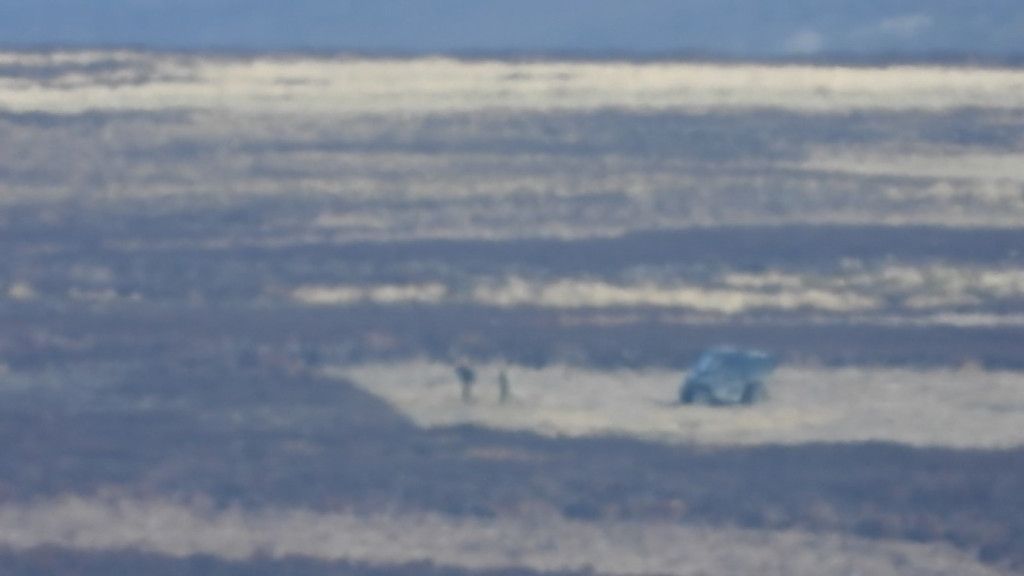
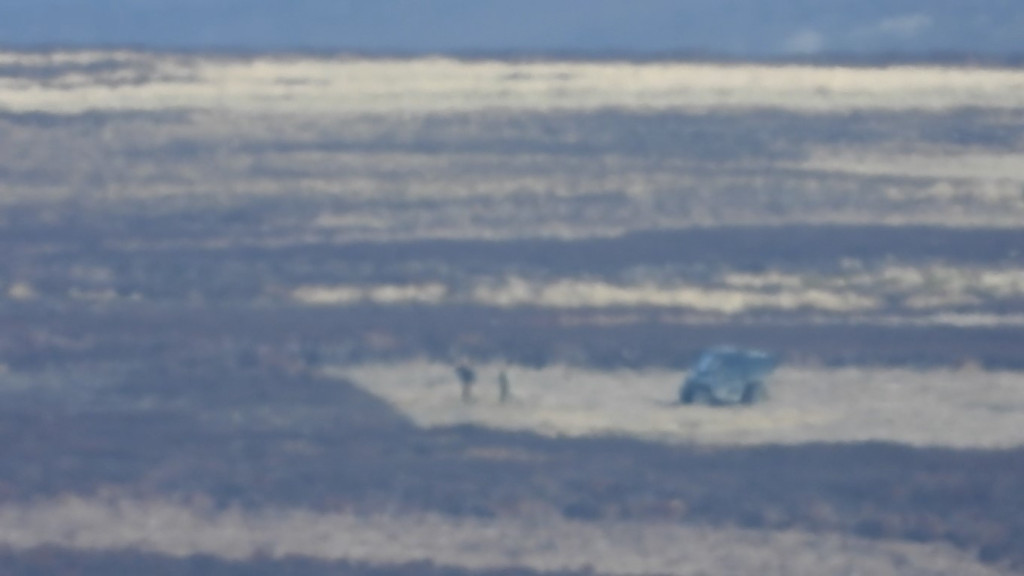
During this period, they observed and filmed a buggy carrying two individuals, being driven towards the nest site. It stopped and one person got out and appeared to be placing something on top of a fencepost, before returning to the buggy and driving towards the nest. Both individuals exited the buggy, walked in to the heather to the nest, flushed off a very agitated female hen harrier, did something at the nest that wasn’t clear (one individual was crouching down and the other appeared to be taking photos of the dive-bombing female) before returning to the buggy and driving away.

[Screengrab from the video footage, filmed from approx one mile away, showing two individuals walking from the buggy towards the hen harrier nest]

I’ve been told by a number of people that this was a gamekeeper and a Natural England employee, but I have been unable to verify this. I understand that the nest contained five eggs that the female was incubating.

It was suggested to me that before visiting the nest, one of the individuals had been setting out food as part of a diversionary feeding strategy, which is encouraged as part of DEFRA’s Hen Harrier Action Plan. However, the licence that permits diversionary feeding (CL25) sets out quite clearly that diversionary feeding can ONLY begin after the eggs have hatched, and not before:

I don’t know what the exact reasoning is behind this restriction of not being permitted to provide diversionary food prior to the chicks hatching but an educated guess would be that it would limit unnecessary disturbance in the vicinity of the harrier’s nest at a highly sensitive period, especially as the licence notes that red grouse are unlikely to be taken by hen harriers during the incubation period, so diversionary feeding shouldn’t be necessary.

The restriction may also be related to the fact that as a general rule of thumb, most raptors, if disturbed, are more likely to desert their nest during the incubation period than they would be had they reached the nestling period, presumably because they’ve invested much more in the breeding attempt by the nestling stage.

However, the reasoning behind the restriction isn’t really the issue right now. The issue is that there has been a potential breach of a licence condition. Here’s what Natural England’s CL25 licence says might happen if there is a failure to comply with the terms and conditions of the licence:

I contacted North Yorkshire Police to ask whether a potential licence breach would be enforced by the police or by another agency. A police spokesperson told me that Natural England would be the enforcement agency and it was also confirmed that yes, this licence breach had occurred last weekend.

The police spokesperson said that NE had given assurances that the individual concerned ‘had been spoken to’ and that ‘the activity had ceased in accordance with guidelines’. Natural England apparently said there was ‘no malicious intent in any activity’ although it’s not clear how they assessed that.

Interesting. I’ve written to Natural England today to ask them about any potential enforcement action they may be taking against this estate for failing to comply with the terms and conditions of the licence.

My money is on there being absolutely zero enforcement action taken, given Natural England’s track record of happily working in cahoots with the very industry responsible for the hen harrier’s catastrophic decline in England in their scandalous hen harrier brood meddling conservation scam.

Actually, I wonder whether this nest will be targeted for brood meddling this year and if so, whether this ‘extended’ diversionary feeding (and who knows how long it had been going on?) will be mentioned to the Scientific Advisory Committee scrutinising the supposed rigour (ahem) of the brood meddling trial?

UPDATE 4th May 2021: Grouse-shooting estate under investigation for alleged breach of hen harrier diversionary feeding licence (here)

Eyes to the skies for hen harriers: RSPB Scotland asks public for sightings

Press release from RSPB Scotland (14th April 2021)

EYES TO THE SKIES FOR RETURNING HEN HARRIERS

Buzzard, kestrel… or hen harrier?

RSPB Scotland is asking everyone to keep their eyes peeled for one of the UK’s rarest birds of prey as they return to their breeding grounds this spring.

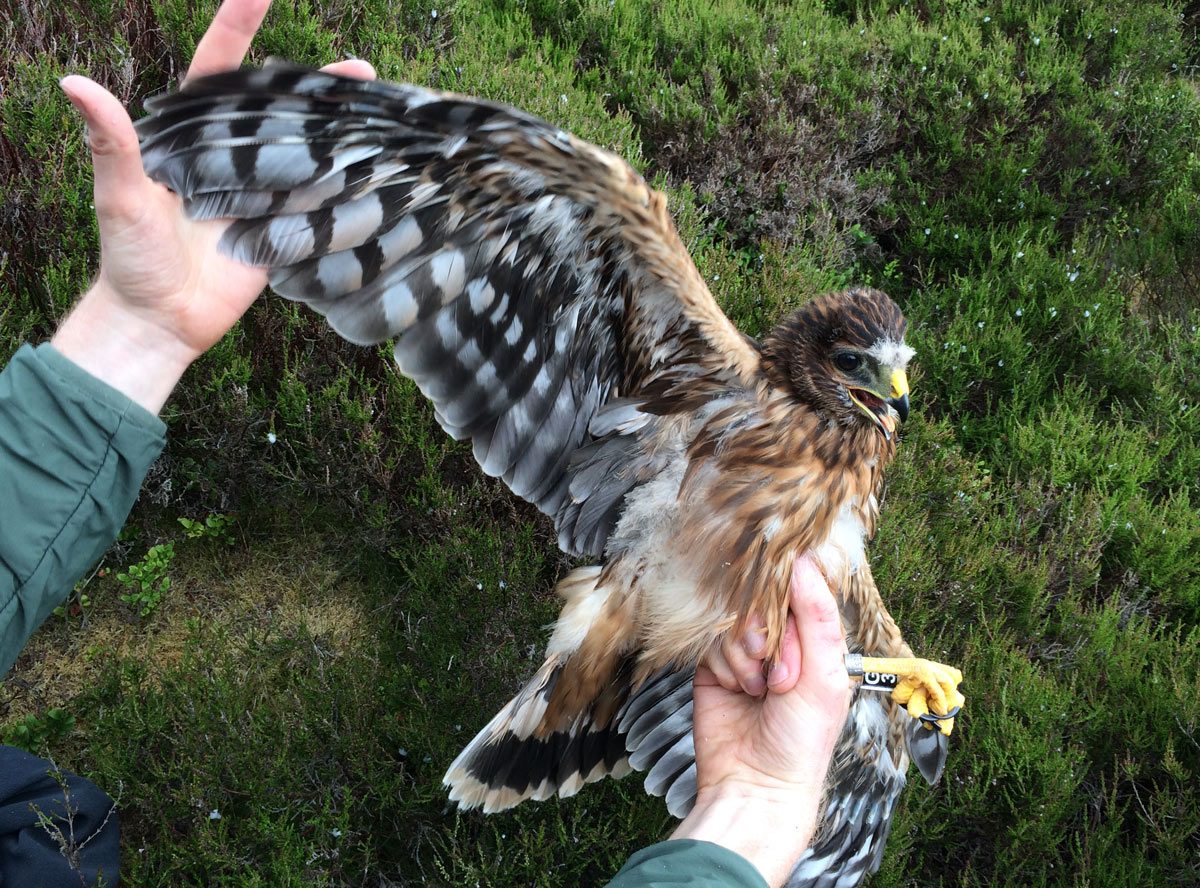
Hen harriers are medium-sized birds of prey, similar to a buzzard but with a slightly slimmer appearance, with long wings and a long tail. Female and young hen harriers are speckled brown and cream with horizontal stripes on their tails. The most striking feature is the patch of white at their rump. Males are slightly smaller and pale grey with black wingtips. Both have a round, owl-like face.

[Female hen harrier. Photo by Pete Morris]

[Male hen harrier. Photo by Richard Stonier]

As the weather warms up, these birds are becoming more visible as they start their long journeys away from their winter roosting grounds and up to the moors to breed. Hen harriers nest on the ground amongst heather or soft rush in upland areas. You maybe even lucky enough to encounter their skydancing display, a dizzying aerial show of rolls and dives, performed by either the male and female to mark their territory and demonstrate their vigour.

Hen harriers are the UK’s most persecuted bird of prey relative to its population size. Their Scottish population is of global importance, yet it remains far from stable largely as a result of illegal killing by humans.

The RSPB’s Jenni Burrell said: “We are calling on the public to email our Hen Harrier Hotline if they believe they’ve seen a hen harrier. This helps us build a picture of where these birds are. Please don’t hesitate to contact us if you see them – we welcome any sightings and appreciate your time.

Hen harriers are beautiful and elusive raptors and, unlike peregrines and kestrels, they are rarely seen in urban environments. So if it’s perched on your fence, it’s probably a sparrowhawk, if it’s in a tree by the roadside, it’s probably a kestrel or a buzzard… but if it’s over rough pasture or moorland, and matches the description above, then you might have seen a hen harrier.

Sadly hen harriers are a long way from reaching a healthy, self-sustaining population, and this is largely down to persecution by humans. Particularly where land is managed for the purpose of driven grouse shooting, natural predators like hen harriers can be viewed as pests and, despite being legally protected, the shooting, trapping and poisoning of hen harriers is a serious and ongoing problem.”

If you think you’ve seen a hen harrier, please email: henharriers@rspb.org.uk

Please include the date, time, location/grid reference and a description of the bird.

ENDS

Emmerdale actor speaks out against grouse moor burning & raptor persecution

Hot on the heels of her last article on how burning Britain’s moorland is ‘an environmental disaster’ (here), the Daily Mirror’s Environment Editor, Nada Farhoud has a follow up article out today.

This time she interviews Emmerdale actor Nick Miles, who lives in the Yorkshire Dales National Park and has been a long-time supporter of conservation campaigns such as Hen Harrier Day.

Nick talks about his village ‘disappearing under a blanket of smoke’ when the gamekeepers have set the moors alight and how letters to his MP, Rishi Sunak, have fallen on deaf ears.

He also talks about how few red kites he sees in Upper Wharfdale (hardly surprising given its proximity to Nidderdale, where killing red kites on grouse moors is de rigueur) in comparison to Harewood, where Emmerdale is filmed and from where red kites were reintroduced and are doing well.

Read today’s article in the Mirror here (and watch out for the comedy input from Moorland Association Director Amanda Anderson).

Meanwhile in Scotland the fires also continue. I’ve been sent some horrific photographs that were taken in the Angus Glens two days ago – I’ll be publishing those later this weekend.

And here’s a photo sent in by another blog reader (thank you) taken yesterday in Manor Valley in the Borders:

It’s astonishing that not only is this burning still legal (although for how much longer remains to be seen) even though we’re in a climate and nature emergency, but that gamekeepers in Scotland can lawfully continue to set the moors alight until 15th April, and then with landowner’s permission can continue to light fires until 30th April.

Still, it’s a cracking wheeze for torching out hen harrier nests, peregrine breeding ledges and golden eagle eyries, which can then be explained away as ‘accidents’ (see here).

Pass the matches.

Natural England’s shady approach to IUCN guidelines on hen harrier reintroduction

Earlier this week I blogged about how Natural England had been planning, in secret, to start a captive breeding programme for hen harriers, with the intention of releasing the progeny in to southern England as a way of boosting the UK hen harrier population, which has been in decline for years thanks to the ongoing illegal killing of this species (see here).

The proposed reintroduction isn’t news – this has been on the cards since 2016 when DEFRA published its ludicrous Hen Harrier Action Plan (and when Natural England was caught out claiming spurious justifications for the reintroduction – see here) – but the captive breeding element is new, and is a direct result of potential donor countries in Europe refusing to donate harriers to a country that clearly can’t look after the ones its already got.

And although the captive breeding element is highly questionable from an ethical standpoint, it’s still not the main issue here. The main issue has always been, and remains to be, the concept of releasing hen harriers in one part of the country as a massive distraction from dealing with the scandalous level of persecution still inflicted on this species in other parts of the country (namely on driven grouse moors).

[An illegally killed hen harrier. Photo by Ruth Tingay]

Reintroduction projects need to meet all sorts of criteria before they can go ahead and DEFRA advises project managers consult the International Union for the Conservation of Nature (IUCN) Guidelines for Reintroductions and other Conservation Translocations as part of their preparation.

These IUCN guidelines are built on decades of conservation knowledge and experience and provide a ‘route map’ for achieving a successful reintroduction. One of the fundamental principles of these guidelines is deciding when a translocation/reintroduction is an acceptable option. Key to this is:

There should generally be strong evidence that the threat(s) that caused any previous extinction have been correctly identified and removed or sufficiently reduced‘.

Now, in the case of the UK hen harrier population, which is in long-term decline according to the most recent national survey conducted in 2016 (see here), it is widely accepted that illegal persecution continues to be the main threat to survival, limiting the species’ distribution and abundance in Scotland, Northern Ireland, Wales and England.

So the threat has been ‘correctly identified’, as per the IUCN guidelines. It’s indisputable (unless you’re a spokesperson from the very industry that’s responsible for this organised criminality). There are more scientific papers identifying and confirming the threat as there are breeding pairs of hen harriers in England – including the most recent research, co-authored by Natural England staff, which demonstrated the ongoing, widespread illegal killing of hen harriers on British grouse moors (here).

But has the ‘correctly identified’ threat been ‘removed or sufficiently reduced’ for Natural England to proceed with its reintroduction plans? Well, that’s where it all gets a bit shady, in my opinion.

Natural England has been downplaying the persecution issue for a couple of years, particularly when its staff members have been trying to persuade potential donor countries that persecution really isn’t an issue in southern England (e.g. see here and here), although the RSPB has vigorously disputed this claim:

And of course there’s also been the suspicious disappearance of a satellite-tagged hen harrier called Vulcan (here) (which according to an employee of the National Gamekeepers Organisation was likely a ‘set up’ by the RSPB (here!), and then there’s the recent and on-going police investigation into alleged bird of prey persecution nearby (see here).

So it was interesting to see a copy of Natural England’s Hen Harrier Southern Reintroduction IUCN Assessment, dated January 2020, and released to me last week as part of a bundle of documents released under a Freedom of Information request, to understand just how Natural England is attempting to explain away the real and present threat of persecution.

Here is the document:

First of all, Natural England is pointing to two datasets of confirmed raptor persecution incidents to show that persecution is an issue in counties far away from the proposed release site in Wiltshire.

The first dataset cited (published by DEFRA on behalf of the Raptor Persecution Priority Delivery Group, RPPDG) has been widely criticised as being inaccurate and out of date (see here) and is unsupported by two members of the RPPDG: the Northern England Raptor Forum (here) and by the RSPB (here).

The second dataset is much more reliable, as it’s compiled using rigorous scientific quantification by the RSPB, but even then, it only includes confirmed raptor persecution incidents, i.e. where there is a corpse and supportive evidence to identify the cause of death (e.g. x-ray, toxicology report). The database cited by Natural England does NOT include ‘probable’ or ‘possible’ raptor persecution incidents. So, for example, the vast majority of the 52 hen harriers known to have been killed or have disappeared in suspicious circumstances since 2018 (here) would NOT be included in this database of confirmed incidents because many of them, without a corpse or satellite tag, would have to be classified as being ‘probable’ persecution incidents. It’s ironic that these incidents would be excluded, given it was Natural England’s own commissioned research findings that identified missing satellite-tagged hen harriers as most likely to have been illegally killed on or near grouse moors (here).

So not only is Natural England being highly selective in the datasets it has chosen to support this claim that persecution isn’t an issue in southern England, the other main claim made in its IUCN assessment is that hen harriers released in the south of England won’t travel north to the deadly grouse moors of northern England, Wales and Scotland. Here is the claim:

This is an astonishing claim to make. Obviously, I was interested in the reference that Natural England cited to support such a claim: (NE 2019a). However, when I looked up the reference I found it refers to Natural England’s intermittently-updated summary table of the fates of tagged hen harriers (here).

This table doesn’t support Natural England’s claims at all! If anything, it shows that young hen harriers wander widely during dispersal, throughout the UK, so there is no supportive evidence whatsoever to suggest the incidence levels of hen harriers released in southern England roaming into northern upland areas (persecution hotspots) ‘will be low’. What complete nonsense this is!

The fact is, nobody knows what those released hen harriers will do, but if they follow the behaviour of other young dispersing hen harriers they will wander widely and will be at significant risk of being killed if they go anywhere near a driven grouse moor. I wouldn’t fancy their chances if they turned up at some commercial pheasant and partridge drives either, given the persecution suffered on some shooting estates by Montagu’s and Marsh harriers.

It’s no wonder Natural England has wanted to keep its plans under wraps – this is shady stuff indeed.

Natural England ignores ongoing raptor persecution & now plans to captive breed hen harriers for release!

Do you remember DEFRA’s ludicrous Hen Harrier Action Plan, published in 2016 and responsible for hen harrier brood meddling – the conservation sham sanctioned by DEFRA and carried out by Natural England, in cahoots with the very industry responsible for the species’ catastrophic decline in England? (For more background see here).

Well the conservation sham has just been extended, this time to the proposed ‘reintroduction’ of hen harriers to southern England, also part of the ridiculous Hen Harrier Action Plan.

[A brilliantly apt cartoon by Gerard Hobley]

The so-called southern reintroduction has been on the cards since 2016 when the ‘Action Plan’ was first published, to be used as a massive distraction from the ongoing illegal killing of hen harriers on British grouse moors. But Natural England has had terrible trouble trying to persuade conservationists in Spain and France to donate hen harriers, especially given the UK’s appalling raptor persecution record – even though Natural England staff have been caught out trying to play this down on a number of occasions (e.g. see here).

Hmm. What to do? What to do? Ah, how about, we ask some other countries for some donor stock (countries that we haven’t tried yet, like Finland, Sweden, Norway) so we can release their birds in to southern England (and we won’t mention the suspicious disappearance of a hen harrier in the proposed release area), and how about we also take some chicks from nests in England and keep them in captivity forever and use their chicks to release in to the wild, and call it a ‘conservation breeding programme’ (cos we did it with peregrines last year, remember?), and then why don’t we also take some un-releasable hen harriers from rehab centres in France and Spain and use them as breeding stock as well so we’ll have more young hen harriers to chuck out in to the countryside whilst we all sit with our fingers and toes crossed that they don’t venture anywhere near a grouse moor? (And we’ll keep quiet about the ongoing raptor persecution crimes being uncovered near the proposed release site, including this one).

Yeah! And we can pay our old mate Jemima Parry Jones and the International Centre for Birds of Prey (ICBP) at Newent, Glos to do all this ‘conservation breeding’ – they’re not gonna turn down a big pay out, just as they’re getting paid for doing the hen harrier brood meddling. Yeah! £350K should do it….it’s tax payers money but there’s no need to tell anyone about it, we’ll just keep it quiet in case those pesky conservationists find out, see through our propaganda and try to take a legal challenge against us.

Think this is all a bit far-fetched? Well have a look at the following documents, released last week as part of a larger bundle under Freedom of Information requests that Natural England has sat on since January. It’s worth paying particular attention to Natural England’s options appraisal (the 2nd document), undertaken last year during lockdown. Abandoning the whole ridiculous idea of releasing hen harriers in to a country where they are systematically and illegally killed by a large part of the driven grouse shooting industry (52 hen harriers known to have gone since 2018) was apparently not an option due to the ‘reputational risk’ to DEFRA and Natural England if they pulled out.

That should be the least of their worries. Make no mistake, if there is an opportunity for a legal challenge against this insane plan, it will be taken.

More soon.

Here are some of the documents to look at:

UPDATE 25th March 2021: This news article led to a story being published in the environmental journal the Ends Report (here).

UPDATE 26th March 2021: Natural England’s shady approach to IUCN guidelines on hen harrier reintroduction (here)

52 hen harriers confirmed illegally killed or ‘missing’ since 2018

For anyone who still wants to pretend that the grouse shooting industry isn’t responsible for the systematic extermination of hen harriers on grouse moors across the UK, here’s the latest catalogue of crime that suggests otherwise.

[This male hen harrier died in 2019 after his leg was almost severed in an illegally set trap that had been placed next to his nest on a Scottish grouse moor (see here). Photo by Ruth Tingay]

In January 2021, this list totalled 51 hen harriers, all either confirmed to have been illegally killed or to have ‘disappeared’, most of them on or next to driven grouse moors.

They disappear in the same way political dissidents in authoritarian dictatorships have disappeared” (Stephen Barlow, 22 January 2021).

Today the list has been updated to include the latest victim, Tarras, hatched in 2020, gone by 24th February 2021 (see here).

This disgraceful catalogue will continue to grow – I know of at least one more on-going police investigation which has yet to be publicised and I suspect there’s one other, although I’m still waiting for clarification on that one.

I’ve been compiling this list only since 2018 because that is the year that the grouse shooting industry ‘leaders’ would have us believe that the criminal persecution of hen harriers had stopped and that these birds were being welcomed back on to the UK’s grouse moors (see here).

This assertion was made shortly before the publication of a devastating new scientific paper that demonstrated that 72% of satellite-tagged hen harriers were confirmed or considered likely to have been illegally killed, and this was ten times more likely to occur over areas of land managed for grouse shooting relative to other land uses (see here).

2018 was also the year that Natural England issued itself with a licence to begin a hen harrier brood meddling trial on grouse moors in northern England. For new blog readers, hen harrier brood meddling is a conservation sham sanctioned by DEFRA as part of its ludicrous ‘Hen Harrier Action Plan‘ and carried out by Natural England (NE), in cahoots with the very industry responsible for the species’ catastrophic decline in England. For more background see here.

Brood meddling has been described as a sort of ‘gentleman’s agreement’ by commentator Stephen Welch:

I don’t get it, I thought the idea of that scheme was some kind of trade off – a gentleman’s agreement that the birds would be left in peace if they were moved from grouse moors at a certain density. It seems that one party is not keeping their side of the bargain“.

With 52 hen harriers gone since 2018, I think it’s fair to say that the grouse shooting industry is simply taking the piss. Meanwhile, Natural England pretends that ‘partnership working’ is the way to go.

‘Partnership working’ appears to include authorising the removal of hen harrier chicks from a grouse moor already under investigation by the police for suspected raptor persecution (here) and accepting a £10K bung from representatives of the grouse shooting industry that prevents Natural England from criticising them (see here).

[Cartoon by Gill Lewis]

So here’s the latest gruesome list:

February 2018: Hen harrier Saorsa ‘disappeared’ in the Angus Glens in Scotland (here). The Scottish Gamekeepers Association later published wholly inaccurate information claiming the bird had been re-sighted. The RSPB dismissed this as “completely false” (here).

5 February 2018: Hen harrier Marc ‘disappeared’ on a grouse moor in Durham (here)

9 February 2018: Hen harrier Aalin ‘disappeared’ on a grouse moor in Wales (here)

March 2018: Hen harrier Blue ‘disappeared’ in the Lake District National Park (here)

March 2018: Hen harrier Finn ‘disappeared’ near Moffat in Scotland (here)

18 April 2018: Hen harrier Lia ‘disappeared’ in Wales and her corpse was retrieved in a field in May 2018. Cause of death was unconfirmed but police treating death as suspicious (here)

8 August 2018: Hen harrier Hilma ‘disappeared’ on a grouse moor in Northumberland (here).

16 August 2018: Hen harrier Athena ‘disappeared’ on a grouse moor in Scotland (here)

26 August 2018: Hen Harrier Octavia ‘disappeared’ on a grouse moor in the Peak District National Park (here)

29 August 2018: Hen harrier Margot ‘disappeared’ on a grouse moor in Scotland (here)

29 August 2018: Hen Harrier Heulwen ‘disappeared’ on a grouse moor in Wales (here)

3 September 2018: Hen harrier Stelmaria ‘disappeared’ on a grouse moor in Scotland (here)

24 September 2018: Hen harrier Heather ‘disappeared’ on a grouse moor in Scotland (here)

2 October 2018: Hen harrier Mabel ‘disappeared’ on a grouse moor on the edge of the Yorkshire Dales National Park (here)

3 October 2018: Hen Harrier Thor ‘disappeared’ next to a grouse moor in Bowland, Lanacashire (here)

23 October 2018: Hen harrier Tom ‘disappeared’ in South Wales (here)

26 October 2018: Hen harrier Arthur ‘disappeared’ on a grouse moor in the North York Moors National Park (here)

1 November 2018: Hen harrier Barney ‘disappeared’ on Bodmin Moor (here)

10 November 2018: Hen harrier Rannoch ‘disappeared’ on a grouse moor in Scotland (here). Her corpse was found nearby in May 2019 – she’d been killed in an illegally-set spring trap (here).

14 November 2018: Hen harrier River ‘disappeared’ on a grouse moor in the Nidderdale AONB (here). Her corpse was found nearby in April 2019 – she’d been illegally shot (here).

16 January 2019: Hen harrier Vulcan ‘disappeared’ in Wiltshire close to Natural England’s proposed reintroduction site (here)

7 February 2019: Hen harrier Skylar ‘disappeared’ next to a grouse moor in South Lanarkshire (here)

22 April 2019: Hen harrier Marci ‘disappeared’ on a grouse moor in the Cairngorms National Park (here)

26 April 2019: Hen harrier Rain ‘disappeared’ on a grouse moor in Nairnshire (here)

11 May 2019: An untagged male hen harrier was caught in an illegally-set trap next to his nest on a grouse moor in South Lanarkshire. He didn’t survive (here)

7 June 2019: An untagged hen harrier was found dead on a grouse moor in Scotland. A post mortem stated the bird had died as a result of ‘penetrating trauma’ injuries and that this bird had previously been shot (here)

5 September 2019: Wildland Hen Harrier 1 ‘disappeared’ on a grouse moor nr Dalnaspidal on the edge of the Cairngorms National Park (here)

11 September 2019: Hen harrier Romario ‘disappeared’ on a grouse moor in the Cairngorms National Park (here)

14 September 2019: Hen harrier (Brood meddled in 2019, #183704) ‘disappeared’ in North Pennines (here)

23 September 2019: Hen harrier (Brood meddled in 2019, #55149) ‘disappeared’ in North Pennines (here)

24 September 2019: Wildland Hen Harrier 2 ‘disappeared’ on a grouse moor at Invercauld in the Cairngorms National Park (here)

24 September 2019: Hen harrier Bronwyn ‘disappeared’ near a grouse moor in North Wales (here)

10 October 2019: Hen harrier Ada ‘disappeared’ on a grouse moor in the North Pennines AONB (here)

12 October 2019: Hen harrier Thistle ‘disappeared’ on a grouse moor in Sutherland (here)

18 October 2019: Member of the public reports the witnessed shooting of an untagged male hen harrier on White Syke Hill in North Yorkshire (here)

November 2019: Hen harrier Mary found illegally poisoned on a pheasant shoot in Ireland (here)

January 2020: Members of the public report the witnessed shooting of a male hen harrier on Threshfield Moor in the Yorkshire Dales National Park (here)

23 March 2020: Hen harrier Rosie ‘disappeared’ at an undisclosed roost site in Northumberland (here)

1 April 2020: Hen harrier (Brood meddled in 2019, #183703) ‘disappeared’ in unnamed location, tag intermittent (here)

5 April 2020: Hen harrier Hoolie ‘disappeared’ on a grouse moor in the Cairngorms National Park (here)

8 April 2020: Hen harrier Marlin ‘disappeared’ on a grouse moor in the Cairngorms National Park (here)

19 May 2020: Hen harrier Fingal ‘disappeared’ on a grouse moor in the Lowther Hills, Scotland (here)

21 May 2020: Hen harrier (Brood meddled in 2019, #183701) ‘disappeared’ on a grouse moor in Cumbria shortly after returning from wintering in France (here)

27 May 2020: Hen harrier Silver ‘disappeared’ on a grouse moor on Leadhills Estate, Scotland (here)

9 July 2020: Unnamed female hen harrier (#201118) ‘disappeared’ from an undisclosed site in Northumberland (here).

25 July 2020: Hen harrier Harriet ‘disappeared’ on a grouse moor in the Yorkshire Dales National Park (here)

14 August 2020: Hen harrier Solo ‘disappeared’ in confidential nest area in Lancashire (here)

7 September 2020: Hen harrier Dryad ‘disappeared’ on a grouse moor in the Yorkshire Dales National Park (here)

16 September 2020: Hen harrier Fortune ‘disappeared’ from an undisclosed roost site in Northumberland (here)

19 September 2020: Hen harrier Harold ‘disappeared’ on a grouse moor in the Yorkshire Dales National Park (here)

20 September 2020: Hen harrier (Brood meddled in 2020, #55152) ‘disappeared’ next to a grouse moor in North Yorkshire (here)

24 February 2021: Hen harrier Tarras ‘disappeared’ next to a grouse moor in Northumberland (here)

To be continued……..
Hen harrier Tarras ‘disappears’ next to grouse moor in Northumberland

Further to yesterday’s blog about a pathetically vague ‘appeal’ for information from Northumberland Police (here), the RSPB has now confirmed that yet another satellite-tagged hen harrier has disappeared in suspicious circumstances, next to a grouse moor.

According to the RSPB blog (here), this bird was called ‘Tarras’ and was tagged on Langholm Moor in 2020 (not be confused with a previously tagged hen harrier also called Tarras, also tagged on Langholm Moor but in 2016, and who vanished in the Peak District National Park the same year here). So much for hen harriers not being able to breed on Langholm once the gamekeepers had left, eh? Another rural myth busted.

Tarras had explored the North Pennines AONB before settling in south Northumberland in the late autumn.

[Hen harrier Tarras. Photo by RSPB]

From the RSPB blog:

For the 90 days prior to disappearing, we could see that Tarras had settled into a routine of hunting on grouse moor and roosting either on it or just off of it. However, after getting regular transmissions each day, since 24 February 2021 we have had nothing at all. The tag’s last fix showed that Tarras was roosting with other birds just off a grouse moor near Haltwhistle, just outside the North Pennines AONB boundary.

RSPB Investigations Officers searched the area but found no sign of tag or body. The matter was passed on to Northumbria Police, who have recently issued an appeal for information.

So, here we are, careering towards yet another year of insane hen harrier brood meddling where we’ll be told by the grouse-shooting industry that they love hen harriers to bits (there’ll be no mention of the harriers being shot to bits once the industry has pushed its propaganda around the newsrooms) and the country’s statutory conservation agency will clap its hands, pat the grouse moor owners on the back for their ‘conservation’ efforts and try to convince the rest of us, with prominent press coverage, that this is the way forward for the UK’s declining population of hen harriers.

Will the same media prominence be given to the ongoing never-bloody-ending illegal killing? I’ve discussed this before (here) but judging by Northumberland Police’s crap PR yesterday about this latest missing harrier, it looks like we’re set for another year of the same.

Well done to the RSPB for getting detailed information out.

Vague appeal for info from Northumberland Police as another hen harrier vanishes

Northumberland Police have issued a vague ‘appeal’ for information following a report from the RSPB that another satellite-tagged hen harrier has ‘disappeared’, last heard from on 24th February 2021 ‘south of Haltwhistle’.

This is what the police put out on Twitter on Friday:

I couldn’t find any press release on the Northumberland Police website, nor on the North Pennines AONB website, which is probably the area in which it has vanished.

Hopefully the RSPB will be publishing a detailed statement shortly……

UPDATE 16 March 2021: Hen harrier Tarras ‘disappears’ next to grouse moor in Northumberland (here)

UK wildlife crime legislation & enforcement to be assessed (again)

Press release from DEFRA (2nd March 2021)

Assessment launches to appraise UK wildlife and forest crime legislation and enforcement

New toolkit launched to assess the way we tackle wildlife crime in the UK

A UN backed assessment of UK wildlife and forest crime legislation and enforcement has launched today, using the United Nations Office on Drugs and Crime (UNODC) International Consortium on Combating Wildlife Crime (ICCWC) toolkit.

The toolkit will review wildlife crime policing structures, including the National Wildlife Crime Unit (NWCU) and UK Border Force and efficacy of prosecutions. The toolkit consists of five parts: legislation; enforcement; judiciary and prosecution; drivers and prevention. To date, the toolkit has been implemented in 15 countries. The UK will be the first G20 country to have invited this assessment.

This assessment will comprise a comprehensive analysis of the strengths and weaknesses of our preventive and criminal justice responses, which are crucial to curtailing wildlife and forest crime nationally and internationally.

[51 hen harriers have been confirmed illegally killed or have disappeared in suspicious circumstances, mostly on or close to driven grouse moors, since 2018. There hasn’t been a single prosecution for any of them]

Originally developed in 2012, the Wildlife and Forest Crime Analytic Toolkit was created by the UNODC, in partnership with the UK and other members of ICCWC. The assessments in the UK will run until August this year.

Speaking at the launch today, Environment Minister, Minister Pow, said:

We have made tremendous progress tackling wildlife crime in this country, but we know there is more to do.

We requested this assessment to help build on our progress and will look closely at the recommendations, working with key stakeholder groups to inform a cross-government response.

Together we can reduce these horrific crimes for the benefit of our biodiversity, our precious habitats and our rural communities for generations to come“.

Chief Inspector Kevin Kelly, Head of the UK National Wildlife Crime Unit, said:

I have been immersed in Policing wildlife crime for the entirety of my Police service and I am delighted to see the ICCWC Tool kit coming to Policing UK. This will shine a much needed spotlight on Wildlife Crime and raise the importance of it in the wider Policing picture, as Wildlife Crime often feeds into more serious and organised crime types.

It will be a pleasure for the NWCU to work with colleagues to ensure the success of the tool kit. It’s vitally important that we continue to celebrate our success and highlight the importance of fighting Wildlife Crime. But I welcome the opportunity to reflect on our practices and look to become better and more efficient“.

Since 2016, Defra and the Home Office have jointly committed £300,000 a year to funding the UK National Wildlife Crime Unit (NWCU). The unit plays a valuable role in detecting and preventing wildlife crime by monitoring and gathering intelligence on illegal activities, undertaking analysis and directly assisting law enforcers with their investigations.

The past few years have seen successful launches of police operations such as Operation Galileo, an anti-hare coursing campaign led by Lincolnshire police force and Operation Owl, led by North Yorkshire Police, which aims to raise awareness of raptor persecution amongst the wider public and police officers.

The NWCU is one part of the UK’s network fighting wildlife crime, Police customs officers and other enforcers carry also out vital work on the ground.

In addition, the UK Border Force continues to make successful seizures and work with international partners to ensure illegal wildlife trade products do not enter the market.

Last year, as part of operation Thunder 2020, UK Border Force worked with fellow enforcement agencies across 105 countries to tackle the global illegal wildlife trade. With other targeted operations also taking place throughout the year including checks on exports to South East Asia for movements of illegal ivory, Border Force made 490 seizures of illegally trafficked live specimens or derivative products at numerous UK Border control areas from Grangemouth in Scotland to Southampton port.

There are now over 770 wildlife crime officers in England and Wales and 133 covering Scotland. These officers are specially trained to conduct and support investigations into wildlife crimes.

The UK’s participation in this will help inform recommendations on improving the prevention and enforcement of domestic and international wildlife crime in the UK and will reaffirm our global leadership role in tackling wildlife crime.

ENDS

So Environment Minister Rebecca Pow thinks, ‘We have made tremendous progress tackling wildlife crime in this country….’? Not on tackling raptor persecution, we haven’t. It’s still rampant and the criminals are still escaping justice. What’s tremendous and progressive about that?

Some might argue that this is a good reason for a review of legislation and enforcement, and to some extent that’s fair comment. However, reviews on this topic have been undertaken before, conclusions are drawn, everyone agrees we must improve but then nothing happens and we end up having another review several years later to make everyone think the Government cares about tackling wildlife crime.

Perhaps this review will be different. It’s using a novel approach (a United Nations toolkit). But do we really need it? I’d argue no. We already know full well who is committing the majority of raptor persecution crimes, we know where they’re committing those crimes and we know why they’re committing those crimes.

We don’t need another review, we just need effective enforcement instead of the regulatory authority accepting money with gagging orders attached, from the very industry responsible for these crimes.