Leadhills Estate – General Licence restriction extended after police report more evidence of wildlife crime

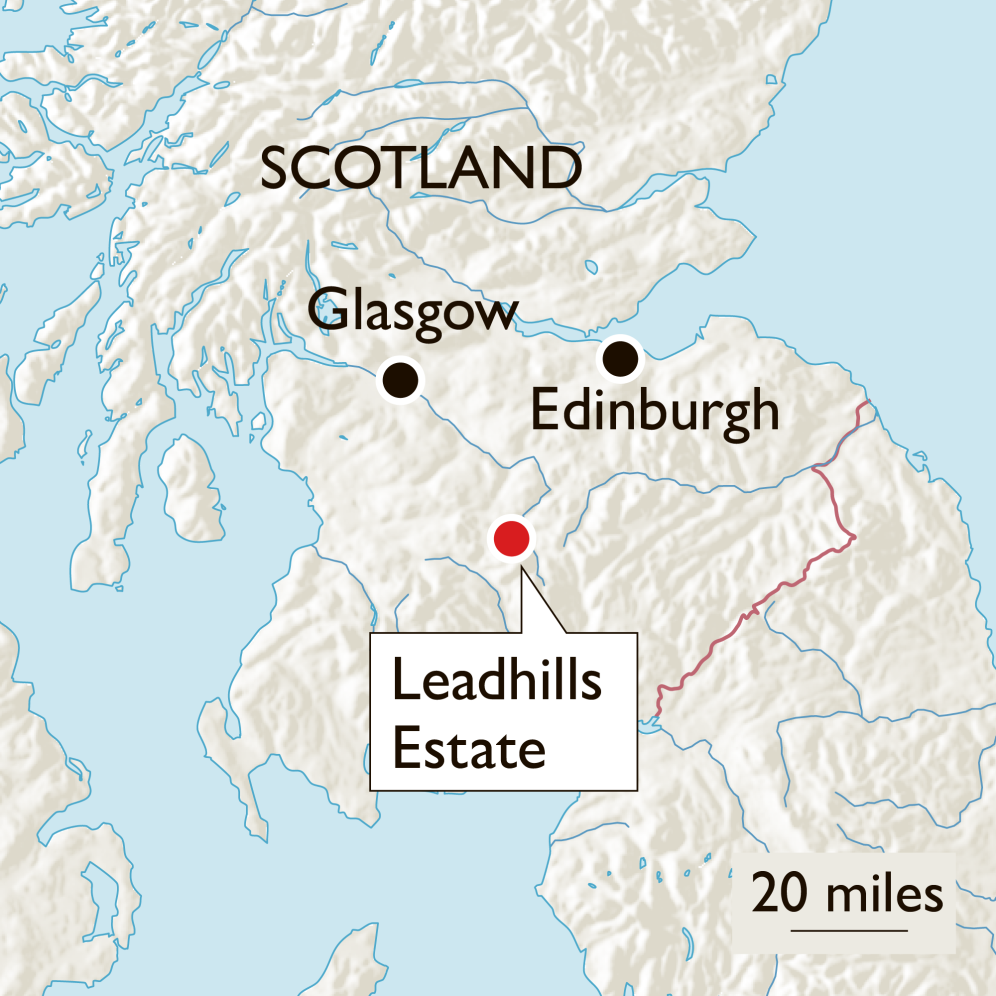
Regular blog readers will be well aware that the notorious Leadhills Estate, a grouse-shooting estate in South Lanarkshire that has been at the centre of police wildlife crime investigations at least 70 times since the early 2000s, is currently serving a three-year General Licence restriction based on ‘clear evidence’ of raptor persecution offences, including the illegal killing of a short-eared owl, two buzzards and three hen harriers that were ‘shot or caught in traps’ on Leadhills Estate since 1 January 2014 (see here) and the discovery of banned poisons on the estate in May 2019 (see here).

That original General Licence restriction was imposed on Leadhills Estate by NatureScot in November 2019 and is valid until November 2022.

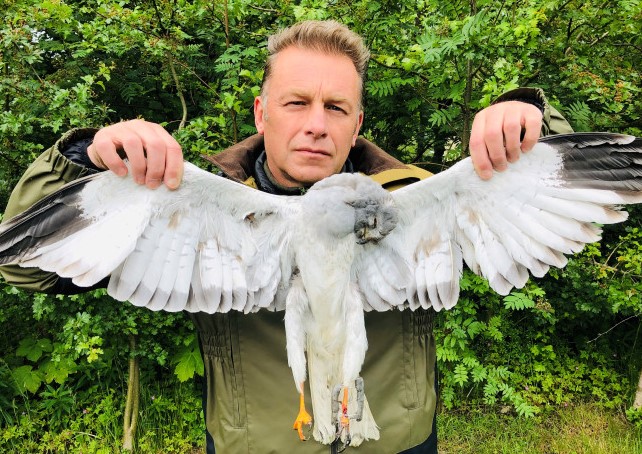
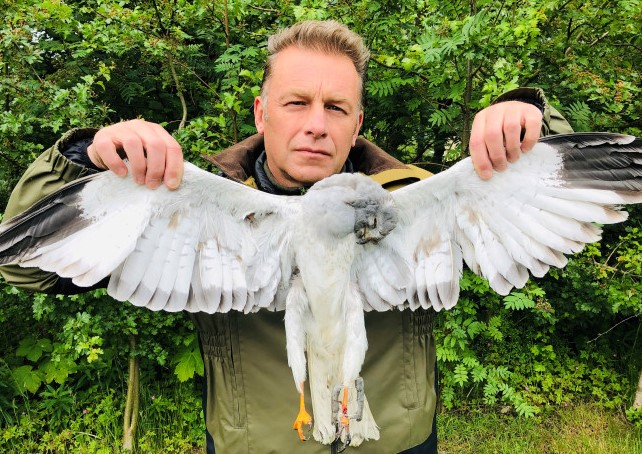
[Chris Packham holds a dead hen harrier. This bird was caught by the leg in an illegally-set trap on the Leadhills Estate grouse moor in May 2019. The trap had been set next to the harrier’s nest and was hidden by moss. The harrier’s leg was almost severed. Unfortunately, extensive surgery could not save this bird. Photo by Ruth Tingay]

However, since that original restriction was imposed on Leadhills Estate in November 2019, further alleged offences have been reported and are the subject of ongoing police investigations (see here) including the alleged shooting of a(nother) short-eared owl by a masked gunman on a quad bike as witnessed by a local resident and his eight year old son in July 2020 (see here) and the discovery of yet another batch of banned poisons, also in July 2020 (here). A satellite-tagged hen harrier (Silver) also vanished in suspicious circumstances on the estate in May 2020 (here), and although NatureScot don’t count missing satellite-tagged raptors as sufficient evidence for a General Licence restriction, the disappearance can be used as supportive evidence if further alleged offences are also being considered.

It’s been over a year since those further alleged offences were reported and we’ve all been waiting to see whether NatureScot would impose a further General Licence restriction on Leadhills Estate. Instead, the licensing team appears to have been focusing on helping out the estate by issuing it with an out-of-season muirburn licence last year (see here) and considering another application from the estate this year (see here). It really beggars belief.

Anyway, NatureScot has finally got its act together and has indeed imposed a further General Licence restriction on Leadhills Estate. Here is the statement on the NatureScot website:

29 September 2021

NatureScot has extended the restriction of the use of general licences on Leadhills Estate in South Lanarkshire until 2023. The decision was made on the basis of additional evidence provided by Police Scotland of wildlife crime against birds.

General licences allow landowners or land managers to carry out actions which would otherwise be illegal, including controlling common species of wild birds to protect crops or livestock.

A restriction of the use of general licences was implemented on Leadhills estate in November 2019, in response to police evidence of crimes against wild birds occurring on the land. This decision extends the period of the existing restriction.

Robbie Kernahan, NatureScot’s s Director of Sustainable Growth, said: “It is hugely disappointing to have to be considering further issues of wildlife crime against wild birds and we are committed to using the tools we have available to us in tackling this. In this case we have concluded that there is enough evidence to suspend the general licences on this property for a further three years. They may still apply for individual licences, but -if granted – these will be closely monitored.

We work closely with Police Scotland and will continue to consider information they provide us on cases which may warrant restriction of general licences. The detection of wildlife crime can be difficult but new and emerging technologies along with a commitment from a range of partners to take a collective approach to these issues will help us stop this from occurring in the future.”

ENDS

NatureScot’s Robbie Kernahan is quoted here as saying the General Licence restriction will apply “for a further three years“, which should take the restriction up to November 2025.

However, when you look at the actual restriction notice on NatureScot’s website, it says the restriction will extend to July 2023.

Eh? That’s not a three-year extension. That’s only an eight-month extension. I sincerely hope this is just a typo and the date should read November 2025.

It’s good to see NatureScot finally get on with this but I have to say that given there’s a need for an extension of the original General Licence restriction on Leadhills Estate, due to further evidence from Police Scotland about ongoing alleged wildlife crime there, doesn’t that demonstrate just how ineffective the General Licence restriction is as a tool for tackling wildlife crime??

I’ve written many times about the futility of this scheme, and have even presented evidence about it to a Parliamentary committee, not least because even when a General Licence restriction has been imposed, estate employees can simply apply to NatureScot for an individual licence to continue doing exactly what they were doing under the (now restricted) General Licence (e.g. see here)!

And although former Environment Minister Paul Wheelhouse, who was responsible for first introducing General Licence restrictions in 2014, considered that it would work as a ‘reputational driver’ (here), I’ve previously shown with several examples how this is simply not the case (e.g. see here) and that a General Licence restriction remains an ineffective sanction.

Nevertheless, it’s all we’ve got available at the moment and on that basis I would like to see NatureScot now get on with making decisions about restrictions on a number of other estates, such as Invercauld Estate in the Cairngorms National Park where a poisoned golden eagle was found dead next to a poisoned bait earlier this year (here).

And Invercauld isn’t the only estate that should be sanctioned, is it, NatureScot?

UPDATE 30th September 2021: Extension of General Licence restriction at Leadhills Estate confirmed as pitiful 8 months (here).

UPDATE 6th October 2021: Leadhills Estate’s reaction to extended General Licence restriction (here).

UPDATE 23rd February 2022: NatureScot refuses to publish details of Leadhills Estate’s general licence restriction appeal (here)

Blatant wilful blindness from Environment Minister Rebecca Pow on illegal killing of birds of prey on driven grouse moors

How about this for blatant wilful blindness from an Environment Minister.

This response to a Westminster parliamentary question on the continued illegal persecution of birds of prey in the uplands is about as disingenuous as it gets. I doubt very much if Rebecca Pow wrote it herself – this’ll be the work of a DEFRA civil servant – but Rebecca Pow has allowed her name to be put to it without even a hint of shame.

[Westminster Environment Minister Rebecca Pow]

Here’s the written question from Fleur Anderson MP (Labour Shadow Minister):

To ask the Secretary of State for Environment, Food and Rural Affairs, what steps he is taking to prevent the killing of (a) hen harriers, (b) golden eagles, (c) peregrines, (d) goshawks and (e) other birds of prey in the uplands and support the recovery of each species’ populations’.

And here is the response from Environment Minister Pow, published in Hansard yesterday (10th September 2021), ironically on the same day that I’d blogged about there being no prosecution for the shooting of five buzzards found shot and buried on a grouse moor in the North York Moors National Park during the first lockdown in April 2020:

All wild birds including birds of prey are protected under the Wildlife and Countryside Act 1981, which provides a powerful framework for the conservation of wild birds, their eggs, nests and habitats. The Government is committed to ensuring the protection afforded to birds of prey is effectively enforced. There are strong penalties for offenders, including imprisonment.

To address concerns about the illegal killing of birds of prey, senior government and enforcement officers have identified raptor persecution as a national wildlife crime priority. Defra sits on the police-led Raptor Persecution Priority Delivery Group, which takes forward activities to raise awareness and facilitate intelligence and incident reporting, leading to increased prevention and enforcement activity. The group focuses on ‘hotspot’ areas of the country (which will include some upland areas) rather than specific species, although the golden eagle, goshawk, hen harrier, peregrine and white-tailed eagle have been identified as being of particular concern.

Additionally, the Hen Harrier Action Plan seeks to secure the long-term future of the hen harrier as a breeding bird in England. It includes measures to stop illegal persecution, and an action to reintroduce the hen harrier in the south of England. The long-term plan was published in January 2016 and we believe that it remains the best way to safeguard the hen harrier in England. This year has seen a further increase in the number of breeding hen harriers in England. 84 chicks fledged from nests across the uplands in County Durham, Cumbria, Lancashire, Northumberland and Yorkshire. These are the highest numbers for hen harrier breeding in England since the 1960s’.

It’s quite obvious that this answer has been designed to pull the wool over the eyes of your average member of the public, assuring the uninformed and the gullible that the Government has this under control and there’s no reason for anyone to be concerned because the Government is ‘committed’ to effective enforcement and the criminals are sent to jail. That would all be fine if there WAS effective enforcement, and that offenders DID get sent to jail for these heinous crimes, but it’s an utter fallacy.

Yes, it’s accurate to say there are strong penalties available for raptor persecution crimes, including imprisonment, but as Minister Pow will know, there’s a huge gulf between there being a provision for this in the legislation and it being applied in real life. For example, when was the last time that a criminal gamekeeper was sent to jail for killing a bird of prey? That’s an easy one to answer – never, in England & Wales. It has never happened. The only time a gamekeeper has received a custodial sentence for killing a bird of prey in the UK was in 2014 when a gamekeeper was filmed clubbing to death a goshawk on the Kildrummy Estate in Scotland two years earlier (see here). It was headline news at the time precisely BECAUSE it was the first ever custodial sentence, and it was the last, too.

It’s also complete deception to claim that the Raptor Persecution Priority Delivery Group (RPPDG) is delivering increased prevention or increased enforcement in the hotspot persecution areas. There isn’t ANY evidence to support such claims. The RPPDG is, in my opinion, a partnership sham, designed to look as though efforts are being made to effectively tackle illegal raptor persecution in England and Wales. It’s been in existence since 2011 and the ‘delivery’ results speak for themselves – so far it has achieved absolutely sod all in terms of contributing towards the conservation of raptors in the UK and instead has frustrated the efforts of those organisations who are genuinely trying to stamp out persecution (e.g. see here).

And as for the so-called Hen Harrier Action Plan – readers of this blog don’t need reminding what an absolute joke this is. It does seem, however, that the Minister needs to be reminded that the illegal persecution of hen harriers on grouse moors is systemic, as demonstrated by the Government’s own commissioned research published in 2019 (here) which showed that satellite-tagged hen harriers are ten times more likely to be killed on land managed for driven grouse shooting than any other type of land management.

Surely it’s not beyond the understanding of the Minister and her aides that the number of chicks fledged since the brood meddling trial began is irrelevant if the slaughter of those birds continues after the fledging period? We know that at least 56 hen harriers have been illegally killed and/or have ‘disappeared’ in suspicious circumstances in the last three years alone (see here for the grim catalogue of death) and this number is set to rise when the police get around to publicising more incidents that have happened this year. Oh, and there hasn’t been a successful prosecution for any of them.

Nothing has changed. Raptors continue to be poisoned, trapped and shot on driven grouse moors and the Westminster Environment Minister’s wilful blindness is responsible for enabling that to continue.

Here’s what Natural England hasn’t told you about this year’s hen harrier brood meddling scandal

The scandalous hen harrier brood meddling trial lurched onwards again this year, with reports that two nests were ‘meddled’ with (i.e. the chicks were removed under a licence issued by Natural England, they were raised in captivity, and were then released back in to the wild, to be illegally killed on a grouse moor somewhere in England, Wales or Scotland, e.g. see here and here).

Regular blog readers will know all about DEFRA’s hen harrier brood meddling trial but for new blog readers, hen harrier brood meddling is a conservation sham sanctioned by DEFRA as part of its ludicrous ‘Hen Harrier Action Plan‘ and carried out by Natural England (NE), in cahoots with the very industry responsible for the species’ catastrophic decline in England. For more background see here.

A blog reader who wishes to remain anonymous sent me this photograph of one of the HH release aviaries on a grouse moor in the Yorkshire Dales National Park in July this year. Look at the state of it! It’s no wonder European countries won’t ‘donate’ hen harriers for a proposed southern reintroduction project if this is how we treat our own supposedly protected species!

The young hen harriers that were taken from their parents and shoved inside this structural monstrosity came from the Swinton Estate in North Yorkshire. I won’t publicise the name of the estate they were removed to in case the young birds are still hanging around there but this estate is within the Yorkshire Dales National Park and although it’s not an estate with a bad reputation for raptor persecution, some of it’s near neighbours are absolute shockers with a long, long, long history of poisoned and shot raptors being found on their grouse moors. God help the four young hen harriers released here.

As a side issue, a condition of the previous brood meddling licence (here) was that it was recommended that ‘Brood managed hen harriers should not be released in sight of burnt heather strips where possible‘. I don’t know if that condition still applies in the current licence (I haven’t seen the latest version) but if it does, it appears to have been ignored, judging by the photograph of the release aviary. Ignoring licence conditions seems to be a running theme when it comes to Hen Harrier meddling, doesn’t it?!

But that’s not the main focus of this particular blog. Something else happened this year during the brood meddling trial and seeing as Natural England aren’t being very forthcoming (surprise, surprise, when are they ever?), I’m going to write about it because I believe this information should be in the public domain, especially as this is supposedly a scientifically-rigorous trial (ha!) and at the end of the five-year trial period, there will need to be a public consultation on any decision Natural England / DEFRA makes about whether brood meddling is wheeled out as a standard (mis)management option. The public should have access to ALL the information, not just the bits that Natural England decides to share.

For example, on 13th August this year Natural England wrote the following about this year’s brood meddling trial:

In 2021, trial interventions were approved at two nests: one in North Yorkshire and one in Lancashire. All eight chicks from these nests have been successfully reared to become healthy fledglings and released‘.

That was it. The full extent of what Natural England thought we ought to know about the brood meddling trial this year. It’s pathetic. We’re not five. We don’t need the fairy story approach, (‘and they all lived happily ever after‘) we want details (albeit not any details that would compromise the safety of the released hen harriers).

We do know a little bit more – Dr Mark Avery and his legal team continue to try to hold Natural England to account on hen harrier brood meddling and Natural England released some more detail to them (see here), but I noted without surprise that Natural England had still not revealed the almighty cock-up that happened at one of this year’s two brood meddled nests.

So here’s what happened, according to numerous sources.

Two nests were brood meddled, one in North Yorkshire (Swinton) and one in Lancashire.

At the Lancashire site, the male was polygynous. In other words, he was providing food for two different females at two different nests. The fieldworkers should have known this because the male had been previously satellite-tagged. One nest was further ahead than the other in terms of breeding chronology and this would be considered the ‘primary’ nest, the other one the ‘secondary’ nest.

When it came to making the decision about which nest to brood meddle, ‘someone’ (and I don’t know who, see discussion below) decided to brood meddle the primary nest, where the chicks were at a more advanced age than the chicks in the secondary nest. So the chicks from the primary nest were removed and taken in to captivity, and the chicks in the secondary nest were left alone.

However, this brood meddling (removal of the chicks) at the primary nest caused such disruption to the male that he immediately took off and flew from the area, abandoning not just the brood meddled nest, but also the secondary nest where his second female was still present with chicks, all of whom were reliant upon that male to provision them with food. He didn’t return – apparently his satellite tag data confirmed he had abandoned all breeding attempts at these sites and had moved on.

A gamekeeper was instructed to provide additional supplementary food for the secondary nest and I understand that all the chicks managed to fledge successfully with this extra support. It would have taken an enormous effort and I suggest that Natural England and DEFRA officials owe that gamekeeper a massive drink because his/her efforts have saved their blushes, as well as those harriers. I can’t imagine the gamekeeper was thrilled about having to spend so much time provisioning these chicks (it’s a beautiful irony) and even if s/he had wanted to do them in, they wouldn’t have had the chance given the panic that a potential nest failure would have caused to everyone involved with the trial and the subsequent attention they’d have paid to that secondary nest. Nevertheless, full credit to the keeper for his/her efforts supporting the chicks to the fledging stage. That was a job well done.

So who decided to brood meddle the primary nest and not the secondary nest? According to the original brood meddling project plan, the decision on which nest to plunder is made collectively by the Project Board:

I’m pretty sure the make-up of the Board no longer looks like this. I understand that Rob Cooke and Adrian Jowitt have both been moved from hen harrier work and are doing something else. Steve Redpath took early retirement so presumably isn’t still involved as a representative from Aberdeen University. Jemima Parry Jones is still involved – she’s the licence holder so is central to all decisions made about brood meddling. Is Adam Smith still at GWCT? He may be, but if he is he’s flying low under the radar these days. Philip Merricks is no longer at Hawk & Owl Trust. Amanda Anderson is still a key player at the Moorland Association but Robert Benson is no longer Chair – that role is currently taken by Lord Masham of, wait for it, the Swinton Estate!

Here’s the flow chart of decision-making that the Project Board must follow, also from the project plan:

I doubt Natural England will offer any voluntary insight in to this year’s calamitous actions but it’ll have to include the details in the annual report the brood meddling team is required to provide, and also report the details to the scientific advisory panel.

It’ll be interesting to see what they make of this on-going fiasco.

Is Natural England bending the rules for Swinton Estate on breach of hen harrier diversionary feeding licence?

Back in April and May this year, I blogged about this spring’s hen harrier diversionary feeding fiasco at Swinton Estate in North Yorkshire after footage was sent to me of two individuals apparently putting out food at an active nest site during a period when it was expressly forbidden to take place (see here and here).

[Grouse moors on the Swinton Estate, North Yorkshire. Photo by Ruth Tingay]

After a lot of digging, and a lot of obfuscation by Natural England (e.g. see here), it was revealed that the estate was not even in possession of a diversionary feeding licence at that time and so the matter has since been passed to North Yorkshire Police who are currently investigating whether an offence has been committed (see here).

I am still waiting to hear about North Yorkshire Police’s conclusions and will report back in due course.

Meanwhile, after further digging and a series of FoIs to Natural England, it became apparent that Swinton Estate had also allegedly breached it’s hen harrier diversionary feeding licence in 2019 (see here).

I learned through an FoI response from Natural England that in 2019 the Swinton Estate had again been providing diversionary feeding for breeding hen harriers at a period in the breeding cycle (the incubation period) when it was expressly forbidden by the terms of the licence. The estate seemed oblivious to this breach because it openly admitted it on its licence return to Natural England.

So in June I submitted a further FoI to Natural England to ask about this breach of the 2019 licence and whether it had taken any enforcement action against the estate. Bear in mind that Natural England warns all potential licence users that:

Anyone acting under the authority of this licence must follow the advice on diversionary feeding of hen harriers on grouse moors in northern England. If you do not follow this advice you may be in breach of this licence and are at risk of enforcement action‘.

In July, Natural England replied and told me that due to the ‘complexity’ of my request, it required a further 20 working days to respond. This wasn’t the first time NE has struggled with a very straightforward information request on this subject (e.g. see here) and I doubt it’ll be the last.

In August, after taking 40 working days to respond, here is how Natural England answered my questions about the apparent breach of the 2019 licence:

Me: Please can you look at the attached [2019] licence return from Swinton Estate relating to the diversionary feeding of hen harriers. According to the details written on this return, it would appear that Swinton Estate attempted diversionary feeding during the incubation period, which as you’ll be aware was contrary to the terms of the licence at the time.

Please can you advise (a) did anyone at NE notice this when the licence return was submitted?

Natural England response: No, this was not identified at the time the return was submitted.

Me: (b) was there any enforcement action as a result of this apparent breach?

Natural England response: No

Me: (c) If so, what was it, please?

Natural England response: N/A

Me: (d) If no enforcement action, please explain why not.

Natural England response: The breach was not identified. In any event, a breach of a licence condition is not of itself an offence under the Wildlife and Countryside Act 1981 (as amended) (WCA) and no evidence or intelligence has been received as to the disturbance of Schedule 1 birds that might have given rise to an offence under section 1 of the WCA.

Me: (e) If there wasn’t any prior enforcement action will there now be any and if so, what will it be?

Natural England response: As above, the breach of a licence condition is not of itself an offence under the WCA and there remains no evidence or intelligence as to the disturbance of birds that might give rise to an offence under section 1 of WCA. Furthermore, young within the nest in question successfully fledged. The condition in question no longer applies to the Class Licence based on best available evidence demonstrating how diversionary feeding interventions can be used to benefit hen harriers. Natural England will however be writing to the Estate to remind them of the importance of adhering to the terms and conditions of any licence on which they propose to rely.

I don’t know why it took Natural England 40 working days to provide these basic answers. Perhaps it thought I’d lose the will the live whilst waiting?

Needless to say, I’m fascinated by NE’s claim that disturbing breeding hen harriers by feeding them during the incubation period, which was expressly forbidden by the terms of the licence, does not amount to an offence under section 1 of the WCA. Specifically, Section 1(5)(a) of the WCA states:

If any person intentionally or recklessly disturbs any wild bird in Schedule 1 while it is building a nest or is in, on or near a nest containing eggs or young, he shall be guilty of an offence.

I’ve written back to Natural England to ask it to explain why this particular licence breach does not constitute an offence.

I’ve also written to Natural England to ask what enforcement measures it CAN implement if somebody breaches the terms and conditions of the licence. It threatens licence users with ‘enforcement action’ for breaches, but it’s apparent from the FoI response that NE doesn’t even check for previous licence breaches when issuing replacement licences!

Natural England says that it would ‘be writing to the Estate to remind them of the importance of adhering to the terms and conditions of any licence on which they propose to rely‘, but what’s the point of issuing threats if (a) you’re not going to even check for licence breaches and (b) even when a breach is pointed out to you, you don’t bother taking any ‘enforcement action’ anyway?!

Natural England argues in its response that ‘The [licence] condition in question no longer applies to the Class Licence based on best available evidence demonstrating how diversionary feeding interventions can be used to benefit hen harriers‘. That’s totally irrelevant. The licence condition [no diversionary feeding during incubation period] WAS a condition in 2019 and the estate evidently breached it. Just because Natural England has since slyly changed the licence conditions (in response to awkward questions being asked about repeated breaches, apparently it is now acceptable to provide diversionary food during the incubation period!), it doesn’t mean that a breach didn’t take place under the 2019 licence terms and conditions!

To be clear, I’m not so much interested in the Swinton Estate’s actions here. Yes, it’s of concern that it apparently can’t read/comprehend the simple terms of a licence (what other terms & conditions might it be breaching?), and that this has happened in multiple years, not just as a one-off mistake, but the estate’s actions were probably not malicious towards the breeding harriers (although it could be argued that repeated disturbance of a breeding attempt could cause a breeding failure). In my view, Swinton Estate is keen for the hen harrier brood meddling trial to work (which is why it’s involved with diversionary feeding) because the grouse-shooting industry wants brood meddling to be rolled out in future years as a ‘legal’ method of removing harriers from their grouse moors, so the estate appears to be tolerating the harriers, for now at least, as part of the brood meddling trial.

So rather than focus on the estate, I’m much more interested in Natural England’s behaviour and its apparent tolerance of licence breaches and its penchant for rule-bending in pursuit of its shameful hen harrier brood meddling trial (oh, and its acceptance of a £10K bung from BASC with an attached gagging order preventing Natural England from saying anything derogatory about either BASC or the hen harrier project!!!).

This hen harrier brood meddling trial is supposedly underpinned by rigorous scientific parameters, although these have been challenged in the courts by Dr Mark Avery and the RSPB (appeal hearing was in January 2021 but eight months on and the court decision is still awaited!). If Natural England can’t be trusted to take action on apparent licence breaches, what faith can we have in its adherence to the scientific rules of the trial? Can we trust Natural England not to bend the rules?

I’ll report back when Natural England responds to my latest FoI request. On previous form, that will probably be in November!

It’s Hen Harrier Day! Live broadcast starts at 10am

It’s Hen Harrier Day, the 8th year this event has been part of the UK’s conservation scene.

Covid restrictions have meant that once again the event has had to move online, but the upside is that this provides more opportunity to reach a wider audience.

This year Wild Justice has put together the programme and Chris Packham and Megan McCubbin will be hosting the live broadcast from 10am to 11.30am (click here to watch). They’ll be joined by a wide variety of guests and contributors discussing the problems with current upland management and how these issues could be addressed.

There’ll be plenty of opportunities for you to get involved, whether that’s bidding for some fantastic original artwork (including a piece by Jim Moir [Vic Reeves] no less!), buying a t-shirt, or signing the Call for Action to your local parliamentary representative. All proceeds will go to Wild Justice and its conservation campaign work, including work to protect the hen harrier.

Stand by for an eventful show!

CLICK HERE TO WATCH

[Female hen harrier, photographed by Laurie Campbell]

Opportunity for Prince Harry to blow the cover of the hen harrier killers

The ‘wall of silence’ maintained by many in the grouse-shooting industry to protect the identities of the raptor killers within their ranks is a well-known phenomenon. It’s been likened to the Mafia’s omertà, the code of silence about criminal activity and a refusal to provide evidence to the police.

With news that Prince Harry has agreed a publishing deal with Random House to write his memoirs, including ‘the mistakes made, the lessons learned’, wildlife campaigners have been wondering whether he will use it to reveal what exactly went on at Dersingham Bog near Sandringham back in 2007 when he and his mate William van Cutsem were out shooting with a Sandringham Estate gamekeeper when a witness alleged two hen harriers had been shot. Harry and van Cutsem were interviewed by the police and denied all knowledge and no hen harrier corpses were found.

An article in the Guardian this last weekend examined the possibility of Harry using his memoirs to perhaps have more to say about not only this incident, but also to distance himself from the wider criminal link between driven grouse shooting and hen harrier persecution.

You can read the Guardian article in full here

iNews also carried a shortened version of the article here

It would have been quite good had the journalist not got his figures mixed up in this one paragraph:

Hen harriers have been illegally targeted particularly on upland moors because they prey on red grouse, for which there is a lucrative driven shooting industry on the moors. They virtually ceased breeding in England in the early 2000s because of persecution. They have since recovered to an estimated 330 pairs, but remain one of the rarest and most persecuted raptors in the UK‘.

If only hen harriers HAD recovered to an estimated 330 pairs in England! Sadly we are still a very long way from coming anywhere close to that number (unless DEFRA’s hen harrier brood meddling conservation sham has turned out to be extraordinarily good!).

What the journalist should have said was:

England has sufficient habitat to host at least 330 pairs of hen harriers but due to persistent illegal persecution by the grouse shooting industry (e.g. at least 56 hen harriers killed/suspiciously vanished in the last three years alone) we haven’t even got 10% of that number breeding. You can find out more about this scandal at this weekend’s Hen Harrier Day‘.

Hen Harrier Day 2021 takes place this Saturday (7th August 2021). You can sign up for notifications of Wild Justice’s online event here.

Hen Harrier Day 2021 (Saturday, 7th August)

Hen Harrier Day, established in 2014 as a way to raise public awareness about the widespread killing of hen harriers on the UK’s driven grouse moors, is now entering its 8th year!

In previous years supporters have organised events at various venues across the country where people have gathered at rallies to listen to speeches by campaigners, conservationists, politicians, police officers, educators, film makers and many others. Last year, the pandemic forced us all online instead and we’ll be doing the same again this year.

In the run up to this year’s Hen Harrier Day, there will be an additional online event on Sunday 1st August, organised by the charity Hen Harrier Action. You can find out about that event here.

Hen Harrier Day itself takes place on Saturday 7th August, scheduled as always to take place the weekend before the start of the grouse-shooting season on the Inglorious 12th August.

Wild Justice is organising a live, online event bringing together a wide range of contributors from across academia, conservation and the world of campaigning, to deliver what it hopes will be an interesting, informative and entertaining programme. Hosted by the brilliant pairing of Chris Packham and Megan McCubbin, in addition to live interviews there will also be films pre-recorded recently by Wild Justice & colleagues in northern England and Scotland.

Hen Harrier Day 2021 is a free event, as ever, and it’s recommended you sign up for notifications as the big day approaches, to find out more about the programme of events and who’s on, and at what time.

For more information about the event and to sign up, please click here.

Natural England accidentally lets slip more alleged shenanigans with hen harriers at Swinton Estate

I can’t decide whether I think Natural England is incompetent or institutionally corrupt. Maybe it’s both? Have a read and see what you think.

Following on from the blog I wrote on Monday where it had become apparent that Natural England had altered the terms of its hen harrier diversionary feeding licence to permit the feeding of hen harriers during the incubation period instead of the nestling period, and that this was done at exactly the same time that North Yorkshire Police were investigating the Swinton Estate for alleged disturbance of hen harriers after an employee, accompanied by a Natural England employee, was observed apparently diversionary feeding hen harriers during the incubation period (here), there are now further developments.

According to a news article in today’s Ends Report, Natural England has claimed that it rewrote the guidelines “as a matter of course, not as a reaction to the news of the nest at Swinton Estate being fed earlier than usual”.

I’m going to reproduce the Ends Report news article here because it contains a fascinating statement from Natural England which leads on to more questions about what, exactly, has been going on at Swinton Estate over the last few years.

Here’s the article:

Natural England has denied it changed its guidance on the feeding of hen harriers after the police launched an investigation for the alleged disturbance of breeding hen harriers through diversionary feeding without a licence.

If licensed by Natural England, landowners are allowed to provide substitute food to hen harriers near their nesting sites to reduce predation of red grouse.

One of the conditions of such licences had been that diversionary feeding may only begin once the hen harrier’s eggs have hatched. 

But in April, two individuals were filmed at Swinton Estate grouse moor in North Yorkshire, apparently placing out food for the breeding adults as part of a diversionary feeding scheme. This was during the incubation stage, when the hen harrier’s eggs had not yet hatched.

Raptor conservationist Ruth Tingay lodged a Freedom of Information request with Natural England, which revealed that Swinton Estate did not have a diversionary feeding licence in 2021.

According to Natural England, this meant that technically there has not been a breach of the CL25 licence, “because a licence hadn’t been issued”. 

Therefore, the wildlife regulator said it was not in a position to take enforcement action and the case was instead passed to North Yorkshire Police for an investigation into alleged offences under the Wildlife & Countryside Act.

However, Natural England then changed its guidance in May to allow diversionary feeding during the incubation period.

Tingay said Natural England had been “sneaky” in “rewriting the rules at the same time as your star grouse shooting estate is under police investigation for alleged hen harrier disturbance because hen harriers were being fed during the incubation period”.

However, responding to these allegations, Natural England said the guidelines were changed “as a matter of course, not as a reaction to the news of the nest at Swinton Estate being fed earlier than usual”.

The regulator said that the guidelines were changed in relation to  the welfare of the birds, and that new evidence suggests that feeding once the birds had a full clutch of eggs “did not increase the risk of desertion”. 

According to Natural England, the research – funded by NatureScot – shows that even installing a camera 30cm from a nest with eggs or chicks did not result in any failures that could be attributed to the nest visits.

A Natural England spokesperson said that the nest at Swinton Estate that was fed early has now fledged five chicks, and that the estate has helped feed 28 chicks successfully in recent years.

Feeding earlier in the breeding process helps get the young birds off to a good start in their lives,” they added.

ENDS

First of all, I’d like to see ‘the research’ to which Natural England refers and how it has been applied to an assessment of disturbance from diversionary feeding. As far as I’m aware, installing a nest camera is a one-off event and once in place, depending on the type and model, shouldn’t need to be re-visited during the breeding season if the camera card has sufficient memory, but perhaps at the most, once or twice. Diversionary feeding, however, is a repeated, daily event that can occur every day for several months and is therefore much more of a disturbance risk than a one-off installation of a nest camera. The two activities are not comparable in any way, shape or form.

Secondly, I am especially interested in Natural England’s claim that ‘Swinton Estate has helped feed 28 [hen harrier] chicks successfully in recent years’.

Why is that of interest? Well, because the numbers just don’t add up.

In separate FoIs to Natural England I had previously asked them for copies of the diversionary feeding licence CL25 return from Swinton Estate from 2019 and 2020. These were the two freedom of information requests that Natural England considered ‘too complex’ to be able to respond to within the standard 20 working days and they added a further 20 working days to allow time for dealing with this ‘complexity’ (see here).

I’ve since had replies from Natural England and here’s what they told me:

Swinton Estate was not registered for the use of a diversionary feeding licence in 2020 so there is no licence return. [Yep, that’s really complex, I can see why NE wanted 40 working days to tell me about it].

It’s a very interesting response because my sources allege that Swinton Estate WAS diversionary feeding a hen harrier nest in 2020 after the nest on a neighbouring estate was brood meddled. I have submitted a further FoI to Natural England on this – did Swinton Estate diversionary feed hen harriers in 2020 and if so, was Natural England aware of it and if so, what, if any, enforcement action was taken? If no enforcement action was taken, why not?

Swinton Estate did diversionary feed hen harriers in 2019 and did submit a licence return, and here is a redacted copy of it:

There are several things to note:

There is no registration number, but approval to use the CL25 licence was approved by [redacted]. Who was that, and why wasn’t the estate registered in the normal way?

At the nest where diversionary feeding took place, the licence return states, ‘unsuccessful during the incubation period’. Does this mean that Swinton Estate was diversionary feeding during the incubation period – which would have been a breach of the licence conditions in 2019? And if so, did anyone at Natural England pick up on this from the licence return and was there any enforcement action? If not, why not? I have submitted further FoIs to ask about this.

You’ll note then, that according to Natural England’s paperwork, Swinton Estate diversionary fed five hen harrier chicks in 2019, none in 2020, and five this year according to the quote in the Ends Report article. That’s ten hen harrier chicks in total.

I know from a further FoI request to Natural England that Swinton Estate has not registered to use a CL25 licence other than in 2019 and the licence it has belatedly received for 2021.

So how come Natural England told the Ends Report that ‘Swinton Estate has helped feed 28 [hen harrier] chicks successfully in recent years’???

Either somebody at Natural England can’t count, or this estate, owned by Lord Masham, Chair of the Moorland Association, has been diversionary feeding without a licence for a number of years. Has Natural England been turning a blind eye?

Let’s see what the current batch of FoI requests throw up.

Wild Justice challenges Natural England’s plans to release hen harriers in southern England

Regular blog readers will know that for the last five years, Natural England has been planning a so-called ‘reintroduction’ of hen harriers to southern England as part of DEFRA’s ludicrous Hen Harrier Action Plan (see here for an earlier blog and some earlier key posts).

Ever since it was proposed, I and a number of others have been arguing that it is just another greenwashing conservation sham, aimed to divert attention from the real issue threatening the hen harrier population – the continued illegal killing on driven grouse moors.

[A brilliantly apt cartoon by Gerard Hobley]

Getting detail about the proposed ‘reintroduction’ plans from Natural England has been like pulling teeth; they’ve dodged and ducked questions at every turn. However, in March this year the latest round of FoI requests revealed that Natural England was now planning on getting hold of some injured, un-releasable hen harriers from Europe and using them in a captive breeding programme to produce young birds for release on Salisbury Plain (see here). This is believed to be a direct result of potential donor countries refusing to give healthy hen harriers to the UK because the UK clearly can’t look after the hen harriers it’s already got (at least 56 hen harriers have been confirmed illegally killed or have vanished in suspicious circumstances in the last three years alone, most of them on or close to a driven grouse moor).

One of the main objections to Natural England’s reintroduction proposal continues to be the agency’s apparent denial that raptor persecution is a serious threat to any released birds. This denial is, in my opinion, a clear breach of the IUCN’s reintroduction and conservation translocation guidelines (see here), whereby the cause of the species’ extirpation and any ongoing threats need to be addressed before any birds are released.

Campaign group Wild Justice has also been looking at this issue and yesterday sent a letter to Natural England to challenge the poor quality of the scientific evidence that Natural England has provided in its reintroduction assessment document.

The letter from Wild Justice can be read on their blog (here) and I’d thoroughly recommend you take a look to understand just how rubbish Natural England’s scientific assessment is. So rubbish, in fact, that Natural England has cited papers and books that don’t even cover the [flawed] scientific arguments it’s making!

Wild Justice will be considering whether formal legal action is required against Natural England once NE has had an opportunity to respond to questions posed in Wild Justice’s letter.

Natural England quietly alters terms of diversionary feeding licence (& hopes we won’t notice)

Further to Friday’s news that the Swinton Estate is under police investigation for the alleged disturbance of breeding hen harriers through diversionary feeding without a licence (see here), there’s been a further development.

You might remember from an earlier blog (here), that one of the conditions of Natural England’s class licence (CL25) permitting the use of diversionary feeding for hen harriers is that diversionary feeding may only begin once the hen harrier’s eggs have hatched. Diversionary feeding is not permitted during the incubation period (which is when Swinton Estate is alleged to have been providing diversionary food).

Well guess what? Natural England has changed the rules and surprise, surprise, diversionary feeding is now permissible during the incubation period!

Imagine that!

And imagine re-writing the rules at the same time as your star grouse shooting estate (apparently accompanied by a Natural England employee) is under police investigation for alleged hen harrier disturbance because hen harriers were being fed during the incubation period!

And imagine re-writing the rules and not announcing the rule change!

Imagine hoping that nobody would notice!

Sneaky, Natural England, very, very sneaky.

What the CL25 licence said about when diversionary feeding was permissible, prior to 13th May 2021:

What the CL25 licence says about when diversionary feeding is permissible, from 13th May 2021:

Gosh, it’s almost as though Natural England is making up the rules as it goes along, isn’t it? I am just marvelling at the breath-taking duplicity of this Government agency.

Having said all that, unless there’s an unseen commencement clause in the newly-written licence conditions (and nothing would surprise me because Natural England just cannot be trusted on anything Hen Harrier related), this new condition shouldn’t be applied retrospectively so the police investigation shouldn’t be derailed.

It’s also useful to note that both the previous licence and the re-written licence state that the female hen harrier shouldn’t be disturbed at the nest during this period. It would appear, looking at the footage, that the Swinton Estate employee and the Natural England employee still have some explaining to do.

I’ll be writing more on diversionary feeding activities in previous years at Swinton in a separate blog…..

UPDATE 17th June 2021: This blog article led to a follow-up article in the Ends Report here

UPDATE 17th June 2021: Natural England accidentally lets slip more alleged shenanigans with hen harriers at Swinton Estate (here)