Three more satellite-tagged hen harriers go missing in suspicious circumstances

Three more satellite-tagged hen harriers have gone missing in suspicious circumstances, according to the most recent data published by Natural England just before Xmas.

One went missing in July 2021, one in August and one in September. Neither the police or Natural England have issued any media press releases or made any public appeals for information about any of them. Instead, the grouse-shooting industry was given free-rein to publish propaganda all summer and autumn about ‘how hen harriers are thriving in the English uplands’, without any of the regulatory authorities challenging this rhetoric with any vigour.

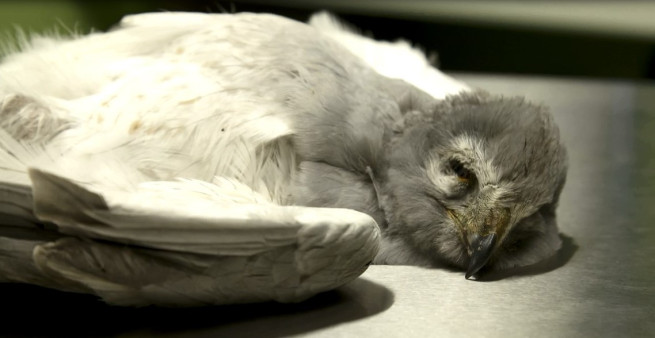
[A young hen harrier. Photographer unknown]

Periodically Natural England publishes a table showing the fates of hen harriers it has satellite-tagged. These updates are infrequent and typically occur two to three times a year. In the latest (December) update, the following three hen harriers are listed as ‘missing, fate unknown’:

Hen Harrier Asta (female), tagged on 10th July 2020 at ‘Northumberland 3’ site. The date of last contact is given as 24th July 2021 in the North Pennines. The site location is given as ‘Site confidential’.

Hen Harrier Josephine (female), tagged on 30th June 2021 at ‘Northumberland 2’ site. The date of last contact is given as 14th August 2021 in Northumberland. The site location is given as ‘Site confidential – ongoing’.

Hen Harrier R2-F-1-21 (female), a brood meddled chick tagged on 20th July 2021 from site location ‘BM R2 Cumbria’. The date of last contact is given as 24th September 2021 in Northumberland. No specific site information is given and the comments section states ‘searches ongoing’.

These disappearances were mentioned in a Natural England blog which was published at the same time as the December data update. The blog is attributed to Dave Slater, Director for Wildlife Licensing and Enforcement Cases at NE, although I don’t think he wrote it – it’s quite a different style when compared with his previous missives. Anyway, these three missing hen harriers are mentioned in the blog, although they’re not exactly given headline prominence – this paragraph appears towards the end of the blog:

You’ll also note that the tags on three of this year’s seven brood meddled hen harrier chicks have stopped transmitting. One of these (Hen Harrier R2-F-1-21) is one of the three ‘missing fate unknown’ harriers I mentioned at the top of this blog. The other two brood meddled chicks have been found dead and their corpses retrieved and sent for post mortem. Those two are:

Brood meddled male Hen Harrier R2-M2-21, tagged on 20th July 2021 from nest site ‘BM R2 Cumbria’. The date of last contact is given in NE’s data table as 27th October 2021 and the location is given as ‘Cumbria, site confidential, hen harrier roost site’. The notes section says, ‘Recovered dead 28th October 2021, awaiting PM results’.

Brood meddled male Hen Harrier R2-M3-21, tagged on 20th July 2021 from nest site ‘BM R2 Cumbria’. The date of last contact is given as 27th October 2021 and the location is given as ‘County Durham’. The notes section says, ‘Recovered dead 28th October 2021, awaiting PM results’.

These two dead brood-meddled hen harriers are also mentioned in Natural England’s blog as follows:

It seems strange that the post-mortem results were not yet available by the time the Natural England blog was published on 15th December, given that both corpses were retrieved some seven weeks earlier.

I was also surprised to see the statement, ‘The finding circumstances did not suggest that the birds were illegally killed‘. Yeah, I think the same was said about Bowland Betty, the hen harrier found dead on a grouse moor at Swinton Estate, where the cause of death was only revealed after a pioneering forensic examination by scientists at the University College London Institute of Orthopaedics and Musculoskeletal Science, which found a tiny fragment of lead at the site of a leg fracture, confirming that she had been shot (see this scientific peer reviewed paper published in the journal Veterinary Record in 2015: hopkins-et-al-2015_bowlandbetty_vetrecord and see here for a good laugh at the Countryside Alliance’s ‘expert’ opinion).

I might be wrong of course, but this latest statement from Natural England looks suspiciously like yet another damage-limitation exercise. I’ll be following up on those two mortem results.

In the meantime, it just leaves me to update the very long list of hen harriers that have been confirmed as illegally killed or suspected to have been killed since 2018, mostly on or close to driven grouse moors. A pattern of criminality that has been obvious to many of us for years – and has been demonstrated scientifically with Natural England’s own data – see here.

I’ll add the link here when I’ve written that blog.

UPDATE 2nd January 2022: 60 hen harriers confirmed illegally killed or ‘missing’ since 2018, most of them on or close to UK grouse moors (here)

Tony Juniper reappointed as Natural England Chair for second term

Press release from DEFRA on 21 December 2021:

Tony Juniper CBE reappointed as Natural England Chair

Environment Secretary George Eustice today confirms Tony Juniper CBE has been reappointed as Chair of Natural England.

The Environment Secretary, George Eustice, has today (21 December) confirmed that Tony Juniper CBE has been reappointed as Chair of Natural England for a second term. Tony Juniper’s second term will be for three years and will run from 23 April 2022 to 22 April 2025.

Chair of Natural England, Tony Juniper, said:

I am honoured to be reappointed as Chair of Natural England. Our vital role in defending and enhancing our nation’s natural environment has never been more important.

Since I came to lead Natural England in 2019 we have made significant progress in restoring energy and direction to the organisation, created a clearer strategic plan and mission and secured a major increase in resources to implement it. We have made strides toward realising England’s ambition to create a Nature Recovery Network, supported the landmark Environment Act, declared new National Nature Reserves, helped the public connect with nature, advised government on nature-based solutions to climate change and how best to join up new farming policy with nature recovery, among many other things.

Looking to the future and there is a lot to do, and in this second term my focus will be even more firmly on the delivery of the Government’s ambitious goals for Nature recovery, including implementing biodiversity net gain, delivering programmes for key habitats, such as peatlands, gearing up species recovery programmes, initiating more landscape-scale nature projects, supporting government to deliver nature-based solutions to combat climate change and implementing new land management schemes, and harnessing all of that to establish the Nature Recovery Network which is so vital for overall success.

I want to thank all of our brilliant staff, partners and stakeholders for their support and dedication, and I look forward to continuing to work together to deliver the biggest possible positive impact for Nature that we can“.

Environment Secretary, George Eustice, said:

Tony has provided strong leadership to Natural England, bringing passion and a wealth of experience to the organisation, and I am pleased he will continue as Chair for a second term.

Natural England continues to play a key role in delivering the 25 Year Environment Plan, and I look forward to working closely together as we implement the Environment Act, build back greener from the pandemic and restore nature across the country“.

The reappointment has been made in accordance with the Ministerial Governance Code on Public Appointments and all appointments are made on merit and political activity plays no part in the selection process.

There is a requirement for appointees’ political activity (if significant) to be made public. Tony has declared that he has not taken part in any significant political activity in the past five years.

ENDS

In addition to this press release, Tony Juniper has published a blog where he reflects on his first term in post (see here).

Of particular interest to this blog is this bit about ongoing raptor persecution, particularly of hen harriers:

Linked with this [progress] has been the challenge of establishing the right mix of actions to assist the recovery of species such as Hen Harriers. These birds have suffered from persecution, to the point where their recovery, and indeed survival as a breeding species in England, has been in doubt. In the midst of highly polarized views, we have nonetheless for the last three years seen increasing breeding success in the English uplands, which I hope is a trend that will continue, despite setbacks seen in the continuing illegal killing of these birds‘.

Christ. How many times does this need saying? Increased breeding success is utterly, utterly pointless if those young hen harriers are subsequently killed by Natural England’s so-called ‘partners’ when the harriers venture anywhere near a grouse moor, which is exactly what’s still happening. At least 57 of them in the last three years (see here) and that figure has since increased…..that’s another blog to write.

Incidentally, talking of hen harriers and Natural England’s failure to protect them, there’s an excellent guest blog that’s well worth reading on Mark Avery’s blog today (see here).

Natural England refuses to comment on whether hen harrier had its wings ripped off in horrific persecution incident

On 17th December 2021, I blogged about how Natural England (NE) had been keeping a terrible, terrible secret about the gruesome fate of one of its satellite-tagged hen harriers earlier this year (see here), preferring instead to sit back and watch its so-called ‘partners’ in the grouse-shooting industry claim false credit for ‘protecting’ this species.

I guess that’s what happens when NE accepts a £10K bung from grouse-shooting industry reps on condition that NE doesn’t publicly criticise them (see here). So much for NE being an independent regulator, eh?

In that pre-Xmas blog I asked NE to make a statement about this particular crime and I suggested they may like to include a comment about whether they thought the hen harrier’s wings had been ripped off while she was still alive, based on the evidence in NE’s possession.

You’ll note I was careful not to reveal any information in that blog that could potentially affect a police investigation, i.e. tag number, bird’s name, location of incident, habitat type, etc.

Natural England didn’t respond directly on the blog but instead published a comment on Twitter on 20th December in response to Chris Packham’s request for information:

This is a complete cop-out by Natural England.

Yes, there is indeed an on-going police investigation but it’s going nowhere, just like the other 57 police investigations into the illegal killing of hen harriers in the last three years (see here).

This particular investigation began over 9 months ago. Nobody has been interviewed, let alone arrested or charged, and the likelihood of a prosecution is precisely zero. That’s not necessarily the result of police ineptitude; as regular blog readers will be all too painfully aware, these crimes are notoriously difficult to prosecute given the remoteness of the location and the lack of witnesses, although in this case the police do have some explaining to do – details on that will be forthcoming in due course.

Saying nothing by hiding behind the excuse of a live police investigation is simply a convenient cover for Natural England not to have to admit that its hen harrier brood meddling trial is a conservation sham because hen harriers are still being brutalised by the industry with which NE has jumped in to bed.

There is absolutely no reason whatsoever why NE cannot make a statement about this latest horrific crime – it can easily be done without compromising the police investigation.

Instead, we got this from NE Chairman Tony Juniper on Xmas Eve:

I intend to write more about this latest persecution crime in the near future.

UPDATE 7th March 2022: Natural England still silent, apparently on police orders, about hen harrier whose wings were torn off (here)

UPDATE 25th August 2022: Hen harrier’s ‘wings removed’ & its satellite tag fitted to a crow in sick ploy to disguise the crime (here)

Hen harrier update – Natural England has been keeping a terrible, terrible secret

Natural England has been keeping a secret.

A terrible, terrible secret about one of its satellite-tagged hen harriers.

I’ve been waiting all year for Natural England to inform the public about what has happened.

I waited in the spring, but there was no news.

I looked at Natural England’s summer update on its satellite-tagged hen harriers, published in July, but Natural England said nothing was amiss with this bird.

I watched in August as the grouse-shooting industry paraded its hen harrier propaganda throughout the media, claiming that hen harriers were being worshipped by gamekeepers or something equally as implausible. Natural England said nothing to challenge that view, despite knowing the grisly fate of one of its tagged hen harriers.

I read an article in the Guardian a couple of weeks ago where gamekeepers were being ‘lauded’ as the hen harrier’s ‘friend’ by a straight-faced Natural England employee (Stephen Murphy), who also claimed that hen harrier Bowland Betty, who had been found dead with shotgun injuries on a grouse moor, had been shot away from the grouse moor, not on it – a statement for which he has absolutely no evidence whatsoever!

Now its December and two days ago Natural England published another update about its satellite-tagged hen harriers. Several more have apparently vanished this year, which is no surprise given we know that at least 57 have been killed/vanished in the last three years, but I’ll come back to an analysis of these latest victims in the New Year.

Right now I’m more interested in whether Natural England would say anything about the fate of this particular bird.

It hasn’t.

Sorry, but I am not prepared to sit and watch this pantomime any longer.

The authorities need to come clean and admit what has happened here. Cover-ups don’t instil confidence and besides the public has a right to know what is happening to these hen harriers, and especially to those that are fitted with public-funded tags.

Over to you, Natural England, and you might want to include a statement about whether you believe this harrier’s wings were pulled off, perhaps when she was still alive, based on the evidence you have.

UPDATE 29th December 2021: Natural England refuses to comment on whether hen harrier had its wings ripped off in horrific persecution incident (here).

UPDATE 7th March 2022: Natural England still silent, apparently on police orders, about hen harrier whose wings were torn off (here)

UPDATE 25th August 2022: Hen harrier’s ‘wings removed’ & its satellite tag fitted to a crow in sick ploy to disguise the crime (here)

Leadhills Estate loses appeal over extension to General Licence restriction

Regular blog readers will be well aware that the notorious Leadhills Estate, a grouse-shooting estate in South Lanarkshire that has been at the centre of police wildlife crime investigations at least 70 times since the early 2000s, is currently serving a three-year General Licence restriction based on what NatureScot described as ‘clear evidence’ of raptor persecution offences, including the illegal killing of a short-eared owl, two buzzards and three hen harriers that were ‘shot or caught in traps’ on Leadhills Estate since 1 January 2014 (see here) and the discovery of banned poisons on the estate in May 2019 (see here).

That original General Licence restriction was imposed on Leadhills Estate by NatureScot in November 2019 and is valid until November 2022.

A General Licence restriction can be imposed by NatureScot when there is sufficient evidence of wildlife crime on an estate but insufficient evidence for the police to charge a named individual. Leadhills Estate has denied all knowledge of any wildlife crime on its land.

[Chris Packham holds a dead hen harrier. This bird was caught by the leg in an illegally-set trap on the Leadhills Estate grouse moor in May 2019. The trap had been set next to the harrier’s nest and was hidden by moss. The harrier’s leg was almost severed. Unfortunately, extensive surgery could not save this bird. Photo by Ruth Tingay]

Since that original General Licence restriction was imposed on Leadhills Estate in November 2019, further alleged offences have been reported and are the subject of ongoing police investigations (see here) including the alleged shooting of a(nother) short-eared owl by a masked gunman on a quad bike as witnessed by a local resident and his eight year old son in July 2020 (see here) and the discovery of yet another batch of banned poisons, also in July 2020 (here). A satellite-tagged hen harrier (Silver) also vanished in suspicious circumstances on the estate in May 2020 (here), and although NatureScot don’t consider missing satellite-tagged raptors as sufficient evidence for a General Licence restriction, the disappearance can be used as supportive evidence if further alleged offences are also being considered.

In light of these latest allegations, in late September 2021 NatureScot announced that a further three-year General Licence restriction (an extension to the first one) was being imposed on Leadhills Estate (here), although it turned out that it wasn’t a three-year extension, as NatureScot had claimed, but was rather an eight-month extension because this latest restriction was running concurrently with the first restriction (see here).

In early October 2021 Leadhills Estate was reported to be considering appealing against the extended restriction (here) and shortly afterwards NatureScot removed the official notification of the extension from its website, a sure sign that an appeal was underway.

Roll on two months and the official notification has been re-posted on NatureScot’s website (here), which I take to mean that Leadhills Estate has lost its appeal and the General Licence restriction has been re-instated until it expires on 8th July 2023. This means that the estate cannot undertake certain activities (e.g. the operation of crow cage traps to kill hundreds of corvids) unless estate gamekeepers apply to NatureScot for an individual licence and NatureScot approves the application(s).

I’ll be monitoring this and will be keen to see whether individual licences are granted to gamekeepers on an estate that has had, in effect, a double General Licence restriction imposed after evidence of multiple wildlife crimes has been provided to NatureScot by Police Scotland.

Earlier this autumn I submitted an FoI to NatureScot to find out on what basis Leadhills Estate was appealing the General Licence restriction. The last time the estate appealed (against the original General Licence restriction), the grounds for appeal were laughable (see here) and were not accepted by NatureScot.

This time, NatureScot refused to release the details of the estate’s appeal because at the time the appeal was considered to be ‘live’ and it was thought that publication might affect the estate’s right to a fair hearing. I don’t know how it would have affected the estate’s appeal, given the appeal is heard in-house at NatureScot and cannot be influenced by outside commentary, but that was NatureScot’s decision.

That’s fine. Now the appeal has been dismissed and the restriction is in place, I have submitted another FoI to NatureScot and I expect the estate’s grounds for appeal to be released in to the public domain.

A response is due from NatureScot by the end of this month. I’ll keep you posted.

UPDATE 23 February 2022: NatureScot refuses to publish details of Leadhills Estate’s general licence restriction appeal (here)

“They all know what is going on, and they cover it up” – police inspector’s view on gamekeepers & raptor killing

Timed to publish on the same day as the RSPB’s Birdcrime report, documenting how 2020 was the ‘worst year on record’ for crimes against birds of prey in the UK (see here), National Geographic has just published a lengthy article, written by journalist Rene Ebersole who visited the UK earlier this year specifically to research the subject of raptor persecution on grouse moors.

Rene visited quite a few field sites and interviewed a lot of people for this piece, including Mark Thomas (RSPB Investigations), Mark Avery (Wild Justice), Caroline Middleton Gordon (Moorland Association), Matt Hagen (North Yorkshire Police and RPPDG), Mark Cunliffe-Lister (Swinton Estate & Moorland Association), Steve Downing (Northern England Raptor Forum), the witness who saw ‘gamekeepers’ shooting buzzards on the Bransdale Estate last year, and some others.

I could spend a long time analysing the contributions from these people but unfortunately I don’t have the time today. I will try and come back to it at some point though, because some of it, especially Cunliffe-Lister’s comments, deserve ripping to shreds. If you’re going to read the article, and I’d urge you to because it’s very, very good, I’d recommend you don’t have a hot drink anywhere nearby when you read Cunliffe-Lister’s predictable denials and diversions. For example:

Grouse shooting had some bad times when raptors were being controlled illegally historically, but now we’re all being responsible and working a way forward, so we can still keep somebody living in this house and working up here, rather than giving up“.

What a prat. It’s these constant denials from senior figures in the shooting industry, in the face of decades worth of overwhelming science and evidence, that provide the raptor killers with the confidence to continue their crimes on the shooting estates, safe in the knowledge they’re probably going to be protected.

North Yorkshire Police Inspector Matt Hagen deserves a medal simply for being prepared to stand up and say it how he sees it, at great risk to his personal and professional life knowing how the nasty brigade has turned on previous officers who’ve dared to form and express an opinion based on evidence and experience.

He talks about knowing the identity of the Nidderdale poisoner, of how the Bransdale gamekeepers all gave ‘no comment’ interviews when questioned about the five shot buzzards found buried on the estate, how ‘shocked and disgusted’ he is about the high level of raptor persecution in the UK, how it’s ‘more likely than not‘ that hen harrier River was shot on the Swinton Estate, despite the ridiculous and largely implausible explanations of estate owner Cunliffe-Lister, and how gamekeepers “all know what is going on, and they cover it up“.

He’s not wrong. This pie chart from the latest RSPB Birdcrime report shows that almost three-quarters of those convicted of raptor persecution crimes in the last 30 years worked in, or had connections to, the game-shooting industry.

The National Geographic article is free and open access. You can read it HERE

Well done, journalist Rene Ebersole and her photographer Anastasia Taylor-Lind – it’s a very good piece and it’s excellent that these disgraceful crimes are being featured by a highly respected organisation such as National Geographic, being exposed to a much wider international audience.

UPDATE: A PDF of the article can now be downloaded here:

Moorland Association Chair in poor attempt to undermine RSPB ahead of damning Birdcrime report

Last week the RSPB revealed that yet another satellite-tagged hen harrier, this one called ‘Reiver’, had disappeared in suspicious circumstances in September on a grouse moor in Northumberland (see here).

Reiver is the 57th hen harrier known to have been killed or disappeared in suspicious circumstances on or close to a grouse moor since 2018 (see here). And actually there are more than 57, it’s just that some of the cases have yet to be made public by the police. There hasn’t been a single prosecution for any of these.

The suspicious disappearance of Reiver has attracted significant media coverage, although I didn’t see any of the shooting organisations posting an appeal for information on their websites – which speaks volumes in itself.

Part of the media coverage included an item on BBC Radio Newcastle on Weds 20th October, where radio broadcaster Alfie Joey interviewed Howard Jones (RSPB Investigations Team) and Mark Cunliffe-Lister (Lord Masham of Swinton Estate, also current Chair of the Moorland Association and with a reputation for being a forgetful silly billy, here).

The interview is only available for another 25 days so if you intend to listen do so sooner rather than later, although to be honest you’ll not be missing very much at all. It’s just a repeat of the usual strategy from the Moorland Association – deny everything and do as much as possible to divert attention from the ongoing killing of raptors on grouse moors, preferably by slagging off the RSPB and trying to undermine their status and authority on this issue.

In fact, the last time I heard the Moorland Association on BBC Radio Newcastle the then Moorland Assoc secretary claimed there was ‘no evidence’ of gamekeepers being involved in the persecution of hen harriers (yes, really – see here). Eight years on and not much has changed, with Lord Masham arguing with a straight face that there is still a need to ‘try and understand the cause of these crimes’ and claiming that ‘…clearly as an industry we’re all about welcoming hen harriers and working with them…’

You can listen to the latest radio interview here, starts at 1:39:07

Here are a few other choice quotes from Lord Masham:

The problem is, the RSPB will just do their own investigations, publish their own information online, with their own conclusions, which is not helping anybody

and

I would suggest that we work better with the police and the authorities, try and understand the cause of these crimes, then to take action with them, rather than trying to go out independently as the RSPB seem to do, do their own investigations, publish all their stuff online and seem to avoid the police and the authorities and the law“.

I like listening to radio interviews because it’s fun trying to spot the key words and phrases that the interviewee is trying to shoehorn in to the discussion, no matter what conversational contortions this requires. It tells you quite clearly what the interviewee thinks is the most important, take-home message to get across to listeners.

Some interviewees are seasoned professionals and have mastered this trick with ease. Others, not so much. The funniest example I’ve heard was Nick Halfhide, then Director of Sustainable Development at SNH, who had clearly been briefed to deflect attention from the raven-killing licence SNH had issued and instead talk about saving waders. It was hilariously bad – see here.

In a similar vein, Lord Masham’s obvious intention during this interview was to undermine the work of the RSPB’s investigations team. Unfortunately for him, his disingenuous claim that the RSPB ‘seem to avoid the police and the authorities and the law‘ is not only unfounded, but is easily dismantled with masses of available evidence.

Anyone who has been following this blog recently will have seen the string of multi-agency police-led raids this year, jointly investigating, with the RSPB, suspected raptor persecution crimes on land managed for gamebird shooting, up and down the country (e.g. see here). Indeed, RSPB Investigator Guy Shorrock has just written a blog (here) where he says that in his 30-year career with the RSPB’s investigations team:

I have to say the partnership working during the last 12 months or so to tackle raptor persecution has been some of the best I can ever remember. We have had fantastic responses from many police forces including Cheshire, Dorset, Devon, Durham, Lincolnshire, Norfolk, Nottinghamshire, North Yorkshire, North Wales, Suffolk, West Mercia, Wiltshire, and Police Scotland.

Some of the work by police Wildlife Crime Officers in these cases has been outstanding, and the support from the NWCU, Natural England, Welsh Government, CPS and HSE has been genuinely heart-warming. RSPB have been supporting all these enquiries, and have indeed generated several of them, and most are now progressing to court. They include some very serious allegations of extensive persecution which will no doubt cause significant public alarm when the full details and graphic imagery come to light‘.

Does that sound like the RSPB is ‘avoiding working with the police, the authorities and the law’?

No, it doesn’t.

So just what is Lord Masham’s game?

Could it be that the RSPB’s annual Birdcrime report is due to be published any day now, and this latest report will cover the period of lockdown in 2020 when the RSPB has previously reported ‘a surge’ in raptor persecution crimes (e.g. here and here)?

Could it be that the Moorland Association, knowing full well that the damning content of this new report will expose the shooting industry’s so-called claim of ‘zero tolerance for raptor persecution’ as the pathetic, untruthful marketing ploy we all know it to be, is now desperately trying to portray the RSPB as an unreliable source to try and diminish the impact of the new Birdcrime report?

57 hen harriers confirmed illegally killed or ‘missing’ on or close to UK grouse moors since 2018

For anyone who still wants to pretend that the grouse shooting industry isn’t responsible for the systematic extermination of hen harriers on grouse moors across the UK, here’s the latest catalogue of crime that suggests otherwise.

[This male hen harrier died in 2019 after his leg was almost severed in an illegally set trap that had been placed next to his nest on a Scottish grouse moor (see here). Photo by Ruth Tingay]

This is the blog I now publish after every reported killing or suspicious disappearance.

They disappear in the same way political dissidents in authoritarian dictatorships have disappeared” (Stephen Barlow, 22 January 2021).

Today the list has been updated to include the most recently reported victim, a young hen harrier called Reiver who hatched on Langholm Moor earlier this year and whose tag suddenly and inexplicably stopped transmitting on 17th September 2021 in a grouse moor area of Northumberland (see here).

The disgraceful national catalogue of illegally killed and ‘missing’ hen harriers will continue to grow – I know of at least one more on-going police investigation which has yet to be publicised.

I’ve been compiling this list only since 2018 because that is the year that the grouse shooting industry ‘leaders’ would have us believe that the criminal persecution of hen harriers had stopped and that these birds were being welcomed back on to the UK’s grouse moors (see here).

This assertion was made shortly before the publication of a devastating new scientific paper that demonstrated that 72% of satellite-tagged hen harriers were confirmed or considered likely to have been illegally killed, and this was ten times more likely to occur over areas of land managed for grouse shooting relative to other land uses (see here).

2018 was also the year that Natural England issued itself with a licence to begin a hen harrier brood meddling trial on grouse moors in northern England. For new blog readers, hen harrier brood meddling is a conservation sham sanctioned by DEFRA as part of its ludicrous ‘Hen Harrier Action Plan‘ and carried out by Natural England (NE), in cahoots with the very industry responsible for the species’ catastrophic decline in England. For more background see here.

Brood meddling has been described as a sort of ‘gentleman’s agreement’ by commentator Stephen Welch:

I don’t get it, I thought the idea of that scheme was some kind of trade off – a gentleman’s agreement that the birds would be left in peace if they were moved from grouse moors at a certain density. It seems that one party is not keeping their side of the bargain“.

With at least 57 hen harriers gone since 2018, I think it’s fair to say that the grouse shooting industry is simply taking the piss. Meanwhile, Natural England pretends that ‘partnership working’ is the way to go.

‘Partnership working’ appears to include authorising the removal of hen harrier chicks from a grouse moor already under investigation by the police for suspected raptor persecution (here) and accepting a £10K bung from representatives of the grouse shooting industry that prevents Natural England from criticising them (see here).

[Cartoon by Gill Lewis]

So here’s the latest gruesome list:

February 2018: Hen harrier Saorsa ‘disappeared’ in the Angus Glens in Scotland (here). The Scottish Gamekeepers Association later published wholly inaccurate information claiming the bird had been re-sighted. The RSPB dismissed this as “completely false” (here).

5 February 2018: Hen harrier Marc ‘disappeared’ on a grouse moor in Durham (here)

9 February 2018: Hen harrier Aalin ‘disappeared’ on a grouse moor in Wales (here)

March 2018: Hen harrier Blue ‘disappeared’ in the Lake District National Park (here)

March 2018: Hen harrier Finn ‘disappeared’ near Moffat in Scotland (here)

18 April 2018: Hen harrier Lia ‘disappeared’ in Wales and her corpse was retrieved in a field in May 2018. Cause of death was unconfirmed but police treating death as suspicious (here)

8 August 2018: Hen harrier Hilma ‘disappeared’ on a grouse moor in Northumberland (here).

16 August 2018: Hen harrier Athena ‘disappeared’ on a grouse moor in Scotland (here)

26 August 2018: Hen Harrier Octavia ‘disappeared’ on a grouse moor in the Peak District National Park (here)

29 August 2018: Hen harrier Margot ‘disappeared’ on a grouse moor in Scotland (here)

29 August 2018: Hen Harrier Heulwen ‘disappeared’ on a grouse moor in Wales (here)

3 September 2018: Hen harrier Stelmaria ‘disappeared’ on a grouse moor in Scotland (here)

24 September 2018: Hen harrier Heather ‘disappeared’ on a grouse moor in Scotland (here)

2 October 2018: Hen harrier Mabel ‘disappeared’ on a grouse moor on the edge of the Yorkshire Dales National Park (here)

3 October 2018: Hen Harrier Thor ‘disappeared’ next to a grouse moor in Bowland, Lanacashire (here)

23 October 2018: Hen harrier Tom ‘disappeared’ in South Wales (here)

26 October 2018: Hen harrier Arthur ‘disappeared’ on a grouse moor in the North York Moors National Park (here)

1 November 2018: Hen harrier Barney ‘disappeared’ on Bodmin Moor (here)

10 November 2018: Hen harrier Rannoch ‘disappeared’ on a grouse moor in Scotland (here). Her corpse was found nearby in May 2019 – she’d been killed in an illegally-set spring trap (here).

14 November 2018: Hen harrier River ‘disappeared’ on a grouse moor in the Nidderdale AONB (here). Her corpse was found nearby in April 2019 – she’d been illegally shot (here).

16 January 2019: Hen harrier Vulcan ‘disappeared’ in Wiltshire close to Natural England’s proposed reintroduction site (here)

7 February 2019: Hen harrier Skylar ‘disappeared’ next to a grouse moor in South Lanarkshire (here)

22 April 2019: Hen harrier Marci ‘disappeared’ on a grouse moor in the Cairngorms National Park (here)

26 April 2019: Hen harrier Rain ‘disappeared’ on a grouse moor in Nairnshire (here)

11 May 2019: An untagged male hen harrier was caught in an illegally-set trap next to his nest on a grouse moor in South Lanarkshire. He didn’t survive (here)

7 June 2019: An untagged hen harrier was found dead on a grouse moor in Scotland. A post mortem stated the bird had died as a result of ‘penetrating trauma’ injuries and that this bird had previously been shot (here)

5 September 2019: Wildland Hen Harrier 1 ‘disappeared’ on a grouse moor nr Dalnaspidal on the edge of the Cairngorms National Park (here)

11 September 2019: Hen harrier Romario ‘disappeared’ on a grouse moor in the Cairngorms National Park (here)

14 September 2019: Hen harrier (Brood meddled in 2019, #183704) ‘disappeared’ in North Pennines (here)

23 September 2019: Hen harrier (Brood meddled in 2019, #55149) ‘disappeared’ in North Pennines (here)

24 September 2019: Wildland Hen Harrier 2 ‘disappeared’ on a grouse moor at Invercauld in the Cairngorms National Park (here)

24 September 2019: Hen harrier Bronwyn ‘disappeared’ near a grouse moor in North Wales (here)

10 October 2019: Hen harrier Ada ‘disappeared’ on a grouse moor in the North Pennines AONB (here)

12 October 2019: Hen harrier Thistle ‘disappeared’ on a grouse moor in Sutherland (here)

18 October 2019: Member of the public reports the witnessed shooting of an untagged male hen harrier on White Syke Hill in North Yorkshire (here)

November 2019: Hen harrier Mary found illegally poisoned on a pheasant shoot in Ireland (here)

January 2020: Members of the public report the witnessed shooting of a male hen harrier on Threshfield Moor in the Yorkshire Dales National Park (here)

23 March 2020: Hen harrier Rosie ‘disappeared’ at an undisclosed roost site in Northumberland (here)

1 April 2020: Hen harrier (Brood meddled in 2019, #183703) ‘disappeared’ in unnamed location, tag intermittent (here)

5 April 2020: Hen harrier Hoolie ‘disappeared’ on a grouse moor in the Cairngorms National Park (here)

8 April 2020: Hen harrier Marlin ‘disappeared’ on a grouse moor in the Cairngorms National Park (here)

19 May 2020: Hen harrier Fingal ‘disappeared’ on a grouse moor in the Lowther Hills, Scotland (here)

21 May 2020: Hen harrier (Brood meddled in 2019, #183701) ‘disappeared’ on a grouse moor in Cumbria shortly after returning from wintering in France (here)

27 May 2020: Hen harrier Silver ‘disappeared’ on a grouse moor on Leadhills Estate, Scotland (here)

day/month unknown: Unnamed male hen harrier breeding on RSPB Geltsdale Reserve, Cumbria ‘disappears’ while away hunting (here)

9 July 2020: Unnamed female hen harrier (#201118) ‘disappeared’ from an undisclosed site in Northumberland (here).

25 July 2020: Hen harrier Harriet ‘disappeared’ on a grouse moor in the Yorkshire Dales National Park (here)

14 August 2020: Hen harrier Solo ‘disappeared’ in confidential nest area in Lancashire (here)

7 September 2020: Hen harrier Dryad ‘disappeared’ on a grouse moor in the Yorkshire Dales National Park (here)

16 September 2020: Hen harrier Fortune ‘disappeared’ from an undisclosed roost site in Northumberland (here)

19 September 2020: Hen harrier Harold ‘disappeared’ on a grouse moor in the Yorkshire Dales National Park (here)

20 September 2020: Hen harrier (Brood meddled in 2020, #55152) ‘disappeared’ next to a grouse moor in North Yorkshire (here)

24 February 2021: Hen harrier Tarras ‘disappeared’ next to a grouse moor in Northumberland (here)

12th April 2021: Hen harrier Yarrow ‘disappeared’ near Stockton, County Durham (here)

18 May 2021: Adult male hen harrier ‘disappears’ from its breeding attempt on RSPB Geltsdale Reserve, Cumbria whilst away hunting (here)

18 May 2021: Another adult male hen harrier ‘disappears’ from its breeding attempt on RSPB Geltsdale Reserve, Cumbria whilst away hunting (here)

17 September 2021: Hen harrier Reiver ‘disappears’ in a grouse moor dominated region of Northumberland (here)

To be continued……..

Satellite-tagged hen harrier ‘Reiver’ disappears in suspicious circumstances in grouse moor area of Northumberland

Press release from RSPB

Another hen harrier disappears in suspicious circumstances

Another satellite tagged hen harrier has suddenly and unexpectedly disappeared, strengthening the RSPB’s call for the urgent licensing of grouse moors.

Reiver, a young female, fledged from a nest on Langholm Moor in the south of Scotland this summer. She was fitted with a satellite tag while still in her nest, as part of an RSPB project to help understand the journeys made by these red-listed birds of prey and the survival challenges they face after fledging.

[Hen harrier ‘Reiver’ just prior to fledging. Photo by Andrew Walton]

Reiver’s tag was transmitting regularly and as expected, with no sign of malfunction, until it stopped suddenly on 17 September 2021. Her tag’s last fix came from Ninebanks, an area dominated by driven grouse moors in Northumberland, within the North Pennines Area of Outstanding Natural Beauty (AONB).

Reiver is the third Scottish satellite-tagged hen harrier to vanish in identical, sudden and suspicious circumstances in England in 2021. In February this year, Tarras disappeared having been last recorded on a grouse moor near Haltwhistle, just outside the North Pennines AONB boundary. Another bird, Yarrow, from the Scottish Borders disappeared in April while heading for the North York Moors. And in 2019, Ada’s last transmission came from an area of grouse moor east of Allendale, Northumberland.

Fewer than 600 pairs of hen harriers breed in the UK. In England there were just 24 successful nests in 2021, despite enough habitat and food to support over 300 pairs. In 2019, the government’s own study found illegal killing to be the main factor limiting the recovery of the UK hen harrier population.

Jenny Barlow, Estate Manager at Langholm said:There is always such anticipation and excitement for our hen harriers to return each year to the Tarras Valley Nature Reserve here in Langholm. A huge community and volunteer effort goes into monitoring and safeguarding our harrier chicks to make sure they get the best possible start on our reserve. It is extremely sad news for us all that one of our chicks Reiver, won’t be making her way back home to us again.”

Howard Jones, RSPB Investigations Officer, said:It is almost certain that Reiver has been illegally killed. This is more than just a pattern, it is a known fact that hen harrier numbers are so low because of persistent persecution. Satellite tags are highly reliable and will continue to transmit even after the bird’s death. For a tag which has been functioning reliably to suddenly cut out like this strongly suggests foul play. This event is categorised as a ‘sudden stop no malfunction’ and is happening time and again on or near driven grouse moors.

Hen harriers disappearing on English grouse moors is having a devastating effect on both the English and Scottish hen harrier populations, and needs to be urgently addressed by UK governments. The need for licensing of grouse moors has been accepted in Scotland and this needs to be recognised in England too. This then must be implemented without delay in both countries.”

All birds of prey are protected by the Wildlife and Countryside Act 1981. To intentionally kill or injure one is a criminal offence and could result in an unlimited fine or up to six months in jail.

If you have any information relating to this incident, call Northumbria Police on 101 quoting incident reference NP-20210920-0837.

If you find a wild bird of prey which you suspect has been illegally killed, please call 101 and fill in this online form HERE.

If you have sensitive information about the illegal killing of birds of prey, call the RSPB’s confidential hotline on 0300 999 0101.

ENDS

How’s that so-called Hen Harrier Action Plan going, DEFRA & Natural England? Are you prepared to admit its a conservation sham, yet?

Still convinced that your ‘partners’ in the driven grouse shooting industry have stopped their filthy criminality?

Still prepared to pretend that hen harriers are welcomed with open arms on driven grouse moors? Welcomed with firearms, more like.

Still wondering why those of us in the conservation sector are so frustrated with your failure to stand up for hen harriers and all the other raptors that are still systematically killed on driven grouse moors while you get in to bed with the criminals and accept large financial bungs to keep your mouths shut?

[Cartoon by Gerard Hobley]

UPDATE 18th October 2021 13.00hrs: 57 hen harriers confirmed illegally killed or ‘missing’ on or close to UK grouse moors since 2018 (here).

Network Rail commended for safe-guarding hen harriers in Scotland

A good news story!

This article has been reproduced from Scottish Construction Now (7th October 2021).

Nesting hen harriers have been protected by Network Rail during its successfully completed tree and vegetation management work between Rogart and Lairg.

Urgent works needed for the safe operation of the railway coincided with breeding season and were in a location that was both a Site of Special Scientific Interest (SSSI) and Special Protection Area (SPA).

This had the potential to disturb breeding harriers and Network Rail’s ecology team worked with the Highland Raptor Study Group to conduct surveys for hen harrier within the vicinity of the line.

Once breeding harriers had been identified, Network Rail put in place special working practices to minimise disruption for the birds.

Happily, three hen harrier chicks successfully fledged from nests adjacent to the work site which is a real success story for these protected birds.

Jonathan Callis, senior asset engineer for Network Rail, said:We take our responsibility to the lineside environment and Scotland’s wildlife extremely seriously.

However, to protect the safety of the railway and those who travel on it, we sometimes need to carry out work during bird nesting season, in protected areas or in this case, both. It is then we seek the help of our ecologists and specialists to develop safe ways of working and best practice to minimise disruption and protect any species or habitats adjacent to the line.

We are delighted the care, professionalism and collaboration demonstrated by everyone who contributed to this project has resulted in such a successful outcome for the birds.

Brian Etheridge, from the Highland Raptor Study Group, said:It was a pleasure to work with Network Rail this spring and summer carrying out ornithological surveys in the vicinity of the track between Rogart and Lairg.

The priority was to look for breeding hen harriers, a scarce and threatened bird of prey for which this area has been designated as a Special Protection Area (SPA).

Two nesting pairs were found, with one nest in close proximity of the track. Network Rail were quick to suspend all track-side scrub clearance in a bid to prevent any disturbance to the nesting pair.

This resulted in three young harriers fledging successfully and is much to the credit of Network Rail and the company and staff should be proud of their contribution to safe-guarding this iconic species.”

As part of the mitigation measures put in place for the hen harriers, a ‘high-risk works area’ was established, which incorporated areas adjacent to the railway line that offered suitable nesting and foraging habitat as well as areas where hen harrier activity was noted.

Strict guidelines meant that no work was allowed in the area around the nests until all breeding attempts were concluded.

Measures were also put in place to reduce noise disturbance including the use of battery-operated chainsaws and time limited working in any single area to keep noise to a minimum.

Immediately before works commenced on site, a further survey was undertaken to check any nesting hen harriers and confirm that the works were safe to proceed.

A camera was also installed to monitor the nesting locations throughout the work and to check that there were no signs of disturbance.

The location of the work, between Rogart and Lairg, runs through the Strath Carnaig and Strath Fleet SSSI and SPA. Both are designated areas for supporting a population of breeding hen harrier which is of European importance.

ENDS