Missing sea eagle Blue T: statement from Cairngorms National Park Authority

Following last week’s news that a young satellite-tagged sea eagle (Blue T) had ‘disappeared’ on Invercauld Estate, the Cairngorms National Park Authority’s CEO, Grant Moir, has published a statement:

The frustration is evident and it’s clear that a great deal of thought has gone in to this statement, which is a huge improvement on previous CNPA statements about ‘disappearing’ satellite-tagged raptors in the National Park (e.g. see here), but we wanted to pick up on a few things.

The news that SNH will shortly be launching the next phase of its raptor tracker project is great – any technological developments that might provide more detail about the fate of ‘missing’ satellite-tagged raptors will be warmly welcomed by most (but probably not by the criminals within the grouse-shooting industry).

However, Grant seems to think that knowing exactly where and when a tagged bird was killed will “take the ambiguity away from the situation“. It won’t.

As we’ve blogged before, if the tag/raptor is destroyed on an estate that employs multiple gamekeepers, the issue of identifying the individual culprit(s) will remain, especially if all the staff give the standard ‘no comment’ police interview. There will also be the sometimes plausible argument that the raptor had been shot/poisoned on a neighbouring estate and died just over the boundary of the estate under scrutiny. And as we’ve seen in recent years, even with clear video evidence of an individually identifiable gamekeeper killing a raptor, a successful prosecution is highly unlikely because the Crown Office will declare the evidence inadmissible or will claim it’s not in the public interest to proceed.

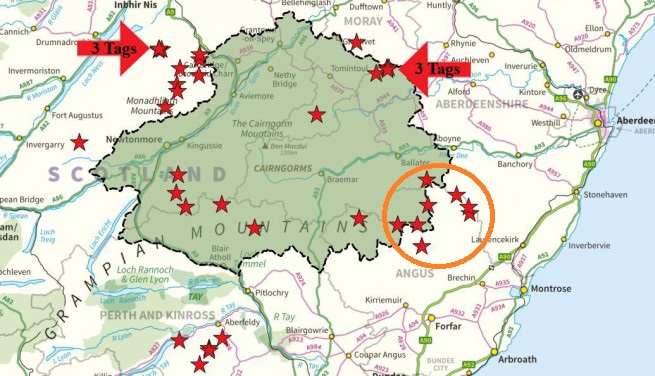
Sorry, Grant, but the so-called ‘ambiguity’ will remain – although there’s nothing ambiguous about the robust & statistically significant findings of the golden eagle satellite tag review, which demonstrated a clear relationship between suspicious raptor disappearances and land managed for intensive driven grouse shooting in and around the Cairngorms National Park:

One other thing in Grant’s statement that we wanted to pick up on –

Invercauld Estate is part of the East Cairngorms Moorland Partnership and I genuinely do believe that progress has started to be made across a wide range of subjects with the Estates involved……”

Really? What progress is that, then? Any progress on stopping the illegal persecution of raptors?

The East Cairngorms Moorland Partnership was established in December 2015 and comprises six estates working in ‘partnership’ with the CNPA.

The Partnership’s statement of purpose can be read here.

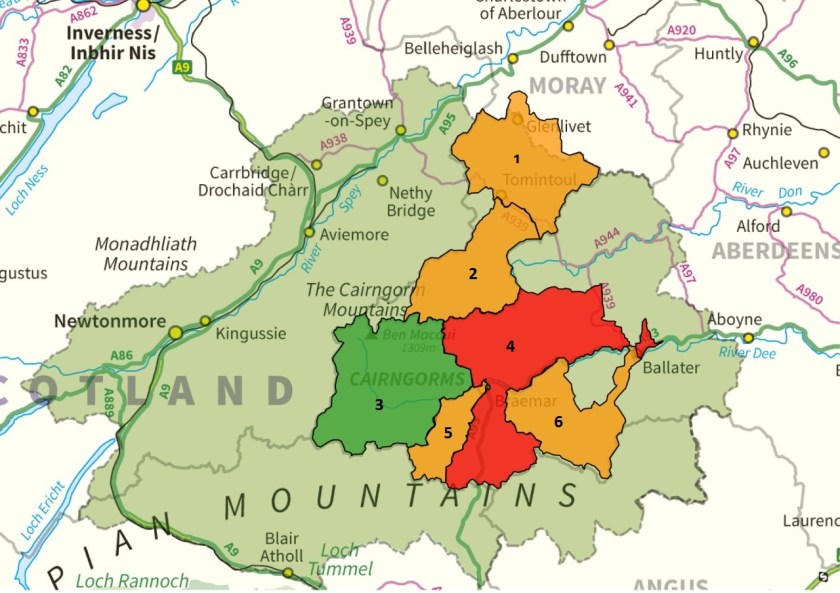
Here are the estates (boundaries sourced from Andy Wightman’s Who Owns Scotland website):

  1. Glenlivet Estate. 2. Glenavon Estate. 3. Mar Lodge Estate (National Trust for Scotland). 4. Invercauld Estate. 5. Mar Estate. 6. Balmoral & Birkhall Estate.

Last October, almost two years after this Partnership was established, we wanted to find out what progress had been achieved. We submitted an FoI to the CNPA asking for copies of all correspondence relating to the East Cairngorms Moorland Partnership since 1 January 2016.

Here’s the reply we received in November 2017:

We have searched our Corporate Drives for the period as above and we hold no information‘.

Impressive amount of progress, eh?

We do know that in February this year the CNPA was advertising for a part-time East Cairngorms Moorland Partnership Officer, on a decent salary of £28,770 – £34,633 pro rata.

Assuming someone has now been employed in this new position, they’ve certainly got their work cut out in delivering the objectives set out in the Cairngorms National Park Management Plan 2017-2022, which includes improving raptor populations in the National Park. Recent peer-reviewed science has revealed that the local hen harrier population has crashed (here) as has the local peregrine population (here).

Oh, and satellite-tagged hen harriers keep going ‘missing’ in highly suspicious circumstances inside the National Park, just like hen harrier Calluna, as do satellite-tagged eagles such as sea eagle Blue T and golden eagle #338.

National Park or National Disgrace?

Jason North convicted for disturbance & egg theft from raptor nests

RSPB press release (3 May 2018):

EGG COLLECTOR RECEIVES SUSPENDED SENTENCE AND FINE FOR OFFENCES AGAINST RARE BIRDS

An egg collector, who was previously unknown to police, has pleaded guilty to taking osprey eggs and disturbing rare breeding birds in Devon and Scotland.

Today (3 May 2018), Jason North, 49, from Plymouth appeared at Plymouth Magistrates Court and pleaded guilty to nine charges relating to the taking of osprey eggs from Highland Scotland, and the disturbance of golden eagle, osprey, peregrine falcon and little-ringed plover during 2016.

He received a 6-week jail sentence on each charge suspended for one year and a fine of £665 for taking the osprey eggs. He was also put in a 10-week curfew to ensure he remains at home between 9pm-6am. Maps, books and equipment were also confiscated.

The four species involved are all rare breeding birds listed on Schedule 1 of the Wildlife and Countryside Act 1981. Offences against these birds can result in up to six months in prison and/or an unlimited fine per offence.

[Jason North leaving court yesterday, photo by Penny Cross]

In December 2016, Devon and Cornwall Police, assisted by RSPB and NWCU officers, searched the home of Mr North at Haddington Road, Plymouth. They seized a number of items including hand-written notes, diaries and a computer. Following forensic examination of the computer, hundreds of digital images and video clips were recovered showing eggs and nests. The evidence indicated that North had been routinely making unlicensed visits, over a number of years, to the nests of rare breeding birds in Devon and Scotland. There were also images of eggs which had been removed from nests and put into display cases. The location of these eggs remains unknown.

A detailed investigation by Wildlife Crime Officer (WCO) PC Joshua Marshall, supported by RSPB and others, located several of the nest sites shown in the images. Evidence from people monitoring those sites, supported by expert evidence, confirmed that eggs had undoubtedly been taken in some cases. All the evidence clearly indicated that North, in addition to making unlicensed visits to take photographs, was also involved in taking eggs and it is believed these were then added to a collection.

PC Joshua Marshall of Devon and Cornwall Police said:

North was unknown prior to this investigation and only brought to account for his illegal activities via a number of diligent members of the public reporting to police confidentially. The public have such an important role to play in bringing wildlife criminals like this to justice. Please be vigilant while out in the countryside and report any suspicious behaviour, especially around nest sites, to the police on 101.

It also serves as a warning to potential or active offenders that you stand a high risk of being brought to account for any illegal activity you commit in respect to wild birds.

I would like to thank all those involved with the investigation including CPS, the expert witnesses and RSPB Investigations Officer Guy Shorrock.”

Jenny Shelton from the RSPB’s Investigations unit added: “These days, thankfully, egg collecting is by and large a thing of the past. However, there are still some active collectors targeting our rarest birds, and it is particularly worrying when new egg collectors come to light showing that the everyone needs to remain vigilant. We are grateful for the fantastic work by Devon and Cornwall Police plus the support from the CPS, NWCU and numerous people involved in monitoring and protecting these nest sites.

It’s hard to understand why someone would prefer to take the eggs of these incredible birds rather than see the birds flourishing in the wild.”

If you notice any suspicious behaviour around birds’ nests or breeding sites, including people looking in bushes or wading out to islands, often at unsociable hours, please call police on 101 and RSPB Investigations on 01767 680551.

ENDS

UPDATE 9 May 2018: A good blog about this case from the RSPB’s Investigations Team (here)

Grouse Moor Management Review Group: 1st meeting report

In May last year Scottish Environment Secretary Roseanna Cunningham announced her intention to establish a Grouse Moor Management Review Group, in response to the damning findings of the Golden Eagle Satellite Tag Review which had revealed that almost one third of satellite-tagged golden eagles had disappeared in highly suspicious circumstances on or close to intensively managed driven-grouse moors (see here).

The membership of the Grouse Moor Management Review Group was announced in November 2017 (see here) and the panel was expected to report back its findings to the Cabinet Secretary in early 2019.

The Group held its inaugural meeting on 16 January 2018 at the Royal Society of Edinburgh and the Chair (Prof Alan Werritty) outlined the background and context for the Group, and the following terms of reference were agreed:

The Group will examine how to ensure that grouse moor management continues to contribute to the rural economy while being environmentally sustainable and compliant with the law. The Group will recommend options for regulation including licensing and other measures which could be put in place without new primary legislation‘.

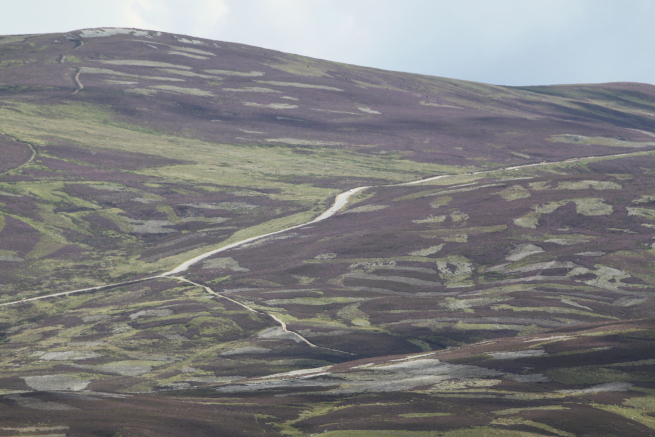
[Photo of intensively managed driven grouse moor, Cairngorms National Park, by Ruth Tingay]

Prof Werritty noted that the Cabinet Secretary had also commissioned a socio-economic study to be undertaken in parallel with the work of the Group, with interim findings to be made available later in the year.

According to Prof Werritty’s report of this first meeting, in addition to identifying a schedule for meetings, the Group agreed the following framework:

January to July 2018: gathering evidence and identifying key issues:

  • Meeting 2. Evidence 1 (Environmental law relevant to grouse moors, current licensing systems and Codes of Practice, wildlife crime)
  • Meeting 3. Evidence 2 (Predation/raptors and mountain hares)
  • Meeting 4. Evidence 3 (Muirburn and medicated grit, call for written evidence)

September to December 2018: written and oral evidence, visit to estate(s), socio-economics:

  • Meeting 5. Written evidence reviewed and oral evidence from key stakeholders
  • Meeting 6. Visit to grouse shooting estate(s)
  • Meeting 7. Review input from socio-economic study

January to March 2019: drafting report and recommendations:

  • Meeting 8. Review evidence and initial drafting of report and recommendations
  • Meeting 9. Finalise report and recommendations

At the first meeting in January 2018, the Group heard presentations from three of the Group’s special advisors, as follows:

  • Adam Smith (GWCT): Grouse moors and their management: an introduction
  • Ben Ross (SNH): Current regulatory system governing grouse moor management
  • Des Thompson (SNH): Raptor persecution and driven grouse moors

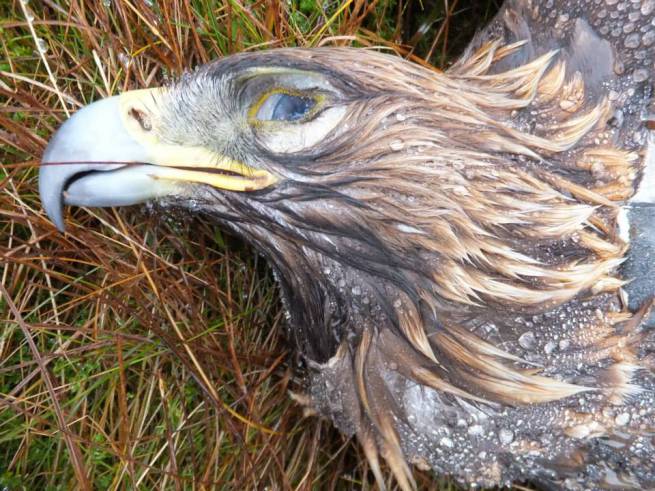
[Photo of satellite-tagged golden eagle Fearnan, found illegally poisoned on a driven grouse moor in the Angus Glens. Image by RSPB Scotland]

SNH issues licence for mass raven cull in 5-year ‘experiment’

To the utter disbelief of conservationists, statutory conservation agency Scottish Natural Heritage (SNH) has issued a licence authorising the mass killing of ravens in a large area of Perthshire (an area identified as a wildlife crime hotspot where six satellite-tagged eagles have suspiciously disappeared in recent years), as part of a proposed five-year experiment, on the basis of ‘seeing what happens’ to wader populations when ravens are removed.

The licence has been issued to a consortium calling itself the Strathbraan Community Collaboration for Waders (SCCW) which, according to the licence application, ‘represents some of the local land management (farmers, gamekeepers) and private interests in the area who value wading birds for their biodiversity, social and economic value to the area and to Scotland more widely. The application is supported by the Scottish Gamekeepers Association and technical advice and support, notably data gathering and interpretation, is being provided by the Game & Wildlife Conservation Trust (GWCT)‘.

The following has been written by a group of Scottish Raptor Study Group (SRSG) members as a guest blog:

STRATHBRAAN RAVEN LICENCE

The news about the missing white tailed sea eagle disappearing in Glen Quaich on Tuesday 17th April could sadly not have been more timely as Scottish Natural Heritage, (SNH), have issued a licence to several estates in the Strathbraan area in Perthshire, including Glen Quaich Estate, for the killing of 300 ravens in a large scale trial over five years to see if wader productivity and populations can be improved by removing raven predation.

The manner in which the government’s statutory nature conservation agency have conducted themselves has come as a shock and there is grave concern about the mis-application of science, the lack of consultation with key stakeholders, such as the RSPB and SRSG, their choice of estate partners and the lack of transparency, trust and honesty, and even seasoned SNH watchers are aghast.

We have raised our concerns and are unhappy with the response so far and have resorted to writing this blog to make the matters public. Following the “suspicious” disappearance of the white tailed sea eagle and the fact the police are describing this as ‘an illegal act’ we call upon SNH to conduct a review and if the circumstances fulfil what we consider to be the established criteria set out in SNH’s own report then we expect the licence to be withdrawn.

Our concerns focus on three areas, firstly the choice of partners:-

Firstly when selecting a trial area why would you choose an area dominated by driven grouse shooting with a history of illegal raptor persecution? What message does this send out to the many law-abiding estates? Is it that persecution will enable you to ‘cut a deal’ with the statutory nature conservation body? Cynics might suggest this is more about an opportunity to kill ravens in an attempt to protect red grouse stocks and it could also be argued that a licence has been issued to kill one species of bird to enable another bird to be shot for fun.

[Map of proposed cull area in north Perthshire, from the licence application, running from Loch Tay in the west to the A9 in the east]:

Raptor workers over the years have been monitoring the area and can speak with authority on raptor persecution. The Scottish Government’s review of satellite-tagged golden eagles showed that four of these birds have disappeared suspiciously in this area, with a satellite-tagged red kite also disappearing in 2010. In all cases, the tags can be classed as “stopped – no malfunction” as used in the review – ie. highly suspicious.

[Map of north Perthshire showing the last known fixes of five satellite-tagged golden eagles that disappeared in suspicious circumstances. Sea Eagle Blue X also disappeared in Glen Quaich last month]:

In addition, a radio-tagged white-tailed eagle was tracked to this area, but disappeared in January 2012, while a further satellite-tagged white-tailed eagle recently similarly disappeared in Glen Quaich. An illegal clam trap was found in November 2012, while a buzzard was spring-trapped in January 2012. A red kite was found poisoned in January 2015. A raven was poisoned in 2017. In addition, licenced raptor study group members have noted a number of cases of suspicious failure of nesting attempts by hen harrier, red kite and buzzard across the area. They have also recorded a higher than usual turnover of red kites and a loss of breeding pairs at nearby sites. All of which indicates on-going illegal persecution.

Even bearing in mind these detected incidents represent an unknown proportion of actual persecution taking place, this is an area where land management practices have displayed a proven criminal intolerance to protected species, stretching back for many years. All this has been in the public domain so why did SNH press on knowing that their partners in this initiative have such a dubious record, and what level of confidence can we have in their honesty and integrity?

Secondly, science and key questions that remain unanswered:-

  • What monitoring is in place to assess that this cull will not affect the raven population status?
  • How will SNH be able to differentiate from other factors affecting the decline of waders such as other predatory pressures, the loss of suitable habitat and changes in agricultural practices?
  • What criteria will be used to differentiate between breeding and non-breeding birds? This year we have noticed that the breeding season is later than usual.
  • What allowance has been made for the immigration of immature flocks into the proposed licence area?
  • Why has the licensing decision been taken in the absence of the raven population modelling report, as it was commissioned with the sole, or at least the main, purpose of underpinning raven licensing decisions with sounder background information?
  • What is the nature and extent of the independent scrutiny that has been carried out?
  • If any raven roosts are located during the period of the licence, can we be assured that any Schedule 1 non-breeding species and other protected species (possibly also using the same roosts) will not be disturbed?
  • What safe guards are in place to ensure the numbers killed will remain within that permitted?

Thirdly, the lack of engagement

SNH are always keen to trumpet words such as ‘trust’, ‘building relationships’, ‘shared objectives’ ‘working collaboratively’ but we have seen none of this.

  • There has been no communication with SRSG workers who have been active in the proposed licence area and have many years of breeding data on ravens and raptors.
  • We understand that not all landowners/managers within the area of licence have been contacted about this licence, contrary to reassurances provided.
  • This proposed application was developed outside the much lauded ‘Working for Waders’ initiative and we only became aware of this by accident; hardly working together or building trust!
  • Under the Scottish Raptor Monitoring Scheme raven data are submitted to SNH (who is a key partner), yet it seems this information was not included in the licence considerations, (we know this as under the permission sharing protocols raptors workers who collected the information in the first place would have had to have been consulted).

We are deeply suspicious that the lack of engagement was deliberate as SNH knew their proposal was weak and would not stand up to the rigour of an independent scientific review.

We again call upon SNH to withdraw the licence.

ENDS

It’s well known that SNH issues a number of licences every year to cull ravens where they are considered a ‘serious threat’ to livestock (e.g. see here, here) but these are apparently for a limited cull, not related to game management and supposedly based on sound scientific evidence of a perceived local problem.

It’s also well known that gamekeepers have long wanted ravens to be added to the General Licence (e.g. see here, here) because they are seen as a perceived threat to grouse stocks.

It’s also well known that ravens are routinely demonised in the press, including this outrageous piece published by the BBC (see here, and well worth a read to understand the hysteria whipped up around this protected species).

However, this latest licence authorising a multi-year mass culling of ravens over a large area for spurious reasons (and apparently very little, if any, scientific justification) is unprecedented. That it also happens to be a well-known raptor persecution hotspot just adds to the lunancy of this situation.

If you share the concerns of the SRSG members, please consider sending an email to Mike Cantlay, SNH Chair, calling on him to withdraw the licence with immediate effect. Emails to: chair@snh.gov.uk

UPDATE 14.20hrs: Thanks to the blog reader who brought this article to our attention, reporting on the results of a scientific study that dispels many of the myths associated with ravens and wader population declines. And here is the scientific peer-reviewed paper by Amar et al that specifically warns against making predator control licensing decisions without a thorough evaluation of the evidence.

UPDATE 21 April 2018: A quote from SNH Head of Wildlife, Robbie Kernahan:

We understand the concerns over wildlife crime in Strathbraan, but we are also clear that the granting of this licence is wholly unconnected to the issues concerned.

This licence is about a pressing and complex conservation issue. It  is a large-scale collaborative trial which will help improve our understanding of factors affecting key wader species, populations of which are declining at an alarming rate. We are satisfied this licence will not affect the population of ravens overall, and is over a five year period.

The licence places significant responsibility and expectations on all those involved – to be able to show that this approach can work and will help deliver what are essentially shared objectives.

Trust is a key element of this and this presents a great opportunity to develop that trust and relationships with all involved. If it becomes apparent that actions are not being carried out in accordance with the terms of any licence then we will have no hesitation in removing the licence“.

UPDATE 21 April 2018: A quote from RSPB Scotland Head of Species & Land Managament, Duncan Orr-Ewing:

We are extremely concerned about the likely scale on impact of this research licence on the local raven population in the Strathbraan area of Perthshire. We are also very surprised that SNH have issued such a research licence  in the vicinity of Strathbraan, which has an appalling  and well documented track record of illegal persecution of raptors, noting also the very recent “suspicious” disappearance of a satellite tagged white-tailed eagle in this very same area.

We, together with local raptor workers who have been monitoring ravens in the area for decades, could have helped SNH with this background detail to the licence application if we had been consulted.

We will be seeking a high level meeting with SNH shortly to discuss. We will be pressing for the research licence to be revoked on the back of the white-tailed eagle incident, and instead consideration given by SNH to removing the use of the Open General Licence in this area, as is within their powers“.

UPDATE 22 April 2018: Raven cull update and what you can do to help (here)

UPDATE 23 April 2018: Article published in The National (here)

UPDATE 23 April 2018: Article published in The Herald (here)

UPDATE 23 April 2018: RSPB Scotland blog in response to raven cull licence (here)

UPDATE 25 April 2018: OneKind blog in response to raven cull licence (here)

UPDATE 25 April 2018: Chris Packham’s response to raven cull licence (here)

UPDATE 26 April 2018: Is the raven cull licence still active whilst SNH review takes place? (here)

UPDATE 26 April 2018: SNH refuses to say whether raven cull licence has been suspended (here)

UPDATE 27 April 2018: Green MSPs seek urgent meeting with SNH re: raven cull licence (here)

UPDATE 27 April 2018: ‘No justification’ for raven cull licence, says RSPB Scotland Director (here)

UDATE 28 April 2018: Raven cull licence: SGA evasive on benefits to grouse moors (here)

UPDATE 1 May 2018: Strathbraan Community Collaboration for Waders: who’s involved? (here)

UPDATE 4 May 2018: Raven cull: next steps to take as SNH blunders on (here)

UPDATE 7 May 2018: “Let’s have more trials [culls] whether it’s about ravens or other things” says SNH (here)

UPDATE 8 May 2018: Parliamentary questions lodged on raven cull licence (here)

UPDATE 9 May 2018: Alison Johnstone MSP lodges Parliamentary motion on raven cull licence (here)

UPDATE 12 May 2018: Raven cull: please ask your MSP to support this Parliamentary motion (here)

UPDATE 23 May 2018: Raven cull update: scientific advisory committee not being asked to repeal licence (here)

UPDATE 23 May 2018: Raven cull: Parliamentary questions and answers (here)

UPDATE 20 May 2018: Raven cull: latest update (here)

UPDATE 5 June 2018: Legal challenge to raven cull licence: your help needed! (here)

UPDATE 6 June 2018: Raven cull: legal challenge crowdfunder smashes £10k target on day one! (here)

UPDATE 19 June 2018: Raven cull: a few updates (here)

UPDATE 20 June 2018: #Justice4Ravens fundraising merchandise now available (here)

UPDATE 22 June 2018: Preston man receives warning for raven cull death threat (here)

UPDATE 1 July 2018: Last push on #Justice4Ravens crowdfunder (here)

UPDATE 1 July 2018: #Justice4Ravens crowdfunder target smashed! (here)

UPDATE 5 July 2018: #Justice4Ravens: application lodged for judicial review (here)

UPDATE 23 July 2018: Surprise! Gamekeeper in raven cull area declares cull a success (here)

UPDATE 30 July 2018: Raven cull licence: scientific rigour ‘completely inadequate’ says SNH’s scientific advisory committee (here)

UPDATE 30 July 2018: Voluntary suspension of raven cull is meaningless greenwash (here)

UPDATE 7 August 2018: #Justice4Ravens: judicial review update (here)

UPDATE 20 August 2018: Raven cull: application for judicial review withdrawn, for now (here)

UPDATE 30 April 2019: SNH reluctant to discuss licensed raven cull in Strathbraan this year (here)

UPDATE 2 May 2019: SNH rejects 2019 licence application for Strathbraan raven cull (here)

UPDATE 30 May 2019: Scottish Gamekeepers Association’s pity party in response to failed Strathbraan raven cull bid (here)

UPDATE 10 November 2022: Ravens illegally shot on two Strathbraan grouse moors (here)

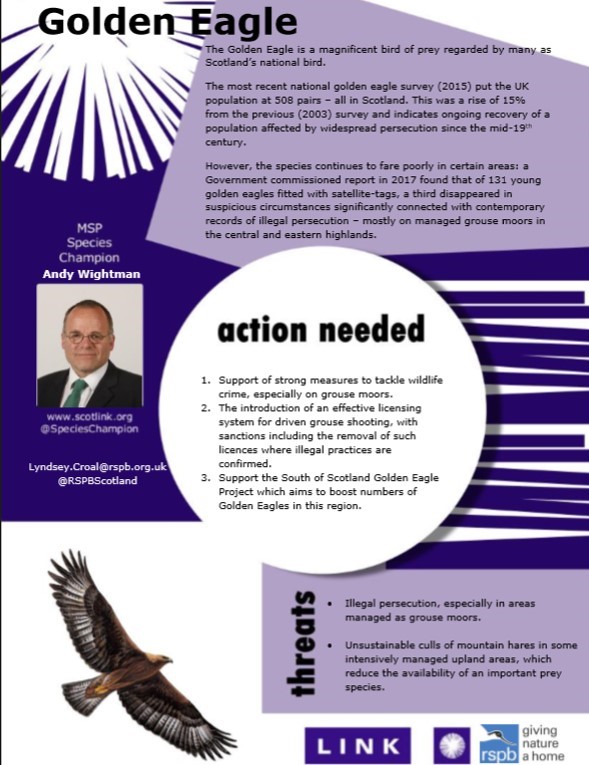
Andy Wightman MSP becomes Golden Eagle Species Champion

Some brilliant news, for a change!

Press release from Scottish Greens (19/4/18):

WIGHTMAN TO CHAMPION UNDER PERSECUTION GOLDEN EAGLES

Scottish Green MSP Andy Wightman is the new Scottish Environment Link species champion for the Golden Eagle.

The Golden Eagle is Scotland’s most iconic bird of prey but, despite decades of legal protection in Scotland, continues to be the victim of illegal persecution.

In a recent review commissioned by the Scottish Government and published by Scottish Natural Heritage, it was found that almost a third of young satellite-tagged golden eagles had disappeared in “suspicious circumstances” in the Highlands over a 12 year period. These incidents largely occurred in areas dominated by intensive driven grouse-shooting management.

Moreover, in the last few months, there have been further suspicious disappearances of “Fred” in the Pentland Hills and of another young male eagle in the wildlife crime blackspot of the northern Monadhliath mountains in Inverness-shire.

Reports published by both Scottish Natural Heritage and RSPB Scotland have repeatedly shown that while incidents of illegal poisoning have declined in recent years, other forms of persecution continue to have a proven and significant impact on not just golden eagles, but also species such as hen harrier and red kite. While wildlife criminals may go to considerable efforts to hide the evidence of their crimes, the absence of these species from significant areas of our uplands, particularly in eastern and southern Scotland, gives a clear indication that levels of illegal killing of our birds of prey have not declined.

On the back of the Scottish Government review’s findings, Environment Cabinet Secretary Roseanna Cunningham set up a review of grouse moor management practices, a clear indication of the increasing concern that this issue is impacting on Scotland’s reputation.

Andy Wightman MSP commented:

I am delighted to be the species champion for Golden Eagle. It is clear that much work still needs to be done to ensure that this iconic species continues to thrive across Scotland and that the species returns to parts of the country that it has for too long been absent.

I look forward to meeting those involved in conservation and monitoring of Golden Eagle populations over the coming years and to work with them to tackle the ongoing challenges facing this magnificent bird.”

Duncan Orr-Ewing, Head of Species and Land Management at RSPB Scotland said:

It is great to have Andy on board as a passionate species champion for this special bird, which is arguably Scotland’s national bird. The golden eagle is an indicator species for the health of our uplands, however sadly it still faces many conservation challenges, most significantly the continuing threat of illegal persecution in moorland areas managed for driven grouse-shooting.

This appointment comes at a time when the important South of Scotland Golden Eagle Project, designed to reinforce the population of golden eagles in this area, and to bring wide ranging rural development opportunities to local communities is also about to begin. I am sure that partners in this project will look forward to involving Andy as part of his role in due course”.

ENDS

This is fantastic news. Species Champions are members of the Scottish Parliament who have agreed to lend their political support to the protection of Scottish wildlife.

Andy is already species champion for the Mountain Everlasting wildflower and we’re delighted that he has agreed to lend his considerable influence to help highlight the on-going illegal persecution of golden eagles on some driven grouse moors and champion the conservation of this magnificent species.

We’ve known and admired Andy for several years and he’s been a long-time and vocal supporter of this blog. His skills as a fearless advocate will be much welcomed by those of us working to protect golden eagles.

He joins several other MSPs who work as species champions for raptors in Scotland:

Mark Ruskell MSP (Scottish Greens) – White-tailed eagle

Mairi Gougeoun MSP (SNP) – Hen harrier

John Mason MSP (SNP) – Kestrel

Donald Cameron MSP (Conservative) – Merlin

Bill Kidd MSP (SNP) – Red kite

Iain Gray MSP (Labour) – Short-eared owl

Man charged with stealing eagle & osprey eggs from nests

From DevonLive news, 6 April 2018:

A man has been charged with a number of offences against the Wildlife and Countryside Act 1981, in relation to the taking of and disturbing of protected birds, their nests and eggs.

Jason North, aged 49, from Plymouth has been charged with 14 offences including the disturbance of Schedule 1 birds at or near the nest and the taking of eggs.

These include rare species such as Golden Eagle and Osprey in Scotland.

Further offences relate to nest disturbance and the taking of eggs of rare Devon birds namely Hobby, Peregrine Falcon and Little-Ringed Plover from sites on Dartmoor, Devon.

These offences are alleged to have taken place in Devon and Scotland during 2016.

Mr North is due before Plymouth Magistrates court on 3 May.

ENDS

Thanks to Police Wildlife Crime Officer Josh Marshall from Devon & Cornwall Police for alerting us to this case. Great partnership working between the Police, RSPB & CPS to get this case to court.

SGA reacts angrily to media coverage of Golden Eagle Fred

Last Friday we published an update on golden eagle Fred, who ‘disappeared’ from the Pentlands on the outskirts of Edinburgh in highly suspicious circumstances in January.

There have been some predictable responses from certain quarters who probably expect everyone to believe that this is what happened to Fred (many thanks to @gill_lewis for this brilliant cartoon):

The Scottish Gamekeepers Association’s response to the latest news on Fred was this:

Hmm, where to begin. Let’s start with some facts, a concept the SGA seems to struggle with.

First of all, on the accusation that our media coverage has been “shambolic” and that this case has made a “total mockery” of the investigative process for dealing with wildlife crime. Let’s just be clear. We haven’t published any details of this investigation without the express agreement of Police Scotland.

In the SGA’s original press statement on Fred (see here), we were accused of “walking away after presenting judgement to the media“. We didn’t “walk away” at all – we presented further evidence to the police and were asked not to publish it until the police’s special technical analysts had been given an opportunity to examine it. Although we were obviously eager to publish as soon as possible, we fully adhered to the police request as not to do so could have compromised their investigation. There is still information that has not yet been released.

In the meantime, SGA Director Bert Burnett was busily writing outrageous and borderline libellous commentary on social media. He wrote the following on 22 February 2018:

Which leads us on nicely to another statement in the SGA’s latest press statement:

The SGA has not joined in with theorising on blogs or private social media accounts“.

Really? So how does the SGA explain the following social media posts?

Posted 19th February 2018:

Posted 23rd February 2018:

That seems to be pretty conclusive evidence that the SGA, via its Director, has been quite busy “theorising” about this case, doesn’t it? And not only “theorising”, but also trying to whip up unfounded hysteria by accusing Chris Packham of ‘calling for the wives and children of gamekeepers to become homeless’ and Bert then, ironically, calling for people to lobby the BBC to sack Chris!

Ah, but he’s no longer a Director‘ will argue the SGA. That bit, at least, is true – according to documents lodged at Companies House, Bert resigned his Directorship of the SGA on 26th February 2018. However, his social media comments were published prior to the 26th, when he was still an SGA Director. Perhaps this explains Bert’s ‘resignation’? Whatever, who cares.

So after falsely accusing us of commenting inappropriately on a live investigation, the SGA then argues that “…all the evidence in this case should be presented in the open so the truth can be established…”. A good bit of muddled thinking there.

For us, the most revealing section of the SGA’s press statement is this:

The fact that SNH published a paper on satellite tagged eagles between 2004-2016 has nothing to do with any case happening years later, in 2018.

To suggest otherwise is to institutionalise prejudice against a community of people: Scotland’s gamekeepers. We will not tolerate this and are extremely disappointed and angry that this attitude appears to be at large within some sections of our parliament“.

Sorry, SGA, but the 2017 review on the fate of satellite-tagged golden eagles has EVERYTHING to do with this case. The circumstances of Fred’s disappearance mirror the suspicious circumstances of the other 42+ ‘missing’ golden eagles who have ‘disappeared’ on or near to a grouse moor and whose tags suddenly and inexplicably stopped working despite having a proven reliability rate of 98%. The report demonstrated that tagged golden eagles in Scotland were 25 TIMES more likely to ‘disappear’ in suspicious circumstances than anywhere else in the world where these tags have been deployed on eagles.

It’s no use the SGA now pulling out the victim card and falsely claiming “institutional prejudice”. The facts are clear and have been available for a long, long time to those willing to see.

What’s really interesting is that the SGA’s angry response came just hours after Cabinet Secretary Fergus Ewing’s damning condemnation of the criminals within the grouse-shooting sector who continue to kill birds of prey, including golden eagles. We suspect the SGA’s furious reaction about Fred is more to do with the embarrassing fact that Fergus, the SGA’s long-time cheerleader and main political ally, has spoken so openly and frankly about the ongoing persecution of raptors on grouse moors. The significance of Fergus Ewing’s statement should not be underestimated.

The walls are crumbling and the SGA knows it. It’s just a matter of time…..

Laughable ‘critique’ of golden eagle satellite tag review

As many of you will know, in August 2016 Environment Cabinet Secretary Roseanna Cunningham ordered a review of golden eagle satellite tag data to see whether there was evidence of “a pattern of suspicious activity” regarding the regular disappearance of sat-tagged golden eagles in Scotland.

Scottish Natural Heritage commissioned the review, which was published in May 2017. The findings were unequivocal – YES, there was a pattern of suspicious activity and a strong association between ‘disappearing’ eagles and some areas of land managed as driven grouse moors.

[Red stars show position of sat-tagged golden eagles that have ‘disappeared’ in suspicious circumstances, 2004-2016. Note the clusters in areas of grouse moor management around the Cairngorms National Park. Data from the golden eagle sat tag review]

The review was significant in that it led to Roseanna Cunningham announcing a series of further measures to tackle illegal raptor persecution on driven grouse moors, not least the establishment of a review group to consider licensing options for grouse moor management.

Obviously, the significance of the review wasn’t lost on some within the grouse-shooting industry and for the last ten months there have been concerted efforts on social media to discredit (a) the report’s findings and (b) the report’s authors.

None of these efforts have amounted to anything – just wild accusations (many of them libellous) and uninformed commentary from those who don’t like the idea of the potential introduction of any sort of regulation or accountability of the grouse-shooting industry. Let’s call them Honorary Professors of Idiocy at the Angus Glens Institute for Critical Thinking.

Some quotes from these esteemed Honorary Professors of Idiocy include statements such as [The report would] “never stand up to scientific scrutiny and would clearly fail in any peer-reviewed process due to extremely poor science, multiple assumptions and total lack of robustness” (Mike Groves, expelled member of Tayside Raptor Study Group, scientific credentials unknown); The authors are “incompetent” and “not independent” (Bert Burnett, Director [resigned] of the Scottish Gamekeepers Association, scientific credentials unknown); and the report authors are “bent” (Andy Richardson, social media troll, scientific credentials unknown).

To offset the Honorary Professors’ obvious lack of scientific credibility, the Angus Glens Institute for Critical Thinking has recently invited a ‘proper scientist’ to critique the golden eagle satellite tag review.

Who is this proper scientist? A young man called Ben Adam (BSc, Physics), who apparently works as a Revenue Officer for HM Revenue & Customs. And in which learned academic journal was his ‘scientific critique’ published? Er, that’ll be on his Dad’s blog. And who’s his Dad? That’ll be David Adam, an artist from the Angus Glens, mates with Mike Groves (see above), and who spends a lot of time and effort slagging off members of the Scottish Raptor Study Group and slagging off the practice of satellite tracking raptors for scientific research.

Ben Adam’s (BSc, Physics) ‘critique’ has been hailed by those within the Angus Glens Institute for Critical Thinking as a comprehensive demolition of the golden eagle satellite tag review, and they’re hoping lots of politicians take note of it. We’re also hoping lots of politicians take note of it because it lays bare the laughable standard of defence against the damning findings of the golden eagle satellite tag review.

Before we analyse Ben Adam’s (BSc, Physics) ‘critique’, it’s probably worth pointing out the scientific credibility of the authors of the golden eagle satellite tag review, Dr Phil Whitfield and Dr Alan Fielding.

Between them, they have over 70 years worth of ecological experience, have published over 150 peer-reviewed scientific papers, written hundreds of commissioned reports, and authored five books, including one on statistical analysis (authored by Dr Fielding, a lecturer on statistics at Manchester Metropolitan University). For good reason, they are held in extremely high regard within the academic and conservation communities and have a particular expertise on the ecology and conservation of hen harriers and golden eagles, having co-authored the respective Government-commissioned Conservation Frameworks for these species. It’s quite obvious why SNH commissioned them to undertake the golden eagle satellite tag review; they were the best qualified scientists to do this research.

So, let’s have a look at Ben Adam’s (BSc, Physics) masterful ‘critique’, amounting to six paragraphs published on his Dad’s blog:

Gosh, where to start. How about with the most glaring error? Mr Adam (BSc, Physics) claims the statistical analyses are flawed because the sample size was too low. He seems to think that the ‘sample’ used in this study was the number of satellite-tagged eagles (n = 135) and argues that had the sample size been higher (“300-500“), a “much more useful analysis could be done“. Had he been paying attention and actually read and understood the report, he should have realised that the ‘sample’ in this study was NOT the number of satellite-tagged eagles, but rather the recorded locations of those satellite-tags (n = over half a million)! It’s not rocket science, or even physics. The statistical analyses were undertaken on the tag data, not on the eagles, and most scientists would conclude that a sample size of over half a million is, er, exceptionally good.

Even if the analysis was based on the number of tagged eagles (which it wasn’t), Mr Adam (BSc, Physics) seems to have missed the section detailing the analyses done on identical tag types deployed on golden eagles in the US, Sweden and Norway (n = 784) and on bald eagles in the US (n = 83). Guess what, Mr Adam (BSc, Physics)? Of a study of 869 tags (+131 Scottish tags = 1000 tags in total), the tags deployed on golden eagles in Scotland were 25 times more likely to suffer a Stopped-no malfunction fate than any of those other comparable studies. Imagine that!

Mr Adam (BSc, Physics) claims there are clear relationships between the Stopped-no malfunction category and the type of tag used and the operator who fitted the tag. He also claims the data sets “don’t tell us which operator used which type of tag“. Er, try looking at Table 2.2 which details the tag type and the operator. In fact, try reading the report again, which explains that “there were several people involved in the tagging of eagles in Scotland, and potentially suspicious (Stopped-no malfunction) fates were not apparently due to particular operators (or, by proxy, teams of taggers), or to particular tag types“.

Disappointingly, Mr Adam (BSc, Physics) didn’t offer up any explanation for the following part of the report:

Conservatively in these analyses, we did not include a ‘dropped suspicious’ tag fate as evidence of a killed bird, even though this record involved the discovery of an abandoned ‘dropped’ tag whose housing had been stabbed by a sharp implement and whose harness had been cut cleanly by a sharp instrument“.

It’s a shame Mr Adam (BSc, Physics) overlooked this statement as this particular tag was found in, er, the Angus Glens.

Mr Adam (BSc, Physics) argues that the review “made no indepth analysis of each tag type in detail“. Er, try reading section 6, ‘Tag Reliability’, for the detailed independent checks of tag engineering, including manufacturer ‘blind’ tests.

Mr Adam (BSc, Physics) claims the study is “incomplete and extremely limited in scope” and “does not show critical thinking or scientific method where it is truly required“. Er, this report is one of the most comprehensive, robust and forensic analyses ever undertaken on golden eagle satellite tag data. Multiple lines of evidence were used to conclude the spatial clustering was indeed suspicious. Indeed, on the spatial clustering alone, the report states: “Ten analyses were conducted, examining various alternative potential datasets to ensure that the results were robust“.

To conclude, Mr Adam’s (BSc, Physics) ‘critique’ is laughable and lamentable. It probably explains why SNH didn’t ask a Revenue Officer at HM Revenue & Customs with a BSc in Physics to peer review the report (yes, take note Honorary Professor of Idiocy Mike Groves, this report was indeed peer-reviewed as part of SNH’s quality assurance process).

Who were the peer-reviewers? Actual real life professors, as listed in the report:

Professor Ian Newton FRS, FRSE, Professor Miguel Ferrer, Professor Robert Furness, Professor Des Thompson FRSE.

Enough said.

New information reveals more about Golden Eagle Fred’s suspicious disappearance

RPUK/Chris Packham press release:

NEW INFORMATION REVEALS MORE ABOUT GOLDEN EAGLE FRED’S SUSPICIOUS DISAPPEARANCE

On 21st January, a GPS satellite tag fitted to a young golden eagle called Fred suddenly and inexplicably stopped sending data close to a grouse moor in the Pentland Hills on the outskirts of Edinburgh. Up until that point the tag had been working perfectly and was providing accurate and frequent location information about Fred’s travels.

Photo of Fred by Ruth Tingay:

Strangely, three and half days later, the tag began to transmit again for a short period, but astonishingly, it was in the North Sea, 15 miles offshore from St Andrews. No further GPS data have been received.

Map showing Fred’s movements in the Pentland Hills and the last known position of his tag in the North Sea:

The researchers who had been tracking Fred’s movements (Dr Ruth Tingay of Raptor Persecution UK and broadcaster and campaigner Chris Packham) alerted experts at RSPB Scotland who immediately notified Police Scotland who began an investigation into Fred’s suspicious disappearance.

The analysis of new technical data, provided by the tag manufacturer, has now shed some light on the approximate location of Fred’s tag during those three and a half days of lost GPS transmissions.

Although the tag’s GPS transmissions were suppressed, the tag’s technical data, which includes time & date, shows that the tag was still functioning and was periodically communicating briefly with a series of mobile phone masts closest to the tag’s then location. These data, that gave locational information for the phone masts, suggest that in the days after Fred’s disappearance his tag moved eastwards away from the Pentlands, along a route similar to that of the Edinburgh City Bypass and subsequently the A1 towards Haddington, before it travelled to the North Berwick area on the East Lothian coast. From there, it is likely that the tag went into the sea as the data then show that the tag began to connect with phone masts along the Fife coast, across the Firth of Forth. Later, the tag was then able, briefly, to resume giving locational GPS transmissions, but by then it was well offshore.

Map showing the phone masts (red dots) with which Fred’s tag was communicating between 21-25 January 2018. The green dot shows the final known GPS position of the tag on 25th Jan. (Map: RPUK)

Dr Tingay said:That someone might have been travelling around the Edinburgh City Bypass with a dead golden eagle in the boot of a vehicle is sickening.

These new tags we’re using to track golden eagles like Fred offer a highly sophisticated technical opportunity, not just to learn about the eagles’ movements when they’re alive but also, it seems, an insight in to the lengths someone will go to try and remove evidence to cover their crime”.

Chris Packham said:We don’t know whether this tag was still attached to Fred as it travelled across East Lothian and in to the North Sea but we do know that the tag’s movements are a clear indication of foul play.

Whether it was an amateurish attempt to mask the illegal killing of Fred in the Pentlands by dumping the tag, and possibly Fred, in the North Sea to make it look like he had drowned, we’ll never know. We do know that, once again, we’ve lost a young golden eagle in the vicinity of a grouse moor and nobody will be held to account.

The Scottish Government needs to do more, immediately, to protect Scotland’s birds of prey. It’s crystal clear that raptors continue to be killed and the criminals responsible think they are untouchable”.

Ian Thomson, Head of Investigations at RSPB Scotland said:This new information makes the probability of Fred’s death being a wildlife crime even more likely.

The continued denials of any suspicion around the case, and attempts at coming up with elaborate alternative versions of events, have been identical to those in virtually every other case where a satellite-tagged raptor has disappeared.

It is a great shame that some representatives of the gamebird shooting industry, who profess to be “true conservationists” and “guardians of the countryside”, are the same individuals who seek more to shoot the messenger than to face up to and marginalise the criminals who exist in plain sight in their community.

Lothian MSP Andy Wightman said:The evidence uncovered from Fred’s satellite tag is sufficient to convince me that he died in suspicious circumstances. Further details may never be known but it is beyond contempt that protected species such as Golden Eagles continue to be persecuted across Scotland.

I urge all those who use the Pentlands Regional Park on a regular basis to remain vigilant and am extremely grateful to Dr Ruth Tingay and Police Scotland for their diligence and perseverance in a very difficult case.

Last year a Scottish Government-commissioned report showed that 41 of 131 satellite-tagged golden eagles had disappeared (presumed dead) in suspicious circumstances in Scotland, predominantly on or near to some driven grouse moors. In response to that report’s findings, the Scottish Government’s Cabinet Secretary for the Environment, Roseanna Cunningham MSP, ordered a review of grouse moor management practices with a view to introducing a licensing scheme for game-shooting estates.

Anyone with information about Fred’s disappearance is urged to contact Police Scotland on 101, or the RSPB’s confidential raptor crime hotline 0300 999 0101.

ENDS

We’ve produced a video about the location of Fred’s tag between 21-25 January:

The new information we’ve been able to retrieve from the tag (as discussed by Chris Packham in the video) deserves a little bit more explanation.

It’s important to understand that the new data do NOT provide detailed GPS locations of the tag – i.e. the new information only tells us which nearby phone mast the tag was communicating with, it does NOT tell us the exact position of the tag when it was ‘talking’ to the phone masts, as the tag’s GPS function was disabled (more on this below).

Nevertheless, the position of the phone masts and the times/dates the tag was communicating with them does show a very clear direction of travel from the Pentlands and out in to the North Sea. For investigative reasons, we are not yet revealing the times/dates those phone masts were ‘pinged’.

The disabling of the tag’s GPS function is interesting. It is surprisingly easy to suppress the tag’s GPS signal. For obvious reasons, we have no intention of providing a description of how to do that, but needless to say you don’t need a Faraday cage or indeed any specialist equipment to block the signal of this particular tag type.

That begs the question, was Fred’s tag deliberately disabled to hide the GPS data transmissions? Let’s assume for a minute that it was. Whoever did that, was smart enough to know how to suppress the GPS signal but not smart enough to know that the tag would still be trying to communicate with the nearest phone mast. Schoolboy error.

An alternative explanation is that the tag was not deliberately disabled at all. Whoever took that tag (and perhaps Fred’s corpse) from the Pentlands might just have been banking on the idea that the tag only sends data at set periods of time inbetween battery-charging periods (as with the Hen Harrier satellite tags), and so they may have thought they could get it to the coast and in to the sea without anybody who was monitoring the tag’s data knowing that something was wrong. They may have decided to dump the tag (and possibly Fred) in to the sea to make it look as though he flew out there of his own accord and simply drowned. Again, schoolboy error. We are not using the same type of tag as those used on Hen Harriers.

We know from reading various, frankly laughable, theories posted on social media over the last few weeks that the majority of commentators have no clue/understanding of (a) the type of tag we are using, (b) the tag’s capabilities, and (c) the high frequency rate that the tag was transmitting data, throughout every day and night.

We’ve released this new information about the route Fred’s tag took from the Pentland Hills to the North Sea in the hope that someone will come forward to help progress the police investigation into Fred’s highly suspicious disappearance. If you know anything, please contact Police Scotland on 101 or the RSPB’s confidential raptor crime hotline 0300 999 0101.

We’d like to put on record our immense gratitude to the two Police Wildlife Crime Officers who have been leading this case. They have gone way above and beyond what we expected them to do (and again, we are not detailing the specifics of their investigation) and they have impressed us with their diligence and professionalism. Many thanks to them for their efforts to date.

We are also grateful to the tag manufacturer and particularly the senior engineers for providing the additional technical data from Fred’s tag and helping us and the police with the analysis.

Cabinet Secretary Fergus Ewing condemns the criminals killing raptors on Scottish grouse moors

Last week we criticised Cabinet Secretary Fergus Ewing for his apparent failure to speak out on illegal raptor persecution, especially following the news that yet another satellite-tagged golden eagle had ‘disappeared’ from a grouse moor within his constituency; a constituency that has been a hotbed of illegal raptor killing for many, many years.

For those of you not on Twitter, this afternoon Mr Ewing responded by publishing a series of tweets, condemning the continued illegal killing of raptors on Scottish grouse moors. We very much welcome his statement: