The UK’s first golden eagle festival will take place later this year, celebrating the town of Moffat being named as an ‘Eagle Town’ as part of a plan to boost eco-tourism to the area.
Moffat has been chosen as it’s close to the original release site for translocated golden eagles, brought down from the Highlands and released in South Scotland to boost the tiny, remnant population that had previously been ravaged by illegal persecution and of which there is still evidence to suggest an on-going intolerance of golden eagles in some areas (see here).
The five-year translocation project is being led by a coalition of groups under the banner of the South of Scotland Golden Eagle Project and this is also the group organising the golden eagle festival.
The event will take place between 19-26th September 2021 and wildlife cameraman Gordon Buchanan has been signed up to deliver the online keynote speech. He said:
“I’m delighted to be part of the South of Scotland Golden Eagle Project’s first ever Golden Eagle Festival and to support their important conservation work to ensure golden eagles once again flourish in southern skies.
The thrill of seeing a golden eagle soaring over a Scottish hillside is an unbeatable experience.
Each glimpse of this magical bird is special, but they should and could be more common in the south of Scotland.”
More details about the festival will be publicised later in the year. It’s worth keeping an eye on the South of Scotland Golden Eagle Project website for info.
One of the petitions under consideration tomorrow by the Scottish Parliament’s Environment, Climate Change & Land Reform (ECCLR) Committee is PE01750 – Independent monitoring of satellite tags fitted to raptors – submitted by Alex Hogg on behalf of the Scottish Gamekeepers Association (SGA).
I’ve written about this petition before (here), back in late 2019 when it was first lodged, as did Ian Thomson, Head of Investigations at RSPB Scotland (here). It’s useful background reading for those with more than a passing interest.
As a brief summary, satellite-tagged raptors have caused the grouse-shooting industry all sorts of pain in recent years, because scientists have been able to use the analysis of extensive tag data to expose the scale of previously-hidden raptor persecution on or close to some driven grouse moors, even when the raptor-killing criminals thought they’d done a good clean-up job by destroying and removing the raptor corpse and the tag. Although sometimes the clean-up job wasn’t done so well, as evidenced last year by the discovery of a golden eagle’s satellite tag, its harness cut, wrapped in lead sheeting (to block the signal) and dumped in a river (see here and here).
Two significant scientific reviews based on tag analysis have identified illegal persecution hotspots for golden eagles (here) and hen harriers (here) in the UK. And indeed, the whole Werritty Review in to whether grouse moors should be licensed was triggered in 2017 by research that demonstrated almost one third of tagged golden eagles had ‘vanished’ in suspicious geographic clusters that were also areas being managed for driven grouse shooting and at a rate 25 times higher than anywhere else in the world.
Raptor persecution crimes in the UK continue to attract huge media attention because it’s hard to believe that people are still poisoning eagles in Scotland in the 21st century. As a result of this ongoing publicity, the game-shooting industry has spent considerable time and effort trying to undermine the satellite-tagging of raptors, either by launching disgusting personal & abusive attacks and by making outrageous defamatory claims targeted against named individuals involved in the projects, or by blaming disappearances on imaginary windfarms, faulty sat tags fitted to turtles in India & ‘bird activists‘ trying to smear gamekeepers, or by claiming that those involved have perverted the course of justice by fabricating evidence, or by claiming that raptor satellite-tagging should be banned because it’s ‘cruel’ and the tag data serve no purpose other than to try and entrap gamekeepers. There have also been two laughable attempts to discredit the authoritative golden eagle satellite tag review (here and here), thankfully dismissed by the Scottish Government. The grouse shooting industry knows how incriminating these sat tag data are and so is trying to do everything in its power to corrode public and political confidence in (a) the tag data and (b) the justification for fitting sat tags to raptors, hence this latest petition from the SGA.
What hasn’t previously been made public, but can be now as the papers have been published on the ECCLR Committee’s website, is a formal response to the SGA’s petition by the Golden Eagle Satellite Tag Group (GESTG), a research group established in Scotland by scientists as a forum for data exchange, tagging coordination and general cooperation.
The GESTG’s response takes apart the SGA’s petition pretty much line by line and eviscerates it. You almost feel sorry for the SGA, who up until last Thursday wouldn’t have known that this response even existed. It is a masterclass, and you have to admire the restraint behind the summary dismissal of the petition as ‘fact-free nonsense’.
There’s some other paperwork of interest, too. A letter to the ECCLR Committee from Ian Thomson (Feb 2020) and a letter from me (Feb 2021), pointing out to the Committee that despite the SGA’s misinformed rants and smears, raptor satellite-taggers in Scotland were told recently by NatureScot (formerly SNH) that neither NatureScot nor Police Scotland had any substantive concerns about the way we operate and communicate with the licensing and police authorities.
The ECCLR Committee’s virtual meeting starts tomorrow at 9am. The meeting papers can be viewed here and the meeting can be watched live here.
Transcripts from the meeting will be posted here when available and I’ll be blogging about the Committee’s decision on this petition and a number of others of interest.
UPDATE 1st July 2022: Scottish Parliament sees sense and closes SGA’s petition seeking ‘Independent monitoring of satellite tags fitted to raptors’ (here).
Regular blog readers will be aware that there are currently two separate groups with a stated interest in reintroducing golden eagles to Wales, although both have very different, conflicting approaches.
I’ve been particularly interested in the approach of one of these groups, Wilder Britain, which is headed up by Dr Paul O’Donoghue who is known for, amongst other things, his failed application (under the name of Lynx UK Trust) for a trial release of Lynx at Kielder Forest (here) and his failed attempt (under the name of Wildcat Haven Enterprises CIC) to sue Andy Wightman MSP for alleged defamation (here).
Since February 2019, O’Donoghue has made a lot of noise in the media about his ‘plan’ to reintroduce golden eagles to Wales and he’s been fundraising to support this ‘plan’ but so far, in complete contrast to the Eagle Reintroduction Wales Project, very little detail of his background research or his ‘plan’ has emerged.
As a result, in August last year I submitted a Freedom of Information request to Natural Resources Wales (NRW, the Welsh Government’s statutory conservation agency) for information about any correspondence it’d had with O’Donoghue about reintroducing golden eagles.
It took NRW three months to respond (instead of the statutory 20 working days) and when it finally did respond, it refused to divulge any information because it claimed the requested information was exempt (see here).
I didn’t agree that the requested information was exempt so I challenged NRW to review the decision. It did review it and, two months later, I received the following response yesterday:
The accompanying information that NRW released is posted below. It’s not especially interesting; there’s what looks to be a great deal of posturing and bluster, but essentially NRW has not yet received a licence application from Wilder Britain in relation to the reintroduction of golden eagles to Wales.
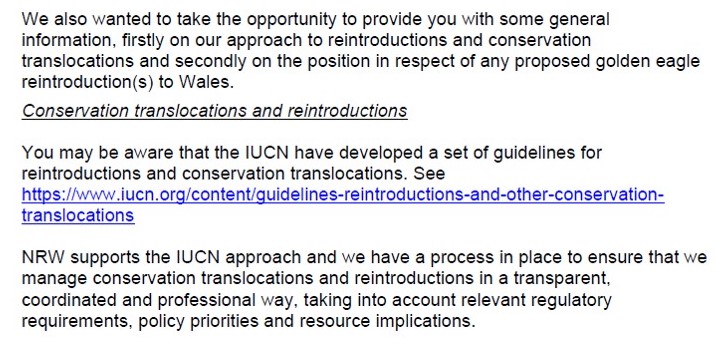
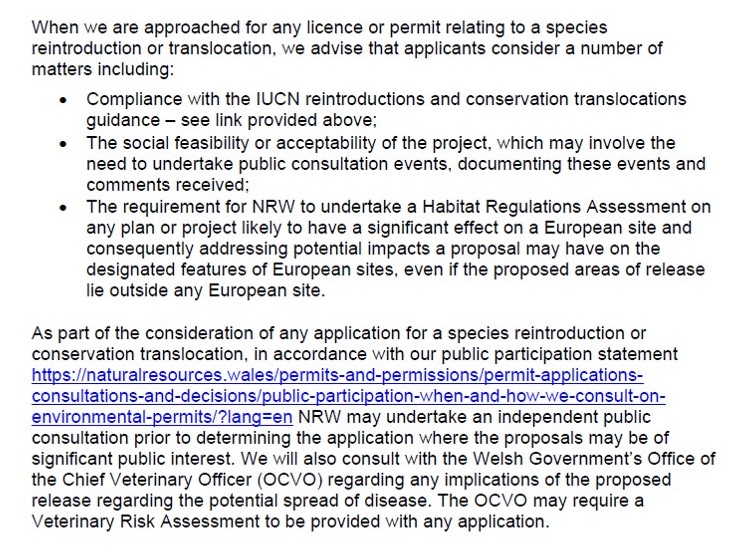
Of much more interest was the second part of the letter from NRW to me, where it sets out its position on reintroductions in general and then specifically on proposed golden eagle reintroductions. This information is useful as it clarifies several issues, including what licences would be required for a reintroduction and the option for NRW to conduct its own public consultation prior to a decision being made. This should be reassuring for many.
It’s also useful to see NRW’s commitment to meeting IUCN standards, and that includes addressing the persecution issue and whether it’s still a risk to golden eagles. Recent revelations exposed on this blog indicate that it is indeed still a significant risk (see here).
In amongst the released documents from NRW is correspondence from Wilder Britain last summer about an intention to submit licence applications to NRW by Xmas 2020 with a view to releasing eagles in summer 2021. This seems ambitious, even without the new Covid lockdown, especially when some key eagle experts in Norway (from where O’Donoghue has claimed to be sourcing donor birds) have apparently said they haven’t agreed to any such project.
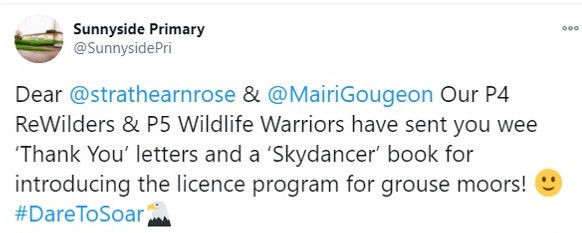
Some of you will no doubt remember / be aware of Sunnyside Primary School in Glasgow and its pupils’ involvement in conservation activities (e.g. see here for a previous blog on their response to the suspicious disappearance of golden eagle Fred in 2018).
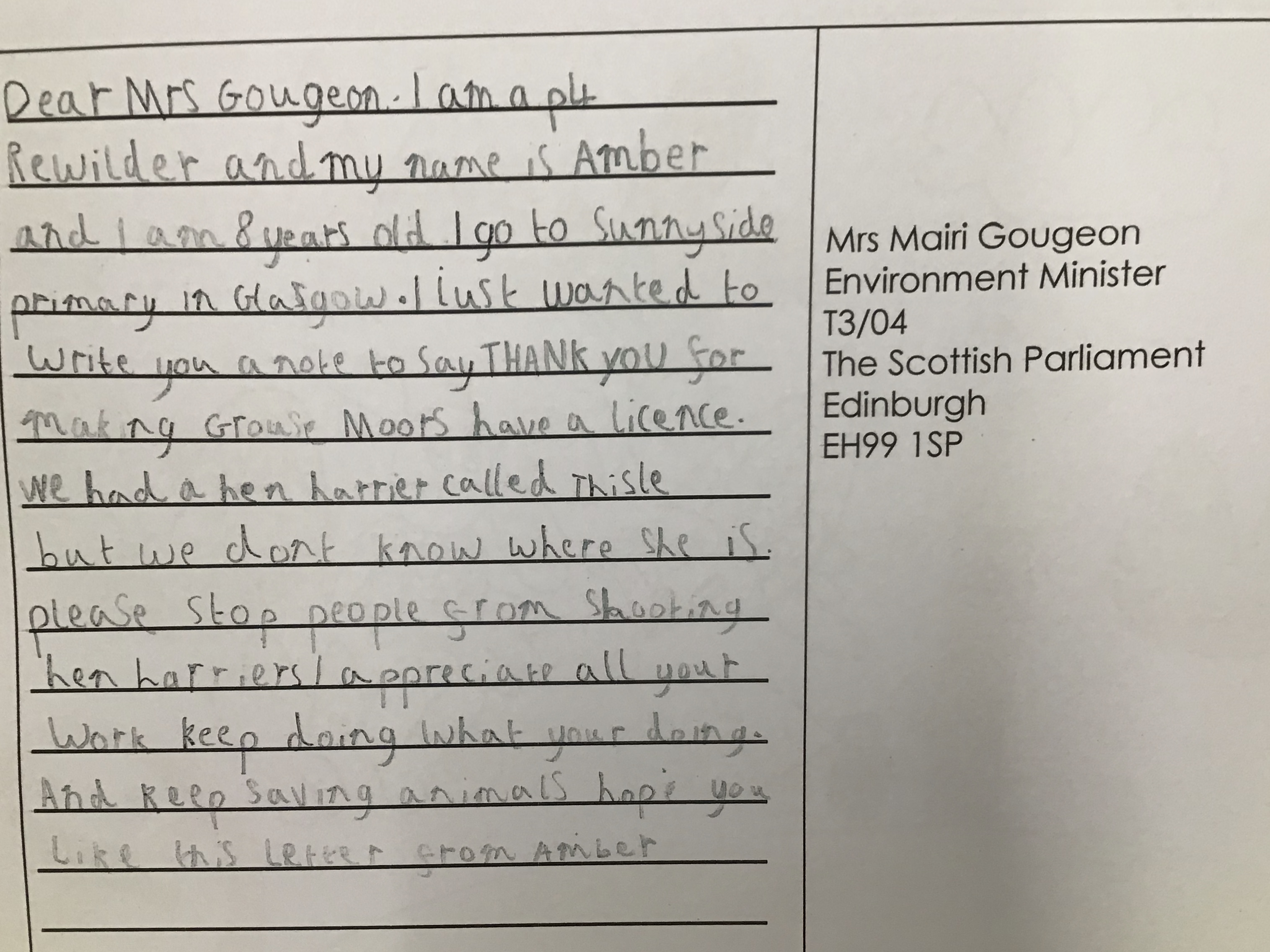
These school kids are only too well aware of what happens to raptors on some driven grouse moors, as they had named and were following an RSPB satellite-tagged hen harrier (‘Thistle’) in 2019 that later disappeared in suspicious circumstances on a grouse moor in Sutherland (see here).
Well here they are again, just before Xmas, responding to the Scottish Government’s commitment to establishing a licensing scheme for grouse shooting after many, many years of procrastination.
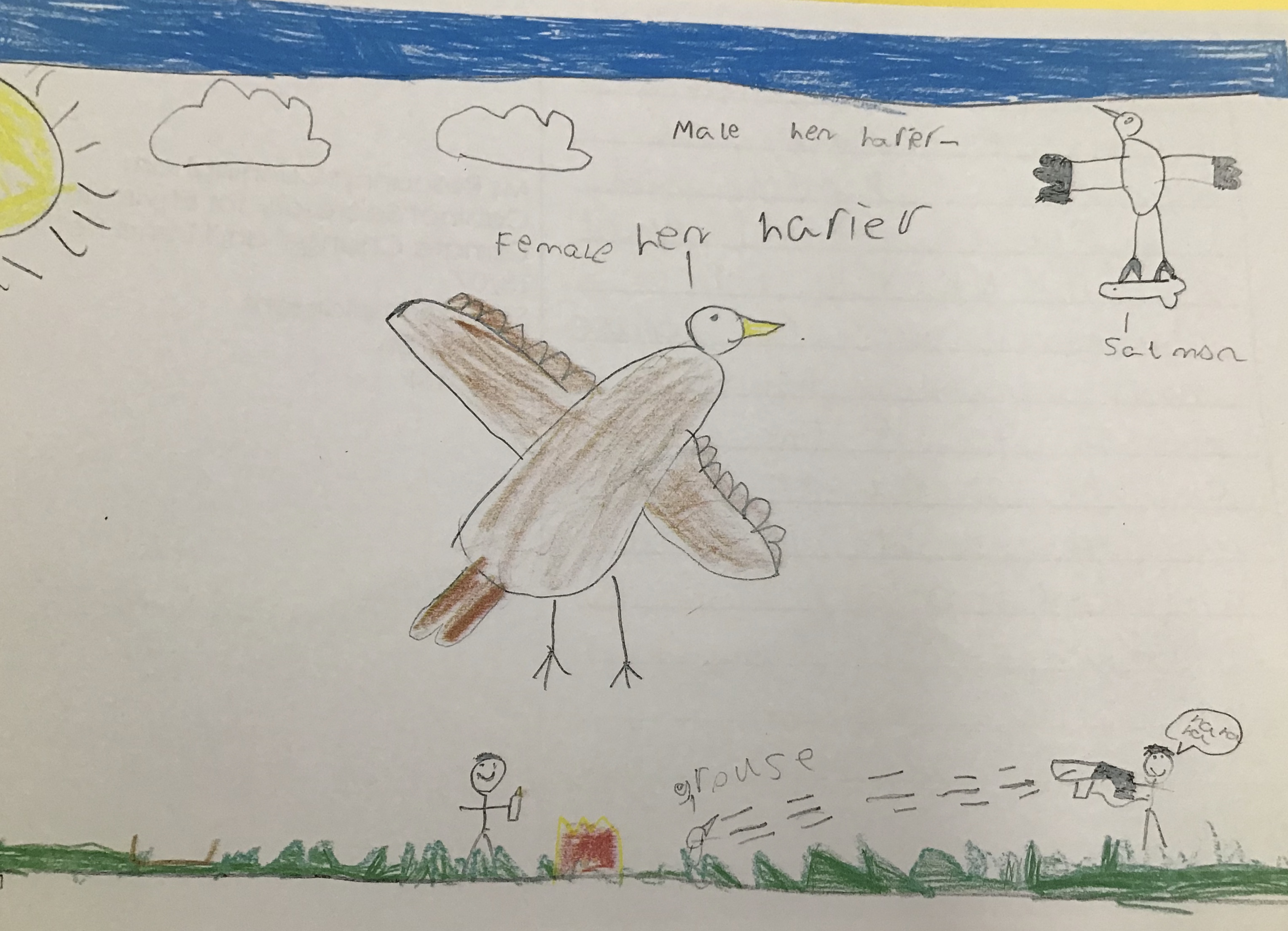
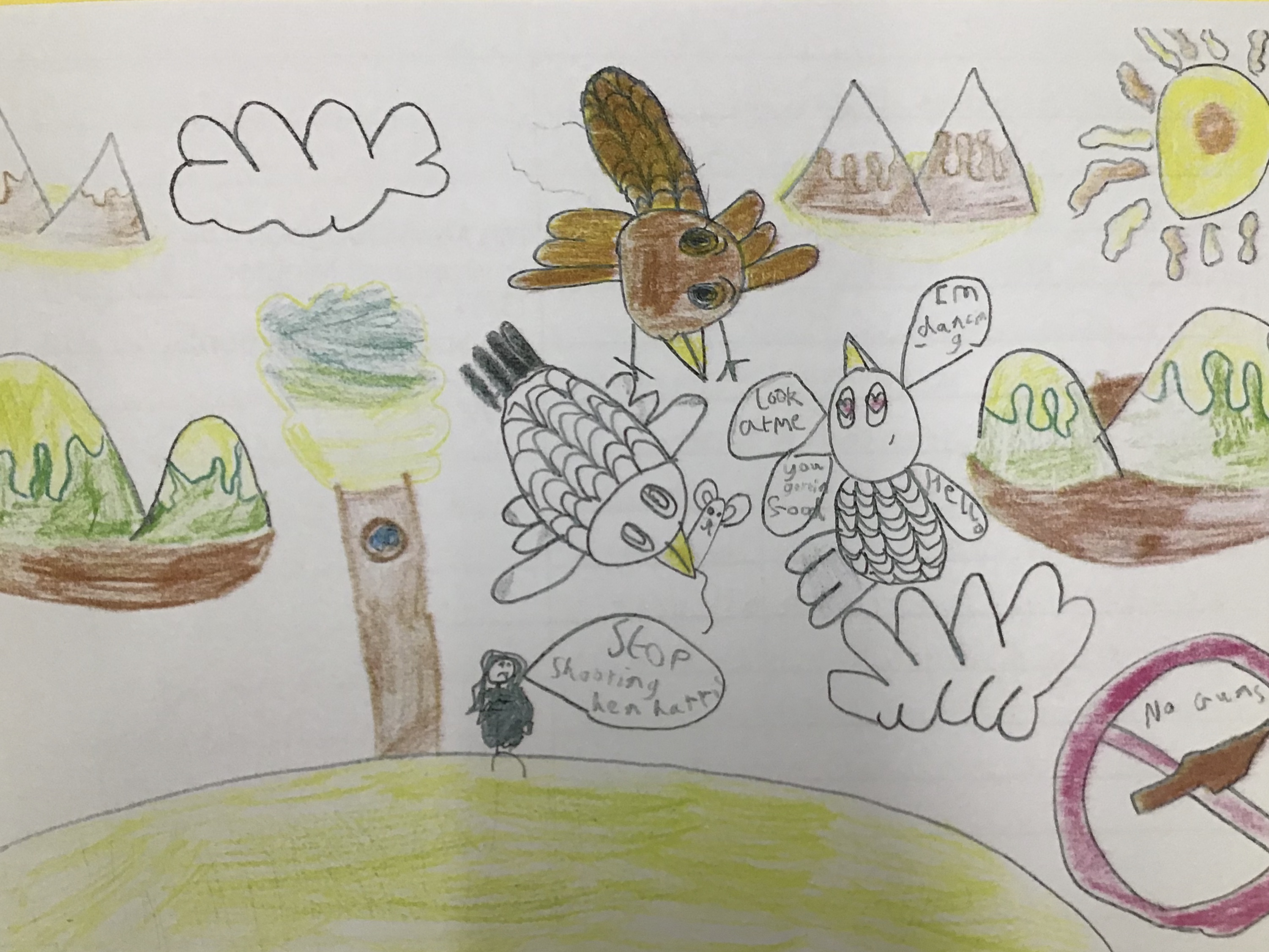
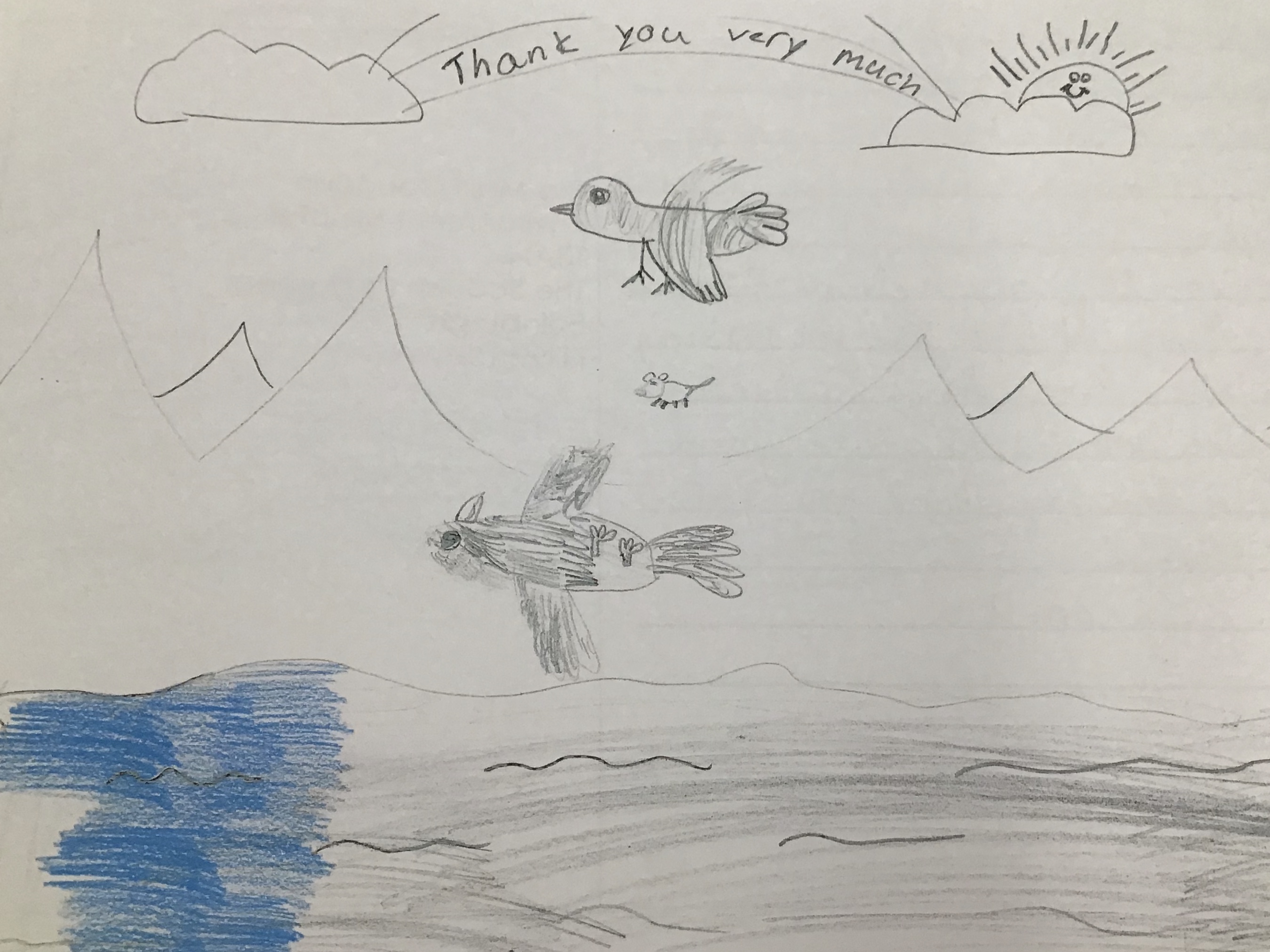
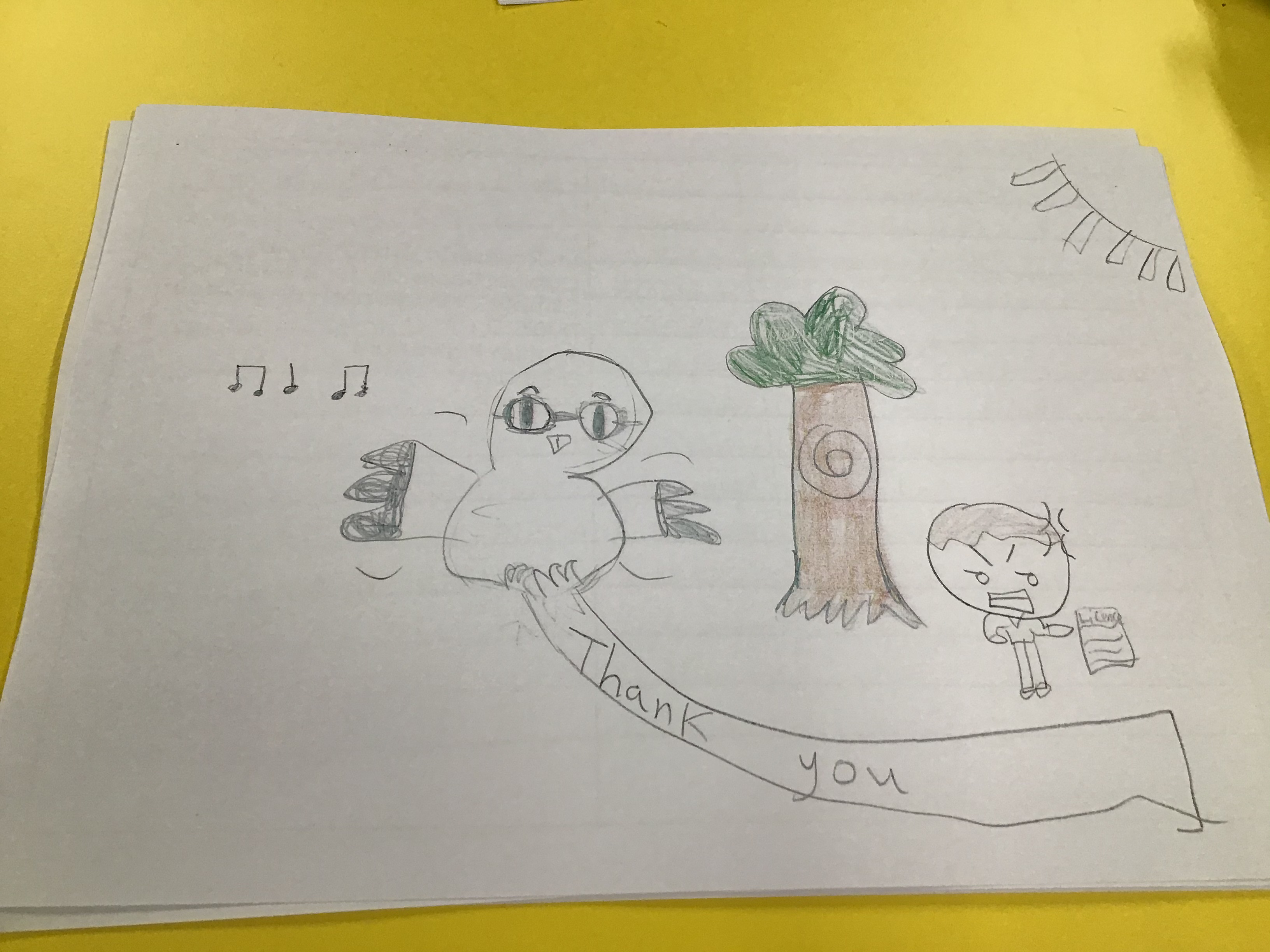
Here are few of those drawings and letters:
If you want to find out more about Sunnyside Primary School and its brilliant kids, have a watch of this video that they made for Hen Harrier Day 2020:
Andy Wightman MSP has resigned from the Scottish Greens as of today.
His letter of resignation, including his reasons for leaving, can be read here.
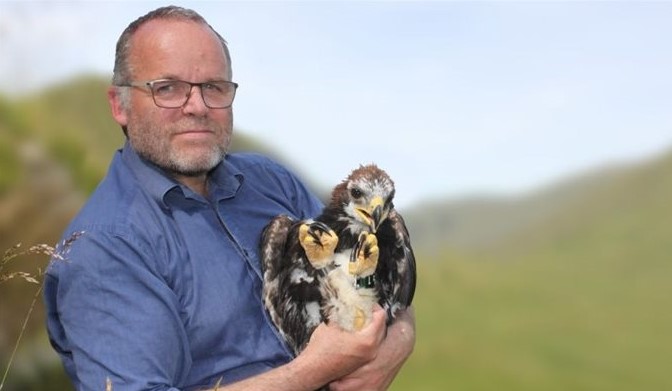
[Andy with golden eagle ‘Adam’, who later disappeared in suspicious circumstances on a grouse moor in Strathbraan (here). Photo by Ruth Tingay]
It’s reported in a number of papers (e.g. here) that he hasn’t ruled out standing as an independent, standing for another party, or indeed re-joining the Scottish Greens.
Andy has been a massive supporter of this blog right from the very early years and has been involved in addressing the issues highlighted on here in both a personal and professional capacity. I’m privileged to have worked with him on a number of platforms and look forward to finding new opportunities to continue.
UPDATE 28th February 2021: Andy Wightman to stand as Independent candidate for Highlands and Islands (here)
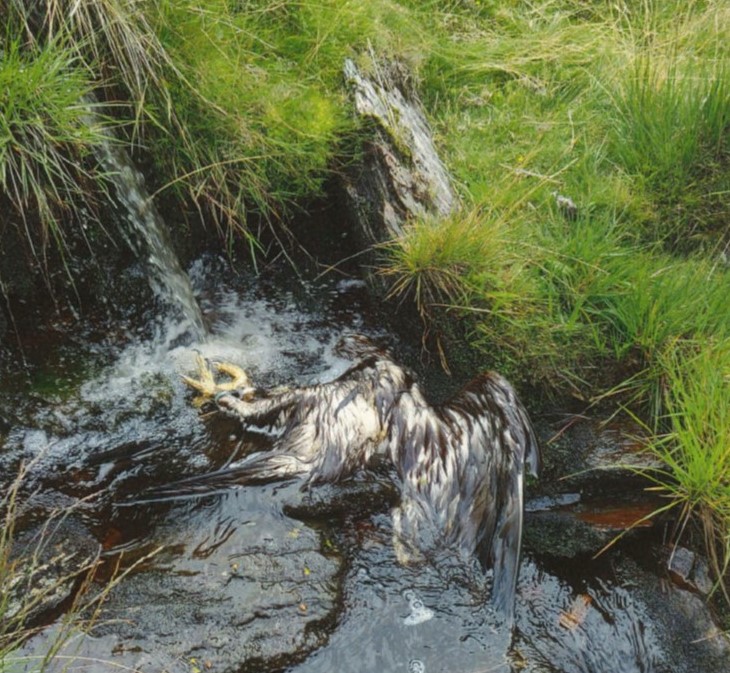
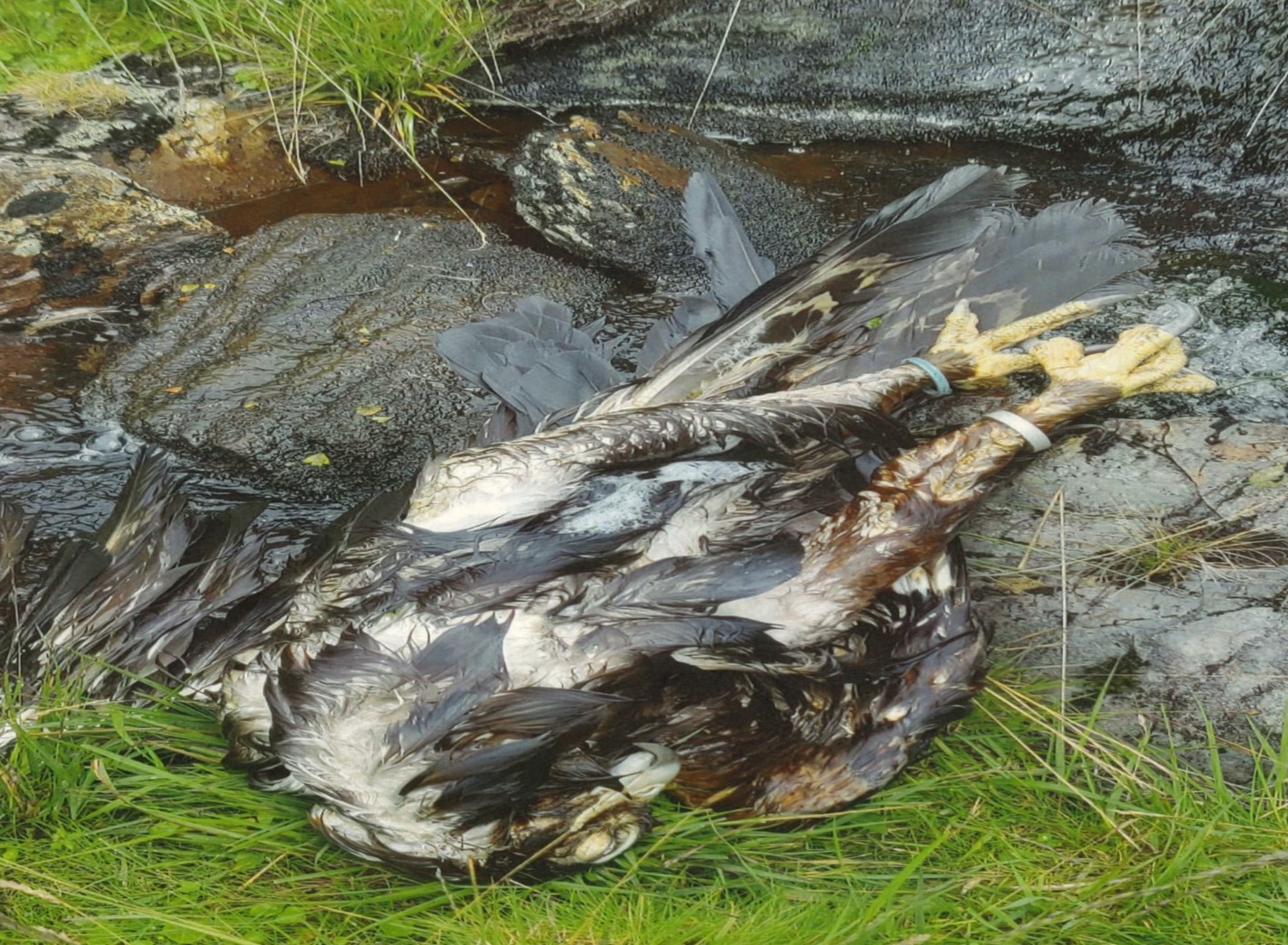
In August 2020 a walker found an adult golden eagle dead in a river in Powys, Wales.
The discovery prompted a great deal of media interest (e.g. here) as this eagle was believed to be the lone bird that had survived for approx 12 years in the wild in Wales, having escaped from captivity when she was three months old.
Just a few days before her corpse was found she’d featured in a BBC documentary presented by Iolo Williams, The Last Wilderness of Wales (available here on BBC iPlayer and well worth a watch for footage of this eagle doing her thing).
At the time of the news reports the cause of death was still to be established.
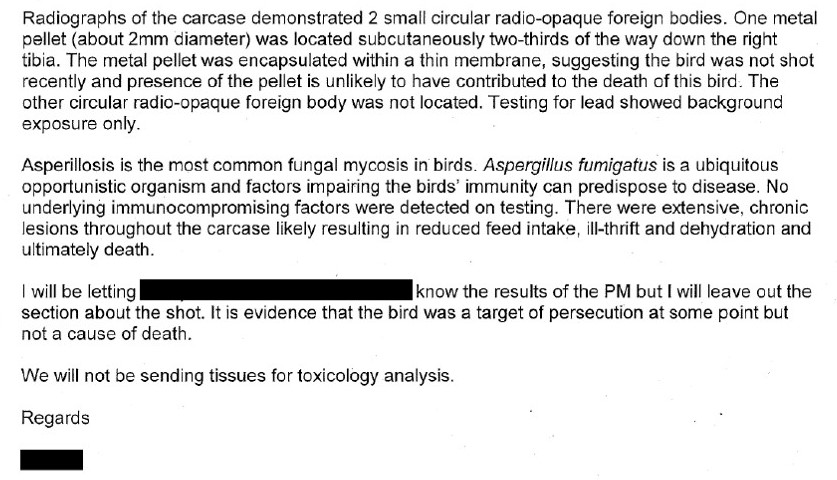
The Welsh Government organised for a post mortem where it was determined she’d died of systemic Aspergillosis. The PM report included the following description:
‘Asperillosis is the most comon fungal mycosis in birds. Aspergillus fumigatus is a ubiquitous opportunistic organism and factors impairing the birds’ immunity can predispose to disease. No underlying immunocompromising factors were detected on testing. There were extensive, chronic lesions throughout the carcase likely resulting in reduced feed intake, ill-thrift and dehydration and ultimately death‘.
That all looked straight forward and no cause for concern. However, an x-ray of the corpse had also revealed something much more sinister, as documented in the PM report as follows:
So, this golden eagle had been shot previously, although it’s not clear when and the pathologist thought this was unlikely to have contributed to the bird’s death.
Interestingly, the Welsh Government chose to suppress this information. Here is some internal correspondence, released under FoI, where the suppression is detailed:
In later correspondence also released under FoI, Welsh Government officials said this wasn’t deliberate suppression but just standard procedure when informing the original reporter of the incident about the cause of death, excluding any additional information that the PM may have uncovered. Government officials also stated that the Environment Minister had been informed about the gunshot injury.*
That seems reasonable behaviour under normal circumstances. However, finding the only golden eagle in Wales dead in a river couldn’t be described as ‘normal’ under any circumstances. And discovering that the eagle had been shot would also be of significant public interest, not least when there’s currently an active debate about the proposed reintroduction of golden eagles to Wales which could happen as early as next year (see here).
I’d say that public understanding of illegal persecution, including the targeting of a golden eagle, was actually fundamental to the debate.
Although according to an FoI response from the Welsh Government’s statutory conservation agency Natural Resources Wales (NRW) last month, officials there claimed to have received no correspondence about the shooting of this golden eagle either. That seems a bit odd, doesn’t it? Surely officials in the environmental section of the Welsh Government talk to officials in NRW, especially on a subject as significant as the shooting of a golden eagle?
It’s not the first time information about golden eagles in Wales has been suppressed. Last month NRW withheld correspondence it had had with Wilder Britain, one of two competing organisations involved with the proposed reintroduction of golden eagles to Wales (see here).
In an FoI refusal letter, NRW argued that Wilder Britain had refused permission to release its correspondence with NRW. I’ve lodged a review of that decision because I don’t believe it should apply to correspondence written by NRW to Wilder Britain in relation to a proposed reintroduction project. I believe the public have a right to know what advice NRW has been giving to someone proposing to reintroduce golden eagles to Wales and especially now that it’s been confirmed that Wales’s only wild-living golden eagle had at some stage been illegally shot.
*Update 12.24hrs: The person who took the dead eagle from the walker and delivered it for post mortem has been in touch to say the Welsh Government did provide details of the pellet and did not try to dissuade her from sharing that information with the media. This information is supported by some of the FoI material I’ve received, which shows that the Welsh Government informed her about the pellet sometime after they’d first mentioned to her that Aspergillosis was the cause of death, and seemingly only after being prompted by an outside agency to do so.
There is further correspondence, released under FoI which hasn’t been published here, in which the Welsh Government explicitly states, ‘We aren’t planning any proactive comms‘ [about the eagle being shot].
UPDATE 17.00HRS: This blog post has been picked up by Wales Online (here)
UPDATE: This blog post has been picked up by the Mail Online, who couldn’t report it accurately (claiming the eagle was shot twice) nor manage to acknowledge the source of their story).
UPDATE 16 February 2021: Toxicology analysis has confirmed this eagle had ‘high concentrations of rat poison in its liver, which may have contributed to its death’, according to the BBC (here)
Today marks one year since the Werritty Review on grouse moor management was submitted to the Scottish Government. And still no formal response.
The review itself took two and a half years to complete after Environment Cabinet Secretary Roseanna Cunningham announced its commission in 2017, on the back of the publication of another Government-commissioned review which showed clear evidence of deliberate and sustained illegal raptor persecution on many driven grouse moors. We’ve since seen more evidence pointing towards the inevitable fate of those birds.
And that 2017 review had been commissioned on the back of an RSPB report in 2016 that over a period of five years since 2011, eight satellite-tagged golden eagles had ‘disappeared’ in suspicious circumstances on grouse moors in the Monadhliaths in Highland Scotland.
The longer the Scottish Government delays taking evidence-based action against those criminals in the grouse shooting industry, the more eagles (and other raptors) are going to be illegally killed. There is absolutely no question that these crimes are continuing, despite enormous scrutiny and public condemnation, as demonstrated during lockdown when the poisoned corpse of a white-tailed sea eagle was found, face down, on a grouse moor in the middle of the Cairngorms National Park. Nobody has been charged for this horrendous crime. In fact there has never been a successful prosecution for killing an eagle in Scotland.
[A police officer examines the corpse of the poisoned white-tailed eagle, found dead on a grouse moor in the Cairngorms National Park]
For years the Scottish Government has promised further action if current measures proved to be ineffective. Time and time again, after each crime has been publicised, a succession of Environment Ministers has proclaimed, ‘We will not tolerate illegal raptor persecution’ and ‘We will not hesitate to act‘ (see here for a long list of examples).
And guess what? They’re still tolerating it and they’re still hesitating to act. Why is that?
Way back in February 2019, in a publicity fanfare, a claim was made that a licence application to reintroduce golden eagles to Snowdonia would be submitted to Natural Resources Wales (NRW) ‘by summer’ by an organisation called Wilder Britain (see here and here).
In November 2019 an FoI request to NRW revealed that no such application had been received (see here).
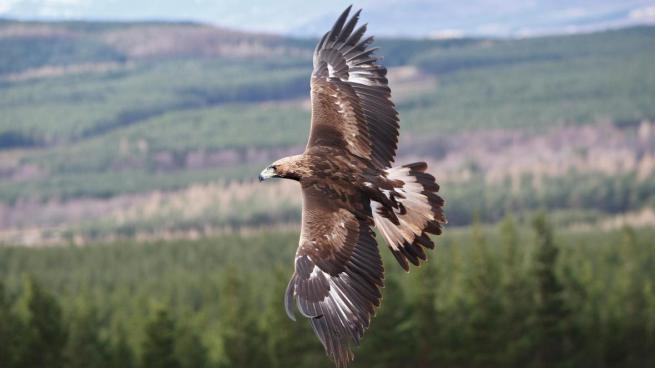
[A young golden eagle, photo Getty Images]
Dr Paul O’Donoghue of Wilder Britain was back in the press again in August this year, fundraising for his proposed reintroduction project, which raised questions about whether there was genuine intent to try and reintroduce golden eagles or whether it was just an ongoing publicity/fundraising stunt from the previous year (see here).
O’Donoghue hosted several poorly-attended public meetings this summer, some of them announced at very short notice, and these elicited some interesting commentary from those who managed to attend and also from members of the Welsh Parliament (see here and here).
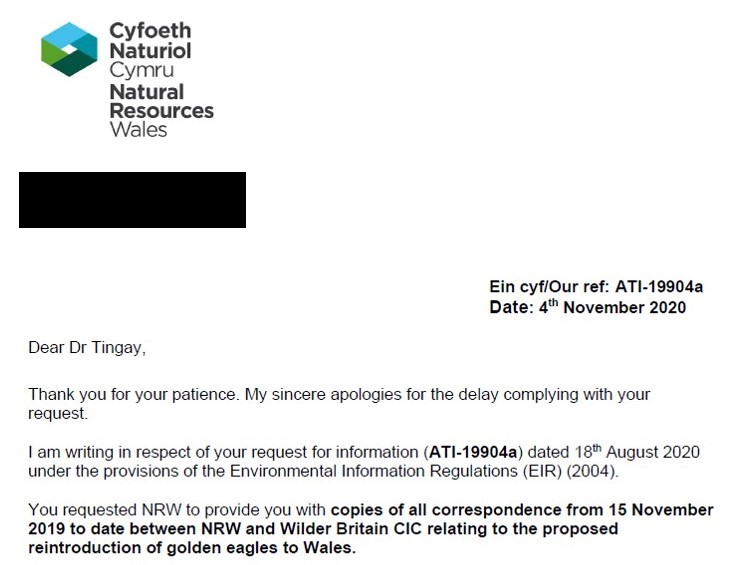
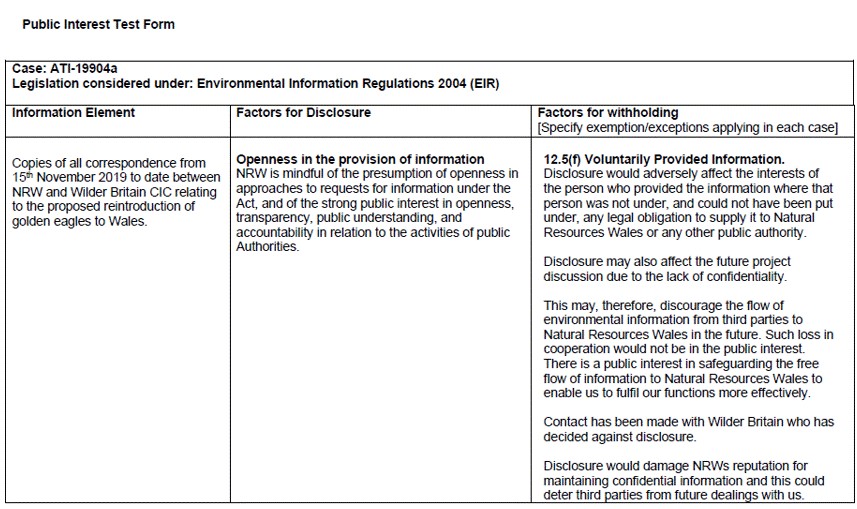
In August a Freedom of Information request was submitted to NRW to find out more details about O’Donoghue’s proposals. NRW has finally responded and has refused to release any information because it needed O’Donoghue’s consent and he has refused permission:
Interesting. An appeal has been lodged with NRW because I believe it’s in the public interest to see what advice NRW has been giving to O’Donoghue about a proposed reintroduction scheme.
Meanwhile, a more open and transparent organisation interested in a Welsh reintroduction of both golden and white-tailed eagles, under the project Eagle Reintroduction Wales, is continuing its involvement in online interviews and question & answer sessions which allow any interested member of the public an opportunity to find out more details, ask questions and listen to the responses.
The next one is this evening at 17.30hrs with ERW project manager Dr Sophie-lee Williams and can be watched here.
As regular blog readers will know, there are currently proposals to reintroduce eagles to Wales by two organisations with very different approaches: Wilder Britain and the Eagle Reintroduction Wales Project.
The Eagle Reintroduction Wales Project, led by Dr Sophie-lee Williams, is currently assessing the feasibility of reintroducing golden and white-tailed eagles across Wales and has conducted extensive research to inform its proposals. Some of this research has already been published in peer-reviewed journals (e.g. here) and more output is expected shortly. The ERW Project is working with Cardiff University (where Sophie-Lee has just completed her PhD on this topic) and is liaising closely with a network of national and international eagle experts.
There are two forthcoming opportunities to ask Sophie-lee about any aspect of the project:
Facebook live interview/Q&A session on Sunday 8th November at 17.30hrs. Interview hosted by Mike Raine here
Facebook live interview/Q&A session on Tuesday 10th November at 19.00hrs. Interview hosted by Bywyd Gwyllt Glaslyn Wildlife here
Hopefully these live interviews will be recorded so if you can’t make the live session you can catch up with the videos later.
Regular blog readers will know that there are currently two separate projects, by two very different organisations, considering the reintroduction of eagles in to Wales.
[Golden eagle photo by Steve Liptrot]
One organisation called ‘Wilder Britain‘, headed by Dr Paul O’Donoghue, is apparently seeking to reintroduce a total of ten golden eagles to Snowdonia National Park but he’s what might be described as a ‘controversial’ figure (google Lynx reintroduction and Wildcat Haven for examples or just read the previous blogs, linked below) and the detailed specifics of his eagle reintroduction research and proposed plan have yet to be made public.
The other organisation, called Eagle Reintroduction Wales Project and headed by Sophie-Lee Williams, is currently assessing the feasibility of reintroducing golden and white-tailed eagles across Wales and has conducted extensive research to inform its proposals. Some of this research has already been published in peer-reviewed journals (e.g. here) and more output is expected shortly. The ERW Project is working with Cardiff University (where Sophie-Lee has just completed her PhD on this topic) and is liaising closely with a network of national and international eagle experts.
This year due to the pandemic, the ERW Project is short of the Government funding that is needed to complete the feasibility studies. ERW has set up a crowdfunder (here) to raise £25K to pay for a full-time researcher to continue this work and conduct public consultations. So far almost £6.5K has been raised. The crowdfunder was due to close last week but has just been extended for a further two weeks to try and attract more support.
For those of you interested in the ERW Project, have a look at this video of Sophie-Lee recently discussing her research findings with the Royal Society of Biology. Her talk lasts for approx 50 minutes and then there’s over an hour of questions and answers. It’s well worth your time.
If you’re able to support the ERW crowdfunder with a small donation please click here.












 Raptor Persecution UK