It’s just ‘a few rogues’

One of the most significant barriers to ‘sorting out’ the widespread illegal persecution of raptors in Scotland is getting anyone to accept responsibility for these crimes. Previous analyses by the RSPB have shown an irrefutable link between illegally-killed raptors and the game-shooting industry (e.g. see here). Time and time again, scientific peer-reviewed studies have also shown the incontrovertible relationship between areas that are ‘missing’ breeding raptors such as golden eagles and hen harriers, and areas managed as sporting grouse moors (e.g. take a look at the government-funded Conservation Framework Reports for the golden eagle and hen harrier as a starter).

Despite the long-standing and highly-regarded body of evidence, the game-shooting industry continues to refuse responsibility. The latest article in the Scotsman (see here) provides a perfect example of this.

It’s a handful of “rogue estates” carrying out poisonings, say the gamekeepers. It’s a “handful of estates” says David Hendry of the Cardney Estate. It’s “a minority” says Susan Davies of Scottish Natural Heritage. It’s a “tiny minority” according to the SGA response to the article on their Facebook page.

It’s an interesting choice of words isn’t it? The term ‘rogue’ is often used in a jocular sense in today’s society – “Oh, he’s just a loveable rogue”, meaning yes an individual is bending the rules but he’s not doing any real harm, he’s alright really. The term ‘rogue’ is also used to infer just one or two individuals (e.g. it was a rogue crocodile, or it was a rogue tiger that attacked the man), as is the term ‘a handful’. What is a handful? One or two? Not more than five? Not more than ten? The term ‘minority’ (depending on the context) refers to less than the majority.

Do any of these words adequately describe the extent of illegal raptor persecution on Scottish sporting estates, or are they just words used to deflect the increasingly obvious conclusion that illegal raptor persecution is endemic across many sporting estates? Let’s look at the stats.

This blog has been accused of using out-of-date information to create the false illusion of widespread raptor persecution. It’s a valid criticism in some ways as our Named Estates page dates back to incidents that were recorded in 1979. Actually it only includes one record from 1979 but to be fair the list does include a lot of reported incidents from the 1980s and 1990s. These early reported incidents were only used to illustrate the historical nature of illegal raptor persecution – i.e. it’s been going on for decades, but to be completely upfront we have since indicated which of those estates are known to have since changed hands (and thus potentially changed their ‘management’ practices). So, let’s just look at reported incidents from the last two years – that is, from January 2009 to March 2011, the most up-to-date figures available in the public domain.

During this period, twenty-six named locations have been identified as places where dead raptors have been reportedly found in suspicious circumstances. Most were poisoned but ‘a handful’ were shot or trapped and one (on Logie Estate) was found dead but the cause of death remains unknown. Of these 26 locations, 14 were on named estates: Auch Estate, Edradynate Estate, Farr and Kyllachy Estate, Glenbuchat Estate, Glenogil Estate, Invercauld Estate, *Leadhills Estate, Logie Estate, Millden Estate, Mountquhanie Estate, *Moy Estate, *Redmyre Estate, *Skibo Estate, Strathspey Estate. The remaining 12 locations were un-named and may or may not involve estates: eight in 2010 and four between Jan/Mar 2011. Of course, just because an illegally poisoned, shot or trapped dead raptor is discovered at a location doesn’t necessarily implicate the estate owner, shooting tenant or gamekeeper. It could just be a series of unfortunate coincidences, even though in the Scotsman article David Hendry of Cardney Estate admits that “there are a number of estates using poison still.” On only four of the above estates have gamekeepers been convicted for related crimes (Leadhills, Moy, Redmyre and Skibo).

If we expand the search to the previous five years (2006-2011 – as this is still relatively recent), then obviously the list grows:

*Birthwood Farm, *BlythFarm, *Cabrach Estate, Clova Estate, Dawyck Estate, Dinnet & Kinord Estate, Dunecht Estate, *Frogden Farm, *Glenbuchat Estate, Glenfeshie Estate, Glenogil Estate, Glen Turret Estate, *Innes House Estate. (The ones with an asterisk indicate a conviction during this period).  In addition, a further six un-named locations are reported.

If we remove from this expanded list those estates that were already included in the two-year analysis (i.e. Glenbuchat, Glenogil) then we are left with a total of 25 different estates where dead raptors have been reportedly discovered in suspicious circumstances in the last five years. Add to these the 18 un-named locations and you get a running total of 43 different locations, assuming that all of the un-named locations were different to the named locations.
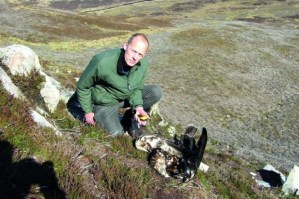
Forty-three. Is that ‘a minority’? Well yes, in the strictest sense it is because there are hundreds of shooting estates in Scotland. The exact number seems hard to pinpoint but it’s certainly at least in the low hundreds, which means that 43 is a minority in this context. But is it a ‘tiny minority’? Is it ‘a few rogues’? Is it ‘a handful’? No it isn’t. It’s a lot more than that and the game-shooting industry is being disingenuous if it continues to peddle this rural myth. But of course they’ll continue to peddle it because they want us to believe that they’re a law-abiding industry who just happen to want licences to be allowed to legally kill ‘just a few rogue’ raptors.

And what of the locations that haven’t been reported but can be implied by the ‘missing’ breeding raptors reported in the scientific papers? How many of these locations are there? Who knows. One thing is for sure – if the landowners and gamekeepers won’t admit responsibility for the incidents we do know about, they sure as hell aren’t going to admit to the ones we don’t know about! The representative bodies all say they’re working hard behind the scenes to get the ‘rogues’ to stop, but they’ve been saying that for a long, long time and here we are in 2011 and the killing continues up and down the country, with the exception of ‘a handful’ of decent estates who proactively welcome breeding raptors. Why does it continue? Because the majority know they can get away with it, just as they have been doing for the past 50+ years.

Masters of spin

A news article (here) has appeared on the SGA website this morning claiming that “Gamekeepers are the unsung heroes of conservation“. Let’s look at the ‘evidence’ produced to back up this claim.

It apparently comes in the form of a new report by “independent” charity GWCT, detailing the results of a UK-wide gamekeeper survey. Earlier this year, gamekeepers were asked to write down what species were found on their shoots. It’s not clear what scientific field surveys, if any, were conducted, because the GWCT report has not yet been published. Let’s give them the benefit of the doubt and assume that scientifically-rigorous transects were repeated across the shooting lands to support these ‘scientific’ findings.

According to the SGA website, “over 80% of respondents reported having kestrels, buzzards, sparrowhawks, barn and tawny owls on their patch.” The article doesn’t say if these were dead or alive. It also doesn’t say how many reported having golden eagles, white-tailed eagles, hen harriers, goshawks, red kites, short-eared owls or peregrines on their patch, which would have been far more interesting. We’ll have to wait for the publication of the report.

The article continues – “The area of land managed by gamekeepers who took part in the survey (1,337,454 ha) is five times the total area of all Britain’s National Nature Reserves (255,789 ha) and 13 times the total area of all RSPB reserves (101,581 ha).” SGA chairman, Alex Hogg interprets this as: “It’s clear that there’s more wildlife on the land managed by keepers in Britain than on all the nature reserves and special protection areas put together.” Erm, I don’t think that’s clear at all, Alex. What these figures show, if they are accurate, is that gamekeepers ‘manage’ five times the total area of NNRs and RSPB Reserves (which is a worrying statistic in itself). What the figures do not show is a comparison of wildlife density between these managed areas. Unless of course gamekeepers have been conducting their scientifically-rigorous transects across NNRs and RSPB Reserves as well. Again, we’ll have to wait for the publication of the report.

The article goes on to disclose the ‘informal’ working relationship between gamekeepers and the law enforcement agencies and generally tells us all what great guys (“heroes“) the UK’s gamekeepers are. Most sensible people will look at the annual raptor persecution statistics and the annual convictions of gamekeepers for wildlife crime offences, and make up their minds about how ‘heroic’ some of these keepers are. It’s a shame, because undoubtedly there are a handful of truly ‘good guys’ in the industry, but as we keep seeing, there are an awful lot who repeatedly bring the industry into disrepute by their criminal activities.

An article about the forthcoming report appeared in The Telegraph (here). Written by Environment Correspondent Louise Gray, it’s littered with inaccuracies including, “A number of gamekeepers have even been imprisoned for illegally poisoning rare birds of prey“. Er, no they haven’t.

A note of interest – the “independent” charity GWCT who organised this survey (see here for a recent post on this so-called ‘independence’) has listed William Powell amongst its list of “dedicated supporters and corporate partners” (sponsors?) at this year’s CLA Game Fair (see here). Would this be the same William Powell (Gunmakers) that was sold to Mark Osborne in January 2008?

Reintroductions “a threat to biodiversity”

An astonishing display of ignorance was on show in The Telegraph this week. The group calling themselves the Veterinary Association of Wildlife Management (VAWM) has claimed that the reintroduction of native species, formerly wiped out by persecution (e.g. sea eagle and red kite) are “potential man-made threats to biodiversity“. Really?  Methinks someone at the VAWM needs to read up on the Convention of Biological Diversity.

The VAWM, formerly known as Vets for Hunting (hmm, another group with a PR-induced name change – sound familiar?), also claim that the UK’s population of red kites was ‘threatening songbird species’. Ha ha ha ha ha ha ha ha ha ha ha ha ha ha ha ha! Perhaps VAWM spokesman Dr Lewis Thomas (a retired veterinary pathologist) should swap his rusty old scalpel for a shiny pair of binoculars. Ignorance is no excuse. Telegraph article here.

Interestingly, according to their facebook page, the Scottish Gamekeepers Association agrees with the VAWM’s sentiments on reintroductions. And this from a group whose members routinely rear and release millions of non-native gamebirds into our countryside every year, without any accountability for the environmental damage this may cause. Amazing.

Meanwhile, back in the real world of conservation, RSPB Scotland has secured major funding from the Heritage Lottery Fund to extend their fantastic sea eagle reintroduction project for another year (see here).

Update on the outcome of the Holkham gamekeeper trial

Further to Saturday’s blog post, more information has come to light in the form of a press release from Knights Solicitors, who instructed the defence.

It’s well worth a read, particularly the last paragraph. Please also note that the statement says Nicholas Parker resigned his position as head gamekeeper at Holkham Estate shortly after the allegations were made.

Knights Solicitors press release here

Also an article (here) with Nick Parker being interviewed by The Shooting Times after the trial.

Former Holkham Estate head gamekeeper gets conditional discharge

The case against former Holkham Estate Head Gamekeeper Nicholas Parker was finally heard yesterday at Norwich Magistrate’s Court. He was given a conditional discharge.

Several charges against him had been dropped; one of them reportedly because much of the prosecution’s evidence related to allegations from 2008 and the Wildlife & Countryside Act 1981 required evidence to be within two years.

The District Judge, Philip Browning, gave the conditional discharge after hearing how much Parker had already ‘suffered’, after his firearms certificate had been confiscated and because the case had been given significant public attention. Clever defence barrister. A barrister of the same name is listed as also being a Council Member of the British Association of Shooting and Conservation (BASC) and an expert in firearms law here.

Court report here

Background to this story here, here, here and here

An explanation of what a conditional discharge is here

JULY 18 2011 UPDATE here

A recent history of golden eagle persecution in Scotland

Two years ago in July 2009, Alma, a two-year golden eagle who had been satellite-tracked across Scotland from her birth place on the Glenfeshie Estate, was found dead. She was discovered lying face-down in the heather on Millden Estate, Angus and later tests showed she had been poisoned by the banned pesticide Carbofuran.

The police conducted a search of Millden Estate and the local community responded with anger to Alma’s death. They wrote letters of concern to the local estates, the Environment Minister and the Chairman of Scottish Natural Heritage. On the second anniversary of her death, has anybody been brought to justice for killing her? Not that we know of.

Alma’s death is not a stand alone case, as we are all too aware. Prior to her killing in 2009, 17 golden eagles were confirmed victims of shooting, trapping or nest destruction in Scotland, between 1989 and 2009, according to this RSPB report. In addition, in the same report a further 24 golden eagles were confirmed victims of illegal poisoning in Scotland during the same period, including Alma.

The killing didn’t end with Alma. Since her death in 2009, a further 5 golden eagles have been confirmed killed – four of them last year (3 of them at Skibo Estate and one on an un-named grouse moor near Inverness ) and at least one known death so far this year, on North Glenbuchat Estate. That makes a total of 46. And these are only the ones we know about. There are other suspicious incidents, such as the four golden eagle leg rings reported to have been found in 2010 in the possession of convicted gamekeeper James Rolfe of the Moy Estate. As this report points out, these rings were originally fitted to golden eagle chicks prior to their fledging from nests in Sutherland, Grampian, Mull and Skye. These rings must have been removed from the dead eagles but how they came to be in Rolfe’s possession is unclear.

Add these four to the grand total and you get a minimum of 50 golden eagles illegally persecuted in Scotland since 1989. Nobody has ever been convicted for any of these reported crimes.

Howden Moor sporting tenant is a Purdey Award winner

Following the conviction this week of gamekeeper Glenn Brown on the National Trust’s Howden Moor in the Upper Derwent Valley, Derbyshire, the sporting tenant has been named on the Birdguides website as Geoff Eyre (scroll to the comments section under the article).

According to The Moorland Association website, Geoff Eyre won the 2005 Purdey Award for Game and Conservation, for his Howden Regeneration Project. (As an aside, scroll down the page to see another 2005 Purdey Award winner, head gamekeeper Jimmy Shuttlewood from the Snilesworth Estate North Yorkshire – who was later convicted in 2008 with two underkeepers for the use of cage traps to capture birds of prey – story here).

Geoff Eyre has had a lot written about his pioneering work to restore Howden Moor to its former glory as a viable grouse moor. Here in 2006 he spoke about the ‘beneficial’ work of his gamekeeper. Also in 2006, this article was written in The Telegraph about the return and then subsequent loss of a pair of hen harriers on Howden Moor. In 2007, he hosted a visit by a DEFRA Minister for Landscape and Rural Affairs, reported here in The Shooting Times, accompanied by gamekeeper Glenn Brown. The Minister was impressed with what he saw, calling the project an ‘inspiration’ and a good use of public money.

One can only assume that Geoff Eyre was completely unaware of the criminal activities of his gamekeeper. You can ask him about it, and whether Brown has been sacked, at National Trust activity days in September 2011 – details here.

Great mysteries of our time

Another article in the latest edition of Legal Eagle is the case of an un-named gamekeeper with an un-named employer in Tayside in eastern Scotland. It is reported that in April 2010, Mr Mystery Gamekeeper was charged with various offences alleged to have taken place in woodland near Kirriermuir, including: failing to inspect a snare, setting in position or otherwise using snares where an animal caught would be likely to become fully or partially suspended, failing to release or remove an animal from a snare and by omission caused a fox unneccesary suffering. The outcome of these charges? Mr Mystery Gamekeeper received a Fiscal’s warning. So why the coyness over the identity of Mr Mystery Gamekeeper and his mystery employer? Does he or his employer have a super-injunction from the High Court that prevents anyone mentioning their names? Given the on-going problem of wildlife crime in this region in particular, how can it be in the public’s interest to keep this information under wraps? It’s a mystery all round.

Talking of mysteries, here’s an excerpt from another article in this issue of Legal Eagle. It’s a quote attributed to Mr Tom Dysart, who leads the Crown Office & Procurator Fiscal Service (COPFS) on wildlife crime:

Scotland’s prosecutors are committed to providing a powerful and effective deterrent to those who commit crimes against wildlife and the environment. We are determined to ensure that COPFS plays its part in ensuring that Scotland’s rich and diverse natural heritage is protected“.

So the mystery is, when will we see this ‘powerful and effective deterrent’ in action? More importantly, when will the criminals see it so these seemingly endless wildlife crimes become less prevalent?

Head gamekeeper jailed for cannabis factory on sporting estate but not charged for poisoned buzzard

In April 2010, we reported on the conviction of 26 year old gamekeeper Ben Walker, who was found guilty of 17 offences relating to the killing of protected species with poisonous baits on the Sufton Estate in Herefordshire in late 2009 (report here). During the police investigation into the alleged criminal activities on this sporting estate, it is reported that a poisoned buzzard was found in an outbuilding used by his boss, head gamekeeper Mark Rigby. As usual, it was not possible to ascertain who was responsible for the death of this bird – even though it might appear obvious. There are no reports of either keeper being charged for possession of the poisoned bird. However, a search of an adjacent outbuilding uncovered what has been described as ‘a large cannabis cultivation operation’. It seems it was not so difficult to establish the identity of the guilty party in this instance, because, according to the RSPB, at Worcester Crown Court on 24 November 2010 head gamekeeper Mark Rigby pleaded guilty to four counts of producing and possessing a Class B drug with intent to sell and he was imprisoned for two years.

The conviction of Rigby is reported in the latest issue of Legal Eagle, the RSPB’s investigations newsletter, here.

Fund-raising sky dive by OneKind investigator – please support him!

We have received the following message from a member of the  investigations team at the Scottish charity OneKind. You may recall OneKind was instrumental in catching criminal gamekeeper Lewis Whitham placing a poisoned bait on Leadhills Estate last year. ‘Steve’ is undertaking a charity sky dive at the end of August to raise funds for field equipment and also to raise awareness about the on-going illegal raptor persecution in this country. Please support him!

Hi, Thank you for this valuable site. Nothing compares to it on the web and is a reminder, if ever some of us need it, to the true and serious problem that we have in Scotland as to the persecution of birds of prey. My investigations and research over recent years has lead me to areas of Scotland where I have not only come across poisoned and shot raptors, but I have even witnessed a gamekeeper setting out carbofurin onto a rabbit in an area where raptors fly.

At every opportunity we must remind the general public that reports of incidents involving raptor persecution are only the tip of the iceburg. Crimes against birds of prey are almost always carried out in isolated areas where the public rarely walk and it is often only chance that these poisoned or shot birds are discovered. For every raptor I hear killed then I times that by ten for those that the perpetrator of these serious crimes takes away, burns, buries or are lost amongst the heather or within the woodlands.

At the end of August I am doing a fund raising skydive to raise funds for the investigations department at the Edinburgh animal charity OneKind and also to highlight the serious problems that we have in Scotland of raptor persecution. Please could I use this opportunity to give you the link to my skydive fund raising page. Anything that people could donate would go directly to obtain equipment to help me keep one step ahead of those that I investigate. Many thanks“.

Please sponsor ‘Steve’ here and read about the equipment he hopes your sponsorship money will buy.