Some comments on that Channel 4 News report

Channel-FourFor those who missed it, the Channel 4 News report on the illegal persecution of raptors on Scottish grouse moors can be watched here for a few days.

First of all, we need to be celebrating that raptor persecution has been featured on a national mainstream TV news channel. What a long way this subject has come. The awareness-raising power of a news report like this should not be underestimated. Since the programme aired four hours ago, we’ve already been contacted by three journalists whose interest has been piqued. Well done Channel 4 News.

There were excellent interviews with Ian Thomson, Head of Investigations at RSPB Scotland, who referred to “an absolute catalogue of illegal killing” over the last few years in the Angus Glens (e.g. see here), and Logan Steele of the Scottish Raptor Study Group, someone who has decades of first-hand experience recording the deaths of illegally-killed raptors in this area and beyond.

But perhaps the best interview was that with Scottish Gamekeepers’ Association Chairman, Alex Hogg. We couldn’t have wished for a better performance. Telling lies on national telly is never a good strategy. Especially when you deny that gamekeepers are involved with the poisoning, shooting and trapping of raptors, knowing full well that there is a public record of gamekeepers who have been convicted for doing just that, as well as committing other wildlife crimes. Here is a quick list of 14 convicted gamekeepers just covering the last two years (full details of each case can be found elsewhere on this blog) –

Jan 2012: Gamekeeper David Whitefield convicted of poisoning 4 buzzards.

Jan 2012: Gamekeeper Cyril McLachlan convicted of possessing a banned poison.

April 2012: Gamekeeper Robert Christie convicted of illegal use of a trap.

June 2012: Gamekeeper Jonathan Smith Graham convicted of illegal use of a trap.

Sept 2012: Gamekeeper Tom McKellar convicted of possessing a banned poison.

Nov 2012: Gamekeeper Bill Scobie convicted of possessing and using a banned poison.

Jan 2013: Gamekeeper Robert Hebblewhite convicted of poisoning buzzards.

Feb 2013: Gamekeeper Shaun Allanson convicted of illegal use of a trap.

Feb 2013: Gamekeeper (un-named) cautioned for illegal use of a trap.

May 2013: Gamekeeper Brian Petrie convicted for trapping offences.

June 2013: Gamekeeper Peter Bell convicted for poisoning a buzzard.

July 2013: Gamekeeper Colin Burne convicted for trapping then battering to death 2 buzzards.

Sept 2013: Gamekeeper Andrew Knights convicted for storing banned poisons.

Dec 2013: Gamekeeper Wayne Priday convicted for setting an illegal trap.

There are a further six cases either currently under way or due to start, all involving gamekeepers and all accused of alleged persecution including the poisoning, shooting, trapping and battering to death of birds of prey.

After lying about the involvement of gamekeepers in raptor persecution crimes, Hogg then went on to say that gamekeepers want a system in place whereby “if the populations [of raptors] are too high all over the United Kingdom” then a decision needs to be taken as to whether the species needs to be culled on grouse moors. But, “We don’t want to cull them; we’d rather the government done it”.

If anyone can explain to us (a) what is a “too high” population? and (b) why a species’ national population size should have any bearing on a proposed cull of that species on a particular grouse moor, please do enlighten us.

The final interview was a very short one with the Environment Minister, who was asked why he won’t “just fully regulate the [game-shooting] industry like other countries”?

His answer: “We want to avoid putting in place something that might be seen as a draconian response, or too restrictive a response. We’re not saying we wouldn’t do this, eventually…”

In other words, giving current measures ‘time’ to take effect (without actually defining the time scale) is just an excuse to do nothing and appease the mighty landowners.

Gamekeepers aren’t persecuting raptors, says SGA’s Chairman

Channel-FourHere’s a preview to tonight’s story on Channel 4 News….watch the video of SGA Chairman Alex Hogg responding to the reporter’s question about whether gamekeepers are poisoning, shooting and trapping birds of prey:

No they aren’t. We would dispute that“.

He can dispute it all he likes – the growing list of convicted gamekeepers tells a different story, and there are currently six on-going court cases to boot, including allegations of illegal trapping, poisoning, shooting and battering.

C4 News article and accompanying 3 video clips available here, including a preview of an interview with RSPB Scotland’s Head of Investigations, Ian Thomson.

Watch Channel 4 News this evening at 7pm for full story.

UPDATE 23.55hrs: Read our comments on the full report here

‘Are buzzards now vermin?’ asks Country Life magazine

The campaign against raptors is relentless. It seems barely a week goes by without someone having a go, whether it be a high profile politician, a high profile journalist, or a high profile [and self-appointed ‘countryman’, whatever that is] – see here for a few examples.

This week, following the astonishing claims of an MSP that the golden eagle reminds people of Nazis and is therefore an unsuitable choice for a national bird (see here), we come back to the more typical claim that buzzards are vermin and need to be ‘controlled’; a view (mantra?) repeated with tedious frequency by those with a vested interest in game-shooting and always, always based on prejudice rather than scientific evidence.

If you can be arsed to read it, it’s here. The first half of the debate is by a gamekeeper in southern England and the second half is by the RSPB’s Conservation Director.

See if you can spot the unintentional irony in the gamekeeper’s article – you’ll find it nestled in between all the inaccuracies.

Case against Stody Estate gamekeeper Allen Lambert: part 3

A case management hearing was heard today at Kings Lynn Magistrates Court regarding the remaining charges against Stody Estate gamekeeper, Allen Lambert.

In December 2013, Lambert was charged with seven alleged offences including the killing of 14 buzzards, 1 sparrowhawk and 1 tawny owl (see here).

Lambert, 64, of Old Lodge House, Stody, Melton Constable, Norfolk pled guilty to storing the pesticides Mevinphos and Aldicarb but denied killing and possessing the dead birds.

His case was adjourned today and is expected to continue in February 2014.

Subtle editing of Angus gamekeeper poison article: at whose request?

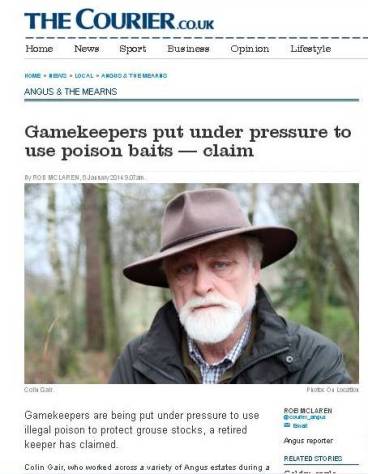
Courier originalOn Wednesday we blogged about an article that had appeared in the Courier that morning. The article was all about a retired Angus gamekeeper, Colin Gair, who claimed that gamekeepers were being put under pressure to use poison baits to protect grouse stocks. Here is what we wrote in that blog.

The Courier article seemed to cause quite a stir and was soon being cited all over social media sites like Facebook and Twitter. That’s not surprising – it’s not very often that you get a gamekeeper willing to admit that illegal practices such as poisoning are still taking place so of course, people would be interested in reading about that.

We didn’t think anything more of it until Thursday morning. After reading one of the comments left on our blog it became apparent that the original article in the Courier appeared to have been edited with some material removed and some new material added.

That’s not so unusual – many on-line news articles are edited, often adding new quotes from different sources when they become available; we even do that on our own lowly blog. However, not many news articles are edited in such a radical way as to change the original information into something completely different. Bizarrely, that is exactly what looks like has happened with the Courier article.

After some digging, we have been able to find a cached version of the original Courier article, which was published on-line at 9.07 am on Weds 8th Jan 2014. Here is the text:

Gamekeepers are being put under pressure to use illegal poison to protect grouse stocks, a retired keeper has claimed.

Colin Gair, who worked across a variety of Angus estates during a 50-year career, has hit out at the use of poisoned baits, which claimed the life of a golden eagle in Angus in November.

Fearnan’s death is the latest in a series of incidents — several other eagles and other raptors having been shot, poisoned or trapped on sporting estates.

Mr Gair, 66, claimed the situation in Angus had deteriorated in the past two years and is urging gamekeepers to speak out if they are being asked to use poison.

He said: “Grouse have to be reared naturally on the heather moors, therefore vermin must be controlled, but legally all the keeper can do is trap and shoot.

“If you are a gamekeeper who is a married man with wife and family and the very nature of the job entails living in a tied house, pressure can be applied to you.

“If you are asked by a landowner or the tenant to use poison it is not easy for a keeper to say ‘I refuse to do this’ when his house, job and future might be at risk.”

The Tayside division of Police Scotland said their inquiries into the death of Fearnan are continuing.

Fearnan Angus Glens Dec 2013Now, compare the original version of the Courier article with the edited version that appeared on-line five hours later at 2.07 pm on Weds 8th Jan 2014. Here is the text:

Gamekeepers are being urged to contact police if they are asked by landowners or tenants to use illegal poisons to protect grouse stocks.

Retired keeper Colin Gair made the plea in the wake of the death of the golden eagle Fearnan, which died after being poisoned in Angus in November.

The type of poison used has not been revealed by police, but website Raptor Persecution Scotland, which has been tracking the series of killings in Angus, claim the poison was the illegal pesticide carbofuran.

In the past five and a half years, four eagles, a red kite and seven buzzards have been shot, poisoned or trapped on sporting estates in the Angus glens.

Mr Gair said he didn’t have pressure applied to him to use poison during his career, but was aware of the practice taking place.

He claimed young keepers who are fearful of losing their job could easily be coerced into using poison by unscrupulous tenants.

“I am certain many moors do not use poison, but some do and there are areas of Angus which are regarded as raptor black holes,” he claimed.

“If you are a young keeper with a wife and kids you dare not stick your head above the parapet, but I hope that someone will come forward and report that they have been asked to use poison to police.”

Mr Gair, 66, said the agricultural poisons used would be very difficult to obtain by gamekeepers and speculated that they were more likely to be supplied by corrupt traders to one or two shoot managers before being passed down to keepers.

He added: “Who is the real criminal in the poisoning cases? Is it the keeper who knowingly uses the chemical or is it another person who deliberately buys the chemical and passes it on to keepers with instructions to use it for vermin control?

“With most of these concentrated agricultural chemicals you would just need a few drops on an animal’s carcase and it would be deadly for anything that eats it.”

Tayside Raptor Study Group expert and wildlife artist Keith Brockie has called on the Scottish Government to licence shooting estates, a move Mr Gair said he would not oppose.

However, if licensing did come in, he said there would have to be some “give and take” and that the killing of certain raptors be allowed.

He added: “If gamekeeping and shooting interests are to face a licencing system, then we should be given something in return.”

Anyone with information that could assist police inquiries regarding the death of Fearnan is asked to contact 101, or speak to any officer.

That’s quite a different story being told in the edited version. What struck us the most was the change in the opening paragraph. In the original version, Mr Gair’s claim is crystal clear:

Gamekeepers ARE BEING put under pressure to use illegal poison to protect grouse stocks“.

In the edited version, this claim has been considerably diluted to this:

Gamekeepers are being urged to contact police IF they are asked by landowners or tenants to use illegal poisons to protect grouse stocks“.

Suddenly the article has gone from ‘they are being put under pressure’ to ‘if they are being asked’.

Another  significant change is the removal of Mr Gair’s claim that ‘the situation in Angus has deteriorated in the past two years‘. That statement does not appear in the edited version.

New material in the edited version includes: a reference to this blog, Mr Gair’s claims that he was never asked to poison anything throughout his career, his claim that ‘young keepers could easily be coerced’ [into poisoning], his view that ‘many moors do not use poison’, his view on the ‘difficulty’ of obtaining poisons, the reference to Keith Brockie and Keith Brockie’s view that estate licensing should be on the cards, and Mr Gair’s view of estate licensing.

We are intrigued by the scale of the editing that took place on the original article, and we’re particularly interested in who or what might have prompted such fundamental changes to the original article. Who might not have been happy with the claims made in the original article, that gamekeepers were being pressurised by landowners to use poison to protect grouse stocks? And who might have the power and influence to instruct those editorial changes? Hmmm….

Meanwhile, the landowners’ organisation Scottish Land & Estates has written a letter to the Courier to complain about the [edited] version of the article. Here’s what they had to say:

Sir,

The article by Rob McLaren “Gamekeepers urged to report unscrupulous owners” (January 8) repeats some very dangerous assumptions.  The death of the golden eagle “Fearnan” has been subject to police investigation for over a month and there has been no indication that it resulted from the actions of a gamekeeper or that it was related to grouse moor management. Anything more than was included in the police press release of 19th December is speculation.

The gamekeeper Colin Mair [sic], whose purely personal comments are repeated in the article, admits that he “didn’t have pressure applied to him to use poison during his career” and merely speculates that others might have done. To be quite clear, landowners do not put pressure on gamekeepers to use poison or break the law, indeed any gamekeeper would have full protection of employment legislation if that should happen. In the few cases where gamekeepers have been convicted for using poison to control predators, there has been no indication that they were told by their employers to do so and particularly no evidence that poisons were supplied by shoot managers, as the article alleges.  Since 2011, the already strong laws on employer liability have been tightened further by a “vicarious liability” offence whereby a land owner, manager or employer can be held liable for wild bird offences carried out by another person even if he was not aware of them.  Any estate employing gamekeepers now has to make it doubly clear that no illegal activity can be condoned.

If anyone, including a gamekeeper, has specific evidence as to who was responsible for the death of the golden eagle, it should be reported to the police immediately.  This case needs to be resolved as soon as possible, not least to put an end to speculative comment of the kind repeated in this article.

Tim Baynes

Director, Scottish Land & Estates Moorland Group 

Gamekeepers put under pressure to use poison, claims retired Angus keeper

A retired gamekeeper whose 50-year career included working on Angus sporting estates has claimed that gamekeepers are being put under pressure to use illegal poison to protect grouse stocks, according to an article in today’s Courier (see here).

Colin Gair, 66, says the situation in Angus has deteriorated in the past two years and he is encouraging other gamekeepers to speak out if they are being asked to use poison.

His comments come after the discovery of ‘Fearnan’, the golden eagle found poisoned on a grouse moor in the Angus Glens in December. Fearnan is the latest victim in a long line of alleged poisoning incidents in the area (see here).

Mr Gair deserves a great deal of credit for his willingness to speak out on a subject that is usually vehemently denied by all connected with the game-shooting industry, despite the overwhelming evidence to the contrary, and we applaud his courage.

It’ll be interesting to see whether there’s any response to his claims from certain game- shooting industry organisations that are usually at the forefront of the denials.

UPDATE 10th January 2014: see here

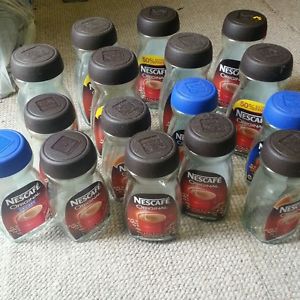
Perfect gift for the gamekeeper in your life

Last minute Xmas shopping? Here’s the perfect gift for the gamekeeper in your life….

ccoffee jars

Happy Xmas to all our blog readers!

Case against Stody Estate gamekeeper Allen Lambert: part 2

Last week we blogged about Norfolk gamekeeper Allen Lambert who had been charged with seven alleged wildlife crime offences including the killing of 14 buzzards, 1 sparrowhawk and 1 tawny owl (see here).

The case against 64-year old Lambert, a gamekeeper on the award-winning Stody Estate, was heard last Thursday (19th December 2013) at Kings Lynn magistrates court.

It has been reported that Lambert pled guilty to keeping banned pesticides (Mevinphos & Aldicarb) but denied killing raptors and keeping some of their bodies.

His case was adjourned until 22nd January 2014.

Interestingly, the news report calls Lambert a ‘former’ gamekeeper.

News report from EDP24 here.

Case against Scottish gamekeeper James Marsh to continue in Feb

Criminal proceedings against Scottish gamekeeper James Marsh continued at Stirling Sheriff Court last Thursday (19th December 2013).

Marsh, 49, of Middle Ballewan near Blanefield, Stirling is facing charges related to alleged wildlife crime and animal welfare offences which are said to have taken place near Duntreath Castle in April 2012.

The charges, which Marsh has denied, relate to the alleged trapping of a Tawny owl and other associated offences.

His case was continued on Thursday and is expected to conclude in February 2014.

Previous blog post here.

Gamekeeper convicted of setting an illegal pole trap

Here’s another example of how our fine ‘custodians of the countryside’ are the “most effective conservationists working in the British countryside today“.

On 9 December 2013 at Herefordshire Magistrates Court, 39-year old gamekeeper Wayne Priday was convicted of setting an illegal pole trap close to his pheasant release pen near Elton, close to Ludlow, in August this year.

He was fined £375 and ordered to pay £170 costs. Gosh, a £545 fine – that’ll learn ‘im.

Priday was caught thanks to covert video footage filmed by the RSPB Investigations Team. (Remember, this is in England where covert video evidence is readily accepted by the courts, unlike here in Scotland).

RSPB investigators visited Priday’s pheasant pen on 7th August 2013 and found a pole trap set in position on top of a post. The trap had been camouflaged with moss. Investigators disabled the trap and set a covert camera in place to identify the trap user.

The following day, along came Priday who was filmed examining the trap and clearly looking puzzled that it had been sprung without catching anything (see the covert video footage here – it’s hilarious). He unfastened the trap, put it in his vehicle and drove away.

Priday was later interviewed by West Mercia Police and he admitted setting the trap, although he claimed it was for squirrels.

Well done to the RSPB Investigations Team and also to West Mercia Police for a successful conviction.

We wonder whether Priday is a member of the National Gamekeepers Organisation? And if so, whether they will be expelling him from their club or whether they think Priday’s crime is not a ‘wildlife crime’ (e.g. as they did here). Shall we ask them? Emails to: info@nationalgamekeepers.org.uk

Pole traps have been illegal in the UK since 1904. Essentially they consist of a spring trap which is attached to a post, often by a chain. Posts are often used by birds of prey to perch on to give them a good vantage point. When the raptor lands on the set pole trap, one or both of its legs gets caught in the jaws of the trap. When the bird attempts to fly away it is prevented from doing so because the trap is attached to the post. This causes the bird to dangle upside down where it will inevitably die a prolonged and horrific death. It is probably one of the most barbaric traps around, hence it being banned for over 100 years.

Here is a photograph of a buzzard (still alive) caught in another pole trap. It did not survive its injuries.