The Yorkshire Dales Moorland Group (YDMG) is undertaking a major damage limitation exercise this week following the widespread media coverage of the recent conviction of Yorkshire Dales gamekeeper Racster Dingwall, who pleaded guilty to conspiring to kill a Hen Harrier on the Conistone & Grassington Estate (see here), which is, as far as I can tell, a member of the Yorkshire Dales Moorland Group.
Indeed, according to this 2018 article in the Yorkshire Post, the then coordinator of the YDMG lived on the Conistone & Grassington Estate as the wife of the previous Head Gamekeeper (i.e. before Racster Dingwall took on the role as Head Gamekeeper). The current YDMG coordinator is believed to be a former gamekeeper from one of the most notorious estates in the Dales.
Dingwall’s conviction, based on damning video evidence filmed by the RSPB, made the national, regional and local news, which threw the spotlight once again on the criminal killing of birds of prey on grouse moors in the Yorkshire Dales.
Dingwall’s conviction has undone all the good work (propaganda) that the YDMG has pumped out over the years to try and disguise the fact, according to the RSPB, that:
“This area – dominated by grouse moors –is the epicentrefor Hen Harrier persecution in the UK. Since 2016, in this area four confirmed persecution incidents involving RSPB and Natural England satellite tagged Hen Harriers have taken place and 13 satellite tagged Hen Harriers have suspiciously disappeared – all suspected to have been persecuted (2016-2025)” (see here).
In a desperate attempt to divert attention from Dingwall’s crimes, the Yorkshire Dales Moorland Group is trying to persuade anyone who’ll listen that Hen Harriers aren’t routinely killed on grouse moors in their area. Good luck with that!
To illustrate this claim, the YDMG has posted the following story on social media about a satellite-tagged Hen Harrier called Frank:
Did Hen Harrier Frank live a long and productive life on grouse moors in the Yorkshire Dales? Yes, he did, but he was the exception to the rule. I’ve often wondered why he wasn’t nobbled and have been told, by various sources over the years, that Frank was seen as a ‘pet’ of one of the gamekeepers’ wives and an agreement was made not to shoot him. Whether there’s any substance in that I don’t know, but it’s interesting that I’ve heard the same story from different sources.
I think one of the reasons Frank wasn’t killed was because he was seen by the grouse shooting industry as the ‘poster child’ for Natural England’s Hen Harrier Brood Meddling Trial – indeed, some of Frank’s offspring were indeed brood meddled (unsurprisingly, several of them later then ‘disappeared’ in suspicious circumstances) and so there was a LOT of attention on Frank by those invested in the brood meddling sham who wanted to show that the trial was working. ‘Look, here’s a Hen Harrier (Frank) whose chicks we’ve brood meddled but he’s surviving just fine, he hasn’t been killed, therefore the brood meddling trial is a stunning success, let’s roll it out as standard practice for ever more’. You get the picture.
Anyway, back to the YDMG’s diversionary tactics. What they’re suggesting in their latest propaganda piece, is that gamekeepers were suspected of illegally killing Frank in 2025 when his tag stopped working. They claim that,
“They [raptor monitors and Natural England field staff] raised suspicion and insinuated to local gamekeepers that persecution could be a factor behind the bird going off-line“
and
“Suspicions and accusations began to circulate. Internal communications at Natural England determined the bird as missing/suspicious on a grouse moor“.
Really? Where is the evidence that gamekeepers were accused/suspected of killing Frank? He’s NEVER appeared on any list on this blog, nor on the Natural England Hen Harrier satellite tag spreadsheet, nor in any RSPB press release.
Why didn’t he appear? Well, simply because Natural England had been quite upfront on the HH sat tag spreadsheet and reported, accurately, that Frank’s tag stopped transmitting in May 2025 but in June 2025 he was photographed by NE field staff provisioning young at a nest and the photograph clearly showed his satellite tag had a broken aerial and therefore the tag was no longer transmitting. It was a clear technical malfunction, acknowledged by Natural England, and therefore there weren’t any grounds for suspicion.
The Yorkshire Dales Moorland Group is trying to play the victim card here but without any actual evidence of being ‘victimised’.
The fact that (apparently) Frank was recently found dead near Hull, and tests (apparently) show he had contracted avian influenza (although that wasn’t necessarily the cause of death) is neither here nor there. Although I suspect, if indeed this information is accurate, that Natural England might be looking closely at who was privy to that information and who leaked it to the YDMG!
I’d be interested in a statement from the YDMG about the status of the Conistone & Grassington Estate as a YDMG member. Has the YDMG got any plans to expel the estate? If not, why not?
The bigger question that very few people seem to be asking is, who funds the Yorkshire Dales Moorland Group, and all the other regional moorland groups that sprung up in 2015 to promote ‘the good work’ of the grouse shooting industry?
Who is paying for the regional coordinators of these groups, who spend their time putting rubbish out on social media and conducting malicious smear campaigns against individuals and organisations who happen to challenge the claims made by the grouse shooting industry? Who is paying for their websites? Who is paying for their extensive promotional material? Their branded clothing? Their picture boards and associated marketing material they drag around the country shows each year? Their logo-heavy ‘activity packs’ that they hand out to unsuspecting school children?
Gosh, I wonder who it might be? Surely not someone with a vested interest in grouse shooting and is a member of the British aristocracy?
A long-awaited murder trial is expected to get underway this coming week at the High Court in Glasgow.
David Campbell, 76, the former Head Gamekeeper at Edradynate Estate near Aberfeldy, Perthshire is accused of murdering a former colleague, groundsman Brian Low, whilst Mr Low was walking his dog on Leafy Lane, near the Pitilie Track close to Aberfeldy in February 2024 (see here for background).
It is alleged that Campbell did this after disabling CCTV cameras at Tigh Na Caorann, Crieff Road, Aberfeldy, in an “attempt to conceal” his whereabouts.
Both the accused and alleged victim were formerly employed on Edradynate Estate, Perthshire. Photo by Ruth Tingay
At a pre-trial hearing in November 2025, the court heard that Campbell faces a separate charge of attempting to defeat the ends of justice following Mr Low’s alleged murder. It is alleged between 16 February and 24 May 2024 he disposed of an Walther RM8 Rotex airgun – for which he allegedly did not have a certificate – at an unknown location.
He is further said to have got rid of the shotgun and a gun bag, also at a spot unknown to prosecutors.
Campbell is also accused of going to Crighton’s Cycles, Blairgowrie, and having two replacement tyres fitted on an electric bicycle, which prosecutors believe was used by him in the commission of the murder.
It is also alleged that Campbell disposed of a box, cartridge bag and bicycle tyres at Aberfeldy Recycling Centre.
Campbell further faces five breach of the peace allegations dating back to the mid-90s.
It is alleged some time in July 1995, he threatened a man called Alan Stewart and placed him in a state of fear and alarm.
Prosecutors further allege that on a date between 1 March and 31 May 1997, Campbell conducted himself in a disorderly manner at the Edradynate Estate, Aberfeldy and threatened to shoot worker Gregor Forrest.
Campbell has also been accused of threatening to shoot another man, Richard Wright, also at Edradynate Estate between 1 June and 31 August 1999.
It is further alleged that between 1 June and 30 September 2011, Campbell threatened to shoot a fourth man, Maksymillan Konchanski, at The Square, Aberfeldy.
And he is also accused of threatening to shoot a woman’s dog at Ardlach House, Aberfeldy, sometime between 1 June and 30 September 2012.
Campbell has previously pleaded not guilty to all charges and his defence advocate, Tony Lenehan KC, has lodged a special defence of alibi in connection with the murder charge.
Campbell has been held on remand since May 2024.
The trial is expected to last for three weeks in front of Lord Scott and had been listed for 2nd February 2026. However, court documents show it is currently listed as a ‘dedicated floating trial’, which means that rather than having to begin on a specific date, the case can start within a ‘floating period’ (usually a week) of that date. This flexibility is to facilitate the availability of a judge and court room to ensure a continuous schedule.
NB: As this case is live, comments have been turned off until criminal proceedings have concluded.
MEDIA COVERAGE OF TRIAL
Day 1 (Weds 4 Feb 2026)
Murder trial accused ‘threatened former police officer’ (BBC News here)
Former gamekeeper, 77,, accused of shotgun murder of retired groundsman Brian Low ‘loathed’ victim, court hears (Sky News here)
Day 2 (Thurs 5 Feb 2026)
Murder trial told of dog walker’s body discovery (BBC News here)
Alleged killer thought murder victim was trying to set him up, court told (Sky News here)
Day 3 (Fri 6 Feb 2026)
Aberfeldy shotgun death initially deemed non-suspicious (BBC News here)
Day 4 (Mon 9 Feb 2026)
Murder trial shown accused covering doorbell camera (BBC News here)
CCTV at murder suspect’s home went off on morning of alleged shooting, court hears (Sky News here)
Day 5 (Tues 10 Feb 2026)
Murder accused ‘believed he would get arrested’ (BBC News here)
Day 7 (Thurs 12 Feb 2026)
Wife blows kiss to murder accused before giving evidence (BBC News here)
Wife ‘can’t remember’ if husband had grievances with his alleged murder victim, court hears (Sky News here)
Day 8 (Fri 13 Feb 2026)
Accused ‘first heard of man’s murder on the news’ (BBC News here)
Murder suspect branded police ‘desperate’ when accused of shooting ex-colleague dead, court hears (Sky News here)
Day 9 (Mon 16 Feb 2026)
Murder trial jury told of dog walker’s shotgun injuries (BBC News here)
Day 10 (Tues 17 Feb 2026)
Murder accused ‘did not get on’ with alleged shooting victim (BBC News here)
Aberfeldy murder suspect admits he ‘didn’t like’ man he is accused of shooting dead, court hears (Sky News here)
Aberfeldy murder suspect denies shooting ex-colleague out of ‘sheer malice’ as he rebukes prosecutor for calling him a ‘liar’ (Sky News here)
Day 13 (Fri 20 Feb 2026)
Closing speeches heard in Aberfeldy murder trial (BBC News here)
UPDATE 25 February 2026: Scottish gamekeeper David Campbell found guilty of murdering ex-colleague from Edradynate Estate, Perthshire (here)
UPDATE 26 Feb 2026: Sentencing remarks & statement from Police Scotland after conviction of gamekeeper David Campbell for shotgun murder of ex-colleague (here)
UPDATE 27 Feb 2026: Some commentary on the murder conviction of ex-Head Gamekeeper David Campbell (here)
The news yesterday was all about the conviction and sentencing of Head Gamekeeper Racster Dingwall for his part in a conspiracy to kill Hen Harriers at a roost on the Conistone & Grassington Estate in the Yorkshire Dales National Park.
But there’s another story in amongst the details of that case, and it’s about the satellite-tagged Hen Harrier that Dingwall and his accomplices discussed shooting and killing as it came in to the roost site, but then chose instead to “fleg it” (scare it off with warning shots) because they deduced it was wearing “a box” (a satellite tag) and killing it would draw unwanted attention from the authorities to their grouse moor.
In the RSPB press release issued yesterday in response to Dingwall’s conviction and sentencing (here), the RSPB say that this satellite-tagged bird was actually one of theirs (presumably they could tell from the tracking data that this bird was on Grassington Moor at the same time that Dingwall was out committing crime with his shotgun). She was called Ataksak and had fledged from a nest in the Forest of Bowland just three months previously.
It seems that Ataksak’s satellite tag saved her from being shot on Grassington Moor on that early October evening in 2024. But it didn’t save her from being illegally poisoned near another Yorkshire grouse moor, just three months later in January 2025.
The RSPB press release says:
‘Toxicological analysis revealed that she had died after ingesting a highly toxic mixture of pesticides known by experts as the Nidderdale cocktail, which has been associated with numerous bird of prey persecution incidents in recent years. This incident is yet another crime against a Hen Harrier and is also under investigation by North Yorkshire Police. There is no known connection between the two incidents‘.
Some of you may recall this is a persecution incident I blogged about on 1st December 2025 (here), after discovering the poisoning incident listed in a toxicology database compiled by the Health & Safety Executive as follows:
‘HSE Ref number 107/913. Confirmed poisoning, North Yorkshire, January 2025. Chemicals Bendiocarb, Carbofuran, Isophenphos, Alphachloralose. Notes: ‘A dead Hen Harrier was found on a grouse moor. Residues of Bendiocarb, Carbofuran, Isophenphos and Alphachloralose were found in the samples analysed, which is an abuse of these compounds. Case closed as passed to the Police‘.
I didn’t know at the time that this was the same Hen Harrier that had been “flegged” on Grassington Moor. She was almost the bird that got away.
The RSPB had also mentioned this poisoning incident in a press release about a number of Hen Harriers either ‘missing’ or poisoned in 2025, published on 20 January 2026 (here). They noted that:
‘The area where Ataksak’s body was found is recognised as a bird of prey persecution hotspot. In the last ten years 25 confirmed bird of prey persecution incidents have been recorded in this area, including Ataksak. These included four Hen Harriers, 13 Red Kites and five Buzzards. A satellite tagged Hen Harrier also disappeared in this area in 2024‘.
Given it’s been a year since Ataksak was found poisoned, and I haven’t seen any media or appeals for information from North Yorkshire Police, in November 2025 I submitted a series of FoI requests to various authorities to ask about the progress of any investigation into this crime.
I’ve had some responses back, and I’ll write about those in a separate blog, probably next week.
Meanwhile, the RSPB has now published an extended ten minute version of the covert footage it captured of Dingwall and his accomplices on the Conistone and Grassington Estate, including the period they were discussing whether to kill or scare away Ataksak when she was trying to come in to her evening roost site on the moor. You can watch it here:
UPDATE 10 March 2026: What’s happened to the police investigation in to the poisoned Hen Harrier found dead on the edge of a grouse moor in North Yorkshire? (here)
Following yesterday’s conviction and sentencing of Head Gamekeeper Racster Dingwall, 35, for conspiracy to kill a Hen Harrier on a grouse moor on the Conistone & Grassington Estate in the Yorkshire Dales National Park on 2nd October 2024, here is my commentary of the morning’s proceedings at York Magistrates’ Court.
Screengrab from RSPB/Channel 4 footage
These are comments based on notes I made during the hearing. They should not be considered a formal court record, but rather my interpretation of what happened. They are provided here to help blog readers understand how the sentence was determined.
This was supposed to be a two-day trial, after Dingwall pleaded not guilty to two charges at an earlier hearing at Skipton Magistrates’ Court in May 2025 (see here). Those two charges were:
Possession of an article capable of being used to commit a summary offence under Section 1 to 13 or 15 to 17 of the Wildlife & Countryside Act;
Encourage/assist in the commission of a summary offence believing it will be committed.
At a pre-trial hearing at York Magistrates’ Court in September 2025 in front of District Judge Adrian Lower, Dingwall’s barrister, the very experienced Justin Rouse KC, attempted to have the case thrown out on a technicality, arguing that the RSPB’s covert footage should not be admissible. Mr Rouse KC had been successful with this line of argument in another case against another grouse moor gamekeeper in 2017/2018 (the Bleasdale Estate case – see here).
However, in the current case Mr Rouse KC was unsuccessful and District Judge Lower ruled the Grassington footage lawful and thus admissible (here), and a two-day trial was set for 29-30 January 2026.
It became clear a few days ago that Dingwall was probably now going to change his plea to ‘guilty’ when the case was formerly listed in court documents as a ‘sentencing’ hearing. The same document listed three JPs as the presiding magistrates. However, District Judge Lower turned up in the court yesterday and sat as a single judge for this hearing.
Mr Rouse KC was not present this time, and Dingwall was represented by Tim Ryan of Warners Solicitors in Kent. Mr Ryan is another highly experienced lawyer, having represented gamekeepers in court for many years and he also provides briefing notes for the National Gamekeepers Organisation. He knows what he’s doing.
For the prosecution was Jody Beaumont (Crown Prosecution Service – CPS), as per the pre-trial hearing in September 2025.
The hearing kicked off with Dingwall being asked to provide his date of birth and address, and then his plea to the two charges (‘guilty’).
The CPS then provided District Judge Lower with a background summary of the case. He told the court that between March and September 2024, the RSPB were working on intelligence that potential offences were being committed on the Conistone & Grassington Estate. They identified a location and installed a covert camera, set to record between 1st – 19th October 2024.
When the camera was later retrieved, the footage and audio showed the offences were recorded on 2nd October 2024. The footage showed Dingwall [and two others], dressed in camouflage carrying a semi-automatic weapon and binoculars.
The footage was passed to Channel 4 News and North Yorkshire Police in late October 2024. North Yorkshire Police interviewed Dingwall five months later (!) on 18th March 2025. [We also know that his two fellow suspects were interviewed but apparently both refused to say a word, presumably because they were concerned that voice analysis might match them with the voices recorded on the footage].
Mr Beaumont then gave some background on Dingwall. The court heard he had a prior conviction for violence in 2018 (the precise offence was not revealed) but that he had no other convictions or cautions. [For those wondering how a man with a conviction for violence was deemed suitable to hold a shotgun certificate is a question for North Yorkshire Police].
Mr Beaumont then went on to discuss sentencing guidelines, saying there weren’t any for these specific offences and suggested that the judge might use more generalised sentencing guidelines within the constraints of a magistrates’ court jurisdiction. He did not provide an impact statement or even a background summary of Hen Harrier conservation/persecution.
Mr Beaumont assessed Dingwall’s culpability as ‘high’, especially as there was an element of planning and the involvement of others was an aggravating factor, but then went on to assess the level of harm as ‘medium’ because ‘no Hen Harrier was injured or harmed as a result of Dingwall’s offending’. [Eh?? I’ll come back to this point].
District Judge Lower then said a few words in response to the prosecution’s comments. This is where things started to get really strange. He said he was putting Dingwall’s previous conviction for violence “out of my mind” because it was “dissimilar” to the current offending and “wasn’t relevant”.
He then said he had read four character references for Dingwall, provided by a Mr Gray, Mr Hewlitt, Mr “Bikey” and Mrs Sixsmith. My ears pricked up at Mr “Bikey”. I wondered whether this was Nicholas Baikie, a well known sporting agent with links to many grouse moors across the UK including the infamous Millden Estate in the Angus Glens, currently serving a three-year General Licence restriction imposed by NatureScot after multiple wildlife crime offences against birds were uncovered there.
DJ Lower said it was clear from the character references that Dingwall’s latest offending was “completely out of character“.
Then it was the turn of Tim Ryan to provide a statement of mitigation for Dingwall. Mr Ryan told the court that his client “regrets enormously” his actions, which have led to a “lost job, livelihood and reputation“. Mr Ryan claimed that Dingwall was realising that he had “no prospect of working as a gamekeeper again” and that he had “let himself down and his family“. [I don’t believe that – there are a number of examples over the years of convicted gamekeepers who have been subsequently employed on the same or on other estates – indeed some of them have even turned up at promotional events for grouse shooting held in Parliament and at least one serves on the committee of a national industry organisation].
In terms of sentencing suggestions, Mr Ryan argued that Dingwall’s guilty plea needed to be taken into account.
DJ Lower interjected at this point and said that Dingwall’s guilty plea on the opening day of the trial had been noted, and that because Dingwall had indicated his change of plea to the court prior to the trial, it had “spared the court time and spared the witnesses“, so he intended to give a “25% discount” to whatever sentence was handed down.
Mr Ryan then proposed that a Community Order would be an “appropriate starting point” for the judge to consider given the “devastating consequences on Dingwall and his family” but that a fine would be preferential because the overall effect [of a Community Order] would be “worse for his family“.
We then got to District Judge Lower’s sentencing remarks.
He repeated his comments that the court had “not had to be troubled with a trial” and that “witnesses were not called“.
He then repeated the offences to which Dingwall had pleaded guilty and launched into the most bizarre commentary about the protection of Hen Harriers. He said he understood that there was “controversy” about Hen Harrier management in terms of alleged predation on grouse. He said, “Some take the view that Hen Harriers are, to say the least, a pest, and that they have to be shot to prevent them predating Red Grouse, and this brings in to issue the management of grouse farms and those responsible for the management of farms because it’s a business, and if there aren’t any Red Grouse for others to shoot as part of a day out then there is no business“.
He continued, “Other people take the view that Hen Harriers are a protected species, and indeed they are, and should not be shot and be allowed to predate Red Grouse. I make no comment about these views”. [Eh? How on earth is this relevant?].
“What I am dealing with is on 2nd October 2024 you chose to take with you a shotgun, binoculars, audio equipment, and dress up in camouflage, in order to at least observe a Hen Harrier at a piece of land and you were in communication with others who were interested in the movements of Hen Harriers at that land, with a view to killing a Hen Harrier if it was showing any indication of preying on Red Grouse. [Er…the Harriers being targeted by Dingwall and his accomplices were coming in to an evening roost, not hunting for Red Grouse].
“That’s an offence and you should have known it was an offence and you knew full well what your responsibilities as a gamekeeper were….you may not have known all the ins and outs but you would have known something of how to respond to a Hen Harrier.
“I’ve read your character references – your behaviour is really out of character. A change in your occupation, your income – it seems rather [inaudible] for me to say, but not wrong to say, you’ll never work as a gamekeeper again as a consequence of your behaviour and this is more of a punishment than any I can impose this morning“.
There was then a brief commentary about sentencing guidelines which I didn’t catch in full so won’t try to repeat that here.
DJ Lower then spoke about culpability and agreed with the CPS’s assessment that Dingwall’s culpability was “high“, with a degree of planning with others, and that the harm caused was “medium” because, wait for it, “no Hen Harrier was shot or killed due to your behaviour“.
At this point I looked across to the packed media benches and caught the eyes of several journalists who clearly were as bemused as I was with this statement.
We’d all seen the RSPB’s footage, as shown on Channel 4 News. How anyone could watch that and believe that a Hen Harrier hadn’t been shot and killed would be beyond the comprehension of many. I’m reminded of the idiom, ‘When you hear hooves, look for horses, not zebras’.
I’ve tried to understand the rationale for DJ Lower’s statement, and struggled initially, but the following explanation is the best I came up with on my journey home from court:
Those of us who watched the footage and believed that Dingwall had shot and killed the untagged Hen Harrier based that belief on a civil burden of proof, i.e. on the balance of probability, given everything else we’d seen and heard on the RSPB’s footage, we considered it more likely than not that a Hen Harrier was shot and killed.
However, the RSPB’s footage does not meet the evidential threshold to ‘prove’, to a criminal standard of proof, i.e. beyond reasonable doubt, that a Hen Harrier was shot and killed, nor by whom, which is presumably why Dingwall was not charged with that offence.
We might not like it, and probably don’t agree with his statement, but Judge Lower had a duty to consider the criminal standard of proof in his deliberations, and not the civil burden of proof. In my opinion, though, he could/should have done a better job of explaining his statement.
If nothing else, this case provides a very good example of the high evidential threshold required to convict anyone of raptor persecution, and demonstrates why so many cases fail to result in a prosecution. Not because an offence hasn’t been committed, but because it’s really really difficult to ‘prove’ who did it.
I do think though that the footage will have opened the eyes of many members of the public about what goes on on grouse moors when gamekeepers think nobody is watching, and that awareness is crucial if we want more members of the public to start applying pressure on our political representatives to get a grip and support effective enforcement to deal with this ongoing criminality.
Anyway, back to the court room.
DJ Lower repeated his earlier comment that he was “disregarding” Dingwall’s previous conviction (for violence) because it was “dissimilar” to the current offences and “not related to killing wild birds“.
He then went through his sentencing options, musing that he had considered a custodial term “to make an example of you” and to show that “the court takes theses offences seriously” but he disregarded a custodial option because he didn’t think Dingwall would spend much time in prison.
He said he’d also considered a Community Order and what that might look like but he didn’t think it was appropriate, nor that Dingwall needed the support of the probation service.
Instead he settled on a fine, £400 for each of the two offences, plus a surcharge of £320 and prosecution costs of £400, making a total of £1,520, to be payable within 28 days. Dingwall was asked about his means to pay and he indicated that he could make the payment within the timescale.
Does this fine reflect the seriousness of Dingwall’s offending? I’d say absolutely not. I’d say it was an insult to everyone who worked so hard to bring the case to court and it’s certainly no deterrent whatsoever to anyone else thinking of killing a Hen Harrier (and there are a lot of those criminals about). The fine is just a minor inconvenience for Dingwall and once again the estate owner and/or the sporting agent goes unpunished. This really has to change.
The hearing ended with an extraordinary direction from DJ Lower. He noted how packed the court was (press, police, RSPB and general observers) and said that he didn’t think Dingwall should have to ‘meet’ any of the people who had attended the hearing so he instructed a court clerk to allow Dingwall and his solicitor to leave the court room before anyone else.
My interpretation of that direction was that Dingwall was being allowed to leave the court building by a separate entrance without having to face the wall of journalists outside. However, this message didn’t quite get through to the clerks, who ‘held’ Dingwall and Mr Ryan in a separate holding room until everyone had left the court building, and then Dingwall and Mr Ryan were escorted out to the front door of the court building, where the cameras and journalists were waiting for him.
There’s another good piece from Alex Thomson (Channel 4 News) of Dingwall’s case, here.
UPDATE 30 Jan 2026: Satellite-tagged Hen Harrier that gamekeeper Racster Dingwall chose not to shoot (to avoid unwanted attention), found poisoned three months later near another Yorkshire grouse moor (here)
Further to today’s news that gamekeeper Racster Dingwall has pleaded guilty to conspiring to kill a Hen Harrier on the Conistone & Grassington Estate in the Yorkshire Dales National Park, North Yorkshire Police has issued the following statement:
Photo by Ruth Tingay
MAN SENTENCED FOR BIRD OF PREY PERSECUTION OFFENCES ON GRASSINGTON MOOR
A man has been sentenced for trying to kill a legally-protected bird, following an investigation by North Yorkshire Police.
The case against Racster Dingwall for encouraging or assisting bird of prey persecution, using the Serious Crime Act 2007, is believed to be the first of its kind in the country.
In October 2024, a covert camera placed by the RSPB captured footage of three men on Grassington Moor, using radios and speaking in code to discuss shooting towards and killing wild birds, including hen harriers.
The recording was passed to North Yorkshire Police, and an investigation was launched by the force’s Rural Taskforce.
The footage was processed by technicians at the Regional Scientific Support Services, and an expert from the National Wildlife Crime Unit was called in to interpret it.
This analysis showed that one of the men – later identified as gamekeeper Racster Dingwall – was in possession of a semi-automatic shotgun for the sole purpose of killing a hen harrier.
Dingwall, 35, from Ellingstring, was interviewed by Rural Taskforce officers, and subsequently charged with encouraging or assisting the killing of a Schedule 1 wild bird (contrary to Sections 45 and 58 of the Serious Crime Act 2007); and possessing a shotgun for the purpose of killing a Schedule 1 wild bird (contrary to Section 18 (2) of the Wildlife and Countryside Act 1981).
All wild birds are protected by law, and ‘Schedule 1’ birds, including hen harriers, have additional protection.
It is thought to be the first time a charge of encouraging or assisting an offence under the Serious Crime Act 2007 has been used in relation to bird of prey persecution.
Dingwall pleaded guilty to both offences today (Thursday 29 January 2026) at York Magistrates’ Court where he was ordered to pay a total of £1,520 in fines, victim surcharge and prosecution costs.
After the sentencing hearing, Inspector Mark Earnshaw, of North Yorkshire Police, said: “The cruel and illegal persecution of hen harriers and other birds of prey is totally unacceptable.
“This outcome at court follows a thorough police investigation, and incontrovertible evidence. It should send a strong message to anyone else engaged in this criminality: they will be investigated, identified, and put before the courts to face the consequences of their actions.”
ENDS
UPDATE 30 January 2026: Some commentary on the conviction and sentencing of gamekeeper Racster Dingwall (here)
GAMEKEEPER PLEADS GUILTY IN ENGLAND’S FIRST EVER HEN HARRIER PERSECUTION CASE
On 29 January at York Magistrates Court Racster Dingwall – a head gamekeeper on the Conistone and Grassington Estate in the Yorkshire Dales National Park – pleaded guilty to conspiring to kill Hen Harrier.
Footage and sound recordings obtained lawfully by the RSPB’s Investigations team were instrumental in detecting this crime and securing the conviction.
The RSPB is calling for licensing of grouse shooting as the illegal killing of Hen Harriers, associated with land managed for grouse shooting, is having a detrimental impact on their populations.
Convicted gamekeeper Racster Dingwall (on left) leaves York Magistrates’ Court with his solicitor after sentencing this morning (photo by Ruth Tingay)
On 2 October 2024, video and sound evidence gathered lawfully by the RSPB Investigations team showed Racster Dingwall, the Head Gamekeeper on the Conistone and Grassington Estate, and two other men arriving at dusk at a Hen Harrier roost site on the estate. All were in camouflage with shotguns.
Hen Harriers use traditional, often communal, roost sites in winter where birds come together for safety and shelter, typically in dense vegetation like sedge or reed beds, gathering at dusk and leaving at dawn. Over decades, the RSPB has received detailed information relating to Hen Harriers being shot and killed at these roosts on grouse moors.
Radio conversations made between the three men were covertly recorded by the RSPB. Often talking in code, they are heard coordinating their positions around the roost in an effort to locate Hen Harriers and determine the best position from which to shoot them.
They are also heard discussing protected birds shot that day, including a Buzzard and a Raven. Crucially, during the conversation it is emphasised that any satellite tagged Hen Harriers should not be shot at this location, as it would result in unwanted attention on the roost from the authorities.
A Hen Harrier is spotted and then lands in the roost but is seen to have ‘a box on it’ – a satellite tag. These small tracking devices are fitted to some Hen Harriers before they fledge the nest to help track and monitor individual bird’s movements. Satellite tag data has helped highlight many confirmed and suspected incidents of Hen Harrier persecution in recent years that would otherwise have gone undetected.
The three men are clearly frustrated that the bird has a tracker fitted and a decision is made not to kill the bird as it would attract attention but to scare the bird off the roost with some warning shots – which can clearly be heard on the footage. Significantly an untagged Hen Harrier is then spotted at the roost. RSPB footage shows Dingwall loading his gun and walking in the direction of the roost. A single shot is then heard, followed by congratulatory radio comments, including Dingwall saying he had been sure the bird was untagged. All the men then leave as darkness falls.
These types of raptor persecution crimes are almost undetectable, as they happen in remote locations and during unsociable hours, away from public eyes.
RSPB shared their findings with North Yorkshire Police, NWCU and Channel 4 news – who broadcast the footage with locations and identities obscured to not compromise an investigation.
Racster Dingwall was charged with:
Possession of an article capable of being used to commit a summary offence under the Wildlife & Countryside Act 1981.
Encouraging and assisting in the commission of a summary offence, believing it would be committed.
A legal hearing in September 2025 ruled that RSPB video and sound recording evidence was admissible in the case, after the defence went to considerable efforts to try to exclude it from the case. [Ed: RPUK commentary on that here]
On 29 January 2026 at York Magistrates Court, Racster Dingwall pleaded guilty to both offences and was ordered to pay a total of £800. No charges were brought against the other unidentified individuals who were interviewed by the police but refused to speak throughout.
Mark Thomas, UK Head of Investigations: “This landmark conviction has shone a light on this issue, revealing the lengths individuals will go to in order to illegally target these protected birds of prey. Shockingly, over 100 Hen Harriers have been confirmed or suspected to have been illegally killed on or near grouse moors in the UK in just the last five years. The RSPB will not rest until the future for this bird is secured and that can only happen with legislative change. Government licensing of grouse shooting is now essential to change practices in thissector“.
Howard Jones, RSPB Senior Investigations Officer: “Once again, RSPB video evidence has been crucial in securing a significant conviction for raptor persecution. We were pleased that the RSPB’s covert evidence, so brilliantly gathered by the team, was ruled admissible in this case and we thank the Police, the NWCU and the CPS for their work in securingjustice“.
To effectively prevent crimes against birds of prey the RSPB is calling for greater regulation of gamebird shooting through the introduction of licensing. Similar legislation was introduced in Scotland in 2024, under the Wildlife Management and Muirburn (Scotland) Act, for grouse shooting. Under this legislation, if an estate is suspected of killing birds of prey, it may lose its licence to shoot grouse. Evidence is based on a civil rather than a criminal burden of proof. This legislation has been well received by many within the industry in Scotland, only penalising those who deliberately commit these crimes.
James Robinson, RSPB Chief Operating Officer:“Today’s outcome is progress, but it’s not a solution. This crisis will only continue if we don’t see significant legislative change which these birds desperately need. Through the introduction of licensing for all gamebird shooting across the UK these crimes can be effectively deterred and prevented. If we’re going to give these rare species any hope of recovery, we need governments to actnow“.
In a further twist, the satellite tagged Hen Harrier that was deliberately scared from the roost was an RSPB tagged bird, called Ataksak. She had fledged from a nest in the Forest of Bowland just three months previously. Tragically in January 2025, Ataksak was found dead very close to another grouse moor in North Yorkshire. Toxicological analysis revealed that she had died after ingesting a highly toxic mixture of pesticides known by experts as the Nidderdale cocktail, which has been associated with numerous bird of prey persecution incidents in recent years. This incident is yet another crime against a Hen Harrier and is also under investigation by North Yorkshire Police. There is no known connection between the two incidents.
The RSPB thanks North Yorkshire Police, the NWCU and the Crown Prosecution Service for their vital role in investigating and prosecuting this case.
Members of the public are urged to report any suspected incidents of bird of prey persecution by contacting the police on 101 and by submitting a report to the RSPB. This can be done via the RSPB’s online reporting form at www.rspb.org.uk/report-crimes or by calling the RSPB’s confidential Raptor Crime Hotline on 0300 999 0101. Reports via the RSPB’s reporting form and Raptor Crime Hotline can be made in confidence and anonymously.
ENDS
There’s SO much more to say about this case, and particularly what went on in court this morning. I’ll come to it as soon as I can.
In the meantime, huge congratulations to the RSPB’s Investigations Team, whose skill and expertise resulted in such high quality film footage and audio, without which this case would never have made it to court, let alone a conviction. This is the second case this month where RSPB covert footage has led to a gamekeeper being convicted of offences related to raptor persecution (the other one was reported here).
Predictably, in a pathetic attempt to divert attention away from these PR disasters, the game-shooting industry has recently ramped up its smear campaign against members of the RSPB’s Investigations Team in an attempt to undermine and discredit the team’s work. I’ll blog more about that in due course.
Meanwhile, for any decent, law-abiding member of the public who wants to show their appreciation and support for the work of the RSPB’s Investigations Team, you might want to consider making a small donation, which will go specifically towards investigations – please see here.
UPDATE 18.00hrs: Statement from North Yorkshire Police on conviction of gamekeeper Racster Dingwall (here)
UPDATE 30 January 2026: Some commentary on the conviction and sentencing of gamekeeper Racster Dingwall (here)
Further to this morning’s blog, gamekeeper Racster Dingwall has pleaded guilty to two charges, including conspiracy to kill a Hen Harrier on a grouse moor on the Conistone & Grassington Estate in the Yorkshire Dales National Park on 2nd October 2024.
He was fined £400 for each offence, plus a surcharge of £320 + £400 costs (total = £1,520).
Convicted gamekeeper Racster Dingwall (on the left) leaving York Magistrates’ Court with his solicitor after sentencing (photo by Ruth Tingay)
The judge made some remarks that I found absolutely staggering….much more on that later.
In haste.
UPDATE 15.15hrs: Gamekeeper pleads guilty in England’s first ever Hen Harrier persecution case (RSPB press release) here.
UPDATE 18.00hrs: Statement from North Yorkshire Police on conviction of gamekeeper Racster Dingwall (here)
UPDATE 30 January 2026: Some commentary on the conviction and sentencing of gamekeeper Racster Dingwall (here)
UPDATE 7 February 2026: Yorkshire Dales Moorland Group in desperate attempt to divert attention away from conviction of Yorkshire Dales gamekeeper Racster Dingwall (here)
The trial begins at York Magistrates’ Court on Thursday 29th January 2026 for gamekeeper Racster Dingwall, accused of conspiracy to kill a Hen Harrier on a grouse moor in the Yorkshire Dales National Park.
York Magistrates’ Court. Photo by Ruth Tingay
The prosecution alleges Mr Dingwall was one of three gamekeepers caught on the RSPB’s covert footage from the Conistone & Grassington Estate on 2nd October 2024, as broadcast on Channel 4 News.
Mr Dingwall pleaded not guilty to two charges at an earlier hearing at Skipton Magistrates’ Court on 2 May 2025 (here) and the case was sent to York Magistrates’ Court for a trial in front of a District judge.
At a pre-trial hearing in September 2025, Mr Dingwall’s barrister failed to get the case thrown out on a technicality after the District judge ruled the RSPB’s evidence was legally obtained and therefore admissible (see here).
As a consequence, a two-day trial was set for 29th and 30th January 2026.
Interestingly, tomorrow’s case has been listed as a ‘sentencing’ hearing, which suggests that Mr Dingwall intends to plead guilty.
NB: Because criminal legal proceedings are live, the comment facility has been switched offuntil the case has concluded.
UPDATE 29 January 2026: Gamekeeper Racster Dingwall pleads guilty to conspiracy to kill a Hen Harrier on a grouse moor in Yorkshire Dales National Park (here)
UPDATE 29 January 2026: Gamekeeper pleads guilty in England’s first ever Hen Harrier persecution case (RSPB press release) here.
UPDATE 30 January 2026: Some commentary on the conviction and sentencing of gamekeeper Racster Dingwall (here)
For anyone who still wants to pretend that the grouse shooting industry isn’t responsible for the systematic extermination of Hen Harriers on grouse moors across the UK, here’s the latest catalogue of crime that suggests otherwise.
This male hen harrier died in 2019 after his leg was almost severed in an illegally set trap that had been placed next to his nest on a Scottish grouse moor (see here). Photo by Ruth Tingay
This is the blog I now publish after every reported killing or suspicious disappearance.
“They disappear in the same way political dissidents in authoritarian dictatorships have disappeared” (Stephen Barlow, 22 January 2021).
Today the list has been revised to reflect updates in various reports since I last updated the list in July 2025. There isn’t a one-stop shop (apart from this list) where you can find information about ‘missing’ or illegally killed Hen Harriers – the information for this list is sourced and cross-referenced from various places, including Natural England’s database, the RSPB’s database, the HSE’s database, police reports, RSPB Birdcrime reports and FoIs to various agencies. This list doesn’t include any Hen Harriers that have been listed as having a natural cause of death (e.g. known/suspected predation), or listed as ‘likely tag failure’, or known to have been lost abroad, or where the cause of death is inconclusive, unless there is additional information (e.g. from satellite tag data) which indicates suspicious or illegal activity. It is painstaking work that takes a lot of time to complete, but I consider it to be as accurate and comprehensive as it can be at the time of writing.
I’ve been compiling this list only since 2018 because that is the year that the grouse shooting industry ‘leaders’ would have us believe that the criminal persecution of Hen Harriers had stopped and that these birds were being welcomed back on to the UK’s grouse moors (see here).
This assertion was made shortly before the publication of a devastating new scientific paper that demonstrated that 72% of satellite-tagged Hen Harriers were confirmed or considered likely to have been illegally killed, and this was ten times more likely to occur over areas of land managed for grouse shooting relative to other land uses (see here). A further scientific paper published in 2023 by scientists at the RSPB, utilising even more recent data, echoed these results – see here.
2018 was also the year that Natural England issued a licence to begin a Hen Harrier brood meddling trial on grouse moors in northern England. For new blog readers, Hen Harrier brood meddling was a conservation sham sanctioned by DEFRA as part of its ludicrous ‘Hen Harrier Action Plan‘ and carried out by Natural England (NE), in cahoots with the very industry responsible for the species’ catastrophic decline in England.
For more background see here and for a critical evaluation of the trial after 5 years see this report by Wild Justice. In 2024 the brood meddling trial appeared to collapse for reasons which are not yet clear (see here) and the licence for the so-called ‘scientific trial’ expired. In March 2025 Natural England announced the end of the brood meddling trial (here) and in April 2025 announced that a licence application to continue brood meddling, submitted by the Moorland Association, had been refused (here).
Brood meddling was earlier described as a sort of ‘gentleman’s agreement’ by commentator Stephen Welch:
“I don’t get it, I thought the idea of that scheme was some kind of trade off – a gentleman’s agreement that the birds would be left in peace if they were moved from grouse moors at a certain density. It seems that one party is not keeping their side of the bargain“.
With at least 147 Hen Harriers gone since 2018, and 28 of those being brood meddled birds, there is no question that the grouse shooting industry was simply taking the piss. Meanwhile, Natural England pretended that ‘partnership working’ was the way to go and consecutive Tory DEFRA Ministers remained silent for all those years.
*n/a – no Hen Harriers were brood meddled in 2018. **There are a number of suspected Hen Harrier persecution incidents from 2025 not yet in the public domain & currently subject to ongoing police investigation. These are not included here.
‘Partnership working’ according to Natural England appeared to include authorising the removal of Hen Harrier chicks from a grouse moor already under investigation by the police for suspected raptor persecution (here) and accepting a £75k ‘donation’ from representatives of the grouse shooting industry with a contract clause that prevented Natural England from criticising them or the sham brood meddling trial (see here). This was in addition to a further £10k ‘donation’ that Natural England accepted, under the same terms, in 2021 (here).
Thankfully, the Scottish Government finally decided to act by introducing a grouse moor licensing scheme under the Wildlife Management & Muirburn (Scotland) Act 2024. The intention behind this new legislation is that grouse shooting estates could have their licences suspended/revoked if, on the balance of probability, it is shown that any raptor persecution crimes (& some other associated offences) are linked with grouse moor management on that estate. There were, however, ongoing issues with the licence as it was significantly watered-down after an intervention from the grouse shooting industry (see here). Efforts to close this loophole are included in the Natural Environment (Scotland) Bill, currently making its way through the Scottish Parliament (here).
In England a new Hen Harrier Taskforce was established in 2024, led by the National Wildlife Crime Unit, to use innovative techniques to target Hen Harrier persecution hotspots (locations where Hen Harriers repeatedly ‘disappear’ or are found illegally killed). It’s too early to judge the Taskforce’s success/failure and it’s been met with considerable resistance from the Moorland Association, the grouse moor owners’ lobby group (e.g. see here). So far though, it’s quite clear that the the illegal killing continues.
So here’s the latest gruesome list of ‘missing’/illegally killed Hen Harriers since 2018. Note that the majority of these birds (but not all) were fitted with satellite tags. How many more [untagged] harriers have been killed? We now have evidence that gamekeepers are specifically targeting untagged Hen Harriers, precisely to avoid detection (see here for extraordinary footage/audio captured by the RSPB’s Investigations Team as featured on Channel 4 News in October 2024).
2018
February 2018: Hen Harrier Saorsa ‘disappeared’ in the Angus Glens in Scotland (here). The Scottish Gamekeepers Association later published wholly inaccurate information claiming the bird had been re-sighted. The RSPB dismissed this as “completely false” (here). Tagged by RSPB.
5 February 2018: Hen Harrier Marc ‘disappeared’ on a grouse moor in Durham (here). Tagged by RSPB.
9 February 2018: Hen Harrier Aalin ‘disappeared’ on a grouse moor in Wales (here). Tagged by RSPB.
March 2018: Hen Harrier Blue ‘disappeared’ in the Lake District National Park (here). Tagged by RSPB.
March 2018: Hen Harrier Finn ‘disappeared’ near Moffat in Scotland (here). Tagged by RSPB.
18 April 2018: Hen Harrier Lia ‘disappeared’ in Wales and her corpse was retrieved in a field in May 2018. Cause of death was unconfirmed but police treating death as suspicious (here). Tagged by RSPB.
8 August 2018: Hen Harrier Hilma ‘disappeared’ on a grouse moor in Northumberland (here). Tagged by RSPB.
16 August 2018: Hen Harrier Athena ‘disappeared’ on a grouse moor in Scotland (here). Tagged by RSPB.
26 August 2018: Hen Harrier Octavia ‘disappeared’ on a grouse moor in the Peak District National Park (here). Tagged by RSPB.
29 August 2018: Hen Harrier Margot ‘disappeared’ on a grouse moor in Scotland (here). Tagged by RSPB.
29 August 2018: Hen Harrier Heulwen ‘disappeared’ on a grouse moor in Wales (here). Tagged by RSPB.
3 September 2018: Hen Harrier Stelmaria ‘disappeared’ on a grouse moor in Scotland (here). Tagged by RSPB.
24 September 2018: Hen Harrier Heather ‘disappeared’ on a grouse moor in Scotland (here). Tagged by RSPB.
2 October 2018: Hen Harrier Mabel (Tag ID 34342) ‘disappeared’ on a grouse moor on the edge of the Yorkshire Dales National Park (here). Grid ref NY851059. Tagged by NE.
3 October 2018: Hen Harrier Thor ‘disappeared’ next to a grouse moor in Bowland, Lanacashire (here). Tagged by RSPB.
23 October 2018: Hen Harrier Tom (Tag ID 161144) ‘disappeared’ in South Wales (here). Grid ref SS906698. Tagged by NE.
26 October 2018: Hen Harrier Arthur ‘disappeared’ on a grouse moor in the North York Moors National Park (here). Tagged by RSPB.
1 November 2018: Hen Harrier Barney (Tag ID 34343) ‘disappeared’ on Bodmin Moor, Cornwall (here). Grid ref SX140720. Tagged by NE.
10 November 2018: Hen Harrier Rannoch ‘disappeared’ on a grouse moor in Scotland (here). Her corpse was found nearby in May 2019 – she’d been killed in an illegally-set spring trap (here). Tagged by RSPB.
14 November 2018: Hen Harrier River ‘disappeared’ on a grouse moor in the Nidderdale AONB (here). Her corpse was found nearby in April 2019 – she’d been illegally shot (here). Tagged by RSPB.
2019
16 January 2019: Hen Harrier Vulcan ‘disappeared’ in Wiltshire close to Natural England’s proposed reintroduction site (here). Tagged by RSPB.
28 January 2019: Hen Harrier DeeCee ‘disappeared’ in Glen Esk, a grouse moor area of the Angus Glens (see here). Tagged by RSPB.
7 February 2019: Hen Harrier Skylar ‘disappeared’ next to a grouse moor in South Lanarkshire (here). Tagged by RSPB.
22 April 2019: Hen Harrier Marci ‘disappeared’ on a grouse moor in the Cairngorms National Park (here). Tagged by RSPB.
26 April 2019: Hen Harrier Rain ‘disappeared’ on a grouse moor in Nairnshire (here). Tagged by RSPB.
11 May 2019: An untagged male Hen Harrier was caught in an illegally-set trap next to his nest on a grouse moor in South Lanarkshire. He didn’t survive (here).
7 June 2019: An untagged Hen Harrier was found dead on a grouse moor in Scotland. A post mortem stated the bird had died as a result of ‘penetrating trauma’ injuries and that this bird had previously been shot (here).
5 September 2019: Wildland Hen Harrier 1 ‘disappeared’ on a grouse moor nr Dalnaspidal on the edge of the Cairngorms National Park (here). Tagged by Wildlands.
11 September 2019: Hen Harrier Romario ‘disappeared’ on a grouse moor in the Cairngorms National Park (here). Tagged by RSPB.
14 September 2019: Hen Harrier R1-M2-19 (Brood meddled in 2019, Tag ID 183704) ‘disappeared’ in the North Pennines (here). Grid ref SD920943. Tagged by NE.
23 September 2019: Hen Harrier R1-M4-19 (Brood meddled in 2019, Tag ID 55149) ‘disappeared’ in North Pennines (here). Grid ref NY952103. Tagged by NE.
24 September 2019: Wildland Hen Harrier 2 ‘disappeared’ on a grouse moor at Invercauld in the Cairngorms National Park (here). Tagged by Wildlands.
24 September 2019: Hen Harrier Bronwyn ‘disappeared’ near a grouse moor in North Wales (here). Tagged by RSPB.
10 October 2019: Hen Harrier Ada ‘disappeared’ on a grouse moor in the North Pennines AONB (here). Tagged by RSPB.
12 October 2019: Hen Harrier Thistle ‘disappeared’ on a grouse moor in Sutherland (here). Tagged by RSPB.
18 October 2019: Member of the public reports the witnessed shooting of an untagged male Hen Harrier on White Syke Hill in North Yorkshire (here).
November 2019: Hen Harrier Mary found illegally poisoned on a pheasant shoot in Ireland (here). Tagged by RSPB.
November 2019: Hen Harrier Artemis ‘disappeared’ near Long Formacus in south Scotland (here). Tagged by RSPB.
14 December 2019: Hen harrier Oscar ‘disappeared’ in Eskdalemuir, south Scotland (here). Tagged by RSPB.
December 2019: Hen Harrier Ingmar ‘disappeared’ in the Strathbraan grouse moor area of Perthshire (here). Tagged by RSPB.
Unknown date in 2019: Hen Harrier Erin tagged on Isle of Man ‘disappeared’ (Stop No Malfunction) – location unknown (see here). Tagged by RSPB.
2020
27 January 2020: Members of the public report the witnessed shooting of a male Hen Harrier on Threshfield Moor in the Yorkshire Dales National Park (here).
5 April 2020: Hen Harrier Hoolie ‘disappeared’ on a grouse moor in the Cairngorms National Park (here). Tagged by RSPB.
8 April 2020: Hen Harrier Marlin ‘disappeared’ on a grouse moor in the Cairngorms National Park (here). Tagged by RSPB.
19 May 2020: Hen Harrier Fingal ‘disappeared’ on a grouse moor in the Lowther Hills, Scotland (here). Tagged by RSPB.
21 May 2020: Hen Harrier R1-M1-19 (Brood meddled in 2019, Tag ID 183701) ‘disappeared’ on a grouse moor in Cumbria shortly after returning from wintering in France (here). Grid ref SD770877. Tagged by NE.
27 May 2020: Hen Harrier Silver ‘disappeared’ on a grouse moor on Leadhills Estate, Scotland (here). Tagged by RSPB.
2020: day/month unknown: Unnamed male Hen Harrier breeding on RSPB Geltsdale Reserve, Cumbria ‘disappeared’ while away hunting (here).
14 August 2020: Hen Harrier Solo (Tag ID 201119) ‘disappeared’ in confidential nest area in Lancashire (here). Tagged by NE.
7 September 2020: Hen Harrier Dryad ‘disappeared’ on a grouse moor in the Yorkshire Dales National Park (here). Tagged by RSPB.
16 September 2020: Hen Harrier Fortune (Tag ID 162150a) ‘disappeared’ from a confidential roost site in Northumberland (here). Tagged by NE.
19 September 2020: Hen Harrier Harold (Tag ID 57272) ‘disappeared’ on a grouse moor in the Yorkshire Dales National Park (here). Grid ref NY830036. Tagged by NE.
20 September 2020: Hen Harrier R1-M4-20 (Brood meddled in 2020, Tag ID 55152) ‘disappeared’ next to a grouse moor in North Yorkshire (here). Grid ref SE103956. Tagged by NE.
19 December 2020: Hen Harrier Lagertha (Tag ID 201126a) ‘disappeared’ in Christchurch, Dorset close to winter roost. Not to be confused with RSPB-tagged bird also called Lagertha (2023). Grid ref SZ161924. Tagged by NE.
2021
24 February 2021: Hen Harrier Tarras ‘disappeared’ next to a grouse moor in Northumberland (here). Tagged by RSPB.
12th April 2021: Hen Harrier Yarrow ‘disappeared’ near Stockton, County Durham (here). Tagged by RSPB.
18 May 2021: Untagged breeding male Hen Harrier (Geltsdale 1) ‘disappeared’ from its breeding attempt on RSPB Geltsdale Reserve, Cumbria whilst away hunting (here).
18 May 2021: Another untagged breeding male Hen Harrier (Geltsdale 2) ‘disappeared’ from its breeding attempt on RSPB Geltsdale Reserve, Cumbria whilst away hunting (here).
24 July 2021: Hen Harrier Asta (Tag ID 201117) ‘disappeared’ in the North Pennines after establishing a home range around Gilmonby Moor (here). We learned 18 months later that her wings had been ripped off so her tag could be fitted to a crow in an attempt to cover up her death (here). Grid ref SE206937. Tagged by NE.
14th August 2021: Hen Harrier Josephine (Tag ID 213850) ‘disappeared’ at a ‘confidential site’ in Northumberland (here). Grid ref NY592841. Tagged by NE.
17 September 2021: Hen Harrier Reiver ‘disappeared’ in a grouse moor dominated region of Northumberland (here). Tagged by RSPB.
24 September 2021: Hen Harrier R2-F1-21 (Brood meddled in 2021, Tag ID 213918) ‘disappeared’ in Northumberland (here). Grid ref NZ022667. Tagged by NE.
15 November 2021: Hen Harrier R2-F1-20 (Brood meddled in 2020, Tag ID 203003) ‘disappeared’ at the edge of a grouse moor on Arkengarthdale Estate in the Yorkshire Dales National Park (here). Grid ref NY959039. Tagged by NE.
12 December 2021: Hen Harrier Jasmine (Tag ID 213848) ‘disappeared’ on a grouse moor (High Rigg Moor on the Middlesmoor Estate) in the Nidderdale AONB in North Yorkshire (here). Grid ref SE034733. Tagged by NE.
Unknown date in 2021: Hen Harrier Maiden, tagged in Lancashire in 2021, ‘disappeared’ at unknown location (here). Tagged by RSPB.
2022
9 January 2022: Hen Harrier Ethel (Tag ID 213852) ‘disappeared’ in Northumberland (here). Grid ref NY936632. Tagged by NE.
10 February 2022: An unnamed satellite-tagged Hen Harrier ‘disappeared’ in a grouse moor dominated area of the Peak District National Park (here). One year later it was revealed that the satellite tag/harness of this young male called ‘Anu’ had been deliberately cut off (see here). Tagged by RSPB.
12 April 2022: Hen Harrier Free (Tag ID 201121) ‘disappeared’ at a ‘confidential site’ in Cumbria (here). It later emerged he hadn’t disappeared, but his mutilated corpse was found on moorland in the Yorkshire Dales National Park. A post mortem revealed the cause of death was having his head twisted and pulled off. One (ringed) leg had also been torn off whilst he was still alive (here). Tagged by NE.
April 2022: Hen Harrier Pegasus ‘disappeared’ on a grouse moor at Birkdale in the Yorkshire Dales National Park (here). Tagged by RSPB.
May 2022: An untagged breeding male Hen Harrier (Peak District 1) ‘disappeared’ from a National Trust-owned grouse moor in the Peak District National Park (here).
May 2022: Another untagged breeding male Hen Harrier (Peak District 2) ‘disappeared’ from a National Trust-owned grouse moor in the Peak District National Park (here).
14 May 2022: Hen Harrier Harvey (Tag ID 213844) ‘disappeared’ in the North Pennines (here). Grid ref NY918019. Tagged by NE.
20 June 2022: Hen harrier chick #1 stamped to death in nest on a grouse moor in the Yorkshire Dales National Park (here).
20 June 2022: Hen Harrier chick #2 stamped to death in nest on a grouse moor in the Yorkshire Dales National Park (here).
20 June 2022: Hen Harrier chick #3 stamped to death in nest on a grouse moor in the Yorkshire Dales National Park (here).
20 June 2022: Hen Harrier chick #4 stamped to death in nest on a grouse moor in the Yorkshire Dales National Park (here).
17 August 2022: Hen Harrier R1-M1-22 (Brood meddled in 2022, Tag ID 232637) ‘disappeared’ on moorland in the Yorkshire Dales National Park (here). Grid ref SD804893. Tagged by NE.
September 2022: Hen Harrier Sullis ‘disappeared’ on a grouse moor in Cumbria (here). Tagged by RSPB.
5 October 2022: Hen Harrier R3-M2-22 (Brood meddled in 2022, Tag ID 213920a) ‘disappeared’ on moorland in the Yorkshire Dales National Park (here). Grid ref NY791016. Tagged by NE.
10 October 2022: Hen Harrier Sia ‘disappeared’ near Hamsterley Forest in the North Pennines (here). Tagged by RSPB.
October 2022: Hen Harrier R1-F1-21 (Brood meddled in 2021, Tag ID 213919) ‘disappeared’ in the North Sea off the North York Moors National Park (here). Tagged by NE.
1 December 2022: Hen Harrier R1-M1-21 (Brood meddled in 2021, Tag ID 55145a) ‘disappeared’ on moorland in the Yorkshire Dales National Park (here). Grid ref SD917620. Tagged by NE.
7 December 2022: Hen Harrier R2-F2-20 (Brood meddled in 2020, Tag ID 55144) ‘disappeared’ from winter roost (same as R3-F1-22) on moorland in North Pennines AONB. Later found dead on 26 June 2023 with 3 shotgun pellets in corpse (here). Grid ref NY730372. Tagged by NE.
14 December 2022: Hen Harrier R3-F1-22 (Brood meddled in 2022, Tag ID 213921a) ‘disappeared’ from winter roost (same as R2-F2-20) on moorland in the North Pennines AONB (here). Later found dead on 10 April 2023 with two shotgun pellets in corpse (here). Grid ref NY708423. Tagged by NE.
15 December 2022: Hen Harrier R2-F1-22 (Brood meddled in 2022, Tag ID 213931) ‘disappeared’ on moorland in the Yorkshire Dales National Park (here). Grid ref SD847831. Tagged by NE.
Unknown date in 2022: Hen Harrier Heath, tagged in Lancashire in 2019, ‘disappeared’ at unknown location (here). Tagged by RSPB.
Unknown date in 2022: Hen Harrier Syrcas, tagged in Conwy in 2021, ‘disappeared’ at unknown location (here). Tagged by RSPB.
2023
30 March 2023: Hen Harrier R1-F3-22 (Brood meddled in 2022, Tag ID NY823039) ‘disappeared’ in Yorkshire (here). Grid ref NY823039. Tagged by NE.
March 2023: Hen Harrier (tagged), last transmission/sighting in Lancashire. No tag number provided. Reported in RSPB Birdcrime 2023, Appendix 4 (here).
1 April 2023: Hen Harrier R2-M1-22 (Brood meddled in 2022, Tag ID NY846027) ‘disappeared’ in Yorkshire (here). Grid ref NY846027. Tagged by NE.
April 2023: Hen Harrier Lagertha ‘disappeared’ in North Yorkshire (here). Tagged by RSPB. Not to be confused with Lagertha tagged by NE & disappeared in 2020).
April 2023: Hen Harrier Nicola (Tag ID 234078) ‘disappeared’ in North Yorkshire (here). Grid ref SD831860. Tagged by NE.
April 2023: Untagged male Hen Harrier (Geltsdale 3) ‘disappeared’ from an active nest on RSPB Geltsdale Reserve in Cumbria (here).
April 2023: Another untagged male Hen Harrier (Geltsdale 4) ‘disappeared’ from an active nest on RSPB Geltsdale Reserve in Cumbria (here).
April 2023: Untagged male Hen Harrier ‘disappeared’ from an active nest in Co Durham (here).
4/5 May 2023: Hen Harrier Rush ‘disappeared’ from a grouse moor in Bowland AONB in Lancashire (here). Tagged by RSPB.
9/10 May 2023: Hen Harrier Dagda tagged in Lancashire in June 2022 and who was breeding on the RSPB’s Geltsdale Reserve in 2023 until he ‘disappeared’, only to be found dead on the neighbouring Knarsdale grouse moor in May 2023 – a post mortem revealed he had been shot (here). Tagged by RSPB.
17 May 2023: Hen Harrier Wayland ‘disappeared’ in the Clapham area of North Yorkshire, just north of the Bowland AONB (here). Tagged by RSPB.
31 May 2023: Hen Harrier R2-M3-22 (Brood meddled in 2022, Tag ID 213932) ‘disappeared’ in Northumberland (here). Grid ref NY765687. Tagged by NE.
11 June 2023: Hen Harrier R2-M1-21 (Brood meddled in 2021, Tag ID 213922) ‘disappeared’ in the Yorkshire Dales National Park (here). Grid ref NY757000. Tagged by NE.
12 June 2023: Hen Harrier R1-M2-20 (Brood meddled in 2020, Tag ID 203004) ‘disappeared’ on a grouse moor in Co. Durham (here). Grid ref NY976322. Tagged by NE.
6 July 2023: Hen Harrier Rubi (Tag ID 201124a) ‘disappeared’ on a grouse moor in Co. Durham (here). Grid ref NY911151. Tagged by NE.
23 July 2023: Hen Harrier R1-F1-23 (Brood meddled in 2023, Tag ID 55154a) ‘disappeared’ on a grouse moor in Co. Durham (close to where Rubi disappeared) (here). Grid ref NY910126. Tagged by NE.
9 August 2023: Hen Harrier Martha ‘disappeared’ on a grouse moor (Westburnhope Moor) near Hexham in the North Pennines (here). Tagged by RSPB.
11 August 2023: Hen Harrier Selena ‘disappeared’ on a grouse moor (Mossdale Moor) in the Yorkshire Dales National Park (here). Tagged by RSPB.
11 August 2023: Hen Harrier R3-F1-23 (Brood meddled in 2023, Tag ID 201118a) ‘disappeared’ in Co. Durham (here). Grid ref NZ072136. Tagged by NE.
15 August 2023: Hen Harrier Hepit ‘disappeared’ on a grouse moor (Birkdale Common) near Kirkby Stephen in the Yorkshire Dales National Park (here). Tagged by RSPB.
24 August 2023: Hen Harrier R1-F2-23 (Brood meddled in 2023, Tag ID 55155a) ‘disappeared’ in Northumberland (here). Grid ref NY679863. Tagged by NE.
August-Sept 2023: Hen Harrier Harmonia ‘disappeared’ in the Yorkshire Dales National Park (here). ‘Stop No Malfunction’. Tagged by RSPB.
September 2023: Hen Harrier Saranyu, tagged in Cumbria in June 2023, ‘disappeared’ in Durham in September 2023 (here). Tagged by RSPB.
September 2023: Hen Harrier Inger, tagged in Perthshire in July 2022, ‘disappeared’ on a grouse moor in the Angus Glens in September 2023 (here). Tagged by RSPB.
15 September 2023: Hen Harrier Rhys (Tag ID 213847a), tagged in Cumbria on 1st August 2023, ‘disappeared’ on a grouse moor in the Yorkshire Dales National Park (here). Grid ref SD798896. Tagged by NE.
24 September 2023: Hen Harrier R2-F2-23 (Brood meddled in 2023, Tag ID 213929) ‘disappeared’ in the North Pennines (here). Grid ref NY888062. Tagged by NE.
26 September 2023: Hen Harrier Hope, tagged in Cumbria on 21 July 2023, ‘disappeared’ next to a grouse moor in the Yorkshire Dales National Park (here). Grid ref SD801926. Tagged by NE.
4 October 2023: Hen Harrier R1-M3-20 (Brood meddled in 2020, Tag ID 55153) ‘disappeared’ in Co Durham (here). Grid ref NY935192. Tagged by NE.
4 October 2023: Hen Harrier R4-F1-23 (Brood meddled in 2023, Tag ID 213925a) ‘disappeared’ on a grouse moor in the Yorkshire Dales National Park (here). Grid ref SE003981. Tagged by NE.
15 November 2023: Hen Harrier Hazel’ (Tag ID 240292) tagged in Cumbria on 21 July 2023, ‘disappeared’ on the Isle of Man (here). Grid ref SC251803. Tagged by NE.
7 December 2023: Hen Harrier R2-M1-20 (Brood meddled in 2020, Tag ID 55146a) ‘disappeared’ in Co Durham. Grid ref NY963211. Tagged by NE.
Unknown date in 2023: Hen Harrier Aurora, tagged in Dumfries & Galloway in 2022, ‘disappeared’ at unknown location (here). Tagged by RSPB.
2024
12 February 2024: Hen Harrier Susie (Tag ID 201122), found dead in Northumberland. Later revealed to have been the victim of shooting (here). Grid ref NY759585. Tagged by NE. Susie’s chicks were stamped to death at nest on moor at Whernside in 2022 (here).
15 February 2024: Hen Harrier Shalimar, tagged on the National Trust for Scotland’s Mar Lodge Estate in 2023, ‘disappeared’ in suspicious circumstances on a grouse moor in the notorious Angus Glens (here). Tagged by RSPB.
24 April 2024: Hen Harrier Ken (Tag ID 213849a) ‘disappeared’ in suspicious circumstances close to a grouse moor in Bowland (here). Grid ref SD684601. Tagged by NE.
17 May 2024: Hen Harrier R2-M2-23 (Brood meddled in 2023, Tag ID 213928) ‘disappeared’ in suspicious circumstances next to Middlesmoor grouse moor in Nidderdale (here). Grid ref SE043754. Tagged by NE.
7 June 2024: Hen Harrier Edna (Tag ID 161143a). Decomposed corpse found next to a wind farm nr Otterburn, Northumberland. Listed as ‘suspected illegally killed’. There has been a suggestion she was killed elsewhere & dumped at the wind farm as a ploy to cover up the crime (here). Grid ref NY910827. Tagged by NE.
25 June 2024: Hen Harrier R2-F1-23 (Brood meddled in 2023, Tag ID 213923) ‘disappeared’ in suspicious circumstances on a grouse moor in Yorkshire Dales National Park (here). Grid ref NY985082. Tagged by NE.
July 2024: Hen Harrier Helius, tagged in Lancashire in 2023, ‘disappeared’ in suspicious circumstances in Bowland (here). Tagged by RSPB.
29 July 2024: Hen Harrier (Tag ID 254843) tagged in Northumberland on 5 July 2024, decomposed corpse not suitable for post mortem but forensics work on her satellite tag showed shot damage (here). Grid ref NY824937. Tagged by NE.
October 2024: An un-tagged Hen Harrier was apparently shot on a grouse moor at Grassington in the Yorkshire Dales National Park by one of three gamekeepers being secretly filmed by the RSPB (here).
1 October 2024: Hen Harrier Dreich (Tag ID 254842) ‘disappeared’ in Lanarkshire (here). Grid ref NS826020. Tagged by NE.
15 October 2024: Hen Harrier Baldur (Tag ID 240291) ‘disappeared’ in Northumberland (here). Grid ref NZ038961. Tagged by NE.
19 October 2024: Hen Harrier Margaret (Tag ID 254844) ‘disappeared’ in Northumberland (here). It was later reported that her tag had been found (‘removed’) but no sign of the carcass (here). Grid ref NY878497. Tagged by NE.
2025
15 January 2025: Hen Harrier Red, hatched on the Tarras Valley Nature Reserve in 2024, ‘disappeared’ on a grouse moor in County Durham in the North Pennines, in the same area another tagged Hen Harrier (Sia) vanished in 2022 (here). Tagged by RSPB.
January 2025: Hen Harrier Ataksak was found poisoned close to a grouse moor in North Yorkshire (here). Apparently a police investigation is ongoing. Tagged by RSPB.
3 February 2025: Hen Harrier R3-F2-22 (Brood meddled in 2022, Tag ID 213924) ‘disappeared’ on a grouse moor in the North York Moors National Park (here). Grid ref SE759996. Tagged by NE.
27 February 2025: Hen Harrier Sita, tagged on behalf of Hen Harrier Action in Bowland in 2024 ‘disappeared’ from a roost site on a grouse moor in the Yorkshire Dales National Park (here). Tagged by RSPB.
4 April 2025: Hen Harrier Bonnie (Tag ID 254841) ‘disappeared’ on a grouse moor in the Moorfoots, Scotland (here). Grid ref NT415575. Tagged by NE.
10 April 2025: Hen Harrier Gill (Tag ID 240294) ‘disappeared’ in south Scotland (here). Grid ref NT440344. Tagged by NE.
1 May 2025: Hen Harrier Pete (Tag ID 213843) ‘disappeared’ in Cumbria (see here). Grid ref NY309418. Tagged by NE.
May 2025: Untagged Hen Harrier male (Geltsdale 5) with an active nest on RSPB Geltsdale Reserve in Cumbria ‘disappeared’. Strongly suspected to have been shot whilst away hunting on nearby grouse moor (here).
May 2025: Another untagged Hen Harrier male (Geltsdale 6) with another active nest on RSPB Geltsdale Reserve in Cumbria ‘disappeared’. Strongly suspected to have been shot whilst away hunting on nearby grouse moor (here).
May 2025: Hen Harrier Dynamo with an active nest on United Utilities-owned land in Bowland, Lancashire, ‘disappeared’. Strongly suspected to have been shot whilst away hunting on a nearby grouse moor (here). Tagged by RSPB.
May 2025: Untagged Hen Harrier with an active nest on United Utilities-owned land in Bowland, Lancashire, ‘disappeared’. Strongly suspected to have been shot whilst away hunting on a nearby grouse moor (here).
9 September 2025: Hen Harrier Maria (Tag ID 281718) tagged in Northumberland on 25 July 2025, ‘disappeared’ near Belford in Northumberland. Grid ref NU125340. Tagged by NE.
17 September 2025: Hen Harrier Beatrix, who fledged from the Tarras Valley Nature Reserve in summer 2025, ‘disappeared’ from an area dominated by grouse moors near Allendale in the North Pennines (here). Tagged by RSPB.
27 September 2025: Hen Harrier Wadrew, who fledged from the RSPB Geltsdale Reserve in Cumbria in summer 2025, ‘disappeared’ on a grouse moor near Birkdale in the Yorkshire Dales National Park (see here). Tagged by the RSPB.
30 September 2025: Hen Harrier Morrigan ‘disappeared’ in the southern area of the North Pennines National Landscape (here). Tagged by RSPB.
14 October 2025: Hen Harrier Circe, hatched on the Tarras Valley Nature Reserve in 2025 and tagged on behalf of charity Hen Harrier Action, ‘disappeared’ in the Moorfoots, south Scotland (here). Tagged by RSPB.
I’m aware of other tagged birds that went missing in 2025 and are not yet listed here as the incidents haven’t been made public as they’re the subject of active police investigations.
To be continued…
Of these 147 incidents, only one has resulted in an arrest and a subsequent prosecution (ongoing – after a ‘not guilty plea’ a gamekeeper is due in court again in January 2026, see here).
I had thought that when we reached 30 dead/missing Hen Harriers then the authorities might pretend to be interested and at least say a few words about this national scandal. We’ve now reached at least ONE HUNDRED AND FORTY SEVEN Hen Harriers, and still Govt ministers remain silent on the illegal persecution issue. They appear not to give a monkey’s. And yes, there are other things going on in the world, as always. That is not reason enough to ignore this blatant, brazen and systematic destruction of a supposedly protected species, being undertaken to satisfy the greed and bloodlust of a minority of society.
And let’s not forget the response from the (now former) Moorland Association Chair (and owner of Swinton Estate in North Yorkshire) Mark Cunliffe-Lister, who told BBC Radio 4 in August 2023 that, “Clearly any illegal [Hen Harrier] persecution is nothappening” (here), in the year when a record 32 Hen Harriers had been confirmed ‘missing’ and/or illegally killed.
Nor should we forget the response from the Game and Wildlife Conservation Trust’s (GWCT) Director of Policy Dr Alistair Leake who wrote a letter to the Guardian newspaper in November 2023 stating that the Hen Harrier brood management [meddling] scheme “is surely a shining example of human / wildlife conflict resolution that would be the envy of other countries trying to find similar solutions“ (I kid you not – here).
Detective Inspector Mark Harrison of the National Wildlife Crime Unit (NWCU) who leads on the national Hen Harrier Taskforce will be giving a live online presentation on 27 January 2026 about the work being undertaken to tackle the ongoing illegal killing of Hen Harriers in the UK. More details here.
For new blog readers, an RSPB report Hen Harriers in the Firing Line, published last year provides a good overview of the illegal persecution of Hen Harriers on UK grouse moors, as does this news reel from Channel 4 News:
On Monday this week, former gamekeeper Thomas Munday appeared at Scarborough Magistrates’ Court where he was convicted of killing a Buzzard in March 2024 on land owned by the Hovingham Estate in North Yorkshire and was fined £1,215 (see RSPB press release here).
The case drew wide media attention, not least because it centered on disturbing footage captured on an RSPB covert camera showing Munday brutally beating to death the Buzzard that had been captured inside a Crow cage trap. The violence was appalling, and according to a piece on ITV news, even Munday’s solicitor told the court that his client had done “an incredibly cruel thing, it wasadisgusting aberration“.
Thomas Munday (on the left) leaving court with his solicitor (screengrab from ITV News footage)
I said I’d return to this case to provide some commentary. I’m interested in three different aspects of the case: the charge against Munday, the sentence he received, and the location of the crime.
THE CHARGE
Munday was charged with intentionally killing a protected wild bird, a Buzzard. That’s an obvious offence and was clearly evidenced by the RSPB’s video footage. Munday pleaded guilty at the first available opportunity.
But to my mind there were other charges that could have been brought against Munday. For example, using a cage trap to kill or take a protected wild bird, possession of an article (the stick) capable of being used to commit an offence, and perhaps even going equipped (the ATV) to commit an offence.
However, the main additional charge I would have expected to see, based on the video footage, was that of causing unnecessary suffering to the Buzzard (Section 4 of the Animal Welfare Act 2006).
It’s beyond doubt, to me, (and apparently to Munday’s solicitor – see above) that that Buzzard suffered unnecessarily due to the two bouts of inhumane and cruel beating caused by Munday.
The courts are expected to treat animal cruelty seriously, as evidenced by the guidelines provided by the Sentencing Council – see here.
If you follow the step-by-step process outlined by the Sentencing Council, Munday’s actions could be determined as being of either High Culpability or Medium Culpability, and the harm caused (death) falls under Category 1 (the most serious level of harm caused).
Sentencing guidelines for offences determined to be High Culpability Category 1 start at two years’ custody. For Medium Culpability Category 1 offences, the starting point is 26 weeks’ custody.
I wonder why the CPS chose not to bring any charges other than that of intentionally killing a protected wild bird (the Buzzard)? Or maybe the CPS did bring other charges and there was a plea bargain? Along the lines of, ‘My client will plead guilty if the other charges are dropped’? That’s a common and legitimate feature of many criminal prosecutions but if that did happen in this case, why did the CPS accept? Was it a case of getting a quick and easy conviction in the bag and let’s move on to the next case?
This is all conjecture, of course, and until there’s better (any!) transparency about charging decisions then we’ll never know.
THE SENTENCE
Munday was fined a total of £1,215 for killing the Buzzard. This amount was broken down as follows:
£807 – fine
£323 – surcharge
£85 – costs
Some people, and I’m one of them, will consider that this level of fine does not reflect the seriousness of the offence and is at the lower end scale available to the courts. As the RSPB stated in its press release after Munday’s conviction, ‘This penalty provides little deterrent to others who may consider committing similar crimes and fails to reflect the casual and callous acts of cruelty involved‘.
I’ve seen some argue that the other consequences Munday faced (i.e. losing his firearms and shotgun certificates, losing his job, losing his home), in addition to the fine, is sufficient penalty for him. I disagree. Losing a job and home is no different to someone being made redundant, through no fault of their own, and having to relocate to find work.
According to media reports, Munday has re-trained (now a tree surgeon, apparently, so need for firearms/shotgun certs), is employed and has moved away from the house he was renting. Paying off a £1,215 fine shouldn’t be too much of a burden to him.
In addition, this case utilised forensic expertise (including examination of the bloodied stick to identify Buzzard DNA, and swabs taken from the vehicle in to which the bludgeoned Buzzard had been thrown). This work was conducted by the Wildlife DNA Forensic Unit at SASA in Scotland, paid for by the Forensic Analysis Fund (to which organisations like Wild Justice, Northern England Raptor Forum, Tayside & Fife Raptor Study Group, Devon Birds, Rare Bird Alert and many individual donors, including this blog’s readers, have contributed – see here).
One of the conditions of using the Forensic Fund for raptor persecution cases is that if the case progresses to court and costs are recoverable, an application must be made to the court to recover those costs, and any amounts recovered must be reimbursed back into the Forensic Fund to be used for other cases.
In this case, an application was made to the court to recover the costs of the forensics work but the magistrates said that a reimbursement wasn’t possible because the forensics work ‘wasn’t necessary’ to the case.
To explain – Munday committed his offence in March 2024. The RSPB passed on the video evidence to North Yorkshire Police who executed a search warrant (date unknown) at an address and retrieved several items for forensic examination. However, Munday wasn’t interviewed at that time (for reasons best known to North Yorkshire Police).
Munday was only interviewed by North Yorkshire Police in December 2025, some 21 months after the crime was committed. Had he been interviewed in 2024, Munday’s solicitor told the court that his client would have held up his hands and pleaded guilty. Hence, in the magistrates’ opinion, the forensics work wouldn’t have been needed.
THE LOCATION OF THE CRIME
If you’ve read a lot of the media reports about this case, including the RSPB’s press release and North Yorkshire Police’s press release, you might have noticed that the name of the estate where this crime took place has not been reported. It’s invariably been described as ‘near Hovingham’ and ‘near Malton’ – even the CPS charge apparently described the location as being ‘near Ripon’, which is unusual as typically the exact location is included in the charge. The exception was an article on the BBC’s website, which stated, ‘Thomas Munday was filmed killing the buzzard on land which is part of the Hovingham Estate, in North Yorkshire, in March 2024‘.
The court was told that Munday was employed by a ‘management company’ (un-named) who leased the land on an estate for a Pheasant shooting syndicate. According to an observer in court, Munday’s solicitor ‘spent a long time’ telling the court that the estate had nothing to do with the Pheasant shoot, and that as soon as the estate found out about the Buzzard being killed, it terminated the lease. Apparently he went as far as to say he hoped the press would report this sensitively. That’s bizarre – it’s almost as though the solicitor was acting for the estate.
I was intrigued by this apparent reluctance to name the estate and did some digging.
Hovingham Estate (also known as Hovingham Hall) has been in the ownership of the Worsley family for over 450 years. Sir William Worsley (6th Baronet) apparently resides there with his family. He’s big into forestry and conservation, according to Wikipedia, being the former Chairman of the National Forest Company, the former Government’s National Tree Champion, and is the current Chair of the Forestry Commission.
The estate has won awards for its woodland management, including winning a silver award in the 2023 Bede Howell Award for Excellence in Silviculture (the year before the Buzzard was beaten to death in the woods). The judges commented:
“We were impressed by the co-ordination achieved between the several estate departments. For example, the woodlands present an attractive landscape of high amenity and biodiversity character. They also host an important pheasant shoot by paying especially close attention to the character of woodland edges. The result is a profitable woodland enterprise containing excellent stands of timber. this integrates effectively with sporting and other estate priorities“.
I can see why a man of this standing would want to distance the estate from the disgusting and barbaric crime committed by gamekeeper Thomas Munday, and the estate deserves full credit for immediately terminating the shooting lease. I wish more landowners would follow this example and act so quickly and decisively when dealing with sporting agents.
But that Bede Howell awards committee statement about Hovingham Estate made me pause for thought. “They also host an important pheasant shoot….” (emphasis is mine).
If you look on the Hovingham Hall website, it includes a statement about what goes on at the estate:
It says the estate includes ‘a shoot’, which suggests to me that the estate may be more involved in Pheasant shooting than simply renting the land to a tenant sporting agent.
However, when I looked around the rest of the website, I couldn’t see any further mention of ‘a shoot’, until I looked at the estate’s privacy policy (dated 2024).
This privacy policy lays out how the estate handles its responsibilities under the Data Protection Act and how personal information is used. There’s an interesting entry under the header ‘Shoot’, which suggests the estate is involved in the administration of the ‘shoot syndicate and Let Days’.
Hmm.
I decided to phone the estate and ask them about their involvement in Pheasant shooting and whether they still had a Pheasant shoot after terminating the shoot lease in 2024.
I spoke to a nice lady in the main office who gave me a prepared statement, as follows:
“Hovingham Estate is aware of an incident involving one of our tenant’s employees. We take a zero tolerance approach to issues of this kind and therefore we took immediate action to terminate the tenant’s lease. We must emphasise that none of our employees are involved in any way“.
That’s pretty clear, but didn’t answer my questions. I asked the questions again and the nice lady told me:
“I’m sorry, I’m not at liberty to comment“.
To be absolutely clear, there is no evidence to suggest that Hovingham Estate knew about the criminal activity of gamekeeper Thomas Munday, and when it did become aware, it acted responsibly and terminated the lease.
If this estate is still hosting Pheasant (or Partridge) shooting, whether leased to another tenant or managed by the estate, I hope that lessons have been learned and close attention is paid to what might be going on in those award-winning woodlands.
Kudos again to the RSPB’s Investigations Team for securing the evidence that led to this conviction.

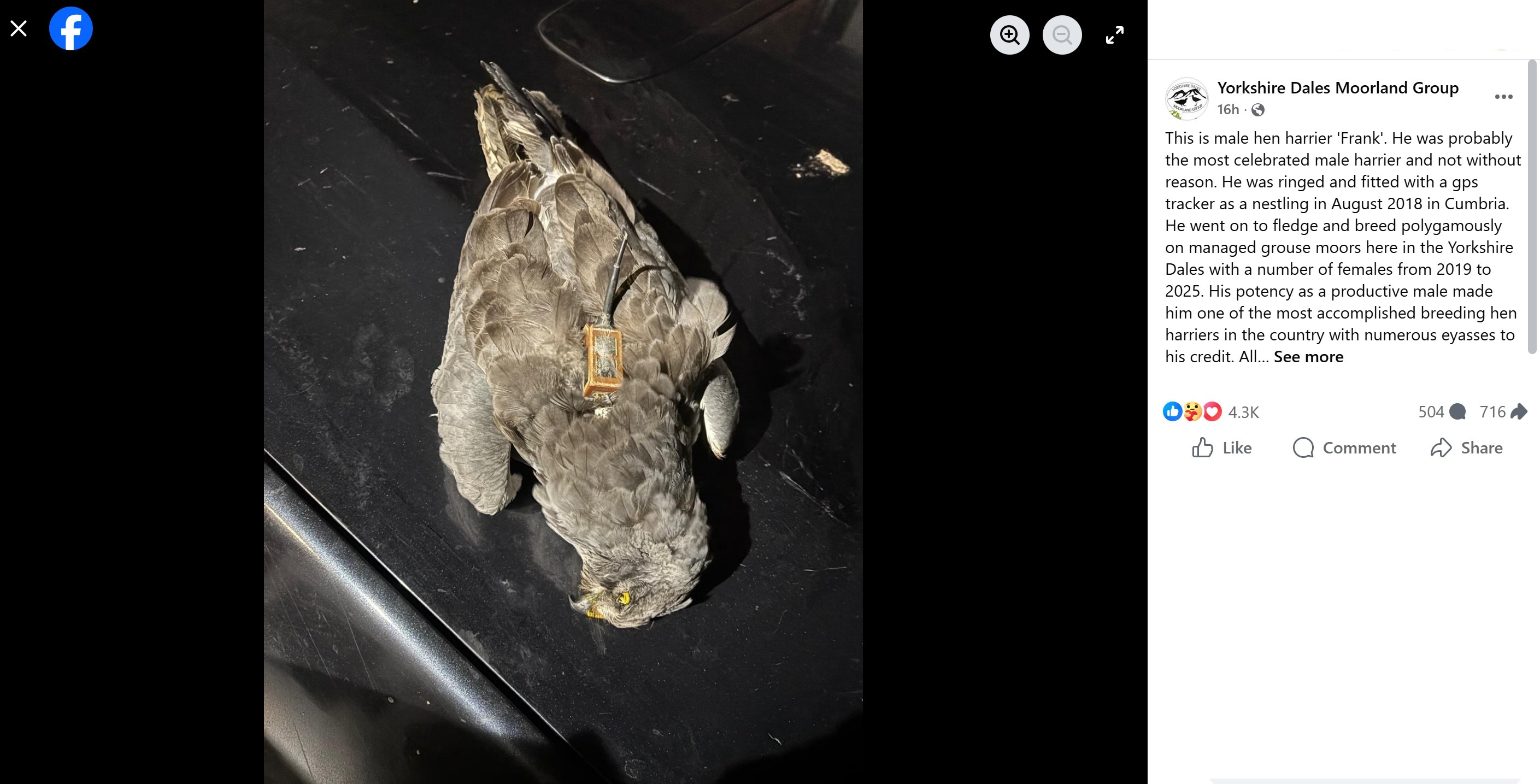
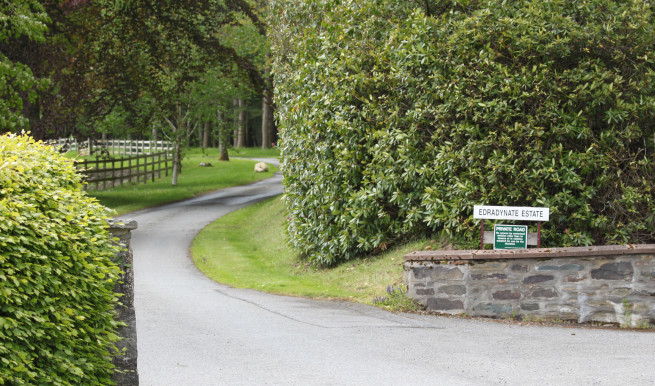
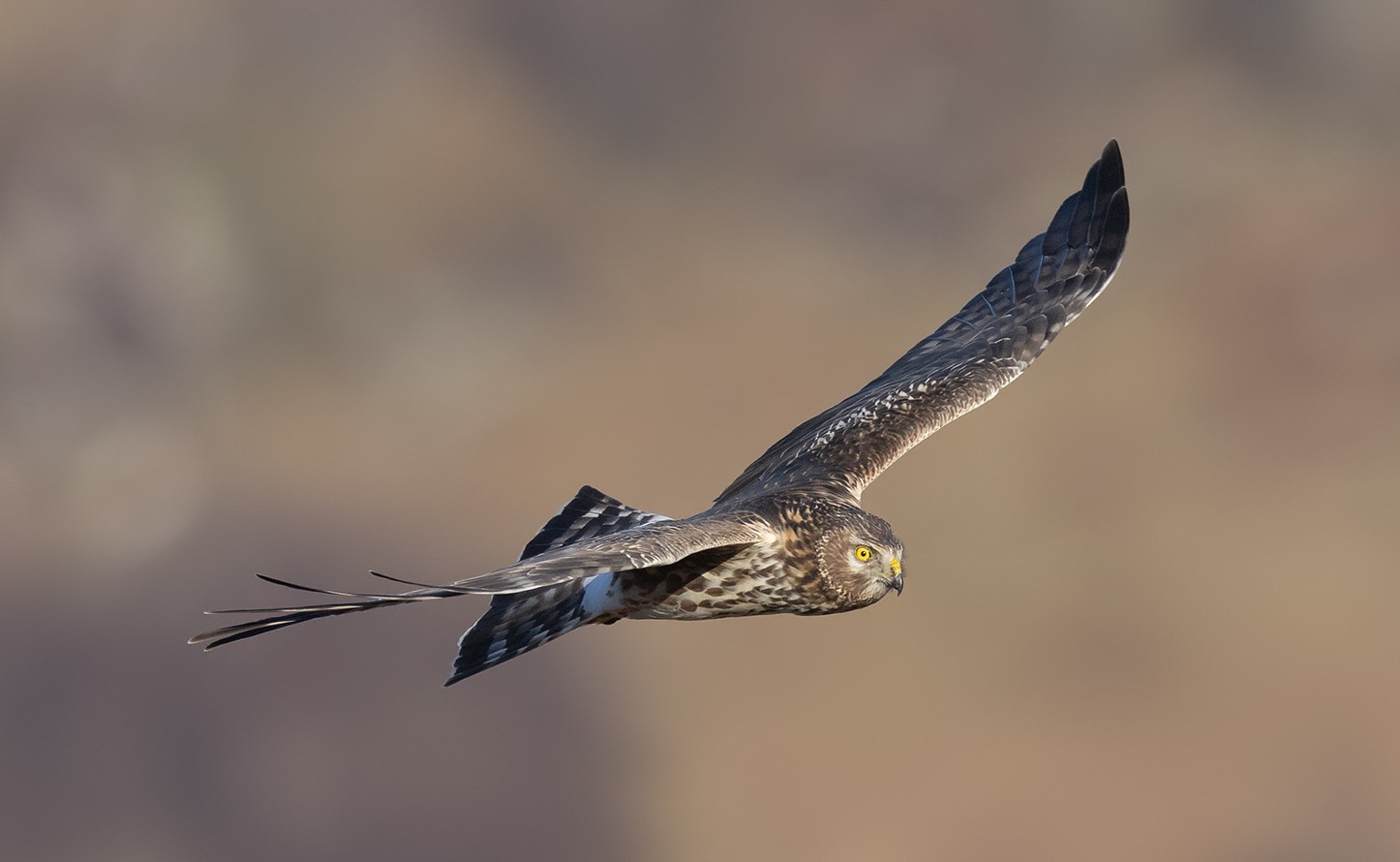
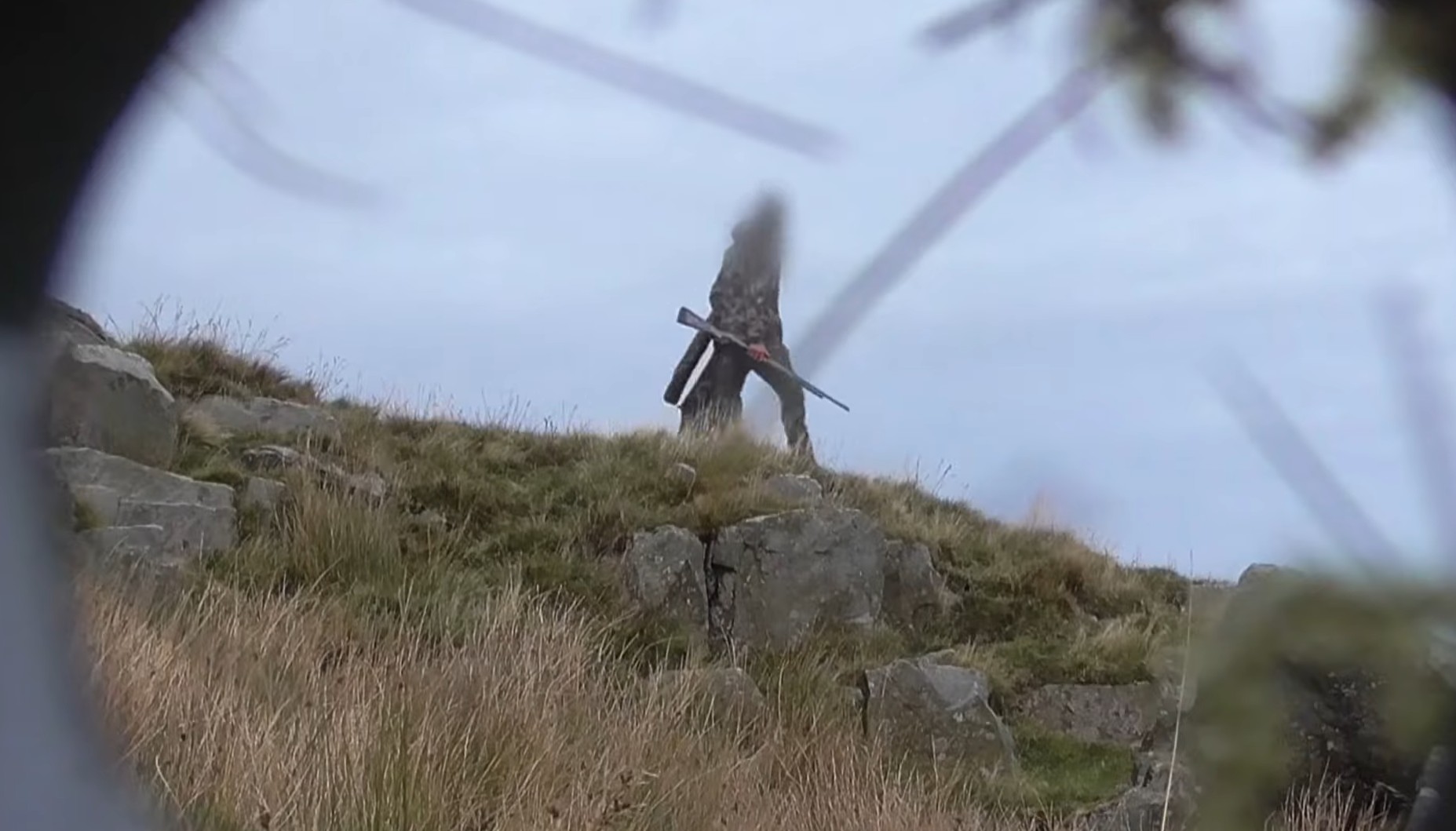
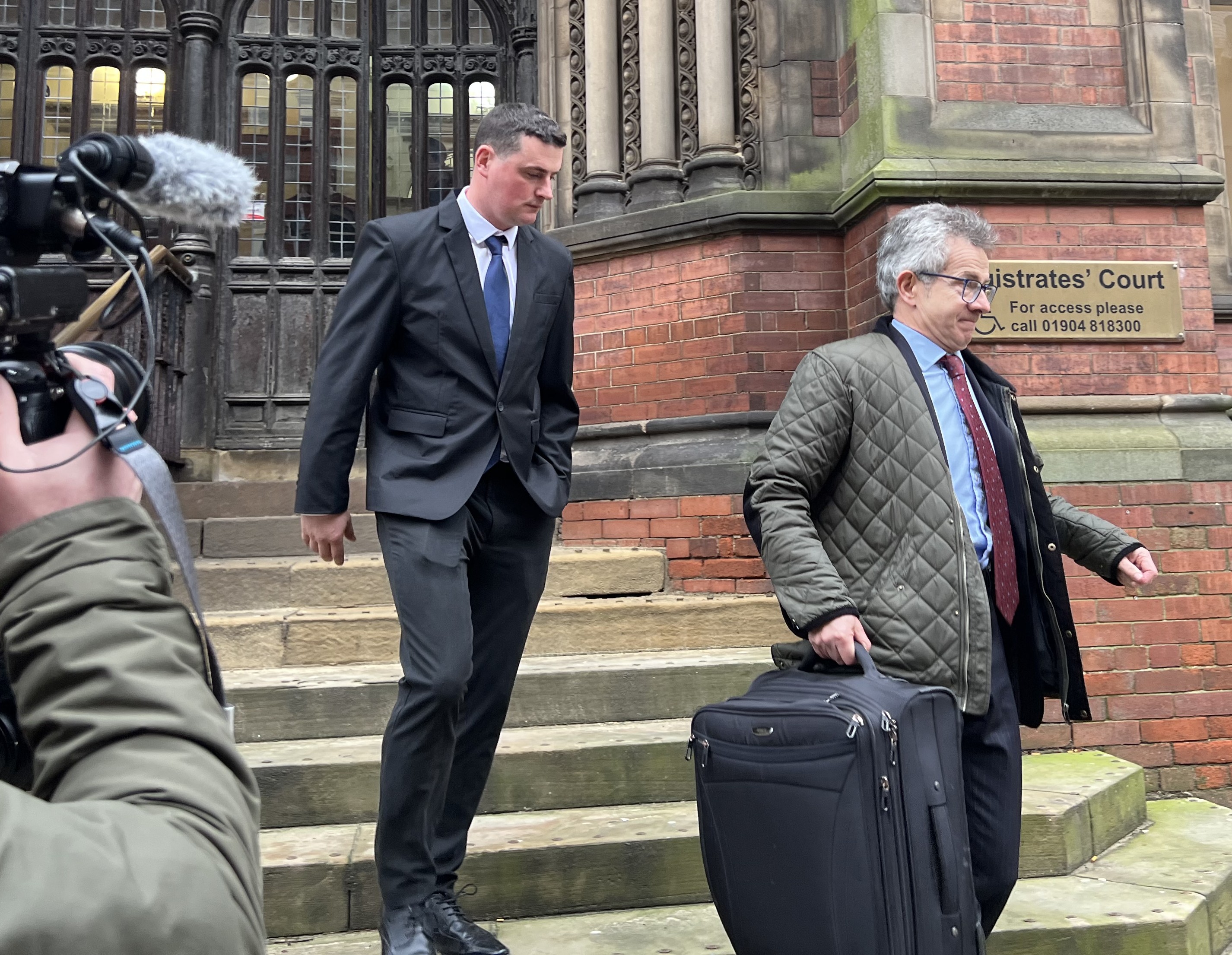


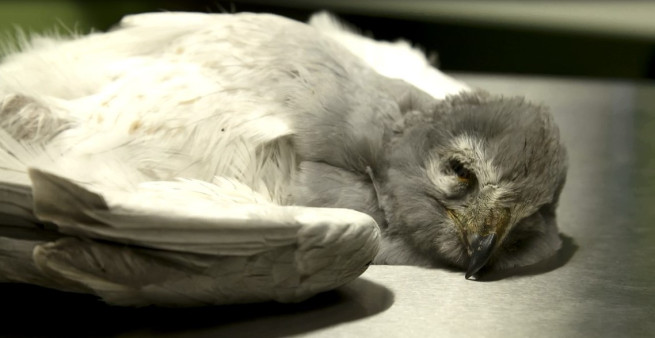
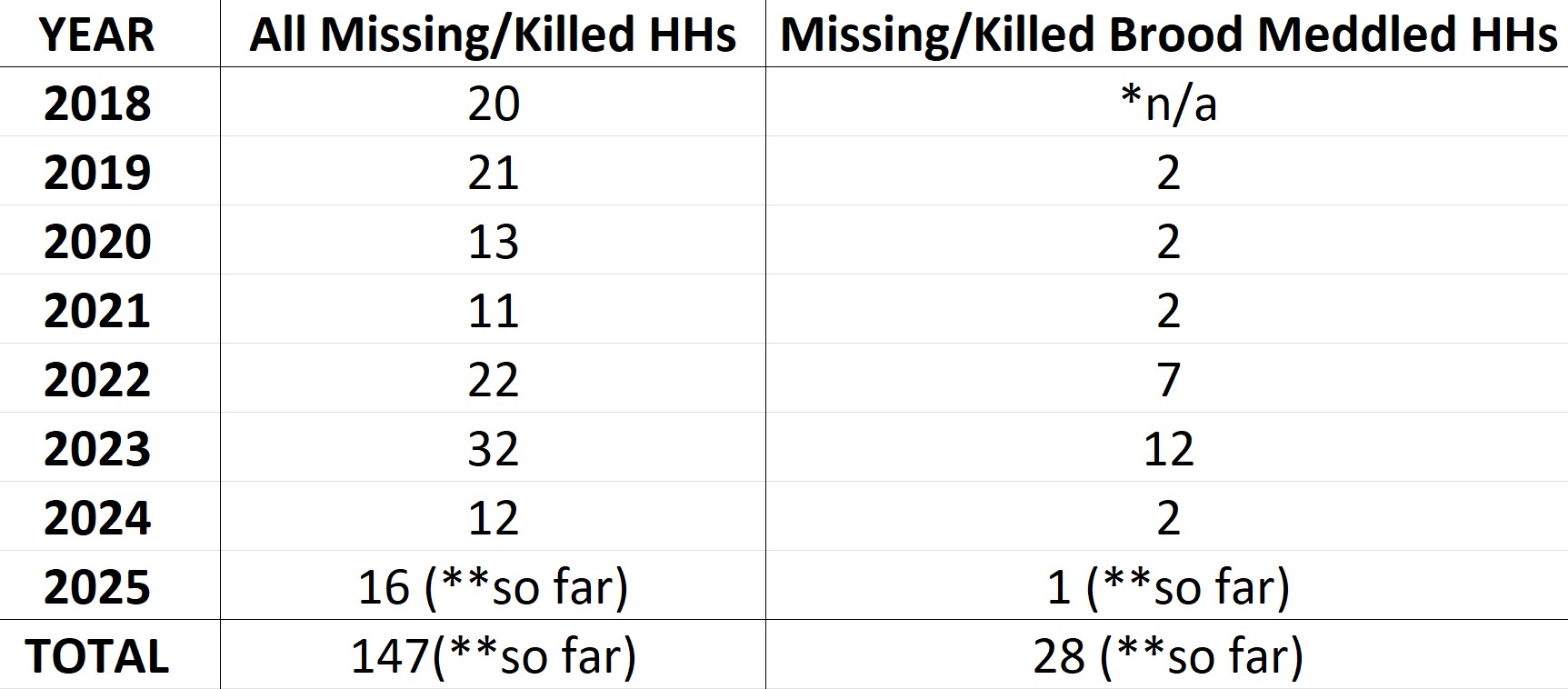
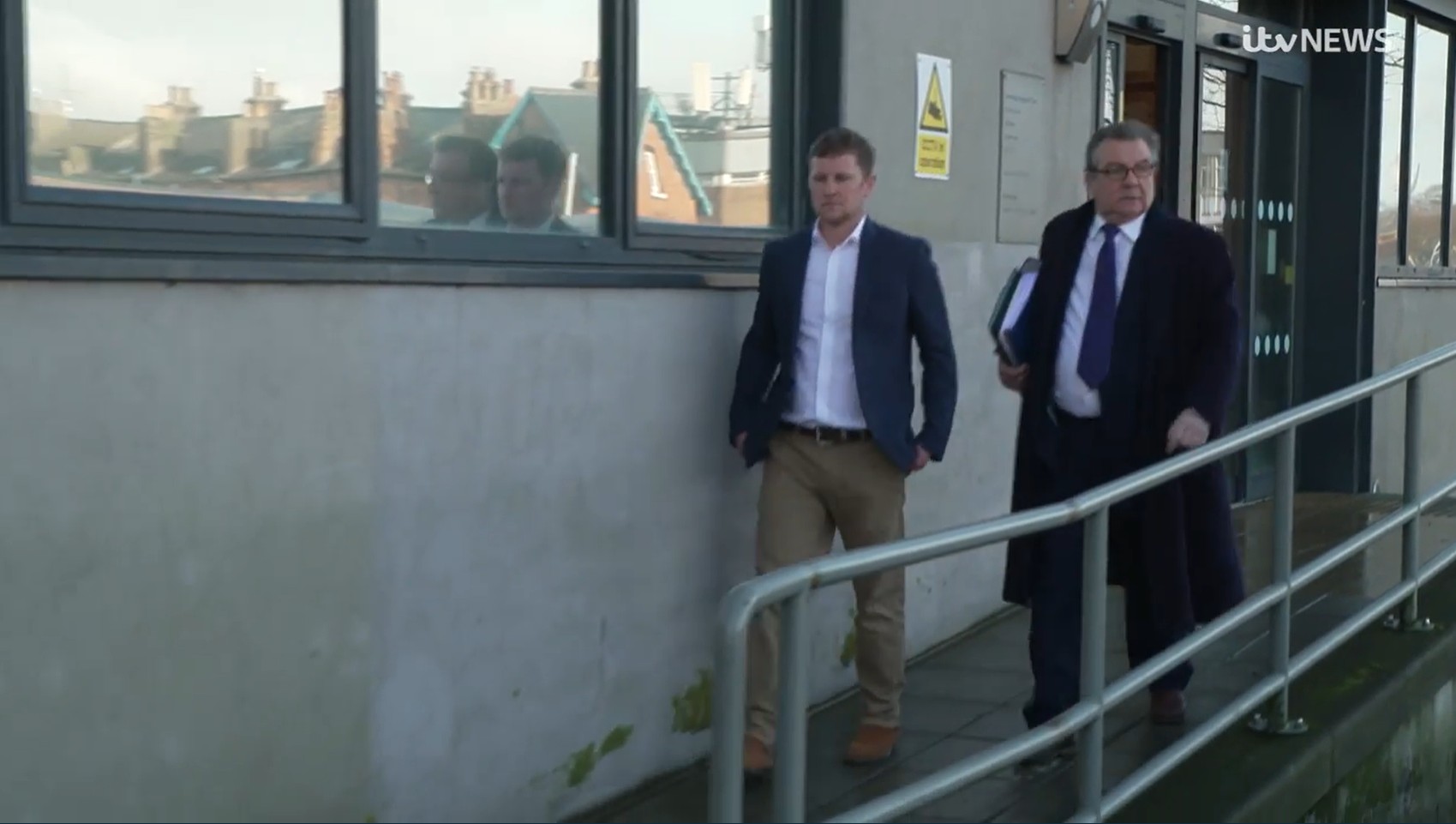

 Raptor Persecution UK