A gamekeeper is due to appear before Wrexham Magistrates tomorrow (Thurs, 28 March 2024) after being charged with alleged wildlife crime offences.
According to court documents, Stuart Hart, 47, faces two charges – Using a trap to kill or take a wild bird (in this case, a Goshawk) and possession of an article capable of being used to commit a summary offence.
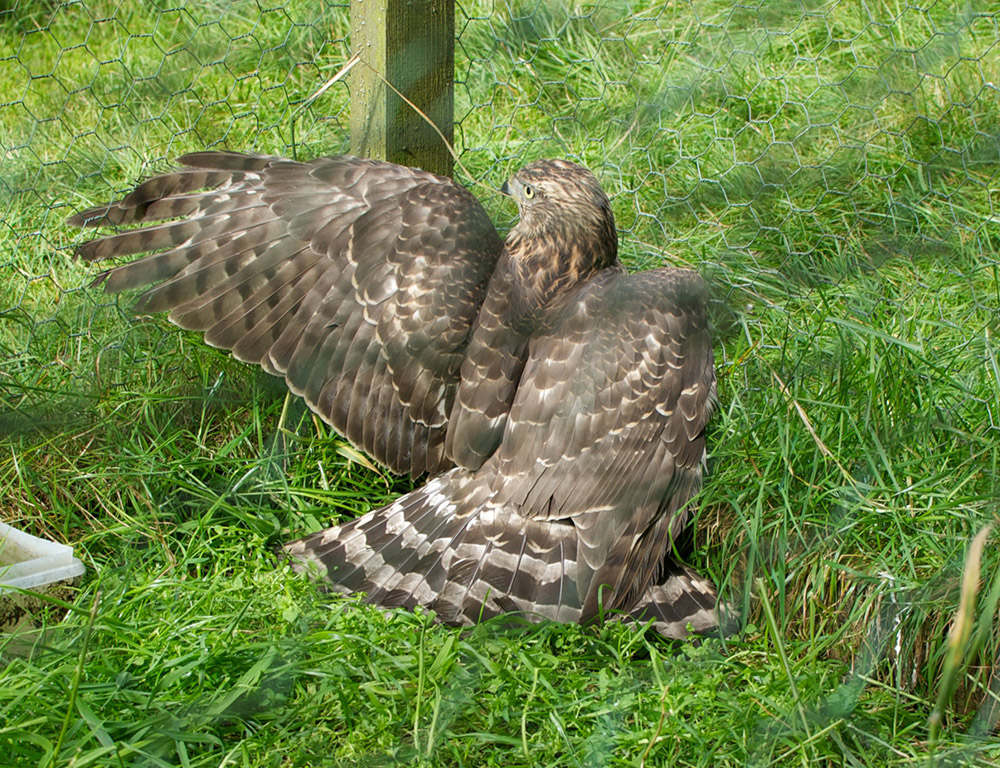
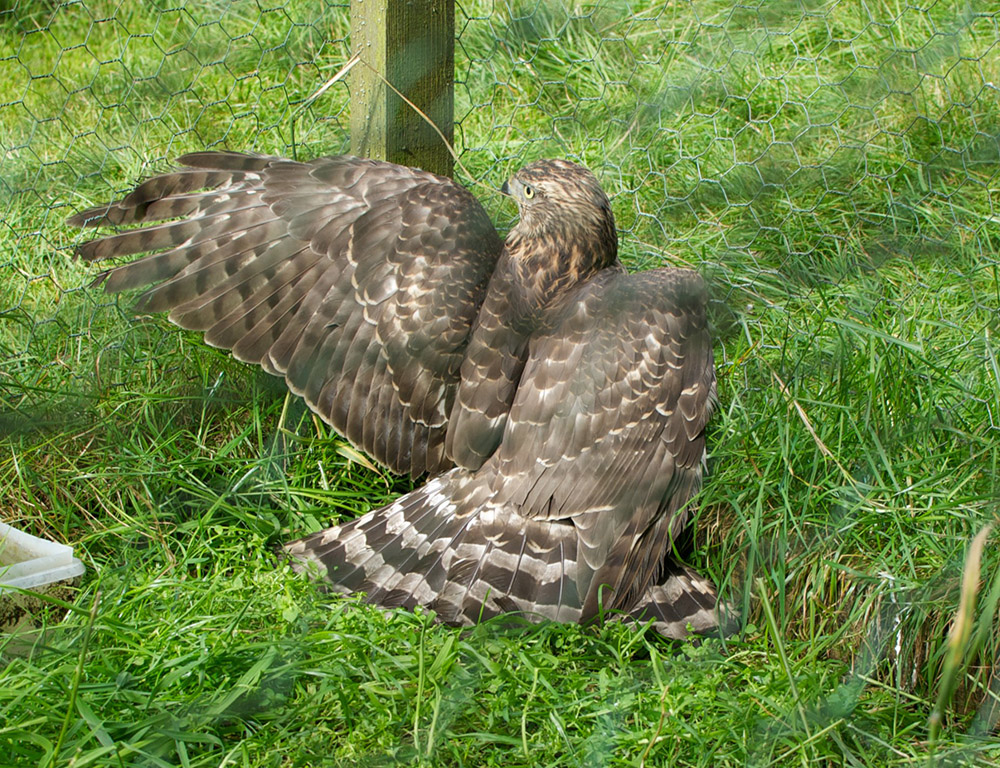
Young goshawk in a cage trap. Photo by RSPB (file photo, not linked to this case)
A press release about this case issued by North Wales Police earlier this month (here) was quite vague, with no details about the date of the alleged offences and no detail about the location other than ‘on the outskirts of Wrexham‘.
Hopefully more detail will be available after tomorrow’s hearing. This will be the defendant’s first court appearance and he’s yet to enter a plea.
NB: Comments are closed until criminal proceedings have concluded.
UPDATE 31 March 2024: Defence solicitor in prosecution against gamekeeper Stuart Hart wants to challenge admissibility of RSPB video evidence (here)
UPDATE 30 April 2024: Case discontinued against Ruabon Moor gamekeeper Stuart Hart (here)
Some of you may remember a joint statement issued by five pro-shooting organisations in January 2020 professing ‘zero tolerance’ for raptor persecution crimes.
I wrote at the time why I didn’t find their claim convincing and that the five signatory organisations (BASC, Moorland Association, National Gamekeepers Organisation, Countryside Alliance, Country Land & Business Association) needed to do much more to persuade anyone to take them seriously. Just being so-called partners on the sham Raptor Persecution Priority Delivery Group (RPPDG) is nothing more than a greenwashing exercise, in my opinion.
More evidence has now surfaced about the National Gamekeepers Organisation (the membership body for gamekeepers in England & Wales) and what I would call its underhand tactics to try and disrupt investigations into alleged raptor persecution crimes.
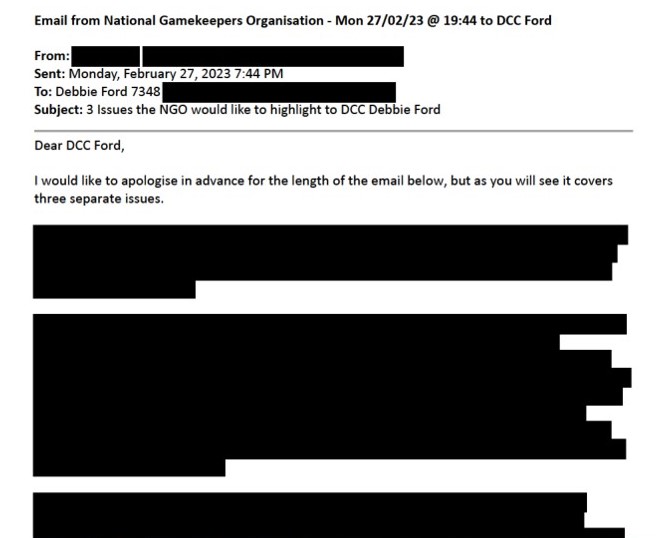
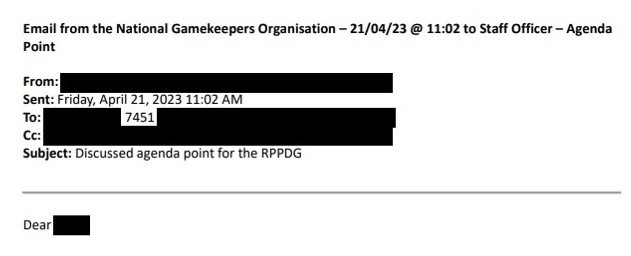
In December 2023 I submitted an FoI request to Northumbria Police asking for, amongst other things, copies of 2023 correspondence between the National Gamekeepers Organisation (NGO) and Deputy Chief Constable Debbie Ford, who at the time was the National Police Chiefs Council (NPCC) Lead for Rural & Wildlife Crime.
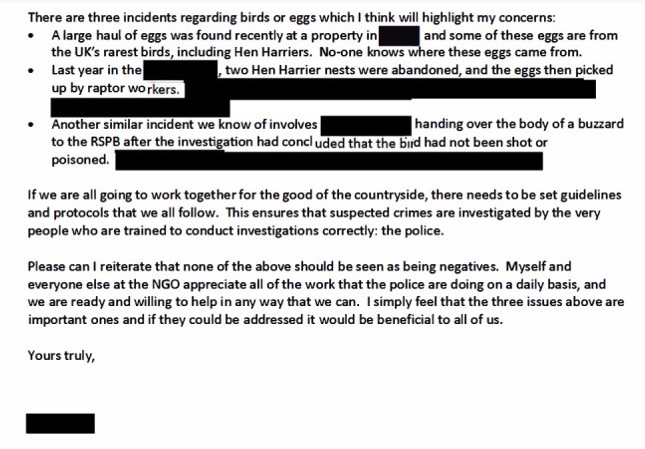
It turns out that the NGO had written to DCC Ford in February 2023 to highlight its three concerns in relation to bird crime.
The NGO’s first complaint was redacted by the FoI officer at Northumbria Police (see below). I’ve since submitted a separate FoI request for this detail and await a response.
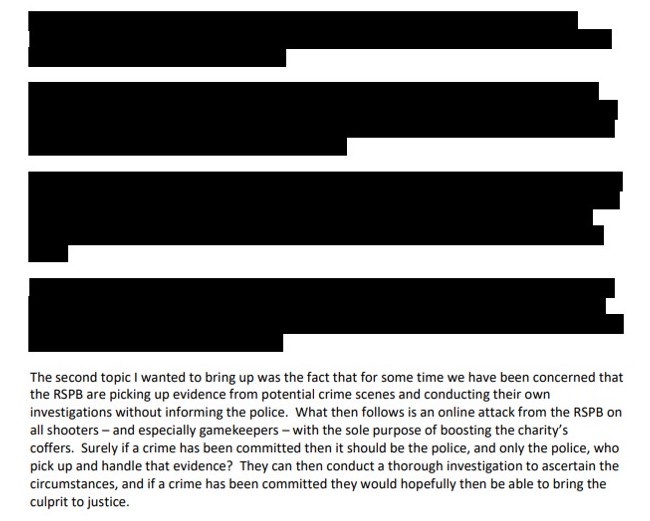
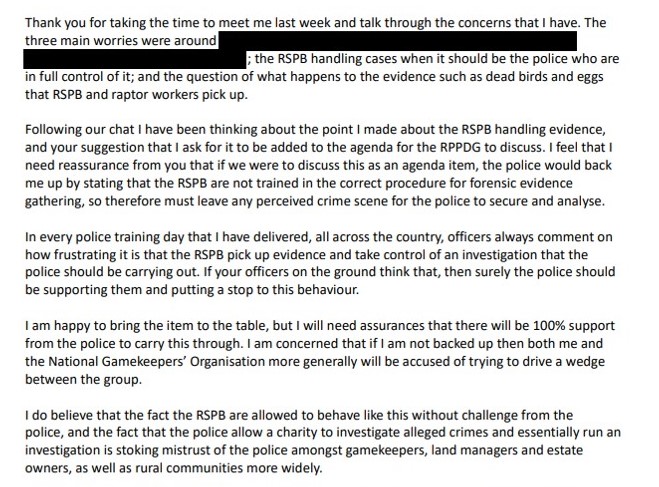
The second complaint related to, surprise surprise, the NGO’s objection to the involvement of the RSPB in raptor persecution investigations. I’ll come to that below.
The third complaint related to the RSPB and members of the North of England Raptor Forum (NERF) and about what happens to birds and eggs once an investigation had concluded. It isn’t clear to me what the basis of this complaint is.
Here’s a copy of the FoI response I received from Northumbria Police:
Let’s focus on the NGO’s second complaint about the RSPB’s involvement in raptor persecution investigations.
This is a tired old trope that gets regurgitated every now and then by those who seek to marginalise the expertise and experience of the RSPB. Expertise and experience that has been utilised by police forces across the UK, time and time and time again, resulting in criminal gamekeepers being hauled before the courts and being convicted of raptor persecution crimes. This partnership working has been particularly effective in recent years, with the police leading many multi-agency raids (with partners including the RSPB, Natural England, NWCU and Natural England), resulting in the high profile conviction of a number of criminal gamekeepers (e.g. here, here, here, here, here, here, here, here).
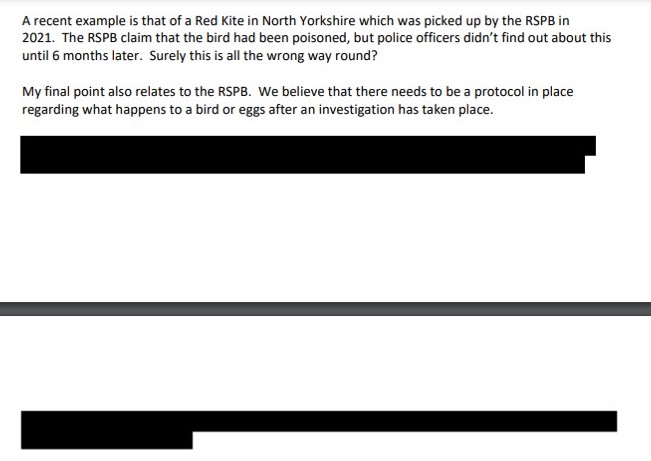
Perhaps it’s these successful convictions of gamekeepers that have triggered the NGO’s complaint? But in this case, the NGO has provided wholly misleading ‘evidence’ to DCC Ford to justify their complaint. They reference a poisoned red kite found in Yorkshire in 2021 by the RSPB’s Investigations Team and argue that ‘police officers didn’t find out about this until 6 months later‘.
That’s not a factual account of what happened at all, and I daresay the NGO probably knows this because I wrote about that case 12 days before the NGO sent its email to DCC Ford. It relates to a poisoned red kite found on Swinton Estate that North Yorkshire Police failed to investigate, despite being told by the RSPB about the discovery of the kite on the day it was found (see here for case details).
So not only is the NGO going crying to the National Police Lead on Wildlife Crime with a baseless complaint about the RSPB, it’s also attacking an organisation that it’s supposedly in ‘partnership’ with on the RPPDG – you know, that ‘partnership’ that is supposedly focused on tackling raptor persecution crimes.
There’s more.
According to the FoI response I received from Northumbria Police, DCC Ford didn’t reply in writing to address the NGO’s complaints, but someone from DCC Ford’s office had a conversation with the NGO and suggested that the NGO raise the issue at the next RPPDG meeting.
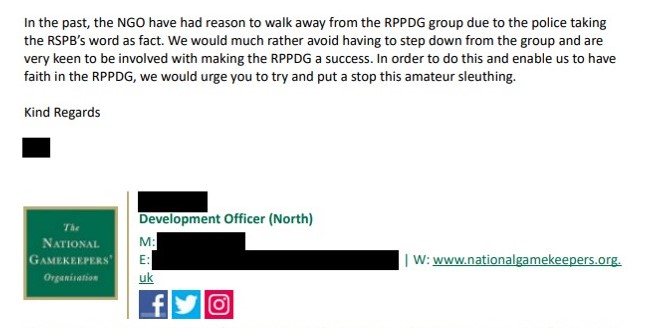
In response to that suggestion, the NGO’s Development Officer (North), who I presume is John Clarke, wrote back to DCC Ford’s staff officer wanting “assurances that there will be 100% support from the police to carry this through” and he included a veiled threat about the NGO leaving the RPPDG (having already resigned once before) if the police didn’t support the NGO’s attack on the RSPB:
Interestingly, the NGO’s complaint has not been raised at any subsequent RPPDG meetings, presumably because the police refused to support it.
Why is the National Gamekeepers Organisation still serving on the RPPDG? It’s absurd to think that this so-called ‘partnership’ for tackling raptor persecution crimes will achieve anything of significance whilst the NGO is attempting to disrupt police investigations via the back door.
Press release from North Wales Police (7th March 2024):
Wrexham man charged with wildlife offences
A man has been charged with attempting to take Goshawks in a cage trap on land on the outskirts of Wrexham.
Young goshawk in a cage trap. Photo by RSPB (file photo, not linked to this case)
Birds of prey such as Goshawk are protected under the Wildlife and Countryside Act 1981.
The 47 year old man from the Wrexham area was postal charged with using a trap for the purpose of killing or taking a wild bird and possessing an article capable of being used to kill or take a wild bird.
He is due to appear before Wrexham Magistrates Court on Thursday, March 28th.
North Wales Police rural crime team will pursue anyone targeting wildlife and continue to work with our partners the RSPB and National Wildlife Crime Unit.
ENDS
This press release is quite vague, and I believe deliberately so. Definitely one to watch. Comments are closed until criminal proceedings have concluded.
UPDATE 9th March 2024: This blog article has been picked up by Nation Cymru, the Welsh news service, here.
UPDATE 27th March 2024: Gamekeeper Stuart Hart due in court tomorrow to face charges of alleged wildlife crime (here)
Press release from Scottish SPCA (7th March 2023):
Penicuik man receives ban from keeping animals for five years after trapping and killing magpies
Alexander Hamilton was sentenced to a five-year ban from owning and keeping animals and 100 hours of community service at Edinburgh Sheriff Court on Tuesday, 5 March.
64-year-old Hamilton of Windsor Drive, Penicuik pled guilty to trapping magpies in illegal traps in his garden causing them distress. The birds were also deprived of adequate food water and shelter.
Scottish SPCA Chief Inspector Mark Rafferty, Special Investigation Unit, said:
“On 29 July 2022 our animal helpline received a call from a resident in Windsor Drive, Penicuik reporting two magpies caught in cages in the back garden of a neighbour.
We attended that same day but found no one at home. On looking over the fence into the back garden, we observed a Larsen Mate trap and two other cages. The two cages had no suitable shelter, food or water and no visible tag attached to them.
We attended later that day at the address and the occupier, Hamilton, let us into his garden. We found a dead magpie lying on the paving slabs in the back garden, just inside the gate.
In the bottom corner of the garden, screened off from the rest of the garden by a large unsecured fencing panel, was an area where there were three traps.
Three of the magpie traps in Hamilton’s garden. Photo: SSPCA
The first trap was a Larsen Mate trap containing one Magpie. The bird was in a distressed state due to being confined within the trap and was in poor condition. This trap was of a manufactured type, and was specifically designed for the purpose of catching targeted species.
Crow cage traps and Larsen traps are bird traps used to catch various territorial members of the crow family most commonly used by gamekeepers or sheep farmers.
Trap operators are responsible for traps carrying their Trap Registration Number and all traps used must only display a single tag or sign showing one NatureScot Trap Registration Number. These conditions were not being adhered to rendering this trap illegal.
The second trap contained one magpie and there was also a cage containing a magpie in poor body condition.
The magpie within this cage was distressed and managed to squeeze through the mesh on the floor of the cage and enter a space underneath the adjacent shed. The bird could be heard scraping and pecking at the wooden floor of the shed and was clearly distressed.
The birds were released from the cages and the traps and were released back into the wild.
We’re pleased with the five-year ban at the sentencing result. All animals should be protected from suffering and this includes magpies. Our team treat these cases seriously and it is good to see that the courts share this view. We will continue to investigate this type of offending, to ensure people like Hamilton are caught and stopped from further cruelty acts. I would like to thank the Procurator Fiscal Karon Rollo and the Wildlife and Environmental Crime Unit.
If anyone is concerned about an animal, they can contact our confidential animal helpline on 03000 999 999.”
ENDS
This is a good conviction for the Scottish SPCA, who reported Hamilton to the Crown Office using their powers under the Animal Health & Welfare (Scotland) Act 2006 and without needing support from Police Scotland (contrary to MSP Edward Mountain’s ludicrous claims that the SSPCA lacks the qualifications and training to implement the law).
There looks to have been some plea bargaining on the sentencing. According to this article in Edinburgh Evening News, Hamilton’s defence lawyer told the court that Hamilton owned two gundogs and asked for any animal ban imposed by the court to exclude those animals.
Sheriff Gillian Sharp obliged by sentencing Hamilton to carry out 100 hours of unpaid work in the community and disqualified him from owning or keeping animals, with the exemption of his two dogs, for five years.
Hamilton is reportedly no longer a gamekeeper and is now employed as a labourer. His conviction means he can no longer operate under the terms of a General Licence until the conviction is considered spent.
Press release from Police Scotland (4th March 2024):
Photo: Ruth Tingay
47-year-old man arrested and charged following death of goshawk near Blairgowrie
On Thursday, 29 February, wildlife crime officers acting under warrant searched an estate near Blairgowrie with the assistance of our partners the RSPB and the SSPCA.
This resulted in a 47-year-old man being arrested and charged with killing a goshawk, which is a protected bird, contrary to section 1 of the Wildlife and Countryside Act 1981.
A report will be submitted to the Procurator Fiscal.
The incident took place on Monday, 12 February.
Police Scotland Wildlife Crime Coordinator Detective Sergeant David Lynn said:
“Police Scotland will pursue anyone deliberately targeting Scotland wildlife. This multi-agency day of action shows our collective commitment to safeguarding Scotland’s wild animals.”
ENDS
This is an efficiently-handled case by Police Scotland and agency partners SSPCA & RSPB. The time from the alleged offence and the subsequent arrest and charge is unusually short. It’s also good to see an early press statement – well done.
NB: As an individual has been charged this case is considered live so comments have been turned off until criminal proceedings end. Thanks for your understanding.
UPDATE 23 July 2025: Trial date for Scottish gamekeeper accused of killing a Goshawk on a Perthshire shooting estate (here)
UPDATE 17 September 2025: Change of trial date for Scottish gamekeeper accused of killing a goshawk on a Perthshire shooting estate (here)
UPDATE 12 November 2025: Trial of Scottish gamekeeper accused of killing Goshawk now delayed until March 2026 (here)
UPDATE 16 March 2026: Trial due to begin tomorrow for Scottish gamekeeper accused of killing a Goshawk on a Perthshire shooting estate (here)
UPDATE 17 March 2026: Scottish gamekeeper Russell Mason pleads guilty to battering a Goshawk to death on shooting estate in Perthshire (here)
UPDATE 18 March 2026: Convicted Scottish gamekeeper Russell Mason – more disturbing details about this case (here)
UPDATE 23 March 2026: Game-shooting industry’s response to the recent conviction of Perthshire gamekeeper Russell Mason (here)
The SSPCA has issued the following press release in response to the recent conviction and sentencing of part-time gamekeeper Timothy Hall and his son, Lewis Hall, for the illegal laundering of Scottish peregrines which they were selling for high prices to buyers in the Middle East.
This press release contains details about the poor conditions provided by Timothy Hall for the raptors found at his address, and the subsequent return to the wild of the stolen peregrine chicks.
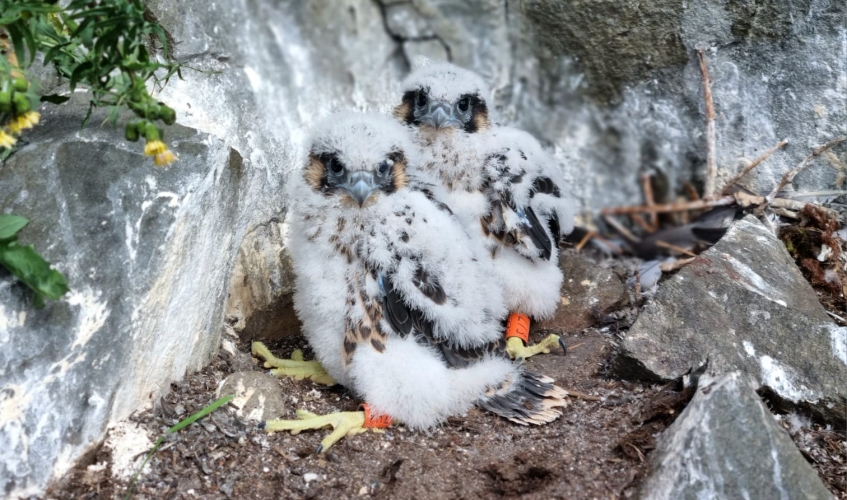
Young peregrines returned to the wild. Photo via SSPCA
Berwick men receive ban for illegally selling peregrine falcons
Timothy Hall previously pled guilty to the charges and was sentenced to a five-year ban from possessing or breeding birds of prey and 220 hours of community service at Jedburgh Sheriff Court today.
His son Lewis Hall was sentenced to 150 hours community service.
48-year-old Timothy Hall of Lamberton, Berwick Upon Tweed pled guilty in December to being responsible for nine birds of prey of various breeds. Failing to ensure a suitable environment, allowing a build-up of faeces and urates, and not providing an appropriate supply of water for bathing or drinking and did thereby expose the birds to disease or injury.
Lewis Hall, 23, of Fordyce Cottage, Duns, pled guilty to acquiring for commercial purposes, keeping for sale, and selling wild peregrine falcon chicks between 2020 and 2021.
Scottish SPCA specialist investigator, Mark Rafferty, said, “These birds are a protected species and it is illegal to disturb their nests or illegally breed them.
“During April 2021, information came to light that several Peregrine Falcon nesting sites around the Scottish Borders and East Lothian had seen thefts of eggs and chicks over a prolonged period of time.
“We carried out a raid, alongside the Police National Wildlife Crime Unit (WECU), where we found a number of peregrine falcon chicks and a number of adult birds at Hall’s address in Berwick.
“The entire housing/aviary situation was completely unsuitable in terms of size and design for the species being held in each unit. The lack of clean water, and failure to remove the excessive accumulation of faecal and animal tissue waste posed unacceptable health risks to the birds housed within.
“None of the birds were presented with an environment where breeding was likely either naturally or artificial insemination.
“Our team were able to take the peregrine falcon chicks to surrogate nests and monitor them from a distance. Once they had developed fully they were able to return to the wild safely.
“We are extremely disappointed at the sentencing result today. This was a specialised case which has taken years to appear in court. Our team, along with the Police Wildlife Crime Unit and David Anderson, Raptor ecologist from the Scottish Raptor Study Group , worked hard to provide sufficient evidence and DNA testing to get a better result.”
“If anyone is concerned about an animal, they can contact our confidential animal helpline on 03000 999 999.”
There’s been a good deal of media interest and coverage about the recent prosecution, conviction and sentencing of part-time gamekeeper Timothy Hall and his son, Lewis Hall, for their role in the illegal laundering of wild Scottish peregrines which they sold for high prices to buyers in the Middle East (see here and here).
Most media outlets have simply summarised the press releases about Operation Tantallon issued by Police Scotland and the Crown Office, but the Guardian newspaper has published from a different angle, focusing on the work of Scottish Raptor Study Group (SRSG) member George Smith, whose 40 years of dedicated and detailed monitoring of peregrines in south Scotland helped bring the successful prosecution against Timothy and Lewis Hall.
Written by journalist Phoebe Weston, who is developing a reputation for in-depth coverage of raptor persecution crimes – e.g. her earlier three-part podcast on the illegal persecution of hen harriers on grouse moors (‘Killing the Skydancer‘) was excellent, her latest piece on the Hall peregrine case is well worth a read – see here.
It’s good to see George’s significant, long-term fieldwork receiving national attention – like so many other SRSG members, George undertakes this skilled (and licenced) work on an entirely voluntary basis but his hard-won data provide the Scottish Government and its agencies with vital detail about the distribution and abundance of raptors (in George’s case, peregrines) and help to inform long-term conservation policies.
I’m particularly pleased to see George’s work highlighted because he is one of a number of SRSG members who are repeatedly targeted online by a malicious group of individuals, some of them prominent members of the Scottish Gamekeepers Association, who deliberately and falsely accuse George and his colleagues of unlawful and negligent practices, all in a desperate bid to discredit the good name of the SRSG.
They base these vicious (and libellous) accusations on what they claim to be their concern for the raptor species being monitored/tagged.
I haven’t seen any of them comment on the successful prosecution of part-time gamekeeper Timothy Hall and his son, Lewis Hall, for their crimes against the same peregrines that George has dedicated 40 years of his life to protect.
Part-time gamekeeper Timothy Hall, 48, and his son, Lewis Hall, 23, appeared at Jedburgh Sheriff Court this morning for sentencing after they earlier pleaded guilty to the illegal laundering of wild peregrines which had been stolen from sites across southern Scotland (see here for previous blogs).
Despite their offences passing the threshold for a custodial sentence, Timothy Hall was ordered to complete 220 hours of unpaid work and Lewis Hall was ordered to complete 150 hours.
More on this shortly…
UPDATE 13.40hrs: Press release from Police Scotland –
Two men sentenced for wildlife crime offences in the south of Scotland
Two men have been sentenced with community payback orders after pleading guilty to a series of wildlife crime related offences involving peregrine falcons in the south of Scotland.
Timothy Hall, 48 was given 220 hours, and Lewis Hall, 23, was given 150 hours community payback orders today at Selkirk Sheriff Court [Ed: case moved to Jedburgh Sheriff Court]. Both have been banned from keeping birds of prey for 5 years.
They admitted charges relating to 22 peregrine falcons, including being involved in the illegal sale of the protected species at Selkirk Sheriff Court on Monday, 11 December, 2023.
Timothy Hall also pleaded guilty to charges relating to firearms and animal welfare offences.
The ground breaking investigation led by Police Scotland was launched in 2021 and during a search of a property in Lamberton, Berwick-upon-Tweed, seven chicks were discovered as well as a number of other birds of prey.
While it is legal to sell captive-bred peregrines, possessing or selling wild birds is not.
To confirm the chicks were wild a new innovative DNA tactic was introduced which definitively established that they had not been bred in captivity, even linking some of them to wild adult peregrine falcons known to nest in the south of Scotland.
The investigation spanned two and a half years and through extensive enquiries Police Scotland was able to trace the sale of a number of peregrines to UK establishments trading in the birds and confirmed some had been exported overseas.
Throughout the investigation a range of partners provided invaluable contributions and expertise including the Scottish SPCA, the UK National Wildlife Crime Unit (NWCU), the Scottish Raptor Study Group, Science and Advice for Scottish Agriculture (SASA) and COPFS.
Police Scotland also worked closely with the Animal and Plant Health Agency (APHA) to improve processes and procedures relating to illegal wildlife trade to prevent people engaging in this type of criminality.
Detective Superintendent Bryan Burns said: “The sale of peregrine falcons has become an extremely lucrative business which Timothy and Lewis Hall exploited for their own financial gain.
“If their illegal activities had continued unchallenged, this would have had a massive impact on the population of young birds, and had the potential to wipe out the entire population of peregrine falcons in the south of Scotland.
“This case has been a monumental effort by Detective Constable Steven Irvine who led the investigation and was determined to bring the perpetrators to justice, going into meticulous detail to unravel the true extent of the criminality involved.
“These convictions would not have been possible without the incredible support from the partner agencies involved who all played a vital part in the investigation.”
Assistant Chief Constable for Major Crime, Public Protection and Local Crime, ACC Bex Smith, added: “This case not only has huge ramifications locally but also across the UK and worldwide and shows that Police Scotland is at the forefront of tackling illegal wildlife trade, working with our partners to use new and ground breaking forensic techniques. Wildlife crime remains a key priority for the Service and we will continue to use all resources at our disposal to put a stop to this illegal activity.”
Chief Inspector Kevin Kelly, head of the UK National Wildlife Crime Unit said: “This is part of the largest wildlife crime investigation in UK history, showing the illegal wildlife trade is a thriving business for criminals.
“The UK is home to some of the rarest birds of prey in the world, some of these are being taken and laundered in the legal falconry trade bringing lucrative returns for criminals and having a direct impact on the current nature crisis. The NWCU is committed to tackling this.”
Dr Lucy Webster from Science and Advice for Scottish Agriculture (SASA), part of the Scottish Government, led on the forensic work. She said:
“This is the first case to use our new forensic DNA method to test whether documented breeding records for Peregrine Falcons are true or false. However, we went beyond establishing false breeding records here, and also identified family links to several wild Peregrine nests. This powerful method will continue to support investigations and combat the illegal trade of wild Peregrines in the UK and beyond.”
Anyone with information or concerns about wildlife crime in their area can contact Police Scotland on 101.
ENDS
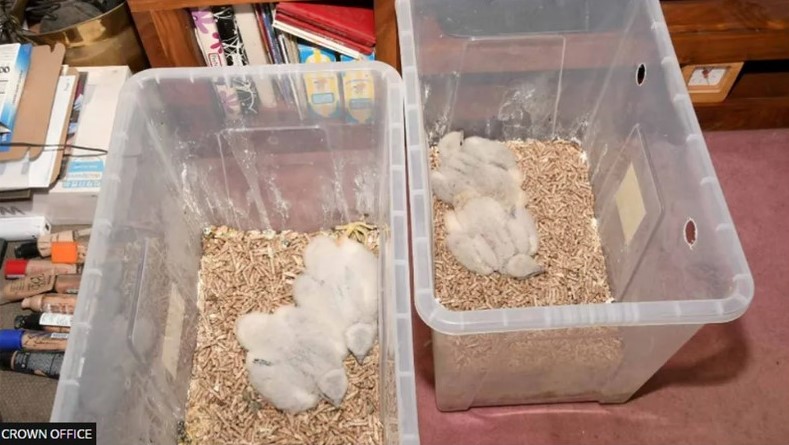
Some of the young stolen Peregrine chicks found at Timothy Hall’s address during multi-agency raid in 2021 (Photo via COPFS). The chicks were later fostered back to wild nest sites.
UPDATE 14.00hrs: Press release from Crown Office & Procurator Fiscal Service COPFS):
Father and son receive bans for illegally selling peregrine falcon chicks
A father and son who, over a number of years, illegally possessed and sold wild peregrine falcon chicks for large sums of money, have been ordered to carry out periods of unpaid work.
Both men are also prohibited from possessing or having under their control any bird of prey for a period of five years.
Timothy Hall, 48, pled guilty to acquiring for commercial purposes, keeping for sale and selling 15 wild peregrine falcon chicks between 2019 and 2020 and to being in possession of a further seven wild peregrine falcon chicks on 18th May 2021.
He also admitted a charge of failing to provide for the needs of nine other birds of prey by not providing a clean and adequate living environment and not providing sufficient clean water for them. He also admitted breaching the Firearms Act by not properly securing a shotgun.
He was ordered to carry out 220 hours of unpaid work over a period of 18 months.
Lewis Hall, 23, pled guilty to acquiring for commercial purposes, keeping for sale, and selling wild peregrine falcon chicks between 2020 and 2021, which included 13 of the previously referred to peregrine falcon chicks sold in 2020 and the seven chicks found on 18th May 2021.
He was ordered to carry out 150 hours of unpaid work over a period of 15 months.
Both men were sentenced at Jedburgh Sheriff Court.
Iain Batho, who leads on wildlife and environmental crime for the Crown Office and Procurator Fiscal Service (COPFS), said:
“It is highly important to preserve Scotland’s natural heritage, including the wildlife that forms part of it. As such, birds of prey are given strict protection by our law.
“The sale of peregrine falcons has become an extremely lucrative business and Timothy and Lewis Hall took advantage of that for their own financial gain and to the detriment of the wild peregrine falcon population in the South of Scotland.
“Their illegal activities had the potential to have a devastating impact on the entire population of nesting peregrine falcons in that part of the country.
“The result in this case is a testament to the collaborative working between COPFS, Police Scotland, the UK National Wildlife Crime Unit (NWCU), the Scottish SPCA and Science and Advice for Scottish Agriculture (SASA).”
The court heard how in April 2021 a member of the Lothian and Borders Raptor Study Group alerted police to suspicious failures of peregrine falcon nests in the Berwickshire area which had previously been productive.
Officers later investigated two nesting sites and discovered they had been disturbed and a number of eggs were missing from both locations.
A police search of Timothy Hall’s home in Berwick-Upon-Tweed subsequently found a total of seven peregrine falcon chicks as well as a number of other birds of prey.
Further enquiries concluded that none of the chicks were captive-born and had been taken from the wild.
The court was also told that an examination of Lewis Hall’s mobile phone contained a note that suggested he had been monitoring known peregrine falcon nest sites.
Data on the same device also showed that a drone linked to the phone had flown 20 separate flights directly over several known peregrine falcon nest sites.
The court also heard evidence that, between 2019 and 2020, Timothy and Lewis Hall were involved in the sale of 15 peregrine falcon chicks for which they received a total of £41,164.
To confirm the chicks were wild, a new innovative DNA tactic was used which definitively established that they had not been bred in captivity and which linked some of them to wild adult peregrine falcons known to nest in the south of Scotland.
Under legislation, selling captive-bred peregrine falcons is legal but possessing or selling wild birds is unlawful.
Lewis Hall will now be subject to action under proceeds of crime legislation.
UPDATE 20.30hrs: Commentary on the staggeringly inadequate sentencing of Timothy and Lewis Hall, convicted for illegal laundering of wild peregrines in south Scotland (here)
UPDATE 14 February 2024: It’s soul destroying to find nests have failed” – inside the battle against Scotland’s falcon thieves (here)
UPDATE 15 February 2024: SSPCA press release on conviction of part-time gamekeeper Timothy Hall and his son Lewis Hall for illegal laundering of Scottish peregrines (here)
UPDATE 26 June 2024: Prosecutors seeking to recover £164,000 from Scottish peregrine launderer Lewis Hall (here)
UPDATE 10 October 2024: Scottish court orders convicted peregrine launderer Lewis Hall to pay back thousands under Proceeds of Crime Act (here)
UPDATE 23 November 2024: Suzanne Hall, wife & mother of convicted peregrine launderers ‘no longer a serving police officer’ (here).
For anyone who still wants to pretend that the grouse shooting industry isn’t responsible for the systematic extermination of hen harriers on grouse moors across the UK, here’s the latest catalogue of crime that suggests otherwise.
[This male hen harrier died in 2019 after his leg was almost severed in an illegally set trap that had been placed next to his nest on a Scottish grouse moor (see here). Photo by Ruth Tingay]
This is the blog I now publish after every reported killing or suspicious disappearance.
“They disappear in the same way political dissidents in authoritarian dictatorships have disappeared” (Stephen Barlow, 22 January 2021).
Today the list has been updated to include the nine most recently reported victims, all satellite tagged by Natural England and all ‘vanished’ between September and November 2023, including four more brood meddled harriers (here).
I’ve been compiling this list only since 2018 because that is the year that the grouse shooting industry ‘leaders’ would have us believe that the criminal persecution of hen harriers had stopped and that these birds were being welcomed back on to the UK’s grouse moors (see here).
This assertion was made shortly before the publication of a devastating new scientific paper that demonstrated that 72% of satellite-tagged hen harriers were confirmed or considered likely to have been illegally killed, and this was ten times more likely to occur over areas of land managed for grouse shooting relative to other land uses (see here). Incidentally, a further scientific paper published in 2023 by scientists at the RSPB, utilising even more recent data, echoed these results – see here).
2018 was also the year that Natural England issued a licence to begin a hen harrier brood meddling trial on grouse moors in northern England. For new blog readers, hen harrier brood meddling is a conservation sham sanctioned by DEFRA as part of its ludicrous ‘Hen Harrier Action Plan‘ and carried out by Natural England (NE), in cahoots with the very industry responsible for the species’ catastrophic decline in England. For more background see here and for a critical evaluation of the trial after 5 years see this report by Wild Justice.
Brood meddling has been described as a sort of ‘gentleman’s agreement’ by commentator Stephen Welch:
“I don’t get it, I thought the idea of that scheme was some kind of trade off – a gentleman’s agreement that the birds would be left in peace if they were moved from grouse moors at a certain density. It seems that one party is not keeping their side of the bargain“.
With at least 122 hen harriers gone since 2018, and 27 of those being brood meddled birds, there is no question that the grouse shooting industry is simply taking the piss. Meanwhile, Natural England pretends that ‘partnership working’ is the way to go and DEFRA Ministers remain silent.
*n/a = no hen harriers were brood meddled in 2018
‘Partnership working’ according to Natural England appears to include authorising the removal of hen harrier chicks from a grouse moor already under investigation by the police for suspected raptor persecution (here) and accepting a £75k ‘donation’ from representatives of the grouse shooting industry that prevents Natural England from criticising them or the sham brood meddling trial (see here). This is in addition to a £10k ‘donation’ that Natural England accepted, under the same terms, in 2021 (here).
So here’s the latest gruesome list. Note that the majority of these birds (but not all) were fitted with satellite tags. How many more [untagged] harriers have been killed?
February 2018: Hen harrier Saorsa ‘disappeared’ in the Angus Glens in Scotland (here). The Scottish Gamekeepers Association later published wholly inaccurate information claiming the bird had been re-sighted. The RSPB dismissed this as “completely false” (here).
5 February 2018: Hen harrier Marc ‘disappeared’ on a grouse moor in Durham (here).
9 February 2018: Hen harrier Aalin ‘disappeared’ on a grouse moor in Wales (here).
March 2018: Hen harrier Blue ‘disappeared’ in the Lake District National Park (here).
March 2018: Hen harrier Finn ‘disappeared’ near Moffat in Scotland (here).
18 April 2018: Hen harrier Lia ‘disappeared’ in Wales and her corpse was retrieved in a field in May 2018. Cause of death was unconfirmed but police treating death as suspicious (here).
8 August 2018: Hen harrier Hilma ‘disappeared’ on a grouse moor in Northumberland (here).
16 August 2018: Hen harrier Athena ‘disappeared’ on a grouse moor in Scotland (here).
26 August 2018: Hen Harrier Octavia ‘disappeared’ on a grouse moor in the Peak District National Park (here).
29 August 2018: Hen harrier Margot ‘disappeared’ on a grouse moor in Scotland (here).
29 August 2018: Hen Harrier Heulwen ‘disappeared’ on a grouse moor in Wales (here).
3 September 2018: Hen harrier Stelmaria ‘disappeared’ on a grouse moor in Scotland (here).
24 September 2018: Hen harrier Heather ‘disappeared’ on a grouse moor in Scotland (here).
2 October 2018: Hen harrier Mabel ‘disappeared’ on a grouse moor on the edge of the Yorkshire Dales National Park (here).
3 October 2018: Hen Harrier Thor ‘disappeared’ next to a grouse moor in Bowland, Lanacashire (here).
23 October 2018: Hen harrier Tom ‘disappeared’ in South Wales (here).
26 October 2018: Hen harrier Arthur ‘disappeared’ on a grouse moor in the North York Moors National Park (here).
1 November 2018: Hen harrier Barney ‘disappeared’ on Bodmin Moor (here).
10 November 2018: Hen harrier Rannoch ‘disappeared’ on a grouse moor in Scotland (here). Her corpse was found nearby in May 2019 – she’d been killed in an illegally-set spring trap (here).
14 November 2018: Hen harrier River ‘disappeared’ on a grouse moor in the Nidderdale AONB (here). Her corpse was found nearby in April 2019 – she’d been illegally shot (here).
16 January 2019: Hen harrier Vulcan ‘disappeared’ in Wiltshire close to Natural England’s proposed reintroduction site (here).
28 January 2019: Hen harrier DeeCee ‘disappeared’ in Glen Esk, a grouse moor area of the Angus Glens (see here).
7 February 2019: Hen harrier Skylar ‘disappeared’ next to a grouse moor in South Lanarkshire (here).
22 April 2019: Hen harrier Marci ‘disappeared’ on a grouse moor in the Cairngorms National Park (here).
26 April 2019: Hen harrier Rain ‘disappeared’ on a grouse moor in Nairnshire (here).
11 May 2019: An untagged male hen harrier was caught in an illegally-set trap next to his nest on a grouse moor in South Lanarkshire. He didn’t survive (here).
7 June 2019: An untagged hen harrier was found dead on a grouse moor in Scotland. A post mortem stated the bird had died as a result of ‘penetrating trauma’ injuries and that this bird had previously been shot (here).
5 September 2019: Wildland Hen Harrier 1 ‘disappeared’ on a grouse moor nr Dalnaspidal on the edge of the Cairngorms National Park (here).
11 September 2019: Hen harrier Romario ‘disappeared’ on a grouse moor in the Cairngorms National Park (here).
14 September 2019: Hen harrier (Brood meddled in 2019, #183704) ‘disappeared’ in the North Pennines (here).
23 September 2019: Hen harrier (Brood meddled in 2019, #55149) ‘disappeared’ in North Pennines (here).
24 September 2019: Wildland Hen Harrier 2 ‘disappeared’ on a grouse moor at Invercauld in the Cairngorms National Park (here).
24 September 2019: Hen harrier Bronwyn ‘disappeared’ near a grouse moor in North Wales (here).
10 October 2019: Hen harrier Ada ‘disappeared’ on a grouse moor in the North Pennines AONB (here).
12 October 2019: Hen harrier Thistle ‘disappeared’ on a grouse moor in Sutherland (here).
18 October 2019: Member of the public reports the witnessed shooting of an untagged male hen harrier on White Syke Hill in North Yorkshire (here).
November 2019: Hen harrier Mary found illegally poisoned on a pheasant shoot in Ireland (here).
November 2019: Hen harrier Artemis ‘disappeared’ near Long Formacus in south Scotland (RSPB pers comm).
14 December 2019: Hen harrier Oscar ‘disappeared’ in Eskdalemuir, south Scotland (here).
December 2019: Hen harrier Ingmar ‘disappeared’ in the Strathbraan grouse moor area of Perthshire (RSPB pers comm).
January 2020: Members of the public report the witnessed shooting of a male hen harrier on Threshfield Moor in the Yorkshire Dales National Park (here).
23 March 2020: Hen harrier Rosie ‘disappeared’ at an undisclosed roost site in Northumberland (here).
1 April 2020: Hen harrier (Brood meddled in 2019, #183703) ‘disappeared’ in unnamed location, tag intermittent (here).
5 April 2020: Hen harrier Hoolie ‘disappeared’ on a grouse moor in the Cairngorms National Park (here)
8 April 2020: Hen harrier Marlin ‘disappeared’ on a grouse moor in the Cairngorms National Park (here).
19 May 2020: Hen harrier Fingal ‘disappeared’ on a grouse moor in the Lowther Hills, Scotland (here).
21 May 2020: Hen harrier (Brood meddled in 2019, #183701) ‘disappeared’ on a grouse moor in Cumbria shortly after returning from wintering in France (here).
27 May 2020: Hen harrier Silver ‘disappeared’ on a grouse moor on Leadhills Estate, Scotland (here).
2020: day/month unknown: Unnamed male hen harrier breeding on RSPB Geltsdale Reserve, Cumbria ‘disappeared’ while away hunting (here).
9 July 2020: Unnamed female hen harrier (#201118) ‘disappeared’ from an undisclosed site in Northumberland (here).
25 July 2020: Hen harrier Harriet ‘disappeared’ on a grouse moor in the Yorkshire Dales National Park (here).
14 August 2020: Hen harrier Solo ‘disappeared’ in confidential nest area in Lancashire (here).
7 September 2020: Hen harrier Dryad ‘disappeared’ on a grouse moor in the Yorkshire Dales National Park (here).
16 September 2020: Hen harrier Fortune ‘disappeared’ from an undisclosed roost site in Northumberland (here).
19 September 2020: Hen harrier Harold ‘disappeared’ on a grouse moor in the Yorkshire Dales National Park (here).
20 September 2020: Hen harrier (Brood meddled in 2020, #55152) ‘disappeared’ next to a grouse moor in North Yorkshire (here).
24 February 2021: Hen harrier Tarras ‘disappeared’ next to a grouse moor in Northumberland (here)
12th April 2021: Hen harrier Yarrow ‘disappeared’ near Stockton, County Durham (here).
18 May 2021: Adult male hen harrier ‘disappeared’ from its breeding attempt on RSPB Geltsdale Reserve, Cumbria whilst away hunting (here).
18 May 2021: Another adult male hen harrier ‘disappeared’ from its breeding attempt on RSPB Geltsdale Reserve, Cumbria whilst away hunting (here).
24 July 2021: Hen harrier Asta ‘disappeared’ at a ‘confidential site’ in the North Pennines (here). We learned 18 months later that her wings had been ripped off so her tag could be fitted to a crow in an attempt to cover up her death (here).
14th August 2021: Hen harrier Josephine ‘disappeared’ at a ‘confidential site’ in Northumberland (here).
17 September 2021: Hen harrier Reiver ‘disappeared’ in a grouse moor dominated region of Northumberland (here)
24 September 2021: Hen harrier (Brood meddled in 2021, R2-F-1-21) ‘disappeared’ in Northumberland (here).
15 November 2021: Hen harrier (brood meddled in 2020, #R2-F1-20) ‘disappeared’ at the edge of a grouse moor on Arkengarthdale Estate in the Yorkshire Dales National Park (here).
19 November 2021: Hen harrier Val ‘disappeared’ in the Lake District National Park in Cumbria (here).
19 November 2021: Hen harrier Percy ‘disappeared’ in Lothian, Scotland (here).
12 December 2021: Hen harrier Jasmine ‘disappeared’ on a grouse moor (High Rigg Moor on the Middlesmoor Estate) in the Nidderdale AONB in North Yorkshire (here).
9 January 2022: Hen harrier Ethel ‘disappeared’ in Northumberland (here).
26 January 2022: Hen harrier Amelia ‘disappeared’ in Bowland (here).
10 February 2022: An unnamed satellite-tagged hen harrier ‘disappeared’ in a grouse moor dominated area of the Peak District National Park (here). One year later it was revealed that the satellite tag/harness of this young male called ‘Anu’ had been deliberately cut off (see here).
12 April 2022: Hen harrier ‘Free’ (Tag ID 201121) ‘disappeared’ at a ‘confidential site’ in Cumbria (here). It later emerged he hadn’t disappeared, but his mutilated corpse was found on moorland in the Yorkshire Dales National Park. A post mortem revealed the cause of death was having his head twisted and pulled off. One leg had also been torn off whilst he was still alive (here).
April 2022: Hen harrier ‘Pegasus’ (tagged by the RSPB) ‘disappeared’ on a grouse moor at Birkdale in the Yorkshire Dales National Park (here).
May 2022: A male breeding hen harrier ‘disappeared’ from a National Trust-owned grouse moor in the Peak District National Park (here).
May 2022: Another breeding male hen harrier ‘disappeared’ from a National Trust-owned grouse moor in the Peak District National Park (here).
14 May 2022: Hen harrier ‘Harvey’ (Tag ID 213844) ‘disappeared’ from a ‘confidential site’ in the North Pennines (here).
20 June 2022: Hen harrier chick #1 stamped to death in nest on a grouse moor in the Yorkshire Dales National Park (here).
20 June 2022: Hen harrier chick #2 stamped to death in nest on a grouse moor in the Yorkshire Dales National Park (here).
20 June 2022: Hen harrier chick #3 stamped to death in nest on a grouse moor in the Yorkshire Dales National Park (here).
20 June 2022: Hen harrier chick #4 stamped to death in nest on a grouse moor in the Yorkshire Dales National Park (here).
17 August 2022: Hen harrier (brood meddled in 2022, #R1-M1-22) ‘disappeared’ on moorland in the Yorkshire Dales National Park (here).
September 2022: Hen harrier ‘Sullis’ (tagged by the RSPB) ‘disappeared’ on a grouse moor in Cumbria (here).
5 October 2022: Hen harrier (brood meddled in 2022, #R3-M2-22) ‘disappeared’ on moorland in the Yorkshire Dales National Park (here).
10 October 2022: Hen harrier ‘Sia’ ‘disappeared’ near Hamsterley Forest in the North Pennines (here).
October 2022: Hen harrier (brood meddled in 2021, #R1-F1-21) ‘disappeared’ in the North Sea off the North York Moors National Park (here).
December 2022: Hen harrier female (brood meddled in 2020, #R2-F2-20) ‘disappeared’ on moorland in Cumbria (here).
1 December 2022: Hen harrier male (brood meddled in 2021, #R1-M1-21) ‘disappeared’ on moorland in the Yorkshire Dales National Park (here).
14 December 2022: Hen harrier female (brood meddled in 2022, #R3-F1-22) ‘disappeared’ on moorland in the North Pennines AONB (here).
15 December 2022: Hen harrier female (brood meddled in 2022, #R2-F1-22) ‘disappeared’ on moorland in the Yorkshire Dales National Park (here).
30 March 2023: Hen harrier female (brood meddled in 2022, #R1-F3-22) ‘disappeared’ in Yorkshire (here). Notes from NE Sept 2023 spreadsheet update: “Final transmission location temporarily withheld at police request“.
1 April 2023: Hen harrier male (brood meddled in 2022, #R2-M1-22) ‘disappeared’ in Yorkshire (here). Notes from NE Sept 2023 spreadsheet update: “Final transmission location temporarily withheld at police request“.
April 2023: Hen harrier ‘Lagertha’ (tagged by RSPB) ‘disappeared’ in North Yorkshire (here).
April 2023: Hen harrier ‘Nicola’ (Tag ID 234078) ”disappeared’ in North Yorkshire (here).
April 2023: Untagged male hen harrier ‘disappeared’ from an active nest on RSPB Geltsdale Reserve in Cumbria (here).
April 2023: Another untagged male hen harrier ‘disappeared’ from an active nest on RSPB Geltsdale Reserve in Cumbria (here).
April 2023: Untagged male hen harrier ‘disappeared’ from an active nest in Durham (here).
4/5 May 2023: Satellite-tagged male hen harrier called ‘Rush’ ‘disappeared’ from a grouse moor in Bowland AONB in Lancashire (here).
9/10 May 2023: Hen harrier male called ‘Dagda’, tagged by the RSPB in Lancashire in June 2022 and who was breeding on the RSPB’s Geltsdale Reserve in 2023 until he ‘vanished’, only to be found dead on the neighbouring Knarsdale grouse moor in May 2023 – a post mortem revealed he had been shot (here).
17 May 2023: Satellite-tagged hen harrier called ‘Wayland’ ‘disappeared’ in the Clapham area of North Yorkshire, just north of the Bowland AONB (here).
31 May 2023: Hen harrier male (brood meddled in 2022, tag #213932, name: R2-M3-22) ‘disappeared’ in Northumberland (grid ref: NY765687) (here).
11 June 2023: Hen harrier male (brood meddled in 2021, tag #213922, name: R2-M1-21) ‘disappeared’ at a confidential site in the Yorkshire Dales National Park. Notes from the NE spreadsheet: “Final transmission location temporarily withheld at police request“ (here).
12 June 2023: Hen harrier male (brood meddled in 2020, tag #203004, name: R1-M2-20) ‘disappeared’ on a grouse moor in Co. Durham (grid ref: NY976322) (here).
6 July 2023: Satellite-tagged female hen harrier named ‘Rubi’ (tag #201124a) ‘disappeared’ on a grouse moor in Co. Durham (grid ref: NY911151) (here).
23 July 2023: Hen harrier female (brood meddled in 2023, tag #55154a, name: R1-F1-23) ‘disappeared’ on a grouse moor in Co. Durham (close to where ‘Rubi’ vanished), grid ref: NY910126 (here).
29 July 2023: Hen harrier female (brood meddled in 2020, tag #55144, name: R2-F2-20) ‘disappeared’ at a confidential site in the North Pennines. Notes from the NE spreadsheet: “Dead. Recovered – awaiting PM results. Final transmission location temporarily withheld at police request“ (here).
9 August 2023: Satellite-tagged hen harrier called ‘Martha’ ‘disappeared’ on a grouse moor (Westburnhope Moor) near Hexham in the North Pennines (here).
11 August 2023: Satellite-tagged hen harrier called ‘Selena’ ‘disappeared’ on a grouse moor (Mossdale Moor) in the Yorkshire Dales National Park (here).
11 August 2023: Hen harrier female (brood meddled in 2023, tag #201118a, name: R3-F1-23) ‘disappeared’ in Co. Durham (grid ref: NZ072136) (here).
15 August 2023: Satellite-tagged hen harrier called ‘Hepit’ ‘disappeared’ on a grouse moor (Birkdale Common) near Kirkby Stephen in the Yorkshire Dales National Park (here).
24 August 2023: Hen harrier female (brood meddled in 2023, tag #55155a, name: R1-F2-23) ‘disappeared’ at a confidential site in Northumberland. Notes from the NE spreadsheet: “Final transmission location temporarily withheld at police request“ (here).
August-Sept 2023: Satellite-tagged hen harrier called ‘Harmonia’ ‘disappeared’ in the Yorkshire Dales National Park (here).
September 2023: Hen harrier female ‘Saranyu’, tagged by the RSPB in Cumbria in June 2023, ‘disappeared’ in Durham in September 2023 (no further details available yet – just outline info provided in 2022 Birdcrime report) (here).
September 2023: Hen harrier female ‘Inger’, a female tagged by the RSPB in Perthshire in July 2022, ‘disappeared’ on a grouse moor in the Angus Glens in September 2023 (here).
15 September 2023: Hen harrier male called ‘Rhys’, tagged in Cumbria on 1st August 2023, ‘disappeared’ on a grouse moor in the Yorkshire Dales National Park. Grid ref: SD798896 (here).
24 September 2023: Hen harrier female (brood meddled in 2023, name: ‘R2-F2-23’) ‘disappeared’ in the North Pennines, grid ref: NY888062 (here).
25 September 2023: Hen harrier female (brood meddled in 2022, name: ‘R1-F4-22’) ‘disappeared’ on a grouse moor in the Yorkshire Dales National Park, grid ref: SE077699 (here).
26 September 2023: Hen harrier female called ‘Hope’, tagged in Cumbria on 21 July 2023, ‘disappeared’ next to a grouse moor in the Yorkshire Dales National Park, grid ref: SD801926 (here).
4 October 2023: Hen harrier male (brood meddled in 2020, name: ‘R1-M3-20’) ‘disappeared’ in Co Durham, grid ref: NY935192 (here).
4 October 2023: Hen harrier female (brood meddled in 2023, name: ‘R4-F1-23’) ‘disappeared’ on a grouse moor in the Yorkshire Dales National Park, grid ref: SE003981 (here).
14 October 2023: Hen harrier male called ‘Cillian’, tagged in Cumbria on 1 August 2023, ‘disappeared’ in south west Scotland, grid ref: NY051946 (here).
15 November 2023: Hen harrier female called ‘Hazel’, tagged in Cumbria on 21 July 2023, ‘disappeared’ on the Isle of Man, grid ref: SC251803 (here).
27 November 2023: Hen harrier female called ‘Gill’, tagged in Northumberland on 10 July 2023, ‘disappeared’ at a confidential location in Teeside (here).
To be continued…….
Not one of these 122 incidents has resulted in an arrest, let alone a prosecution. I had thought that when we reached 30 dead/missing hen harriers then the authorities might pretend to be interested and at least say a few words about this national scandal. We’ve now reached ONE HUNDRED AND TWENTY TWO hen harriers, and still Govt ministers remain silent. They appear not to give a monkey’s. And yes, there are other things going on in the world, as always. That is not reason enough to ignore this blatant, brazen and systematic destruction of a supposedly protected species, being undertaken to satisfy the greed and bloodlust of a minority of society.
And let’s not forget the response from the Moorland Association Chair (and owner of Swinton Estate) Mark Cunliffe-Lister, who told BBC Radio 4 in August 2023 that, “Clearly any illegal [hen harrier] persecution is not happening” (here).
Nor should we forget the response from the Game and Wildlife Conservation Trust’s (GWCT) Director of Policy Dr Alistair Leake who wrote a letter to the Guardian newspaper in November 2023 stating that the hen harrier brood management [meddling] scheme “is surely a shining example of human / wildlife conflict resolution that would be the envy of other countries trying to find similar solutions“ (I kid you not – here).
With 33 hen harriers now known to have gone ‘missing’/been deliberately killed in 2023, this has been the worst year for hen harrier persecution since brood meddling began in 2018.
In December 2023 I wrote a blog post about how 2023 had been the worst year for the persecution of Hen Harriers on UK grouse moors since the Government’s brood meddling sham trial began in 2018 (see here).
That blog was based on updated persecution figures provided by the RSPB, but it had a caveat – we were still waiting for updated figures from Natural England for the period between September – December 2023.
Today, Natural England has published an update to its Hen Harrier Satellite Tag Database (here), with details of the fates of all of its satellite tagged hen harriers up to December 2023.
I’ve just been through this database and tallied the details against my own running tally and have discovered that a further NINE satellite-tagged Hen Harriers have ‘disappeared’ in suspicious circumstances between Sept – Dec 2023. These ‘disappearances’ have not previously been reported.
The ‘missing’ birds are as follows:
Male Hen Harrier ‘Rhys’, tagged in Cumbria on 1st August 2023, last known transmission from a grouse moor in the Yorkshire Dales National Park on 15 September 2023. Grid ref: SD798896.
Female Hen Harrier ‘R2-F2-23’ brood meddled in 2023, last known transmission in the North Pennines on 24 September 2023. Grid ref: NY888062.
Female Hen Harrier ‘R1-F4-22’ brood meddled in 2022, last known transmission from a grouse moor in the Yorkshire Dales National Park on 25 September 2023. Grid ref: SE077699.
Female Hen Harrier ‘Hope’, tagged in Cumbria on 21 July 2023, last known transmission next to a grouse moor in the Yorkshire Dales National Park on 26 September 2023. Grid ref: SD801926.
Male Hen Harrier ‘R1-M3-20’ brood meddled in 2020, last known transmission in Co Durham on 4 October 2023. Grid ref: NY935192.
Female Hen Harrier ‘R4-F1-23’ brood meddled in 2023, last known transmission from a grouse moor in the Yorkshire Dales National Park on 4 October 2023. Grid ref: SE003981.
Male Hen Harrier ‘Cillian’, tagged in Cumbria on 1 August 2023, last known transmission from south west Scotland on 14 October 2023. Grid ref: NY051946.
Female Hen Harrier ‘Hazel’, tagged in Cumbria on 21 July 2023, last known transmission Isle of Man on 15 November 2023. Grid ref: SC251803.
Female Hen Harrier ‘Gill’, tagged in Northumberland on 10 July 2023, last known transmission 27 November 2023 on Teeside (site location confidential).
I’ll add these additional nine Hen Harriers to the other 113 Hen Harriers known to have been killed/’disappeared’ since 2018 (see here).
In total then, by my reckoning, 33 Hen Harriers ‘disappeared’ in suspicious circumstances/were killed in 2023, and thirteen of those were brood meddled birds. This is the highest (known) number since 2018:
*n/a = no brood meddling took place in 2018
The total number of Hen Harriers (that we know of) that have ‘disappeared’ in suspicious circumstances / been killed since brood meddling began in 2018 has now reached 122 birds, and 27 of those were brood meddled birds.
Natural England has published a blog today (here) outlining these ‘higher thannormal losses‘ and says: “We are concerned about this apparent increase in mortality, and are, as always, working with the police who investigate any possible illegal persecution“.
Funny, I haven’t seen a single press release/appeal for information about any of these nine birds from any of the police forces supposedly ‘investigating’ the suspicious disappearances of these harriers.
The Natural England blog also states that NE has “heightened concerns aboutillegal persecution” but then says “…we value our continued good working relationships with landowners who allow our fieldworkers access to carry out monitoring work“.
I note that the blog doesn’t include any hint that Natural England may be considering pulling the brood meddling licence, so its concerns can’t be that ‘heightened’.
How many Hen Harriers have to ‘disappear’, or have their wings pulled off, or their heads and legs twisted off whilst still alive, or their chicks stamped to death in the nest (on a grouse moor directly involved with the brood meddling trial!), or have their satellite tag harnesses deliberately cut off, before Natural England acknowledges that the brood meddling trial is a sham, that its ‘partners’ are sticking up two fingers, that its partners continue to deny that persecution is even happening, and that its partners are even claiming that brood meddling “is surely a shining example of human / wildlife conflict resolution that would be the envy of other countries trying to find similar solutions“??!!
Are those ‘donations’ to Natural England from the grouse shooting industry (here and here) really worth Natural England forfeiting its integrity? It would seem so.
This year is the final year of the (currently extended) brood meddling licence and Natural England will be making a decision about whether to extend it, again, for another two years.
I, and I dare say many others, will be demanding full transparency on that decision-making process.
It is blindingly obvious that one of the main objectives of the brood meddling trial has not been met, nor even come close to being met: (to test whether grouse moor managers would stop illegally killing Hen Harriers if nestlings were removed from grouse moors, under licence, reared in captivity and released elsewhere). On the basis of Natural England’s own data, and in conjunction with the RSPB’s satellite tagging data, the evidence couldn’t be clearer – the illegal killing hasn’t stopped, or even been reduced.
And it’s unlikely to, because as I’ve written previously, the grouse shooting industry can afford to be so audacious about its crimes because it knows that (a) the Hen Harrier killers are NEVER caught, (b) NEVER prosecuted, and (c) NEVER convicted.
122 Hen Harriers and counting, Natural England. You are presiding over one of the most shameful and idiotic greenwashing scams of our time, and for what?
UPDATE 31 January 2024: 122 hen harriers confirmed ‘missing’ or illegally killed in UK since 2018, most of them on or close to grouse moors (here)






 Raptor Persecution UK