Police warning as red kite confirmed poisoned in Nidderdale AONB

Last October (2018) a dead red kite had been found near Wath, in the Nidderdale Area of Outstanding Natural Beauty (AONB), a notorious raptor persecution black spot.

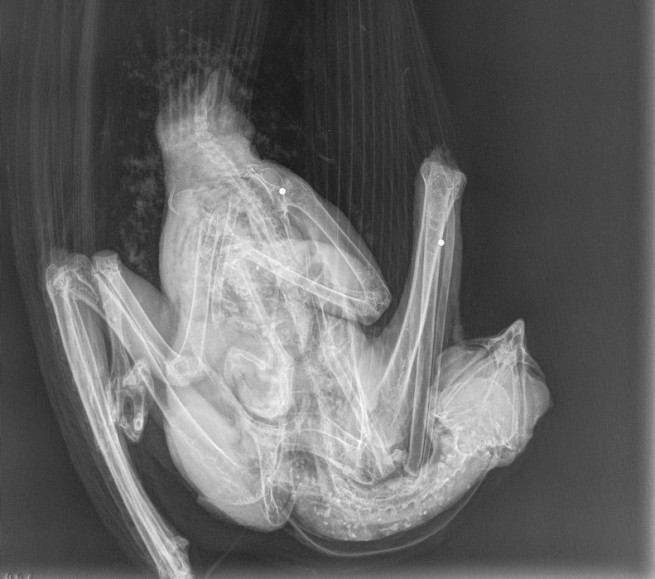
An x-ray confirmed the kite had been shot and North Yorkshire Police launched an investigation. We blogged about the case here.

It seems that wasn’t the end of the story. Although the x-ray revealed two pieces of shot, these were not considered to have caused the kite’s death so it was sent off for post-mortem and toxicology examination.

The results are now back (10 months on!!) and nobody will be surprised to learn that, like so many other red kites in Nidderdale, this one had not only been shot on two separate occasions, but it had also been poisoned with a concoction of banned pesticides.

North Yorkshire Police has now issued a warning and an appeal for information as follows:

POLICE PESTICIDE WARNING AFTER DEATH OF RED KITE (8 August 2019)

Police have issued a warning about illegal pesticides, after a post-mortem concluded a red kite died as a result of pesticide abuse.

At the end of October 2018 a red kite was found dead in Nidderdale. The finder in this case was the landowner, who was concerned that criminal activity may have taken place on his land.

North Yorkshire Police arranged for the bird to be x-rayed, and this showed there were two pieces of shot in the bird. However, it was not possible to say whether these had caused fatal injuries. Police released details of the incident, and appealed for information from the public.

Officers have now completed their enquiries. The dead bird was subjected to a post mortem, which concluded that the injury caused by one piece of shot was old and had healed. The damage caused by the second piece was recent but was not a fatal injury.

The bird was then submitted to the Wildlife Incident Investigation Scheme, which is administered by Natural England. It was subjected to toxicological tests which found several poisons in the bird. The largest quantity of poison was a substance called bendiocarb, a pesticide which is licenced [sic] for use in the UK. Smaller amounts of two other pesticides, isofenphos and carbofuran, which are both illegal in the UK, were also present. The report concluded that the kite had died as a result of the abuse of several pesticides.

At this time, officers have not received any information to help them identify any suspects. Although the investigation has now concluded, anyone with any information about this incident is asked to contact North Yorkshire Police, quoting reference 12180199938.

A spokesperson for North Yorkshire Police said: “The test results suggest that someone not only has access to two illegal poisons, but is also placing them, along with a legal pesticide, into the environment so that a wild bird has been able to consume them. In addition to being poisoned, the bird had also been shot at least twice during its life.”

Red kites have been successfully re-introduced to Yorkshire, having been extinct as a breeding bird in England, and they are now a familiar sight to people in Nidderdale. All birds are protected by law and it is a crime to intentionally kill, injure, or take any wild bird. If anybody has information about persecution of birds of prey, whether by poisoning or shooting, please call North Yorkshire Police on 101.

Anyone misusing pesticides may also be committing a variety of offences. If you come across an object which you believe may be contaminated with a pesticide or other poisons, please do not handle it. Report the situation immediately to the police giving accurate details of location and why you suspect involvement of a poison.

ENDS

There’s an RSPB blog about this case here.

Interesting to note the suggestion that Bendiocarb is a pesticide that is licensed for use in the UK. Not in Scotland it isn’t – it’s one of eight pesticides that are considered so highly toxic that it’s an offence to even have them in your possession, let alone use them (the others are Aldicarb, Alphachloralose, Aluminium phosphide, Carbofuran, Mevinphos, Sodium cyanide and Strychnine).

When an opportunity arose to have these substances banned in England, the then Wildlife Minister Richard Benyon (owner of grouse moor & pheasant shoot) refused to support such a move (see here).

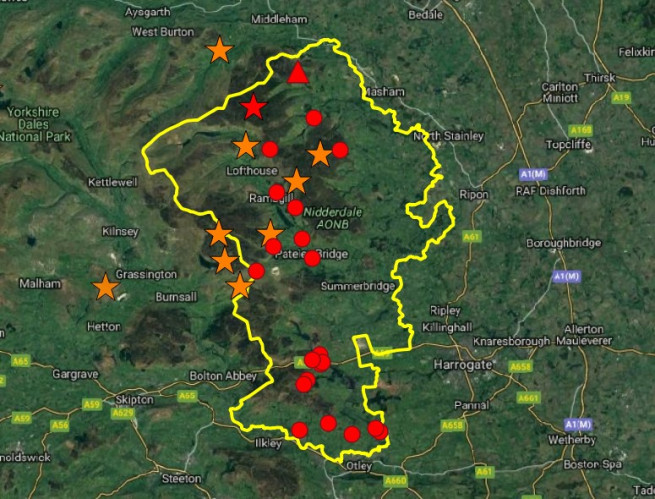
So, here’s yet another red kite victim to add to all the other red kite victims that have been found either poisoned or shot on or close to grouse moors in the Nidderdale AONB, along with all those missing satellite-tagged hen harriers and two shot hen harriers.

RPUK map showing the boundary of the Nidderdale AONB (yellow line), illegally killed red kites (red dots), missing satellite-tagged hen harriers (orange stars), shot hen harrier Bowland Betty (red star), shot hen harrier River (red triangle).


How has the game-shooting industry reacted to conviction of Scottish gamekeeper Alan Wilson?

We’ve been watching with interest how the game-shooting industry has reacted to the news that Scottish gamekeeper Alan Wilson has pleaded guilty to nine wildlife crimes on the Longformacus Estate in south Scotland.

We are especially interested to find out whether (a) Wilson is/was a member of the Scottish Gamekeepers Association when he committed his crimes against protected wildlife and if so, whether he’s been booted out, and (b) whether the Longformacus Estate is/was a member of Scottish Land & Estates when these wildlife crimes took place, and if so, whether the estate has since been booted out.

It turns out that both the SGA and SLE are being a bit coy about this information.

First up, here’s the full statement from the SGA in response to Wilson’s guilty plea for multiple criminal offences:

It’s not very impressive, even though it took the SGA 24 hours to come up with it!

No mention, then, of the exceptionally high number of wildlife crimes.

No mention, then, of the number of protected species that had been shot illegally, including birds of prey, badgers and an otter.

No mention, then, of the 23 illegally set snares.

No mention, then, of the two containers of a highly toxic and banned poison (Carbofuan) that had been found.

And no mention, then, that it was a Scottish gamekeeper who was responsible for this disgraceful litany of wildlife crimes.

Moving on, here’s what Scottish Land & Estates posted:

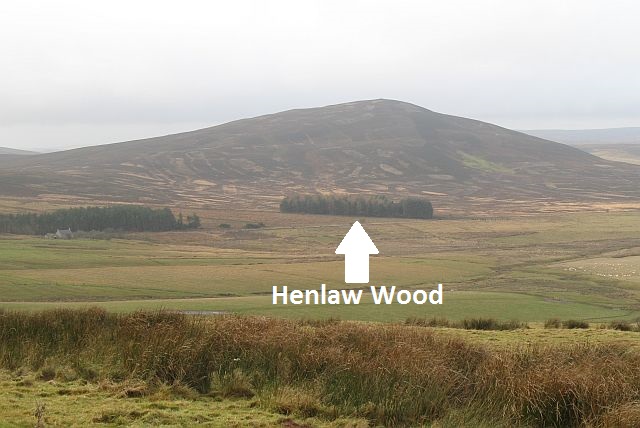
It’s a bit of an odd choice of photograph to illustrate the piece – that’s Lord David Johnstone, Chairman of SLE; it’s not criminal gamekeeper Alan Wilson. You might have thought SLE would choose an image of one of the protected species that had been illegally shot, or a poison skull & crossbones, or perhaps even an image of the location, a bit like this one:

[Photo by Richard Webb]

Ah, but hang on a minute, using a photo like this one to illustrate SLE’s statement wouldn’t have worked because look, what’s that behind the wood? Is it the tell-tale strip muirburn indicative of a grouse moor?

Ah, that’s a bit awkward seeing as SLE’s statement doesn’t mention grouse moor management, only low ground pheasant shooting – perhaps a deliberate omission? Surely not.

To be fair, the hill in the background is part of a neighbouring estate (Kettleshiel Farm), although if you look at a satellite image of the area it’s pretty clear that there’s also strip muirburn on Longformacus Estate, right up to the edge of Henlaw Wood where all those shot protected species were uncovered: [UPDATE 9pm: According to a comment from Professor Ian Poxton, all the land shown in the above and below photos, including the grouse moor hill, belonged to Longformacus Estate at least up to a couple of years ago – see comments section for more details]:

So it looks very much like there is a combination of both low ground pheasant shooting and grouse moor management on Longformacus Estate – how odd that SLE would appear to want to only mention the pheasant shooting and not the grouse moor management.

Actually, it’s not odd at all – they tried the same trick when golden eagle Fred ‘disappeared’ in suspicious circumstances next to a grouse moor in the Pentland Hills just outside Edinburgh, playing down the prevalence of grouse moor management in the area.

Hmm, can’t begin to imagine why SLE might want grouse moor management out of the spotlight.

Anyway, back to SLE’s statement – at least it includes the fact that a gamekeeper has been convicted of wildlife crime – that’s a definite improvement on the SGA’s pathetic statement, but rather tellingly, SLE’s statement doesn’t mention whether Longformacus Estate is a member of SLE but does seem to want to demonstrate support for the estate. How interesting.

As we’ve said previously, as we understand it there is an ongoing police investigation in to whether gamekeeper Alan Wilson’s employer may face a potential charge of alleged vicarious liability, but we don’t know any more detail. We don’t even know if that would be the landowner or whether there’s a ‘middle-man’ involved such as a sporting agent.

We’ll have to wait and see, although it’s interesting to note that back in August 2018, Police Scotland issued a statement that said two men had been charged in relation to this case (see here).

Convicted Scottish gamekeeper Alan Wilson & his litany of wildlife crimes

Further to the news yesterday that Scottish gamekeeper Alan Wilson, 60, had pleaded guilty to nine of the 12 charges of wildlife crime against him (see here), here is some further detail.

From The Times (by Robert Fairburn):

Gamekeeper killed protected birds, badger and otter

A gamekeeper shot dead badgers and buzzards and set dozens of illegal snares in Scottish woodland in what one wildlife expert described as the greatest cull of protected species he had ever seen.

Alan Wilson, 60, has pleaded guilty to priming 23 illegal snares in a small wood on the Berwickshire estate where he worked. A court was told that the League Against Cruel Sports had been tipped off by a member of the public out hiking that snares were being operated at Henlaw Wood on the Longformacus Estate.

[RPUK map of the location of Longformacus Estate]

In March 2016 a research officer found snares and a “stink pit” containing a pile of dead animals designed to attract other animals. A year later he returned and found the carcass of a badger and dead birds.

The site was visited by police officers and Scottish SPCA officers when the full catalogue of shot protected species emerged.

David Anderson, conservation manager for the Forestry Commission Scotland, attended Henlaw Wood, which is 550 metres in length, and wrote in his report: “In 40 years working in wildlife management I have never seen so many protected species dead in such a small area.”

Jedburgh sheriff court was told that Wilson was the sole gamekeeper for the Longformacus estate. He had worked as a gamekeeper in France for ten years before returning to Scotland and lived on the estate with his partner.

Wilson pleaded guilty to shooting and killing two goshawks at Henlaw Wood between March 2006 and May 2017, three buzzards, three badgers and an otter. He also pleaded guilty to charges of using illegal snares and possession of two bottles of carbofuran.

Wilson was fined £400 last year and banned from keeping birds of prey for ten years after admitting failing to protect an eagle owl in his care from suffering. He had pleaded guilty to keeping the pet bird in filthy conditions in a pigsty at his home in Longformacus [see here for RPUK blog on that case].

Wilson admitted nine offences and will be sentenced next month [19th August we believe] after background reports are prepared. Sheriff Peter Paterson told him: “These charges are serious and numerous and before I decide on an appropriate sentence I will need a report to see what sentencing options are open to me. Society, whatever you may think, takes a dim view on this.”

There has been growing debate about Scotland’s grouse moors. Chris Packham, the naturalist and broadcaster, has urged ministers to introduce a strict licensing system on moors, with powers to ban shooting estates where protected species are vanishing. A Scottish government review of grouse moor practices is expected to be published within weeks.

ENDS

It’ll be all eyes on Jedburgh Sheriff Court on 19th August when this criminal gamekeeper is sentenced. We believe the custody threshold has been easily met and given the range of offences against these protected species, in addition to being found in possession of the highly toxic (and thus banned) pesticide Carbofuran, only a custodial sentence will suffice.

There have been questions asked about Wilson’s employer and whether a charge of alleged vicarious liability is being pursued. We believe there is currently a live investigation on this and as such we won’t be blogging about it, or accepting comments specifically about it, until proceedings have concluded.

The conviction of gamekeeper Alan Wilson can now be discussed, however. We look forward to finding out whether he is/was a member of the Scottish Gamekeepers Association and if so, how they explain his appetite for illegally killing protected raptors and mammals, why he was setting illegal snares and why he had two bottles of Carbofuran in his possession.

Presumably the SGA knew nothing of Wilson’s crimes, which begs the question, how can the SGA make so many claims about the number of supposedly law-abiding gamekeepers when they haven’t got a clue what those gamekeepers are up to, nor do they have sufficient influence to prevent them committing wildlife crimes?

Over to you, SGA Chairman Alex Hogg…..

Previous blogs about this case: herehere here  here herehere, here, here, here here.

UPDATE: 24 July 2019: How has the game-shooting industry reacted to conviction of Scottish gamekeeper Alan Wilson? (see here).


Scottish gamekeeper pleads guilty to nine charges of wildlife crime

BREAKING NEWS…..

We understand from a journalist that Scottish gamekeeper Alan Wilson, 60, has this morning pleaded guilty to 9 of the 12 wildlife crime charges against him. Not guilty pleas were accepted on the other three.

Sentencing has apparently been deferred until 19th August for background reports.

Wilson had been accused of shooting two goshawks, four buzzards, a peregrine falcon, three badgers and an otter at Henlaw Wood, Longformacus, between March 2016 and May 2017.

He also faced charges of using a snare likely to cause partial suspension of animal or drowning, failing to produce snaring records within 21 days when requested to do so by police and no certificate for an air weapon.

We also understand he faced a charge of alleged possession of the banned poison Carbofuran.

Up until this morning Mr Wilson had pleaded not guilty.

More details to follow……

Previous blogs about this case: herehere here  here herehere, here, here and here.

UPDATE 23 July 2019: Convicted Scottish gamekeeper Alan Wilson and his litany of wildlife crimes (here)

UPDATE 24 July 2019: How has the game-shooting industry reacted to conviction of Scottish gamekeeper Alan Wilson? (here).

Case against Scottish gamekeeper accused of 12 wildlife crimes proceeds to trial

The case against a south Scotland gamekeeper has continued this week with an intermediate diet (a type of court hearing) and he has pleaded not guilty to a number of alleged offences.

Alan Wilson, 60, is accused of shooting two goshawks, four buzzards, a peregrine falcon, three badgers and an otter at Henlaw Wood, Longformacus, between March 2016 and May 2017.

He also faces charges of using a snare likely to cause partial suspension of an animal or drowning, failing to produce snaring records within 21 days when requested to do so by police and no certificate for an air weapon.

We also believe he is accused of the alleged possession of the banned pesticide, Carbofuran.

Due to Mr Wilson’s not guilty plea, this case will now proceed to trial at Jedburgh Sheriff Court on 13 June 2019.

Previous blogs about this case: see herehere here  here here and here.

Please note: we will not be accepting comments on this news item until legal proceedings have concluded. Thanks.

Red kites found illegally poisoned at nest site

Press release from RSPB, 20 June 2018:

PAIR OF NESTING RED KITES FOUND POISONED IN COUNTY DOWN

RSPB (Northern Ireland) and the Police Service of Northern Ireland (PSNI) are appealing for information after a pair of protected red kites died through illegal poisoning in County Down.

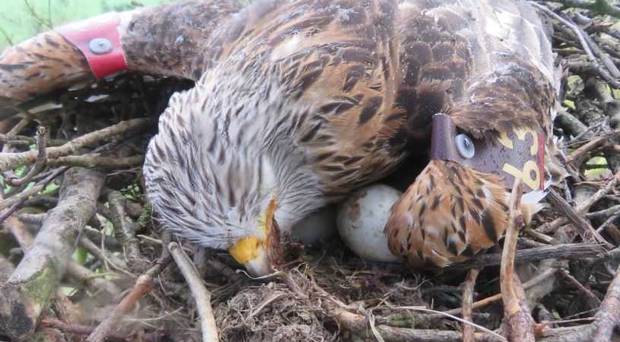
A male bird was found in distress close to a known nest site in the Katesbridge area on April 24. A member of the public alerted RSPB NI but the bird died shortly afterwards. When the RSPB NI red kite project officer attended the scene, she found the female parent bird immobile on the nest – she too was dead. A rescue mission was launched in an attempt to save three orphaned eggs found in the nest beneath the deceased mother.

[Photo by RSPB]

The bodies of the parent birds were collected and taken for toxicology testing by the PSNI. This has now revealed that both birds – known as Blue 21 and Red 63 because of their identifying tags – died from Carbofuran poisoning.

Red kites, along with all birds of prey, are protected in Northern Ireland under the Wildlife (Northern Ireland) Order 1985, as amended by the Wildlife and Natural Environment (NI) Act 2011. Carbofuran is a highly toxic pesticide which has been banned across the EU since 2001 due to its high toxicity towards wildlife and humans.

Red kites mostly hunt within 2.5km of their nest site. The male bird brings food for the incubating female bird, so it is possible that the male bird found a poisoned bait – such as a rabbit – and likely brought this back to the nest to feed the female bird. The dead male’s first partner (Blue 13) also died by poisoning in 2014 in the same area.

Under licence from the Northern Ireland Environment Agency (NIEA), the rescue operation ensured that the three eggs were fostered into two wild red kite nests, alongside other eggs, in the hope of saving them.

In one of the nests two transferred eggs failed as they were found intact (unhatched) during a follow-up inspection. In the other nest – which hosted one adoptive egg alongside two other eggs – one chick was found on the nest. As there were no egg shell remains it’s unknown if the sole chick on this nest was from the donor egg.

A nestcam was installed by RSPB NI to monitor this chick – which was named ‘Solo’ by RSPB NI red kite volunteers. This is the first time staff have been able to monitor behaviour and development as well as share the red kite’s early life with the public and schools participating in the RKites project, a funded red kite education and engagement project. A live stream on the nest is available to view at www.rspb.org.uk/niredkites

PSNI Wildlife Liaison Officer, Emma Meredith, said, “Incidents such as this give rise to concerns, as poisons are generally very dangerous. We would have serious concerns over any poison but particularly over Carbofuran. We are disappointed that we are still dealing with cases involving Carbofuran, an incredibly dangerous substance and one which can kill birds of prey but also a child, family pet or any adult coming into contact with it. We would remind the public that if they discover a bird of prey that they suspect has been poisoned or killed in any other suspicious circumstances to leave the bird/s and/or bait in situ and call the PSNI as soon as possible. If anyone has information about the use of Carbofuran and/or the death of these protected birds then we would be really keen to hear from them. The person responsible needs to be identified to ensure that no further risk is posed to other wildlife, domestic pets, or even humans.”

Claire Barnett, RSPB NI Conservation Team Leader, added: “We are shocked and saddened by what is the loss of a generation of red kites. With only around 20 breeding pairs in Northern Ireland, our red kite population is particularly vulnerable to persecution.

Carbofuran is an illegal and deadly poison and should not be used in our countryside. It is such an incredibly dangerous substance.

We would like to once again make it clear that red kites are mostly scavengers and feed on roadkill and other dead animals they find on their foraging flights. During the breeding season, adults will often hunt young crows, magpies, rats and rabbits. They are no threat to livestock or game.”

Red kites were persecuted to extinction across the island of Ireland 200 years ago. A decade ago this summer, in 2008, the RSPB – along with project partners the Golden Eagle Trust and Welsh Kite Trust – began a reintroduction project that has been successful in encouraging the birds to breed here.

Like all birds of prey in Northern Ireland, red kites are specially protected as a Schedule 1 species under The Wildlife (Northern Ireland) Order 1985 (as amended). As a Schedule 1 bird, red kites are protected by special penalty and their nests are also provided with protection all year under Schedule A1. Those found guilty of persecution could be given a custodial sentence and/or fines of up to £5,000 per offence.

Mark Thomas, Senior Investigations Officer at the RSPB, said: “Carbofuran has a history of being used to kill birds of prey. Like all birds of prey, red kites are protected by law.

There have been 10 confirmed red kite persecution incidents recorded in this area in the last decade. This is not acceptable. We urge anyone with information about this incident to contact the police immediately on 101.”

Claire Barnett added, “We would like to thank communities, landowners and schools across Northern Ireland – particularly in County Down and County Armagh – for their ongoing support for the red kites project. There is always an outpouring of outrage when red kite persecutions are reported. It is so disappointing that a minority of people continue to endanger red kites by using illegal poisons including Carbofuran. But the majority of people here are behind the RSPB in our work to give these remarkable birds of prey a home in Northern Ireland.”

Anyone with information can contact police on the non-emergency number 101 or anonymously via Crimestoppers on 0800 555 111 quoting reference number 802 of 24/4/18.

ENDS

Buzzards found poisoned & decapitated in Co Cork

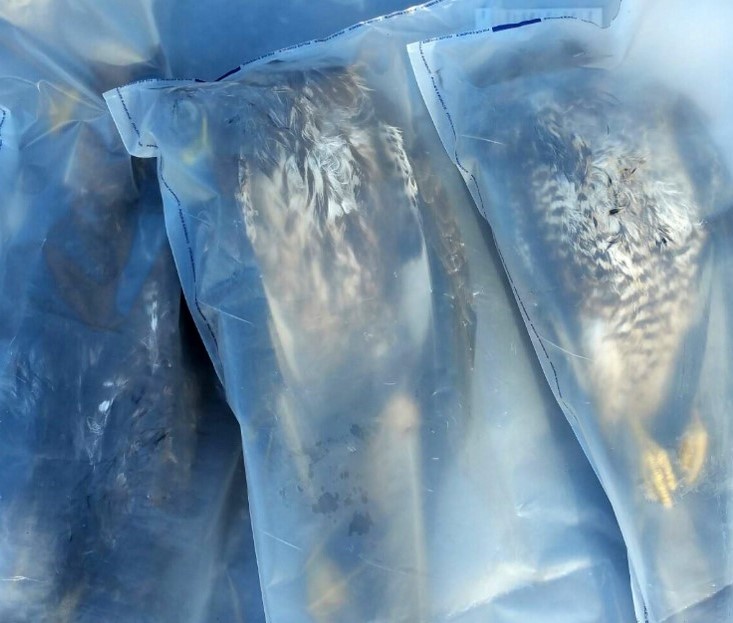
Reported on BirdWatch Ireland’s facebook page on 24 April 2018, news of three dead buzzards found in a field at Ring, near Clonakilty, Co Cork.

The birds were found in January and collected by staff from the National Parks & Wildlife Service (NPWS) to be sent for post-mortem. X-rays showed no sign of lead shot but two of the buzzards had missing heads and one had a missing leg.

Toxicology results have revealed high levels of the highly toxic pesticide Carborfuran as well as two rodenticides.

The NPWS is investigating and calling for information.

More details on the BirdGuides website (here).

Photo of the dead buzzards in evidence bags [photo by NPWS]

41 eagles, 10 years, 0 prosecutions

Regular blog readers will know that from time to time we publish a list of eagles that are known to have been illegally killed, or have ‘disappeared’ (i.e. their satellite tag suddenly stops functioning) in Scotland.

The last update was in August 2016 when the RSPB revealed that eight satellite-tagged golden eagles had ‘disappeared’ on grouse moors in the Monadhliaths between 2011 and 2016.

Last week we blogged about another ‘disappearing’ golden eagle, this time a young bird that had been tagged in Perthshire in 2014 and whose satellite signal suddenly stopped functioning two years later when the eagle was visiting an Angus Glens grouse moor. It’s time to add that eagle to our list.

As before, a number of eagles included in this list (17 of them, to be precise) may not be dead. However, they are included here because their satellite tags unexpectedly stopped functioning (i.e. they’d been transmitting perfectly well up until the eagles’ last known location, often a known persecution hotspot). Two further satellite-tagged eagles (‘Angus’ and ‘Tom’) are not included in this list as although their transmitters stopped functioning, there had been recognisable problems with their tags prior to the final transmissions and so the benefit of the doubt has been applied.

It’s also worth reiterating that the following eagles are only the ones we know about. How many un-tagged eagles are illegally killed each year?

MAY 2006: A dead adult golden eagle was found on the Dinnet & Kinord Estate, near Ballater, Aberdeenshire. Tests revealed it had been poisoned by the illegal pesticide Carbofuran. Grampian Police launched an investigation. No prosecution.

JUNE 2006: A dead golden eagle was found on Glen Feshie Estate in the Cairngorms. Tests revealed it had been poisoned by the illegal pesticide Carbofuran. Northern Constabulary launched an investigation. No prosecution.

AUGUST 2007: A dead adult female golden eagle was found on an estate near Peebles in the Borders. She was half of the last known breeding pair of golden eagles in the region. Tests revealed she had been poisoned by the illegal pesticide Carbofuran. Lothian & Borders Police launched an investigation. No prosecution.

NOVEMBER 2007: Tayside Police received a detailed tip-off that a young male white-tailed eagle (known as ‘Bird N’) had allegedly been shot on a grouse moor estate in the Angus Glens. The timing and location included in the tip-off coincided with the timing and location of the last-known radio signal of this bird. The eagle has not been seen again. With no carcass, an investigation wasn’t possible.

MAY 2008: A one year old male white-tailed eagle hatched on Mull in 2007 and known as ‘White G’ was found dead on the Glenquoich Estate in the Angus Glens. Tests revealed he had been poisoned by an unusual concoction of pesticides that included Carbofuran, Bendiocarb and Isofenphos. A police search in the area also revealed a poisoned buzzard, a baited mountain hare and 32 pieces of poisoned venison baits placed on top of fence posts on the neighbouring Glenogil Estate. Laboratory tests revealed the baited mountain hare and the 32 poisoned venison baits contained the same unusual concoction of highly toxic chemicals that had killed the white-tailed eagle, ‘White G’. No prosecution.

JUNE 2009: An adult golden eagle was found dead at Glen Orchy, Argyll, close to the West Highland Way. Tests revealed it had been poisoned by the illegal pesticide Carbofuran. Strathclyde Police launched a multi-agency investigation. Three years and 3 months later, estate employee Tom McKellar pled guilty to possession of Carbofuran stored in premises at Auch Estate, Bridge of Orchy and he was fined £1,200. No prosecution for poisoning the golden eagle.

JULY 2009: A two year old female golden eagle known as ‘Alma’ was found dead on the Millden Estate in the Angus Glens. Tests revealed she had been poisoned by the illegal pesticide Carbofuran. Alma was a well-known eagle  – born on the Glen Feshie Estate in 2007, she was being satellite-tracked and her movements followed by the general public on the internet. Tayside Police launched an investigation. No prosecution.

AUGUST 2009: A young white-tailed eagle was found dead on Glenogil Estate in the Angus Glens. Tests revealed it had been poisoned by the illegal pesticide Carbofuran. Tayside Police was criticized in the national press for not releasing a press statement about this incident until January 2010. No prosecution.

MAY 2010: #1 of three dead golden eagles found on or close to Skibo Estate, Sutherland. Tests revealed they had been poisoned; two with Carbofuran and one with Aldicarb. Northern Constabulary launched a multi-agency investigation. One year later (May 2011), Sporting Manager Dean Barr pled guilty to possession of 10.5 kg of Carbofuran stored in premises at Skibo Estate. No prosecution for poisoning the golden eagle.

MAY 2010: #2 of three dead golden eagles found on or close to Skibo Estate, Sutherland. Tests revealed they had been poisoned; two with Carbofuran and one with Aldicarb. Northern Constabulary launched a multi-agency investigation. One year later (May 2011), Sporting Manager Dean Barr pled guilty to possession of 10.5 kg of Carbofuran stored in premises at Skibo Estate. No prosecution for poisoning the golden eagle.

MAY 2010: #3 of three dead golden eagles found on or close to Skibo Estate, Sutherland. Tests revealed they had been poisoned; two with Carbofuran and one with Aldicarb. Northern Constabulary launched a multi-agency investigation. One year later (May 2011), Sporting Manager Dean Barr pled guilty to possession of 10.5 kg of Carbofuran stored in premises at Skibo Estate. No prosecution for poisoning the golden eagle.

JUNE 2010: #1: Leg rings with unique identification numbers that had previously been fitted to the legs of four young golden eagles in nests across Scotland were found in the possession of gamekeeper James Rolfe, during a multi-agency investigation into alleged raptor persecution at Moy Estate, near Inverness. It is not clear how he came to be in possession of the rings. The bodies of the eagles from which the rings had been removed were not found. No further action was taken in relation to the discovery.

JUNE 2010: #2: Leg rings with unique identification numbers that had previously been fitted to the legs of four young golden eagles in nests across Scotland were found in the possession of gamekeeper James Rolfe, during a multi-agency investigation into alleged raptor persecution at Moy Estate, near Inverness. It is not clear how he came to be in possession of the rings. The bodies of the eagles from which the rings had been removed were not found. No further action was taken in relation to the discovery.

JUNE 2010: #3: Leg rings with unique identification numbers that had previously been fitted to the legs of four young golden eagles in nests across Scotland were found in the possession of gamekeeper James Rolfe, during a multi-agency investigation into alleged raptor persecution at Moy Estate, near Inverness. It is not clear how he came to be in possession of the rings. The bodies of the eagles from which the rings had been removed were not found. No further action was taken in relation to the discovery.

JUNE 2010: #4: Leg rings with unique identification numbers that had previously been fitted to the legs of four young golden eagles in nests across Scotland were found in the possession of gamekeeper James Rolfe, during a multi-agency investigation into alleged raptor persecution at Moy Estate, near Inverness. It is not clear how he came to be in possession of the rings. The bodies of the eagles from which the rings had been removed were not found. No further action was taken in relation to the discovery.

JUNE 2010: A golden eagle was found dead on Farr & Kyllachy Estate, Inverness-shire. Tests revealed it had been poisoned by the illegal pesticide Carbofuran. Northern Constabulary apparently did not search the property until July 2011. No prosecution.

JUNE 2010: A white-tailed eagle was found dead on Farr & Kyllachy Estate, Inverness-shire. Tests revealed it had been poisoned by the illegal pesticide Carbofuran. Northern Constabulary apparently did not search the property until July 2011. No prosecution.

DECEMBER 2010: A decomposing carcass of a white-tailed eagle was found and photographed on Logie (Lochindorb) Estate, Morayshire. It was reported to Northern Constabulary. By the time the police arrived to collect it, the carcass had disappeared. The police said they couldn’t investigate further without the body.

FEBRUARY 2011: The signal from a young satellite-tracked golden eagle ( ‘Lee’, hatched in 2010) unexpectedly stopped transmitting after a final signal from the North Angus Glens. A technical malfunction or another mysterious ‘disappearance’?

MARCH 2011: The body of a young golden eagle was discovered on North Glenbuchat Estate, Aberdeenshire. Tests revealed it had been poisoned by the illegal pesticide Carbofuran. Grampian Police launched an investigation and raided the property in May 2011. A poisoned buzzard, a poisoned bait and a shot short-eared owl were found. No prosecution.

APRIL 2011: The body of a white-tailed eagle was found at the base of cliffs on Skye. The person who discovered it (a professional medic) considered it to have been freshly shot with a rifle, decapitated with a sharp implement and thrown from the cliff top. He took photographs and alerted Northern Constabulary and RSPB. There was a delay of two weeks before the now probably decomposed carcass was collected. A post-mortem was inconclusive. This incident was not made public until one year later after a tip off to this blog. No prosecution.

SEPTEMBER 2011: The signal from a satellite-tracked young golden eagle (‘Strathy’, hatched in 2010) unexpectedly stopped transmitting after a final signal from an Aberdeenshire grouse moor. A technical malfunction or another mysterious ‘disappearance’?

NOVEMBER 2011: The signal from a one-year-old satellite-tracked golden eagle (#57124) unexpectedly stopped transmitting after a final signal from a grouse moor in the Monadhliaths. A technical malfunction or another mysterious ‘disappearance’?

MARCH 2012: The body of a young golden eagle being tracked by satellite was discovered in Lochaber. Tests revealed it had been poisoned with the banned pesticides Aldicarb and Bendiocarb. Information about this incident was not made public until three months later. No prosecution.

MARCH 2012: The signal from a satellite-tracked young golden eagle (‘Angus 26′, hatched in 2011) unexpectedly stopped transmitting after a final signal from a grouse moor in the Angus Glens. This bird’s suspiciously damaged sat tag was found in the area. No prosecution.

MAY 2012: The signal from a young satellite-tracked golden eagle (#32857) unexpectedly stopped transmitting when the bird was north-east of the Cairngorms National Park. A technical malfunction or another mysterious ‘disappearance’?

MAY 2012: The dead body of a young satellite-tracked golden eagle (hatched in 2011) was discovered near a lay-by in Aboyne, Aberdeenshire. The data from its satellite tag & the injuries the bird had when found (2 broken legs) suggested it had been caught in an illegal trap on a grouse moor in the Angus Glens and then removed, under cover of darkness, to be dumped in another area where it was left to die, probably a slow and agonising death. Information on this incident was not released until almost five months later, by the RSPB. It appears the police failed to properly investigate this incident as we understand that no search warrants were issued and no vehicles were searched. No prosecution.

JULY 2012: The signal from a one-year-old satellite-tracked golden eagle (‘Foinaven’) unexpectedly stopped transmitting after a final signal from a grouse moor in the Monadhliaths. A technical malfunction or another mysterious ‘disappearance’?

OCTOBER 2012: An adult golden eagle was found shot and critically injured on grouse moor at Buccleuch Estate, near Wanlockhead, South Lanarkshire. The bird was rescued by the SSPCA and underwent surgery but it eventually succumbed to its injuries in April 2013. No prosecution.

MAY 2013: The signal from a two-year-old satellite tracked golden eagle (‘Angus 33′, hatched in 2011) unexpectedly stopped transmitting after its last signal from North Glenbuchat Estate in Aberdeenshire. A technical malfunction or another mysterious ‘disappearance’?

JUNE 2013: A dead golden eagle was found under power lines on an RSPB reserve on Oronsay. This bird had been shot although it is not known whether this was the cause of death or an historical injury.

JULY 2013: The signal from a young satellite tracked golden eagle (‘Cullen’, hatched 2010) unexpectedly stopped transmitting after its last signal in Aberdeenshire. A technical malfunction or another mysterious ‘disappearance’?

DECEMBER 2013: A two year old satellite tracked golden eagle (‘Fearnan’) was found dead on a grouse moor in the Angus Glens. Tests revealed he had been poisoned with the banned pesticide Carbofuran. No prosecution.

MARCH 2014: The signal from a one-year-old satellite-tagged golden eagle (#129002) unexpectedly stopped transmitting after a final signal from a grouse moor in the Monadhliaths. A technical malfunction or another mysterious ‘disappearance’?

APRIL 2014: The signal from a young satellite tracked white-tailed eagle (the first fledged sea eagle chick in East Scotland in ~200 years) unexpectedly stopped transmitting after its last signal from the North Glenbuchat Estate in Aberdeenshire. Police raided the property a couple of weeks later. No prosecution.

OCTOBER 2014: The signal from a one-year-old satellite-tagged golden eagle (#107133) unexpectedly stopped transmitting after a final signal from a grouse moor in the Monadhliaths. A technical malfunction or another mysterious ‘disappearance’?

OCTOBER 2014: The signal from a two-year-old satellite-tagged golden eagle (#119886) unexpectedly stopped transmitting after a final signal from a grouse moor in the Monadhliaths. A technical malfunction or another mysterious ‘disappearance’?

MARCH 2016: The signal from a satellite-tagged golden eagle (tagged in Perthshire 2014) unexpectedly stopped transmiting after a final signal from a grouse moor in the Angus Glens. A technical malfunction or another mysterious ‘disappearance’?

MAY 2016: The signal from a less-than-one-year-old satellite-tagged golden eagle (#00000583) unexpectedly stopped transmitting after a final signal from a grouse moor in the Monadhliaths. A technical malfunction or another mysterious ‘disappearance’?

JUNE 2016: The signal from a two-year-old satellite-tagged golden eagle (#129010) unexpectedly stopped transmitting after a final signal from a grouse moor in the Monadhliaths. A technical malfunction or another mysterious ‘disappearance’?

JULY 2016: The signal from a two-year-old satellite-tagged golden eagle (#129015 ‘Brodie’) unexpectedly stopped transmitting after a final signal from a grouse moor in the Monadhliaths. A technical malfunction or another mysterious ‘disappearance’?

37 of the listed 41 eagles have either been found dead on, or have ‘disappeared’ on, Scottish grouse moors. (The other 4 have either died or have ‘disappeared’ in other habitat types).

Four of these 41 eagles ‘disappeared’ in 2016. So much for the grouse-shooting industry claiming that they’ve cleaned up their act and that persecution is a thing of the past. The tactics of how to kill an eagle have clearly changed (see here) but the persecution continues.

Last summer, in response to the news that eight tagged golden eagles had ‘disappeared’ in the Monadhliaths over a five year period, Environment Cabinet Secretary Roseanna Cunningham ordered a review of satellite tag datato discover if there is a pattern of suspicious activity“.

We are expecting the review to be published some time in April and we expect it to show what decades of scientific research has already clearly demonstrated: that golden eagles (and several other raptor species) are routinely killed or suspiciously ‘disappear’ on land intensively managed for driven grouse shooting.

We expect this review to be a seminal piece of research and if it shows what we anticipate it will show, the Scottish Government can expect to be put under enormous pressure to respond appropriately.
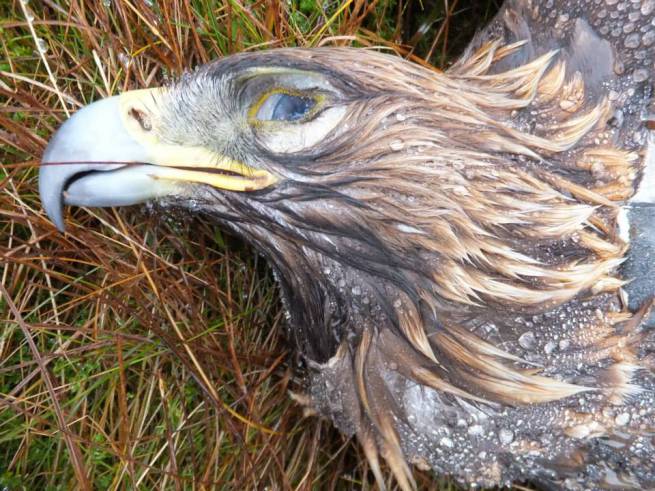

Two red kites confirmed poisoned in Nidderdale, North Yorkshire

Yesterday, North Yorkshire Police put out the following press release:

POLICE WARNING FOLLOWING RED KITE POISONING

Police are appealing for information and warning about the dangers of illegal bird of prey poisoning.

Two red kites were found poisoned in the Nidderdale area of North Yorkshire in 2016.

One was found near Pateley Bridge on 12 March 2016. Tests have attributed its death to alphachloralose. Traces of aldicarb and three rodenticides (difenacoum, bromadiolone and brodifacoum) were also identified.

The second was found near Bouthwaite on 18 May 2016. Shockingly, tests have shown the presence of eight different poisons – alphachloralose, aldicarb, bendiocarb, carbofuran and isofenphos, together with three rodenticides.

Officers are appealing for information about the two incidents, and warning members of the public about the dangers of this illegal practice. Hard-hitting posters urging people to report suspected wildlife poisoning are being distributed across the county.

Inspector Jon Grainge, of North Yorkshire Police’s Rural Taskforce, said: “The use of poisons in the two Nidderdale cases is particularly shocking. The practice of lacing animal carcasses with poison to kill other wildlife is cruel and illegal. It is also a serious risk to members of the public and their children or pets if they come into contact with them.

If you find a mammal or bird that you believe has been poisoned, please do not touch it, as poisons can transfer through skin contact. Also keep youngsters and pets well away. Make a note of the location, including GPS co-ordinates if possible, and anything else that is around or near the animal, and contact the police immediately”.

Anyone with information about the poisoning of the red kites found in Nidderdale should contact North Yorkshire Police on 101, quoting reference number 12160043415, or email ruraltaskforce@northyorkshire.pnn.police.uk.

ENDS

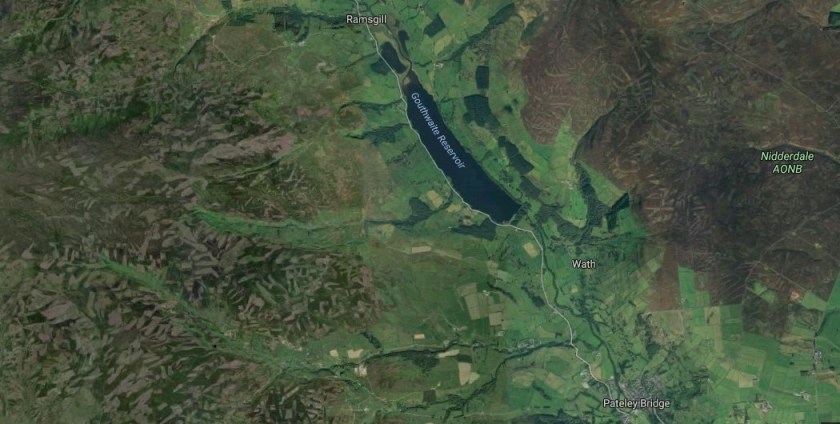
Have a look at this map. The poisoned red kite at Bouthwaite was found just to the north of the Gouthwaite Reservoir, and the poisoned red kite near Pateley Bridge was found just to south. Look at the land use on either side of the reservoir: this is driven grouse shooting country.

nidderdale

Presumably these two poisoned red kites were part of the ten suspicious red kite deaths investigated in North Yorkshire in 2016. Most of those were confirmed shot but there were a number of suspected poisonings too.

It seems strange that North Yorkshire Police is only now appealing for information about two poisoned red kites that were found nine and eleven months ago respectively. The delay may be due to issues at the toxicology lab (it wouldn’t be the first time) and therefore beyond North Yorkshire Police’s control. The delay is certainly at odds with the commendable speed with which North Yorks Police announced some of last year’s shot red kites (e.g. see here – shot kite found on Sunday, press release out by Monday). They were also incredibly quick off the mark to go out and investigate the three illegal pole traps found on the Mossdale Estate grouse moor in the Yorkshire Dales National Park last year, and although senior officers ballsed up what should have been a straight forward prosecution, at least they were honest and transparent, admitted the mistake and amended their policies as a result.

The long delay aside, it is very good to see North Yorkshire Police provide detailed information about the type of poisons used in these two crimes (take note, Police Scotland). It’s also very good to see them proactively warning the public of the danger of these highly toxic substances (again, take note Police Scotland), especially as we head towards spring, which is typically the time when illegal raptor persecution really hots up.

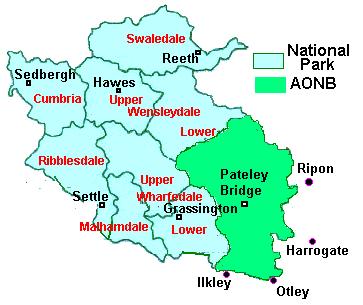
North Yorkshire Police have certainly got their work cut out fighting wildlife crime, and particularly raptor persecution. North Yorkshire is consistently rated the worst county in the UK for the number of reported crimes against raptors, and a lot of it takes place in the Nidderdale Area of Outstanding Natural Beauty and the neighbouring Yorkshire Dales National Park. We were only talking about this region two days ago in relation to the ongoing persecution of hen harriers.

ydnp_aonb

Photo of red kite by Mali Halls

Three poisoned buzzards found in Co Laois, Ireland

The National Parks and Wildlife Service in Ireland is appealing for information after the discovery of three poisoned buzzards.

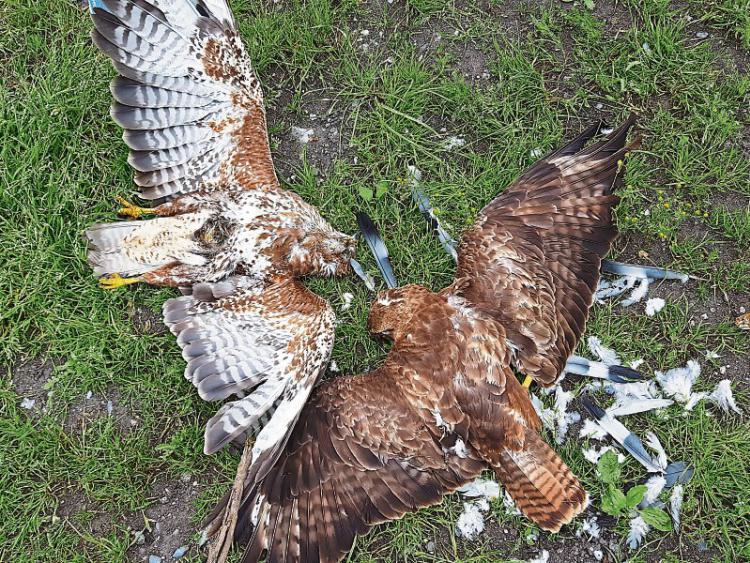
The buzzards were discovered in a field in Cappakeel, Emo, County Laois over the August Bank Holiday weekend. Toxicology tests have revealed they’d been poisoned with Carbofuran.

Full details from the Leinster Express here

poisoned-buzzards-laois