New gamekeepers just as bad as the old ones

No changeThere’s a comical news item on BBC News today about the new generation of gamekeepers.

The Borders College and Scotland’s Rural University College in Fife said ‘the skills obtained by their students [on gamekeeping courses] were proving valuable to landowners’. Yes, aren’t they just.

According to Angus McNicol of Cawdor Estates, “It’s a highly-trained profession these days. It’s very different to how things were in the past“. Really?

What short memories they all have. Here are a couple of recent examples of newly-trained students, fresh out of gamekeeping college, who now have wildlife crime convictions:

1. Lewis Whitham, who was 19 when he was caught placing a Carbofuran-laced rabbit bait out on the hill on Leadhills Estate (see here).

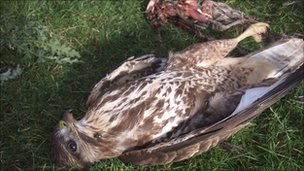
2. James Rolfe, who was 19 when he was caught with a severely-injured dead red kite in the back of his landrover on Moy Estate (see here).

How very inconvenient when we’re supposed to believe that the criminal gamekeeper is of the old school, now dying out and being replaced by a new generation of ‘highly-trained professionals’. Nice try.

BBC News article here.

Here comes 2013….the year of natural scotland

imagesHappy Hogmanay!

Tomorrow marks the start of another Scottish government themed year: The Year of Natural Scotland, in which we’re encouraged to celebrate Scotland’s stunning natural beauty and biodiversity. Good job it wasn’t this year’s theme as there might have been some red faces in the government:

  • SGA gamekeeper Whitefield sentenced for poisoning four buzzards (he already had an earlier wildlife crime conviction). His sentence this time? 100 hours community service.
  • Scottish gamekeeper McLachlan, convicted for possession of the banned poison Carbofuran. Fined £635.
  • Scottish gamekeeper Barrie lost an appeal for his sentence of £520 for illegal possession and control of a wild bird.
  • COPFS choosing not to prosecute a Scottish gamekeeper who had been filmed beating birds to death with a stick inside a crow cage trap.
  • Scottish gamekeeper Christie convicted for wildlife crimes relating to the illegal use of a crow cage trap. His sentence? An admonishment (a telling off).
  • Scottish gamekeeper Graham convicted for allowing a buzzard to starve to death inside a crow cage trap. Fined £450.
  • Scottish gamekeeper McKellar convicted for possession of banned poison. Fined £1,200.
  • Scottish gamekeeper Scobie convicted for using banned poison. Fined £270.
  • A satellite-tagged golden eagle mysteriously ‘disappeared’ in the Angus glens.
  • A satellite-tagged golden eagle mysteriously ‘disappeared’ to the North East of the Cairngorms National Park.
  • Peregrine chicks mysteriously ‘disappeared’ from a nest site in Dumfries & Galloway.
  • A golden eagle was found dead, poisoned in Lochaber.
  • A golden eagle was found dead in suspicious circumstances on the Isle of Harris. Still awaiting results.
  • A satellite-tagged golden eagle mysteriously ‘disappeared’ in the Monadhliaths.
  • A poisoned raven, crow, and three poisoned baits were found in the Borders.
  • A satellite-tagged golden eagle was found dead near a lay-by in Aberdeenshire. Its injuries and its sat tag data suggested it had been illegally trapped on an Angus grouse moor and then dumped during the night and left to die.
  • A golden eagle was found shot and critically injured on a grouse moor in Dumfries & Galloway.
  • Barry, the sat-tagged hen harrier from Langholm mysteriously ‘disappeared’.
  • Buzz, the sat-tagged buzzard mysteriously ‘disappeared’ in the Angus glens. (More on this case in the New Year).
  • Willow, a sat-tagged marsh harrier mysteriously ‘disappeared’ in Galloway.
  • A hen harrier was found shot dead on an Aberdeenshire grouse moor.

These are just a few of the ‘highlights’ from Scotland this year – there are a few more that we can’t yet report but we will in the New Year. And of course this list doesn’t include other confirmed incidents from other parts of these fair isles such as England, Wales, Northern Ireland and the Irish Republic; a list that includes shot and poisoned sea eagles, buzzards, kites, harriers, peregrines and sparrowhawks. Nor does it include the incidents that went undiscovered.

We’ll be blogging quite a lot about the Year of Natural Scotland, which hopefully won’t be just a banner-waving exercise by the government but an opportunity for them to put their money where their mouths are. You don’t think so? No, neither do we. Why should 2013 be any different from the previous three decades of ineffective action?

A hint of what’s to come is the revelation that the theme will be highlighted during several events throughout the year. Two particular locations caught our attention: the Scone Game Fair and the Moy Game Fair.

The Scone Game Fair is of course organised by the GWCT. That’s the same GWCT that has recently asked for the addition of buzzards and sparrowhawks to the General Licences (that means they want permission to kill them…we’ll be blogging about that shortly). It’s also the same Game Fair that has previously attracted sponsorship from some very, how shall we put it, ‘surprising’ sources.

The Moy Game Fair is held on the Moy Estate near Inverness. If you’re unaware of this place, try googling it.

Thanks for all your interest and support in 2012…we’ll see you soon. Sláinte!

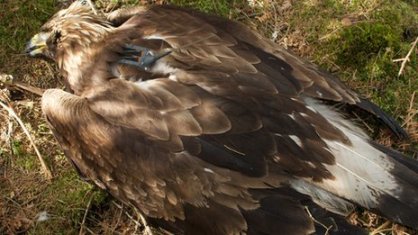
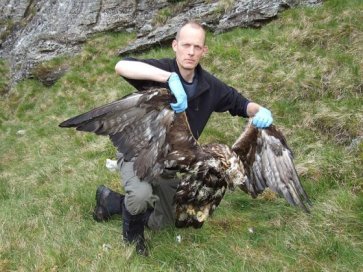
This golden eagle was found shot, critically injured &left to die on a Scottish grouse moor. Photo SSPCA
This golden eagle was found shot, critically injured and left to die on a Scottish grouse moor. Photo SSPCA

Purdey Awards: “celebrating greatness”?

The annual Purdey Awards for Game and Conservation were established to celebrate those who achieve most in game conservation, according to the Purdey Awards website (here). These awards are viewed as the game-shooting industry’s most prestigious, giving recognition to those ‘who do most to help our flora and fauna, by improving biodiversity and developing better land management‘.

The 2012 Purdey Award winners were recently announced. We were particularly interested in the ‘Highly Commended’ category:

Brian Kaye of Redmyre Farm Shoot of Invergowrie, near Dundee, has been highly commended for his work in creating a high quality farm shoot and for enhancing the landscape and natural environment. Mr Kaye has not only dramatically improved the habitats and biodiversity for a wide variety of game birds and plant life, but has also demonstrated how shooting goes hand in hand with conservation. The award is made in recognition of outstanding work over 20 years in establishing an exemplary shoot over 320 acres of the Sidlaw Hills“.

Surely not the same Brian Kaye who owns Redmyre Estate near Invergowrie (according to the East of Scotland Association for Wildfowling and Conservation: see here)? Nah, it couldn’t possibly be. A gamekeeper on Redmyre Estate was convicted in 2010 of shooting dead a buzzard and for possession of the banned poisons Carbofuran and Alpha-chloralose (see here, here, and especially here).

Other ‘greats’ that have been celebrated with Purdey Award wins include:

Geoff Eyre, the sporting tenant on Howden Moor (2005 Purdey Gold Award). In 2011, the gamekeeper on Howden Moor was convicted of a series of wildlife crimes (see here).

Jimmy Shuttlewood, the head gamekeeper on Snilesworth Estate (2005 Purdey Special Award).  In 2008, Shuttlewood and two other gamekeepers were convicted of a series of wildlife crimes (see here).

Lochindorb Estate (2008 Purdey Gold Award). In 2010 a dead sea eagle that had been found on the estate mysteriously disappeared just before the police arrived (see here). In 2011, the trial against two Lochindorb gamekeepers began, accused of illegally snaring mountain hares. The case against one gamekeeper was dropped earlier this year; the trial against the other gamekeeper will continue in January 2013 (see here).

Environment Minister’s response to dead eagle found in Grampian

Un-fucking-believable. Yes, it’s a swear word but that’s the least of our concerns. Read what follows and you’ll be swearing in anger too…

The Environment Minister has responded to a letter sent to him by one of our readers (Dave Adam) concerning the appalling death of that golden eagle back in May (see here for details of that bird’s demise). This is the eagle whose satellite transmitter showed the bird went down on a grouse moor in Glen Esk, Angus for 15 hours (an area where another golden eagle had previously been found poisoned in 2009, oh, and a buzzard was also found poisoned there in 2008 although that wasn’t publicised at the time) and then this eagle miraculously moved to a layby in Aberdeen, in the middle of the night, where it was found dead several days later with two broken legs – injuries consistent with being caught in a leg-hold trap. Yes, THAT eagle. According to the Minister, this scenario may not have been the result of criminal activity.

Dave Adam has posted the Minister’s response letter in the comments section of the original post (thank you) but it’s far too important for it to remain there, hence the decision to publish it here.

Here it is in full:

Thank you for your letter of the 25 September 2012 to the Minister for Environment and Climate Change, Mr Paul Wheelhouse. I have been asked to respond.

I agree that the media reports were a terrible story of the suffering of a young golden eagle. The reports may suggest that the circumstances of this incident were suggestive of an offence however there is no hard evidence and it remains possible that there is an alternative explanation. It is therefore inappropriate for me to comment.

The unlawful killing of any raptors has no place in today’s Scotland and we will continue to work hard to eradicate this criminal activity. We believe that the partnership approach with the Partnership for Action Against Wildlife Crime (PAW) Scotland, is bringing the reduction in bird of prey poisoning that can be seen in the statistics in recent years. However we are not complacent and if there is evidence of a switch to other methods of persecution we will take action to bear down on those methods.

The Scottish Government recognises that game shooting generates significant income and employment in our rural economy, often in areas where there are few alternative opportunities. However it is important that these businesses operate within the law, and the Scottish Government recognises that most such businesses do so. However where there appear to be conflicts for example between raptors and highly-intensive grouse moor management, we believe that an approach of seeking to improve the effectiveness of law enforcement while working with partner organisations to isolate those persisting with illegal practices is the best way forward.

Scottish police have a clear focus on tackling wildlife crime cases. Law enforcement’s role in tackling wildlife crime was reviewed by Her Majesty’s Inspectorate of Constabulary Scotland in 2008, and there was a follow-up review in 2009. As a result there are officers with wildlife crime duties in every police force area and a consistent and professional approach from senior officers.

It is frustrating that it is difficult to detect, prosecute and convict those responsible for wildlife crimes. However while it easy to make suppositions about circumstances of an apparent offence as reported in the media, wildlife crime must be subject to the same standard of proof as any other crime. Police and prosecutors also apply the same stringent procedure for dealing with wildlife crime as for any other sort of crime.

You say that the golden eagle population is threatened by illegal persecution. The Golden Eagle Conservation Framework published by SNH in 2008 did identify persecution in eastern Scotland and food shortages in the west as threats to the birds’ conservation status. It is difficult to estimate the amount of illegal persecution, but we recognise that in the longer term the best measure of success in dealing with raptor persecution will be when vacant golden eagle territories, as identified in the Framework document, are re-occupied.

K. Hunter, Policy Officer, Scottish Government.

Like we said at the top, un-fucking-believable. Especially coming a day after we learn that another golden eagle was the target of criminal activity on a grouse moor, this time being found shot and critically injured and left to die.

What did we say yesterday about needing a strong response from government, and not the usual platitudes about ‘partnership working’?

The question is, what are we going to do about it? And by ‘we’, that means all of us. Angry? You’d better believe it.

If you want to tell him how angry you are, and why (because it obviously needs spelling out) here’s his email address again: ministerforenvironment@scotland.gsi.gov.uk

When you’ve done that, send a copy to Alex Salmond: FirstMinister@scotland.gsi.gov.uk

These politicians HAVE to understand that we’re not tolerating this any longer.

26 eagles, 6 years, 0 prosecutions

In April we wrote a blog called ’21 eagles, 6 years, 0 prosecutions’ (read it here). It’s now five months later and we thought we’d update it. It’s now called ’26 eagles, 6 years, 0 prosecutions’.

As we discussed before, some of these eagles are just ‘missing’ and may not be dead, although the frequency with which these sat-tagged eagles & harriers are going ‘missing’ is indicative of something more sinister, of that there’s no more doubt. It’s also reasonable to point out that there may be (probably will be) a hell of a lot of other eagles that we haven’t included in this list because we just don’t know about them. We only see the tip of a very very large iceberg, as is becoming clearer to everyone by the day.

So, here we go….
MAY 2006: A dead adult golden eagle was found on the Dinnet & Kinord Estate, near Ballater, Aberdeenshire. Tests revealed it had been poisoned by the illegal pesticide, Carbofuran. Grampian Police launched an investigation. Six years and 4 months later, nobody has been prosecuted.


JUNE 2006: A dead golden eagle was found on Glen Feshie Estate in the Cairngorms. Tests revealed it had been poisoned by the illegal pesticide, Carbofuran. Northern Constabulary launched an investigation. Six years and 3 months later, nobody has been prosecuted.


AUGUST 2007: A dead adult female golden eagle was found on an estate near Peebles in the Borders. She was half of the last known breeding pair of golden eagles in the region. Tests revealed she had been poisoned by the illegal pesticide, Carbofuran. Lothian & Borders Police launched an investigation. Five years and 1 month later, nobody has been prosecuted.
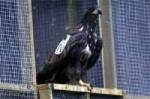


AUTUMN 2007: Tayside Police received a detailed tip-off that a young male white-tailed eagle (known as ‘Bird N’) had allegedly been shot on an estate in Angus. The timing and location included in the tip-off coincided with the timing and location of the last-known radio signal of this bird. Five years later, the bird has not been seen again. With no body, an investigation isn’t possible.

MAY 2008: A one year old male white-tailed eagle hatched on Mull in 2007 and known as ‘White G’ was found dead on the Glenquoich Estate, Angus. Tests revealed he had been poisoned by an unusual concoction of pesticides that included Carbofuran, Bendiocarb and Isofenphos. A police search in the area also revealed a poisoned buzzard, a baited mountain hare and 32 pieces of poisoned venison baits placed on top of fenceposts on the neighbouring Glenogil Estate. Laboratory tests revealed the baited mountain hare and the 32 poisoned venison baits contained the same unusual concoction of highly toxic chemicals that had killed the white-tailed eagle, ‘White G’. Four years and 4 months later, nobody has been prosecuted.
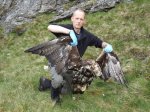
JUNE 2009: An adult golden eagle was found dead at Glen Orchy, Argyll, close to the West Highland Way. Tests revealed it had been poisoned by the illegal pesticide, Carbofuran. Strathclyde Police launched a multi-agency investigation. Three years and 3 months later, estate employee Tom McKellar pled guilty to possession of Carbofuran stored in premises at Auch Estate, Bridge of Orchy and he was fined £1,200. Nobody has been prosecuted for poisoning the golden eagle.

JULY 2009: A two year old female golden eagle known as ‘Alma’ was found dead on the Millden Estate, Angus. Tests revealed she had been poisoned by the illegal pesticide, Carbofuran. Alma was a well-known eagle  – born on the Glen Feshie Estate in 2007, she was being satellite-tracked and her movements followed by the general public on the internet. Tayside Police launched an investigation. Three years and 2 months later, nobody has been prosecuted.

AUGUST 2009: A young white-tailed eagle was found dead on Glenogil Estate, Angus. Tests revealed it had been poisoned by the illegal pesticide, Carbofuran. Tayside Police were criticized in the national press for not releasing a press statement about this incident until January 2010. Three years and 1 month later, nobody has been prosecuted.
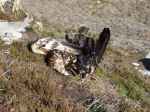
MAY 2010: Three dead golden eagles were found on or close to Skibo Estate, Sutherland. Tests revealed they had been poisoned; two with Carbofuran and one with Aldicarb. Northern Constabulary launched a multi-agency investigation. One year later (May 2011), Sporting Manager Dean Barr pled guilty to possession of 10.5 kg of Carbofuran stored in premises at Skibo Estate. Two years and 4 months later, nobody has been prosecuted for poisoning the three golden eagles.
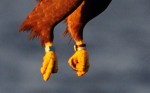
JUNE 2010: Leg rings with unique identification numbers that had previously been fitted to the legs of four young golden eagles in nests across Scotland were found in the possession of gamekeeper James Rolfe, during a multi-agency investigation into alleged raptor persecution at Moy Estate, near Inverness. It is not clear how he came to be in possession of the rings. The bodies of the eagles from which the rings had been removed were not found. No further action was taken in relation to the discovery.
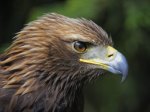
JUNE 2010: A golden eagle and a white-tailed eagle were found dead on Farr Estate, Inverness-shire. Tests revealed they had been poisoned by the illegal pesticide, Carbofuran. Northern Constabulary apparently did not search the property until July 2011. Two years and 3 months later, nobody has been prosecuted.
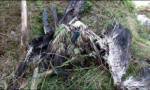
 

DECEMBER 2010: A decomposing carcass of a white-tailed eagle was found and photographed on Logie (Lochindorb) Estate, Morayshire. It was reported to Northern Constabulary. By the time the police arrived to collect it, the carcass had disappeared. The police said they couldn’t investigate further without the body.
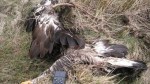
MARCH 2011: The body of a young golden eagle was discovered on North Glenbuchat Estate, Aberdeenshire. Tests revealed it had been poisoned by the illegal pesticide, Carbofuran. Grampian Police launched an investigation and raided the property in May 2011. One year and 4 months later, we are not aware of any pending prosecutions.
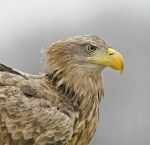
APRIL 2011: The body of a white-tailed eagle was found at the base of cliffs on Skye. The person who discovered it (a professional medic) considered it to have been freshly shot with a rifle, decapitated with a sharp implement and thrown from the cliff top. He took photographs and alerted Northern Constabulary and RSPB. There was a delay of two weeks before the now probably decomposed carcass was collected. A post-mortem was inconclusive. This incident was not made public until one year later after a tip off to this blog. We are not aware of any pending prosecutions.

NOVEMBER 2011: The signal from a satellite-tracked young golden eagle (hatched in 2010) stopped functioning when she was at a location in the Monadhliaths, a well-known raptor persecution black spot in the Highlands. Her last known location was checked by researchers but there was no sign of the bird. Another technical malfunction of a satellite transmitter or another ‘disappearance’ in suspicious circumstances?

MARCH 2012: The body of a young golden eagle being tracked by satellite was discovered in Lochaber. Tests revealed it had been poisoned with the banned pesticides Aldicarb and Bendiocarb. Information about this incident was not made public until three months later. As far as we are aware nobody is being prosecuted for poisoning this bird.


MARCH 2012: The signal from a satellite-tracked young golden eagle (hatched in 2011) stopped functioning when the bird was in the eastern glens, a well-known raptor persecution blackspot. Another technical malfunction of a satellite transmitter or another ‘disappearance’ in suspicious circumstances?


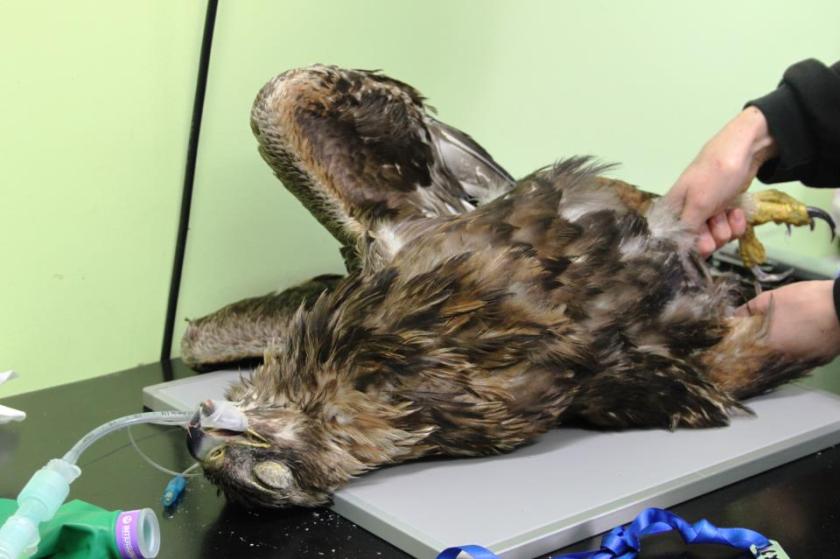
MAY 2012: The dead body of a young satellite-tracked golden eagle (hatched in 2011) was discovered near a lay-by in Aboyne, Aberdeenshire. The data from its satellite tag & the injuries the bird had when found (2 broken legs) suggests it had been caught in an illegal trap in the Angus glens and then removed, under cover of darkness, to be dumped in another area where it was left to die, probably a slow and agonising death. Information on this incident is only released almost five months later, by the RSPB. It appears the police failed to properly investigate this incident as no search warrants were issued. As far as we are aware, nobody is being prosecuted for killing this bird.

MAY/JUNE 2012: The signal from a young satellite-tracked golden eagle stopped functioning when the bird was north-east of the Cairngorms National Park. Another technical malfunction of a satellite transmitter or another ‘disappearance’ in suspicious circumstances?


If reading this list has left you wondering how can this still be happening in 21st century Scotland, and questioning why it seems to be impossible to prosecute anyone for these killings even with what appears to be plenty of supporting evidence to back the cases, then you probably want to ‘do’ something about it. The best thing you can do, right now, is to email the new Scottish Environment Minister, Paul Wheelhouse MSP. Tell him that this scandalous situation has to stop once and for all and ask him how he intends to address the problem. Tell him you are sick of being asked to consider all possibilities to explain these dead or missing eagles except the most likely one. Tell him that the Scottish Government is in a position to bring in changes to stop this disgrace and that they haven’t already speaks volumes. Tell him enough is enough and you want to see ACTION. He probably agrees with all these sentiments already but it’s important that he hears it from us all directly. Think about the details of the slow and agonising death of that poor young golden eagle that we read of yesterday and make it’s death mean something. ministerforenvironment@scotland.gsi.gov.uk

Glen Orchy: a hollow victory

Last Friday, Tom McKellar, an employee of Auch Estate, an Argyll sporting estate in Bridge of Orchy, was convicted of possessing the illegal poison Carbofuran and was fined £1,200 (see here). This conviction should be a cause for celebration, and in some respects it is, but there is also an overwhelming sense of disappointment and frustration. We had all thought this was a pretty clear-cut case, with lots of investigative resources thrown at it, a strong evidential trail and a known suspect. We were further encouraged by a statement given by the then Scottish Environment Minister, Roseanna Cunningham, who said:

I am truly appalled that yet another golden eagle has been illegally killed in Scotland – the second this summer. Illegal poisoning is simply inexcusable and while the perpetrators are certainly beneath contempt they are in no way above the law“.

Given the nature of the alleged offences (wildlife & firearms), we were certain that a custodial sentence was inevitable. How stupid were we?

It all started to unravel in December 2010, 18 months after the poisoned eagle was found dead in Glen Orchy. We learned that Tom McKellar had been convicted of possessing two illegal handguns, but instead of receiving the mandatory five-year prison sentence, he was given just 300 hours community service and a commendation from the judge who reportedly told him: “There is no doubt you are an outstanding individual” (see here). There was little mention in the media about the poisoned golden eagle or the stash of illegal poison that had been found at McKellar’s house during the original police search. We were suspicious that the wildlife crimes were being ignored and that COPFS had decided to just take on the firearms offences because, in the eyes of the law, these are greater crimes than the poisoning offences and would normally result in a custodial sentence.

Based on these suspicions, we blogged about the case in January 2011, and suggested that no charges were being brought against anyone for poisoning that eagle. We also encouraged readers to contact the Scottish Government to complain. Many did, and all hell let loose. The Scottish Government responded by saying that the firearms offences were being dealt with separately, at a court with a higher authority than a Sheriff Court, and that the wildlife offences were still ‘being dealt with’. A well-known prosecutor threatened us, indirectly, with legal action. For what? Expressing an opinion? As it turns out, we were right all along, nobody has been prosecuted for poisoning that golden eagle, although we’ve had to wait for over three years to have this confirmed.
It then all went quiet for a while, at least publicly. It’s not known whether COPFS bowed to pressure to take forward the wildlife crime prosecution or whether they had actually been pursuing the charge all along, but that it took over three years for the case to conclude is probably quite telling.  Not that it really matters now anyway; what matters is the outcome.

So, a conviction was eventually secured, although this was just for ‘possession’ of a banned substance; in our opinion this is the least significant charge of any that could have been brought. McKellar admitted during interviews that he had laid out poisoned baits ‘in the past’, and yet he wasn’t charged for that. Were the words ‘in the past’ significant in the decision not to press charges for that offence? What does ‘in the past’ mean, anyway? Two years ago? Two weeks ago? Two days ago? Two hours ago? In addition to the poisoned golden eagle, a Carbofuran-poisoned fox was found and also a dead sheep laced with Carbofuran. Someone was clearly still putting out poisoned baits, but COPFS accepted McKellar’s claim that he wasn’t responsible. It’s unfortunate that these types of offences are only dealt with as summary cases in a Sheriff Court. It would have been interesting to hear what a jury might have thought had the charges been heard in a higher court. Again, we’ll never know and we have to accept that McKellar is guilty of nothing more than possessing the banned poison Carbofuran (oh, and possessing two illegal handguns).

It’s hard not to think that McKellar has come out of all this relatively lightly. It’s also hard to believe that his punishments will act as any sort of deterrent to other would-be criminals. He avoided a mandatory five-year prison term for the firearms offences, and he was fined just a fraction of the amount that he could have been fined for possessing the illegal poison Carbofuran. It appears that he has also kept his job. Auch Estate is currently up for sale (for a mere £8.4 million) and a look at the sales particulars (Auch Estate sales brochure 2012), dated August 2012, indicates that the new owner has to take on the current Estate employees under the TUPE regulations, including Farm Manager Tom McKellar. These sales particulars also show that almost £700,000 was paid in grants and subsidies during 2011; it would be interesting to know whether there will be any forfeiture of these payments following McKellar’s conviction, although based on previous experience, this information is exceptionally difficult to access, even though it’s public money! It would also be interesting to hear whether McKellar’s employer is being investigated, after McKellar reportedly claimed it was his employer who had provided him with the Carbofuran (see here). Wouldn’t it also be interesting to find out whether Auch Estate is a member of Scottish Land & Estates? And whether McKellar, as an employee of a sporting estate, is a member of the Scottish Gamekeepers’ Association? Needless to say, neither of these organisations has made any public statements about McKellar’s conviction last Friday.

Other question marks include a strange bit of (non)-reporting by SASA. The poisoned golden eagle found at Glen Orchy was listed in SASA’s 2009 annual report. However, the dead fox found nearby that was reported to have been poisoned by Carbofuran did not appear in the SASA report. Neither did the dead sheep also found nearby that was reportedly laced with Carbofuran and used as poisoned bait. Why weren’t these two animals included in SASA’s list of confirmed poison cases for 2009? Perhaps SASA didn’t do the toxicology tests. If they didn’t, then who did? If SASA did do the tests, but failed to include the animals in their report, what confidence does this give us when SASA release their annual poisoning statistics? Are other cases missing? We only knew about the fox and the sheep because the RSPB had listed them in their annual report.

A further question mark hangs over a related issue. The media has reported that the poisoned golden eagle found dead in Glen Orchy had been killed with the banned pesticide Carbofuran. However, if you look at the 2009 SASA report, the following chemicals are listed as being detected in this bird’s body: Carbofuran, Methiocarb, Sodium Cyanide and Strychnine. Now, we have it on good authority, although this has not been formally verified, that a second individual was searched during the police raid back in June 2009. This individual, XXXXX XXXXX is believed to be a gamekeeper in Perthshire but is not an employee of Auch Estate; he was just there on the day the police arrived to conduct their search. We understand that the police found Mr XXXXX to be in possession of a bottle of Strychnine and a container of decanted Cyanide. Now look again at the chemicals detected in the body of the dead golden eagle. As far as we are aware, no charges have been brought against Mr XXXXX, not even for possession. If this turns out to be an accurate report, then something has gone seriously wrong with this investigation. A lack of resources can’t be blamed on this one, given the array of organisations involved with the investigation, including multiple police forces with specialist wildlife crime officers as well as the National Wildlife Crime Unit. So what happened? Did Mr XXXXX slip through the net and if so, how? Do you think we’ll hear anything about this or do you think it’ll be quietly pushed under the carpet?

In summary then, yes, a conviction was secured (McKellar) and we should be pleased about that. McKellar’s illegal stash of Carbofuran and his illegal cache of handguns have been taken out of circulation and so we should also be pleased about that, too. But this is not what could be called a successful outcome; far from it. It’s deeply unsatisfactory and shares striking similarities with other recent, high-profile cases which also concluded unsatisfactorily, such as Moy Estate and Skibo Estate. In all three cases, and in countless other lower-profile cases, sporting estate employees have only been charged with the lesser offence of possession. Charges have not been brought against anyone for the illegally-killed raptors found in each location, nor for laying the illegal poisoned baits or for putting out the illegal traps. On a superficial level then, the convictions for possession look good and the authorities can claim they are successfully addressing the issue of wildlife crime. Scratch below the publicity gloss though and you find that very little progress has been made; charges, if they’re brought at all, are not reflecting the full extent of the crimes uncovered, and on conviction the sentences are not reflecting the seriousness of these crimes.

Glen Orchy case concludes: call this justice?

So, three years and three months later, the infamous Glen Orchy case has concluded. Tom McKellar, previously described as a gamekeeper but curiously now described as a farmer, has been fined £1,200 for possessing the banned pesticide, Carbofuran.

The Crown Office press release (here) doesn’t mention anything of the poisoned golden eagle that was found in Glen Orchy and prompted the search of McKellar’s house, which led to the discovery of the Carbofuran. Although it does mention how he was previously given a 300-hour community service order for the possession of illegal handguns (instead of the mandatory five-year prison sentence), also found during the search of his house.

Of course, McKellar wasn’t charged with laying poisoned baits (even though he reportedly admitted to doing so during an interview), and nor was he charged with poisoning that golden eagle, because even though he had this rare, banned poison in his house, and lived just down the road from where the dead eagle had been found, and he’d previously admitted to laying out poisoned baits, there apparently wasn’t enough evidence to link him to the poisoned eagle.

But this story doesn’t end there. There are other things that went on (or more to the point, didn’t go on) in this investigation and we’ll be discussing those in due course, including the failure to charge a second person….

Meanwhile, we’ll add this poisoned golden eagle to the growing list of illegally-killed eagles for which nobody has ever been (nor will be) prosecuted. Justice?

RSPB press statement here

UPDATE 11 Sept 2012: Glen Orchy, a hollow victory (here)

Previous blogs on this case here, here, here, here, here,here here, here

Blundering Benyon gives evidence at wildlife crime inquiry

Everyone’s favourite Minister Richard Benyon has been giving evidence at the House of Commons Environmental Audit Committee’s inquiry into wildlife crime (see here, here and here for earlier blog posts about this inquiry).

Some of the topics on which Benyon was questioned included #buzzardgate, hen harriers, the introduction of vicarious liability in England, the legislation concerning possession of illegal poison, and the independence of Natural England.

So how did he do?

He started off badly when questioned about the need for legislation to criminalise the possession of certain poisons. The legislation is already in place in Scotland but a loophole in the English legislation means that ‘possession’ (rather than ‘use’) is still not an offence – see here for an RSPB press release last year on this very topic. Bungling Benyon suggested that the current legislation was adequate and didn’t require updating. He was picked up on this a bit later by the Committee Chair, who insisted on clarifying whether there was a difference between ‘possession’ and ‘use’ in the legislation. Benyon chose the safe option and asked whether he could make the clarification in writing at a later date, presumably to give himself time to actually go and read the legislation.

On the issue of whether to introduce vicarious liability legislation in England for raptor persecution crime, Benyon commented that there were no plans to introduce VL but he will watch the impact of it in Scotland. That’s fair enough. Why waste time and funds to introduce something that may be completely useless as a tool to combat raptor crime until you’ve seen whether it can make a difference in Scotland. It was suggested to Benyon that some might say the Scottish government takes wildlife crime more seriously than their English counterparts. Benyon rejected that and said there are wildlife crime measures that are making a difference and the legislation is adequate. Unfortunately he didn’t give any examples.

When asked about #buzzardgate, he basically said he loved buzzards but that some of the people protesting about the ‘study’ had misunderstood the research. Er, what was there to misunderstand? Benyon and his game-shooting cronies wanted to spend our money removing native buzzards from the wild, on private shooting estates, for the benefit of mass-introduced non-native species that are bred for the sole purpose of being killed for sport. “I recognise that it hit a wall of credibility“, said Benyon. Too bloody right it did.

When asked whether he was doing anything specific to protect the hen harrier, Benyon stated, “Yes, we are“. He said he was looking at the possibilty of a project that might work, but he didn’t want to provide any specific details because “it is at a very conceptual stage“. Hmm. Could this be the controversial plan to introduce a so-called ‘ceiling’ for hen harrier numbers, a concept that has been knocking around since 2008 (see here and here)? We’ll have to wait and see.

Benyon was then asked: To what extent are you satisfied that Natural England is making sufficient use of its civil enforcement powers in relation to SSSIs? Benyon’s response: “…….It is also very important that Natural England is an arm’s length body with the neccessary statutory basis that they have, and that they are able to operate the laws and sanctions that they have freely and unencumbered“. Now that’s an interesting statement! If you’ve been following Mark Avery’s superb analysis of what went on in the Walshaw grouse moor fiasco (see here for his 23rd blog entry on the subject), you’d be hard pressed to believe that Natural England acted “freely and unencumbered”. There’s still plenty more to be uncovered about what happened between Natural England and Walshaw Moor Estate but rest assured that Mark Avery will have a good go at getting to the bottom of it. Benyon’s statement may just come back to haunt him.

To read the full transcript of Benyon’s evidence to the Environmental Audit Committee, see here. Bear in mind that this is the uncorrected version; the corrected version should be posted shortly.

The EAC has now finished compiling the written and oral evidence in this inquiry and a report should be published in due course.

Glen Orchy farce continues

The Glen Orchy case against Tom McKellar continued at Oban Sheriff Court last Friday (27 July) with yet more legal argument.

You won’t be surprised to learn that sentencing has once again been deferred. Next court date is in early September.

Glen Orchy gamekeeper tries to change his plea

Here’s some insight into what is causing the delay in the sentencing of Tom McKellar in the Glen Orchy poison case. From yesterday’s Press & Journal:

An Argyll farmer is attempting to take back his plea of guilty to having a deadly poison which has been banned after being linked to the killing of birds of prey.

Tom McKellar, 50, of Fir Park Cottage, Auch Estate, Bridge of Orchy, originally pleaded guilty at Oban Sheriff Court to possessing the pesticide Carbofuran, a pesticide outlawed for more than 10 years, at his home in June 2009.

At a hearing in May his defence solicitor David McKie, in his plea in mitigation, said that his client did not realise the poison was Carbofuran.

Sheriff Douglas Small then queried if McKellar should be pleading guilty, and he continued the case for legal debate until yesterday [Wednesday 25 July 2012].

But when the case called yesterday McKellar had new legal representation in the form of solicitor Cameron Tait who sought permission from Sheriff Small to withdraw the guilty plea and replace it with a not guilty one.

This motion was “strenuously opposed” by fiscal Kate Fleming and a day-long legal debate took place.

Mr Tait said: “He advised police that he thought the poison was Wetex. He said he didn’t know what Carbofuran was. He had been supplied with it by the estate”.

Miss Fleming argued that this was not a defence. She said there was an absence of language such as “knowingly” possessing Carbofuran in the charge.

Sheriff Small adjourned the case until tomorrow [today, Friday 27 July 2012] to hear more legal arguments from the Crown and the defence.

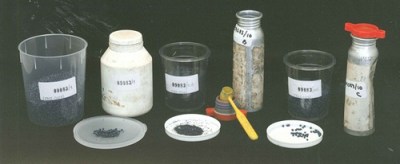
It emerged at previous court hearings that police were investigating the death of a golden eagle in Glen Orchy in June 2009 when they obtained a search warrant for McKellar’s house. They found granules of Carbofuran in a game bag in his porch. Police also found the carcases of a sheep and a fox laced with Carbofuran.

Miss Fleming previously told the court that since 1988, there have been 240 fatal poisonings of wildlife by Carbofuran, mostly birds of prey.

The case resumes today. If the Sheriff accepts McKellar’s not guilty plea then presumably this case could go to trial at a later date.

For background information on this case, click on the ‘Glen Orchy’ tag at the top of this post.

Thank you to the contributor who sent us the Press & Journal clipping.