Poisoned baits found on Leadhills Estate: ‘case closed’

One year ago, almost to the day, a significant haul of pre-prepared poisoned baits (36 in total) was discovered in two game bags that were hidden in woodland next to a grouse moor on Leadhills Estate. The 36 chopped up pieces of meat had been liberally sprinkled with the deadly banned poison, Carbofuran.

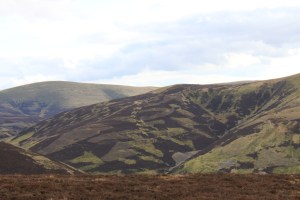
We blogged about this discovery in June 2013 (see here). We were highly critical of the police, who had failed to issue any press statement whatsoever, despite the proximity of the poisoned stash to a public caravan park (see photo, which we took in Feb this year). NB: This caravan park has no connection whatsoever to the Leadhills (Hopetoun) Estate.

Leadhills RPSWe were also critical of the police investigation, which included arriving on scene in marked police vehicles, thus notifying any poisoner(s) of their presence and allowing the poisoner(s) valuable time to hide any remaining evidence. We also criticised their failure to conduct a police search of the adjacent moor for any evidence of baits that had already been set out. Their failure to conduct an immediate search was particularly stupid given (a) the known history of poisoning incidents in this area and (b) the knowledge that one of the two game bags was only half full of baits.

In November 2013 we blogged about the high probability that a prosecution would not be forthcoming in this case (see here).

Today, we have just read a SASA report that confirms our suspicions. This incident is recorded as:

No suspect identified. Case now closed“.

The Untouchables get away with committing a serious wildlife crime, again….

Buzzard poisonings in Northern Ireland: 1 confirmed, 3 suspected

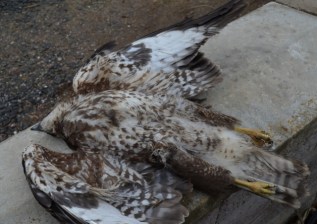
BZNIPolice in Northern Ireland are appealing for information about the suspected poisonings of 3 buzzards in two separate incidents.

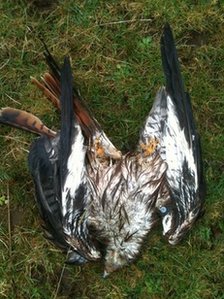
In the first incident (April 2013!) a dead buzzard was found on land at Drumdreenagh Road in the Hilltown area of Warrenpoint, County Down. We happen to know that this bird was found with a dead red kite which has since been confirmed as being poisoned with Carbofuran.

The second incident (October 2013) was also in the Hilltown area – this time two buzzards were found dead on land in the Lisnamulligan Road.

Anyone with information can contact the police in Warrenpoint on 0845-600-8000. Article in Newry Times here.

It’s more than a little concerning that the police appeal for information has only just appeared and that the cause of death has not yet been confirmed – poisoning is still only suspected at this stage. We’ve blogged before about the excessively long delays in getting toxicology results from the lab in Northern Ireland (e.g. see here) and it seems reasonable to assume from the information provided in the latest press release that this is an on-going problem. Such slow response times can only hinder the police investigations, and also the work of the conservationists trying to assess whether the buzzards were deliberately targeted or were the unintended victims of secondary poisoning.

Another dead buzzard that was found in Castledawson, Co. Londonderry in March 2013 has been confirmed as being poisoned with Carbofuran. The police put out an appeal for information about this incident in October 2013 (article here).

31 eagles, 7 years, 0 prosecutions

In April 2012, we wrote an article called ’21 eagles, 6 years, 0 prosecutions’ (see here).

In September 2012, we updated it and called it ’26 eagles, 6 years, 0 prosecutions’ (see here).

In July 2013 we updated it again. This time, ’27 eagles, 7 years, 0 prosecutions’ (see here).

Here’s the latest version: 31 eagles, 7 years, 0 prosecutions.

This article should provide some context the next time you hear someone (usually from the game-shooting industry or from the government) say that “we’re making real progress in the fight against raptor persecution”. So much ‘progress’ in fact that 13 of these eagles have been lost in the last 3 years; 4 of them this year, the so-called Year of Natural Scotland.

As before, a number of eagles included in this list (7 of them, to be precise) may not be dead. However, they are included here because their satellite tags unexpectedly stopped functioning (i.e. they’d been transmitting perfectly well up until the eagles’ last known location, often a known persecution hotspot). Two further satellite-tagged eagles (‘Angus’ and ‘Tom’) are not included in this list as although their transmitters stopped functioning, there had been recognisable problems with their tags prior to the final transmissions and so the benefit of the doubt has been applied.

A couple of eagles have been added that should have featured in the previous version but we’ve only just received details about them.

Many of these listed eagles from recent years have only been discovered because the eagles were being satellite-tracked. Much kudos to the dedicated teams of fieldworkers who have put in hours and hours of skilled hard work to allow this to happen. Obviously there are many other eagles out there that have not been sat-tagged and on the balance of probability will have been killed at the hands of the game-shooting industry. 31 eagles in the last 7 years is the bare minimum. The number of prosecutions (zero) is undeniable.

Dinnet & Kinord May 2006MAY 2006: A dead adult golden eagle was found on the Dinnet & Kinord Estate, near Ballater, Aberdeenshire. Tests revealed it had been poisoned by the illegal pesticide Carbofuran. Grampian Police launched an investigation. Seven years and 7 months later, nobody has been prosecuted.

~
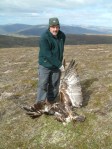
Glen Feshie June 2006JUNE 2006: A dead golden eagle was found on Glen Feshie Estate in the Cairngorms. Tests revealed it had been poisoned by the illegal pesticide Carbofuran. Northern Constabulary launched an investigation. Seven years and 6 months later, nobody has been prosecuted.

~

Peebles August 2007AUGUST 2007: A dead adult female golden eagle was found on an estate near Peebles in the Borders. She was half of the last known breeding pair of golden eagles in the region. Tests revealed she had been poisoned by the illegal pesticide Carbofuran. Lothian & Borders Police launched an investigation. Six years and 4 months later, nobody has been prosecuted.

~

bird-nNOVEMBER 2007: Tayside Police received a detailed tip-off that a young male white-tailed eagle (known as ‘Bird N’) had allegedly been shot on a grouse moor estate in the Angus Glens. The timing and location included in the tip-off coincided with the timing and location of the last-known radio signal of this bird. Six years and 1 month later, the bird has not been seen again. With no body, an investigation isn’t possible.

~
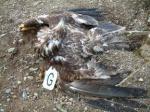
White G Glenquioch May 2008MAY 2008: A one year old male white-tailed eagle hatched on Mull in 2007 and known as ‘White G’ was found dead on the Glenquoich Estate in the Angus Glens. Tests revealed he had been poisoned by an unusual concoction of pesticides that included Carbofuran, Bendiocarb and Isofenphos. A police search in the area also revealed a poisoned buzzard, a baited mountain hare and 32 pieces of poisoned venison baits placed on top of fenceposts on the neighbouring Glenogil Estate. Laboratory tests revealed the baited mountain hare and the 32 poisoned venison baits contained the same unusual concoction of highly toxic chemicals that had killed the white-tailed eagle, ‘White G’. Five years and 7 months later, nobody has been prosecuted.

~
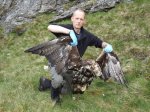
Glen Orchy 2009JUNE 2009: An adult golden eagle was found dead at Glen Orchy, Argyll, close to the West Highland Way. Tests revealed it had been poisoned by the illegal pesticide Carbofuran. Strathclyde Police launched a multi-agency investigation. Three years and 3 months later, estate employee Tom McKellar pled guilty to possession of Carbofuran stored in premises at Auch Estate, Bridge of Orchy and he was fined £1,200. Four years and 6 months on, nobody has been prosecuted for poisoning the golden eagle.

~

Alma Millden 2009JULY 2009: A two year old female golden eagle known as ‘Alma’ was found dead on the Millden Estate in the Angus Glens. Tests revealed she had been poisoned by the illegal pesticide Carbofuran. Alma was a well-known eagle  – born on the Glen Feshie Estate in 2007, she was being satellite-tracked and her movements followed by the general public on the internet. Tayside Police launched an investigation. Four years and 5 months later, nobody has been prosecuted.

~

August 2009 Glenogil WTEAUGUST 2009: A young white-tailed eagle was found dead on Glenogil Estate in the Angus Glens. Tests revealed it had been poisoned by the illegal pesticide Carbofuran. Tayside Police was criticized in the national press for not releasing a press statement about this incident until January 2010. Four years and 4 months later, nobody has been prosecuted.

~

Skibo GE May 2010MAY 2010: #1 of three dead golden eagles found on or close to Skibo Estate, Sutherland. Tests revealed they had been poisoned; two with Carbofuran and one with Aldicarb. Northern Constabulary launched a multi-agency investigation. One year later (May 2011), Sporting Manager Dean Barr pled guilty to possession of 10.5 kg of Carbofuran stored in premises at Skibo Estate. Three years and 7 months later, nobody has been prosecuted for poisoning this eagle.

~

Skibo GE2 May 2010MAY 2010: #2 of three dead golden eagles found on or close to Skibo Estate, Sutherland. Tests revealed they had been poisoned; two with Carbofuran and one with Aldicarb. Northern Constabulary launched a multi-agency investigation. One year later (May 2011), Sporting Manager Dean Barr pled guilty to possession of 10.5 kg of Carbofuran stored in premises at Skibo Estate. Three years and 7 months later, nobody has been prosecuted for poisoning this eagle.

~

ge headMAY 2010: #3 of three dead golden eagles found on or close to Skibo Estate, Sutherland. Tests revealed they had been poisoned; two with Carbofuran and one with Aldicarb. Northern Constabulary launched a multi-agency investigation. One year later (May 2011), Sporting Manager Dean Barr pled guilty to possession of 10.5 kg of Carbofuran stored in premises at Skibo Estate. Three years and 7 months later, nobody has been prosecuted for poisoning this eagle.

~

ge headJUNE 2010: #1: Leg rings with unique identification numbers that had previously been fitted to the legs of four young golden eagles in nests across Scotland were found in the possession of gamekeeper James Rolfe, during a multi-agency investigation into alleged raptor persecution at Moy Estate, near Inverness. It is not clear how he came to be in possession of the rings. The bodies of the eagles from which the rings had been removed were not found. No further action was taken in relation to the discovery.

~

ge headJUNE 2010: #2: Leg rings with unique identification numbers that had previously been fitted to the legs of four young golden eagles in nests across Scotland were found in the possession of gamekeeper James Rolfe, during a multi-agency investigation into alleged raptor persecution at Moy Estate, near Inverness. It is not clear how he came to be in possession of the rings. The bodies of the eagles from which the rings had been removed were not found. No further action was taken in relation to the discovery.

~

ge headJUNE 2010: #3: Leg rings with unique identification numbers that had previously been fitted to the legs of four young golden eagles in nests across Scotland were found in the possession of gamekeeper James Rolfe, during a multi-agency investigation into alleged raptor persecution at Moy Estate, near Inverness. It is not clear how he came to be in possession of the rings. The bodies of the eagles from which the rings had been removed were not found. No further action was taken in relation to the discovery.

~

ge headJUNE 2010: #4: Leg rings with unique identification numbers that had previously been fitted to the legs of four young golden eagles in nests across Scotland were found in the possession of gamekeeper James Rolfe, during a multi-agency investigation into alleged raptor persecution at Moy Estate, near Inverness. It is not clear how he came to be in possession of the rings. The bodies of the eagles from which the rings had been removed were not found. No further action was taken in relation to the discovery.

~

ge headJUNE 2010: A golden eagle was found dead on Farr & Kyllachy Estate, Inverness-shire. Tests revealed it had been poisoned by the illegal pesticide Carbofuran. Northern Constabulary apparently did not search the property until July 2011. Three years and 6 months later, nobody has been prosecuted.

~

WTE Farr & Kyllachy June 2010JUNE 2010: A white-tailed eagle was found dead on Farr & Kyllachy Estate, Inverness-shire. Tests revealed it had been poisoned by the illegal pesticide Carbofuran. Northern Constabulary apparently did not search the property until July 2011. Three years and 6 months later, nobody has been prosecuted.

~

Lochindorb WTE Dec 2010DECEMBER 2010: A decomposing carcass of a white-tailed eagle was found and photographed on Logie (Lochindorb) Estate, Morayshire. It was reported to Northern Constabulary. By the time the police arrived to collect it, the carcass had disappeared. The police said they couldn’t investigate further without the body.

~

ge headFEBRUARY 2011: The signal from a young satellite-tracked golden eagle ( ‘Lee’, hatched in 2010) unexpectedly stopped transmitting after a final signal from the North Angus Glens. A technical malfunction or another mysterious ‘disappearance’?

~

Glenbuchat GE March 2011MARCH 2011: The body of a young golden eagle was discovered on North Glenbuchat Estate, Aberdeenshire. Tests revealed it had been poisoned by the illegal pesticide Carbofuran. Grampian Police launched an investigation and raided the property in May 2011. Two years and 7 months later, nobody has been prosecuted.

~

wtseAPRIL 2011: The body of a white-tailed eagle was found at the base of cliffs on Skye. The person who discovered it (a professional medic) considered it to have been freshly shot with a rifle, decapitated with a sharp implement and thrown from the cliff top. He took photographs and alerted Northern Constabulary and RSPB. There was a delay of two weeks before the now probably decomposed carcass was collected. A post-mortem was inconclusive. This incident was not made public until one year later after a tip off to this blog. Two years and 8 months later, nobody has been prosecuted.

~

ge headSEPTEMBER 2011: The signal from a satellite-tracked young golden eagle (‘Strathy’, hatched in 2010) unexpectedly stopped transmitting after a final signal from an Aberdeenshire grouse moor. A technical malfunction or another mysterious ‘disappearance’?

~

Lochaber poisoned ge March 2012MARCH 2012: The body of a young golden eagle being tracked by satellite was discovered in Lochaber. Tests revealed it had been poisoned with the banned pesticides Aldicarb and Bendiocarb. Information about this incident was not made public until three months later. One year and 9 months later,  nobody has been prosecuted.

~

ge headMARCH 2012: The signal from a satellite-tracked young golden eagle (‘Angus 26’, hatched in 2011) unexpectedly stopped transmitting after a final signal from a grouse moor in the Angus Glens. This bird’s suspiciously damaged sat tag was found in the area.

~

ge headMAY 2012: The signal from a young satellite-tracked golden eagle (#32857) unexpectedly stopped transmitting when the bird was north-east of the Cairngorms National Park. A technical malfunction or another mysterious ‘disappearance’?

~

Deeside GE May 2012MAY 2012: The dead body of a young satellite-tracked golden eagle (hatched in 2011) was discovered near a lay-by in Aboyne, Aberdeenshire. The data from its satellite tag & the injuries the bird had when found (2 broken legs) suggested it had been caught in an illegal trap on a grouse moor in the Angus Glens and then removed, under cover of darkness, to be dumped in another area where it was left to die, probably a slow and agonising death. Information on this incident was not released until almost five months later, by the RSPB. It appears the police failed to properly investigate this incident as we understand that no search warrants were issued and no vehicles were searched. One year and 7 months later, nobody has been prosecuted.

~

Wanlock Head GE Oct 2012OCTOBER 2012: An adult golden eagle was found shot and critically injured on grouse moor at Buccleuch Estate, near Wanlockhead, South Lanarkshire. The bird was rescued by the SSPCA and underwent surgery but it eventually succumbed to its injuries in April 2013. One year and 2 months later, nobody has been prosecuted.

~

ge headMAY 2013: The signal from a two-year-old satellite tracked golden eagle (‘Angus 33’, hatched in 2011) unexpectedly stopped transmitting after it’s last signal from North Glenbuchat Estate in Aberdeenshire. A technical malfunction or another mysterious ‘disappearance’?

~

ge headJUNE 2013: A dead golden eagle was found on an RSPB reserve on Oronsay. This bird had been shot although it is not known whether this was the cause of death or an historical injury.

~

ge headJULY 2013: The signal from a young satellite tracked golden eagle (‘Cullen’, hatched 2010) unexpectedly stopped transmitting after its last signal in Aberdeenshire. A technical malfunction or another mysterious ‘disappearance’?

~

Fearnan Angus Glens Dec 2013DECEMBER 2013: A two year old satellite tracked golden eagle (‘Fearnan’) was found dead on a grouse moor in the Angus Glens. Tests revealed he had been poisoned with the banned pesticide Carbofuran.


The life, and death, of golden eagle Fearnan

Yesterday we learned that yet another young golden eagle had met an untimely death at the hands of an industry incapable or unwilling to move into the 21st century (here). The shocking result of a series of secretive, evil acts pervading the remote glens and mountainsides of Scotland. Secretive yet relentless. A lonely agonising death as the eagle spasms and fits and gasps its last breath, its feet clenched in chemical paralysis.

To most of us, Fearnan is just another statistic; one of a growing list of eagles lost in the most barbaric way. But here is his story, in the words and pictures of Keith Brockie, a man who knew Fearnan well. Thanks, Keith, for sharing with us.

Male golden eagle chick in his eyrie in Glen Lyon, Perthshire with oven-ready red grouse and red-legged partridge as prey. 25th June 2011:

Fearnan1

Portrait of the eaglet prior to being satellite-tagged:

Fearnan2

Holding the young male golden eagle chick prior to tagging the chick. Ringed by my wife, Hazel, her first eagle chick ringed:

Fearnan3

Duncan Orr-Ewing, RSPB, fitting the satellite tag harness onto the eaglet prior to stitching and glueing the harness bands to establish a good fit:

Fearnan4

Fearnan flying alongside a hillside in Glen Lyon on 18th December 2011. You can clearly see the satellite tag and aerial mounted on his back. Unusually he stayed with his parents hardly venturing more than a few kms out of his natal territory from 23rd July when he fledged ’till 4th March 2012. His parents no doubt forced him out of their territory as they were about to lay eggs:

Fearnan5

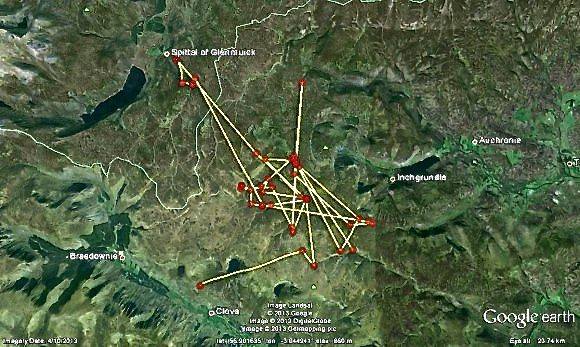
His movements were monitored by Roy Dennis (see here where you can see his movements throughout Scotland). This map shows his last movements ’till his untimely death on 22nd November 2013. Prior to this he had travelled from Loch Awe, Ben Dearg, spent much of his time in North Perthshire and the Monaliaths ’till he made the fatal mistake of visiting the grouse moors of Angus. Indeed whilst I was doing golden plover monitoring on Dunmaglass estate near Inverness in June this year, Fearnan flew past only 50 metres away:

Fearnan6

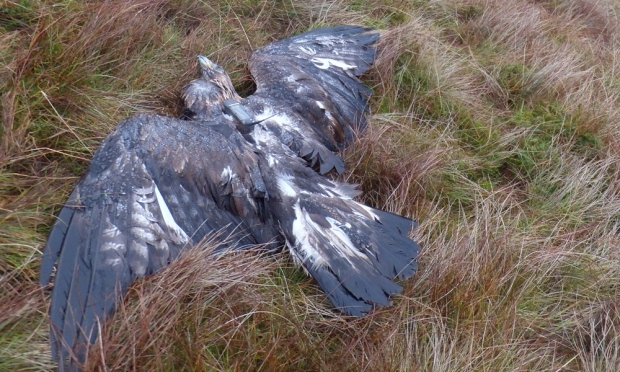
Fearnan lying dead on a hillside overlooking Glen Lethnot on 3rd December 2013, when he was picked up by RSPB Investigations personnel (photo courtesy of them) and police. Later veterinary investigations revealed that he had been poisoned by carbofuran, a highly poisonous systemic insecticide (now banned) which is particularly toxic to birds. The golden eagle was recently voted most popular of the ‘Big Five’ wildlife species in a poll by Scottish Natural Heritage. This is the way they are treated in the ‘Year of Natural Scotland 2013’:

Fearnan7

The area where Fearnan was found dead is really bad for the persecution of raptors. Here are some of the known examples, merely the ‘tip of a very large iceberg’. 2008: a white-tailed eagle and a buzzard found poisoned, with 32 meat baits and a baited mountain hare also found. 2009: a white-tailed eagle and 2 buzzards found poisoned on one estate and a poisoned golden eagle and buzzard found on another estate. 2010: a poisoned red kite and nearby 2 poisoned buzzards with pigeon baits laced with poison. 2011: a buzzard seen shot. 2012: a tagged golden eagle trapped and transported overnight into a Deeside wood with a feather trail from a lay-by where it later died. 2013: the first white-tailed eagle eyrie in Eastern Scotland for 200 years chopped down by a chainsaw! These are just the known raptor deaths. Considering four satellite-tagged eagles have been killed in this area recently and fewer than 10% of young golden eagles are tagged each year in Scotland, how many moor are lying rotting amongst the heather on these grouse moors – another 36? These grouse moors where the persecution is taking place are acting as a sump, constantly killing immature eagles trying to find vacant territories. THE TIME IS LONG OVERDUE FOR SHOOTING ESTATES TO BE LICENSED to add further pressure on estates to curb the illegal persecution of raptors. The SGA and SLE would have you believe that persecution is declining but those of us who monitor raptors know differently! Please write to the Environment Minister to express your disgust: ministerforenvironment@scotland.gsi.gov.uk

Fearnan8

Golden eagle found poisoned on Angus grouse moor

A two-year old golden eagle named ‘Fearnan’ has been found dead on a Scottish grouse moor. He had been poisoned with a banned pesticide. The poison hasn’t been named but we’ll take an educated guess at Carbofuran, the gamekeepers’ poison of choice.

Interestingly, there are three separate press releases about this latest disgraceful crime:

One from the government via PAW (here)

One from the police (here)

One from RSPB Scotland (here)

Usually, we’re lucky to see anything for at least 4-5 months after the crime so it’s somewhat surprising to see the scuffle for media attention on this one. Could this be a sign that Environment Minister Wheelhouse has put his foot down and demanded that timely press statements are released? We can’t think of any other reason why the police should suddenly change their tactics from seemingly apathetic to seemingly responsive.

Of course, regular blog readers will already know that Fearnan is not the only poisoned eagle to have been found dead in the Angus Glens. In fact, there’s been a fair bit of raptor persecution over the last nine years. Here’s a list of incidents we’ve compiled from various published reports:

2004 May, near Edzell: long-eared owl and two short-eared owls starved to death in crow cage trap.  No prosecution.

2004 May, Invermark Estate: peregrine nest destroyed. No prosecution.

2006 March, Glenogil Estate: poisoned rabbit bait (Carbofuran). No prosecution.

2006 April, Easter Ogil: poisoned buzzard (Alphachloralose). No prosecution.

2006 April, Easter Ogil: poisoned tawny owl (Alphachloralose). No prosecution.

2006 May, Glenogil Estate: poisoned rabbit bait (Carbofuran). No prosecution.

2006 June, Glenogil Estate: poisoned woodpigeon bait (Carbofuran). No prosecution.

2006 June, Glenogil Estate: Traces of Carbofuran found in estate vehicles & on equipment during police search. No prosecution. Estate owner had £107k withdrawn from his farm subsidy payments. This was being appealed, but it is not known how this was resolved.

2006 July, Millden Estate; poisoned sheepdog (Lindane). No prosecution.

2007 November, Glenogil Estate: Disappearance of radio-tagged white-tailed eagle ‘Bird N’ coincides with tip off to police that bird been shot. No further transmissions or sightings of the bird.

2008 May, ‘Nr Noranside’: poisoned white-tailed eagle ‘White G’ (Carbofuran, Isophenfos, Bendiocarb). No prosecution.

2008 May, ‘Nr Noranside’: poisoned buzzard (Bendiocarb). No prosecution.

2008 May, ‘Nr Noranside’: poisoned mountain hare bait (Carbofuran, Isophenfos, Bendiocarb). No prosecution.

2008 May, Glenogil Estate: 32 x poisoned meat baits on fenceposts (Carbofuran, Isophenfos, Bendiocarb). No prosecution.

2008 October, ‘Glenogil Estate: poisoned meat bait on fencepost (Carbofuran). No prosecution.

2009 March, Glenogil Estate: poisoned buzzard (Carbofuran). No prosecution.

2009 March, Glenogil Estate: poisoned buzzard (Carbofuran). No prosecution.

2009 April, Millden Estate: poisoned buzzard (Alphachloralose). No prosecution.

2009 July, Millden Estate: poisoned golden eagle ‘Alma’ (Carbofuran). No prosecution.

2009 August, Glenogil Estate: poisoned white-tailed eagle “89” (Carbofuran). No prosecution.

2010 May, ‘Nr Noranside’: poisoned red kite (Carbofuran). No prosecution.

2010 September, Glenogil Estate: poisoned buzzard (Chloralose). No prosecution.

2010 October, Glenogil Estate: poisoned buzzard (Carbofuran). No prosecution.

2010 October, Glenogil Estate: poisoned pigeon bait (Carbofuran). No prosecution.

2010 October, Glenogil Estate: poisoned pigeon bait (Carbofuran). No prosecution.

2011 February, Airlie Estate: buzzard caught in illegal crow trap. (see below)

2011 March, Airlie Estate: 3 x buzzard caught in illegal crow trap. Prosecution (!) but dropped after statement from suspect given to SSPCA deemed inadmissible.

2011 April, Millden Estate: shot buzzard. No prosecution.

2012 April, ‘Nr Noranside’: Remains of buzzard found beside pheasant pen. Suspicious death.

2011 June, Rottal & Tarabuckle Estate: dead kestrel inside crow cage trap. No prosecution.

2012 February, ‘Nr Edzell’: spring-trapped buzzard. No prosecution.

2012 February, ‘Nr Bridgend’: remains of buzzard found under a rock. Suspicious death.

2012 May, Millden Estate: satellite-tagged golden eagle caught in spring trap, then apparently uplifted overnight and dumped on Deeside. No prosecution.

2012 May, Glen Esk: disappearance of sat-tagged red kite. No further transmissions or sightings of bird.

2013 January, Invermark Estate: white-tailed eagle nest tree felled. No prosecution.

2013 November, Glen Lethnot: poisoned golden eagle. Prosecution? Highly unlikely!

We think you’ll agree, this is overwhelming evidence that some people in the Angus Glens are systematically persecuting birds of prey, they have been for many years, and those same people are avoiding criminal justice for their disgusting and illegal activities. We call them The Untouchables.

Why have they been able to avoid prosecution for so long?

Now would be a good time to ask the Environment Minister for an explanation. While you’re at it, please also mention your revulsion about the continued practice of illegal raptor persecution on driven grouse moors. The time for estate licensing is here; the game-shooting industry, quite clearly, cannot or will not self-regulate.  Emails to: ministerforenvironment@scotland.gsi.gov.uk

RIP Fearnan.

posioned GE Lethnot 2013

Poison awareness posters appear in Leadhills village

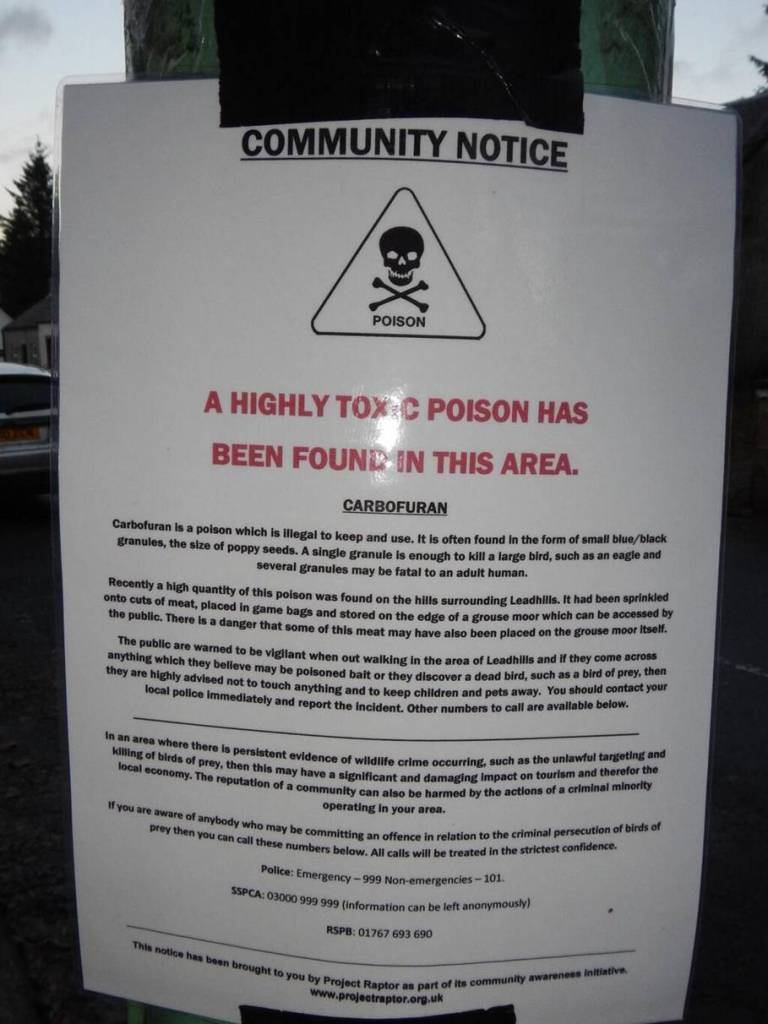
Leadhills village in South Lanarkshire has been saturated with a series of ‘poison awareness’ leaflets and posters, alerting the local community to the discovery of highly toxic (and illegal) poison on the surrounding hills earlier this year (see here). The poster warns the public of the dangers of coming in to contact with this poison (Carbofuran) and also provides contact telephone numbers (police, SSPCA and RSPB) if anyone finds any more or has information about who might be putting out the poison.

Is this community initiative the work of a local estate? Or the local police? Or the local council? Or PAW Scotland? Nope, none of the above. It’s the handiwork of Project Raptor.

It’ll be interesting to see how long the posters and leaflets remain on display. Last year we blogged about the mysterious disappearance of another sign at Leadhills (see here).

PR Leadhills flyer


No prosecution for poisoned baits found on Leadhills Estate?

leadhills estateEight months ago (March), a significant haul of pre-prepared poisoned baits was discovered on Leadhills Estate in South Lanarkshire. The baits comprised chopped up pieces of rabbit, liberally sprinkled with the banned poison Carbofuran, that had been placed inside two gamebags that had been hidden inside a wood next to a grouse moor.

The discovery was made by fieldworkers from Project Raptor and they duly reported their finding to the police. We waited for a press release and an appeal for information from the police but nothing came, so three months later (June) we blogged about it (here) because, unlike the police, we considered it a newsworthy item in the public interest, as apparently did BBC Scotland (here).

Recently, an update on the police investigation appeared on Project Raptor’s website:

24th October 2013. Project Raptor have contacted South Lanarkshire police and they have now informed us that evidence gathered from the two game bags has come back negative. This means that unless further evidence comes their way then this case is just another in a long line of wildlife crimes that have taken place within the Leadhills area over the years that will never be solved”.  See here for full update.

When Project Raptor says that ‘evidence gathered from the two gamebags has come back negative‘ they do not mean that the analysis of the poison came back negative – SASA has already confirmed the poison found on those baits was Carbofuran and they included the incident in their quarterly report on poisoning incidents. Rather, what we think Project Raptor is referring to is that any fingerprint or DNA testing that might have been done on the two gamebags has come back negative.

This means that there is no evidential link between the two gamebags and any individual person and therefore it is not possible to charge anyone for committing an offence in relation to these items.

This case is an excellent example of just how difficult it is to bring illegal poisoners to justice. It’s not the fault of the police that there isn’t enough evidence, although to be frank they are not blameless in this particular situation – had they had the foresight and interest to install a covert camera overlooking the site where the poisoned baits had been found they may well have caught the criminal(s) in the act of retrieving the bait or even adding more bait to the secret stash. They could (should) also have conducted a thorough search of the surrounding area, particularly the adjacent grouse moor, to see whether any of the baits had already been placed out on the hill. Given that one of the bags was full (of bait) and the other bag was only half-full, this would have been a reasonable assumption, especially given the reported history of poisoned baits being found on this estate (see here). Instead, the police decided to arrive on site in two marked police vehicles (thus alerting everybody to their presence and allowing any nearby criminal to hide any other incriminating evidence) and they quickly removed the gamebags and left the site without conducting a wider search. On top of all that, they still have not issued a press release about this case, giving us the impression that they’re just not all that bothered. At the very least they should be alerting the general public to the potential threat of people and their pets stumbling across what is a fatally toxic poison in a publicly-accessible area.

So is that it, then? Will the discovery of these baits (which we believe to be the biggest stash of pre-pared baits found since 32 poisoned baits were found on Glenogil Estate in 2008) just be conveniently ignored and everyone carries on as usual? For certain, these baits will not feature in any ‘official’ raptor persecution statistics because, as we were recently told by the Environment Minister’s office, where poisoned baits have been discovered but ‘no raptors were involved’ they cannot be listed as a raptor persecution incident. We don’t actually know whether ‘no raptors were involved’ at Leadhills because the police didn’t conduct a search to look for poisoned carcasses!

It looks certain that no action will be / can be brought in the criminal courts. But what about other types of action?

There’s the possibility of civil action – we will wait to see whether any single farm payments are withdrawn from Leadhills Estate by the Scottish Executive (as they were from Glenogil Estate in 2008 – see here) although we suspect any such action would be strongly challenged by the estate precisely because there is no evidential link between the baits and any employee of Leadhills Estate.

Great, isn’t it?

Is there any other type of action? Well, yes, there is. What we would really like to see is action taken by Scottish Land and Estates, the representative body of Scottish landowners. The only response we saw from SLE about the discovery of the poisoned baits on Leadhills Estate was a false accusation levelled at this blog for reporting the incident! (see here).

Interestingly, in a comment made on Mark Avery’s blog today, SLE Chief Executive Doug McAdam claims, “…..a range of partners, Scottish Land and Estates included, invest a significant amount of time and resource into working with and through PAW Scotland to help achieve this [eradication of golden eagle persecution], not just for golden eagles though, but all wildlife crime” (see here for his full comment).

So what, exactly, has SLE done about the continuing issue of alleged and confirmed illegal raptor persecution on Leadhills Estate? We’ve asked this time and time again but the question is just met with silence every time.

We’re not sure that Leadhills Estate is a member of SLE, although given that the owner of Leadhills Estate (Lord Hopetoun) also just happens to be a Board member of SLE, it would be quite strange if Leadhills Estate wasn’t an SLE member. Why doesn’t SLE publicly condemn the crimes that are alleged and confirmed at Leadhills Estate? If Leadhills Estate is an SLE member, why hasn’t SLE kicked them out, just as they did with Glasserton Estate earlier this year following the conviction of their gamekeeper (see here). McAdam may argue that nothing has been proven at Leadhills in relation to the latest discovery (in terms of a legal evidential link) and that would be accurate, but there is a long, long, long, long list of alleged and confirmed incidents from this estate, dating back decades (see here), several of which have resulted in criminal convictions.

It seems to us that SLE is repeatedly turning a blind eye to reported activities on this estate that the rest of us can see very clearly. Why would they do that if they’re so keen to eradicate raptor persecution?

Benyon given the boot

Some good news! Richard Benyon MP, the DEFRA minister, has been booted out in today’s Government reshuffle. He now returns to the back benches, presumably with more time to pursue his ‘sporting’ interests on his grouse moor in Scotland and his pheasant shoot estate in Berkshire.

Benyon had been in post at DEFRA for just over three years, with special responsibility for biodiversity and the natural environment, amongst other things (see here).

He is best known to us for being in office when a buzzard ‘management’ trial was sanctioned in 2012 (see here) which DEFRA almost got away with until public opinion forced a speedy government u-turn (see here).

Benyon also refused to criminalise the possession of the banned poison Carbofuran in England (see here) and didn’t see the need to introduce vicarious liability in England, but instead applauded gamekeepers “for the wonderful work they do in providing excellent biodiversity across our countryside” (see here).

Good riddance.

Why we don’t trust the National Gamekeepers’ Organisation

A few days ago, Charles Nodder, Political Advisor to the National Gamekeepers’ Organisation (NGO), wrote on this blog:

You should regard us [the NGO] as a key part of the solution [to stamping out illegal raptor persecution], not part of the problem. An organisation to be supported, not attacked”.

The thing is, in order to support an organisation there first needs to be a level of trust. It’s very hard for us to trust the NGO, and here’s why…

Until recently, we were under the impression (mistakenly, as it turns out) that the NGO wouldn’t tolerate any illegal gamekeeping activity and if any of their members were convicted of such an offence, they would be expelled from the organisation. This is what the NGO wants us all to believe, as outlined in their own Disciplinary Code, as published on their website.

However, it would now appear that the NGO does, in our opinion, tolerate some illegal gamekeeping activity. This has only come to light because we discovered that the NGO member who has been applying for licences to kill buzzards (and now sparrowhawks too) was recently convicted for being in possession of several banned poisons, including Carbofuran, the most common poison used to illegally kill birds of prey. We have now discovered that the NGO member, who we have called Mr Buzzard Licence Applicant, was not booted out of the NGO following his conviction for a wildlife crime that is closely linked with the illegal poisoning of birds of prey. Not only was he not booted out, but the NGO then actively supported this member by helping him to apply for his buzzard and sparrowhawk-killing licences.

When challenged about this, Mr Nodder provided some fascinating responses on this blog (see here). Before we take a closer look at those responses, we would first like to acknowledge Mr Nodder’s willingness to engage in conversation on this blog. That’s to his credit; there are many others within the game-shooting industry who have repeatedly refused to engage with us, citing excuses such as, “We don’t communicate with anonymous individuals” but who then go on to complain that we publish articles without giving them the right to reply!! Quite an astonishing response given today’s world of multi-media and social networking communications. A missed opportunity for them, but not really that surprising when you consider that many of them are still hanging on to other 19th Century ideals.

Anyway, back to that NGO policy of supposedly not tolerating any illegal gamekeeping activity.

To begin with, Mr Nodder tried to claim that “The possession of a banned substance [and remember we’re talking here about banned poisons that are routinely used to illegally poison wildlife] is quite clearly a possession offence and not an offence against wildlife”. We were astounded by this comment. There are many, many examples of ‘possession’ offences that are inextricably linked to wildlife crime. Here are just a few examples:

  • Possession of a dead red kite (see James Rolfe case).
  • Possession of 10.5kg of the banned poison Carbofuran (see Dean Barr case).
  • Possession of the banned poison Carbofuran (see Cyril McLachlan case).
  • Possession of wild birds eggs (see Matthew Gonshaw cases).
  • Possession of an illegal pole trap (see Ivan Crane case).
  • Possession of a wild bird (see Craig Barrie case).
  • Possession of live & dead birds for trade/taxidermy (see Gary McPhail case).
  • Possession of the banned poison Alphachloralose (see David Whitefield case).
  • Possession of the banned poison Carbofuran (see Tom McKellar case).
  • Possession of wild birds (see Cogoo Sherman Bowen case).
  • Possession of the banned poisons Carbofuran, Strychnine and Alphachloralose (see Peter Bell case).
  • Possession of wild birds eggs (see Keith Liddell case).
  • Possession of the banned poison Sodium Cyanide (see William Scobie case).
  • Possession of dead wild birds (see Luke Byrne case).
  • Possession of the banned poisons Carbofuran and Alphachloralose (see Graham Kerr case).

In many of these example cases, poisoned and/or other illegally killed raptors were also discovered. Indeed, in many cases it is the discovery of these poisoned animals that then leads on to a police investigation and search that then leads to the discovery of a stash of banned poisons. Quite often, as we all know, the subsequent charges that are brought do not often include charges for actually poisoning the wildlife, but instead the charges relate to the ‘lesser’ (in legal terms) offence of ‘possession’, either due to plea bargaining or due to lack of evidence needed to secure a conviction for the actual poisoning of a wild animal. It stands to reason that the actual poisoning of wildlife is inextricably linked to the possession of banned poisons; in order to poison wildlife, the criminal obviously first has to be in possession of the poison to carry out the act of poisoning.

The National Wildlife Crime Unit defines the possession of a banned poison as a wildlife crime – the Unit often publicises convictions for the possession of banned poisons in its reports. The Scottish Government also defines convictions for possession of banned poisons as wildlife crime – indeed, this is one of the offences that can trigger a prosecution under the new vicarious liability legislation, brought in specifically to address the continuing illegal persecution of raptors. The Crown Office considers possession of banned poisons as a wildlife crime because its specialist wildlife prosecutors take on these cases. The Partnership for Action against Wildlife Crime (PAW, of which the NGO boasts membership) also considers possession of banned poisons a wildlife crime – they, too, publicise ‘possession’ convictions in their newsletters.

So why is it that the National Gamekeepers’ Organisation doesn’t accept possession of banned poisons as a wildlife crime? And if they don’t, why the hell are they allowed to participate in the Raptor Persecution Wildlife Crime Priority Group? Surely that group has been established to find ways of stamping out illegal raptor persecution, but how can it achieve that if one organisational member refuses to expel members who have been convicted of a serious wildlife crime? It makes a mockery of the whole group and does absolutely nothing to instill public confidence in the sincerity of the process.

Mr Nodder’s next explanation for why Mr Buzzard Licence Applicant wasn’t booted out of the NGO was to suggest that possession of a banned poison was not a ‘gamekeeping activity’. On the contrary, if Mr Nodder took the time to look at the conviction statistics (publicly available to those who want to look) he would notice that the significant majority of those convicted for possession of banned poisons are gamekeepers, and that trend has continued for many years. In the case of Mr Buzzard Licence Applicant, his stashes of banned poisons were found in his work vehicle and inside one of his pheasant pens. There’s simply no denying it, unless of course you happen to be the NGO, trying to justify why you haven’t stuck to your stated Disciplinary Code and expelled a member for his criminal conviction.

And what sort of message does this policy send to other NGO members? ‘Don’t worry if you get caught in possession of banned poisons, we won’t kick you out of the club’. It makes you wonder what the law-abiding members of the NGO feel about this policy. If you were a law-abiding member (and there must be some, surely), would you want to be a member of a group that welcomed those with a criminal conviction related to banned poisons? If the NGO doesn’t distinguish between criminal and law-abiding members, why should we?

The third argument Mr Nodder used to try and get us to drop what must be quite embarrassing questions was to pull out the old ‘It’s a spent conviction so we can’t discuss it’ routine. Nice try, but in this case, wholly inapplicable. The legislation that prevents publication of so-called ‘spent convictions’ is the Rehabilitation of Offenders Act 1974 (see here for a good explanation). Its basic premise is that after a period of x years of rehabilitation (depending on the type of crime committed – in this case, five years), the conviction can be ignored and need not be divulged (with one or two exceptions). If somebody does then publish information about the conviction, they may be subject to libel damages, but only if the primary motive of publishing the information was malicious. In this case, seeing as though we haven’t named Mr Buzzard Licence Applicant, even though we’ve had lots of opportunity to do so (and indeed our own received legal advice was that we could name him), it would be extremely difficult, if not impossible, to demonstrate that we are acting in malice (against him as an individual) by discussing his spent conviction because he hasn’t been identified as a named individual. Our primary motive for discussing this case has been to (a) examine the Natural England/DEFRA policy that allows convicted wildlife criminals to apply for licences to kill protected species (see earlier blogs on this), and (b) to examine the sincerity of the NGO’s claims that they won’t tolerate any illegal gamekeeping activity and will expel any member with such a conviction.

And while we’re on the subject of the Rehab of Offenders Act, we’ve made a very interesting observation. Certain professions are exempt from the Act, so that individuals are not allowed to withhold details of previous convictions in relation to job applications. These professions include teachers, social workers, doctors, dentists, vets, accountants etc. But interestingly, also included are “Employees of the RSPCA or SSPCA whose duties extend to the humane killing of animals”. Now then, it is beyond question that the duties of gamekeepers ‘extend to the humane killing of animals’. They probably kill (legitimately) more animals on a daily basis than all the RSPCA and SSPCA employees put together. So why are gamekeepers not included in this list of exemptions? Why should a gamekeeper be able to hide past wildlife crime convictions but an RSPCA/SSPCA employee cannot? That’s a question for the policy makers…

In summary then, in our opinion the NGO’s stated claim that they don’t tolerate any illegal gamekeeping activity is not convincing. They don’t view the possession of a banned poison as a wildlife crime and a conviction for possession of a banned poison is not enough to warrant expulsion from the NGO, even when that poison just happens to be the most commonly used substance to illegally kill birds of prey. It doesn’t matter to us how many wildlife crime groups the NGO has joined – in our view this is just a convenient shield for hiding true intentions – we don’t trust them and will continue to view them with suspicion until they start to back up their stated claims with convincing actions.

Buzzard licence applicant tries for four more licences

The #Buzzardgate saga continues. Mr Buzzard Licence Applicant (the one who successfully applied for licences to destroy buzzard nests and eggs to protect pheasants earlier this year – see here) has applied for four more licences, this time to kill (by trapping and shooting) 16 buzzards and three sparrowhawks.

The details of these latest applications (well, heavily-redacted versions) have only been revealed after the RSPB again applied under FoI for the information from Natural England. The RSPB’s Conservation Director, Martin Harper, has published these redacted applications and has written a good blog about them (see here). Well done to the RSPB, and particularly to Jeff Knott (who wrote the FoI requests) and to Martin for publishing the results.

This time, Natural England rejected all four applications.

There are a number of issues that are a cause for serious concern, not least the secrecy of the full application material – given the huge public interest in this issue, and the potential for setting precedents that would allow other licences to be issued, the details should be available for public interest and scrutiny, not redacted under heavy black ink. Martin writes eloquently about this in his blog.

But what interests us the most is the involvement, again, of the National Gamekeepers’ Organisation (NGO). The latest licence applications were again made by the NGO “on behalf of our member”. We have blogged extensively about Mr Buzzard Licence Applicant and our strong suspicions that he has a recent conviction for possession of banned poisons, including the gamekeepers’ so-called ‘poison of choice’ – Carbofuran (e.g. see here).

Why do we have these suspicions? Well, we know Mr Buzzard Licence Applicant’s real name, and we know that someone with the same name, working as a gamekeeper, in the same region, was convicted for possession of banned poisons. There is a very slim chance, of course, that it is purely a coincidence that Mr Buzzard Licence Applicant shares the same name, occupation and location as the convicted criminal, but there is also every chance that these two people are one and the same.

According to the NGO’s disciplinary policy (available on their website, see here), they ‘automatically condemn any illegal gamekeeping practice’ and ‘In circumstances where an NGO member is convicted in court of a wildlife crime, that person’s membership will automatically be suspended forthwith, pending the decision of the NGO National Committee. The National Committee will at its next meeting decide, in the light of the court’s findings,…..whether the suspended member shall be expelled or re-admitted”. We and many of you (thank you) emailed the NGO after the first buzzard licence had been issued, seeking clarification about whether Mr Buzzard Licence Applicant was a member of the NGO or whether he had ever been previously suspended. The NGO responded with complete silence.

A few days ago, the NGO’s Political and PR Advisor, Charles Nodder, wrote a comment on this blog concerning another convicted gamekeeper (Andrew Knights). Mr Nodder wrote to advise us that he could find no record of Andrew Knights ever being a member of the NGO (see here). We again asked Mr Nodder for clarification about whether Mr Buzzard Licence Applicant had a previous conviction for wildlife crime and if so, how that fitted in with the NGO’s claimed stance of zero tolerance of illegal acts?

Mr Nodder replied: “Sorry but I am not sure what you are getting at here. The NGO is for best practice and against law-breaking. Is that not clear? Please understand that not all people calling themselves ‘gamekeepers’ are members of the NGO.

This website is implacably against raptor persecution and so too is the NGO. We are members of the Partnership Against Wildlife Crime and active participants in the Raptor Persecution Wildlife Crime Priority Group. We supported and publicised the official maps produced earlier this year showing where birds of prey had been confirmed poisoned.

So far as I know, only two members of the NGO (out of 16,000) have ever been convicted of crimes against raptors have both been publicly condemned on conviction and chucked out. The organisation’s disciplinary policy and unequivocal statement opposing raptor persecution are on the NGO website.

The NGO, and the firm stance it is taking on this subject, can probably achieve more in cleaning up game management practice and encouraging people to follow legal routes than any amount of sniping from the sidelines. You should regard us as a key part of the solution, not part of the problem. An organisation to be supported, not attacked.

And on the buzzard licence applicant, we cannot comment on spent convictions any more than you but I can assure you that he has never been convicted of any crime against wildlife”.

It would seem Mr Nodder has chosen his words carefully, but not carefully enough. You see, possession of banned poisons IS considered a wildife crime and in England, this crime can be prosecuted under the Wildlife & Countryside Act 1981. Or perhaps the NGO don’t consider the illegal possession of banned poisons (usually used to illegally poison wildlife) a legitimate wildlife crime?

So, back to the same question. Is the National Gamekeepers’ Organisation harbouring a convicted criminal amongst its membership? And if so, why is the National Gamekeepers’ Organisation allowed to serve on various wildlife crime committees (e.g. PAW and the Raptor Persecution Wildlife Crime Priority Group)? The legitimate members of these committees should be asking the NGO for clarification and transparency on this issue.

What’s the point of sitting around a table to discuss ways to resolve raptor persecution crime if one of those groups is representing someone with a conviction for wildlife crime? Come on RSPB and the other members of the Raptor Persecution Wildlife Crime Priority Group, ask them the bloody question!

We can also ask them the question: Email to – cnodder@msn.com and info@nationalgamekeepers.org.uk

Dear Charles Nodder/NGO, does Mr Buzzard Licence Applicant, an NGO member whose application to kill buzzards and sparrowhawks you are supporting, have a previous conviction for possession of banned poisons? If so, how does this fit in with the NGO policy of zero tolerance of illegal gamekeeping activities? Thanks.

By the way, we’re still waiting for a response from the Information Commissioner about whether Natural England can refuse to release the name of Mr Buzzard Licence Applicant because they believe it’s in the public interest to keep it secret (see here). We’ll report on that when we’ve had a response.