Kim Jong-il is dead but the art of propaganda lives on

North Korean despot Kim Jong-il may be dead but the art of propaganda is alive and kicking here in the UK. A fine example of this is displayed in the latest [January 2012] edition of Modern Gamekeeping, the monthly rag for UK gamekeepers, where there are more calls for the introduction of licences to cull raptors.

It begins in the editorial at the front. Peter Carr dedicates a whole page to the issue of raptor persecution, starting off with condemnation of illegal raptor poisoning [good], but quickly moving on to ‘justify’ the need for legal raptor culling [not so good]. Part of this ‘justification’ includes the following statement:

Buzzards, sparrowhawks, goshawks, hen harriers, and tawny owls are the raptor species that cause us the most problems, though the little owl’s destructive power should not be discounted. All are doing well in most areas of the UK…

Oh dear. But when did facts ever get in the way of 100 year-old anti-raptor propaganda? And here is evidence, should any more be needed, that gamekeepers will not stop at licensed buzzard killing. Sparrowhawks, goshawks, tawny owls and little owls are all apparent targets, and hen harriers too, if they can find any left to kill.

Carr goes on to rally the troops, calling for more strenuous lobbying and “the need for a sensible balance in our countryside“. Presumably that ‘sensible balance’ includes the continued annual release of 40+ million non-native gamebirds into our countryside  and the (mis)management of our uplands to produce artificially-high densities of red grouse, all to the detriment of any native predators that share the habitat?

His editorial ends with this: “Raptor control licences will come, but we must hasten the process with valid argument and an impeccable record of keeping our own house in order“. If these two premises are the ones that will dictate whether raptor culling licences are issued, then conservationists need not fear that they’ll be issued any time soon.

The propaganda continues later in the rag….more on this in the next post…

Festive SGA chairman still pressing for buzzard licensing

In his festive review of the year, Scottish Gamekeepers’ Association chairman Alex Hogg talks about rabbit killing, “positive messages” and tools in tool boxes (I’m sure no irony was intended). He ends his blog with this statement:

We are also urging government to look again at the buzzard licensing. I strongly believe that Scotland’s wildlife would benefit enormously if the powers that be could make a start in managing our biodiversity rather than protecting it all the time!”

Lest we forget, the SGA also believes that “professional gamekeepers don’t poison raptors” and wonders, “will these very large creatures [sea eagles] differentiate between a small child and more natural quarry?” Not the sharpest tools in the toolbox, perhaps.

We’ve previously covered the issue of licences to kill raptors, extensively, including earlier attempts by both the SGA and Scottish landowners’ organisations (e.g. see here and here and links within) to persuade the government (and the general public) that these licenses are necessary. Fortunately, so far, these attempts have been thwarted, and not least because the criminal persecution of raptors continues with impunity within the game-shooting industry. No doubt we’ll be re-visiting this issue throughout 2012.

Alex Hogg’s festive SGA blog here

Norfolk estate gamekeeper guilty of animal cruelty

Here’s another example of the fine work of a ‘professional’ gamekeeper. This was published in the Norwich Advertiser yesterday:

A Norfolk gamekeeper was told today he could be sent to prison after admitting causing a fight between two dogs and a fox.

Christopher John Carter, 49, of The Burrows, in Gayton Thorpe, pleaded guilty at King’s Lynn Magistrates’ Court to causing the fight between the animals in July 2009.

Appearing alongside Carter was Luke James Byrne, 19, of Mill Houses, King’s Lynn, who admitted causing three animal fights on Westacre Estate.

The 19-year-old also admitted possessing three dead wild birds, a heron, cormorant and a buzzard, in King’s Lynn.

Jonathan Eales, prosecuting for the RSPCA, showed magistrates video footage, recorded by Byrne, of the fights which saw dogs attacking animals trapped in a snare. The first clip showed a fight between Byrne’s dog and rat which took place on June 20, 2009. The other videos showed Carter’s two dogs attacking a fox on July 2, 2009 and a fight between one of Carter’s dogs and a fox on June 15, 2010.

Mr Eales said: “In March this year, a woman purchased a mobile phone from Mr Byrne’s parents. The phone had been used by Mr Byrne and had a video clip on it of one of these fights. The woman was so shocked by what she saw that she reported it to the RSPCA which then investigated it. The investigating officer then took possession of Mr Byrne’s father’s laptop and two further video clips were found.”

During each of the videos, Byrne can be heard laughing as the fights took place and encouraging the dogs to attack. He can also be heard screaming “kill it” repeatedly and during the second video, Byrne says: “Well, that didn’t last very long”.

Mr Eales continued: “A number of pictures were also found on Mr Byrne’s father’s laptop of dead animals – three of which were dead wild birds. The conclusion was made that he must have been in possession of these birds to take pictures of them and he has pleaded guilty to these charges.”

Mr Eales told the court Carter is a gamekeeper and that Byrne had done work experience with him but added they had known each other for a long time.

He continued: “When these matters were discovered, both men were interviewed. At first, Mr Byrne denied having any involvement in or knowledge of these matters but after being shown the video clips, he made a no comment interview. Mr Carter didn’t make any admissions until the videos were shown to him but he did assist us in relation to the other two clips which he wasn’t involved in. Mr Carter gave no reason why he thought these things had happened. He said he had no excuse for it and said he knew what had happened was against the law. He also said he was ashamed of himself.”

Mr Eales asked magistrates to consider depriving the two men of ownership of the dogs and told the court these dogs would then be re-homed by the RSPCA. Carter’s two dogs are currently in the care of the RSPCA but Byrne’s dog remains at his home address.

Mr Eales also asked magistrates to consider whether or not to disqualify both men from owning animals for a short period or for life.

James MacWhirter, representing Byrne, asked magistrates to put off sentencing his client until a pre-sentence report had been carried out by the probation service. But Malcolm Savory, representing Carter, urged magistrates to deal with his client and told them he could produce plenty of character references for Carter.

He also appealed to the magistrates to take into account the fact the video footage relating to his client lasted 30 seconds but in the other cases the RSPCA bring to court, the suffering can go on for “minutes, days weeks, months or sometimes years”.

Lead magistrate Paul Kidd asked for all-option pre-sentence reports to be prepared for both men, including possible custodial sentences.

The two men will return to King’s Lynn Magistrates’ Court on January 11 to be sentenced.

Source article at Norwich Advertiser here

If anyone wants to find out whether Christopher John Carter is a member of the National Gamekeepers Organisation, send an email to: info@nationalgamekeepers.org.uk

Congratulations to the RSPCA and the Crown Prosecution Service.

Convicted poisoner (gamekeeper) is a member of SGA

There’ll be some red faces at the SGA today. After all the proclamations of Alex Hogg, Chairman of the Scottish Gamekeepers Association, who is on record as saying, “Professional gamekeepers do not poison raptors” (see here), it turns out that the gamekeeper David Alexander Whitefield, who today was convicted of poisoning four buzzards (see here), is a member of the SGA!!

The SGA has issued a statement after today’s conviction, that says Whitefield’s membership will be suspended with immediate effect (see here). This is welcome, if belated, news. But why wasn’t his membership terminated after his earlier conviction for wildlife offences in 2008? Or is membership only terminated after a conviction for poisoning, as opposed to other types of wildlife crime?
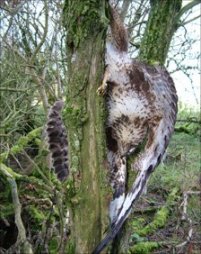
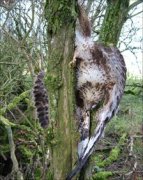
Previously convicted gamekeeper guilty again

A previously convicted gamekeeper has today admitted to poisoning four buzzards with Alpha-chloralose laced baits. At Lanark Sheriff Court, David Alexander Whitefield (45) of Coulter, near Biggar in Lanarkshire, pled guilty to the offences that took place between March and November 2009 at Culter Allers Farm, near Biggar, where Whitefield was employed as the sole gamekeeper for pheasant and partridge shooting. He has reportedly blamed his employer (the landowner), whom Whitefield claims told him to reduce the number of buzzards.

In addition to the four poisoned buzzards found on the shooting estate, a large quantity of Alpha-chloralose was found inside unlocked outbuildings, some of it inside a coffee jar – this extremely hazardous poison could have easily been mistaken for sugar or powdered milk by an unsuspecting visitor. Culter Allers is a popular area for walkers and it is fortunate indeed that no person or pet was poisoned. The buzzards were not so lucky.

This case has been in the works for some time, first reported a year ago and then delayed for legal technicalities (see here, here and here). Sentencing for his latest conviction has been deferred for background reports and will take place in early January. We will watch with great interest.
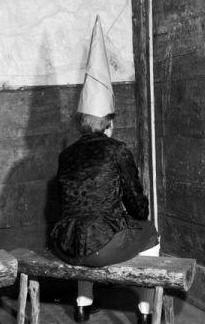
Whitefield’s previous convictions include failing to ensure the welfare of a buzzard and possession of a buzzard. These offences took place at Culter Allers and he was convicted at Lanark Sheriff Court in September 2008. He received a pathetic £300 fine (see here). Just six months later he was poisoning buzzards. At the time of the first conviction (Sept 2008), he was reported to be a self-confessed member of the Scottish Gamekeepers Association. It is not known if he was a member of the SGA at the time of the buzzard poisoning incidents (March-Nov 2009) or whether he is still a member – you can find out by emailing info@scottishgamekeepers.co.uk

Congratulations to the SSPCA for leading this case and for securing a conviction. Let’s hope the Scottish parliament takes heed next year when they’re consulting on extending the powers of the SSPCA for the investigation of wildlife crime.

STV news story about Whitefield’s latest conviction here

BBC news story here

Lessons in eagle ecology part 2

Hot off the press from the team who brought you Eagles Could Eat Children (see here), this month’s lesson is all about Why Eagles Don’t Nest on Grouse Moors.
Contrary to the endless scientific papers that show unequivocally that eagles (and lots of other raptor species) are absent from many upland grouse moor areas in the UK due to high levels of persecution, the Scottish Gamekeepers Association has today informed us of the real reason they’re absent:

Many grouse moors do not have the isolated nesting habitat which is required by eagles so it should come as no surprise they don’t nest there“.

Strange then, that there are ‘many’ (see quote below) unoccupied eagle nesting territories in Scotland where eagles are known to have bred historically, and that these old nest sites just happen to be on land that is managed for red grouse shooting! Here’s a quote from the Golden Eagle Conservation Framework Report that was published by Scottish Natural Heritage in 2008 (available here) –

The most serious failures to meet favourable conservation status tests were in Natural Heritage Zones in the central and eastern Highlands where less than half of all known territories were occupied. Based on the production of young golden eagles, the populations in these regions should be expanding markedly, but instead they continue to decline (there was a loss of 15 occupied territories between 1992 and 2003, and 86 vacant territories by 2003). This indicates, in the absence of any evidence for emigration, that survival of subadult and/or adult birds is low“.

It’s also strange that before the sentence about ‘many grouse moors do not have the isolated nesting habitat required by eagles’, the SGA tells us this: “A large portion of all eagles fledging takes place on grouse moors across Scotland“. Eh? How can that be, if the habitat ‘isn’t there’?

The SGA article continues with some name-calling (and this from the group who have recently complained to the Scottish Government about how they were being portrayed!) and then some partly-accurate but mostly inaccurate information about siblicide amongst eaglets, before getting in another dig at the Irish Golden Eagle Reintroduction Project (yawn). This all builds up to a grand finale where we’re told:

If you were to read all the media reports you could be forgiven for thinking that raptors only breed safely on reserves. The truth is there are possibly 500’000 raptors in the UK and 350’000 of them will be breeding successfully on land used for game sport shooting of some kind. This fact is completely ignored by those attempting to take the moral high ground“.

Hmm, I’d be really interested to see the data that this “fact” is based upon. Especially in light of the recently published scientific paper (see here) that shows, again unequivocally, that peregrines nesting on grouse moors in northern England are 50% less successful than peregrines that breed on non-grouse moor habitat.

Interestingly, the SGA article makes no comment about the poisoned buzzard and poisoned bait that was found on Glenlochy Estate and was reported in the media two days ago (see here). The SGA wouldn’t be trying to deflect attention from yet another disgusting and illegal poisoning incident, would they?

SGA article here

Poisoned buzzard found near poisoned bait on Glenlochy Moor

Northern Constabulary has today issued a warning to dog walkers in the Strathspey area after a distressed buzzard was found near a poisoned bait on Glenlochy Moor. The buzzard and grouse bait were found in late September in the Haughs area above Cromdale, and the bait was sent for toxicology testing. The results showed that it had been laced with the banned pesticide Aldicarb. The buzzard apparently recovered and was later released.

This is not the first time poisoned baits and birds have been discovered in this area, which is well known for its driven red grouse moors. Some previous incidents include (but are not limited to) the discovery of a poisoned buzzard and a red kite in 2005 – they had been killed by the banned pesticide Carbofuran. No charges were brought (see here). In 2008, a high-profile police raid was carried out on Glenlochy Moor after the discovery of poisoned buzzards and red kites, and poisoned baits (see here). No charges were brought. In May this year, a poisoned buzzard was discovered in the nearby area – it had been killed by Carbofuran and Aldicarb (see here). We are not aware of any charges being brought. And now this latest incident in September 2011. Hmmm. Anyone else seeing a pattern?

Northern Constabulary are to be congratulated for (a) releasing a press release to warn the general public in the area of the dangers of these lethal pesticides and (b) naming the estate where the poison was found. This is a great improvement on some of their recent responses to alleged persecution incidents in their region. However, an earlier press release would have been better, even if they just suspected that poison was present – rather than waiting for six weeks before the test results came back. West Yorkshire police managed to do it earlier this year (see here) – it should be standard practice for all police forces, unless of course they intend to launch an imminent police raid and don’t want to alert the suspects. Nevertheless, we still do applaud this action by Northern Constabulary and welcome their increased interest in illegal raptor persecution in their area. Well done.

Northern Constabulary press release here

BBC News article here

Red kite and buzzard poisoned in Ireland

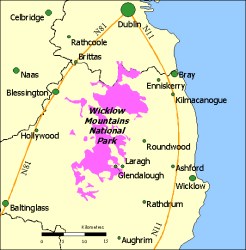
Meanwhile, back in the real world, an article in the Wicklow People yesterday says that a red kite and a buzzard have been found poisoned in County Wicklow, Ireland.
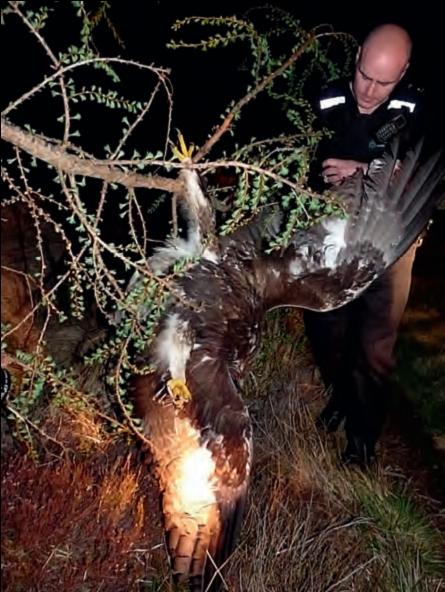
The red kite was found by a member of the public and handed in to the National Parks and Wildlife Service headquarters at  Wicklow Mountains National Park. It was sent to the State Veterinary Laboratories at Cellbridge where it was confirmed it had been poisoned. The article does not say when this happened, nor does it name the poison used. [Update: we have since been informed by the Golden Eagle Trust that alphachloralose was used in both incidents].

A buzzard was reportedly found in the same area and the article states it was poisoned with Alphachloralose.

Red kites have been recently reintroduced as part of a pioneering project to bring back native raptors to Ireland. The Golden Eagle Trust has been reintroducing red kites, as well as golden eagles and white-tailed eagles. Part of their project has included a high-level campaign to raise awareness about the use of poisoned baits.

Article in the Wicklow People here

Golden Eagle Trust website here

RSPB’s Birdcrime 2010 report published

The RSPB has published its annual report on raptor persecution in the UK (Birdcrime 2010). Poisoning reports are down (128 reported in 2010; 153 reported in 2009). Birds confirmed poisoned in 2010 include:

20 red kites, 30 buzzards, 8 peregrines, 5 golden eagles, 2 goshawks, 1 sparrowhawk and 1 white-tailed eagle.

Meanwhile, the RSPB are using the publication as an opportunity to call for a crackdown on poisons, according to the BBC website. It says the current law, which makes it illegal to possess certain pesticides, is rendered ‘impotent’ because the list of controlled substances hasn’t been published in England, Wales and Northern Ireland.

We’ll write more about the Birdcrime 2010 report over the coming few days. BBC news article here. Birdcrime 2010 report here


Latest SASA figures show illegal raptor poisoning continues in Scotland

Well finally, on behalf of the Scottish Government, SASA (Science and Advice for Scottish Agriculture) has published the poisoning figures from the second quarter of 2011 (covering the period from April to June), and guess what? More raptors were illegally poisoned during this period. Seems a bit of a coincidence that these figures have been published four months late and on the very day that people were encouraged to make a Freedom of Information request to SASA to obtain the 2011 poisoning data. Nevertheless, the publication of these data is still welcome and provides us with cold hard facts about the continuing illegal poisoning of our native species.

The latest report shows that there were three confirmed ‘abuse’ incidents during this period, including:

April 2011: 1 x buzzard poisoned by Aldicarb & Carbofuran (Highland region)

May 2011: 1 x raven poisoned by Carbofuran (Dumfries & Galloway)

May 2011: 1 x red kite poisoned by Bendiocarb & Carbofuran (Highland)

All three incidents are reported to be the subject of on-going police investigations. How many of these were reported in the media at the time of the incidents? These latest figures can now be added to the figures from the first quarter (Jan – Mar 2011 – see here) to show that in the first half of this year the following  have been confirmed poisoned by illegal pesticides:

4 x buzzards; 1 x golden eagle; 2 x red kites; 2 x peregrines; 1 x raven.

And of course these are only the ones that have been discovered. And the figures do not include all the other incidents of non-poisoning persecution reported this year (e.g. shot goshawks here, shot peregrine here), nor the suspected poisoning incidents that were not included in the earlier SASA report (see here), nor the birds reported to have been poisoned since June (e.g. see here). It is clear that the widespread problem of illegal raptor persecution still exists, despite the (now apparently premature) comments from the game-shooting industry that this criminal behaviour has been eradicated. It clearly hasn’t been eradicated, but have the numbers dropped? Given the chronic delays in reporting these incidents in the media, we’ll have to wait for the next two SASA reports before that assessment can be made.

I wonder how long will we have to wait until the figures from the 3rd quarter (July – Sept) are released? If their publication is as late as this current one, we can expect to see them in four months time (February 2012). Perhaps that FoI request is still worth pursuing after all..

Latest SASA figures available for download here.