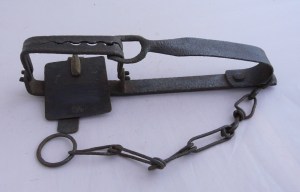
Update on convicted gin trap gamekeeper James O’Reilly

A few updates on some of the questions we asked yesterday following the conviction of Scottish gamekeeper James O’Reilly (see here)….

1. We asked the Cardross Estate whether O’Reilly was still employed as a gamekeeper on their estate. They have issued the following statement:

CARDROSS ESTATE REFUTES WILDLIFE CRIME ALLEGATIONS

(Issued on behalf of Cardross Estate)

Cardross Estate today issued the following statement after the conviction and sentencing of a gamekeeper at Stirling Sheriff Court on offences under the Wildlife and Countryside Act, 1981.

Sir Archie Orr-Ewing, owner of Cardross Estate, said: “The reputation of the estate has been unjustly tarnished by the publicity around these court proceedings. The estate does not have any involvement whatsoever in the sporting management of the land in question. The area of land where these offences occurred is let on a long-term lease to a third party who has full rights and responsibilities for the management of sporting activity. The gamekeeper is employed by the third party and has never been employed by the estate.

“Having co-operated fully with the authorities during their investigation and having been asked to be a prosecution witness, I am bitterly disappointed that the Crown Office did not see fit to clarify the estate’s position in its public statement following the case.

“Cardross Estate is an estate that takes its land managcment responsibilities very seriously and is a business focused on the local community and the delivery of sustainable rural enterprise. In particular, we are committed to contributing to the tourism offering of the Loch Lomond and Trossachs National Park.”

END

According to some media outlets, O’Reilly no longer works on the Cardross Estate and some claim he no longer works in the gamekeeping industry.

2. We asked the Scottish Gamekeepers’ Association whether O’Reilly was a member of the SGA, and if so, has he now been booted out. They have issued the following statement, which seems to carefully avoid answering the question:

SGA RESPONSE

Responding to the sentencing of a former gamekeeper, who used an illegal gin trap to catch a buzzard, a spokesman for The Scottish Gamekeepers Association said: “This is the first we have heard about this case but, as an organisation, we are appalled. These actions have no place in modern gamekeeping and show ignorance of the legal requirements which are involved in being in the profession. They are an affront to all those who advocate high standards and take their responsibilities seriously and with care.”

END

Actually, O’Reilly’s criminal activities didn’t show ignorance of the legal requirements; according to the press statement issued by the Crown Office yesterday, O’Reilly had undertaken the snaring course (run by either GWCT or SGA) legally required for anyone wanting to set snares in Scotland. He’d passed the course so he wasn’t ignorant, he just chose to blatantly disregard the law.

We’re still interested in whether O’Reilly was an SGA member at the time he committed these offences. If you’re also interested, you too can email them again: info@scottishgamekeepers.co.uk

3. We asked Scottish Land & Estates whether the Cardross Estate was a member of their organisation and if so, had it now been booted out.

They haven’t yet made a public statement, although they did respond to a private email from one of our blog readers by saying that the Cardross Estate resigned from their organisation in 2012.

4. We asked Environment Minister Dr Aileen Mcleod when the Scottish Government will publish the recently completed Wildlife Crime Penalties Review, in light of the pathetic sentence given to O’Reilly for his barbaric crimes. One of her civil servants has issued an acknowledgement email, saying someone will respond soon.

On a related note, there’s an article here with further details about why the Sheriff didn’t give O’Reilly a more fitting punishment. It includes a suggestion from O’Reilly’s defence agent that the gamekeeper was ‘under pressure from above’. It’ll be interesting to see whether the Crown Office decides to go for a vicarious liability prosecution.

Scottish gamekeeper convicted for using a gin trap on Cardross Estate: gets community service order

James Alfred O’Reilly, 50, a Scottish gamekeeper working on the Cardross Estate in Stirlingshire, has been convicted of four wildlife crime offences, including the use of a gin trap to catch a buzzard. His punishment? It’s the usual pathetic response: he’s been ordered to carry out 240 hours of unpaid work.

Here is the press release from the Crown Office:

At Stirling Sheriff Court today, gamekeeper James O’Reilly was given a Community Payback Order and ordered to carry out 240 hours of unpaid work after having pled guilty to four charges under the Wildlife and Countryside Act 1981.

O’Reilly was convicted at Stirling Sheriff Court on 24 April of a number of charged including the use of an illegal trap for the purposes of taking of wild birds on the Cardross Estate in March 2013. Common buzzards, red kites, goshawks and white tailed eagles can all be found nesting in or as regular visitors to the area.

A man walking his dog on the estate, at a location known as Gartur came to an open area next to a pheasant pen where a distressed buzzard was caught in a trap by its leg next to a decomposed deer carcase.

The man released the jaws of the trap from the buzzard’s leg. When it became apparent that the buzzard was unable to fly he took the bird home and called the SSPCA. The SSPCA reported the incident to the police who continued the investigation. They found an illegal trap, which by its nature and placement by the accused was calculated to cause injury to wild birds.

They also found that the accused had set a number of snares in the area. None of which had identification tags on them as required by law.

It was clear to police that there was an issue in relation to the pest control methods employed by the accused and as a result, a search warrant for his house was obtained and executed on 4 April 2013.

In the course of the search, a snare containing decomposed fox parts was found next to a pheasant pen near to accused’s home address. It was apparent that a fox had become snared and the Accused maintains that he shot the fox after it had become trapped, and left the carcase lying. Staff at the Scottish Agricultural College confirmed that the fox caught in the snare had been there for more than 24 hours and possibly from the back end of 2012.

The buzzard was examined by a veterinary surgeon who found it had a severe injury to the right leg just above the foot. He commented that the injuries would have been extremely painful for the bird and would have taken several days to occur. Treatment was provided to the bird but its condition deteriorated and the bird was euthanized on welfare ground as it would never be suitable for release back into the wild.

Notes to Editor

  1. James Alfred O’Reilly (DOB 30/06/1964) of Stirling pleaded guilty on 24 April 2015 at Stirling Sheriff Court to four offences under the Wildlife and Countryside Act 1981 as below. He was sentenced to 240hrs Community Payback Order, on all charges cumulo:

gin trap* Between 22 March 2013 and 25 March 2013 at Gartur, Cardross Estate , Port of Menteith, you JAMES ALFRED O’REILLY did intentionally or recklessly injure and take a wild bird, namely a buzzard in that you did set a gin trap also known as a leg hold trap on open ground or other similar type of trap which was baited with a deer carcass which trapped said buzzard by the leg, injuring it whereby it had to be humanely euthanased due to its injury; CONTRARY to the Wildlife and Countryside Act 1981 Section 1(1)(a);
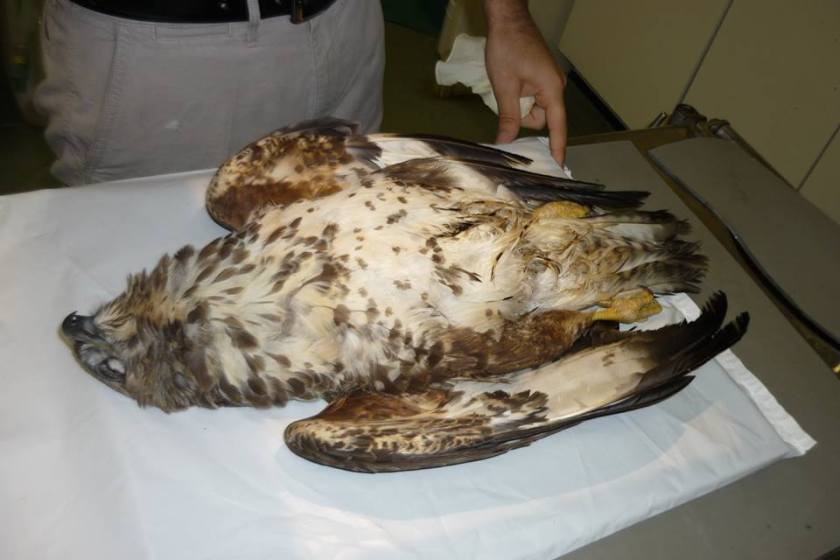
* between 1 February 2013 and 4 April 2013 at Tamavoid, Cardross Estate, Port of Menteith, you JAMES ALFRED O’REILLY, whilst carrying out an inspection of a snare, did find an animal, whether alive or dead, caught by said snare and did fail to release or remove said animal namely a fox; CONTRARY to Wildlife and Countryside Act 1981, Section 11(3)(A);

* between 1 April 2013 and 4 April 2013 at Gartur, Tamavoid and The Big Wood , Cardross Estate , Port of Menteith you JAMES ALFRED O’REILLY did set in position a snare without having been issued an identification number by the Chief Constable under Section 11A(4) of the aftermentioned Act and did set 2 snares at a stink pit , 4 snares at a pheasant release pen and 1 snare at a stink pit, all of which did not have identification tags attached; CONTRARY to the Wildlife and Countryside Act 1981, Sections 11A(1) and (5);

* Between 22 March 2013 and 25 March 2013 at Garfur, Cardross Estate, Port of Menteith you JAMES ALFRED O’REILLY did set in position a trap, namely a gin trap also known as a leg hold trap being of such a nature and so placed as to be likely to cause bodily injury to any wild birds coming into contact therewith in that said trap was set on open ground next to bait, namely a deer carcass; CONTRARY to the Wildlife and Countryside Act 1981, Section 5(1)(a).

The requirement to tag snares was introduced by the 2011 Wildlife and Natural Environment Act as part of a suite of measures aimed at improving the accountability of snaring. This requirement came into force on 1st April 2013. Under the new regime, those responsible for setting snares were required to attend a training course, prior to being given an identification number. The accused O’Reilly had been issued with such a number on 23rd March 2013 by the licensing office in Pitt Street, Glasgow.

END

So, here are some questions:

1. Is O’Reilly still employed as a gamekeeper on the Cardross Estate (where they offer driven pheasant and partridge shooting)? Emails to: enquiries@cardrossestate.com

2. Is O’Reilly a member of the Scottish Gamekeepers Association, and if so, has he now been booted out? Emails to: info@scottishgamekeepers.co.uk

3. Is the Cardross Estate a member of Scottish Land & Estates, and if so, has it now been booted out? Emails to: info@scottishlandandestates.co.uk

4. When will the review of wildlife crime penalties be published by the Scottish Government (we understand it’s been submitted) and, more importantly, when will the review’s recommendations for change be implemented? Emails to: ministerforenvironment@scotland.gsi.gov.uk

You can perhaps combine this last email with one asking the Minister when we can expect to see a General Licence restriction order enforced on land where a poisoned red kite, a poisoned peregrine, and an illegally trapped red kite have been found – see here.

UPDATE 21st May 2015: some responses to these questions here.

Police launch raptor crime awareness campaigns in Scotland, England & Wales

Police forces in England, Wales and Scotland have recently launched poster campaigns to raise awareness of crimes against birds of prey.

A couple of days ago, North Yorkshire Police announced their campaign against the illegal poisoning of raptors. They’ve produced a poster that will be distributed in rural areas including the Yorkshire Dales and the North York Moors; both of these areas are dominated by driven grouse moors and both areas are well known as raptor persecution hotspots. The posters will be displayed in National Park Centres and on parish council notice boards.

North York Police poisoning poster May 2015

Earlier this month, North Wales Police launched a campaign called Operation Raptor, aimed at targeting raptor poisoners in their region. This follows the poisoning of five peregrines last year and a suspected buzzard poisoning incident this year. The main peregrine poisoning suspects in the region are usually pigeon fanciers/racers.

Police Scotland launched their wildlife crime campaign in March (in collaboration with PAW Scotland), which involves raising awareness of all six national wildlife crime priorities, including raptor persecution.

These publicity campaigns are good to see. Excellent, in fact. However, the most important facet of tackling wildlife crime is not raising awareness (as important as that is), but what the police actually do in response to a reported wildlife crime. A recently published report on wildlife crime enforcement in Scotland revealed a catalogue of failures, including poor follow-up investigations and sometimes no follow-up at all (see here).

We’re watching with interest to see just how long it takes Police Scotland to publicise a number of raptor persecution crimes that have taken place within the last 12 months, especially those involving the use of banned poisons that have killed raptors on or very close to sporting estates with long histories of such crimes.

Buzzard shot and killed in North York Moors National Park

A breeding female buzzard has died from shotgun injuries in the North York Moors National Park. She was discovered near Old Byland.

Police Wildlife Crime Officer Jez Walmsley is investigating.

Photo via Jean Thorpe, Ryedale Wildlife Rehabilitation Centre, North Yorkshire.

BZ shot Malton April 2015

Henry’s Tour: Day 20

Monday 27 April  Copy

Henry’s arrived in Yorkshire in his quest to find a mate. This should be interesting.

North Yorkshire (includes North York Moors National Park & Yorkshire Dales NP) is the worst county in England for recorded incidents of bird of prey persecution.

Between 2004-2013 there were 70 confirmed raptor persecution incidents. (2014 data not yet published).

These 70 incidents included:

  • At least 26 confirmed incidents involving the illegal use of pesticides – these include the illegal poisoning of 14 red kites, six buzzards, one goshawk, one peregrine plus the finding of a number of poisoned baits; several domestic pets were also poisoned.
  • The confirmed shooting of 25 birds of prey – consisting of 10 buzzards, three red kites, three kestrels, two goshawks, two peregrines plus singles of hen harrier, sparrowhawk, short-eared owl and eagle owl.
  • The illegal trapping of seven birds of prey plus another 11 illegally set traps for raptors.

In connection with these incidents six individuals, all gamekeepers, were prosecuted.

Hen harrier last bred successfully in North Yorkshire in 2007, despite huge areas of suitable habitat.

A Natural England study between 2002 and 2008 showed that of 11 HH breeding attempts recorded in North Yorkshire, only five sites reared any young and most of the sites that failed were believed to be due to human persecution.

#HaveYouSeenHenry

Judicial review of Natural England’s refusal to issue buzzard-killing licence to be heard in June

The judicial review concerning Natural England’s decision to refuse a gamekeeper a licence to shoot buzzards and sparrowhawks to protect his pheasants will take place during a three-day hearing at the High Court in London in June.

The gamekeeper, Ricky McMorn from Northumberland, has received financial support from the National Gamekeepers’ Organisation to bring this review and challenge Natural England’s handling of his licence applications.

A quick recap: in 2013, Natural England secretly provided Mr McMorn with a licence to destroy buzzard eggs and nests in order to ‘protect a pheasant shoot’ in Northumberland.

Later in 2013, Natural England received an application for four more licences, this time to shoot 16 buzzards and three sparrowhawks. Natural England rejected the application.

In 2014, Natural England refused another licence application, this time to shoot ten buzzards to prevent “serious damage” to pheasant poults.

It is these refusals that are being challenged in the judicial review.

Previous blogs on this issue:

25 November 2014: Buzzard licence applicant gets High Court approval for judicial review.

1 October 2013: Why we don’t trust the National Gamekeepers’ Organisation.

26 September 2013: Buzzard licence applicant tries for four more licences.

13 August 2013: Natural England claims release of buzzard licence info ‘not in public interest’.

20 June 2013: Hand in of buzzard petition today at Holyrood.

5 June 2013: Natural England says no to buzzard-killing licence.

5 June 2013: Surely the buzzard licence applicant doesn’t have prior convictions for poison offences?

3 June 2013: Buzzard licensing: turning up the heat.

30 May 2013: Two important questions to ask about the buzzard licence applicant.

25 May 2013: New petition: SNH, do not licence buzzard culling in Scotland.

23 May 2013: Natural England issues licence to destroy buzzard eggs and nests to protect pheasants.

10 January 2013: The buzzard blame game.

13 June 2012: #Buzzardgate aftermath.

30 May 2012: DEFRA backs down on buzzard ‘management’ trial.

24 May 2012: DEFRA responds to public outcry over buzzard ‘management’ trial.

23 May 2012: RSPB response to DEFRA’s proposed (illegal) buzzard trial.

21 May 2012: Buzzard ‘management’ trial gets govt approval and £375K funding.

Henry’s Tour: Day 19

Fri 24 April Copy

Henry went for a skydance across the lawns of Holkham Hall in north Norfolk.

This place is home to Viscount Coke, Vice Chairman of the Board of Trustees of that well-known raptor-loving organisation Songbird Survival.

In 2000, a Holkham Estate gamekeeper was prosecuted for 17 offences including the shooting of two kestrels and the poisoning of a third. He kept his job on the estate. Case write-up here.

In 2009, a dead buzzard was found at Holkham. It had been shot. The Holkham Estate put up a £500 reward for information leading to a conviction, as did the RSPB. Nobody was ever prosecuted.

Henry didn’t see any female hen harriers during his visit but he did watch a buzzard and three red kites. One kite had what some would call the ‘Malta Moult’ – a large hole blown through the feathers of one wing.

Henry thought it was time to get out of Norfolk but not before he called in for tea and cake with the legendary Richard Porter, author of the 1974 classic Flight Identification of European Raptors. More recently, Richard’s studies on the local buzzard population helped to convict Stody Estate gamekeeper Allen Lambert. Lambert had claimed that the ten poisoned buzzards found on the Stody Estate had been killed elsewhere and then ‘dumped’ on his estate in an attempt to set him up. His defence was to claim that they couldn’t possibly have been poisoned at Stody because there weren’t that many local buzzards to start with. He hadn’t banked on the evidence of one of the world’s leading raptor ID experts, who had recorded 233 buzzard sightings and had counted 73 pairs. Oops.

Thurs 23 April  Copy


Case against Scottish gamekeeper William Dick: another trial update

The trial of Scottish gamekeeper William Dick has been continued at Dumfries Sheriff Court.

Dick, 24, of Whitehill Cottages, Kirkmahoe, Dumfries is accused of bludgeoning and repeatedly stamping on a buzzard. The offences are alleged to have taken place in Sunnybrae, Dumfries in April 2014. He is also accused of alleged firearms offences. He has denied the charges.

The trial has been adjourned, again, and will now apparently resume in August! We don’t know the reason for the long delay.

Previous blogs on this case here, here, here, here, here, here, here, here

Number of poisoned raptors in Scotland more than quadrupled in 2014

Persecution map 2010 to 2014 - CopyThe Scottish Government has today released the annual poisoning and persecution maps relating to crimes against raptors in 2014.

The accompanying press release is a careful study in damage limitation. We can’t blame them – it must be a constant source of embarrassment for them that raptor persecution continues with virtual impunity so of course they’re going to put out a statement that showcases the positives (there aren’t that many) and plays down the negatives (there are many).

The basic premise of their press release is that reported raptor crimes (incidents) have dropped from 23 in 2013 to 19 in 2014. Sounds like progress, eh? But wait – what if you look at the actual number of persecuted raptors – that tells a completely different story!

Let’s ignore the different types of persecution crimes (e.g. shooting, trapping, disturbance) for a minute and just start with poisoning. Here are the Government’s official number of reported poisoning incidents for the last three years:

2014: 6

2013: 6

2012: 3

So on the face of it, no change from last year and still double the number of reported incidents in 2012. But now let’s look at the number of reported individual raptors that were poisoned over those three years:

2014: 27 (17 x red kite; 7 x buzzard; 1 x peregrine; 2 x unknown because Police Scotland hasn’t released the data)

2013: 6 (1 x red kite; 4 x buzzard; 1 x golden eagle – data from Scot Gov annual report on wildlife crime)

2012: 3 (2 x buzzard; 1 x golden eagle – data from Scot Gov annual report on wildlife crime)

That’s quite an increase, isn’t it? Three reported in 2012, 6 in 2013 and a whopping 27 reported in 2014. Does that sound like raptor poisoning in Scotland is in decline? Nope, it shows that the number of poisoned raptors actually quadrupled in 2014.

However, the Government doesn’t agree that 27 raptors were poisoned in 2014. According to their data, only 16 raptors were poisoned in the Ross-shire Massacre (12 red kites + 4 buzzards). They seem to have conveniently forgotten that 22 dead birds were found, not 16. Even Environment Minister Aileen McLeod ignores the ‘missing six’ and just refers to the poisoned 16 in today’s press release! Sure, there may only be toxicology reports for 16 of those victims – we don’t know the cause of death for the remaining six victims because Police Scotland hasn’t bothered to tell us. But surely they and the Scottish Government aren’t trying to convince us that the remaining six victims (four red kites + two buzzards) weren’t poisoned at all, but that they all just happened to die of natural causes at the same time and in the same fields as the other 16 poisoned birds? Come on. Why try and diminish the extent of such an appalling crime?

And, once again, the poisoning maps exclude other crimes where bait was discovered but with no apparent raptor victim. We know of at least one of these incidents that occurred in 2014 – a poisoned rook found in January close to a poisoned rabbit bait and a poisoned hare bait (Carbofuran & Chloralose) (here). Why doesn’t this count?

Now let’s have a look at the other types of raptor persecution crimes reported in 2014. These include shooting, trapping and disturbance. According to the Government’s data released today, there were 8 reported shootings, 2 reported trapping offences, 1 reported disturbance incident and 2 listed as ‘other’.

Interestingly, they’ve excluded incidents where satellite-tagged raptors have (un)mysteriously disappeared in known persecution hotspot areas, such as the young white-tailed eagle (see here) and several others that Police Scotland has so far chosen to keep under wraps.

They’ve also excluded incidents where illegally-set traps have been found but without an apparent raptor victim. Again, the police have chosen to keep these under wraps. Why don’t those count?

So let’s now look at the Government’s ‘official’ three-year figures for all types of raptor persecution incidents in Scotland (including poisoning, shooting, trapping, disturbance, and ‘other’):

2014: 19

2013: 23

2012: 13

As we said at the beginning, on a superficial level it appears that reported raptor persecution incidents have declined since 2013, although we now know that the Government has excluded several known incidents, and we also know that these are only the reported crimes – many more will have occurred but weren’t detected. But let’s have a look at the number of known raptor victims during that three-year period:

2014: 40

2013: 23

2012: 13

That’s pretty clear then. Illegal raptor persecution continued in 2014 and the number of (known) victims rose considerably from the previous year and the year before that.

What an utter disgrace.

Scottish Government press release here

Scottish Government’s persecution maps and background data can be downloaded here:

Scottish Gov background raptor persecution data (released 31 Mar 2015)

Case against Scottish gamekeeper William Dick: trial update

The trial of Scottish gamekeeper William Dick has been continued at Dumfries Sheriff Court.

Dick, 24, of Whitehill Cottages, Kirkmahoe, Dumfries is accused of bludgeoning a buzzard with rocks and then repeatedly stamping on it. The offences are alleged to have taken place in Sunnybrae, Dumfries in April 2014. He is also accused of alleged firearms offences. He has denied the charges.

Dick’s legal representative in court is Brian McConnachie QC, who has been described as ‘one of the country’s leading defence lawyers’.

The trial will continue on 2nd April 2015.

Previous blogs on this case here, here, here, here, here, here, here

PLEASE NOTE: WE WON’T BE ACCEPTING COMMENTS UNTIL AFTER THE VERDICT. THANKS.