 Yesterday the Scottish Government published its latest report on wildlife crime: ‘Wildlife Crime in Scotland: 2014 annual report’ (see here).
It was accompanied by a Government press release (here) with a headline statement claiming ‘ Recorded wildlife crime dropped by 20 per cent in the period 2013-2014‘. This claim has been regurgitated, without real examination, in much of the national press, which will give the public the impression that all’s going swimmingly in the fight against wildlife crime in Scotland. This couldn’t be further from the truth.
Let’s start with the report’s name. It claims to be the ‘2014 annual report’, but actually the period covered by the report is the 2013/14 financial year: April 2013 to March 2014. That means the majority of the data are from 2013 (9 months worth) – these are wildlife crimes that took place as long ago as 2.5 years and the most ‘recent’ took place 18 months ago (March 2014). Many more offences occurred during the nine months between April-Dec 2014 but they are not included in this report. Although the report itself does explain the reasons behind this odd time-frame selection, the report’s title does not, which means anyone just browsing the headline news will be given a false impression of how recent these findings are. It’s a small point, but it’s an important one.
However, there are bigger issues than just a misleading report title.
If you take the report’s data at face value (which we don’t – more on that in a second) and accept that it’s representative of all reported wildlife crime in Scotland between April 2013 and March 2014, you might also accept that the claim of a 20% reduction in recorded wildlife crime is accurate. But if you look at the data (Table 1), you’ll notice that this supposed broad reduction (i.e. reduction of recorded wildlife crimes in general) is actually almost entirely due to a large reduction in one particular area of wildlife crime: specifically, fish poaching. To then apply this reduction of a specific wildlife crime to all other types of wildlife crime in a broad sweeping statement is wholly misleading.
Our main issue with this report, as with previous reports, is the Government’s insistence on only using crime data that has been recorded by the Police. Although this report does attempt to address this problem by including separate sections on data collected by others (e.g. Scottish Badgers, SSPCA), these data are still not included in the overall analysis of wildlife crime trends because these incidents weren’t recorded on the Police national crime database. A good example of this is shown in Table 10, which details the number of wildlife cases investigated by the SSPCA. The report accepts that cases investigated solely by the SSPCA (as opposed to cases where the SSPCA has assisted the Police) are not included in the ‘official’ recorded crime data because ‘they are not recorded on the police national crime database’. So in effect, 69 cases that were investigated solely by the SSPCA during the period covered by the report are absent from the national figures. It seems bizarre that even though these data are available (of course they are, they appear in this report, albeit in a separate section!) they are still excluded from the main analysis. This blatant exclusion immediately reduces our confidence in the robustness of the ‘national’ data.
Another blatant exclusion of data is demonstrated in Table 17 in the Raptor Persecution section. This table identifies only 16 bird of prey victims from the mass poisoning in March 2014 known as the Ross-shire Massacre, excluding the other six victims that were found. The report justifies this exclusion by explaining that evidence of poisoning was not found after examinations of those six raptors. That’s fair enough, but surely we’re not expected to believe that those six victims all died of natural causes, in the same small area, and at the same time, as the 16 confirmed poisoning victims? They don’t appear in the figures because a crime couldn’t be identified, but they still died as a result of this crime and to pretend otherwise is nonsense.
An additional problem that erodes public confidence in the accuracy of the ‘national’ data is the issue of how carefully wildlife crimes are recorded. A report published earlier this year (which includes part of the period covered by this latest Government report) revealed systemic problems with the under-recording of several types of wildlife crime as well as failures by the police to undertake follow-up investigations on reports of suspected wildlife crimes (see LINK report here). If the police don’t follow up with an investigation, the incident is unlikely to be recorded as a crime. Until these issues are suitably addressed, the accuracy of ‘official’ ‘national’ wildlife crime data will inevitably be viewed with suspicion.
So, we don’t have much confidence in this report’s data and we certainly don’t agree with the Government’s claim that (overall) recorded wildlife crime has reduced by 20%, but there are some positives. It’s clear that more thought has been put in to the material contained in this year’s report and there is definitely more clarity about the sources used. That’s good progress.
There are also a couple of things in this report that we are particularly pleased to see.
First, let’s go back to Table 10 (SSPCA data). You may remember (if you have a long memory) that in March 2014, the Government opened its consultation on whether to increase the investigatory powers of the SSPCA. That consultation closed in September 2014 and, over a year later, we’re still waiting for a decision. It’s our understanding that one of the main sticking points is with Police Scotland (who, as you’ll recall, strongly objected to an increase of powers – see here). Apparently, the current sticking point is that Police Scotland are worried that they’ll be excluded from wildlife crime investigations because the SSPCA ‘refuses to work with them’. However, if you look at Table 10, you’ll notice that 50% of all wildlife cases taken by the SSPCA during the period covered by this report were undertaken in partnership with the Police. That’s 50%. Does that look like an organisation that is refusing to work with the Police? It doesn’t to us.
The second point of interest in this report appears in Table 18b. This table provides information about recorded bird of prey crimes between April 2013 and March 2014. Have a look at the 7th entry down:
Species: Hen Harrier
Police Division: Aberdeenshire and Moray
Type of Crime: Shooting
Date: June 2013.
Why is this of particular interest? Well, cast your mind back to January 2014 when we blogged about a vague Police Scotland press release that stated a man had been reported to the Crown Office ‘in relation to the death of a hen harrier’ in Aberdeenshire that took place in June 2013 (see here). So it turns out this hen harrier had been shot. Amazing that it took over two years for this information to be made public. But that’s not the most interesting bit. For this unnamed individual to be reported to the Crown for allegedly shooting this hen harrier means that the Police have some level of evidence that they think links him to the crime. If they didn’t have evidence, he wouldn’t have been reported. So, the alleged crime took place 2.4 years ago. The Crown Office was notified 1.9 years ago. What’s happening with this case? Is there going to be a prosecution? Why such a long delay for a crime that is deemed a ‘priority’ by the Scottish Government?



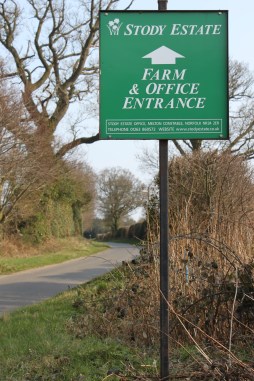 A year ago, gamekeeper Allen Lambert was convicted of a series of wildlife crime offences on the Stody Estate in Norfolk, including the mass poisoning of birds of prey (10 buzzards and one sparrowhawk) which had been found dead on the estate in April 2013 (see
  Well, well, well.
 It’s also interesting that SLE don’t mention the Newlands Estate’s membership of the Wildlife Estates Scotland initiative in their press statement. Not a word. That news has been gleaned from ITV (see
  Raptor Persecution UK