Multiple birds of prey found dead in suspicious circumstances – police appeal for information & warn public of potential poisoning danger

Nottinghamshire Police have issued an appeal for information after the discovery of ‘several dead birds of prey that were seen in suspicious and unnatural circumstances‘ near to the village of Bunny, in the Rushcliffe borough of south Nottinghamshire on Tuesday 10th December 2024.

They said: “We are appealing for the public’s help if you have seen any suspicious animal carcasses while out walking please report them to police and do not allow dogs or other animals to touch them as they may be poisoned.

If you have any information which might assist enquiries it can be reported online or via 101 quoting occurrence number 24000745675“.

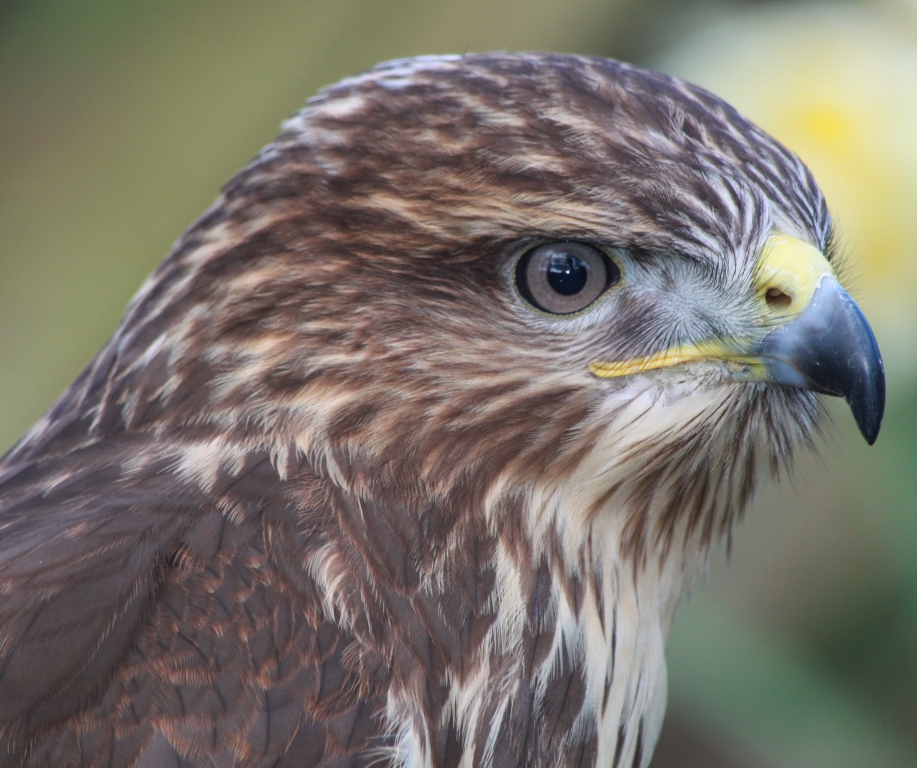
They haven’t provided any further detail such as the species involved although their social media post was illustrated with an image of a buzzard.

Buzzard photo by Ruth Tingay

This is an excellent response from Nottinghamshire Police, not only to gather information during the early phase of an investigation but especially to warn the public of the risk of potential poisons being used that could be a danger to people and their pets.

Hopefully Nottinghamshire Police will provide an update once post mortems and toxicology tests have been undertaken.

Inadequate response by Scottish Minister Jim Fairlie to parliamentary question on use & abuse of rodenticides

Last month conservation campaign group Wild Justice published a detailed report on the impact of the mis-use and abuse of second generation rodenticides (SGARs) on red kites and buzzards in England and the failure of the Government’s Rodenticide Stewardship Scheme, which had been set up in 2016 to reduce the amount of rodenticides in wildlife (see here for press release and a copy of the Wild Justice report, ‘Collateral Damage‘).

Brodifacoum bait station illegally set on the edge of a grouse moor in the Yorkshire Dales National Park. Photo by Ruth Tingay
Brodifacoum. Photo by Ruth Tingay

On the back of the publication of Wild Justice’s report, Scottish Greens MSP Ariane Burgess lodged the following parliamentary question on 19th November 2024:

Question reference S6W-31459

To ask the Scottish Government, in light of the latest report, Collateral Damage, by the UK campaign group, Wild Justice, which states that the Rodenticide Stewardship Scheme in England “is a failed scheme”, and other reports that have indicated increased exposure to anticoagulant rodenticides in common buzzards in Scotland, whether it has assessed the effectiveness of the rodenticide scheme in Scotland.

The question was answered by Agricultural Minister Jim Fairlie on 3rd December 2024:

The Scottish Government continues to contribute to UK-wide monitoring of rodenticide use and exposure in wildlife. There is evidence that many users of rodenticides are complying with the Campaign for Responsible Rodenticide Use’s (CRRU) Rodenticide Stewardship Scheme (RSS), and that in Scotland rodenticide use in agriculture has substantially declined since the introduction of the scheme. But, despite this, recent environmental data for Scotland indicate that it has not yet achieved the aim of significantly reducing wildlife exposure.

Both the UK Government Oversight Group, which includes Scottish Government representation, and CRRU have acknowledged that rodenticide residues in UK wildlife have not declined as hoped. The RSS is being updated firstly to ban the use of second generation anticoagulant rodenticides (SGARs) bromadiolone and difenacoum for open area use from the end of this year. This means no SGARs will be available for open area use; this is also intended to reduce accidental or deliberate misuse of other products in open areas. Secondly, training requirements for the farming sector are also being brought in line with other sectors from end 2025 to ensure a consistent level of professional training across all sectors and reduce the risk of poor practice.

Whilst it’s true that legal authorisation is being rescinded for the use of the SGARs Bromadiolone and Difenacoum in open areas (see press release on this from June 2023, here), it is very clear from the Wild Justice report that the total increase of SGAR exposure in red kites and buzzards in England is being driven by a dramatic increase in the use/mis-use of Brodifacoum, not by Bromadiolone or Difenacoum.

Fig 3 from Wild Justice’s Collateral Damage report (p8) showing the percentage of buzzards and red kites analysed by the WIIS that contained different concentrations of Brodifacoum, Bromadiolone and Difenacoum.

Brodifacoum is the dominant SGAR being found in birds of prey and is more toxic than Bromadiolone and Difenacoum. It used to be restricted to internal use only, until the Government decided to relax that regulation and permit its use ‘in and around buildings’ – a regulation that is obviously being breached routinely given the high levels of exposure in birds of prey (e.g. here).

From January 2025, Bromadiolone and Difenacoum will also be permitted for use ‘in and around buildings’, but there are no proposed tighter rules on the use of Brodifacoum.

Minister Fairlie suggests that a restriction against any use in open areas of any SGAR is intended to reduce accidental or deliberate mis-use of other products in open areas and that new training requirements for all users (not just professional pest controllers) will ‘reduce the risk of poor practice’.

I suppose he’s thinking that this standardisation will remove any supposed ‘confusion’ between the use of different products. However, given that Brodifacoum is already supposedly restricted to use only ‘in and around buildings’, yet has been used with increasing frequency by gamekeepers for targeting birds of prey, Wild Justice argues that the new legal restrictions are unlikely to improve things significantly.

The Wild Justice report suggests that a better option is to return Brodifacoum to its pre-April 2016 approval status, so that it can be used in strict ‘internal areas’ within buildings, and to limit its use to professional pest control companies.

For those who might have missed it, Wild Justice’s Collateral Damage report can be read/downloaded here:

Lincolnshire man faces trial in relation to poisoned red kite & buzzards

Further to the blog on 30 September 2024 (here) and 17 October 2024 (here), a trial date has been set for a Lincolnshire man in relation to the discovery of a poisoned red kite and two buzzards between 2017 and 2022.

Buzzard photo by Ruth Tingay

John Bryant, 40, of West Ashby, Horncastle, appeared at Boston Magistrates Court on 20 November 2024 where he pleaded not guilty to two charges of using a trap to kill or take a wild bird, six charges of possessing an article capable of being used to commit a summary offence, and two charges of contravening health & safety regulations.

Mr Bryant was released on unconditional bail and a trial date was set for 6 March 2025.

NB: As this case is live comments are turned off until criminal proceedings have concluded.

UPDATE 12 March 2025: Lincolnshire gamekeeper guilty of multiple offences in relation to deaths of red kite and buzzards (here)

New report from Wild Justice reveals birds of prey being poisoned by shocking level of misuse & abuse of rodenticides

Press release from Wild Justice:

Another Silent Spring? A UK Government scheme to prevent the widespread poisoning of wildlife by rodenticides is failing.

Increasingly high levels of rodenticides (Rat poisons) have been found in Buzzards and Red Kites, and the Government is ignoring the evidence.

  • A report by Wild Justice highlights that the exposure of birds of prey to rodenticides in England has increased since a government scheme was introduced in 2015 to try and combat the problem
  • Data from Red Kites and Buzzards, from both before and after the Rodenticide Stewardship Scheme (RSS) was introduced, show that anticoagulant rodenticides are now found in the livers of most dead birds that are tested, often at high levels.
  • Between 2020 and 2022, almost three quarters of tested Buzzards had been poisoned by rodenticides that are supposed to be restricted for use in and around buildings, including highly toxic Brodifacoum. This shows rodenticides aren’t being used correctly and that the use of these products requires stricter regulation, monitoring and enforcement.

Rodenticides are now being found in the livers of most dead Buzzards and Red Kites tested, according to a new report by conservation campaign group Wild Justice.

Using data obtained through Freedom of Information Requests, Wild Justice’s ‘Collateral Damage’ report presents the results of Government laboratory tests for 366 Buzzards and 173 Red Kites that had been submitted to the Wildlife Incident Investigation Scheme (WIIS) in England during the period 2005 to 2022. The report shows that in recent years nearly all these raptors had tested positive for Rat poison, often in high amounts.

A poisoned red kite. Photo by Dr Marc Ruddock

Rat poisons are toxins (Second Generation Anticoagulant Rodenticides, or SGARs) and are used extensively in game-keepering, farming and for pest control. It has been known for many years that these poisons don’t just kill targeted Rats. Poisoned Rats store the toxin in their liver and typically die several days after exposure. However, any animal eating the dying or dead Rat will also receive a dose of the toxin, resulting in the death of many species up the food chain, especially scavenging species such as Buzzards and Red Kites.

In 2012 the UK Health and Safety Executive carried out an environmental risk assessment on the use of SGARs and concluded that, due to the risk of secondary poisoning to wildlife, the poisons should not be used outdoors. However, the UK Government rejected this risk assessment and permitted the continued outdoor use of SGARs outdoors, even relaxing the regime to allow the external use of more toxic poisons such as Brodifacoum. Previously Brodifacoum was only allowed for use indoors.

The continued outdoor use of SGARs was on the condition that professional users complied with guidance known as the Rodenticide Stewardship Scheme (RSS) which was established in 2015. The aim of the RSS was to reduce SGAR exposure in wildlife resulting from improved Rat control working practices. The effectiveness of the RSS would be assessed by monitoring poison levels in wildlife, with a commitment to reduce SGAR exposure by 30% by 2020.

On the contrary, Wild Justice’s results demonstrate that rodenticide poisoning has actually increased during this period, not decreased.

Wild Justice compared data from birds tested before the introduction of the RSS in 2015, to those afterwards. Between 2005 and 2010 over 50% of dead Buzzards tested did not have any rodenticides in their livers. But in those tested between 2020 and 2022, over 90% of dead Buzzards had some level of rodenticide in their livers.

The data also show that in addition to the increasing number of Buzzards testing positive for rodenticide, there’s also been an increase in the number of birds containing very high levels of the poison. In Buzzards tested between 2005 and 2010, less than 2% contained over 0.3mg/kg (milligrams per kilogram) of SGAR poison in their livers, an amount considered to be very high. Yet in those tested between 2020 and 2022, nearly a quarter had over that amount.

An even starker picture was painted when looking at data for Red Kites. 15% of Red Kites tested between 2005 and 2010 contained these very high levels, whereas in those tested between 2020 and 2022, two thirds (66%) of birds had over 0.3mg/kg of SGAR rodenticide in their livers. In 2020-2022, none of the Red Kites tested were rodenticide free, and almost 90% had very high levels of poison.

Rodenticides are readily available, both for use by industry and for domestic purposes. There are different types of poisons available on the market, and many birds had been exposed to more than one type, with twelve of the Buzzards tested exposed to four different poisons. In Buzzards testing positive for rodenticide between 2020 and 2022, almost three quarters involved poisons that are supposed to be restricted for use in and around buildings, including highly toxic Brodifacoum.

Wild Justice believe this is partly the result of poisons being used illegally away from buildings. At the start of the survey period (2005 to 2012) these toxins were restricted to use within buildings only, and were generally marketed to professional pest controllers, rather than to gamekeepers and farmers. Now they appear to be in regular use by these groups, including illegally in open field situations away from buildings. This is the only explanation for such widespread levels of rodenticide found in Buzzards and Red Kites and shows that the use of these products requires stricter regulation, monitoring and enforcement.

Brodifacoum bait station illegally set on the edge of a grouse moor in the Yorkshire Dales National Park. Photo by Ruth Tingay
Brodifacoum. Photo by Ruth Tingay

Buzzards and Red Kites serve as indicators of a wider problem that will affect other predators and scavengers, including scarce and declining species. There are lots of species that eat rodents (not just Rats), meaning other birds like Kestrels and Barn Owls are also at risk. Wild Justice is calling for urgent regulatory changes to limit the availability and use of these products for the benefit of wildlife.

A spokesperson for Wild Justice said:

‘The Rodenticide Stewardship Scheme is a failed scheme, which the government should recognise. It is ridiculous that such dangerous, hazardous substances are escaping stricter regulation, especially when the evidence shows they are poisoning wildlife on a widespread scale, and even being used deliberately and illegally to do so. Our report reveals just the tip of the iceberg – such high levels of these poisons being found in birds of prey should be ringing alarm bells’.

ENDS

Wild Justice’s new report can be read/downloaded here:

UPDATE 10th December 2024: Inadequate response by Scottish Minister Jim Fairlie to parliamentary question on use & abuse of rodenticides (here)

Buzzard found shot next to grouse moor in Strathbraan, Perthshire

Press release from REVIVE, the coalition for grouse moor reform:

SHOT BUZZARD SUFFERED ‘SIGNIFICANT UNNECCESARY SUFFERING’

Six months on from the introduction of new legislation intended to tackle raptor persecution, wildlife campaigners have expressed concern about the continued shooting of protected birds of prey near Scotland’s grouse moors.

The League Against Cruel Sports and Raptor Persecution UK have both commented on the shooting of a protected buzzard found near to the boundary of land belonging to Glenturret Estate in Perthshire in mid-May, just a few weeks after the Wildlife Management and Muirburn Act 2024 received Royal assent.

The comments came after police notified the League Against Cruel Sports that they had concluded investigations into the shooting of the buzzard with no charges being brought.

The dead bird was found on its back with its wings spread out by a Field Officer of the League Against Cruel Sports, who was carrying out field research on grouse moor management in the area.

A post-mortem conducted by the SRCU revealed that the buzzard had been injured by a ‘shot gun wound that caused fracture of the lower leg bone’, concluding that ‘the bird died slowly as a result of the leg wound and secondary infection, experiencing significant unnecessary suffering.’

Robbie Marsland Director of Scotland and Northern Ireland for League Against Cruel Sports said:

Why would anyone shoot at a buzzard – unless it was someone who was trying to make sure there would be more grouse to shoot for so-called sport?

The new laws were supposed to stop this kind of wanton cruelty but this case just goes to show that the killing goes on. Our worry is that this cruelty will continue as long as buzzards, hen harriers and golden eagles are seen as a threat to the shooting industry, rather than the magnificent creatures that they are.”

Dr Ruth Tingay of Raptor Persecution UK added:

It was the persistent illegal killing of golden eagles and other raptors that led the Scottish Parliament to introduce a grouse moor licensing scheme earlier this year, a ground-breaking piece of legislation designed to impose sanctions on those who continue to kill our special birds of prey.

The news that yet another raptor has been shot and killed is appalling. This case, along with other ongoing police investigations such as the recent shooting of an osprey and a peregrine, as well as the poisoning of a red kite and the discovery of a dismembered golden eagle found dumped inside a plastic bag, will test the effectiveness of the new legislation.

If the killings continue, it’s likely there will be a push to ban gamebird shooting outright. If businesses can’t operate without killing protected species then they shouldn’t be in business.”

The Wildlife Management and Muirburn Act introduced a range of measures including a new licensing framework for grouse moors, banning the practice of snaring and giving greater powers to Scottish SPCA inspectors to tackle wildlife crime.

In a background briefing note about the new legislation, the Scottish Government stated, ‘The Wildlife Management and Muirburn (Scotland) Bill was introduced primarily to address raptor persecution and ensure that the management of grouse moors and related activities are undertaken in an environmentally sustainable and welfare conscious manner.’

The need for land reform to help tackle wildlife crime will be one of the discussion points at the REVIVE Conference in Perth on Sunday 10 November. REVIVE is a coalition of the League Against Cruel Sports, Common Weal, OneKind, Friends of the Earth Scotland and Raptor Persecution UK, and both Robbie Marsland and Dr Ruth Tingay will speak at the event.

The conference will launch the Big Land Question campaign, a year-long programme of independent research with the aim of enhancing and informing policy development and to ascertain public perceptions around land reform.

ENDS

This news was published by the Daily Record this morning (here).

Strathbraan is a large area dominated by grouse moors and is a notorious raptor persecution hotspot.

Lincolnshire man in court facing charges related to poisoning of red kite and buzzards

Further to the blog on 30 September 2024 (here), a man attended court yesterday after being summoned in relation to the illegal poisoning of a red kite and two buzzards between 2017 and 2022.

Red kite photo by Andy Howard

John Bryant, 40, of West Ashby, Horncastle, Lincs appeared at Boston Magistrates Court on 16 October 2024 where he confirmed his name, age and address. He didn’t enter a plea.

The case was continued and Bryant will appear again on 20th November 2024.

NB: As this case is live comments are turned off until criminal proceedings have concluded.

UPDATE 24 November 2024: Lincolnshire man faces trial in relation to poisoned red kite and buzzards (here)

UPDATE 12 March 2025: Lincolnshire gamekeeper guilty of multiple offences in relation to deaths of red kite and buzzards (here)

Lincolnshire man summonsed to court in relation to poisoning of red kite & buzzards

Statement from Lincolnshire Police, 30 September 2024:

A 40-year-old man has been summoned to court for offences relating to killing or taking birds of prey.

John Bryant, of West Ashby, Horncastle, has been summoned to court following an investigation into reports of three birds of prey, a red kite and two buzzards, being poisoned and killed over a five year period between 2017 and 2022.

He will appear at Boston Magistrates’ Court on 16 October 2024.

ENDS

No further details are available yet.

NB: As this case is live comments are turned off until criminal proceedings have concluded.

Red kite photo by Andy Howard

UPDATE 17 October 2024: Lincolnshire man in court facing charges relating to poisoning of red kite and buzzards (here)

UPDATE 24 November 2024: Lincolnshire man faces trial in relation to poisoned red kite and buzzards (here)

UPDATE 12 March 2025: Lincolnshire gamekeeper guilty of multiple offences in relation to deaths of red kite and buzzards (here)

Poisoned buzzard leads to discovery of multiple pesticide offences – Ashley Game Farm & Director Christopher Hodgson fined £40,000+

Press release from RSPB (18th July 2024):

POISONED BUZZARD LEADS TO ASHLEY GAME FARM & THE COMPANY’S DIRECTOR PAYING OVER £40,000 IN FINES

  • The discovery of a poisoned Buzzard next to a poisoned bait led to the search of a gamebird breeding farm in Chulmleigh, Devon conducted by Devon and Cornwall Police in March 2021.
  • A number of pesticides offences were discovered including the presence of Carbofuran, the same highly toxic chemical found on the poison bait that had killed the Buzzard.
  • On 18 July 2024 after pleading guilty to multiple pesticide offences Ashley Game Farm Ltd was ordered to pay £40,000 in fines and the company’s Director, Christopher Hodgson, was fined £1,500.

In October 2020, a member of the public discovered a dead Buzzard– a protected species under the Wildlife and Countryside Act 1981 – lying on top of a pheasant carcass by a pheasant release pen, near Hollocombe in Devon, and promptly reported it to Devon and Cornwall Police.

The two birds and a second dead pheasant found nearby were submitted by the police to the Government’s Wildlife Incident Investigation Scheme (WIIS) for examination and toxicology testing. Meat found in the Buzzard’s beak and both pheasant carcasses tested positive for Carbofuran. This evidence confirmed that the Buzzard had died as a result of feeding on the illegally placed poison baits.

In March 2021, following the toxicology results, a search of land, buildings and vehicles led by Devon and Cornwall police, supported by the National Wildlife Crime Unit, Natural England and the RSPB, took place at Ashley Game Farm in Chulmleigh, Devon. During the search significant amounts of prohibited and unauthorised pesticides and veterinary medicines were found stored around the property. A forensic search of two vehicles detected positive traces of the banned pesticide Carbofuran – the same banned pesticide which had been found on the pheasant carcasses and which had caused the Buzzard’s death.

Photo by RSPB Investigations

Ashley Game Farm is a member of the Game Farmers Association and a leading UK supplier of game birds including (Pheasant and Red-legged Partridge) which are sold as young birds to shooting estates across the UK and Europe, where in many cases they are reared and released to be commercially shot. 

The insecticide Carbofuran has been banned in the UK since 2001 because of its high toxicity and associated risks. Although the storage and use of any product containing Carbofuran is an offence, it is one of the most commonly abused substances associated with the illegal poisoning of birds of prey, accounting for almost one third of all bird of prey persecution poisoning incidents in England between 2018 and 2022.

The practice of laying poisoned baits to persecute protected birds of prey is often associated with areas managed for gamebird shooting where these birds are perceived by some as a threat to gamebird stocks. Deliberate poisoning has resulted in the death of many species of protected birds of prey over decades. Historic incidents have shown this indiscriminate illegal practice has also resulted in the death of domestic animals and poses significant risks to humans, wildlife and the environment.

On 18 July 2024 at Exeter Magistrates Court, Ashley Game Farm and the Director of the company were charged with the following offences:

Ashley Game Farm:

  1. On or before 26/03/2021 at Ashley Game Farm Limited, namely stored a plant protection product, namely Rivett MAPP 11300, without a valid authorisation or permission granted in accordance with Retained EU Regulation 1107/2009.  Contrary to section 24 and 27 of the Plant Protection Products (Sustainable Use) Regulations 2012.
  2. Between 01/10/2020 and 27/03/2021 at Ashley Game Farm Limited, used a plant protection product, namely Carbofuran, in contravention of Article 28 (1) of Retained EU Regs 1107/2009.  Contrary to section 24 and 27 of the Plant Protection Products (Sustainable Use) Regulations 2012.
  3. On or before 26/03/2021 at Ashley Game Farm Limited, used a Biocidal product, namely Lodi’s Sapphire Grain otherwise in accordance with the terms and conditions of its authorisation under Article 22 (1) and the labelling and packaging requirements of Article 69.  Contrary to section 24 and 27 of the Plant Protection Products (Sustainable Use) Regulations 2012.
  4. On or before 26/03/2021 at Chulmleigh contravened a requirement imposed by a prohibition notice served under section 22 of the Health and Safety at Work etc Act 1974 in that used a Biocidal product, namely Mole Valley Farmers Difenacoum Cut Wheat Rat Bait without authorisation being in force allowing for its use.  Contrary to sections 22 and 33(1)(g) of the Health and Safety at Work etc Act 1974.
  5. On or before 26/03/2021 at Chulmleigh in the county of Devon possessed an unauthorised veterinary medicinal product, namely possessed an unauthorised veterinary medical product, namely Dimetridazole (DMZ).  Contrary to regulations 26(1), 43(r) and 44(1) of the Veterinary Medicines Regulations 2013.

Christopher Hodgson, Director of Ashley Game Farm:

  1. On or before 26/03/2021 at being a Director of Ashley Game Farm Limited, a body corporate who had committed an offence, stored a plant protection product, namely Rivett MAPP 11300, without a valid authorisation or permission granted in accordance with Retained EU Regulation 1107/2009 and the offence was committed with the consent or connivance, or attributable to the neglect of Christopher Hodgson.  Contrary to section 24 and 27 of the Plant Protection Products (Sustainable Use) Regulations 2012.

The company Ashley Game Farm Ltd pleaded guilty to all five charges and was ordered to pay £40,000 in fines and £590 in costs. Christopher Hodgson pleaded guilty to the one offence and was ordered to pay £1,500 in fines and £150 in costs. 

Mark Thomas, RSPB Head of Investigations UK: “Yet again the discovery a dead bird of prey and poisoned baits leads to the detection of lethal banned poisons. This is the latest example of highly toxic pesticides being stored and used illegally in connection with the gamebird industry. As past cases have demonstrated these chemicals are extremely hazardous to our wildlife and environment, but also pose a considerable risk to members of the public and domestic animals. In this case, we welcome the significant fines despite not knowing who exactly killed the protected bird of prey.”

Howard Jones, RSPB Senior Investigations Officer: We would like to thank Devon and Cornwall Police, Natural England, NWCU, CPS and Defra. This successful outcome was the result of some incredibly effective partnership working. The fact that Carbofuran is still being found 20 years after it was banned shows the lack of reform, as the law stipulates, being shown by some within the gamebird industry. As this case has shown, individuals and businesses that chose to store and use these types of highly toxic pesticides are taking significant risks and committing serious criminal offences.

Jenny Mashford, Devon and Cornwall Police: “This incident was brought to the police’s attention thanks to a member of the public who identified the poisoned raptor.  We carried out a warrant at the defendant’s premises with the assistance of several other agencies including Natural England, the National Wildlife Crime Unit, the RSPB and Defra.  It is a very positive outcome in our fight against wildlife crime, of which bird of prey crime is a national wildlife crime priority. We would like to thank all those involved for their hard work and assistance with this case.”

If you notice a dead or injured bird of prey in suspicious circumstances, call the police on 101 and fill in the RSPB’s online reporting form HERE.

If you have information about anyone killing birds of prey which you wish to report anonymously, call the RSPB’s confidential Raptor Crime Hotline on 0300 999 0101.

ENDS

Devon gamebird breeder guilty of using banned pesticide Carbofuran

Prominent gamebird breeder Christopher Hodgson, Director of Ashley Game Farm Ltd in Wembworthy, Chulmleigh, Devon appears to have pleaded guilty to multiple offences including the use of the banned pesticide Carbofuran.

Ashley Game Farm Ltd is an exceptionally large breeding facility that, according to its website, ‘specialises in supplying pheasants and partridges to shoots in the west country and all areas of the UK and Europe‘. It claims to have ‘a hatching capacity for 410,000 eggs per week along with further investment in a second location at Tarrington, Hereford‘ and ‘retains around 80,000 chicks at Ashley Game Farm every week‘.

A multi-agency raid was carried out at Ashley Game Farm in March 2021 (here) following the discovery of a poisoned buzzard and poisoned baits in 2020.

Officers from Devon & Cornwall Police, Natural England, National Wildlife Crime Unit and the RSPB recovered a number of substances during the raid that were then sent for expert analysis.

Multi-agency raid in 2021. Photo by RSPB Investigations

This led to charges being laid against Christopher Hodgson as well as Ashley Game Farm Ltd in relation to the alleged use of Carbofuran and the alleged possession, storage and use of various plant protection, veterinary medicine and rodenticide products without authorisation at the game farm (see here).

Despite being banned for use in the EU for over 20 years, Carbofuran remained the ‘gamekeepers poison of choice’ for the illegal killing of raptors in the UK for many years, although in the last few years it has been overtaken by Bendiocarb.

Hodgson was due to appear in court today but information provided by the North and East Devon Magistrates Court indicates he and Ashley Game Farm Ltd have already pleaded guilty and will be sentenced in July.

Here are the details of the offences provided by the court:

Ashely Game Farm:

  • On or before 26/03/2021 at Ashley Game Farm Limited, namely stored a plant protection product, namely Rivett MAPP 11300, without a valid authorisation or permission granted in accordance with Retained EU Regulation 1107/2009. Contrary to section 24 and 27 of the Plant Protection Products (Sustainable Use) Regulations 2012.
  • Between 01/10/2020 and 27/03/2021 at Ashley Game Farm Limited, used a plant protection product, namely Carbofuran, in contravention of Article 28 (1) of Retained EU Regs 1107/2009. Contrary to section 24 and 27 of the Plant Protection Products (Sustainable Use) Regulations 2012.
  • On or before 26/03/2021 at Ashley Game Farm Limited, used a Biocidal product, namely Lodi’s Sapphire Grain otherwise in accordance with the terms and conditions of its authorisation under Article 22 (1) and the labelling and packaging requirements of Article 69.  Contrary to section 24 and 27 of the Plant Protection Products (Sustainable Use) Regulations 2012.
  • On or before 26/03/2021 at Chulmleigh contravened a requirement imposed by a prohibition notice served under section 22 of the Health and Safety at Work etc Act 1974 in that used a Biocidal product, namely Mole Valley Farmers Difenacoum Cut Wheat Rat Bait without authorisation being in force allowing for its use. Contrary to sections 22 and 33(1)(g) of the Health and Safety at Work etc Act 1974.
  • On or before 26/03/2021 at Chulmleigh in the county of Devon possessed an unauthorised veterinary medicinal product, namely possessed an unauthorised veterinary medical product, namely Dimetridazole (DMZ). Contrary to regulations 26(1), 43(r) and 44(1) of the Veterinary Medicines Regulations 2013.

Christopher Hodgson:

On or before 26/03/2021 being a Director of Ashley Game Farm Limited, a body corporate who had committed an offence, stored a plant protection product, namely Rivett MAPP 11300, without a valid authorisation or permission granted in accordance with Retained EU Regulation 1107/2009 and the offence was committed with the consent or connivance, or attributable to the neglect of Christopher Hodgson. Contrary to section 24 and 27 of the Plant Protection Products (Sustainable Use) Regulations 2012.

Between 01/10/2020 and 27/03/2021 being a Director of Ashley Game Farm Limited, a body corporate who had committed an offence, namely used a plant protection product, namely Carbofuran, in contravention of Article 28 (1) of Retained EU Regulation 1107/2009 and the offence was committed with the consent or connivance, or attributable to the neglect of Christopher Hodgson. Contrary to section 24 and 27 of the Plant Protection Products (Sustainable Use) Regulations 2012.

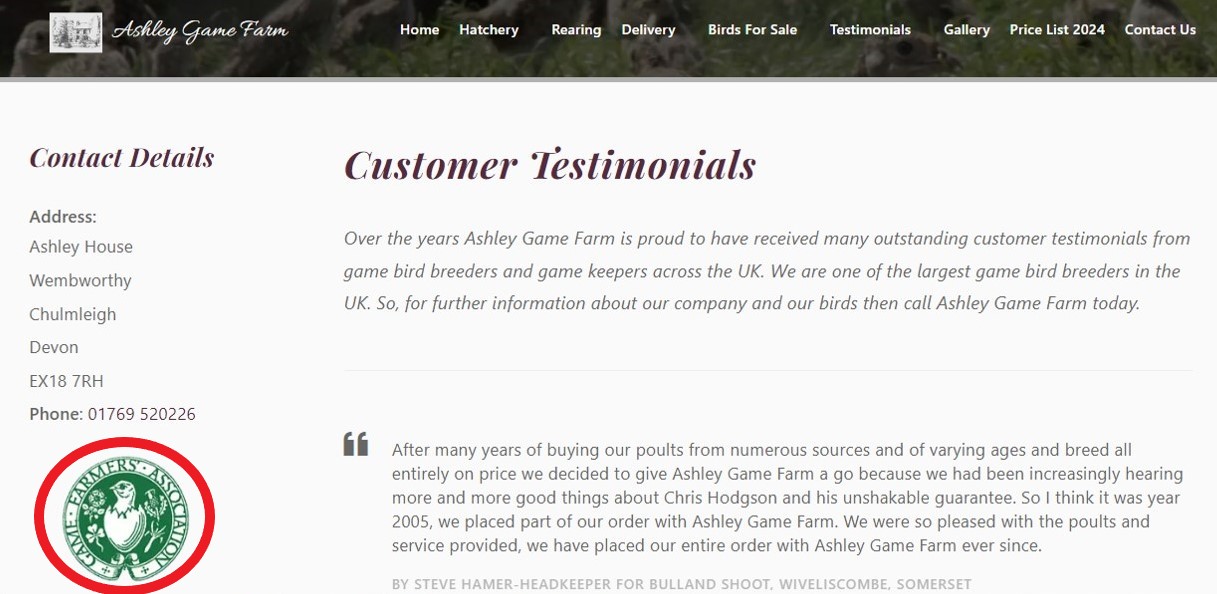
Ashley Game Farm Ltd displays the logo of the Game Farmers’ Association on its website:

The Game Farmers’ Association (strapline: ‘representing the UK’s game farmers & promoting high standards‘) is one of the eight organisations in the shooting industry’s umbrella partnership, ‘Aim to Sustain‘, a lobbying campaign group aimed at promoting ‘sustainable and responsible’ game shooting. Presumably Christopher Hodgson and Ashley Game Farm Ltd will be expelled as a result of this criminal conviction.

Hodgson will appear in court in Exeter on 18 July 2024 for sentencing.

Well done to Devon & Cornwall Police, National Wildlife Crime Unit, Natural England and the RSPB’s Investigations Team for excellent partnership-working.

UPDATE 20 July 2024: Poisoned buzzard leads to discovery of multiple pesticide offences – Ashley Game Farm & Director Christopher Hodgson fined £40,000+ (here)

Suspected shooting of a buzzard in North York Moors National Park – police appeal for information

Press release from North Yorkshire Police (23 April 2024):

SUSPECTED SHOOTING OF A BUZZARD ON NORTH YORK MOORS

Our Rural Task Force is appealing for information following the suspected shooting of a buzzard in the North York Moors National Park.

The Buzzard is thought to have been killed near to Laskill, Bilsdale, on Thursday 4 April, and we’re appealing for anyone who saw any suspicious people or vehicles in the area to please come forward.

Buzzard. Photo by Pete Walkden

Buzzards and all other birds of prey are legally protected by the Wildlife and Countryside Act 1981. To intentionally kill or injure one is a criminal offence which could result in an unlimited fine or up to six months in jail.

If you have any information that could help please email tom.gaunt@northyorkshire.police.uk or call North Yorkshire Police on 101, select option 2 and ask for PC Tom Gaunt.

If you wish to remain anonymous you can contact Crimestoppers on 0800 555 111 or online at crimestoppers-uk.org

Please quote NYP reference 12240059635 when passing on information.

ENDS

This is a bit of an odd press release. The appeal for information is in relation to a ‘suspected shooting’ so I guess we can assume an injured/dead buzzard wasn’t found otherwise it’d have been x-rayed which would have confirmed whether it’d been shot or not.

It wouldn’t be a surprise to learn that another buzzard had been shot here though. This so-called National Park, where the landscape is dominated by driven grouse moors, is a well-known hot bed of raptor persecution where there are repeated crimes against birds of prey, mostly involving shooting or poisoning (e.g. here, here, here, here, here, here, here).