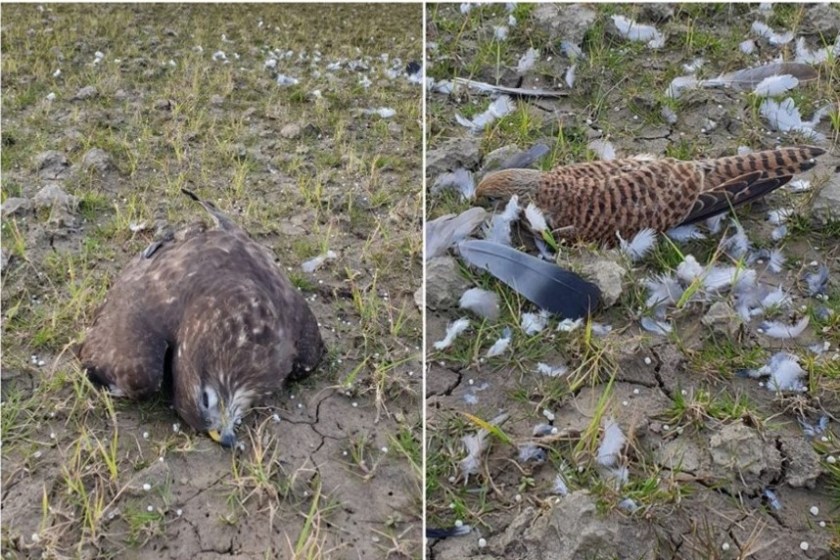
A buzzard has been found illegally poisoned in the Peak District National Park.
A poisoned bait (a red-legged partridge) was found close by.
Toxicology tests revealed both the buzzard and the partridge contained the pesticide Alphachloralose.
[The poisoned buzzard. Photo by Peak District Raptor Monitoring Group]
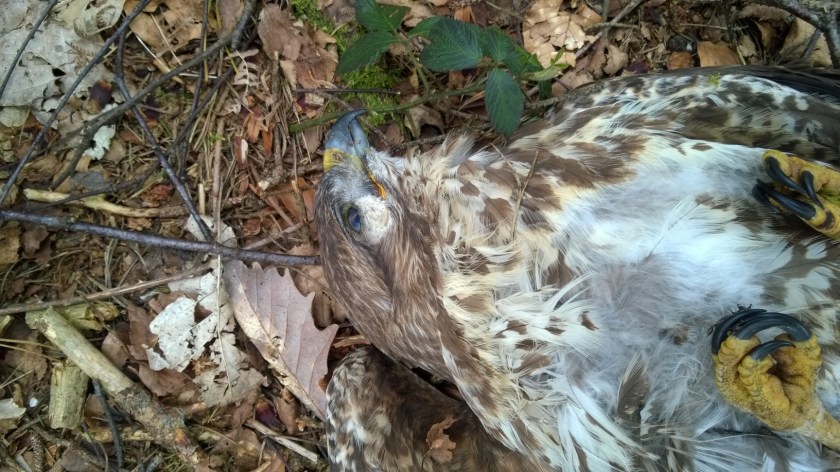
The thing is, this illegally poisoned buzzard wasn’t found in January, or December, or in any other recent month. It was discovered on 14th April 2019.
The police decided, for whatever reason, that it was best to keep quiet about this. There were no public appeals for information and no public warnings that a poisoner was actively placing baits containing dangerous, highly toxic chemicals out in the countryside. Baits that if touched by a child, adult or a dog could result in acute illness and even death.
Two weeks ago the RSPB issued a press statement about this poisoning crime that reads as follows:
BUZZARD POISONED IN PEAK DISTRICT NATIONAL PARK
22 January 2020
A protected bird of prey has been illegally poisoned in one of the UK’s worst raptor persecution blackspots.
In April 2019 a member of the public found a buzzard freshly dead in woodland near Tintwistle, just north of Valehouse Reservoir, in the Peak District National Park. Close by were the remains of a red-legged partridge.
A post-mortem and toxicology tests under taken by Natural England showed that the buzzard and partridge both contained the pesticide Alphachloralose.
Natural England concluded that ‘abuse of chloralose, using a bird bait, has occurred at this location and at least one buzzard has been poisoned’.
All birds of prey are protected by the Wildlife and Countryside Act 1981. To kill or injure one is a criminal offence and could result in an unlimited fine or up to six months in jail. Derbyshire Police were made aware at the time of the discovery and informed of the toxicology result in August.
Alphachloralose is one of the most commonly abused pesticides for illegally targeting birds of prey.
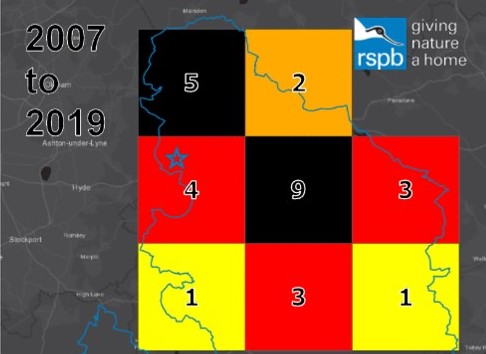
The northern Dark Peak has been the scene of many crimes involving the poisoning, trapping and shooting of birds of prey, making it one of the UK’s worst blackspots, according to the RSPB’s recent Birdcrime report. A scientific article, Raptor Persecution in the Peak District National Park, cemented the link between raptor persecution and land managed for driven grouse shooting in the Peak District National Park.
[Confirmed raptor persecution crimes in the Dark Peak area of the Peak District National Park, 2007-2019. Map produced by RSPB]
Howard Jones, Investigations Officer at the RSPB, said: “The relentless destruction of birds of prey in the Dark Peak needs to stop. This area has become a black hole for birds of prey like buzzards though this is exactly the habitat where they should be thriving. Deliberately poisoning birds is not only illegal but incredibly dangerous to other wildlife, not to mention people and pets. What if a dog or a child had found this and touched it? It doesn’t bear thinking about.”
If you have any information relating to this incident, call Derbyshire Police on 101.
If you find a wild bird of prey which you suspect has been illegally killed, contact RSPB investigations on 01767 680551 or fill in the online form.
ENDS
When you’ve read more of these types of press release than you care to remember, you get a feel for style and content. It seems quite apparent that this is not a joint press release between the RSPB and the police, as so many of them often are. There’s no quote from an investigating police officer, there’s no incident number, and there’s a pointed sentence that Derbyshire Police were informed of the incident in April and updated with the toxicology results in August.
And then there’s this recent blog about the poisoning incident from the Peak District Raptor Monitoring Group, which is a bit difficult to follow because it references unsighted material and various unnamed email correspondents. However, what does seem clear is that someone from the shooting industry is claiming that a police officer said this poisoning incident was suspicious but ‘definitely not illegal persecution’.
Er…..right.
Haven’t we been in this position before, where it looked like deliberate attempts were being made to suppress confirmed raptor crimes in the Peak District National Park?
Let’s hope that isn’t what’s going on here, but nevertheless, there is absolutely no excuse for the police not to have warned the public about the presence of potentially lethal poisonous baits, at the time they were discovered, especially inside one of the country’s most visited National Parks.
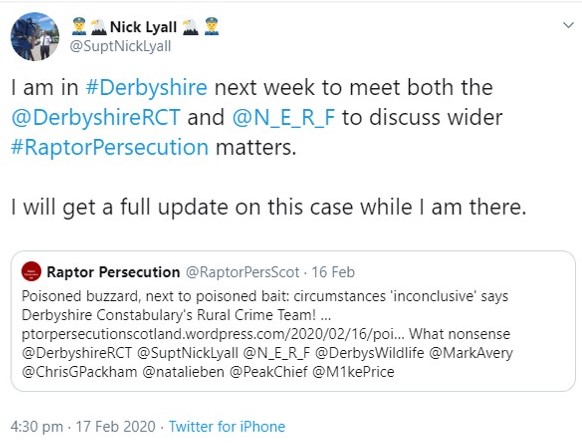
UPDATE 16 February 2020: Poisoned buzzard, next to poisoned bait: circumstances ‘inconclusive’ says Derbyshire Constabulary! (here)
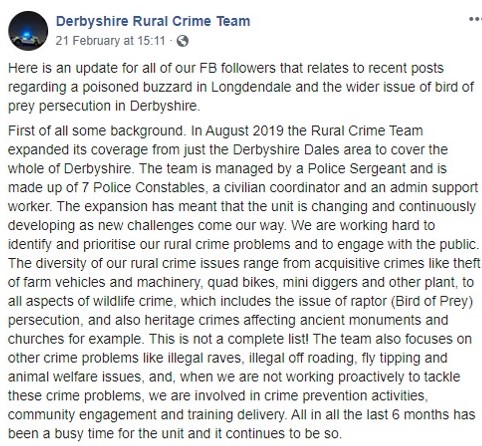
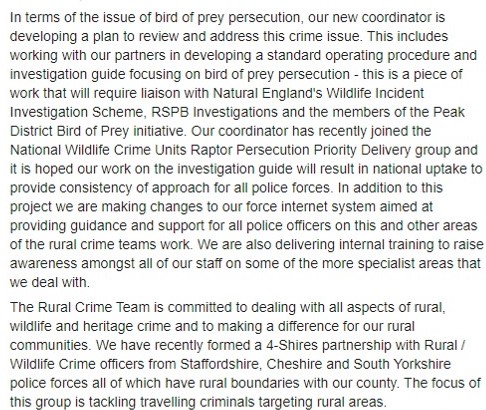
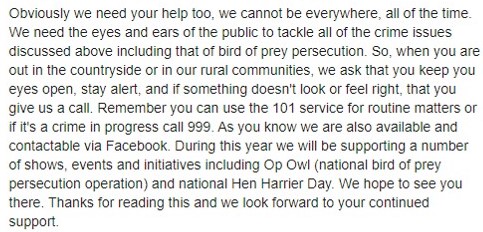
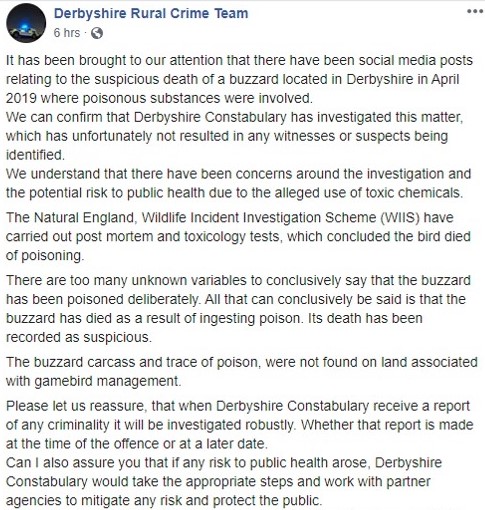
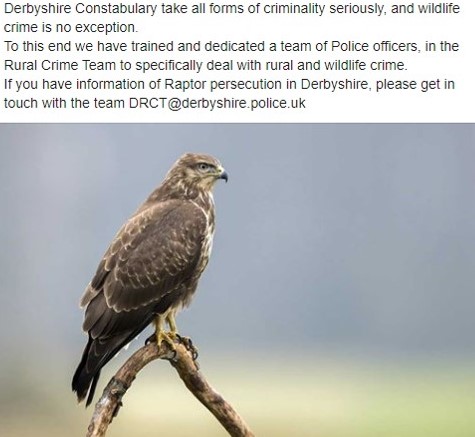
UPDATE 23 February 2020: Derbyshire Police respond to criticism over poisoned buzzard investigation (here)






 Raptor Persecution UK