More detail about the missing White-tailed Eagle in mid-Wales

Further to the news on Thursday (here) that three White-tailed Eagles have ‘disappeared’ in suspicious circumstances, one in England, one in Wales and one in Scotland, Dyfed-Powys Police has issued a separate public appeal for information which includes a bit more detail about the Welsh case.

I’ve added some commentary below the police press release.

Dyfed-Powys Press Release:

Dyfed-Powys Police are appealing for information regarding the suspicious disappearance of a satellite tagged white-tailed eagle in the Newtown area of mid Wales.

Dyfed-Powys Police and the UK National Wildlife Crime Unit (NWCU) are jointly investigating the disappearance of a white-tailed eagle and the theft and disposal of its satellite tag and harness.

The satellite tag has been recovered from remote moorland in this area and shows that it has been removed from the bird with a sharp instrument, most likely a knife, before being hidden in an attempt to dispose of it.  

Searches in the area to try and locate the body of the bird have so far been unsuccessful.

Police are appealing for anyone who was in the following areas at the specified times to contact police.

  • Between 11am and 1pm on Saturday 13th September 2025 at or around the Gwgia Reservoir, Tregynon (W3W///visa.hoped.assess)
  • Between midday and 3pm on Saturday 13th September 2025 on access land near Bryn y Fawnog (W3W///portfolio.newsprint.eyelash)

Dyfed-Powys Police can be contacted either online by emailing 101@dyfed-powys.police.uk, or by calling 101, quoting police Ref. 25000766626.

Alternatively, contact the independent charity Crimestoppers anonymously by calling 0800 555111, or visiting crimestoppers-uk.org.

All potential lines of enquiry, including detailed forensics such as DNA and fingerprints, are being pursued. Dyfed-Powys Police and NWCU are working closely with the tag owners, the Roy Dennis Wildlife Foundation and Forestry England, to analyse the data, and progress this investigation.

ENDS

Juvenile White-tailed Eagle, photo by Pete Walkden

My commentary:

This isn’t the first raptor persecution incident in this pheasant-shooting area.

In April 2020, a member of the public found the corpses of two Red Kites, which she thought was suspicious. She photographed them and posted the images on social media, intending to return the next day.

Wildlife TV presenter Iolo Williams saw the post and headed out to the location that evening. The two bodies had ‘disappeared’ but Iolo found the body of a third Red Kite, which was later x-rayed and found to contain shotgun pellets (see here).

A police investigation was launched but didn’t result in anyone being charged or prosecuted.

This area was also in the news in November 2018 when the League Against Cruel Sports revealed that 57,000 Pheasants had been released over a five-year period at Gregynog Hall, owned at the time by the University of Wales, with shooting reportedly leased to Bettws Hall Estates. The League launched a campaign to stop gamebird shooting on the estate.

In response, a spokesperson for the University of Wales told BBC News, “The University of Wales has received the correspondence from the League Against Cruel Sports regarding this matter, and is currently in the process of reviewing the structure and arrangements for Gregynog Hall” (see here).

The shooting lease for 2019 was not renewed whilst the review was undertaken (see here).

However, my research suggests that a Pheasant-shooting lease is still in operation, no longer run by Bettws Hall Estates, but apparently by the Ian Coley Sporting Agency, whose website lists the shoot as “beautiful valleys teeming with pheasants and partridge“.
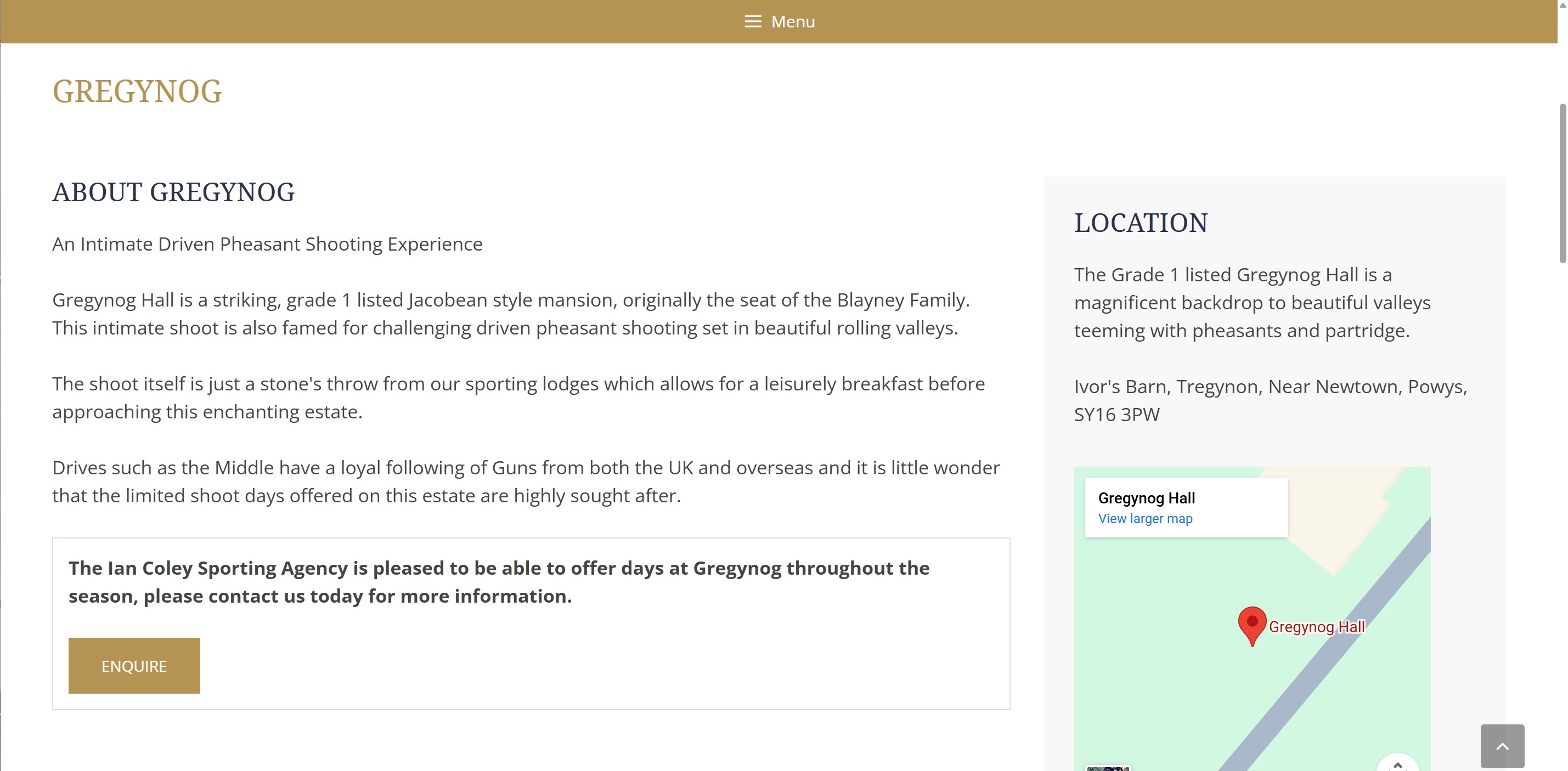
However, according to a Trustees report (2022) of The Gregynog Trust, the new landowners, shooting leases have been terminated.

There’s no suggestion that anyone connected with the shoot was involved with the disappearance of the young White-tailed Eagle at Gwgia Reservoir (part of the Gregynog Estate) or the removal of his satellite tag, probably with a sharp knife, before a crude attempt to hide it on a nearby hillside, and I’m sure they’ll have been keen to assist the police with its investigation.

Since 2019, Gregynog Hall and estate has been run by a charitable trust (The Gregynog Trust) and I’m sure the Trustees are appalled that this young White-tailed Eagle was apparently targeted on its estate.

UPDATE 16.00hrs: I’ve received communication from a representative of The Gregynog Trust who says the incident is not on their land, and “We do not condone or allow any form of hunting or blood sports on our estate, this is not negotiable“. This information conflicts with the published information I’ve found during my research, but until I can clarify that, please do not contact The Gregynog Trust about this incident.

Three satellite-tagged White-tailed Eagles disappear in suspicious circumstances in England, Wales & Scotland – two tags had been cut off

Press release from Forestry England (17 December 2025)

THREE WHITE-TAILED EAGLES DISAPPEAR IN SUSPICIOUS CIRCUMSTANCES

The public are being asked to help the police investigate the suspicious disappearance of three white-tailed eagles. The cases include a chick born in the wild earlier this year in Sussex, one of the first white-tailed eagles to fledge in England for hundreds of years.

White-tailed Eagle G842 on the nest with its sibling in Sussex prior to fledging earlier this year (Photo: Forestry England)

The missing birds are part of a project led by Forestry England and the Roy Dennis Wildlife Foundation to reintroduce this lost species to England. Their disappearance is being investigated by several police forces and the National Wildlife Crime Unit.

The return of white-tailed eagles to England is one of the country’s key conservation successes over recent years. Since 2019, 45 white- tailed eagles have been released. Several breeding pairs have formed with six chicks being born in the wild for the first time since the 1780’s. Any targeting of the birds will potentially impact the long-term success of the project.

All of the released birds are tagged with satellite trackers allowing the team to closely follow their location and movements. In September the trackers of two eagles were found dumped close to the birds’ last recorded location. Both had been cut off the birds using a sharp instrument. In the case of another eagle, its tag has stopped sending data. The last message received from the device was on 8 November and no sightings of the bird have been recorded since then.

 Tim Mackrill from the Roy Dennis Wildlife Foundation said: “We monitor the satellite data, showing the bird’s minute-by-minute movements, on a daily basis and always investigate any suspicious or unusual data. It was devastating to find the stolen and dumped tags, particularly for the chick in Sussex who fledged this summer and had only just begun its life. So many people in the area had shared the joy of seeing these birds breed again after hundreds of years and our ongoing monitoring has shown how well they were fitting into the landscape. To have that destroyed just a few months later is deeply shocking“.

Steve Egerton-Read, White-Tailed Eagle Project Officer for Forestry England, said: “We are returning this lost species to the English landscape and have had so much support from the public. These special birds are helping people connect with natural world and showing how with a little bit of help nature can thrive. We are asking the public to show this support again by encouraging anyone who has information that may help the police investigation to come forward“.

There was tremendous public support and local pride this summer when two white-tailed eagle chicks fledged from a nest in Sussex. Both were the offspring of eagles released by the project in 2020 and the first pair to successfully breed in England for over 240 years. The two chicks had spent the first few months of their lives exploring the local West Sussex area.

On 26 September, a satellite tag belonging to one of the chicks (G842) was recovered from the River Rother, near Petersfield. It had been removed from the bird using a sharp instrument. Searches in the area to try and locate the body of the bird have so far been unsuccessful.

Sussex Police are appealing for information from anyone who was in or around Harting Down and Petersfield on the evening of 20 September 2025. Any members of the public who may have seen the bird or any suspicious behaviour can contact them on 101 or 0800 555 111 quoting incident number 769.

Dyfed Powys Police are investigating a similar incident on 13 September, where a satellite tag belonging to white-tailed eagle G615 was recovered in remote moorland. The tag had been removed with a sharp instrument before being hidden in an attempt to dispose of it. Searches in the area to try and locate the body of the bird have so far been unsuccessful.

The force is interested in hearing from anyone who was at or around the Gwgia Reservoir, Tregynon between 11am and 1pm or on access land near Bryn y Fawnog between 12 noon and 3pm on 13 September. Callers should quote crime reference number 137.

In a third incident, concerns are growing for G819 after its tag, which usually transmits the data daily, has stopped working. The last transmission was sent on 8 November in the Moorfoot Hills area. Police Scotland are treating the disappearance as suspicious and asking anyone with information to contact them on 101 or 0800 555 111 quoting incident number PS-20251215-1347.

The reintroduction of white-tailed eagles is conducted under licence from Natural England, the Government’s wildlife licensing authority. White-tailed eagles are a protected species under the Wildlife and Countryside Act (1981). Disturbing, destroying or interfering with them and their nests are criminal offences.

ENDS

My commentary:

Hands up, who’s surprised?

No, me neither.

These reports are so depressingly familiar these days, we’ve pretty much come to expect them. Although there’s something particularly sickening about killing a White-tailed Eagle. It’s no lesser crime, in the eyes of the law, than killing a more common species like a Buzzard or a Sparrowhawk – the offence is the same and the available penalty is the same. But these eagles, the UK’s largest raptor, have been brought back from the brink through intensive conservation efforts by many people over many decades. Progress has been hard-won, because these birds are slow to mature (between 4-6 yrs) and when they do eventually reproduce they generally only manage to rear one or two chicks per season, on rare occasions three, and they don’t necessarily breed every year, which means that population recovery is slow. Any illegal killing, on top of natural mortality, is obviously going to hamper that reestablishment.

And there’s no doubt whatsoever that at least two of these eagles were the victims of illegal persecution, given the clear evidence that their satellite tags had been cut off and crude attempts were made to hide them. Given the area in south Scotland where the third White-tailed Eagle has vanished, a well-known persecution hotspot, it wouldn’t be a surprise to learn that that bird has also been killed illegally, most likely shot.

Kudos to the White-tailed Eagle Reintroduction team (Roy Dennis Wildlife Foundation & Forestry England) for putting out an appeal for information after three months of silence from Dyfed-Powys Police and Sussex Police.

UPDATE 18 December 2025: More detail on the ‘missing’ White-tailed Eagle in south Scotland (here)

UPDATE 19 December 2025: More detail about the missing White-tailed Eagle in mid-Wales (here)

UPDATE 19 December 2025: Fourth White-tailed Eagle ‘disappears’ & RSPB offers £10,000 reward for information leading to a conviction (here)

North Wales Police investigation launched after snares found set next to Ruabon Moor, two years after ban

Press release from Green Britain Foundation (23 October 2025)

LANDMARK: FIRST FORMAL ILLEGAL SNARE-USE INVESTIGATION SINCE BANS IN WALES/SCOTLAND

Footage obtained by Green Britain Foundation shows alleged snare-setting at a stink pit near Ruabon Moor, North Wales

Green Britain Foundation (GBF) has obtained undercover footage prompting what is believed to be the first formal police investigation in either Wales or Scotland into suspected snare use since the bans came into force. The footage shows individuals checking and setting snares at a stink pit* on the edge of Ruabon Grouse Moor in North Wales, within Llandegla Forest. The footage has been supplied to North Wales Police and a formal investigation is now underway.

*A “stink pit” is a bait site where dead animals (“carcasses”) are piled specifically to attract wildlife, typically predators, towards surrounding snares.

Snares are illegal in Wales (since 2023) and banned in Scotland (since 2024). Offences include setting a snare and permitting snares to be set on one’s land.

Snare set next to stink pit next to Ruabon Moor (photo copyright Green Britain Foundation)
Dead Red-legged Partridges chucked on the stink pit (photo copyright Green Britain Foundation)

Dale Vince, Founder, Green Britain Foundation, says:

Snares are medieval cruelty. Wales and Scotland banned them for good reason. This footage shows people ignoring the law, continuing to use snares to kill wild animals in support of the bloodsport business. Snares are indiscriminate, killing all kinds of wildlife in the most hideously cruel way. The police are investigating, and that’s welcome. Landowners are complicit in this, snares are used to kill wildlife in support of bird breeding as part of the business – shooting birds for sport and for money. Labour should make good on its pre-election pledge and ban snares in England – without further delay.”

What the footage shows

28 June 2025 – live snares documented ~20m inside the Llandegla Forest boundary, arranged around a “stink pit” (carcasses used to attract predators).

30 June – 15 August 2025 – Covert cameras record multiple visits by several individuals believed to be engaged in gamekeeping; apparent checking/adjusting of snares and servicing of the site.

25 July 2025 – Carcasses of red-legged partridges logged at the stink pit.

25 August 2025 – Police notified; officers attended, documented the scene, and removed snares as evidence.

Status: North Wales Police have commenced a formal investigation.

Why it matters

  1. Landmark enforcement moment: Believed to be the first formal police investigation into suspected snare use in a UK nation after the bans in Wales and Scotland—an early indicator of how enforcement will work in practice.
  2. Purpose on shooting estates: Snares are commonly deployed as “predator control” to maximise numbers of grouse and other gamebirds for commercial and recreational shoots—in short, a tool to ensure those who shoot birds for fun can shoot more of them.
  3. Indiscriminate by design: Snares cannot select species—they can and do catch non-target wildlife (such as badgers) and have been known to catch pet cats and dogs.
  4. Landowner responsibility: We understand Llandegla Forest is linked to estates associated with the Church Commissioners for England. GBF calls for full cooperation and compliance audits across relevant holdings.
  5. England’s policy gap: England has not yet introduced a snaring ban. With workable bans in Wales and Scotland, GBF urges the Labour Government to make good on its pledge and implement a ban in England as a priority.

ENDS

This is interesting on several levels.

First of all, as the press release points out, this is believed to be the first police investigation into alleged snaring offences since snaring was banned in Wales two years ago. Given the high quality close footage provided to North Wales Police, there shouldn’t be any of the usual problems of not being able to identify the individuals seen attending the site.

Secondly, the location of the alleged offence is next to Ruabon Moor, the only grouse-shooting estate in North Wales. Ruabon Moor has been at the centre of a number of police investigations in recent years, including the suspicious disappearance of a number of satellite-tagged Hen Harriers, the discovery of a poisoned Raven, and the suspected use of a trap to capture Goshawks. In addition, a couple of years ago another group, called Wildlife Guardian, documented some strange behaviour on Ruabon Moor (here)

Nobody has been convicted of any offences at Ruabon Moor. A prosecution against a gamekeeper (for alleged use of a trap to take a wild bird) was abandoned last year after the Crown Prosecution Service determined that it was not in the public interest to continue – a decision that was challenged by the RSPB, North Wales Police and the National Wildlife Crime Unit (see here).

The third point of interest is the group that has brought the latest alleged offences to the attention of North Wales Police. As far as I’m aware, this is the first foray into wildlife crime investigations by the Green Britain Foundation. They’ve managed to get wide press coverage, including on the BBC News website. Excellent work.

I look forward to seeing how this case progresses.

Two dead birds of prey ‘found in suspicious circumstances’ – Gwent Police investigating

The following statement and photo was posted on social media on 19 January 2025:

GWENT POLICE: Another busy weekend for the rural crime team that included responding to a report of 2 dead birds of prey. Found in suspicious circumstances, they have been recovered for autopsy via the Wildlife Investigation Team (WIIS).

No further details available at the moment.

Wildlife crime at worrying levels while convictions at an all-time low, say conservationists

A coalition of wildlife and environmental groups, working as a consortium under the Wildlife & Countryside Link banner, has published its latest annual Wildlife Crime Report (2023).

This latest publication reveals that reports of wildlife crime levels have remained stubbornly high since a surge during the Covid-19 pandemic, with 4,735 incidents reported in 2023. There were increased instances of persecution, harm or death being reported for badgers, bats and marine mammals in 2023, yet convictions for wildlife crime remain shockingly few, with numbers at an all-time low when looking at all the types of wildlife crime.

To properly tackle the issue of wildlife crime, LINK’s wildlife crime group is calling for the following actions (most of which were also recommended by a UN report in 2021):

1. Making wildlife crimes notifiable to the Home Office, so such crimes are officially recorded in national statistics. This would better enable police forces to gauge the true extent of wildlife crime and to plan strategically to address it.

2. Increasing resources & training for wildlife crime teams in police forces. Significant investment in expanding wildlife and rural crime teams across police forces in England & Wales, would enable further investigations, and lead to further successful prosecutions. Funding for the National Wildlife Crime Unit should be increased in line with inflation, to allow the Unit to continue its excellent work.

3. Sentencing guidelines for wildlife crimes. No sentencing guidelines are currently in place for wildlife crimes so judges tend to err towards caution and the lower end of the sanction scale for wildlife crime convictions. The Sentencing Council should consult on sentencing guidelines in England and Wales for a range of key wildlife crimes, including breaches of the Wildlife & Countryside Act, Hunting Act, Protection of Badgers Act, Habitats Regulations, and Control of Trade in Endangered Species (COTES) regulations.

The 2023 Wildlife Crime Report can be read/downloaded here:

Welsh wildlife photographer convicted for disturbing Honey Buzzard nest without a licence

Press release from South Wales Police (28 June 2024):

NEATH MAN GUILTY OF DISTURBING RARE BIRDS OF PREY

A 68-year-old man from Neath has appeared before Swansea Magistrates Court where he was found guilty and fined more than £1,600 pounds for offences against the Wildlife and Countryside Act 1981 after disturbing a nest of one of the country’s rarest birds.

Honey Buzzard photo by the BBC Wildlife Unit

On Tuesday, June 25, John Paul Haffield was sentenced following a trial of disturbing a nest containing an extremely rare breeding pair of Honey Buzzards and their eggs.

He visited nest sites of Schedule 1 protected birds such as birds of prey and other species throughout Wales taking photographs of the birds and their young or their eggs within the nest and then offered those photographs for sale online on his own website.

The website contained more than 200 photographs of birds, many of which were protected under Schedule 1 of the Wildlife and Countryside Act. Amongst those photographs were pictures of the Honey Buzzard, which he visited on a number of occasions.  It is currently the only recorded nest in Wales.

Police Constable Mark Powell on secondment with the Natural Resources Wales Industry Regulation team said:

Officers from Natural Resources Wales are successfully working with police forces across Wales, and the National Wildlife Crime Unit to investigate and prosecute those responsible for committing wildlife and rural crime offences.

This was a particularly upsetting case. The defendant was actively taking photographs of birds protected under Schedule 1 and offering them for sale.

Climbing to nests causes extreme stress to adult birds resulting in eggs not being properly incubated. On the Honey Buzzard nest there were two eggs and one failed.

This is very disappointing as the Honey Buzzard is considered to be one of the rarest birds in Wales and this was the only known nest. Recently the nest featured on the BBC documentary Iolo’s Valleys and is actively monitored as part of a nest monitoring programme to help ensure the species survival.

Mr Haffield maintained his innocence and elected to go to trial. Unfortunately for him he was found guilty and received fines and costs totalling £1,620.

“I would like to thank the Licencing Team at NRW and the expert witnesses who gave evidence in Court. Multi agency cooperation has never been better and together we will continue to investigate and prosecute offenders“.

To report an environmental incident, please contact NRW’s Incident communication line open 24/7, on 0300 065 3000.

ENDS

Defence solicitor in prosecution against gamekeeper Stuart Hart wants to challenge admissibility of RSPB video evidence

The first hearing in the case against gamekeeper Stuart Hart was heard at Wrexham Magistrates, North Wales last Thursday (28 March 2024).

Hart, 47, faces two charges – Using a trap to kill or take a wild bird (in this case, a Goshawk) and possession of an article capable of being used to commit a summary offence (see here for earlier blog).

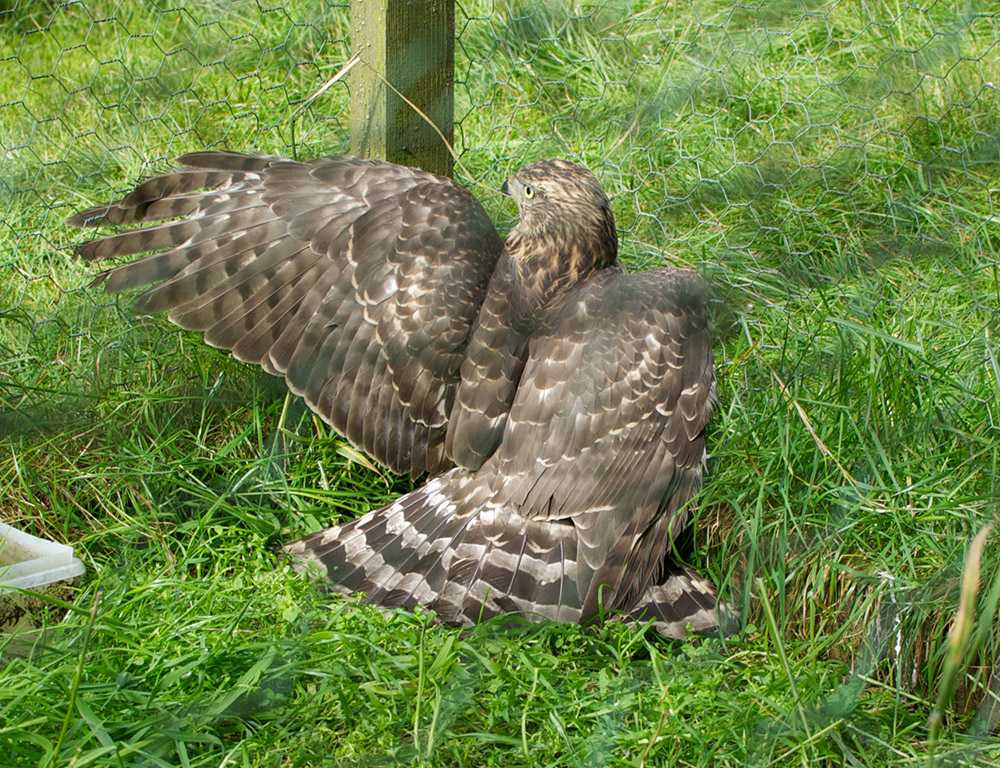
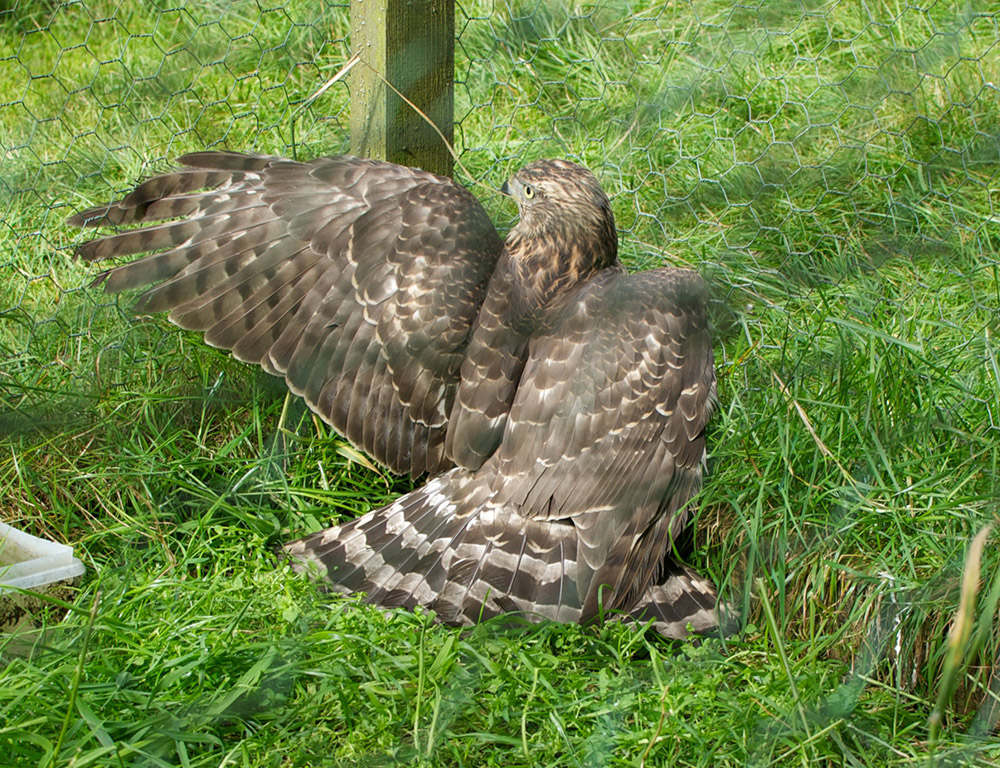
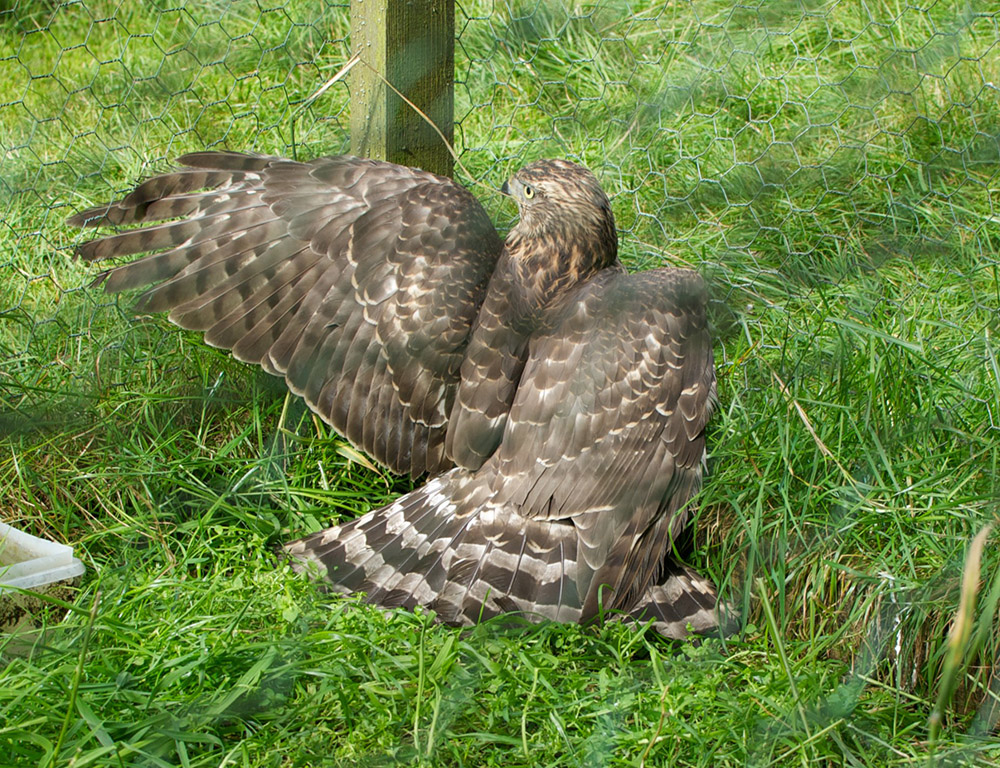
Young goshawk in a cage trap. Photo by RSPB (file photo, not linked to this case)

Hart’s defence solicitor, Michael Kenyon, told the court there were procedural errors in the way the case had been brought, and in addition he wanted to challenge the admissibility of the RSPB’s video evidence, so the case was adjourned to be heard by a District Judge. (A District Judge is legally-qualified, usually a former solicitor or barrister, whereas magistrates are non-legally-qualified volunteers who depend on a qualified legal advisor in the court to direct them on the relevant law).

Hart has not yet entered a plea.

Michael Kenyon will be a familiar name to those who follow raptor persecution prosecutions. He represented gamekeeper Timothy Cowin in 2018 who was accused of shooting dead two short-eared owls on Whernside, Cumbria after being caught on camera by RSPB Investigations staff. Kenyon challenged the procedural basis of that case (e.g. see here), resulting in an extraordinary series of hearings at five different courts across NW England (here). Eventually Cowin was convicted (here).

Hart’s case will next be heard on 30 April 2024.

NB: Comments are turned off for legal reasons until criminal proceedings have concluded.

UPDATE 30 April 2024: Case discontinued against Ruabon Moor gamekeeper Stuart Hart (here)

UPDATE 26 November 2024: Ruabon Moor gamekeeper prosecution – why the case was discontinued (here)

Gamekeeper Stuart Hart due in court tomorrow to face charges of alleged wildlife crime

A gamekeeper is due to appear before Wrexham Magistrates tomorrow (Thurs, 28 March 2024) after being charged with alleged wildlife crime offences.

According to court documents, Stuart Hart, 47, faces two charges – Using a trap to kill or take a wild bird (in this case, a Goshawk) and possession of an article capable of being used to commit a summary offence.

Young goshawk in a cage trap. Photo by RSPB (file photo, not linked to this case)

A press release about this case issued by North Wales Police earlier this month (here) was quite vague, with no details about the date of the alleged offences and no detail about the location other than ‘on the outskirts of Wrexham‘.

Hopefully more detail will be available after tomorrow’s hearing. This will be the defendant’s first court appearance and he’s yet to enter a plea.

NB: Comments are closed until criminal proceedings have concluded.

UPDATE 31 March 2024: Defence solicitor in prosecution against gamekeeper Stuart Hart wants to challenge admissibility of RSPB video evidence (here)

UPDATE 30 April 2024: Case discontinued against Ruabon Moor gamekeeper Stuart Hart (here)

Gamekeeper charged with attempting to trap goshawks in North Wales

Press release from North Wales Police (7th March 2024):

Wrexham man charged with wildlife offences

A man has been charged with attempting to take Goshawks in a cage trap on land on the outskirts of Wrexham.

Young goshawk in a cage trap. Photo by RSPB (file photo, not linked to this case)

Birds of prey such as Goshawk are protected under the Wildlife and Countryside Act 1981.

The 47 year old man from the Wrexham area was postal charged with using a trap for the purpose of killing or taking a wild bird and possessing an article capable of being used to kill or take a wild bird.

He is due to appear before Wrexham Magistrates Court on Thursday, March 28th.

North Wales Police rural crime team will pursue anyone targeting wildlife and continue to work with our partners the RSPB and National Wildlife Crime Unit.

ENDS

This press release is quite vague, and I believe deliberately so. Definitely one to watch. Comments are closed until criminal proceedings have concluded.

UPDATE 9th March 2024: This blog article has been picked up by Nation Cymru, the Welsh news service, here.

UPDATE 27th March 2024: Gamekeeper Stuart Hart due in court tomorrow to face charges of alleged wildlife crime (here)

Trial discontinued for man accused of killing goshawk at pheasant-rearing farm in Wales

A trial against a man accused of killing a goshawk at a pheasant-rearing farm in Wales has been discontinued.

Thomas Edward Jones, 38, was due to stand trial at Welshpool Magistrates Court yesterday after he previously pleaded not guilty at an earlier hearing to the shooting and killing of a goshawk at Pentre Farm in northern Powys in July 2022, where tens of thousands of pheasants are reportedly reared for the game shooting industry (see here, here, here for previous blogs on this case).

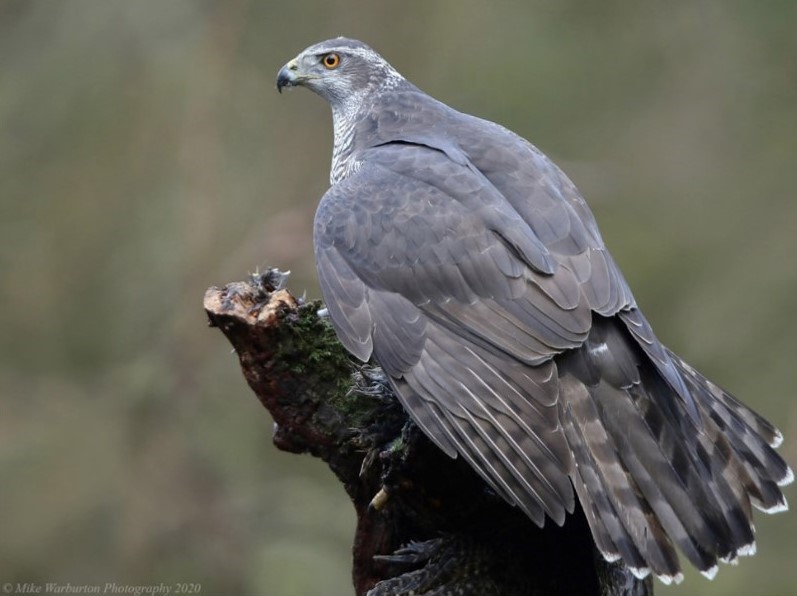
Goshawk photo by Mike Warburton

The RSPB Investigations Team published a tweet yesterday with the following update:

Disappointingly, the trial today has been discontinued by the CPS [Crown Prosecution Service], following the court’s refusal for an adjournment made by the CPS, who then deemed they were not in a position to continue with proceedings‘.

I don’t have any further detail about why the CPS wanted an adjournment or why the court refused to grant it.