Press release from National Parks & Wildlife Service (30 May 2025)
Minister O’Sullivan calls for co-operation in the investigation of the possible poisoning of a white-tailed eagle
The National Parks & Wildlife Service appeals to the public for information
An investigation is underway following the discovery of one of Ireland’s oldest breeding white-tailed eagles, Caimin (Y) who was found dead in Clare last Saturday. Initial post mortem results from the Regional Veterinary Laboratory indicate a possible death from poisoning.
Caimin held territory at the Mountshannon nest site on Lough Derg for the past seventeen years. During that time, he mated and fledged a number of chicks. He was one of the first chicks to arrive as part of an NPWS Reintroduction Programme to bring back this formerly extinct species to Irish skies and was released from Killarney National Park in 2008. All of the white-tailed eagle chicks reintroduced under the programme are fitted with satellite tags, which enables them to be monitored and tracked.
White-tailed Eagle ‘Caimin’. Photo by Bob Foyle
In 2013, Camin mated with Saoirshe, a female eagle who was also part of the Reintroduction Programme. They became the first white-tailed eagles to successfully raise and fledge chicks in the wild in Ireland in over one hundred years. Caimin raised and fledged chicks into the wild until 2016, when Saoirshe died of Avian Influenza. He held the territory and mated again with Bernardine (B) in 2023 to successfully fledge more chicks to the wild from the same nest site in Mountshannon. Despite the loss of her mate, Bernardine is continuing to raise a chick on the nest site in Mountshannon.
Minister of State for Nature, Heritage and Biodiversity, Christopher O’Sullivan said:
“Any loss in the wild not due to natural causes, is usually the result of human activity and this tragic loss of a wonderfully aged bird, breeding happily in the Irish wild, is deeply regrettable.
“The Reintroduction Programme had been making significant progress in restoring this lost flagship species to Irish skies. These birds are part of Ireland’s natural heritage and are important for our biodiversity, as they are a good indicator species regarding the health of our ecosystems.
“We will continue with our efforts to introduce, nurture and protect these birds and I have tasked the NPWS with leaving no stone unturned to try to get to the bottom of this heinous potential crime.”
Eamonn Meskell, Divisional Manager, NPWS said:
“The knowing destruction of this wonderful bird of prey displays a wanton disregard for our re-introduction and nature protection efforts.
“These noble birds are beloved of the public and each loss is keenly felt by them and indeed by the staff of NPWS who have nurtured these birds from chicks to fledglings, onto adult life and into successfully breeding pairs. We know we can rely on the public’s help in this investigation”.
The main threat to the species in Ireland is persecution, predominantly through shooting and the illegal use of poison and wind turbine strikes. The misuse/illegal use of poisons accounts for nearly 50% of eagle deaths where the cause of mortality was able to be determined. Other causes of death include wind turbine strikes, lead shot poisoning and shooting. Avian Influenza and adverse weather also negatively impacted the breeding population.
If you have any information, please notify your local Garda station or your local National Parks and Wildlife Service office.
Press release from The National Parks & Wildlife Service (NPWS), 14 January 2025:
INVESTIGATION UNDERWAY FOLLOWING THE DEATH OF A WHITE-TAILED EAGLE IN COUNTY WESTMEATH
The National Parks and Wildlife Service (NPWS) appeal to the public for information.
The NPWS has launched an investigation following the recent shooting dead of a White-tailed Eagle beside Lough Owel, near Mullingar, Co. Westmeath and is appealing to the public for information.
The two-year old female eagle was part of the NPWS White-tailed Eagle Reintroduction Programme. She was released in 2022 on the Shannon Estuary. Investigating officers have established that the bird was shot, but, are awaiting further results of forensic analysis that may provide additional information.
The NPWS deplores the deliberate killing of rare and endangered species, and takes bird of prey persecutions extremely seriously.
NPWS is appealing for any information the public may have in relation to the incident.
As part of the reintroduction programme, White-tailed Eagle chicks are fitted with satellite tags to monitor their movement. Information from the satellite tag for the dead eagle indicates that she died sometime on Friday the 6th of December, the day before Storm Darragh, in the Ballynafid / Portnashangan area at Lough Owel.
Satellite information shows that she was present in the area over the previous couple of weeks having travelled widely across the country since her release in 2022. In early 2023, she left north Kerry, and spent time at various locations along the western seaboard. She also travelled to Donegal and spent a lot of time making trips over and back to north Antrim, Fermanagh, Cavan and other counties, including visiting Lough Ree in the north midlands. Lately she had come back to Westmeath where she moved between local lakes- Lough Owel, Lough Derravaragh and Lough Ennell.
Members of the public can contact the NPWS by emailing wildlifeenforcement@npws.gov.ie. All reports will be treated in the strictest of confidence.
ENDS
There is a further NWPS statement dated 15 January 2025:
MINISTER NOONAN APPEALS TO THE PUBLIC FOR INFORMATION FOLLOWING THE DEATH OF A WHITE-TAILED EAGLE AT LOUGH OWEL IN CO. WESTMEATH
“Like all who cherish our wildlife, I was devastated to hear of the recent shooting dead of a White-tailed Eagle beside Lough Owel, near Mullingar in Co. Westmeath. White Tailed Eagles are magnificent creatures; their presence are such good indicators of the health of our ecosystems and countryside and now part of our wider efforts to restore nature. It is an absolute deplorable act to kill such a rare and endangered species.
“This young female eagle was part of the very successful NPWS White Tailed Eagle Reintroduction Programme in partnership with Norway. I was honoured to be present at the release of these stunning creatures to the wild in my role as Minister of State for Nature and Heritage.
“After being released into the Shannon Estuary in 2022 she had peacefully settled into the Irish landscape travelling from north Kerry, spending time in Western Seaboard before travelling to Armagh, Fermanagh, Cavan and other counties, including visiting Lough Ree in the north midlands. Lately she had returned to Westmeath where she moved between local lakes- Lough Owel, Lough Derravaragh and Lough Ennell. Satellite tags fitted by NPWS indicate that she died on 6th December the day before Storm Darragh, in the Ballynafid/ Portnashangan area at Lough Owel.
“White Tailed Eagles are treasured by local communities and visitors to Ireland alike and any loss resonates throughout. I appeal to the public to come forward with any information that they may have in relation to this incident. I am assured that NPWS are undertaking a thorough investigation led by the Wildlife Crime Directorate with the support of An Garda Siochána and will, where possible, bring the perpetrators of this unacceptable crime to justice. Members of the public can contact the NPWS by emailing wildlifeenforcement@npws.gov.ie. All reports will be treated in the strictest of confidence“.
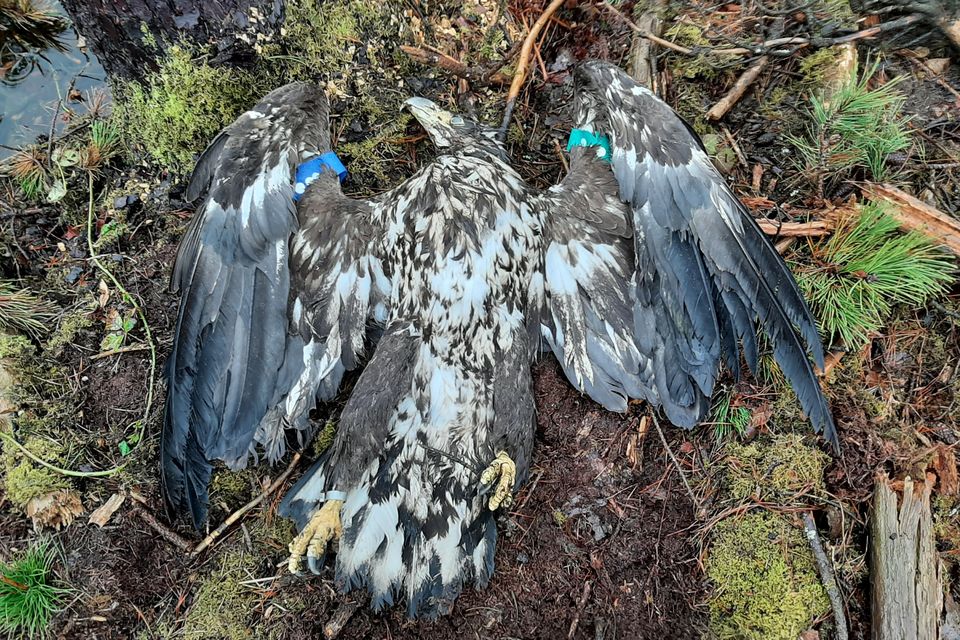
A young female white-tailed eagle has been found shot dead near Cranberry Lough in County Roscommon, Ireland.
She was part of the National Parks and Wildlife Service (NPWS) long-running reintroduction project and had been released at Lough Derg two years ago.
The corpse of the shot white-tailed eagle. Photo: NPWS
As part of the reintroduction project, the young eagles are fitted with satellite tags to monitor their movements. Information from this eagle’s tag suggest she was killed sometime between Monday evening and Tuesday morning on 11th/12th March 2024.
She’d been present in the area for the last few weeks, having previously travelled around the north and west of Ireland once she’d dispersed from Lough Derg almost a year ago.
Director General of the NPWS, Niall Ó Donnchú, said forensic examinations were being conducted which he hoped would provide more information about the weapon used to kill the eagle.
“I deplore this wanton act of violence against this beautiful and endangered bird. We’re asking for the public’s help in bringing the perpetrator of this heinous act of destruction to justice.”
Meanwhile, just over the border in Northern Ireland, the investigation is ongoing into the illegal poisoning of two white-tailed eagles, found dead last year on the only moor that’s managed for driven grouse shooting in NI (here).
For anyone who still wants to pretend that the grouse shooting industry isn’t responsible for the systematic extermination of hen harriers on grouse moors across the UK, here’s the latest catalogue of crime that suggests otherwise.
[This male hen harrier died in 2019 after his leg was almost severed in an illegally set trap that had been placed next to his nest on a Scottish grouse moor (see here). Photo by Ruth Tingay]
This is the blog I now publish after every reported killing or suspicious disappearance.
“They disappear in the same way political dissidents in authoritarian dictatorships have disappeared” (Stephen Barlow, 22 January 2021).
Today the list has been updated to include the nine most recently reported victims, all gone since May 2023 (see here and here).
I’ve been compiling this list only since 2018 because that is the year that the grouse shooting industry ‘leaders’ would have us believe that the criminal persecution of hen harriers had stopped and that these birds were being welcomed back on to the UK’s grouse moors (see here).
This assertion was made shortly before the publication of a devastating new scientific paper that demonstrated that 72% of satellite-tagged hen harriers were confirmed or considered likely to have been illegally killed, and this was ten times more likely to occur over areas of land managed for grouse shooting relative to other land uses (see here). Incidentally, a further scientific paper published in 2023 by scientists at the RSPB, utilising even more recent data, echoed these results – see here).
2018 was also the year that Natural England issued a licence to begin a hen harrier brood meddling trial on grouse moors in northern England. For new blog readers, hen harrier brood meddling is a conservation sham sanctioned by DEFRA as part of its ludicrous ‘Hen Harrier Action Plan‘ and carried out by Natural England (NE), in cahoots with the very industry responsible for the species’ catastrophic decline in England. For more background see here and for a critical evaluation of the trial after 5 years see this report by Wild Justice.
Brood meddling has been described as a sort of ‘gentleman’s agreement’ by commentator Stephen Welch:
“I don’t get it, I thought the idea of that scheme was some kind of trade off – a gentleman’s agreement that the birds would be left in peace if they were moved from grouse moors at a certain density. It seems that one party is not keeping their side of the bargain“.
With at least 110 hen harriers gone since 2018, there is no question that the grouse shooting industry is simply taking the piss. Meanwhile, Natural England pretends that ‘partnership working’ is the way to go and DEFRA Ministers remain silent.
Data compiled by RPUK. *No hen harriers brood meddled in 2018
‘Partnership working’ according to Natural England appears to include authorising the removal of hen harrier chicks from a grouse moor already under investigation by the police for suspected raptor persecution (here) and accepting a £75k ‘donation’ from representatives of the grouse shooting industry that prevents Natural England from criticising them or the sham brood meddling trial (see here). This is in addition to a £10k ‘donation’ that Natural England accepted, under the same terms, in 2021 (here).
So here’s the latest gruesome list. Note that the majority of these birds (but not all) were fitted with satellite tags. How many more [untagged] harriers have been killed?
February 2018: Hen harrier Saorsa ‘disappeared’ in the Angus Glens in Scotland (here). The Scottish Gamekeepers Association later published wholly inaccurate information claiming the bird had been re-sighted. The RSPB dismissed this as “completely false” (here).
5 February 2018: Hen harrier Marc ‘disappeared’ on a grouse moor in Durham (here).
9 February 2018: Hen harrier Aalin ‘disappeared’ on a grouse moor in Wales (here).
March 2018: Hen harrier Blue ‘disappeared’ in the Lake District National Park (here).
March 2018: Hen harrier Finn ‘disappeared’ near Moffat in Scotland (here).
18 April 2018: Hen harrier Lia ‘disappeared’ in Wales and her corpse was retrieved in a field in May 2018. Cause of death was unconfirmed but police treating death as suspicious (here).
8 August 2018: Hen harrier Hilma ‘disappeared’ on a grouse moor in Northumberland (here).
16 August 2018: Hen harrier Athena ‘disappeared’ on a grouse moor in Scotland (here).
26 August 2018: Hen Harrier Octavia ‘disappeared’ on a grouse moor in the Peak District National Park (here).
29 August 2018: Hen harrier Margot ‘disappeared’ on a grouse moor in Scotland (here).
29 August 2018: Hen Harrier Heulwen ‘disappeared’ on a grouse moor in Wales (here).
3 September 2018: Hen harrier Stelmaria ‘disappeared’ on a grouse moor in Scotland (here).
24 September 2018: Hen harrier Heather ‘disappeared’ on a grouse moor in Scotland (here).
2 October 2018: Hen harrier Mabel ‘disappeared’ on a grouse moor on the edge of the Yorkshire Dales National Park (here).
3 October 2018: Hen Harrier Thor ‘disappeared’ next to a grouse moor in Bowland, Lanacashire (here).
23 October 2018: Hen harrier Tom ‘disappeared’ in South Wales (here).
26 October 2018: Hen harrier Arthur ‘disappeared’ on a grouse moor in the North York Moors National Park (here).
1 November 2018: Hen harrier Barney ‘disappeared’ on Bodmin Moor (here).
10 November 2018: Hen harrier Rannoch ‘disappeared’ on a grouse moor in Scotland (here). Her corpse was found nearby in May 2019 – she’d been killed in an illegally-set spring trap (here).
14 November 2018: Hen harrier River ‘disappeared’ on a grouse moor in the Nidderdale AONB (here). Her corpse was found nearby in April 2019 – she’d been illegally shot (here).
16 January 2019: Hen harrier Vulcan ‘disappeared’ in Wiltshire close to Natural England’s proposed reintroduction site (here).
28 January 2019: Hen harrier DeeCee ‘disappeared’ in Glen Esk, a grouse moor area of the Angus Glens (see here).
7 February 2019: Hen harrier Skylar ‘disappeared’ next to a grouse moor in South Lanarkshire (here).
22 April 2019: Hen harrier Marci ‘disappeared’ on a grouse moor in the Cairngorms National Park (here).
26 April 2019: Hen harrier Rain ‘disappeared’ on a grouse moor in Nairnshire (here).
11 May 2019: An untagged male hen harrier was caught in an illegally-set trap next to his nest on a grouse moor in South Lanarkshire. He didn’t survive (here).
7 June 2019: An untagged hen harrier was found dead on a grouse moor in Scotland. A post mortem stated the bird had died as a result of ‘penetrating trauma’ injuries and that this bird had previously been shot (here).
5 September 2019: Wildland Hen Harrier 1 ‘disappeared’ on a grouse moor nr Dalnaspidal on the edge of the Cairngorms National Park (here).
11 September 2019: Hen harrier Romario ‘disappeared’ on a grouse moor in the Cairngorms National Park (here).
14 September 2019: Hen harrier (Brood meddled in 2019, #183704) ‘disappeared’ in the North Pennines (here).
23 September 2019: Hen harrier (Brood meddled in 2019, #55149) ‘disappeared’ in North Pennines (here).
24 September 2019: Wildland Hen Harrier 2 ‘disappeared’ on a grouse moor at Invercauld in the Cairngorms National Park (here).
24 September 2019: Hen harrier Bronwyn ‘disappeared’ near a grouse moor in North Wales (here).
10 October 2019: Hen harrier Ada ‘disappeared’ on a grouse moor in the North Pennines AONB (here).
12 October 2019: Hen harrier Thistle ‘disappeared’ on a grouse moor in Sutherland (here).
18 October 2019: Member of the public reports the witnessed shooting of an untagged male hen harrier on White Syke Hill in North Yorkshire (here).
November 2019: Hen harrier Mary found illegally poisoned on a pheasant shoot in Ireland (here).
November 2019: Hen harrier Artemis ‘disappeared’ near Long Formacus in south Scotland (RSPB pers comm).
14 December 2019: Hen harrier Oscar ‘disappeared’ in Eskdalemuir, south Scotland (here).
December 2019: Hen harrier Ingmar ‘disappeared’ in the Strathbraan grouse moor area of Perthshire (RSPB pers comm).
January 2020: Members of the public report the witnessed shooting of a male hen harrier on Threshfield Moor in the Yorkshire Dales National Park (here).
23 March 2020: Hen harrier Rosie ‘disappeared’ at an undisclosed roost site in Northumberland (here).
1 April 2020: Hen harrier (Brood meddled in 2019, #183703) ‘disappeared’ in unnamed location, tag intermittent (here).
5 April 2020: Hen harrier Hoolie ‘disappeared’ on a grouse moor in the Cairngorms National Park (here)
8 April 2020: Hen harrier Marlin ‘disappeared’ on a grouse moor in the Cairngorms National Park (here).
19 May 2020: Hen harrier Fingal ‘disappeared’ on a grouse moor in the Lowther Hills, Scotland (here).
21 May 2020: Hen harrier (Brood meddled in 2019, #183701) ‘disappeared’ on a grouse moor in Cumbria shortly after returning from wintering in France (here).
27 May 2020: Hen harrier Silver ‘disappeared’ on a grouse moor on Leadhills Estate, Scotland (here).
2020: day/month unknown: Unnamed male hen harrier breeding on RSPB Geltsdale Reserve, Cumbria ‘disappeared’ while away hunting (here).
9 July 2020: Unnamed female hen harrier (#201118) ‘disappeared’ from an undisclosed site in Northumberland (here).
25 July 2020: Hen harrier Harriet ‘disappeared’ on a grouse moor in the Yorkshire Dales National Park (here).
14 August 2020: Hen harrier Solo ‘disappeared’ in confidential nest area in Lancashire (here).
7 September 2020: Hen harrier Dryad ‘disappeared’ on a grouse moor in the Yorkshire Dales National Park (here).
16 September 2020: Hen harrier Fortune ‘disappeared’ from an undisclosed roost site in Northumberland (here).
19 September 2020: Hen harrier Harold ‘disappeared’ on a grouse moor in the Yorkshire Dales National Park (here).
20 September 2020: Hen harrier (Brood meddled in 2020, #55152) ‘disappeared’ next to a grouse moor in North Yorkshire (here).
24 February 2021: Hen harrier Tarras ‘disappeared’ next to a grouse moor in Northumberland (here)
12th April 2021: Hen harrier Yarrow ‘disappeared’ near Stockton, County Durham (here).
18 May 2021: Adult male hen harrier ‘disappeared’ from its breeding attempt on RSPB Geltsdale Reserve, Cumbria whilst away hunting (here).
18 May 2021: Another adult male hen harrier ‘disappeared’ from its breeding attempt on RSPB Geltsdale Reserve, Cumbria whilst away hunting (here).
24 July 2021: Hen harrier Asta ‘disappeared’ at a ‘confidential site’ in the North Pennines (here). We learned 18 months later that her wings had been ripped off so her tag could be fitted to a crow in an attempt to cover up her death (here).
14th August 2021: Hen harrier Josephine ‘disappeared’ at a ‘confidential site’ in Northumberland (here).
17 September 2021: Hen harrier Reiver ‘disappeared’ in a grouse moor dominated region of Northumberland (here)
24 September 2021: Hen harrier (Brood meddled in 2021, R2-F-1-21) ‘disappeared’ in Northumberland (here).
15 November 2021: Hen harrier (brood meddled in 2020, #R2-F1-20) ‘disappeared’ at the edge of a grouse moor on Arkengarthdale Estate in the Yorkshire Dales National Park (here).
19 November 2021: Hen harrier Val ‘disappeared’ in the Lake District National Park in Cumbria (here).
19 November 2021: Hen harrier Percy ‘disappeared’ in Lothian, Scotland (here).
12 December 2021: Hen harrier Jasmine ‘disappeared’ on a grouse moor (High Rigg Moor on the Middlesmoor Estate) in the Nidderdale AONB in North Yorkshire (here).
9 January 2022: Hen harrier Ethel ‘disappeared’ in Northumberland (here).
26 January 2022: Hen harrier Amelia ‘disappeared’ in Bowland (here).
10 February 2022: An unnamed satellite-tagged hen harrier ‘disappeared’ in a grouse moor dominated area of the Peak District National Park (here). One year later it was revealed that the satellite tag/harness of this young male called ‘Anu’ had been deliberately cut off (see here).
12 April 2022: Hen harrier ‘Free’ (Tag ID 201121) ‘disappeared’ at a ‘confidential site’ in Cumbria (here). It later emerged he hadn’t disappeared, but his mutilated corpse was found on moorland in the Yorkshire Dales National Park. A post mortem revealed the cause of death was having his head twisted and pulled off. One leg had also been torn off whilst he was still alive (here).
April 2022: Hen harrier ‘Pegasus’ (tagged by the RSPB) ‘disappeared’ on a grouse moor at Birkdale in the Yorkshire Dales National Park (here).
May 2022: A male breeding hen harrier ‘disappeared’ from a National Trust-owned grouse moor in the Peak District National Park (here).
May 2022: Another breeding male hen harrier ‘disappeared’ from a National Trust-owned grouse moor in the Peak District National Park (here).
14 May 2022: Hen harrier ‘Harvey’ (Tag ID 213844) ‘disappeared’ from a ‘confidential site’ in the North Pennines (here).
20 June 2022: Hen harrier chick #1 stamped to death in nest on a grouse moor in the Yorkshire Dales National Park (here).
20 June 2022: Hen harrier chick #2 stamped to death in nest on a grouse moor in the Yorkshire Dales National Park (here).
20 June 2022: Hen harrier chick #3 stamped to death in nest on a grouse moor in the Yorkshire Dales National Park (here).
20 June 2022: Hen harrier chick #4 stamped to death in nest on a grouse moor in the Yorkshire Dales National Park (here).
17 August 2022: Hen harrier (brood meddled in 2022, #R1-M1-22) ‘disappeared’ on moorland in the Yorkshire Dales National Park (here).
September 2022: Hen harrier ‘Sullis’ (tagged by the RSPB) ‘disappeared’ on a grouse moor in Cumbria (here).
5 October 2022: Hen harrier (brood meddled in 2022, #R3-M2-22) ‘disappeared’ on moorland in the Yorkshire Dales National Park (here).
10 October 2022: Hen harrier ‘Sia’ ‘disappeared’ near Hamsterley Forest in the North Pennines (here).
October 2022: Hen harrier (brood meddled in 2021, #R1-F1-21) ‘disappeared’ in the North Sea off the North York Moors National Park (here).
December 2022: Hen harrier female (brood meddled in 2020, #R2-F2-20) ‘disappeared’ on moorland in Cumbria (here).
1 December 2022: Hen harrier male (brood meddled in 2021, #R1-M1-21) ‘disappeared’ on moorland in the Yorkshire Dales National Park (here).
14 December 2022: Hen harrier female (brood meddled in 2022, #R3-F1-22) ‘disappeared’ on moorland in the North Pennines AONB (here).
15 December 2022: Hen harrier female (brood meddled in 2022, #R2-F1-22) ‘disappeared’ on moorland in the Yorkshire Dales National Park (here).
30 March 2023: Hen harrier female (brood meddled in 2022, #R1-F3-22) ‘disappeared’ in Yorkshire (here). Notes from NE Sept 2023 spreadsheet update: “Final transmission location temporarily withheld at police request“.
1 April 2023: Hen harrier male (brood meddled in 2022, #R2-M1-22) ‘disappeared’ in Yorkshire (here). Notes from NE Sept 2023 spreadsheet update: “Final transmission location temporarily withheld at police request“.
April 2023: Hen harrier ‘Lagertha’ (tagged by RSPB) ‘disappeared’ in North Yorkshire (here).
April 2023: Hen harrier ‘Nicola’ (Tag ID 234078) ”disappeared’ in North Yorkshire (here).
April 2023: Untagged male hen harrier ‘disappeared’ from an active nest on RSPB Geltsdale Reserve in Cumbria (here).
April 2023: Another untagged male hen harrier ‘disappeared’ from an active nest on RSPB Geltsdale Reserve in Cumbria (here).
April 2023: Untagged male hen harrier ‘disappeared’ from an active nest in Durham (here).
4/5 May 2023: Satellite-tagged male hen harrier called ‘Rush’ ‘disappeared’ from a grouse moor in Bowland AONB in Lancashire (here).
17 May 2023: Satellite-tagged hen harrier called ‘Wayland’ ‘disappeared’ in the Clapham area of North Yorkshire, just north of the Bowland AONB (here).
31 May 2023: Hen harrier male (brood meddled in 2022, tag #213932, name: R2-M3-22) ‘disappeared’ in Northumberland (grid ref: NY765687) (here).
11 June 2023: Hen harrier male (brood meddled in 2021, tag #213922, name: R2-M1-21) ‘disappeared’ at a confidential site in the Yorkshire Dales National Park. Notes from the NE spreadsheet: “Final transmission location temporarily withheld at police request“ (here).
12 June 2023: Hen harrier male (brood meddled in 2020, tag #203004, name: R1-M2-20) ‘disappeared’ on a grouse moor in Co. Durham (grid ref: NY976322) (here).
6 July 2023: Satellite-tagged female hen harrier named ‘Rubi’ (tag #201124a) ‘disappeared’ on a grouse moor in Co. Durham (grid ref: NY911151) (here).
23 July 2023: Hen harrier female (brood meddled in 2023, tag #55154a, name: R1-F1-23) ‘disappeared’ on a grouse moor in Co. Durham (close to where ‘Rubi’ vanished), grid ref: NY910126 (here).
29 July 2023: Hen harrier female (brood meddled in 2020, tag #55144, name: R2-F2-20) ‘disappeared’ at a confidential site in the North Pennines. Notes from the NE spreadsheet: “Dead. Recovered – awaiting PM results. Final transmission location temporarily withheld at police request“ (here).
9 August 2023: Satellite-tagged hen harrier called ‘Martha’ ‘disappeared’ on a grouse moor (Westburnhope Moor) near Hexham in the North Pennines (here).
11 August 2023: Satellite-tagged hen harrier called ‘Selena’ ‘disappeared’ on a grouse moor (Mossdale Moor) in the Yorkshire Dales National Park (here).
11 August 2023: Hen harrier female (brood meddled in 2023, tag #201118a, name: R3-F1-23) ‘disappeared’ in Co. Durham (grid ref: NZ072136) (here).
15 August 2023: Satellite-tagged hen harrier called ‘Hepit’ ‘disappeared’ on a grouse moor (Birkdale Common) near Kirkby Stephen in the Yorkshire Dales National Park (here).
24 August 2023: Hen harrier female (brood meddled in 2023, tag #55155a, name: R1-F2-23) ‘disappeared’ at a confidential site in Northumberland. Notes from the NE spreadsheet: “Final transmission location temporarily withheld at police request“ (here).
August-Sept 2023: Satellite-tagged hen harrier called ‘Harmonia’ ‘disappeared’ in the Yorkshire Dales National Park (here).
To be continued…….
Not one of these 110 incidents has resulted in an arrest, let alone a prosecution. I had thought that when we reached 30 dead/missing hen harriers then the authorities might pretend to be interested and at least say a few words about this national scandal. We’ve now reached ONE HUNDRED AND TEN hen harriers, and still Govt ministers remain silent. They appear not to give a monkey’s. And yes, there are other things going on in the world, as always. That is not reason enough to ignore this blatant, brazen and systematic destruction of a supposedly protected species, being undertaken to satisfy the greed and bloodlust of a minority of society.
And let’s not forget the response from the Moorland Association Chair (and owner of Swinton Estate) Mark Cunliffe-Lister, who told BBC Radio 4 last month that, “Clearly any illegal [hen harrier] persecution is not happening” (here).
WHITE-TAILED EAGLE CHICKS SPREAD THEIR WINGS FURTHER INTO IRISH SKIES
24 white-tailed eagle chicks were released in August around the country, as part of an ongoing National Parks and Wildlife Service (NPWS) programme to reintroduce this once extinct species
A total of 171 white-tailed eagles have now been released through the programme to date
A small, established population of eagles is now fledging chicks around the country and has even produced triplets
Over the past week, twenty-four white-tailed eagle chicks have been released in locations around Lough Derg, the Shannon Estuary and the west of Ireland, as part of a long term reintroduction programme managed by the NPWS.
White-tailed eagles are predators who play an important role in nature and the ecosystem.
Once native to Ireland, they became extinct in the nineteenth century. Since 2007, the NPWS has been working with partners in Norway along with farmers and communities around the country to reintroduce the white-tailed eagle to Ireland.
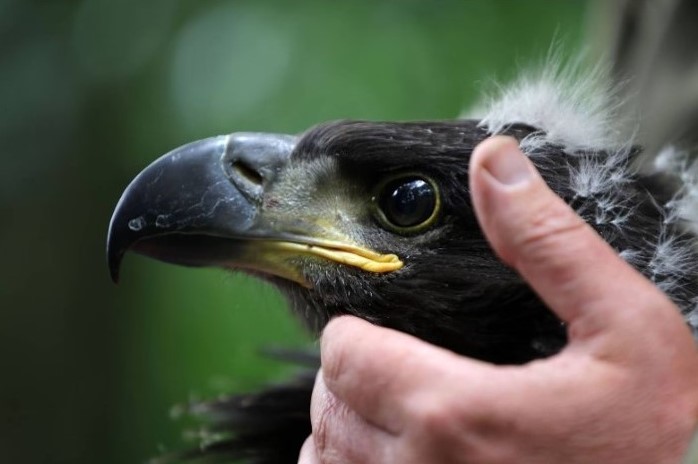
Young White-tailed eagle. Photo: Valerie O’Sullivan
Minister of State for Heritage and Electoral Reform, Malcolm Noonan TD, who released four chicks at Killarney National Park as part of the release programme, said:
“The juvenile white-tailed eagles we have released this week are joining a growing population across our island. This incredible endeavour is the result of 16 years’ work and collaboration, not just on the reintroduction programme, but also on habitat restoration and engagement with landowners to secure their ongoing protection.
These apex predators perform a vital role in our ecosystems and the sight of them soaring in the thermals is a privilege that everyone who lives in or visits Ireland will now have the opportunity to enjoy. I would like to pay tribute to NPWS staff for their commitment and dedication to this initiative, our international partners from Norway, and the communities around the country who are embracing the return of the white-tailed eagle to our landscapes.”
A comprehensive satellite tagging system is now in place so that the birds can be monitored as they disperse around the country.
Minister for Housing, Local Government and Heritage, Darragh O’Brien who also participated in the release of chicks at in the vicinity of Lough Derg added:
“This reintroduction programme is the result of a combined effort by my Department’s National Parks and Wildlife Service, participating landowners and communities and endangered species experts. I commend each of them for the role they are playing in protecting these iconic birds of prey“.
Niall Ó Donnchú, Director General with the NPWS said:
“This programme is one of several initiatives underway in the NPWS to protect endangered species in Ireland and prevent their decline. This work takes time, and calls for a partnership approach if it is to be sustainable in the long term. Collaboration with the science community and international partners, along with the involvement of our expert staff and communities around the country has been key to the success we have seen so far“.
Eamonn Meskell, Divisional Manager NPWS, Killarney National Park who heads up the white-tailed eagle reintroduction Programme added:
“There is huge interest from the public in the white-tailed eagle programme. Locations where they are spotted attract many visitors and local interest and we love to hear about sightings of the birds around Ireland and further afield. There are great stories to tell about the project. For example, the first Irish bred female to breed in over a hundred years has fledged seven chicks in three years! In Lough Derg this year for the second time a nesting pair fledged triplets. This is incredibly unusual – even in the wilds of Norway, and it shows how well suited Ireland really is for the white-tailed eagle from both a habitat and a feeding perspective. We’ll be watching this year’s chicks with interest as they mature and hopefully go on to fledge more chicks“.
Bente Lyngstad, chargé d’affaires at the Norwegian Embassy in Ireland said:
“Watching the release of the white-tailed sea eagles is a truly extraordinary and mighty experience. Over the years more than 150 eagle chicks have been collected in Norway and released in Ireland. Today’s stock in Ireland is the result of a long-term collaboration between Norway and Ireland, which again stems from our deep friendship and our shared values. I would like to acknowledge all volunteers whose efforts have been imperative to make this happen“.
The retention of species is essential for maintaining the intricate web of life and the functioning of ecosystems. It contributes to the sustainable use of natural resources and the well-being of both present and future generations. Yet we now see a rapid loss of species world-wide. This development must be halted. The reintroduction of white-tailed sea eagles into their natural habitat is a great example of how we can work together against biodiversity loss.”
ENDS
These releases form part of phase two of the reintroduction project. Phase one involved releasing 100 White-tailed eagles into Killarney National Park in County Kerry, between 2007-2011. A scientific review of the project in 2019 suggested that the small population was still vulnerable to issues such as Avian Influenza, extreme weather events and illegal poisoning so phase two began in 2020, to reintroduce more young birds and release them in different parts of the country.
Unfortunately some of the eagles released in phase two have already been killed illegally after consuming poisoned bait (see here and here).
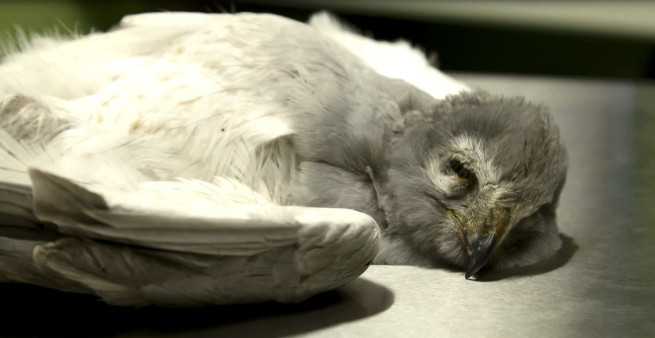
A young white-tailed eagle, released into the wild as part of a conservation reintroduction project, has been found poisoned with the banned pesticide Carbofuran.
The National Parks & Wildlife Service in Ireland is appealing for information after the discovery of the dead eagle in November 2022 on land between counties Cavan and Westmeath.
The juvenile male white-tailed eagle who was just over a year old had been brought in as a chick in 2021 from Norway under phase two of a national re-introduction programme (e.g. see here and here).
It had been fitted with a satellite tag prior to its release on Lough Derg in 2021 and subsequent monitoring showed the eagle had been spending time around Lough Sheelin in Co Westmeath with two other white-tailed eagles, but tag data indicated the eagle had become stationary in November.
The corpse was retrieved and toxicology tests undertaken at the State Laboratory confirmed the eagle had been poisoned with Carbofuran, a deadly pesticide so dangerous it was withdrawn for use in Ireland over a decade ago.
NPWS regional manager, Maurice Eakin, said white-tailed eagles were a protected species under the Wildlife Acts. The death of the bird last November highlighted “once again” the extent of the illegal practice of using poisonous material as pest control.
“In this instance, it is particularly disturbing that the reckless laying of poison has resulted in the death of a white-tailed eagle, one of our largest and most majestic bird species, which had been persecuted to extinction by the early 1900s,” he said.
The NPWS is seeking any information from the public in the Westmeath/Cavan region, particularly anyone who may have seen anyone or any vehicles acting suspiciously in recent weeks in the area between Lough Sheelin and Lough Ramor.
Over 100 white-tailed eagles, donated by Norway, have been reintroduced to the Irish Republic since 2007, with the first successful breeding taking place in 2012 and there have been many successes over the last decade, bringing biodiversity and ecosystem benefits as well as a boost to local economies via ecotourism.
However, a scientific review of the reintroduction project in 2019 indicated that the small population was still vulnerable to illegal poisoning events so additional eagles have been reintroduced as part of phase two of the reintroduction to help bolster the population. It’s sadly ironic that one of those eagles has become the latest poisoning victim.
Farmer fined €500 for poisoning protected bird species in Co Wicklow
By Lauren Boland
A FARMER HAS been fined for poisoning protected birds in Co Wicklow after pleading guilty to what a judge described as a “serious crime”.
Christopher Thomas Noel Doyle, also known as Noel Doyle Senior, with an address at Crehelp in Co Wicklow, came before the Carlow District Court over a breach of restrictions on the use of poisoned bait.
The judge imposed a €500 fine and €1,500 in expenses that he must pay within four months.
A conservation ranger told the court he had discovered two dead buzzards, a dead raven, and a sheep carcass on lands at Athgreaney, Co Wicklow.
[Buzzard, photographer unknown]
The court heard that the ranger first found a dead buzzard and after further investigation identified a second dead buzzard, a dead raven, and a sheep carcass placed near a fox den.
Post-mortems by the Department of Agriculture and testing by Dublin Regional Veterinary Laboratory and the State Laboratory found that the birds died due to high levels of poison (carbofuran) in their systems.
The sheep had been cut open and the wound was laced with large amounts of carbofuran.
The ranger said that the levels of poison were extremely hazardous to all forms of life and that it was very fortunate that no humans had been accidentally poisoned.
He said it was likely that other wild animals had scavenged the carcasses and died from poisoning but were never found.
Judge Marie Keane said there was an “astonishing amount of poison” used in what she described as a “serious crime” and “a deliberate enterprise” to try to persecute the local wildlife.
In a statement, Minister of State for Heritage Malcolm Noonan called it a “particularly heinous and disturbing wildlife crime”.
Buzzards are a protected species and deliberate poisoning of them is an offence under the Birds and Natural Habitats (Restrictions on the Use of Poisoned Bait) Regulations 2010.
Carbofuran was previously used as a pesticide in agriculture but is now banned because of its toxicity to wildlife, especially to birds.
Approval for the use of carbofuran products was withdrawn throughout the EU in 2007, including in Ireland in December of that year.
After an 18-month period to use up remaining stock, it was banned fully from 2009.
Press statement from National Parks & Wildlife Service (Ireland), 21 October 2021:
Three Month Suspended Jail Sentence for the Possession of two dead Buzzards
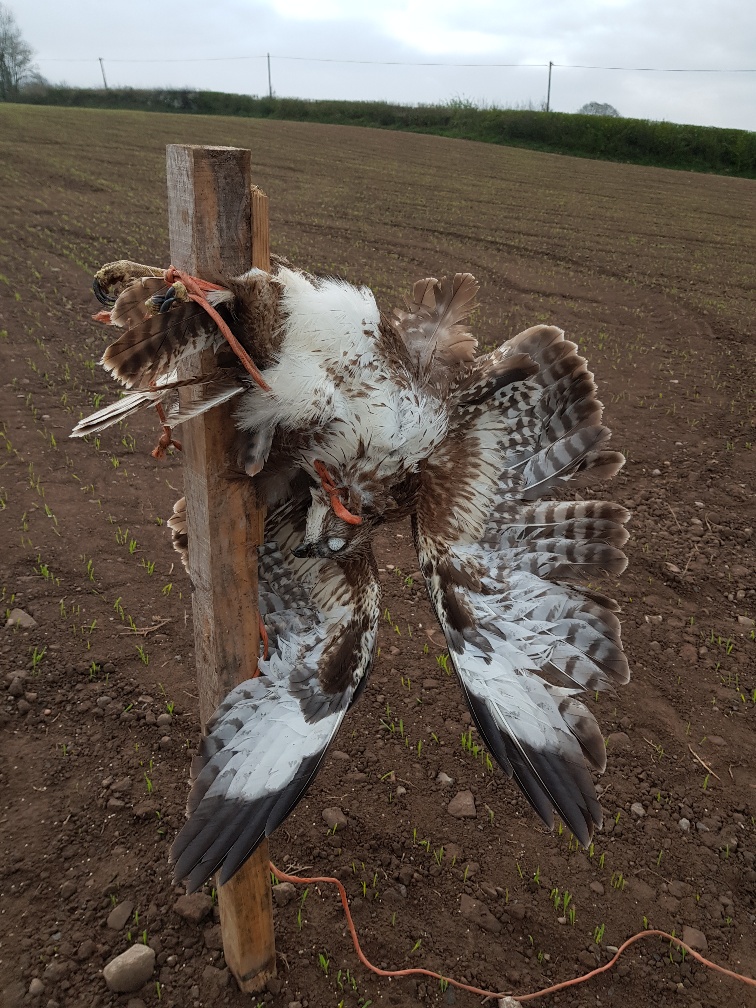
A County Laois man has been given a three month suspended prison sentence for the possession of two dead Buzzards, which were found strung up on his land.
On Friday the 15th of October, at Portlaoise District Court, Mr. Desmond Crawford, Roskelton, Mountrath, Co. Laois pleaded guilty to the unlawful possession of two dead Buzzards contrary to Section 45 (2) & 45 (7) of the Wildlife Acts. The offence took place on the 19th of April 2020 at Clonadacasey, Mountrath, Co. Laois. The offence was investigated by the National Parks & Wildlife Service (NPWS) of the Department of Housing, Local Government, and Heritage. It was prosecuted under the Wildlife Acts by Rory Hanniffy BL, instructed by Sandra Mahon, State Solicitor for County Offaly.
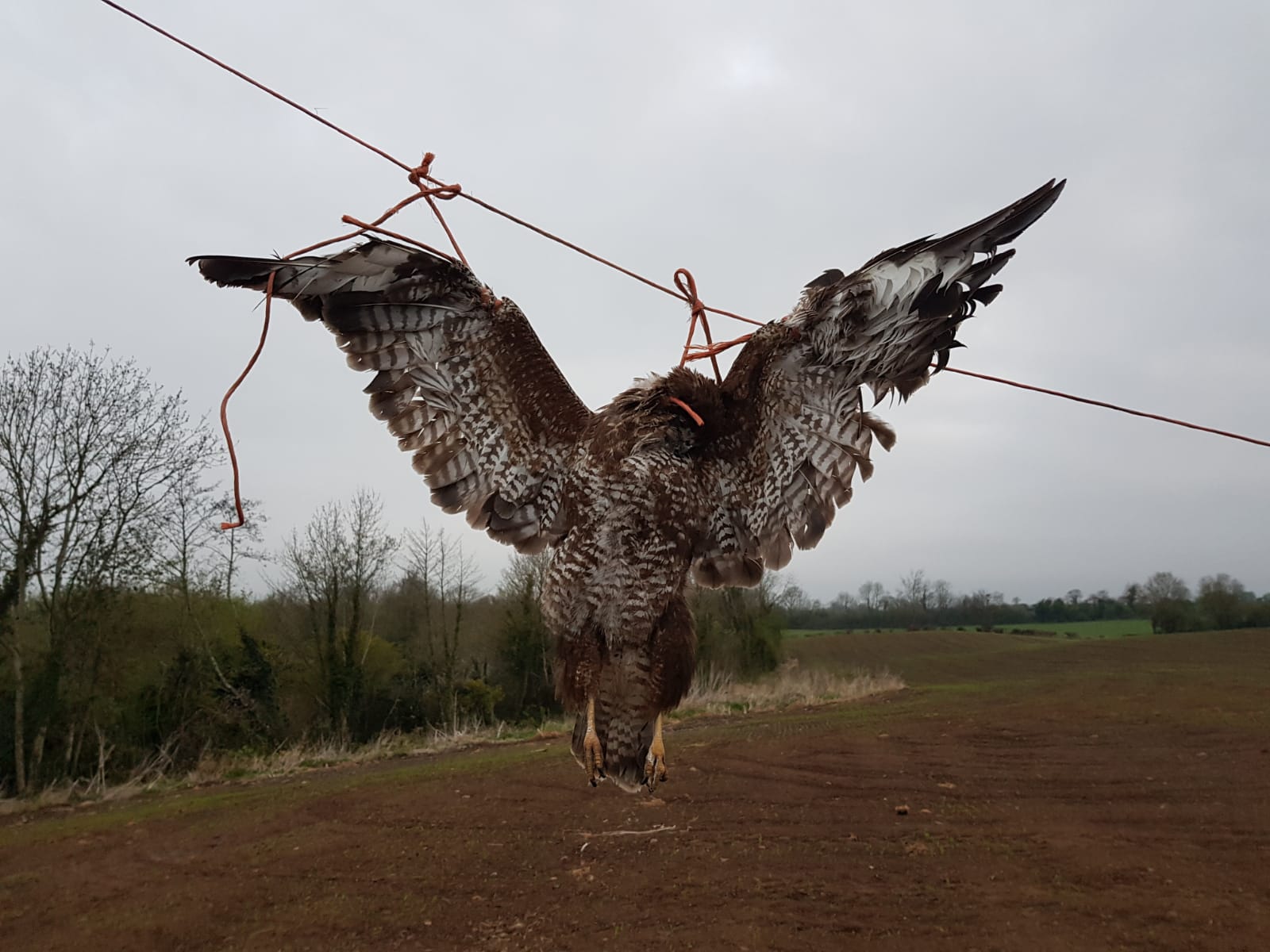
In his evidence to the Court, District Conservation Officer Mr Kieran Buckley of the NPWS told Judge Catherine Staines that he, accompanied by two NPWS Conservation Rangers from neighbouring areas, travelled to Clonadacasey to investigate a complaint from a member of the public that two dead Buzzards were tied up to an electricity post and a fence stake in cultivated fields.
Upon arrival, the NPWS searched the area and found one dead Buzzard strung up by its outstretched wings to an electricity post and another dead Buzzard strung up by its legs to a fence stake. Following a line of inquiry, Mr Buckley established that Mr. Crawford was farming the land where he found the two dead Buzzards. Accompanied by NPWS Officers Robert Edge and Colm Malone, Mr. Buckley then interviewed Mr Crawford under caution about the incident.
At the District Court sitting, photographs of the two dead Buzzards and X-ray evidence were presented to Judge Catherine Staines. Mr Buckley told the Judge that the X-ray evidence left no doubt that both Buzzards had been shot, adding that the tight pattern of the lead shot showed clear evidence that both birds were shot at close range. He added that given the time of year, the dead Buzzards may have been a breeding pair. This, he said, would leave them vulnerable to being shot at their nest. Mr Buckley also told the Judge that Buzzards were the most frequent casualty of bird of prey persecutions and added that the NPWS is determined to tackle wildlife crimes of this nature, particularly when this species has recovered from the brink of extinction.
The defence solicitor, Josephine Fitzpatrick, told the Judge that Mr. Crawford denied he had shot the Buzzards, but he was very sorry for what he had done and apologised to the Court.
In her summation, Judge Staines expressed her abhorrence at the undignified manner in which two beautiful birds were displayed, saying it showed no respect whatsoever. It was, she said, “an example of a disgusting lack of respect in an outrageous act of wildlife crime”.
Judge Staines then detailed to the court that she had to consider a prison sentence as an appropriate way to deal with this matter. She convicted Mr. Crawford of the possession of the two Dead Buzzards under Section 45 (2) and 45 (7) of the Wildlife Acts and imposed a three-month sentence of imprisonment, which she suspended on the Accused’s own bond for a period of one year.
The Minister of State for Heritage and Electoral Reform at the Department of Housing, Local Government and Heritage, Malcolm Noonan TD said that recent judgements in the District Courts indicate clearly that wildlife crimes have serious consequences:
“I welcome the conviction in this awful case and would like to thank everyone involved in securing it. I particularly welcome the comments of Judge Staines, who acknowledged the outrageousness of the crime and the lack of respect shown to these beautiful birds. Recent judgements being handed down in the Courts to people convicted of deliberately destroying habitats or harming wildlife are sending out a clear signal that, as a society, we will no longer tolerate such actions. Wildlife crime is serious, and it has serious consequences. We need to protect nature,” he said.
Ciara O’Mahony, Regional Manager of the South East Region of the National Parks and Wildlife Service at the Department of Housing, Local Government and Heritage, welcomed the reporting of this matter by a concerned member of the public, and encouraged more who witness wildlife crimes such as this to come forward in confidence to the NPWS.
“We are increasingly receiving contact about wildlife crime and habitat destruction, from people who are concerned about biodiversity loss. We welcome such reports, and the nature conservation consciousness and awareness that they represent,” she said.
Any member of the public wishing to report possible wildlife crime or illegal habitat destruction in Ireland can contact the NPWS through natureconservation@housing.gov.ie or direct to local NPWS staff. For more detail on wildlife legislation, see www.npws.ie
Various media fora in the Irish Republic have reported on the suspected poisoning of two buzzards in Kerry.
A member of the public found the birds in August in the Currow/Scartaglen area, south of Castleisland, Co. Kerry. One buzzard was dead and the other one was taken for treatment and possible rehabilitation.
The National Parks and Wildlife Service is investigating and toxicology results are awaited.
A Government report published in October 2020 demonstrated that illegal raptor persecution continues to be a problem in Ireland, especially for the common buzzard. In 2020, 23 buzzards were poisoned in one single incident by the banned pesticide Carbofuran (see here) and in the same area in 2018, three buzzards were poisoned with Carbofuran, two were then decapitated and one had its leg pulled off (here).
For anyone who still wants to pretend that the grouse shooting industry isn’t responsible for the systematic extermination of hen harriers on grouse moors across the UK, here’s the latest catalogue of crime that suggests otherwise.
[This male hen harrier died in 2019 after his leg was almost severed in an illegally set trap that had been placed next to his nest on a Scottish grouse moor (see here). Photo by Ruth Tingay]
Just 19 days ago, this list totalled 53 hen harriers, all either confirmed to have been illegally killed or to have ‘disappeared’, most of them on or next to driven grouse moors.
“They disappear in the same way political dissidents in authoritarian dictatorships have disappeared” (Stephen Barlow, 22 January 2021).
Today the list has been updated to include the most recently reported three victims: one male hen harrier that vanished from its breeding attempt on the RSPB’s Geltsdale Reserve in 2020 and two more from the same site that yesterday the police reported as ‘missing in suspicious circumstances’ (see here).
The RSPB’s Geltsdale Reserve is located in close proximity to a large area managed for driven grouse shooting and breeding males have disappeared from here prior to 2020 and 2021. In fact, raptor persecution incidents in this area, both on and off the reserve, have been reported by the RSPB since at least the mid 1990s and have included the confirmed shooting of a number of hen harriers (i.e. their corpses were found), witnessed reports of attempted hen harrier shootings, including a gamekeeper from a neighbouring estate filmed with a gun stalking a hen harrier on the reserve, at least one confirmed poisoning of a hen harrier and a wide array of other victims including buzzards, peregrines and ravens either shot or poisoned.
The disgraceful national catalogue of illegally killed and ‘missing’ hen harriers will continue to grow – I know of at least one more on-going police investigation which has yet to be publicised.
I’ve been compiling this list only since 2018 because that is the year that the grouse shooting industry ‘leaders’ would have us believe that the criminal persecution of hen harriers had stopped and that these birds were being welcomed back on to the UK’s grouse moors (see here).
This assertion was made shortly before the publication of a devastating new scientific paper that demonstrated that 72% of satellite-tagged hen harriers were confirmed or considered likely to have been illegally killed, and this was ten times more likely to occur over areas of land managed for grouse shooting relative to other land uses (see here).
2018 was also the year that Natural England issued itself with a licence to begin a hen harrier brood meddling trial on grouse moors in northern England. For new blog readers, hen harrier brood meddling is a conservation sham sanctioned by DEFRA as part of its ludicrous ‘Hen Harrier Action Plan‘ and carried out by Natural England (NE), in cahoots with the very industry responsible for the species’ catastrophic decline in England. For more background see here.
Brood meddling has been described as a sort of ‘gentleman’s agreement’ by commentator Stephen Welch:
“I don’t get it, I thought the idea of that scheme was some kind of trade off – a gentleman’s agreement that the birds would be left in peace if they were moved from grouse moors at a certain density. It seems that one party is not keeping their side of the bargain“.
With at least 56 hen harriers gone since 2018, I think it’s fair to say that the grouse shooting industry is simply taking the piss. Meanwhile, Natural England pretends that ‘partnership working’ is the way to go.
‘Partnership working’ appears to include authorising the removal of hen harrier chicks from a grouse moor already under investigation by the police for suspected raptor persecution (here) and accepting a £10K bung from representatives of the grouse shooting industry that prevents Natural England from criticising them (see here).
[Cartoon by Gill Lewis]
So here’s the latest gruesome list:
February 2018: Hen harrier Saorsa ‘disappeared’ in the Angus Glens in Scotland (here). The Scottish Gamekeepers Association later published wholly inaccurate information claiming the bird had been re-sighted. The RSPB dismissed this as “completely false” (here).
5 February 2018: Hen harrier Marc ‘disappeared’ on a grouse moor in Durham (here)
9 February 2018: Hen harrier Aalin ‘disappeared’ on a grouse moor in Wales (here)
March 2018: Hen harrier Blue ‘disappeared’ in the Lake District National Park (here)
March 2018: Hen harrier Finn ‘disappeared’ near Moffat in Scotland (here)
18 April 2018: Hen harrier Lia ‘disappeared’ in Wales and her corpse was retrieved in a field in May 2018. Cause of death was unconfirmed but police treating death as suspicious (here)
8 August 2018: Hen harrier Hilma ‘disappeared’ on a grouse moor in Northumberland (here).
16 August 2018: Hen harrier Athena ‘disappeared’ on a grouse moor in Scotland (here)
26 August 2018: Hen Harrier Octavia ‘disappeared’ on a grouse moor in the Peak District National Park (here)
29 August 2018: Hen harrier Margot ‘disappeared’ on a grouse moor in Scotland (here)
29 August 2018: Hen Harrier Heulwen ‘disappeared’ on a grouse moor in Wales (here)
3 September 2018: Hen harrier Stelmaria ‘disappeared’ on a grouse moor in Scotland (here)
24 September 2018: Hen harrier Heather ‘disappeared’ on a grouse moor in Scotland (here)
2 October 2018: Hen harrier Mabel ‘disappeared’ on a grouse moor on the edge of the Yorkshire Dales National Park (here)
3 October 2018: Hen Harrier Thor ‘disappeared’ next to a grouse moor in Bowland, Lanacashire (here)
23 October 2018: Hen harrier Tom ‘disappeared’ in South Wales (here)
26 October 2018: Hen harrier Arthur ‘disappeared’ on a grouse moor in the North York Moors National Park (here)
1 November 2018: Hen harrier Barney ‘disappeared’ on Bodmin Moor (here)
10 November 2018: Hen harrier Rannoch ‘disappeared’ on a grouse moor in Scotland (here). Her corpse was found nearby in May 2019 – she’d been killed in an illegally-set spring trap (here).
14 November 2018: Hen harrier River ‘disappeared’ on a grouse moor in the Nidderdale AONB (here). Her corpse was found nearby in April 2019 – she’d been illegally shot (here).
16 January 2019: Hen harrier Vulcan ‘disappeared’ in Wiltshire close to Natural England’s proposed reintroduction site (here)
7 February 2019: Hen harrier Skylar ‘disappeared’ next to a grouse moor in South Lanarkshire (here)
22 April 2019: Hen harrier Marci ‘disappeared’ on a grouse moor in the Cairngorms National Park (here)
26 April 2019: Hen harrier Rain ‘disappeared’ on a grouse moor in Nairnshire (here)
11 May 2019: An untagged male hen harrier was caught in an illegally-set trap next to his nest on a grouse moor in South Lanarkshire. He didn’t survive (here)
7 June 2019: An untagged hen harrier was found dead on a grouse moor in Scotland. A post mortem stated the bird had died as a result of ‘penetrating trauma’ injuries and that this bird had previously been shot (here)
5 September 2019: Wildland Hen Harrier 1 ‘disappeared’ on a grouse moor nr Dalnaspidal on the edge of the Cairngorms National Park (here)
11 September 2019: Hen harrier Romario ‘disappeared’ on a grouse moor in the Cairngorms National Park (here)
14 September 2019: Hen harrier (Brood meddled in 2019, #183704) ‘disappeared’ in North Pennines (here)
23 September 2019: Hen harrier (Brood meddled in 2019, #55149) ‘disappeared’ in North Pennines (here)
24 September 2019: Wildland Hen Harrier 2 ‘disappeared’ on a grouse moor at Invercauld in the Cairngorms National Park (here)
24 September 2019: Hen harrier Bronwyn ‘disappeared’ near a grouse moor in North Wales (here)
10 October 2019: Hen harrier Ada ‘disappeared’ on a grouse moor in the North Pennines AONB (here)
12 October 2019: Hen harrier Thistle ‘disappeared’ on a grouse moor in Sutherland (here)
18 October 2019: Member of the public reports the witnessed shooting of an untagged male hen harrier on White Syke Hill in North Yorkshire (here)
November 2019: Hen harrier Mary found illegally poisoned on a pheasant shoot in Ireland (here)
January 2020: Members of the public report the witnessed shooting of a male hen harrier on Threshfield Moor in the Yorkshire Dales National Park (here)
23 March 2020: Hen harrier Rosie ‘disappeared’ at an undisclosed roost site in Northumberland (here)
1 April 2020: Hen harrier (Brood meddled in 2019, #183703) ‘disappeared’ in unnamed location, tag intermittent (here)
5 April 2020: Hen harrier Hoolie ‘disappeared’ on a grouse moor in the Cairngorms National Park (here)
8 April 2020: Hen harrier Marlin ‘disappeared’ on a grouse moor in the Cairngorms National Park (here)
19 May 2020: Hen harrier Fingal ‘disappeared’ on a grouse moor in the Lowther Hills, Scotland (here)
21 May 2020: Hen harrier (Brood meddled in 2019, #183701) ‘disappeared’ on a grouse moor in Cumbria shortly after returning from wintering in France (here)
27 May 2020: Hen harrier Silver ‘disappeared’ on a grouse moor on Leadhills Estate, Scotland (here)
day/month unknown: Unnamed male hen harrier breeding on RSPB Geltsdale Reserve, Cumbria ‘disappears’ while away hunting (here)
9 July 2020: Unnamed female hen harrier (#201118) ‘disappeared’ from an undisclosed site in Northumberland (here).
25 July 2020: Hen harrier Harriet ‘disappeared’ on a grouse moor in the Yorkshire Dales National Park (here)
14 August 2020: Hen harrier Solo ‘disappeared’ in confidential nest area in Lancashire (here)
7 September 2020: Hen harrier Dryad ‘disappeared’ on a grouse moor in the Yorkshire Dales National Park (here)
16 September 2020: Hen harrier Fortune ‘disappeared’ from an undisclosed roost site in Northumberland (here)
19 September 2020: Hen harrier Harold ‘disappeared’ on a grouse moor in the Yorkshire Dales National Park (here)
20 September 2020: Hen harrier (Brood meddled in 2020, #55152) ‘disappeared’ next to a grouse moor in North Yorkshire (here)
24 February 2021: Hen harrier Tarras ‘disappeared’ next to a grouse moor in Northumberland (here)
12th April 2021: Hen harrier Yarrow ‘disappeared’ near Stockton, County Durham (here)
18 May 2021: Adult male hen harrier ‘disappears’ from its breeding attempt on RSPB Geltsdale Reserve, Cumbria whilst away hunting (here)
18 May 2021: Another adult male hen harrier ‘disappears’ from its breeding attempt on RSPB Geltsdale Reserve, Cumbria whilst away hunting (here)






 Raptor Persecution UK