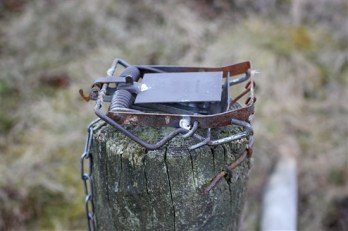
Gas gun in use on grouse moor in Peak District National Park

As regular blog readers will know, we have an interest in the use of propane gas guns on grouse moors in the English and Scottish uplands.

For those who don’t know, propane gas guns are routinely used for scaring birds (e.g. pigeons, geese) from agricultural crops – they are set up to deliver an intermittent booming noise and the audible bangs can apparently reach volumes in excess of 150 decibels. According to the Purdue University website, 150 decibels is the equivalent noise produced by a jet taking off from 25 metres away and can result in eardrum rupture. That’s quite loud!

The grouse-shooting industry has claimed these are used for scaring ravens, but we argue they are more likely to be used (illegally) to disturb hen harrier breeding attempts. We are interested in the deployment of these bird scarers in relation to (a) their proximity to Schedule 1 (and in Scotland, Schedule 1A bird species) and thus any potential disturbance to these specially protected species and (b) their use in designated Special Protection Areas and thus any potential disturbance caused.

We, and others, have previously blogged about specific instances of gas gun use on grouse moors (e.g. see here and here) and we’ve been pressing the statutory nature conservation organisations (Natural England & Scottish Natural Heritage) to issue urgent guidelines on their use, so far without much success (see here, here, herehere and here).

Meanwhile, grouse moor managers are still using these gas guns. The following photographs were taken on Sunday 22 May 2016 in the Peak District National Park:

Gas gun 1 Broomhead - Copy

Gas gun 2 Broomhead - Copy

Gas gun 3 Broomhead - Copy

Gas gun 4 Broomhead - Copy

This gas gun is on the Barnside Moor, which is part of the Broomhead Estate, owned by Ben Rimington Wilson, a spokesman (see here) for the grouse-shooting industry’s lobby group the Moorland Association. The grouse moors of the Broomhead Estate are part of a regional Special Area of Conservation (SAC), Site of Special Scientific Interest (SSSI) and Special Protection Area (SPA), designated as a site of importance for short-eared owl, merlin, and golden plover.

Now, what’s interesting about the placement of this particular gas gun is that it lies a few metres outside of the SPA boundary, although the gas gun is pointing towards the SPA:

SPA OS - Copy

SPA close up - google map - Copy

What’s interesting is whether this gas gun was deliberately placed outside of the SPA boundary, to avoid having to ask Natural England for deployment consent? Although we would argue that even though the gas gun isn’t placed directly within the SPA, it is placed directly adjacent to it and the noise from that gas gun will definitely resonate across the SPA boundary line, potentially disturbing ground-nesting species such as short-eared owl, merlin and golden plover, for which the site was designated. (Hen harrier is not on the site’s designation list, presumably because when the site was designated, there weren’t any hen harriers nesting there, even though this is prime hen harrier habitat!).

But even though the gun isn’t directly placed within the SPA, it does sit (just) within the SSSI boundary:

SSSI close up - google map - Copy

This leads us to believe that the deployment of this gas gun will require consent from Natural England as it falls under the list of ‘operations likely to damage the special interest of the site’, namely, ‘change in game management and hunting practice’.

Has Natural England given consent for the deployment of this gas gun at this site? If so, how has it justified that deployment? If Natural England hasn’t given consent, is the deployment of this gas gun contrary to section 28 of the Wildlife & Countryside Act?

We don’t know the answers to these questions because we’re still waiting for Natural England to publish its policy on gas gun use, even though this guidance document was promised before the start of the 2016 breeding season!

Natural England needs to pull its finger out, pronto, and publish clear guidelines for use. If you’d like to email Alan Law, Natural England’s Chief Strategy & Reform Officer (he’s the guy who last September told us the guidelines would be available by early 2016) and ask him where that guidance document is, here’s his email address: alan.law@naturalengland.org.uk

You may also remember that a couple of weeks ago, SNH gave their opinion of what we should do if we found a gas gun being deployed on a grouse moor (see here). It was a very confused statement, but part of their advice was that intentional or reckless disturbance of a Schedule 1 species (such as hen harrier or merlin) is an offence and any suspected incidents of this through gas gun use should be reported to the police.

In our view, this would be a big waste of time – we can’t see the police having any interest in investigating gas gun use, and even if they did, they probably wouldn’t know where to start. But, just as a test case, why don’t we report this gas gun to South Yorkshire Police as a suspected wildlife crime (potential reckless or intentional disturbance of a Schedule 1 species) and let’s see what they do with it.

Here is the information you need:

Gas gun grid reference: SK233978, Barnside Moor, Peak District National Park

Date observed in use: 22 May 2016

Please report this to Chief Superintendent David Hartley, South Yorkshire Police’s lead on wildlife crime: david.hartley@southyorks.pnn.police.uk

We’d be very interested in any responses you receive!

And if you’re in email-sending mode, you might also want to sent one to Sarah Fowler, Chief Executive of the Peak District National Park Authority and ask her whether there is a policy for the deployment of bird scaring devices on sensitive moorlands within the National Park. Email: sarah.fowler@peakdistrict.gov.uk

National Trust: bold or bottling it?

It’s been over a month since the National Trust said they were launching an investigation in to what they described as a “suspicious incident” where an armed man was filmed sitting next to a decoy hen harrier on a National Trust-owned grouse moor in the Peak District National Park.

Fake Hen Harrier (1) - Copy

How’s that investigation going? Given that the National Trust knew about this incident when it was first reported to them in February 2016, they’ve had plenty of time to ask questions of their grouse moor tenant and decide on what action, if any, they will take.

As a result of their investigation, we’re expecting them to do one of two things:

  1. Nothing.
  2. Withdraw the tenancy agreement that allows driven grouse shooting on that moor.

The National Trust has previously been bold about withdrawing shooting leases on land it owns. In 2011 it decided not to renew two of three shooting leases on its Wallington Estate in Northumberland (see here), and in 2012 it terminated the lease on a pheasant shoot on the Polesden Lacey Estate in Surrey (see here).

Will the National Trust be bold in the Peak District National Park? We think they’ve got very strong grounds for pulling the grouse-shooting lease in this instance because the grouse moor in question is part of the Peak District Bird of Prey Initiative – an initiative that has utterly failed in its objective of increasing the populations of breeding raptors in the Dark Peak area of the National Park. Presumably the National Trust’s grouse shooting lease includes a clause that demands cooperation from the tenant to reach that objective and if cooperation isn’t forthcoming, the contract can be considered to have been breached?

Let’s ask the General Manager of the National Trust in the Peak District, Jon Stewart, when we might expect to hear the findings of the National Trust’s investigation. Emails to: jon.stewart@nationaltrust.org.uk

We’re also intrigued as to why no official statement about this incident has been offered by the Peak District Bird of Prey Initiative. We’ve heard from individual member organisations such as the Peak District National Park Authority (see here) and the Moorland Association (see here), but there’s been total silence from the collective  BOP Initiative. Isn’t that strange?

The BOP Initiative is chaired by the Peak District National Park Authority and its ecologist, Rhodri Thomas, is the PDNPA’s representative on the BOP Initiative. We’d like to know how the BOP Initiative intends to respond to the video footage and how this incident will affect the progress of this so-called ‘partnership’? Let’s ask him. Emails to: rhodri.thomas@peakdistrict.gov.uk

Red kite shot & critically injured next to grouse moor in North Yorkshire

North Yorkshire Police are appealing for information after the discovery of yet another illegally shot red kite that was found at the weekend.

Press release as follows:

Police are urging members of the public to support them in the fight against red kite persecution, after another bird was found shot last weekend.

On the morning of Sunday 22 May, a walker on Hall Lane, Blubberhouses, found an injured red kite, in distress and unable to fly. They contacted a wildlife charity, and the bird was taken to a specialist avian vet in Harrogate.

RK_Blubberhouses

Examination revealed the bird had been shot and had a shattered wing. Sadly, its injury was so severe, it had to be euthanised. The shooting may have taken place a few days before the bird was found.

In the last two months, five red kites in North Yorkshire have been shot or died in circumstances that suggest poisoning, as well as three further afield in the region.

Of those eight red kites, five have been shot. One, found near Malton, was rehabilitated and released back to the wild, but the other four were so badly injured they had to be euthanised by a vet. The three suspected poisoned birds are being examined by the Wildlife Incident Investigation Scheme.

PC Gareth Jones, Wildlife Crime Co-ordinator at North Yorkshire Police, said: “Red kites were persecuted into virtual extinction in the UK, but in recent years they have been re-introduced through breeding programmes at a number of locations nationally. In Yorkshire, they have spread from their release site at Harewood House, and are now breeding over a large area. Red kites are scavengers, and normally eat carrion, their favourite food being rats and rabbits.

“Red kites are magnificent birds than can be regularly seen soaring over our area, bringing pleasure to many people. They are a Schedule 1 bird and as such are afforded special protection under the Wildlife and Countryside Act. I am personally saddened by the scale of persecution of these birds – it has to stop, and I would ask for anyone who can help this investigation to get in touch.”

Anyone with information that could assist the investigation is asked to contact North Yorkshire Police on 101, select option 2 and ask for PC Gareth Jones, or email gareth.jones1237@northyorkshire.pnn.police.uk. You can also contact Crimestoppers anonymously on 0800 555 111.

END

Well done North Yorks Police for getting this information out so quickly – kite found on Sunday, press release out the following day, including a photograph, and with additional context about other recent red kite deaths to put this crime in to perspective. That’s excellent work.

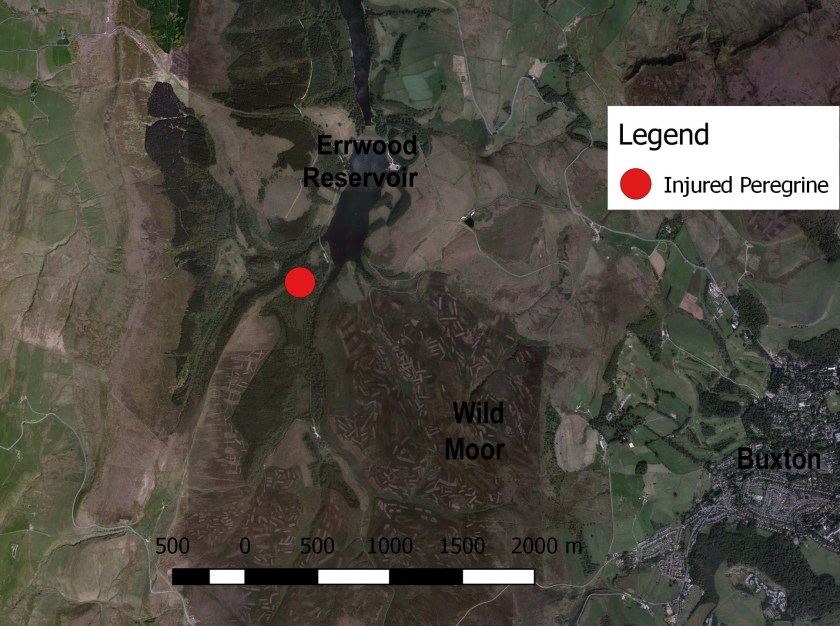
The injured kite was found at the edge of Nidderdale AONB, just to the east of the Yorkshire Dales National Park. This is driven grouse-shooting country – check out the tell-tale rectangular strips of burnt heather on the map – and it’s also a well-known black spot for the illegal poisoning of red kites. Oh, and satellite-tagged hen harriers also ‘mysteriously’ disappear here.

Over 38,000 people have now signed the petition calling for a ban on driven grouse shooting. Please add your name HERE

Blubberhouses map - Copy

Guidance for deployment of gas guns on grouse moors – still waiting

A year ago in May 2015, someone sent us some photographs of three propane gas gun bird scarers that had been deployed on the grouse moor at Leadhills Estate, South Lanarkshire (see here).

Bird scarer 1 - Copy

These gas guns are routinely used for bird scaring on agricultural fields – they are set up to produce a periodic booming noise to scare pigeons, geese etc away from crops. The audible bang can reach volumes in excess of 150 decibels. We wondered why they were being used on grouse moors in the height of the breeding season?

A month later in June 2015, Mark Avery published photographs of gas guns that had also been deployed in the Peak District National Park and on an unnamed grouse moor in the Scottish Borders (see here).

We were interested in the deployment of these bird scarers in relation to (a) their proximity to Schedule 1 (and in Scotland, Schedule 1A) bird species [and thus any potential disturbance to these specially protected species] and (b) their use in designated Special Protection Areas [and thus any potential disturbance caused].

We assumed that the deployment of these gas guns would be subject to guidance and rigorous licensing controls by SNH and Natural England (as they are the licensing authorities for the Wildlife & Countryside Act (as amended)), particularly in relation to the hen harrier, which, as a Schedule 1A species (in Scotland only), is “protected from harassment [including disturbance] at any time“, not just when it’s trying to breed (see here).

So an FoI was sent to SNH to find out if anyone had requested a licence to use a gas gun on a grouse moor in the previous two years. It turned out nobody had.

An FoI was also sent to Natural England – no licence applications there either. It also emerged that NE had received a report in June 2015 of a gas gun being deployed on a SSSI on an estate in the North Pennines, without formal consent. In July 2015 a warning letter was sent to the estate asking them to remove the gas gun. The estate apparently complied and no further action was taken.

In September 2015, we encouraged blog readers to contact SNH and Natural England to ask for urgent guidance to be issued on the use of gas guns in protected areas and in close proximity breeding birds, particularly raptors (see here).

SNH responded quickly and said they would investigate, and depending on their findings, they may provide guidance (see here).

Natural England responded a short time later and said they recognised the need for guidance and that they were in the middle of drafting such guidance, which would be made available prior to the start of the 2016 breeding season (see here). In fact, Alan Law, Chief Strategy & Reform Officer at Natural England said: “I will arrange for you to be sent this guidance as soon as it becomes available, which will be in advance of next year’s breeding season“.

Well, the 2016 breeding season is already underway but we haven’t seen any formal guidance. Have you?

Let’s remind SNH and Natural England of their stated commitments and ask them to produce the following:

Emails to:

Andrew Bachell, Director of Policy & Advice, SNH: Andrew.Bachell@snh.gov.uk

Dear Andrew, Last September you said SNH would investigate the deployment of propane gas gun scarers with regard to the law, and specifically with regard to the recent guidance you issued on Schedule A1 and 1A species under the Wildlife & Countryside Act. You also said, depending on your findings, SNH would issue guidance if it was felt appropriate to do so. Please can you provide the results of your investigation and advise whether you intend to issue any formal guidance or not? Thanks.

And

Emails to:

Alan Law, Chief Strategy & Reform Officer, Natural Engand: alan.law@naturalengland.org.uk

Dear Alan, Last September you said Natural England was drafting formal guidance on the deployment of gas gun bird scarers within Special Protection Areas and their potential impact upon Schedule 1 birds. You also said this guidance would be available in advance of the 2016 breeding season. Please can you direct me to the location of this guidance document, or better still, please send me a copy, as you said you would. Thanks.

Shot buzzard successfully rehabilitated and released

Last month we blogged about a buzzard that had been found with shotgun injuries in North Frodingham, East Yorkshire (see here). Vet Mark Naguib pinned the buzzard’s wing and the bird spent four weeks in the expert care of wildlife rehabilitation specialist Jean Thorpe.

Buzzard shot Driffield April 2016 Jean Thorpe

Two days ago, Jean was able to release the buzzard back to the wild:

Chxf07BWUAA02lP

Just a few weeks earlier, we blogged about Jean’s work to successfully rehabilitate and release a shot red kite (see here).

Thanks, again, Jean Thorpe, for the incredible work you do.

If anyone wants to support Jean’s efforts, please consider making a donation here.

Pigeon racing man fined for storing banned poison Carbofuran

A Cumbrian man from the world of pigeon racing has been convicted for the illegal storage of the banned poison Carbofuran.

Keith Mingins, 58, of Main Street, Frizington, Cumbria, pled guilty at Workington Magistrates Court on 29th April 2016, following the discovery of Carbofuran at his pigeon lofts during a police raid in April 2015.

Mingin’s defence was that he had been given the poison by his father in law (who has since died), he didn’t know what it was but he used it anyway, to poison rats, apparently.

He was fined £300 for the illegal storage and ordered to pay costs and a victim surcharge amounting to £115.

Article in North West Evening Mail here.

It’s an interesting one. We wonder what triggered the police raid in the first place? (They would have to have grounds to justify a search of his premises, they can’t just turn up on a whim). And how many times have we heard the defence that someone who was in possession of a banned poison had been given it by someone who had since died? And just how plausible is it that someone gives you a poison, you don’t bother to find out what it is, but decide to use it all the same?

The pathetic fine makes us wonder whether the court received any background information about Carbofuran (banned 15 years ago in 2001) and how it is still commonly used to poison birds of prey and how some pigeon racing men are known to target birds of prey? We are in no way suggesting that’s what Keith Mingins did, but a wider perspective in these cases should help inform the magistrate prior to sentencing.

Frizington has been a hotspot for the attempted poisoning of peregrines over the years. At least twice in 2009, and also in previous years, live pigeons smeared with banned poisons (Carbofuran and Aldicarb) have been found tethered at a quarry (a known peregrine breeding site) at Rowrah, Frizington (see here). In 2010 a peregrine was found dead in ‘suspicious circumstances’ at an allotment in Frizington, although the cause of death is not known (see here).

Let’s hope the publicity of Keith Mingins’ conviction (if not his lame punishment) for storing a banned poison will act as a deterrent for anyone else in the area who may have some Carbofuran or another banned poison stashed away and who may be thinking about using it.

Well done to Cumbria Police, NWCU and Natural England for a successful prosecution.

Another red kite shot in North Yorkshire

North Yorkshire Police are appealing for information after the discovery of a critically injured red kite near Harrogate.

The wounded kite was discovered on Saturday 23rd April 2016 on farmland near Nidd, Harrogate and was taken to a specialist vet. X-rays revealed it had been shot. The vet believed the bird had been shot while in flight and had survived, unable to fly, for up to two days.

Unfortunately its injuries were so severe the kite had to be euthanised.

Press release from North Yorks Police here.

A big well done to the police for getting this appeal for information out so quickly – kite found on Saturday, press release (with photos) out on Wednesday. That’s a fantastic response.

Sick to the back teeth of hearing about the illegal killing of raptors? Help bring it to an end by signing this e-petition calling for a parliamentary debate on the future of grouse shooting – HERE

Red kite shot Harrogate April 2016

Red kite shot Harrogate x ray April 2016

Red kites shot in the Thames Valley

Thames Valley Police are appealing for information after the discovery of two injured red kites, both suffering from shotgun wounds.

Red Kites.png-pwrt3

Both kites were discovered in Oakley Wood, near Crowmarsh Gifford, Wallingford, Oxfordshire. One was found on 29th March 2016 and the second was found on 5th April.

Both are now in the expert care of Tiggywinkles Wildlife Hospital.

The Police have revealed that a third red kite had been found in the same wood on 22nd March 2016, although the cause of death is not known.

Anyone with information is asked to call  Thames Valley Police on 101, quoting reference #URN 372 06/04/16.

Well done to Thames Valley Police for issuing an appeal for information (here).

Photographs of the two injured kites and their x-rays provided by Tiggywinkles.

Goshawk suffers shotgun injuries to head

The following images appeared on social media a couple of days ago.

This is a goshawk that was found critically injured in Brockweir, Gloucestershire in April 2016 and was taken to Vale Wildlife Hospital. It had been shot in the head.

Unfortunately its injuries were so severe the decision was taken to euthanise the bird.

No further information available.

UPDATE Tues 26th April: Glos Police has today issued an appeal for info here

Photographs by Vale Wildlife Hospital

Goshawk shot Chepstow April 2016

goshawk shot Chepstow April 2016b

Goshawk shot Chepstow April 2016c

Red kite shot dead in North east England

Yet another red kite has been illegally killed in North-east England.

The body of the latest victim was discovered in Chopwell Wood, west of Rowlands Gill, Gateshead, over the Easter weekend. It had been shot.

For those of you who read Mick Render’s poignant guest blog on Mark Avery’s website last week (here), this news will come as no surprise.

Further details of the latest fatality here.

Red kite photo by David Tomlinson