Sparrowhawk shot dead in North Yorkshire: police appeal for info

North Yorkshire’s shameful catalogue of raptor killing crimes just got a bit longer.

North Yorkshire Police are appealing for information after the discovery of a shot sparrowhawk at Feldom, Richmond.

The bird is believed to have been shot some time during the last week of April in the area of High Waitgate, close to the Marske to Newsham Road, just a few miles north of the Yorkshire Dales National Park.

An x-ray revealed this bird died from shotgun injuries, probably shot from close range.

Anyone with information please contact Police Wildlife Crime Officer Mark Wood (Tel: 101) quoting reference number 12170073101.

X-ray from North Yorkshire Police.

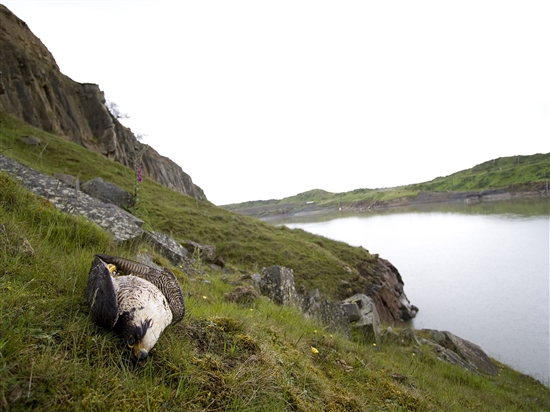
Three dead peregrines in Forest of Dean

In March 2017, news emerged of two dead peregrine falcons that had been found dead near the Devil’s Pulpit in the Forest of Dean, Gloucestershire. We didn’t blog about these birds as we were waiting for the Police to publish the findings of a post mortem examination. We are still awaiting those results.

However, yesterday Gloucestershire Constabulary issued another statement about a third dead peregrine found in the same area on 15 April 2017:

Three dead peregrines found in the same area within a month sounds pretty suspicious, especially as there has been a spate of confirmed peregrine persecution incidents in England over the last few months (see here for recent RSPB Investigations blog on these crimes).

Let’s hope the post mortem results on the Gloucestershire peregrines are completed and published without any further delay.

Peregrine photo by Megan Lorenz

A poisoned sparrowhawk, a poisoned bait, and a Royal estate in Norfolk

A couple of months ago an article was published in the Mail on Sunday about the ‘mysterious’ death of a satellite-tagged goshawk on the Queen’s Sandringham Estate in Norfolk (see here).

We blogged about it (here) and mentioned a number of other raptor-related police investigations that had been undertaken on or near the estate. On the back of that blog, somebody contacted us and asked why we hadn’t included on our list ‘the confirmed illegal poisoning of a sparrowhawk a few years ago’? We hadn’t included it because we didn’t know anything about it, so we thought we’d do some digging.

First of all we did a general internet search. If there had been a confirmed raptor poisoning on the Queen’s Sandringham Estate then surely that would have made a few headlines, right? We didn’t find any record of it.

So then we started looking at the government’s database on pesticide misuse and abuse (the Wildlife Incident Investigation Scheme, often shortened to ‘the WIIS database’). In that database we found the following entry:

Although this entry showed that a poisoned sparrowhawk and a poisoned bait had been discovered in Norfolk in October 2009, as usual, no specific location was given. We were, however, intrigued by the ‘Notes’ column, that said even though a confirmed poisoning had occurred, the police were ‘not taking this forward’ and instead the CRD (Chemical Regulation Directorate, which is part of the Health & Safety Executive) had ‘sent a warning letter to the estate’.

So we thought we’d submit an FoI to the CRD to ask for a copy of that warning letter, because it might reveal the name of the estate where the poisoned sparrowhawk and poisoned bait had been found. We were also curious about the content of that warning letter – if there had been a confirmed poisoning, why was a warning letter considered to be a preferred option to a prosecution?

We’ve now received the FoI response and have been working our way through the various files.

The first file we looked at was a series of correspondence letters between the CRD and the estate. The estate’s name had been redacted throughout. Hmm. The letters are really worth reading though – there are some pretty hostile attitudes on display and there’s clearly no love lost between CRD and the estate manager! Download here: CRD correspondence with Estate_2010

There’s also a letter from a Natural England officer to the estate, asking for various documents relating to pesticide risk assessments, gamekeeper contracts, and gamekeeper training certificates: Natural England letter to Estate 19Oct2009

We gathered from the CRD/estate correspondence that no further evidence of Bendiocarb had been found during a Police/Natural England search of the estate which is presumably why Norfolk Police didn’t charge anybody for the poisoned sparrowhawk and poisoned bait, because there was no way of linking it to a named individual. Anybody could have placed the poisoned bait. But a series of alleged offences relating to pesticide storage had apparently been uncovered and it was these issues to which the CRD warning letter referred, although it’s clear from the estate’s letters to CRD that the estate disputed the alleged offences.

While that’s all very interesting, we were still in the dark about the name of the estate where all this had happened. That is, until we read another file that had been released as part of the FoI: CRD_lawyer discussion of FEPA exemption

This file contains correspondence between the CRD and a number of lawyers. They were discussing whether the estate had exemption under Section 20(5) of the Food and Environment Protection Act 1985 (FEPA). This exemption applies to land that is owned ‘in Crown interest’. There was a great deal of discussion about whether this estate (name redacted) was owned by the Crown or was privately owned by the Queen.

The lawyers decided that this estate (name redacted) was in fact privately owned by the Queen, and therefore exemption under Section 20(5) of FEPA did not apply. The lawyers had reached this conclusion after several internet searches on the status of this estate (name redacted) had been completed. What the FoI officer failed to do was redact the search phrases that had been used to reach their decision. Those search phrases included:

Now, if you Google the exact search phrase listed under (a) above (“the private home of four generations of British Monarchs“) you are directed to this website:

And if you go to the Crown Estates website and search for the exact search phrase listed in (b) above (“according to the Crown Estates website – one of Her Majesty the Queen’s private possessions handed down from previous generations“), you find this:

It’s all very interesting, isn’t it? This isn’t conclusive evidence that it was Sandringham Estate, of course, and there is no suggestion whatsoever that anyone associated with the Sandringham Estate was involved with placing a poisoned bait, although it is clear a poisoned sparrowhawk and a poisoned bait were found on a Royal estate in Norfolk (how many Royal estates are there in Norfolk?).

But what this does highlight, again, is the complete lack of transparency when the authorities investigate the discovery of highly toxic poisonous baits laid out on private estates with game-shooting interests, or the discovery of illegally killed raptors on privately owned estates with game-shooting interests.

Why has this case been kept secret since 2009?

Shot hen harrier Rowan: no further metallurgical tests

The farcical reporting about the shooting of young hen harrier Rowan continues.

As you’ll recall, Rowan was satellite-tagged by the Hawk & Owl Trust / Natural England at Langholm in 2016. His corpse was discovered, in suspicious circumstances, in Cumbria /Yorkshire Dales National Park in October 2016, shortly before the Westminster debate on banning driven grouse shooting.

A press release issued by Cumbria Police (after consultation with Natural England and possibly the Hawk & Owl Trust) stated he was ‘likely to have been shot‘. We questioned that phrasing and a series of FoIs revealed that Cumbria Police had changed their statement from ‘was shot‘ to ‘was likely to have been shot‘. Why did they introduce an element of doubt? Was this a political move?

We asked Cumbria Police and Natural England to publish the post mortem report and the x-ray of Rowan’s corpse – they refused, saying it ‘might affect the course of justice‘. This made us even more suspicious as police forces routinely publish x-rays of shot birds as part of their appeals for information. By not publishing Rowan’s x-ray, it was almost as though they had something to hide.

Then on 3 February 2017, the RSPB published an image of Rowan’s x-ray on their blog. The image was clear: Rowan had suffered gun shot injuries to the leg and metal shot fragments were visible at the fracture site.

Later that day, the Hawk & Owl Trust issued a statement saying ‘the initial post mortem results were not wholly conclusive and further metallurgical tests were required‘.

We asked the Hawk & Owl Trust, several times, who had decided the post mortem results were inconclusive, who had decided that further metallurgical tests were required, had those tests been done, and if so, what were the findings?

The Hawk & Owl Trust did not respond.

So in March 2017, we submitted an FoI to Natural England to ask about these ‘further metallurgical tests’. Here’s their response:

You’ll notice that our questions about whether further metallurgical tests were ‘required’ and if so, who deemed them a ‘requirement’, were carefully dodged. The response to question 1 should really have been the response to question 3.

But that little anomaly aside, it’s clear from Natural England’s response that further metallurgical tests are not being undertaken. Does that mean that it is now accepted that Rowan had been shot? And if so, why all the obfuscation in the earlier press releases? To us, it looks remarkably like a cover-up job, albeit a bodged one.

Meanwhile, in the March edition of the RSPB’s Legal Eagle newsletter, it was stated that ‘the Zoological Society of London post mortem examination, including a radiograph of its fractured left leg, showed the bird’s injuries were entirely consistent with it having been shot‘.

And what of the Hawk & Owl Trust? Well, last week they published a statement on their website, out of the blue, about this case:

Why did they publish this statement last week? Was it because they’d been tipped off by Natural England that an FoI had been submitted seeking clarification on the claim that ‘further metallurgical tests were required‘? It certainly looks that way. So now they’re trying to put responsibility for this claim back on to Natural England! (“All subsequent statements from the Hawk & Owl Trust were based soley on information provided to them by Natural England“).

So, was it Natural England who determined that ‘further metallurgical tests were required‘ and if so, why haven’t these tests been done? Or was it the Hawk & Owl Trust who determined that ‘further metallurgical tests were required‘ in an attempt to introduce an element of doubt about the circumstances of Rowan’s death, to justify their continued involvement in the DEFRA Hen Harrier Inaction Plan, even though they’d previously stated that they’d pull out if criminal activities continued?

Remember those illegal pole traps found set on Mossdale Estate?

Remember those three illegally-set pole traps that were found on the Mossdale Estate in the Yorkshire Dales National Park last year? (Photo: RSPB)

You know, the ones where a Mossdale Estate gamekeeper was filmed by the RSPB as he re-set them on posts on the grouse moor? (Photo: RSPB)

Yes, the gamekeeper who escaped with a police caution after a procedural blunder, instead of facing a full blown prosecution.

Well, guess what? Two of those traps had been used previously to illegally catch birds. How do we know? Because when those traps were seized from the Mossdale Estate, sharp-eyed and forensically-aware RSPB investigators suspected that they’d been used for trapping other birds. The traps were sent for expert examination at the Wildlife Forensics Unit at the SASA labs near Edinburgh and tests revealed the presence of kestrel DNA on one trap, and DNA from another (unidentified) falcon species on the other. (Photo: Guy Shorrock)

Unfortunately a prosecution was not possible as it wasn’t known where the traps had been used previously, when they’d been used, and by whom.

You can read more about this, and other DNA cases, on a fascinating RSPB Investigations blog written by Guy Shorrock and published earlier this afternoon (here).

Red kite shot in Hertfordshire

Hertfordshire police have issued the following appeal for information:

APPEAL FOR INFORMATION ABOUT SHOOTING OF RED KITE

7 April 2017

Police are appealing for witnesses and information after a wounded bird of prey was taken to a vet in Buntingford.

The Red Kite was spotted in Furneux Pelham, Buntingford, in distress and unable to fly. The vet concluded that the Kite had been shot and had suffered injuries which meant that it had to be put down.

Rural Operational Support Team Sergeant Jamie Bartlett said: “All wild birds are protected under the Wildlife & Countryside Act. As a bird of prey Red Kite persecution is monitored by DEFRA and the National Wildlife Crime Unit, as Raptor Persecution is a National Wildlife Crime Priority. Not only is this a serious criminal offence but, this female would have been ready to breed this season and its death will impact on the local Kite population.

If anyone has information about this incident or has seen people shooting or carrying hunting rifles in the area, please contact the Herts Police non-emergency number 101 quoting reference A2/17/197.”

ENDS

Killing red kites is de rigueur in Nidderdale AONB, North Yorkshire

Today the RSPB’s Investigations Team has published a blog focusing on red kite persecution in North Yorkshire.

Many of you will already know that North Yorkshire is consistently rated as the worst county in the UK for recorded raptor persecution crimes and in recent years there has been a steady report of illegally-killed or injured raptors, particularly red kites, being discovered in this region. (Photo: M Ruddock)

In fact in the last ten years (2007-2017), twenty six red kites have been confirmed as victims of illegal persecution in North Yorkshire (18 poisoned, 8 shot), and these are only the ones that have been found. How many other victims were there? (Graph: RSPB)

But North Yorkshire is a huge area and has two National Parks (Yorkshire Dales & North York Moors) as well as two designated Areas of Outstanding Natural Beauty (Howardian Hills & Nidderdale). When the average member of the public hears of a poisoned or shot kite being found in North Yorkshire, they probably think of it as a one off, random, & isolated killing. They’d be wrong.

The RSPB has created a map of where these confirmed red kite killings took place and it’s really quite obvious to see where red kite persecution is de rigueur; parts of the eastern side of the Yorkshire Dales National Park and parts of the Nidderdale AONB. Oh, and guess what the major land use is in these two areas? Intensively managed driven grouse moors. (Maps: RSPB)

Here is a closer view of the Nidderdale map, showing that 22 of the 26 red kite victims were killed here:

When you look at these maps it’s worth remembering that they are only showing confirmed incidents of red kite persecution. These maps do not include other confirmed crimes such as illegally-killed or injured buzzards, illegally-killed or injured hen harriers, illegally-killed or injured peregrines, illegally-killed or injured kestrels, illegally-killed or injured marsh harriers, poisoned baits, illegal poison caches, and illegally-set traps. Nor do they include ‘probable’ crimes against raptors, particularly ‘disappearing’ satellite-tagged raptors, especially hen harriers.

A couple of weeks ago, Police Superintendent Chris Hankinson (who leads the Raptor Persecution Priority Delivery Group in England & Wales) wrote a comment on this blog (here). He said that the RPPDG was ‘working towards publication of a national map showing raptor persecution incidents with the aim of triggering activity from the local police force and community who can assist with information and intelligence to capture those responsible‘.

With the greatest respect, Supt Hankinson, the national maps are already available and have been for years (thanks to the diligent recording work of RSPB Investigations staff and their annual BirdCrime reports) and yet there hasn’t been a single prosecution for red kite persecution in the Nidderdale AONB (or the whole of North Yorkshire) for over ten years. Stop wasting your time pandering to those organisations in the RPPDG ‘partnership’ who are probably contesting every single incident and get on with leading the group to the known hotspot areas. The Nidderdale AONB would be a good start.

UPDATE 16.51hrs: Meanwhile, local business owners are putting up their own money towards a reward to catch the kite killers. Great stuff – the local fight back is on. See article in Harrogate Advertiser here

Red kite shot dead near Toddington, Bedfordshire

Bedfordshire Police and the RSPB are appealing for information following the discovery of shot red kite in Bedfordshire.

A member of the public found the kite’s corpse at Daintry Wood near Toddington (unfortunately no date has been provided. UPDATE: corpse found 27 Feb 2017) and it was sent to ZSL for a post mortem where an x-ray revealed 10 pieces of lead shot lodged in its body, indicating it had probably been shot at close range.

Anyone with information is asked to call Bedfordshire Police on 101.

RSPB press release here

Peregrine found shot in Devon

News of yet another shot peregrine, this time in Devon.

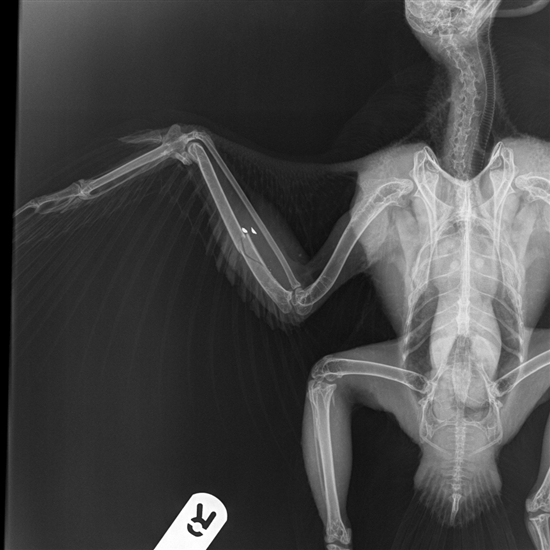
The female bird was found on 6 March 2017 next to Milton Abbot primary school in Tavistock. She was taken to a vet where an x-ray revealed a piece of shot lodged in her right shoulder (x-ray & photo courtesy Westmoor Veterinary Hospital, Tavistock).

The peregrine is currently being cared for by a local falconer.

Further details of this incident, and several other shot peregrines that have been found this year, on the RSPB’s Investigations Team blog here

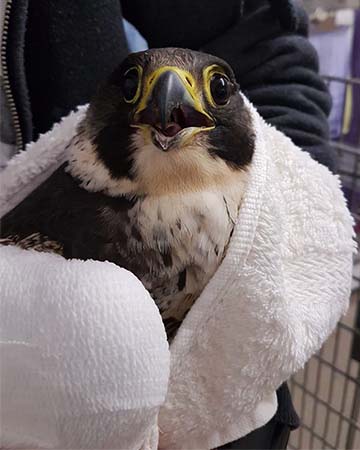
Peregrine found shot in Hampshire

The RSPB’s investigations team is reporting the discovery of a shot peregrine in Hampshire.

The bird, which hatched on Salisbury Cathedral in 2014, was found in King Somborne, Hants, on 11 March 2017, unable to fly.

It was taken to the Hawk Conservancy Trust in Andover where an x-ray revealed it had a fractured wing with gunshot fragments lodged next to the fracture site.

The peregrine is currently undergoing rehabilitation at the Hawk Conservancy Trust.

For further details see the RSPB Investigations Team blog here, which also lists some of the other peregrines that have been found so far this year, either shot or found dead in suspicious circumstances.

Meanwhile, the Police Service of Northern Ireland (PSNI) has joined forces with the Northern Ireland Raptor Study Group to proactively protect peregrine breeding sites throughout the region. Real partnership working – good for them. More information can be found on the NIRSG website here.

UPDATE 25 May 2017: Shot peregrine successfully rehabilitated and returned to the wild by Hawk Conservancy Trust (see here).

UPDATE 22 July 2018: Salisbury peregrine ‘Peter’ – shot last year, Dad this year (here)