Raptor persecution in Peak District National Park – BBC 1 this evening

Tonight’s BBC’s Inside Out programme will feature an investigation in to raptor persecution that’s taking place in the Peak District National Park.

This is a regional programme (BBC East Midlands) starting at 7.30pm but will be available on iPlayer shortly afterwards (see here).

To coincide with this programme, the Derbyshire Wildlife Trust has today called the low number of raptors in the National Park “a national disgrace” and blamed activities relating to the driven grouse shooting industry (see BBC news article here).

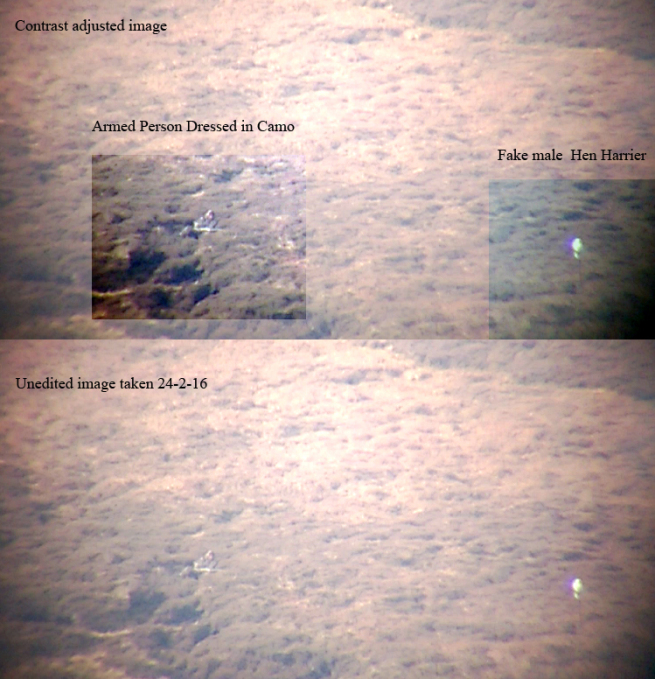
The article also mentions the footage that we published in April 2016 appearing to show an armed man sitting close to a hen harrier decoy on a National Trust-leased grouse moor within the National Park. This resulted in the National Trust terminating the grouse shooting lease four years early and searching for a new tenant. The National Trust has come under increasing public pressure not to lease the moor for grouse shooting and the campaigners are expected to be included in tonight’s Inside Out programme.
Part of the Peak District National Park (mostly the grouse moors of the Dark Peak area) has been recognised as a raptor persecution hotspot for many years (e.g. see RSPB ‘Peak Malpractice‘ reports here and here). As a result of the ongoing concerns, in 2011 the National Park began hosting a Bird of Prey Initiative where ‘partners’ are supposed to have been ‘collaborating’ to increase bird of prey populations. It has failed miserably. In 2015 it was announced that none of the project targets had been met (here) but that the Iniative was going to continue with “renewed commitment” and “new rigour and energy“. Strangely, we haven’t heard any more results from this so-called partnership initiative since then, although Rhodri Thomas, an ecologist with the Peak District National Park Authority gave a very honest presentation at the Sheffield raptor conference in September 2016. His opening words were:

Has the Initiative worked? Well, we’ve not met the targets that we’d set for 2015, we’ve not met them by a fairly substantial amount in some cases, so I think the answer from that point of view is a fairly clear no“.

Meanwhile, cases of confirmed illegal raptor persecution have continued to emerge (e.g. a shot peregrine that was found critically injured next to a Peak District grouse moor in September 2016. It didn’t survive its injuries).

Don’t forget – BBC 1 (East Midlands) Inside Out tonight at 7.30pm.

Sticking with the Peak District National Park and alleged wildlife crime, did anyone see yesterday’s news that the Crown Prosecution Service has decided there will no charges relating to the alleged snaring of badgers that was filmed by the Hunt Investigation Team on the Moscar Estate earlier this year? Interesting.

Also of interest, to us, was the name of the spokesman for Moscar Estate who was cited in the article: Ian Gregory. Surely not the same Ian Gregory of You Forgot the Birds notoriety?
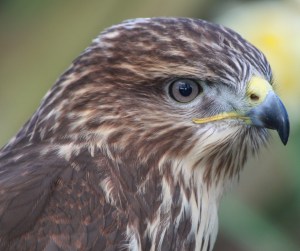
Buzzard shot in Hertfordshire

Press release from Hertfordshire Police, 26 September 2017:
Officers from Hertfordshire Constabulary’s Rural Operational Support Team (ROST) are appealing for witnesses and information after a buzzard was found seriously injured.

The bird was found by a member of the public on a track leading off Ledgemore Lane, Great Gaddesden, Hemel Hemstead on Wednesday September 6th 2017.

The bird was recovered and examined by a veterinaty surgeon. It was concluded that the bird had been shot and sadly, due to the severity of its injuries, the animal had to be put to sleep.

PC Simon Tibbett, from ROST, said: “All British wild birds, their nests and their eggs are protected under the Wildlife & Countryside Act 1981. Therefore it is an offence to shoot a buzzard or interfere with their nests in any way and punishable by a fine or up to six months in jail.

As a bird of prey, buzzard persecution is monitored by DEFRA and the National Wildlife Crime Unit as raptor persecution is a national wildlife crime priority.

We take wildlife crime very seriously in Hertfordshire and we are keen to trace those responsible for this offence. I would urge anyone with information to please get in touch“.

Jenny Shelton, Investigations Liaisons Officer at the RSPB said, “I think we speak for most people when we say we are angry and saddened to hear that someone has shot this bird. 

Our UK population of buzzards dropped during the 20th century due to unlawful killing, and sadly persecution is still a problem today. If you know anything about this incident, please contact police on 101 or the RSPB Investigations team on 01767-680551“.

Anyone who has witnessed people shooting or carrying hunting rifles in the area, or has any further information, should contact PC Simon Tibbett on Hertfordshire Constabulary’s non-emergency number 101, quoting reference D1/17/7143.

ENDS

Two more buzzard shootings were reported from nearby London Colney in April 2017, both believed to have been shot with an air rifle – see here.

Buzzard photo by RPUK

Bleasdale Estate gamekeeper denies killing two peregrines in Bowland

A 34-year old gamekeeper, James Hartley, appeared at Preston Magistrates Court today to face a series of charges relating to the alleged killing of two peregrines on the Bleasdale Estate, Bowland, in April 2016.

The charges read out in court were as follows:

  1. Killing a Schedule 1 wild bird. On 13 April 2016 at Bleasdale in the county of Lancashire, intentionally killed a wild bird included in Schedule 1 to the Wildlife & Countryside Act 1981, namely a peregrine falcon, contrary to sections 1(1)(a), 1(4) and 21(1) of the Wildlife & Countryside Act 1981.
  2. Disturb the nesting site of a Schedule 1 wild bird. On 13 April 2016 at Bleasdale in the county of Lancashire, intentionally or recklessly disturbed a wild bird included in Schedule 1 to the Wildlife & Countryside Act 1981, namely a peregrine falcon, while it was in, on or near a nest containing eggs or young, contrary to sections 1(5)(a) and 21(1) of the Wildlife & Countryside Act 1981.
  3. Killing a Schedule 1 wild bird. On 13 April 2016 at Bleasdale in the county of Lancashire, intentionally killed a wild bird included in Schedule 1 to the Wildlife & Countryside Act 1981, namely a peregrine falcon, contrary to sections 1(1)(a), 1(4) and 21(1) of the Wildlife & Countryside Act 1981.
  4. Set trap / gin / snare etc to cause injury to wild bird. On 13 April 2016 at Bleasdale in the county of Lancashire, set in position a trap which was of such a nature and so placed as to be calculated to cause bodily injury to any wild bird coming in to contact with it, contrary to sections 5(1)(a) and 21(1) of the Wildlife & Countryside Act.
  5. Take a Schedule 1 wild bird. On 13 April 2016 at Bleasdale in the county of Lancashire, intentionally took a wild bird included in Schedule 1 to the Wildlife & Countryside Act 1981, namely a peregrine falcon, contrary to sections 1(1)(a), 1(4) and 21(1) of the Wildlife & Countryside Act 1981.
  6. Possess live / dead Schedule 1 wild bird or its parts. On 13 April 2016 at Bleasdale in the county of Lancashire, had in your possession or control a dead wild bird included in Schedule 1 to the Wildlife & Countryside Act 1981, namely a peregrine falcon, contrary to sections 1(2)(a), 1(4) and 21(1) of the Wildlife & Countryside Act.
  7. Possess an article capable of being used to commit a summary offence under section 1 to 13 or 15-17. On 13 April 2016 at Bleasdale in the county of Lancashire, for the purpose of committing an offence, namely killing a Schedule 1 wild bird, namely a peregrine falcon, under section 1(1)(a), 1(4) and 21(1) of the Wildlife & Countryside Act 1981, had in your possession a firearm which was capable of being used for committing the offence, contrary to section 18(2) of the Wildlife & Countryside Act 1981.
  8. Possess an article capable of being used to commit a summary offence under section 1 to 13 or 15-17. On 12 April 2016 and 27 April 2016 at Bleasdale in the county of Lancashire, for the purpose of committing an offence, namely killing a Schedule 1 wild bird, namely a peregrine falcon, under section 1(1)(a), 1(4) and 21(1) of the Wildlife & Countryside Act 1981, had in your possession hammer, trap and knife which were capable of being used for committing the offence, contrary to section 18(2) of the Wildlife & Countryside Act 1981.
  9. Cause unnecessary suffering to a protected animal – Animal Welfare Act 2006. On 12 April 2016 and 15 April 2016 at Bleasdale in the county of Lancashire, caused unnecessary suffering to a protected animal, namely a peregrine falcon, by an act, namely trapping and leaving for a number of hours, and you knew or ought reasonably to have known that the act would have that effect or be likely to do so.

Mr Hartley denied all charges.

The following commentary has been compiled from notes we took during the hearing:

The lawyer from the Crown Prosecution Service then summarised the prosecution case. She said the Crown’s case is that the defendant is responsible for the destruction of two birds at their nest site. She said the matter came to light when the RSPB sited a camera within the boundary of Bleasdale Estate to monitor nesting peregrines. The Crown alleges that camera footage captures an individual in a camouflage suit attending the nest site. The individual remained there for a number of minutes setting what is believed to be a trap. The female peregrine is seen to leave the nest and four shotgun discharges are heard and the female does not return. The male peregrine remained at the site all day, believed to be trapped in the device set earlier. Later in the evening a person is seen to attend the nest site and remove something.

She went on to explain that the defendant is the gamekeeper for this particular ‘beat’ on the Bleasdale Estate and during a police search of his property a bag was seized containing a number of tools. A forensic analysis showed that a wooden-handled hammer and an orange-handled knife both contained peregrine DNA. The defendant gave a ‘no comment’ interview.

The defence lawyer, Tim Ryan, told the court that his client did not carry out the offences and is not the person shown in the video footage. He said part of his defence case would be to question the admissibility of video evidence under section 78 of the Police & Criminal Evidence Act.

The next hearing will take place on 11 January 2018 which is expected to deal with legal arguments about the admissibility of video evidence. Depending on the outcome of that hearing, a preliminary trial date was set to begin on 12 February 2018 and is expected to last for five days.

PLEASE NOTE: Comments are welcome but contributors are reminded that the offences are only alleged at this stage and it is up to the court to determine innocence or guilt. Please consider your words carefully as libellous commentary could interfere with the progression of this case! Thanks.

UPDATE 10 January 2018: Case against Bleasdale Estate gamekeeper James Hartley: part 2 (here)

Raptor shot in North York Moors National Park

North Yorkshire Police have tweeted about the shooting of a raptor two days ago in the North York Moors National Park:

At the moment there is no further information about the circumstances of this reported incident, the species, the extent of its injuries, and whether it’s alive or dead.

Hopefully the police will issue a detailed appeal for information.

[UPDATE 18.20hrs: Further tweets from the police – the shooting was witnessed by a walker, the bird was thought to be a marsh harrier or a buzzard, the body was not found].

The North York Moors National Park is a well known raptor persecution hotspot, which is no surprise given the extent of driven grouse moors within the Park’s boundary. Earlier this year a buzzard was found in the Park with shotgun injuries (here) and last year another buzzard was found in the Park with horrific injuries caused from being shot and caught in a leg trap (see here).

Hawk & Owl Trust still refusing to admit Hen Harrier Rowan was shot

This is hilarious.

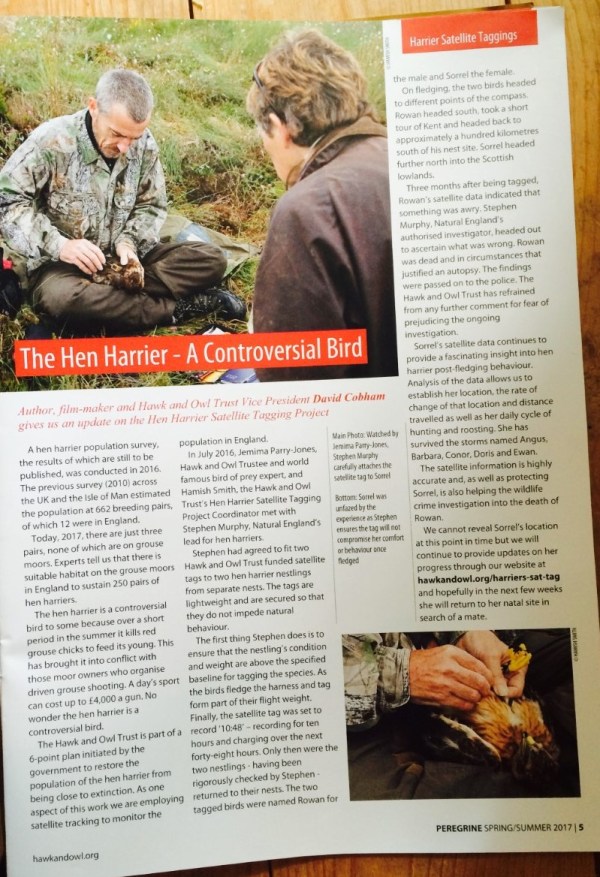
In the latest edition of the Hawk & Owl Trust’s members magazine (Peregrine, No 106, Spring/Summer 2017) there’s an article entitled ‘The Hen Harrier – A Controversial Bird‘.

There’s a bit about their 2016 satellite-tagged hen harrier, Rowan:

“Three months after being tagged, Rowan’s satellite data indicated that something was awry. Stephen Murphy, Natural England’s authorised investigator, headed out to ascertain what was wrong. Rowan was dead and in circumstances that justified an autopsy. The findings were passed on to the police. The Hawk & Owl Trust has refrained from any further comment for fear of prejudicing the ongoing investigation”.

What nonsense.

As you’ll recall, Rowan was satellite-tagged by the Hawk & Owl Trust / Natural England at Langholm in 2016. His corpse was discovered, in suspicious circumstances, in Cumbria /Yorkshire Dales National Park in October 2016, shortly before the Westminster debate on banning driven grouse shooting.

press release issued by Cumbria Police (after consultation with Natural England and possibly the Hawk & Owl Trust) stated he was ‘likely to have been shot‘. We questioned that phrasing and a series of FoIs revealed that Cumbria Police had changed their statement from ‘was shot‘ to ‘was likely to have been shot‘. Why did they introduce an element of doubt? Was this a political move?

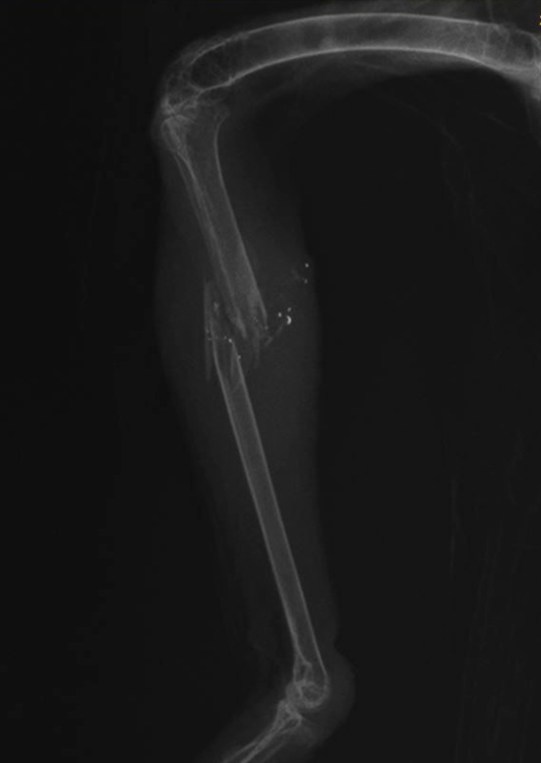
We asked Cumbria Police and Natural England to publish the post mortem report and the x-ray of Rowan’s corpse – they refused, saying it ‘might affect the course of justice‘. This made us even more suspicious as police forces routinely publish x-rays of shot birds as part of their appeals for information. By not publishing Rowan’s x-ray, it was almost as though they had something to hide.

Then on 3 February 2017, the RSPB published an image of Rowan’s x-ray on their blog. The image was clear: Rowan had suffered gun shot injuries to the leg and metal shot fragments were visible at the fracture site.

Later that day, the Hawk & Owl Trust issued a statement saying ‘the initial post mortem results were not wholly conclusive and further metallurgical tests were required‘.

We asked the Hawk & Owl Trust, several times, who had decided the post mortem results were inconclusive, who had decided that further metallurgical tests were required, had those tests been done, and if so, what were the findings?

The Hawk & Owl Trust did not respond.

So we submitted an FoI to Natural England, who confirmed that further metallurgical tests were not being undertaken.

Meanwhile, in the March edition of the RSPB’s Legal Eagle newsletter, it was stated that ‘the Zoological Society of London post mortem examination, including a radiograph of its fractured left leg, showed the bird’s injuries were entirely consistent with it having been shot‘.

You got that, Hawk & Owl Trust? Rowan was shot and this has been well publicised. This information will in no way ‘prejudice the ongoing investigation‘ because the investigation into this shot raptor, just like pretty much every other investigation in to a shot raptor, is going nowhere, thanks to a wall of silence from the grouse-shooting industry and organisations like the Hawk & Owl Trust propping up that industry with unwarranted encouragement.

Police appeal in suspected peregrine poisoning incident

Press release from Devon & Cornwall Police, 18 August 2017:

POISONED PEREGRINE FALCON: WITNESS APPEAL

Officers are investigating an incident after being contacted by staff at Glendinning Quarry in Ashburton, on Tuesday 15 August, following reports of an injured Peregrine falcon.

The falcon had been located on the floor of the quarry which is home to a breeding pair of Peregrine falcons.

Devon and Cornwall Police Wildlife Crime Officer, PC Josh Marshall, sought that the juvenile Peregrine falcon was given the immediate care it required. However, the bird died the next day.

PC Marshall said: “The initial inspection and condition of the bird strongly suggests that this bird had been poisoned. The bird has now been placed into the Wildlife Investigation scheme administered by Natural England where it will be forensically examined to establish the cause of death and a police investigation has now begun into the incident.

Members of the public are warned that poisons commonly used to commit a crime like this are incredibly toxic to humans and pets. Should any person locate any dead or injured birds they are strongly advised not to touch them or let pets come into contact with them.

Ingestion of these poisons can lead to death. It is incredibly concerning that individuals are using these types of chemicals within public areas that not only kill our wildlife but could also place members of the public, children and their animals into harm’s way.

The area of Ashburton and neighbouring Buckfastleigh is unfortunately a hot spot for poisoning of these birds of prey. Previous incidents at the site are as follows:

2011 – 1 poisoned Peregrine falcon at White Cleaves (Buckfastleigh) Quarry – substance used – Aldicarb and Carbofuran.

2005 – Poisoned bait (racing pigeon) Glendinnings Quarry– substance used Aldicarb. A live bird with clipped wings. Adults missing presumed dead, chicks rescued. Police fitted telemetry device to see if pigeon would relocate but this failed. In Legal Eagle 47, page 5.

2005 – 1 poisoned peregrine and 1 poisoned bait (pigeon) – substance used – Aldicarb, peregrine found on dead pigeon which had wings clipped.

2003 – Two men with a pigeon on a length of string appearing to try and lure peregrines from the top of White Cleaves (Buckfastleigh) Quarry. Police visited site but men had gone.

2000 – 1 poisoned Peregrine, substance used Aldicarb at Glendinnings quarry

2000 – 1 shot Sparrowhawk near Buckfastleigh (it lived).

1992 – 2 dead peregrines at White Cleaves (Buckfastleigh), with pigeon flesh in crop – tested positive for Malathion.

As can been seen from this data, the use of illegal banned poisons are evident and put the public at significant risk. In the 2005 incident, a number of children could have been harmed or potentially worse when the poisoned bait (a racing pigeon) was located wondering around near to a childminders address.

Significantly racing pigeons have been used as the bait for a number incidents both here and nationally and the answer to solving and preventing these poisonings could lie somewhere within a rogue minority of the racing pigeon community.

Peregrine falcons do not differentiate between prey items such as wild pigeons and racing pigeons, this obviously causes conflict with some prize racing pigeons being taken by these birds of prey.

Generally the method used will be to smear the bait with a vasaline type substance containing the poison onto either a live or dead bird. When the Peregrine plucks and eats the bait item the poison is then ingested and kills the bird. The bird dies then endures an excruciating few hours whilst waiting to die.

South West Peregrines, a volunteer group who monitor these birds and others within the South West, have described the incident as ‘abhorrent’.

We are urging members of the local community to come forward with any information they may have that can assist in bringing these offenders to justice”.

Information is handled in the strictest of confidence and can be passed directly to PC Marshall at Joshua.marshall2@devonandcornwall.pnn.police.uk or by email 101@dc.police.uk or calling 101 quoting log number 0223 180817.

Information can be passed anonymously to Crimestoppers via 0800 555111 or the charity’s website at www.crimestoppers-uk.org

Tony Whitehead speaking for RSPB in the South West said: “Peregrines are magnificent and much-loved birds, whose comeback over the past twenty years is a conservation success. However, once again, it appears the peregrines at this site have been deliberately targeted and, it is suspected, poisoned.

Should this prove to be the case, this is outrageous and the criminals must be brought to justice. We are also concerned that, should this again prove to be a poisoning, someone is wantonly placing toxic chemicals in the countryside which can be a danger to both humans and pets.

Someone in the local community must have information about who’s doing this and we urge people to come forward and contact the police. A £1,000 reward has been offered by the RSPB for information that directly leads to the prosecution of the offender.

ENDS

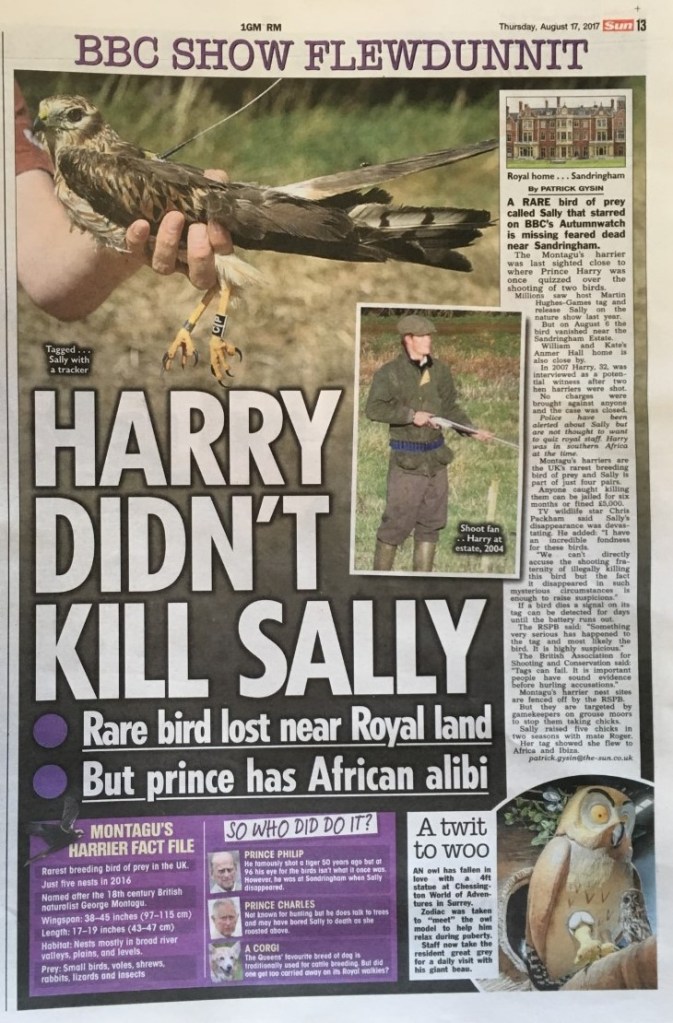
Harry didn’t kill Sally

The Sun’s take on the news that satellite-tagged Montagu’s harrier, Sally, has ‘disappeared’ in Norfolk:

Satellite-tagged Montagu’s harrier Sally ‘disappears’ in Norfolk

If it’s not news of a hen harrier being persecuted, or a marsh harrier being persecuted, then it’ll be a Montagu’s harrier.

The RSPB has just published a blog detailing the ‘disappearance’ in Norfolk of satellite-tagged Montagu’s harrier ‘Sally’ on 6th August 2017.

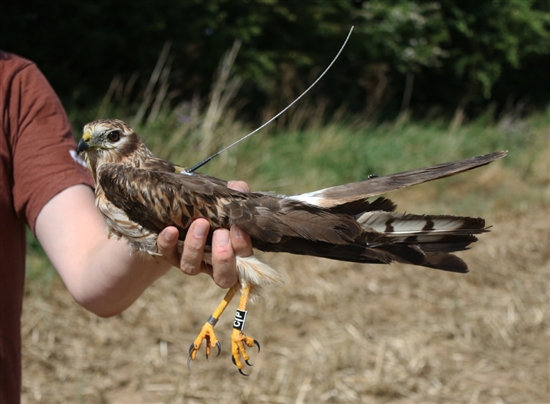
Sally was an adult female who had featured on the BBC’s Autumnwatch programme when presenter Martin Hughes-Games was given the privilege of releasing her post tag-fitting in July 2016.

Photos from RSPB

Sally had bred successfully in Norfolk for two years, including raising a brood of three this year. She (along with partner Roger) was one of only four breeding pairs in the UK and the only breeding pair in eastern England.

Her last tag signal came from near Bircham Tofts in Norfolk on the evening of Saturday 5th August 2017. She was reliably seen near her nest site at midday on Sunday 6th August 2017 but the scheduled tag signals from Sunday evening onwards never materialised. Since then, silence.

Sally’s ‘disappearance’ comes almost 3 years to the day when another tagged Montagu’s harrier (called Mo) ‘disappeared‘ in the same area, reported at the time to be on land bordering the Sandringham Estate.

If anyone has any information, please contact Norfolk Police (Tel: 101) and quote ref #12815082017.

UPDATE 17th August 2017: Good coverage in The Sun newspaper here

Grouse shooting industry silent on marsh harrier persecution

Last Thursday (10th August 2017) North Yorkshire Police issued an appeal for information about several armed men, dressed as gamekeepers, who had been filmed trying to shoot a nesting Marsh harrier on a Yorkshire grouse moor in May. Some more armed men, still dressed as gamekeepers, were also filmed removing eggs from the Marsh harrier’s nest.

The Police appeal for information about the crimes, and an RSPB blog about the crimes, can be found here. The RSPB’s video footage of the crimes can be viewed here:

Four days on, we were interested to find out what the leading representatives of the grouse shooting industry have had to say about these crimes so we checked the following website news sections:

Moorland Association – nothing

National Gamekeepers Organisation – nothing

Countryside Alliance – nothing

British Association for Shooting & Conservation – nothing

Game & Wildlife Conservation Trust – nothing

No condemnation of these crimes. No appeals for information about these crimes from within their industry. Just a complete wall of silence. We even asked the Moorland Association whether this grouse moor was a member, and we asked the National Gamekeepers Organisation whether they had any members employed on this grouse moor. The responses? Nothing. Zero. Zilch. Nada.

It’s the same deafening silence that followed the discovery of a poisons cache buried on another North Yorkshire grouse moor (see here).

Isn’t it great to see these ‘partners’ in the Partnership for Action against Wildlife Crime (PAW) speaking out and doing their utmost to fight against illegal raptor persecution? It’s yet more evidence that the whole ethos of ‘partnership working’ against raptor persecution is nothing more than a sham.

Actually, how does this collective silence meet with the requirements of being a PAW member?

Let’s look at the PAW mission statement first:

Working in partnership to reduce wildlife crime through prevention and awareness-raising, better regulation, and effective and targeted enforcement‘.

Now let’s look at the PAW objectives:

  • PAW will raise awareness of wildlife legislation and the impacts of wildlife crime
  • PAW will help and advise on wildlife crime and regulatory issues
  • PAW will ensure all wildlife crime is tackled effectively.
  • All PAW members of PAW UK should take action in support of these overarching objectives

How does refusing to comment about raptor persecution crimes meet with any of the PAW objectives?

Some of these PAW members (all of them except the GWCT) are also members of the England & Wales PAW subgroup, the Raptor Persecution Priority Delivery Group (RPPDG). This is the group that DEFRA has identified as being integral to their highly controversial Hen Harrier Recovery Plan. Part of the RPPDG’s role is to provide publicity about raptor persecution, in order ‘to build trust and transparency’. Strange then, that we haven’t found any statement from the RPPDG about the persecution of Marsh harriers on this North Yorkshire grouse moor.

We were interested to read about a few hundred Hunt Saboteurs ‘sabbing’ (disrupting) a couple of grouse shoots this last weekend. As the shooting industry members of the PAW Partnership continue to deliver nothing at all, don’t be surprised to see more of this direct action approach in the months and years ahead.

Video of marsh harrier persecution on North Yorkshire grouse moor

If anybody has been foolish enough to believe any of the grouse shooting industry’s recent propaganda onslaught in the run up to the Inglorious 12th, here’s a shocking reminder of what really goes on.

Press release published today by North Yorkshire Police:

POLICE INVESTIGATE PERSECUTION OF BREEDING MARSH HARRIERS

North Yorkshire Police are investigating an incident in which men disturbed a pair of marsh harriers nesting on moorland north of Denton, near Ilkley, in Wharfedale.

In May 2017 a pair of marsh harriers was discovered nesting on moorland forming part of Middleton and Denton moors near the village of Denton in North Yorkshire.

The site was monitored by RSPB investigators who photographed the nest containing five eggs. The adult birds were observed at the nest.

A camera was set up to record activity at the nest site. Video images recorded by the camera show that on 17 May at least two individuals, who appeared to be men, wearing dull, brownish green coloured jackets, traditional country caps, and carrying what looked like shotguns and a brown game bag approached the nest site on six occasions between 12.40pm and 9.30pm. The sound of several shots fired in the vicinity of the nest  were recorded, as was the noise of an engine, believed to be a quad bike. One of the men stood over the nest, bent down, and appeared to pick up something from the nest before walking away.

The following day, 18 May, a further visit by a man, similarly attired, along with a green rucksack, was recorded at around 9.40am. This individual stood over the nest, bent down, and appeared to remove something from the nest.

An RSPB investigator checked the site on 19 May and discovered the nest had no eggs in it, with no sign of any debris from damaged eggs.

The people shown on the video at the nest site have not been identified. A number of men have been spoken to by police as part of the investigation.

The Wildlife and Countryside Act 1981 (WCA) makes it an offence to take, damage, or destroy the nest of any wild bird. Marsh harriers are a scarce species, listed on schedule 1 of the WCA, and have additional protection. It is an offence to intentionally or recklessly disturb birds listed on schedule 1 while they are at, or near, a nest with eggs or young. Marsh harriers are birds of prey and they normally breed in marshes and reed beds. It is unusual to find them breeding in heather on a moor.

PC Bill Hickson, who is investigating the incident, said: “The video evidence provided by the RSPB shows illegal activity around a marsh harrier nest, and the activity shown speaks for itself. The pictures on the video are, unfortunately, too small to produce an image from which any of the individuals shown could be identified.”

Anyone who has any information about the incident or can help identify who was responsible is asked to contact North Yorkshire Police. Telephone 101, choose option 2 and ask for PC 820 Bill Hickson or email bill.hickson@northyorkshire.pnn.police.uk.

ENDS

The RSPB has released a copy of the video footage: (make sure the volume is turned up)

The RSPB’s investigations unit has also published a blog about this case, here.

Gosh, who do you think those armed gunmen were? It’s a tricky one.

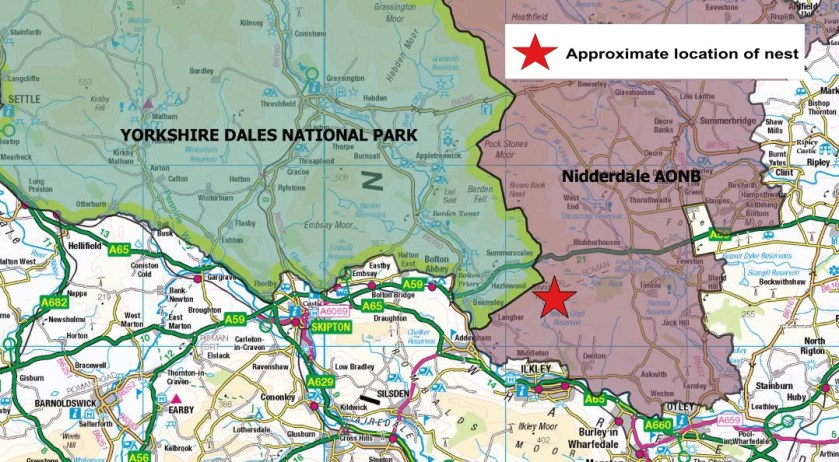
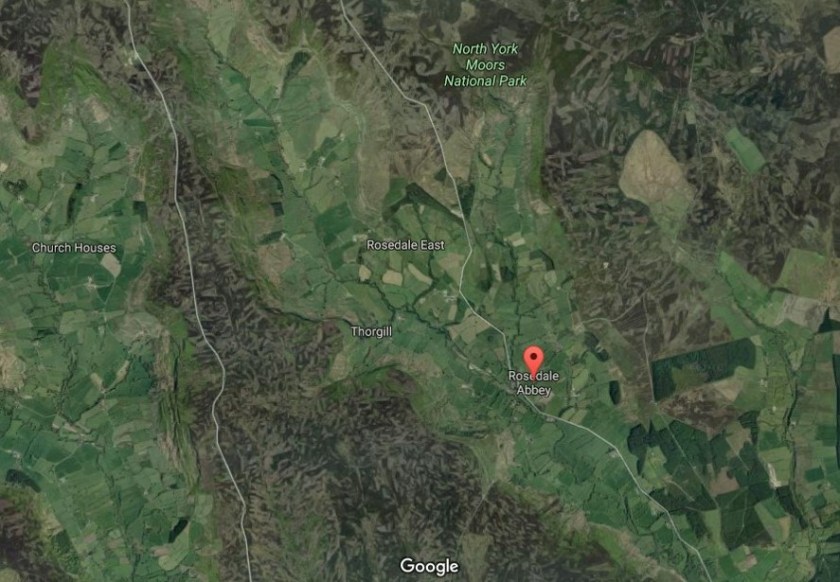
Here’s a map we’ve created to show the approximate location in Nidderdale Area of Outstanding Natural Beauty (which also just happens to be a notorious raptor persecution hotspot):

Well done to the RSPB Investigations Team for securing this footage (note: NOT inadmissible evidence) and very well done to North Yorkshire Police for a timely public appeal for information.

If, like us, you’re sick to the back teeth of the illegal persecution of raptors on grouse moors, and you want 10 million people to hear about it, please consider using your social media accounts (twitter & facebook) to sign up to Findlay Wilde’s thunderclap, due to go out at 9.30am on the morning of the Inglorious 12th. At the moment, the social reach of this thunderclap is over 9.5 million people. Let’s get it to ten million. Please sign here.