Moorland Association Chair in poor attempt to undermine RSPB ahead of damning Birdcrime report

Last week the RSPB revealed that yet another satellite-tagged hen harrier, this one called ‘Reiver’, had disappeared in suspicious circumstances in September on a grouse moor in Northumberland (see here).

Reiver is the 57th hen harrier known to have been killed or disappeared in suspicious circumstances on or close to a grouse moor since 2018 (see here). And actually there are more than 57, it’s just that some of the cases have yet to be made public by the police. There hasn’t been a single prosecution for any of these.

The suspicious disappearance of Reiver has attracted significant media coverage, although I didn’t see any of the shooting organisations posting an appeal for information on their websites – which speaks volumes in itself.

Part of the media coverage included an item on BBC Radio Newcastle on Weds 20th October, where radio broadcaster Alfie Joey interviewed Howard Jones (RSPB Investigations Team) and Mark Cunliffe-Lister (Lord Masham of Swinton Estate, also current Chair of the Moorland Association and with a reputation for being a forgetful silly billy, here).

The interview is only available for another 25 days so if you intend to listen do so sooner rather than later, although to be honest you’ll not be missing very much at all. It’s just a repeat of the usual strategy from the Moorland Association – deny everything and do as much as possible to divert attention from the ongoing killing of raptors on grouse moors, preferably by slagging off the RSPB and trying to undermine their status and authority on this issue.

In fact, the last time I heard the Moorland Association on BBC Radio Newcastle the then Moorland Assoc secretary claimed there was ‘no evidence’ of gamekeepers being involved in the persecution of hen harriers (yes, really – see here). Eight years on and not much has changed, with Lord Masham arguing with a straight face that there is still a need to ‘try and understand the cause of these crimes’ and claiming that ‘…clearly as an industry we’re all about welcoming hen harriers and working with them…’

You can listen to the latest radio interview here, starts at 1:39:07

Here are a few other choice quotes from Lord Masham:

The problem is, the RSPB will just do their own investigations, publish their own information online, with their own conclusions, which is not helping anybody

and

I would suggest that we work better with the police and the authorities, try and understand the cause of these crimes, then to take action with them, rather than trying to go out independently as the RSPB seem to do, do their own investigations, publish all their stuff online and seem to avoid the police and the authorities and the law“.

I like listening to radio interviews because it’s fun trying to spot the key words and phrases that the interviewee is trying to shoehorn in to the discussion, no matter what conversational contortions this requires. It tells you quite clearly what the interviewee thinks is the most important, take-home message to get across to listeners.

Some interviewees are seasoned professionals and have mastered this trick with ease. Others, not so much. The funniest example I’ve heard was Nick Halfhide, then Director of Sustainable Development at SNH, who had clearly been briefed to deflect attention from the raven-killing licence SNH had issued and instead talk about saving waders. It was hilariously bad – see here.

In a similar vein, Lord Masham’s obvious intention during this interview was to undermine the work of the RSPB’s investigations team. Unfortunately for him, his disingenuous claim that the RSPB ‘seem to avoid the police and the authorities and the law‘ is not only unfounded, but is easily dismantled with masses of available evidence.

Anyone who has been following this blog recently will have seen the string of multi-agency police-led raids this year, jointly investigating, with the RSPB, suspected raptor persecution crimes on land managed for gamebird shooting, up and down the country (e.g. see here). Indeed, RSPB Investigator Guy Shorrock has just written a blog (here) where he says that in his 30-year career with the RSPB’s investigations team:

I have to say the partnership working during the last 12 months or so to tackle raptor persecution has been some of the best I can ever remember. We have had fantastic responses from many police forces including Cheshire, Dorset, Devon, Durham, Lincolnshire, Norfolk, Nottinghamshire, North Yorkshire, North Wales, Suffolk, West Mercia, Wiltshire, and Police Scotland.

Some of the work by police Wildlife Crime Officers in these cases has been outstanding, and the support from the NWCU, Natural England, Welsh Government, CPS and HSE has been genuinely heart-warming. RSPB have been supporting all these enquiries, and have indeed generated several of them, and most are now progressing to court. They include some very serious allegations of extensive persecution which will no doubt cause significant public alarm when the full details and graphic imagery come to light‘.

Does that sound like the RSPB is ‘avoiding working with the police, the authorities and the law’?

No, it doesn’t.

So just what is Lord Masham’s game?

Could it be that the RSPB’s annual Birdcrime report is due to be published any day now, and this latest report will cover the period of lockdown in 2020 when the RSPB has previously reported ‘a surge’ in raptor persecution crimes (e.g. here and here)?

Could it be that the Moorland Association, knowing full well that the damning content of this new report will expose the shooting industry’s so-called claim of ‘zero tolerance for raptor persecution’ as the pathetic, untruthful marketing ploy we all know it to be, is now desperately trying to portray the RSPB as an unreliable source to try and diminish the impact of the new Birdcrime report?
Game-shooting industry silent about short-eared owl found shot on North Pennines grouse moor

Earlier this week I blogged about the discovery of a short-eared owl that had been found shot on a grouse moor on the Wemmergill Estate in the North Pennines AONB (see here).

This is the same estate where two short-eared owls were found shot and stuffed into a hole in 2015 (here) and where a satellite-tagged hen harrier called Marc had ‘disappeared’ in suspicious circumstances in 2018 (here).

Those of us interested in stamping out illegal raptor persecution have made sure that Durham Constabulary’s appeal for information about this latest victim has been distributed far and wide (e.g. see blog here by Chris Woodley-Stewart, Director of the North Pennines AONB partnership, and blog here by the Northern England Raptor Forum).

Unfortunately, the leading game-shooting organisations, some of whose members have been and/or are currently under investigation for various raptor persecution crimes, have once again failed to publicise or condemn this crime. I’ve just looked at the websites of the National Gamekeepers Organisation, BASC, Countryside Alliance and the Moorland Association and not one of them has published the police appeal or issued their own appeal.

It’s worth remembering that these organisations also serve on the Raptor Persecution Priority Delivery Group (RPPDG), along with Government officials, police and NGOs. One of the roles of the RPPDG is apparently to raise awareness of ongoing raptor persecution crimes.

I’m not sure how staying silent meets this objective.

On the subject of the RPPDG, I’ve written to the Head of the National Wildlife Crime Unit and asked whether the Countryside Alliance representative, former Police Inspector Phil Davies, will be removed from the RPPDG following his participation in a webinar where criminal information was disseminated about persecuting wildlife and avoiding prosecution (see here). I await a response with interest.

UPDATE 25th October 2021: Police boot off Countryside Alliance rep from all wildlife crime priority delivery groups after hunting webinar trial (here)

Short-eared owl confirmed shot in Teesdale grouse moor area where two short-eared owls previously found shot

Article published in the Northern Echo yesterday:

Short-eared owl shot and killed in Teesdale

POLICE are appealing for information after a short-eared owl was shot down in Teesdale earlier this year.

A post-mortem on the bird has confirmed the likely cause of its death was being shot with a shot gun.

The owl was found by the side of the road in May.

PC Lorraine Nelson said: “Persecuting birds of prey is never acceptable and we will always do everything we can to work with partners to act on information received about alleged criminal activity.

We would encourage anyone with information on this incident to get in touch.”

Jack Ashton-Booth, RSPB Investigations Officer, said: “Short-eared owls are declining nationally as a species.

Yet they are still widely targeted in our UK uplands: this is the third shot short-eared owl we are aware of in this area in the last six years.

In 2015 two dead short-eared owls, both of which had been shot, were found in a hole on moorland just over 1km away.

Each of those birds could have gone on to have three, four or five chicks, had they been allowed to live.

When I think of the scale of even just one area of moorland, and its array of nooks and crannies… how many more of these stunning birds could have been shot and concealed down holes or buried under peat?

It’s impossible to know.

This illegal killing must stop.

I urge any of you who may have information regarding individuals targeting these birds to come forward and call them out.”

If you have any information, call 101 and ask to speak to PC Nelson.

Alternatively, call the RSPB confidential hotline on 0300 999 0101.

ENDS

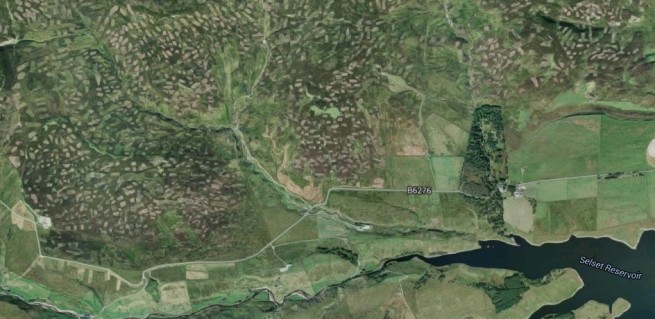
This short-eared owl was found shot in May close to the Selset Reservoir in Teesdale, which is an area dominated by land managed for driven grouse shooting, as you can see from this Google map showing the tell-tale rectangular strips of burned heather:

According to RSPB Investigations Officer Jack Ashton-Booth, the latest victim was discovered just over 1km from where two short-eared owls had been found shot and buried in potholes on the Wemmergill Estate in 2015 (see here). Nobody was prosecuted for those two offences, just as nobody will be prosecuted for this latest wildlife crime.

Wemmergill Estate is also the last known location of satellite-tagged hen harrier Marc, who vanished in suspicious circumstances on this grouse moor in 2018 (see here).

The article published yesterday in the Northern Echo was presumably based on information from Durham Constabulary, and claims that the police are appealing for information. I can’t find anything about the crime, investigation or subsequent appeal on the Durham Constabulary website or the police’s Facebook page. If it is there, it’s well hidden.

And once again, it has taken five months for this ‘appeal’ to emerge. I suppose that’s an improvement on the seven months it took Durham Constabulary to appeal for information after the discovery of the two shot owls found in 2015.

Yesterday’s article in the Northern Echo states that:

A post-mortem on the bird has confirmed the likely cause of its death was being shot with a shot gun‘.

My understanding is that the post-mortem report confirmed the owl had been shot and that was the cause of its death shortly afterwards.

There may be more news to come about this latest crime. I will update the blog if/when I receive further information.

UPDATE 18.00hrs:

The RSPB investigations team has confirmed on Twitter that this latest shot short-eared owl was found dead on a grouse moor (estate unnamed but believed to be the same estate (Wemmergill) where two short-eared owls were found shot and shoved down a pothole in 2015.

Also, Chris Woodley-Stewart, Director of the North Pennines AONB Partnership has written a blog on the AONB website to draw attention to this latest crime (see here). Well done, Chris.

‘Star lot’ in GWCT’s auction is a day’s shooting at an estate currently at centre of police investigation into shot red kite

It’s always interesting to look at the auction lots in the shooting world’s regular fundraising drives. I think it’s useful, and quite telling, to see who’s supporting who and it can often explain a great deal about why many shooting organisations refuse to call out the criminals when yet another raptor persecution crime is uncovered and instead simply pretend not to have noticed that anything’s happened (also known as wilful blindness).

In the era of a so-called ‘zero tolerance’ approach to raptor persecution, repeatedly declared by the large shooting organisations but yet to be effectively demonstrated in any meaningful way (because it’s all just a blatant publicity stunt in my opinion (e.g. see here)) it’s even funnier to scrutinise the auction booklets and see ‘who’s doing who’.

The latest auction from the Game and Wildlife Conservation Trust (GWCT) reveals an interesting donor, hailed as the auction’s ‘star lot’ on the GWCT website.

This ‘star lot’ comprises a 250-bird mixed pheasant and partridge day for eight guns at the ‘renowned’ Salperton Park in January 2022.

Does Salperton Park ring any bells to anyone? It does to me. This is where a red kite was found in March this year with multiple injuries caused by someone blasting the bird with a shotgun. The extent of the kite’s injuries, with serial fractures, is an indication that it was shot very close to where it was found, critically injured, on the estate (see here and here).

Gloucestershire Constabulary opened a criminal investigation focusing on Salperton Estate and local area, although PC Ash Weller was quoted in the local press:

We are exploring all avenues as this could have been someone travelling through the area rather than someone local to the area“.

Yeah, righto, PC Weller, it wasn’t as if the county was in a Tier 4 ‘stay at home’ lockdown period or anything, or that other alleged persecution incidents had been reported previously at this location, or indeed that raptor persecution has demonstrable links to the game shooting industry. Yeah, let’s focus on the least plausible explanation and go from there.

Needless to say, nobody has yet been charged or prosecuted and nor are they likely to be because the evidence required to link a named individual to this wildlife crime is virtually impossible to attain, even when the police are looking in the right direction.

Where does that leave us?

The sporting agency, Mark Osborne’s William Powell, can continue to advertise the estate as ‘one of the country’s most celebrated partridge shoots”, sporting clients can continue to fork out for shoot days on the estate, and the GWCT can trouser thousands of pounds worth of funds from their auction’s ‘star lot’.

Tremendous.

Buzzard caught in primitive illegal trap set inside pheasant pen in Shropshire

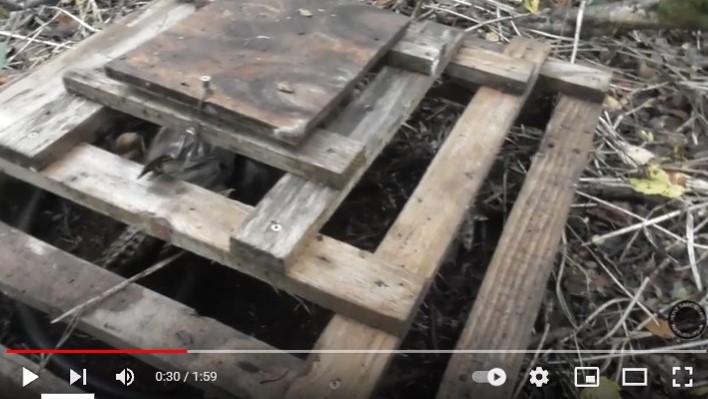
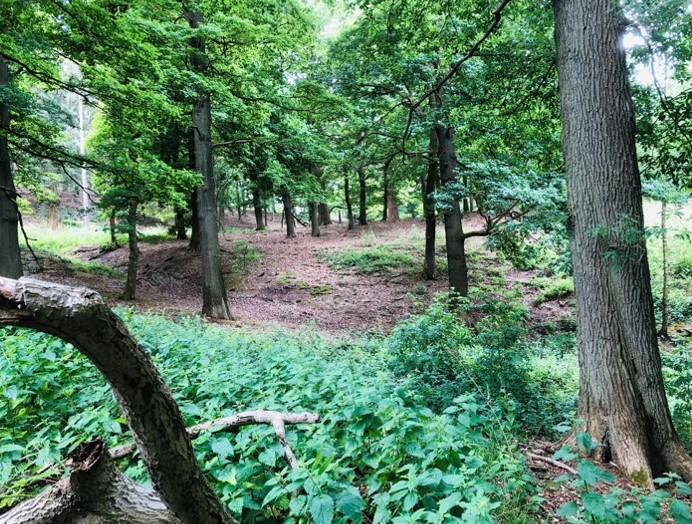
Video footage has emerged, filmed in mid-September, of two primitive and illegal traps that had been set inside a pheasant pen in woodland near the village of Chelmarsh, just south of Bridgnorth, Shropshire.

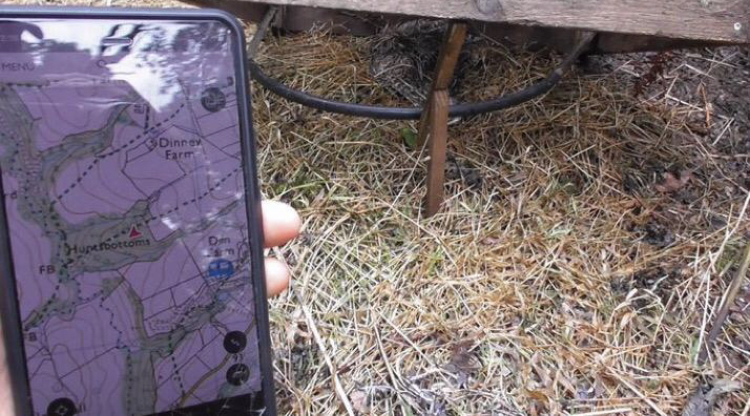
One of the traps had been triggered and had caught a buzzard. The other trap had been baited with a dead pheasant but had not been triggered.

[Screen grab from the video, showing the trapped buzzard inside the illegal trap]

[A photo of the second illegal trap, baited with the dead pheasant. The map shows the location:

The trapped buzzard was released by a member of the public and subsequent covert video evidence shows a man entering the pheasant pen, attending the trap and removing all evidence of it.

I understand that a report has been made to the police.

There is a write-up about this criminal activity on the Hunt Saboteurs Association website (here), where it is claimed the man attending the trap is a gamekeeper. I don’t have any information that can support or refute that claim.

The video can be watched here:

Derbyshire Police refuse to publicise report of two shot buzzards on pheasant estate

The blog I wrote a couple of days ago (here) about Police Scotland’s refusal to publicise the discovery of a shot peregrine found on a grouse moor in the notorious raptor persecution area of Strathbraan drew a lot of criticism of wildlife crime policing.

Some of that criticism was fair, in my opinion, but some of it wasn’t. The main point to be made, as has been discussed many times on this blog, is that not all police forces are the same. There are some brilliant, pro-active and creative police forces in the UK, spearheaded by diligent, hard-working officers who feel the same frustration as we all do when cases cannot proceed to court, and not for lack of trying. We’ve seen evidence of these officers’ work in recent months, including at least eight search warrants executed across the country in relation to suspected raptor persecution offences:

On 18th January 2021 there was a raid in Suffolk (here), on 15th March there was a raid in Lincolnshire (see here), on 18th March a raid in Dorset (here), on 26th March a raid in Devon (see here), on 21st April a raid in Teesdale (here), on 2nd August a raid in Shropshire (here), on 12th August a raid in Herefordshire (here) and on 14th September a raid in Norfolk (here).

Yesterday evening we saw another example (here), this time from Police Scotland, resulting in an individual being charged for an alleged offence that took place last week! Whatever the outcome of this case, Police Scotland’s response cannot be faulted and those officers involved should be commended.

It’s my view that slagging off the police in general, accusing them all of being inept, corrupt, members of the Masons etc, is a lazy and inaccurate response to wider failures within the criminal justice system. I get why people do it – the criminal justice system is hopelessly underfunded and some of the legislation is in dire need of updating to close some gaping loopholes – and the public rightly feels frustrated every time another raptor persecution crime goes unpunished, again and again and again, but that still doesn’t justify some of the criticism aimed at the police in general.

However, I think it’s also fair to criticise police forces and officers when it is obvious that investigative procedures are not up to standard. That was the point of the blog post about Police Scotland’s response to the shot peregrine in Strathbraan and it’s also the focus of today’s blog, which looks at Derbyshire Constabulary’s appalling response to a report of the shooting of two buzzards, witnessed by a member of the public on a pheasant-shooting estate in Derbyshire during last year’s first lockdown (April 2020).

To set the scene, this is a large, private estate in the lowlands, heavily wooded and with some lakes and open parkland. Approximately 20,000 pheasants are released for commercial shooting each year. Some of the estate is closed off to the public but other parts are criss-crossed by public footpaths and bridleways, making this a popular location for visitors.

On 1st April 2020, a visiting member of the public was watching two buzzards circling above a wood when he heard a shot and witnessed the buzzards falling. The incident was reported to Derbyshire Police as a suspected raptor persecution crime. The police quickly attended the scene but, I’m told, did not conduct a search of the wood but did speak to the gamekeeper and a number of other estate residents.

With no corpses found and no other witnesses, the next most obvious move would be for the police to issue an appeal for information. But Derbyshire Constabulary had other ideas.

The following is an email sent by a member of the police wildlife crime team to somebody who was asking whether an appeal for information might be forthcoming, given that raptor persecution is a national wildlife crime priority. The police response is astonishing:

This is such a jaw-dropping response I don’t really know where to begin!

The police officer seems to think that if the estate residents didn’t see anything then there was ‘zero chance‘ of further evidence coming to light. Er….what about other visitors? The country was in lock-down at the time but the estate is located in a village where local residents may well have been taking their daily allowance of exercise and who may have witnessed something of relevance.

The police officer also seems to think that issuing an appeal for information would mean accusing the gamekeeper of shooting the buzzards. That’s not the case at all! Just a statement of the facts was all that was needed – without accusing anybody. Police forces do this all the time. And surely, the gamekeeper and the estate owner would welcome an appeal for information if it was possible that someone without authority was wandering around the estate discharging a firearm?! Fear of upsetting the gamekeeper/estate owner ‘when we may need the cooperation of the estate for future things‘ is not a valid reason for not progressing this investigation.

I think the most worrying aspect of the police response is this:

I think we all know that it would inevitably lead to repeated discussions which we’d have to become part of if it was our publication about gamekeeping practices in general. We’ve found that, for our team’s purposes, propaganda is of no value to us and is something we try to avoid‘.

Again, an appeal for information would not need to include any mention of gamekeeping practices. It would just be a statement of facts – that a member of the public reported what he believed to be the shooting of two buzzards at this location, at xx:xx hours on 1st April 2020, if anyone has any information that might help please contact the police on Tel 101 and quote incident ref number xxxxxxx.

How does Derbyshire Constabulary expect to maintain the public’s confidence to report suspected wildlife crime when reports are likely to be viewed as ‘propaganda’ by the police?

This isn’t the first time that Derbyshire Constabulary has faced criticism for the way it deals with reported raptor persecution crimes.

In January 2020, the RSPB issued a press statement about an illegally poisoned buzzard, found next to a poisoned bait, in the Peak District National Park. This crime had been uncovered the year before, in April 2019, but Derbyshire Constabulary had chosen not to say anything about it, nor to warn the public about the danger of poisoned baits being laid out in the countryside, let alone in a National Park (see here).

In response to that press release and the subsequent criticism of the police, Derbyshire Constabulary issued a remarkable statement on Facebook claiming that the circumstances surrounding the discovery of the poisoned buzzard, lying next to the poisoned bait, were ‘inconclusive’ as to whether the buzzard had been deliberately poisoned (yes, really – see here).

More criticism followed, quite rightly in my opinion, and shortly afterwards Derbyshire Constabulary posted another statement on Facebook, where they discussed the size of the geographic area they had to cover, their high workload, the lack of resources available to them and the small size of the team. They did though, commit to doing better (see here).

Just six weeks later this reported shooting of two buzzards landed on their desks.

As I said at the top of this blog, I have no interest in a general slagging off of the police. And particularly of Derbyshire Constabulary – a few years ago an elderly member of my family, suffering from advanced dementia, was prone to wandering off in a confused and distressed state, often for hours on end. Time and again, officers from Derbyshire Constabulary went looking for him and brought him home safely. I will always be grateful for the care and diligence shown by those officers, who went above and beyond my family’s expectations. Their efforts were exemplary and hugely appreciated.

My point is, again, that bringing the perpetrators of wildlife crime to justice, and particularly those guilty of raptor persecution, is difficult enough without some police officers seemingly doing their best to obstruct investigations. Blogs like this one make for uncomfortable reading but it’s clear that there needs to be a root and branch overhaul of procedures, with examples of best practice being highlighted and encouraged, at a national level. This is a role the so-far useless Raptor Persecution Priority Delivery Group (RPPDG) can play in England & Wales, and by the so-far useless PAW Raptor Group can play in Scotland, supported by the National Wildlife Crime Unit.

There are some seriously good officers dealing with wildlife crime but they need to be seen as the rule, not the exception.

Multi-agency raid following suspected raptor persecution in Norfolk

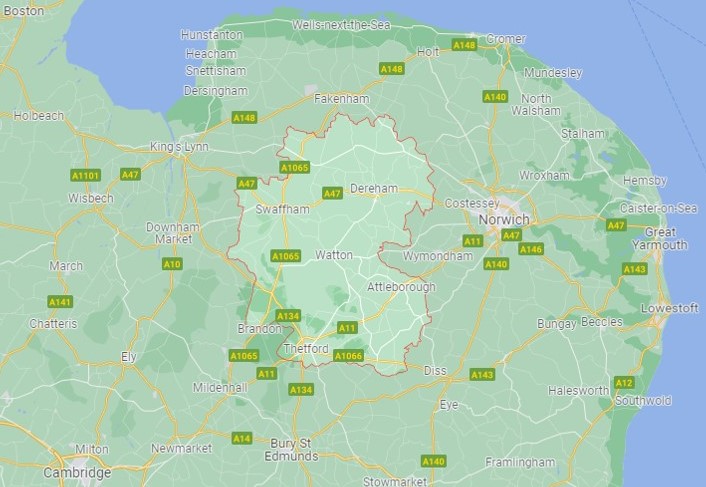
Norfolk Police led a multi-agency raid in yesterday, executing a warrant in Breckland in relation to suspected raptor persecution crimes.

The police were joined by staff from Natural England, National Wildlife Crime Unit and RSPB Investigation’s team. Items were seized and dead birds of prey were found.

The investigation is ongoing.

[Photo by RSPB]

The Breckland district of Norfolk:

This is at least the 8th multi-agency search in England this year, all in response to raptor persecution crimes. On 18th January 2021 there was a raid in Suffolk (here), on 15th March there was a raid in Lincolnshire (see here), on 18th March a raid in Dorset (here), on 26th March a raid in Devon (see here), on 21st April a raid in Teesdale (here), on 2nd August a raid in Shropshire (here), on 12th August a raid in Herefordshire (here) and now this raid in Norfolk.

That’s a lot of raids in a relatively short space of time, in comparison to recent years. It’s testament to the agencies involved that they are being so proactive and working well together in a genuine multi-agency partnership, which is brilliant to see. It’s also testament to the fact that raptor persecution continues in many locations across the UK, despite what the game-shooting organisations would have us believe.

Whether these investigations result in prosecutions is another matter entirely, but personally I’m delighted that at least this early part of the criminal justice process appears to have been re-energised after a long period of stagnation. Well done to all those involved.

Trial date set for Suffolk gamekeeper accused of poisoning buzzard

A couple of days ago I blogged about a gamekeeper who was due in court this week to face allegations that he was responsible for the alleged poisoning of a buzzard in Suffolk (see here).

This prosecution resulted from a multi-agency investigation and raid conducted at premises in January this year involving Suffolk Police, National Wildlife Crime Unit, Natural England and the RSPB’s Investigations team (see here).

[Police seized guns and pesticides during the multi-agency raid in January 2021. Photo via Suffolk Police]

News from the court today (via the RSPB) is that this gamekeeper has pleaded guilty to some charges but not guilty to others, so this case will now proceed to trial.

The gamekeeper pleaded guilty to six charges relating to firearms and pesticide storage.

He pleaded not guilty to two further charges relating to the illegal buzzard poisoning.

The trial is due to begin on 8th November 2021.

Please note, as this is a live case no further detail will be provided here until the case has concluded or there is official commentary from the court. Comments on this particular blog also won’t be accepted until the case concludes so as not to prejudice proceedings. Thanks for your understanding.

UPDATE 9th November 2021: Gamekeeper convicted for pesticide and firearms offences but buzzard-poisoning charge is dropped (here)

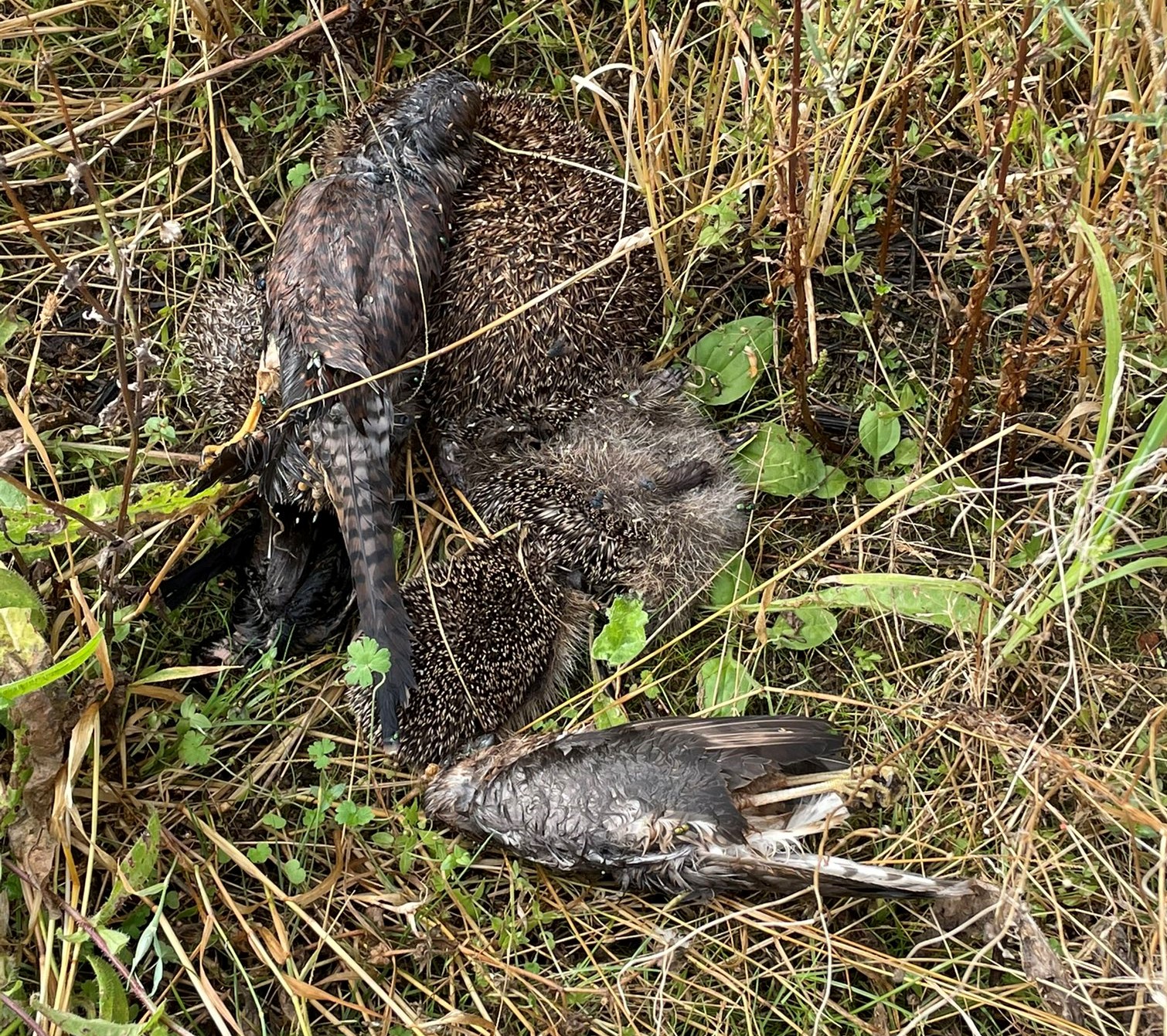
Dead kestrels & hedgehogs dumped in layby on Isle of Sheppey, Kent

Gruesome photographs have emerged this morning of dead wildlife found dumped in a pile in a layby near Harty on the Isle of Sheppey, Kent.

The person who found the corpses (@neish397) identified them as three kestrels and ten hedgehogs. He posted the photos on Twitter and asked for advice about what to do. He tried to report this incident as a suspected wildlife crime to Kent Police using the 101 reporting system but was apparently told by a call handler that he needed to report it online.

Fortunately, the RSPB Investigations team were also alerted and are currently dealing with this incident.

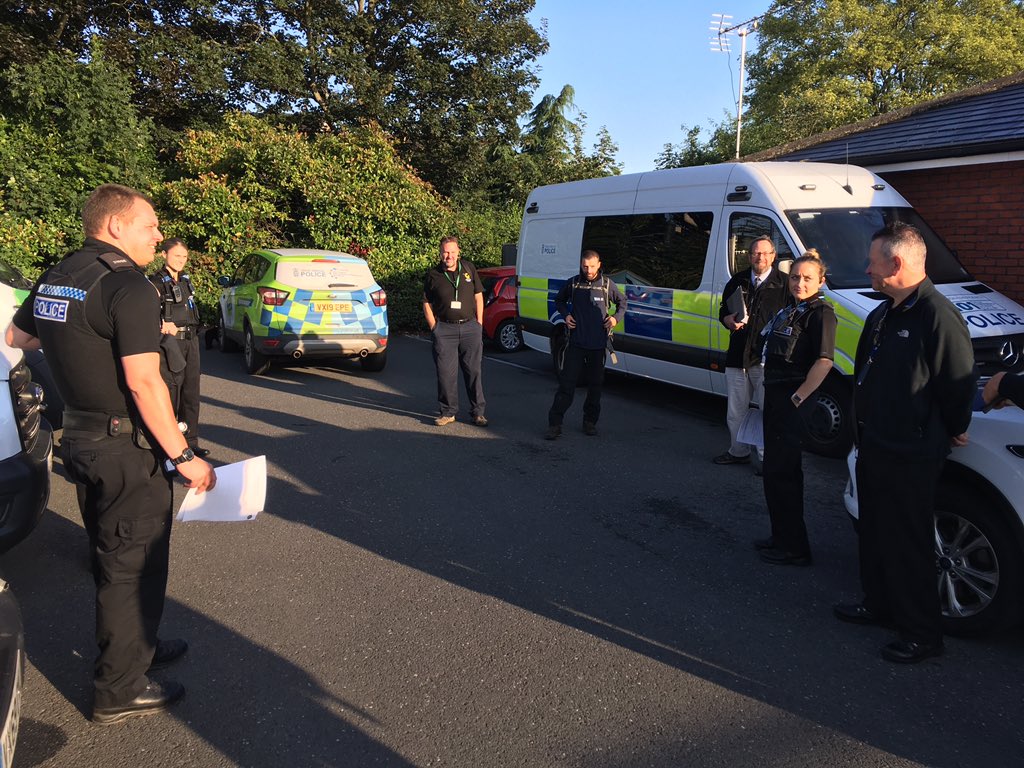
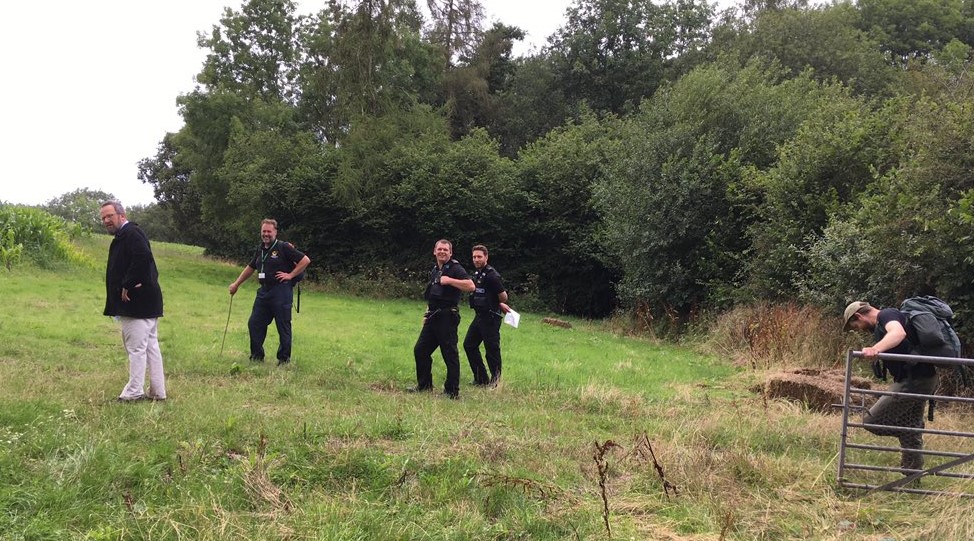
Multi-agency raid following suspected raptor persecution in Herefordshire

Herefordshire Police led a multi-agency raid on Thursday 12th August following a suspected raptor persecution incident in the south west of the county.

The police were joined by staff from Natural England, National Wildlife Crime Unit and RSPB Investigation’s team. Items were seized and enquiries are apparently continuing.

[Photos from RSPB]

This is at least the 7th multi-agency search in England this year, all in response to raptor persecution crimes. On 18th January 2021 there was a raid in Suffolk (here), on 15th March there was a raid in Lincolnshire (see here), on 18th March a raid in Dorset (here), on 26th March a raid in Devon (see here), on 21st April a raid in Teesdale (here), on 2nd August a raid in Shropshire (here) and now this raid in Herefordshire.

Well done to all the agencies involved in these follow-up investigations. It’s good to see genuine partnership-working in the fight to catch the raptor killers.