In December 2025, I blogged about a Hen Harrier that had been found poisoned on a grouse moor somewhere in North Yorkshire, 11 months earlier in January 2025.
There hadn’t been any media coverage of this illegal killing at all – no press releases or appeals for information from North Yorkshire Police, no comment from the National Wildlife Crime Unit’s Hen Harrier Taskforce, nothing from anyone.
I found out about the poisoning by scrutinising a Health & Safety Executive database, which had the following spreadsheet entry:
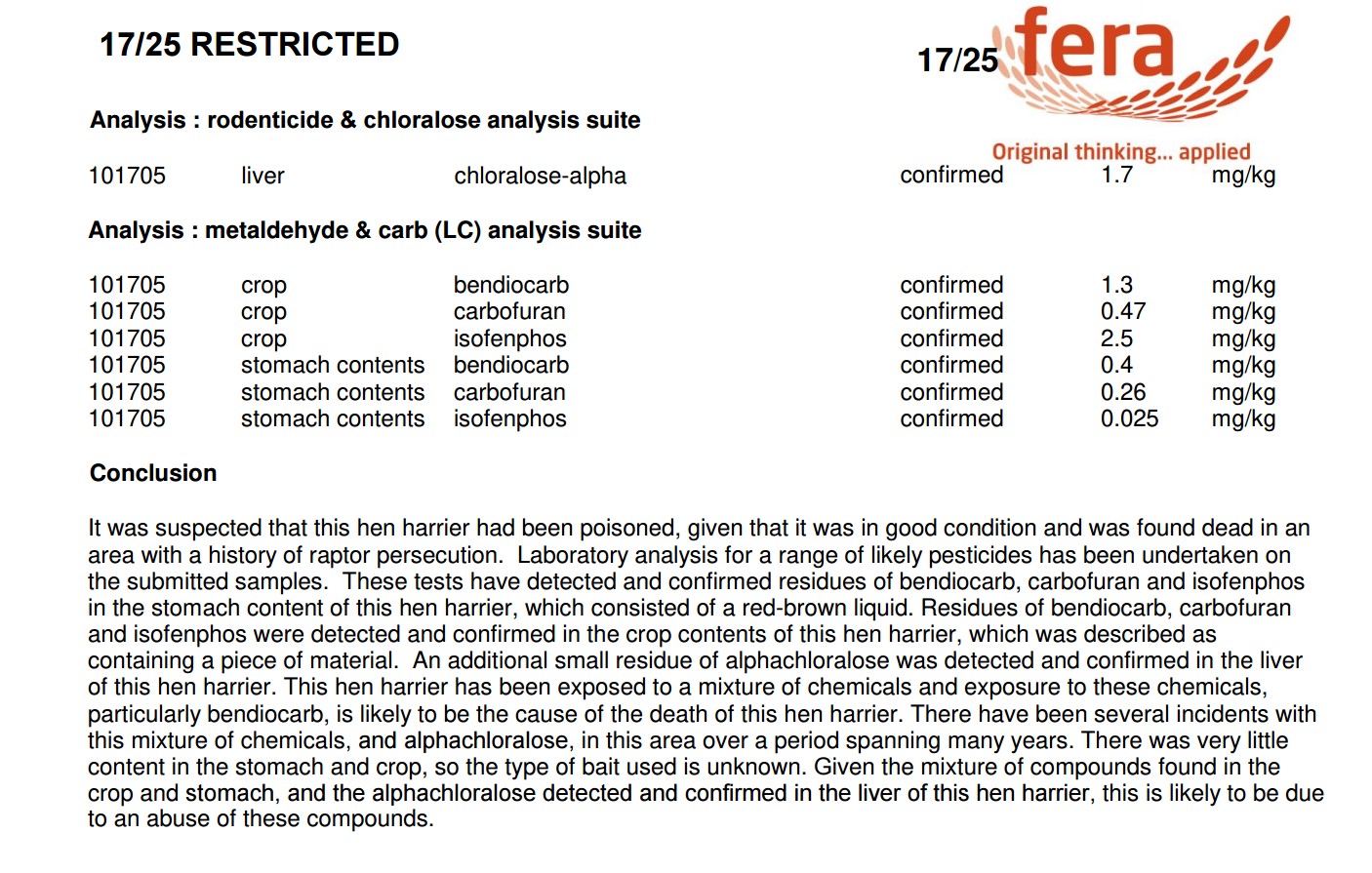
HSE Ref number 107/913. Confirmed poisoning, North Yorkshire, January 2025. Chemicals Bendiocarb, Carbofuran, Isophenphos, Alphachloralose. Notes: ‘A dead Hen Harrier was found on a grouse moor. Residues of Bendiocarb, Carbofuran, Isophenphos and Alphachloralose were found in the samples analysed, which is an abuse of these compounds. Case closed as passed to the Police‘.
Given the toxic combination of poisons, often referred to as the ‘Nidderdale Cocktail’ due to its frequency of use in the area, I mused that this Hen Harrier was likely to have been poisoned in Nidderdale, although it wasn’t conclusive evidence as in more recent years the Nidderdale Cocktail has also been detected in other parts of the country, perhaps indicating a gamekeeper moving from this region to work in another.
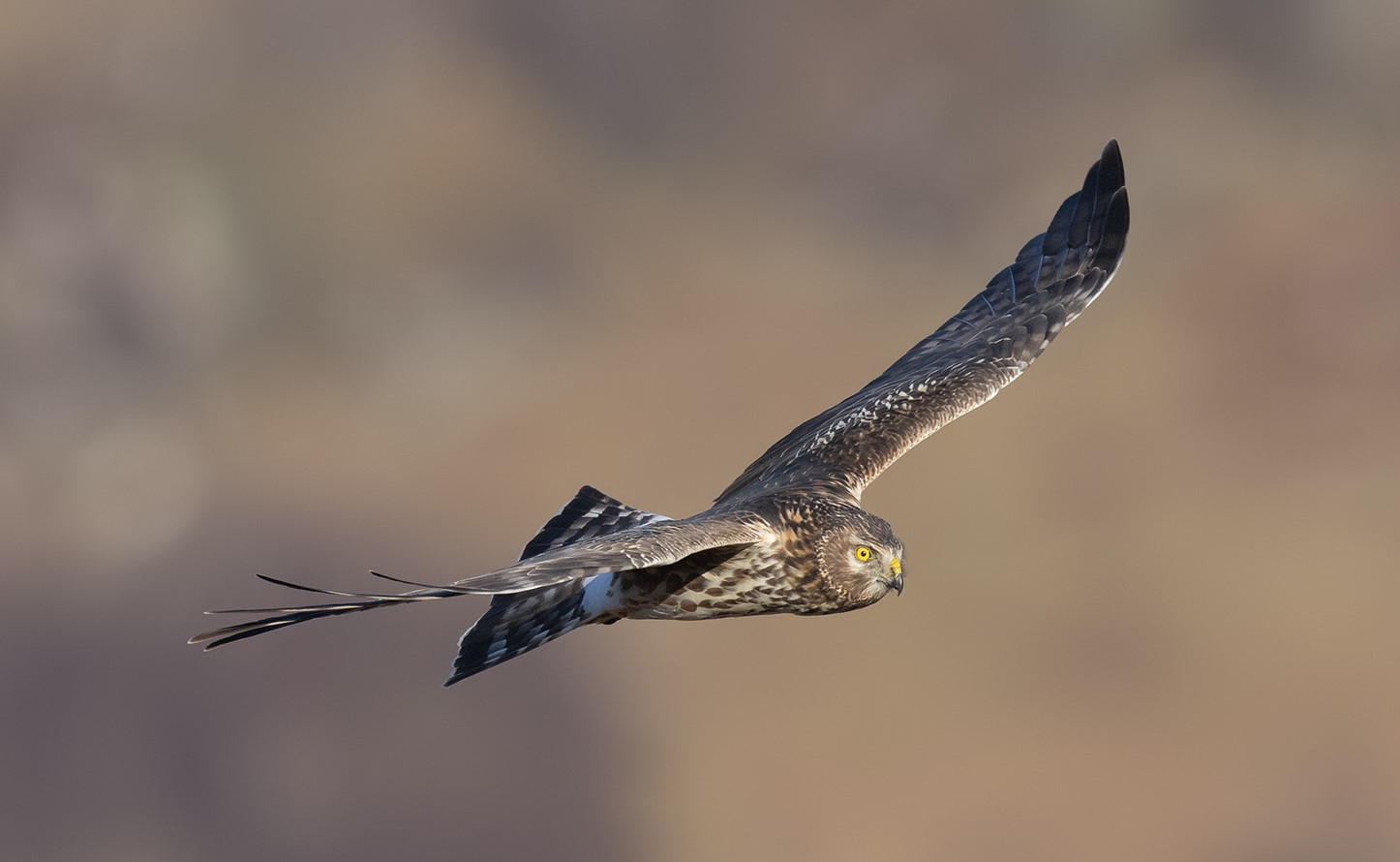
News then emerged in an RSPB press release in January 2026 that this Hen Harrier was a young female named Ataksak (named after an Inuit Goddess, the ‘ruler of the sky’) and she was carrying a satellite tag, fitted by the RSPB in Bowland in 2024.
It turned out that Ataksak was the Hen Harrier that gamekeeper Racster Dingwall and his accomplices had discussed shooting and killing as it came in to a roost site on Grassington Moor in the Yorkshire Dales National Park one evening in October 2024, but they then chose instead to “fleg it” (scare it off with warning shots) because they deduced it was wearing “a box” (a satellite tag) and killing it would draw unwanted attention from the authorities to their grouse moor.
The RSPB’s press release included details of the area where Ataksak had been found poisoned but still didn’t name a location:
‘The area where Ataksak’s body was found is recognised as a bird of prey persecution hotspot. In the last ten years 25 confirmed bird of prey persecution incidents have been recorded in this area, including Ataksak. These included four Hen Harriers, 13 Red Kites and five Buzzards. A satellite tagged Hen Harrier also disappeared in this area in 2024‘.
When I first wrote about this poisoned Hen Harrier in December 2025, I said I’d submitted a number of Freedom of Information requests about the Police investigation, some 11 months after she’d been found poisoned.
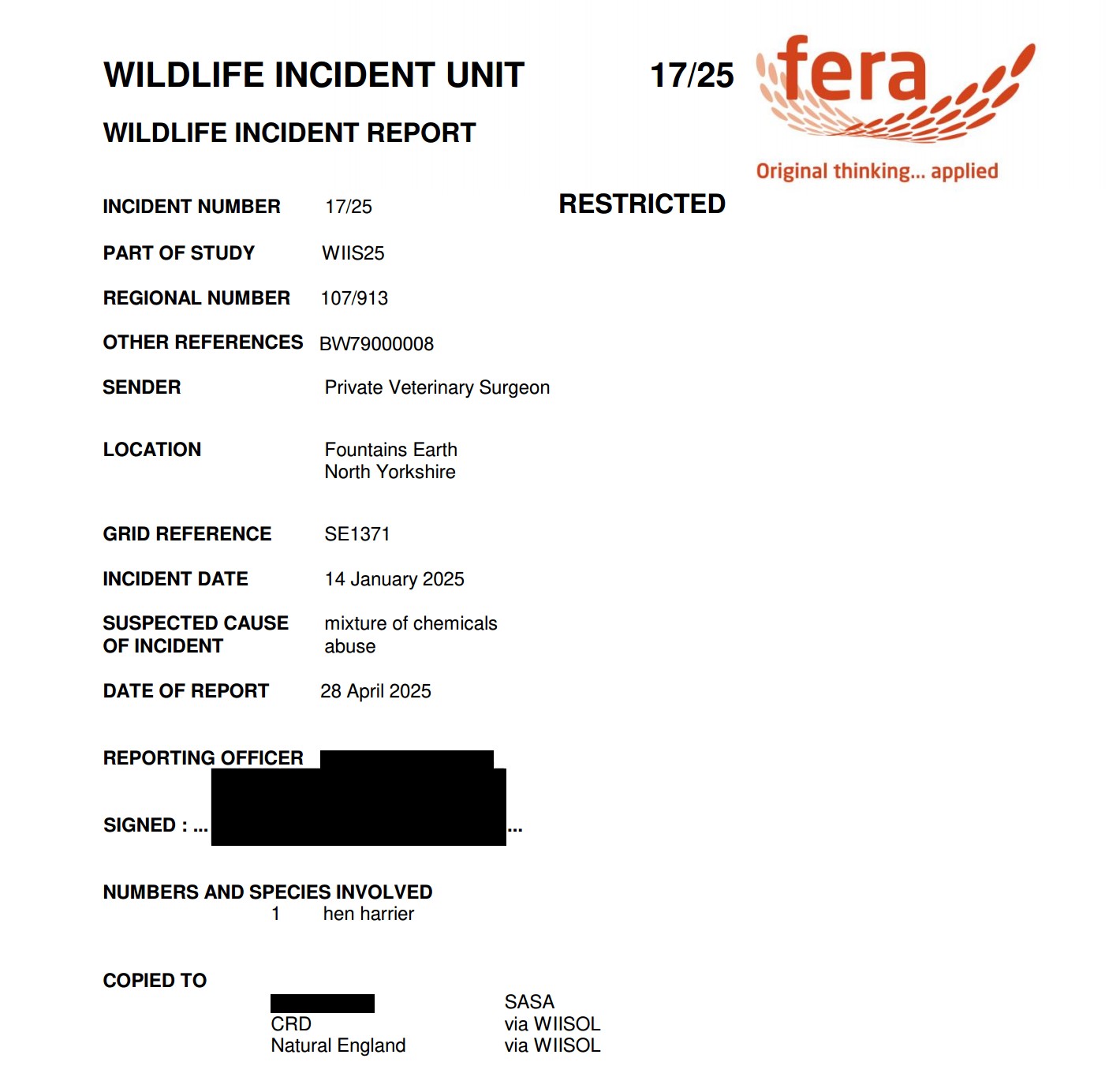
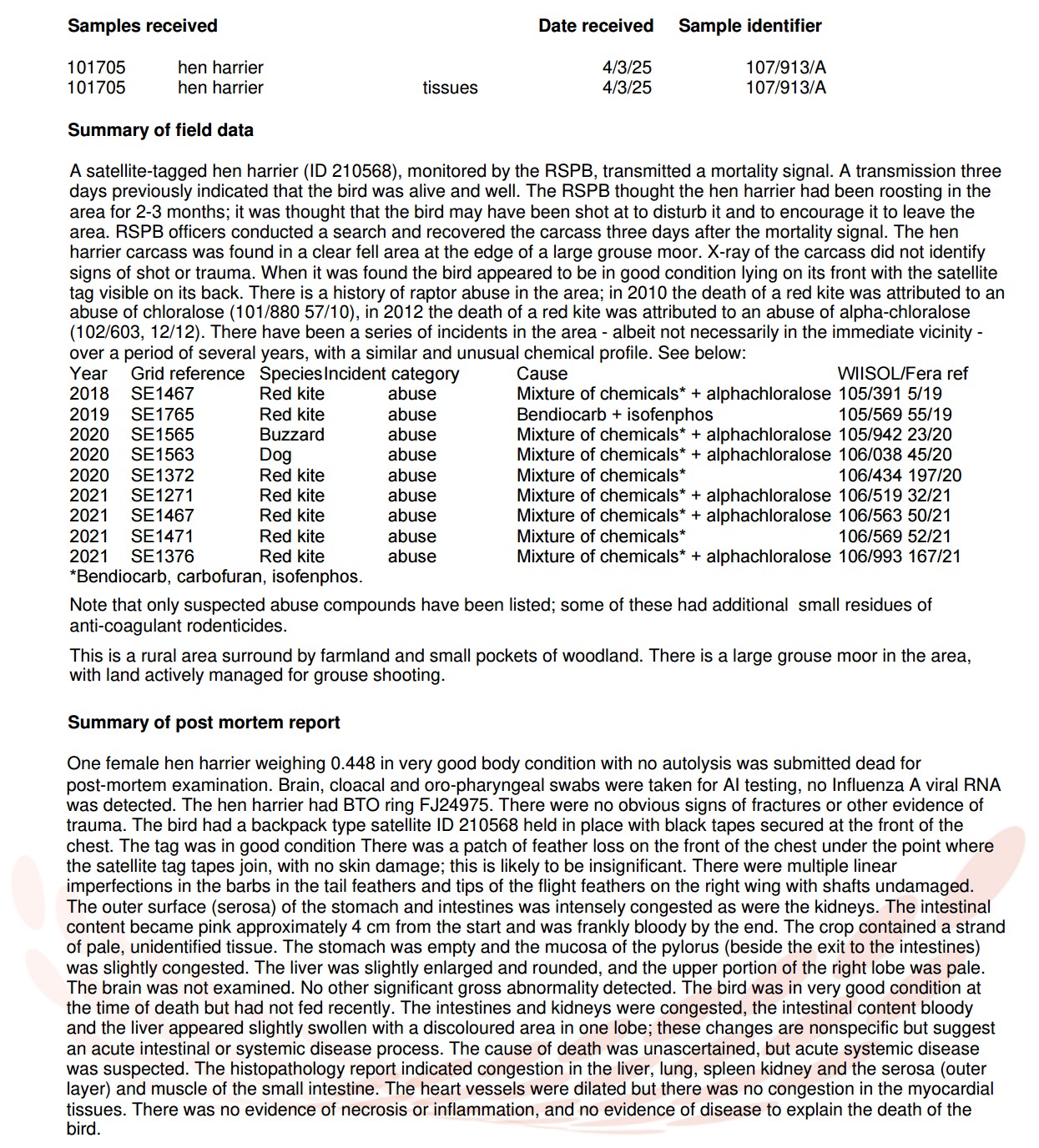
First, here’s a redacted post mortem report on Ataksak from FERA (Food and Environment Research Agency). It’s pretty conclusive:
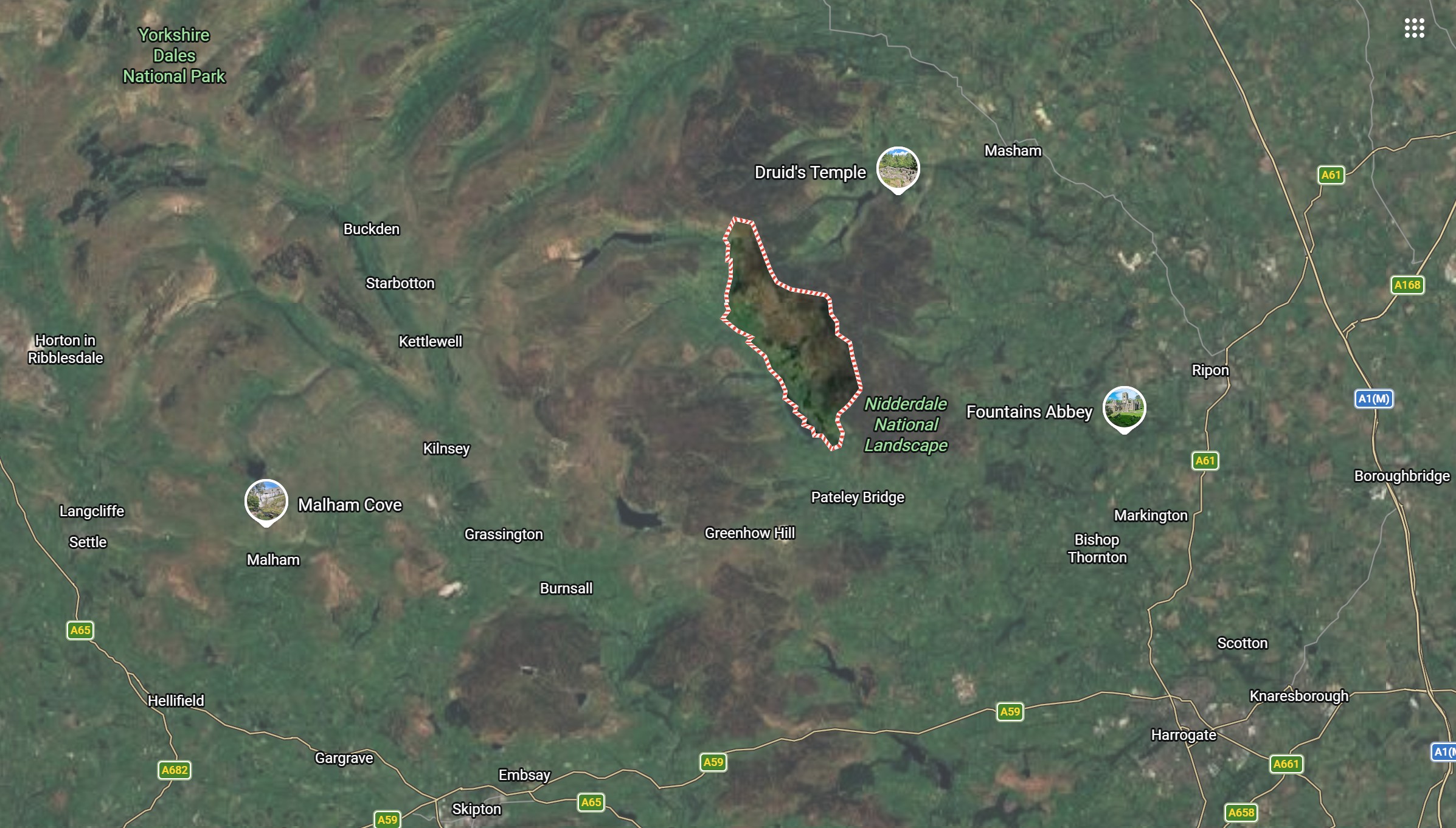
The PM report gives the location as ‘Fountains Earth’ in North Yorkshire, and a four-figure grid reference SE1371. This places Ataksak’s death in Nidderdale, a well known raptor-poisoning hot spot:
The parish of Fountains Earth, Nidderdale (google maps)
Given the high toxicity of the chemicals used to poison her, I’d think it quite likely that Ataksak was poisoned very close to the spot her corpse was found.
The PM report is dated 28 April 2025, some three months after Ataksak was poisoned.
So what progress had North Yorkshire Police made with its investigation in to this crime?
Well, apparently very little.
According to my sources, as of January 2026, a full year after Ataksak’s body had been found, and nine months after the conclusive post mortem report, North Yorkshire Police hadn’t even bothered to conduct a search, despite being encouraged to do so by the National Wildlife Crime Unit and Natural England.
And therein lies the problem. The responsibility for investigatory decision-making lies entirely with the local police force. Experienced officers from the National Wildlife Crime Unit (including specialists involved with the Hen Harrier Taskforce) and specialist poisoning experts from Natural England can only offer their assistance; if the local police force chooses not to accept those offers of help, for whatever reason, there’s nothing they can do about it.
How bonkers is that? Hen Harrier persecution is a national wildlife crime priority, there’s a national Taskforce that’s being funded (with tax payers’ money) to deal with it, but it doesn’t have the authority to investigate these crimes unless the local police force agrees to it.
This isn’t a problem in some areas, where local police forces are only too happy to accept specialist help and support, but it is definitely a problem in North Yorkshire (e.g. see here), and in several other counties in northern England where raptor persecution is known to take place, particularly on driven grouse moors.
I submitted Freedom of Information requests to the NWCU and to Natural England about the status of the investigation into the poisoning of Ataksak but surprise, surprise, both refused to release any information, stating the information has been withheld by exception, citing regulation 12(5)(b)(g) — Course of justice, inquiries & fair trial.
There is no ‘course of justice’ in this case, because North Yorkshire Police has been sitting on its hands for over a year. Rather than holding them to account, these agencies are simply providing them with cover.
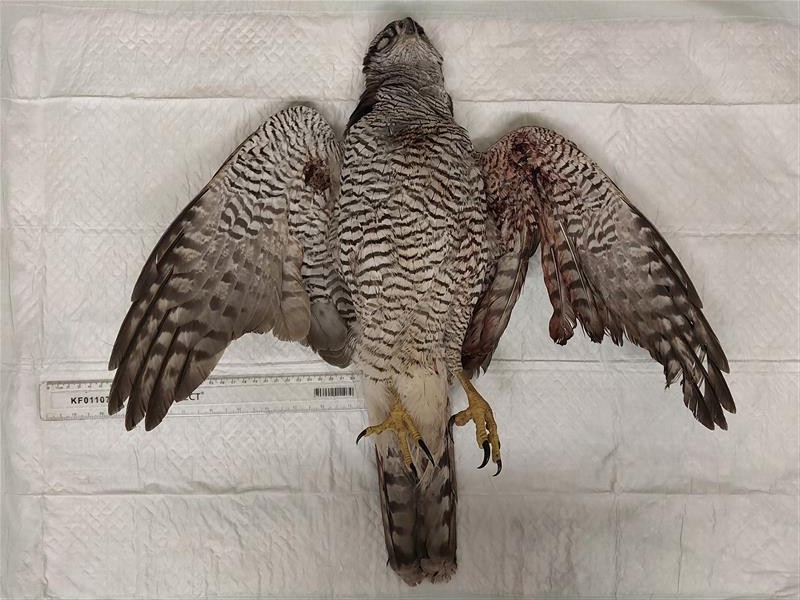
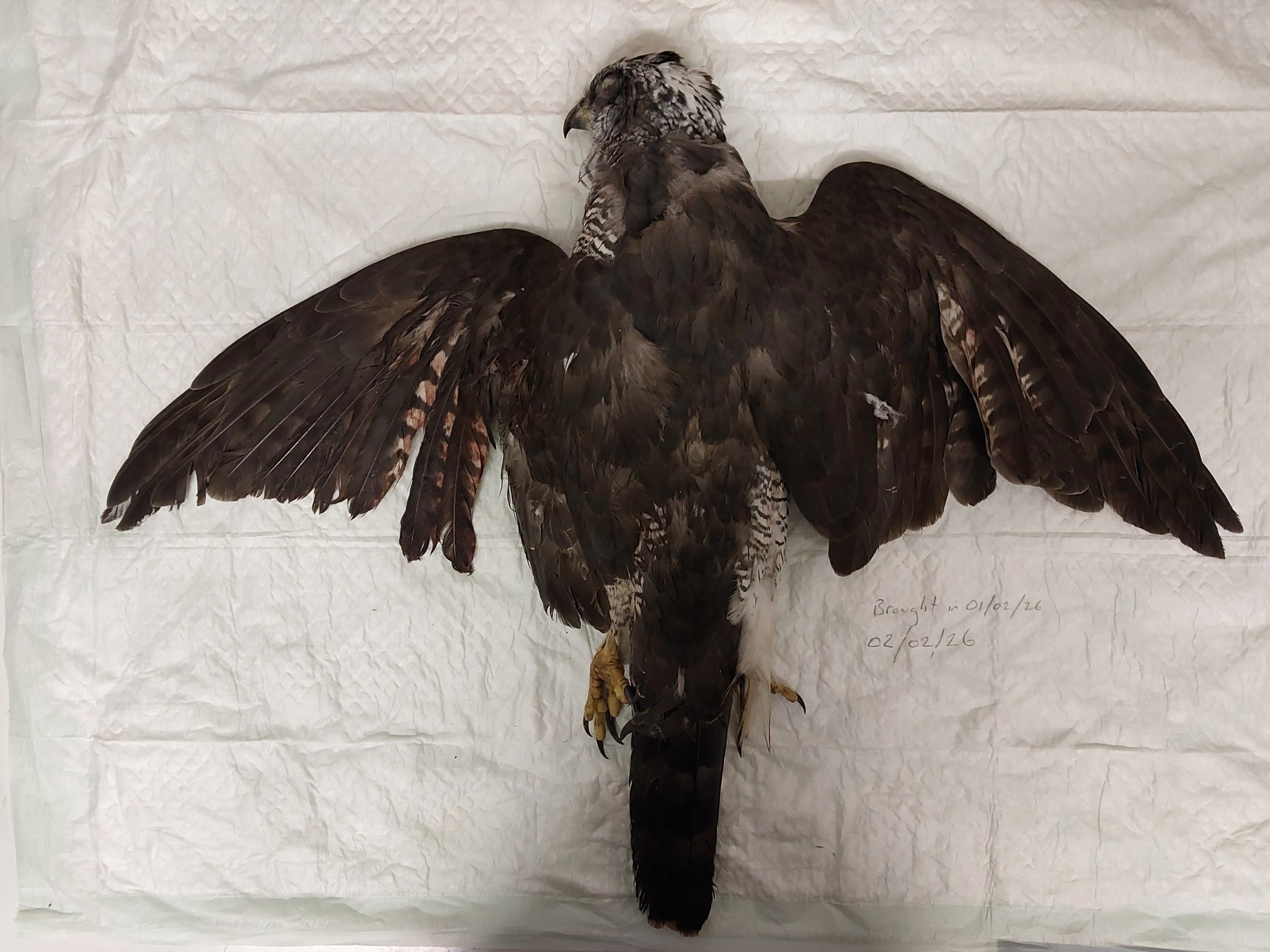
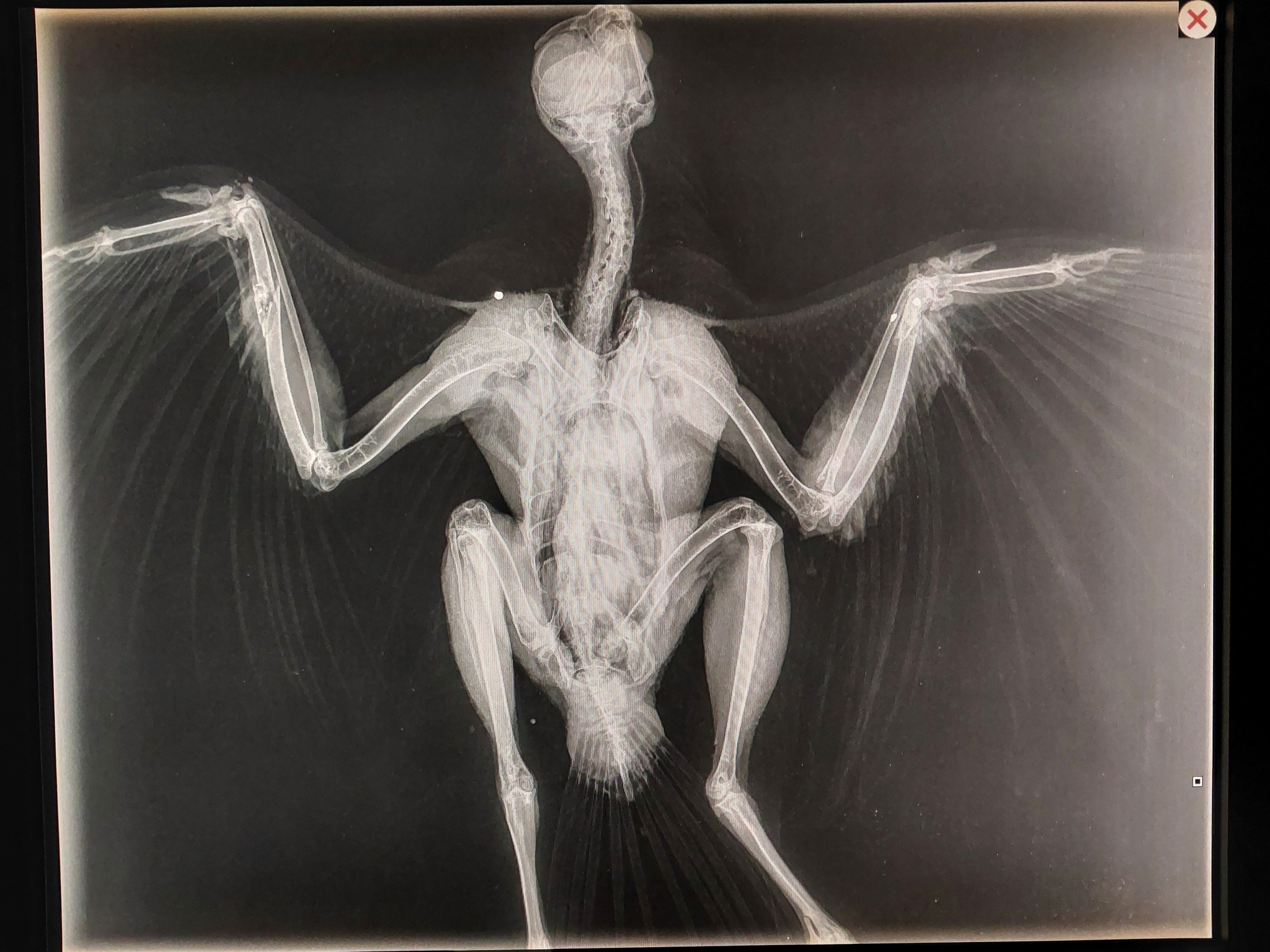
Derbyshire Police’s Rural Crime Team has issued an appeal for information after the discovery of a critically-injured Goshawk, which had to be euthanised due to the extent of its injuries.
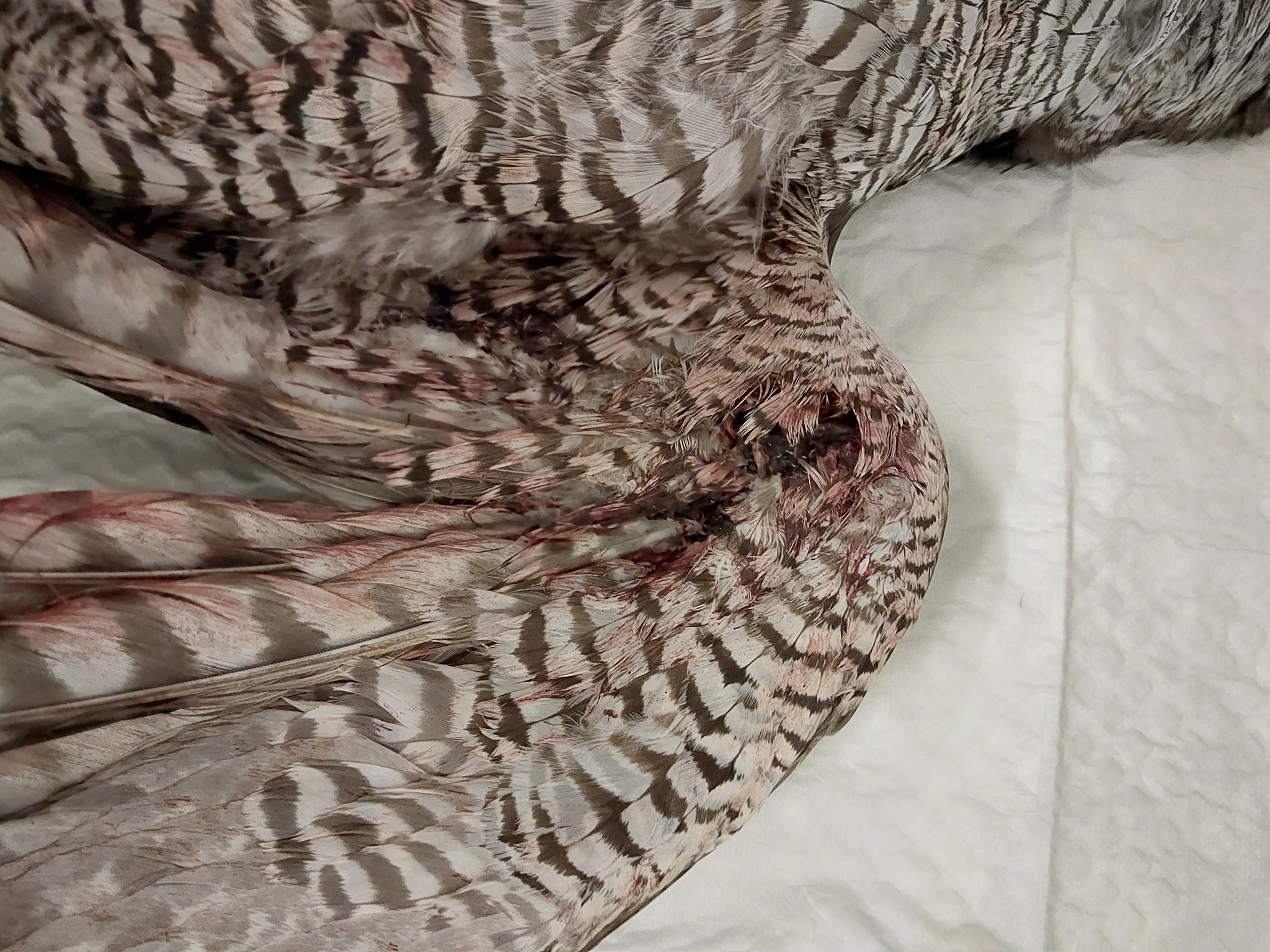
The injured Goshawk was found by a member of the public near Stanton Hall, Stanton by Dale, in south east Derbyshire on Saturday 31 January 2026. A veterinary examination and x-ray revealed the bird had been shot with a shotgun and sustained a right wing fracture, a left wing fracture and a suspected left ulna fracture near the elbow.
Given these injuries, it is likely the Goshawk wasn’t capable of long distance flight from the location where it was shot.
Photographs via Derbyshire Police Rural Crime Team:
The Police are asking the public whether they saw anyone with a gun in the area, whether gunshots were heard, and whether anyone saw any suspicious behaviour.
Anyone with information is asked to call the police on 101 and quote incident number 26*68719.
Racster Dingwall, the now former Head Gamekeeper on Conistone and Grassington Estate in the Yorkshire Dales National Park, pleaded guilty at York Magistrates’ Court last month to conspiring to kill a Hen Harrier.
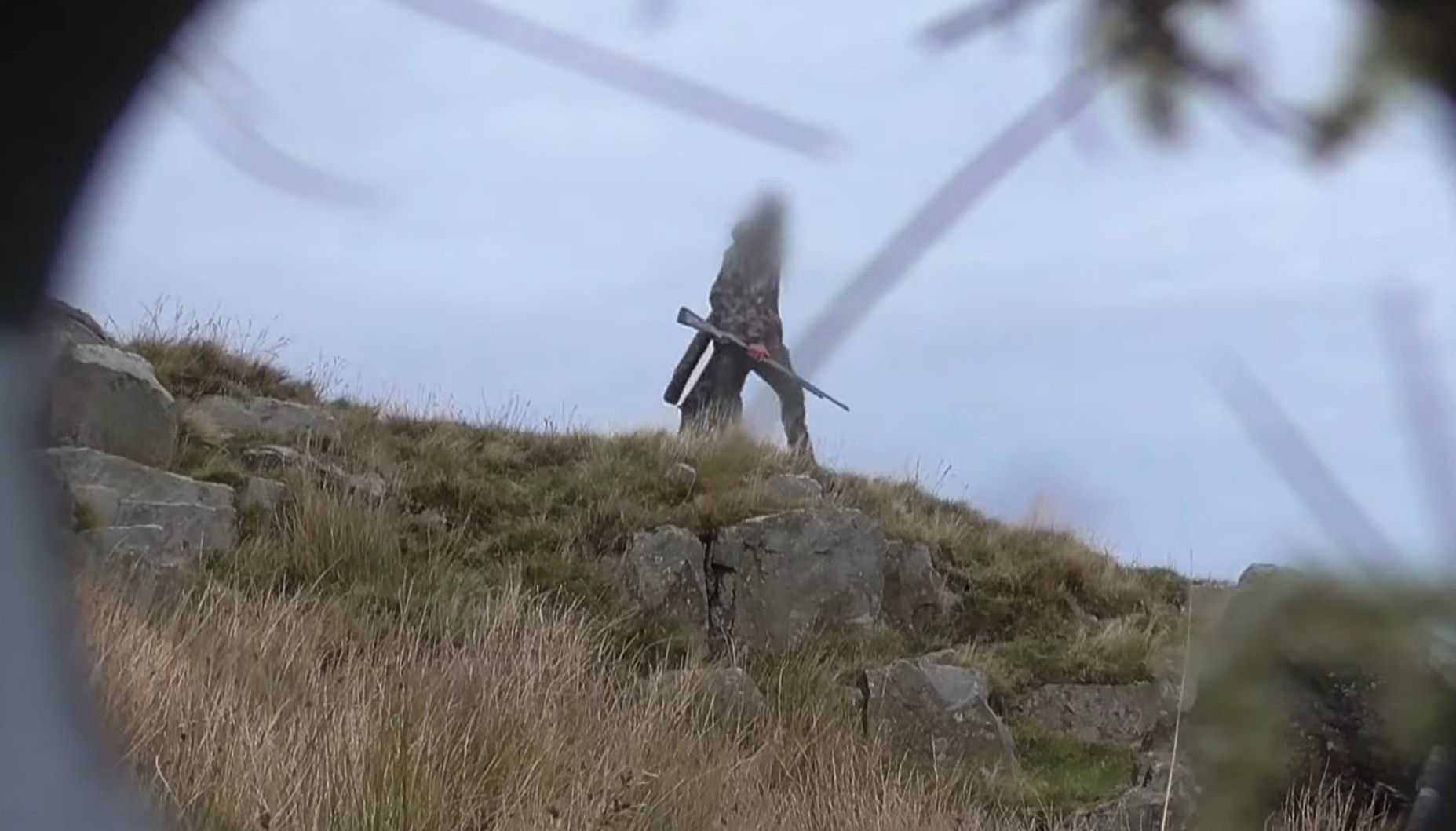
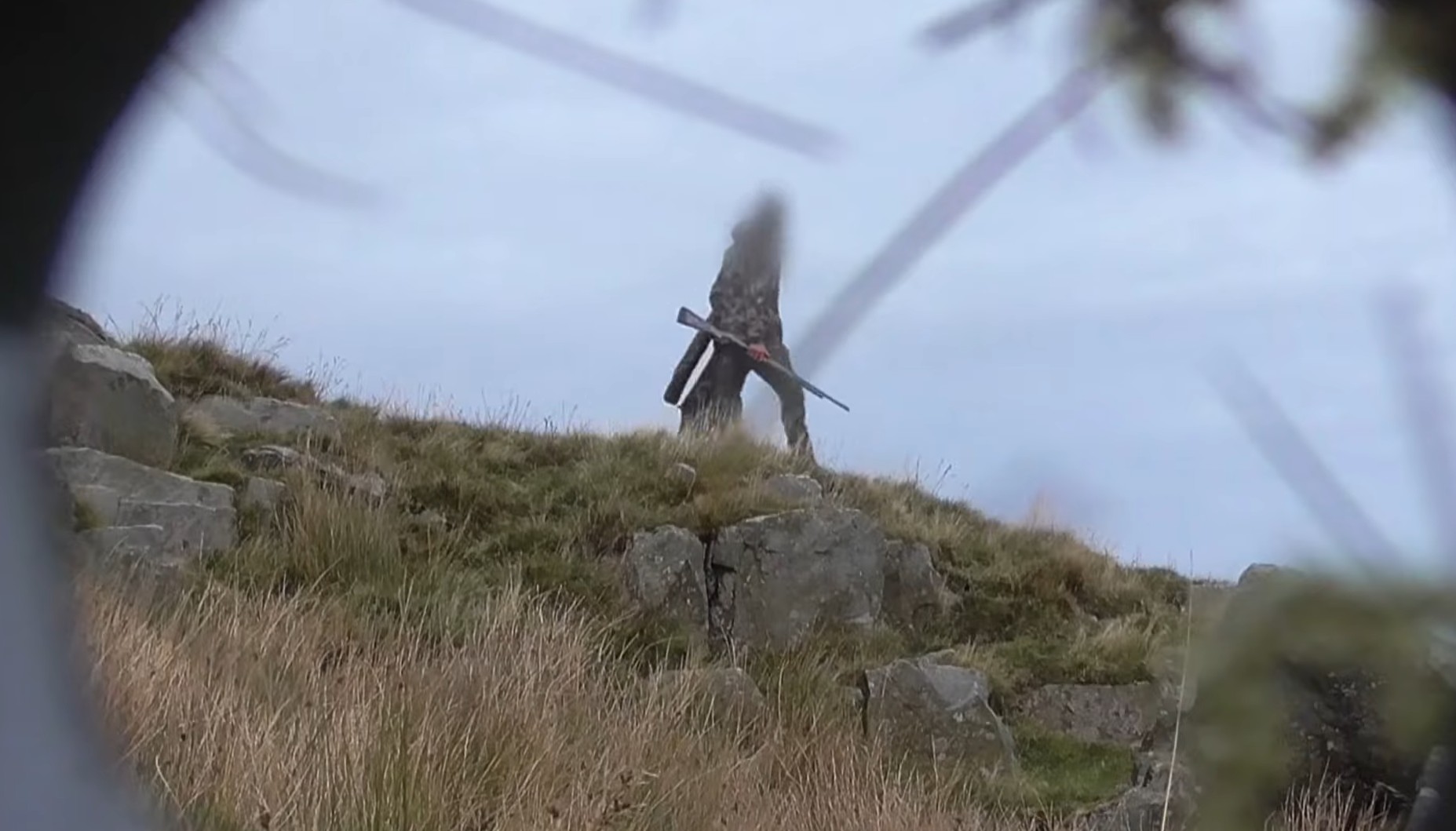
His crimes were captured on camera after the RSPB installed covert equipment on the grouse moor, capturing video and audio recordings of Dingwall and his two armed accomplices, as shown on Channel 4 News, here.
Screen grab from the RSPB covert footage via Channel 4 News
Dingwall’s sentence was a fine of just £1,520. I’ve written previously about the judge’s remarks and how this derisory penalty was determined (see here).
Now the Northern England Raptor Forum (NERF, representing raptor fieldworkers) has added to the commentary in a new blog (here), which is well worth a read.
Here are some of the highlights:
Dingwall had a previous conviction for violence, but this was discounted because it was dissimilar to the offence before the court. However, there is ample evidence in the literature showing that violence towards people and animal cruelty are frequently linked.
It was accepted by the court that Dingwall’s actions in this case were “completely out of character”. Was it really? The RSPB Investigations Team didn’t just turn up on the estate and install covert recording equipment. The team was there as a result of intelligence they had received and had spent several months confirming that the information was correct. They also identified the precise location where Dingwall and his colleagues usually sat. There was nothing random in the enquiry. Dingwall and his two underkeepers, recorded during the filming, were dressed in camouflage clothing, using radios, and armed with shotguns. They were clearly on a mission when sat in their allocated positions, waiting for dusk and for Hen Harriers to come in to roost.
Mr Ryan, Dingwall’s solicitor, told the court that his client “regrets enormously” his actions. If that were true, why were he and his colleagues there in the first place, dressed and armed with shotguns? Why didn’t he chastise his staff when they discussed having killed a Buzzard and a Raven? Why didn’t he call the whole thing off when they talked about not shooting a Hen Harrier—now known to be Ataksak—because it was wearing a box and would cause problems for the estate? Why, when the next Hen Harrier arrived without a “box”, did Dingwall leave his post to go and shoot the bird, which he subsequently told his staff he had done? He had every opportunity to prevent his underkeepers from killing the Buzzard and Raven. He also had a duty to ensure that Ataksak and the untagged Hen Harrier were not threatened with death. He failed on all accounts. Clearly, the only thing Dingwall regretted was being caught.
There is no requirement for a defendant to identify who his two underkeepers were, and Dingwall chose that route and stood in the dock alone. That was his choice, and the identity of his underkeepers remains unknown—at least in the public domain. Obviously, their employer knows who they are; but will they be sanctioned? Will they lose their jobs?
What we do know is that the owner will not be sanctioned, and it is business as usual. This loophole in the law is ludicrous and needs to be closed. Owners and land agents responsible for managing shooting estates need to be held accountable for the criminal activities of their employees. Until they are, they have no incentive to ensure that their estates are managed in compliance with wildlife legislation.
To read the full blog on the NERF website, click here.
I’ll be writing a further blog about this case shortly…
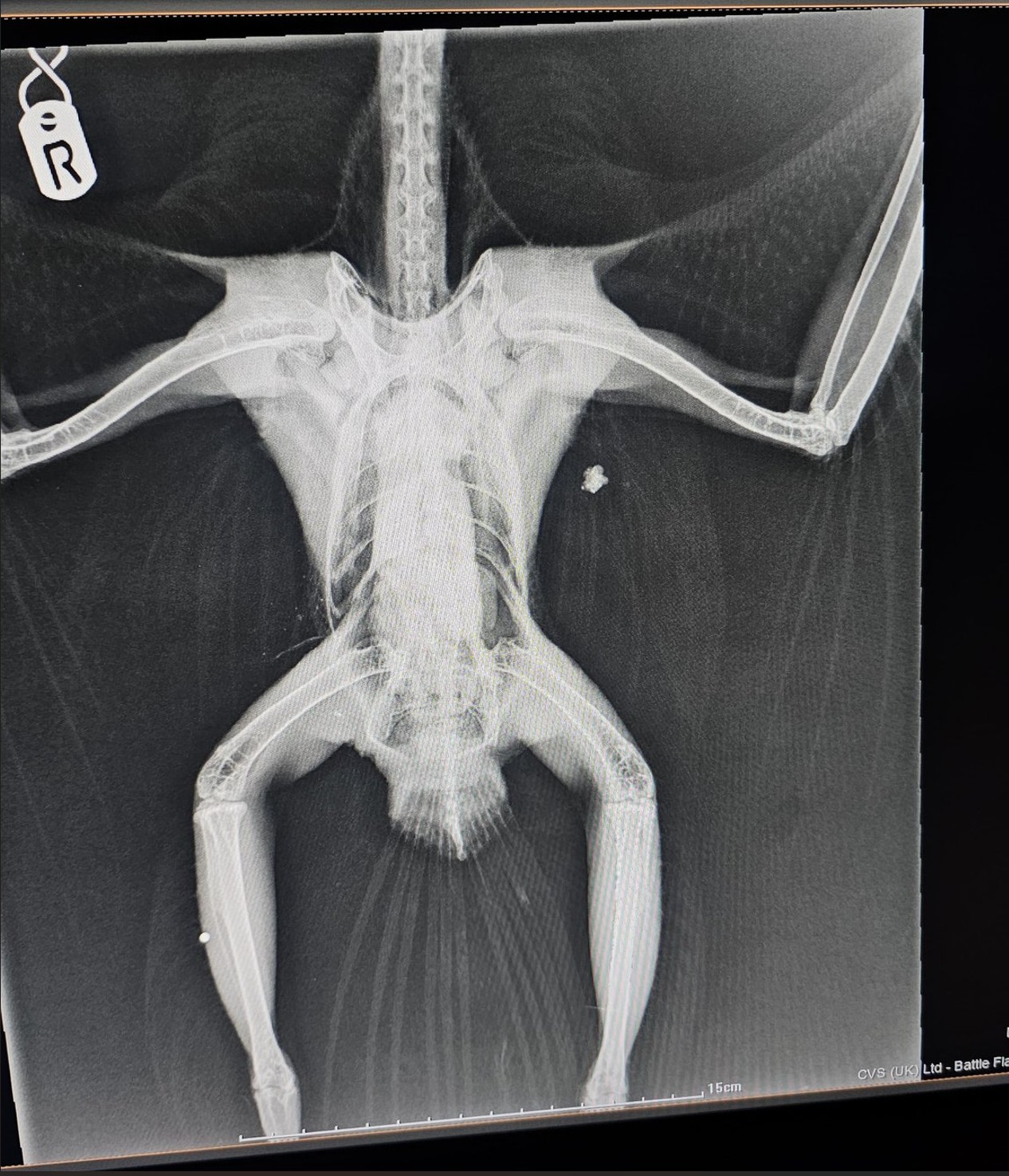
Raptor rehabilitation expert Jean Thorpe posted on social media yesterday about an injured Buzzard that was found grounded near Wigginton, York.
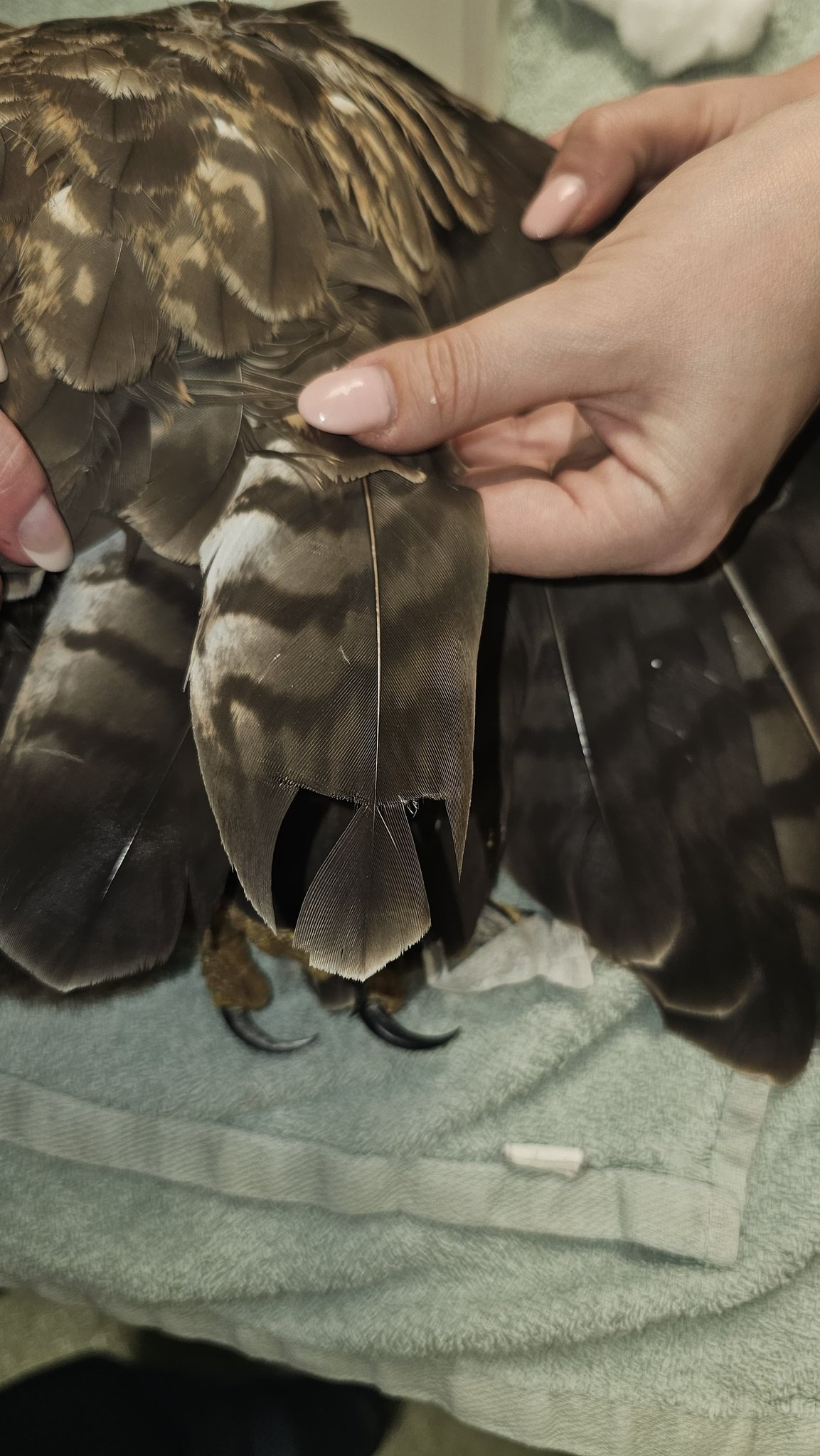
The Buzzard was taken to Battle Flatts Veterinary Clinic where an x-ray revealed a shotgun pellet lodged in her leg and associated feather damage.
The Buzzard is currently undergoing rehabilitation with Jean.
The Buzzard was found on 26 January 2026. If you have any information about this, or any other raptor persecution incidents in North Yorkshire, please contact the police and the RSPB Investigations Team.
The Yorkshire Dales Moorland Group (YDMG) is undertaking a major damage limitation exercise this week following the widespread media coverage of the recent conviction of Yorkshire Dales gamekeeper Racster Dingwall, who pleaded guilty to conspiring to kill a Hen Harrier on the Conistone & Grassington Estate (see here), which is, as far as I can tell, a member of the Yorkshire Dales Moorland Group.
Indeed, according to this 2018 article in the Yorkshire Post, the then coordinator of the YDMG lived on the Conistone & Grassington Estate as the wife of the previous Head Gamekeeper (i.e. before Racster Dingwall took on the role as Head Gamekeeper). The current YDMG coordinator is believed to be a former gamekeeper from one of the most notorious estates in the Dales.
Dingwall’s conviction, based on damning video evidence filmed by the RSPB, made the national, regional and local news, which threw the spotlight once again on the criminal killing of birds of prey on grouse moors in the Yorkshire Dales.
Dingwall’s conviction has undone all the good work (propaganda) that the YDMG has pumped out over the years to try and disguise the fact, according to the RSPB, that:
“This area – dominated by grouse moors –is the epicentrefor Hen Harrier persecution in the UK. Since 2016, in this area four confirmed persecution incidents involving RSPB and Natural England satellite tagged Hen Harriers have taken place and 13 satellite tagged Hen Harriers have suspiciously disappeared – all suspected to have been persecuted (2016-2025)” (see here).
In a desperate attempt to divert attention from Dingwall’s crimes, the Yorkshire Dales Moorland Group is trying to persuade anyone who’ll listen that Hen Harriers aren’t routinely killed on grouse moors in their area. Good luck with that!
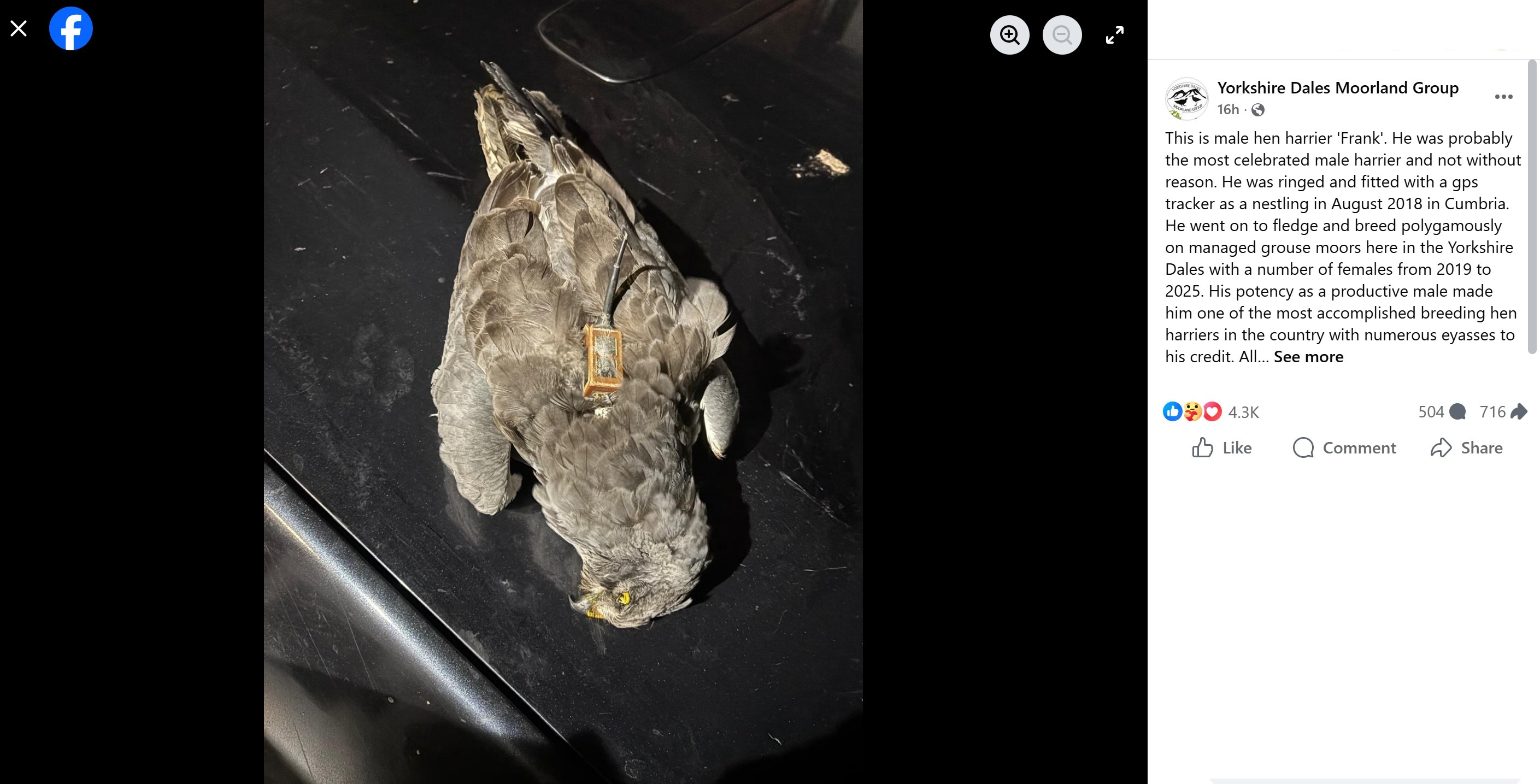
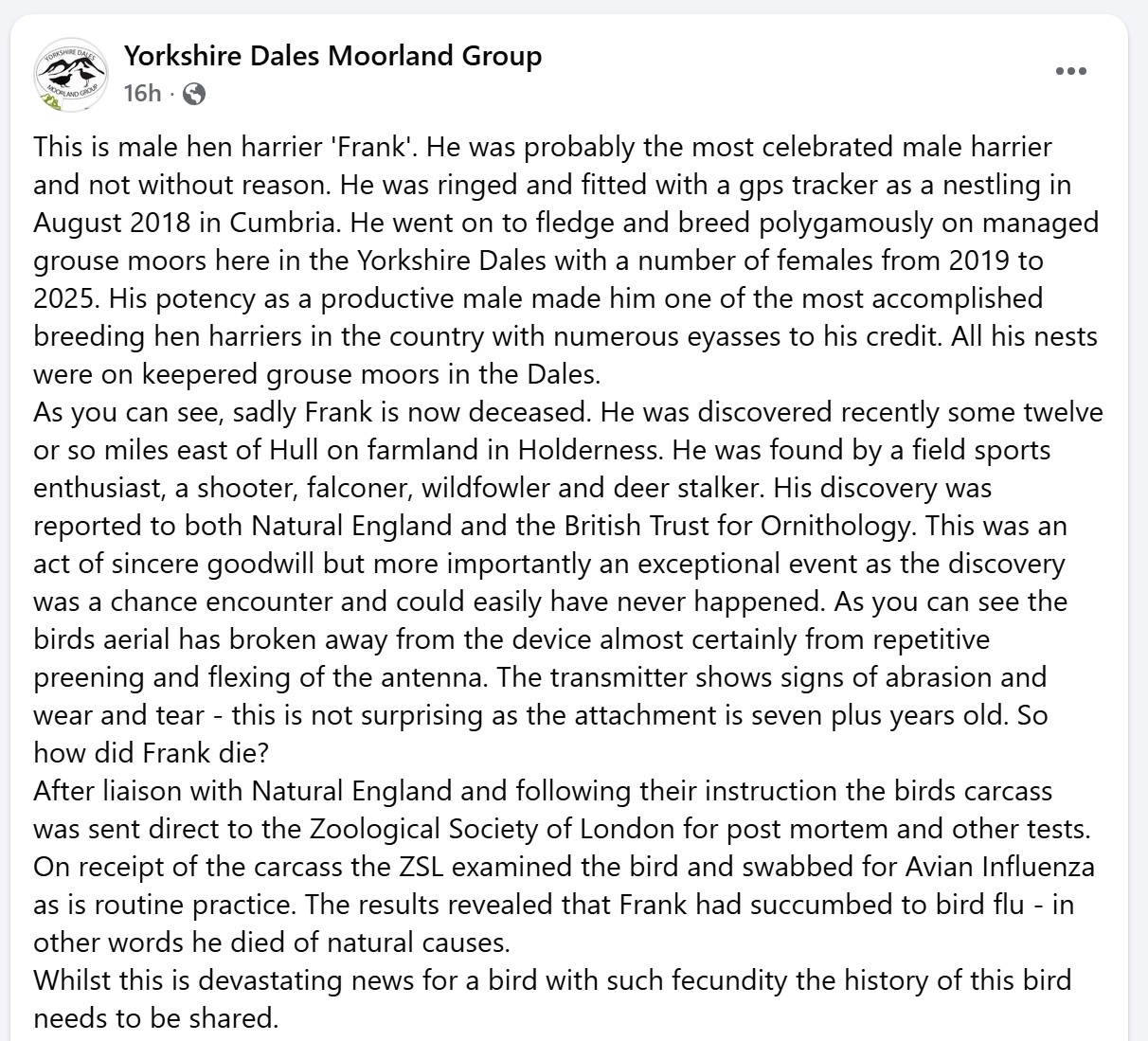
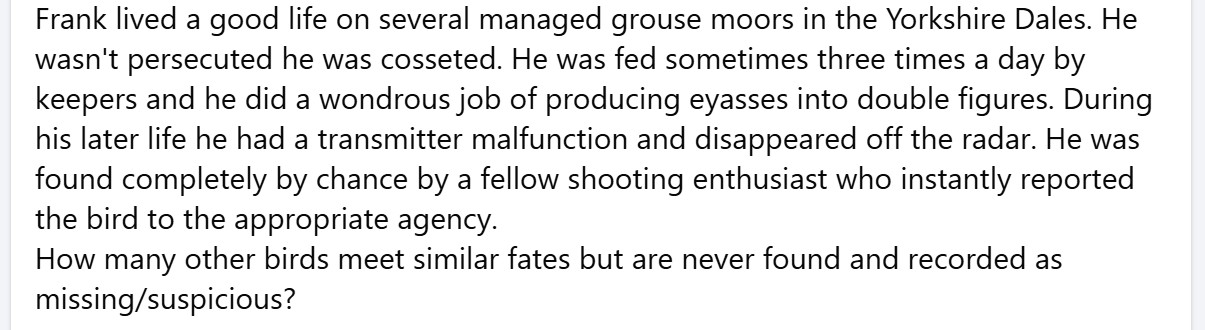
To illustrate this claim, the YDMG has posted the following story on social media about a satellite-tagged Hen Harrier called Frank:
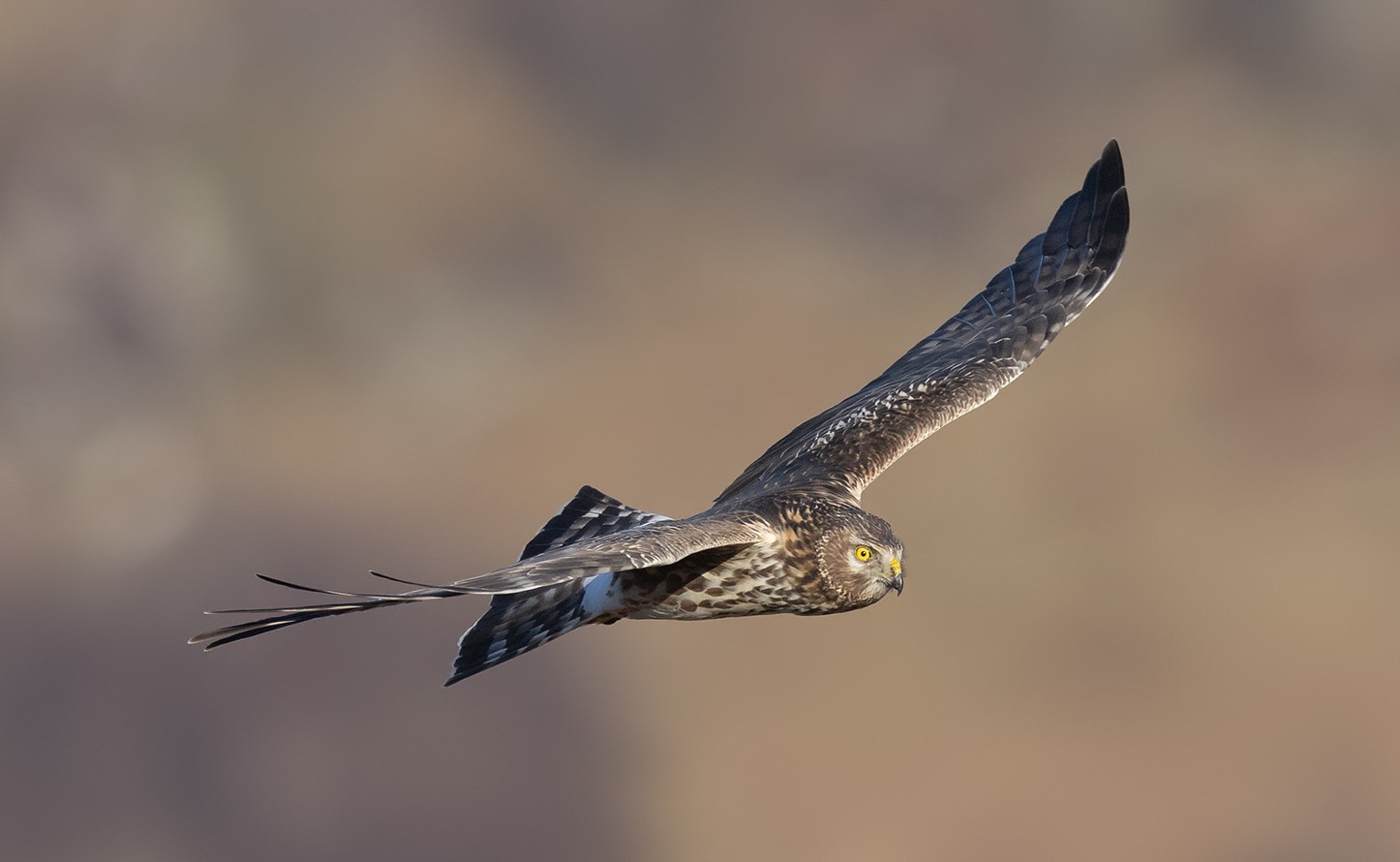
Did Hen Harrier Frank live a long and productive life on grouse moors in the Yorkshire Dales? Yes, he did, but he was the exception to the rule. I’ve often wondered why he wasn’t nobbled and have been told, by various sources over the years, that Frank was seen as a ‘pet’ of one of the gamekeepers’ wives and an agreement was made not to shoot him. Whether there’s any substance in that I don’t know, but it’s interesting that I’ve heard the same story from different sources.
I think one of the reasons Frank wasn’t killed was because he was seen by the grouse shooting industry as the ‘poster child’ for Natural England’s Hen Harrier Brood Meddling Trial – indeed, some of Frank’s offspring were indeed brood meddled (unsurprisingly, several of them later then ‘disappeared’ in suspicious circumstances) and so there was a LOT of attention on Frank by those invested in the brood meddling sham who wanted to show that the trial was working. ‘Look, here’s a Hen Harrier (Frank) whose chicks we’ve brood meddled but he’s surviving just fine, he hasn’t been killed, therefore the brood meddling trial is a stunning success, let’s roll it out as standard practice for ever more’. You get the picture.
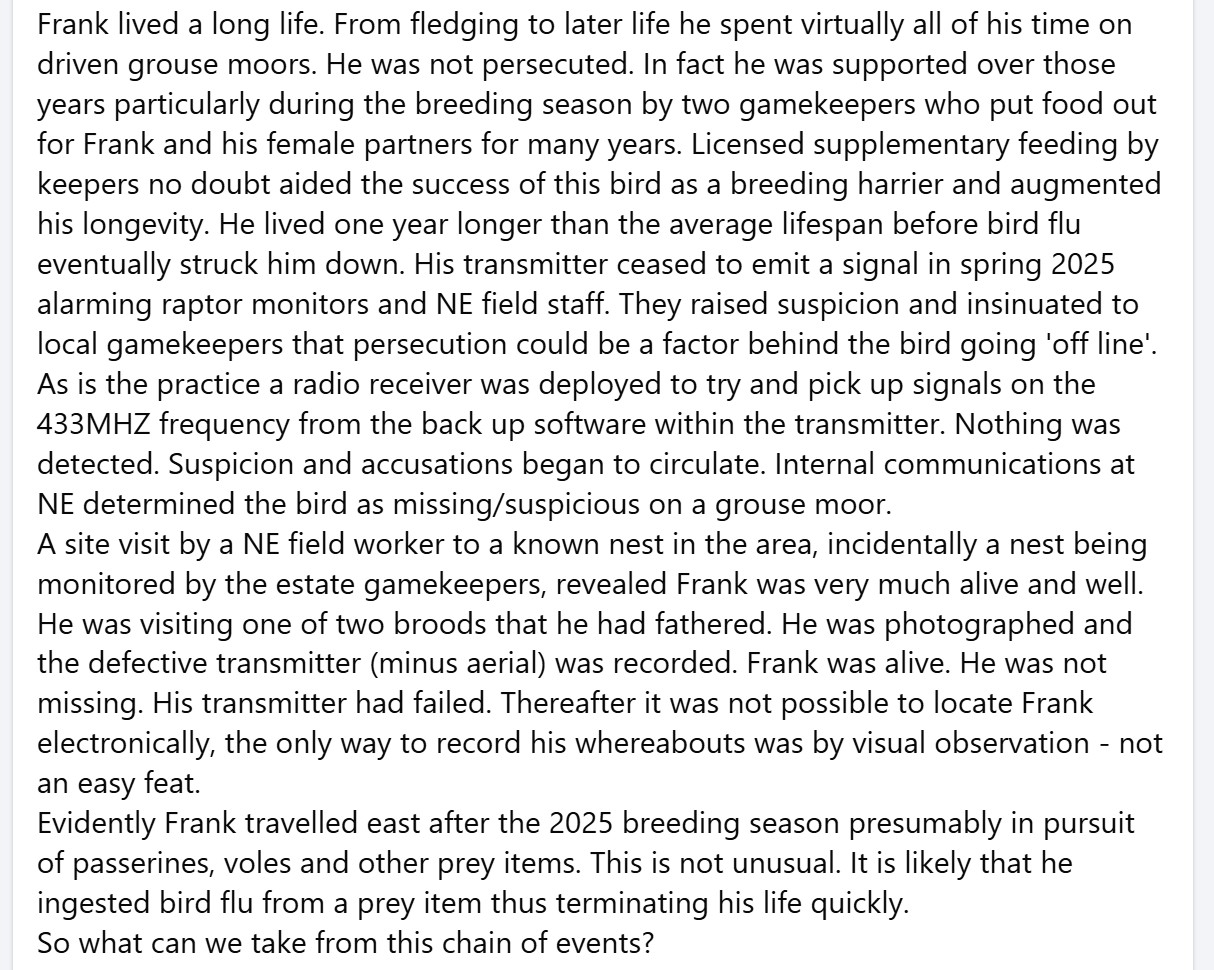
Anyway, back to the YDMG’s diversionary tactics. What they’re suggesting in their latest propaganda piece, is that gamekeepers were suspected of illegally killing Frank in 2025 when his tag stopped working. They claim that,
“They [raptor monitors and Natural England field staff] raised suspicion and insinuated to local gamekeepers that persecution could be a factor behind the bird going off-line“
and
“Suspicions and accusations began to circulate. Internal communications at Natural England determined the bird as missing/suspicious on a grouse moor“.
Really? Where is the evidence that gamekeepers were accused/suspected of killing Frank? He’s NEVER appeared on any list on this blog, nor on the Natural England Hen Harrier satellite tag spreadsheet, nor in any RSPB press release.
Why didn’t he appear? Well, simply because Natural England had been quite upfront on the HH sat tag spreadsheet and reported, accurately, that Frank’s tag stopped transmitting in May 2025 but in June 2025 he was photographed by NE field staff provisioning young at a nest and the photograph clearly showed his satellite tag had a broken aerial and therefore the tag was no longer transmitting. It was a clear technical malfunction, acknowledged by Natural England, and therefore there weren’t any grounds for suspicion.
The Yorkshire Dales Moorland Group is trying to play the victim card here but without any actual evidence of being ‘victimised’.
The fact that (apparently) Frank was recently found dead near Hull, and tests (apparently) show he had contracted avian influenza (although that wasn’t necessarily the cause of death) is neither here nor there. Although I suspect, if indeed this information is accurate, that Natural England might be looking closely at who was privy to that information and who leaked it to the YDMG!
I’d be interested in a statement from the YDMG about the status of the Conistone & Grassington Estate as a YDMG member. Has the YDMG got any plans to expel the estate? If not, why not?
The bigger question that very few people seem to be asking is, who funds the Yorkshire Dales Moorland Group, and all the other regional moorland groups that sprung up in 2015 to promote ‘the good work’ of the grouse shooting industry?
Who is paying for the regional coordinators of these groups, who spend their time putting rubbish out on social media and conducting malicious smear campaigns against individuals and organisations who happen to challenge the claims made by the grouse shooting industry? Who is paying for their websites? Who is paying for their extensive promotional material? Their branded clothing? Their picture boards and associated marketing material they drag around the country shows each year? Their logo-heavy ‘activity packs’ that they hand out to unsuspecting school children?
Gosh, I wonder who it might be? Surely not someone with a vested interest in grouse shooting and is a member of the British aristocracy?
The news yesterday was all about the conviction and sentencing of Head Gamekeeper Racster Dingwall for his part in a conspiracy to kill Hen Harriers at a roost on the Conistone & Grassington Estate in the Yorkshire Dales National Park.
But there’s another story in amongst the details of that case, and it’s about the satellite-tagged Hen Harrier that Dingwall and his accomplices discussed shooting and killing as it came in to the roost site, but then chose instead to “fleg it” (scare it off with warning shots) because they deduced it was wearing “a box” (a satellite tag) and killing it would draw unwanted attention from the authorities to their grouse moor.
In the RSPB press release issued yesterday in response to Dingwall’s conviction and sentencing (here), the RSPB say that this satellite-tagged bird was actually one of theirs (presumably they could tell from the tracking data that this bird was on Grassington Moor at the same time that Dingwall was out committing crime with his shotgun). She was called Ataksak and had fledged from a nest in the Forest of Bowland just three months previously.
It seems that Ataksak’s satellite tag saved her from being shot on Grassington Moor on that early October evening in 2024. But it didn’t save her from being illegally poisoned near another Yorkshire grouse moor, just three months later in January 2025.
The RSPB press release says:
‘Toxicological analysis revealed that she had died after ingesting a highly toxic mixture of pesticides known by experts as the Nidderdale cocktail, which has been associated with numerous bird of prey persecution incidents in recent years. This incident is yet another crime against a Hen Harrier and is also under investigation by North Yorkshire Police. There is no known connection between the two incidents‘.
Some of you may recall this is a persecution incident I blogged about on 1st December 2025 (here), after discovering the poisoning incident listed in a toxicology database compiled by the Health & Safety Executive as follows:
‘HSE Ref number 107/913. Confirmed poisoning, North Yorkshire, January 2025. Chemicals Bendiocarb, Carbofuran, Isophenphos, Alphachloralose. Notes: ‘A dead Hen Harrier was found on a grouse moor. Residues of Bendiocarb, Carbofuran, Isophenphos and Alphachloralose were found in the samples analysed, which is an abuse of these compounds. Case closed as passed to the Police‘.
I didn’t know at the time that this was the same Hen Harrier that had been “flegged” on Grassington Moor. She was almost the bird that got away.
The RSPB had also mentioned this poisoning incident in a press release about a number of Hen Harriers either ‘missing’ or poisoned in 2025, published on 20 January 2026 (here). They noted that:
‘The area where Ataksak’s body was found is recognised as a bird of prey persecution hotspot. In the last ten years 25 confirmed bird of prey persecution incidents have been recorded in this area, including Ataksak. These included four Hen Harriers, 13 Red Kites and five Buzzards. A satellite tagged Hen Harrier also disappeared in this area in 2024‘.
Given it’s been a year since Ataksak was found poisoned, and I haven’t seen any media or appeals for information from North Yorkshire Police, in November 2025 I submitted a series of FoI requests to various authorities to ask about the progress of any investigation into this crime.
I’ve had some responses back, and I’ll write about those in a separate blog, probably next week.
Meanwhile, the RSPB has now published an extended ten minute version of the covert footage it captured of Dingwall and his accomplices on the Conistone and Grassington Estate, including the period they were discussing whether to kill or scare away Ataksak when she was trying to come in to her evening roost site on the moor. You can watch it here:
UPDATE 10 March 2026: What’s happened to the police investigation in to the poisoned Hen Harrier found dead on the edge of a grouse moor in North Yorkshire? (here)
Following yesterday’s conviction and sentencing of Head Gamekeeper Racster Dingwall, 35, for conspiracy to kill a Hen Harrier on a grouse moor on the Conistone & Grassington Estate in the Yorkshire Dales National Park on 2nd October 2024, here is my commentary of the morning’s proceedings at York Magistrates’ Court.
Screengrab from RSPB/Channel 4 footage
These are comments based on notes I made during the hearing. They should not be considered a formal court record, but rather my interpretation of what happened. They are provided here to help blog readers understand how the sentence was determined.
This was supposed to be a two-day trial, after Dingwall pleaded not guilty to two charges at an earlier hearing at Skipton Magistrates’ Court in May 2025 (see here). Those two charges were:
Possession of an article capable of being used to commit a summary offence under Section 1 to 13 or 15 to 17 of the Wildlife & Countryside Act;
Encourage/assist in the commission of a summary offence believing it will be committed.
At a pre-trial hearing at York Magistrates’ Court in September 2025 in front of District Judge Adrian Lower, Dingwall’s barrister, the very experienced Justin Rouse KC, attempted to have the case thrown out on a technicality, arguing that the RSPB’s covert footage should not be admissible. Mr Rouse KC had been successful with this line of argument in another case against another grouse moor gamekeeper in 2017/2018 (the Bleasdale Estate case – see here).
However, in the current case Mr Rouse KC was unsuccessful and District Judge Lower ruled the Grassington footage lawful and thus admissible (here), and a two-day trial was set for 29-30 January 2026.
It became clear a few days ago that Dingwall was probably now going to change his plea to ‘guilty’ when the case was formerly listed in court documents as a ‘sentencing’ hearing. The same document listed three JPs as the presiding magistrates. However, District Judge Lower turned up in the court yesterday and sat as a single judge for this hearing.
Mr Rouse KC was not present this time, and Dingwall was represented by Tim Ryan of Warners Solicitors in Kent. Mr Ryan is another highly experienced lawyer, having represented gamekeepers in court for many years and he also provides briefing notes for the National Gamekeepers Organisation. He knows what he’s doing.
For the prosecution was Jody Beaumont (Crown Prosecution Service – CPS), as per the pre-trial hearing in September 2025.
The hearing kicked off with Dingwall being asked to provide his date of birth and address, and then his plea to the two charges (‘guilty’).
The CPS then provided District Judge Lower with a background summary of the case. He told the court that between March and September 2024, the RSPB were working on intelligence that potential offences were being committed on the Conistone & Grassington Estate. They identified a location and installed a covert camera, set to record between 1st – 19th October 2024.
When the camera was later retrieved, the footage and audio showed the offences were recorded on 2nd October 2024. The footage showed Dingwall [and two others], dressed in camouflage carrying a semi-automatic weapon and binoculars.
The footage was passed to Channel 4 News and North Yorkshire Police in late October 2024. North Yorkshire Police interviewed Dingwall five months later (!) on 18th March 2025. [We also know that his two fellow suspects were interviewed but apparently both refused to say a word, presumably because they were concerned that voice analysis might match them with the voices recorded on the footage].
Mr Beaumont then gave some background on Dingwall. The court heard he had a prior conviction for violence in 2018 (the precise offence was not revealed) but that he had no other convictions or cautions. [For those wondering how a man with a conviction for violence was deemed suitable to hold a shotgun certificate is a question for North Yorkshire Police].
Mr Beaumont then went on to discuss sentencing guidelines, saying there weren’t any for these specific offences and suggested that the judge might use more generalised sentencing guidelines within the constraints of a magistrates’ court jurisdiction. He did not provide an impact statement or even a background summary of Hen Harrier conservation/persecution.
Mr Beaumont assessed Dingwall’s culpability as ‘high’, especially as there was an element of planning and the involvement of others was an aggravating factor, but then went on to assess the level of harm as ‘medium’ because ‘no Hen Harrier was injured or harmed as a result of Dingwall’s offending’. [Eh?? I’ll come back to this point].
District Judge Lower then said a few words in response to the prosecution’s comments. This is where things started to get really strange. He said he was putting Dingwall’s previous conviction for violence “out of my mind” because it was “dissimilar” to the current offending and “wasn’t relevant”.
He then said he had read four character references for Dingwall, provided by a Mr Gray, Mr Hewlitt, Mr “Bikey” and Mrs Sixsmith. My ears pricked up at Mr “Bikey”. I wondered whether this was Nicholas Baikie, a well known sporting agent with links to many grouse moors across the UK including the infamous Millden Estate in the Angus Glens, currently serving a three-year General Licence restriction imposed by NatureScot after multiple wildlife crime offences against birds were uncovered there.
DJ Lower said it was clear from the character references that Dingwall’s latest offending was “completely out of character“.
Then it was the turn of Tim Ryan to provide a statement of mitigation for Dingwall. Mr Ryan told the court that his client “regrets enormously” his actions, which have led to a “lost job, livelihood and reputation“. Mr Ryan claimed that Dingwall was realising that he had “no prospect of working as a gamekeeper again” and that he had “let himself down and his family“. [I don’t believe that – there are a number of examples over the years of convicted gamekeepers who have been subsequently employed on the same or on other estates – indeed some of them have even turned up at promotional events for grouse shooting held in Parliament and at least one serves on the committee of a national industry organisation].
In terms of sentencing suggestions, Mr Ryan argued that Dingwall’s guilty plea needed to be taken into account.
DJ Lower interjected at this point and said that Dingwall’s guilty plea on the opening day of the trial had been noted, and that because Dingwall had indicated his change of plea to the court prior to the trial, it had “spared the court time and spared the witnesses“, so he intended to give a “25% discount” to whatever sentence was handed down.
Mr Ryan then proposed that a Community Order would be an “appropriate starting point” for the judge to consider given the “devastating consequences on Dingwall and his family” but that a fine would be preferential because the overall effect [of a Community Order] would be “worse for his family“.
We then got to District Judge Lower’s sentencing remarks.
He repeated his comments that the court had “not had to be troubled with a trial” and that “witnesses were not called“.
He then repeated the offences to which Dingwall had pleaded guilty and launched into the most bizarre commentary about the protection of Hen Harriers. He said he understood that there was “controversy” about Hen Harrier management in terms of alleged predation on grouse. He said, “Some take the view that Hen Harriers are, to say the least, a pest, and that they have to be shot to prevent them predating Red Grouse, and this brings in to issue the management of grouse farms and those responsible for the management of farms because it’s a business, and if there aren’t any Red Grouse for others to shoot as part of a day out then there is no business“.
He continued, “Other people take the view that Hen Harriers are a protected species, and indeed they are, and should not be shot and be allowed to predate Red Grouse. I make no comment about these views”. [Eh? How on earth is this relevant?].
“What I am dealing with is on 2nd October 2024 you chose to take with you a shotgun, binoculars, audio equipment, and dress up in camouflage, in order to at least observe a Hen Harrier at a piece of land and you were in communication with others who were interested in the movements of Hen Harriers at that land, with a view to killing a Hen Harrier if it was showing any indication of preying on Red Grouse. [Er…the Harriers being targeted by Dingwall and his accomplices were coming in to an evening roost, not hunting for Red Grouse].
“That’s an offence and you should have known it was an offence and you knew full well what your responsibilities as a gamekeeper were….you may not have known all the ins and outs but you would have known something of how to respond to a Hen Harrier.
“I’ve read your character references – your behaviour is really out of character. A change in your occupation, your income – it seems rather [inaudible] for me to say, but not wrong to say, you’ll never work as a gamekeeper again as a consequence of your behaviour and this is more of a punishment than any I can impose this morning“.
There was then a brief commentary about sentencing guidelines which I didn’t catch in full so won’t try to repeat that here.
DJ Lower then spoke about culpability and agreed with the CPS’s assessment that Dingwall’s culpability was “high“, with a degree of planning with others, and that the harm caused was “medium” because, wait for it, “no Hen Harrier was shot or killed due to your behaviour“.
At this point I looked across to the packed media benches and caught the eyes of several journalists who clearly were as bemused as I was with this statement.
We’d all seen the RSPB’s footage, as shown on Channel 4 News. How anyone could watch that and believe that a Hen Harrier hadn’t been shot and killed would be beyond the comprehension of many. I’m reminded of the idiom, ‘When you hear hooves, look for horses, not zebras’.
I’ve tried to understand the rationale for DJ Lower’s statement, and struggled initially, but the following explanation is the best I came up with on my journey home from court:
Those of us who watched the footage and believed that Dingwall had shot and killed the untagged Hen Harrier based that belief on a civil burden of proof, i.e. on the balance of probability, given everything else we’d seen and heard on the RSPB’s footage, we considered it more likely than not that a Hen Harrier was shot and killed.
However, the RSPB’s footage does not meet the evidential threshold to ‘prove’, to a criminal standard of proof, i.e. beyond reasonable doubt, that a Hen Harrier was shot and killed, nor by whom, which is presumably why Dingwall was not charged with that offence.
We might not like it, and probably don’t agree with his statement, but Judge Lower had a duty to consider the criminal standard of proof in his deliberations, and not the civil burden of proof. In my opinion, though, he could/should have done a better job of explaining his statement.
If nothing else, this case provides a very good example of the high evidential threshold required to convict anyone of raptor persecution, and demonstrates why so many cases fail to result in a prosecution. Not because an offence hasn’t been committed, but because it’s really really difficult to ‘prove’ who did it.
I do think though that the footage will have opened the eyes of many members of the public about what goes on on grouse moors when gamekeepers think nobody is watching, and that awareness is crucial if we want more members of the public to start applying pressure on our political representatives to get a grip and support effective enforcement to deal with this ongoing criminality.
Anyway, back to the court room.
DJ Lower repeated his earlier comment that he was “disregarding” Dingwall’s previous conviction (for violence) because it was “dissimilar” to the current offences and “not related to killing wild birds“.
He then went through his sentencing options, musing that he had considered a custodial term “to make an example of you” and to show that “the court takes theses offences seriously” but he disregarded a custodial option because he didn’t think Dingwall would spend much time in prison.
He said he’d also considered a Community Order and what that might look like but he didn’t think it was appropriate, nor that Dingwall needed the support of the probation service.
Instead he settled on a fine, £400 for each of the two offences, plus a surcharge of £320 and prosecution costs of £400, making a total of £1,520, to be payable within 28 days. Dingwall was asked about his means to pay and he indicated that he could make the payment within the timescale.
Does this fine reflect the seriousness of Dingwall’s offending? I’d say absolutely not. I’d say it was an insult to everyone who worked so hard to bring the case to court and it’s certainly no deterrent whatsoever to anyone else thinking of killing a Hen Harrier (and there are a lot of those criminals about). The fine is just a minor inconvenience for Dingwall and once again the estate owner and/or the sporting agent goes unpunished. This really has to change.
The hearing ended with an extraordinary direction from DJ Lower. He noted how packed the court was (press, police, RSPB and general observers) and said that he didn’t think Dingwall should have to ‘meet’ any of the people who had attended the hearing so he instructed a court clerk to allow Dingwall and his solicitor to leave the court room before anyone else.
My interpretation of that direction was that Dingwall was being allowed to leave the court building by a separate entrance without having to face the wall of journalists outside. However, this message didn’t quite get through to the clerks, who ‘held’ Dingwall and Mr Ryan in a separate holding room until everyone had left the court building, and then Dingwall and Mr Ryan were escorted out to the front door of the court building, where the cameras and journalists were waiting for him.
There’s another good piece from Alex Thomson (Channel 4 News) of Dingwall’s case, here.
UPDATE 30 Jan 2026: Satellite-tagged Hen Harrier that gamekeeper Racster Dingwall chose not to shoot (to avoid unwanted attention), found poisoned three months later near another Yorkshire grouse moor (here)
Further to today’s news that gamekeeper Racster Dingwall has pleaded guilty to conspiring to kill a Hen Harrier on the Conistone & Grassington Estate in the Yorkshire Dales National Park, North Yorkshire Police has issued the following statement:
Photo by Ruth Tingay
MAN SENTENCED FOR BIRD OF PREY PERSECUTION OFFENCES ON GRASSINGTON MOOR
A man has been sentenced for trying to kill a legally-protected bird, following an investigation by North Yorkshire Police.
The case against Racster Dingwall for encouraging or assisting bird of prey persecution, using the Serious Crime Act 2007, is believed to be the first of its kind in the country.
In October 2024, a covert camera placed by the RSPB captured footage of three men on Grassington Moor, using radios and speaking in code to discuss shooting towards and killing wild birds, including hen harriers.
The recording was passed to North Yorkshire Police, and an investigation was launched by the force’s Rural Taskforce.
The footage was processed by technicians at the Regional Scientific Support Services, and an expert from the National Wildlife Crime Unit was called in to interpret it.
This analysis showed that one of the men – later identified as gamekeeper Racster Dingwall – was in possession of a semi-automatic shotgun for the sole purpose of killing a hen harrier.
Dingwall, 35, from Ellingstring, was interviewed by Rural Taskforce officers, and subsequently charged with encouraging or assisting the killing of a Schedule 1 wild bird (contrary to Sections 45 and 58 of the Serious Crime Act 2007); and possessing a shotgun for the purpose of killing a Schedule 1 wild bird (contrary to Section 18 (2) of the Wildlife and Countryside Act 1981).
All wild birds are protected by law, and ‘Schedule 1’ birds, including hen harriers, have additional protection.
It is thought to be the first time a charge of encouraging or assisting an offence under the Serious Crime Act 2007 has been used in relation to bird of prey persecution.
Dingwall pleaded guilty to both offences today (Thursday 29 January 2026) at York Magistrates’ Court where he was ordered to pay a total of £1,520 in fines, victim surcharge and prosecution costs.
After the sentencing hearing, Inspector Mark Earnshaw, of North Yorkshire Police, said: “The cruel and illegal persecution of hen harriers and other birds of prey is totally unacceptable.
“This outcome at court follows a thorough police investigation, and incontrovertible evidence. It should send a strong message to anyone else engaged in this criminality: they will be investigated, identified, and put before the courts to face the consequences of their actions.”
ENDS
UPDATE 30 January 2026: Some commentary on the conviction and sentencing of gamekeeper Racster Dingwall (here)
GAMEKEEPER PLEADS GUILTY IN ENGLAND’S FIRST EVER HEN HARRIER PERSECUTION CASE
On 29 January at York Magistrates Court Racster Dingwall – a head gamekeeper on the Conistone and Grassington Estate in the Yorkshire Dales National Park – pleaded guilty to conspiring to kill Hen Harrier.
Footage and sound recordings obtained lawfully by the RSPB’s Investigations team were instrumental in detecting this crime and securing the conviction.
The RSPB is calling for licensing of grouse shooting as the illegal killing of Hen Harriers, associated with land managed for grouse shooting, is having a detrimental impact on their populations.
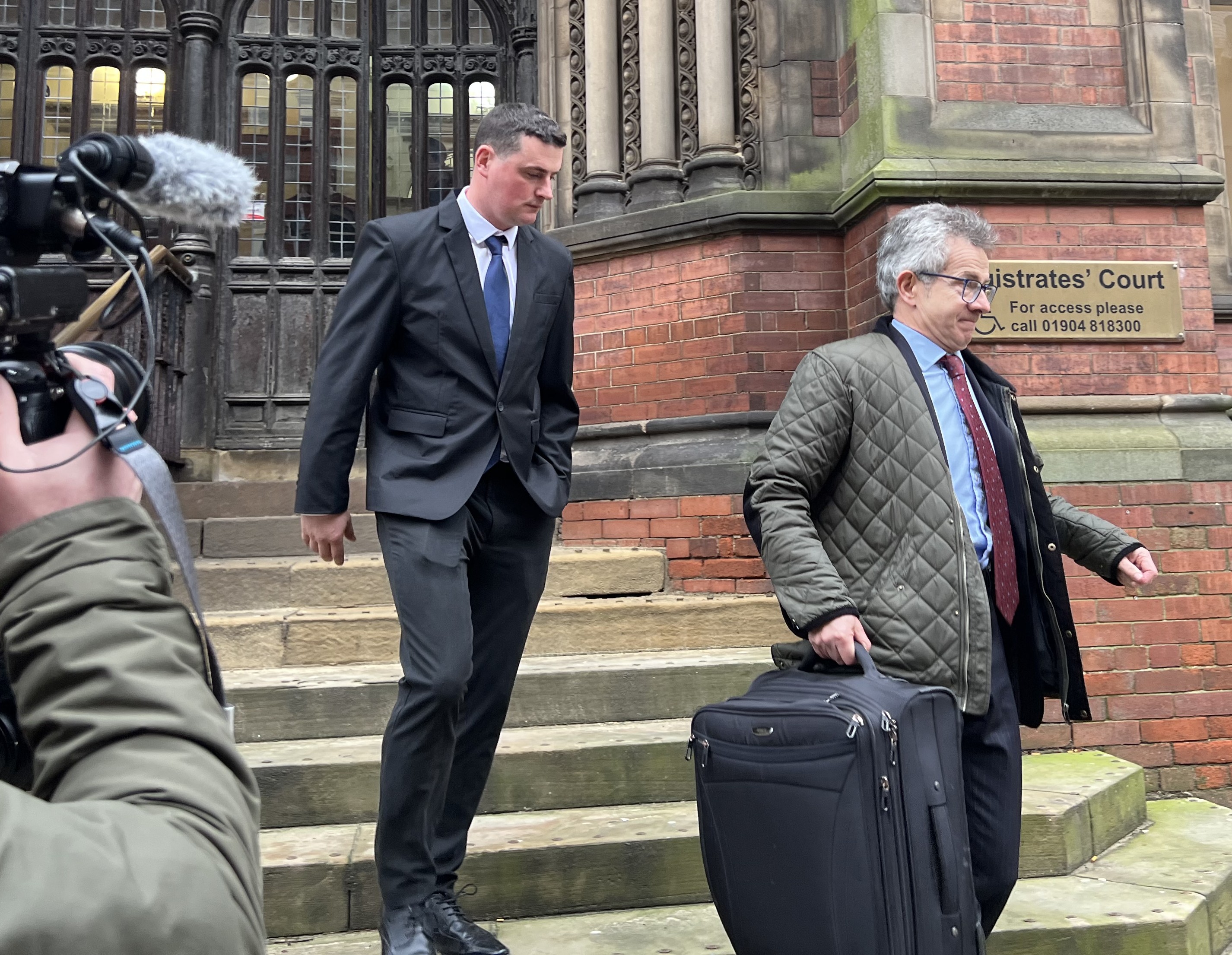
Convicted gamekeeper Racster Dingwall (on left) leaves York Magistrates’ Court with his solicitor after sentencing this morning (photo by Ruth Tingay)
On 2 October 2024, video and sound evidence gathered lawfully by the RSPB Investigations team showed Racster Dingwall, the Head Gamekeeper on the Conistone and Grassington Estate, and two other men arriving at dusk at a Hen Harrier roost site on the estate. All were in camouflage with shotguns.
Hen Harriers use traditional, often communal, roost sites in winter where birds come together for safety and shelter, typically in dense vegetation like sedge or reed beds, gathering at dusk and leaving at dawn. Over decades, the RSPB has received detailed information relating to Hen Harriers being shot and killed at these roosts on grouse moors.
Radio conversations made between the three men were covertly recorded by the RSPB. Often talking in code, they are heard coordinating their positions around the roost in an effort to locate Hen Harriers and determine the best position from which to shoot them.
They are also heard discussing protected birds shot that day, including a Buzzard and a Raven. Crucially, during the conversation it is emphasised that any satellite tagged Hen Harriers should not be shot at this location, as it would result in unwanted attention on the roost from the authorities.
A Hen Harrier is spotted and then lands in the roost but is seen to have ‘a box on it’ – a satellite tag. These small tracking devices are fitted to some Hen Harriers before they fledge the nest to help track and monitor individual bird’s movements. Satellite tag data has helped highlight many confirmed and suspected incidents of Hen Harrier persecution in recent years that would otherwise have gone undetected.
The three men are clearly frustrated that the bird has a tracker fitted and a decision is made not to kill the bird as it would attract attention but to scare the bird off the roost with some warning shots – which can clearly be heard on the footage. Significantly an untagged Hen Harrier is then spotted at the roost. RSPB footage shows Dingwall loading his gun and walking in the direction of the roost. A single shot is then heard, followed by congratulatory radio comments, including Dingwall saying he had been sure the bird was untagged. All the men then leave as darkness falls.
These types of raptor persecution crimes are almost undetectable, as they happen in remote locations and during unsociable hours, away from public eyes.
RSPB shared their findings with North Yorkshire Police, NWCU and Channel 4 news – who broadcast the footage with locations and identities obscured to not compromise an investigation.
Racster Dingwall was charged with:
Possession of an article capable of being used to commit a summary offence under the Wildlife & Countryside Act 1981.
Encouraging and assisting in the commission of a summary offence, believing it would be committed.
A legal hearing in September 2025 ruled that RSPB video and sound recording evidence was admissible in the case, after the defence went to considerable efforts to try to exclude it from the case. [Ed: RPUK commentary on that here]
On 29 January 2026 at York Magistrates Court, Racster Dingwall pleaded guilty to both offences and was ordered to pay a total of £800. No charges were brought against the other unidentified individuals who were interviewed by the police but refused to speak throughout.
Mark Thomas, UK Head of Investigations: “This landmark conviction has shone a light on this issue, revealing the lengths individuals will go to in order to illegally target these protected birds of prey. Shockingly, over 100 Hen Harriers have been confirmed or suspected to have been illegally killed on or near grouse moors in the UK in just the last five years. The RSPB will not rest until the future for this bird is secured and that can only happen with legislative change. Government licensing of grouse shooting is now essential to change practices in thissector“.
Howard Jones, RSPB Senior Investigations Officer: “Once again, RSPB video evidence has been crucial in securing a significant conviction for raptor persecution. We were pleased that the RSPB’s covert evidence, so brilliantly gathered by the team, was ruled admissible in this case and we thank the Police, the NWCU and the CPS for their work in securingjustice“.
To effectively prevent crimes against birds of prey the RSPB is calling for greater regulation of gamebird shooting through the introduction of licensing. Similar legislation was introduced in Scotland in 2024, under the Wildlife Management and Muirburn (Scotland) Act, for grouse shooting. Under this legislation, if an estate is suspected of killing birds of prey, it may lose its licence to shoot grouse. Evidence is based on a civil rather than a criminal burden of proof. This legislation has been well received by many within the industry in Scotland, only penalising those who deliberately commit these crimes.
James Robinson, RSPB Chief Operating Officer:“Today’s outcome is progress, but it’s not a solution. This crisis will only continue if we don’t see significant legislative change which these birds desperately need. Through the introduction of licensing for all gamebird shooting across the UK these crimes can be effectively deterred and prevented. If we’re going to give these rare species any hope of recovery, we need governments to actnow“.
In a further twist, the satellite tagged Hen Harrier that was deliberately scared from the roost was an RSPB tagged bird, called Ataksak. She had fledged from a nest in the Forest of Bowland just three months previously. Tragically in January 2025, Ataksak was found dead very close to another grouse moor in North Yorkshire. Toxicological analysis revealed that she had died after ingesting a highly toxic mixture of pesticides known by experts as the Nidderdale cocktail, which has been associated with numerous bird of prey persecution incidents in recent years. This incident is yet another crime against a Hen Harrier and is also under investigation by North Yorkshire Police. There is no known connection between the two incidents.
The RSPB thanks North Yorkshire Police, the NWCU and the Crown Prosecution Service for their vital role in investigating and prosecuting this case.
Members of the public are urged to report any suspected incidents of bird of prey persecution by contacting the police on 101 and by submitting a report to the RSPB. This can be done via the RSPB’s online reporting form at www.rspb.org.uk/report-crimes or by calling the RSPB’s confidential Raptor Crime Hotline on 0300 999 0101. Reports via the RSPB’s reporting form and Raptor Crime Hotline can be made in confidence and anonymously.
ENDS
There’s SO much more to say about this case, and particularly what went on in court this morning. I’ll come to it as soon as I can.
In the meantime, huge congratulations to the RSPB’s Investigations Team, whose skill and expertise resulted in such high quality film footage and audio, without which this case would never have made it to court, let alone a conviction. This is the second case this month where RSPB covert footage has led to a gamekeeper being convicted of offences related to raptor persecution (the other one was reported here).
Predictably, in a pathetic attempt to divert attention away from these PR disasters, the game-shooting industry has recently ramped up its smear campaign against members of the RSPB’s Investigations Team in an attempt to undermine and discredit the team’s work. I’ll blog more about that in due course.
Meanwhile, for any decent, law-abiding member of the public who wants to show their appreciation and support for the work of the RSPB’s Investigations Team, you might want to consider making a small donation, which will go specifically towards investigations – please see here.
UPDATE 18.00hrs: Statement from North Yorkshire Police on conviction of gamekeeper Racster Dingwall (here)
UPDATE 30 January 2026: Some commentary on the conviction and sentencing of gamekeeper Racster Dingwall (here)
A pre-trial case management hearing due to take place at Lincoln Magistrates’ Court on 29 January 2026 has been delayed.
Brian Chorlton, 87, of Morkery Lane, Castle Bytham, Lincolnshire, was summoned to court in April 2025 following reports that birds of prey were being poisoned in the Castle Bytham area.
Photo by Ruth Tingay
In May 2025, Chorlton appeared at Lincoln Magistrates’ Court and pleaded not guilty to 11 charges relating to the unapproved or unlawful storage of the chemical Aldicarb, possession of a poisoner’s kit, and possession and use of four pole traps. The trial was set to take place in October 2025.
However, on 18 September 2025 a pre-trial case management hearing took place at Lincoln Magistrates’ Court where the defence submitted three separate legal arguments calling for the case to be dismissed.
The District Judge rejected all three legal arguments and the application to dismiss the case was rejected.
The District Judge said he intended for the trial to proceed in October but offered a further case management hearing, due to take place one week later, to allow the defence time to consider the ruling.
That second case management trial took place on 25 September 2025 and the defence announced its intention to apply to the High Court for Judicial Review of the judge’s earlier ruling.
This meant the October 2025 trial date was vacated and the judge ordered a further case management hearing for 29 January 2026 where the defence was expected to provide an update on its application for judicial review.
That case management hearing has now also been vacated as the defence is still waiting for a decision from the High Court on whether its application for judicial review can progress to a full hearing.
This could take some time.
NB: As criminal proceedings are still live, comments have been switched off.

 Raptor Persecution UK