Last month, water company United Utilities (UU) announced at its AGM that it will not be renewing grouse shooting leases (or pheasant and partridge shooting leases) on its land once the current leases expire in 2027 (here).
This position was widely welcomed by the conservation community but the gamebird shooting organisations were furious, even making half-veiled threats in the national press (see here).
United Utilities stood firm against the backlash and published a statement to further explain its decision (here).
Grouse-shooting butt in Peak District National Park. Photo: Ruth Tingay
This week, United Utilities has published another statement but its earlier decision now seems less clear. Here’s the latest statement:
GAMEBIRD SHOOTING ON OUR LAND
At United Utilities we are committed to managing, and investing in, all of our assets to improve water quality and resilience for the benefit of the communities we serve. These objectives alone underpin the land management policies we apply to the 56,000 hectares of land that we, as a company, own.
In July 2023, as part of an update to our land management policies, we identified 6,000 hectares that we will be restoring for nature and biodiversity.
On a further 12,000 hectares of land, we began to extend that work to improve catchment resilience including plans to not renew around 20 licenses for game bird shooting as they came to their end.
Since that announcement, we have received representations on behalf of the local rural communities about the potential social and economic impact this decision might have.
We take our responsibility seriously to engage fully with our community stakeholders. In response to these representations we will work with local communities affected and each licence holder to fully understand the impact of any proposal, to ensure we minimise the impact on livelihoods and maximise the opportunities available.
We will seek to identify how, in each case, we can best balance our commitment to improving water resilience whilst minimising the impact on individual communities and the environment.
We are aware there are many voices and points of view and we will listen to everyone involved.
ENDS
I’m not sure how to interpret that, to be honest.
Is it a clever ploy to placate the very angry shooting industry without actually having any intention of back-tracking on its earlier decision, or is it an indication that UU has buckled under the weight of online abuse and has opted for a quieter life by deciding to renew the shoot leases after all?
Or maybe it’s something else. Maybe UU has no intention of renewing any shooting leases but wants to explore other potential employment opportunities for those who may be out of a job if the shooting leases go.
A case of Highly Pathogenic Avian Influenza (HPAI), otherwise known as bird flu, has been confirmed in red grouse in Scotland, according to DEFRA.
Red grouse. Photo: RSPB Images
The confirmation has appeared in DEFRA’s running tally of confirmed bird flu cases in wild birds, which is a spreadsheet that’s updated weekly (see here).
The spreadsheet entry states that H5N1 was detected in a red grouse in week 30 (July 24 – July 30 2023) in the Scottish Borders:
There isn’t any more detail about the location, nor how many birds have been found infected/dead, just that a single bird has been tested and found to be positive.
If this infected red grouse was found on land managed for driven grouse shooting it’s of serious concern. Highly Pathogenic Avian Influenza causes severe disease and high mortality in birds and has already killed tens of thousands, if not hundreds of thousands, of wild birds in the UK, impacting on the populations of globally significant species.
Highly Pathogenic Avian Influenza is transmitted by the spreading between birds of nasal secretions and droppings, and it also spreads to birds of prey via the predation of infected birds. Some UK raptor species have already been badly affected, including golden eagles and white-tailed eagles (e.g. see here).
We know that many driven grouse moors are (mis)managed to produce an artificially-high density of red grouse for shooting. Another highly contagious disease, Cryptosporidiosis (Bulgy Eye) is rife on many intensively-managed driven grouse moors. It was first detected in wild red grouse in England in 2010 and then spread rapidly, via communal medicated grit trays, and by 2015 had affected high density red grouse on half of the 150 grouse moors in northern England. It has also been detected in Scotland, although the extent of the spread in Scotland is not known because the shooting industry is keeping quiet, and, for reasons unknown, NatureScot isn’t undertaking any surveillance of the disease (see here).
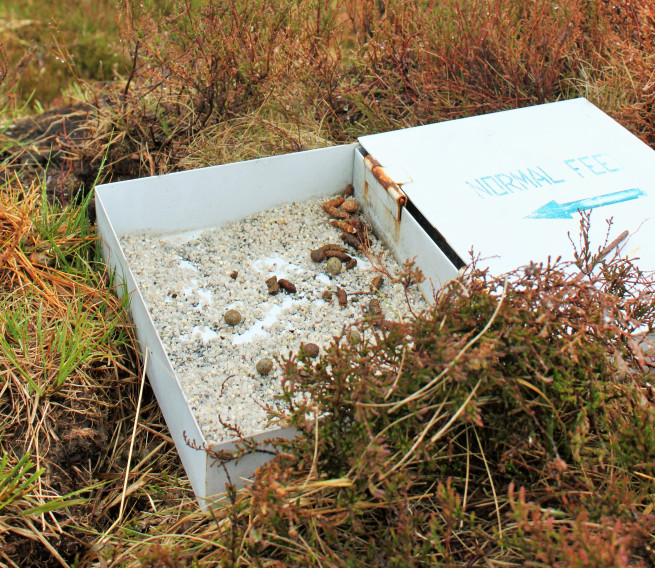
A grit tray on a grouse moor containing red grouse faecal droppings – a disease reservoir. Photo: Ruth Tingay
If the highly contagious Cryptosporidiosis disease can spread so rapidly via red grouse secretions and droppings found in grit trays on the moors, then so can Highly Pathogenic Avian Influenza.
Last year I argued that it would be ‘irresponsible’ for grouse-shooting to go ahead during the avian flu epidemic (see here). In response, the Scottish Government said: ‘…there have been no recorded cases of avian influenza in any grouse species, and there are no restrictions in place on grouse shooting’.
Given that Highly Pathogenic Avian Influenza has now been confirmed in red grouse in the Scottish Borders, and the grouse-shooting season opens on Saturday (the Inglorious 12th), how will the Scottish Government respond?
Shouldn’t they be restricting shooting as a precautionary measure, at least until the extent of the disease is evaluated?
The news this week that at least 98 hen harriers are now known to have either ‘disappeared’ in suspicious circumstances or been found illegally killed, mostly on or close to grouse moors (here) is not something the Moorland Association wants anyone to highlight.
That’s hardly a surprise – this is the lobby group for grouse moor owners in England and it has a well-deserved reputation for distorting the truth when it comes to raptor persecution (e.g. see here, here, here, here, here, here, here etc etc).
What is a surprise, though, is the staggering indifference it has just demonstrated to the ongoing illegal persecution of hen harriers on grouse moors. The indifference isn’t staggering, but the decision to display it so publicly is astonishingly stupid.
It posted this tweet yesterday, in response to the news of the 98 ‘missing’/killed hen harriers since 2018:
The tweet has attracted a great deal of online criticism, and deservedly so.
I pointed out that it was like saying, ‘Allegations that 221 women have been killed in the UK since the murder of Sarah Everard wilfully ignores the increase in the human population, now at its highest for 100 years‘.
Mark Harris tweeted: ‘I robbed a bank yesterday and the police came to arrest me. They wilfully ignored the fact the bank’s profits are at an all time high‘.
There are others, but my favourite response so far is from Gavin Deane, who wrote to the Moorland Association: ‘Your post would only make sense if your position was that persecution is acceptable so long as there’s enough breeding success. Perhaps that is your position, but it shouldn’t be. Breeding success is irrelevant to RPUK’s point‘.
I think Gavin nails it. As I wrote the other day (here), one of the main concerns about DEFRA/Natural England’s decision to ‘reintroduce’ hen harriers to southern England is that it will provide a distraction to what’s going on on northern grouse moors. It’ll allow the grouse moor lobby to claim that hen harriers are doing ok in the south (assuming they survive) and so there’s no need to worry about focusing resources/time/attention to the ongoing criminality on the grouse moors.
In my view, the Moorland Association’s tweet has just demonstrated that very position.
Meanwhile, I asked the Moorland Association if they’d like to chat about the number of hen harriers that have suspiciously ‘disappeared’ on grouse moors, or been found illegally shot, since Natural England’s last update in May.
The Moorland Association’s response? They’ve blocked me.
Not to worry, the news will be out soon enough and it’ll be fascinating to see how they try to limit the negative press – they’re going to have one hell of a job on their hands, given the number that have disappeared / been killed in the last three months.
Hen harrier brood meddling, a conservation sham sanctioned by DEFRA as part of its ludicrous ‘Hen Harrier Action Plan‘ and carried out by Natural England, in cahoots with grouse moor owners, the very industry responsible for the species’ catastrophic decline in England, see here, is now in its sixth year.
Natural England and the grouse shooting industry will tell you it’s a conservation success story. It isn’t. It’s anything but, as demonstrated by the 98 hen harriers that have suspiciously ‘disappeared’ or have been illegally killed on UK grouse moors since the brood meddling trial began in 2018 (see here).
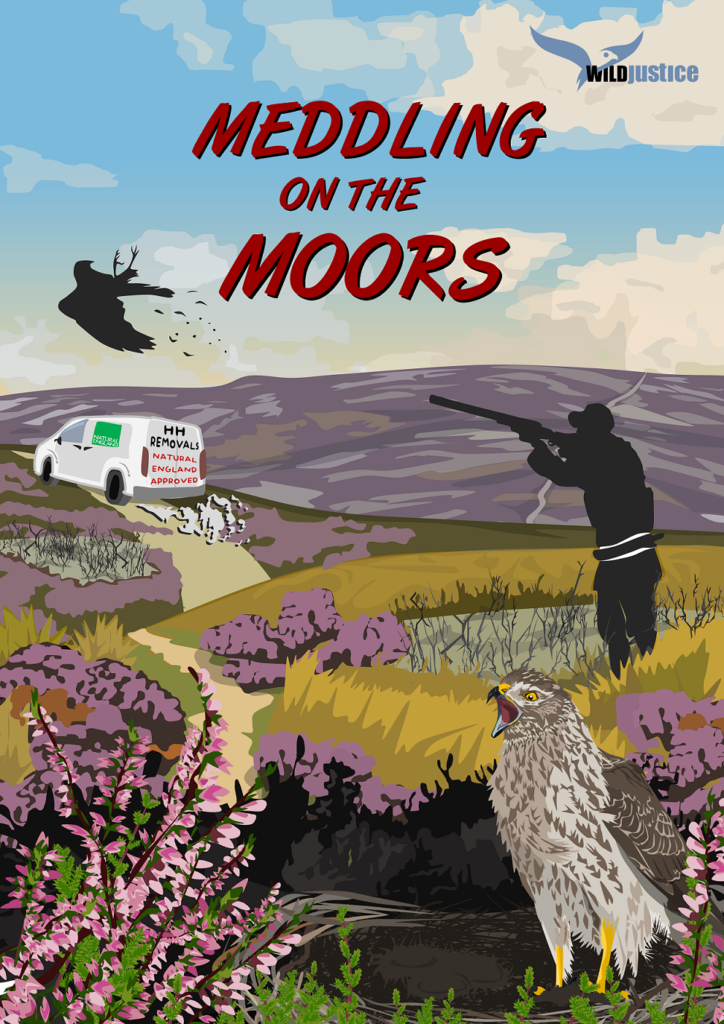
Conservation campaign group Wild Justice has just published a new report on hen harrier brood meddling (called Meddling on the Moors), where the disingenuous claims of the grouse shooting industry are taken apart and the methods of this so-called ‘scientific trial’ led by Natural England are slated.
The three directors of Wild Justice have criticised hen harrier brood meddling for many years, in various places including in the High Court. This report brings together our collective view in one place and also analyses new data recently published by Natural England that don’t appear to have been analysed elsewhere.
The report is written for a general audience, designed to be understood by those with no prior knowledge of hen harrier brood meddling, but is also detailed enough to hopefully be of interest to those already familiar with this scandalous ‘scientific trial’.
I’ll be writing more about hen harrier brood meddling in due course, specifically about Natural England’s stunningly inadequate ‘social science’ output from 2022, which NE hasn’t published (probably too embarrassed) but which was provided to me in a recent FoI response. Honestly, I’m almost speechless.
For now, here’s the new report from Wild Justice on brood meddling:
Regular blog readers will know that I keep a running total of the number of hen harriers that ‘disappear’ in suspicious circumstances or have been found illegally killed, since 2018.
This morning the total was 95 (see here) but this number has just increased to 98 after it was pointed out to me that three more hen harriers that vanished in 2019 hadn’t been included on my list (many thanks to the person who alerted me to these omissions).
The three harriers (Ingmar, Artemis & DeeCee) were all tagged by the RSPB as part of the Hen Harrier LIFE Project.
I’ve now updated the list (below) and here is the blog I always write when more victims are added…
For anyone who still wants to pretend that the grouse shooting industry isn’t responsible for the systematic extermination of hen harriers on grouse moors across the UK, here’s the latest catalogue of crime that suggests otherwise.
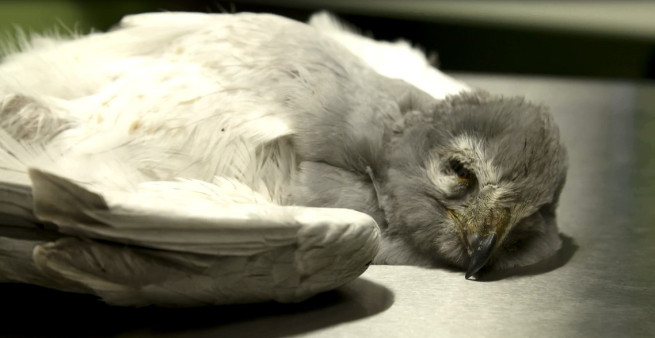
[This male hen harrier died in 2019 after his leg was almost severed in an illegally set trap that had been placed next to his nest on a Scottish grouse moor (see here). Photo by Ruth Tingay]
This is the blog I now publish after every reported killing or suspicious disappearance.
“They disappear in the same way political dissidents in authoritarian dictatorships have disappeared” (Stephen Barlow, 22 January 2021).
Today the list has been updated to include three more victims: a hen harrier named ‘DeeCee’ who disappeared in January 2019 in the notorious Glen Esk area of the Angus Glens; a hen harrier named ‘Artemis’ who disappeared near Long Formacus in south Scotland in November 2019; and a hen harrier named ‘Ingmar’ who vanished in December 2019 in the notorious Strathbraan grouse moor area of Perthshire.
I’ve been compiling this list only since 2018 because that is the year that the grouse shooting industry ‘leaders’ would have us believe that the criminal persecution of hen harriers had stopped and that these birds were being welcomed back on to the UK’s grouse moors (see here).
This assertion was made shortly before the publication of a devastating new scientific paper that demonstrated that 72% of satellite-tagged hen harriers were confirmed or considered likely to have been illegally killed, and this was ten times more likely to occur over areas of land managed for grouse shooting relative to other land uses (see here). Incidentally, a further scientific paper published in 2023 by scientists at the RSPB, utilising even more recent data, echoed these results – see here.
2018 was also the year that Natural England issued a licence to begin a hen harrier brood meddling trial on grouse moors in northern England. For new blog readers, hen harrier brood meddling is a conservation sham sanctioned by DEFRA as part of its ludicrous ‘Hen Harrier Action Plan‘ and carried out by Natural England (NE), in cahoots with the very industry responsible for the species’ catastrophic decline in England. For more background see here.
Brood meddling has been described as a sort of ‘gentleman’s agreement’ by commentator Stephen Welch:
“I don’t get it, I thought the idea of that scheme was some kind of trade off – a gentleman’s agreement that the birds would be left in peace if they were moved from grouse moors at a certain density. It seems that one party is not keeping their side of the bargain“.
With at least 98 hen harriers gone since 2018, there is no question that the grouse shooting industry is simply taking the piss. Meanwhile, Natural England pretends that ‘partnership working’ is the way to go and DEFRA Ministers remain silent.
‘Partnership working’ according to Natural England appears to include authorising the removal of hen harrier chicks from a grouse moor already under investigation by the police for suspected raptor persecution (here) and accepting a £75k ‘donation’ from representatives of the grouse shooting industry that prevents Natural England from criticising them or the sham brood meddling trial (see here). This is in addition to a £10k ‘donation’ that Natural England accepted, under the same terms, in 2021 (here).
Cartoon by Gerard Hobley
So here’s the latest gruesome list. Note that the majority of these birds (but not all) were fitted with satellite tags. How many more [untagged] harriers have been killed?
February 2018: Hen harrier Saorsa ‘disappeared’ in the Angus Glens in Scotland (here). The Scottish Gamekeepers Association later published wholly inaccurate information claiming the bird had been re-sighted. The RSPB dismissed this as “completely false” (here).
5 February 2018: Hen harrier Marc ‘disappeared’ on a grouse moor in Durham (here).
9 February 2018: Hen harrier Aalin ‘disappeared’ on a grouse moor in Wales (here).
March 2018: Hen harrier Blue ‘disappeared’ in the Lake District National Park (here).
March 2018: Hen harrier Finn ‘disappeared’ near Moffat in Scotland (here).
18 April 2018: Hen harrier Lia ‘disappeared’ in Wales and her corpse was retrieved in a field in May 2018. Cause of death was unconfirmed but police treating death as suspicious (here).
8 August 2018: Hen harrier Hilma ‘disappeared’ on a grouse moor in Northumberland (here).
16 August 2018: Hen harrier Athena ‘disappeared’ on a grouse moor in Scotland (here).
26 August 2018: Hen Harrier Octavia ‘disappeared’ on a grouse moor in the Peak District National Park (here).
29 August 2018: Hen harrier Margot ‘disappeared’ on a grouse moor in Scotland (here).
29 August 2018: Hen Harrier Heulwen ‘disappeared’ on a grouse moor in Wales (here).
3 September 2018: Hen harrier Stelmaria ‘disappeared’ on a grouse moor in Scotland (here).
24 September 2018: Hen harrier Heather ‘disappeared’ on a grouse moor in Scotland (here).
2 October 2018: Hen harrier Mabel ‘disappeared’ on a grouse moor on the edge of the Yorkshire Dales National Park (here).
3 October 2018: Hen Harrier Thor ‘disappeared’ next to a grouse moor in Bowland, Lanacashire (here).
23 October 2018: Hen harrier Tom ‘disappeared’ in South Wales (here).
26 October 2018: Hen harrier Arthur ‘disappeared’ on a grouse moor in the North York Moors National Park (here).
1 November 2018: Hen harrier Barney ‘disappeared’ on Bodmin Moor (here).
10 November 2018: Hen harrier Rannoch ‘disappeared’ on a grouse moor in Scotland (here). Her corpse was found nearby in May 2019 – she’d been killed in an illegally-set spring trap (here).
14 November 2018: Hen harrier River ‘disappeared’ on a grouse moor in the Nidderdale AONB (here). Her corpse was found nearby in April 2019 – she’d been illegally shot (here).
16 January 2019: Hen harrier Vulcan ‘disappeared’ in Wiltshire close to Natural England’s proposed reintroduction site (here).
28 January 2019: Hen harrier DeeCee ‘disappeared’ in Glen Esk, a grouse moor area of the Angus Glens (see here).
7 February 2019: Hen harrier Skylar ‘disappeared’ next to a grouse moor in South Lanarkshire (here).
22 April 2019: Hen harrier Marci ‘disappeared’ on a grouse moor in the Cairngorms National Park (here).
26 April 2019: Hen harrier Rain ‘disappeared’ on a grouse moor in Nairnshire (here).
11 May 2019: An untagged male hen harrier was caught in an illegally-set trap next to his nest on a grouse moor in South Lanarkshire. He didn’t survive (here).
7 June 2019: An untagged hen harrier was found dead on a grouse moor in Scotland. A post mortem stated the bird had died as a result of ‘penetrating trauma’ injuries and that this bird had previously been shot (here).
5 September 2019: Wildland Hen Harrier 1 ‘disappeared’ on a grouse moor nr Dalnaspidal on the edge of the Cairngorms National Park (here).
11 September 2019: Hen harrier Romario ‘disappeared’ on a grouse moor in the Cairngorms National Park (here).
14 September 2019: Hen harrier (Brood meddled in 2019, #183704) ‘disappeared’ in the North Pennines (here).
23 September 2019: Hen harrier (Brood meddled in 2019, #55149) ‘disappeared’ in North Pennines (here).
24 September 2019: Wildland Hen Harrier 2 ‘disappeared’ on a grouse moor at Invercauld in the Cairngorms National Park (here).
24 September 2019: Hen harrier Bronwyn ‘disappeared’ near a grouse moor in North Wales (here).
10 October 2019: Hen harrier Ada ‘disappeared’ on a grouse moor in the North Pennines AONB (here).
12 October 2019: Hen harrier Thistle ‘disappeared’ on a grouse moor in Sutherland (here).
18 October 2019: Member of the public reports the witnessed shooting of an untagged male hen harrier on White Syke Hill in North Yorkshire (here).
November 2019: Hen harrier Mary found illegally poisoned on a pheasant shoot in Ireland (here).
November 2019: Hen harrier Artemis ‘disappeared’ near Long Formacus in south Scotland (RSPB pers comm).
14 December 2019: Hen harrier Oscar ‘disappeared’ in Eskdalemuir, south Scotland (here).
December 2019: Hen harrier Ingmar ‘disappeared’ in the Strathbraan grouse moor area of Perthshire (RSPB pers comm).
January 2020: Members of the public report the witnessed shooting of a male hen harrier on Threshfield Moor in the Yorkshire Dales National Park (here).
23 March 2020: Hen harrier Rosie ‘disappeared’ at an undisclosed roost site in Northumberland (here).
1 April 2020: Hen harrier (Brood meddled in 2019, #183703) ‘disappeared’ in unnamed location, tag intermittent (here).
5 April 2020: Hen harrier Hoolie ‘disappeared’ on a grouse moor in the Cairngorms National Park (here)
8 April 2020: Hen harrier Marlin ‘disappeared’ on a grouse moor in the Cairngorms National Park (here).
19 May 2020: Hen harrier Fingal ‘disappeared’ on a grouse moor in the Lowther Hills, Scotland (here).
21 May 2020: Hen harrier (Brood meddled in 2019, #183701) ‘disappeared’ on a grouse moor in Cumbria shortly after returning from wintering in France (here).
27 May 2020: Hen harrier Silver ‘disappeared’ on a grouse moor on Leadhills Estate, Scotland (here).
2020: day/month unknown: Unnamed male hen harrier breeding on RSPB Geltsdale Reserve, Cumbria ‘disappeared’ while away hunting (here).
9 July 2020: Unnamed female hen harrier (#201118) ‘disappeared’ from an undisclosed site in Northumberland (here).
25 July 2020: Hen harrier Harriet ‘disappeared’ on a grouse moor in the Yorkshire Dales National Park (here).
14 August 2020: Hen harrier Solo ‘disappeared’ in confidential nest area in Lancashire (here).
7 September 2020: Hen harrier Dryad ‘disappeared’ on a grouse moor in the Yorkshire Dales National Park (here).
16 September 2020: Hen harrier Fortune ‘disappeared’ from an undisclosed roost site in Northumberland (here).
19 September 2020: Hen harrier Harold ‘disappeared’ on a grouse moor in the Yorkshire Dales National Park (here).
20 September 2020: Hen harrier (Brood meddled in 2020, #55152) ‘disappeared’ next to a grouse moor in North Yorkshire (here).
24 February 2021: Hen harrier Tarras ‘disappeared’ next to a grouse moor in Northumberland (here)
12th April 2021: Hen harrier Yarrow ‘disappeared’ near Stockton, County Durham (here).
18 May 2021: Adult male hen harrier ‘disappeared’ from its breeding attempt on RSPB Geltsdale Reserve, Cumbria whilst away hunting (here).
18 May 2021: Another adult male hen harrier ‘disappeared’ from its breeding attempt on RSPB Geltsdale Reserve, Cumbria whilst away hunting (here).
24 July 2021: Hen harrier Asta ‘disappeared’ at a ‘confidential site’ in the North Pennines (here). We learned 18 months later that her wings had been ripped off so her tag could be fitted to a crow in an attempt to cover up her death (here).
14th August 2021: Hen harrier Josephine ‘disappeared’ at a ‘confidential site’ in Northumberland (here).
17 September 2021: Hen harrier Reiver ‘disappeared’ in a grouse moor dominated region of Northumberland (here)
24 September 2021: Hen harrier (Brood meddled in 2021, R2-F-1-21) ‘disappeared’ in Northumberland (here).
15 November 2021: Hen harrier (brood meddled in 2020, #R2-F1-20) ‘disappeared’ at the edge of a grouse moor on Arkengarthdale Estate in the Yorkshire Dales National Park (here).
19 November 2021: Hen harrier Val ‘disappeared’ in the Lake District National Park in Cumbria (here).
19 November 2021: Hen harrier Percy ‘disappeared’ in Lothian, Scotland (here).
12 December 2021: Hen harrier Jasmine ‘disappeared’ on a grouse moor (High Rigg Moor on the Middlesmoor Estate) in the Nidderdale AONB in North Yorkshire (here).
9 January 2022: Hen harrier Ethel ‘disappeared’ in Northumberland (here).
26 January 2022: Hen harrier Amelia ‘disappeared’ in Bowland (here).
10 February 2022: An unnamed satellite-tagged hen harrier ‘disappeared’ in a grouse moor dominated area of the Peak District National Park (here). One year later it was revealed that the satellite tag/harness of this young male called ‘Anu’ had been deliberately cut off (see here).
12 April 2022: Hen harrier ‘Free’ (Tag ID 201121) ‘disappeared’ at a ‘confidential site’ in Cumbria (here). It later emerged he hadn’t disappeared, but his mutilated corpse was found on moorland in the Yorkshire Dales National Park. A post mortem revealed the cause of death was having his head twisted and pulled off. One leg had also been torn off whilst he was still alive (here).
April 2022: Hen harrier ‘Pegasus’ (tagged by the RSPB) ‘disappeared’ on a grouse moor at Birkdale in the Yorkshire Dales National Park (here).
May 2022: A male breeding hen harrier ‘disappeared’ from a National Trust-owned grouse moor in the Peak District National Park (here).
May 2022: Another breeding male hen harrier ‘disappeared’ from a National Trust-owned grouse moor in the Peak District National Park (here).
14 May 2022: Hen harrier ‘Harvey’ (Tag ID 213844) ‘disappeared’ from a ‘confidential site’ in the North Pennines (here).
20 June 2022: Hen harrier chick #1 stamped to death in nest on a grouse moor in the Yorkshire Dales National Park (here).
20 June 2022: Hen harrier chick #2 stamped to death in nest on a grouse moor in the Yorkshire Dales National Park (here).
20 June 2022: Hen harrier chick #3 stamped to death in nest on a grouse moor in the Yorkshire Dales National Park (here).
20 June 2022: Hen harrier chick #4 stamped to death in nest on a grouse moor in the Yorkshire Dales National Park (here).
17 August 2022: Hen harrier (brood meddled in 2022, #R1-M1-22) ‘disappeared’ on moorland in the Yorkshire Dales National Park (here).
September 2022: Hen harrier ‘Sullis’ (tagged by the RSPB) ‘disappeared’ on a grouse moor in Cumbria (here).
5 October 2022: Hen harrier (brood meddled in 2022, #R3-M2-22) ‘disappeared’ on moorland in the Yorkshire Dales National Park (here).
10 October 2022: Hen harrier ‘Sia’ ‘disappeared’ near Hamsterley Forest in the North Pennines (here).
October 2022: Hen harrier (brood meddled in 2021, #R1-F1-21) ‘disappeared’ in the North Sea off the North York Moors National Park (here).
December 2022: Hen harrier female (brood meddled in 2020, #R2-F2-20) ‘disappeared’ on moorland in Cumbria (here).
1 December 2022: Hen harrier male (brood meddled in 2021, #R1-M1-21) ‘disappeared’ on moorland in the Yorkshire Dales National Park (here).
14 December 2022: Hen harrier female (brood meddled in 2022, #R3-F1-22) ‘disappeared’ on moorland in the North Pennines AONB (here).
15 December 2022: Hen harrier female (brood meddled in 2022, #R2-F1-22) ‘disappeared’ on moorland in the Yorkshire Dales National Park (here).
March 2023: Unnamed male hen harrier (tagged by Natural England – details not yet released) ‘disappeared’ in North Yorkshire (here).
April 2023: Unnamed female hen harrier (tagged by Natural England – details not yet released) ‘disappeared’ in North Yorkshire (here).
April 2023: Hen harrier ‘Lagertha’ (tagged by RSPB) ‘disappeared’ in North Yorkshire (here).
April 2023: Hen harrier ‘Nicola’ (Tag ID 234078) ”disappeared’ in North Yorkshire (here).
April 2023: Untagged male hen harrier ‘disappeared’ from an active nest on RSPB Geltsdale Reserve in Cumbria (here).
April 2023: Another untagged male hen harrier ‘disappeared’ from an active nest on RSPB Geltsdale Reserve in Cumbria (here).
April 2023: Untagged male hen harrier ‘disappeared’ from an active nest in Durham (here).
4/5 May 2023: Satellite-tagged male hen harrier called ‘Rush’ ‘disappeared’ from a grouse moor in Bowland AONB in Lancashire (here).
17 May 2023: Satellite-tagged hen harrier called ‘Wayland’ ‘disappeared’ in the Clapham area of North Yorkshire, just north of the Bowland AONB (here).
To be continued…….
Not one of these 98 incidents has resulted in an arrest, let alone a prosecution. I had thought that when we reached 30 dead/missing hen harriers then the authorities might pretend to be interested and at least say a few words about this national scandal. We’ve now reached NINETY EIGHT hen harriers, and still Govt ministers remain silent. They appear not to give a monkey’s. And yes, there are other things going on in the world, as always. That is not reason enough to ignore this blatant, brazen and systematic destruction of a supposedly protected species, being undertaken to satisfy the greed and bloodlust of a minority of society.
When will the tally pass 100 hen harriers? Watch this space…
As many of you will know, Natural England has been planning a so-called ‘reintroduction’ of hen harriers to southern England since 2016, as part of DEFRA’s ludicrous Hen Harrier Action Plan.
Hen harrier. (Photo: Ian Poxton)
I’ve been blogging about this unhinged proposal for years and in my view it should more accurately be called the ‘Let’s divert attention from illegal persecution on driven grouse moors’ project. Hen harriers don’t need to be ‘reintroduced’ or translocated to southern England – if the illegal killing on driven grouse moors stopped, England’s hen harrier population would quickly reclaim old haunts all by itself, without costing tax payers millions of pounds that could otherwise be used to help enforce the law on the grouse moors.
It could be argued that any increase in the English hen harrier breeding population should be welcomed – it’s in a perilous state and has been for years, thanks to the criminals on the northern grouse moors – but a big concern is that any artificial increase will be heralded as a ‘conservation success story’ for this species by the grouse shooting industry, who will then argue that there’s no need to put resources into tackling the continued illegal killing on northern grouse moors, nor licence/ban driven grouse shooting because hen harriers are doing ‘ok’ in the south.
Although I also doubt very much that the harriers will be left alone in the south – persecution is rife on lowland pheasant and partridge shoots, as a cursory glance of this blog will demonstrate, including on a shoot very close to the proposed release site in Wiltshire where a gamekeeper was recently convicted for chucking dead raptors down a well where he thought his crimes would never be discovered (see here).
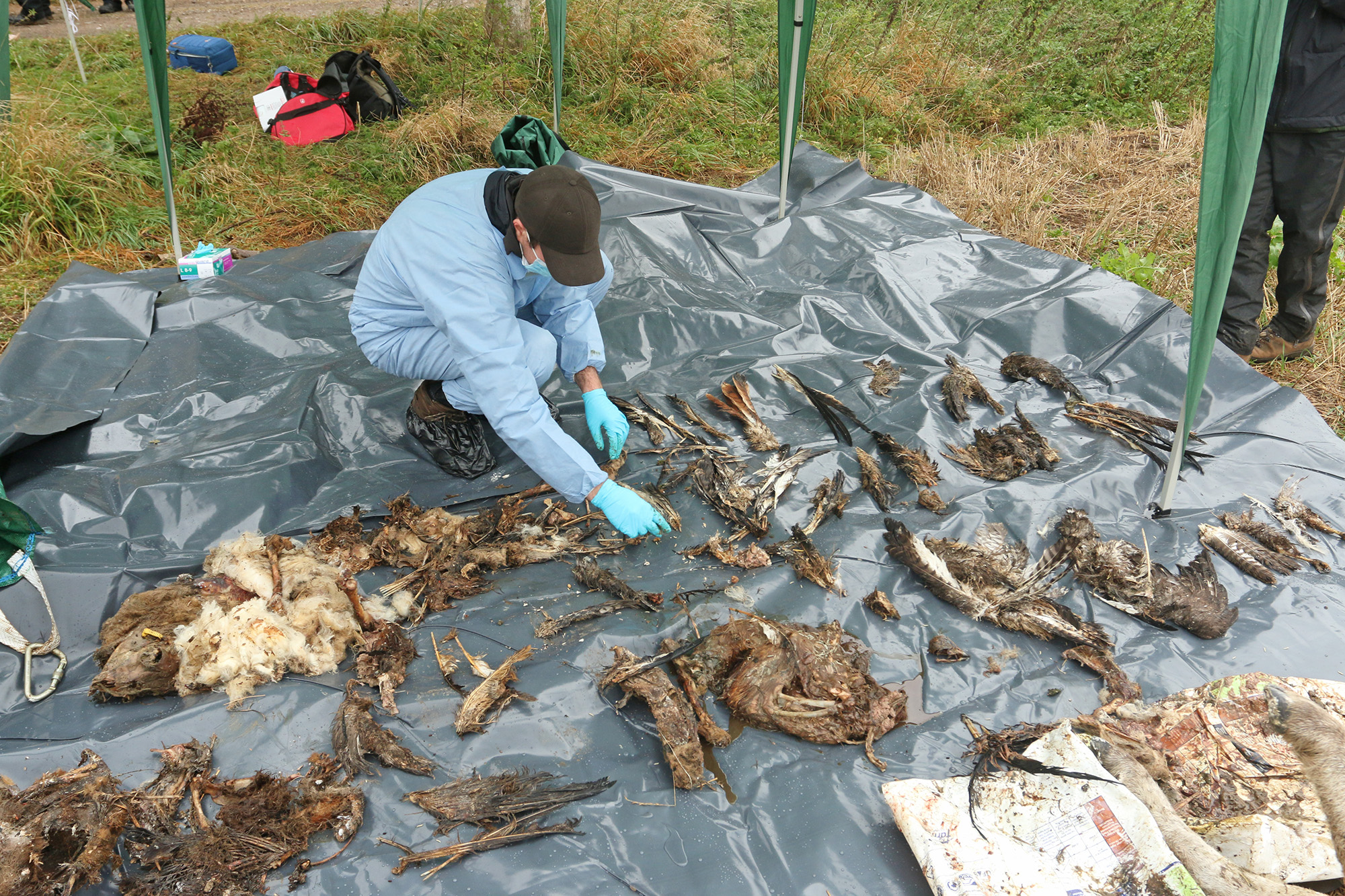
Examination of the raptor carcasses that were fished out of the well during a police-led multi-agency search on a pheasant shoot in Wiltshire. (Photo: Guy Shorrock/RSPB)
However, despite concerns, Natural England is pressing ahead and is now recruiting for a ‘Wildlife Lead Advisor’ to project manage the release of young, captive-bred hen harriers.
It’s advertised as a permanent, full-time position with a starting salary of £27,273. Here’s the job description from the civil service jobs website:
The lead adviser role is predominantly field based, facilitating the translocation through proactive community and public engagement, ongoing biological monitoring, management of release facilities, and hen harrier husbandry.
As lead adviser you will:
Develop and maintain relationships with local land managers and other key stakeholders
Deliver stakeholder and public engagement through illustrated talks, guided walks and events in liaison with Defra Communications and NE Area Team colleagues
Attend relevant meetings with partners, stakeholders and NE teams
Support NE volunteers involved in hen harrier conservation
Undertake daily husbandry, monitoring and recording of hen harriers pre-release
Undertake maintenance of the hen harrier release field
Conduct post-release satellite tracking monitoring and protection of hen harriers, including basic care of recovered individuals
Oversee and undertake small mammal and bird surveys on site and on Salisbury Plain SSSI
Work closely with partners on the captive breeding programme
Additional Information
Training will be provided where required, for example hen harrier welfare and husbandry, biological monitoring or practical tickets
It is essential that you live within a daily, commutable distance to the site.
We try to accommodate flexible working patterns but please note that the suggested minimum working hours are 30 hours a week due to the nature of the role and workload.
Duties will involve working outdoors, which can be physically demanding, and sometimes during inclement weather conditions.
A current full driving licence is essential for the role.
Out of hours work may be required including evening meetings and weekends.
You will be based at the release location in Wiltshire. This location is a working farm and a National Nature Reserve. Occasional assistance to farm staff may be required.
The role will require national travel to locations, to locate or retrieve tagged hen harriers, conduct visits, meetings, and training. This will sometimes require overnight stays.
Level of Security Checks Required
Must have or be prepared to undertake security check clearance. The post will also require additional screening from Agenda Security Screening.
The vetting process will seek to understand your loyalty, honesty and reliability, and identifying any vulnerabilities that could lead you to being bribed or blackmailed.
I guess the vetting process, looking to ‘understand your loyalty, honesty and reliability‘ isn’t meant to be ironic. It’s a shame Natural England doesn’t include such vetting for some of its so-called ‘partners’ in its hen harrier projects.
It also doesn’t include anything about gagging orders and an ability to turn a blind eye in relation to publishing information about illegally-killed hen harriers, especially in the run up to the opening of the grouse shooting season on the Inglorious 12th – wouldn’t want to damage any of its partners’ propaganda missives, eh?
A group of activists called the Moorland Monitors has posted some video footage on social media showing disturbing gamekeeping activities at some pheasant rearing pens at Grimwith Reservoir in the Yorkshire Dales National Park.
Screengrab from Moorland Monitors’ video of gamebird rearing pens at Grimwith Reservoir, Yorkshire Dales National Park
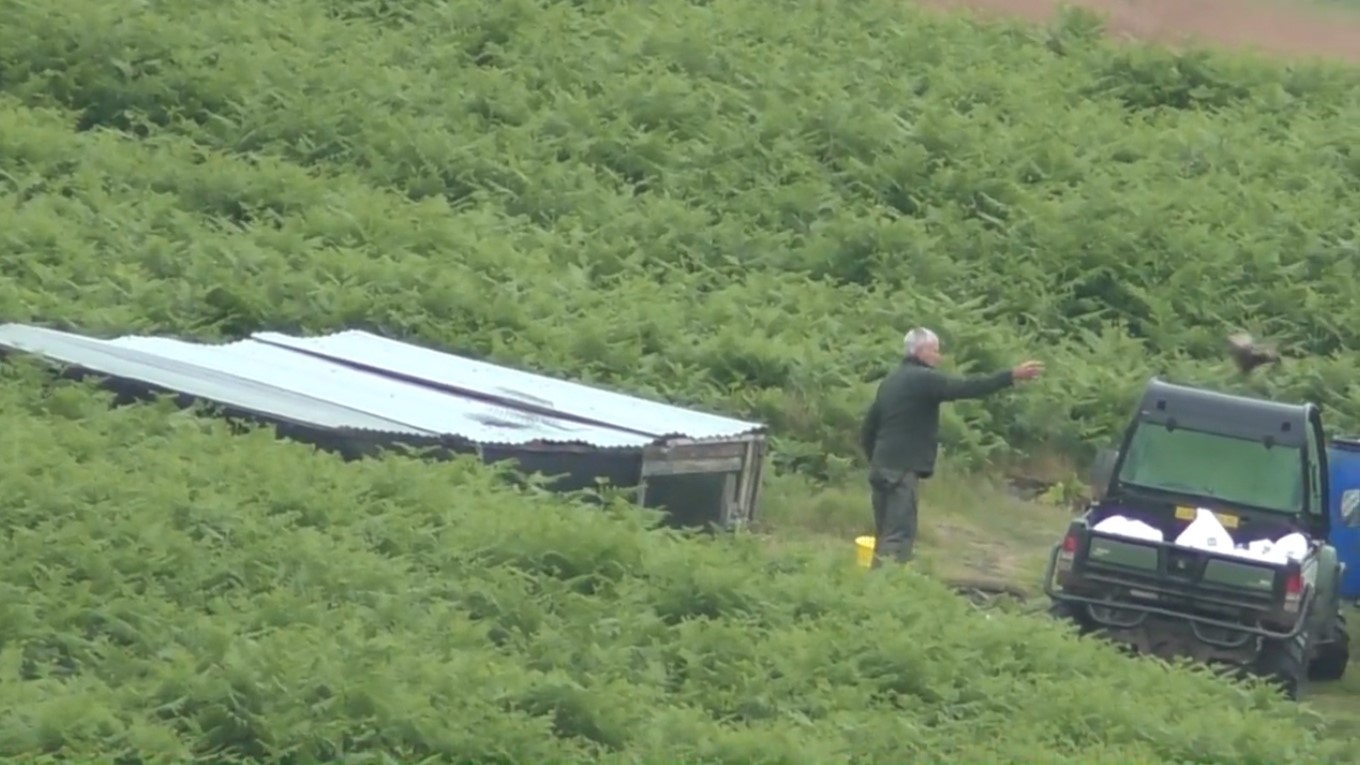
The video footage (which can be viewed below) was reportedly filmed in June 2023 and shows a gamekeeper attending the rearing pens and removing what look like dead pheasants and then tossing them into the surrounding bracken and into the stream. This stream feeds directly into Yorkshire Water’s Grimwith Reservoir.
Screengrab from Moorland Monitors’ video showing a gamekeeper tossing a dead pheasant towards a stream at Grimwith Reservoir, Yorkshire Dales National Park
The Moorland Monitors say they reported the incident to the ‘authorities’ (I don’t know who that was or when the report was made) but that they hadn’t received a reply.
You can read more about this incident on the Moorland Monitors’ website (here) and the video footage posted on the Moorland Monitors’ twitter account can be viewed here:
Further to the horrific story about how charity cyclist Tony Parsons had been killed and then subsequently buried in a stink pit by the McKellar twins on the infamous Auch Estate near Bridge of Orchy in the Scottish highlands (see here), more information has emerged in this grisly case.
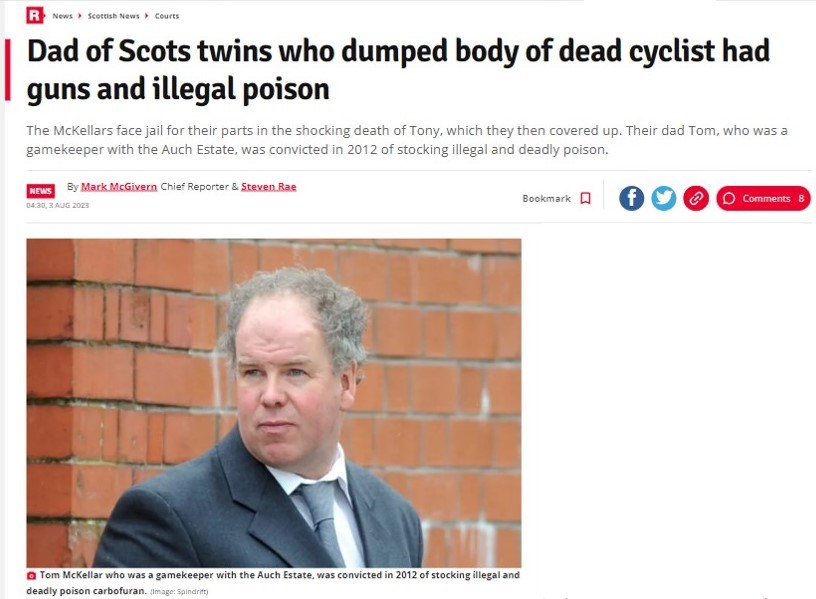
The Daily Record has reported that the McKellar twins’ father was Tom McKellar, who was convicted in 2012 for the illegal possession of a banned pesticide (Carbofuran) and two hand guns at his home on the Auch Estate where he worked as a farm manager (also described in some publications as a gamekeeper)- see here and here for some background to that case.
The article in the Daily Record (here) also includes comments made by locals about the McKellar twins and it reports that the brothers ‘worked as stalkers on a hunting estate‘ and ‘had been exposed to the killing of animals for much of their lives‘.
The article continues:
‘The boys had grown up in a life where shooting animals, trapping them was a way of life, part of the running of a shooting estate that protected the game bird and deer stocks. They were both working on the land from a young age and soon working as deer stalkers. Their father was said to be highly regarded in the local community but the fact he had illegal guns and hugely toxic, illegal poison at his property didn’t exactly make him look like the best role model‘.
The article also states: ‘The men eventually buried Tony’s body in a “death hole” that was full of the rotting remains of foxes, grouse and other animals that had been killed on the estate‘.
I’m not sure that grouse shooting takes place on the Auch Estate – the habitat doesn’t look as though it would support commercial driven grouse shooting at any rate. The estate is best known for offering deer stalking and fishing, although the estate agent’s brochure from the 2020 sale does say that walked-up shooting is available and mentions rough shooting for woodcock:
Further information about the site where Tony’s remains were found was reported in an STV article (here) published last September when the case moved to trial at the High Court in Glasgow. The article reports that Tony’s body was ‘hidden under animal remains with bleach also poured on his remains‘. (Thanks to a blog reader for sending the STV link).
There has been a lot of online commentary about this gruesome case, which isn’t surprising given the shocking crimes committed by the McKellar twins. Some have questioned why I’m reporting the case on this blog. I don’t feel the need to justify what gets reported on here but in this case I thought it would have been obvious given the estate’s history as a raptor persecution crime scene, the relationship of the McKellar twins to Tom McKellar, and the use of a stink pit to bury a body.
I think it’s also interesting to highlight that a crime as serious as this one can remain hidden on large estates like Auch for years. We often refer to raptor persecution crimes on vast, privately-owned sporting estates as being the ‘tip of the iceberg’ because inevitably estate employees have every opportunity, and of course the motive, to hide the evidence of their criminal activity. The crimes that are uncovered are usually only discovered by chance.
The killing of Tony Parsons and his burial in a stink pit on the Auch Estate by two individuals who lived and worked there only came to light because someone had the courage and decency to report it to the police when Alexander McKellar confessed to her what he and his brother had done.
I see a lot of parallels.
The McKellar twins are due to be sentenced later this month.
UPDATE 25th August 2023: McKellar twins from Auch Estate sentenced for killing cyclist & burying his body in a stink pit (here)
Press release from Cheshire Constabulary (24 July 2023)
MAN BANNED FROM KEEPING BIRDS FOR FIVE YEARS
A man has been disqualified from keeping birds for five years after police seized wild owls from his address which were being kept in unsuitable conditions.
Alan Mee, 61, of Larch Avenue, Newton-le-Willows, appeared at Crewe Magistrates’ Court on Monday 17 July where he pleaded guilty to three counts of failing to take reasonable steps to ensure the needs of an animal, and two counts of possessing a wild bird.
The three tawny owls at Mee’s premises. (Photo: Cheshire Constabulary)
On 20 June, 2022, Cheshire Police’s Rural Crime Team, Merseyside Police, RSPCA, and Natural England executed a warrant as a result of information relating to wild birds in the Cheshire area.
Cheshire Police led on the warrant at Mee’s address in Newton-le-Willows and three tawny owls were located, two of which were suspected to have been taken from the wild.
All three owls were seized due to the conditions they were being kept in, which included having dirty water, no feeding area, and the aviary being too small.
Mee was interviewed under police caution in relation to the offence before being charged.
He was disqualified from keeping birds for a period of five years and also incurred a fine and court costs to the value of £823.
PC Ashley Tether, of the Rural Crime Unit, said:
“This case demonstrates the importance of working with our partner agencies to tackle wildlife crime and combat those responsible for the suffering of animals.
The three tawny owls seized from Mee’s address were kept in poor conditions with no access to fresh water, an adequate enclosure size, or a clean food ledge.
Mee is now disqualified from owning, keeping, participating in the keeping, or influencing the way birds are kept, for a period of five years.
I hope this acts as a reminder that we are committed to doing all we can to help protect our wildlife“.
ENDS
Many thanks to the blog reader who alerted me to to this press release.
Last week, the Hunt Saboteurs Association (HSA) posted a video and accompanying commentary on its website about a police investigation into a gamekeeper alleged to have been caught on camera placing ‘poisoned-laced pheasant carcasses’ next to a pheasant release pen in Berrington, Shrewsbury in 2022 (see here).
The HSA reports that its fieldworkers collected some of the pheasant carcasses and sent them to the Wildlife Incident Investigation Scheme for toxicology analysis and the findings were reported to West Mercia Police for investigation.
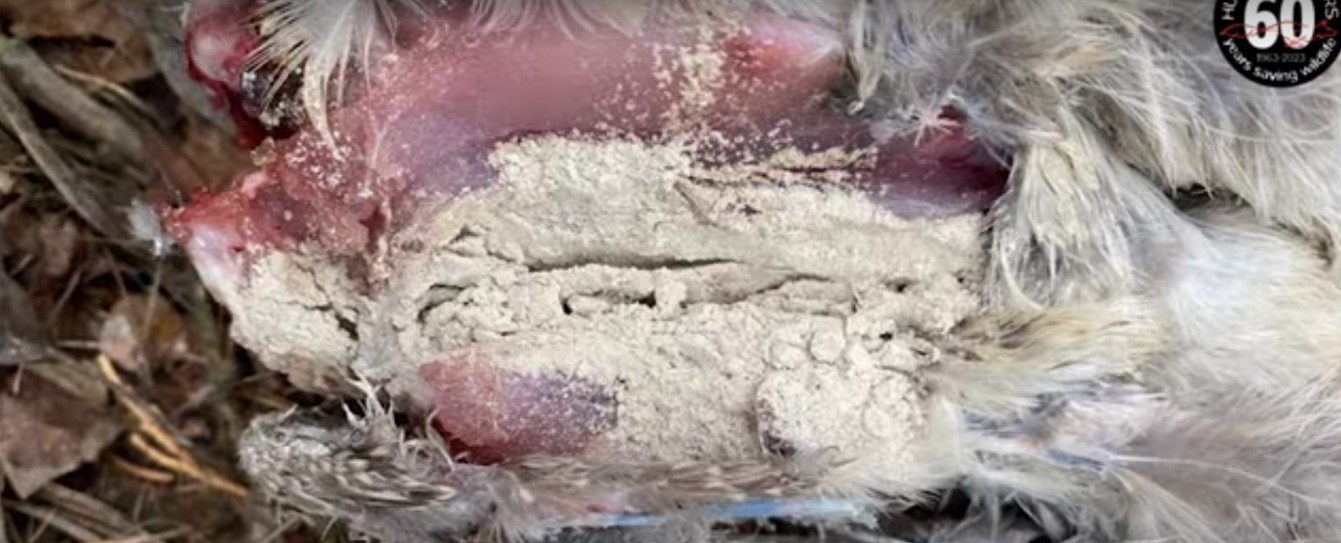
Screen grab from the HSA video showing one of the pheasant carcass baits slit open and containing an unidentified white powder substance.
The report on the HSA website states:
‘The gamekeeper’s house was raided by the authorities, and despite poisonous substances being found, there was insufficient evidence to prove these were the same substances found on the bird carcasses. Sadly this meant there was no chance of a conviction in this case. This does mean that we are now able to share this footage with you to highlight the grim reality of the shooting industry‘.
The HSA report doesn’t identify what substance was found on the pheasant carcasses during the toxicology analysis, nor does it identify the ‘poisonous substances‘ alleged to have been found by West Mercia Police at the gamekeeper’s house, so it’s difficult to draw conclusions about any alleged criminality.
However, I did find an entry on the Wildlife Incident Investigation Scheme (WIIS) database referring to an incident involving ‘pheasant baits’ in Shropshire in 2022. This is likely to be the same incident as the HSA is reporting but beware, there is a small element of uncertainty because the WIIS database isn’t always kept up to date and some incidents are known to be held back from publication whilst investigations are still live.
Let’s assume the WIIS database entry refers to the HSA case. Here is what the WIIS entry says:
Ref: 107/367: Shropshire, September 2022, categorised as ‘abuse’, 2 x pheasant baits & 8 pesticide samples. The narrative is given as follows:
‘2 pheasant baits found with white/grey powder inside them. Residues of permethrin were found on the pheasant baits. Analysis confirmed a mixture of pesticides which were found during a visit to a pesticide store. This incident has been assigned to permethrin abuse. There were also failings in the storage of a range of pesticides, some of which are no longer approved‘.
That last sentence is key. If banned substances were found during the police raid AND there were ‘failings in the storage‘ of them, this would normally be sufficient evidence for a prosecution for failing to comply with the regulations relating to the possession and storage of various banned chemicals, and associated health & safety regulations, as we’ve seen in other recent cases (e.g. here), even if there was insufficient evidence to charge for placing poisoned baits.









 Raptor Persecution UK