Millden Estate no longer for sale

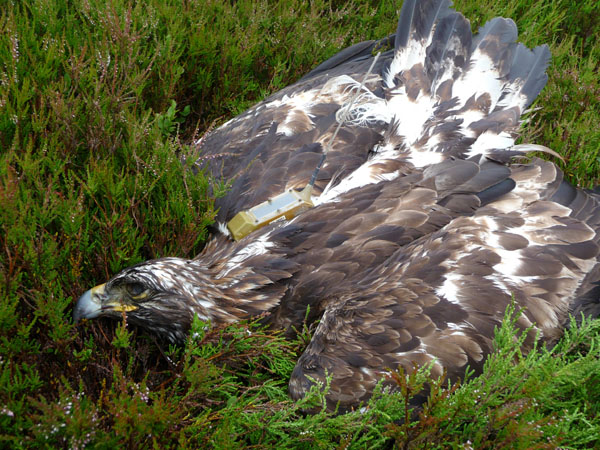
An article in today’s Telegraph reports that Millden Estate, where golden eagle ‘Alma’ was found poisoned in 2009, is no longer up for sale. The estate, owned by investment banker Richard Hanson, was reportedly put on the market earlier this year (see here and here). According to the Telegraph, Hanson has now changed his mind after more than 5,000 brace of grouse (10,000 birds) were shot there this season.
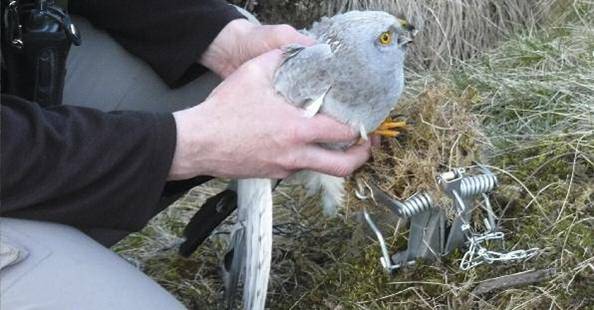
Police raided Millden Estate in 2009 after two-year old golden eagle ‘Alma’ was found poisoned on the moor. Nobody has ever been charged with killing her (see here).

According to the Telegraph, Millden Estate and the neighbouring properties ‘vehemently deny being involved in illegal persecution’. It’s interesting then, that a grouse moor that operates (we’re told) without illegally killing raptors, can produce a surplus of over 10,000 grouse to shoot. Surely that suggests that raptors are not having a ‘significant impact’ on gamebirds and therefore licences to kill raptors on grouse moors are not neccesary?

Telegraph article here

Things to do list #2

In the November 2011 edition of Birdwatch magazine, Mark Avery calls for our views about hen harriers and grouse moors. He says that if we send our views to the Birdwatch editor, they’ll be summarised and sent to a range of organisations including the Moorland Association, the Game and Wildlife Conservation Trust, the RSPB and the Scottish Raptor Study Groups.

Is there any value in doing this? Do you think the anti-harrier brigade will pay any attention to our views? Why would they? It’s been illegal to kill harriers since 1954 – this hasn’t stopped anyone doing it, and has pushed harriers to the very brink of extinction as a breeding bird in England, and severely depleted their numbers in parts of Scotland, so why would the harrier killers stop now?

The alternative is to do nothing, giving the grouse-shooting fraternity the chance to use our silence as an indication that we simply don’t care. We can’t let that happen, can we?

In Avery’s Birdwatch article, he writes a small piece about the harrier problem, but given the limited page space he can’t explain the problem in detail. He then offers three possible options on how to deal with the harrier/grouse issue, and asks readers to comment on them, or alternatively, suggest other options. Avery’s three options are paraphrased here:

A: Just forget it. Conservationists are fighting a losing battle and should turn their attention to more important issues.

B: Keep up the fight and keep publicising illegal persecution because if we lose the harrier, other species will surely follow. Keep talking to the ‘good guys’ in shooting who also want to see an end to harrier persecution.

C: Forget about trying to work with grouse shooters – they’ve had their chance to put their house in order and have failed miserably. Instead, lobby for an outright ban on grouse shooting.

If you want to comment on the issue, email your views to: editorial@birdwatch.co.uk. You’ll need to write before the end of November.

If you want some detailed background reading on the issue, we recommend reading Avery’s earlier articles about the harrier-grouse problem that he’s written on his personal blog (see here), and some of our earlier blog posts on harriers (see here, here, here, here, here, and here).

To subscribe to Birdwatch magazine online, click here.

Consultation due on extending SSPCA powers for wildlife crime investigations

The Scottish Environment Minister, Stewart Stevenson MSP, has confirmed that the Scottish government will consult on extending the powers of the SSPCA in relation to the investigation of wildlife crime. The consultation is planned to begin in the first half of 2012, a year after it was first agreed to.

This recent announcement came after MSP Elaine Murray once again raised the question about when the consultation would actually take place (see here for her earlier motion on this issue and for some background reading on why many feel these extended powers for the SSPCA are urgently needed). Thank you, Elaine Murray MSP.

Here is the transcript of the relevant parliamentary question and answer from Thursday 17th November 2011:

Elaine Murray (Dumfriesshire) (Scottish Labour): To ask the Scottish Executive what consideration it is giving to extending the powers of the Scottish Society for the Prevention of Cruelty to Animals in relation to the investigation of wildlife crime and whether it will consult on the introduction of relevant legislation. (S4W-03975)

Stewart Stevenson: As the then Minister for Environment and Climate Change made clear at Stage 3 of the Wildlife and Natural Environment Bill on 2 March 2011, we intend to consult on extending the powers of the Scottish Society for the Prevention of Cruelty to Animals in relation to the investigation of wildlife crime. We plan to launch this consultation in the first half of 2012.

It’s oh so quiet

Is it just us, or is anyone else curious about the deafening silence of landowner and gamekeeper organisations following last week’s report about the discovery of poisoned bait on Glenlochy Estate (see here)?
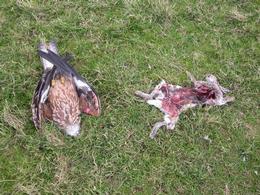
For two organisations (Scottish Land and Estates and Scottish Gamekeepers Association) who have been making (welcome) press statements about their condemnation of criminal raptor persecution, and their desire to ‘stamp it out’ of their industry, it seems a bit of a missed opportunity. We wonder whether Glenlochy Estate is a member of the SLE? We wonder whether any Glenlochy Estate gamekeepers are members of the SGA? We don’t know, because neither group publishes their membership lists for public scrutiny. And to be fair, neither group is obliged to publish that information, but you’d think that in light of the recent discovery, which isn’t the first for this particular area (see here), these groups would want to grab every opportunity available to publicly distance themselves from what appears to be another incident of alleged wildlife crime on a Scottish sporting estate. Wouldn’t you?

Scottish landowners take another side swipe at sea eagles

Sea eagles have been back in the news recently, with concerns raised about whether the newly-reintroduced eagles are able to ‘cope’ with their environment. The Scottish Land and Estates (SLE) organisation has used the media opportunity to take another side swipe at the reintroduction project.

A couple of weeks ago, the SSPCA reported that nine sea eagles had been rescued in the last year, and five of those were exhausted and weak after heavy rain (see here). The National Farmer’s Union (Scotland) were quick to criticise the East Scotland sea eagle reintroduction project, saying that the east coast reintroduction is an RSPB-led ‘forced expansion’ that is ‘backfiring’. They go on to say: “The birds are clearly struggling to cope with the combination of bad weather and the environment” (see here). An interesting perspective, given that the environmental conditions in Norway (where the young eagles were born) are comparable with the environmental conditions in Scotland where they are released (see here) and that the west Scotland sea eagle reintroduction project (in an area that endures a higher rainfall than east Scotland) has proved a resounding success with over 50 known breeding eagle pairs taking up residence. Yes, of course the issue of nine rescued sea eagles is of concern, especially in such a small population that is still recovering from the effects of persecution, but, is it any different to ‘natural’ levels of young sea eagle mortality?

Meanwhile, Scottish Land and Estates has published a press release about it all, initially focusing on the welfare issue but quickly moving on to the “impact that these released predators are having on game birds” [they don’t provide any supporting evidence for this ‘impact’], “and the potential risk there is to the poultry industry within this area“. They go on to say that Doug McAdam (CEO) tried to join the Sea Eagle Project Team but his request was turned down. He said: “An opportunity to bring some transparency and to give a voice for local business concerns was missed“.

We’re really pleased that Mr McAdam has raised the issue of transparency – this word will feature in our next post…

Scottish Land and Estates press release here

RSPB blog about East Scotland Sea Eagle Project here

three more dead red kites in Ireland suspected to have been poisoned

The Irish Times is reporting that three more dead red kites have been discovered near Lusk, North County Dublin. They are suspected to have been poisoned, although post-mortem results are not yet available.
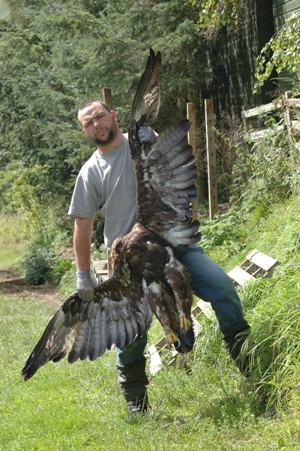
The article does not say when these dead kites were discovered.

Read the article in the Irish Times here

Things to do list #1

Recognising that the criminal persecution of raptors in Scotland shows little sign of ending, the Scottish Parliament voted in March this year to introduce the offence of vicarious liability as part of the Wildlife and Natural Environment (Scotland) Act 2011 (see here and here). Basically, this will allow prosecutors to take action against the landowner and/or sporting tenant, and not just an individual gamekeeper, when persecution incidents are detected. Whether this will be effective or not remains to be seen; if the landowner/sporting tenant can demonstrate that he/she knew nothing about the persecution and can show that steps were taken to try and prevent it from happening on their estate, then they will have a viable defence. Once the WANE Act is commenced in full, it won’t be long before the effectiveness of vicarious liability will be tested. At least we’ve got something to work with and by voting to accept this new legislation, the Scottish Parliament has acknowledged that the problem still exists.

Unfortunately, the same opportunity is not available in England. Earlier this year, we reported on the Defra Minister’s response to a request for the introduction of vicarious liability in England. You can read MP Richard Benyon’s response here, where he suggests that vicarious liability is not required and that he applauded gamekeepers for their wonderful work!

Well, now there just may be an opportunity to bypass Richard Benyon’s incredible lack of foresight and have the issue debated in the House of Commons. A new e-petition website has been provided by HM government, whereby ordinary members of the British public can start an e-petition on a topic of their choice (within the bounds of decency!). If after 12 months their e-petition has attracted at least 100,000 signatures, then the issue becomes eligible as a topic for debate in the House of Commons.

Yesterday, a new e-petition was established to introduce the offence of vicarious liability for raptor persecution in England. If you are a UK citizen, you can help support this effort by signing the petition online. Your personal details are not publicised and the whole process takes less than a minute. If you care about the ongoing illegal persecution of raptors in England, here’s your chance to add your voice and it won’t cost you a penny. Please also share this post with your friends, family and colleagues.

Please sign the e-petition here

The mysterious case of the Inverinate Estate gamekeeper’s trial

Way back in March 2011, the case against Inverinate Estate gamekeeper, Andrew Malcolm Slaughter, opened at Inverness Sheriff Court. He was reported to be facing charges under the Wildlife & Countryside Act, the Animal Health & Welfare (Scotland) Act and the Agriculture (Scotland) Act (see here).

Over the next eight months, five different court dates for this trial have been and gone (see here). Today was the 6th court date and we were expecting the case to be concluded one way or another. Well, it was and it wasn’t. Apparently, this case has been ‘deserted pro loco et tempore’. We are told that this means the case is finished as far as this court is concerned, but that the Procurator Fiscal may raise it again in the future. No explanation has been given for this decision.

A satisfactory outcome?

By pure coincidence, Alex Salmond MSP (the current First Minister of Scotland), on a recent trip to Dubai earlier this month, met the son of the man believed (but not confirmed) to be the Inverinate Estate owner (the son happens to be the Deputy ruler of Dubai), “to discuss opportunities to strengthen links between the two nations” (see here). What an amazingly small world.

WANE Act 2011 will not commence in full until January 2013

For those of us who had hoped to see the full commencement of the Wildlife and Natural Environment (Scotland) Act 2011 in the near future, prepare to be disappointed.

Last Thursday (10th November), the following took place in the Scottish Parliament:

Elaine Murray (Dumfriesshire) (Scottish Labour): To ask the Scottish Executive when the Wildlife and Natural Environment (Scotland) Act 2011 will be commenced in full.

Stewart Stevenson (Environment Minister): It is planned that all of the provisions of the Wildlife and Natural Environment (Scotland) Act 2011 will be in force in January 2013.

Some of the new provisions created by the Act are already in place (e.g. muirburn season) and we now know that some of the snaring legislation will commence in January 2012 (see the link below to parliamentary questions and answers). However, it is not yet clear whether the new provision of vicarious liability will be introduced prior to January 2013, but given the above statement by Stewart Stevenson, there is now a nice little get-out clause for it to be delayed for over a year if neccessary.

Once again we can thank Elaine Murray MSP for raising pertinent questions. Her later questions (see link below) are also well worth a read, as she tackles the issue of whether the organisations providing training courses for snare operators are actually accredited to do so.

Read the parliamentary questions and answers here

Read the Wildlife and Natural Environment (Scotland) Act 2011 here

Lessons in eagle ecology part 2

Hot off the press from the team who brought you Eagles Could Eat Children (see here), this month’s lesson is all about Why Eagles Don’t Nest on Grouse Moors.

Contrary to the endless scientific papers that show unequivocally that eagles (and lots of other raptor species) are absent from many upland grouse moor areas in the UK due to high levels of persecution, the Scottish Gamekeepers Association has today informed us of the real reason they’re absent:

Many grouse moors do not have the isolated nesting habitat which is required by eagles so it should come as no surprise they don’t nest there“.

Strange then, that there are ‘many’ (see quote below) unoccupied eagle nesting territories in Scotland where eagles are known to have bred historically, and that these old nest sites just happen to be on land that is managed for red grouse shooting! Here’s a quote from the Golden Eagle Conservation Framework Report that was published by Scottish Natural Heritage in 2008 (available here) –

The most serious failures to meet favourable conservation status tests were in Natural Heritage Zones in the central and eastern Highlands where less than half of all known territories were occupied. Based on the production of young golden eagles, the populations in these regions should be expanding markedly, but instead they continue to decline (there was a loss of 15 occupied territories between 1992 and 2003, and 86 vacant territories by 2003). This indicates, in the absence of any evidence for emigration, that survival of subadult and/or adult birds is low“.

It’s also strange that before the sentence about ‘many grouse moors do not have the isolated nesting habitat required by eagles’, the SGA tells us this: “A large portion of all eagles fledging takes place on grouse moors across Scotland“. Eh? How can that be, if the habitat ‘isn’t there’?

The SGA article continues with some name-calling (and this from the group who have recently complained to the Scottish Government about how they were being portrayed!) and then some partly-accurate but mostly inaccurate information about siblicide amongst eaglets, before getting in another dig at the Irish Golden Eagle Reintroduction Project (yawn). This all builds up to a grand finale where we’re told:

If you were to read all the media reports you could be forgiven for thinking that raptors only breed safely on reserves. The truth is there are possibly 500’000 raptors in the UK and 350’000 of them will be breeding successfully on land used for game sport shooting of some kind. This fact is completely ignored by those attempting to take the moral high ground“.

Hmm, I’d be really interested to see the data that this “fact” is based upon. Especially in light of the recently published scientific paper (see here) that shows, again unequivocally, that peregrines nesting on grouse moors in northern England are 50% less successful than peregrines that breed on non-grouse moor habitat.

Interestingly, the SGA article makes no comment about the poisoned buzzard and poisoned bait that was found on Glenlochy Estate and was reported in the media two days ago (see here). The SGA wouldn’t be trying to deflect attention from yet another disgusting and illegal poisoning incident, would they?

SGA article here