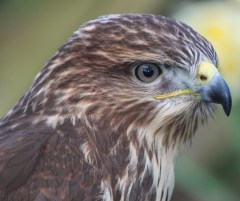
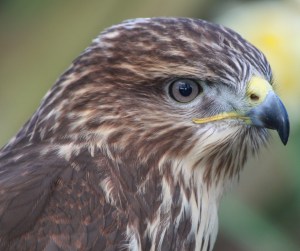
Two dead buzzards found in suspicious circumstances in North Wales

Police in North Wales are investigating the discovery of two dead buzzards found at a nature reserve at Oakenholt, on the Dee Estuary near Flint Marsh.

The birds were found by a member of the public on Friday (5th April) and police suspect foul play, saying “It is highly likely they have been shot or poisoned“. The birds have been taken for post mortems and toxicology tests.

Well done to Sgt Rob Taylor, Wildlife Crime Officer for North Wales Police, who is warning the public not to touch dead birds and to keep their dogs away from carcasses in case poison has been used. Great to see a press release appear so quickly after the discovery of the birds.

Full details available here

Shot golden eagle finally succumbs to its injuries

The golden eagle that was found shot and critically injured on a grouse moor last autumn has finally succumbed to its injuries. The bird apparently died last week, although as far as we can tell there’s been no publicity, which seems a bit surprising given the public interest in this incident. We understand the Environment Minister Paul Wheelhouse was informed.

This eagle was discovered ‘barely alive’ last October, on a grouse moor belonging to Buccleuch Estate, close to the boundary with Leadhills Estate (see here). Its death now completes a grisly trilogy of golden eagle killings in Scotland in 2012: one poisoned, one trapped and one shot. And these are just the ones that were discovered.

It’s highly unlikely anyone will be prosecuted for killing these eagles if past incidents are anything to go by. We’ve been keeping a list of known dead or ‘missing’ eagles and any subsequent prosecutions. At last count it was 26 eagles, 6 years, 0 prosecutions (see here).

It’s now 27 eagles, 7 years, 0 prosecutions.

If you want to express your disgust to the Environment Minister and ask him when he’s going to make good on the promise he made last year to consider further measures to bring the raptor killers to justice, please email him at: ministerforenvironment@scotland.gsi.gov.uk

The shot golden eagle ungergoing surgery

Landowners ‘blamed unfairly’ for wildfires, say, er, landowners

Scottish Land and Estates, the representative organisation of 2,500 landowners across Scotland, says landowners are being ‘blamed unfairly’ for the outbreak of wildfires that have occured across huge swathes of the Highlands this week.

According to Luke Borwick, chairman of SLE, “Some of these fires have been as a result of careless activity by recreational access takers. However, a significant number of fires have clearly been the result of irresponsible actions of other land users burning and not following the Muirburn Code“.

Amazing. The SLE statement in full here.

Meanwhile, the RSPB is deeply concerned about the effect of the fires on moorland-nesting birds, and particularly on golden eagles.

James Reynolds of the RSPB said: “It is absolutely certain that we will have lost a number of golden eagle nests. How many we don’t know but for a population that small, even the loss of one nest is serious“. Full details on BBC news here.

Marvellous. Welcome to the Year of Natural Scotland.

Environment Minister answers PQs on poisoning & vicarious liability

Claire Baker MSPClaire Baker MSP has been asking some more pertinent parliamentary questions….

Question S4W-13709: Claire Baker, Mid Scotland and Fife, Scottish Labour, Date Lodged: 14/03/2013

To ask the Scottish Government how many (a) investigations, (b) arrests and (c) convictions there have been for the offence of vicarious liability under the Wildlife and Natural Environment (Scotland) Act 2011.

Answered by Paul Wheelhouse (26/03/2013): Since the vicarious liability provisions in the Wildlife and Natural Environment (Scotland) Act 2011 came into force on 1 January 2012 there have been no arrests, prosecutions or convictions of people for vicarious liability for relevant offences. Vicarious liability is not in itself an offence, but rather a land owner or manager may be held to be vicariously liable for relevant offences as set out in Section 18, Wildlife and Countryside Act (1981). The relevant offences under the Wildlife and Countryside Act 1981 are those in:

Section 1(1), (5) or (5B)

Section 5(1) (a) or (b)

Section 15A (1)

These offences are in relation to the intentional or reckless killing, injuring of a wild bird or the damage to, or destruction of a nest or egg(s); the prohibition of certain methods of killing wild birds (e.g. by the use of traps or poisons); and the possession of certain prescribed pesticides.

Vicarious liability can be considered in relation to all relevant offences that are investigated or prosecuted. When any investigation for a relevant offence is ongoing, the possibility of an arrest or prosecution under the vicarious liability provisions will be considered.

Question S4W-13710: Claire Baker, Mid Scotland and Fife, Scottish Labour, Date Lodged: 14/03/2013

To ask the Scottish Government how many poisoned baits have been discovered and how many (a) birds and (b) other animals have been poisoned in this way since 2008, broken down by (i) year and (ii) species.

Answered by Paul Wheelhouse (27/03/2013): The available information on poisoned baits and the poisoning of birds and other animals is shown in the following table.

Science and Advice for Scottish Agriculture, collate and publish data on animal poisonings information on a quarterly and annual basis on their website.

RPS_poisoned birds 2008-12

RPS_other poisoned animals 2008-12

RPS_poison incidents & baits 2008-2012

We’re still waiting for the Environment Minister to issue a statement on his intended course of action following the reports of two buzzards, shot and killed in two separate incidents before Easter…..


Highland landowners may face prosecution over hill burning

Landowners in the Highlands have been warned they may face prosecution if they don’t stop controlled burning, after firefighters have been tackling almost 200 wildfires over the last week.

Legal muir burning, where fires are deliberately set to burn off long grass and heather to encourage new grazing for sheep and grouse, is currently taking place.  Muirburning is allowed under The Muirburn Code from October 1 to April 15 (or 30 with landowner’s permission), although in exceptional circumstances it may be extended. However, the Scottish Fire and Rescue Service said conditions were “clearly unsuitable” for burning and have issued a list of 17 criminal offences associated with this type of activity. These include leaving a fire unattended, being unable to control a fire or having not made provision for its proper control.

The latest edition (2011) of The Muirburn Code is available here.

If landowners are forced to stop their burning, they are quite likely to request an extension (see here) to the official muirburn season, which could have a devastating impact on ground-nesting birds.

More detail on the BBC website (here), Scotsman (here), STV news (here), Telegraph (here), Guardian (here)

New Scottish snaring laws may help catch the raptor killers

Yesterday (1 April 2013) saw the new Scottish snaring laws take effect, under The Snares (Identification Numbers and Tags) (Scotland) Order 2012.

plastic_snare_tags2 Perdix Wildlife SuppliesUnder this new legislation (see here for a copy), snare operators have to abide by the following rules:

  • They must have attended and passed an approved training course.
  • They must have been issued with a personal identification number by the police.
  • A tag (plastic or metal) with this personal identification number must be attached to every single snare they set, along with the letter ‘F’, ‘R’ or ‘BH’ to indicate the target species they intend to catch (Fox, Rabbit or Brown Hare). Interestingly, there is not a code for Mountain Hare – suggesting that it is still illegal to snare this species, despite the verdict in the recent Lochindorb hare-snare trial (see here). See image for an example of one of the new tags, created by Perdix Wildlife Supplies, showing the target species (BH) and the personal ID number.
  • They must keep a record of every snare set, including its location, date set, date disarmed, and every animal they have caught in that snare. These records must be maintained for two years and given over to a police officer if requested.

They must also abide by previous legislation and use only free-running snares with a stop on them (not self-locking snares which are banned), check every snare at least once every 24 hours, and on each inspection they must remove any trapped animal, whether alive or dead. Snares cannot be set where an animal is likely to become suspended (e.g. next to a fence) or close to water where a snared animal is likely to drown.

The game-shooting lobby are nervous about the new regulations. Although many of the industry’s organisations have welcomed the new restrictions, there is obvious concern that not everyone will comply and this could well lead to an outright ban on snaring when the effect of the new legislation is reviewed by the Scottish Parliament in December 2016.

They are right to be concerned. We already know that as of February this year, out of a shooting industry estimate of 5000 snare operators, only 1,376 have attended one of the approved snaring training courses (see here). That means 3,624 people have not been trained – if they’re still setting snares they will be doing so illegally.

Modern Gamekeeping, the monthly gamekeepers’ rag, has warned readers to ‘Beware spies in the hills’. They claim anti-fieldsport campaigners will be out “looking for trouble”. It’s not just the anti-fieldsports crowd who’ll be looking – it’ll be everyone who cares about the way our wildlife is ‘managed’ on sporting estates, whether they be anti-fieldsports or not. In the same article, the SGA’s Bert Burnett warns about the SSPCA, who he says are “very proactive in trying to find problems”. Surely he meant very proactive in trying to bring to justice wildlife criminals who cause unnecessary suffering to animals?

Of course, the new legislation will only be effective if it’s properly enforced. If you’re out and about and you find a snare that doesn’t meet the new requirements, you need to report it immediately. You can try the police, although whether you’ll get an appropriate response depends on who answers the phone. Some wildlife crime officers are very clued-up and will be aware of the legislation – others will not. A quote from the Modern Gamekeeping article gives a clear example of this problem:

One keeper told Modern Gamekeeping he had rung his local police every few weeks since November [to apply for his personal identification number], only to speak to receptionists who didn’t know what a snare was. He said: “Some of the policemen I have spoken to have told me that snaring is banned altogether and others have told me it is an issue for the council to deal with. When I rang the council, the woman was utterly horrified at the idea. It really has been a total hash””.

This photo (below) shows a decomposing mountain hare found in a snare on a notorious Scottish grouse moor. It was reported to the police – no action was taken.

slry30

If you don’t want to rely upon the police to follow up on your report, please call the SSPCA (03000-999-999), especially if you find a live animal caught in a snare, whether it be a target species or not. Another excellent place to report your findings is OneKind’s Snarewatch website (here), which not only has a reporting facility but also is an excellent source of background information about snaring in Scotland. For snaring information in England, this website is very useful.

These new snaring regulations are of interest to us, not only for their intrinsic value but particularly because we believe they could be used to close an often-used legal loophole that has prevented the prosecution of many suspected raptor killers employed on large game-shooting estates.

The loophole we’re referring to concerns the inability of investigators to identify a potential individual suspect, especially on large estates, where gangs of gamekeepers all close ranks and deny having responsibility for an individual ‘beat’, where, for example, a poisoned raptor may have turned up. This scenario has happened time and time again and has prevented many a prosecution from taking place, because charges can only be brought if the individual responsible has been identified. Here’s how it often goes:

(i) A poisoned raptor is found on an estate, maybe close to a poisoned bait, maybe not.

(ii) The investigators turn up on the estate and conduct a search.

(iii) Traces of poison are found on game bags, on knives, in vehicles etc.

(iv) The investigators ask which gamekeeper is responsible for the specific area where the bird was found (i.e. who runs this ‘beat’?).

(v) All the gamekeepers on the estate claim they don’t have individual beats. They all cover the same ground, use the same game bags, knives, vehicles etc, and nobody knows anything about any poison.

(vi) The investigators have to leave empty handed and nobody is brought to justice for poisoning the bird.

So how can the new snaring regulations be of help? We think that the issue of a personal identification number is key. Unlike the number issued for crow cage traps, which is given to the ‘estate’ rather than to an individual, this snare number is issued to the actual individual person who operates the snare. The number has to be attached to each and every snare that that person sets. So, if a poisoned raptor (or any other evidence of criminality) turns up on a specific beat, investigators can search for snares that have been set in the vicinity to identify the individual gamekeeper who runs that beat.

Perhaps the estate owners are wise to this already, and perhaps they’ll ask their gamekeepers to mix up their snares so that a single individual cannot be identified as being responsible for a particular area. But by doing so they’ll decrease the efficiency of their workforce (and efficiency is what they’re all about) because those keepers, being responsible for their own snares, will have to be zig-zagging across great swathes of moorland in order to check their snares, rather than focusing on a more compact area where they know every nook and cranny and use that knowledge to their advantage when targeting animals they want to kill.

We will be watching with interest to see how things develop.

Suspected egg thieves on the Western Isles this weekend

A message has gone out on Twitter this evening alleging that two apparently ‘known’ egg thieves have arrived in the Western Isles, potentially targeting eagle eggs.

The origin of this alert is a Scottish journalist’s blog: see here.

According to that blog, the information has come from an un-named RSPB officer, who claims to have been given information from the RSPB’s Investigations Team. 

Three days ago it was announced that the National Wildlife Crime Unit had launched this year’s Operation Easter, aimed at targeting egg thieves and also those who steal chicks for selling on (illegally) to unscrupulous falconers (see here for a press release from the Scottish Government). Although last year the NWCU said that the number of known egg thieves has dropped to ‘an all-time low’ (see here).

Unfortunately there doesn’t appear to be a police-led website to verify the details of any reported suspects so it’s not known how accurate the information is relating to the two alleged egg thieves reportedly in the Western Isles this weekend. However, if you see suspicious activity, you should report it immediately.

2013 wildlife crime conference: Duncan Orr-Ewing, RSPB

This is the third blog in our series about the 2013 Scottish Police Wildlife Crime conference. (NB: these are not being produced in the order the presentations were made at the conference). Here’s what Duncan Orr-Ewing of RSPB Scotland had to say on the topic of raptor persecution:

“Good morning everybody, I think most of you know me here, but my name is Duncan Orr-Ewing, I’m Head of Species and Land Management at RSPB Scotland, based in Edinburgh. My talk today, what I plan to do is give a bit of an outline of the issue if you like, then cover some of the sort of on-going work that is underway to try and address the problems, and then take a bit of a forward view if you like, on what the next steps might be. I should probably also confess at this point that I’m also a Director of the Langholm Demonstration Project, which Simon’s just talked about. I’m not planning to talk a lot about that but obviously as a science-based organisation the RSPB is heavily involved with that and a range of other scientific projects to try and identify solutions to some of the issues on-going in this area. I should also say, just briefly at the outset, as a science-based organisation our focus is on the conservation of raptors, we’re informed by the science, our focus is on raptor populations. We are not opposed to hunting as an organisation provided it’s carried out sustainably and legally.

Taking us back to the beginning, I think the advent of the Scottish Parliament has seen political unity break out on this issue, and I’m minded to remind you all of Donald Dewar’s statement that the persecution of birds of prey in Scotland is a national disgrace, and subsequent Environment Ministers of all political persuasions that we’ve had in power in Scotland have also pretty well taken this sort of line. This is not a political issue, this is a significant conservation issue. The RSPB is involved with this because it is a conservation issue and we’re rightly standing up for the interests of raptors. And I would also remind you at this stage that there are no enlightened countries, shall we say, in the world, that I think I can point to, where people are allowed to illegally, or, in most cases I would also say, legally kill raptors. They’re rightly protected as I’ll come on to say.

So just talking about some of the issues, this is the Skibo Estate in Sutherland taking you back a few years, in the foreground you’ll see one of three golden eagles that were found poisoned on that estate. Why should we be concerned about this? This incident, in itself, has probably resulted in a set-back for that local golden eagle population for many many years to come, that one incident. So the question we ask ourselves here is, why has this been allowed to happen? The individuals that have been involved with this, why are they involved with the hunting industry? Why haven’t they been removed by the hunting industry? Why haven’t they been marginalised? Instead, we see some of these people held up as exemplars of best practice, in particularly in the grouse moor industry, and that is very disappointing and I think that has to be addressed.

I’ll also remind you that raptors are not just important as the Minister said, on their own volition, in their own right, they’re also important because they’re important to local economies. Need I say the story of the sea eagle, a reintroduced species, its value to the local Mull economy – £5 million per annum. People come to Scotland to see our environment, they’re attracted to seeing some of these iconic species that we have here, the sea eagle is one of those.

Another example, and there are examples across the whole of Scotland, the length and breadth of Scotland, the Galloway Kite Trail, also bringing in hundreds of thousands of pounds a year to a local Dumfries & Galloway economy. And some of these benefits that come from raptor conservation, supported it has to be said by local estates and enlightened land owners, they are now very important to the economies of some of our most rural areas in Scotland.

So why are raptors protected? And this is a very fundamental point which informs very much how we think about this issue. Firstly, they’re long-lived birds with slow reproductive rates, so illegal killing can be highly detrimental to their populations. Scotland also has a particularly poor history in conserving our raptor species. We have had national extinctions, I mean even birds like the buzzards, because of what we did two centuries ago, were driven to the edge of what should be their former range and only now are some of these species recovering their populations, and indeed, some have had to be reintroduced by humans with the support of local land owners because they were driven to extinction, and the red kite and the sea eagle being those. And we still, I’m afraid, based on some of this history, still have a prejudice in the UK and Scotland towards predators, and this isn’t just raptors, this is all sorts of predators, you know, big cats, wild cats, pine martens, otters, badgers, there is prejudice against these species as well, which persists in some places.

So I want to touch now just on what the impact of illegal killing has on three raptor species and I’m taking the golden eagle, hen harrier and red kite as examples, and we now have a very good body of science to support these assertions.

Conservation status of the golden eagle in ScotlandSo I’m referring here to the SNH Golden Eagle Framework, and here the red areas that are on the map show the areas in Scotland where the golden eagle population is considered to be in unfavourable conservation status. And overlaid on that map are the incidents of illegal persecution, poisoning incidents, between 2006 and 2012. And you’ll see there’s a strong coincidence with illegal persecution of golden eagle poisoning in this case and where the bird is in unfavourable conservation status. And in 2012 alone, I’ll just highlight three cases of crime against golden eagles that were detected: one in the far north west of Scotland, one in the Angus area and the other in Dumfries & Galloway/Strathclyde border. And every time one of these cases happens, I would say, you know, the trust that should be there between land managers and conservationists takes a step back.

With hen harrier I take you back to 2000 and a case in Strathspey in Morayshire, and here was a case of a gamekeeper shooting a hen harrier at the nest, successfully convicted for this, and I’m afraid that this was the first successful conviction of a gamekeeper for killing a hen harrier, although this is considered to be widespread practice, and I’ve put this in really just to show how difficult it is to secure convictions in this kind of case because these cases occur in remote areas, in this case on a grouse moor, you know, far away from public roads, it is difficult to get access and bring these people to justice but in this case we were successful in doing that and subsequently there have also been a couple of other successful convictions. But we think this is still widespread practice, and following on from the Joint Raptor Study than Simon mentioned earlier, we do know that that resulted in an escalation of crime against hen harriers because people saw that hen harriers were blamed for suppressing grouse populations and as a result people saw justification for taking the law into their own hands. And in 2010, as a result of this, we’ve just carried out a national population survey with the Raptor Study Groups and others, into hen harriers, we have a national population decline of 20% in hen harriers. And if I tell you that on grouse moors, driven grouse moors in the UK, we only have five breeding pairs of hen harriers, and as many of you will know the hen harrier is on the verge of extinction in England as a result of human persecution. Other work that has been done by people in this room actually and GWCT and others has shown that there is room for 500 breeding pairs of hen harriers on driven grouse moors in the UK, so their population is being suppressed  and they are at very low levels. And I’ve just put this in to show that this is a species that isn’t affected really by illegal poisoning – most of the impacts on hen harriers are either by direct nest destruction, or in this case, illegal trapping. You can see a male hen harrier there, caught in a leg-hold trap.

red kite 12And red kite, a species which I have a fair bit of involvement with myself, again we’re in a unique situation here where we have an almost totally marked population of birds, because the bird was reintroduced, all the birds that were released were wing-tagged and we know the fate of these birds because we’ve been radio-tracking them and recording all the wing tag data. And we’re also in a position where we’re able to compare between two reintroduction areas so in the south of England, in the Chilterns, there was a similar reintroduction and we released the same number of birds, about 90 birds were released, also 90 birds in north Scotland and the population in 2006 of red kites in the Chilterns area, with similar productivity, same number of young produced compared roughly to north Scotland is over 300 pairs whereas in north Scotland the population has bubbled along and has stayed pretty well static at about 50 breeding pairs. Indeed the Chilterns population this year is nearly 1,000 breeding pairs whereas the north Scotland population is still stuck below 60 breeding pairs. And the main difference between these rates of growth is explained by the prevailing levels of illegal poisoning in the two countries, i.e. we have far higher levels of illegal poisoning. And last time I was here speaking to you was about red kites and I reported that since reintroduction we’d found 50 kites that had been confirmed as being illegally poisoned since reintroduction began in 1989 and that figure is now 75 in Scotland. And where is this happening? There is a strong coincidence, illegal activity in the east of Scotland in the areas shaded, which are grouse moors, hence the work we’re doing at Langholm and elsewhere to try and find some solutions to this problem. And increasingly it is looking like the driven grouse moor areas are the problem areas to focus on.

The big concern if you like with the driven grouse shooting set-up these days is that this sport seems to be moving into a new, more intensive phase. So over the past 10-15 years we’ve seen land management systems that have been employed for England for quite a number of years, coming up to Scotland, means more intensive management, more keepers, more predator control, killing as you’re aware of hares and deer tick hosts, increased burning, and we’ve mapped this and we know that there is a strong coincidence where this intensive management is coming in there is a prevalence also of illegal raptor persecution. And I would see this very much as the problem area to focus on in the forthcoming years. There have been some very notorious cases of course, that have occurred in these places where this intensification of management has taken place, in this case ‘Alma’, a golden eagle being radio-tracked and being found dead in the Angus glens a few years ago, illegally poisoned.

So is the situation improving? I think the answer is yes in some places, and this is a map of BTO data on the breeding bird survey buzzard trend, and you will see that the buzzard population, as many of you will know, has increased quite rapidly in recent years but now it’s plateau-ed off as you’d expect and we have a largely stable buzzard population but this species is still absent from some areas of its former range but I think the next breeding bird atlas, coordinated by BTO, will show that the buzzard has recovered large areas of its former range, which is good progress.

Earlier today we were talking about the illegal poisoning incidents in Scotland. This is a bar chart showing the number of reported poisoning incidents over the years since 1989, and as the Minister mentioned, over the past couple of years we have seen a significant decline in illegal poisoning and that is again very good progress. We would say this is informed by a few things perhaps as background which have helped us get to where we are today and this is work in progress, there’s no room for complacency here and we will work with Scottish Land and Estates and others to make sure that we continue to bear down on this problem.

AlmaBut the high point [on the graph] in 2009 was when Alma, the eagle that I mentioned earlier, was found poisoned. We also had a case, the Skibo case also mentioned earlier, a seizure of 10kg of Carbofuran, one of the poisons most implicated in illegal poisoning. And then again, 2011, another satellite-tagged eagle found poisoned. And of course the introduction of vicarious liability making land owners more responsible for the actions of their employees. These welcome steps, apart from the poisonings of course, are helping to move the situation onwards but as I say, we’re not complacent and we will continue to work with partners in the Partnership Against Wildlife Crime to bear down on this problem. What we’ve learned through poisoning hopefully will transfer to other types of raptor crime in due course.

Ok, this is just to remind you also that there are quite a large number of birds that have been killed since 1989 through illegal poisoning – 930 birds and animals have been discovered poisoned and hopefully in the future we can make a dent in that situation. Ultimately, consign illegal poisoning to history, that’s what we want to do.

But also worth mentioning that birds of prey are killed in other ways, they’re shot, trapped or have their nests destroyed and we need to start progressing that as well, as was stated earlier.

So what are the solutions? As we’ve heard earlier, we’re developing legal alternatives to killing birds of prey, and diversionary feeding is one such method, which in the case of the hen harrier has been shown to be pretty effective and we hope over the next few years the grouse moor sector will start adopting this technique and rolling it out across driven grouse moors across Scotland and perhaps even in the north of England. These are legal techniques to solve problems.

I think we also need a model of how grouse moors can be managed more sustainably. It’s not acceptable that this continued intensification occurs and the people that are involved with it are held up as exemplars of best practice if that involves illegal activity. We need a model that fits more with 21st century public expectations and is not predicated on ever-increasing grouse bags. Some of the moors which we see now have the highest grouse bags they’ve had for many years. You would think there would be room for raptors there. They also don’t have the grouse cycle that they used to have because we have medicated grit and other methods developed by GWCT to prevent that from happening. So why can’t these places tolerate raptors? Many of the grouse moors that we’re talking about here don’t have any breeding raptors, let alone hen harriers and eagles, they are black holes for raptors. But we also need more land owners and their employees to work with the police and marginalise those who undermine other good practice and that is happening to a large extent now, through PAW and the work of Scottish Land and Estates and others and we very much welcome that.

And of course there has to be a deterrent out there and that includes effectively robust policing, enforcement, to deal with those serious incidents when they occur.

And I throw this open, but do we need more regulation of the sporting industry? It was discussed last time, the Wildlife and Natural Environment (WANE) Act went through the Scottish Parliament. We have one of the most unregulated shooting industry anywhere in the world. Does this contribute to this problem? In Germany, North America, Scandinavia, other countries, they have quite an established system of regulation for hunting.

But what it’s all about for us, and we will measure success of all of these actions, is through improved populations of the key species, in this case goshawks, ospreys, hen harriers. That is how we will measure progress. But this will be delivered through a range of partnership arrangements as well. It’s easy to knock these partnership arrangements but they are important. They build trust, they build dialogue and in Scotland as a small country of only 5 million people we have good communication between most of the key players here, and that can only help us move this along.

I’m delighted that Scottish Land and Estates are developing their Wildlife Estates initiative; some RSPB staff are involved with helping develop this and we will help Scottish Land and Estates encourage those good land owners who want to do the right thing as we move forward with that programme.

The Langholm Demonstration Project, I won’t dwell on that in detail because Simon’s covered a lot of it – a very important project. This is the model for sustainable grouse moor management going forward. Many of you  may not see that, and Simon said, it’s not without problems, the project, but we’re working our way through those problems as partners, and this less intensive approach to grouse moor management, within the law, with protected raptor species, has to be the way forward, and a combination of hunting and conservation occurs.

And of course I should mention the Partnership Against Wildlife Crime, which over the past few years has really developed into a solid partnership and we’re all working together in the same direction. Thank you very much”.

Another shot buzzard found dead: central Scotland this time

Another shot buzzard has been found dead, this time near Thornhill, Stirlingshire.

The bird was found on the road (A873) near Loch Ruskie on 2 February. A later examination revealed it had been shot.

Central Scotland Police have put out an appeal for information – see here, although this doesn’t seem to have been picked up by the press as the appeal is dated 14 Feb 2013.

We believe this is the same buzzard that was reported to us by a blog reader on 2nd Feb. The person who found the bird had noticed that its injuries looked to be consistent with being shot, and they took it home, put it in the freezer and wrote to us about it. We passed on the info to the relevant authorities and it’s pleasing to see it was followed up. Well done to all those involved and particularly to the person who found the bird and had the sense to collect it and report it.

So, in the space of 48 hours we’ve blogged about two police appeals for information about two illegally-killed buzzards. Neither of these birds will appear on the 2013 poisoning maps – giving a pretty clear example of how unrepresentative those maps are in terms of reflecting the extent of illegal raptor persecution incidents.

Welcome to the Year of Natural Scotland.

Again, Environment Minister Paul Wheelhouse, we ask you when you’re going to take the action you promised you’d take if persecution incidents continued? How about now?

Year of Natural Scotland: SNH cock up launch of ‘Big 5’

IMG_2300a2013 is the Year of Natural Scotland – a Scottish Government initiative aimed at getting people out and about to enjoy Scotland’s natural wonders (see here). 

As part of this, SNH has chosen five iconic species to act as the focus of attention. These so-called ‘Big Five’ were revealed today: otter, red deer, golden eagle, harbour seal and red squirrel.

SNH has helpfully produced various media so we can learn about each of these species, including a special app and a downloadable flyer giving detailed information about the Big Five (see here).

Unfortunately, somebody in SNH can’t tell the difference between a golden eagle and a white-tailed eagle. Have a look at the information sheet they’ve produced for the golden eagle (see photo above left). Looks lovely, eh? Oh, but what’s that on the second page? Is that a photo of a sea eagle labelled as a golden eagle?! Oops! That’s going to be expensive to fix.

IMG_2301a

It seems that someone in SNH has noticed this tiny error, as the downloadable leaflet for the golden eagle is no longer available. Here’s a copy in case you missed it this morning: Golden eagle high flyer

It’s worth a read – it tells us that one of the ‘likely areas’ to see breeding golden eagles is, er, on the grouse moors of the central and eastern Highlands!!!

You couldn’t make this up. SNH at its best.